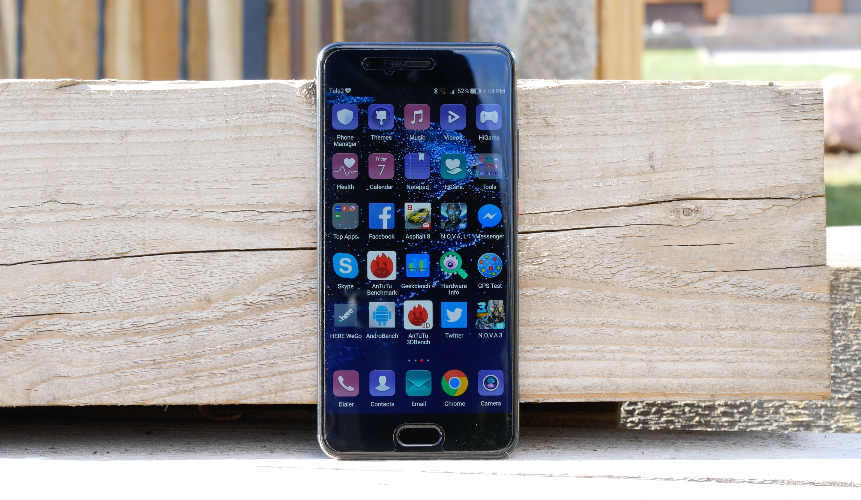
Huawei is expected to officially unveil the much-anticipated Nova 3 on July 18. The company could also take the wraps off the device in the Philippines on July 28. We say so because the company is advertising a new device as coming soon in the country. The giant ad poster was spotted recently in a shopping mall in the capital city – Manila.
While we can’t say for sure that the launch would be for the Nova 3, there are indications that it will be for the mid-range device that Huawei will be launching soon. The colour of the texts of the “coming soon” on the poster is similar to the colour theme Huawei used on the device’s official teaser poster.
The Huawei Nova 3 features a design similar to the Huawei P20 Lite but with improved specifications. The device is expected to pack a bigger 6.3-inch display with a resolution of 2340x1080pixels. The mobile phone is also expected to utilise a faster Kirin 710 chipset paired with 6GB of RAM, while it will get its juice from an ample 3,650mAh battery. The device will also feature dual cameras apiece both at the front and rear aspects. The dual cameras on the back will be a 16MP+24MP combo while the front-facing camera setup is expected to be a 24MP+2MP pair.
Huawei‘s rotating Chairman Ken Hu has expressed optimism that the company doesn’t expect to be affected by the current trade war simmering between the United States and China. Recall that Beijing has been at loggerheads with Washington over the latter’s 25% tariff on $34 billion worth of goods from China last Friday. Beijing was quick to retaliate in the same measure, imposing tariffs of the same worth on products from the U.S. The U.S government is expected to impose an additional $16 billion worth of imports from China but Mr Hu believes the company won’t be targeted by the US government in its trade war with China.
Huawei’s Chairman could be regarded as holding a very lofty and ambitious expectation considering the company’s history with the U.S. Huawei has had to face several oppositions from the U.S government regarding the use of its hardware in the U.S. The government and even lawmakers have expressed concerns over the possibility of Huawei’s hardware being used by the Chinese government to spy on U.S citizens. Huawei has repeatedly expressed its innocence, stating that its software and hardware are in no way more vulnerable to attack that of other OEMs. So, in the event of the sanctions being extended, the U.S won’t mind slamming one on Huawei if possible.
However, the indices looks good for Huawei as there aren’t so many products it relies on the U.S for, neither does the company ship much of its hardware to the U.S. ZTE’s heavy reliance on U.S hardware such as chipsets is one reason why the latter found its operations entirely crippled after the Commerce Department hit it with a denial order over trade embargo violations this spring. But according to Mr Hu, the largest telecom equipment manufacturer in the world still wants to utilize “the best technologies” in its products. That approach will see it continue buying U.S. chips this year, irrespective of any tariffs or other burdens, according to the executive.
Samsung’s Exynos 9820 has started taking shape. The chipset will be Samsung’s first 7nm chipset and will power the likes of the Galaxy S10 and Galaxy Note 10 next year.
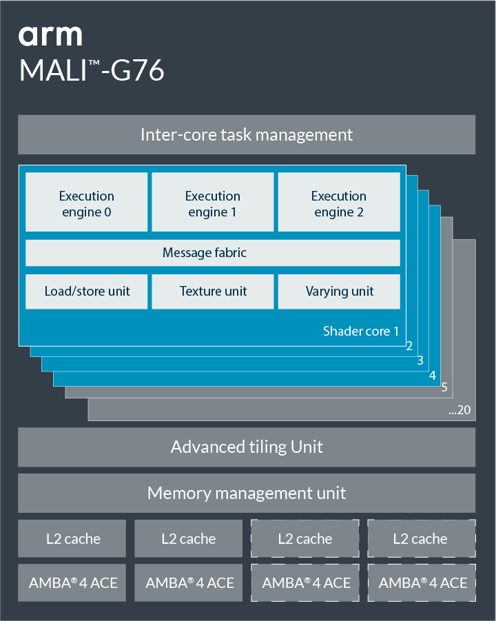
The Mali-G76 will be ARM’s first 7nm GPU and it brings a 30% increase in performance, 30% better energy efficiency, and 2.7x improvement in machine learning. The GPU can have between 4 to 20 cores but Samsung is going with 18 cores just like it did with the Exynos 9810’s Mali-G72 GPU.
Samsung’s decision to use ARM’s GPU is borne from the fact that its own in-house GPU which is in development won’t yet be available for its flagship device(s).
Huawei’s Honor sub-brand will soon announce a new smartphone. The device is the Honor Note 10 and a teaser poster was released today. Now the device has been seen on Geekbench.
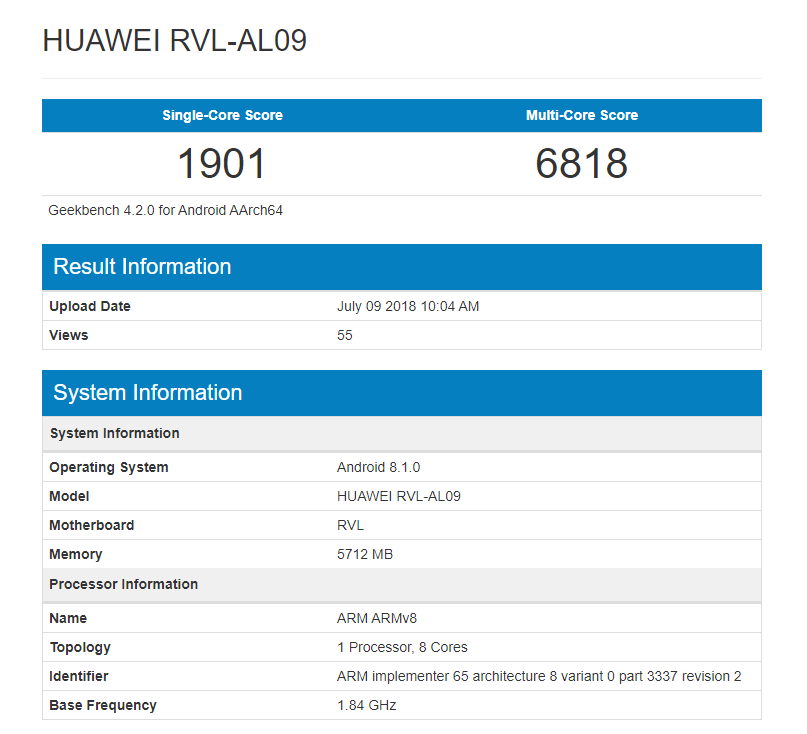
The Honor Note 10 was benchmarked as the Huawei RVL-AL09. The benchmark site reveals it is powered by a 1.84GHz octa-core processor with 6GB of RAM.
Although it doesn’t mention the name of the processor, it is the Kirin 970 since this is the same clock-speed and cores for other Kirin 970 devices like the Mate 10 Pro. Their benchmark scores are also similar.
The Honor Note 10 scored 1901 and 6818 points in the single-core and multi-core tests according to the benchmark results. It is also running Android 8.1 Oreo.
A couple of months ago, China-based Oppo launched its budget smartphone Oppo A3, which comes with a notched display. Now, the company is gearing up to launch a cheaper variant of the same, dubbed as Oppo A3s.
Now, the latest reports indicate that the smartphone will soon be launched in India, carrying a competitive price tag. It will be available in two color variants — Red and Dark Purple. According to the reports, the smartphone will be available in two variants, with pricing starting at Rs. 10,990, which roughly converts to $160.
The smartphone is expected to come with a 6.2-inch full-screen HD+ display with screen resolution of 1520 x 720 pixels and 19:9 aspect ratio and a notch on top of the display. It will be powered by the newly launched Qualcomm Snapdragon 450 octa-core processor clocked at 1.8GHz. For comparison, the Oppo A3 is powered by MediaTek‘s octa-core Helio P60 chipset.
The A3s will be available in two memory configurations — 2GB RAM with 16GB internal storage and 3GB RAM with 32GB internal storage. It will also have a microSD card slot, enabling users to further expand the phone’s storage capacity up to 256GB.
The rear panel of the Oppo A3s will come with a 13-megapixel sensor with f/2.2 aperture and a 2-megapixel sensor with f/2.4 aperture. On the front side, the smartphone comes with an 8-megapixel camera sensor with f/2.2 aperture that comes equipped with OPPO’s AI Beauty Technology 2.0.
It runs on Android 8.1 Oreo operating system based ColorOS 5.1 out of the box and is powered by a 4,230mAh battery. In terms of connectivity options, it supports 4G VoLTE, Wi-Fi, Bluetooth, GPS/ A-GPS, Micro-USB, and a 3.5mm headphone jack. Currently, there’s no information available about the phone’s security features. The device measures 156.2 x 75.6 x 8.2mm and weighs 168 grams.
While we know the phone’s specifications and what to expect in terms of design, the company has not yet revealed the launch date as well as pricing and availability details of Oppo A3s.
Vivo has managed to become one of the best Chinese companies, even though it was only established in China. Now, Vivo’s focus is no longer limited to China. The BBK-owned hi-tech giant has announced that its latest flagship Vivo NEX will soon hit the global market. The handset will initially come in five selected markets: Russia, India, Malaysia, Hong Kong and Taiwan, and this will happen within the end of July. The news comes from an official press release so there is not any doubt about the global launch.
Vivo NEX has been released in two variants: NEX S and NEX A, embracing two different price ranges. The first version ranges from CNY 4498 to 4998 in China, which roughly translates into €580 and €640, while the second version costs €510. Both the variants are concept phones made real, with a whopping 91 percent screen-to-body ratio and a motorized pop-up front camera for selfies. They also sport an in-display fingerprint reader. The display has a size of 6.59 inches, the Super AMOLED technology and a Full HD+ resolution of 1080 x 2316 pixels, without notch.
The design is composed of a glass back and an aluminum frame just like most of the premium flagship phones. Under the hood of the Vivo NEX S, there is an octa-core Qualcomm Snapdragon 845 chipset (an octa-core running at a max frequency of 2.8 GHz) supported by 8 GB of RAM and 128 or 256 GB of internal storage depending on the chosen configuration. The NEX A instead sports an octa-core Qualcomm Snapdragon 710 SoC with a 2.2 GHz clock frequency, 6 GB of RAM and 128 GB of internal storage. The main camera department is a dual setup with 12 and 5 MP resolutions, while the secondary one has an 8 MP resolution. Both the variants have a big 4000 mAh battery.
Another day, another Xiaomi phone popping out. A new model made by the Chinese giant in the top 5 best smartphone manufacturers in the world has just received the Eurasian certification. The device is identified by the codename M1804C3CG but unfortunately, the certification did not reveal any detail about the specs. So, it is impossible from this certification to understand which model we are talking about. It does not seem to be the upcoming Mi Max 3 or Mi Max 3 Pro as they have different codenames, but we can recognize the model number as it has already been certified by FCC before.
According to the FCC listing, Xiaomi M1804C3CG exists in two memory configurations: one with 3 GB of RAM and 32 GB of internal storage and another with 4 GB of RAM and 64 GB of internal storage. Further, it had the MIUI 9 installed out of the box. According to the most reliable hypotheses, it is a variant of the newly-announced Mi 6X which will soon come in the global market as the Xiaomi Mi A2 with Android One on board. If so, it would be an entry-level version of the handset with a more affordable price tag.
In case you missed it, the Mi 6X has a full metal unibody design and a 5.99-inch display showing images at a Full HD+ resolution of 1080 x 2160 pixels with the tall 18:9 aspect ratio. Under the hood, it sports an octa-core Snapdragon 660 chipset by Qualcomm, that is the best midrange SoC by Qualcomm if we exclude the Snapdragon 710. In the version already available in the market, this handset features up to 6 GB of RAM and up to 128 GB of internal storage. It also has a pretty nice dual camera setup with a 12 and 20 MP resolutions, with both sensors having f/1.8 apertures. At last, there is a battery with a capacity of 3010 mAh.
India is one of Xiaomi’s most important markets. However, most of its smartphone released in the country are under the Redmi line. When it comes to flagships, the 2017 Mi MIX 2 is the only one available for purchase on its official website. That may be changing soon as firmware files have revealed a Snapdragon 845-powered phone is heading to India.
The discovery was made by @FunkyHuawei who got his hands on firmware files containing the details. According to XDA Developers who first reported the news, they were already aware of the device’ existence a few months ago.
Their findings revealed then that Xiaomi was working on a number of Snapdragon 845 mobile phones for release this year. The codenames for the devices are “Polaris” which launched as the Mi MIX 2s, “Dipper” which launched as the Mi 8, and “Ursa” which launched as the Mi 8 Explorer Edition. The fourth device is codenamed “Berrylium” and is the one that may be heading to India. A fifth device codenamed “Shark” was also seen and that launched as the Black Shark gaming phone.
“Beryllium” Specs
The firmware files reveal the device known as “Beryllium” will have a Snapdragon 845 chipset, an Adreno 630 GPU, and have an LCD display with a notch. It will come with dual rear cameras with optical zoom, run Android 8.1 Oreo, and pack a 4000mAh battery.
Although details about the RAM and storage were not made available, the phone will not have a microSD card slot. It will have a fingerprint scanner but not an in-display type.
XDA adds that the firmware files which revealed the above specs were built back in March, so there is a possibility they might have changed. However, the device is still in development seeing as it has a global beta version of MIUI 10 available.
Proof “Beryllium” will launch in India (and globally)
So what’s the proof that this device is heading to India? As you can see above, there is a global beta MIUI 10 ROM for the device which points to an international availability of the device and the firmware files are said to have two branches – “Beryllium” and “Beryllium Global”. Proof of it heading to India is found in the latest MIUI camera app. The explanation is a bit technical.
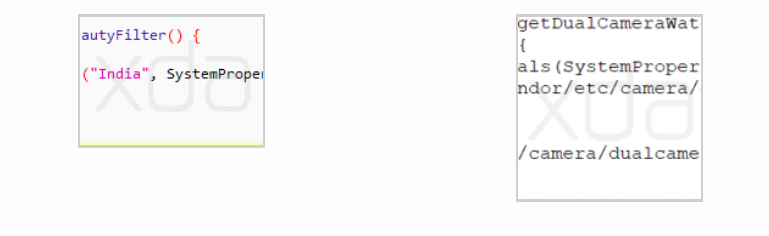
There are two proofs or method as XDA puts it. They are called “isIndiabeautyFlter” and “getDualCameraWaterMarkFilePathVendor”. Both are said to check a build property called “ro.boot.hwc” that only returns as true if it is “India”.
For the first method, it checks the build property if IS_E7S or IS_E10 are true. When IS_E7S is true when the device is “whyred” (Redmi Note 5 Pro) and IS_E10 when the device is “beryllium”.
For the second method, it checks the build prop if “ro.boot.hwc” is set to “India” and IS_E10 is true.
What device will “Beryllium” launch as?
If we are to go by the specs of the device and also recent leaks, Beryllium won’t launch as the Mi MIX 3. The Mi MIX 3 according to leaked photos doesn’t have a notch.
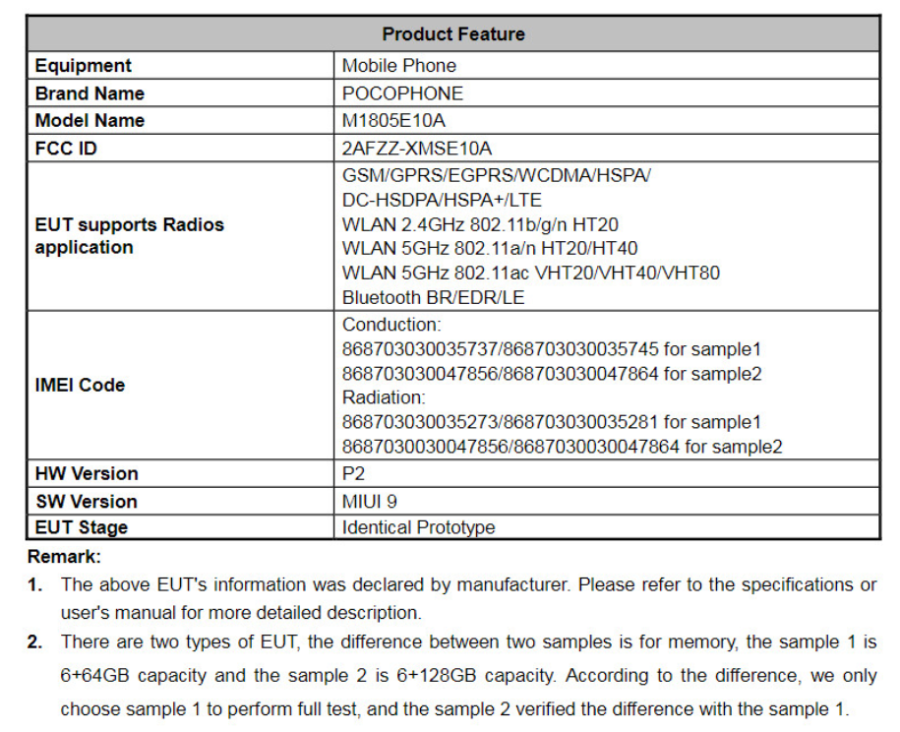
However, there is a possibility that it may launch under the new “POCOPHONE” brand. FCC documents from a few days ago have shown that the model number of the first smartphone under the POCOPHONE brand is M1805E10A. E10 in the model number corresponds to the values in the proofs mentioned above.
Xiaomi Beryllium may launch as the first phone under the POCOPHONE brand
We presumed the first phone under the POCOPHONE brand will be a mid-range phone but recent FCC documents spotted by Android Authority reveals the phone will come in 6GB RAM + 64GB and 6GB RAM + 128GB models. This configuration may point at a flagship device, so its possible it is Beryllium.
Recent reports have claimed that the Galaxy S10+ will be arriving with triple rear cameras. Based on information received through industry sources, a South Korean publication has revealed the configuration of the triple camera setup of the S10+. Moreover, it has also claimed that the smartphone with dual selfie snappers which means it will be coming with a total of five cameras.
The Galaxy A8 and Galaxy A8+ smartphones are the first smartphones from Samsung to feature dual selfie cameras. The upcoming Galaxy S10+ could be the first flagship phone to arrive with dual front-facing cameras. The exact configurations of both cameras are not available yet, but it is certain that dual shooter will allow the S10+ users to capture selfie shots with bokeh effect. The report claims that the Galaxy S10 and a weaker S10 model that is dubbed as Galaxy S10 Lite will be arriving with single front-facing camera.
At present, there is only one smartphone that features triple rear cameras. It is the Huawei P20 Pro that was unveiled in March this year. The handset only features a single front-facing camera. However, the upcoming Galaxy S10+ is expected to arrive with triple cameras on its rear apart from the dual front-facing snappers which indicates that the smartphone will be equipped with five cameras.
For the triple camera setup, Samsung is expected to borrow the same variable aperture 12-megapixel dual camera module that is available on the Galaxy S9+. There will be an additional ultra wide-angle 16-megapixel sensor with 120-degree field of view.
As far as the Galaxy S10 is concerned, it is also expected to house a triple camera unit on its back panel along with a single front-facing camera. The alleged S10 Lite is tipped to feature dual rear cameras and a single camera on the front.
A report from the past week had revealed that S10+ and S10 will be the first Samsung phones with under-display fingerprint reader. The alleged S10 Lite will also be the first smartphone from the company to arrive with a side-mounted fingerprint sensor.
The Samsung Galaxy S10+ may not be the first phone to arrive with five cameras because a report from the previous week had revealed that the LG V40 ThinQ arriving in the coming months will be equipped with dual frontal shooters and triple rear cameras. There is no information available on the camera configuration on the upcoming Huawei Mate 20 series. Probably, the Chinese firm step up the competition by adding five cameras on Mate 20 Pro.
Just fresh out of the launch of the Redmi 6A 3GB + 32GB variant, Xiaomi has announced a new memory variant of the budget-level device. The new variant is a 4GB RAM+64GB storage version which is quite a surprise considering that the Redmi 4A and 5A didn’t have such memory configuration but only got 3GB + 32GB variants. As a matter of fact, it is difficult to find budget devices with 4GB+64GB variants. In this case, the device still retains the budget pricing consistent with the Redmi 6A as it costs just 999 yuan ($151).
The Xiaomi Redmi 6A comes with a 5.45-inch HD+ display and is powered by a 12nm Helio A22 processor clocked at 2.0GHz. It has a single 13MP rear camera and a 5MP front-facing camera with portrait mode. As with its predecessors, there is no fingerprint scanner on the Redmi 6A but it is equipped with AI Face Unlock. In addition, the device is also equipped with an AI assistant that helps with translations, exchange rate conversion, and can even identify the calories in your food simply by pointing the camera at the food. The device is also fuelled by a 3000mAh battery and has other features like Wi-Fi, Bluetooth 4.2, a hybrid dual SIM slot, and a 3.5mm audio jack but no IR sensor. It also gets its interface from Android 8.1 Oreo-based MIUI 10.
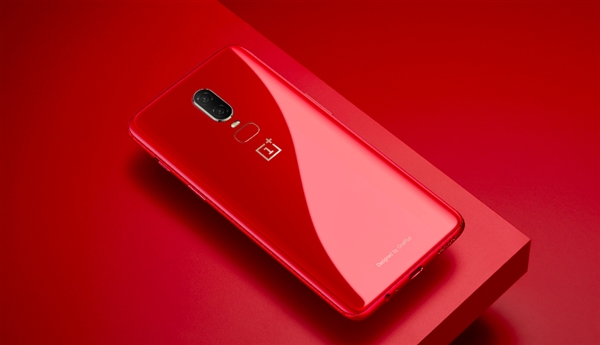
Recently, OnePlus had confirmed that the sales of the Red variant of OnePlus 6 will begin on July 16. The handset will carry a price tag of Rs. 39,999 (~$582)and will be exclusively available on Amazon India. On July 16, the retailer giant will begin the Amazon Prime Day sale which will allow consumers to take advantage of various offers from HDFC Bank on the Red and other variants of OnePlus 6. The said bank is offering an instant discount of Rs. 2,000 (~$29) on the new color variant of the smartphone.
Some of the offers that will be available to the consumers who are looking forward to buying the OnePlus 6 are flat discount of Rs. 2,000 on when the purchase is made through HDFC credit or debit cards on EMI; Rs. 2,000 cashback on all HDFC credit card and EMI transactions who buy OP6 through Amazon India, OnePlus.in and other exclusive offline channels; and starting from tomorrow (July 10), OnePlus 6 buyers with credit cards from popular banks are eligible for no cost EMI on Amazon India.
The all new OnePlus 6 Red version that will go on sale starting from July 16 will include 8 GB of RAM and 128 GB of storage. As far as the appearance of the glossy Red variant is concerned, the company claims that it is made through a process that involves optical coating, evaporative film, six layers of glass along with an extra anti-reflective layer that makes it possible to pass more light to the lower layers of glass. There is a translucent orange layer that mixes with the lower red layer to create a glossy appeal.
Also, beginning at 12 AM IST, OnePlus 6 Midnight Black version featuring 8 GB of RAM and 256 GB of storage will be available for buying on Amazon India with a pricing of Rs. 43,999 (~$640). The Chinese manufacturer has decided to launch this 256 GB variant owing to the success of OnePlus 6 Marvel Avengers Limited Edition that also came with the same-sized storage.
OnePlus has managed to sell one million OP6 handsets across the globe in just 22 days. This makes it the fastest selling smartphone in the history of the company. The upcoming Red variant is expected to boost the sales of the smartphone all the more across the world.
The FIFA World cup is still ongoing but without one of the top teams – Italy. Notwithstanding, Italian club Inter Milan is in the news for a good cause. Xiaomi‘s ecological chain company Roborock has launched an Inter Milan edition of its latest Roborock Sweep One smart robot vacuum cleaner. Recall the Roborock Sweep One was announced late last year packing some improved features over the Mi Robot Vacuum.
The Xiaomi Roborock Sweep One Inter Milan Customised edition is the product of a collaboration between Roborock and Inter Milan football club. The new edition comes with some tweak in its design but still retains the features of the device. It has he Blue and Black logo of Inter Milan. The model is also said to have a built-in exclusive star custom voice package.
Roborock Sweep One is equipped with a laser rangefinder, which is moved closer to the center. The device also comes with a number of sensors which aids the robotic vacuum cleaner to circumvent obstacles, avoid steps, choose the most efficient route and quickly find a charging station. It also features a more powerful engine which can create a pressure of up to 2000 Pa as against 1800 Pa for the first model. There is also a large main brush located on one side.
One new innovative feature on the Roborock Sweep One is the ability to carry out wet cleaning. It has space for a water tank which sprinkles water on the floor, perhaps in order to better remove dirt. The tank contains water at full capacity that can last for up to 45 minutes to 60 minutes of operation.
In addition, the Sweep One packs a 5200mAh battery which is designed to provide 2.5 hours of battery life, equivalent to cleaning a 250m2 room. The device also has the ability to start cleaning when it is scheduled to do so and users can specify the area of the house that needs to be cleaned. These two functions can be initiated on the Mi app. It can also increase its power when a rug is detected. The LDS sensor also is improved for the robot to better scan the room and plan a sweeping path. The app for this model is also upgraded to include some features such as mopping only mode, as well as drawing strokes on the app’s interface to determine the movement of the robot vacuum.
As for the price, it will be available for 2999 yuan ($453), 500 yuan higher than the ordinary version which came with a price tag of 2499 Yuan ($380). The new version will go on sale exclusively on Suning Tesco both offline and online.
The Xiaomi Mi 5s and Mi 5s Plus were both released in September of 2016. Both flagships launched with Android Marshmallow and later got updated to Android Nougat. However, an update to Android Oreo hasn’t yet been released and owners are pissed.
Mi 5s and Mi 5s Plus owners have swarmed the Weibo page of Xiaomi’s CEO, Lei Jun, to complain about the delay of the update and their dissatisfaction with how Xiaomi is handling both flagships.
Xiaomi later released an official statement to its fans explaining the reasons for the delay. From the response, Xiaomi states it is having technical issues with the dual camera-wielding Mi 5s Plus. However, the R&D team in collaboration with Qualcomm are working on a fix.
Xiaomi also mentioned an issue with the ultrasonic fingerprint scanner of the Mi 5s. At the moment, both Qualcomm and Xiaomi haven’t found a fix yet but they hope a solution is found in a few weeks.
The official response also mentions the update will be available in early October but doesn’t say if it is the final stable release or the beta release.
Huawei has announced the rollout of updates to seven models which would usher in EMUI 8.0 based on Android 8.0 Oreo. The models include the Huawei Mate 8, Huawei P9, Huawei P9 Plus, Honor 8, Honor V8, Honor Note 8 and the Honor Play 6X. This isn’t the first time the models would get EMUI 8 updates but the updates have not been across the board. This is the second time and it is still for some a limited time. The updates would be available from 10 am every day from July 9 to July 15. Curiously, just 5000 units of each model will get the upgrade daily for the seven days making a total of 35000 updates for each model will be available.
All those who use the affected models and are interested in the upgrades will be able to access the upgrade page using the member service app that comes along with their phones. After the application is confirmed, the new version can be found in system update section.
Considering Huawei system upgrade pattern, this update which is done using the membership app is basically similar to the OTA upgrade version in terms of functionality, stability, and compatibility. So, there is no fear of bugs on this version. The update brings the total number of Huawei models that have been successfully upgraded to Android 8.0 based EMUI 8 to 20. Before now, Huawei had pushed updates for 13 old models which include the Huawei P10, P10 Plus, Honor 9, Honor V9, Honor 8 Youth edition, Honor 7X, Huawei Nova, Nova 2, Nova 2 Plus, Maimang 6, among others. These are in addition to models like the Mate 10 series which was launched with Android Oreo as well as the Mate 9, Mate 9 Pro and Mate 9 Porsche edition.
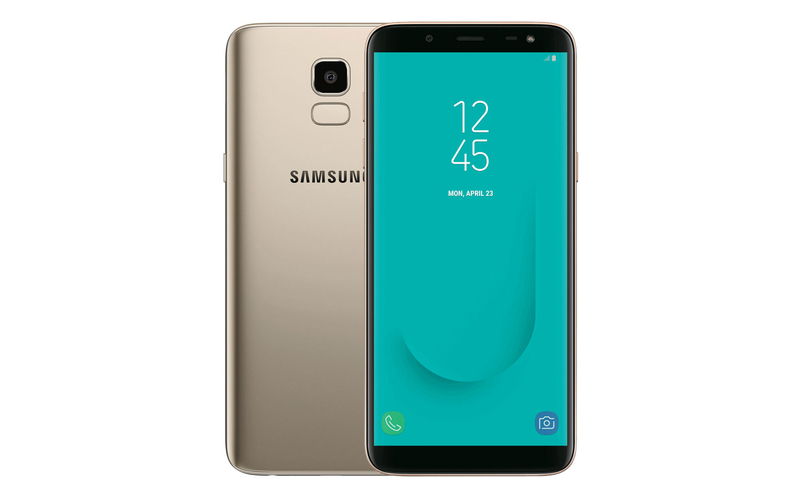
After Samsung announced a price cut for the Galaxy A6 smartphone last month, the company has now slashed the pricing of its Galaxy J6 4GB RAM model and is now available for purchase at Rs. 15,990, which roughly converts to $233. However, the price cut is not a major one as the 4GB RAM model was earlier available for Rs. 16,490 (approximately $240).
The Samsung Galaxy J6 was launched in India in May for a starting price of Rs. 13,990. Online retailer Flipkart will be offering cashback of Rs.1,500 when the user pays with an ICICI Bank credit or debit card, bringing the effective price down to Rs.14,490 (approximately $211).
The smartphone features a 5.6-inch HD+ Super AMOLED Infinity Display with screen resolution of 1480 x 720 pixels and 18.5:9 aspect ratio along with a 2.5D curved glass on top. Under the hood, the device is powered by the company’s own Exynos 7870 octa-core14nm chipset, coupled with Mali T830 GPU.
It comes in two models based on the memory configuration — 3GB RAM and 32GB internal storage and 4GB RAM with 64GB internal storage. There’s a microSD card slot, which enables users to further expand the phone’s storage capacity up to 256GB.
The Galaxy J6 comes with a 13-megapixel rear camera and an 8-megapixel front camera, both having LED flash for brighter photos during low-light scenarios. Connectivity options on the device include 4G VoLTE, Wi-Fi b/g/n, Bluetooth 4.2 LE, and GPS. On the back panel, just below the camera module, there’s a fingerprint sensor for added security.
Connectivity features include Wi-Fi 802.11 b/g/n, Bluetooth 4.2 Low Energy, GPS with A-GPS, GLONASS, BeiDou, FM radio, and 4G VoLTE. It also has support for Face Unlock feature. Running on Android 8.0 Oreo operating system out of the box with Samsung Experience custom interface on top, the smartphone is powered by a 3,000mAh battery.
Nokia China already confirmed it has a launch on Wednesday and the guess is it’s for the Nokia X5 a.k.a Nokia 5.1 Plus. Although we already know what the phone looks like, thanks to early renders and images from TENAA, press renders have also now been released.
[envira-gallery id=”200346″]
The press renders were posted on Baidu and they show the phone in blue. This is similar to the same blue shade of the Nokia 5 and Nokia 8.
The Nokia X5 comes with a notch that is bigger than that of the Nokia X6. It also has dual rear cameras arranged vertically and positioned in the middle. A fingerprint scanner sits directly underneath. We can also make out an audio jack at the top of the phone and a USB port at the bottom.
The Nokia X5 will come with a 5.86-inch screen with a 1520 x 720 resolution. An unknown 2.0GHz octa-core processor will power it along with 3GB, 4GB, or 6GB of RAM. Depending on the RAM option, the device will have 32GB or 64GB of storage.
Last week, HMD Global finally started selling Nokia X6 Polar White color variant in a flash sale, which was sold out pretty quickly. Now, the company is bringing the Polar White color variant of the Nokia X6 for sale tomorrow, for which it has already witnessed over 730,000 registrations. Currently, the Polar White Nokia X6 is offered in only one variant — 6GB RAM and 64GB internal storage, priced at 1,699 Yuan, which roughly converts to $254.
Nokia X6, which was launched a couple of months ago, is the company’s first smartphone that features a trendy notch on top of the display. The smartphone went on sale a few times and went out of sale within a few seconds in almost every flash sale but the Polar White variant went on sale last week for the first time. Apart from white, the phone is also available in Dark Blue and Stark Black color options.
The smartphone comes with a 5.8-inch Full-HD+ display with screen resolution of 2280 × 1080 pixels and 19:9 aspect ratio. There’s a notch on top of the display, similar to that of Apple iPhone X and the display is covered by a layer of Corning Gorilla Glass 3 which protects from minor scratches.
Under the hood, it is powered by Qualcomm‘s Snapdragon 636 octa-core processor, which also powers the likes of Xiaomi Redmi Note 5 Pro and Asus Zenfone Max Pro M1, among others. The phone is available in two variants — 4GB RAM with 32GB / 64GB internal storage and the 6GB RAM variant which packs 64GB internal storage.
There’s also a microSD card slot, which enables users to further expand the phone’s storage capacity up to 256GB. In terms of optics, the smartphone features a dual camera setup, having a 16-megapixel RGB primary sensor with f/2.0 aperture and a 5-megapixel secondary monochrome sensor with f/2.2 aperture. On the front side, there’s a 16-megapixel snapper with f/2.0 aperture and 1.0um pixel size.
For enhanced camera performance, it comes with artificial intelligence (AI) features for improved photography, such as optimized color, field and portrait lighting effects, as well as face recognition. It also offers the Bothie feature, which enables users to use both front and rear cameras simultaneously. It also comes with a Face Unlock feature as well as a fingerprint sensor placed on the back panel.
Connectivity options on the device include 4G VoLTE, WiFi 802.11 ac (2.4GHz + 5GHz), Bluetooth 5, GPS + GLONASS, and USB Type-C. The Nokia X6 runs on Android 8.1 Oreo operating system out of the box and also comes with Do Not Disturb mode for gaming. The device is fuelled by a 3,060mAh battery which supports Quick Charge 3.0 fast charging technology that can deliver up to 50 percent of charge in 30 minutes.
According to the latest reports, the Nokia X6 will also be available outside of China from 19th July as the Nokia 6.1 Plus. The first market to receive it is Hong Kong and other regions are expected to receive it in the coming weeks.
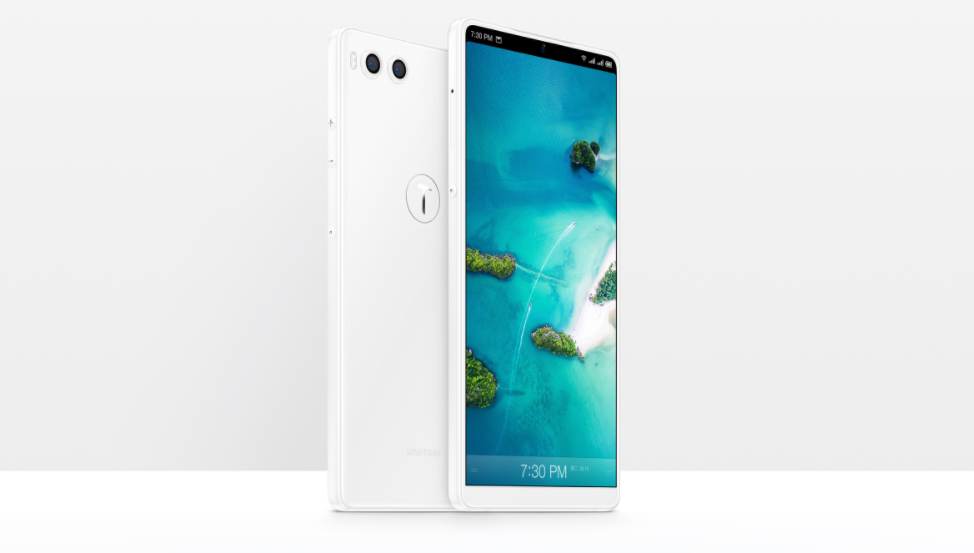
Smartisan Nut R1, the flagship smartphone from Hammer Technology, was launched in China a couple of months ago. The smartphone was announced in two color options — Carbon Black and Pure White. Although the smartphone is available for purchase in China for quite some time, there’s a supply shortage for the Pure White color variant.
While the Carbon Black color version of the Smartisan Nut R1 was available, the Pure White version recently went on sale in China through JD.com but was sold out pretty quickly. Now, the company has officially revealed that the Smartisan Nut R1 Pure White model will be available for purchase from tomorrow.
The Pure White model of the smartphone will be available in two variants — 6GB RAM with 128GB internal storage and 8GB RAM with 128GB onboard storage. While the 6GB RAM model costs 3,999 Yuan (approx. $604), the 8GB RAM model is priced at 4,499 Yuan, roughly $680.
The smartphone comes with a 6.17-inch Full-HD+ pressure sensitive display with a screen resolution of 2242 x 1080 pixels and an 18.7:9 screen aspect ratio. It is covered with Gorilla Glass 3, has 1500:1 contrast ratio, and a 96% color gamut (DCI-P3). Under the hood, the device is powered by Qualcomm‘s Snapdragon 845 processor clocked at 2.8GHz paired with an Adreno 630 GPU.
It features a dual camera setup on the back side, consisting of a 12MP Sony IMX363 primary sensor with a f/1.8 aperture, 1.4 μm pixel size, 4-axis OIS, and dual PD extreme focus. The secondary camera is a 20MP Sony IMX350 sensor with a f/1.75 aperture, 1μm pixel size, and 6P lens. On the front side, it comes equipped with a 24MP sensor with a f/2.0 aperture ArcSoft ray algorithm and AI real-time beauty mode.
Connectivity options on the device include Dual SIM, Bluetooth 5.0, dual-band Wi-Fi, NFC+eSE, and has a USB-C port with Display Port 1.4. It runs Smartisan OS 6 which is based on the Android operating system. The device is powered by a 3,600mAh battery with Quick Charge 4+ and also supports Power Delivery 3.0 and 10W wireless charging.
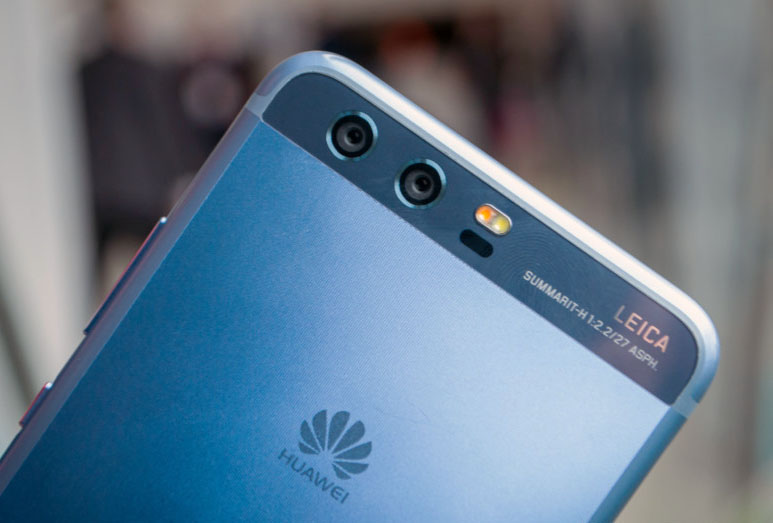
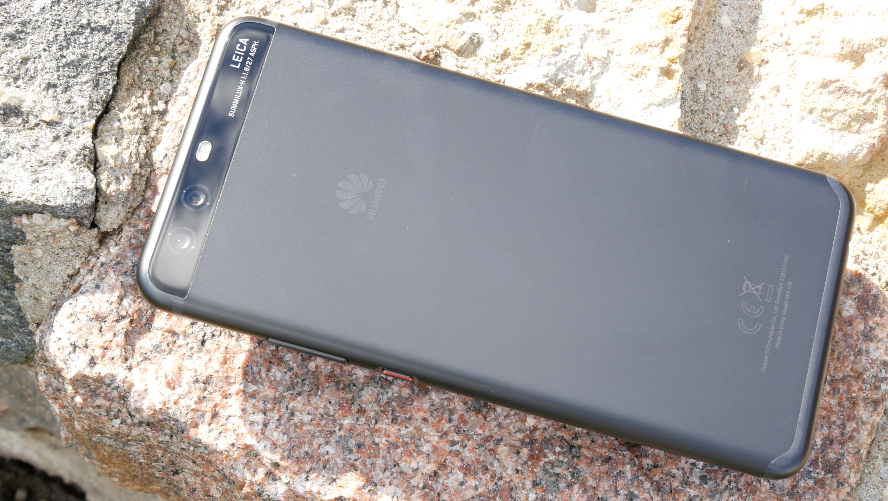
The Huawei P10 Plus was released quite some time ago and it used to cost over $700. As usual, phones get a lot cheaper over the time making them a great value. The P10 Plus is a great example. You can now get it for just $349.99 but it offers a premium design, flagship-grade Leica cameras and great specs.
The P10 Plus has a nice 5.5″ display with nice and saturated colours, great brightness output,Gorilla Glass 5 for scratch resistance and finally, a pretty good sunlight legibility.
I love how nicely the phone sits in the hand due to rounded edges on the back and all-aluminum housing that is smooth to the touch and it does not attract fingerprints or smudges like the glass-made phones.
When it comes to the camera, the Huawei upgraded its Leica-branded dual camera system by using the latest 20MP monochrome sensor, which is mainly used to capture sharper detail. Also, there is another 12MP shooter, which is essentially used to capture colors.
The camera system has the OIS, dual tone dual LED flash and finally, the cameras use bright f/1.8 aperture Leica lens. This is a slight upgrade over the regular P10, which has f/.2.2 lens.
As far as selfie camera, Huawei also cooperated with Leica and as a result, we have an improved 8MP selfie shooter with a bright f/1.9 aperture lens.We also have a notification LED light on the top.
As far as specs go, the Huawei P10 Plus comes with the home-brewed HiSilicon Kirin 960 chipset. Also, my top tier model has128GB of expandable storage and 6GB of RAM.
You can also opt in for a cheaper variant that has 4GB of RAM and 64GB of storage, just like the regular P10.
The Huawei P10 Plus has a 3750mAh battery that can be fully charged in about 1 h and 10 mins with the supplied fast charger.
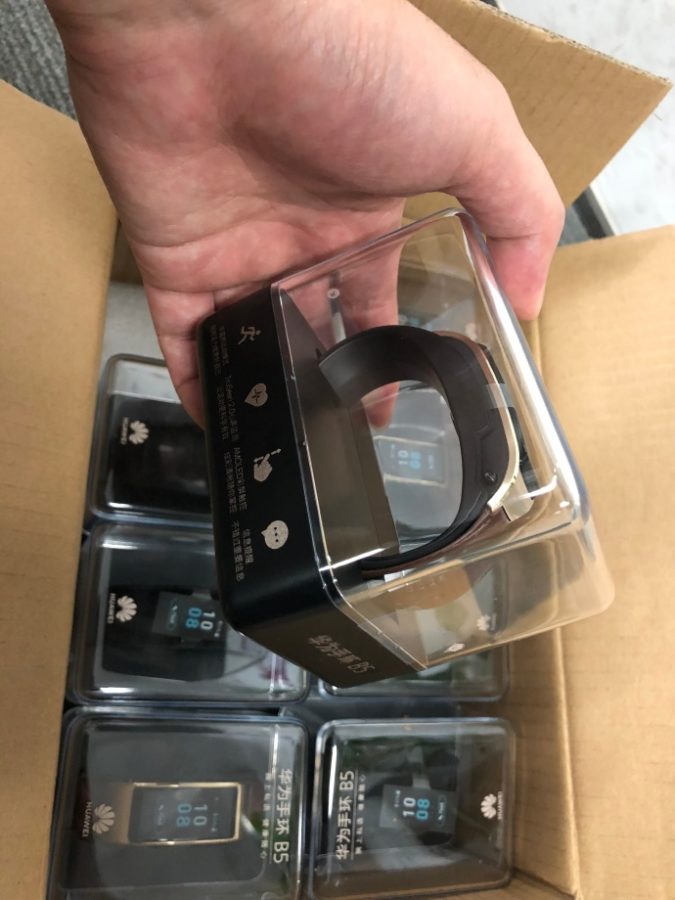
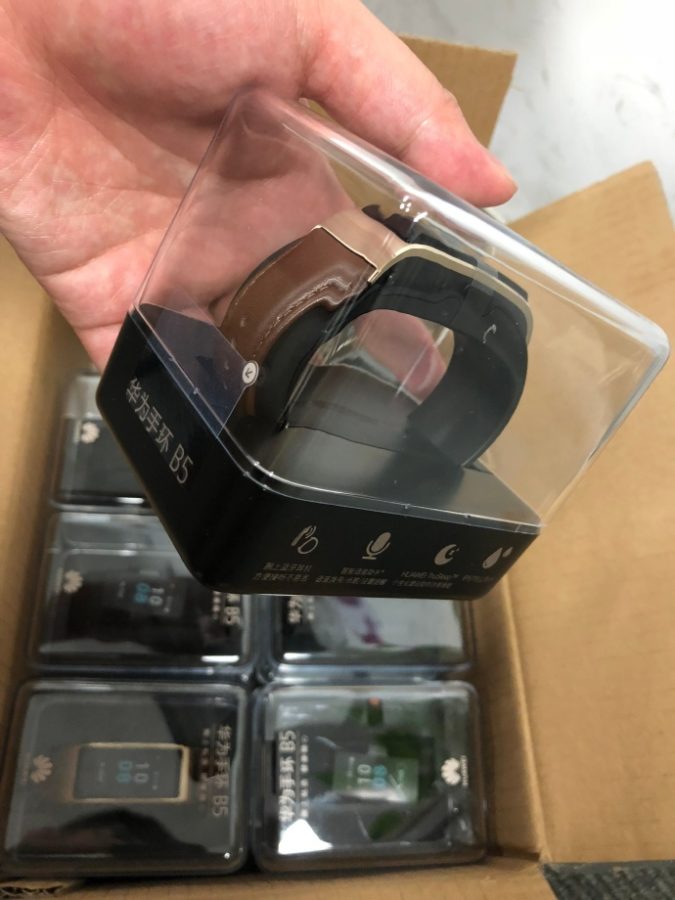
Around two years ago, Huawei had launched TalkBand B3 smartband with health tracking capabilities. The main device of the TalkBand B3 also doubled up as an in-ear Bluetooth headset. In the past week, popular leakster Evan Blass had shared the renders of the upcoming TalkBand B5 smartband that revealed it will be sporting a design similar to the predecessor model. Fresh photos have surfaced to reveal the TalkBand B5 in real skin.
As it can be seen in the new images, the TalkBand B5 can be seen sporting a leather strap. Like the predecessor model, the TalkBand B5 can also function as in-ear Bluetooth headset. The TalkBand B3 that came with a monochrome display, but the successor device seems to be sporting a large-sized color display. The device may sport larger font than the B3.
Just as the Apple Watch comes with Siri voice-assistant, the upcoming TalkBand B5 is also expected to arrive with its own voice-assistant. The images also reveal that the B5 will be arriving with TruSeen heart rate monitor and TruSleep sleep improvement feature.
On July 18, Huawei will be announcing the Nova 3 smartphone. It is speculated that the TalkBand B5 may get unveiled alongside the Nova 3.
The handset will be sporting a notched display design. It will be arriving with a massive 6.3-inch screen and it is likely to feature Kirin 659 SoC. The 64 GB and 128 GB storage variants of the phone are expected to feature 6 GB of RAM. It could be fueled by 3,650mAh capacity. The backside of the Nova 3 is fitted with 16-megapixel + 24-megapixel dual camera setup whereas the frontside has 24-megapixel + 2-megapixel dual camera setup. The handset is expected to arrive in colors like gold, light blue and blue-purple color hybrid.
We use cookies on our website to give you the most relevant experience by remembering your preferences and repeat visits. By clicking “Accept”, you consent to the use of ALL the cookies.
This website uses cookies to improve your experience while you navigate through the website. Out of these, the cookies that are categorized as necessary are stored on your browser as they are essential for the working of basic functionalities of the website. We also use third-party cookies that help us analyze and understand how you use this website. These cookies will be stored in your browser only with your consent. You also have the option to opt-out of these cookies. But opting out of some of these cookies may affect your browsing experience.
Necessary cookies are absolutely essential for the website to function properly. This category only includes cookies that ensures basic functionalities and security features of the website. These cookies do not store any personal information.
Any cookies that may not be particularly necessary for the website to function and is used specifically to collect user personal data via analytics, ads, other embedded contents are termed as non-necessary cookies. It is mandatory to procure user consent prior to running these cookies on your website.