Phablets are getting more popular nowadays since they offer all the features of smartphones but they also have larger displays are key to productivity. ALLDOCUBE / CUBE Free Young X5 4G has an 8″ display, a 13MP camera and a lot more. You can now get it for just $169.99 from Gearbest using a COUPON CODE that you will find at the end of this article.
One of the features that many users look in a budget tablet/phablet is the cellular connectivity and this device supports 4G network.
As far as specs, the ALLDOCUBE / CUBE Free Young X5 has an octa-core MTK8783 chip that is coupled with 3GB of RAM and 32GB of expandable storage. Android 7.0 out of the box keeps the entertainment flowing. There is also a 3800mAh that should let you use the tablet for a couple of days.
LG is set to unveil the LG V30 flagship smartphone on August 31 and a launch poster for that date is already out. As the date draws closer, it is expected that regular leaks and renders of the device would appear online every now and then. One of such renders of the V30 has surfaced in an introductory video but this one appears to be an official video of the V30.
With the appearance of the LG logo at the end of the video and the title suggesting that it is an introductory video of the V30, the design is thus likely the real design of the V30. The video was posted on YouTube by Concept Creator which is known for fan-generated renders of unannounced phones. Their renders most times end up being the concept of their imagination. We can’t say that for sure in this case because the render matches up with a previously leaked photo purported to be the real V30.
The video shows the device from all angles and captures the absence of a secondary display on the front panel just as earlier rumoured. The renders also show a dual camera setup at the rear with LED flash as well as what looks like laser autofocus. There is also a rear mounted fingerprint sensor under the dual cameras. The renders sees the V30 written at the bottom part of back cover, different from an earlier leak which shows there’ll be a change with “LG” written instead.The specifications of the V30 are still sketchy as of this moment but the device is tipped to pack a 5.7-inch display with QHD resolution and an 18: 9 aspect ratio. The device is also expected to come with 6GB of RAM and powered by the Snapdragon 835 chip. The interface is expected to be provided by LG UI based on Android 7.1.1 Nougat.
Xiaomi remains one of the innovative brands out of China but that innovation has in the last few years been stifled by an inefficient retail channel. The company was one of the pioneers of online smartphone sales in China, yet its sales figures have not been encouraging largely due to a saturated market and its sluggishness to incorporate an efficient offline sales network into its marketing strategy. The company seems to have learned from its lapses as it started a drive to shore up its dwindling revenue earlier this year. That revenue drive just got better as Xiaomi revealed that it has secured a $1 billion loan in order to help it diversify into markets outside China and also to built its offline retail network.
The tech giant reportedly secured the funds, a three-year syndicated loan agreement signed with 18 banks across Europe, Middle East, India, China, Hong Kong and Taiwan. The syndicated loan is jointly coordinated globally by Deutsche Bank and Morgan Stanley, with Bank of China (Hong Kong) Limited, Deutsche Bank AG, and Wing Lung Bank included in the deal.
The regions where the 18 banks are drawn from could give us an insight into the company’s expansion focal point as the company is looking to put the funds into expanding in these regions. This expansion will include building more brick and mortar businesses both within China and in other regions of interest. Xiaomi recently revealed that it plans to open 2000 offline stores and half of that amount will be located outside China. The move has already started with stores opened in India and recently, Greece. Xiaomi also made a foray into Russia with the launch of some of its products in the country. The recent agreement signed with Nokia recently on business collaboration is also a move aimed at expanding off the shores of China. Could this then be the deal that would see the Mi brand becoming a global brand? Only time will give us the answer but we hope this works out fine for the tech giant.
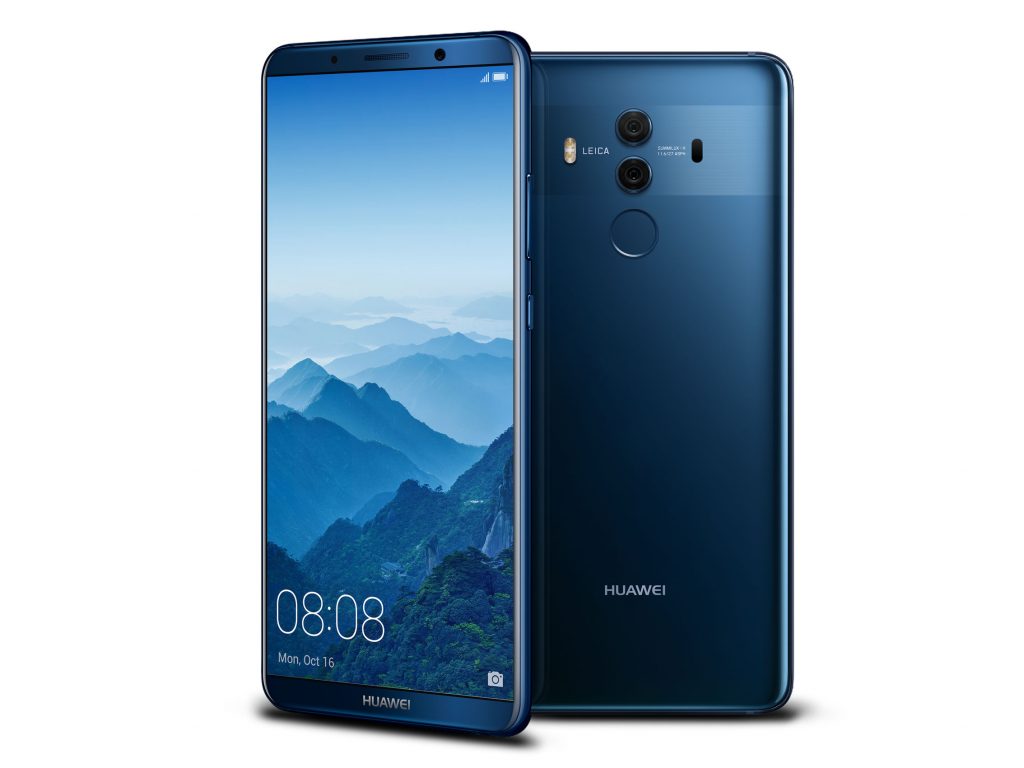
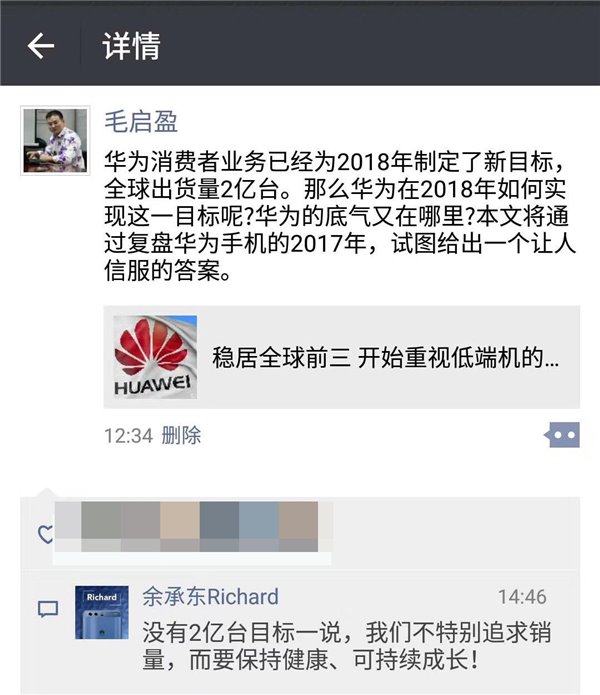
Huawei Mate 10 is the upcoming flagship phablet from the Chinese manufacturer. Leaked information has revealed that the Mate 10 would be arriving with a full-screen display. Richard Yu, the chariman of Huawei’s mobile division has confirmed that the Mate 10 would be equipped with a full-screen display. He has also confirmed that the company will not be manufacturing low-end smartphones.
From the beginning of this month, the rumor mill has been consistently saying that Mate 10 will be coming with a near bezel-less screen. This means Huawei will be joining the trend of other smartphones like Samsung Galaxy S8 and LG G6 that come with full-screen display. Samsung and Apple are leading the smartphone manufacturer followed by Huawei that is sitting on the third position. It seems that the Chinese manufacturer is serious on taking on Apple in North America.
The Huawei Mate 10 is expected to release around the same time Apple will be launching the next iPhone. He said that the Mate 10 will be capable of trumping the iPhone in numerous aspects. Yu said that the Mate 10 will be delivering longer battery performance, improved camera capabilities and other features that will allow the company to rival with Apple. Even though Yu confirmed on the above details, he did not confirm on the exact configuration of above features.
Previous rumors have revealed that the Huawei Mate 10 will be featuring a 6-inch full-screen display by JDI that is dubbed as Full Active display. It will be delivering an aspect ratio of 18:9 and a screen resolution of 2,160 x 1,080 pixels.
The Kirin 970 chipset is speculated to feature an octa-core processor with Cortex A73 cores. It would be a 10nm chipset that will either feature Mali-G71MP8 and Mali-G71MP12 graphics. The Kirin 970 chipset will help the Mate 10 to churn out better battery performance. It will be coming with Leica branded dual rear cameras and the Mate 10 is expected to support 3D sensing.
Since there is less margin in low-end smartphones, the Chinese company will be stop manufacturing it. This suggests that the company will be only launching high-end and mid-range smartphones. The company will be concentrating on selling its smartphones in developed regions such as Europe, China and Japan.
HMD Global Oy has shown some prospects already in its drive to reposition the Nokia brand for success and they continue to show that drive which could help achieve that. The company has already released the Nokia 3, 5 and Nokia 6 along with the revamped Nokia 3310 into the market and the result has been tremendous. In a couple of months time, the company will add the Nokia 8 to its lineup and from the look of things, there will be much more in the near future.
A recent report has revealed that Microsoft has ceded about 500 Nokia patents to HMD Global. Microsoft acquired Nokia’s devices business for $7.2 billion in 2013. By then, Nokia was already swimming in troubled waters, facing financial difficulties as a result of a late transition to Android phones. Although Microsoft had hoped to turn around the fortunes of the company, that didn’t happen as the Lumia brand just refused to fly. Microsoft has to let go of the excess luggage the Nokia brand was turning into and in came HHMD Global Oy, a Finnish phone maker. A couple of months after, Microsoft is revealed to have turned in around 500 patents for the Nokia which is in its possession.
The information scooped from the European Union Intellectual Property Office (EUIPO) shows some of the patents now controlled by HMD Global that were formerly under Microsoft’s control. One of the prominent patents is the Lumia Camera UI which is reputed to be one of the most intuitive camera app around. HMD only has the license to use the Nokia brand name for 10 years, let’s see how they will put these patent to use before their time runs out. Ten years is a long time to turn around the fortunes of a company and they have shown their ability to do just that with the products released so far.
After months of leaks and rumors, Meizu announced its PRO 7 and PRO 7 Plus flagship smartphones yesterday. Some of its bestselling features like dual rear camas and rear-facing second screen have built a lot of interest among smartphones. The PRO 7 duo will be available on flash sale from Aug. 5 in China. Currently, both the smartphones are up for registrations. The PRO 7 duo have met with over 10,000 registrations in less than day which indicates how popular these phones are.
Only customers who register for the Meizu PRO 7 or PRO 7 Plus can participate in the first flash sale that will start from Aug. 5 at 10:00. The Meizu PRO 7 with 4 GB of RAM + 64 GB of storage powered with Helio P25 is priced at 2,880 Yuan (~$426) and its higher variant feature 4 GB of RAM + 128 GB of storage fueled with Helio X30 costs 3,380 Yuan (~$500). The Meizu PRO 7 will be available in colors like black, red and gold.
The Meizu PRO 7 Plus featuring 6 GB of RAM + 64 GB of storage and Helio X30 is priced at 3,580 Yuan (~$530). And the higher model featuring 6 GB of RAM + 128 GB of storage and Helio X30 carries a pricing of 4,080 Yuan (~$604). It can be bought in colors like grey, silver, gold and black.
The Meizu PRO 7 and PRO 7 Plus is expected to arrive in 16 other countries where Meizu is officially selling its smartphones. Hence, the PRO 7 duo are expected to nations like Brunel, Cambodia, Egypt, France, Hong Kong, India, Israel, Italy, Kazakhstan, Myanmar, New Zealand, Russia, South Africa, Spain, Ukraine, and Vietnam. The U.S. and the U.K are not on the list which means Meizu fans in these regions can avail the PRO 7 and PRO 7 Plus through re-sellers.
The Meizu PRO 7 has a 5.2-inch FHD S-AMOLED screen and is houses a 3,000 mAh battery whereas the larger PRO 7 Plus has a 5.7-inch QHD S-AMOLED display. Both are equipped with a large-sized battery of 3,500mAh capacity. Both the phablets are equipped with a pair of 12-megapixel snappers, a 16-megapixel front-facing shooter and a 1.9-inch S-AMOLED screen at the rear that shows notifications and can be used as a camera viewfinder and for controlling music. The Chinese firm is also rumored to be working on a high-end smartphone that will debut before the end of 2018.
Essential is a new company owned by Android co-founder, Andy Rubin. Back in May, it announced its first smartphone, the Essential PH-1 which should have started shipping to buyers but still hasn’t.
Since the announcement of the PH-1, two top executives have left the company causing people to wonder if there is something wrong. Latest report says another executive has taken up a new job at Google.
Liron Damir, Head of UX at Essential and Google Home
Liron Damir currently holds the position of Head of UX at Essential. His LinkedIn page shows he now holds the same position at Google Home. It doesn’t say he has left Essential as it is still written as its current employment alongside his new position at Google.
Before Liron Damir joined Essential in April of this year, he was VP of Design at Pebble. He has also worked for LG and HP, heading the webOS team in both companies.
Andy Fouché and Brian Wallace who held the posts of Head of Communications and Vice-President of Marketing respectively at Essential left following the announcement of the phone. It is unclear if Mr. Damir is leaving too or if he’s still there since his LinkedIn page says the latter.
The results are out, Huawei‘s shipments for the first half of 2017 have been released and it shows the company has made tremendous progress from last year till now. The results were reeled out on Thursday when Huawei Consumer Business unit held a media briefing in China. In total, Huawei revealed it shipped a total of 73.01 million units in H1 2017 and this represents a 20.6% growth over last year’s H1 shipments.
The increase in total shipments also resulted in an increase in the revenue posted for H1 2017 which stands at 105.4 billion Yuan. The revenue represented a 36.2% year-on-year increase over last year’s figure. Individually, the Huawei P10 is the most popular flagship model presently and the company has been able to sell over 6 million units since it was released a couple of months back. The Mate 9 and Mate 9 Pro still command some patronage with sales standing at 8.5 million units. In the mid-budget category, the Huawei Nova 2 sprang up some surprises with over 10 million shipments, just over a month after it was released. The Honor 9 has also recorded more than a million units in sales.
Huawei also disclosed that it is making progress in integrating brick and mortar stores in its sales plans in addition to offline sales. The number of physical stores is said to be 42,000 presently, a 19% increase over last year’s figures. The company’s popularity in various markets outside China has been on the increase and the company even predicts higher growth in the next 2-3 years.
We are all eager to see how the Helio X30 performs since its debut in the Meizu Pro 7 and Pro 7 Plus. The first of the benchmark results have been released online by a Weibo user.
The 4GB RAM Helio X30 Pro 7 was benchmarked on AnTuTu and the results are interesting. The device scored 141982 points on the app, putting it just behind the Snapdragon 821-powered Mi Note 2 and Mi MIX; and the Kirin 960 powered Huawei Mate 9.
If you are looking for the most powerful device out there, then the Meizu Pro 7 isn’t the device you should get but it will be unfair to undermine the work Mediatek has put into this new chip.
If you own a Snapdragon 821 powered-phone or one powered by the Kirin 960, then you will know it is more than sufficient to run any app you throw at it. Seeing Mediatek’s new chip rank among these two SoCs is no small feat.
The Helio X30 is their first truly high-end chip and hopefully subsequent ones will be better. But will they be able to catch up to Qualcomm and Samsung, not likely. Next year, Qualcomm is moving to 7nm chips and Samsung will be jumping to 8nm first before the move to 7nm in H2 2018. If Mediatek is still behind these two with its 10nm chip, it won’t catch up with them with their next generation chip unless a miracle happens.
The Helio X30 will be nice as a chip for high-end mid range phones but not for flagship devices. We expect it to show up in more devices before the year runs out.
Sony has been in the news for a while now, especially rumours of a launch event taking place at IFA Berlin 2017 on August 31. Speculations are rife as to whether the Japanese tech company would launch a full-screen phone or not. But according to a report on Japanse media outfit Sumahinfo, Sony will be launching not one, not two but three smartphones at IFA 2017. The report even went on to state the models as the Sony Xperia XZ1, XZ1 Compact and a yet to be identified Xperia model.
The three Sony models have been spotted at FCC when they were certified and were listed with model numbers PY7-56331Y, PY7-81775I and PY7-68552B. In addition, a Sony model G8341/SO-01K recently appeared on benchmark platform Geekbench showing the model packing a Snapdragon 835 chipset with 4GB RAM and Android Nougat OS. This is believed to be one of the flagship models that would be launched.
Before now, a Sony small screen flagship had leaked sporting a4.6-inch 1080p display and powered by a Snapdragon 835 chip which is complemented by a 4GB RAM. The device also comes with 64GB of storage as well as a 3,000mAh battery and Android 7.1.1 Nougat OS. This is likely the model that appeared on Geekbench and the other two may likely be similar models with slight modifications. So, what do you think about a 4.6-inch flagship? That would be a rare one but then, we expect this to come with Sony’s iconic design language which would be a strong selling point.
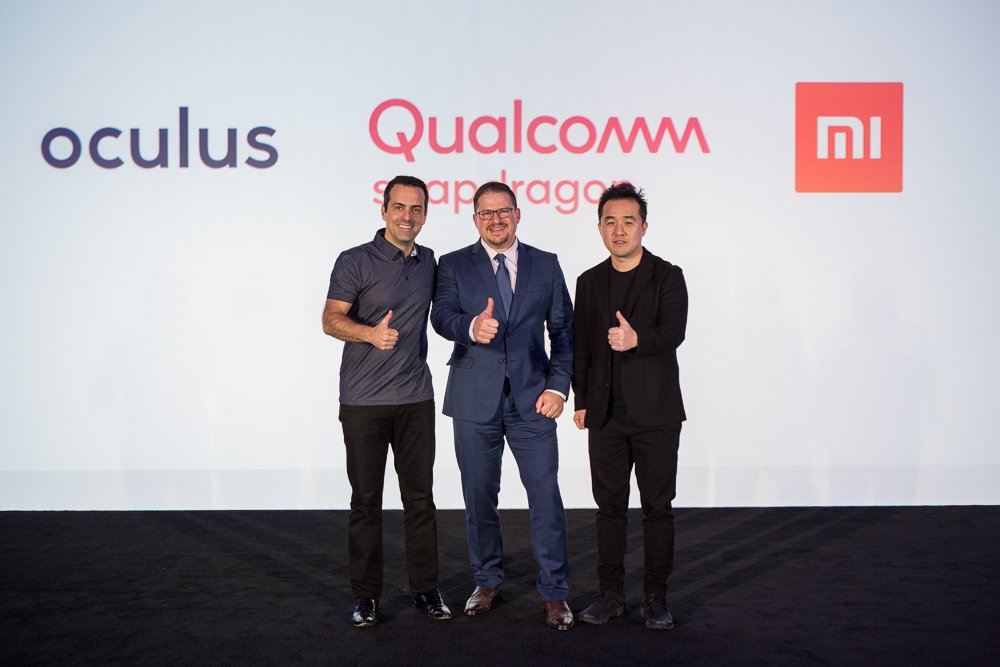
Taiwanese tech giant HTC has announced a new standalone Vive VR headset for the Chinese market. The HTC Vive is a virtual reality headset developed by HTC and Valve Corporation. The headset uses “room scale” tracking technology, allowing the user to move in 3D space and use motion-tracked handheld controllers to interact with the environment with precision. The new version which seems to be developed specifically for the Chinese market is a standalone device that does not require to be connected to a PC or smartphone.
The new HTC Vive VR headset is indeed the first HTC VR that would be entirely mobile which is an advantage in a way. However, the hardware are most likely not identical with the existing Vive VR as this one looks like a trimmed down version. The new standalone Vive will be powered by a Qualcomm Snapdragon 835 mobile VR platform and would come with access to the Viveport platform. The Snapdragon 835 mobile VR platform was designed for standalone VR headset and has made this device independent of a smartphone or PC to function.
Apart from its standalone nature which makes it highly mobile, the HTC Vive standalone VR headset is expected to be affordable. Due to the fact that the device would not need additional hardware to function, the price would be way cheaper than the non-standalone Vive VR. However, HTC is yet to announce the price tag for the gadget but has indicated that the VR headset would be dropping later this year. When that happens, we’ll find out more details and the actual price of the device.
The Pro 7 and Pro 7 Plus smartphones were not the only devices announced by Meizu yesterday. The Chinese manufacturer also launched the Meizu Flow Earphones.
The Flow Earphones is a collaborative work between Meizu Acoustics and Japanese ID Designer, Ping Jing Hao. They also worked with the Institute of Acoustics at the Chinese Academy of Sciences to fine tune the earphones.
Meizu has worked hard at making the Flow as great as possible. With its history as a MP3 Player manufacturer, expect the Flow to provide high-quality audio reproduction. The Flow has three main components to ensure this. There is a high fidelity moving coil unit that enhances the low-frequency dive degree, a high sensitivity dual-balanced mixing unit, and a professional tuning frequency unit.
Meizu has also focused on the design of the Flow making it comfortable to wear. Unlike previously reported, it doesn’t look like the AKG K3003. The earphones also has an in-line microphone and a gold plated 3.5mm connector.
The Meizu Flow Earphones is priced at ¥599 ($89) and is available in Moonlight Silver and Star Black. If you purchase it along with either the Pro 7 or Pro 7 Plus, you pay ¥499 ($74) instead. The earphones comes with 6 pairs of earbuds and a carrying case to keep it safe.
Meizu took the wraps off its 2017 flagship models – Pro 7 and Pro 7 Plus yesterday in a well-organised ceremony in China. The launch of the Pro 7 models is a reflection of the new organisational structure which Meizu implemented a couple of months back. The restructuring did not affect JackWong who is Chairman and CEO of Meizu but Li Nan who was formerly Meizu VP for sales and marketing now heads the newly created Blue Charm division as President in addition to his duties as head of branding, sales and marketing. Bai Yongxiang who was Meizu CEO while Jack Wong was away, is now heading the Meizu division as President, reporting directly to Jack Wong. While Yang Yan, senior vice president of Meizu technology and president of Flyme division will continue to oversee the Flyme operating system.
After the conference, Meizu President Bai Yongxiang reportedly granted an interview to reporters and he disclosed that at present, Meizu is composed of three departments- Meizu Business department, Blue charm business unit and the Flyme business department. He also confirmed the portfolios just as we reported earlier. The Meizu president disclosed that the restructuring was to improve the efficiency of the company to help the Meizu brand transit completely to the high-end phone category. The Pro 7 happens to be the first high-end model from the Meizu division and CEO Jack Wong was reported to have been involved in the R&D process especially for major decisions like the secondary display. The media-shy Jack Wong was again absent from the launch event but Mr Yongxiang revealed that Jack Wong will make a formal appearance in next year’s conference to introduce a classic mobile phone from the company.
In the aspect of sales, the Meizu president disclosed that the company has ditched the idea of releasing many smartphones annually as was the case last year because it still doesn’t guarantee that they’ll hit their sales target. But the company may release just two products under the Meizu division while the Charm Blue division will also release a couple of models but not in a flurry anymore. Meizu will also be working on its offline sales channels in addition to selling online.
Finally, Bai Yongxiang acknowledged that many users ridicule the company’s products due to the use of MediaTek chips over the years. He then went on to reveal that Meizu will launch a high-end chip-packing Meizu phone in late 2017, of course using Qualcomm’s Snapdragon chip since Meizu and Qualcomm have settled their differences. Apart from the flagship Snapdragon chip, the Meizu phone will also come with a comprehensive design and is targeted at a 4,000 Yuan price tag. Do you think Meizu is going too fast especially with the pricing? The high-end Pro 7 Plus model did hit the 4,000 yuan mark, priced at 4080 yuan (∼$604). Let’s see how far they can go with this strategy.
It is no longer unusual to see manufacturers release special versions of their flagships for China or Asia at large. Samsung did so with the Galaxy S8+ which has 6GB of RAM and 128GB of storage. Motorola also mentioned that the Chinese variant of the newly announced Moto Z2 Force will have 6GB of RAM. Rumor going round now is that there will be a Galaxy Note 8 Emperor Edition with 6GB of RAM and 256GB ROM.
Chinese leaker, Ice Universe, posted the info on Weibo yesterday. Initially he had written that the Galaxy Note 8 Emperor Edition will come with 8GB of RAM and 256GB of storage but later corrected it to 6GB of RAM.
Along with the special variant is a 6GB RAM + 64GB ROM standard edition and a 6GB RAM + 12GB model. He also added that the Galaxy Note 8 will arrive in blue, black and grey.
Samsung has announced the date for the Galaxy Note 8’s launch as 23rd of August. The Unpack Event will be held in New York with launches in other countries following later.
The rumor mill is buzzing with information on the Apple iPhone 8 that is expected to come with an OLED screen enabled with super-slim bezels. It is expected to come with a bunch of new features that are unavailable on other iPhones. Recent rumors have revealed that the iPhone 8 will be announced along with the iPhone 7S and iPhone 7S Plus on Sept. 5 or 6, but the shipments of iPhone 8 may begin in October. Fresh information from sources in Asian supply chain suggest that the three upcoming iPhones will debut on Sept. 7, 8 or 9 and the iPhone 7S and 7S Plus will be released in the market on Sept. 17 and the shipments of iPhone 8 will start in October or early November.
The Japanese tech blog, Macotakara that was first to reveal the above information has also given out some information on the iPhone 8. Recent renders have revealed that the iPhone 8 has a longer Power button. Some of the recent speculations have claimed that since Apple is unable to place the fingerprint under the front glass, it may come embedded in the long-shaped fingerprint scanner. Fresh information coming from supply chain contradicts the news about fingerprint sensor inside side-mounted Power key.
Fingerprint identification was under-screen in testing machine. Maybe they done it successfully.
The official cases that are being built for the iPhone 8 does not have cut-out for the Power button. Hence, the Touch ID sensor is unlikely to present inside the Power button. It seems that Apple will embed the Touch ID sensor underneath the screen. Benjamin Geskin, a known designer and tipster has recently claimed that Apple may have successfully managed to place the fingerprint scanner under the display. However, there is a possibility that Apple may either place it on the backside of the iPhone 8 or skip it completely.
The probable reason behind skipping the fingerprint sensor on the iPhone 8 can be understood by looking at the image of its purported screen protector which shows that it will be equipped with a pair of iris sensors. This could mean that iPhone 8 would be coming with 3D facial recognition feature dubbed as Face ID.
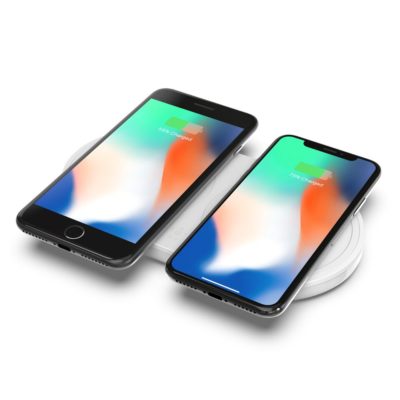
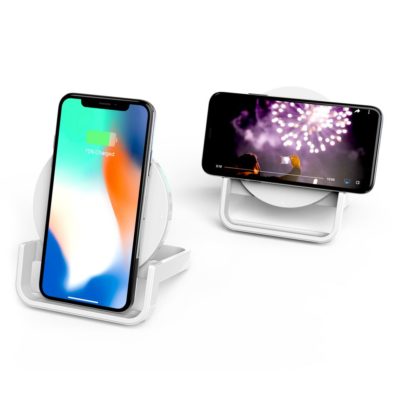
The front panel of the iPhone 8 will be available in only black color. This suggests that it apart from color black, the iPhone 8 may not be available in other color options. As rumors have claimed, it will be sporting a glass rear that will make it possible to support wireless charging, a feature that is unavailable on any of the iPhones released so far.
A market research conducted by in the previous month by Morgan Stanley revealed that India will overtake the U.S. in 2018 to become the second largest smartphone market by units in the world. Hence, India is a very important market for smartphone OEMs. A market analysis conducted by Canalys reveals that the Indian market is ruled by Samsung and Chinese smartphone brands.
Canalys has revealed the second quarter (April to June) smartphone market share in India for this year. In comparison to the second quarter of 2016, the year-over-year shipments have declined by 4 percent. The company claims that the Indian market is contracting as less than 27 million smartphones were sold in the second quarter of 2017 in India.
Samsung is leading the Indian smartphone market with 25 percent share. However, the above graph shows that Xiaomi is a major threat for Samsung as the Chinese firm shipped with 4.8 million smartphones which is four times more than the units it had shipped in the same quarter in the previous year.
Vivo and OPPO are the two Chinese smartphone brands that are rapidly increasing their smartphone market share in the country. Both the companies have been aggressively marketing their products offline. Vivo which is now in the third position had shipped with 3.4 million smartphones in Q2 this year. OPPO moved on to fourth position by taking over Lenovo that is now sitting on the fifth with 1.9 million smartphone shipments in Q2.
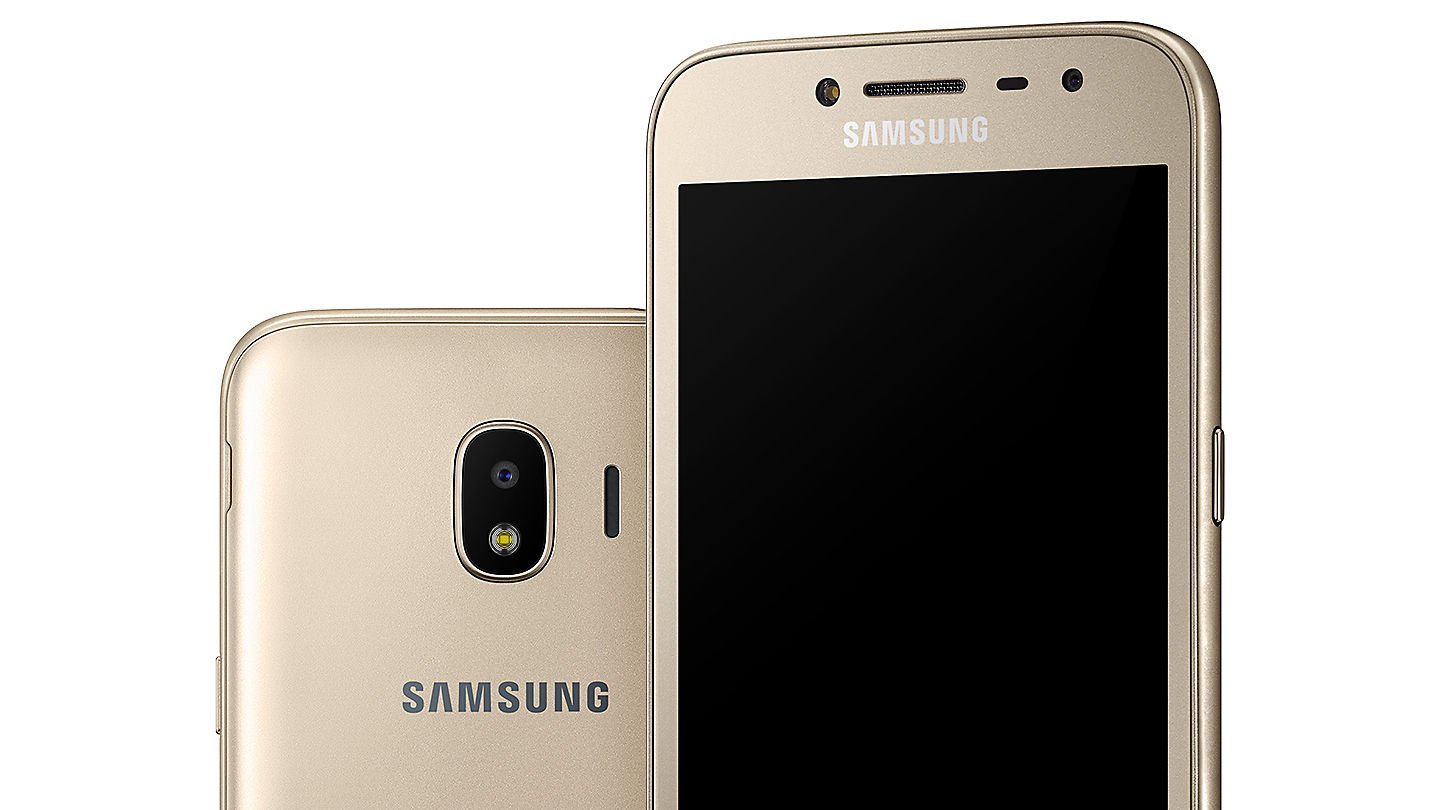
Samsung’s numero uno is under threat as Chinese brands like Xiaomi, Vivo, OPPO, Lenovo and Gionee account for 50 percent of smartphone sales in India. These Chinese smartphone brands are very popular for their mid-range and entry-level smartphones in India. Samsung’s J series smartphones are also quite popular in the country, but there is stiff competition for these phones by smartphones from aforementioned Chinese companies.
Samsung’s premium phones Galaxy S8 and Galaxy S8+ are doing very well in India but it has to put more efforts to make sure that its mid-range phones are desirable. The Chinese smartphone market encountered a decline this quarter. Hence, the Chinese smartphone vendors are focusing more on the Indian market.
According to Morgan Stanley’s report, India’s smartphone market is expected to bloom at a compounded annual growth rate (CAGR) of 23 percent in the coming year. In the same period, China is estimated to meet a 5 percent CAGR in units. India’s smartphone market is forecasted to grow five times faster than the world’s largest smartphone market, China.
Samsung is rumored to be working on a new flip phone called W2018. Around two months ago, W2018 had appeared on the database of TENAA, China’s regulatory body. Earlier this week, a leakster spilled out some information on the key specs of the clamshell phone. The information revealed by the leakster is quite different from the specs of W2018 that had appeared on TENAA.
The W2018 will be arriving to succeed the Samsung W2017 clamshell from the previous year. According to the leakster, the Samsung W2018 that has a model number of SM-W2018 will be driven by Snapdragon 835 and the chipset will be accompanied with 6 GB of RAM. The native storage of the phone will be of 64 GB. These key specs are present on Galaxy S8 and Galaxy S8+ flagships. Also, these specs will be also present inside the Galaxy Note 8.
In another tweet, the leakster has claimed that Samsung will soon releasing another flagship apart from Galaxy Note 8. However, it will not be a Galaxy branded phone. Almost all the smartphones are sold under Galaxy branding by Samsung. Hence, it seems that the leakster could be talking about the Samsung W2018 that is now rumored to arrive with flagship specs. The rumor mill is also talking about a Samsung flip phone with model number SM-G9289. Speculations hint that SM-W2018 and SM-G9298 are the same phones.
As mentioned the new information shared by the leakster is quite different from the specs of the W2018 phone that had appeared on TENAA. According to TENAA listing which probably contains older information had revealed that the W2018 would be equipped with a pair of 4.2-inch S-AMOLED screens that will produce full HD resolution of 1,920 x 1,080 pixels.
The TENAA listing had also revealed that W2018 would be driven by Snapdragon 821AB chipset, 4 GB of RAM, 64 GB of storage and Android 6.0 Marshmallow. It also revealed that it features a 12-megapixel rear camera and a front-facing camera of 5-megapixel. Also, it is packed with a 2,300mAh capacity battery. Interestingly, this TENAA listing is not accessible now.
Clamshell phones are quite popular in some Asian countries like South Korea and China. However, the demand for such phones are quite like less in the U.S. and Europe. Hence, the Samsung W2018 is speculated to arrive in South Korea and China in the near future.
You must have known by now that MIUI 9 is now official and the Mi 5X is the first Xiaomi model that would run on MIUI 9 out of the box. Xiaomi also announced the list of models that would get the MIUI 9 Developer ROM and the dates the updates would be available.
MIUI comes in Developer ROM and Stable ROM and as the name implies the Developer ROM is still in development and gets updates weekly except on China’s National holidays. To be able to use the Developer ROM, users must have knowledge of how to successfully flash the ROM on their Xiaomi phones. On the other hand, the Stable ROM is the final product with most of the bugs fixed. The Stable ROM is updated only once a month or twice or even longer and users don’t need to know how to flash their smartphones.
From the release itinerary, the Xiaomi Mi 6, Mi 5X, and Redmi Note Note 4X (Qualcomm version) will get the Developer ROM on August 11 while the second batch will start rolling on August 25. The second batch will involve a whole lot of models including Mi MIX, Mi Note 2, Mi 5, Mi 5s, Mi 5s Plus, Mi 5c, Mi Max 2, Mi Max 32G, Mi Max 64G/128G, Mi 4S, Mi 4c, Mi Note Pro, and Redmi 4X. Then, from late September, MIUI 9 China Developer ROM for all other Xiaomi Mi and Redmi models, except Mi 1/1S and Mi 2A, will be released in undisclosed batches. Do note that this Developer ROM is the China ROM of MIUI 9 and not the Global ROM. Xiaomi is yet to disclose exactly when the Global ROM will start rolling.
Gizmochina along with Leagoo is conducting a Legaoo Kiicaa Power phone as Giveaway gift to one of our lucky readers. Like always, you just have to follow the steps mentioned on the Gleam widget to get a chance to win this amazing phone.
Here is the main features of Leagoo Kiicaa Power:
5 inch HD screen, 2GB RAM, 16GB ROM
4000mAh huge battery
0.3s fast rear fingerprint sensor
8MP rear dual-camera
Now you can save $10 to purchase this budget killer on Aliexpress at only $59.99, please click here
How to entry this giveaway? Just follow these steps via Gleam widget:
Visit Leagoo’s Facebook and Twitter, follow them;
Share this article to your Facebook, Twitter, Google+ or other social media;
Terms & Conditions:
1. The giveaway is an international giveaway.
2. We are not responsible for lost shipments.
3. We are not responsible for any duties, import taxes that you may incur.
4. We reserve all rights to make any changes to this giveaway.
5. The prize will be shipped in a week when the giveaway end.
Just follow the steps mentioned in the Gleam widget to participate in the giveaway.
Today has been an exciting one so far. Xiaomi unveiled its new phone, the Mi 5X; the latest version of its custom OS, MIUI 9; and its smart speaker, the Mi AI Speaker. A few hours later, it is Meizu’s turn and they have launched their latest flagship phones, the Meizu Pro 7 and Pro 7 Plus.
The biggest feature of the new phones are the secondary displays. Measuring 1.9-inches on both phones and positioned on the rear, it’s a whole new take on dual display technology.
Meizu Pro 7 and Pro 7 Plus Design
Meizu has partnered with American design company, Frog Design, and they are calling the result of their partnership an Omni-Dimensional Design. Unlike other manufacturers that have adopted glass as their material of choice, Meizu has settled for metal with a brush finish at the back.
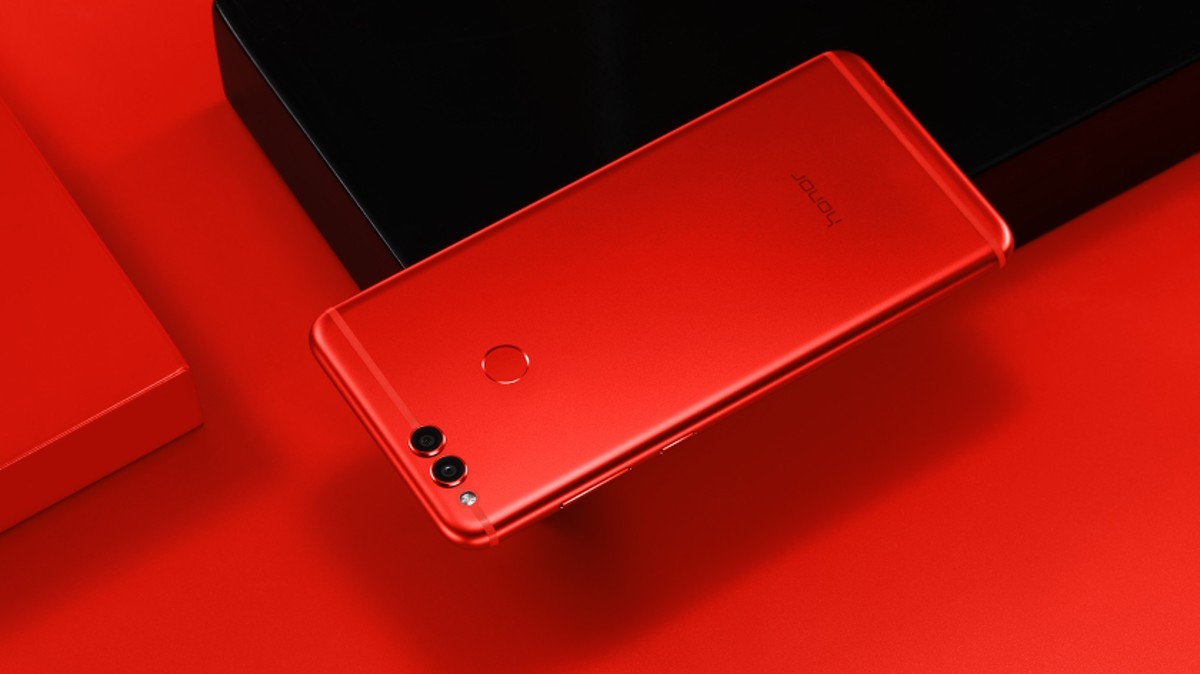
Meizu has never been one to shy away from bright colors and the Pro 7 is an example. It comes in bright red alongside the usual black and gold.
Meizu Pro 7 and Pro 7 Plus Cameras
This is Meizu’s first dual camera phone and just like Motorola did with the Moto Z2 Force announced yesterday, the Pro 7 (and 7 Plus) have adopted the monochrome + RGB configuration. The sensors are 12MP Sony IMX386 with an f/2.0 aperture size. The result of this configuration is better night shots.
Up front sits a 16MP sensor for selfies though you can also use the rear cameras for selfies since there is a display at the back. Just swipe down and you enter the camera mode.
Meizu Pro 7 and Pro7 Plus Specs
The Pro 7 has a 5.2-inch Super AMOLED display while the Pro 7 Plus is 5.7-inches. The secondary display is Super AMOLED too. Powering the Pro 7 and Pro 7 Plus is Mediatek’s Helio X2 and Helio X30 processors.
There are two models of the Pro 7: one has 4GB of RAM and 64GB eMMC 5.1 storage and is powered by the Helio P25, while the other has 4GB RAM, 128GB of storage and a Helio X30 SoC.
The Pro 7 Plus gets 6GB of RAM with either 64GB or 128GB of UFS 2.1 storage and both versions are powered by the Helio X30.
Meizu says the Pro 7 is good for gaming and you do not have to worry about overheating. Tests show that the temperature stays at 34.6°C when playing Asphalt 8 and 40.4°C while playing NBA 2K17.
The differences don’t end there. The smaller Pro 7 has a 3000mAh battery with mCharge 3.0 and the Pro7 Plus gets a 3500mAh battery with mCharge 4.0. mCharge 4.0 charges your phone at 5V 5A (25W), taking it from 0 to 67% in just 30 minutes. It seems we might have a new fast charging champion.
There is a dedicated audio chip in each phone to make sure that your audio is crystal clear. Both phones run Flyme 6 based on Android 7.0 out of the box.
We use cookies on our website to give you the most relevant experience by remembering your preferences and repeat visits. By clicking “Accept”, you consent to the use of ALL the cookies.
This website uses cookies to improve your experience while you navigate through the website. Out of these, the cookies that are categorized as necessary are stored on your browser as they are essential for the working of basic functionalities of the website. We also use third-party cookies that help us analyze and understand how you use this website. These cookies will be stored in your browser only with your consent. You also have the option to opt-out of these cookies. But opting out of some of these cookies may affect your browsing experience.
Necessary cookies are absolutely essential for the website to function properly. This category only includes cookies that ensures basic functionalities and security features of the website. These cookies do not store any personal information.
Any cookies that may not be particularly necessary for the website to function and is used specifically to collect user personal data via analytics, ads, other embedded contents are termed as non-necessary cookies. It is mandatory to procure user consent prior to running these cookies on your website.