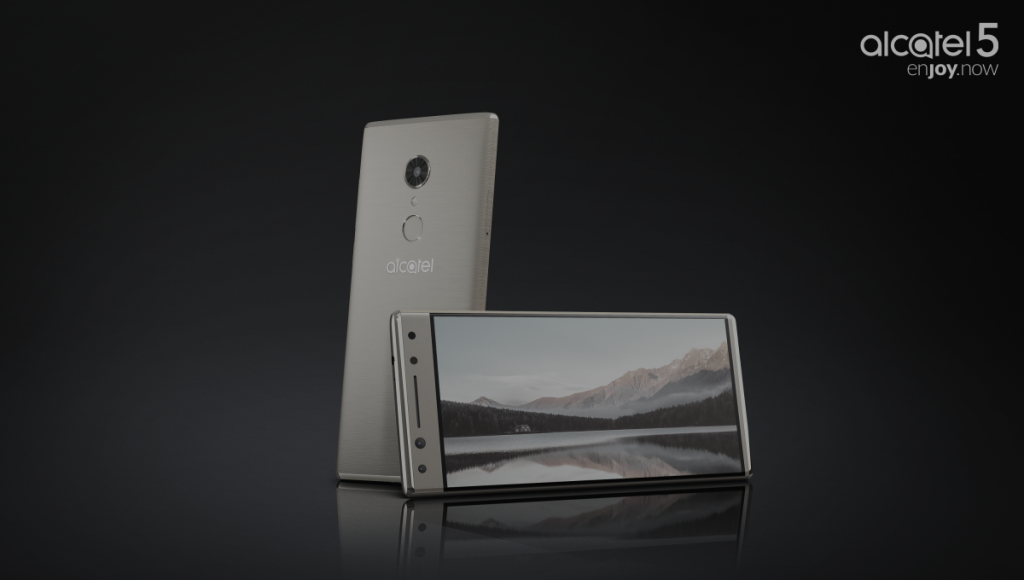
ZTE is working on a foldable smartphone called the Axon Multy. It will have two displays that can be unfolded into a single 6.8-inch screen. The device has been seen on Geekbench but under the name ZTE Z999.
The ZTE Z999 was benchmarked back in August. It runs Android 7.1.2 Nougat and has 4GB of RAM. There is a Qualcomm chip with 4 cores clocked at 2.0GHz powering the device and the identifier is similar to that of the Snapdragon 821. So this will probably be the chip in the Axon Multy.
The ZTE Z999 scored 1677 points in the single core test and 4130 points in the multi-core test. The scores are similar to those of other Snapdragon 821-powered phones.
Popular leaker Roland Quandt shared the link to the benchmark, along with a User Agent Profile link that confirms the device has having a 1080 x 1920 FHD resolution.
Samsung has recently released the Galaxy Note 8 in various markets and the rumor mill has already started speculating on the features that will be coming on Galaxy Note 9. Fresh information coming from Ming-Chi Kuo, a reliable analyst from KGI Securities states that Samsung will embed an optical fingerprint scanner under the display of the Galaxy Note 9 that will be probably unveiled in Q3 2018.
The introduction of elongated Infinity Display on Samsung Galaxy S8 and Galaxy S8+ resulted in the repositioning of the fingerprint scanner to their back. Since the fingerprint reader was placed very close to the rear camera, the users of Galaxy S8 duo end up smudging the camera lens whenever they unlock their phone.
Samsung had reportedly planned to incorporate the fingerprint reader under the display of Galaxy Note 8. However, since it could not ready the technology in time, it was not made available on the Note 8. Samsung has placed the LED flash unit and heart rate sensor between the dual camera system and the fingerprint scanner on the Galaxy Note 8.
There is no information available on whether the under-display fingerprint scanner will be arriving on the Galaxy S9 and S9+. These phones may feature the same positioning for the fingerprint reader as the Galaxy Note 8.
The information revealed by Kuo suggests that the South Korean company will make it possible for Galaxy Note 9 users to unlock their phone by just placing their finger on the portion of the screen that is integrated with an optical fingerprint sensor. The analyst claims that there are three companies that are attempting to strike a deal with Samsung to supply it with the component that will enable under-display fingerprint reader. Beyond Eyes and Samsung LSI (subsidiary of Samsung) have already provided their samples to Samsung.
So, Samsung seems to be working on introducing under-display fingerprint reader on the Galaxy Note 9. Will Apple too introduce such a feature on its future iPhones? Share us your thoughts by adding your comments below.
The new renders are replicas of those shared by Twitter tipster Evan Blass recently and with the pedigree of the Weibo source, we could as well take it that this is the Mate 10 Pro’s final design. The Mate 10 Pro features a curved edge design at the rear just like the Mate 9 Pro. We could be looking at a glass back on the device. At the front, the device will have almost bezel-less, full-screen display with ultra-slim bezels on the chin. The top and bottom bezels are also much reduced. The renders also show the presence of dual cameras at the rear with the Leica badge which is turning into a regular on Huawei’s flagship products. Of course, the dual cameras co-engineered by Leica have turned out to be one of the prominent features on Huawei phones. There is also a rear-mounted fingerprint sensor onboard the smartphone.
The Mate 10 Pro seems to be Huawei’s main product to take on the likes of Samsung, Apple, Xiaomi et al who have got a full-screen flagship model already in their kitty. The Mate 10 Pro’s design seems to overshadow that of the Mate 10 especially since the Mate 10’s design is said to be no much different from the Mate 9. The Mate 10 is expected to feature a Quad HD (1440 x 2880 pixels) display and a more classic 18:9 screen aspect ratio. Of course, we won’t forget the AI-capable Kirin 970 chip both models are expected to pack.
Apple’s latest iPhone 8 and 8 Plus have been repeatedly plagued by one major problem (call it minor if you like) and it is related to the battery. There have been a couple of reported cases of iPhone 8 and 8 Plus units with swollen batteries which usually result in the display popping out of the chassis. Some of the cases occurred while the phones were charging for the first time and there was a case of the defect occurring while the new iPhone is yet to be unboxed.
Although Apple has indicated that they are looking into the issue, the number of cases seems to swell by the day. We have had a case reported in Japan and Taiwan. There have also been reports from Canada, China Greece and Hong Kong. A case has also been reported in the Formosa region in Argentina. So, we may well be looking at least seven cases which are randomly shared between the iPhone 8 and its bigger variant iPhone 8 Plus.
We are not quick to compare this with the Samsung Galaxy Note 7 because there has been no reported case of battery explosion. Besides, millions of iPhones come off the production line overseas, and thereby millions of lithium-ion batteries are being manufactured, so it’s common in the industry for there to be a very low percentage of defective units. But it may interest you to know that Samsung SDI is one of the two suppliers of the iPhone 8 and 8 Plus batteries. Samsung SDI is also responsible for the defective batteries which resulted in the Galaxy Note 7’s recall. LG Chem also produces the batteries for the iPhone 8 and iPhone 8 Plus. Until Apple releases its findings, we can’t tell the root cause of the issue. Until they do, we do hope the number of cases won’t continue to rise.
There are tons of smartwatches in the market at the moment. While some have a LCD/AMOLED display, others look no different from your average analog watch. LunaR falls under the second category.
LunaR has some unique features that makes it stand out from other watches. First, inspiration for the name comes from the moon but the watch recharges via solar. The face (dial) is actually a transparent solar panel that recharges the built-in 110mAh battery. Apart from charging via light rays from the sun, LunaR will also recharge via indoor lighting or the bundled charger.
With respect to functions, the LunaR is no slouch either. While it can’t show you stats of your physical activities on its display (only via the app), it can display two different time zones – one with the aid of LEDs and the other using the analog hands. It also has sunrise and sunset tracking and is waterproof too (5 ATM).
Activity tracking such as running and steps taken can be viewed on the app as well as sleep tracking details. Using LEDs and vibrations, LunaR will inform you if you have reached your daily goal. The multi-color LED light can also be customized for individual app notifications.
The LunaR app which is available for both iOS and Android can also be used to monitor charging time, set alarms, and modify time zones. There is Bluetooth 4.0 LE for connectivity and its compatible with iOS 10+ and Android 4.3+ devices.
LunaR has a steel design that is simple yet classy. By default, it comes with a nylon strap but you can pick up a leather strap for $17.50 or a colorful knit strap for $13.50. The LunaR watch has a diameter of 41mm and a thickness of 13.3mm. The glass is either Sapphire coated or Sapphire crystal (latter version will ship in 2018).
The watch has already surpassed its $50,000 goal three times over. It is expected to ship to the first 3,000 backers by December.
IHS Markit, a London-based research firm has confirmed the list of top 10 bestselling smartphones for the first half of 2017. It has revealed that the Apple iPhone 7 is present at the number one spot followed by the iPhone 7 Plus. The Samsung Galaxy Grand Prime Plus midrange phone from 2016 is on the third position.
The fourth position is occupied by iPhone 6S and the sixth and seventh places have been reserved by Samsung Galaxy S8 and Galaxy S8+. The research firm claims that flagship phones from Apple and Samsung have met with sluggish sales in the first half of this year.
The 4.7-inch iPhone models have been ranking at number one position consecutively for the last three years. The iPhone 6, iPhone 6S and iPhone 7 were bestselling phones in 2015, 2016 and 2017 respectively. However, the market share of these iPhones has been consistently falling from 10 percent to 7 percent and now it has come down to 5 percent this year.
The reason why Samsung Galaxy S8 and Galaxy S8+ models are not ranking higher in the list is that these phones were made available for buying in April. Hence, compared to the other better ranking phones on the list, Samsung has shipped lesser units of the Galaxy S8 duo in first half of 2017.
The list includes five smartphones from Samsung and four from Apple and one from OPPO. However, the name of the OPPO phone that has made it to the list has not been revealed by the research firm.
IHS Markit has also stated that compared to 2016, the number of smartphones with shipments of more than 1 million units per month has increased 22 from 17 in this year. Samsung and Apple respectively have 10 and 4 phones that have shipped over 1 million units per month.
The popularity of smartphones from Chinese OEMs have also increased as they started shipping smartphones outside of China. There are five OPPO phones, two Xiaomi phones and one Huawei phone that have shipped over 6 million units in the first half of 2017.
The original Google Pixel and Pixel XL phones feature 3.5mm audio jack. However, the recently unveiled Pixel 2 and Pixel 2 XL smartphones do not feature it. Soon after the unveiling of the Pixel 2 duo, the removal of the 3.5mm audio jack on the Pixel 2 duo was met heavy criticism on Google’s Product Forums. Orrin Hancock, the official Community Manager of Google for Nexus/Pixel products responded to the criticism by saying that the USB-C port is a headphone jack and the company decided to remove the 3.5mm audio jack in order to deliver superior audio and digital experience.
According to Hancock, the axing of 3.5mm audio jack is a move towards bezel-less future and it is becoming a common feature on some of the best phones and laptops available today. The USB-C port on the Pixel 2 and Pixel 2 XL is the only port available for connecting a wired earphone and a charger. In other words, users can’t charge the Pixel 2 or 2 XL and listen to music simultaneously.
When forum users cited the above issue, Google’s staff advised Pixel 2 and Pixel 2 XL users to either avail dongles or Bluetooth headphones or ear buds. Hancock has even provided a list of Google branded and Made for Google headsets for Pixel 2 and 2 XL. He has also suggested users to purchase USB-C headphones that support digital audio. Hence, both the Pixel 2 phones do not support analog audio.
The box package of Pixel 2 and Pixel 2 XL include an adapter that can be used on a 3.5mm headphone to connect it to a USB-C port. When Apple had axed 3.5mm audio jack on the iPhone 7 and iPhone 7 Plus last year, Google mocked at it by using a tagline “3.5mm audio jack – satisfyingly not new” for the original Pixel and Pixel XL phones. And now, Google has taken the same path as it has removed the 3.5mm audio jack on Pixel 2 phones.
The Google Pixel 2 and Pixel 2 XL smartphones are currently available on pre-orders. In the U.S., both the smartphones will start shipping from Oct. 19.
The Vernee MIX 2 is a bezel-less smartphone with a 6-inch 18:9 display. It was unveiled last week as the world’s first full-screen phone with a Helio P25 processor.
When it launched last week, Vernee announced a campaign that would allow select 100 buyers get the phone for just $99.99 instead of its normal price of $229.
In addition to that, Gearbest is running a promo that brings the price down to $169.99 from today till October 15. Afterwards, it’ll return to $219.99 which is $10 less than the official price.
The Vernee MIX 2 has a 6.01” 2160 x 1080 display. There is 4GB of RAM and 64GB of storage. Under the glass back is a Helio P25 SoC and a 4200mAh battery.
The Xiaomi Mi Mix 2 is expected to be launched in India on October 10 and ahead of that launch, Xiaomi has sent out press invitation and also has been releasing some teasers for the event. The Mi Mix 2 will be the second flagship model since the Mi 5 which will be hitting India. India missed out on the Mi 6 and so the launch is an important one for the tech giant as they’d be testing to see if their flagship models would fare as good as its mid-range and budget models that are doing well in India. The latest teaser was shared by Xiaomi’s international product director, Togo Donovan Sung.
The teaser is more of a brain teaser where you’ll have to spot the Mi Mix 2’s design on four different photos. Perhaps, you can try your wits to see how fast you can pick out the Mi Mix 2. Now, here is a guide, don’t go looking for the real photo of the Mix 2 else you’ll search until you get tired of searching. The brain teaser is meant to tease the Mi Mix 2 full-screen design which is embedded in the photos, fused with some of the objects captured in the photos. For instance, in one of the photo, it is fused onto the roof of a car and in another, the design is incorporated onto the wall tiles.
The Mi Mix 2’s biggest feature is the full-screen 2.0 design which the device is expected to feature. Apart from the near bezel-less design, the Mix 2 packs a 5.99-inch FHD+ display with a resolution of 2160 x 1080p and is powered by a Snapdragon 835 chip with an Adreno 540 GPU. The Mi MIX 2 packs a single 12MP Sony IM386 sensor at the rear as well as a 5MP selfie camera. There is a 3,400mAH non-removable battery under the hood with QC 3.0 as well as a rear-mounted fingerprint sensor. There is also dual WiFi band support and it supports 43 bands, 22 of which are LTE bands, including band 20. The Mi MIX 2 runs on MIUI 9 based on Android Nougat. We’ll have to wait until tomorrow to find out the retail price in India. Meanwhile, see if you can find the Mix 2 anywhere on the four photos and share the screenshot in the comment section.
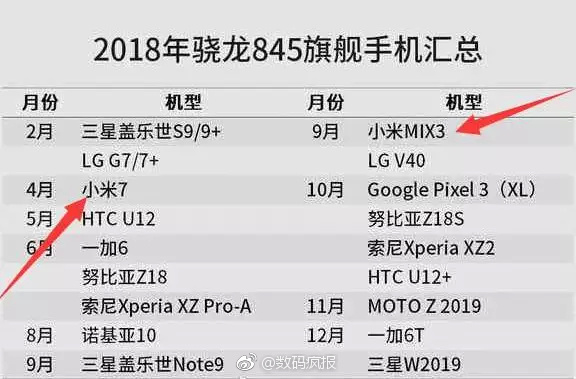
For Galaxy S8, Samsung had a deal with Qualcomm which allowed the South Korean company to keep the initial batch of Snapdragon 835 processor to itself. Now, a new report suggests that Samsung will have a similar deal for the Snapdragon 845 as well.
Samsung got to keep the initial batch of Snapdragon 835 as it worked out a deal with Qualcomm for the manufacturing of Snapdragon 835 processor. If Qualcomm again resorts to Samsung for manufacturing Snapdragon 845, the South Korean giant could get a similar deal this time also.
On the other hand, some reports indicate that Qualcomm has ditched Samsung and is giving the contract to manufacture its next-generation chipset to its rival TSMC, while other reports suggest LG as the manufacturer.
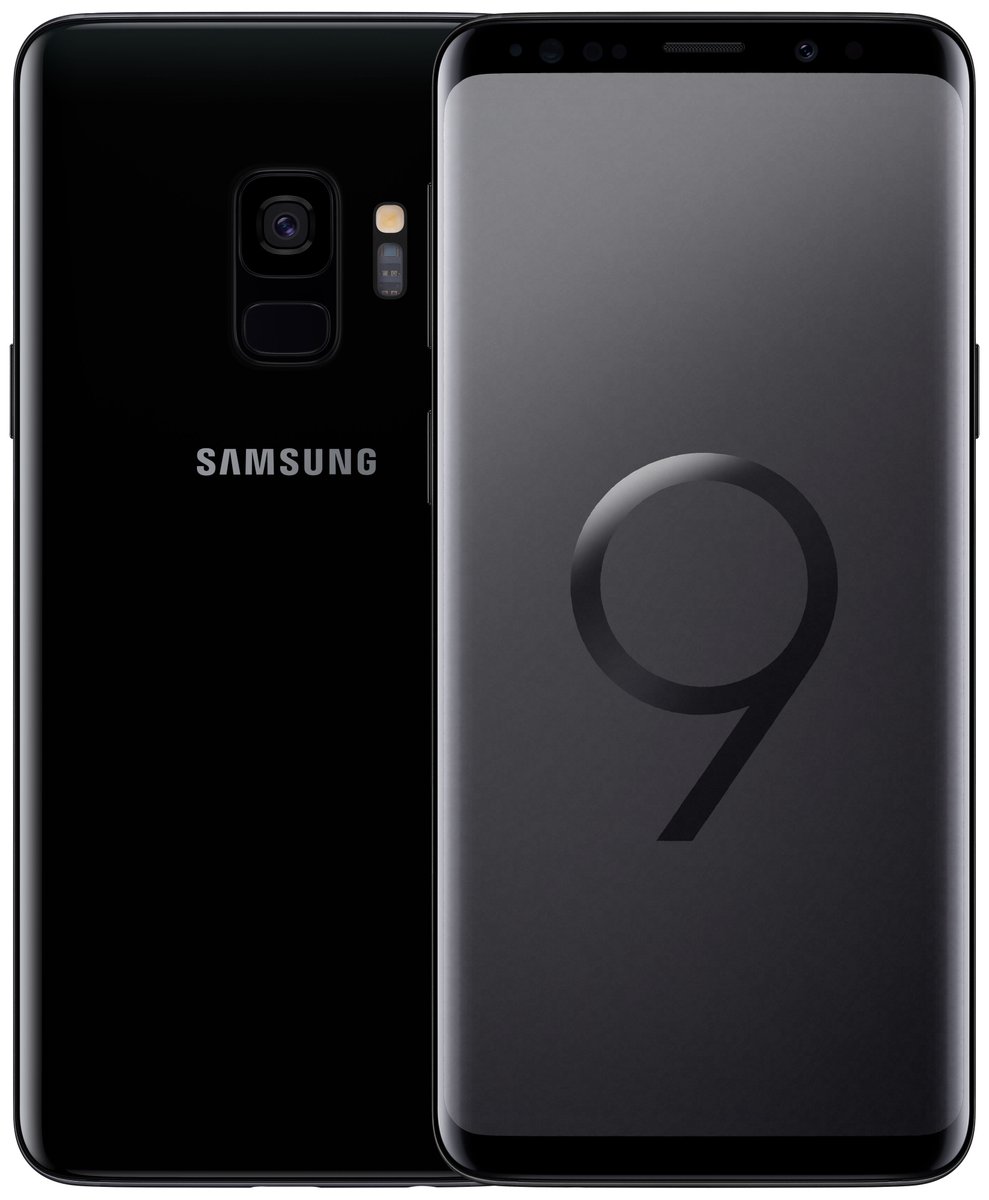
Samsung will be launching its new flagship smartphones next year, and if Samsung manufactures the upcoming chipset, it could retain the first batch of Snapdragon 845 exclusively for the Galaxy S9 and S9 Plus.
The same report also suggests that the Galaxy S9 and its bigger sibling, Galaxy S9 Plus are likely to launch a month earlier than usual.
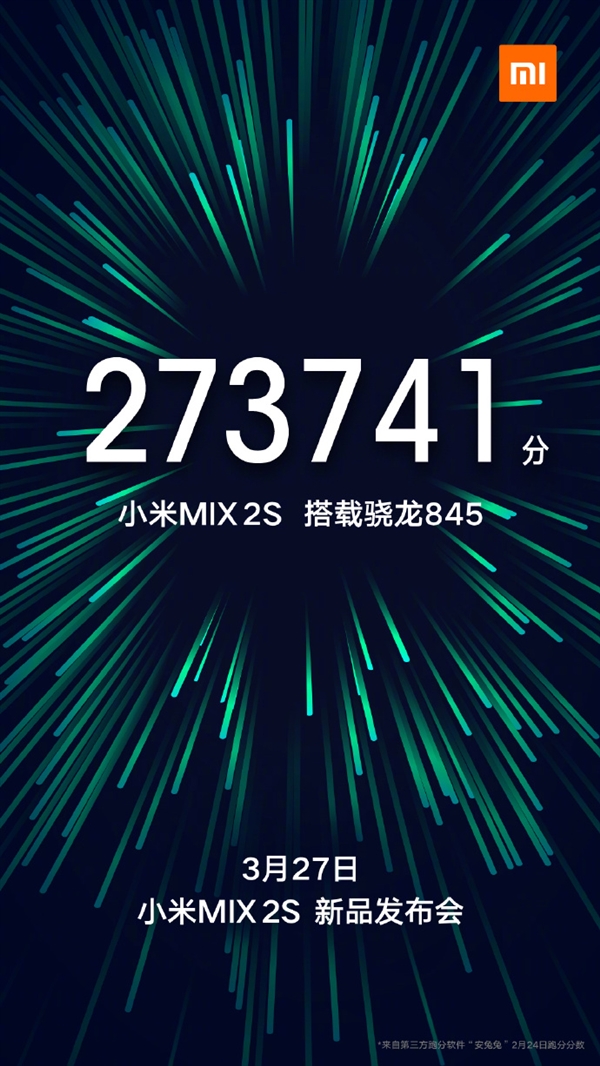
However, this report contradicts earlier reports which suggest that Xiaomi Mi 7 will be the first device to be powered by Qualcomm Snapdragon 845 process. Xiaomi is said to be working with Qualcomm to optimize the chipset Snapdragon 845 v2 for Mi 7.
The Snapdragon 845 is expected to get manufactured through 10nm Low Power Early (LPE) FinFET process. It is said to come with a combination of Cortex A75 cores, Adreno 630 graphics and X20 LTE modem.
The Galaxy S9 is expected to arrive in two models according to a leaked listing of firmware codes – G965FXXU0AQI5 and G960FXXU0AQI5. These two models are said to be the SM-G965 and the SM-G960.
Some report suggests that the phone could probably have the same display size and shape as the S8. We are expecting more information about Samsung’s next flagship smartphones to surface in the coming weeks.
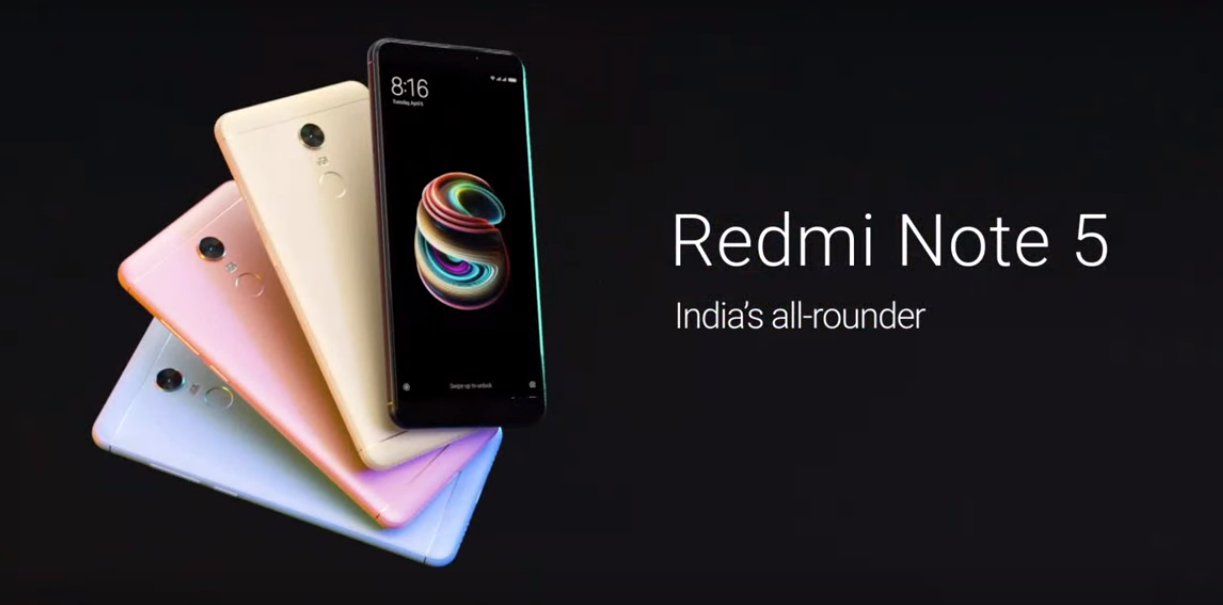
Fresh images leaked on the internet today reveal that Xiaomi is bringing the trending 18:9 display to its Redmi line. The photos show the front and rear of a phone which we think may be the Redmi Note 5.
The Redmi line is known for maxing out at 5.5-inches but this device has a larger screen, thanks to the significantly reduced bezels at the top and bottom of the phone. Our guess is that the display is about 6.0” in size.
The bezels are actually pretty thin. The bottom one even appears to be thinner than that of the Mi MIX 2. The top bezel is slightly bigger because it holds the front camera, earpiece, and sensor. We can also make out the volume rocker and power button on the right of the device.
The back of the phone is what gives this away as a Redmi phone. The design reminds us of the Redmi Pro, the only dual camera phone released under the Redmi line. Due to the screen taking up much of the front, the phone has the fingerprint scanner at the back. It sits below the LED flash and seems to have the same diameter as the cameras.
Project Loon, a product of Google‘s parent Alphabet, had expressed interest to help restore wireless connectivity in Puerto Rico and the U.S. Virgin Islands. Both islands, after being hit by Hurricanes Irma and Maria, are left without cellphone coverage in more than 90 percent area.
In the development of this matter, within just seven days, the Federal Communications Commission (FCC) has given an experimental license for 30 Project Loon balloons to fly over Puerto Rico and the U.S. Virgin Islands.
The license is applicable from October 6th until April 4th, 2018. It was granted to Ben Wojtowicz, a software engineer and member of Alphabet’s X lab who is working on Project Loon.
In the license, FCC stated that “the purpose of the [Special Temporary Authority] is to support licensed mobile carriers’ restoration of limited communications capability in areas of Puerto Rico and the United States Virgin Islands affected by Hurricanes Irma and Maria.”
If everything goes as per the company’s plans, then the balloons will temporarily replace thousands of mobile towers and provide voice and data services to users.
The 30 Loon balloons will float 20 kilometers above the earth in the stratosphere and will relay communications between ground stations connected to the surviving wireless networks, and the devices of users.
Each balloon can serve 5,000 square kilometers. Hence, 30 balloons are expected to provide service over all of Puerto Rico and some parts of the US Virgin Islands.
The spokesperson of the X division explained in a press statement that the next step is to integrate Project Loon with a telco partner’s network. The spokesperson further added that things are a little more complicated as they are starting from scratch.
In the application submitted to FCC, Alphabet showed that it has permission for Loon to use frequencies of eight wireless carriers in Puerto Rico for disaster relief and to restore limited communications.
Notably, this isn’t the first time Project Loon is coming to rescue in the time of emergency. Earlier this year, Project Loon was deployed with the help of Telefonica in Peru after a series of devastating floods.
Project Loon was started with the aim of serving the population that is still without internet access. It has launched several successful pilot projects, but the project is yet to be deployed commercially on a large scale.
Previous reports have revealed that the BND-AL10 and BND-TL10 are the variants of the upcoming of the Honor 7X smartphone. Since both the variants have now received TENAA certification, the entire specifications of the Honor 7X have been revealed.
The Honor 7X measures 156.5x 75.3 x 7.6mm and its weight is 165 grams. The BND-AL10 and BND-TL10 variants of the Honor 7X have identical specs. However, the listings suggest that the latter will be a China Mobile carrier variant whereas the former will be a regular edition. The Honor 7X will be coming in three color choices such as black, blue and gold. The images of the smartphone that have surfaced on TENAA show that it features a rear-mounted fingerprint reader.
Previous rumors have revealed that the Honor 7X would be coming in two models such as 3 GB of RAM + 32 GB of storage and 4 GB of RAM + 64 GB of storage. However, the TENAA listing for the BND-AL10 model has been modified. It states that the model featuring 4 GB RAM + 32 GB of storage has been replaced by 4 GB of RAM + 128 GB storage. Hence, there is a possibility that that the Honor 7X may not be available in 3 GB RAM option. The smartphone will also feature an external storage slot that will support up to 256 GB of microSD card.
The TENAA listings have revealed that the Honor 7X will be featuring a 5.93-inch display that will support a FHD+ resolution of 2,160 x 1,080 pixels. This suggests that the handset will feature an elongated display like the recently unveiled Honor 9i and it will offer an aspect ratio of 18:9.
The Geekbench listing of the Honor 7X as well as some of its recent reports have revealed that the handset is powered by 2.36 GHz Kirin 659 chipset. It will be fueled by 3,240mAh battery. The handset will come preinstalled with Android 7.0 Nougat that will be customized with Emotion UI skin. For photography, it is expected to house a dual camera system on its rear panel that will include a 16-megapixel sensor and a 2-megapixel sensor. It will be arriving with an 8-megapixel selfie snapper.
The Honor 7X is scheduled to get announced on Oct. 11. Its 4 GB RAM + 64 GB ROM model is expected to be priced around 2,099 Yuan (~$315).
Xiaomi phones have always been plagued by a shortage of stock in the past which has worked against the growth of the innovative tech company. But recently, there has been a change which has seen more units coming out of the production line. This has ensured that the supply chain is efficient such that third-party retailers now get enough units of Xiaomi phones, including the Mi Mix 2 and Mi Note 3 launched on September 11.
That is perhaps one reason for the reduction in price which the Mi Note 3 currently enjoys on a third-party retail website named Sundan. The 6GB + 128GB version of the Mi Note 3 is presently on sale for 2,699 Yuan, which is 200 Yuan lower than the price listed on Xiaomi’s official website as well as other retail websites like JD and Suning, where it sells for 2,899 Yuan. The price reduction is for the Bright Black version and also apply to the Blue variant. The Blue variant is presently available for 2,799 Yuan which is still 200 Yuan lower than the official price. This reduction doesn’t apply to the 64GB version of the Note 3.
We don’t know exactly why this sudden reduction or discount in the Mi Note 3’s price but it is likely a temporary reduction aimed at ramping up sales on their retail channel. As a reminder, the Xiaomi Mi Note 3 comes with the upper mid-range Snapdragon 660 chipset with 6GB + 64GB /128GB memory options. There’s a 5.5-inch 1080p display on board. The 12MP camera module is the same as the Mi 6, but the algorithms have been improved to provide better bokeh tracking. Mi 6’s portrait focus wasn’t very accurate, so it would be interesting to see how the new algorithms improve the tracking. On the front, the phone features a large 16 MP 2μm sensor for noise-free selfies. You can check out a few bokeh samples down below. There’s a large 3500mAh battery as well.
There have been a lot of speculations regarding the future of Microsoft’s Windows Phone platform. Now, it seems that the company’s executive Joe Belfiore has put the matter to rest.
Joe Belfiore, former Windows Phone program manager and current Corporate VP for Windows, has tweeted that new features and hardware for Windows 10 Mobile “aren’t the focus anymore” for the company.
However, if you are the one who is still using Windows Phone, you’ll still get fixes and security patches, but don’t expect anything more than that. The fixes and patches will keep coming mainly due to the adoption of Windows 10 Mobile for Work in the enterprise market.
One of the major reason he pointed out for dropping the platform is to get developers to develop apps for the platform. He even said that Microsoft tried paying companies to make apps, but the lack of users became another problem as for most companies, the userbase was too low to invest.
Of course, there were more reasons behind the failure of Windows Phone. While the company failed to keep up with Android and iOS, it also had no specific hardware strategy, or so it appeared.
The tweets clearing the air regarding Windows Phone comes from Belfiore after talks about him switching to iPhone and Android devices as his daily drivers.
While it is clear that Microsoft is no longer focusing on the platform, at least not for the near future, the company seems to be more focused on developing and improving applications for Android, macOS and iOS.
Microsoft is encouraging employees to create cross-platform apps in their spare time with Microsoft Garage. Apart from that, it has also launched a few apps for other platforms, including Microsoft Launcher, Edge, Kaizala, Cortana, Next Lock Screen, among others.
As per the rumours, Microsoft is working on a new “mobile” device codenamed Andromeda, which is expected to launch next year. The device will run on the new “Windows Core OS” platform.
Honor has confirmed that it will be unveiling the Honor 7X smartphone on Oct. 11. It seems that the Honor 7X is being tested to check its performance before it official launch as it has allegedly appeared on Geekbench benchmarking site.
A smartphone labelled as “Huawei BND-AL10” has been spotted on the benchmarking platform. Rumors have revealed that the smartphone is codenamed as Bond and its 3C certification has revealed BND-AL10 and BND-TL10 model numbers. The Geekbench listing has also revealed that Honor 7X is running on Android 7.0 Nougat and it is powered by an octa-core processor along with 4 GB of RAM. Previous reports have revealed that the all-new Kirin 659 chipset would be fueling the Honor 7X.
On single-core test, the handset has scored 909 points and in multi-core test, it has recorded a score of 3159. This shows that the Honor 7X will be a mid-range phone. The Kirin 659 will be an enhanced version of Kirin 658 that powers phones like Huawei P10 Lite and Huawei Nova Youth.
The recently launched Huawei Honor 9i (also known as Maimang 6 and Nova 2i in other markets) is also fueled by the new Kirin 659 chipset. It is a 16nm chipset that features four cores of Cortex A53 running at 2.36 GHz and four cores of Cortex A51 clocking at 1.7 GHz. It includes Mali T830 MP2 graphics.
The rumor mill has already leaked its specifications and pricing. Since it is speculated to launch as a budget-friendly phone with dual rear cameras, it is expected to rival with Xiaomi Mi 5X. Like the Honor 6X, the Honor 7X is also rumored to be available for buying outside China.
At the launch event of iPhone X, Apple had made it official that its pre-orders will begin on Oct. 27. Few photos and a video of what appears to be a real iPhone X have now already appeared on Reddit.
The first image shows the lock screen of the iPhone X and the home screen can be seen in the second image. Since the screen of the iPhone X shows a date of Sept. 30, it appears that these images were snapped in the previous month.
The “Confidential and Proprietary” disclaimer text present at the bottom of the lock screen suggests that the handset has a special build of iOS onboard. Hence, it indicates that the person who has leaked these images and video could be an Apple employee. The rear image of the iPhone X shows its sleek design and the vertically stacked dual cameras.
The video of the iPhone X only lasts for 9 seconds and it shows the live wallpaper in action. The live wallpaper in the video feature red bubbles of different sizes floating on a rich black background. The black color is so rich that the notch present at the top of the phone is almost invisible. The video can be viewed through the source link.
The pre-orders of iPhone X is slated to begin later in this month. Recent reports have revealed that the smartphone is being manufactured in limited quantity since Apple is reportedly struggling with the production of the TrueDepth camera system.
During the unveil event of the iPhone X, the Cupertino company had confirmed that its shipments will begin on Nov. 3, but a recent report has claimed that the shipment of the first 1 million iPhone X units will begin in December. Some reports have also claimed that the iPhone X shipments will begin in February or March next year. If Apple is unable to meet the promise of releasing the iPhone X on Nov. 3, the company may issue an official statement on the delayed shipments by the end of this month.
The iPhone X was unveiled as the tenth anniversary iPhone from the company. The 64 iPhone X carries a pricing of $999 and its 256 GB model is priced at $1,199.
Vivo X20 smartphone was launched last month, having some of the most popular features that are in demand. After seeing the response to the phone and the sales figures during the National Day in China, the company has now announced a new variant of the smartphone.
Making an announcement on the micro-blogging portal weibo, Vivo has launched a new Black & Gold color variant of its X20 smartphone. This new model is priced at 3398 Yuan, around 300 Yuan more than the regular price of X20 which is available in Gold, Rose Gold and Matte Black colors.
The smartphone comes in Black color with some elements of Gold color. The Vivo branding on the back of the phone, the camera module, and the fingerprint sensor have gold-colored embellishments.
Most of the specifications of this new model remain same as of original. The device comes with a 6.01-inch display and a screen resolution of 2160 x 1080 pixels. The display has an aspect ratio of 18:9, and the screen covers almost 85% of the body on the front side.
Under the hood, it is powered by Qualcomm’s Snapdragon 660 processor. It has 4GB of RAM, just like the original model, along with 128GB of internal storage. While the original device had 64GB storage variant, this special edition lacks the 64GB variant.
The camera setup also remains the same. It boasts a dual camera setup at back, featuring a 12-megapixel primary lens and a 5-megapixel secondary lens. The phone also has a 12-megapixel front-facing camera with f/2.0 aperture.
The smartphone, which runs on FunTouch OS based on Android 7.1 Nougat, is powered by a 3,245mAh battery. The smartphone is expected to go on sale from tomorrow.
TCL has officially introduced the BlackBerry Motion smartphone today. It was unveiled through the GITEX Technology Week that is going on in Dubai, UAE. The BlackBerry Motion is a mid-range smartphone that comes with an all-touch display, water-resistant chassis and huge battery.
BlackBerry Motion Specifications and Features
The BlackBerry Motion does not feature a physical QWERTY keyboard. Hence, the frontside of the phone is occupied by a premium anti-scratch LCD display of 5.5 inches that produces a full HD resolution of 1,920 x 1,080 pixels. The power-efficient Snapdragon 625 chipset is present under the hood of the phone along with 4 GB of RAM. The native storage available on the phone is 32 GB.
The presence of 4,000mAh battery makes it the largest battery smartphone from BlackBerry. With Quick Charge 3.0 onboard, the handset can be charged to 50 percent in 40 minutes. The Home button present below the display is embedded with a fingerprint scanner.
The BlackBerry Motion comes pre-installed with Android 7.1 Nougat OS and it is going to receive the latest Android 8.0 Oreo update in 2018. A feature called Locker allow users to securely store their documents and photos on the native storage and make use of a PIN code or fingerprint scanner to access them. The Locker Mode allow users to save captured photos to the internal storage without sending to the cloud.
The Convenience Key is enabled with four customizable profiles such as Home, Car, Office and User. These can be automatically activated through a home Wi-Fi network, in-car Bluetooth, BlackBerry Hub synced meetings or frequently used apps.
For photography, the BlackBerry Motion is fitted with a f/2.0 aperture 12-megapixel snapper. The frontside of the phone includes an 8-megapixel selfie camera. It is the first BlackBerry branded phone to come with IP67 certified body. The handset features an aluminum frame and soft texture on its rear for better grip. It includes connectivity features like 3.5mm audio jack, USB-C, dual-SIM support, 4G and Wi-Fi.
Starting from today, the BlackBerry Motion is available on pre-orders in UAE with a pricing of Dh 1,699 (~$462) and in Saudi Arabia for 1,699 Riyal (~$453). As far as the global release of the smartphone is concerned, TCL has only revealed that it will be made available to select markets.
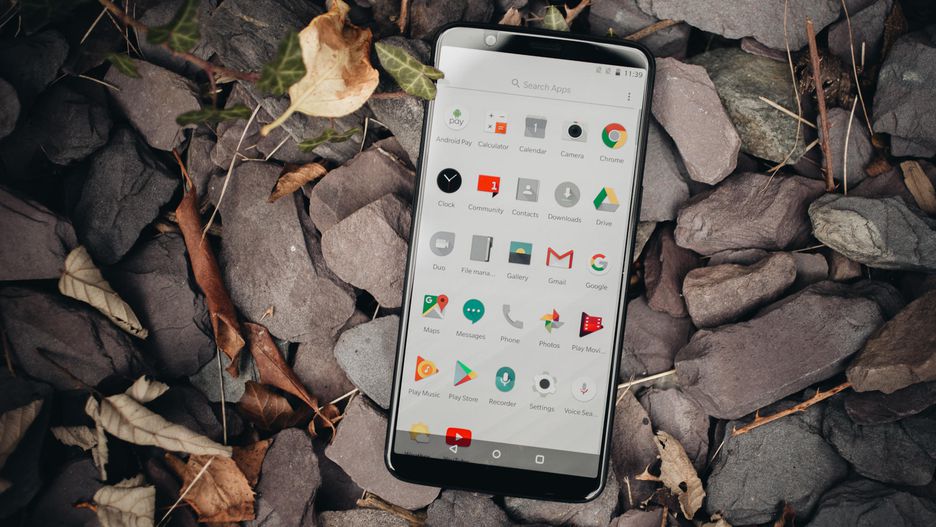
The OnePlus 5 has been selling well for the past four months, but it looks like a successor is already on its way. Our source reveals to us that a new model, which will go by the name of the OnePlus 5T will release in November 2017. This is very similar to what OnePlus did in 2016, releasing the OnePlus 3T just five months after the OnePlus 3.
So, what’s new in the OnePlus 5T?
At this moment, we have only a few details about the upcoming model. The biggest upgrade is said to be in the display department, with the company bumping up the screen size on the 5T model to 6-inches with 2160 x 1080p resolution, thereby making it an 18:9 smartphone. Major manufacturers, including ones like Vivo have released 18:9 flagship smartphones this year, so it makes sense for OnePlus to jump on the tall display bandwagon with a new model. But the OnePlus 5 is already up to date with powerful specs, so it will be interesting to see if there are any other upgrades in the new model’s specifications.
We have also got a low resolution render of the OnePlus 5T model. We can’t deny that the phone seems to draw its inspiration from the Galaxy S8 on the front. The bezels are thin on the top as well as the bottom and the 18:9 aspect ratio is evident from the taller than usual design. What’s even more interesting is that the sides look curved. Our source couldn’t confirm whether the phone has a curved edge display, so we can’t be sure of it right now. The render looks identical to the recently leaked OPPO F5, but our source claims that this is what the OnePlus 5T will look like as well, at least from the front.
Our source has been reliable in the past, so we are 80% sure that this information will turn out to be true. The internet has been silent about the existence of the OnePlus 5T so far, therefore we’ll have to wait and see whether more details emerge in the coming weeks. The launch is said to be around early November, so there isn’t a lot of time left for its official unveil.
We use cookies on our website to give you the most relevant experience by remembering your preferences and repeat visits. By clicking “Accept”, you consent to the use of ALL the cookies.
This website uses cookies to improve your experience while you navigate through the website. Out of these, the cookies that are categorized as necessary are stored on your browser as they are essential for the working of basic functionalities of the website. We also use third-party cookies that help us analyze and understand how you use this website. These cookies will be stored in your browser only with your consent. You also have the option to opt-out of these cookies. But opting out of some of these cookies may affect your browsing experience.
Necessary cookies are absolutely essential for the website to function properly. This category only includes cookies that ensures basic functionalities and security features of the website. These cookies do not store any personal information.
Any cookies that may not be particularly necessary for the website to function and is used specifically to collect user personal data via analytics, ads, other embedded contents are termed as non-necessary cookies. It is mandatory to procure user consent prior to running these cookies on your website.