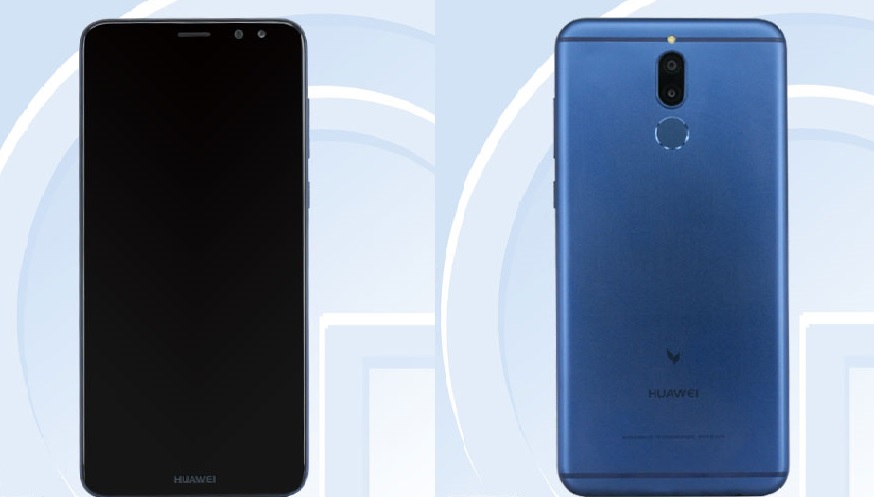
Last week we reported that Huawei was working on a new phone codenamed Rhone. The key feature Rhone is expected to have is dual front and rear cameras. The Huawei RNE-A100 has popped up on TENAA and we think it is the Huawei Rhone.
TENAA lists the Huawei RNE-A100 as having a 5.9-inch 1080 x 2160 display. This is the same resolution as the upcoming Vivo X20 and means the Huawei will also have an 18:9 display.
The phone has 4GB of RAM and is powered by an octa-core processor clocked at 2.6GHz. There is 64GB of storage with an option to add up to an extra 256GB via a microSD card slot. Huawei has put a 3240mAh battery under the metallic body. It also runs Android 7.0 Nougat.
The Huawei RNE-A100 features a combination of a 13MP and a 2MP for the front cameras. The primary rear camera is a 16MP sensor paired with another 2MP sensor. We presume the 2MP sensors are to capture depth of field information for portrait images.
With respect to design, the phone is made of metal with curved corners and antenna lines at the top and bottom. The dual camera setup on the back has a vertical design with a slight bump. Above the cameras is the LED flash which is buried in the top antenna line. A fingerprint scanner sits below the sensors.
Physical buttons are on the right and SIM tray/MicroSD card slot is on the left. There are no images of the bottom but that is where the USB port and speaker grilles should be. The front of the phone is black but we can make out the dual cameras on the right. Sitting on the chin is the Huawei branding.
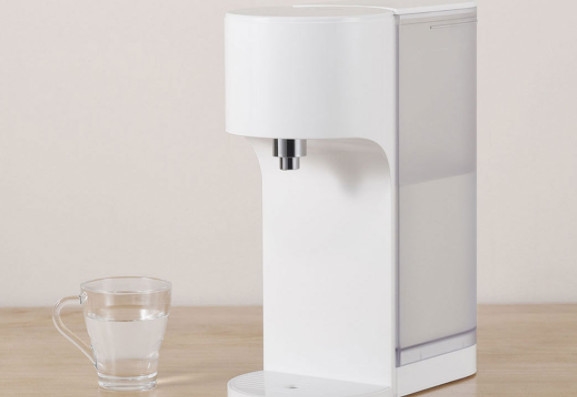
Xiaomi has launched a new product under the MIJIA crowdfunding platform. This is the 113th product that would be launched since the MIJIA platform was created and it turns out to be a product from one of Xiaomi’s long standing partners Viomi. The product is the Viomi Smart Water heater which is a 4L hot water dispenser priced at 499 yuan ($76).
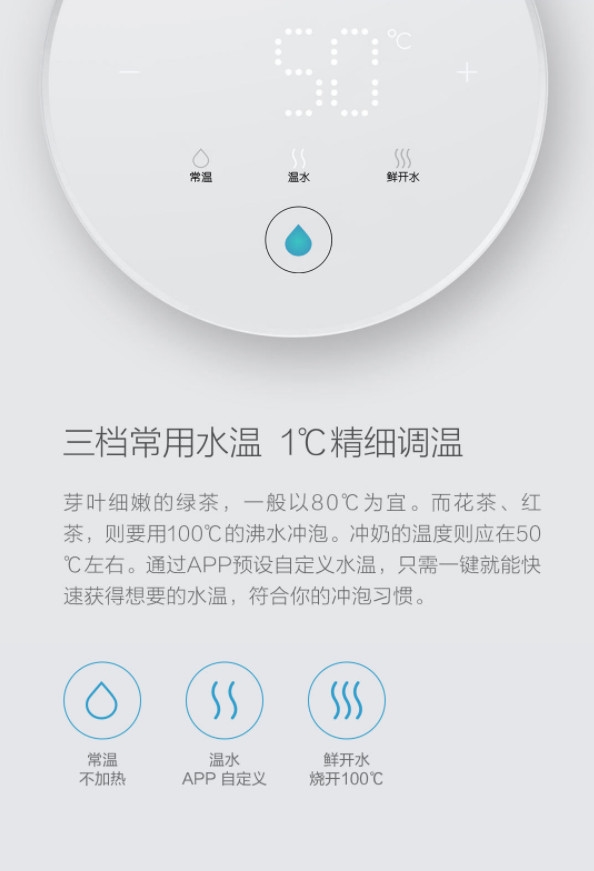
The Smart water heater can be used to keep water at three temperature ranges; room temperature, hot at 50 degrees centigrade and also at 100 degrees centigrade. The smart home gadget can be controlled from the smartphone and you can get the desired water temperature you want just with the click of a button on the smartphone. The app also allows users monitor the water quality at any time and reminders to clean the pipe whenever the water is changed.
The Voimi water dispenser also comes with a water level sensor which sends reminders to the connected smartphone on reducing water level and even stops heating when the level is low. It also comes with a temperature sensor which ensures the temperature does not go above the maximum level. The body has a quality design which includes a child protection lid which makes it difficult for a child to open the lid and thus avoid getting burnt by hot water.
The Viomi water heater is available for support on the crowdfunding platform for 499 yuan ($72).
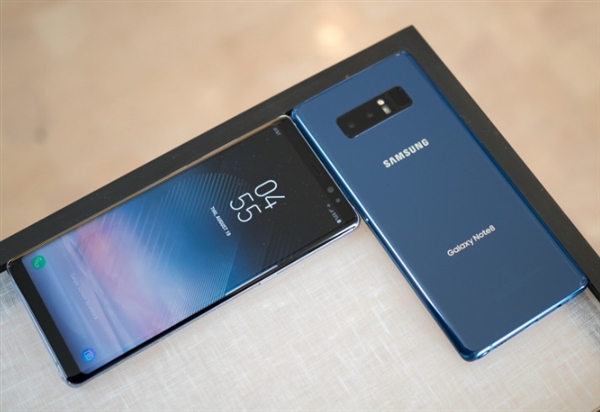
Samsung had unveiled the Galaxy Note 8 in the U.S. on Aug. 23. Today, the South Korean company had held the Galaxy Note 8 launch event in India around 1 PM today. The Note 8 pre-orders have started in India on Samsung’s online store and Amazon India. The phablet that is priced at Rs. 67,900 in India is expected to receive overwhelming market response as a recent report has revealed that 250,000 users have pre-registered it.
Unlike the U.S. and China that are receiving the Snapdragon 835 chipset powered Galaxy Note 8, Indian markets will be getting its Exynos 8895 chipset variant. The phablet will be arriving in all the markets with 6 GB of RAM.
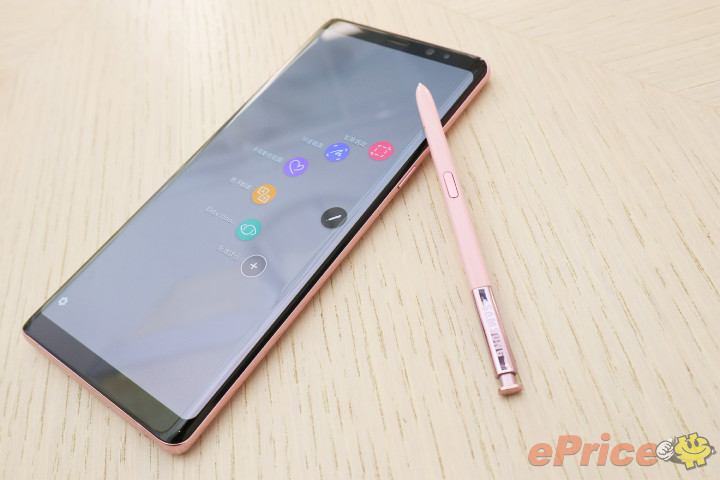
The 6.3-inch QHD+ full screen AMOLED display dubbed as Infinity Display is one of the bestselling features of the Note 8. The other USP of the Note 8 is that it is the first Samsung phone with dual rear cameras. And it comes with an intuitive S-Pen stylus. It also features a IP68 certified water and dust resistant body.
The Galaxy Note 8 pre-orders have started on Samsung’s online shop and Amazon India. Both stores are selling the Note 8 in Midnight Black and Maple Gold color options. Customers who pre-book the Note 8 will be provided with a free wireless charger and a one-time screen replacement at Rs. 990.
Some of the other offers available for people who pre-book the Note 8 in India include 448 GB of free 4G data along with free Jio Prime Membership and Rs. 4,000 Cashback with HDFC credit cards. Buy with exchange offers is also available for Note 8 buyers. The handset can be availed with through no cost EMI plans as low as Rs. 2,829 per month. The pre-ordered units will start shipping from Sept. 21.
Samsung is gradually debuting the Galaxy Note 8 in wider markets. The flagship phablet will be unveiled in China tomorrow. A recent report has revealed that the Note 8 will be arriving in Hong Kong with cheaper pricing than China.
Almost a year ago, the budget Meizu M5 was announced. It came with a larger screen than its predecessor, the M3, but kept the processor and a bunch of other features. Images of the Meizu M6 have been posted on Weibo by leaker @Old Technology (@老爆科技) and they also reveal the specs of the device which to be honest is exactly the same as that of the M5.
The pictures of the phone show CPU-Z running, revealing the specs of the device. The M6 is revealed to be powered by the same MediaTek MT6750 octa-core SoC that powers the M5. The M6 also keeps the 5.2-inch display with its 720 x 1280 resolution.
[envira-gallery id=”148847″]
The Meizu M6 packs 3GB of RAM and 32GB of built-in storage. The M5 has a 2GB RAM + 16GB ROM variant too, so we should expect the same for the M6.
Since the M6 and M5 are basically the same, what has chnged? First, the design. The M6, based on these images will ditch the black front that was present in the M5 for a white one. To be fair, I think this is a bad idea.
Another visible change is the position of the sensor and camera. Their positions have been swapped in the M6 and the camera sensor looks bigger. So we can presume the camera configuration will at least be different.
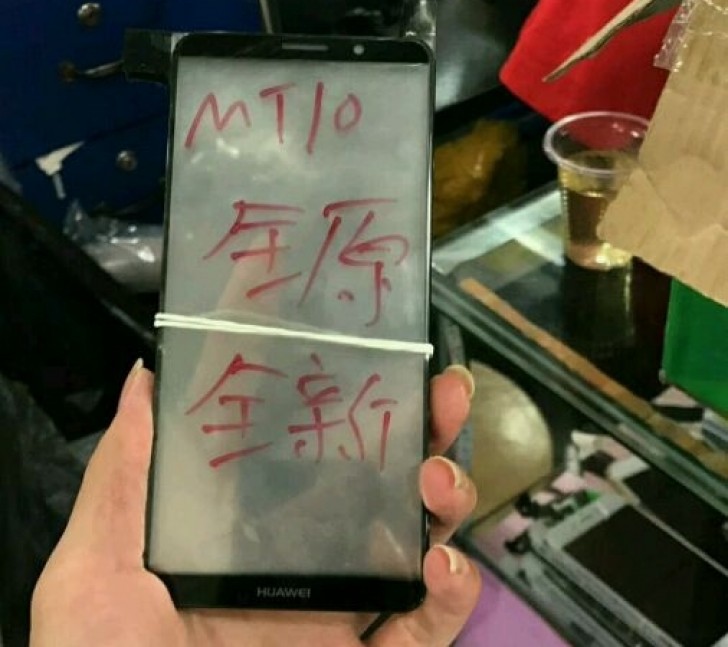
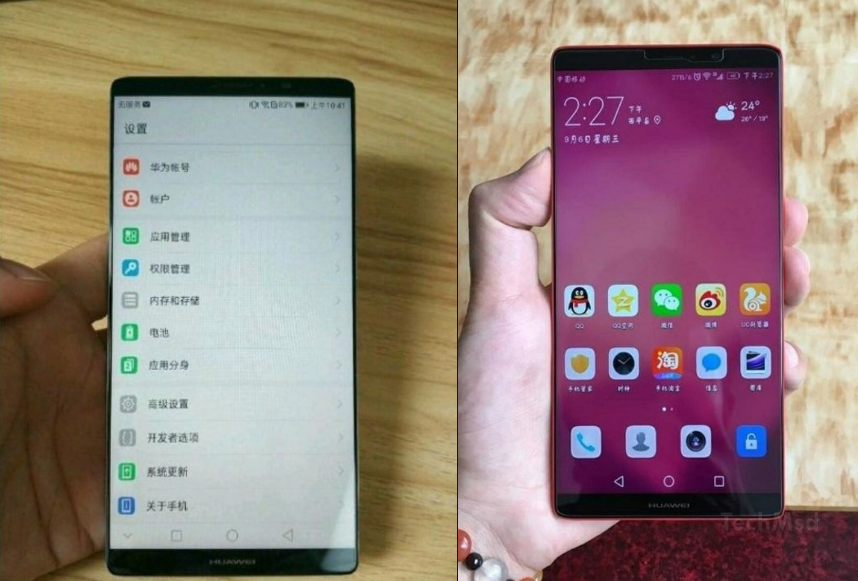
In the past week, the leaked images showing the live Huawei Mate 10 Pro had surfaced. Both the images revealed that the smartphone would be sporting a full screen design. A new image of the front panel assembly of the alleged Mate 10 Pro has appeared.
As it can be seen in the above image, the front panel has super-slim side bezels. Also, the front and bottom are thick enough to respectively house some sensors and Huawei logo. The bezels of the front panel are black in color which matches the recently spotted live images of the Mate 10 Pro.
The front panel shown above resembles with the frontal assembly of the alleged Mate 10 Pro that had appeared in the previous week. However, the latter has a glossy appeal for the golden colored bezels. Since the fingerprint scanner module is not visible, it looks like the smartphone would be sporting a rear-mounted fingerprint sensor.
Huawei has at least three smartphones tucked in the Mate 10 series. The Mate 10 Pro that probably features a full screen design. The handset is rumored to be codenamed as Blanc, claims reliable leakster Evan Blass. Reports have revealed that the Mate 10 Pro would be featuring a 6.3-inch display that is expected to support 18:9 aspect ratio and deliver a resolution of 1,440 x 2,880 pixels.
Reports have claimed that the Huawei Mate 10 is codenamed as Marcel. It is expected to arrive with a 5.9-inch regular display like the Mate 9. It may carry support Quad HD resolution unlike the predecessor model. The Blanc and Marcel smartphones are pegged to be driven by Kirin 970 chipset that is enabled with artificial intelligence.
Since the Marcel phone is speculated to come with a regular screen, it may feature a front-mounted fingerprint reader. The Mate 10 Pro and Mate 10 are rumored to house a rear-mounted dual camera system featuring 20-megapixel + 12-megapixel sensors.
There is another variant of Mate 10 that is codenamed as Alps. It is rumored to house a 5.88-inch QHD display, Kirin 970 chipset and 4 GB of RAM. This handset may probably debut as Mate 10 Lite, but it is strange to see a flagship inside it.
The Huawei Mate 10 series are confirmed to debut on Oct. 16 through a launch event in Munich, Germany. With more than a month remaining for the official debut, clearer information on the Mate 10 series is expected to surface in the coming weeks.
Vivo took to Weibo yesterday to announce that its full-screen smartphone, the Vivo X20 will launch at 9:00 AM on September 21.
By the way, this isn’t Vivo’s first full-screen phone. Last week, it announced the Vivo V7+ in India. The V7+ and X20 actually share the same front design and are even expected to have some similar specs but will differ in others.
The Vivo X20 is expected to launch with a 5.8-inch AMOLED display, 6GB of RAM and a Snapdragon 660 processor. The display will have a resolution of 2160 x 1080 giving it an 18:9 (or 2:1) aspect ratio. It is also expected to have a 24MP selfie camera and dual cameras on the back, one of which is another 24MP sensor.
Vivo released a poster a few days ago teasing a “Face Wake” feature that unlocks the phone with your face in 0.1s. That is even faster than some fingerprint scanners, which the Vivo X20 should still have but will now be at the back.
Vivo has also released a bunch of promotional images teasing a special black Mars Intelligence Agency Edition. This is not the first time the Chinese manufacturer is partnering with the popular TV show. Last year, the Vivo X9 made an appearance on the show before it was launched.
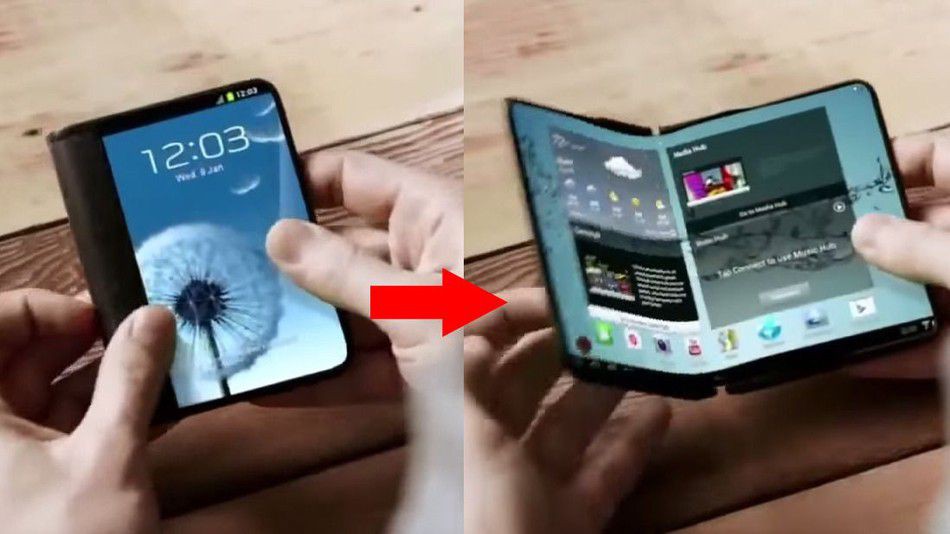
Samsung has been working on foldable smartphones since several years. During a press conference on Tuesday to address the arrival of Galaxy Note 8 in India, Samsung Mobile’s president, DJ Koh has confirmed that the company would be debuting its first foldable smartphone in 2018.
Foldable Galaxy Note Phone
According to Koh, there are some obstacles that Samsung needs to resolve in order to release its foldable smartphone. However, the company has set a goal of debuting the highly anticipated foldable smartphone in next year. The launch will only happen after all the pending issues with the smartphone are dealt with. Koh did not reveal any information on the problems that they are facing with it.
Analysts have revealed that it will take some time to mass produce a foldable phone with thin design and topnotch features. Since the time company showcased a flexible display prototype named Youm in 2013, tech enthusiasts are eagerly to hear more information on the first foldable phone from Samsung. In the past two or three years, the rumor mill have claimed that the South Korean firm will be showcasing its foldable phone soon.
In February this year, Samsung had trademarked the Galaxy X moniker. Speculations have it that the Galaxy X could be the upcoming foldable smartphone from Samsung. Some rumors have revealed that the South Korean company is testing a foldable phone that features two AMOLED screens that are connected with each other by means of a hinge with a fold-out mechanism. The Galaxy X’s fold-out mechanism may possibly allow users to use it like a tablet by unfolding it. In July this year, the Galaxy X phone had received Bluetooth SIG certification which indicates that the launch of the Galaxy X is getting close.
Since Samsung is now pegged to introduce the Galaxy X foldable phone under Note branding, the phablet is likely to debut in the second half of 2018.
Bixby AI Speaker
DJ Koh has also revealed that Samsung is working Harman to build a speaker system enabled with Bixby artificial intelligence. User can speak to the speaker to play music or carry some tasks. Leading brands like Amazon and Google have already launched voice-assistant enabled speakers in the market. Apple’s HomePod is also expected to hit the market by the end of this year. However, there is no confirmation on when Samsung will be unveiling the voice-controlled speaker.
Galaxy Note 8 Market Response
As far as Galaxy Note 8’s market response is concerned, Koh states that even though it is an expensive Note series phone, the demand for the phablet has been phenomenal during its pre-orders. By Friday, 650,000 units of Galaxy Note 8 have been pre-ordered.
Qualcomm has been in the news since quite sometime because of its ongoing patent violation issues with Apple. However, the company has contributed a lot in various technologies that are used by the consumers on Android smartphones. The U.S. based chip manufacturer has released a press statement to highlight some of the innovations that it has brought first on Android operating system.
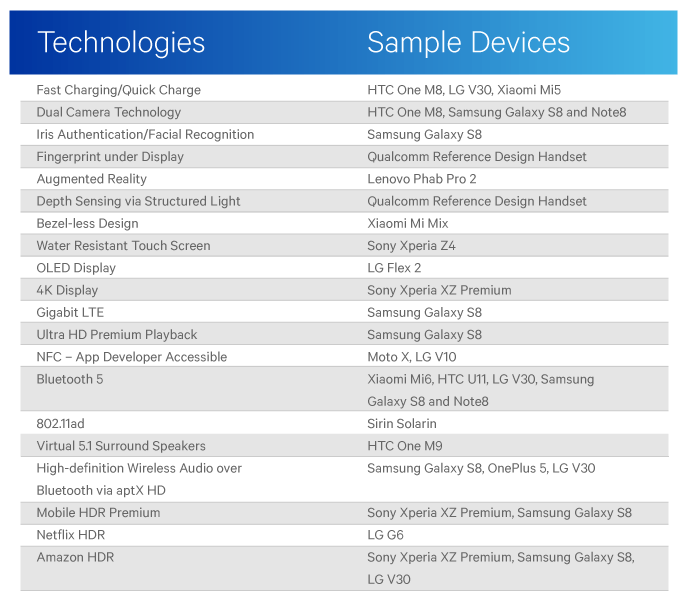
The following is the list of innovative features that Qualcomm has introduced on Android devices. According to Phone Arena, the previously released list contained some errors as It had included HTC One M8 and HTC One M7 as the smartphones featuring dual camera technology. However, the list has been revised to remove HTC One M7 from the dual camera technology. It now mentions three smartphones like HTC One M8, Samsung Galaxy S8 and Galaxy Note 8 as dual camera technology enabled smartphones. It is strange to see Galaxy S8 here as it not features a single rear camera.
Nevertheless, through its licensing program, the company aims to make its new technologies available to startups and globally popular companies like Samsung, LG, HTC, Motorola and so on. It has worked with many new companies such as OPPO and Vivo in China. These new entrant firms have now become top five smartphone companies not only in China but also in the world.
Read More:Apple vs Qualcomm: U.S Court Refuses To Stop Apple’s Multiple Lawsuits
One of the latest innovations from Qualcomm is making Gigabit LTE connectivity possible on Android smartphones. Compared to the first Android phone, the Gigabit LTE enabled Android phone can download content 135 times faster over mobile network. The chip maker says that the Galaxy S8 is the first device enabled with Gigabit LTE connectivity. The Galaxy S8 also gets credit for the first Android device with iris authentication and facial recognition, Ultra HD video playback, Bluetooth 5.0, HD wireless audio over Bluetooth via aptX HD, mobile HDR Premium and Amazon HDR.
Qualcomm’s fast charging feature also known as Quick Charge is available on Snapdragon mobile chipset powered smartphones. However, it was first implemented on the HTC One M8, LG V30 and Xiaomi Mi 5. The first augmented reality phone is Lenovo Phab Pro 2.
The U.S based firm credits the Sony Xperia XZ Premium as the first 4K display phone. It has pioneered in making the Xperia Z4 as the first smartphone with water resistant touchscreen and Xiaomi Mi MIX as the first bezel-less phone. Qualcomm has also tested under-display fingerprint scanner and depth sensing through structured light on the company’s reference design handset.
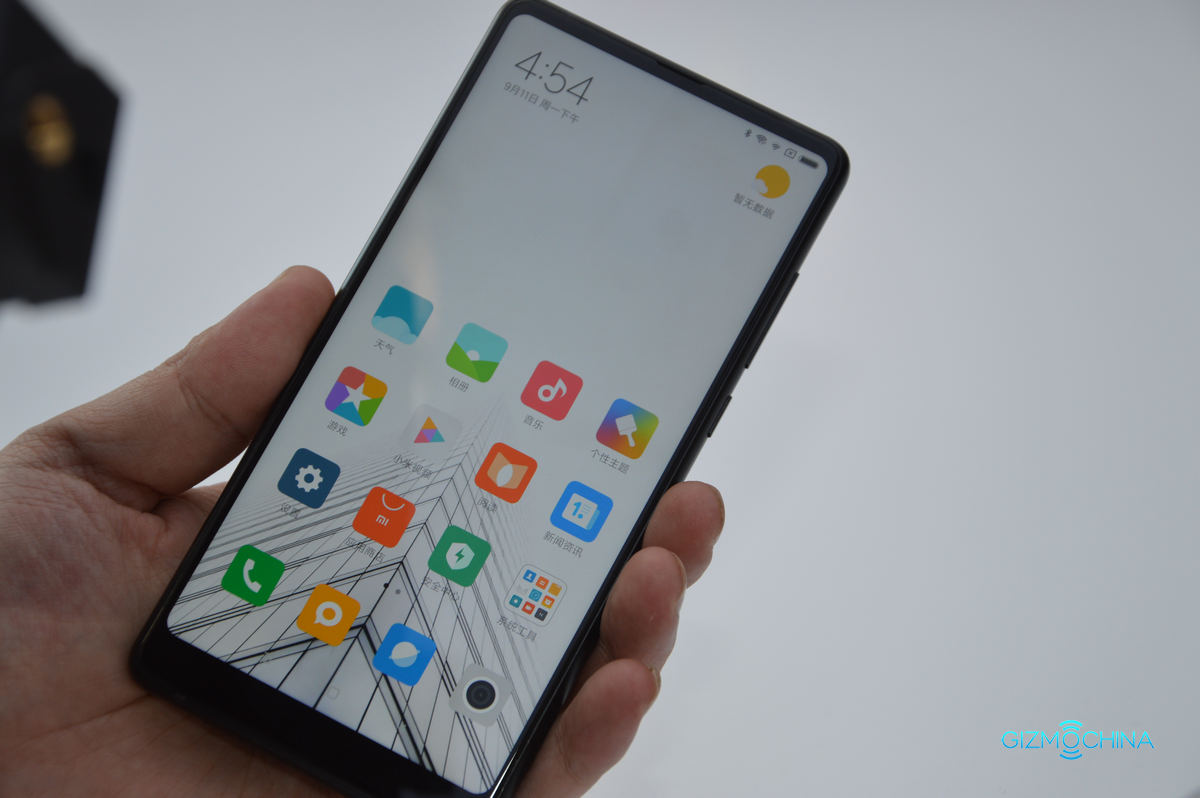
The Xiaomi MIX 2 and Mi Note 3 smartphones and Mi Notebook Pro were announced yesterday in China. After the launch event, Xiaomi’s founder Lei June revealed that that the company had planned to debut the Mi MIX 2 on Sept. 12, but it rescheduled the event to launch the flagship phone before the arrival of new iPhones.
On Sept. 1, Apple had confirmed that it would be holding its unveil event on Sept. 12. Going by the words of Jun, it appears that the company may have originally planned to debut the Mi MIX 2 on Sept. 12 but had to launch it earlier on Sept. 11. Jun said even though Mi MIX 2 launch clashes with the new iPhones, he is quite confident about the new flagship from his company.
One of the departments where Xiaomi Mi MIX 2 is expected to defeat the much-hyped iPhone X is pricing. The 64 GB, 128 GB and 256 GB models of the Xiaomi Mi MIX 2 are respectively priced at 3,299 Yuan (~$506), 3,599 Yuan (~$552) and 3,999 Yuan (~$614). The special edition Mi MIX 2 that has a full ceramic chassis devoid of metal frame is priced at 4,699 Yuan (~$721). It features 8 GB of RAM and 128 GB of RAM. Reports have revealed that the 64 GB, 256 GB and 512 GB storage variants of the iPhone X may cost $999, $1,099 and $1,199, respectively.
Jun said that Xiaomi would be shipping more than 10 million units in this month. And he expects that the total shipments of the company will exceed 70 million units. He added that the three things that the company has focused on to achieve such impressive results is innovation, quality and delivery. In order to ensure the company has largest stock of Mi MIX 2 flagship phone, it began with the mass production of the smartphone from Aug. 1.
After the launch of the original Mi MIX in October 2016, the company had claimed that it would not be mass producing the Mi MIX because of its premium ceramic chassis. Its seems that even though the newly unveiled Mi MIX 2 wears a ceramic body, the company is well-prepared to mass produce its flagship phone. Since the Mi MIX 2 supports 43 global LTE networks, it will be available in wider markets across the globe.
A new headphones product was spotted a couple of weeks back the weekend on the APK code of the latest Google app version 7.10. The code re-ignites the name Bisto which had earlier appeared in April in the strings of the beta version of Google app 7.0. A new headphones product was spotted over the weekend on Google’s main support website and the listed name may have revealed the consumer name for Bisto.
The Google Assistant app was noticed to have a drawn graphical image of a headphone which is named Baywolf with the graphic titled as baywolf-oobe-image.png. The image is said to be different from what has been seen in previously leaked images. A previously leaked GIF had suggested an over-the-ear design. But the graphic for “baywolf” features precise detail which is different from the GIF and the Bisto logo spotted on Google app. Apart from “baywolf”, Bisto was also spotted at first in the Apk teardown of Google app version 7.10 with names like apollo and scout.
Taking a look at the latest design, it is an over-the-ear design with three buttons grouped together on the right cup as well as a solitary button on the left. Given other strings found in the Google app, the solitary button on the left is likely for Assistant, while the three others are top, middle, and bottom. According to the code strings, a single tap of the Google Assistant button can playback your notifications, while a long press is used for issuing a command:
<string>Just so you know, you can listen to your notifications for up to an hour. To hear them, press the Google Assistant button.</string>
There is also a second graphic which is named “Bisto-logo” and features several icons which suggest the various features of the headphones. They include access to Google Assistant, music, messages, weather, and possibly fitness tracking. The latest leaked image looks very much like the leaked upgrade to the Bose QC35 and this has led to some suggestions that baywolf could be the QC35. Just like the baywolf image, the leaked QC35 has a button on the left cup which could be for Google assistant. The buttons on existing Bose over-the-ear headphones match the three buttons on baywolf. We just might be seeing a launch very soon considering the rate at which we are seeing leaked details of the Google headphones.
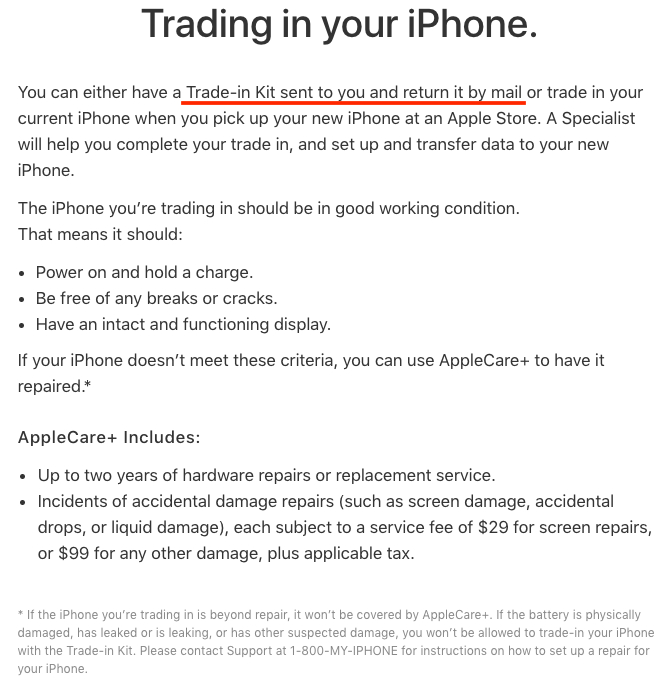
In order to encourage iPhone users to use the latest iPhones, Apple had introduced an iPhone Upgrade Program in 2015 by trading in their old handset. On Tuesday, the company will be launching the 2017 iPhones. A new service of trading old iPhones by mail has been spotted in the iPhone Upgrade Program.
Apple has provided only one way to trade outdated iPhone for a new one by visiting an Apple Store. Two years after introducing the iPhone Upgrade Program, Apple is now offering a more convenient option of trading iPhones by mail. The new option is now listed in the iPhone Upgrade Program and it was first spotted by a forum member of Mac Rumors. It appears that the service is currently available only in the U.S.
In order trade in by mail, users need to ask Apple to provide them with a “trade-in kit” in which users can place their old iPhones and send it to the company by mail. As of this writing, there is no information available on the contents on the trade-in kit.
The description of the new trading option states that once a new iPhone is shipped to the user, Apple will provide users with a trade-in kit. According to Apple Insider, the new way of trading iPhones may have existed on the Apple’s site at least since July or earlier, but the option was unavailable before the launch of iPhone 7.
Because of in-store trade-in requirements, many users who opted for iPhone Upgrade Program in the previous year had to reserve a new iPhone from a local Apple store and they were provided with limited stock of iPhones to choose from. Since the many customers were annoyed because of it, Apple may have introduced another option of trading iPhone through mail.
Like the requirements of an in-store trading of iPhone, users are required to trade only those iPhones by mail that do not have any cracks or breaks, have a working display, turns on and charges properly.
Apple’s new iPhone launch event will begin at 1 PM ET on Sept. 12. Apart from the heavily anticipated iPhone X and iPhone 8 and 8 Plus smartphones, the Cupertino company is also rumored to showcase an LTE enabled Apple Watch and a 4K Apple TV.
In a rare occurence, the Gold Master version (Final version) of iOS 11 leaked before the official launch of Apple’s next generation iPhones. The leaked operating system version revealed quite a lot of information about what g has in the works which would be going official in a matter of hours from now. One of the revelation is that the Apple A11 system chip will be powering the tenth anniversary iPhone.
Just to clarify on the A11: it's two high-power Monsoon cores and four low-power Mistral cores, all independently addressable. No Fusion
Not much is known about the configuration of the A11 chip but it has emerged that some details of the new chip were also contained on the iOS 11 leaked Gold Master edition. According to developer Steve Troughton-Smith on Twitter, the iOS 11 Gold Master leak revealed that the A11 chip will feature six processor cores. Two cores are named Monsoon and will perform tough tasks which require high power such as gaming and video manipulation. On the other hand, the remaining four cores are named Mistral cores and will handle the lighter stuff like texting and checking email, and other lighter functions. This is different from the Apple A10 and A10X chips which were released last year and earlier this year respectively. The A10 chip came with two high-powered cores and two high efficient cores while the A10x used on the iPad Pro comes with three high powered Hurricane cores and three high-efficiency Zephyr cores.
In addition, the Apple A11 chip is revealed to come with the capability to run all its CPU cores independently. What this translates to is that software could be able to access multiple cores of any kind, depending on the task at hand and in a situation where maximum power is required, all could run simultaneously. This is in contrast to the A10 Fusion which could use only its high-performance or low-power cores at any given time. So, we expect the next generation iPhone models to come with some power more than what we have seen before. It won’t be long before it gets spotted in benchmark tests and when it does, expect some amazing results that may dwarf all the new flagship chips we have around presently. We’ll get to find out more and perhaps confirm these features when the device goes official and good thing we won’t have to wait long for that to happen.
The Samsung Galaxy Note 8 is scheduled to launch the Galaxy Note 8 in India on September 12 and ahead of the official launch, the company had opened up pre-orders for the device on Amazon India and Samsung India’s official website. The pre-sales figures are somewhat surprising because the Note 8 is reported to have garnered over 250,000 persons indicating interest to grab one when it goes on sales.
The Galaxy Note 8 is a pricey device with its base 64GB variant coming at about $964 while the top variant with 256GB storage has a price tag of $1,107. For such a device to command such an amount of interest in a price-sensitive market like India is the surprising aspect. The device recorded 72,000 pre-orders in Amazon within the first 24 hours when the websites opened up for presales The figures reached 150,000 pre-orders on Amazon while 100,000 persons pre-ordered from Samsung’s official website.
The Galaxy Note 8 will be launched in India on a day Apple is set to unveil the iPhone 8 and other products. This could be a strategic move and we expect Samsung to announce the device at a slightly lower price than what it will sell in the U.S for instance. A previous report had disclosed that Samsung plans to give a free Desktop Experience (DeX) station to those who pre-order the device in India. This isn’t the first time Samsung is running such kind of offer, so it is possible. The tech giant rolled out the same offer earlier on in a number of European markets like Croatia.
It is understandable that not all reservations will be activated as actual sales but it shows the strong attention the Galaxy Note 8 commands. Samsung is the top manufacturer in India but most of its sales are in the mid-range and budget category like the Tizen powered Samsung Z-series, J-series, A-series and other mid-range models. But we expect the flagship Note 8 to change it all with its sales in India when it commences.
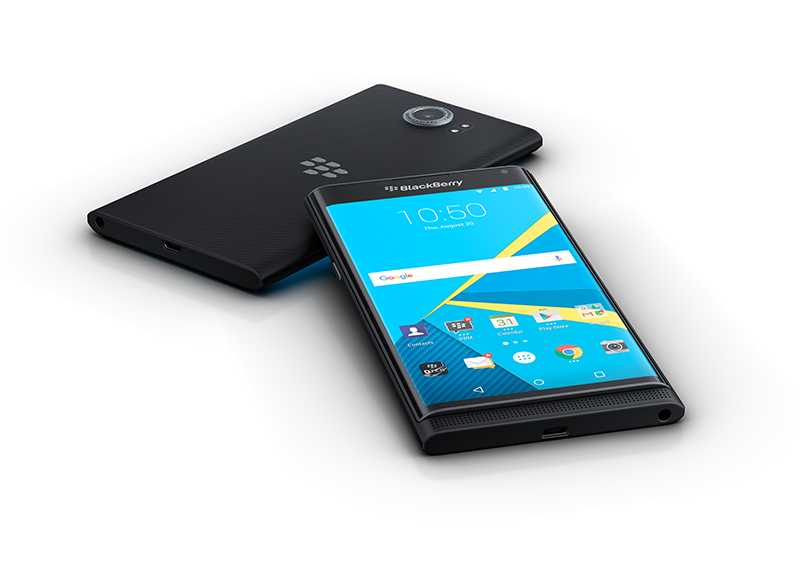
BlackBerry released the Priv as its first Android smartphone in 2015. It had a slide out physical keyboard and a touch display unlike the KEYone which has the keyboard and screen fused together.
The BlackBerry Priv launched with Android Lollipop and was updated to Marshmallow later even though the phone came after the announcement of Marshmallow.
For a flagship such as the Priv, you would expect it to get at least two major updates but that isn’t be the case. According to BlackBerry’s GM, Alex Thurber, the Priv won’t get updated to Android Nougat.
Speaking on a podcast, he explained that the reason for the decision is because it was difficult to get all the vendors on board for the update. However, security updates will still be pushed out.
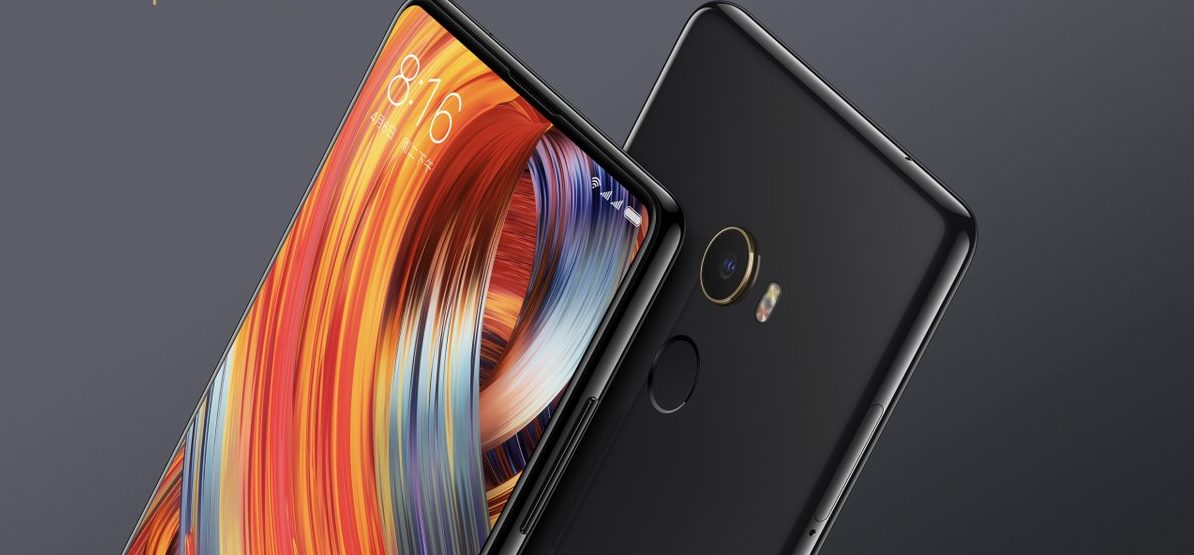
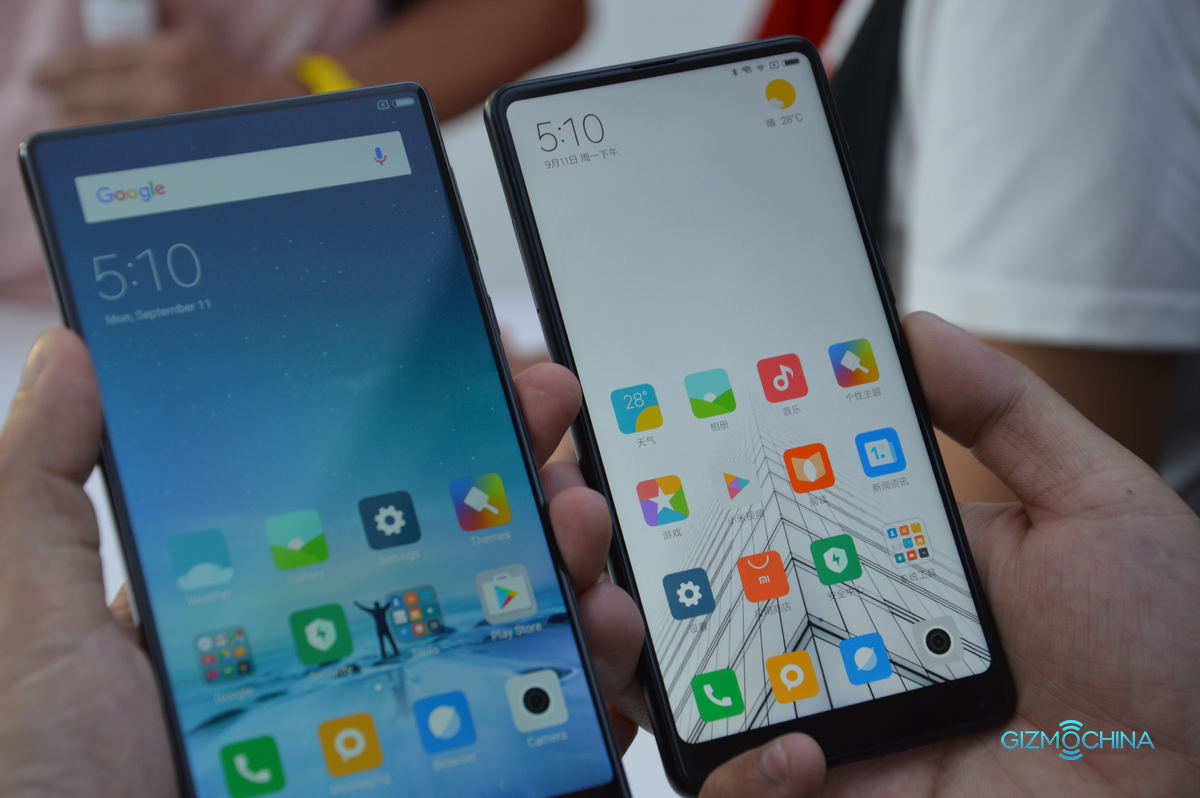
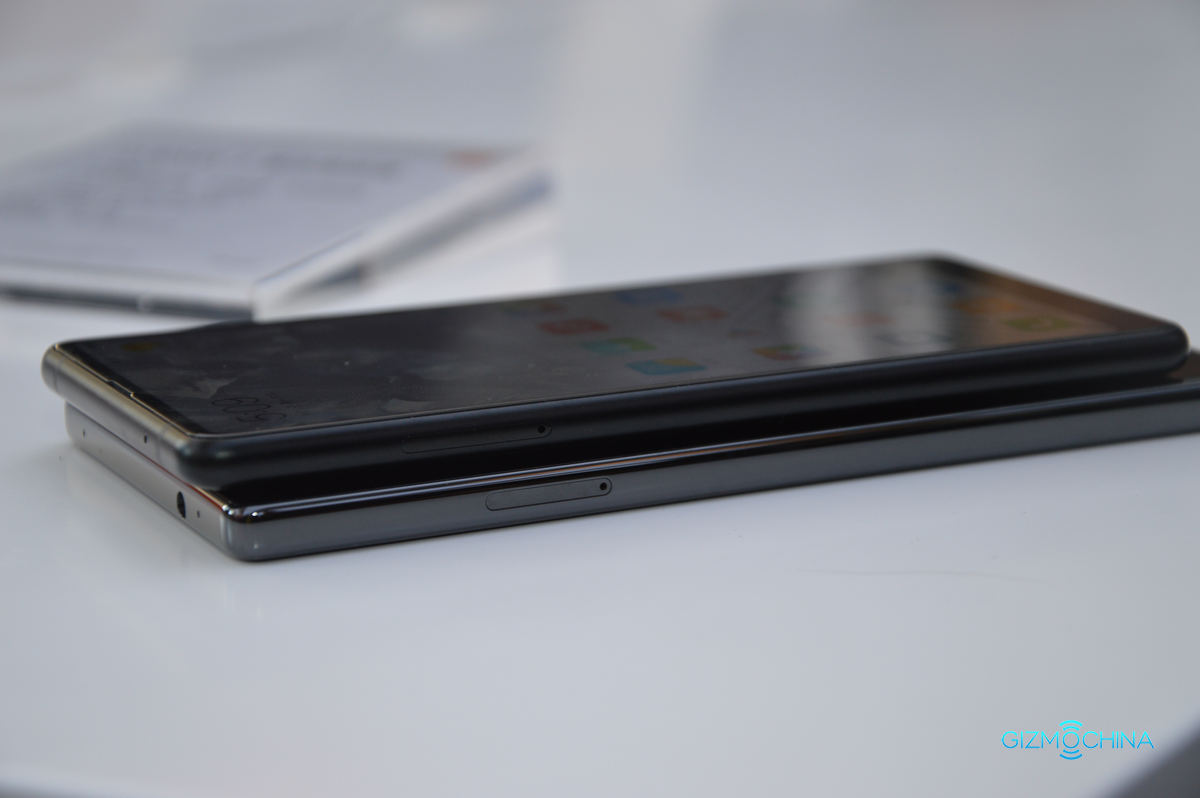
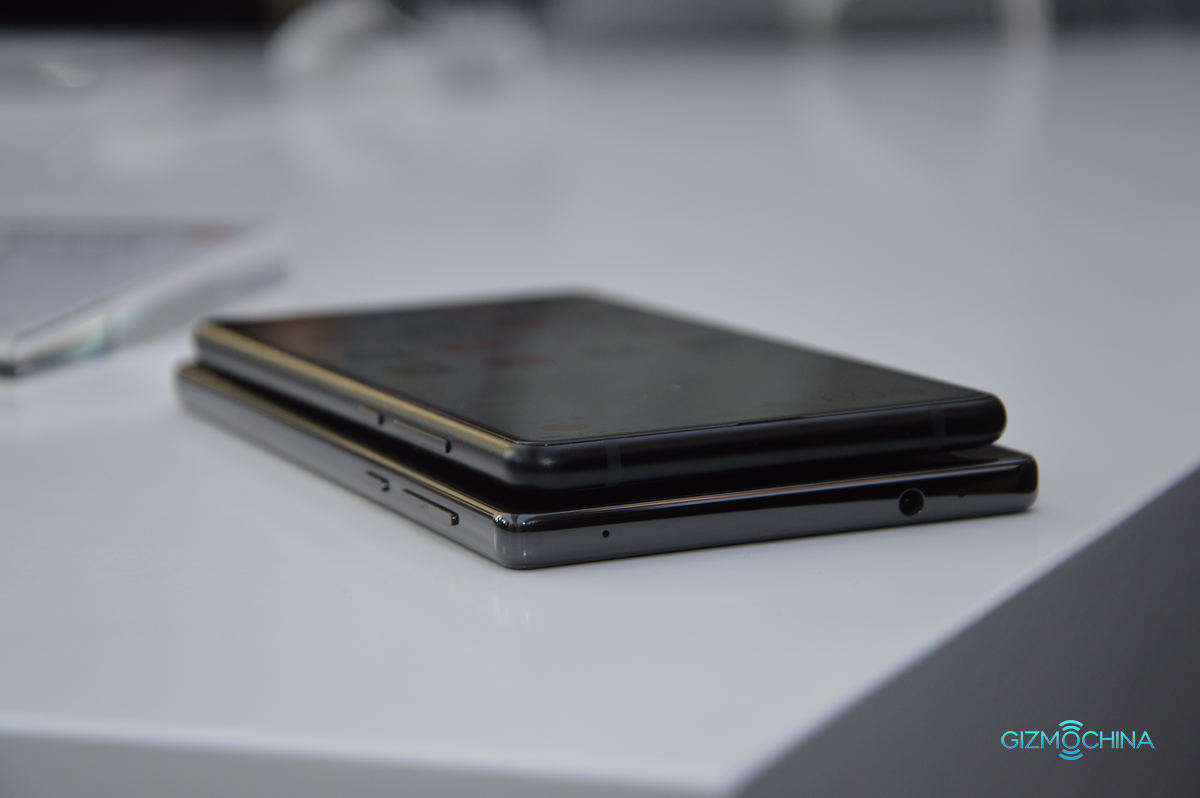
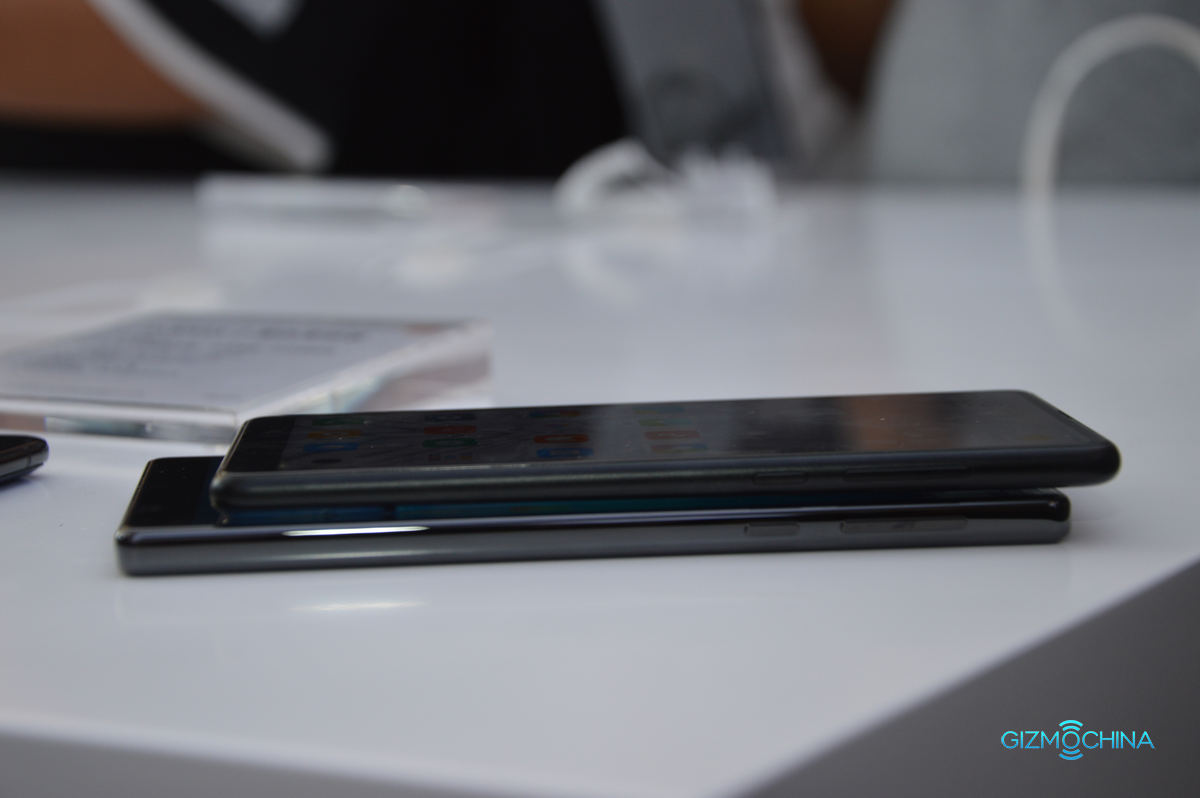
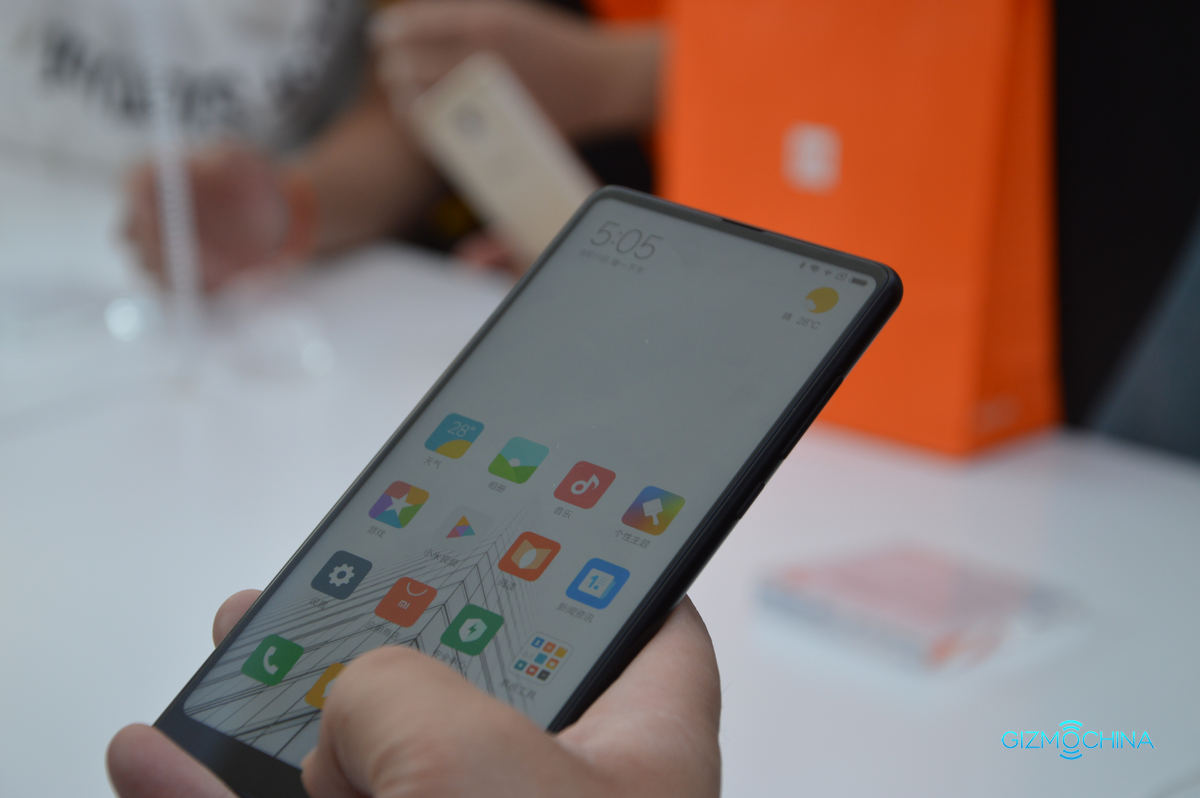
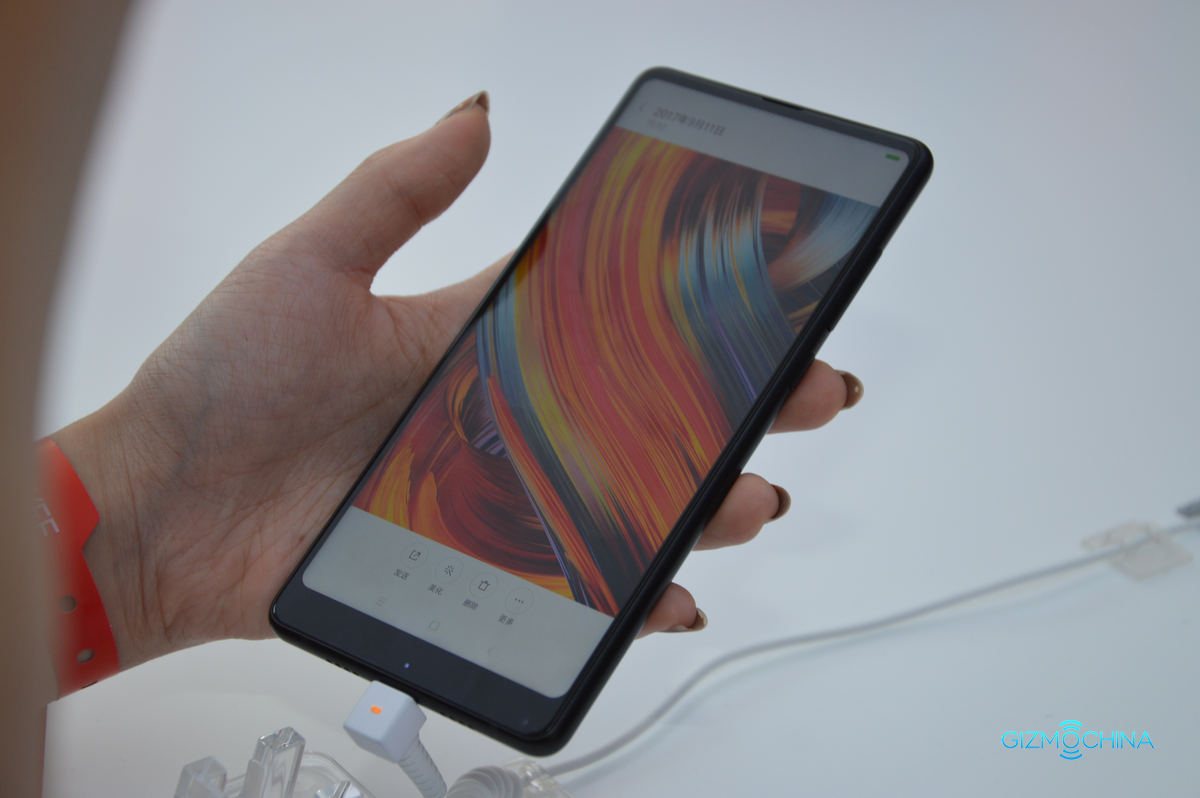
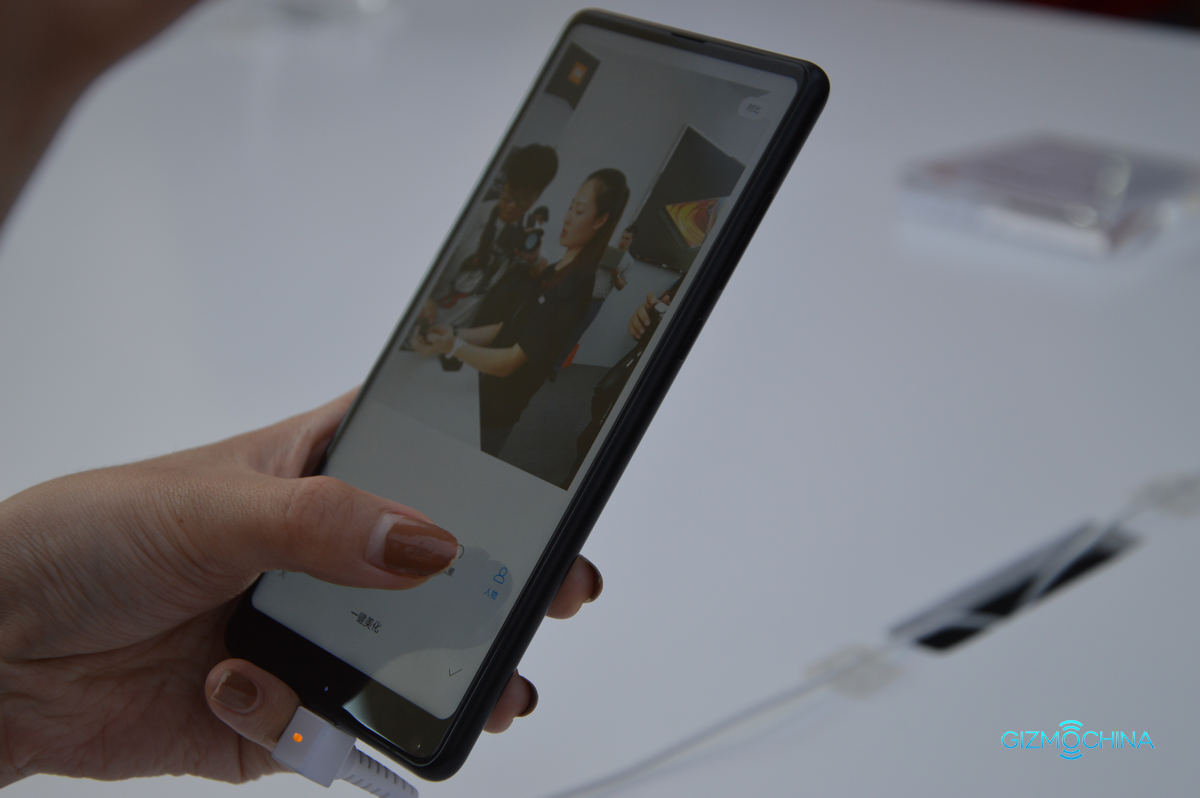
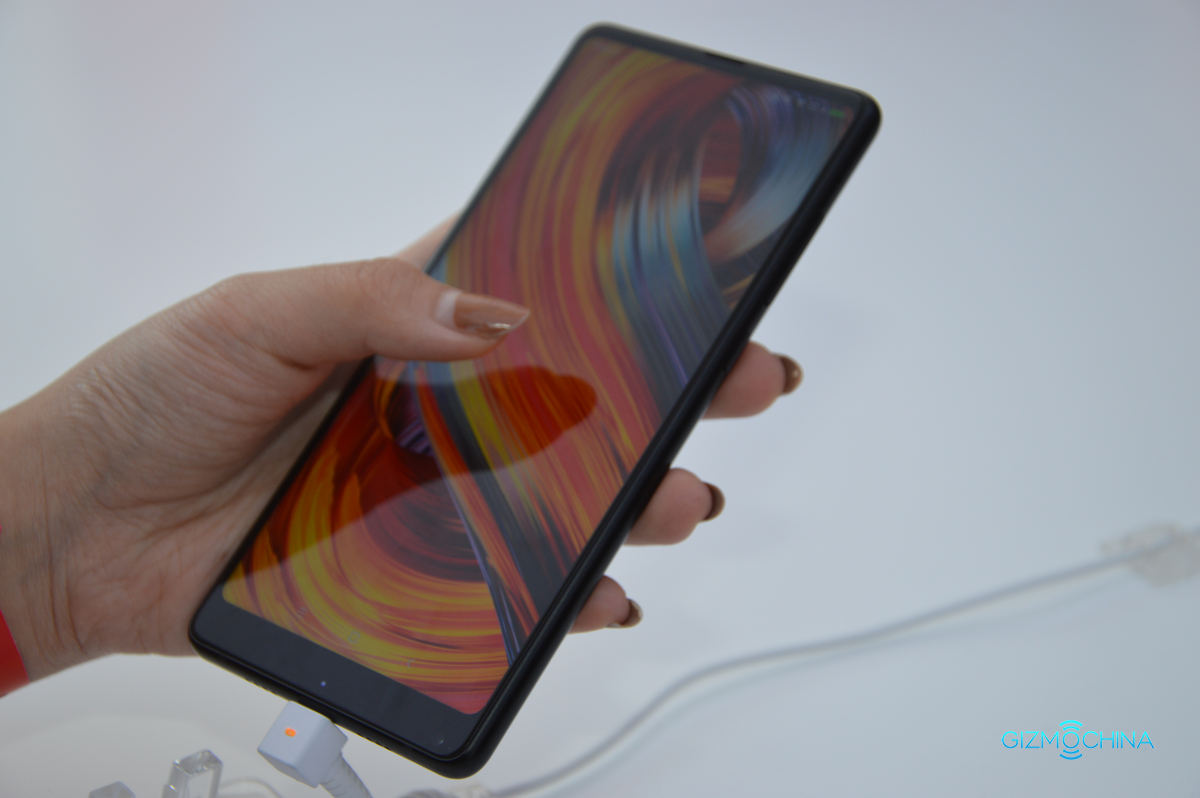
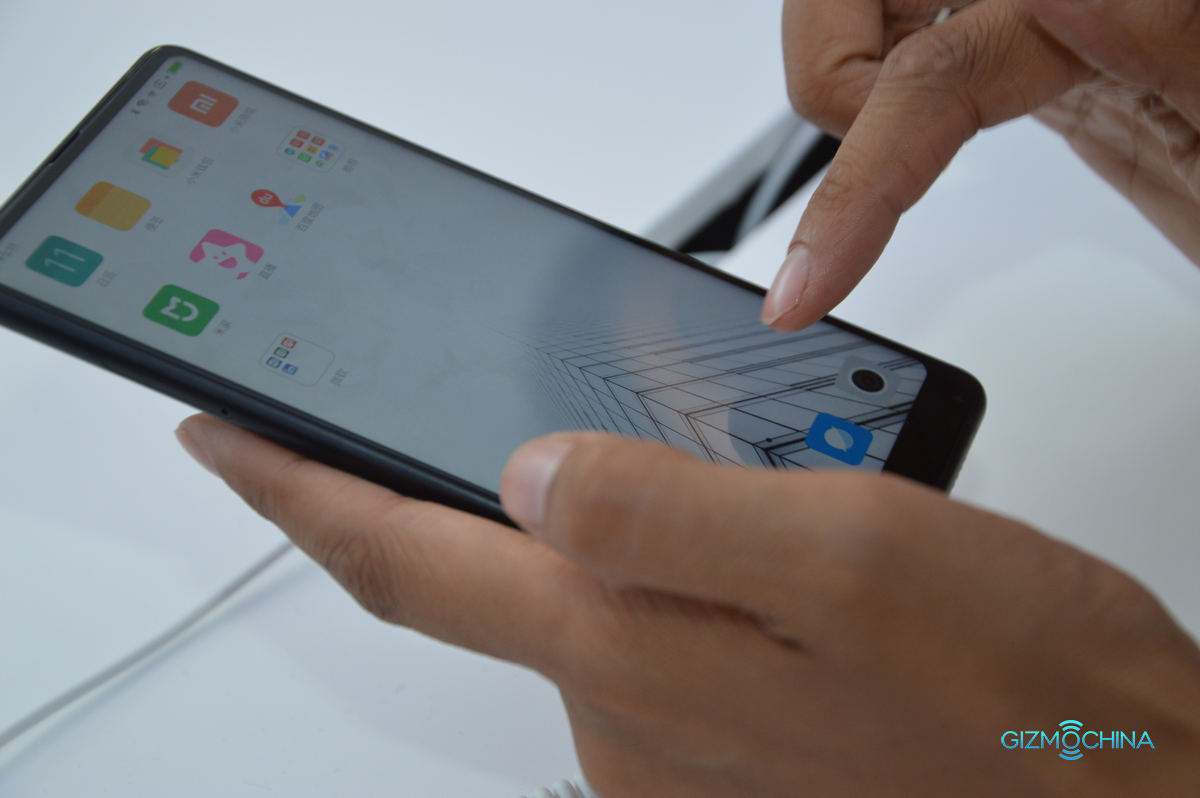
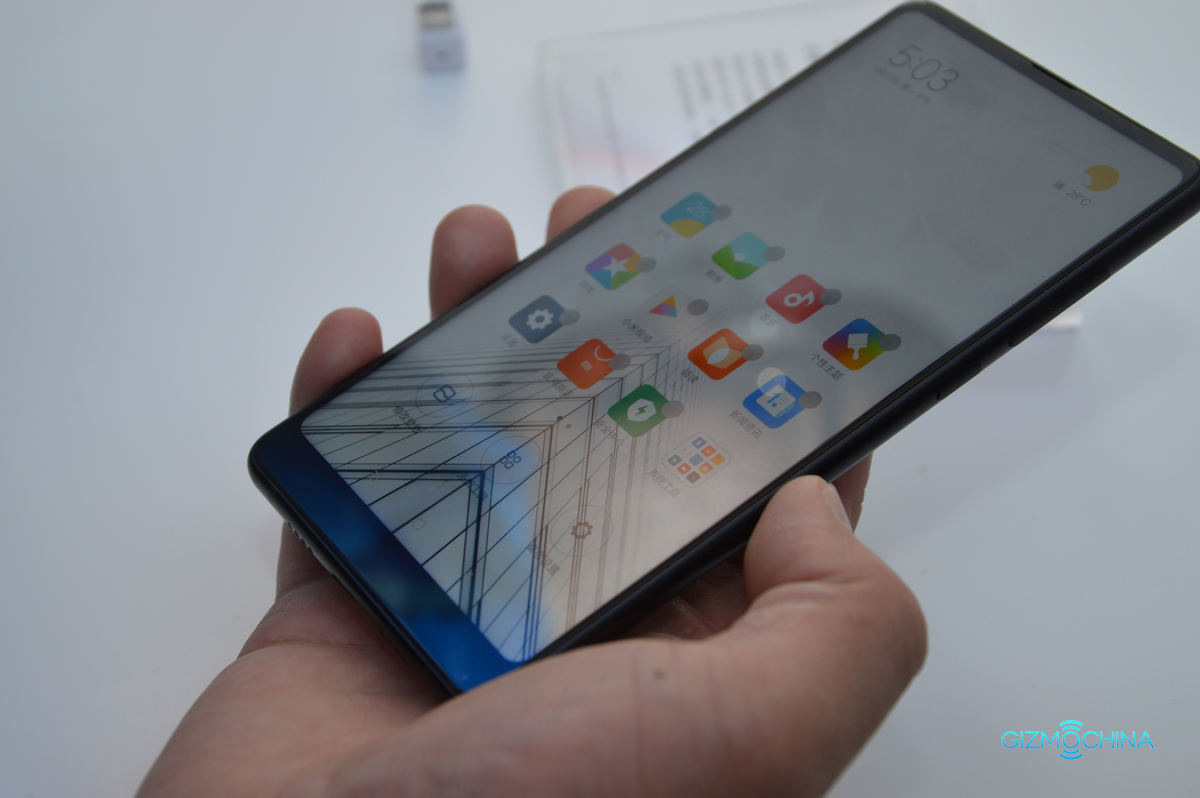
Xiaomi Mi Mix 2 is an important smartphone for the company this year, as it not only succeeds the popular Mi Mix flagship but also competes directly with the established players in the premium segment like the Samsung Galaxy S8 and the LG V30. The phone comes with upgrades in the external as well as internal department to ensure that it meets the requirements of a 2017 flagship. The Mix 2 is no longer a concept phone, rather it’s meant to be your choice in the premium flagship category.
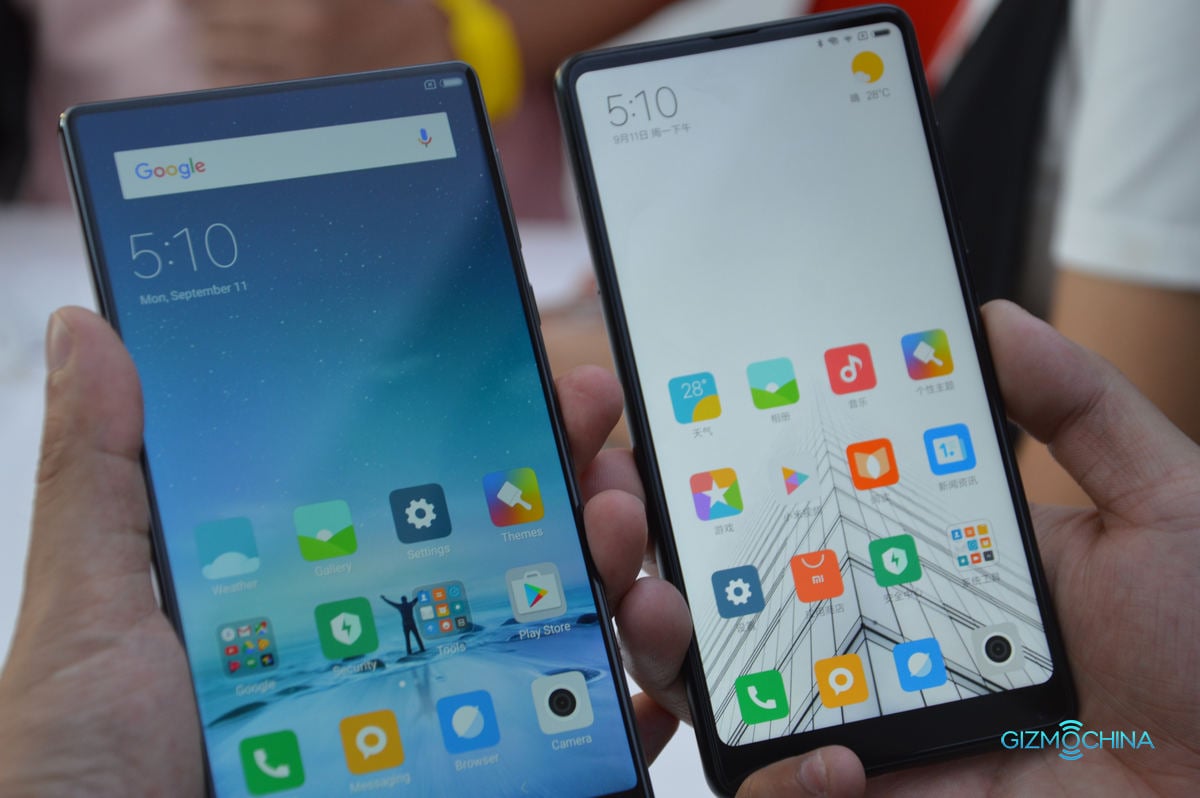
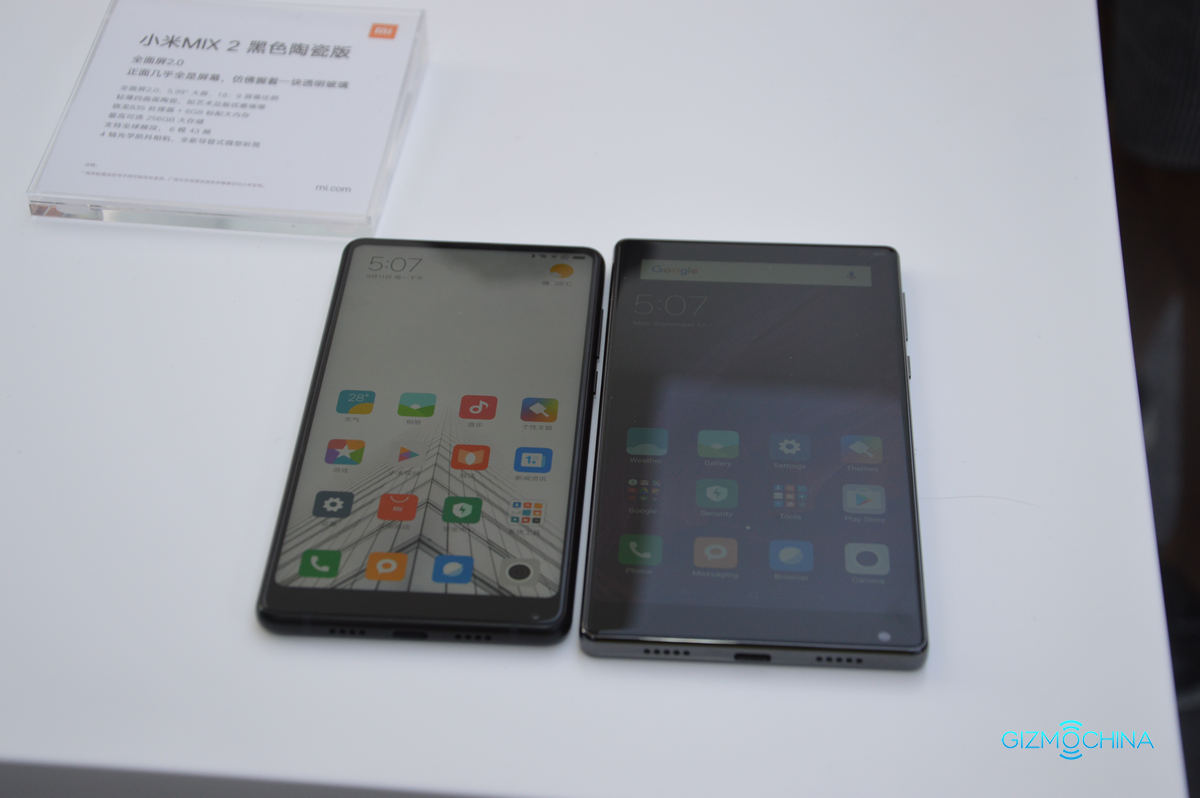
Mi Mix (L) vs Mi Mix 2 (R)
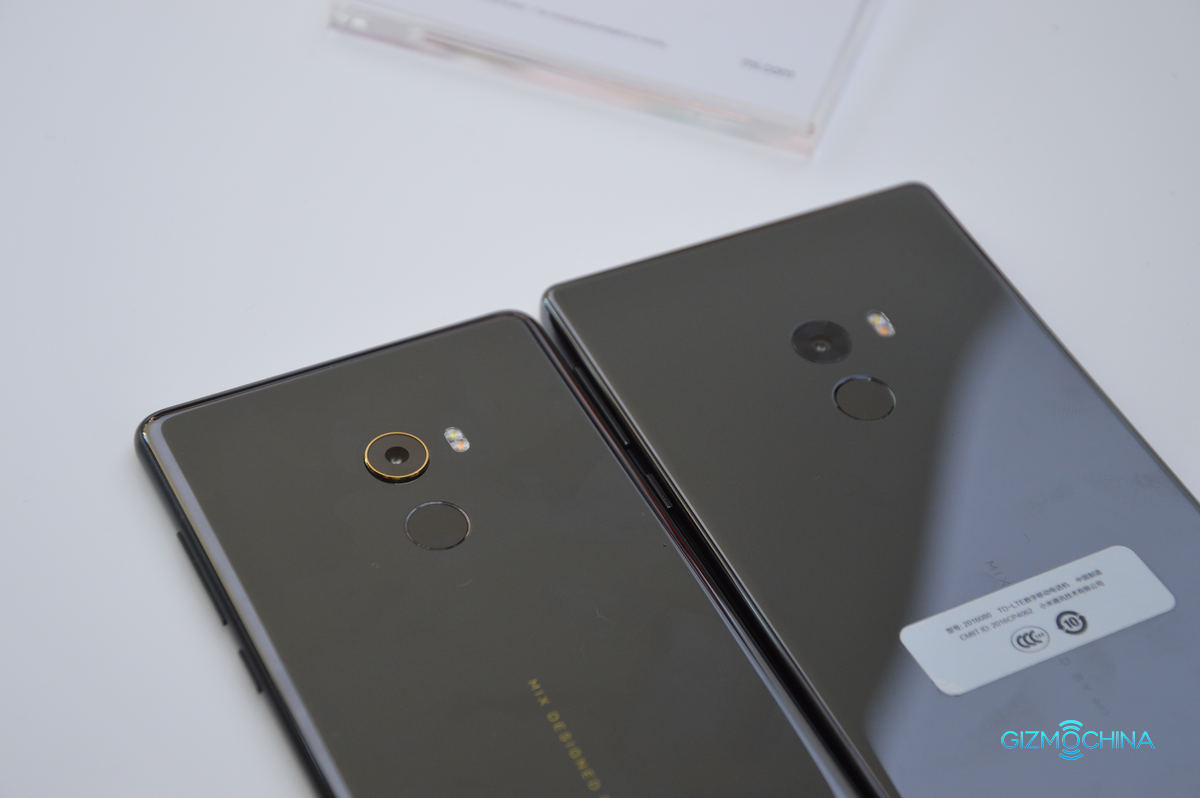
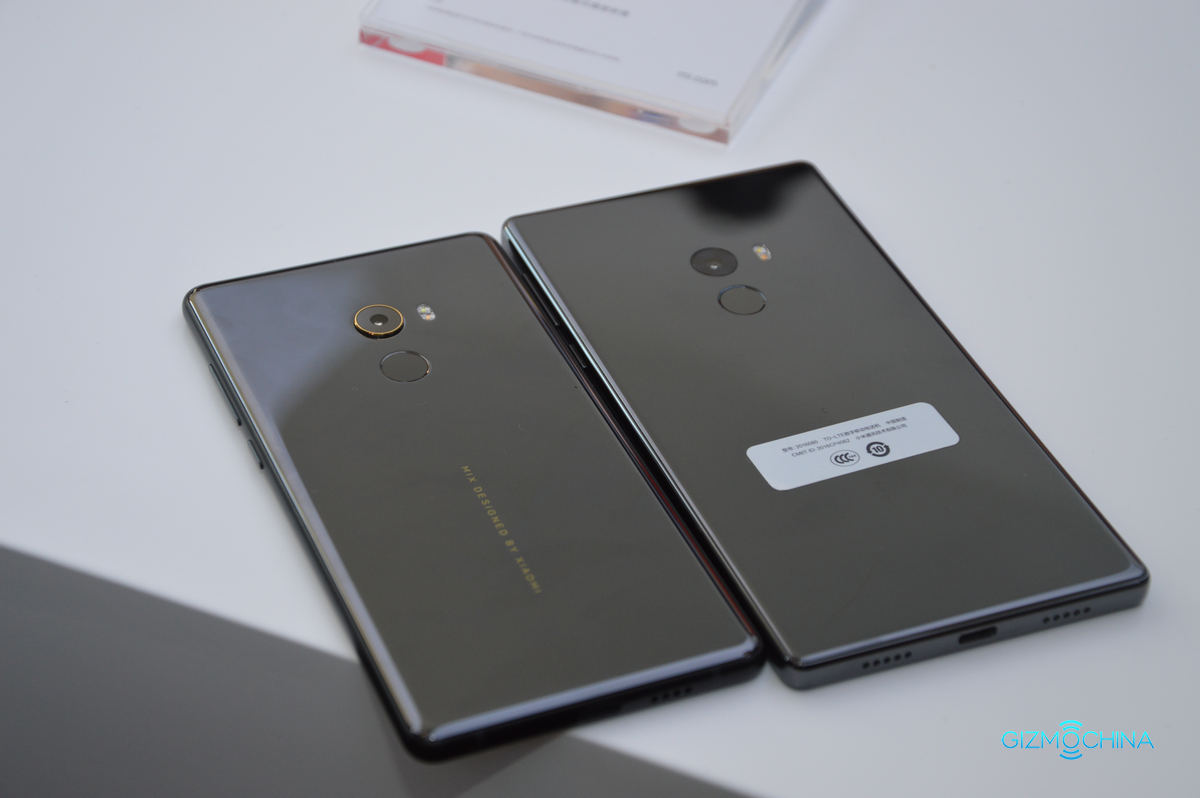
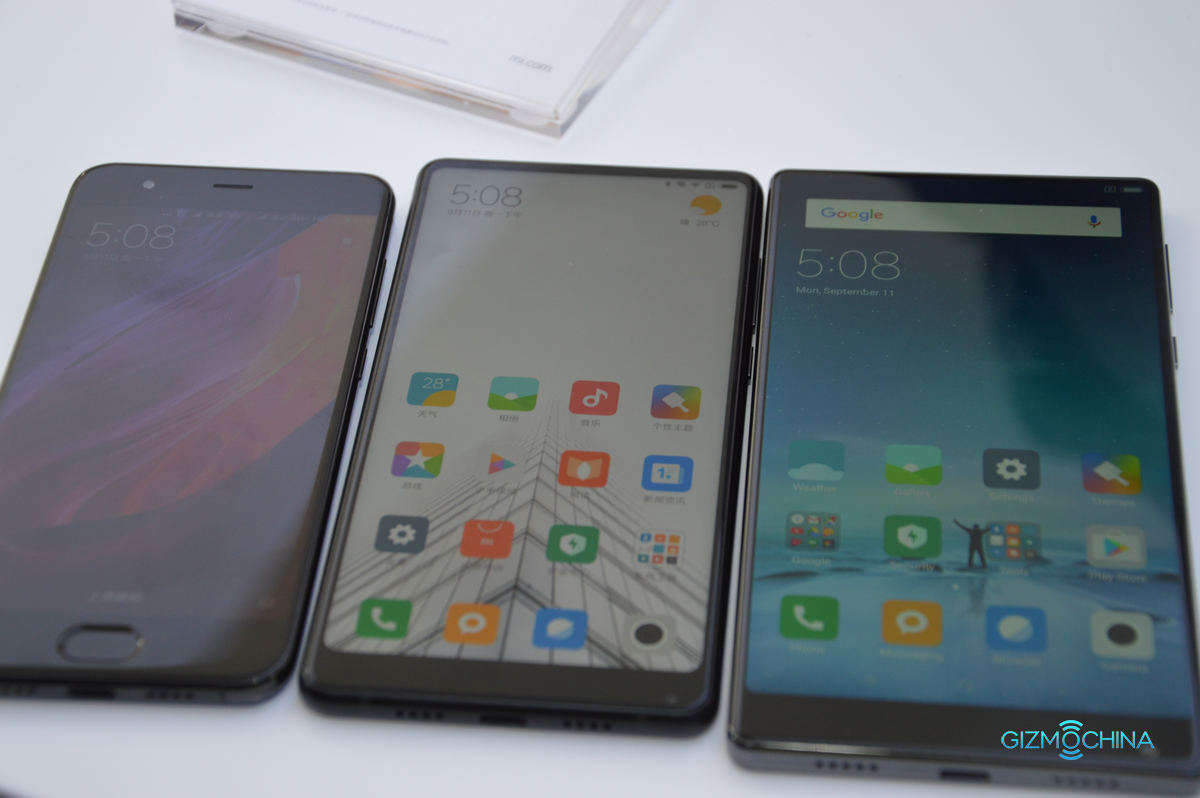
So, what changes does the Mi Mix 2 bring in comparison to the older Mi Mix? We carried the Mi Mix to the conference earlier today in order to give you a comparison of the Mi Mix 2 vs Mi Mix. You can clearly see the changes in design in the images and you can checkout the changes in the specifications in the table down below. Also, you can check out full specs of the Mi Mix 2 from here.
Xiaomi Mi Mix 2 vs Mi Mix
Xiaomi Mi Mix 2
Xiaomi Mi Mix
DIMENSIONS | WT.
151.8 x 75.5 x 7.7
185g (Black) /
150.5 x 74.6 x 7.7mm
187g (White Ceramic)
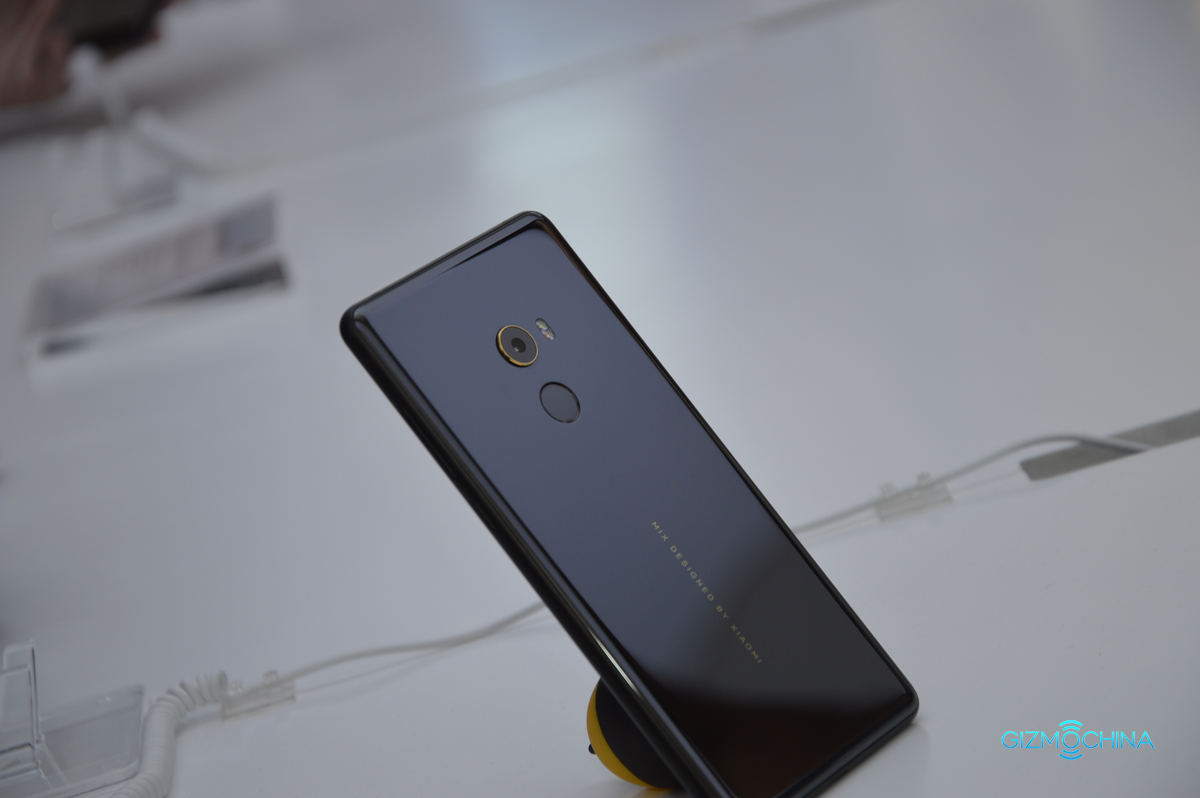
The Mi Mix 2 is now noticeably smaller than its predecessor, making it easier for every day operations. The phone continues with a ceramic body as the Mi Mix but ditches the 3.5mm headphone jack on top. This isn’t surprising since even the earlier launched Xiaomi Mi 6 didn’t feature a dedicated headphone jack. Further, the bezel at the bottom of the phone is now smaller than before, making more room for the display. But the top bezel is a bit thicker than its predecessor. Also, at the back, you’ll find that the camera is protruding unlike the Mi Mix which didn’t have a camera bump.
Rest of the design aspects have remained more or less the same. Check out the Mi Mix 2 vs Mi Mix comparison in the pictures below.
Xiaomi Mi Mix was one hell of a smartphone when it was launched back in 2016. The phone clearly set the benchmark for bezel-less flagships that we are seeing this year. But the Xiaomi Mi Mix was more of a concept smartphone than a daily driver. The phone was unusually large, even with its bezel-less design, which made it hard to operate on a day to day basis. This kept many smartphone enthusiasts away from the device.
Mi Mix (L) vs Mi Mix 2 (R) – See how easy it is to hold the Mi Mix 2 with one hand
This is no longer the case with the Xiaomi Mi Mix 2 (full specs here). The company has finally evolved the Mix lineup in to a full fledged smartphone series that will attract the attention of fans all around the world. The phone is smaller, faster, and better suited for your every day needs.
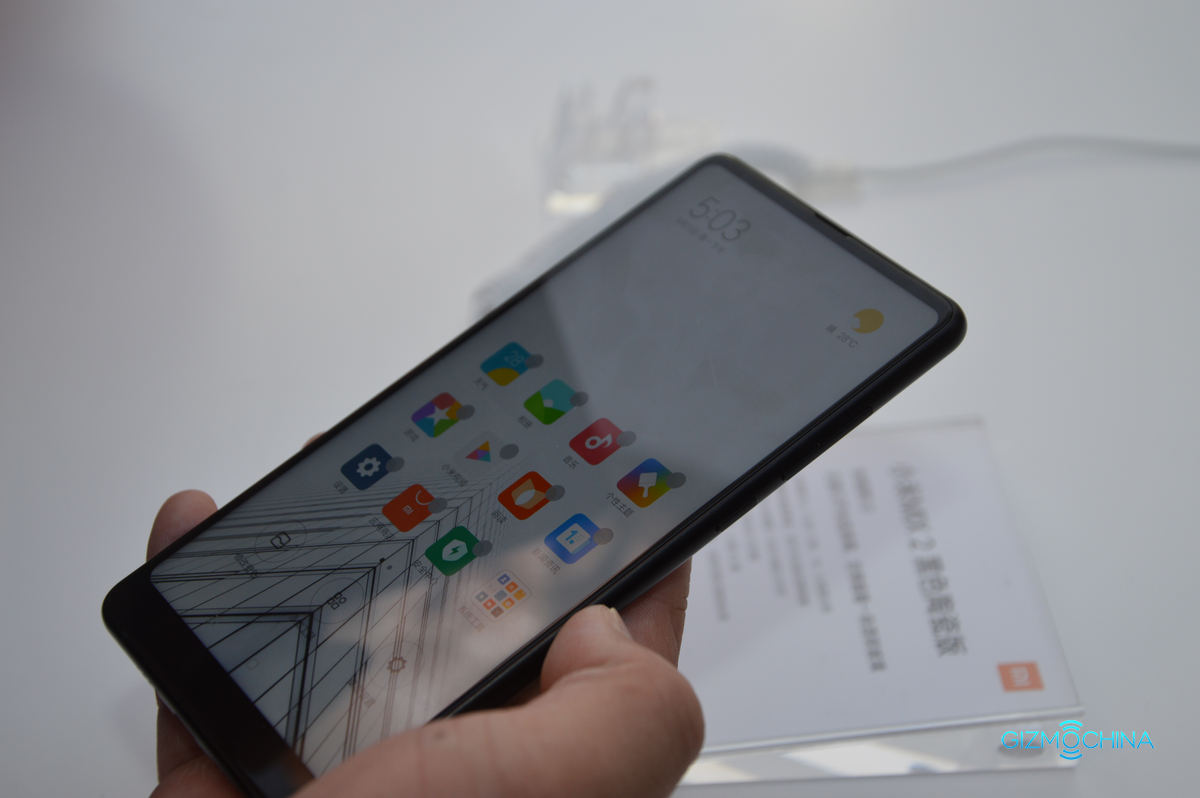
Ditching the large 6.4-inch display, the phone now features a smaller 5.99-inch screen with 18:9 aspect ratio. Once again, this aspect ratio is in trend with what we see on flagships like Samsung Galaxy S8 and LG V30, unlike Mix’s 17:9 ratio. This ensures that the phone is narrower, making it easier to hold even with one hand. Moreover, this makes the overall form factor close to its near competitors like the LG V30.
The smaller form factor definitely helps in the overall handling of the phone. Plus, its lighter as well.
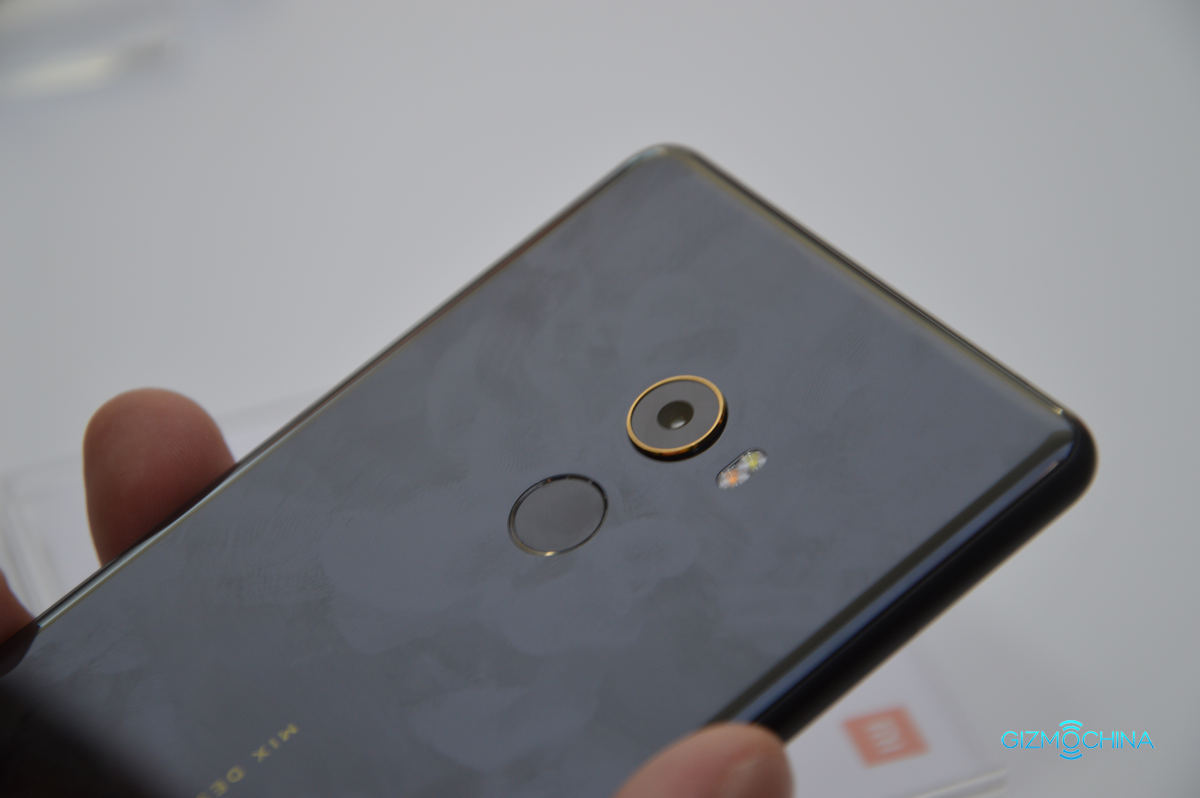
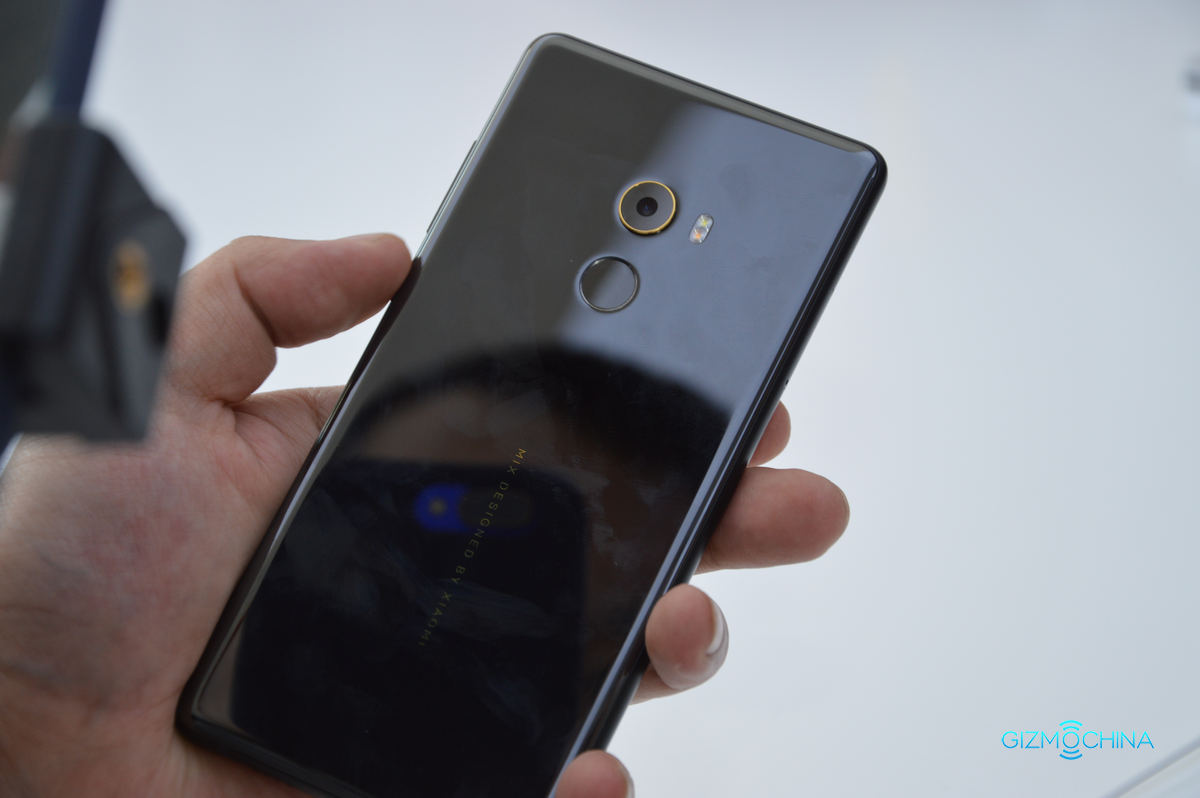
The phone features the usual volume buttons and power button on the right and the SIM card slot on the left. Like the Xiaomi Mi 6, there’s no headphone jack on the device. The USB Type-C port, microphone, and speakers are located at the bottom. Coming to the back, there’s a 12MP sensor with dual tone flash. The fingerprint sensor is located just below this.
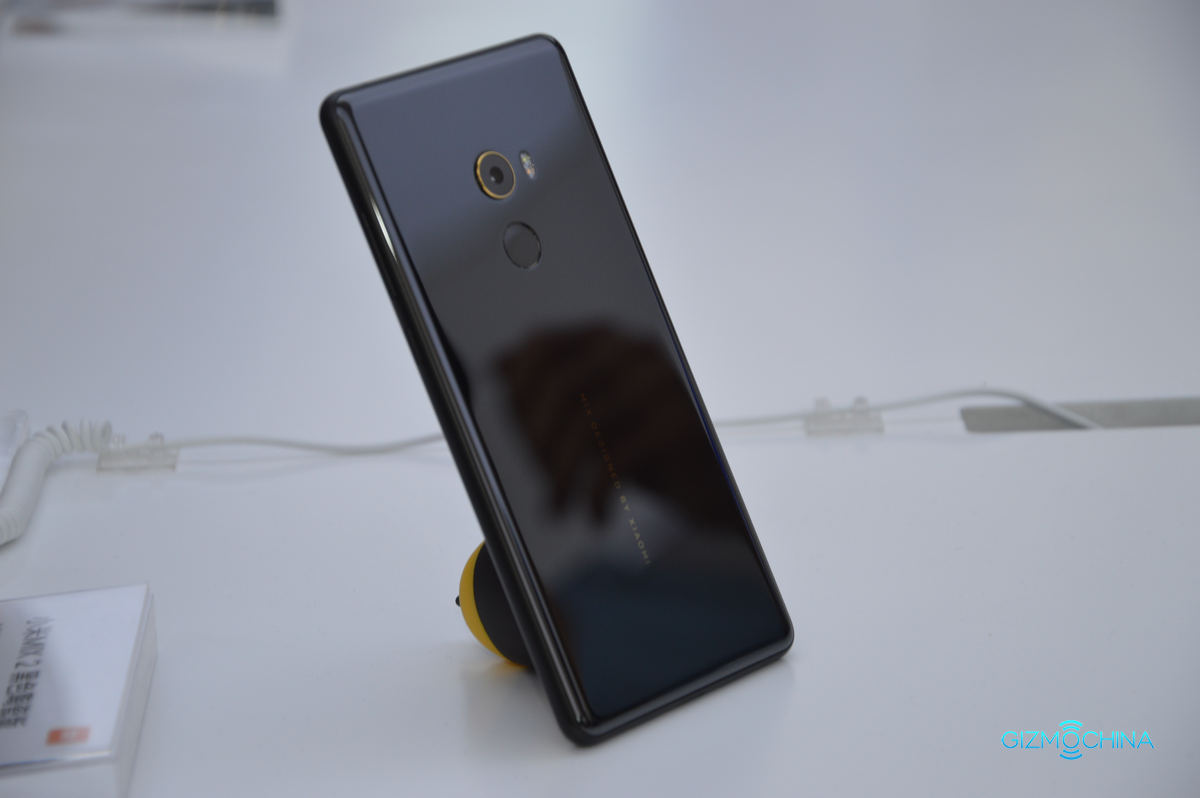
Note that there are two versions of the Xiaomi Mi Mix 2 — one with a ceramic body and stainless steel frame and another version (white edition) with a ceramic unibody design. While the black version looks beautiful, you can already see that the phone is going to be a huge fingerprint magnet. So, you’ll have to clean the back on a regular basis to keep it beautiful.
Overall, the phone feels like a gentle but necessary upgrade to the Mi Mix 2. But with similar options from big players like Samsung and LG existing in the market, we’ll have to see how fans take this new upgrade.
Check out our hands on with the Xiaomi Mi Mix 2 down below.
Azdome DAB211 seems to have been the focus of Chinese manufacturer and consumers around the world since it was officially launched with the characteristic of Ambarella A12 chip, multi-function, and multi-usage. Based on the previous news of DAB211 published by Azdome, it is known to all that DAB211 has featured severally at its built-in GPS as well as its HDR, but the advantage of DAB211 is far more than these, today Azdome also revealed a surprise detail of the DAB211, that’s over speed warning, so what’s the function of it? Read on and find out what you need to know about over speed warning.
The speed warning function can help you keep below a pre-set maximum speed. It will warn you if the vehicle exceeds the pre-set maximum speed. There are 7 options of speed limit can be set, 70km/h, 80km/h, 90km/h, 100km/h, 110km/h, 120km/h, 140km/h, you can choose the speed limit as needed, the system will give an audible warning signal if the vehicle exceeds the pre-set maximum speed, a warning symbol will also appear on the screen display.
Further details which have also emerged shows the powerful function of DAB211, you may take a look at the previous news about Azdome DAB211 for more details. Expecting more surprises about DAB211 ahead, please continue to focus on Azdome news.
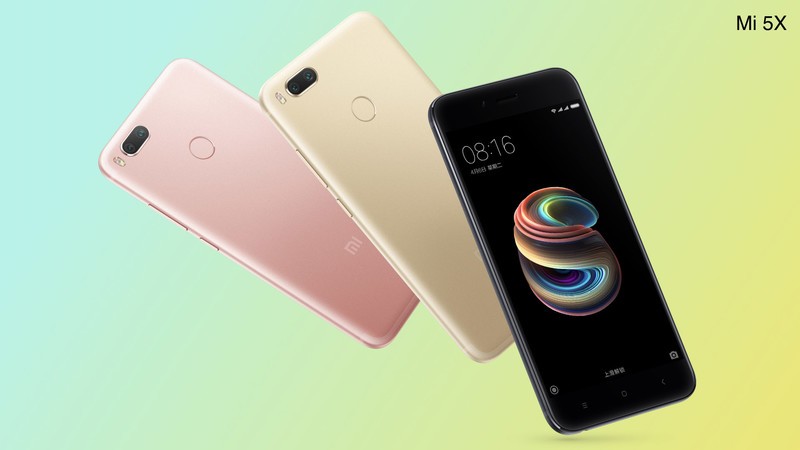
Last week, Xiaomi announced its first Android One phone, the Mi A1. The phone is actually a rebranded Mi 5X. Once people realized that, the question of if it was possible to port its ROM to the Mi 5X popped up.
We also saw a different set asking if it’s possible to port the MIUI ROM of the Mi 5X to the Mi A1. While we don’t have an answer yet for this second group, we are happy to announce that Mi 5X owners can install a stable Mi A1 ROM on their device.
The gratitude goes to a developer named heliOus who ported the ROM. He has confirmed that all the features work and there are no issues.
To install the ROM, you have to unlock your bootloader first, then flash TWRP and download the ROM to your internal storage. The rest is easy from there. The file size is 1.2GB and installation instructions and the download link are available in the source link.
The advantage the Mi A1 has is that it runs Pure Android similar to what you will find on a Google Pixel. The only difference is that it comes with some few MIUI apps. It will also get an update to Android Oreo by the end of the year. If you know Xiaomi, you already know an Oreo update won’t come that early for MIUI.
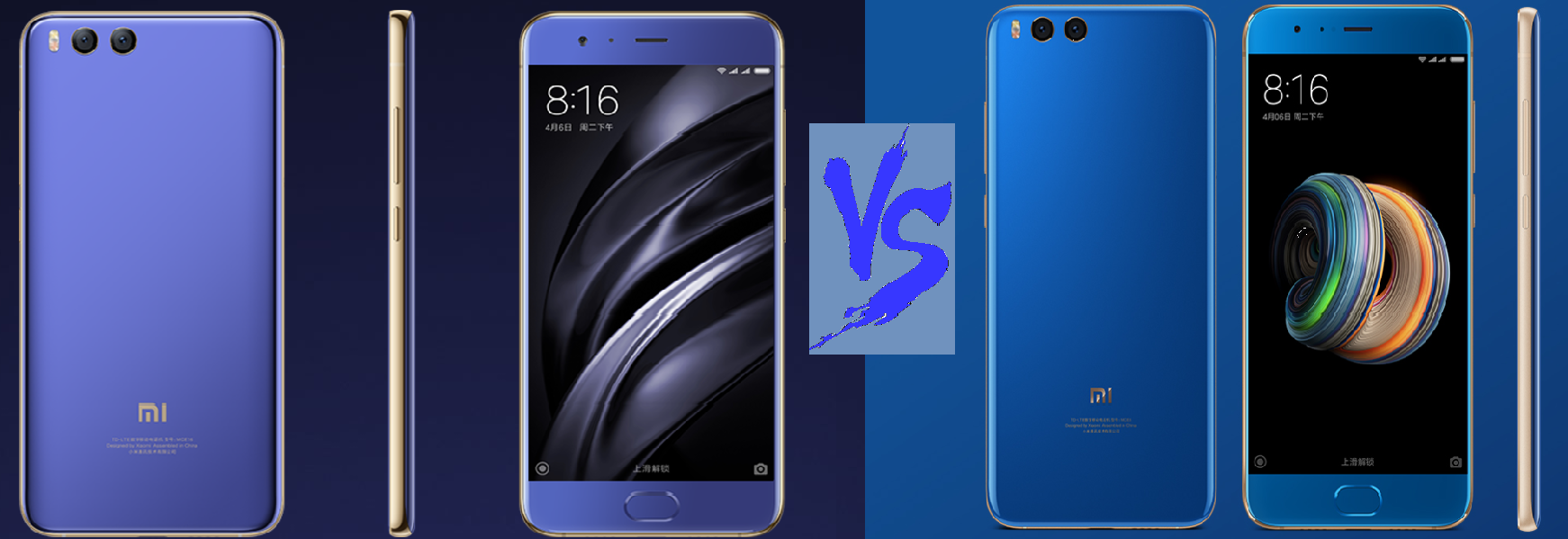
Earlier today, Xiaomi unveiled three new products – the Mi Notebook Pro, Mi MIX 2, and Mi Note 3. The Mi Note 3 is the most surprising of all three as it has redefined what Xiaomi’s Mi Note series stands for.
It is no longer the flagship phablet that competes against rivals like the Galaxy Note series and Huawei Mate series but has now been reduced to a larger but less powerful version of the flagship Mi series, in this case the Mi 6. To further complicate things, Xiaomi even priced it the same as the Mi 6.
This is a comparison of both devices to see which one truly deserves your money.
Display
This is the single most visible difference between both phones when placed side by side. Yes, some folks may not realize that the shades of blue are different.
There is really no winner here as it is a matter of choice. If you like your device small and compact, buy the Mi 6. If you want a bigger one, go for the Mi Note 3. Both displays are IPS LCDs and most people won’t notice the difference in ppi actually.
Processor
The Snapdragon 835 is the most powerful Qualcomm processor in the market right now. It also features the most powerful Adreno GPU (540). Add the fact that it is a 10nm chip with greater efficiency and lower power consumption and also has support for faster uplink and downlink speeds. Then its easy to see why it bests the 14nm Snapdragon 660 SoC.
The Snapdragon 660 is not a slouch either. It will handle anything you throw at it just not as fast as the Snapdragon 835. The Mi 6 wins this round.
Cameras
The Mi 6 and Mi Note 3 both have the same rear camera configuration. A 12MP 1.25um f/1.8 wide-angle lens paired with a 12MP 1.0um f/2.6 telephoto lens. However, Xiaomi says the Mi Note 3 produces better portrait images as the algorithms have been improved.
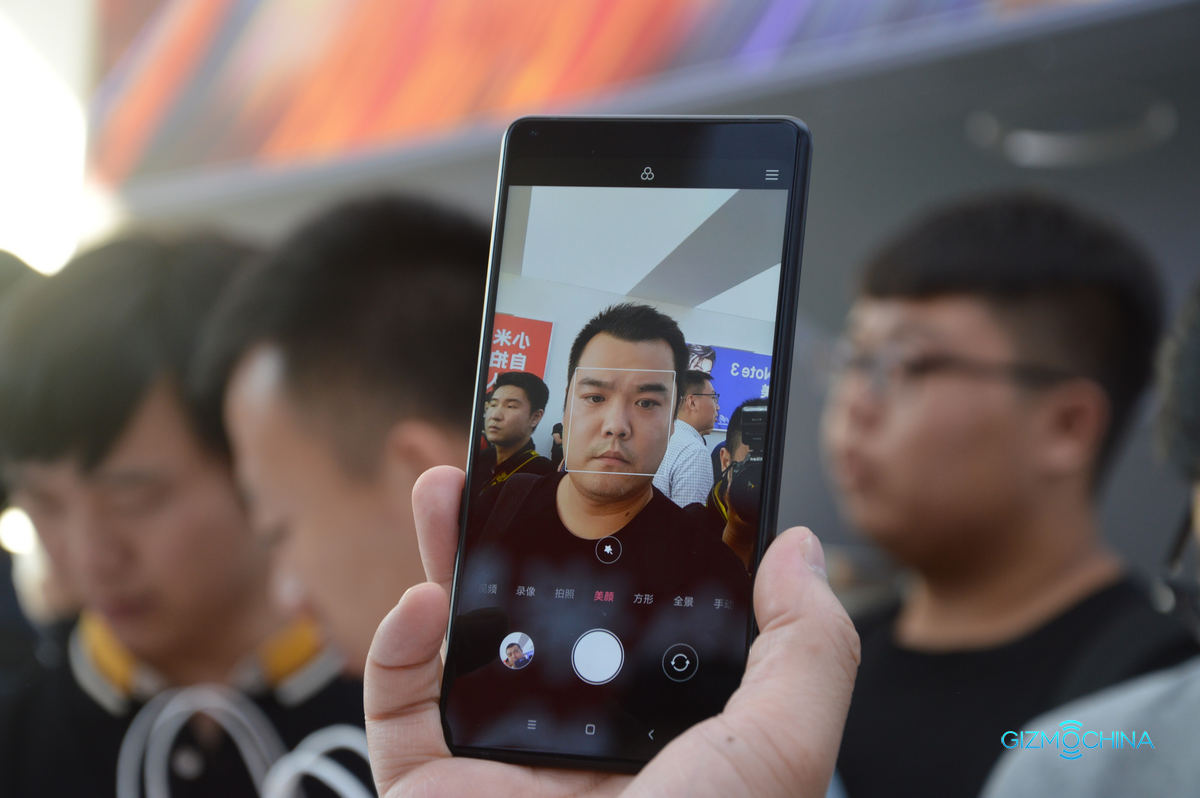
The Mi Note 3 also wins in the front camera category. The 16MP f/2.0 sensor comes with an upgraded beauty software for breathtaking selfies. The 8MP camera on the Mi 6 isn’t bad judging from reviews but if you are a selfie lover, you are better off with the Mi Note 3.
Storage
You may be wondering why there is a comparison for storage since they both come with the same capacities. The difference is the type. The Mi 6 uses UFS storage but the Mi Note 3 uses eMMC 5.1 which has slower read and write speeds.
IP Rating
The Mi 6 is nearly waterproof. If Xiaomi had added a rubber seal to the USB type-c port, you would be able to take it swimming. However, splash resistance is better than no resistance at all which is why the Mi 6 wins this round.
Battery
The Mi 6 is a 5.15-inch phone that packs a 3350mAh battery. The Mi Note 3 is bigger at 5.5-inches and comes with a bigger 3500mAh battery. Until we get to see a full review, we can’t decide on the winner here. Though we expect the difference won’t be much but the Mi Note 3 should still take the lead.
Price
As at the time of writing, the black 64GB Mi 6 is priced at ¥2499 ($383) on Xiaomi’s official website. The blue and black 128GB model sells for ¥2899 ($444). The ceramic black Mi 6 with 128GB goes for ¥2999 ($460).
The black Mi Note 3 64GB version also sells for ¥2499 ($383) and its 128GB version sells for ¥2899 ($444). It doesn’t have a ceramic black version but a blue variant with 128GB of storage sells for ¥2999 ($460).
Apple and Qualcomm won’t be ending their court battles anytime soon as a U.S federal judge has refused to grant Qualcomm an anti-suit injunction which they filed against Apple earlier this year. Qualcomm had approached the court seeking to stop Apple from going ahead with the multiple law suits it instituted against the chipmaker around January this year.
Apple had instituted 11 lawsuits against Qualcomm and its subsidiaries in different countries, including Japan, United Kingdom, and China. According to a court document obtained earlier, Apple is accusing the chip maker of abusing its dominance of the chip industry and is further seeking compensation for damages. Specifically, Apple is accusing Qualcomm of failing to live up to promises made to license “standard essential patents” broadly and inexpensively. Qualcomm is specifically accused of charging unfair licensing fees and is aggressively forcing OEMs into paying for their own inventions, thus directly profiting on technology that is in no way related to the one it’s actually licensing. Apple is claiming that Qualcomm’s per-device royalty fees are structured in a way that violates the principles of common patent licensing, consequently preventing the firm from negotiating with OEMs over patent licenses in good faith.
The U.S federal judge, Gonzalo Curiel ruled that Apple is allowed to go continue, stating that the San Diego court will not stand in the way of Apple’s decision to exercise the rights given to it in foreign jurisdictions, noting that it’s not in the judicial body’s power to rule whether Apple’s overseas motions are vexatious or duplicative. Qualcomm is challenging the multiple lawsuits, claiming that they are “duplicative” in nature.
Qualcomm has lately been faced with multiple litigations and sometimes slammed with huge fines. The Apple lawsuits both in the U.S and other places came on the heels of a decision by the U.S. Federal Trade Commission to file a complaint on January 17 accusing Qualcomm of using anti-competitive tactics to maintain its monopoly of a key semiconductor used in mobile phones. Earlier on, South Korea’s antitrust regulator had fined Qualcomm 1.03 trillion won ($854 million) in December for what it called unfair practices in patent licensing. Back in February 2015, Qualcomm paid a $975 million fine in China following a 14-month probe, while the European Union in December 2015 accused it of abusing its market power to prevent rivals from coming up. The company is also currently facing regulatory scrutiny in Europe.
We use cookies on our website to give you the most relevant experience by remembering your preferences and repeat visits. By clicking “Accept”, you consent to the use of ALL the cookies.
This website uses cookies to improve your experience while you navigate through the website. Out of these, the cookies that are categorized as necessary are stored on your browser as they are essential for the working of basic functionalities of the website. We also use third-party cookies that help us analyze and understand how you use this website. These cookies will be stored in your browser only with your consent. You also have the option to opt-out of these cookies. But opting out of some of these cookies may affect your browsing experience.
Necessary cookies are absolutely essential for the website to function properly. This category only includes cookies that ensures basic functionalities and security features of the website. These cookies do not store any personal information.
Any cookies that may not be particularly necessary for the website to function and is used specifically to collect user personal data via analytics, ads, other embedded contents are termed as non-necessary cookies. It is mandatory to procure user consent prior to running these cookies on your website.