Chinese smartphone and selfie app maker Meitu, has announced three new smartphones. The Meitu T8s and M8s are upgrades to the M8 and T8 released about 4 months ago while the Meitu V6 belongs to the luxury V-series.
Like the T8, the Meitu T8s is a camera-centric phone. It features dual front facing cameras with dual-pixel technology. The rear camera is also a dual pixel sensor. Full specification details have not been provided but Meitu says it will cost ¥3999 (~$610). Pre-orders will begin on September 19 before it goes on sale on September 26.
The Meitu M8s is a slightly upgraded version of the M8. Specification details were not provided as well but we presume there won’t be much difference between it and the M8. It is expected to go on sale on October 26.
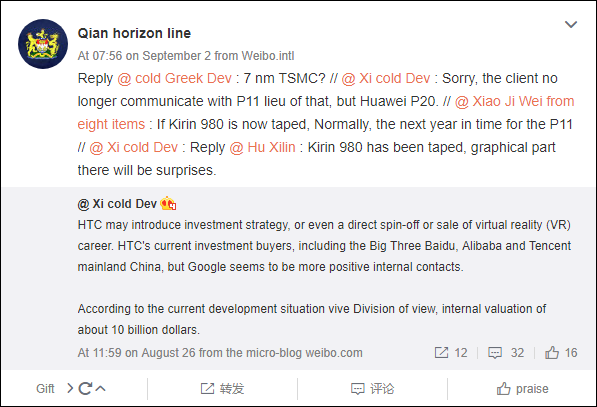
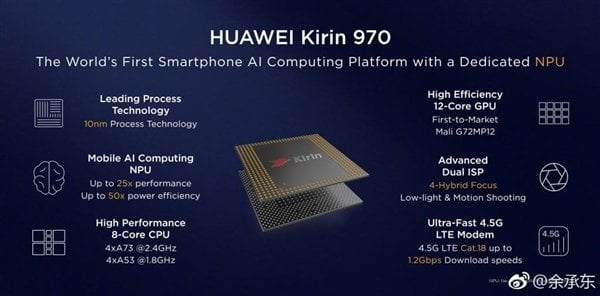
Huawei just announced the Kirin 970 flagship processor and it is yet to even feature in a smartphone but rumors of a Kirin 980 processor has already started. No doubt, the Kirin 970 will likely be succeeded by the Kirin 980 but that wouldn’t happen until around this same time next year.
Nevertheless, a few details of the next-gen chip has surfaced on Weibo. The most spectacular is that the Kirin 980 will be built on a 7nm manufacturing process. and would have the Cortex-A75 architecture. The chip will be manufactured by TSMC and the release time will be based on TSMC’s ability to mass produce the chip on time. Also, the next-gen chip is tipped to come with some improvements in the GPU which is that it may feature Huawei’s self-researched GPU. The Kirin 980 will also likely come with artificial intelligence as well.
Also, the Kirin 980 is rumoured to be used first on the Huawei P20, surprised? Sure, we have the P10 presently but instead of heading to P11, Huawei is rumoured to use P20 as the name of its next P-series flagship phone. Huawei is said to have registered a trademark for the name long ago. If this is anything to go by, it means we may likely see the Kirin 980 earlier than usual because the next P-series smartphone will likely be launched early next year, perhaps in the second quarter. However, it is still too early to conclude on this when there are loads of leaks on the way ahead before the chip is announced.
What’s the most popular dash cam in 2017? Maybe different people have different views, DAB211 is undoubtedly one of the hottest dash cams whether in appearance, performance or price.
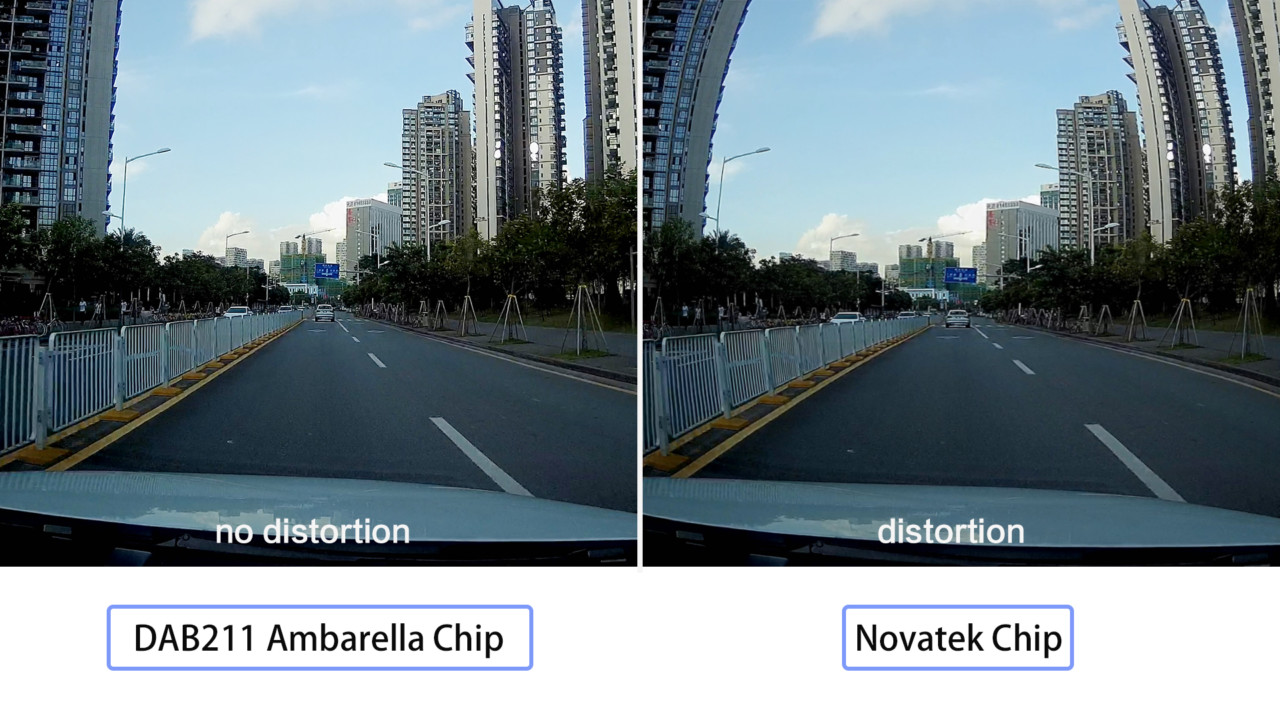
Equipped with Ambarella A12 chip, DAB211 solves the problem of video distortion phenomenon, showing people more real shot environment; 1440p ultra high definition gives us an HD visual feast; combined with the unique design of heat emission hole, DAB211 is worthy of the popular dash cam in 2017.
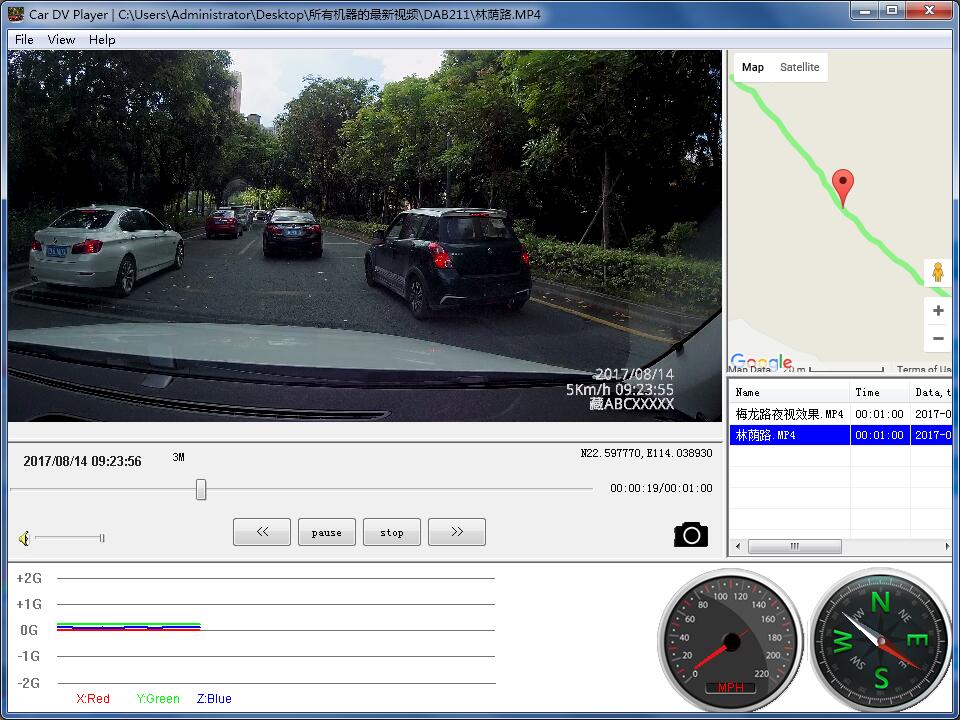
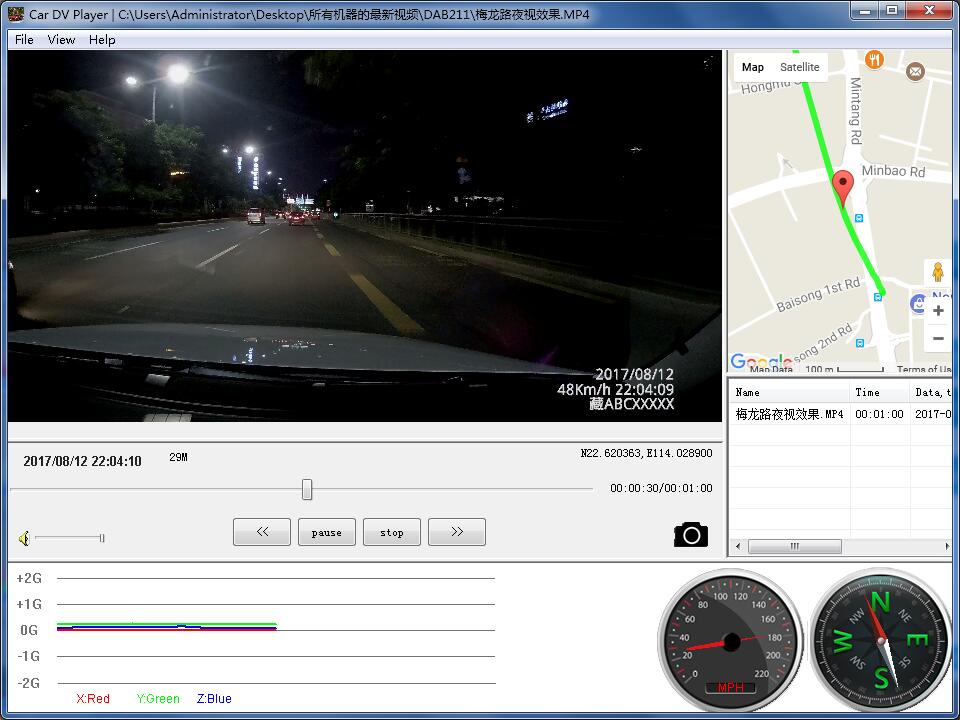
Azdome executed a full test of the GPS function of DAB211, from the test result, the GPS function works well, normally, it can search GPS signal within 2 minutes, and the connection speed is also very fast, currently the dash cam which can connect GPS signal within 2 minutes is relatively few, DAB211 can be counted as an excellent built-in GPS dash cam.
About the GPS player app, Azdome prepared two versions of Windows and Mac for us, we can head to the support page of Azdome official website to download. We can see from the screenshot of Windows system that there are speed and direction compass on the bottom right corner, and the top right corner is google map track( this software supports google map and Baidu map), and the left side is video interface.
Furthermore, DAB211 will offer you an attractive price, how much do you think the price of DAB211 is?
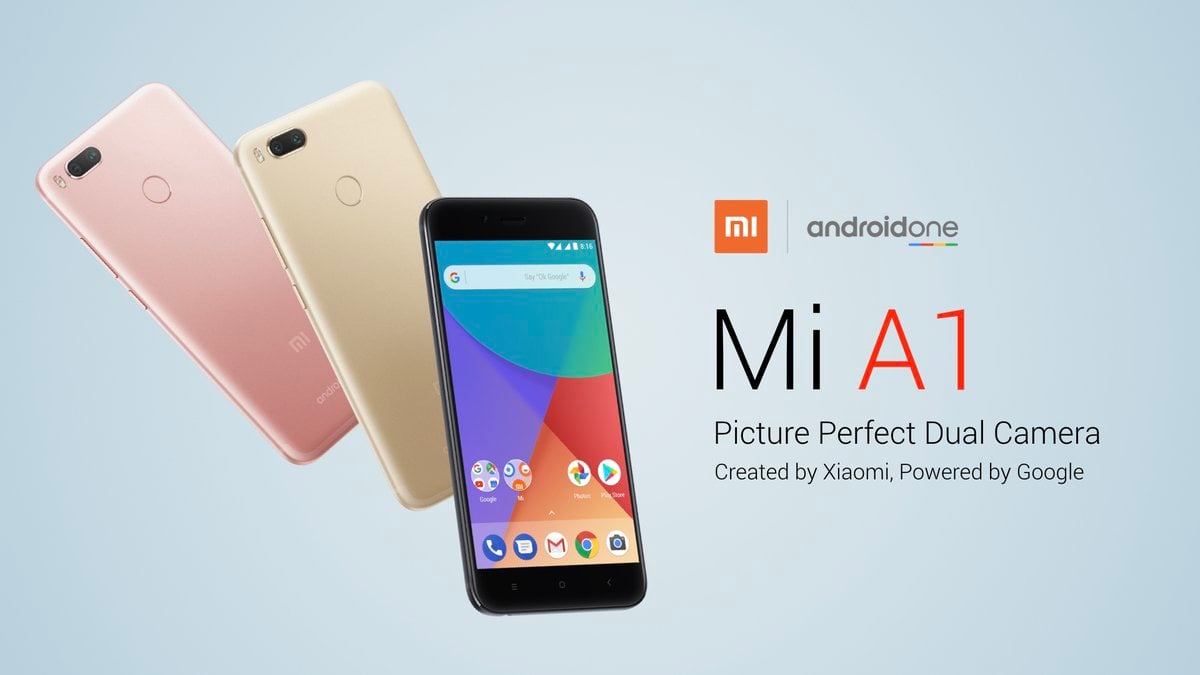
The Xiaomi Mi A1 is an Android One smartphone that is created by Xiaomi and powered by Google. In the previous month, Xiaomi had released the Xiaomi Mi 5X smartphone in China. The Mi A1 is essentially the same phone that comes with same specs but delivers pure Android experience.
Xiaomi M1 A1 Design and Display
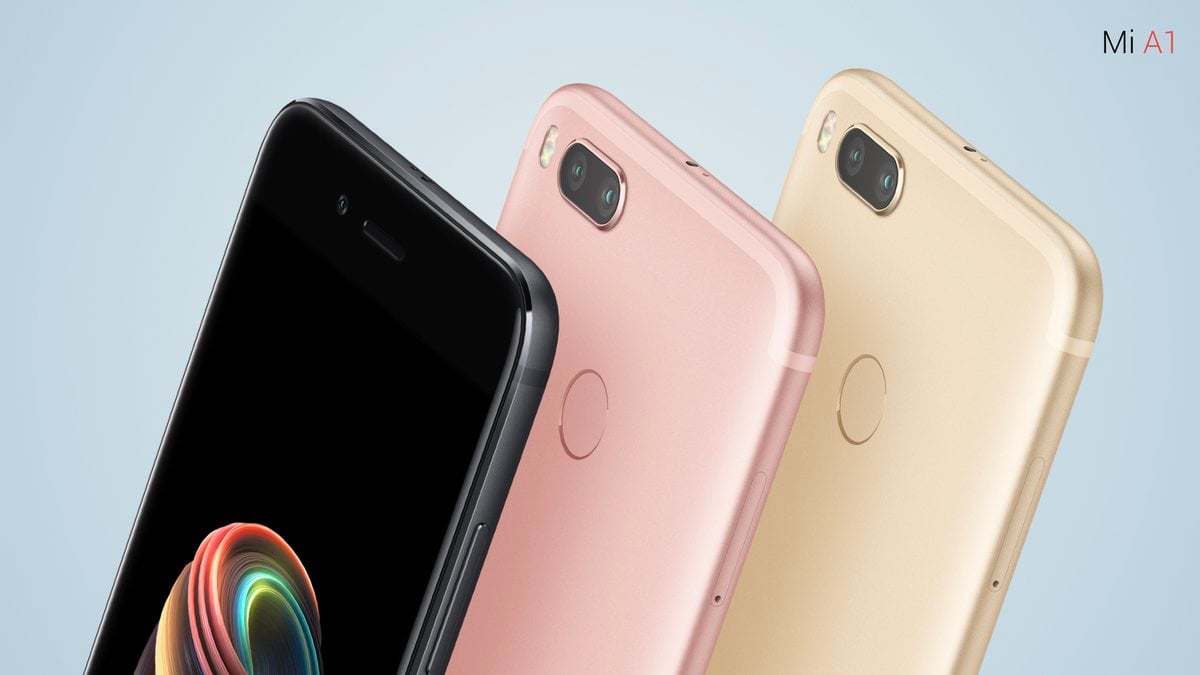
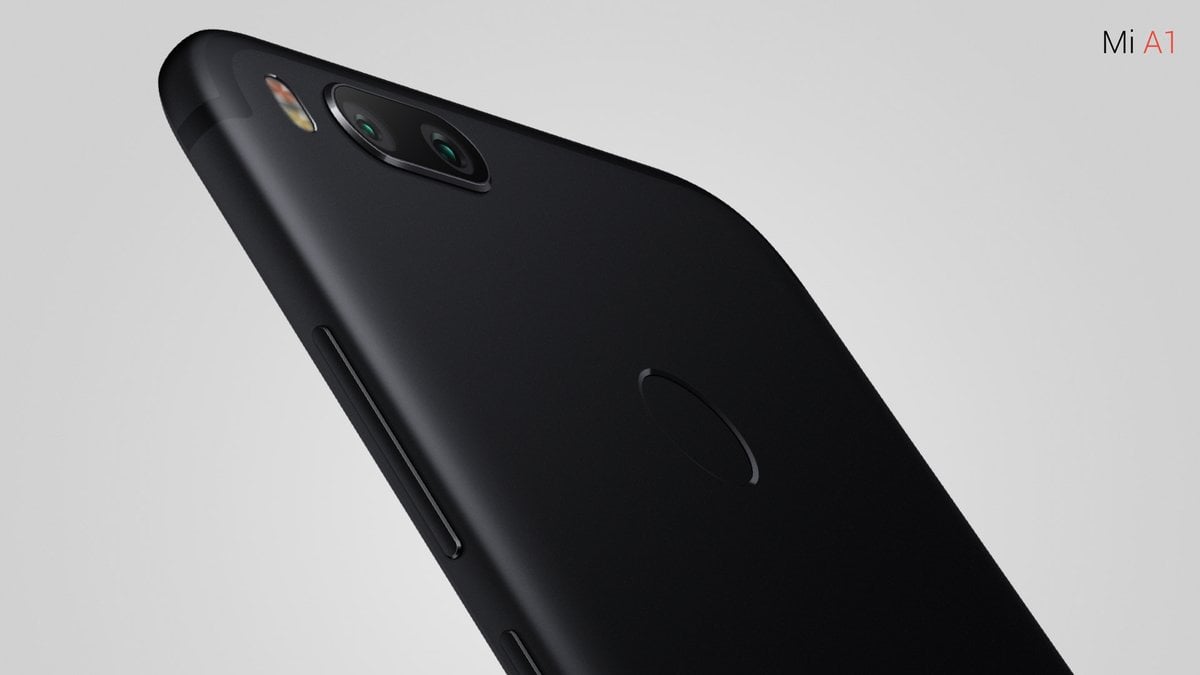
Featuring a full metallic body and appearance that is very similar to the Xiaomi Mi 5X, the Xiaomi Mi A1 comes in three colors like Black, Rose Gold and Gold. The rear side of the phone features a dual camera setup and a fingerprint reader. The Black variant of the Mi A1 comes with anti-fingerprint coating. It measures 155.4 x 75.8 x 7.3mm and weighs 165 grams.
The Mi A1 has a 5.5-inch full HD screen that produces a resolution of 1,920 x 1080 pixels. Its screen is protected by Corning Gorilla Glass. It may be fitted with Gorilla Glass 3 that is available on the Mi 5X.
Xiaomi Mi A1 Flagship Dual Cameras
The Xiaomi Mi A1 produces picture perfect shots using the so-called “flagship dual camera” that includes a 12-megapixel wide-angle lens for panoramic shots and a 12-megapixel telephoto lens for portrait shots that is equipped with 2x optical zoom (10x digital zoom). It can shoot bright images even in dim light conditions because of the large 1.25micron pixels. The dual camera sensors work together to deliver DSLR-like photo shooting experience. Xiaomi claims that the photo shooting prowess of the dual rear cameras of the Mi A1 is similar to that of iPhone 7 Plus.
The Mi A1 features a 5-megapixel front camera. At the launch event of Xiaomi Mi A1, the company showcased several images to show how better the photo shooting experience on Xiaomi Mi A1 is compared to flagship phones like iPhone 7 Plus and OnePlus 5. The Xiaomi Mi A1 can shoot bokeh effect images with clear defined edges better than iPhone 7 Plus and OP5 as it can be seen in the below image.
Xiaomi Mi 1 A1 Performance
Like the Xiaomi Mi 5X, the Mi A1 is also driven by the power efficient Snapdragon 625 chipset. It features 4 GB of RAM, 64 GB of native storage and a microSD card slot. It also features a USB-C port that can be used for fast charging the 3,080mAh battery of the smartphone.
A single pyrolytic graphite sheet that are used on various smartphone can help in diffusing and radiating heat quickly. The presence of dual pyrolytic graphite sheet presence inside the Mi A1 can reduce heat by 2 degrees. The Mi A1 also promises impressive audio performance through its 10v smart power amplifier that amplifies sound when the phone is in speaker mode and also when listening to music through headphones. The Mi A1 also features a 3.5mm audio jack.
Xiaomi Mi A1 Android One Experience
Since it is an Android One smartphone, the Mi A1 does not feature Xiaomi’s MIUI proprietary skin because of which its users can benefit from stock Android experience of 7.1 Nougat. However, for photo shooting, the Mi A1 features the feature-rich MIUI camera app that brings features like Beautify 3.0 and smart beautify. Mi A1 users can expect regular Android updates and take advantage of the unlimited storage on Google Photos. It also includes some other Xiaomi MIUI apps such as Mi Store and Mi Remote app.
Xiaomi Mi A1 Price and Availability
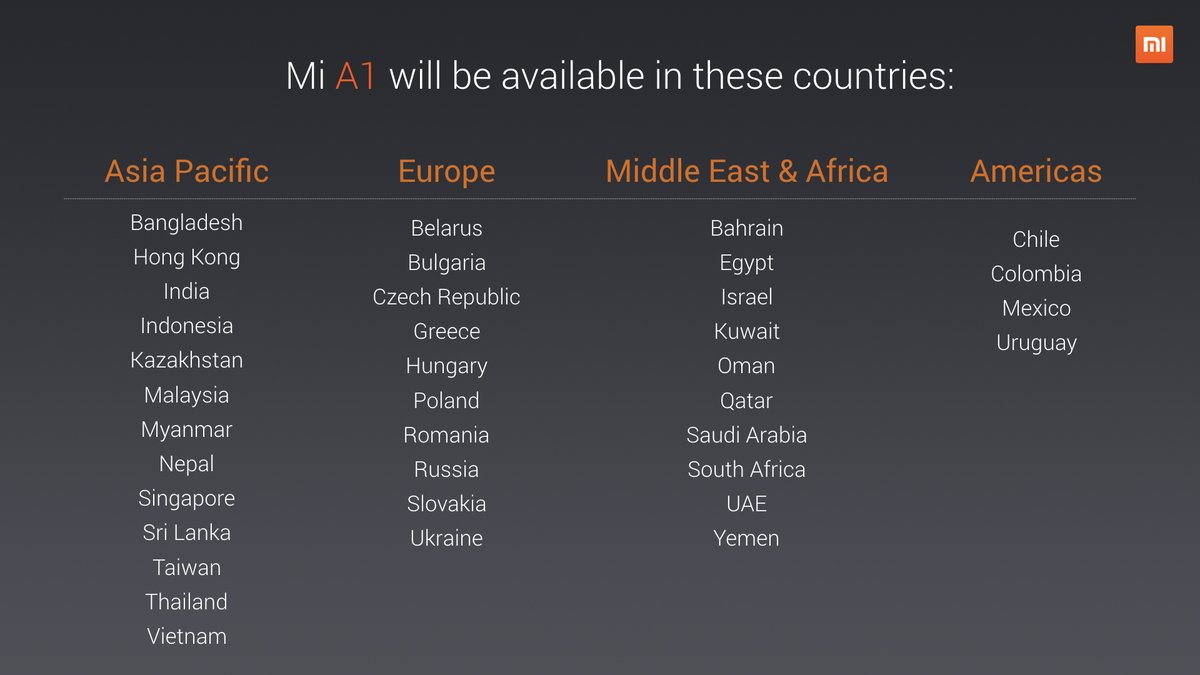
The Xiaomi Mi A1 will be not only coming to India but also to various regions that are mentioned below.
In India, the smartphone would be available from Sept. 12 exclusively through Mi.com and Flipkart with a price tag of Rs. 14,999 (~$234). It will be also available for buying offline through Mi Home stores and various offline retailers from the same date. Airtel is giving away up to 200 GB of 4G network data for the buyers of Mi A1 in India.
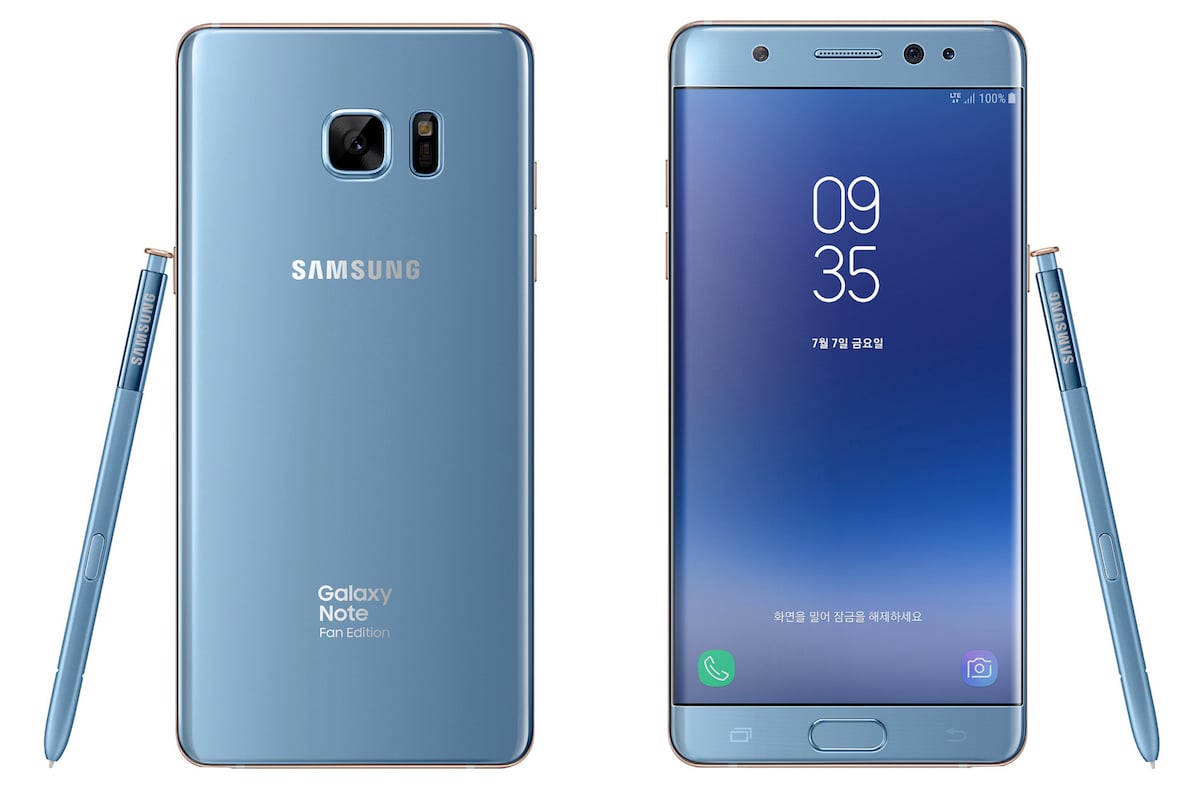
Samsung had relaunched the refurbished edition of the Galaxy Note 7 as Galaxy Note Fan Edition in the first week of July. The smartphone was exclusively available for purchase in the home country of South Korea. Fresh information suggest that the Galaxy Note FE units are completely sold out and the South Korean company has no plans to replenish its stocks.
Reports had revealed that Samsung had released only 400,000 units of the Galaxy Note FE in South Korea. The Note FE was sold around $265 cheaper than the original Galaxy Note 7 phablet that was discontinued because of its battery related issues. It was sold for $620 in South Korea.
In order to ensure that the Note FE does not meet the same fate as the Note 7, Samsung added a smaller battery of 3,200mAh capacity instead of the original 3,500mAh battery. The rest of the specs of the Note FE were same as the original Note 7. The company had also included Bixby AI on the Note FE.
Samsung had timed the launch and sales of the Galaxy Note FE in such a way that its stocks would get sold out before the arrival of the Galaxy Note 8 flagship smartphone. The pre-orders of Note 8 are already going on in the home turf and it is expected to be available in the market from Sept. 15. Even though Samsung is unlikely to sell the Note FE again in the home country, it is reviewing overseas releases.
Samsung’s mobile chief, DJ Koh had recently told the media that he did not want to cover the mistake that was committed by the company. After thoroughly investigating the issue, Samsung was able to find the fix for the issue. For 100 days, the company had tested 200,000 phones and 30,000 batteries. It was found that the Galaxy Note 7 explosions were caused by its batteries. He added that the Galaxy Note Fan Edition was launched not to make money, but to prove that the recall decision was carried out because of the batteries and not due to other defects.
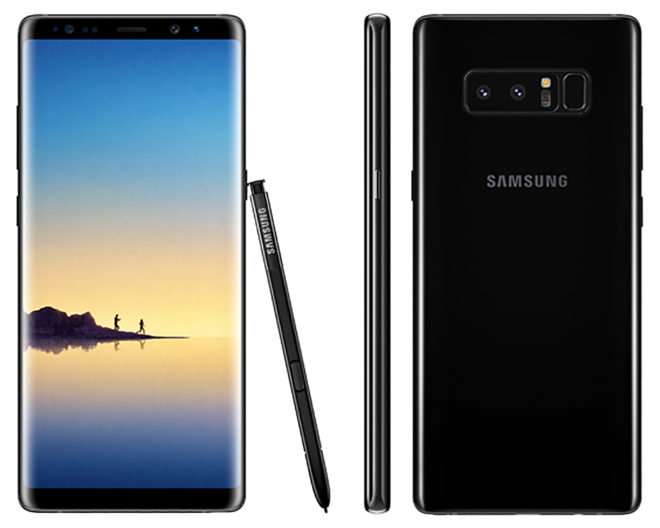
As far as Samsung Galaxy Note 8, the company is quite sure users will not encounter battery related risks. The Galaxy Note 8 that features a huge display of 6.3-inch has a larger and wider chassis than the Note FE (or Note 7). Also, it features a smaller battery of 3,300mAh capacity. Koh also said that despite the fact that the Note 8 features a smaller battery, it can deliver better battery performance because of the power-efficient chipset present inside it.
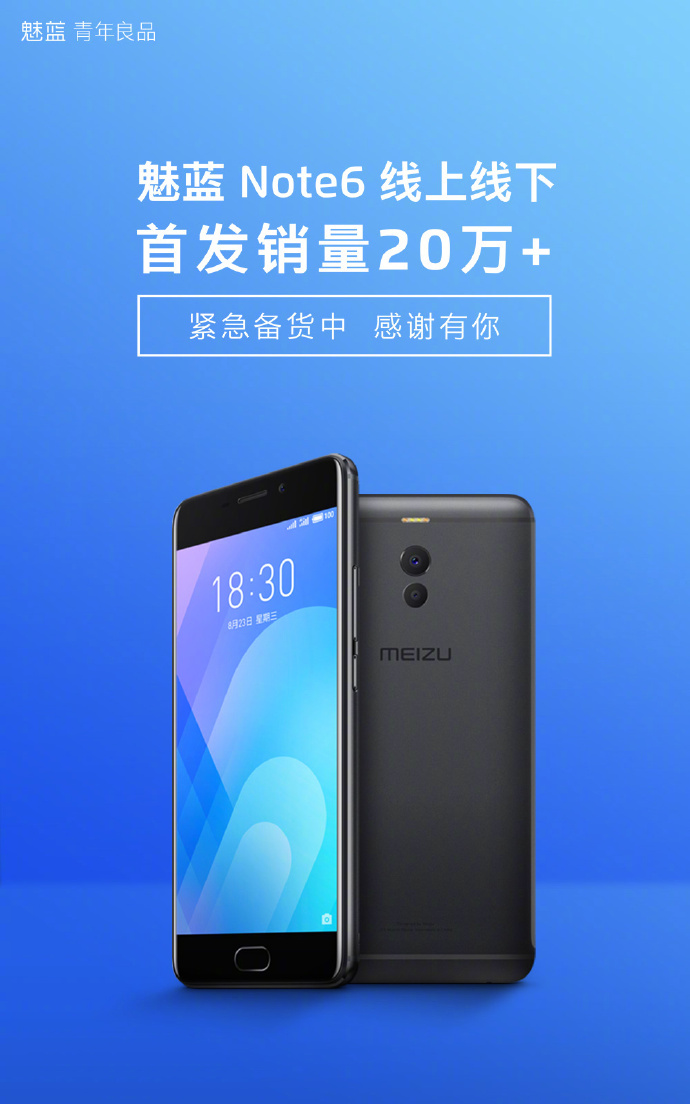
Meizu released its sleek mid-range smartphone the M6 Note on August 23 and the device went on sale on September 1 both via offline and online channels. The company has just announced the sales performance of the M6 Note during its first sales. Meizu disclosed that it sold over 200,000 M6 Note units both offline and online before running out of stock. That means the figures would have been more than that if there were enough stock available. Meizu also disclosed that they are trying to restock for another round of sales.
The Meizu M6 Note happens to be the first device that would be released under the repackaged blue Charm division. It comes as a mid-range flagship with a spectacular design and powerful hardware lineup which obviously would enable it to perform well in the market. As a reminder, the M6 Note sports a 5.5-inch 1080p LCD display and is powered by an energy saving Qualcomm Snapdragon 625 processor clocked at 2.0GHz. The processor also brings on Cat. 7 full Netcom support and an enhanced dual ISP image processing speed. The device is available in 3GB RAM + 16GB, 3GB + 32GB and 4GB + 64GB memory variants.
In addition, the MeizuM6 Note features a dual camera setup at the rear camera which is a 12 MP Sony IMX362 sensor with f1.9 aperture, 1.4um individual pixel size, and 6P lens, teaming up with a Samsung 2L7 secondary sensor. The M6 Note also packs a 16MP front camera for stunning selfies. Other specs include a 4,000mAH battery, mCharge with 18W Fast charge, dual SIM slots, 4G LTE and runs Flyme 6 with Meizu’s One Mind AI based on Android 7.1.2 Nougat.
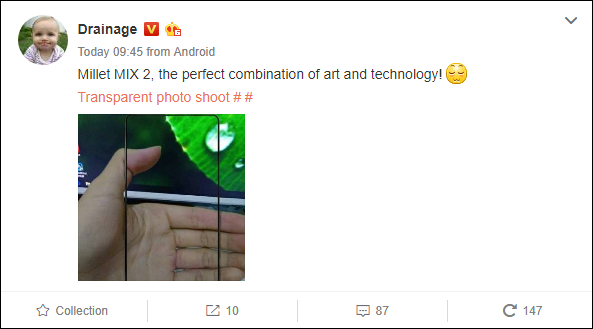
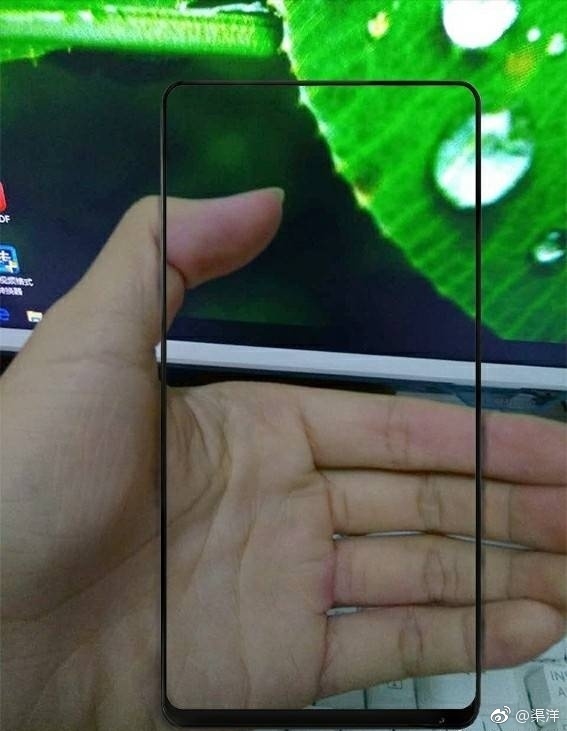
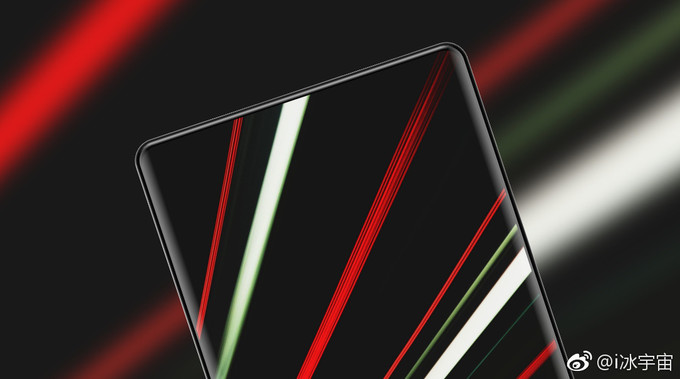
Ahead of the September 11 launch date for the Xiaomi Mi Mix 2, we expect a barrage of leaks to appear and there has been no disappointment so far. Already, we have seen the packaging box for the Mix 2 and a couple of other leaks but the latest one is the screen panel of the expected Xiaomi flagship. As you would have expected, the leaked Mi Mix 2 front panel shows a large screen to body ratio.
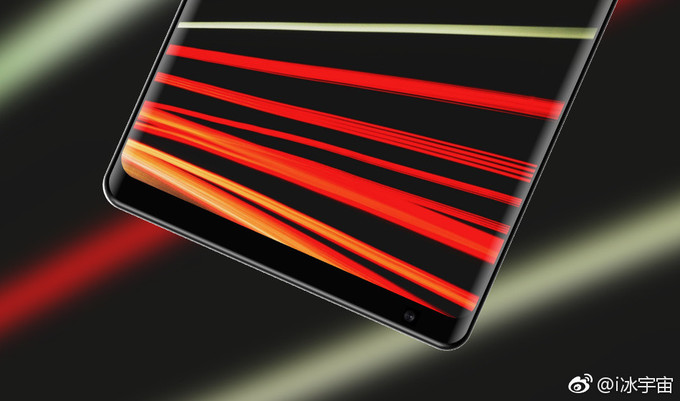
The screen panel was leaked by a Weibo user who tagged the Mix 2 – the perfect combination of art and technology. That underscores not just the beauty the device will have but also the large display size with a spectacular screen-to-body ratio which it brings. From the leaked panel, we can see that the Mix 2 will have ultra-thin bezels on the top and two side edges while the bottom edge will have a slightly increased bezel since it will house the virtual home key and front camera. The edge of the screen and well rounded, more than that of the Mi Mix and at the bottom right side we can see the opening for the front camera.
The Mi Mix 2 is expected to come with a display size slightly smaller than the 6.4-inch screen the Mix 2 used with the display disputed to be between 6.0 or 6.2 inches. Indeed, the leaked panel seems to reflect a reduction in size which could permit one-handed usage to some extent. The aspect ratio still seems to be 18:9 just as rumored.
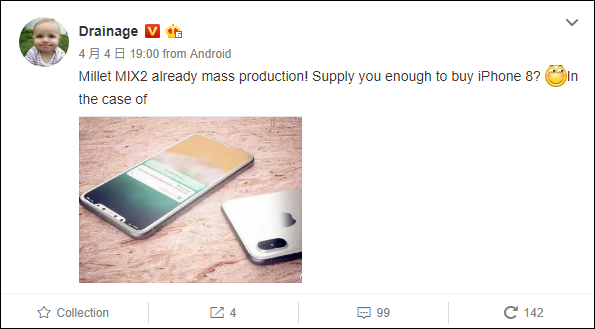
In addition, the blogger also revealed in another Weibo post that the Mi Mix 2 is already being mass produced which could be an indication that there would be enough stocks available when it goes on sale. The Mi Mix 2 is positioned to take on the iPhone 8 which is also launching around the same time with a full-screen design and dual cameras among others. The Galaxy Note 8 is also a contender for a share of the market but Xiaomi is hoping to grab a slice of the market shares from the two market leaders with the Mi Mix 2 and making enough units available will greatly help them achieve that goal.
Honor 8 Pro (aka Honor V9 in China) is one of the well-received smartphones of 2017 and the Honor 6X is also a famous budget-friendly smartphone that is enabled with dual rear cameras. Honor, a subsidiary brand of Huawei, has confirmed that both smartphones would be getting Android 8.0 Oreo update before the end of the year. HMD Global has also officially confirmed that the Nokia Android smartphones would be upgraded to
Android 8.0 Oreo was introduced in the previous month. Since then, couple of smartphone manufacturers such as BlackBerry, HTC and Sony have confirmed on the devices that will be updated to Android 8.0 Oreo. As far as Honor phones are concerned, the Chinese firm had kept a press conference recently in New Delhi, India. During the press meet, the company allowed its officials to answer queries on its old and new devices.
When Honor was asked about the arrival about the release of Android 8.0 Oreo update for the Honor 8 Pro and Honor 6X, the company claimed that the firmware upgrade would be released within few months. The company confirmed that these smartphones would be getting the Android 8.0 Oreo update by the end of this year. However, there is a possibility that the rollout of Oreo update for Honor 6X may happen in early 2018. Currently, the Honor 8 Pro is running on Android Nougat. The Honor 6X is also running on Nougat, but it was launched with Android 6.0 Marshmallow OS.
Apart from the Nokia 3310 (2017) feature phone, HMD Global has increased couple of Nokia phones running on Android OS this year. The Nokia 3, Nokia 5, Nokia 6 and Nokia 8 are all currently running on Android Nougat OS. A tweet released by Juho Sarvikas who is Chief Product Officer with HMD Global has confirmed that the all the Nokia Android phones including the Nokia 3 would be upgraded to Android 8.0 Oreo. However, Sarvikas refrained from revealing the exact timeframe of the release.
All of our smartphones will upgrade to Oreo, Nokia 3 included. No comments yet on timing so that I don't get into trouble 😊.
The Nokia 3 is running on MediaTek MT6737 chipset whereas the Nokia 5 and Nokia 6 are powered by Snapdragon 430. Hence, some were speculating that the MediaTek chip powered Nokia 3 may not get the latest Android version. However, the Finnish firm has confirmed that the low-end Nokia 3 will be upgraded to Android Oreo.
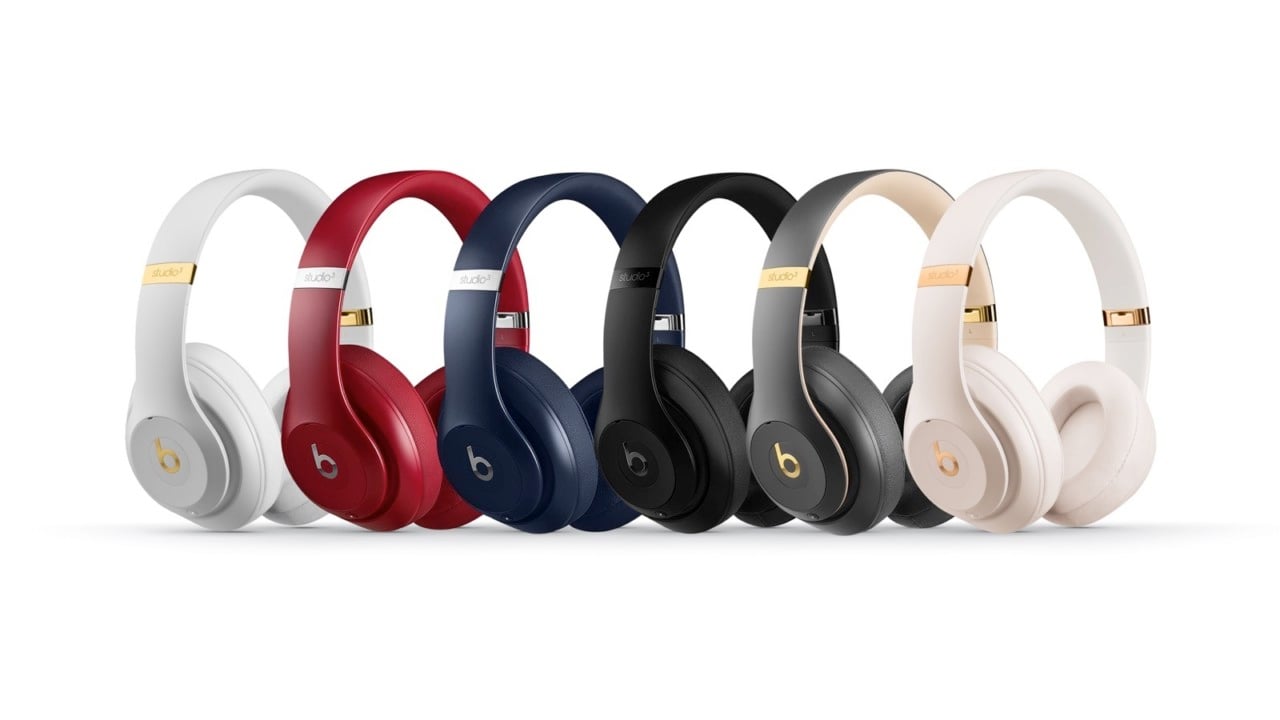
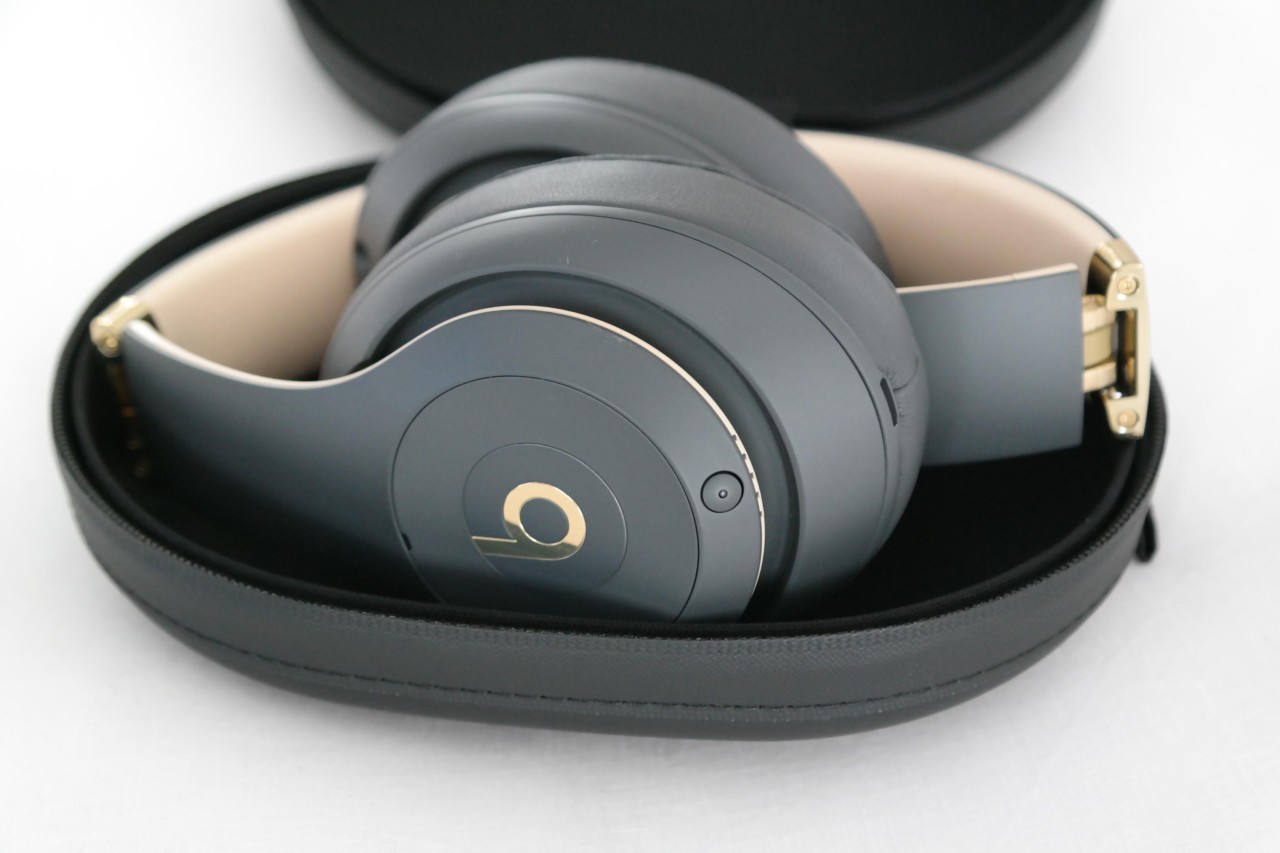
The new Beats Studio3 Wireless premium headphones have been officially introduced by Apple. The flagship over-ear headphones are available with a retail price of $349 in the U.S. It will be selling in the U.K. for £299.
Beats Electronics that was founded in 2006 was taken over by Apple 2014. Since then, it is functioning as a subsidiary of the Cupertino company. The Beats Studio3 Wireless can be conveniently paired with Appel devices like iPhone, iPad or Mac and the wirelessly connectivity can be achieved through Bluetooth.
The number 3 in the moniker of the new headphones stands for third generation. Appearance-wise, it looks very similar to the predecessor Studio model from 2013. The Class 1 Bluetooth ensures optimal connectivity with very less disconnection chances on iOS and Android devices.
Beats Studio3 Wireless is powered by Apple W1 chip. It is the same chip that is present under the hood of other products like Beats Solo3, BeatsX and Powerbeats3. Moreover, the Studio3 Wireless is equipped with Adaptive Noise Cancellation (ANC) which allows the device to constantly listen to the sound of the surrounding environment and accordingly adjust the audio output.
The Pure ANC feature available on the Studio3 Wireless headphones can scan the sound of the environment at the rate of 50,000 times a second to calibrate the audio performance. The controls present on the new Beats headphones can be used to skip song, control music and access Siri. The inbuilt mic can be used to answer or make phone calls. According to Beats, the new over-ear headsets are so comfortable that it can be worn throughout the day.
The Studio3 Wireless can last for up to 22 hours on a single charge. Compared to the predecessor Studio model, its successor is able to churn out 10-hours of extra battery life. By turning off the ANC, the device can run for up to 40 hours. Even when the ANC is disabled, the audio quality is not hampered. There is a feature called “Fast Fuel” that allows the headphones to be used for around 3 hours by charging it only for 10 minutes.
The Beats Studio3 Wireless headphones are now available at the online store of Apple. It comes in multiple colors like Red, Matte Black, White, Blue, Porcelain Rose, and Shadow Gray. The last two color variants are limited edition models.
Coming Monday, Xiaomi will be unveiling the Xiaomi Mi MIX 2 flagship phone. The launch event will be held just a day ahead of Apple’s special event that is slated to happen on Sept. 12. The original Mi MIX stunned the world with its concept design provided by French designer, Phillippe Starck. The Chinese firm has worked again with Starck to design the Mi MIX 2. Fresh renders of the Mi MIX 2 reveal how beautiful its design is.
Fresh renders of the Xiaomi Mi MIX 2 has appeared to reveal that it will be boasting a higher screen-to-body ratio compared to the original phone. As it can be seen in the both renders, the bezels at the top, left and right sides of the screen are not visible. The only bezel that can be seen is the bottom one which appears to be smaller than the original model.
Like the Mi MIX, the renders of the successor phone reveal it also features a selfie camera at the bottom right corner. The glass placed above the display appears to be slightly curved at all the four edges. Even though these renders to do give an idea of the design of the Xiaomi Mi MIX 2, there is no way to confirm how legitimate they are.
Some leaked photos that surfaced in the past few days revealed that the Snapdragon 836 would be powering the Xiaomi Mi MIX 2. However, Qualcomm has officially confirmed that the Snapdragon 835 chipset would be powering up the Mi MIX 2 putting rest the rumors of Snapdragon 836. However, the rumor mill has claimed that the upcoming Google Pixel 2 duo would be featuring the SD 836 chip.
There are multiple reports on the size of the display of the Xiaomi Mi MIX 2. The original model features a 6.4-inch display. Some rumors have claimed that the size of the display of the Mi MIX 2 would be reduced to 6 inches. Other sources claim that it would be featuring a 6.2-inch display, the same panel that is available on the Samsung Galaxy S8+.
The Mi MIX 2 is speculated to debut in two models featuring 6 GB of RAM and 128 GB of storage and 8 GB of RAM and 256 GB storage. The original Mi MIX was criticized for its mediocre front camera, but the successor model is expected to feature an improved selfie snapper. It may feature a dual rear camera system or a single camera of 19-megapixel. It also speculated to feature a 4,400mah battery.
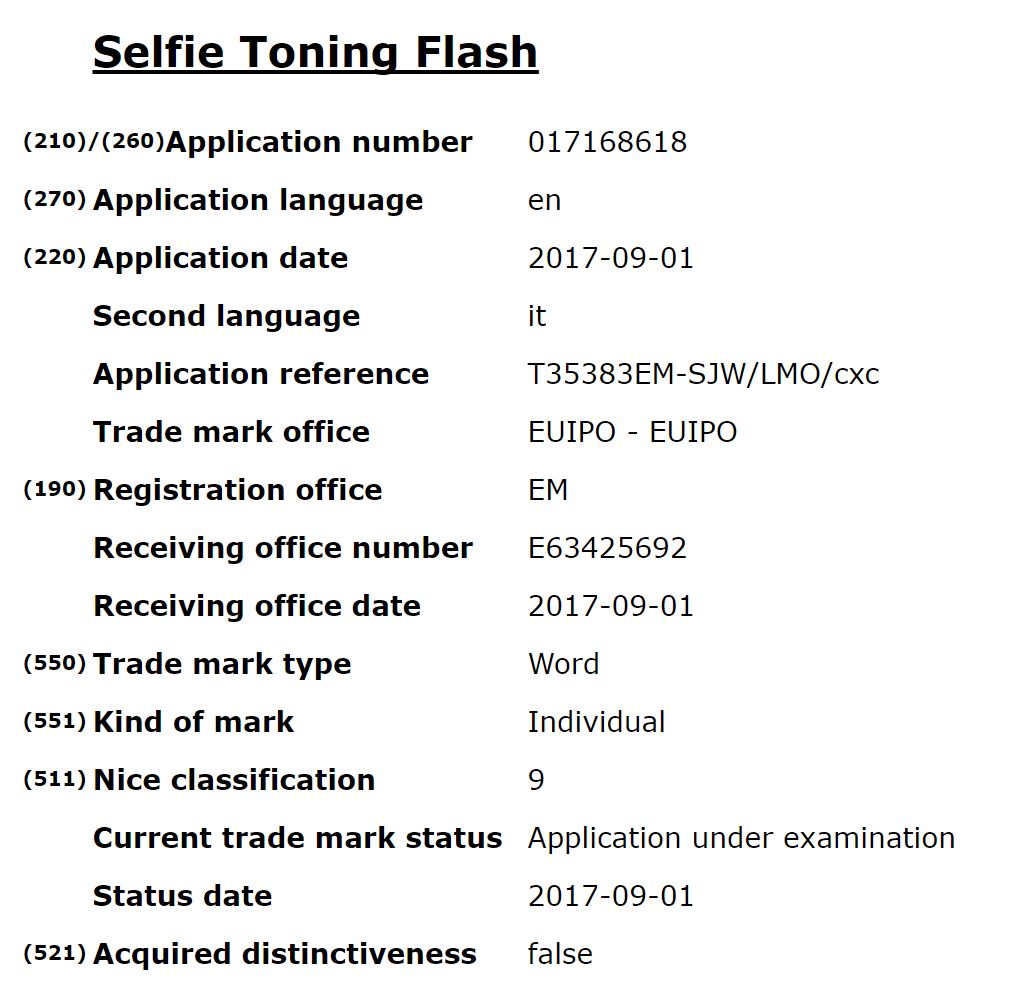
Huawei has filed a trademark application with the European Union Intellectual Property Office (EUIPO) and the trademark is for a “Selfie Toning Flash”. The patent is yet to be spotted on the trademark office in China or elsewhere so it is safe to say this is an entirely new feature which would likely be hitting Huawei phones soon. The decision to file the patent in Europe could also mean Huawei may have intention of using the trademarked feature in Europe.
The trademark application didn’t reveal much about the features of the selfie Toning flash but the name alone is suggestive that the feature would likely be related to the selfie camera. The term could mean Huawei is planning to include a soft flash along with the selfie camera or if the technology would involve using the display to provide the illumination.
It is uncertain if Huawei would utilize the technology on the Mate 10 which the company officially hinted will launch on October 16. If indeed the feature would be available on the Mate 10, then we’ll find out what it entails soon.
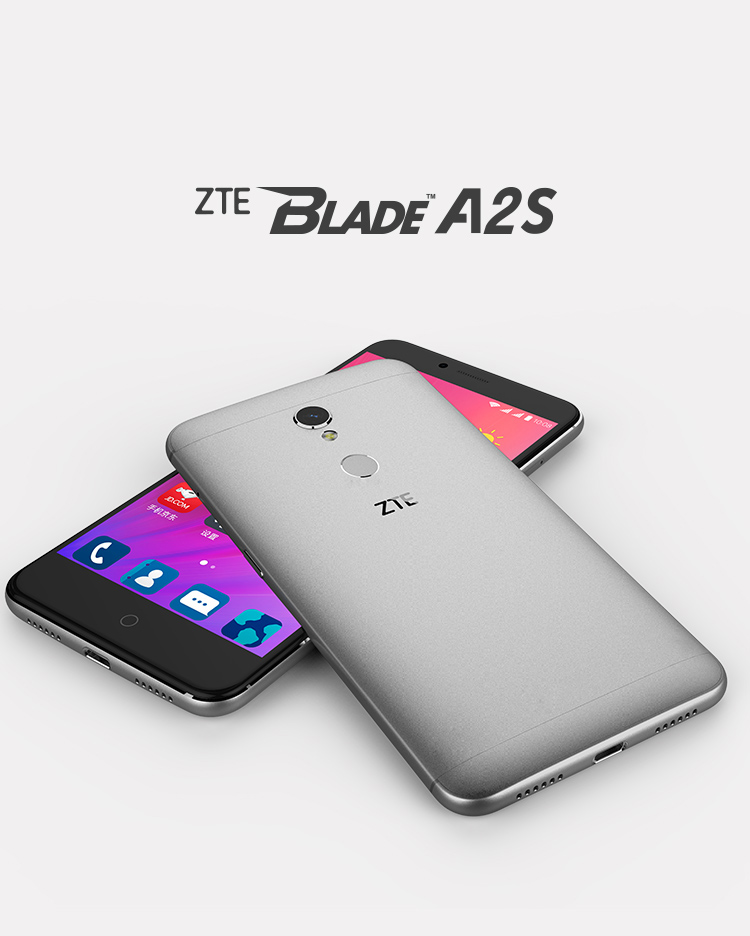
ZTE has added a new device to its affordable A-series. The ZTE Blade A2s is the successor to last year’s Blade A2.
The Blade A2S has been slightly redesigned. It is still made of aluminium but the back has a curve to it for better handling. The display has been bumped to 5.2-inches and the resolution is now 1080p.
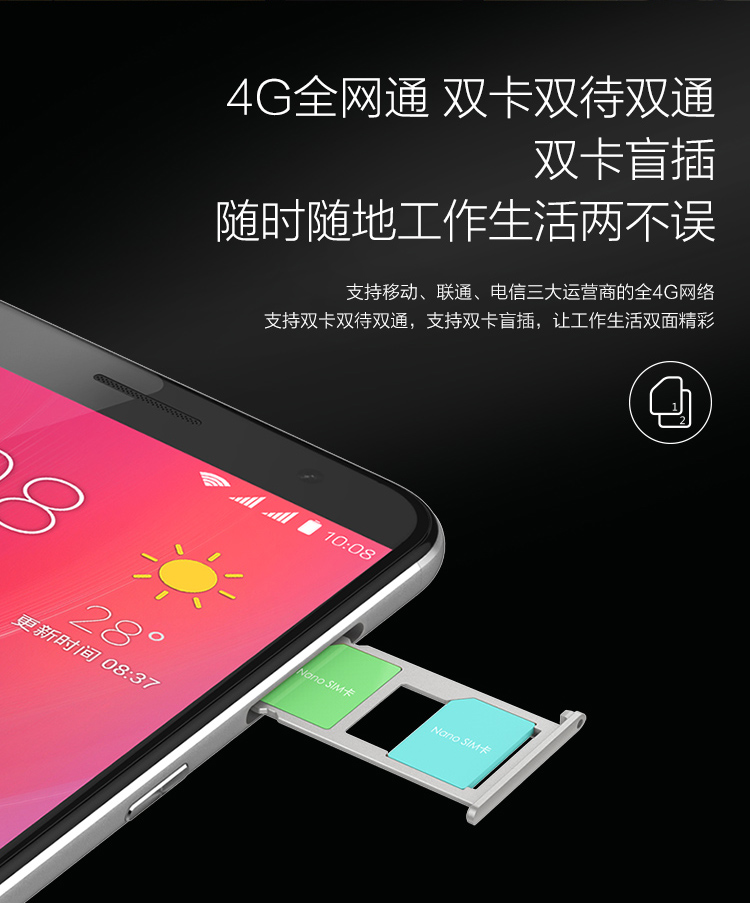
It is powered by MediaTek’s MT6753 octa-core processor. The RAM is 3GB and storage is 32GB with option for expansion via a hybrid dual SIM slot (nano only). The rear camera is a 13MP sensor with LED flash and up front is a 5MP sensor. The Blade A2S is missing the front flash on the A2 but compensates for it by using selfie screen flash when you take pictures.
The UMIDIGI S2 and S2 Pro are set to go on sale later this month in China. However, if you are in Berlin, you may have come across both phones but under a different name.
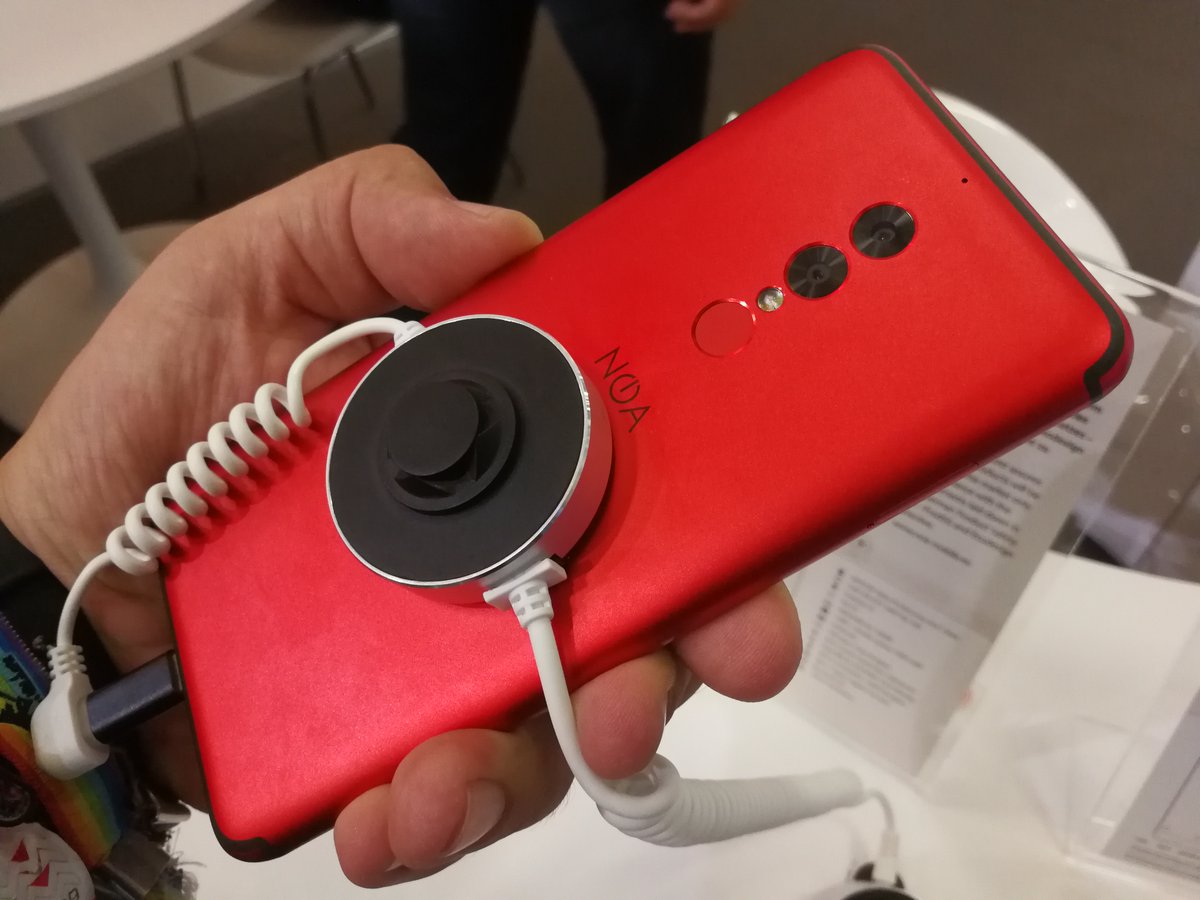
Popular leaker, Roland Quandt, who is attending this year’s edition of IFA tweeted about two new phones he came across at the event- the NOA N8 and NOA N8 Pro, “made” by a company from Hungary called Hangar 18.
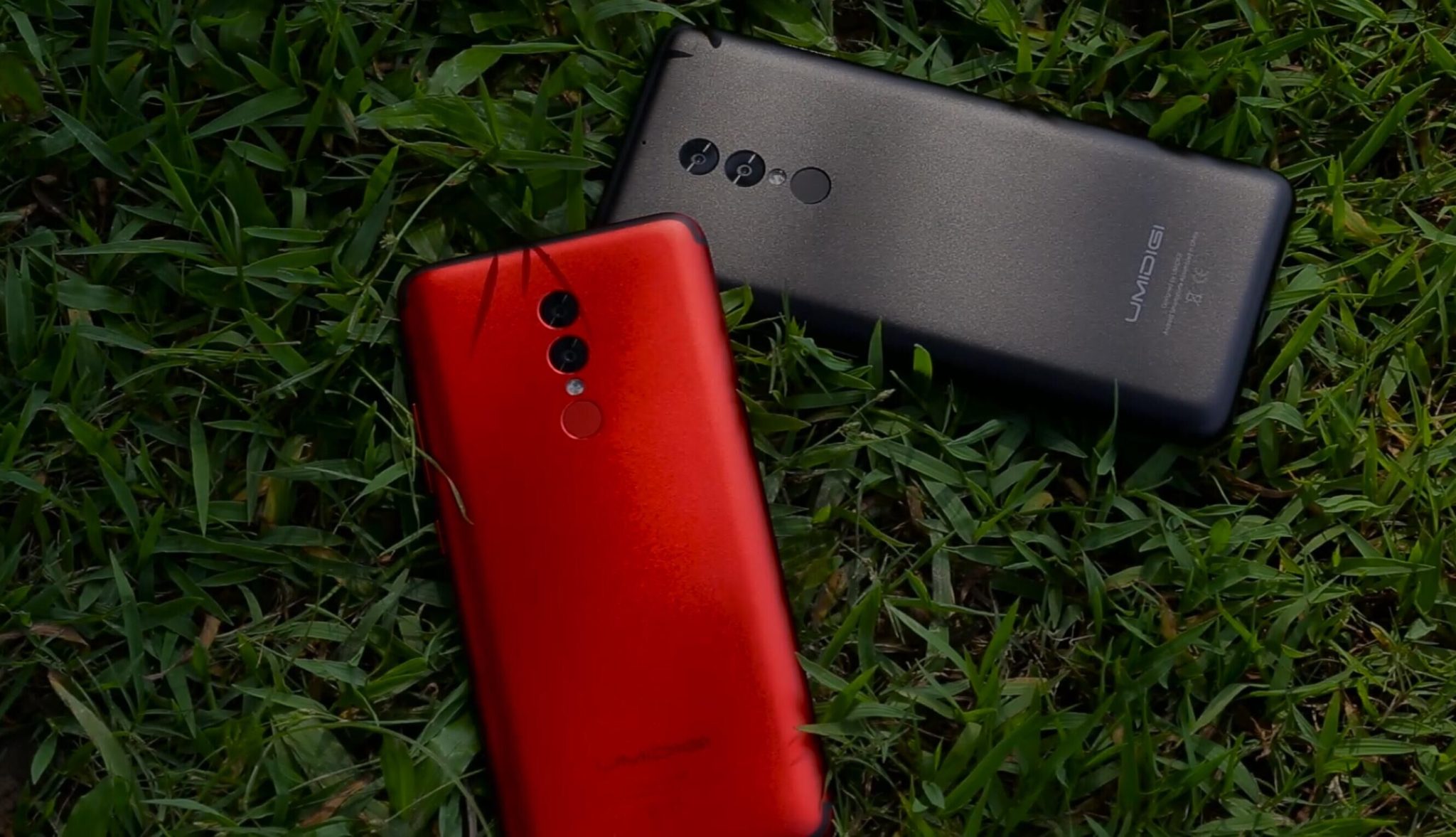
NOA N8UMIDIGI S2 Pro
Initially fascinated by the specs and the warranty protection, a follow-up tweet revealed that he has realized that they are actually rebranded phones. Take a good look at the phones and you will realize they share a striking resemblance to the UMIDIGI S2 and S2 Pro.
We decided to visit the official website and found out that the NOA N8 and N8 Pro are not the only rebranded phones from the new company. Another phone, the NOA Element H10le is actually a rebranded UMIDIGI Z1 Pro (or Ulefone Gemini Pro).
Now, we are not saying rebranding phones is wrong. There are quite a number of manufacturers that do that. One example that comes to mind is American smartphone company BLU.
The UMIDIGI S2 and S2 Pro may likely never make it to Europe and even if it does, it will be via third party sellers. The disadvantage that comes with importing phones through resellers is that owners are usually responsible for repairs as it is usually too expensive to ship it back to the manufacturer for repair or to claim warranties.
However, if a company based in Europe or any other market for that matter, where the phone isn’t sold decides to sell the phone under a new name while offering repairs too, that doesn’t seem like a bad idea.
So if you live in Europe and have been looking forward to the UMIDIGI S2 or the S2 Pro, you may want to keep an eye on the NOA N8 and N8 Pro. Unfortunately, both phones won’t hit markets till Q1 2018.
NOA N8 and NOA N8 Pro Specs
Both devices have a 5.9-inch 18:9 display but the resolution is 720p on the N8 and 1080p on the pro version. The N8 is powered by a Helio P10 SoC, paired with 4GB of RAM and 64GB of storage. It has a 16MP front facing camera and a 13MP + 5MP dual combo on the rear. Below the camera setup on the back is a fingerprint scanner.
The N8 runs Android Nougat, has a 4950mAh battery, a USB type-C port and dual SIM slots (micro). There is Bluetooth 4.0, WiFi, GPS and a bunch of sensors. It will be available in red and black and cost 220 Euros ($262).
The N8 Pro swaps the Helio P10 for a Helio P25. RAM is 6GB and storage is doubled to 128GB. It has a 5000mAh battery and a USB Type-C 3.1 port. The rest of the specs are the same as the base model. It will also be available in red and black and cost 260 Euros ($309).
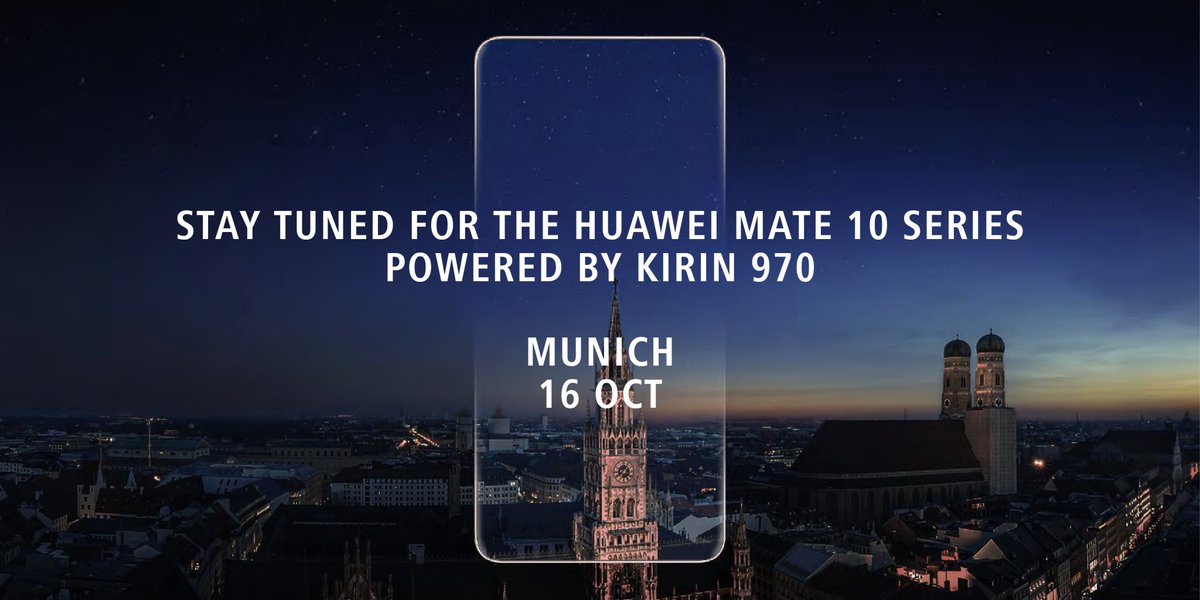
Huawei officially confirmed over the weekend that the Mate 10 would be unveiled on October 16 in Munich Germany. The tech giant released a poster on its official Twitter handle which enjoined us to “stay tuned for the Huawei Mate 10 series powered by Kirin 970”.
Apart from confirming the launch date for the flagship Mate 10, the tweet also confirms that the Mate 10 would be powered by a Kirin 970 chipset. Not as if we are just hearing this for the first time as the October 16 launch date had earlier featured in a rumor but it just became official. Huawei unveiled the Kirin 970 chip, touted to be the world’s first processor with a dedicated NPU at IFA and that means the Mate 10 presents us with the opportunity to see how the new AI chip will function.
The Huawei Mate 10 is expected to feature the EntireView design which Huawei recently patented. The display could be a bezel-less design with an 18:9 ratio like the LG G6. The Mate 10 is expected to have a 6-inch display with 2160 x 1080 pixel resolution and would be powered by a Kirin 970 chip, which would be Huawei’s first 10nm chip. The Mate 10 is also expected to feature a Leica-branded camera setup which may still be a 12MP main sensor teaming up with a 20MP monochrome sensor just like it was featured on the Mate 9 and Huawei P10.
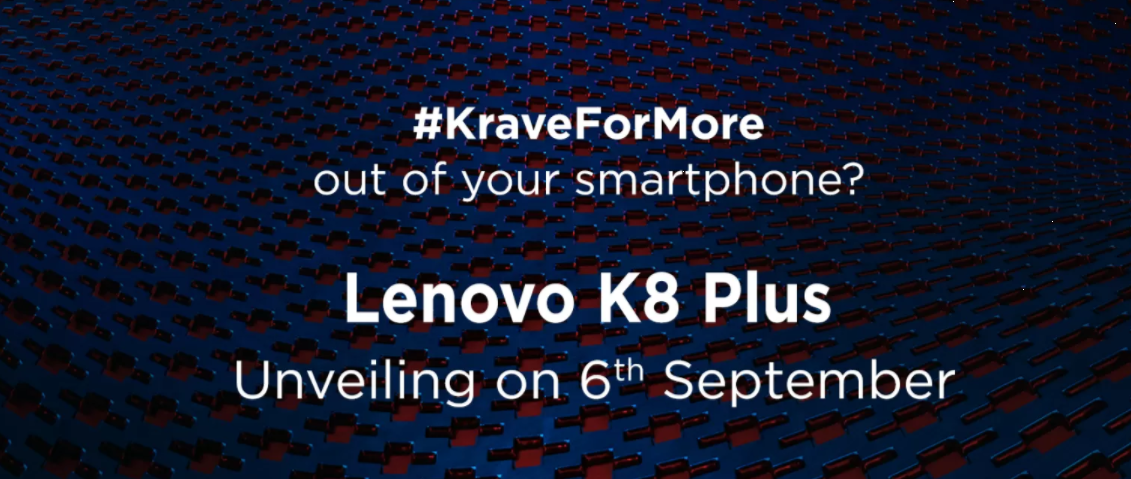
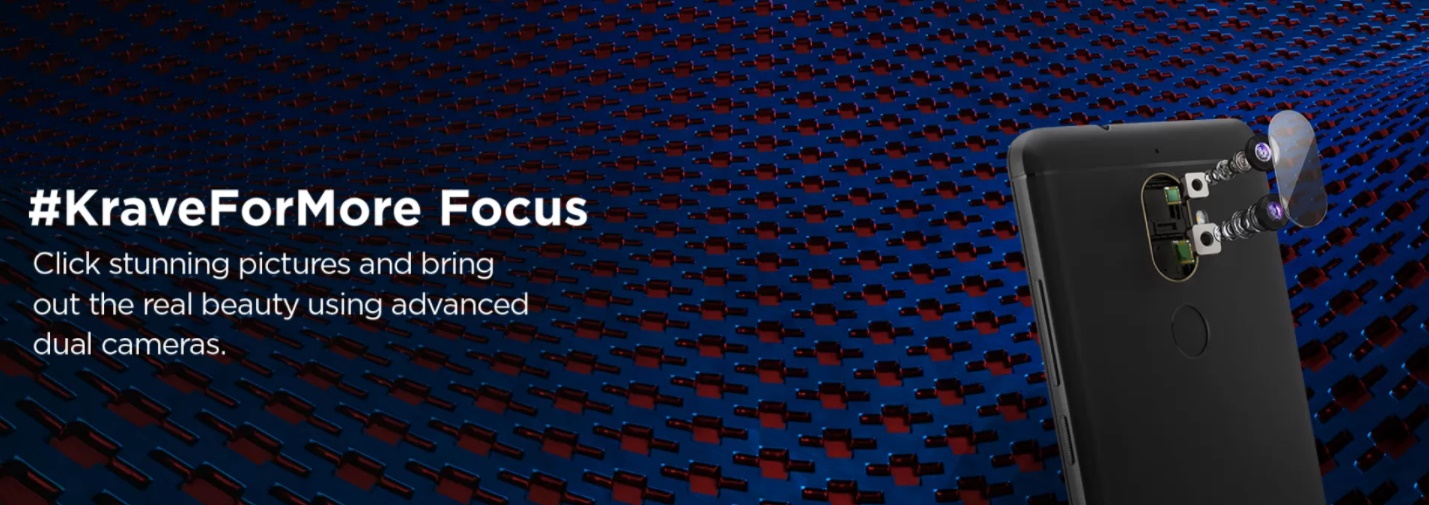
A teaser page on Flipkart has revealed that the second device in Lenovo’s K8 series, the K8 Plus, will arrive on September 6. Just like the K8 Note announced over a month ago, the Lenovo K8 Plus will have dual rear cameras and run a stock version of Android Nougat with Google Assistant on board.
The Lenovo K8 Plus was seen on Geekbench along with the K8 Note and the listing disclosed that it will be powered by MediaTek’s MT6757CD octa-core processor A.K.A Helio P25. It will run Android 7.1.1 and have 3GB of RAM. Other specification details like the screen size, camera configuration, battery capacity and pricing will be revealed come Wednesday.
The teaser page also reveals that the K8 Plus will have TheatreMax for an immersive VR experience as well as a programmable music key as found on the K8 Note. It will have a rear-mounted fingerprint scanner and a 3.5mm audio jack at the top.
While the Lenovo K8 Note is an Amazon India exclusive, the K8 Plus will only be available on Flipkart. Nevertheless, we should expect some mouth-watering deals when it goes on sale.
For over a week now, Xiaomi has been teasing a new flagship device scheduled to launch on September 5. The only hint provided is that it will have dual rear cameras. Our guess is that the device is the Mi A1, an Android One phone made in partnership with Google.
Xiaomi India hinted a few days ago that the device scheduled to launch tomorrow will be sold exclusively on Flipkart. The online store already has the teaser for the launch on its front page. Someone decided to check the source code for the page and found “Mi A1” appearing twice, thereby confirming the name. And as a previous leak has disclosed, the Mi A1 is actually the dual camera Mi 5X.
Although Xiaomi’s focus has been on the dual rear cameras on the phone, people are more excited at the news that it will run pure Android, similar to what you will find on Pixel and Nexus devices.
A Geekbench listing revealed that the Mi A1 runs Android 7.1.2 but since it is an Android One device, an update to Android 8.0 Oreo shouldn’t be too far off.
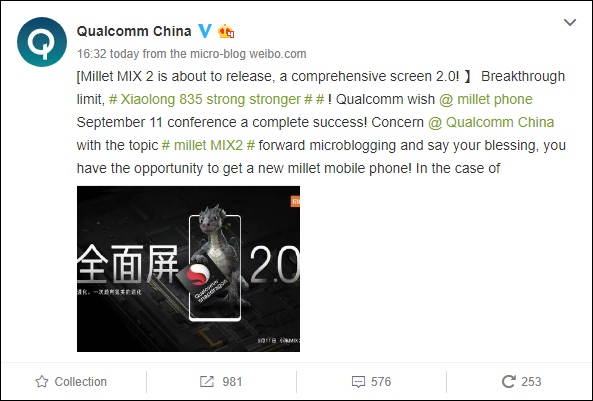
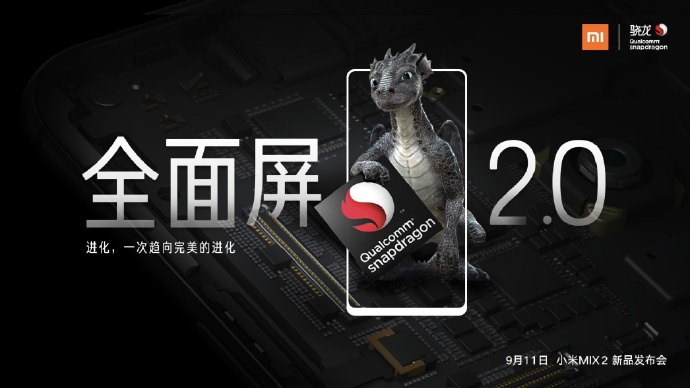
Xiaomi has already officially revealed that its flagship Mi Mix 2 will be launched on September 11 which is barely a week away. Between now and the launch event, we expect to see a lot of juicy details concerning the flagship model and already so have started streaming in. The sleek box casing for the Mix 2 was spotted not too long ago and now, Qualcomm China has officially confirmed that the Mi Mix 2 will feature a Snapdragon 835 processor.
It is already a regular in leaks and rumors that the Mi Mix 2 will utilize a Snapdragon 835 processor but this goes to confirm that indeed Qualcomm’s latest chip would be found on board the Mix 2. Apart from confirming the chipset, the Weibo post also teases the Mix 2 as coming with full-screen 2.0. Until Xiaomi unveils the device we can’t fully comprehend what that means but we sure do expect the Mix 2 to take the bezel-less full display technology used on the Mi Mix to a different level.
The Mi Mix 2 is tipped as coming with an 18:9 screen-to-body ratio, a front fingerprint sensor, piezoelectric ceramic audio technology, dual cameras and more. The device will also likely have a 6GB RAM + 64GB storage on its base model with a retail price of 3999 (around $612) while the higher variant may likely cost 4,999 Yuan (~$765). Recall also that the iPhone 8 will be launched on September 12 and no doubt, will hit China before the end of the year. Do you think the Mi Mix 2 will be a worthy alternative to the iPhone 8 considering it will come in cheaper?
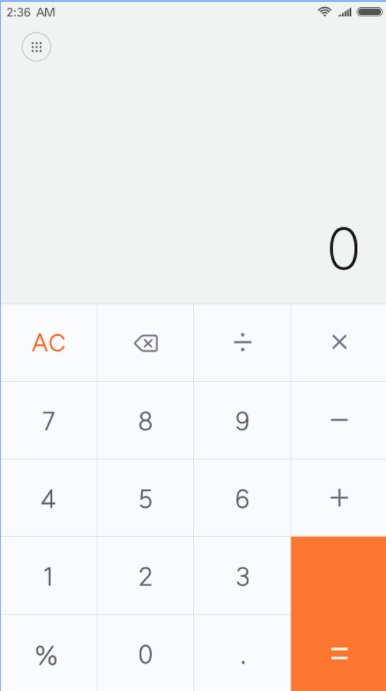
Quite a number of Android phone manufacturers have been putting up their own exclusive phone apps on the Play Store. The earliest I remember is ASUS putting a number of its apps such as its contacts and dialer app and file manager app on the Play Store a few years ago. Xiaomi has joined the league and put up its Mi Calculator on the Play Store.
The Mi Calculator app is one of the best calculator apps I have used personally. Unlike other calculators I have come across which can do no more than basic calculation with a little bit of scientific function, the Mi App does so much more. It has a currency converter, a mortgage calculator, a scientific calculator and even a unit converter. It also has a history where you can view and edit previous calculations.
The currency converter is updated daily, so you don’t have to worry about the rates being outdated. The user interface is also pretty clean and the app is just under 5MB. So if you have been looking for a an app that combines basic and scientific calculation, currency conversion, unit conversion and mortgage calculation in a single app, the Mi Calculator is your best bet.
Xiaomi has announced a new electric kettle under the MIJIA home products. Unlike the previous edition which is a smart kettle, this version does not feature connectivity features. The new electric kettle also comes with a more minimalistic design and is offered for almost half the price of the previous version.
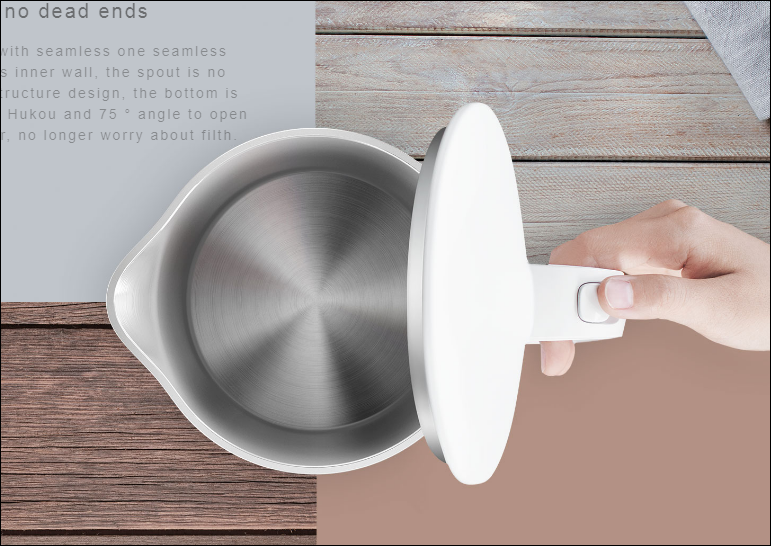
The Xiaomi electric kettle is made of quality matte plastic and the inside of it is made of stainless steel. The stainless steel ensures the inside of the kettle does not rust or develop scales as a result of hard water. The kettle cannot connect to the Mi Smart app due to the lack of Bluetooth connectivity but it comes with three security features which make it a reliable home appliance. The kettle goes off when the water gets boiled which is a basic feature of most electric kettles. Also, if there isn’t water in the kettle, the power goes off and finally, the power connector is designed in such a way that it prevents electric shock and leakage when the kettle is on top. All these are aimed towards protecting the kettle from damage, from going up in flames and also to protect the users.
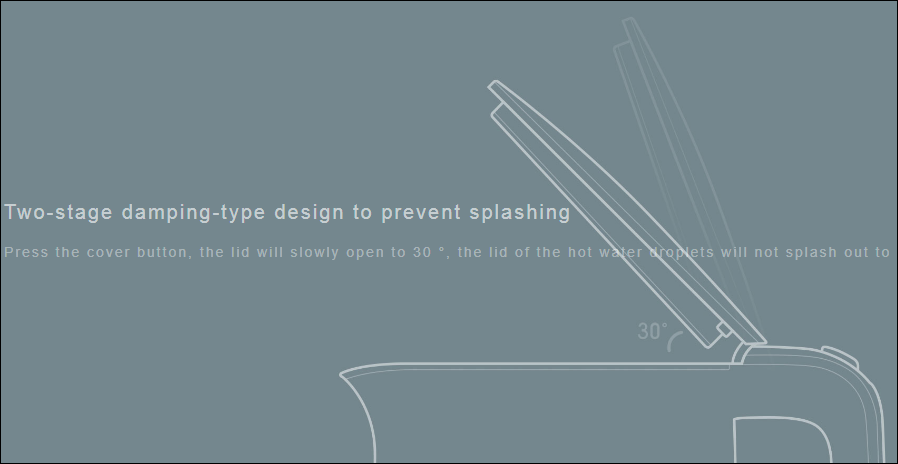
In addition, the electric kettle comes with a 130mm cover which can be opened up to 75 degrees so that the inside can be accessed for cleaning using the hand. Ordinarily, the cover only opens up to 30 degrees when the open button is pressed but the extension is possible for cleaning. It comes with a LED indicator which is covered with a transparent matte material, ensuring the light is not too bright even in the dark. In between the inner stainless steel body and the outer matter material, there is a hollow layer which ensures that even when the water is boiling at 100 degrees centigrade, the body doesn’t get more than 40 degrees centigrade hot.
The Xiaomi Electric Kettle will cost just 99 Yuan ($15) which is far lower than the 199 Yuan the Mi Smart Electric Kettle sells for. The kettle will go on sales from September 5 at 10 AM. Sales would take place simultaneously on Mi Mall, Mi Home, JD.com, and Suning Tesco.
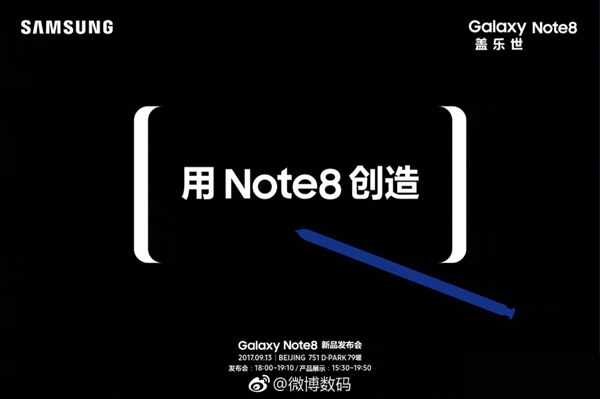
Contrary to an earlier rumour of a September 29 launch, it looks like the Samsung Galaxy Note 8 will be launched in China on September 13. To this end, a launch invitation to the Note 8 Unpacked which would be held in the Beijing 751 D -PARK 79 in China.
The timing of the launch event is quite interesting, considering that the Mi Mix 2 is already billed to launch in China on September 11 and in addition to that, the flagship Apple iPhone 8 is set to be announced on September 12 in the U.S. The Galaxy note 8 China launch makes it a schedule of three big events in three consecutive days. The three models are all expected to feature a bezel-less full-screen design.
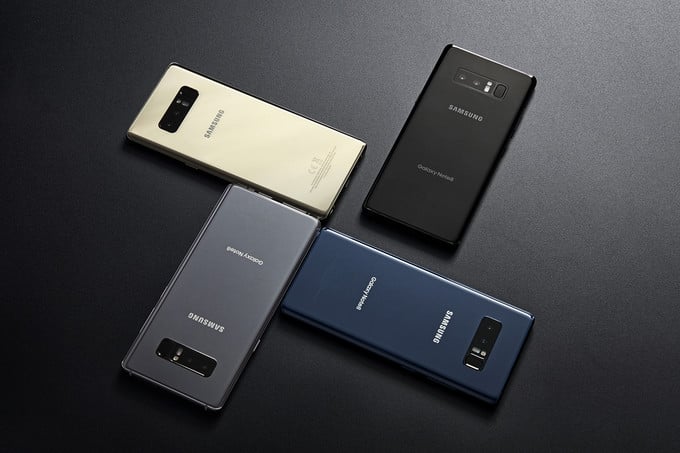
The Galaxy Note 8 has already been launched in the U.S and so it is the only model among the three expected models whose specifications and photos as well as price are already in the open. Also, the Galaxy Note 8 China Edition has got TENAA certification with model numbers SM-N9500 and SM-N9508. The TENAA listing shows the Note China Edition will come in Black, Blue and Gold colors and the specs will basically similar to that launched in New York. The only difference seems to be that there will be a 4GB RAM version meant for the Chinese market, according to the TENAA listing. There might also be an 8GB RAM version just like it Samsung did for the botched Galaxy Note 7 in China.
As a reminder, the Samsung Galaxy Note 8 is equipped with a 6.3-inch Super AMOLED display with 2960 x 1440pixels resolution. The device comes with a Snapdragon 835 version as well as an Exynos 8895-powered model with 6GB RAM and 64GB, 128GB, and 256GB storage options.There is also a 3,300mAh battery on board. The Note 8 also packs a 12MP wide angle + 12MP Telephoto cameraBoth lenses support OIS optical image stabilization which is the first in the world. In addition, it also supports 2x optical zoom and 10x digital zoom. The device is expected to come with a price of 6,088 Yuan (~$915) in China for the 6GB base variant, perhaps.
We use cookies on our website to give you the most relevant experience by remembering your preferences and repeat visits. By clicking “Accept”, you consent to the use of ALL the cookies.
This website uses cookies to improve your experience while you navigate through the website. Out of these, the cookies that are categorized as necessary are stored on your browser as they are essential for the working of basic functionalities of the website. We also use third-party cookies that help us analyze and understand how you use this website. These cookies will be stored in your browser only with your consent. You also have the option to opt-out of these cookies. But opting out of some of these cookies may affect your browsing experience.
Necessary cookies are absolutely essential for the website to function properly. This category only includes cookies that ensures basic functionalities and security features of the website. These cookies do not store any personal information.
Any cookies that may not be particularly necessary for the website to function and is used specifically to collect user personal data via analytics, ads, other embedded contents are termed as non-necessary cookies. It is mandatory to procure user consent prior to running these cookies on your website.