Last month, Elephone announced its entry into the Pakistani smartphone market. At the moment, only the Elephone S7 is available for purchase via online store Daraz.
Daraz is running a week-long promo, where mobile phones are discounted. Today is Elephone’s day and the S7 is on sale. It is available for PKR 20,999, down from PKR21,999. However, if you make payment via what the site calls easypay, you can get it for PKR 17,999. The price discount is available on all three color variants.
The Elphone S7 has a 5.5-inch curved display. It has 4GB of RAM, 64GB of storage and features Mediatek’s deca-core chip, the Helio X20. The rear camera is a 13MP sensor and up front is a 5MP selfie camera. There is dual SIM support, VoLTE and Android 6.0 on board. Do note that there is an Android 7.1.1 update available.
The Moto X series used to be the flagship line for Motorola, but last year Lenovo replaced it with the Moto Z. Since there was no new Moto X phone launched in 2016, that led to speculations that the line was killed off. Turns out that it wasn’t as we will be getting a new Moto X phone this year. However, the Moto X4 will now be a upper-mid range phone.
We first saw leaked press renders of the device two months ago when it was still referred to as the Moto X (2017). It had a design similar to the Moto Z but lacked the moto mod connector pins. It also had dual rear cameras and a glass body. A leaked image showing Motorola’s lineup for the rest of the year later revealed its name to be Moto X4.
If you're looking for a complete all rounder, the #motoX4, out supposedly June 30th, is your best bet. IP68, Dual Camera, Glass build. #moto
Specification details of the Moto X4 were leaked on Twitter by Andri Yatim (@HeyAndri). His post was retweeted by @Rquandt, a popular leakster, lending some sort of credence to the post.
According to him, the Moto X4 will supposedly launch on June 30th. It will have an IP68 rating (waterproof up to 1.5m for 30 minutes), dual rear cameras, and a glass body. He also adds that the Snapdragon 660 will power the phone and it will have a 3800mAh battery with fast charging.
We already know the display is 5.2-inches with a 1080p resolution, and RAM will possibly not be less than 4GB.
The Moto X4 does look like a winner already. The only thing they need to get right is the pricing. Will it sell for the same price as the Moto Z2 Play because it lacks support for Moto Mods but throws in some tricks of its own or will it sell for less or even higher?
Motorola Brazil has sent out invites for an event on the 21st of June. The Lenovo owned-company started its next phase of new smartphone releases on June 1 with the the Z2 Play.
The device scheduled to launch is unknown. Some say it is the Moto E4 and E4 Plus, others say it might be the Moto Z2. Brazil is an important market for Motorola, so it doesn’t matter if it is the Moto E4, E4 Plus or Moto Z2.
The E series used to be the cheapest Motorola phones until this year when Lenovo added the Moto C and Moto C Plus.
The Moto E4 will have a 5-inch Gorilla Glass 3 protected display, 2GB RAM and 16GB of storage. It will have a Mediatek MT6737M SoC, a 2800mAh removable battery and run Android 7.1.1 out of the box. Some markets will even get models with NFC.
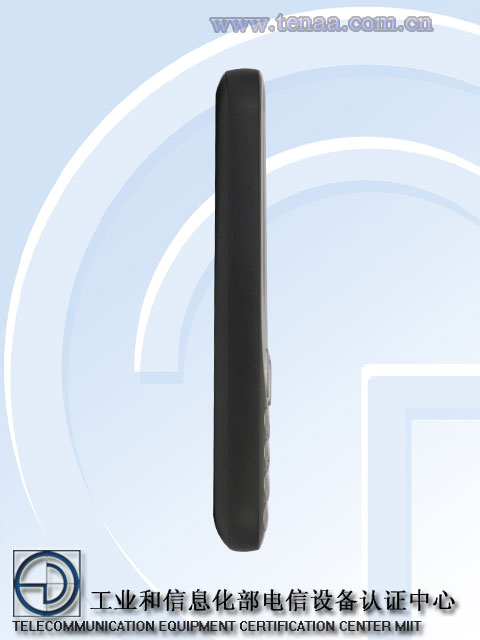
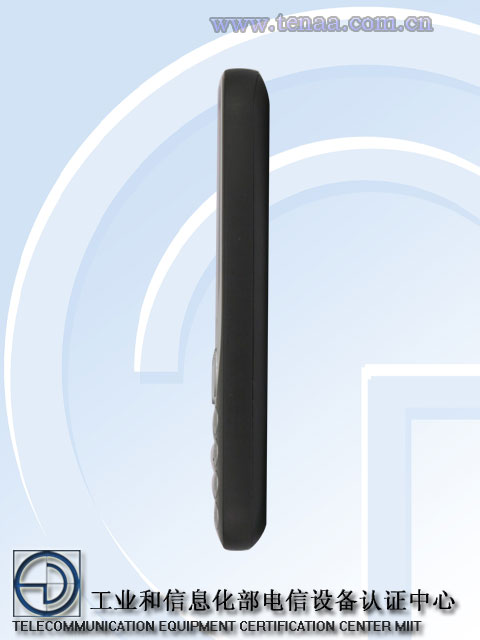
They say imitation is the sincerest form of flattery. The VKworld Z3310 is an imitation of the Nokia 3310 (2017). Save for the VKworld branding on the chin of the display, the Z3310 can pass for the revived legend.
The VKworld Z3310 is expected to be released at the end of June and will sell for about half the price of the Nokia 3310 (2017). The Nokia 3310 is priced at €49 (~$55), which is high for a feature phone. The Z3310 will not only sell for less but is said to even feature better specs.
The new Nokia 3310 has a 2.4” display, 16MB of built-in memory and a microSD card slot (32GB max.) It also features a 2MP rear camera with flash and a 1200mAh battery. If VKWorld is offering something better, then we should expect a larger built-in memory, a higher resolution camera and a slightly bigger battery.
OnePlus has released its first OnePlus 5 teaser video showing off glimpses of features of the smartphone scheduled to be officially launched on the 20th June.
The 10-second short video reveals the feature already leaked and officially tweeted of the dual camera set-up on the rear of the phone with the camera flash off center to the left of the device. From the official tweet from OnePlus, we can confirm that the OnePlus will remain constructed with a metal, most likely aluminum unibody.
An earlier leaked source suggests the set-up is expected to house two different camera sensors, one color and one monochrome, providing better low-light performance in evening shots. This builds upon more leaks revealed before that OnePlus has been collaborating with DxO to improve the photograph quality.
What other details do we know?
Although OnePlus hasn’t officially confirmed the specs of the Oneplus 5, we are very certain that the smartphone will house a Snapdragon 835 paired with 8GB RAM. The phone is expected to be running Android 7.1.1 out of the box. We would not be surprised to see more teaser videos posted by OnePlus in the coming weeks before the release date.
Stay in tuned for more news about the OnePlus 5.
What do you think about OnePlus’ teaser? Has OnePlus’ teaser revealed too much, too soon?
HMD Global revealed last week that it plans to release its new smartphones globally before the end of June. It sure plans to keep its word. This week, the Nokia 6, 5, 3 and 3310 (2017) where launched in The Philippines. Today it has launched in Vietnam and next stop is India on Tuesday, June 13.
A poster has confirmed that the invites sent out earlier this month for an event on June 13 is for the new smartphones. Although the official prices have not yet been revealed, there is a rumor floating round about the possible price tags.
The Nokia 6 is expected to sell for about Rs. 15,990 ($250), the Nokia 5 for Rs. 12,990 ($200) and the Nokia 3 for Rs. 9,990 ($155). Pre-order will begin on the day of the launch and shipping will start on the 20th of June.
The Nokia 6 is a 5.5-inch device with a Snapdragon 430 SoC. It has a 16MP rear camera and an 8MP front facing camera. There is a 3000mAh battery on board and Dolby Atmos enhanced stereo speakers.
The Nokia 5 drops the screen size to 5.2 inches. RAM is 2GB and storage is 16GB with an expansion slot. Battery remains 3000mAh but the rear camera is now a 13MP sensor. You still get an 8MP camera up front and Android Nougat.
Xiaomi entered into the notebook market almost a year ago with the Mi Notebook Air. Originally launched in 13.3 and 12.5 inch models, Xiaomi later released 4G versions and also upgraded their processors. The 13.3-inch version is getting another upgrade and it is launching very soon.
The new 13.3-inch Mi Notebook Air was seen on Jingdong Mall (JD.com). It doesn’t look much different from the 4G and non-4G models on the exterior. However, when you flip it open, the first difference is staring you in the face.
The touchpad looks different thanks to the pill-shaped design at the top right corner said to be a fingerprint scanner. The internals have also been upgraded.
The 6th gen Core-i5 processor has been swapped for a 7th gen Core i5-7200U with a maximum clockspeed of 3.1GHz. The graphics card has also been upgraded from a GTX 940MX to a NVIDIA GeForce MX150. RAM is still 8GB and storage remains a 256GB solid state drive. There is also a 128GB version as well.
Last year, Lenovo (Motorola) added two new lines to its smartphone catalog: the Moto Z series and the Moto M. While the former was more of a global release, the latter was released in a few Asian countries. The Moto M may be getting a successor soon, and we think it is the Lenovo XT1902-3 phone that was seen on Geekbench.
The Lenovo XT1902-3 is running Android 7.1.1 and has 4GB of RAM. There is a deca-core MT6797 processor clocked at 1.85GHz. For those who don’t know, that is the Helio X20 chip. The phone scores 1163 points in the single-core test and 4836 in the multi-core test.
Last year’s Moto M was available in two models asides the different memory configurations. One model was powered by a Helio P10 chip while the model released in India had the Helio P15 SoC. Since this is the first sighting of the phone, it is still too early to say if the same will happen this year.
The Moto M was released last November and there is a high chance the M2 may be released a lot earlier. For now, we know its getting a processor upgrade and Android 7.1.1. We’ll keep you updated when more details surface.
OnePlus is known to hype its products before launch and the company has managed to successfully get the attention of millions of fans worldwide for most of its recent launches. This year, OnePlus decided to show a good glimpse of the OnePlus 5 well before launch. This was actually a surprising move given that most companies try to guard the official design until the release date. But to be honest, the rumors about the OnePlus 5 were flying around like crazy in the past few days and it was probably a good move to put rest to those rumors, especially about the rear camera arrangement, by releasing an official teaser image.
But apparently it did more harm than good as seeing the dual camera arrangement similar to the iPhone 7 Plus, many fans were not happy and resorted to social media to express their disappointment over the final design. This could be seen on Twitter as well as China’s Weibo.
And when a company’s product is criticized even before it’s officially unveiled, a company like OnePlus won’t just sit back and relax. Recently, OnePlus’ Product Manager responded to a question on Zhihu (which is very similar to Quora) about the OnePlus 5′ final design. He defended the design of the phone with multiple points. Even OnePlus’ CEO Liu Zuohu forwarded the manager’s answer on his official Weibo page earlier today.
OnePlus’ manager states that one cannot judge the design and build of a smartphone just on the basis of its images. The flat images don’t do justice to the curves and handling of the phone or even the feel of the built quality. He mentioned OnePlus 3T and the criticism it received initially after images of the phone cropped up via TENAA before launch. Fans were quick to call OP3T’s design as ugly and boring. But once they saw and touched the real smartphone, they were impressed with the design.
He states that the images that you see of the OnePlus 5 right now don’t portray the quality of the phone or its workmanship. Only after you touch and play around with the phone can you differentiate the curves and the intricate design attributes from other similar looking phones.
As for the dual camera setup protruding from the overall design, he defended it by stating that it was a choice of whether to cut down the camera components (sacrificing quality) or increasing the thickness of the setup. The company decided to go with the former choice and hence the bulge. He added that initially, people called the bulge on the iPhone 7 Plus as ugly, but once they saw the phone, they started praising it.
End of the day, what he urges fans to do is play around with the OnePlus 5, feel its built quality and only then make a judgment about its design.
Well, he might be right about the built and quality of workmanship of the OnePlus 5. In fact, it may even feel a bit different than phones like OPPO R11 and the iPhone 7 Plus. But it doesn’t change the fact that the basic design (especially the way the dual cameras are arranged) is a copy of the iPhone 7 Plus.
Despite the initial impressions of the design based on the images available right now, it’s probably wise to wait for the phone to launch and see its design in reality before we start criticizing it heavily.
So, what are your thoughts about the points made by him?
OPPO today took the wraps off the R11 and R11 Plus and along the line, the company released a new version of its Color OS interface. The new Color OS 3.1 is an upgrade over the previous Color OS 3.0. Although the version number is just a difference of one, the features are no less important.
The new Color OS 3.1 is built based on Android 7.1.1 Nougat and comes with support for WeChat fingerprint payment. The new Color 3.1 OS also come with a night mode feature which allows users make use of the devices at night with an automatically controlled screen brightness.
In terms of the interface, the new Color 3.1 OS comes with an improved and more attractive interface and also features more security feature aimed at providing adequate security on the phone. It comes with support for secure WiFi detection, AliPay safety testing, fraudulent SMS detection and other safety testing methods.
The new Color 3.1 OS based on Android 7.1.1 Nougat is featured on the OPPO R11 and R11 Plus already, adding to the attractive, sleek design the R11 models sport. Other OPPO models would get updates that would usher in the latest OS in due course but the time frame for that is still unknown.
Gizmochina along with Leagoo is conducting a Legaoo M5 Edge as Giveaway gift to one of our lucky readers. Like always, you just have to follow the steps mentioned on the Gleam widget to get a chance to win this amazing phone.
Here is the main features of Leagoo M5 Edge:
Display: 5 inch 3D edge-less screen, on-cell display Cameras: 13MP rear night shooting camera, 8MP front wide-angle camera Body: CNC metal middle frame Connection: 4G LTE supported
More specs and features about Leagoo M5 Edge phone, please click here
How to entry this giveaway? Just follow these steps via Gleam widget:
Visit Leagoo’s Facebook and Twitter, follow them;
Share this article to your Facebook, Twitter, Google+ or other social media;
Terms & Conditions:
1. The giveaway is an international giveaway.
2. We are not responsible for lost shipments.
3. We are not responsible for any duties, import taxes that you may incur.
4. We reserve all rights to make any changes to this giveaway.
5. The prize will be shipped in a week when the giveaway end.
Just follow the steps mentioned in the Gleam widget to participate in the giveaway.
We know the Snapdragon 835 processor is one of the best Android chipsets in the market right now but it’s costly as well as hard to mass produce in very large quantities. The chip is manufactured using an advanced 10nm FinFET process by Samsung, making the Korean giant the first in the industry to mass produce smartphone processors using this tech. The advantages of 10nm are pretty huge, but the mass production limitations do affect the supply of smartphones with this chip.
The popular analyst from China, Pan Jiutang revealed earlier today that Qualcomm had initially planned to release a slower version of Snapdragon 835 code named MSM8997. However, the current mass manufacturing limitations of the 10nm FinFET process forced the company to change plans and focus on Snapdragon 660 as its replacement.
This is probably why the Snapdragon 660 (inside the OPPO R11 and R11 Plus) became the first processor in the mid-range 600 series to get custom Kryo cores, which was initially exclusive to the top-end Snapdragon 800 series. Note that the octa-core Kryo 260 cores in the SD660 are a bit different than the Kryo 280 cores inside the SD835. But the fact that the SD660 uses custom cores does put it much closer to the top-end Snapdragon 800 series than its predecessors like SD653 or SD652. Further, the new SD660 chip features flagship grade ISP (Qualcomm Spectra 160 ISP) to ensure that you get the maximum performance out of your smartphone cameras.
Hence, it’s very likely that many affordable flagship smartphones of 2017 would end up with Snapdragon 660 and not Snapdragon 835.
U.S-based fabless chip maker Qualcomm‘s rumoured Snapdragon 836 chip hit the news stand recently. The SD 836 chip is a revised version of the present Snapdragon 835 and is tipped as coming in the second half of the year. A new rumor has now emerged that the Snapdragon 836 processor will be featured on the expected Samsung Galaxy Note 8. If true, that would make the Galaxy Note 7 the first Snapdragon 836-powered smartphone.
The Galaxy Note 8 is Samsung’s next-gen flagship Note series smartphone which is expected to be launched in the second half of this year also. The Galaxy Note 8 is expected to utilize a 6.3-inch display and would be the same curved infinity display that was used on the Galaxy S8 and S8+. A recently leaked video had shown us the huge infinity display the Note 8 will feature as well as the front panel. The Note 8’s display is also expected to be a curved edge one with a high screen-to-body ratio which would likely be the same 18.5:9 aspect ratio featured on the Galaxy S8 with a 4K resolution.
On its part, the Snapdragon 836’s large cores are tipped to have a clock frequency of 2.5GHz, slightly higher than the 2.45GHz frequency of the SD 835 large cores. The small cores may likely retain the 1.90GHz clock frequency found on the SD 835. The tipster also revealed the SD 836’s GPU is clocked at 740MHz. The Galaxy Note 8 is expected to be announced during IFA Berlin 2017.
OPPO R11 has been in the news for the past few weeks, both officially and unofficially. Now, the company has finally taken the wraps off the R11 as well as its larger sibling, the OPPO R11 Plus. This makes them the first Snapdragon 660 smartphone duo in the market, which is an important title given that this chip is going to drive a lot of Chinese flagships in the coming months.
OPPO R11 & R11 Plus Design
Design wise, the OPPO R11 doesn’t disappoint. OPPO phones have always followed a similar design as the iPhone series and the latest R11 and R11 Plus models clearly continue the trend. They look very similar to the iPhone 7 Plus, even in terms of their dual camera placement. I’m not a big fan of companies copying the design from Apple, but it has worked wonders for OPPO in the past 12 months and there was probably no good reason for the brand to change this strategy.
If you can ignore the striking similarity to the Apple iPhone 7P, the metal built of the phone looks quite good, the antenna band design is unintrusive and the color options are definitely an added plus. There’s the regular, gold, rose gold and black color options. The bezels on the side look slim and there’s a fingerprint sensor embedded into the physical home button, just below the display, much like its predecessor, the OPPO R9S.
Unlike most Android manufacturers, OPPO’s strategy about hardware has been less aggressive. Instead of equipping its flagship models with top of the line processor and memory, the company has always focused on using upper mid-range specs. That’s not a bad thing as the Snapdragon 660 that powers the OPPO R11 and the R11 Plus is quite a capable chipset, placed just below the top-end Snapdragon 835.
The OPPO R11 and R11 Plus differ in terms of RAM and display sizes. The R11 comes with a 5.5-inch 1080p display, 4GB RAM and 64GB of internal storage. On the other hand, the OPPO R11 Plus features a larger 6-inch display with 1080p resolution, 6GB of RAM and 64GB of internal storage. The batteries are also different, with the R11 coming with a decent 3000mAh capacity battery and the R11 Plus getting a large 4000mAh one. Both naturally get VOOC fast charging support.
In case you are wondering, there’s MicroSD card support for both the models, but it’s a hybrid one that either takes 2 x nano SIMs or 1 x nano and 1 x MicroSD card.
OPPO R11 & R11 Plus Cameras
OPPO R11 and R11 Plus have the same camera setup. The rear setup consists of a combination of a 16MP f/1.7 aperture Sony IMX398 sensor and one 20MP f/2.6 Sony IMX350 sensor (we have seen this in the Axon 7S before) with telephoto lens. You can take portrait, bokeh photos and even 4K videos (either in wide-angle or telephoto) from the rear setup. It also comes with 2x optical zoom.
As for the front camera, OPPO has used a 20MP f/2.0 aperture sensor to take care of your selfie requirements.
Taking care of the software department is the new Color OS 3.1 based on Android 7.1.1 Nougat.
OPPO R11 & R11 Plus Price & Availability
Initially, OPPO had announced that it would unveil the OPPO R11 and R11 Plus on June 10. Clearly, the company couldn’t contain revealing the specs and other details till the earlier mentioned date. But it did leave something for tomorrow i.e. pricing. The company will officially reveal the prices for the variants of OPPO R11 and R11 Plus tomorrow at 9:00 AM.
Google seems to have started testing the upcoming Google Pixel 2 smartphones. On GFXBench, the alleged Google Pixel XL 2 has appeared along with its specifications. It will be coming out to replace the original Google Pixel XL that released last year in October 2016.
According to the listing of Google Pixel XL 2 on GFXBench, it is fueled by Snapdragon 835 chipset that clocks at 2.35 GHz along with Adreno 540 graphics. Like its predecessor, the Pixel XL 2 features 4 GB of RAM and a native storage of 128 GB. It is unlikely to feature a microSD card.
The original Pixel XL has a Quad HD resolution supporting 5.5-inch screen. However, the Pixel XL 2 has a bigger 5.6-inch display that supports a unique resolution of 2,560 x 1,312 pixels. The recently launched Essential PH-1 smartphone also supports the same resolution on its 5.71-inch screen. The Google Pixel XL 2 may also support a 18.9 or 18.5:9 5aspect ratio and also it is very likely that it may come with an elongated bezel-less screen.
The Google Pixel XL 2 GFXBench listing shows that it has a 12-megapixel rear camera. It features an 8-megapixel front-facing snapper. Both the cameras are capable of shooting 4K resolution videos. Since the GFXBench benchmarking platform does not information dual camera sensors, it cannot be confirmed whether the Pixel XL 2 features a dual rear camera module or not. The listing states that the phablet is running on Android 7.1.1 Nougat, but it is most likely to ship with Android O preinstalled.
Popular leakster, Roland Quandt who was first to reveal the GFXBench listing claims that the Pixel XL 2 may support Gigabit Wi-Fi dual-band and Bluetooth 5.0. It also carries support for NFC connectivity.
Previous leaks have revealed that the Google Pixel XL 2 would be coming with water and dust resistant chassis and an improved rear-facing camera that will shoot better photos in dim light condition. Speculations have it that it won’t be featuring a 3.5mm audio jack. The Google Pixel 2 and Pixel XL 2 are pegged to launch in October this year.
The OnePlus 5 details keep rolling in non-stop. Earlier today it appeared on GeekBench, confirming the RAM. Now, it has surfaced on GFXBench, where more details have been revealed.
The rear cameras are the most anticipated feature of the OnePlus 5. OnePlus has joined the dual camera train and the GFXBench listing gives us half of the details. We know the benchmarking site only detects one of the dual cameras, so the other sensor is still unknown.
The listing reveals the OnePlus 5 will come with a 16MP primary rear camera just like the OnePlus 3T. It will have support for 4K recording, HDR and face detection. The front camera doesn’t change too as its still a 16MP sensor.
The Geekbench listing also reveals the display size and resolution. Even though OnePlus already hinted that the phone has a smaller form-factor compared to the OnePlus 3T, it is still a 5.5-inch display…….and with a 1080p resolution. Sorry guys, no 2K display this year.
Asus is expected to launch their fourth installment of the ZenFone series in July this year, after being reported to be three months behind their original schedule. We will reckon that Asus will be pricing the ZenFone 4 competitively like its predecessors with mid to high-end specs.
asus-zenfone-ar
This release will be an important event as this will determine whether Asus can build up the momentum to increase its revenue since the dip during 1Q17 in its smartphone business. Mr. Shen, CEO of Asus, stated that the company’s smartphone division is forecasting to overall profit by the end of this year.
We will be expecting Asus to be releasing a 5.5-inch model initially before other variants in their product line. The 5.5-inch model has been reported to be priced, unlocked, below NT$15,000 (US$498).
RELATED: ASUS ZenScreen Is A Beautiful 15.6-inch USB Screen That Comes With A Pen For A Stand
The 5.5-inch model, Asus ZenFone 4 Max, is speculated to be powered by a Qualcomm Snapdragon 630 or by a Snapdragon 660 processor, coupled with 3GB RAM and offer 32GB of internal storage.
In terms of image capture, the ZenFone 4 Max will feature a dual rear camera arrangement with one 12-megapixel sensor and the other a 5-megapixel sensor. The front-facing selfie camera will be an 8-megapixel shooter. The device is expected to run on Android 7.1.1 after launch.
Another unknown Asus device named ‘X00ID’ has been unveiled by GFXBench, showing a 5.5-inch HD smartphone, powered by an octa-core processor clocked at 1.4 GHz. The device has been paired with 3GB RAM and internal storage that seems to be 32GB, similar to the ZenFone 4 Max, the device also features a dual rear camera set-up and an 8-megapixel camera.
How do you feel about the Asus ZenFone series’ expected delay in release?
Samsung introduced the Galaxy C series of smartphones for Chinese audience to rival with other smartphones in China. However, its market share has been consistently dropping in the country. Now, Samsung is getting ready to introduce a new Galaxy C series phone, the Galaxy C10. It will be the company’s first smartphone to sport dual rear cameras. It China, it will be soon entering a fierce battle with various mid-range phones that come with dual rear cameras. Today, its leaked specs and pricing have surfaced.
Information that have appeared on South Korean publications have revealed that the Samsung Galaxy C10 will be equipped with a massive 6-inch display that will probably support full HD resolution. Also, it will be the first Samsung phone to be powered by the newly unveiled Snapdragon 660 chipset. \The SoC will be coupled with 6 GB of RAM and it will be packed with a massive 4,000mAh battery. As leaked images have revealed, the Galaxy C10 would be sporting a vertically stacked dual rear camera setup.
The Samsung Galaxy C10 is speculated to come in two storage choices of 64 GB and 128 GB. It is rumored to be priced at 3,499 Yuan (~$514). This seems to be the price of the starting model of Galaxy C10. Samsung is also expected to launch Galaxy C10 Plus smartphone that will be arriving with identical specs that are present on Galaxy C10. However, reports suggest that the only major distinguishing factor on Galaxy C10 Plus will be that it will be packed with 8 GB of RAM.
There is no information available on the launch date of Samsung Galaxy C10. However, previous rumors have revealed that it is slated to get announced in the third quarter of this year. Will Galaxy C10 be able to resurrect the decreasing market share of Samsung in China? We hope that Samsung’s first dual rear camera phone receives good reception in China.
Not so long after we saw the Nubia Z17 flagship with an 8GB RAM version, seems we will be seeing another 8GB RAM-packing smartphone from a Chinese OEM soon. A Geekbench database listing has revealed the OnePlus 5 flagship details, thus confirming some of the key features.
You guessed right, the OnePlus 5 has just been benchmarked and while the result isn’t any much spectacularly different from the ones posted by other Snapdragon 835 chip as it polled a total of 6562 points in the multi-core and 1917 points on the single-core tests. However, what is spectacular about the listing is that the OnePlus 5 model that ran through Geekbench features 8GB of RAM. This sort of confirms rumours that the OP5 would have an 8GB RAM version while the base model would have 6GB of RAM.
Indeed the OnePlus 5 which was listed as OnePlus A5000 also features an octa-core Qualcomm chip clocked at 1.90GHz which is the Snapdragon 835 chip. That is as much as we can grab from the Geekbench listing but it adds up to earlier leaks such as a dual camera setup, 64GB and 128GB storage versions and others. We’ll get to know the entire details when it is launched on June 20.
OnePlus 5 is slated to get unveiled on June 20. A recent report has revealed that the OnePlus 5 would be selling with a pricing of 550 euros in European markets. And now, a leaked information has revealed the pricing of two variants of OnePlus 5.
Around a month ago, True-tech.net had revealed some camera samples that were reportedly shot using OnePlus 5 smartphone. It claimed that the amount of depth seen in some of the photos suggested that the OnePlus 5 features a dual rear camera system. A recent teaser released by OnePlus confirms that OnePlus 5 indeed features a dual camera setup on its backside.
The same source has now produced the leaked pricing of OnePlus 5. It states that the OnePlus 5 would be arriving in two variants. The higher variant will feature 8 GB of RAM + 128 GB of storage and the lower model will be featuring 6 GB of RAM + 64 GB of storage. Well, both the models will be fueled by Snapdragon 835.
As the above image shows, the 64 GB OnePlus 5 is priced at Rs. 32,999 (~$513) whereas the 128 GB OnePlus 5 has a pricing of Rs. 37,999 (~$591). It cannot be confirmed whether the above image is real as it appears like a snapshot of table created on Excel.
The 64 GB and 128 GB models of OnePlus 3T were introduced at $439 and $479, respectively. There have been rumors that OnePlus 5 would be coming with an expensive price tag because of costlier components like Snapdragon 835, 8 GB RAM and dual rear camera module. Multiple tipsters have speculated that it may cost more than $500. This is also supported by a recent report that speculates that OnePlus 5 would be costing 550 euros for the European regions. Moreover, the source of this report has correctly predicted the dual camera feature for OnePlus 5.
Even though OnePlus 5 is seen sporting 8 GB RAM, there is a possibility that the company may not release this model in the western markets. In the U.S., the OnePlus 3T is the only smartphone sporting 6 GB of RAM which indicates that the company may release only 6 GB RAM model of OnePlus 5 in the U.S. and not the 8 GB RAM variant.
We use cookies on our website to give you the most relevant experience by remembering your preferences and repeat visits. By clicking “Accept”, you consent to the use of ALL the cookies.
This website uses cookies to improve your experience while you navigate through the website. Out of these, the cookies that are categorized as necessary are stored on your browser as they are essential for the working of basic functionalities of the website. We also use third-party cookies that help us analyze and understand how you use this website. These cookies will be stored in your browser only with your consent. You also have the option to opt-out of these cookies. But opting out of some of these cookies may affect your browsing experience.
Necessary cookies are absolutely essential for the website to function properly. This category only includes cookies that ensures basic functionalities and security features of the website. These cookies do not store any personal information.
Any cookies that may not be particularly necessary for the website to function and is used specifically to collect user personal data via analytics, ads, other embedded contents are termed as non-necessary cookies. It is mandatory to procure user consent prior to running these cookies on your website.