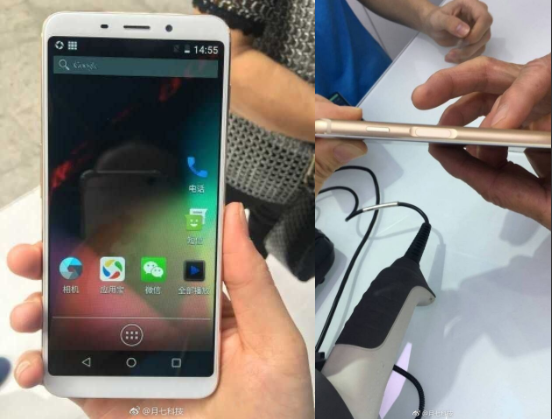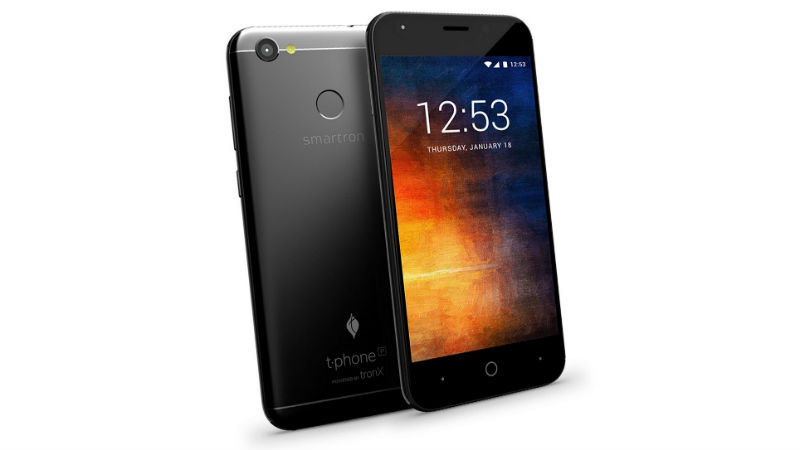

Huawei’s Honor brand is best known for its high-end, sleek smartphones but the brand seems to have all categories covered presently. A new Honor smartphone with model number Honor MYA-AL10 has been certified by TENAA.
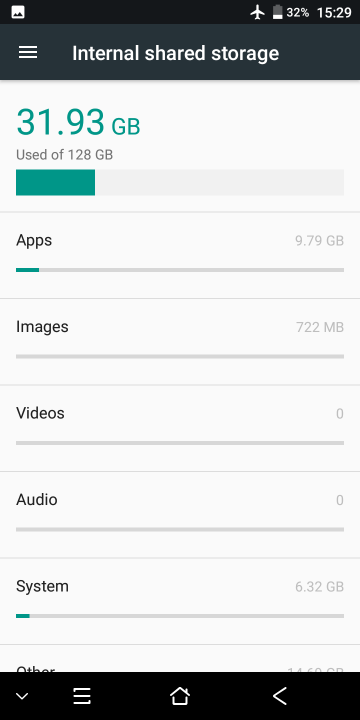
The Honor MYA-AL10 is believed to be the Honor 6 Play which would be released in the summer. According to the TENAA listing, the Honor Play 6 will come with entry level specs line up which includes a 1.4GHz quad-core processor believed to be the Snapdragon 425 chip. The device has a dimension of 143.8 x 72 x 8.85mm, weighing in at 150g. The device features a 5.0-inch TFT display with a resolution of 1280 x 720pixels. The device has in its memory aspect, a 2GB RAM as well as 16GB storage which is expandable up to 128GB. Keeping the lights on will be a modest 2920mAh battery. The device also comes with a host of network bands and connectivity options including 4G LTE.
On the camera end, the Honor 6 Play will sport an 8MP main camera at the rear while up on the front is a 5MP selfie camera. Providing the interface surprisingly is Android 6.0 Marshmallow instead of Google’s latest Android Nougat OS. The device is also listed as having a built-in antenna which could indicate that the casing would not be a metal body but made from plastic. Besides, there is no visible antenna band design on the body of the device.
We can’t say for sure when this model will be launched but whenever that happens, we expect it to have an affordable price tag ranging from 499 Yuan (~$74) to 699 Yuan (~$103).
When all the major brands are busy launching various kinds of smartphones, HMD Global released the Nokia 3310 (2017) as an upgraded edition of the old Nokia 3310 feature phone. The Finnish firm has confirmed that it will be launching new batch of Nokia phones before the end of the year. A new feature phone from Nokia is expected to release in the near future as couple of photos of the phone has appeared on TENAA, the Chinese telecom regulatory body. In the past week, the Nokia 105 (2017) had also appeared on TENAA.
The upcoming feature phone from Nokia has a model number of TA-1017. Like the Nokia 3310 (2017), the next feature phone from the firm will not be supporting 3G data connectivity. It is likely that Nokia may release a 3G edition of the phone.
The phone features a plastic body and has a candy bar design. The rear side of the phone features a camera that lacks a LED flash. Below the camera is the loudspeaker. it appears that the phone is running S30+ UI. It may or may not come with support for dual SIMs. in the previous week, the alleged Nokia 105 (2017) had also appeared on TENAA. Speculations suggest the phone may launch as Nokia 130.
The alleged Nokia 105 (2017) in white carries a model number of TA-1010 and its black variant has a model number of TA-1034. The Nokia 105 was first announced in 2013. A revamped edition of the phone with Nokia 105 (2015) moniker was launched by Microsoft in 2015. The Nokia 105 (2017) seems to be cheaper model than the alleged Nokia 130 as it does not feature As of this writing, there is no information on the arrival of the 2017 edition of the alleged Nokia 130 and Nokia 105 phones.
As mentioned above, Nokia is expected to release couple of phones starting from the third quarter of this year. The Nokia 9 is speculated as the upcoming flagship phone from the company. It is expected to come with a 5.3-inch Quad HD screen. It will be driven by Snapdragon 835 chipset and is expected to come in 6 GB and 8 GB RAM variants.
A new Vivo smartphone has appeared on the database of popular benchmark website Geekbench revealing some of the key specs we should be expecting on the model. The new model is suspected to be the Vivo X9S that is expected to launch alongside the X9S Plus which was recently certified by China’s certification agency TENAA and also received 3C certification. Both models likely have the same specifications with the major difference likely being their display sizes.
The model was listed as Vivo TD1608 and comes running Android 7.1.1 Nougat operating system and is powered by Qualcomm’s latest mid-range Snapdragon 660 chipset which has an octa-core CPU. The processor is backed 4GB of RAM on the variant that passed through Geekbench. There may likely be a higher variant with 6GB of RAM onboard.
The Geekbench listed specifications are scanty but we already know from previous leaks that the X9S will likely continue the dual selfie camera setup the Vivo X-series has become known for. A photo was recently shared on Weibo which looked like a promotional poster for the Vivo X9S and X9S Plus. The Weibo tipster who shared the photo hinted that the poster was spotted in a Vivo experience store apparently in China and is believed to be an indication that the models will soon be launched.
Since the September launch of the Apple iPhone 8 is drawing near, leaked information on the highly anticipated iPhone are surfacing consistently. Today, well-known leakster, @OnLeaks, has revealed a video of the dummy unit of iPhone 8 by collaborating with Tiger Mobiles. The leakster has a very good track record of revealing accurate leaked information of forthcoming devices before their official launch. Hence, the design of the iPhone 8 revealed through its dummy unit certainly cannot be dismissed as fake.
As it can be seen in the video, the dummy unit suggests that the alleged iPhone 8 would be sporting very slim bezels around its screen. However, the upper part of the screen sports a slightly larger bezel to feature a selfie camera and some other sensors.
The iPhone 8 dummy unit measures 143.5 x 71 x 7.5mm. The rear side of the phone features a vertically stacked dual cameras. An LED flash is placed between the two cameras. The camera module has a prominent bump. The alleged iPhone 8 is larger than the iPhone 7 that measures 138.3 x 67.1 x 7.1mm. However, it is smaller than the iPhone 7 Plus with measures 158.2 x 77.9 x 7.3mm.
Even though the alleged iPhone 8 is smaller than the iPhone 7 Plus that features a 5.5-inch screen, rumors have claimed that the iPhone 8 would be equipped with a 5.8-inch screen. Also, it is expected to be the first iPhone to feature an OLED screen. Since the front panel of the alleged iPhone 8 does not feature a fingerprint scanner, it seems that the biometric recognition feature is embedded under the display. Some rumors have claimed that there is a possibility that the iPhone 8 may feature a rear-mounted fingerprint scanner since Apple is facing issues with embedding it under the screen. It will come loaded with iOS 11.
The iPhone 8 is speculated to come with all-glass design. This indicates that Apple may introduce wireless charging feature on the iPhone 8. The year 2017 marks the tenth anniversary of Apple iPhones. Hence, the Cupertino company is expected to release iPhone 8 with overall improvements. It is rumored to launch alongside the iPhone 7S and iPhone 7S Plus in September.
Just two days ago, the Samsung Galaxy Note 8 had starred in a 360-degree video. It had not only revealed the design of the phablet from all angles but it also showcased its horizontally arranged dual rear cameras. On Wednesday, the Galaxy Note 8 had surfaced again in a real-life image as well as in a render.
The Galaxy Note 8 images show that the phablet sports a glossy appeal. The rear side of the phablet features a pair of horizontally stacked dual cameras that is coupled with a dual-LED on the right. Below the flash is a heart rate sensor. And, on the right side of the dual-LED flash is the fingerprint scanner.
The Galaxy Note 8 leaks that are appearing consistently show that it will not be facing an onscreen fingerprint scanner. It is rumored that Samsung had encountered problems in pleasing the fingerprint scanner at the front. Hence, it may have opted to place it on the rear side of the Galaxy Note 8. The left edge of the phone seems to feature the volume controllers (does not feature separate volume buttons) and a Bixby AI button. The right side of the Note 8 appears to feature a Power key.
The front panel of the phone is not clearly visible in the render. However, it does suggest that it features bezel-less design. Also, the upper and lower bezels of the front panel are quite thin. Hence, it seems that the Galaxy Note 8 will continue to feature the Infinity Display that Samsung had introduced on the Galaxy s8 and Galaxy S8+ smartphones. Rumors have revealed that the Note 8 would be coming with a 6.3-inch display and like the Galaxy S8 duo, the upcoming flagship phablet will also support an aspect ratio of 18.5:9.
The Galaxy Note 8 leaks have revealed that it will be available in Snapdragon 835 and Exynos 8895 chipset versions. The SoC is expected to be supported by 6 GB of RAM. Rumors have it that it may also come in 8 GB RAM model for select markets like South Korea and China. The Note 8 360-degree render has revealed that Samsung will not be axing the 3.5mm audio jack on the phablet. The Galaxy Note 7 that met with premature death featured a 3,500mAh battery. However, its successor is rumored to be packed with a 3,300mAh battery. Speculations indicate that it would be launching at the end of August. However, some other sources claim that it would be launching in the second half of September.
For less than $250, you get really impressive specifications that are hard to beat. The Snapdragon 820 may sound outdated for some but it is still plenty powerful and it can handle even the most graphically intensive tasks without any issues. If you pair it with 6GB of RAM and whopping 128GB of internal storage, you are looking at a beast of a phone that can be still called a flagship. Remember, the LG G6 was released with the Snapdragon 821, which is basically a slightly more powerful version of the Snapdragon 820 chip.
Since the phone was designed to be a flagship, it has great build quality and it uses premium materials like metal and glass in its construction, metal buttons, and 2.5D display.
Other key specs include a capable 13MP camera with a bright f/1.8 aperture lens, blood oxygen, and heart rate sensors for healthy lifestyle enthusiasts, 5.2″ 1080p display, and 3000mAh battery. The only shortcoming would be the outdated Android 6.0 out of the box but we believe that the phone will receive the Android 7 Nougat update soon.
If you consider the overall package you get, this phone is one of the best bangs for the buck. The deal is limited to only 200 units and it will last till July 3rd.
The Moto Z2 is the 2017 flagship phone from the Motorola. It will be coming out as a successor for the original Moto Z that was launched last year. Rumors have it that the Moto Z2’s launch is close at hand. This has become all the more evident as the Moto Z2 has appeared on GFXBench benchmarking platform to reveal its flagship specs.
According to Moto Z2 GFXBench listing, it features a 5.5-inch screen that produces a QHD resolution of 2,560 x 1,440 pixels. It is powered with Snapadragon 835 chipset that includes a 2.45 GHz octa-core processor and Adreno 540 graphics. The SoC is coupled with 4 GB of RAM. The native storage of the phone is 64 GB. It is likely to feature a microSD card like the original model.
Like the first generation Moto Z, its successor is also rumored to come with a pair of camera sensors on its rear panel. However, the GFXBench listing only reveals that it features a single camera of 12-megapixel which is capable of shooting 4K resolution videos. Its front-facing camera is of 5-megapixel. It is running on Android 7.1.1 Nougat OS.
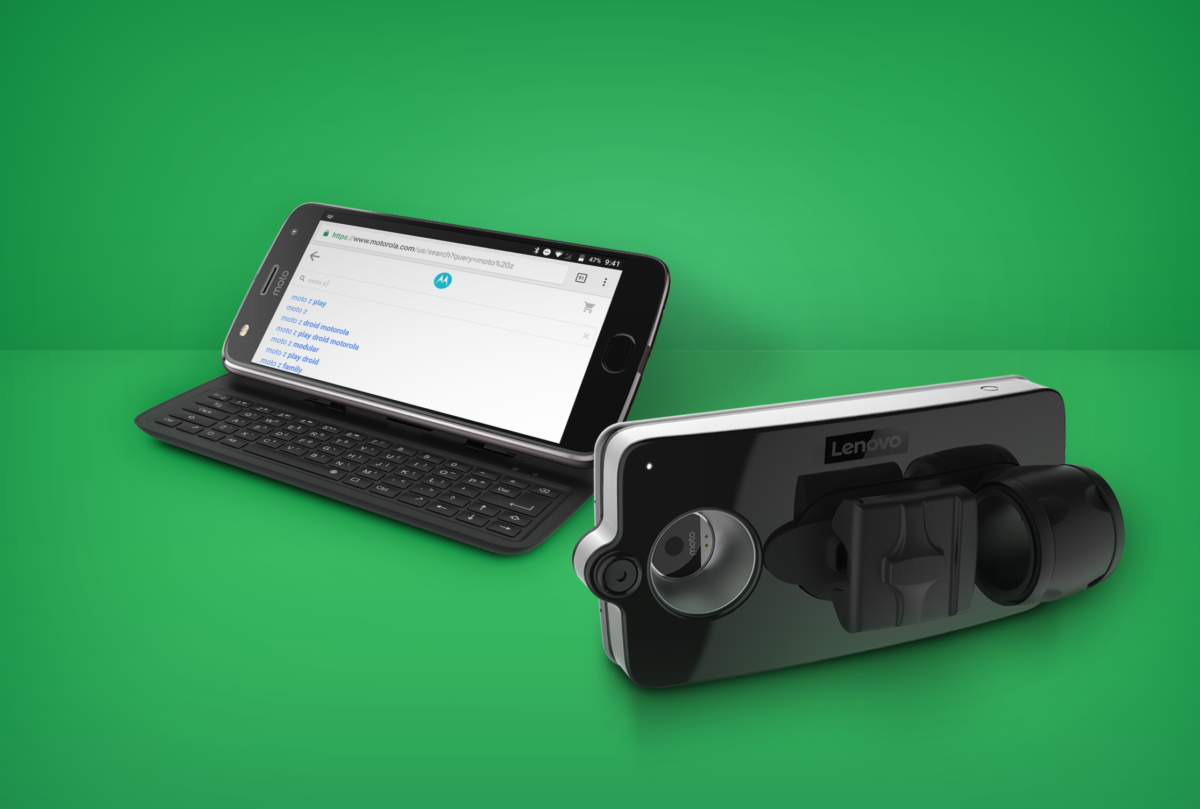
Also, like the original Moto Z, the Moto Z2 is expected to carry support for Moto Mods accessories. Motorola had axed the 3.5mm audio jack on the Moto Z. However, it is expected to bring back the feature on the Moto Z2. Rumors have it that the Moto Z2 Force may also get unveiled alongside the Moto Z2. The Z2 Force is expected to come with similar specs like the Moto Z2. However, the Moto Z2 Force will be featuring a Shatterproof screen.
Motorola was expected to announce the Moto Z2 on June 27. However, it did not happen. Now, the Moto Z2 is expected to get unveiled on June 30 as the company is holding a launch event on that day.
A leakster had predicted that the Moto X4 would be launching on June 30. However, he later updated his fans that the launch of Moto X4 may have delayed because of production issues with Snapdragon 660 chipset. Apart from the aforementioned phones, Motorola is also expected to unveil the Moto G5S and Moto G5S+ smartphones in the near future.
There have been speculations that Lenovo will keep ZUK alive by pre-installing ZUI on Motorola phones released in China. Those speculations are correct as a screenshot of the Chinese variant of the Moto Z2 Play shows the device running ZUI 3.0.
A few months ago, Lenovo announced it was shutting down its sub-brand ZUK after just 1.5 years in the market and four devices in total. Following that announcement were rumors that Lenovo was going to keep the UI of the ZUK phones and load it on Motorola phones launched in the country.
Now that it has been confirmed, it is safe to assume that all other Moto phones released in China will get the same treatment. The ZUI version number the Moto Z2 Play is running is 3.0 and its based on Android 7.1.1 too. This is a new version of the OS as the last version before the brand was shut down was ZUI 2.5.
There are still a few questions to be asked about the move. Will Lenovo make this exclusive to China alone or will it extend it to other Asian countries like India? Or even all Moto phones released globally? Will other Moto phones previously released in China receive ZUI updates or remain on the default Moto UI?
The Moto Z2 Play goes on sale on July 5 for ¥3299 (~$484).
The Mobile World Congress Shanghai 2017 began yesterday June 28 and it began with a bang. BBK subsidiary Vivo took the centre stage when it showcased a prototype of its latest full-screen phone which comes with a spectacular “under display” fingerprint sensor. Photos of the device had first leaked a few weeks back with speculations that it would be unveiled at MWC Shanghai. The speculations were right after all as the company has now unveiled what could be a technology which Apple is tipped as planning to include on the iPhone 8.
The fingerprint technology is actually developed by Qualcomm as a successor to its ultrasonic fingerprint technology unveiled last year. Vivo happens to have provided the prototype smartphone on which it is first being featured. The prototype is a modified version of the Vivo XPlay 6 with the under display fingerprint technology located beneath the 1.2mm thick OLED display panel. The new fingerprint scanner uses Qualcomm’s new ultrasonic technology which sends a pulse through the finger, some of which gets reflected while some get absorbed. These vibrations are then detected by a sensor which builds up a fingerprint.
Apart from penetrating the 1.2mm thick OLED, the sensor is said to be capable of penetrating a 0.8mm glass, and 0.525mm metal which is a great improvement over capacitive fingerprint sensor. Capacitive fingerprint sensor cannot function effectively under wet hands and in dusty conditions. But the new technology is reputed to function well under wet hands or dust.
Qualcomm’s new ultrasonic solution will ship to OEMs in two forms. The Fingerprint Sensors for Glass and Metal will reportedly start shipping to OEMs this month and will only work with Snapdragon 660 and 630 processors while the fingerprint sensors for display will start finding its way into smartphones in the fourth quarter of the current year and will work with non-Snapdragon chip packing smartphones as well. The video demo of the under display fingerprint technology can be watched from below.
Only recently, we got a leak that hinted that the elusive Meizu Pro 7 will finally be launched on July 26 which is barely a month away but that is yet to be confirmed by the company. While we may still be sceptical about that date, a new leak from a popular tech blogger on Weibo has restated that the Pro 7 will indeed be launched along with the Pro 7 Plus on July 26. The tipster claims the rumour has over 95% accuracy, meaning the Pro 7 may actually make its debut towards the end of next month.
Already we have seen the real renders of the Pro 7 revealing both the front and the rear design, including the secondary e-ink display located at the rear. The flagship model is expected to feature a well-studded specs lineup in addition to the nice design it has been revealed to come with. Among the rumoured specification is an Helio X30 chip, a 5.5-inch display, mBack home button and fast charging technology.
The Meizu Pro 7 is expected to feature a dual camera setup which is tipped to be composed of a Sony IMX386 main sensor and a Sony IMX286 secondary sensor. This would make the Pro 7 Meizu’s first dual camera phone. There are rumours of an Exynos 8895-powered version coming also. Other specs include a 16MP front camera, 3.5mm audio jack as well as a USB Type-C port and more. Meizu will offload the full package next month, that is if the rumours of a July 26 launch turns out to be true. Nothing has officially been revealed in that regard as at this moment so don’t get your expectation too high.
I’ve always looked for a great yet cheap solution that can extend the Wifi coverage in my apartment. You see, there are some dead Wifi spots and a little gadget like a Wifi extender helps a lot.
All you have to do is plug in this device into the wall outlet and keep it there, and the Wifi extender will do the job.
The device has max. LAN Data Rate of 300MBS, it supports the transmission frequency of 2.4GHz and supports IEEE 802.11b, IEEE 802.11g, IEEE 802.11n transmission standards.
You can now get this Wireless WiFi Repeater for just $9.49 from lightinthebox.com.
Meizu had a major restructuring early this year resulting in the company having three main divisions. The three divisions are: Meizu, Blue Charm and Flyme.
Rumor has it that Meizu may be planning on making Blue Charm an independent sub-brand just like Huawei’s Honor. Following this info is the recent sighting of a new logo for Blue Charm on Weibo.
The new logo is like a blue wavy line with the words Blue Charm written next to it in Chinese. There have been complaints regarding the lack of creativity associated with the design and some folks made a few mock-ups which in my own opinion are terrible too.
ASUS is set to announce its new Zenfone 4 lineup next month but a new teaser poster mentions a future release date for one of them.
The teaser poster was released to the press earlier today and shared on Twitter by Roland Quandt. There are a lot of hints in the image and we will analyze each one.
First there is the text that says “Take A Walk On The Wide Side”. Then there are the two overlapping smartphones sitting in a camera frame that form the alphabet “V”. Last is the phrase “Frame The Date”.
We think all these point to one of the phones in the list from yesterday, the Zenfone 4V. The overlapping phones show the letter V. We also think its a dual camera smartphone. See the two circles on the smartphone on the left?
The “Take A Walk On The Wide Side” statement hints at one of the lenses being a wide-angle lens and “Frame The Date” just reinforces the fact that its a camera-centric phone.
You might be wondering why ASUS is planning to launch another dual camera phone since it already has the Zenfone Zoom S/Zenfone 3 Zoom. The Zenfone Zoom S dual rear cameras do not offer wide-angle shots.
Xiaomi’s Mi band and the Mi Band 2 were manufactured for Xiaomi by Huami which is now an independent company of its own with Xiaomi owning some stakes in the outfit. Huami has gone on to popularise the Amazfit brand, making in-roads into the U.S and other regions. Back home, the smart wearable maker has also been selling its line of smart wearable. Huami recently launched a new fitness band and is now set to launch another smart band with a long lasting battery.
The gadget is likely a Huami smart band youth edition and according to a Weibo post by the company’s CEO, the smart band will offer up to a month of use without the need to charge the wearable. The smart band is also teased as coming with GPS feature and with some level of durability.
Other details of the smart band are still sketchy but the device will be officially launched on July 4 at 19.00 CST. The smart band seems to have gone on presale on the Amazfit official flagship store on Jingdong (JD.com) upon deposit of 1 Yuan.
A few years ago, fingerprint scanners were reserved for high-end phones. Now, don’t be amazed to find a fingerprint sensor in a phone priced under a $100. The technology continues to evolve and the focus now is to make scanners that can sit directly under displays. Qualcomm just announced it has joined the race at this year’s MWC Shanghai.
The chip manufacturer announced that it is working on making under-display sensors and is even already making samples. This scanner will be able to sit under OLED panels that are up to 1200µm thick.
An image provided by Qualcomm shows that their scanners will cut across three main categories:
Under-display scanners will be used for premium phones.
Under-metal and glass scanners will be used for high-end phones and will be able to scan through glass of up to 800 µm or aluminium of up to 650µm.
Under-glass scanners for mid and low tier phones that can scan through glass 800µm thick.
Qualcomm said the Scanners for Metal and Glass will be compatible with the new Snapdragon 630 and Snapdragon 660 mobile platforms while the Scanners for Display, Glass & Metal are designed to be compatible with future Snapdragon 800 series, 600 series, 400 series and 200 series mobile platforms. They will also work with non-Snapdragon processors and as standalone sensors.
Qualcomm says their scanners will be able to detect fingerprints underwater and also heart beat and blood flow for a more secure authentication.
Qualcomm and Vivo Partnership
The highlight of the announcement is the partnership with Vivo. Qualcomm says it is working with the Chinese manufacturer and will display modified versions of the Xplay6 sporting Qualcomm Fingerprint Sensors for Display at the Shanghai Mobile World Congress.
This announcement is the final piece of the puzzle that makes everything clear. It turns out that Vivo won’t be announcing a new phone with an under-display scanner but will be demoing Vivo Xplay6 units with the technology. Plus that video we saw is genuine but probably a demo unit.
We all have heard and seen 360° photos and videos on the internet, but how many of you have actually used a 360° camera before? I believe the concept of 360° content production is still pretty new for a lot of readers out here and the Xiaomi Mi VR camera is here to help you start your journey. It’s far from being the best 360° camera in the market, but for its relatively affordable price tag of under $250, the Mi VR 3.5K Panorama camera manages to produce some good looking 360° photos and videos.
The Xiaomi Mi VR 360° camera comes in an elegant black shade. You get a matte like texture on the front as well as the back, while the sides get a smoother finish. I love the overall compact design of the device and the fact that it’s hard to get scratches on the body makes me love it even more! Often while taking 360° pictures or videos, you have to keep the camera in rocky terrains or sandy beaches and so far, my Mi VR camera has managed to survive them all without any significant scratches. Of course, I have not yet dropped it to see if it survives, but I don’t have the courage to see what’ll happen in such a situation. But don’t be shy to expose your Mi VR camera in different terrains to get the perfect 360° shots.
The mini tripod comes with the camera itself and does a fine job of keeping the camera study in different terrains. Even when it was raining and things were a bit slippery, the tripod managed to keep the camera intact. This along with the protective sleeve (which is also included in the box) makes up for the perfect pair of accessories for the camera.
Note that the camera uses a standard 1/4 inch mount, so you can use any tripod or accessory with this connector.
Xiaomi has kept the design simple, with three buttons on top — a Record button (in red), a Wi-Fi button and a Power / Mode button. The buttons are tactile and give good feedback when clicked. On one of the sides, you have the MicroUSB port used for charging as well as a MicroSD card slot. Note that the camera is IP67 certified, which means its dust and waterproof. Hence, the slots are covered.
There are three notification lights, all located on one side of the device (on the opposite side of the Mijia logo). The battery indicator glows blue and red (when the camera has low charge). Then there’s a camera as well as a video notification indicator in blue. The video indicator starts blinking in red when you are recording.
Overall, I’m happy with the camera’s elegant design and sturdy built quality.
Xiaomi Mi VR 3.5K 360° Camera Specs
The Mi VR camera is made up of two 190° Fish Eye lens with 2 x IMX206 sensors. With this configuration, along with the Amabrella A12 chipset inside, the Mi VR camera manages to capture up to a max resolution of 3.5K at 30 fps. You can even capture 60 fps videos in lower resolution. You can capture in 3.5K for about 75 minutes in a single charge, but make sure to keep a large memory card handy. Speaking of memory cards, the camera takes MicroSD card up to 128GB. Do note that it is recommended to use a Class 10 or up memory card inside the device for the best performance.
There are three shooting modes (customizable in the app): Flat / Sphere / Planet. The cam supports time lapse and comes with 6-axis stabilization as well, which keeps the videos relatively stable.
Battery Life
The 1600mAh battery on the camera is good for capturing photos for around a day on a single charge or videos for more than an hour. I personally used the camera for 30-40 360° pictures and a few videos a couple of times and I still had like 40-50% charge remaining on the device, which I feel is pretty good. The standby time is also good, as I would still see nearly 30-35% charge after switching the camera on the next day. Charging the camera takes around 2 hours.
Mi VR 360° Panorama Camera: How To Use
Since 360° cameras are a relatively new concept for many readers out here, I would give you a brief idea as to how to use the Mi VR camera.
Connecting the Camera to the App
Charge the camera first for an hour until you see the fully charged blue battery icon on the camera.
Hit the power button and turn on the camera.
Once the camera is on, you can either start recording or you can connect your smartphone.
If you want to connect your smartphone, make sure to download the Mi Sphere app first from this link.
To connect to your phone, just press the Wi-Fi button on the camera and connect your smartphone’s Wi-Fi to the camera’s network. It should be something like MJXJ-XXXXXX. Note that the default password for the camera’s Wi-Fi network is 12345678.
Open the Mi Sphere App (downloaded from the link above) and it has all the instructions that you need to connect to the camera.
Shooting Pictures / Videos Using the Camera (Without connecting to the App)
Once the camera is switched on, you’ll see the current shooting mode via the indicator icon. It can be either the camera mode or the video mode.
You can switch between the two modes via the power button.
You can capture pictures or videos by clicking the record button once. You’ll hear a light beep which indicates whether the pictures was captured or the video shooting started.
Shooting Pictures / Videos With the Camera App
Once your camera is connected to the phone, turn on the app and you’ll see a yellow camera icon. Click on it to take you to the camera interface. You’ll be greeted with a large preview screen as well as a few additional options such as settings (on the top right corner), gallery (bottom left corner), capture button (bottom center) and camera / video toggle mode (bottom right). There’s a timer setting as well (the one which looks like a clock icon).
Click on the capture button to take pictures or videos.
You can fiddle with a few settings as well like white balance, exposure, ISO, and resolution.
Once the photo / video is captured, you can select different viewing modes as well such as Mirror Ball, Flat, Little Planet, and Pano. Further, there’s an option for single screen view as well as 2 screen view (for VR headsets).
Further, there are four filters that you can apply to the photos — original / fleet / youth / film. Not the best filter options, but at least you can do this directly in the app itself.
Note that there’s a share button integrated right inside the app (you have to go to the app’s gallery and click on the image to get this option on the top right corner). Available sharing options include Facebook, Messenger, Twitter, WeChat, Weibo etc. No option to share videos directly to YouTube (which is disappointing) but there’s a way you can share it to youtube.
Download the video to the phone first and then using YouTube Metadata injector or any other video editor, insert 360 metadata (helps them identify this as a 360 video). Once done, you can upload it to YouTube or any other 360 supported platform. You can actually try an app called VRFix for Android that reinjects the 360 metadata to videos.
Mi VR App Settings
Mi VR App Settings
Resolution settings
White Balance Settings In Mi Sphere App
Mi Sphere App Basic Settings
More settings menu
Mi VR App Photo Filters
Mi Sphere App Filter
Mi Sphere app Video editing options
video filter options
vid editing in app
Mi Sphere App Sharing Options
Sharing Settings
I know this turned out to be a very long review because of these instructions, but I hope it makes your lives easier with the Mi VR camera.
Xiaomi Mi VR 3.5K Camera & Video Quality
The Mi 3.5K VR camera managed to capture 360° photos and videos with sufficient levels of detail. Well, you might find them a bit grainy for your taste but when compared to other VR cameras in the same range, Xiaomi’s 360° device does quite well.
Actually, the bar itself is quite low for 360° photos, so the content captured by this camera comes out quite better than other cheap alternatives. The image size ranges from 6-14Mb while a 30-second video would be like 100Mb in size. The dynamic range is pretty good and the colors are quite accurate as well. 360° photo stitching is also good but it’s not completely seamless. Do note that Xiaomi’s app does a fine job of getting the two pictures together for a complete 360° picture.
As for video quality, there are two resolutions available and thanks to the 6-axis stabilization, your videos come out less shaky, even when you are walking and recording.
Overall, for under $250, the Xiaomi Mi VR 3.5K camera does pretty well in terms of quality as compared to its competitors.
Or you can see a couple of live uploaded photos down below.
Verdict
It might take some time getting used to the world of 360 photos, but with the Mi VR 3.5K camera around, things are pretty straightforward. We are seeing a flood of 360 content these days and cameras like the Mi VR 3.5K enables regular users to join the 360° club with good hardware for starters. I would definitely recommend it for those who wish to take good quality 360° photos without breaking their wallets.
Have you received your OnePlus 5 already and you are a bit sad that it doesn’t have EIS for 4K videos? Or are you having WiFi issues?
OnePlus announced at a Reddit AMA session that a fix for the WiFi issue and addition of EIS will come via a future update. How soon that update will roll out is currently unknown. The OnePlus 5 has received two OTA updates since its release last week. There was one on launch day and another one about two days ago.
OnePlus also revealed a few interesting details about the company. First, there are no plans to launch devices with microSD card expansion at the moment. So if you have been hoping the feature will make it to future models, you may want to discard that thought.
They also mentioned that the company has no tablet in its product map. This is funny because I believe at one point in time, the company considered making one. It is sad I do not have proof anymore.
Today, Xiaomi held a Mi Ecosystem event at Beijing and announced two new products. One of the products is the Ninebot Plus, a successor to 2015’s Ninebot Mini.
For those of you who don’t remember Xiaomi and Ninebot’s history together, here is a short refresher. Back in April 2015, Ninebot acquired Segway, the American self-balancing scooter manufacturer. That acquisition was made possible by Xiaomi, a major investor in Ninebot.
The new Ninebot Plus brings a number of new features and a higher price tag.
Ninebot Plus Design
The Ninebot Plus features two 11-inch inflatable non-slip tires and a new magnesium alloy elastic frame. It weighs 16kg and measures 57.7 cm × 28 cm × 62cm. Unlike the Ninebot Mini, it comes only in white.
1. Remote: a new addition to the Ninebot Plus is its new remote control. With the remote control, you can unlock the scooter, summon it to come to you, turn on or turn off the scooter’s lights or even activate a “follow me” mode. The remote control is rechargeable and has a 9-hr battery life depending on if you frequently use its vibration alarm. Its 680mAh battery should charge in 3.5hrs via USB.
2. Load Mode: another feature the Ninebot Plus has is a load mode feature that lets you turn it into a sort of trolley to carry items. Thanks to a self-adjusting gravity function, the Ninebot Plus will automatically find its balance when you load it with items. Maximum load weight is 20kg.
3. Ninebot Plus Camera: this is the most interesting feature of the scooter. If you are into making videos, the scooter can come in handy. Just fit in the Xiaomi PTZ Camera into the special slot between the seat and your scooter doubles as a professional track slider. The camera has 3-axis OIS, records in 1080p and has a 104° wide angle sensor.
Ninebot Technical Specs
The Ninebot Plus has a maximum speed of 18km/h and features two 400W motors. Both motors can supply a turbo boost of 2500W combined. The scooter has an IP54 rating and supports a maximum load of 100kg when in riding mode.
Its 329Wh battery system is made up of 42 18650 high power lithium batteries that can last up to 35km on a single charge. Charging time comes in at 5.5hrs.
Ninebot Price & Availability
The Ninebot Plus is priced at ¥3499 (~$514) and will go on sale on July 11 at 11:oo AM. It will be available on the official Mi website, at Mi Home stores, and Jingdong Mall (JD.com). It is not clear if the
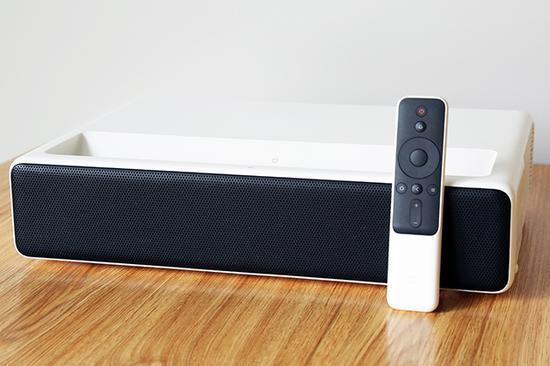
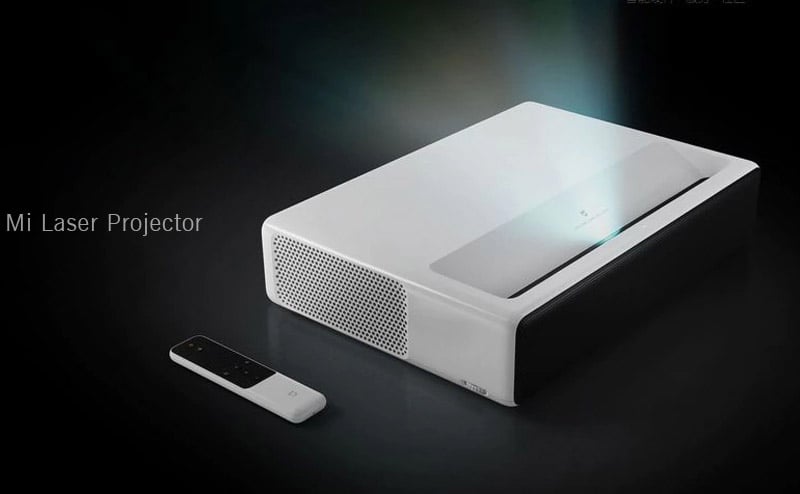
Xiaomi has announced what could be termed its 2017 flagship product under the MIJIA brand and it turns out to be a Laser projector that can be used as a TV at home. The product is christened Mi Laser Projector and it presents with an expansive 150-inch display size. The product was unveiled during the Xiaomi MIJIA annual conference held today in Beijing. The idea of a cost-effective Laser projector was born out of the discovery of a fancy Laser Projection TV by Xiaomi’s VP Liu De priced at 100,000 Yuan. The unaffordability of the product was what spurred the tech giant to venture into its own research and development of an affordable laser projector.
The Mi Laser Projector comes with a 0.233:1 large depth of field and has an ultra-short focal lens design. The projector screen can be placed in the TV cabinet with the size adjusted to fit in. The wall can also be used as the screen and so, it does not occupy too much indoor space. The design also eliminates the cumbersome problem of wires scattered everywhere. The Laser projector itself only needs to be placed 50cm away from the wall in order to deliver 150-inch screen projection. You don’t need to manually focus the lens as it fine tunes itself.
Xiaomi claims the laser light inside the projector has a shelve life of 25,0000 hours. That translates to up to 34 years usage if the projector is used for 2 hours daily. A daily usage of up to 4hours can still guarantee up to 17 years of usage, meaning the laser is ultra-durable and long lasting. The projector’s two core technologies are the light source technology manufactured by the Light Peak photoelectric company while the imaging technology chip in use was made by Texas Instruments and Guangfeng photoelectric custom R&D.
Picture quality is assured as a result of the use of advanced laser fluorescence display technology (ALPD 3.0). The projector provides a red light ratio of 16% to 18%, wide color gamut, color quasi, with contrast comparable to the laser studio 3000: 1 screen contrast. The light source brightness can reach up to 5000 lumens which is of theater screen level. The projector also diffuses its direct light source, allowing for more eye protection.
For the sound, quality sound is assured through the use of Xiaomi TV’s custom speaker system with built-in high-power, dual full-frequency and dual high-frequency high-fidelity speakers. The sound system supports three kinds of external audio. The Mi Laser 150″ projector is capable of providing theatre-level audio-visuals right in the comfort of the sitting room.
In addition, the Mi Laser Projector also comes built-in with all the content available on the Xiaomi Mi TV. The Laser projector has its own remote control which supports the Xiaomi universal remote control app. That means the Xiaomi universal smart remote can be used to operate the sophisticated device.
Now, to the most interesting aspect, the price. The Mi Laser Projection TV will sell for 9999 Yuan ($1,470). That is a fairly decent price tag which is far cheaper than Samsung’s most expensive The Frame smart TV models with prices ranging from $1,999 for the 55-inch model to $2,799 for the 65-inch model. The Mi Laser TV will go on sale on July 4 via Xiaomi Mall, and MIJIA app. Outside China, the projector is only available via online retailers like GearBest and LightInTheBox and it is priced at around $2,000.
Qualcomm has today introduced a new family member to its Snapdragon 400 mobile platform – the all new Snapdragon 450. The new Snapdragon SoC has been unveiled at the Mobile World Congress Shanghai 2017 event. The Snapdragon 450 SoC is the successor of the Snapdragon 435 chipset that is present under the hood of some popular mid-rangers such as ZTE Blade V8, ZTE Nubia M2 Play, Xiaomi Redmi 4X (Redmi 4), and OPPO A57.
Snapdragon 450 Specifications
The Snapdragon 450 chipset is the first Snapdragon 400 series SoC to be built with 14nm FINFET manufacturing processor. The chipset is made for powering mid-range smartphones. It is an octa-core chipset featuring four Cortex A53 cores working 1.8 GHz and another set of four Cortex A53 cores gunning at 1.8 GHz. It includes Adreno 506 graphics which is also present inside Snapdragon 625.
It supports one 32-bit LPDDR3 RAM. Its dual ISP can support a pair of 13-megapixel camera sensors. It can support a max of 21-megapixel single camera. It can encode 1080p content and decode H.264 and HVEC media. For data connectivity, its Cat. 7 X9 LTE modem that makes use of 2x20MHz carrier aggregation. It supports USB 3.0 that brings support for Quick Charge 3.0.
Snapdragon 450 Features
The Snapdragon 450 chipset brings four major improvements:
Enhanced CPU and GPU Performance
The Snapdragon 450 offers 25 percent better computing performance than its predecessor. Also, it churns 25 percent increase in GPU performance than SD 435.
Better Battery Performance
The Snapdragon 450 brings up to four hours of extra battery usage time than Snapdragon 435. It consumes 30 percent less power while playing games. The support for Quick Charge 3.0 allows a Snapdragon 450 phone to charge from zero to 80 percent in around 35 minutes.
Camera and Multimedia
The Snapdragon 450 powered mid-range phones are capable of supporting real-time bokeh effect. It allows users to record 1080p (Full HD) videos at 60 fps. It also supports slow motion capture. The SD 450 chip supports 1,920 x 1,080 screens along with Hexagon DSP which brings improved performance for camera and multimedia.
Connectivity and USB
The Snapdragon 450 is the first Snapdragon 400 series chipset to feature Snapdragon X9 LTE modem that delivers 300 Mbps download speeds and 150 Mbps upload speeds. It supports wide range mobile networks through Snapdragon All Mode. It also carries support Wi-Fi 802.11ac along with MU-MIMO. It is also the first in Snapdragon 400 series to feature USB 3.0 for speedier data transfer.
The commercial sampling of Snapdragon 450 is pegged to begin in third quarter of 2017. Hence, the Snapdragon 450 enabled devices are expected to reach consumers by the end of 2017.
We use cookies on our website to give you the most relevant experience by remembering your preferences and repeat visits. By clicking “Accept”, you consent to the use of ALL the cookies.
This website uses cookies to improve your experience while you navigate through the website. Out of these, the cookies that are categorized as necessary are stored on your browser as they are essential for the working of basic functionalities of the website. We also use third-party cookies that help us analyze and understand how you use this website. These cookies will be stored in your browser only with your consent. You also have the option to opt-out of these cookies. But opting out of some of these cookies may affect your browsing experience.
Necessary cookies are absolutely essential for the website to function properly. This category only includes cookies that ensures basic functionalities and security features of the website. These cookies do not store any personal information.
Any cookies that may not be particularly necessary for the website to function and is used specifically to collect user personal data via analytics, ads, other embedded contents are termed as non-necessary cookies. It is mandatory to procure user consent prior to running these cookies on your website.