Samsung recently revealed the name its next truly wireless earbud will be called when it filed a patent for the Galaxy Buds moniker. The Galaxy Buds is likely the successor to the gear IconX (2018) earbuds which were launched last year. The new wearable device has now been certified by the US Federal Communications Commission (FCC). This is coming on the heels of the Bluetooth SIG certification the device received recently. The FCC certification comes with the model number SM-R170 and is listed as “Samsung Bluetooth Headset.” This is the same device that was certified by Bluetooth SIG last week. The certification document shows Samsung will manufacture the earphones in its factory in Vietnam.
Samsung is expected to hold its annual Galaxy Unpacked event on February 20 when the flagship Galaxy S10 models will be unveiled. The South Korean giant is also expected to announce the Galaxy Buds alongside other wearables such as the Galaxy Fit during the event. The Galaxy Buds are expected to come with Bluetooth 5.0 support and 8GB of internal storage. The device will be available in black, white, and yellow colours.
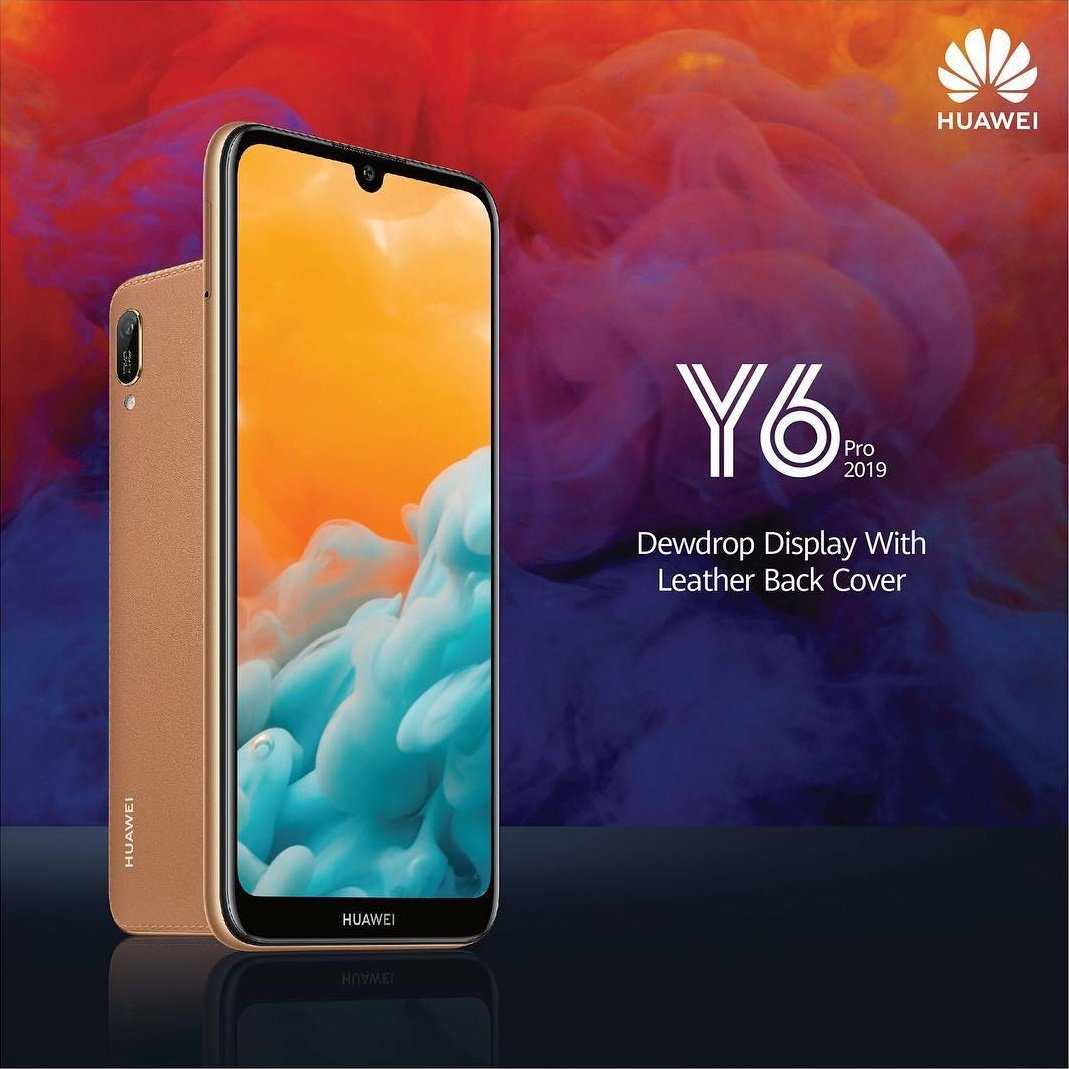
Last week, Huawei launched three new phones in Sri Lanka. They are the Huawei Y9 (2019), Huawei Y7 Pro (2019), and Huawei Y6 Pro (2019). We already covered the first two devices when they launched in India and Vietnam respectively. However, the Y6 Pro (2019) is a spanking new device and an interesting one at that.
We learned of the Y6 Pro (2019)’s launch from Twitter user @ZyadAtef and did some digging of our own to get more details. The phone has a 6.09-inch 1520 x 720 Dewdrop FullView display. The dewdrop or waterdrop notch may not excite you but you will be happy to know that Huawei has given the phone a textured leather finish on the back to make it stand out from other phones.
We are not sure if it is genuine leather like that of the P20 Pro but it is nice to see a mid-range phone that doesn’t have polycarbonate or metal back. The Y6 Pro 2019 will be available in Amber Brown and Midnight Black.
The phone comes with 3GB of RAM and 32GB of storage but there is no mention of its processor. The Huawei Y6 Pro 2019 has a single 13MP sensor on its back while an 8MP sensor is housed inside the notch. There is no fingerprint scanner but there is Face Unlock which also works in low-light.
Unlike the Y7 Pro 2019 which runs EMUI 8.2 based on Android 8.1 Oreo, the Y6 Pro 2019 runs EMUI 9.0 based on Android 9 Pie out of the box. Under its leather rear is a 3,000mAh battery.
The phone will be sold by the online store, Singer. However, it wasn’t yet listed as at the time of writing. There is also no info on the phone’s price.
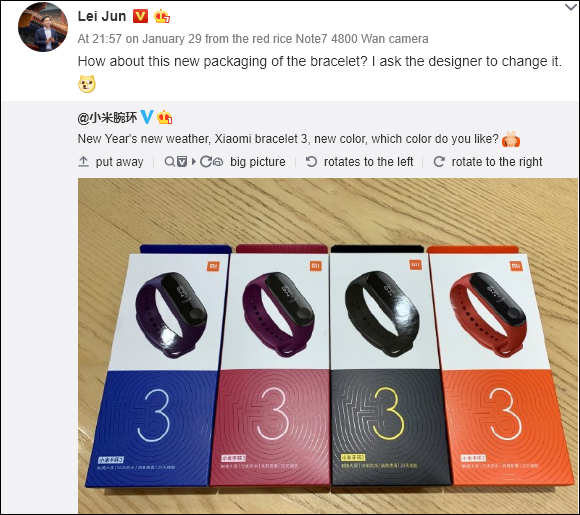
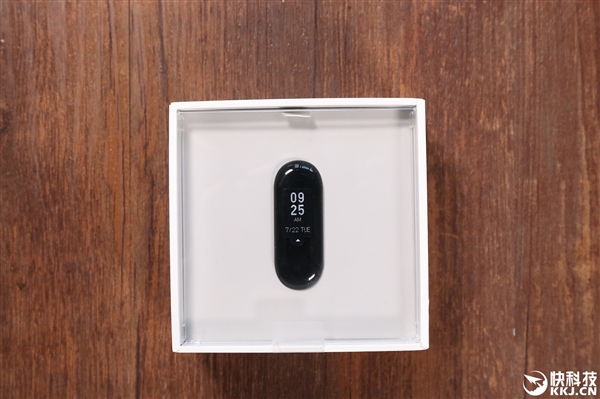
Despite their popularity, Xiaomi‘s range of Mi Bands often come with simple packaging boxes. The Mi Band 3’s packaging box was a square-shaped box just like the Band 2’s but with a transparent plastic cover which allows buyers to savour the beauty even before buying. The Chinese company has now unveiled a redesigned Mi Band 3 packaging box.
The new retail box is no longer square-shaped rather, it adopts a rectangular parallelepiped shape with a colourful design. The packaging box won’t all have the same colours. Instead, the Band 3’s new box casing will have a colour shade matching the colour of the straps. As would be recalled, the Band 3 comes with black, blue, and orange straps but there is a fourth colour which is Burgundy.
As a reminder, the Mi Band 3 is an improved version of the Band 2 which was released in 2016. The Band 3 features a 0.78-inch OLED capacitive touchscreen. which offer a better viewing and user experience. The display can show call notifications and an option to reject calls and also incoming messages on a paired smartphone. The rubber strap also got some improvement which ensures it isn’t just comfortable, the fitness tracker cannot fall off. Further, it comes with way more functions when compared to Mi Band 2. Some of the functions include heart rate monitor, weather forecast, alarm clock, daily steps count, sedentary reminder, sleep monitor, event reminder and find my phone function. There is a variant with NFC which cost 199 yuan (~$31). Furthermore, the Mi Band 3 comes with an improved battery, which can last for up to 20 days on a single charge.
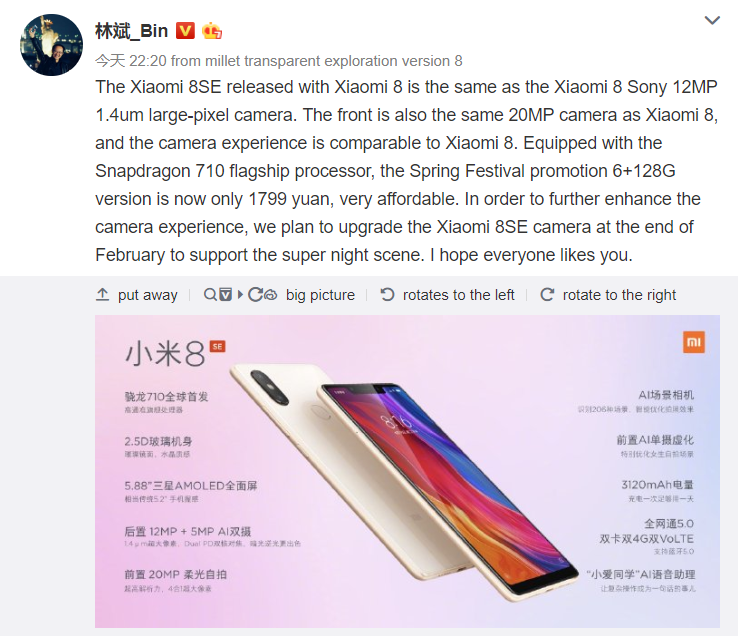
The Mi 8 SE is currently Xiaomi’s most powerful mid-range phone. It has an AMOLED display and is powered by the Snapdragon 710 processor. Xiaomi’s co-founder and president, Lin Bin, announced via a Weibo post that the phone will also get the Super Night Scene mode of the Mi MIX 3.
In the post, Mr. Bin said since the Mi 8 SE sports the same 12MP primary rear camera as the Mi 8 and also has the same 20MP front-facing camera, its camera performance is comparable to that of the Mi 8. However, in order to further improve its performance, they will roll out an update that brings Super Night Scene Mode to the phone. The update will arrive at the end of February.
Update: A Visionox executive confirmed that Xiaomi’s double-folding smartphone was a joint project between both companies. The executive revealed the double-folding display is a breakthrough for the mobile industry in an interview today.
If you have been wondering who the display panel supplier for Xiaomi‘s double-folding smartphone is, industry sources have revealed that it is Chinese display maker, Visionox.
According to Chinese market research firm All View Consulting, Visionox was the third largest AMOLED display manufacturer in 2018. At the end of 2018, the display manufacturer began construction of its G6 flexible AMOLED display production line in Hefei, Anhui Province of China.
The production line is expected to boost the display industry in the region and also China’s status as a display manufacturing country.
Xiaomi’s co-founder, Lin Bin, who showed off the foldable prototype said they had to surmount a number of technical difficulties while developing the device. The phone is still under development and will be commercially available later.
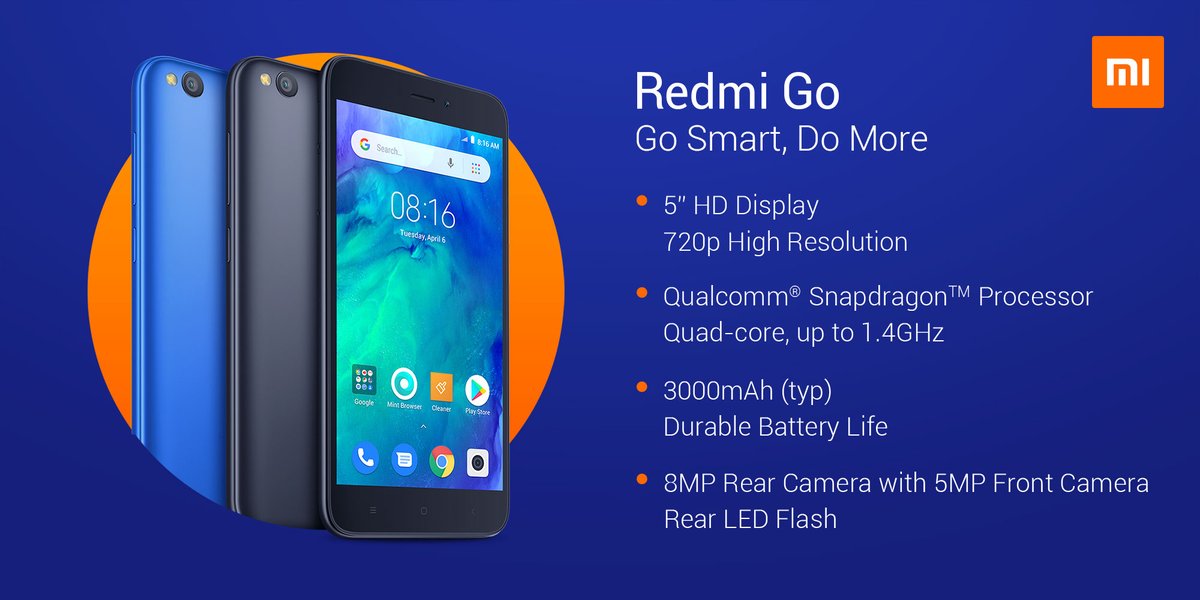
Xiaomi took the wraps off its first Android Go smartphone today which it named Redmi Go. The phone is expected to be available in Europe and also launch in other markets.
The Redmi Go has a 5-inch 1280 x 720 display and is powered by a 1.4GHz quad-core Snapdragon processor said to be the Snapdragon 425. Like other Android Go phones, it has 1GB of RAM and 8GB of storage. There are reports of a version with 16GB of storage but we haven’t seen evidence of that yet. Nevertheless, a MicroSD card slot will let you add extra storage.
The phone has an 8MP rear camera with an LED flash and a 5MP front-facing camera. It runs Android Oreo (Go Edition) and packs a 3,000mAh battery. Other specs not mentioned in the official announcement include dual SIM support, a 3.5mm audio jack, and a MicroUSB port for charging and data transfer.
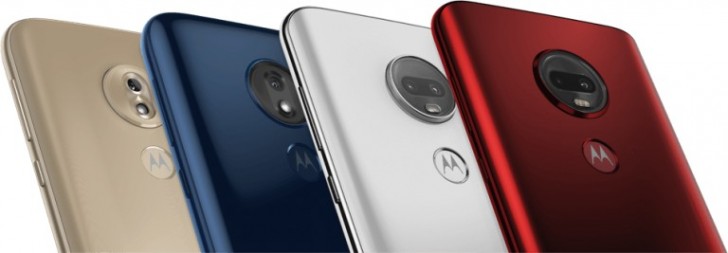
A recent poster had suggested that Motorola will officially unveil the Moto G7 lineup in an event scheduled to hold on February 7 in Brazil. The company is yet to release a launch itinerary for Europe but a new leak has emerged revealing the Moto G7 and G7 Plus pricing for Europe. According to the leak from a Twitter tipster, the Moto G7 pricing in Europe will start at €300 while that of the G7 Plus will start at €360. Earlier on, the tipster had revealed that the G7 Play will be sold for €149 while the G7 Power will be offered for €209.
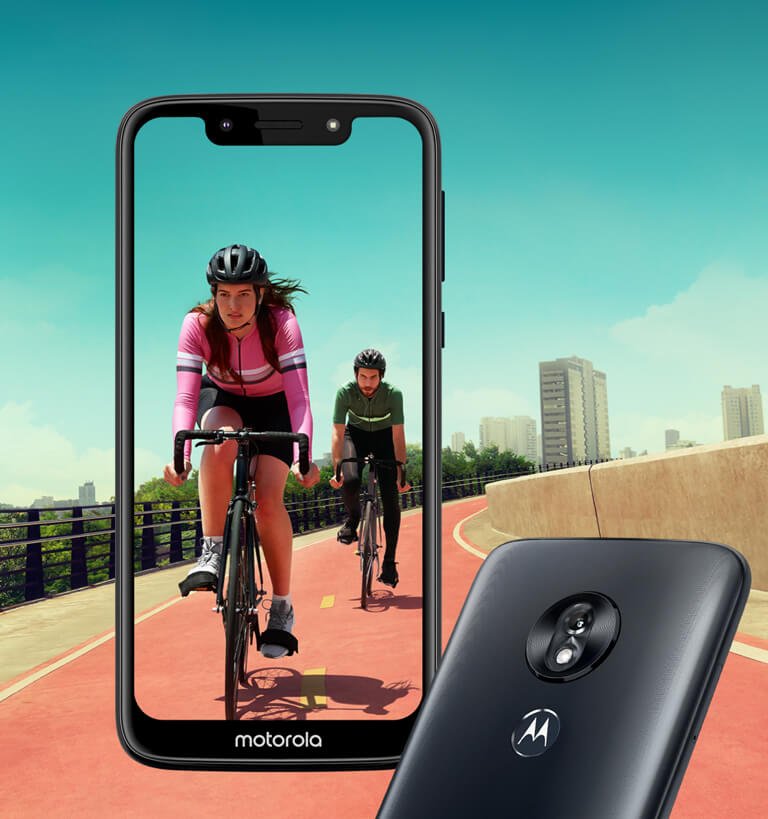
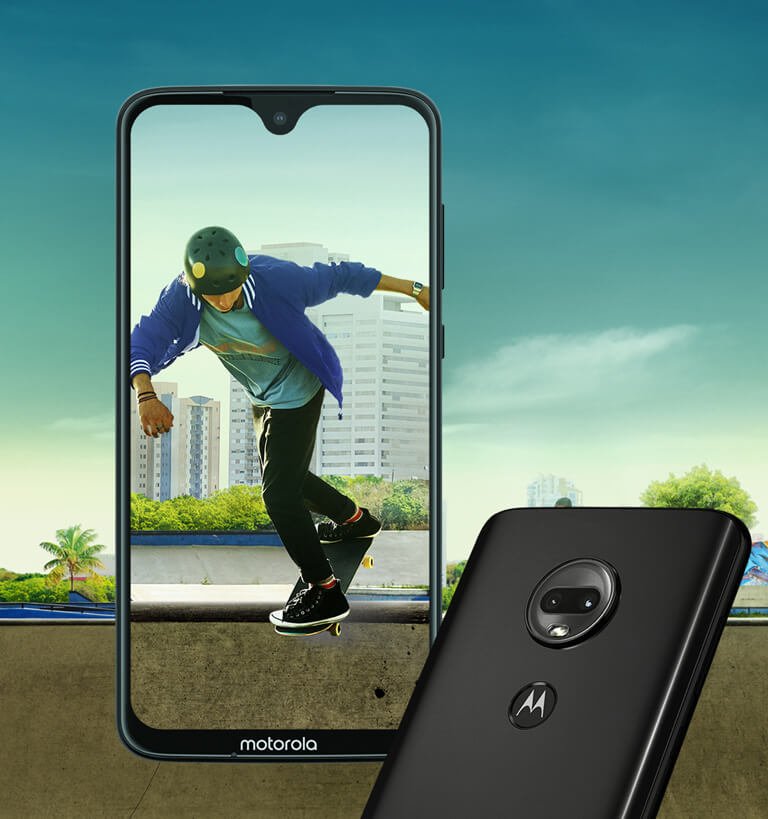
The Moto G7 lineup has already been featured on Motorola’s website and is made up of four models; MotoG7, G7 Plus, G7 Play and G7 Power. As for their specs, the Moto G7 packs a 6.24-inch display with a waterdrop notch and 1080×2270 resolution. It’s powered by the Snapdragon 632 chipset, paired with 4GB of RAM and 64GB of storage. At the rear aspect, there’s a 12MP + 5MP dual rear camera setup while the device is fired up by a 3,000mAh battery. The G7 Plus specs are almost similar except that it is powered by a Snapdragon 636 and the main rear cam to a 16MP unit.
On the other hand, the Moto G7 Play features a 5.7-inch display with a resolution of 720×1512 pixels. It is powered by a Snapdragon 632 paired with 2GB of RAM with 32GB of storage. There is a 13 MP rear camera, and the same 3,000 mAh battery. Finally, the G7 Power lives up to its name in the battery aspect as it packs a 5,000 mAh cell. It equally features a bigger 6.2″ display with the same resolution as the G7 Play. The model is also powered by the Snapdragon 632 and has the same 32GB of storage, but 3GB of RAM. The beautiful thing is that all four models run Android 9 Pie.
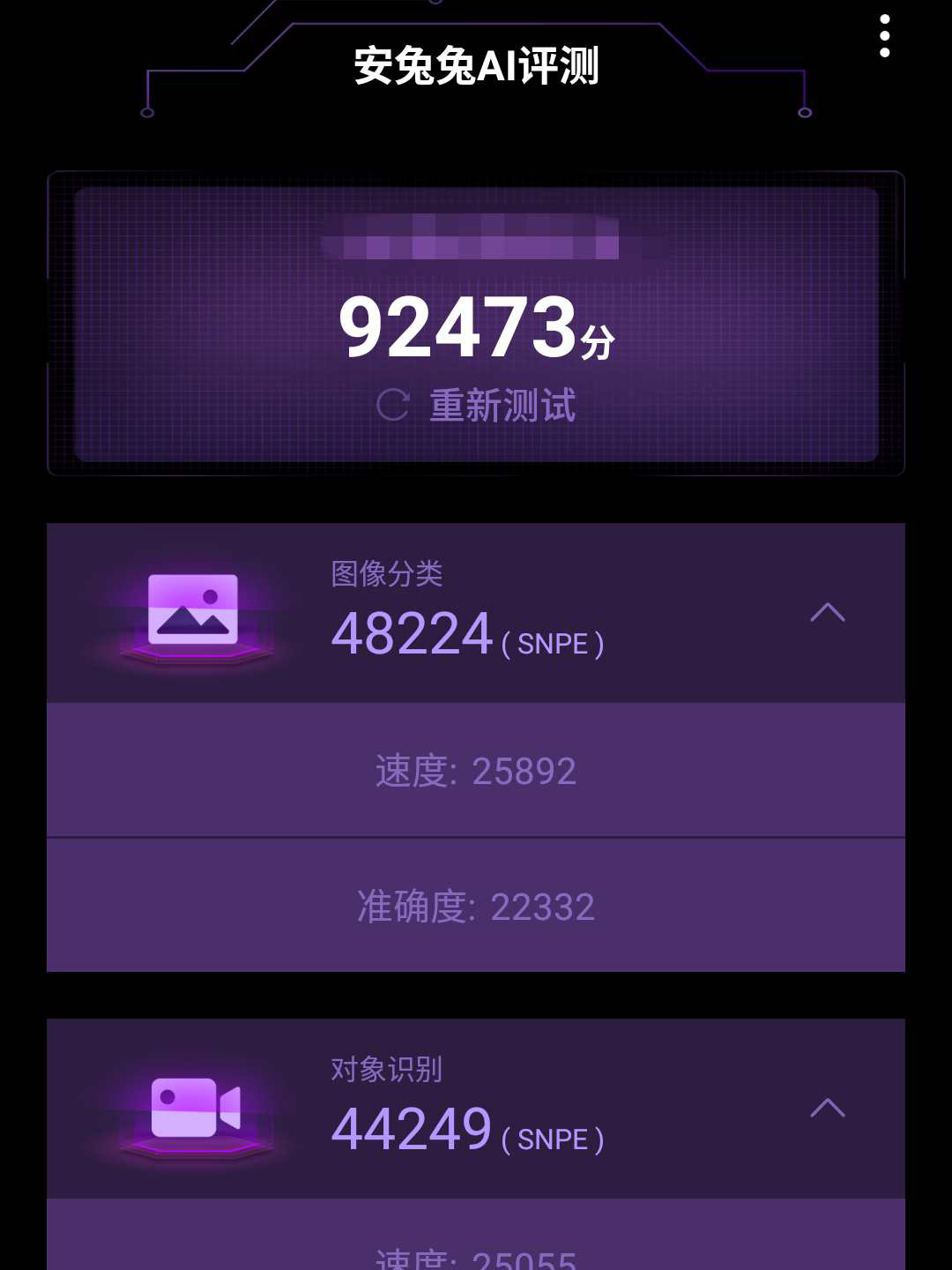
With AI performance being a much-advertised feature of processors and phones these days, we can say the tool has arrived just in time. AnTuTu says the tool is still in beta.
In an official press release, AnTuTu revealed there is still no unified standard for AI as each chipset manufacturer sees it differently. Qualcomm uses its DSP to handle AI tasks while Huawei, Samsung, and MediaTek have a dedicated AI unit called NPU (APU for MediaTek). All the chip manufacturers also have different SDKs too.- NeuroPilot for MediaTek, SNPE for Qualcomm, and TensorRT for NVIDIA. Samsung hasn’t announced its own yet.
Nevertheless, they have been able to develop a unified standard for testing thanks to cooperation from processor manufacturers. The test is said to be divided into two categories – image classification and object recognition.
Image Classification is based on Inception v3 neural network and the test includes 200 pictures. Object Recognition is based on mobilenet SSD neural network and its test is a 600-frame video.
AnTuTu advises that the test should be done using Wi-Fi as the data packet is about 160MB in size even though the app itself is just 33MB. Downloading the data packet on a device you intend to test is a one-time thing even if you plan to run the test multiple times. However, there will be a data packet verification every time.
Devices are ranked based on a combination of speed and accuracy. Hence, a device that is fast but not accurate will rank lower. AnTuTu says there are other conditions that may make a device score lower.
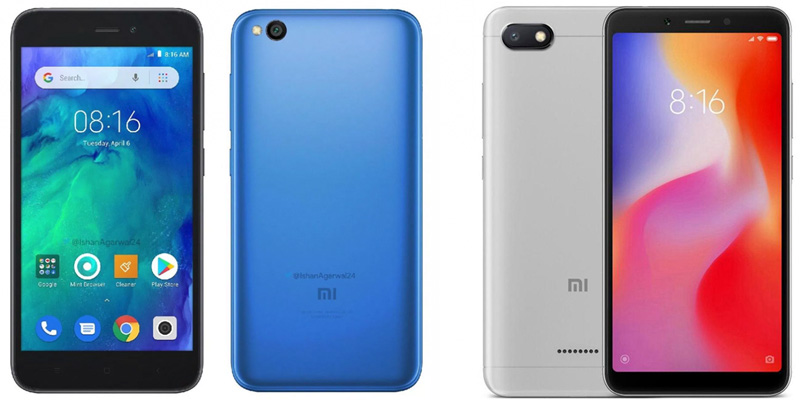
Xiaomi finally joined the Android Go club by announcing the Redmi Go for the global market. It is the most affordable last-generation phone by the Chinese company, but it is not its only device sold for less than €100. There is another super cheap Xiaomi device that people can opt for: the Redmi 6A. After the launch of the Redmi Go, a lot of potential buyers are wondering which one is worth buying, given that they share a similar price. Here, we will try to let you find out with in-depth specs comparison between the two compact and affordable handsets.
Even though it is a more recent device, Xiaomi Redmi Go has a more outdated design than Xiaomi Redmi 6A. The latter comes with a taller display as well as thinner bezels, so a definitely better look on the front side. Regarding the rear sides, all depends on your tastes. Xiaomi Redmi 6A has a body that looks like metal (but it is plastic) while Xiaomi Redmi Go has a cleaner backside but it is evident that it is made of polycarbonate. On the other hand, Xiaomi Redmi Go is more compact and also more lightweight, even though there is not a big difference in weight and dimensions as you can see from the specs sheets above.
Display
When you are about to buy an entry-level phone, you should never expect an excellent display. Xiaomi Redmi Go and Xiaomi Redmi 6A are equipped with different IPS panels, but their viewing quality is almost the same. They have more or less the same level of detail and similar color reproduction (just sufficient). The big difference is the size: Xiaomi Redmi 6A has a bigger and taller display, while Xiaomi Redmi Go has a smaller panel with the classic 16:9 aspect ratio. If you often use your device with one hand, then Xiaomi Redmi Go may be ideal for you, but if you want a better display for multimedia and advanced activities, then go for the Xiaomi Redmi 6A. But again, even under this point of view, differences are marginal.
Specs & Software
Xiaomi Redmi 6A has a much better hardware department than Xiaomi Redmi Go. It comes with one of the most performing quad-core chipsets, up to 3 GB of RAM and up to 32 GB of internal storage. Xiaomi Redmi Go comes with only 1 GB of RAM. However, while Xiaomi Redmi 6A has the classic MIUI, Xiaomi Redmi Go runs Android Go, so it can deliver a similar performance in daily use. Android Go is an enlightened version of the operating system which takes less space and runs smoothly even on devices with 512 MB of RAM. So the fact that Redmi Go has just 1 GB of RAM is not a big issue. By the way, if you want to play games, then you should still go for the Xiaomi Redmi 6A.
Camera
While both Xiaomi Redmi Go and Redmi 6A have the same, sufficient front camera for selfies, what changes in the camera setup is the rear sensor. The Redmi Go has a more disappointing 8 MP sensor which cannot even record videos in 1080p, while Xiaomi Redmi 6A has a more acceptable 13 MP rear camera. Xiaomi Redmi 6A is everything but a camera phone, but its shots are not so bad when light conditions are good. So, it wins the camera comparison, even though Redmi Go has a brighter f/2.0 which is more useful with low light.
You cannot understand which device will last more from the battery capacity as both Xiaomi Redmi Go and Redmi 6A boast a 3000 mAh battery. Basing on the specs on the paper, Redmi Go should last more because it has Android Go installed, a very efficient SoC and a smaller display to manage. But in order to give a definitive verdict, we will have to test Redmi Go’s battery life and now we still cannot do it as the phone is not on sale.
Price
People wonder which device is the best to buy because, as we said at the beginning of this article, their prices are very similar. While Redmi Go costs €80/$91 in the global market, Xiaomi Redmi 6A is available for about €90/$103 in the Chinese market. Despite the presence of Android Go on the Redmi Go, I would personally spend a bit more and go for the Xiaomi Redmi 6A because it has a better camera, more RAM and more internal storage than Redmi Go.
Japan tech giant Sharp has unveiled its OLED panel line designed for handsets, sources indicate. The brand which is owned by Foxconn Group is reportedly aiming to enter the supply chain for future iPhones that would utilise OLED displays. In addition, there are speculations that Fitipower Integrated Technology, another Foxconn company, is engaged in the development of OLED panel driver ICs jointly with Sharp.
OLED seems to be the future of smartphone displays and more LCD panel suppliers are now capable of producing OLED displays for smartphones in commercial volume. As a result, Taiwan-based driver IC firms and related backend houses are gearing up to grow their presence in the OLED panel segment in 2019. According to industry sources, Taiwan-based LCD driver IC firms including Novatek Microelectronics and Himax Technologies, and related backend companies including Chipbond Technology and ChipMOS Technologies are looking to start developing their businesses in the OLED panel sector in 2019. Chinese vendors such as BOE technology and Tainma are also putting efforts to grow their OLED panel supply. A recent data showed that BOE technology surpassed LG in terms of OLED supply for last year and the company is reported to supply Huawei OLED panels. LG Display has also seen improvement in sales of its OLED panels which accounted for over 10% of total panel revenues, according to the sources.
Samsung Display still dominates the market for OLED panel, something it has been doing for quite some time now. AU Optronics (AUO) with its flexible OLED panel technology is also likely to cut into the supply chain of Android phone vendors, the sources continued. The industry is also said to be promoted on mid-range models featuring OLED displays this year and not just on flagships. Meanwhile, foldable smartphones adopting OLED panels are being reportedly regarded as the development focus of major brand vendors for their new generation series this year.
Last year, OnePlus announced it was entering the smart TV business with its first TV scheduled to launch this year or in 2020. It appears they are not the only smartphone manufacturer expanding their portfolio. A new report has revealed that Huawei and its Honor sub-brand will launch smart TVs this year.
Huawei and Honor plan to release smart TVs this year
According to the source, Honor will launch its first smart TV in April while Huawei will launch its first TV in the second half of the year. Huawei’s smart TVs won’t be affordable ones like Xiaomi’s but mid-range and high-end ones. They are also expected to start from 65-inches and up. Honor-branded TVs are expected to be cheaper and available online only.
The report says Huawei already has a team of about 200 – 300 people for its TV division which is under its Internet of Things Department. However, its plan isn’t just to release TVs but to create a demand for 5G communication. Huawei believes the popularity of 4K and 8K TVs will increase demand for 4K and 8K content which is best provided via a reliable and fast internet connection which 5G will provide. And since Huawei is also known for its network business, this is a win-win situation for it.
Google has introduced AR core for Android device couple of years ago. Since then, most of the Android devices come packed with this AR core kit to bestow devices with Augmented reality features. It needs some primary sensors to fully work on any device. Google allows third-party developers to utilize the ARCore platform to bring augmented reality on various Android apps. Despite the complex mechanism it can work even on mid-level devices without any issue. Sadly, it seems to be out of gear on different LG flagship smartphones.
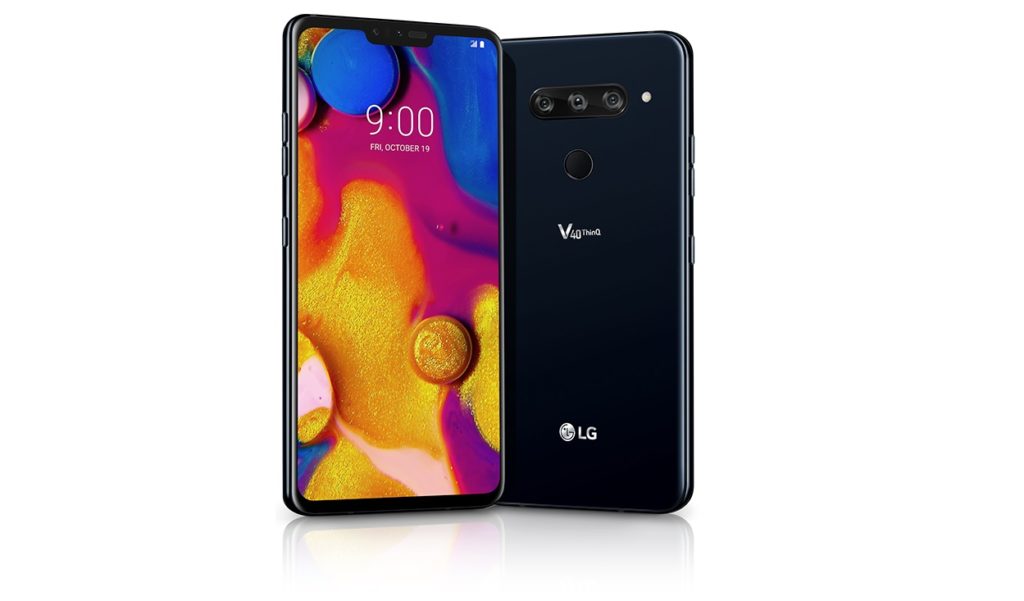
Recently, Google has updated a list of Android devices which currently support AR core. Surprisingly, LG’s four flagship devices have not made it to the list. Google has not found AR core fully functional on LG V30, LG V35, LG V40, and LG G7. Particularly, Autofocus in AR mode is not working on either of the devices mentioned above. Even though despite having different variants like LG G7 Fit, LG G7 One, LG V30+, LG Signature edition, none of them works perfectly with Autofocus on AR. On the other hand, LG’s mid-range devices such as LG Q6 and LG Q8 are unaffected by the issue.
AR Core camera uses Autofocus to set a fixed focus for motion tracking. In order to eliminate poor tracking quality on various device, Google added autofocus. Though due to some technical complications, LG’s flagship devices are unable to use Ar core functionalities.
App developers who are trying to utilize the AR core kit on their apps won’t be able to run it on above mentioned LG smartphones. The Korean giant has not responded about the issue, and even there’s no information about the acknowledgment of the same. We expect LG to rectify the problem as soon as possible by rolling out an update.
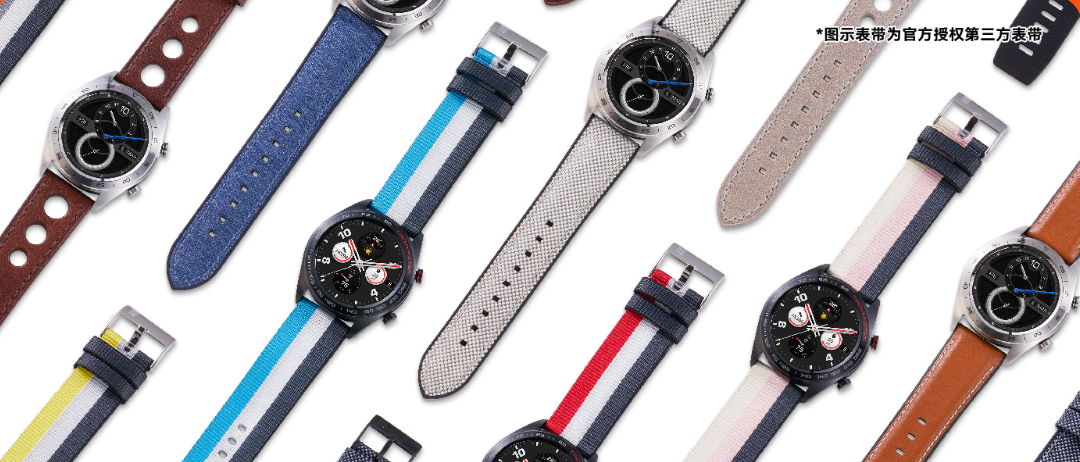
Huawei’s sub-brand Honor launched its new flagship Honor View 20 in the Indian market. Along with that, the company has also launched its two wearable devices — Honor Watch Magic and Honor Band 4 Running Edition.
As for the pricing, the Honor Watch Magic starts at Rs. 13,999 ($197) for the premium sports version while the Leather Band model is priced at Rs. 14,999 ($211). On the other hand, the Honor Band 4 Running Edition is priced at Rs. 1,599 ($22). Both the devices will be available for purchase in India through Amazon India and Honor’s official website.
Coming to the specifications, the Honor Watch Magic comes with a 1.2-inch HD AMOLED display with 390 x 390 pixels screen resolution which offers 326ppi pixel density. Under the hood, the device is powered by ARM M4 chipset, coupled with 16MB RAM and 128GB internal storage.
The display is housed in a 316L stainless steel frame that measures 9.8mm in thickness (11mm with the glass). It supports GPS, GLONASS, and GALILEO for precise positioning and also comes with Bluetooth 4.2, 5ATM Water-resistant up to 50 meters, NFC for Huawei Pay and a 178mAh battery which is claimed to offer up to 7 days worth of battery life.
As for the features, the Honor Watch Magic has Huawei’s TruSeen 3.0 technology for continuous heart rate monitoring. Also, with Huawei’s TruRelax technology and support from the Institute of Psychology of the Chinese Academy of Sciences, the watch provides 24-hour blood pressure monitoring and will suggest breathing exercises with real-time feedback.
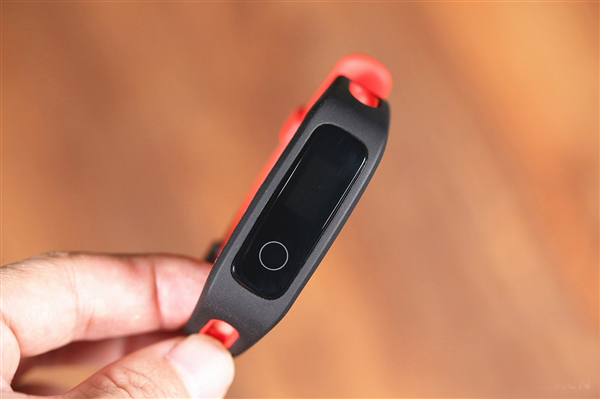
On the other hand, the Honor Band 4 Running Edition comes with similar specifications as that of the conventional Band 4 launched year along with some added features such as running posture monitoring, water-resistance up to 50 meters and two wearing modes.
The fitness tracker comes with a 0.95-inch OLED display and a 2.5D glass on top. Just like the Xiaomi’s Mi Band 3, the Honor Band 4 is also water resistant up to 50 meters and also recognizes Swim strokes. It supports functions such as sleep tracking, exercise tracking, pedometer, continuous heart rate monitoring with Huawei TruSeen 2.0 technology, and sedentary reminder.
In addition to tracking activities, the device also shows notifications on the OLED display and even offers an incoming call-mute function. The device also comes with built-in NFC support, meaning that it can also be used to make payments. Under the hood, the fitness tracker is powered by a 100mAh battery, which the company claims can deliver standby time of up to 14 days.
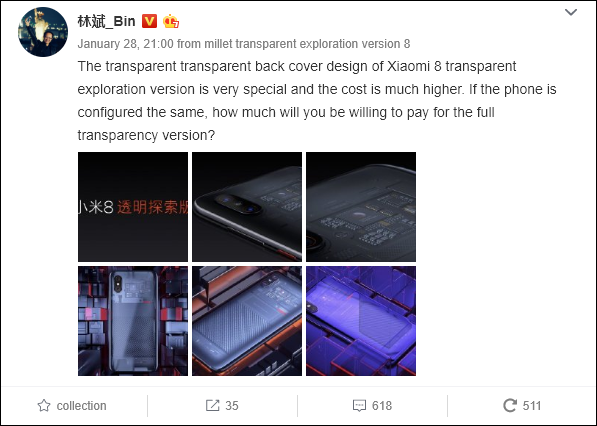
When Xiaomi launched the flagship Mi 8 last year, one of the models that stood out was the limited Explorer edition with a translucent body. The popularity, perhaps, outweighed Xiaomi’s expectation so it was a surprise they decided to launch the Mi 8 Pro with the same translucent body but a more robust availability. Xiaomi’s president Lin Bin, today asked a question on Weibo about the Mi 8 Explorer edition, after extolling the translucent back feature of the model. The question was to the effect that if the phone (apparently referring to Mi 9) is configured the same, how much buyers will be willing to pay.
The question very much suggests the company may be toying with the idea of replicating the Mi 8 Explorer’s translucent back design on the Mi 9 flagship. This isn’t a bad idea but according to Lin Bin, the design is not cheap to produce. Despite the pricing of the Mi 8 Explorer edition, the model was always sold out each time it goes on sale.
If the company finally decides on an Explorer edition for the Mi 9, the difference should lie only in the design. The model will utilise the same specification as the regular Mi 9. The flagship Mi 9 is expected to pack a Snapdragon 855 chipset. the device may likely feature the waterdrop notch design and triple rear cameras.
Bluetooth is present on every smartphone device since the past decade. It is helping users to connect different wireless devices and offers an ability to transfer files over a small distance. Bluetooth has improved a lot over time and is now more efficient concerning power consumption. The latest versions of Bluetooth protocol helps to connect multiple devices simultaneously. Today, Bluetooth Special Group (SIG) has introduced a new feature with the latest version of the Bluetooth protocol.
As per the Bluetooth SIG, the new version will carry some more advancements. It helps devices to get a more accurate location upto centimeters along with direction parameter. A new era of Bluetooth will begin where it can be used in the proximity-based services or devices. It will even help users to track objects or devices accurately within the range. Moreover, it will help the devices to provide exact indoor locations.
Currently, it is used along with the GPS to track the exact location but not used solely for the same purpose. Bluetooth 5.1 will give commercial or personal users an ability track location accurately within malls, bigger cities, building and even on different shelves. It can be used to track another Bluetooth 5.1 device with an accuracy of over a centimeter. Talking about the same Bluetooth SIG executive director Mark Powell said, “Location services is one of the fastest-growing solution areas for Bluetooth technology and is forecasted to reach over 400 million products per year by 2022. This is great traction, and the Bluetooth community continues to seek ways to further grow this market with technology enhancements that better address market needs, demonstrating the community’s commitment to driving innovation and enriching the technology experience of users worldwide.”
It is a game changer for various industries, it will allow them to track objects efficiently and accurately. Bluetooth 5.1 is a boon for enterprises which have big warehouses. Further, there are many other possibilities through which Bluetooth 5.1 can cater to the needs of customers.
From the past few years, Bluetooth has seen numerous improvements such as improved efficiency, faster transfer rates, multiple devices connected and much more. The Bluetooth 5.0 has allowed portable devices such as wireless headphones to communicate over power-conservative Bluetooth Low Energy.
It is great to see such an advancement on the Bluetooth protocol.
Gizmochina along with BESTEK is conducting 1 of 500 units Mystery Gifts as giveaway gift to lucky readers. You just have to follow the giveaway page on bestekmall to win amazing gifts. BESTEK offers many amazing gifts, which are Vacuum Cleaners (150pcs); Blenders (100pcs); Power Inverters(50pcs) and Power Strips(200pcs).
It is open to all users from US, CA, UK, FR, DE, IT and ES. If you want to win these amazing gifts, you just need to fill out the form first, and then follow the steps. The Giveaway runs from Jan. 28th PDT to Feb. 14th 23:59 PDT. If you win the prize, you will receive the email from BESTEK on Feb. 18th 2019.
What’s more, the BESTEK Mall is holding the Flash deals. There are so many products have the 60% off discount, and it is the big chance for you to change something to new.
You can click here to get more information about the Valentines Day Giveaway.
Share this giveaway contest on Facebook, Twitter and Reddit;
Terms & Conditions:
1. The giveaway is an international giveaway. 2. We are not responsible for lost shipments. 3. We are not responsible for any duties, import taxes that you may incur. 4. We reserve all rights to make any changes to this giveaway. 5. The prize will be shipped in a month when the giveaway end.
Just follow the steps mentioned in the Gleam widget to participate in the giveaway.
The rumor mill is gradually revealing features of the Vivo V15 Pro smartphone that it speculated to go official in India in the coming month. Vivo China is also rumored to introduce its new X series smartphone in the home market. Last year, Vivo had launched the Vivo X21v and X21 UD smartphones in China. Later in September, it had released the Vivo X23 phone in the home country. The X23 Symphony Edition was made official in September last year. Hence, it appears that the arrival of the Vivo X25 smartphone may not be far away. The Chinese media is now speculating that the Vivo V15 Pro arriving in India in the coming month may go official as Vivo X25 in China.
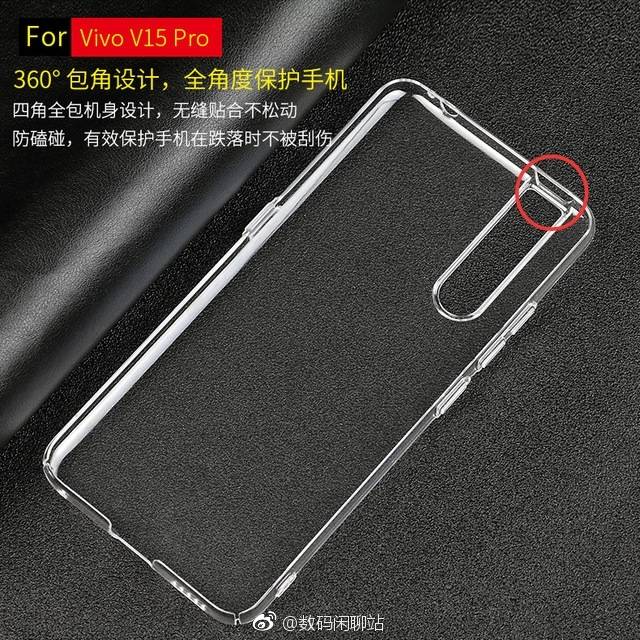
During the weekend, case images of the upcoming Vivo V15 Pro had surfaced on one of the retailer sites in China. The image revealed that the V15 Pro would be equipped with a vertical triple camera setup at its top-left corner. The case images had also revealed that the device features a larger cutout at the right side of its top edge which suggested that the handset could be equipped with a pop-up selfie camera.
Leaked information that had surfaced around two weeks ago revealed that the upcoming OPPO’s R-series phone as well as Vivo’s X-series smartphone will come equipped with pop-up selfie camera. The R19 will be featuring its vertical rear camera setup at the top-center of the back panel and its pop-up selfie shooter will be placed at the center of its top edge. On the other side, the Vivo X25 will have the pop-up camera at the top-right corner of the upper side of the phone and its rear camera will be placed on the top-left corner of the aback panel. The arrangement of the cameras for the Vivo X25 matches with the leaked case images of the Vivo V15 Pro. Hence, it is speculated that the Vivo V15 Pro for India may debut as Vivo X25 in China.
A report by 91mobilesthat was published at the end of the previous week had stated that a Vivo spokesperson had revealed that the company will be launching the Vivo V15 and Vivo V15 Pro as their next mid-range smartphones. The source also confirmed that the V15 and V15 Pro will have 32-megapixel primary sensors and they will also feature an in-display fingerprint scanner. The Vivo V15 could be priced between Rs. 20,000 and Rs. 25,000 whereas the Pro model may be priced Rs. 25,000 and Rs. 30,000. The Vivo V15 series phones are expected to go official by the end of February.
Realme has managed to establish itself in the budget smartphone segment in a very short period of time. So far, the company has launched five smartphones in the Indian market and a couple of accessories and lifestyle products.
The brand was started off as a subsidiary of Oppo, but soon split from its parent company to become an independent brand, and is now being led by former Oppo VP Sky Li. However, the company is still using Oppo’s custom user interface ColorOS for its smartphones.
Now, a new report claims that the company could ditch the ColorOS and instead start offering its own custom operating system RealmeOS based on Android. The company has even filed a trademark application with the United Kingdom Intellectual Property Office for “RealmeOS.’
The trademark description suggests that the ‘RealmeOS’ could be used for OS programs, software to maintain and operate computer systems, and downloadable apps for mobile devices, among others. While the future Realme phone may pack RealmeOS, it’s highly unlikely that it will be available in a couple of weeks.
Recently, we reported that the company is also working on launch its own app store which will work as an alternative to the Google Play Store through which users can download apps and games. Some users demanded a dedicated app store for Realme users on its community platform and the company responded to that by saying that it is considering to launch its own app store.
Realme launched a new variant of Realme C1 entry-level smartphone in India, dubbed Realme C1 2019, which comes with 32GB of internal storage. Meanwhile, the company is also gearing up to launch its next mid-range smartphone — Realme 3, which is expected to launch by the end of March this year.
Last week, Huawei’s sub-brand Honor had held an international launch event for the Honor View 20 smartphone in Paris, France. Today, the Chinese manufacturer has introduced the Honor View 20 smartphone in India with a price tag of Rs. 37,999 (~$534). It is the very same Honor V20 phone that was announced in December 2018.
Honor View 20 Specifications and Features
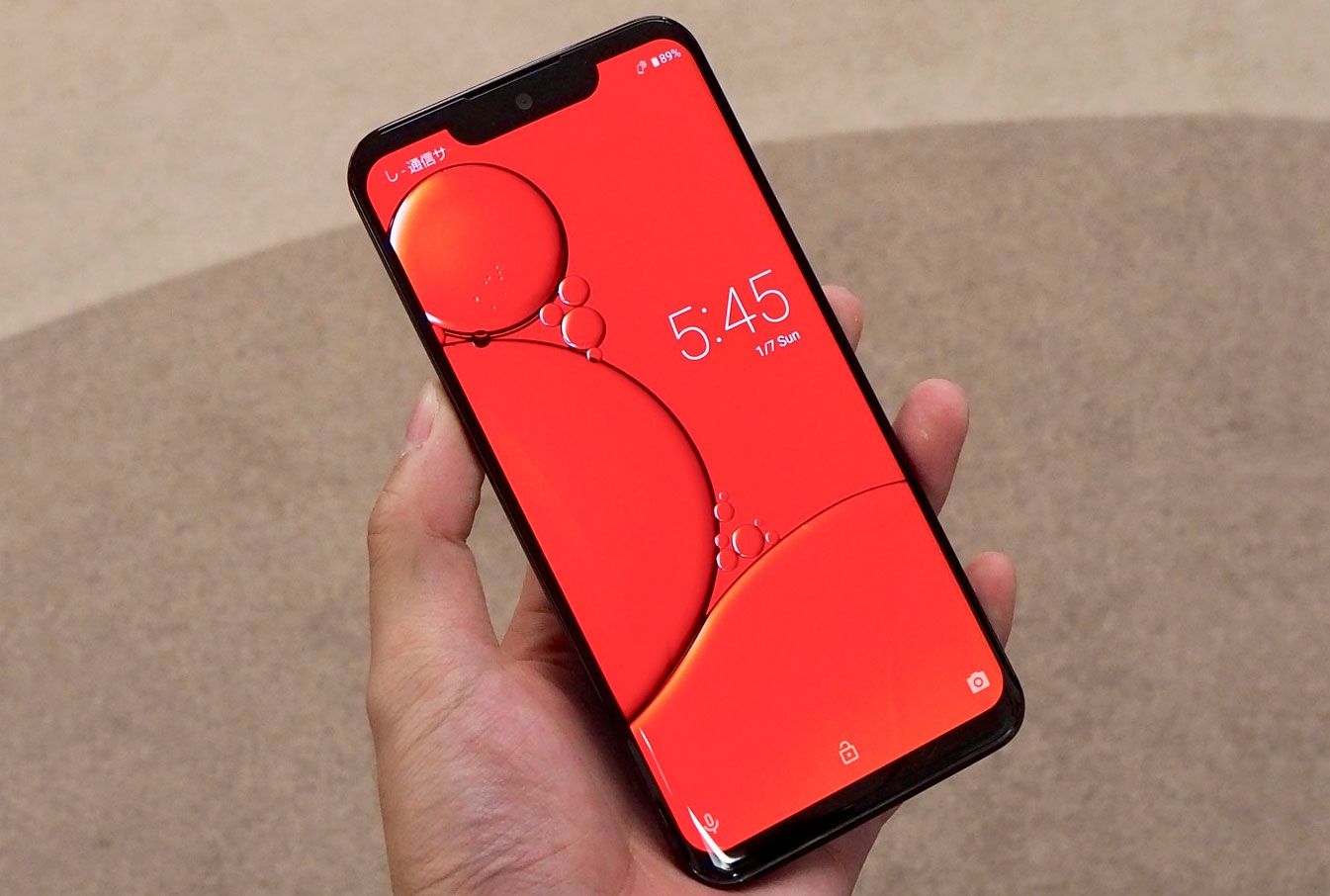
The glass-bodied Honor View 20 smartphone is the world’s first phone to go official with punch-hole display. The smartphone houses a 6.4-inch punch-hole screen that offers 19.5:9 aspect ratio and full HD+ resolution of 2340 x 1080 pixels. It offers an impressive screen-to-body ratio of 91.82 percent.
Huawei’s homebrewed Kirin 980 is present under the hood of the device. The Kirin SoC is supported by up 8 GB of RAM. Compared to conventional flagship phones that feature large-sized heat pipe, the View 20 smartphone comes with a smaller one. The device comes with an inbuilt storage of up to 256 GB but lacks support for microSD card slot. The Android 9.0 Pie OS flavored with company’s Magic 2.0 UI is available preinstalled on the Honor View 20.
The View 20 has a horizontal camera setup on its rear which includes the marvelous Sony IMX586 48-megapixdel sensor with f/1.8 aperture and a 3D ToF (Time of Flight) sensor. Located on the frontside of the phone is a 25-megapixel selfie camera with f/2.0 aperture. The View 20 receives power from a 4,000mAh battery that is equipped with 18W charging. A fingerprint scanner is available on the backside of the View 20 smartphone.
The Honor View 20 editions such as 6 GB RAM + 128 GB storage and 8 GB RAM + 256 GB storage are respectively priced at Rs. 37,999 (~$534) and Rs.45 ,999 (~$646) in India. The View 20 comes in colors like Sapphire Blue and Midnight Black. Honor will begin its official sales in the country from tomorrow at 12 AM. The smartphone will be exclusively available for purchase through Amazon India and Honor India’s official online store.
What’s your opinion on the price tag of Honor View 20 for India? Do you think it’s a good rival for the OnePlus 6T? Share us your views by adding your comments below.
Taiwan Semiconductor Manufacturing Co. production has stopped due to some defective chemical. TSMC is the manufacturer of various chipsets which are usually used on iOS and Android devices. It is a production house for different chipset makers such as Huawei, Apple, Qualcomm, Nvidia, and MediaTek.
Today it marks the second production problem in the last six months halting the chipset development process. TSMC is suffering from weak demand due to the global slowdown in smartphone sales. Notably, the company expressed concerns over the low sales of Apple iPhone and other premium smartphones. It even cited the current US-China trade war as a primary culprit behind the weak sales. This latest glitch will create a troublesome environment for TSMC to process orders timely.
According to our sources, TSMC production problem is linked to some defective chemical shipment which is used in the manufacturing of wafer yield in chipsets. A photoresist chemical which is crucial in the chipset development has disrupted the manufacturing process.
Majorly the production at Fab 14B site in Southern Taiwan has been affected due to the bad chemical. Huawei’s chipset arm HiSilicon are among the customers who will now face some production problems. Nvidia is also going to face some production hurdles after recent TSMC factory glitch. In an official statement, the company said that they are investigating the cause of the problem and responding to customers.
Last year, TSMC encountered a similar situation when a computer virus made them stop production for three days in August. At the time, Apple’s advanced chips production was hindered due to an unforeseen situation. Currently, we are not completely sure whether the recent production issue at TSMC will affect Huawei’s upcoming smartphones or not.
We use cookies on our website to give you the most relevant experience by remembering your preferences and repeat visits. By clicking “Accept”, you consent to the use of ALL the cookies.
This website uses cookies to improve your experience while you navigate through the website. Out of these, the cookies that are categorized as necessary are stored on your browser as they are essential for the working of basic functionalities of the website. We also use third-party cookies that help us analyze and understand how you use this website. These cookies will be stored in your browser only with your consent. You also have the option to opt-out of these cookies. But opting out of some of these cookies may affect your browsing experience.
Necessary cookies are absolutely essential for the website to function properly. This category only includes cookies that ensures basic functionalities and security features of the website. These cookies do not store any personal information.
Any cookies that may not be particularly necessary for the website to function and is used specifically to collect user personal data via analytics, ads, other embedded contents are termed as non-necessary cookies. It is mandatory to procure user consent prior to running these cookies on your website.

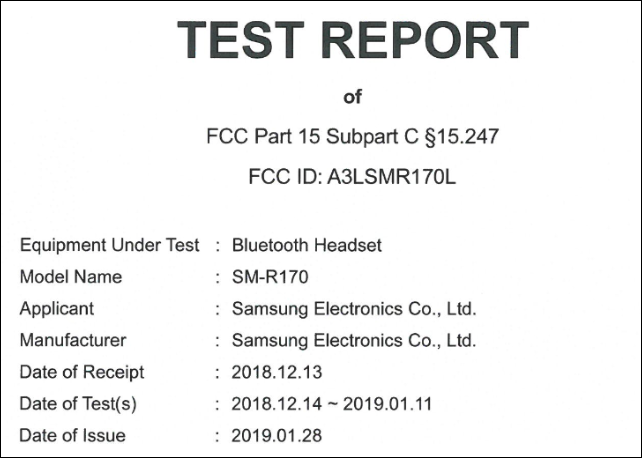 The FCC certification comes with the model number SM-R170 and is listed as “Samsung Bluetooth Headset.” This is the same device that was certified by Bluetooth SIG last week. The certification document shows Samsung will manufacture the earphones in its factory in Vietnam.