About a week ago, the Honor Magic 2 was seen on TENAA’s database. However, the two listings for the phone were missing images. The Chinese agency has now updated the pages with images of the device.
We already know what the phone looks like, thanks to the pictures posted online by leakers and Honor itself. Nevertheless, these TENAA images still provide a little bit of new information.
The images of the Honor Magic 2 on TENAA are of a white variant – which we are seeing for the first time though we advise you not to raise your hopes of getting one as Honor may not release this variant.
[envira-gallery id=”220138″]
The Magic 2 is covered in glass on both sides. The rear is home to three cameras – two of which share the same housing with the LED flash while a third sits separately below. The words “AI CAMERA” are also inscribed below the camera setup.
A picture of the phone slid open shows the inner part of the phone is black too. Images of the sides also show the cameras have a bump. The physical buttons are on the right and the SIM tray, which is painted blue, is on the left. The Magic 2 is a bit thinner than the Mi MIX 3 even though it has a larger battery capacity but is slightly wider than the Xiaomi flagship.
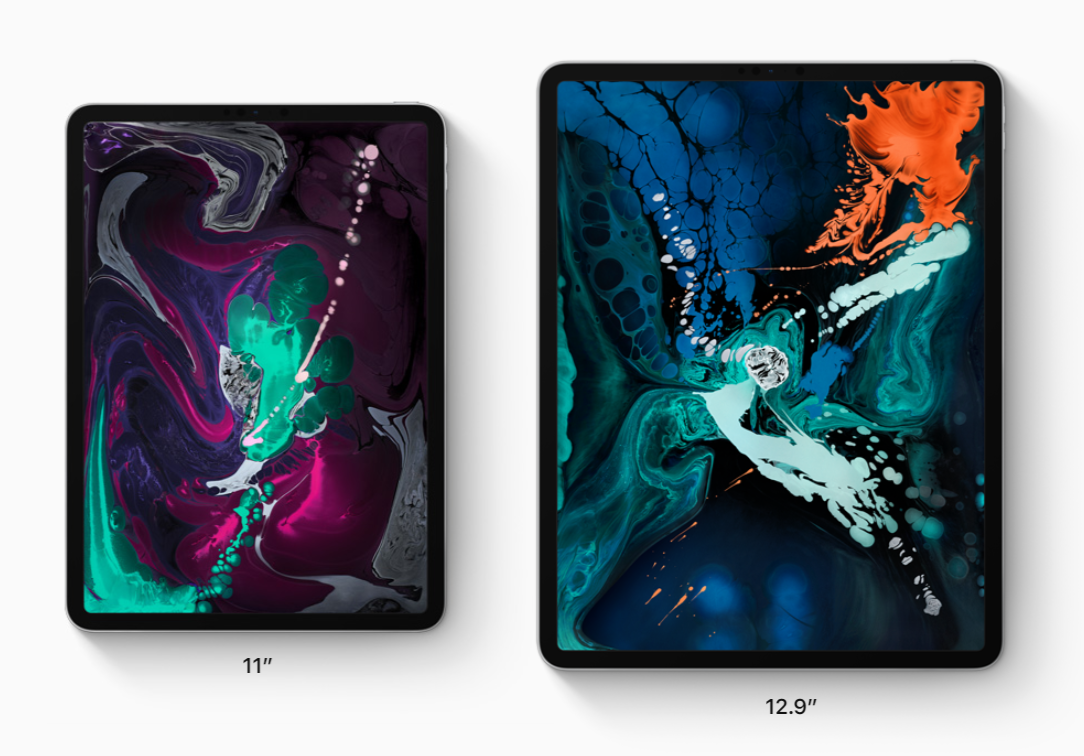
Apple had its second main launch event of the year today where it announced a bunch of new products including the new iPad Pro. The new iPad Pro not only features a brand new design but is also its most powerful iPad ever.
Design
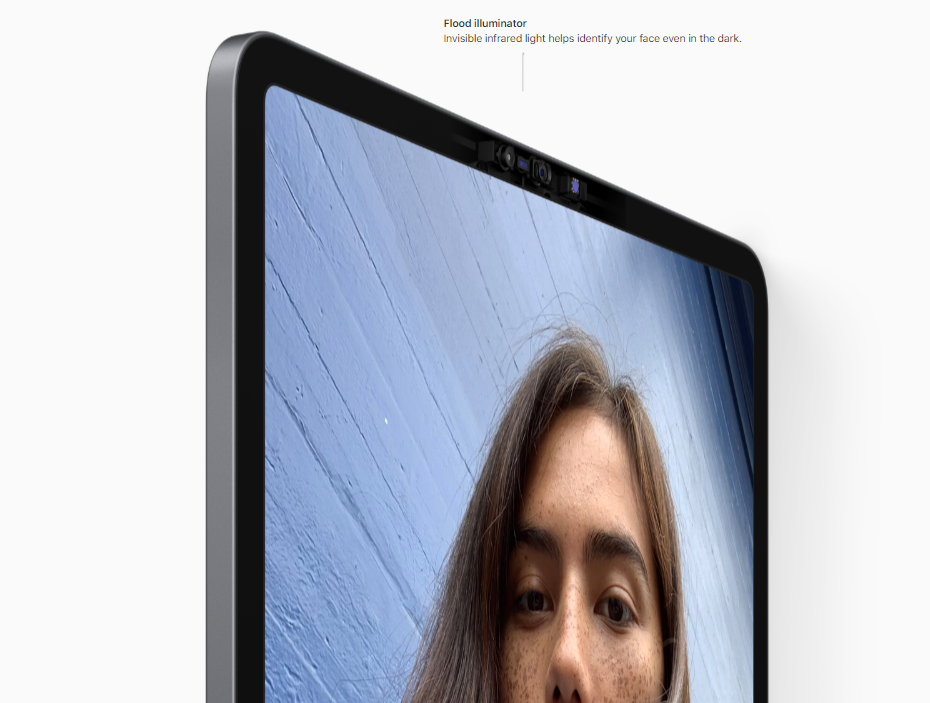
Apple has shrunk the bezels on the iPad and made them the same size all around. This also means Touch ID is gone and in its place is Face ID. The iPad Pro also ditches the square-ish design for a more curved appearance. Another big change is the switch from a lightning connector to a USB-C port. Even with all the new features, the new iPad Pro is also thinner than its predecessor.
Specs
The new iPad Pro comes in two sizes – 11-inches and 12.9-inches. Both feature the new Liquid Retina display with a 2388 x 1668 resolution on the small one and a 2732 x 2048 resolution on the larger one. Both displays have the same 264 ppi and up to 600 nits of brightness.
Inside the iPad Pro is the new Bionic A12X chipset with an embedded M12 co-processor. You will be able to purchase the new tablets in 64GB, 256GB, 512GB or 1TB configurations.
There is a 12MP f/1.8 camera on the rear of the device and a 7MP f/2.2 camera in front that can shoot portrait images. The iPad Pro has 4 speakers and 5 microphones. It also comes in WiFi-only and LTE variants.
The 11.7-inch model has a 29.37 watt-hour battery and the 12.9-inch version has a 36.71 watt-hour battery. Both are said to last up to 10 hours on a single charge.
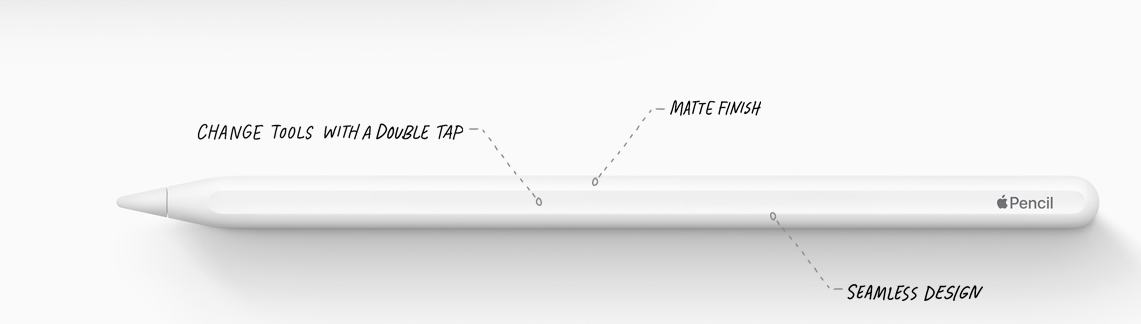
Apple also announced a new Apple Pencil and Folio Keyboard. The new Apple Pencil which attaches to the new iPad Pro seamlessly. Just place it on the top of the device (landscape mode) or on the right side (portrait mode) and it not only pairs instantly but also begins to charge it.
Want to change tools while drawing? Just double tap the side of the pencil. You can also double-tap the display with the pencil and it will wake up the device and open the Notes app right away.
The new Apple Pencil also has a flat part that prevents it from rolling off a surface when you place it on a smooth surface. This is the same part that clips to the device for pairing and charging.
Do note that the new Apple Pencil only works with the new iPad Pro.
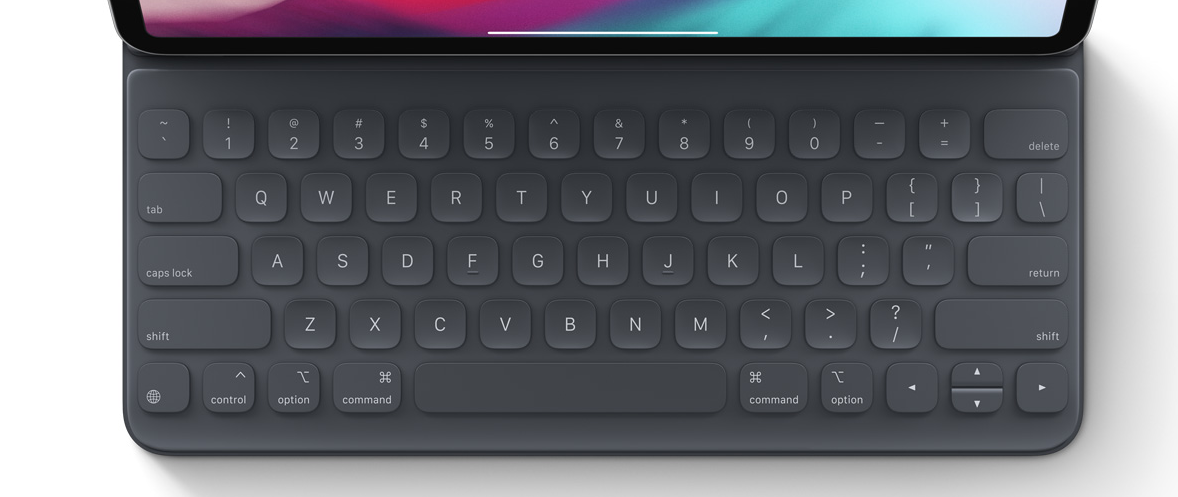
The new Folio Keyboard not only lets you get some serious work done but also protects your device -front and back. It has two viewing angles and connects immediately. It also doesn’t need to be charged. And no it doesn’t have a trackpad.
Price
The iPad Pro comes in Silver and Space Gray for both sizes. Below is the price list for each size and configuration:
iPad Pro 11-inch 64GB – $799 WiFi only and $949 for the LTE version
iPad Pro 11-inch 256GB – $949 WiFi only and $1099 for the LTE version
iPad Pro 11-inch 512GB – $1149 WiFi only and $1299 for the LTE version
iPad Pro 11-inch 1TB – $1549 WiFi only and $1699 for the LTE version
iPad Pro 12.9-inch 64GB – $999 WiFi only and $1149 for the LTE version
iPad Pro 12.9-inch 256GB – $1149 WiFi only and $1299 for the LTE version
iPad Pro 12.9-inch 512GB – $1349 WiFi only and $1499 for the LTE version
iPad Pro 12.9-inch 1TB – $1749 WiFi only and $1899 for the LTE version
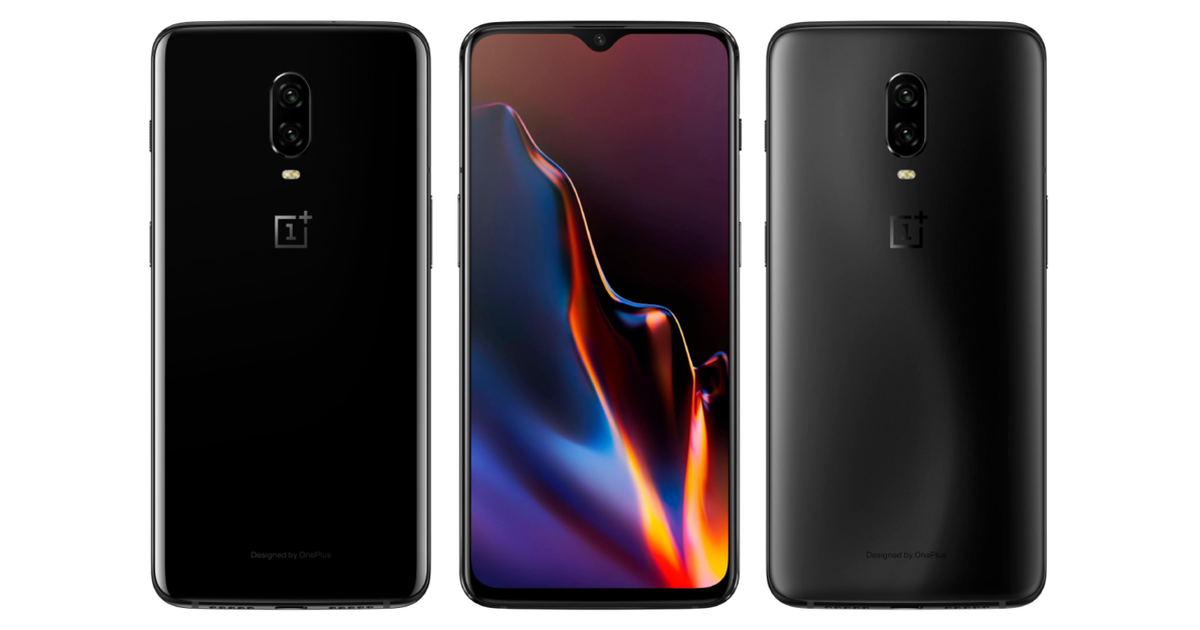
After unveiling its second flagship smartphone of the year — OnePlus 6T — at a launch event in India, OnePlus has now officially launched the phone in India. It will be available for purchase through Amazon India and OnePlus.in, starting from 1st November. It’ll be on open sale from 3rd November through Amazon, OnePlus Stores, OnePlus.in, Chroma, and Reliance Digital.
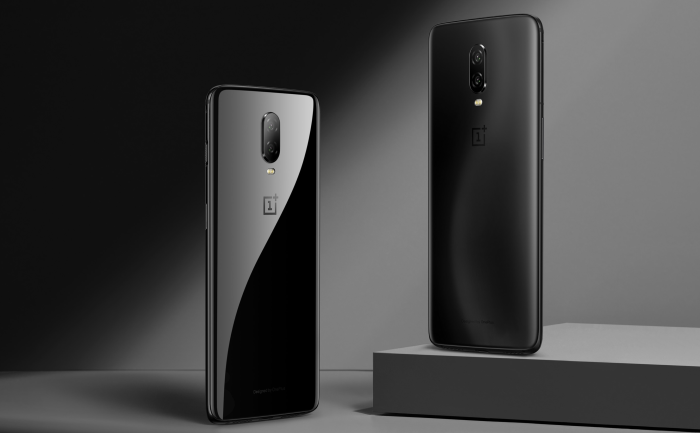
The OnePlus 6T will be available in India in two color options — Mirror Black and Midnight Black. The base model with 6GB RAM and 128GB internal storage is priced at Rs. 37,999 (approximately $517) while the 8GB + 128GB model costs Rs. 41,999 (approximately $569). The top-end model with 8GB RAM and 256GB storage is priced at Rs. 45,999, which roughly converts to $626.
Those who pre-book the phone will get Type-C Bullets earbuds for free and Rs. 500 (~$7) Amazon Pay cashback. Reliance Jio is also offering a total cashback of Rs. 5,400 (~$74) in the form 36 vouchers. The company is also offering Free Damage Protection from Servify in partnership with Kotak Mahindra Bank.
Buyers who purchase the OnePlus 6T through ICICI Bank cards or Citi Credit card can avail a flat discount of Rs. 2,000 on the pricing of OnePlus 6T. Those who orders the smartphone with prepaid method between 1st November and 5th November will get Rs. 1,000 (~$14) Amazon Pay credit.
The phone comes with a 6.41-inch Optic AMOLED display with 2340 x 1080 pixels screen resolution and 19.5:9 aspect ratio. The display carries support for features such as Adaptive brightness, screen calibration and reading mode. The screen is also protected by a layer of Gorilla Glass 6.
Instead of the regular rectangular notch, the phone has a much smaller “teardrop” notch, similar to the Oppo R17 which seems to be an inspiration for the OnePlus 6T’s design. The notch housers the front-facing camera and other sensors.
This is the first time OnePlus has opted to include an optical in-display fingerprint sensor instead of the regular one. The company calls it “Screen Unlock” and OnePlus claims that it’s the fastest-performing implementation of in-display fingerprint authentication yet. The other biometric security feature available on the OP6T is face unlock.
Under the hood, the device is powered by Qualcomm‘s flagship Snapdragon 845 octa-core processor. The phone comes with either 6GB of 8GB of RAM and there are three options for internal storage — 64GB, 128GB, and 256GB. The phone lacks microSD card slot so you won’t be able to expand the storage capacity.
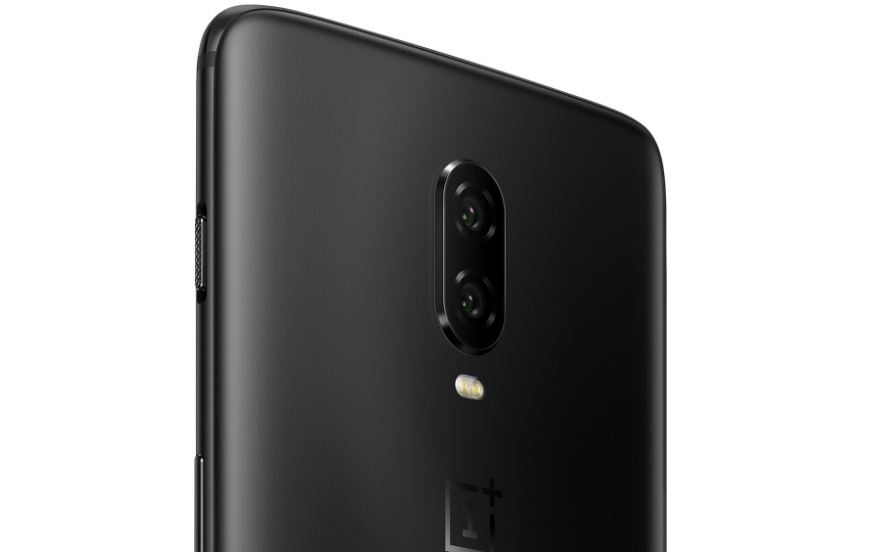
As for the photography, it comes with a dual camera setup on the back, consisting of a 16-megapixel Sony IMX519 primary camera sensor with f/1.7 aperture. It offers features like OIS, EIS and PDAF. It supports HDR, timelapse, 4K video shooting, slow motion video recording (1080p) at 240 fps.
The company is also promising better low-light photography experience through new Nightscape feature that relies on AI for capturing impressive shots in dim light surroundings. During the announcement, the company also revealed that the OnePlus 6 will get Nightscape through software update starting tomorrow.
There’s a 20-megapixel secondary sensor with f/1.7 aperture. On the front side, it comes with a 16-megapixel Sony IMX371 camera that supports EIS and 30 fps FHD video shooting. It has a new Studio Lighting feature, developed in collaboration with photographer Kevin Abosch, which aims to produce more flattering portraits.
The OnePlus 6T runs on OxygenOS 9.0 which based on Android 9 Pie operating system. The company has promised Android update for atleast two years and security updates for three years. Connectivity options on the device include features like dual-SIM support, 4G VoLTE, 2×2 MIMO, Wi-Fi 802.11 b/g/n/ac, Bluetooth 5.0, NFC, GPS and USB-C.
The phone is powered by 3,700mAh battery and comes equipped with support for Dash Charge fast charging technology. Unfortunately, the OnePlus 6T lacks support for wireless charging.
If you are an expert and you want to get the best Chinese smartphone in the global market, then you would probably choose OnePlus 6T, Xiaomi Mi Mix 3 or Huawei Mate 20 Pro. There are not many handsets in the whole market which can compete with these ones, and we are not talking about performance only. This comparison will hopefully help you to decide which one fits your needs perfectly.
OnePlus 6T vs Xiaomi Mi Mix 3 vs Huawei Mate 20 Pro
OnePlus 6T
Xiaomi Mi Mix 3
Huawei Mate 20 Pro
DIMENSIONS AND WEIGHT
157.5 x 74.8 x 8.2 mm, 185 g
157.9 x 74.7 x 8.5 mm, 218 g
157.8 x 72.3 x 8.6 mm, 189 g
DISPLAY
6.41 inches, 1080 x 2340p (Full HD+), Optic AMOLED
6.39 inches, 1080 x 2340p (Full HD+), Super AMOLED
Dual 16 + 20 MP, f/1.7 and f/1.7, OIS
16 MP f/2.0 front camera
Dual 12 + 12 MP, f/1.8 OIS
Dual 24 + 2 MP front camera
Triple 40 + 20 + 8 MP, f/1.8 + f/2.2 + f/2.4, OIS, Laser AF
24 MP f/2.0 front camera
BATTERY
3700 mAh, fast charging with Dash Charge
3200 mAh, fast charging with Quick Charge 4.0+, wireless charging
4200 mAh, fast charging 40W, wireless charging 15W
ADDITIONAL FEATURES
Dual SIM slot
Dual SIM slot, pop up cameras
Dual SIM slot, waterproof (IP68)
Design
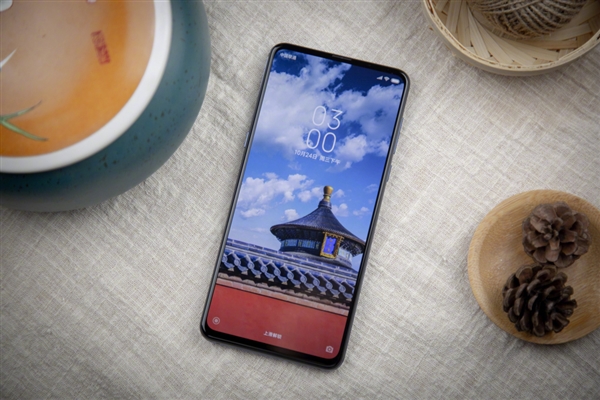
Xiaomi Mi Mix 3 brought a lot of innovation to the market with its design and it is also the most beautiful phone in this trio. It is the only one to come with a slider mechanism housing the front camera and sensors in order to eliminate the notch and minimize all the bezels around the display. Indeed, Xiaomi claimed that this device boasts a screen-to-body ratio equal to 93.4 percent. It also has a ceramic back and a frame made of 7000 series aluminum. So Xiaomi Mi Mix 3 wins, but note that Huawei Mate 20 Pro is the only to offer the IP68 certification which makes it waterproof.
Display
Huawei Mate 20 Pro has the most stunning display, even though its notch is big as it houses the sensor for hardware-based 3D facial recognition. This screen has a huge QHD+ resolution of 3120 x 1440 pixels, it supports DCI-P3 coverage and it even has the HDR10 technology. So it has the best color reproduction and the highest detail.
Hardware/Software
At a first glance, Xiaomi Mi Mix 3 is the one which convinces us the most in terms of hardware, because besides sporting a Snapdragon 845 chipset, it comes with up to 10 GB of RAM. But yesterday AnTuTu showed us stunning scores obtained by OnePlus 6T which the platform considers the second best Android phone after Asus ROG Phone. On the other hand, Huawei Mate 20 Pro is intriguing as well with its Kirin 980, the first 7 nm chipset in the Android market. So, we will have to test all of them to give a final opinion and for now it is a draw.
Camera
The Mate 20 Pro features the same rear camera setup as the P20 Pro and Huawei did not release the DxOMark score of this device because it is too high. This should give you an idea about its capabilities. At least on the paper, Huawei Mate 20 Pro seems way better than its opponents with its triple camera composed of a primary 40 MP sensor, a secondary ultrawide 20 MP sensor and an 8 MP telephoto lens.
Battery
Besides having the best camera, Huawei Mate 20 Pro has also the biggest battery with a capacity of 4200 mAh. So it will probably last way more than OP6T and Mi Mix 3. Further, it features wireless charging and reverse wireless charging (it doubles as a wireless charger) which is not present on its opponents.
Price
Huawei Mate 20 Pro is the most convincing device due to its better camera, display, and bigger battery, but it also costs more than OnePlus 6T and Xiaomi Mi Mix 3. Currently, you have to spend more than €1000/$1150 to get it, while OnePlus 6T and Xiaomi Mi Mix 3 start from €559/$550 and about €500/$568, respectively.
HMD Global’s Chief Product Officer, Juho Sarvikas, has announced that the Android Pie update for the Nokia 6.1 has begun rolling out. The announcement was made on Twitter a short while ago.
The manufacturer had promised at the launch of the Nokia 7.1 that it would update the Nokia 6.1 and Nokia 6.1 Plus to Android Pie this month. However, while the Nokia 6.1 Plus got Android Pie beta, the Nokia 6.1 remained on Android Oreo. It was later revealed that there would be no beta program for the phone and just a direct update. Today, it has fulfilled its promise and pushed out the update.
Android 9 Pie: now available on Nokia 6.1! AI-power your Nokia 6.1 as it gets smarter, faster and adapts as you use it. We are serving 🥧 with a side of cool refreshed imaging expereince including Google Lens integration pic.twitter.com/et5fkKhbst
If you own the Nokia 6.1, you should check for the update now. It is 1462.6MB in size and below is the complete changelog:
New system navigation, settings menu, and notifications
Adaptive Battery power prioritization for users’ most commonly used apps/services
Adaptive and optimized brightness levels
Predictive Applications Actions
New camera v9.0 with new UI, Google Lens and Google motion integration
For Nokia 6.1 Plus users, Mr. Sarvikas says the Android Pie update is coming and you should get it before the end of the month even though we there is just about 24 hours left.
Month is not over yet, still a good 24h left to keep our promise and deliver it in October. A lot can happen in that time like this guy knows 😆 pic.twitter.com/AKzpsZfZm1
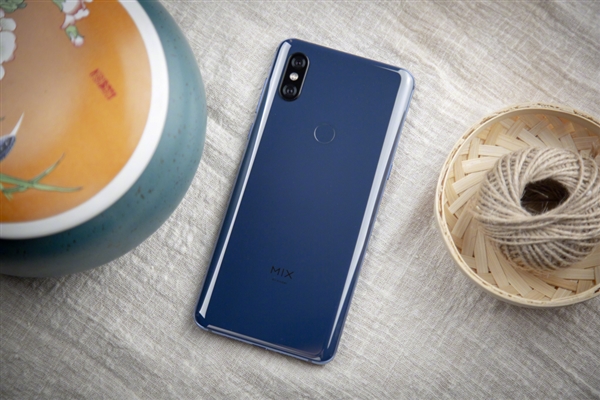
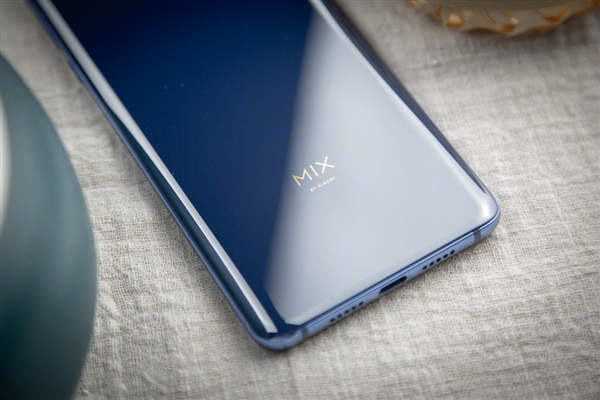
Xiaomi prides itself as one of the pioneers of the trendy full-screen design with the Mi Mix. Since then, fans have been yearning for a truly bezel-less full-screen design and that aspiration has been attended to with the Mi Mix 3. In order to achieve a massive screen to body ratio, the company had to utilise a mechanical slider design. The Mix 3 is the first Xiaomi phone to feature a magnetic power slider screen design which further improved the screen ratio and provide more gameplay area. Xiaomi has now explained the slider design in an article published today.
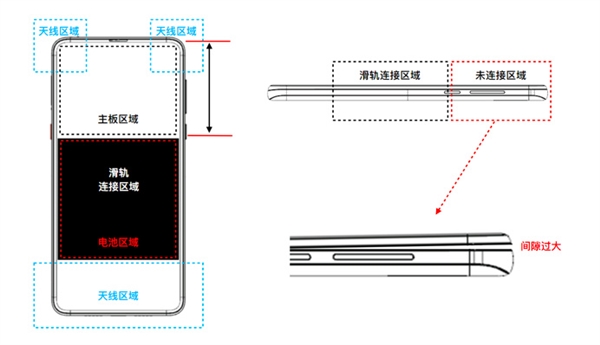
According to to the Chinese tech giant, the Mi Mix 3 slider is different from the tradition slider design that held sway before the advent of full-screen smartphones. The slider design at play has been reduced to an extremely small size which is more than 50% smaller than the traditional sliding cover. Xiaomi says the single-slide design that was in use before now can no longer meet the needs of today’s full-screen mobile phones. Challenges such as large gaps, short shelf life and poor sliding feel need to be redesigned, especially due to process limitations and manufacturers’ details.
Traditional single slide design
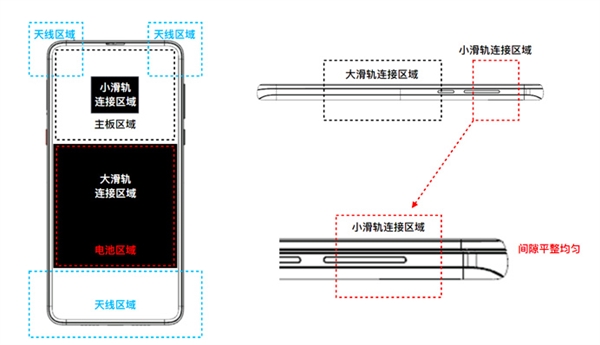
Xiaomi Mi Mix 3 slider design has a limited gap which was achieved through continuous improvement of the production process with the supply chain partners. Thus, the flatness of the lower case and the upper case of the mobile phone are strictly controlled. In addition, the MIX 3 adopts an innovative large + small double slide structure, adding a set of small slides arranged in the middle of the upper motherboard area of the mobile phone. Apart from the fact that the design does not interfere with the performance of the antenna, it can be fixed by the connection of the small slide rails, such that the unconnected areas of the upper part of the mobile phone are tightly locked together. This design eliminates the hidden danger of the warping edge and strictly controls the slipping. The micro-slits in the gap of the cover are visually more beautiful and uniform.
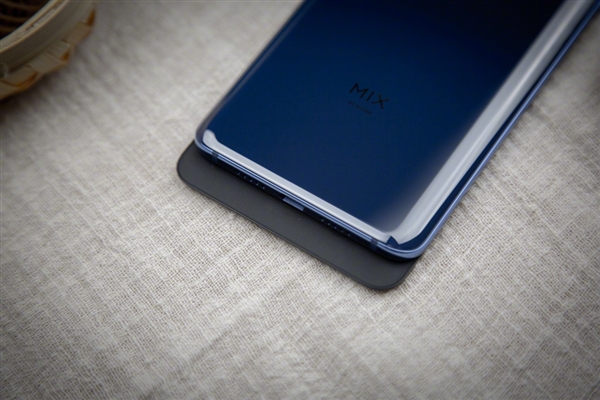
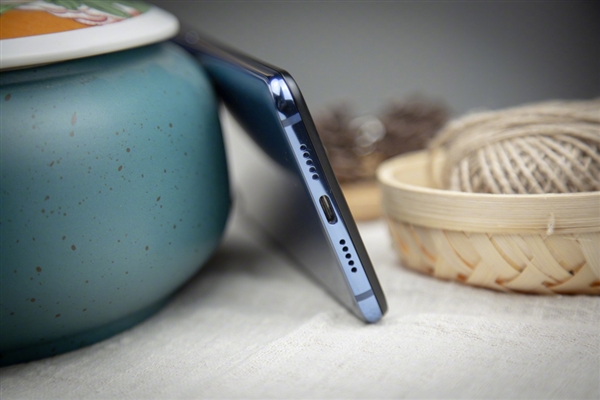
In addition, the large and small double slide structure can also improve the sliding experience, keeping the slider structure from swaying while in use. This makes the sliding process more secure and in turn, result in a better user experience. The slider can be customized to launch different functions such as accessing the dual selfie camera, answer phone calls, launch WeChat and or any other app. Check out some cool pictures of the Mi Mix 3 from below.
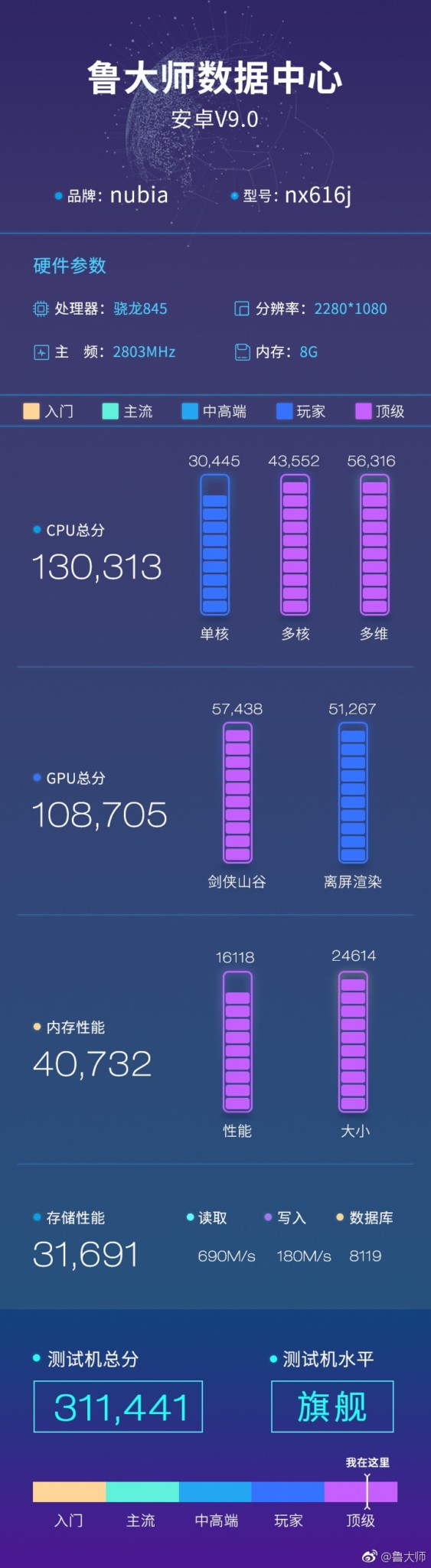
Nubia will take the wraps off its dual-screen flagship -the Nubia X – at an event tomorrow. The phone has been benchmarked again on the latest version of the Master Lu app.
The benchmark app lists the device as the Nubia nx616j. It is powered by the Snapdragon 845 processor clocked at 2.8GHz and has 8GB of RAM. It also reveals the display has a resolution of 2280 x 1080. Apparently, this is the main display which has no bezels.
The result states the phone has a CPU score of 130,313 points, a GPU score of 108,705, points, a memory performance score of 40,732 points, and a storage performance score of 31,691 points. The overall score for the Nubia X is given as 311,441 points which put it in the flagship category according to the app just in case you need more proof to know it is a flagship phone.
The Nubia X is said to be the company’s best phone to date. The dual screen design is Nubia’s take on the truly bezel-less trend. Rather than add a notch or settle for a slider design to hide the camera and sensors, Nubia has settled for two displays.
Hisenseannounced a few days ago that it has an event scheduled for November 1. The poster for the event shows the event will be for the unveiling of a new phone with a water-drop notch. However, there is a high chance that isn’t the only phone it will announce on that day. Two new phones have surfaced on TENAA and they may as well be part of the lineup on Thursday.
The phones are listed as the Hisense HLTE311T and the Hisense HLTE213T and they both pack large displays and large batteries.
Hisense HLTE311T
The Hisense HLTE311T has a 6.18-inch display with a 1080 x 2246 resolution. It is powered by an octa-core processor clocked at 1.8GHz and will be available in two variants. One will have 4GB of RAM and 64GB of storage and the other will have 6GB of RAM and 128GB of storage. TENAA states that there is support for storage expansion via a MicroSD card slot (128GB max).
The phone has a single 8MP front-facing camera and a 13MP + 2MP dual camera setup on the rear. The images provided show the rear cameras are arranged vertically and sit on the left side of the phone. They also reveal the phone is missing a fingerprint scanner.
[envira-gallery id=”220055″]
The Hisense HLTE311T packs a 3,900mAh battery. It weighs 170 grams, measures 154.75 x 74.9 x 8 millimeters and will be available in Champagne Gold. However, the images show only the frame is gold while the rest of the body is black. There is also a button on the left, below the SIM tray, whose function is unknown.
Hisense HLTE213T
The Hisense HLTE213T shares a similar design to the HLTE213T but is missing some features. It has a slightly larger 6.217-inch screen but the resolution is lower at 720 x 1520. It is also powered by a 1.8GHz octa-core processor but it might be a different chipset.
There is 4GB of RAM and 64GB or 128GB of storage. A single 13MP camera sits on the rear and an 8MP camera sits in the center above the display for selfies.
[envira-gallery id=”220056″]
It runs Android 8.1 just like its sibling but packs a much larger 4,400mAh battery. It also comes in black with a Champagne Gold frame and has the same unknown button on the left of the phone. It weighs 169.8 grams and measures 156.62 x 75.38 x 8.29 millimeters.
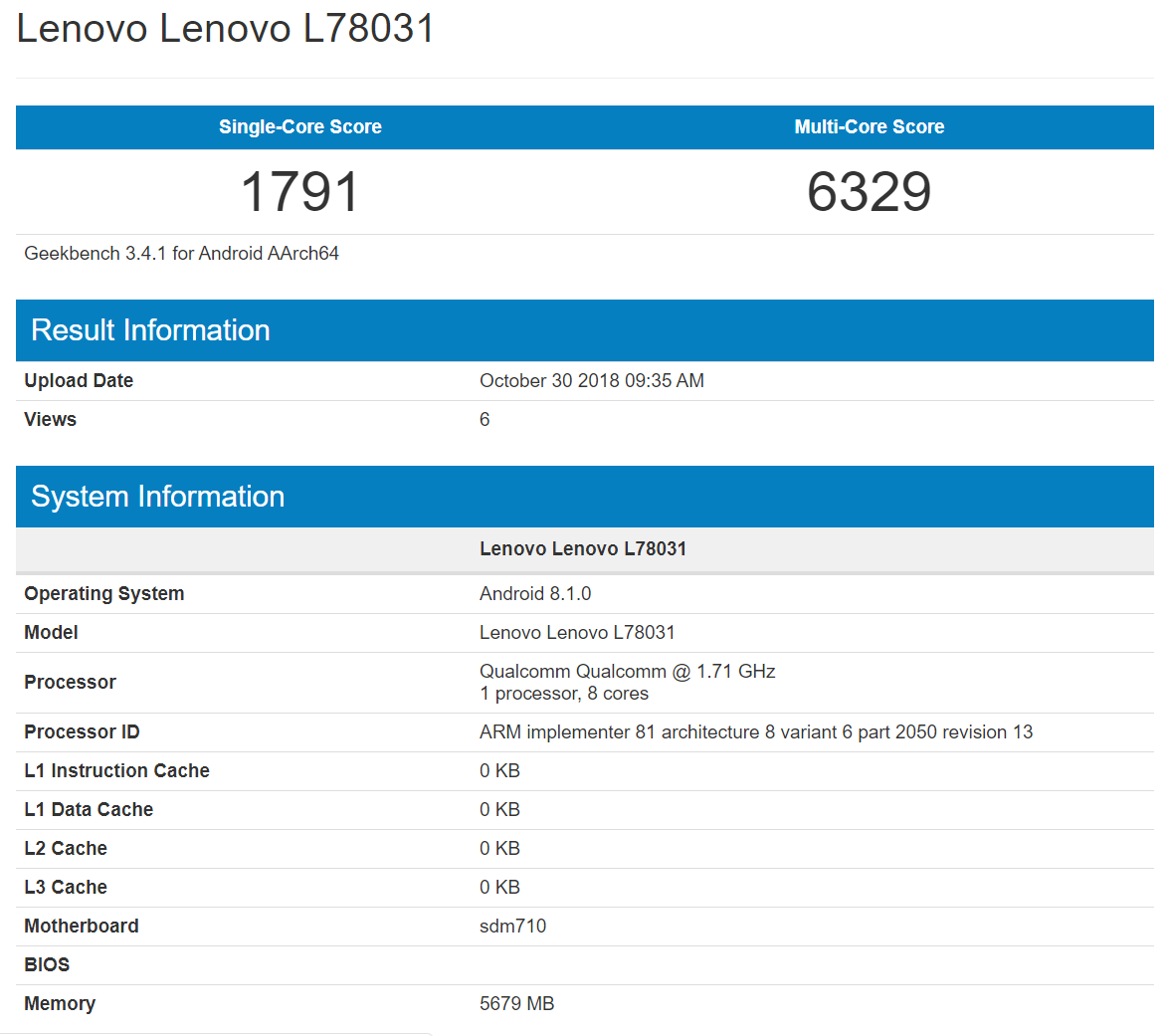
A mysterious Lenovo L78031 smartphone has bagged 3C certification in China. Soon after getting spotted on 3C’s website, the L78031 handset has also surfaced on Geekbench benchmarking platform to reveal some of its key features. It is speculated that it could be the Lenovo Z5 Pro slider phone that is set to go official on Nov. 1 in China.
A Lenovo smartphone with a model number of L78031 has been certified by 3C authority in China. The 3C certification of the phone has only revealed that it carries support for up to 18W fast charging. The exact identity of the smartphone is not known yet. Since it has been spotted with high-end specs on Geekbench, it is being speculated that it could be the Lenovo Z5 Pro smartphone that is scheduled to go official on Nov. 1.
The Lenovo L78031 Geekbench listing that it is fueled by Snapdragon 710 and 6 GB of RAM. The smartphone is preinstalled with Android 8.1 Oreo OS. In single-core and multi-core benchmarking tests on Geekbench, the Lenovo L78031 has respectively scored 1791 and 6329 points.
Lenovo is working on re-establishing itself as a smartphone brand in China. It has launched couple of smartphones in this year in the home country. Among them, the Lenovo S5 Pro and Lenovo Z5 that are fueled by the Snapdragon 636 are the most powerful phones from this year.
The Lenovo Z5 Pro is expected to arrive as an advanced version of the Lenovo Z5 smartphone that was unveiled in June this year. Recent reports have revealed that the Lenovo Z5 Pro will be arriving with a manual slider design and it will be also equipped with an in-screen fingerprint reader which suggests that it could be equipped with a high screen ratio AMOLED display. It will be equipped with 24-megapixel + 16-megapixel dual camera setup.
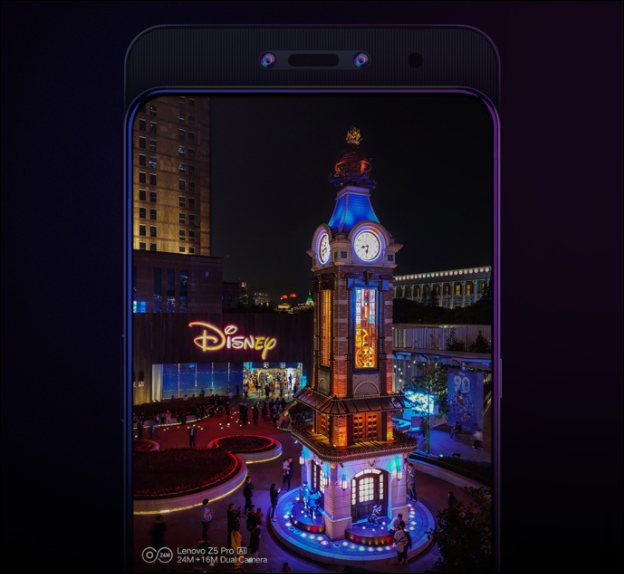
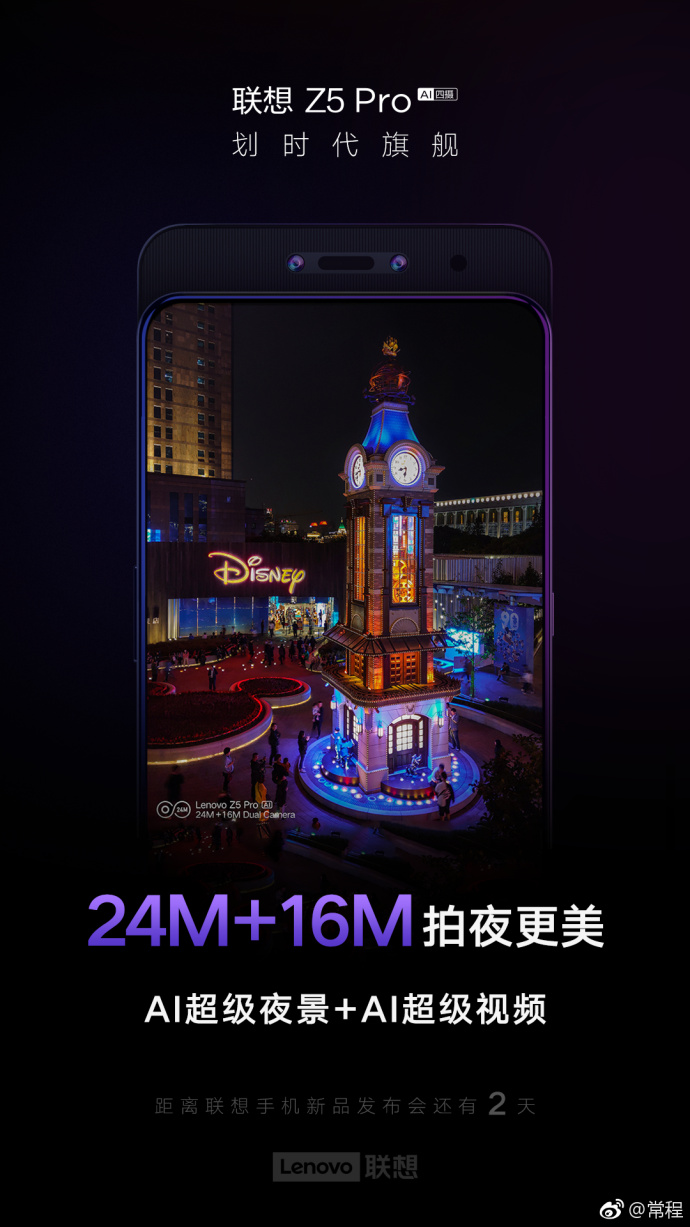
It is just two days before Lenovo goes official with the Z5 Pro that is expected to come with a huge screen to body ratio and a slider design similar to the Mi Mix 3 as well as the upcoming Honor Magic 2. The Chinese giant has been relatively generous with details of the device and most of the known details were from the company’s VP Chang Cheng. Once again, Mr Cheng has released a teaser poster which shows that the device will have a dual camera set up at the rear. The camera setup is a 24MP main sensor supported by a 16MP sensor assisted by artificial intelligence (AI).
The poster carries the caption in Chinese which translates as “An Epochal Flagship”. That is perhaps a reflection of the unique design and standout camera set up that would be at play on the Z5 Pro when compared to other Lenovo flagships. and it will have one of the most advanced cameras in a Lenovo smartphone. According to the details as shared by Mr Cheng on the Weibo post accompanying the teaser, the camera will have AI Super Night Mode scene and AI Video. We can’t say if the sample on the camera screen in the teaser is shot by the camera but it reveals clear details in low-light environment. The image isn’t likely a real sample, not minding the watermarks which suggest it was shot using the Z5 Pro.
Lenovo was thought to be planning to release the Z5 Pro with four cameras at the rear but it turns out the device will have two cameras at the rear and two selfie shooters, making up the quad camera. Call it another cunning, attention-grabbing marketing strategy from Lenovo if you like. Considering Lenovo’s recent antecedence, we’ll advise you don’t get your hopes too high but wait until November 1 to see what the company really has in store for us.
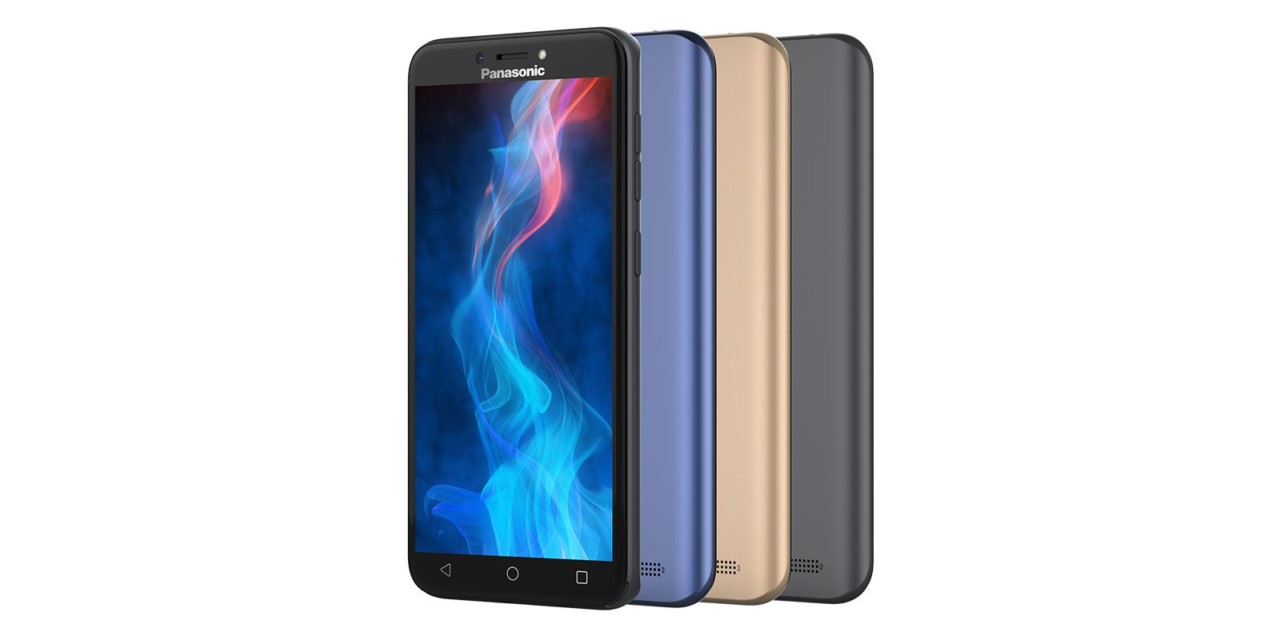
Panasonic P85 NXT is the latest entry-level smartphone from the company for India. It comes with a massive battery and it also equipped with face unlock feature. The handset has arrived with an attractive price tag of Rs. 6,999 (~$95).
Panasonic P85 NXT Specifications, Features and Pricing
The Panasonic P85 NXT features a polycarbonate body with 141.7 x 70.8 x 9.3mm dimensions. The handset weighs 173.8 grams and it can be availed in three colors such as Champagne God, Dark Blue and Black.
The P85 NXT phone features a 5-inch LCD display that supports HD resolution of 720 x 1280 pixels. The screen of the smartphone is shielded by a layer of Gorilla Glass.
The modest Snapdragon 210 mobile platform that includes 1.3 GHz quad-core processor is the driving force of the smartphone. The SoC is coupled with 2 GB of RAM. It is equipped with an internal storage of 16 GB. There is an expandable storage on the device that supports up to 128 GB of microSD card.
There is no fingerprint scanner on the device. The only biometric recognition feature available on the Panasonic P85 NXT smartphone is face unlock through the front camera of 5-megapixel. The back panel of the phone is equipped with an autofocus enabled 8-megapixel camera with LED flash.
The Android Nougat OS is available on the Panasonic P85 NXT smartphone. The AI based Arbo Hub provides a platform to access to various apps and services.
The smartphone receives power from a 4,000mAh battery. The massive battery of the phone can be used as a power bank to charge other devices. The large battery of the phone does not carry support for fast charging. As far as connectivity is concerned, the P85 NXT offers features like 4G VoLTE, dual-SIM support, Wi-Fi, Bluetooth 4.1, GPS, microUSB 2.0, USB OTG and 3.5mm headphone jack.
The Rs. 6,999 (~$95) priced Panasonic P85 NXT will be available for purchase through offline channels in the country. The company is teamed up with UDAAN, a network based B2B solution for selling the P85 NXT smartphone.
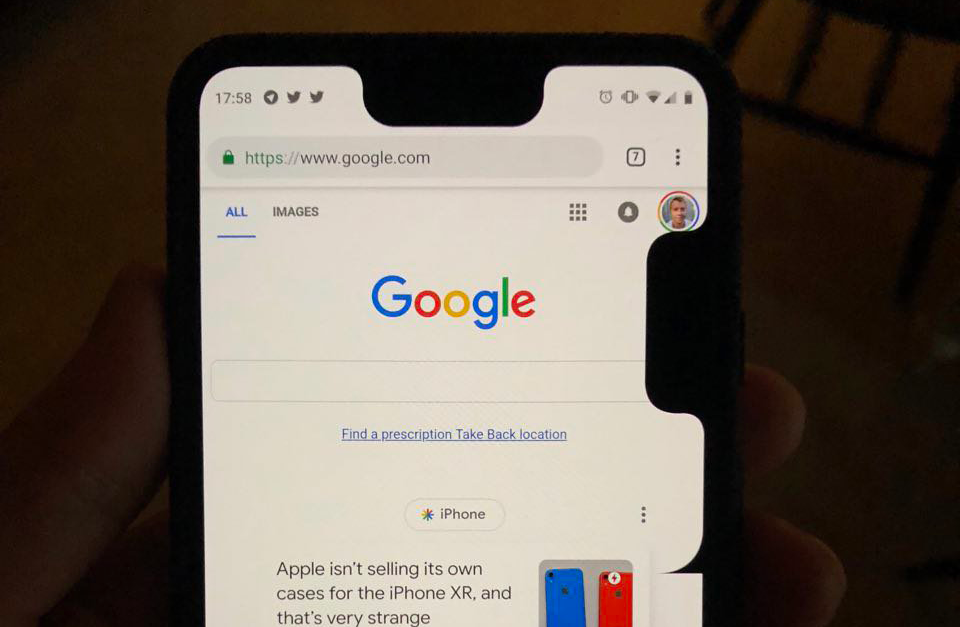
The notch on the Google Pixel 3 XL smartphone is one of the most derided feature and if that was not enough, some users of the phone are having issues with a bug that adds an additional notch on the right side of the display.
The second notch is a software-related issue and is completely unrelated to the real, physical notch on the screen which houses the front-facing cameras and other sensors. Some users who faced this issue were able to revert the phone to the correct format by restarting it.
However, Google has acknowledged this issue. It said that the company is aware of this highly anomalous behavior and also added that it will be fixed through an upcoming software update.
The Google Pixel 3 XL, launched earlier this month, features a 6.3-inch display with 1440 x 2960 pixels screen resolution and aspect ratio of 18.5:9. There’s support for HDR and a Boosted Mode which adds 10 percent more colors to sRGB.
Under the hood, it is powered by Qualcomm‘s flagship Snapdragon 845 chipset clocked at 2.5GHz. There’s a dedicated security chip – the Titan M, which keeps the OS and your passwords secure. The phone packs 4GB of RAM and comes in 64GB or 128GB of internal storage.
There’s a 12.2MP camera sensor on the back with a f/1.8 aperture and a 1.4um pixel size. On the front side, there are two 8MP sensors. One is a 97-degree wide-angle f/2.2 sensor and the other is a standard f/1.8 sensor.
The Google Pixel 3 XL is priced at $899/€949 for the 64GB internal storage model and $999/€1049 for the 128GB storage model. In some other European countries, the phone is priced a bit more expensive.
Honor has started rolling out the EMUI 9 update that brings Android Pie to some of its devices. The update is being pushed out to the Honor 10 GT, the Honor Play, and the Honor V10.
In a poster shared on its Weibo page yesterday, Huawei said the update not only brings Android 9 Pie to the three phones but also brings version 2.0 of its GPU Turbo technology.
According to the info on the poster, GPU Turbo 2.0 brings improved optimization to 8 new games including the popular multiplayer online battle arena game, King of Glory. It also increases system response by 25.8%.
EMUI 9 brings a ton of new features such as a new navigation mode, HiVision – a feature similar to Google Lens but that also works with foods by telling you their calorie content. There is also the Digital Balance app, their own version of Digital Wellbeing and a new recent apps menu.
[envira-gallery id=”220017″]
The Honor Play was the first phone to come with GPU turbo technology when it was announced this year, It is also the most recent of the three devices. It has a 6.3-inch LCD display, a Kirin 970 processor like the other two phones, and 4GB/6GB of RAM. Storage is 64GB but expandable via a MicroSD card slot. It has dual rear cameras (16MP + 2MP), a 16MP selfie camera, and a 3750mAh battery.
The Honor 10 GT and V10 have 5.84 and 5.99-inch displays respectively. The V10 has 4GB or 6GB of RAM and 64GB/128GB of storage and the Honor 10 GT has 8GB of RAM and 64GB/128GB of storage.
The Honor 10 GT has a 24MP selfie camera and a 16MP + 24MP dual rear camera configuration while the V10 has a 13MP selfie camera and 16MP + 20MP dual rear cameras. Their fingerprint scanners are below the display, unlike the Honor Play which has its own on the back.
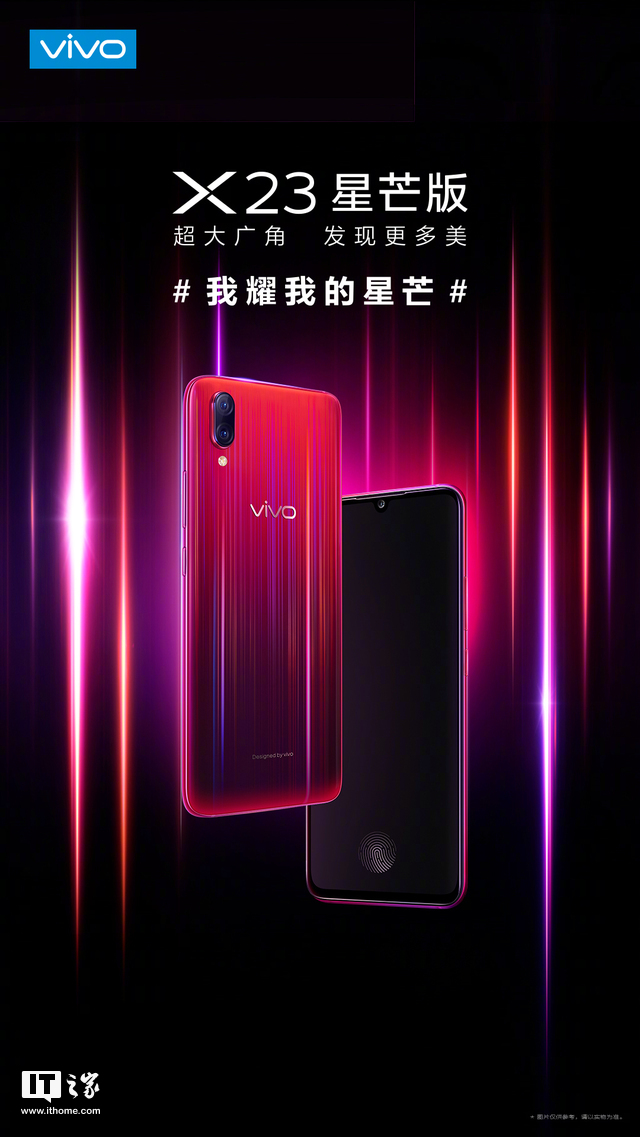
A couple of months ago, Vivo launched its Vivo X23 smartphone in Phantom Purple, Phantom Red and Midnight Blue color options. With more smartphone manufacturers offering gradient color options, Vivo has also introduced a new gradient-like color for the Vivo X23.
The company has today launched the Vivo X23 Star Edition, which is also being referred as Star Mans Version by the Chinese media. It isn’t the typical gradient color that we’ve have seeing lately. It is a Red-colored phone with vertical streaks of other contrasting colours.
The streak of contrasting colors is are created with a nano-scale high-precision laser engraving process. With this effect, when the light hits the back, it creates thousands of illusion diffraction units which gives a unique look to the phone.
The Vivo X23 features a 6.4-inch Super AMOLED screen with slim bezels, a reduced notch, and an aspect ratio of 19.5:9. Built with COF process, the display panel carries support Full HD+ resolution of 2340 x 1080 pixels. The display is slightly curved towards the left and right edges.
There’s a fourth generation in-display fingerprint scanner is embedded under the screen that features an improved biometric recognition technology, which is claimed to unlock the phone in just 0.35 seconds. The phone packs Snapdragon 670 chipset with 8GB of RAM and 128GB of internal storage.
It comes with a dual camera setup featuring a 12-megapixel Sony IMX363 primary sensor with f/1.8 aperture and a 13-megapixel wide-angle lens with f/2.4 aperture and field of view of 125 degrees. On the front side, there’s a 12-megapixel camera with f/2.0 aperture.
The company has also included the twin-turbo acceleration technology which also includes features such as System Turbo and Game Turbo. Vivo has developed the Game Turbo in collaboration with Unreal Engine, Tencent Game Lab and Netease Game Lab in China.
The handset runs on Android 8.1 Oreo OS with FunTouch OS 4.1 skin on top. The device also comes with the company’s own Jovi AI assistant. It is fuelled by 3,400mAh battery that carries support for 22.5W fast charging technology.
The Vivo X23 Star Edition, which is the sixth color variant of the phone, is priced at 3,498 Yuan which roughly converts to $502 — same as the other variants.
One aspect in which the newly announced OnePlus 6T excels over the OnePlus 6 phone is low-light photography. The new flagship phone from OnePlus is equipped with Nightscape photography feature that allows it to capture optimized photos in dim-light conditions. At the unveil event of the OnePlus 6T, the Chinese manufacturer confirmed that the OnePlus 6 will be also receiving the Nightscape feature.
The OnePlus 6 that was announced in May this year could not compete very well with its rivals in the low-light photography department. OnePlus 6T’s Nightscape feature comprises of three levels of enhanced photography features such as detail optimization, multi-frame stabilization and noise reduction. Longer shutter speeds ensures that the OP6T is able to capture images with good brightness in dim-light conditions. The Chinese manufacturer confirmed that the smartphone won’t take more than 2 seconds to process Night Mode images. OnePlus 6T’s is similar to Night Sight feature available on the Google Pixel 3 and Pixel 3 XL smartphones.
OnePlus has confirmed that the OnePlus 6 will be blessed with the Nightscape feature through a software update. The OP6 is expected to receive the update within a week after the launch of the OnePlus 6T. There is no confirmation on whether Nightscape mode will be made available to older phones like OnePlus 5 and OnePlus 5T.
In terms of optics, the OnePlus 6T includes Sony IMX519 16-megapixel + Sony IMX376 20-megapixel dual camera setup. Apart from Nightscape, the dual cameras offer features like HDR, EIS, OIS, 4K video shooting and full HD slow-motion video recording at 240 fps. At the front is a Sony IMX371 selfie shooter of 16-megapixel.
A 6.41-inch Optic AMOLED screen with smaller notch is available on the OnePlus 6T. The Snapdragon 845 and up to 8 GB of RM powers the phone. It includes a 3,700mAh battery with 20W fast charging support. The handset offers up to 256 GB of inbuilt storage. The OP6T is also equipped with an in-screen fingerprint reader.
The OnePlus 6T will be announced in India today at 8:30 PM (local time) and its sales are slated to begin in the country starting from Nov. 1. On the same date, the OP6T will be available for buying in the U.S. The smartphone will be made official in China on Nov. 5. In the home country, the smartphone will be available with HydrogenOS instead of OxygenOS. In Europe, it will be available for buying from Nov. 6.
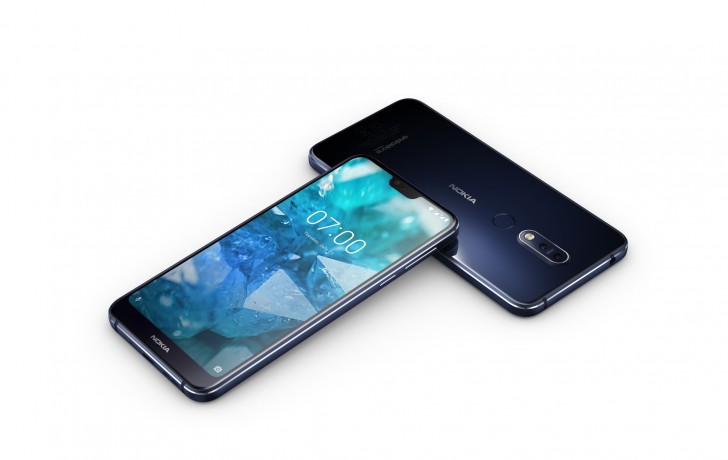
Unlike the users who want to own a high-end device for a reasonably higher price, some buyers want to own mid-level devices at competitive prices. Similarly, Nokia 7.1, a mid-range device is now up for sale in the United States for $350. As like of Xiaomi, Nokia also has various new devices in the mid-range segment. So, if you’re a fan of Nokia or looking for a mid-range device, then you should check out the new Android One based Nokia 7.1 which offers pretty good specs at a moderate price.
In the US, Nokia 7.1 GSM is available for $350 and will work on T-Mobile, AT&T, Cricket and MetroPCS networks. It won’t work on carriers such as Sprint and Verizon. Users can also buy it from major US retailers like Amazon, B&H Video and Best Buy at the same price. Nokia has made it available with Glossy Midnight Blue colour in the US.
Moreover, you will get a 5.8 inch HDR ready IPS LCD Panel with a notch having an aspect ratio of 19:9. It is powered with Snapdragon 636 SoC coupled with 4GB of RAM. It is available with 64 GB of internal storage. Nokia has built it with a 6000-grade sturdy body which is capable for some rough use.
In the camera department, you will get a dual camera shooter of 12 megapixels + 5 megapixels on the back. There’s an 8-megapixel camera on the front which will get your selfie job done. Nokia 7.1 carries 3000 mAh battery with fast charging support via Type C-USB port. Additionally, it carries rear-mounted fingerprint scanner, NFC and Bluetooth 5.0. It is available in Glossy Steel and Glossy Midnight Blue colours but as of now, only blue colour is available in the US.
HMD Global has launched it with Android 8.1 Oreo onboard and Android Pie will rollout by the end of next month. You can experience faster updates as it is built on Android One platform with stock OS. It is doesn’t carry any kind of bloatware and comes with a clean User Interface.
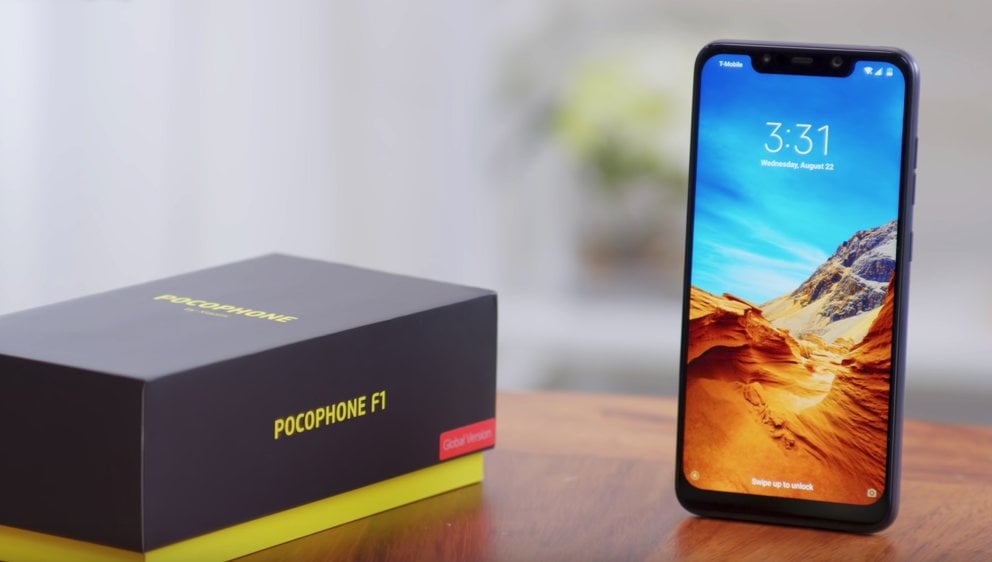
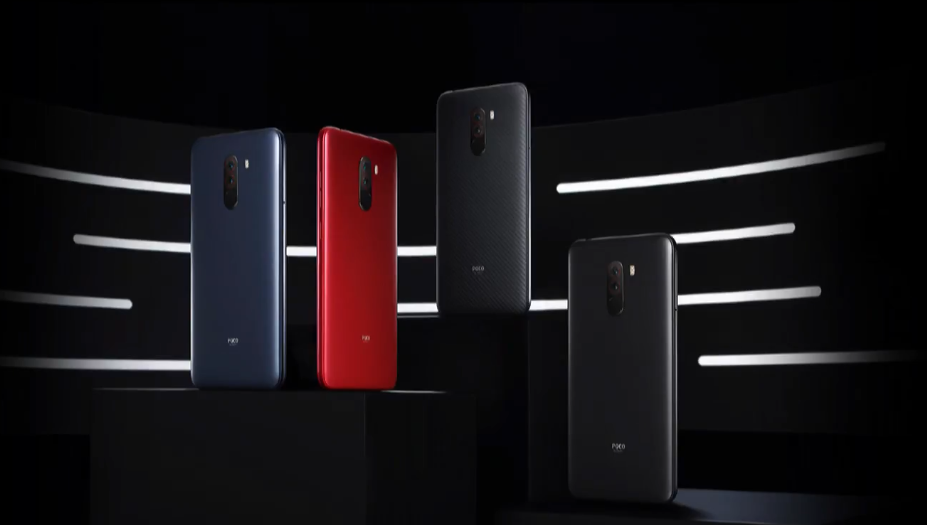
Xiaomi launched POCO F1 a few months ago and was well-received in the market, thanks to its aggressive pricing. Soon after the launch, users started complaining about several issues related to the phone, but most of them have been addressed by the company.
Now the company is addressing questions related to future Android updates. The phone runs Android Oreo out of the box and is all set to receive the Android Pie update soon. Ahead of the Android Pie rollout, Jay Mani, Head of Product for Pocophone (POCO), has confirmed that the phone will also receive the next major Android update — Android Q.
It’s good that Xiaomi has now promised Android Q update for the POCO F1 but it’s not surprising given that most phone manufacturer provide atleast two major Android releases. While the Android Q for POCO F1 is confirmed, it will be a very long wait to receive this update.
The Android Q is likely to be available as a developer preview next year and given that Xiaomi is extremely slow is releasing major Android versions to its device, we are likely to get the Android Q much later after Google officially releases it.
Recently, Xiaomi revealed that it is working with Google and Qualcomm to soon release an update which will bring the widevine L1 support to POCO F1. The update is expected to be rolled out to MIUI Beta ROM users first by Q4, 2018, i.e. by the end of this year.
The company had recently released an update to fix the notification icon issue on the status bar. Xiaomi is also developing 4K 60fps support for the rear camera. Additionally, users of POCO launcher will also have an option to customise desktop grid size and icon size in the future.
The Poco F1 features a 6.18-inch Full HD+ IPS LCD display which is protected by a layer of Corning Gorilla Glass. The phone is powered by Qualcomm‘s Snapdragon 845 processor and comes with LiquidCool technology.
It has a 12-megapixel Sony IMX363 primary sensor, coupled with a 5-megapixel secondary sensor on the back panel. On the front side, there’s a 20-megapixel selfie camera powered with AI for capturing enhanced selfie shots.
The phone comes with 6GB/8GB of RAM and 64GB/128GB/256GB of internal storage, depending on the variant. It runs on the company’s MIUI based on Android 8.1 Oreo, and is powered by a 4,000mAh battery that supports Quick Charge 3.0 fast charging.
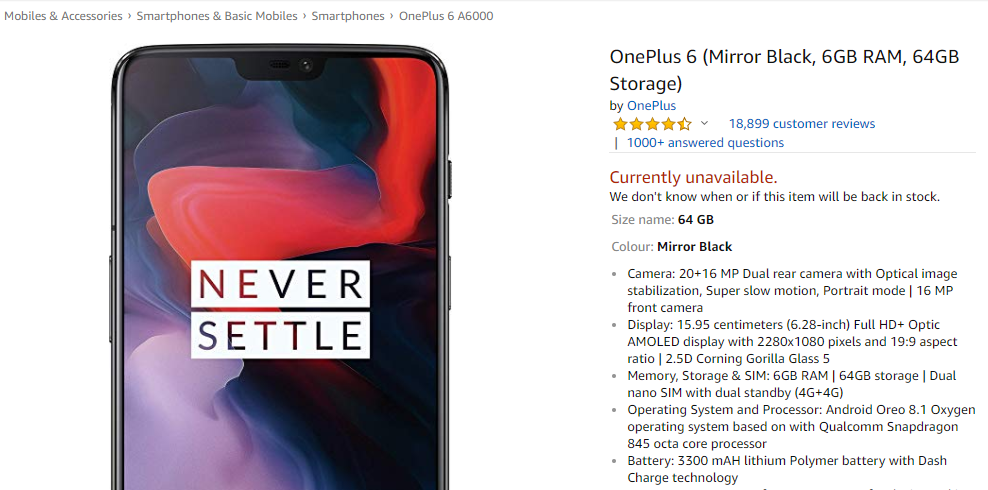
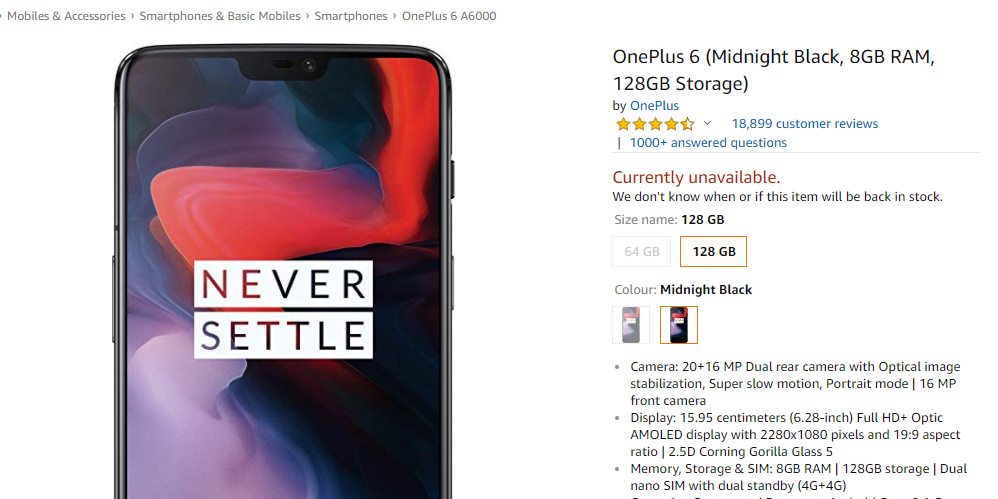
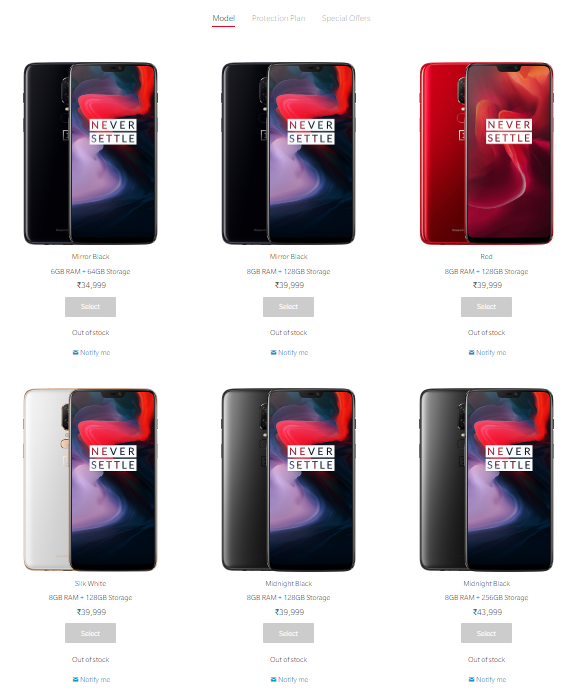
OnePlus 6T has been officially announced in the U.S. and it is all set to go official in India. Like the predecessor models, the upcoming OnePlus flagship phone for India will be exclusively available for purchase through OnePlus India online store and Amazon India. The OnePlus 6T launch event will begin at 8:30 PM (local time) in New Delhi, India. Hours before the unveil event, the OnePlus 6 has gone out of stock on Amazon Indian and online store of OnePlus India.
As it can be seen in the above images, the 64 GB and 128 GB editions of the OnePlus 6 are “currently available” on Amazon India. The below image shows that none of the storage and color variants of OP6 are available for buying through the company’s official online store. The reason behind the OnePlus 6 going out of stock is that the company could be making some arrangements on these sites for the arrival of OnePlus 6T.
OnePlus has already declared the launch offers for the buyers of OnePlus 6T in India. The smartphone will go on sale in the country starting from Nov. 2. However, Amazon Prime users will get early access to the handset from Nov. 1. All the specifications of the smartphone have been revealed through its U.S. unveil event. The only thing that is under the wraps for the Indian audience is the pricing of the smartphone.
The OnePlus 6T is expected to arrive with a costlier price tag than the OnePlus 6. The reason behind it is that the OP6T will be arriving with many improvements such as bigger display, larger battery, new cameras and in-display fingerprint sensor.
In the U.S., the 6 GB RAM + 128 GB storage, 8 GB RAM + 128 GB and 8 GB RAM + 256 GB storage are respectively priced at $549, $579 and $629. Leaked information that had surfaced earlier in this month had suggested that these three models will be hitting with respective price tags of Rs. 37,999 (~$516), Rs. 40,999 (~$557) and Rs. 44,999 (~$612).
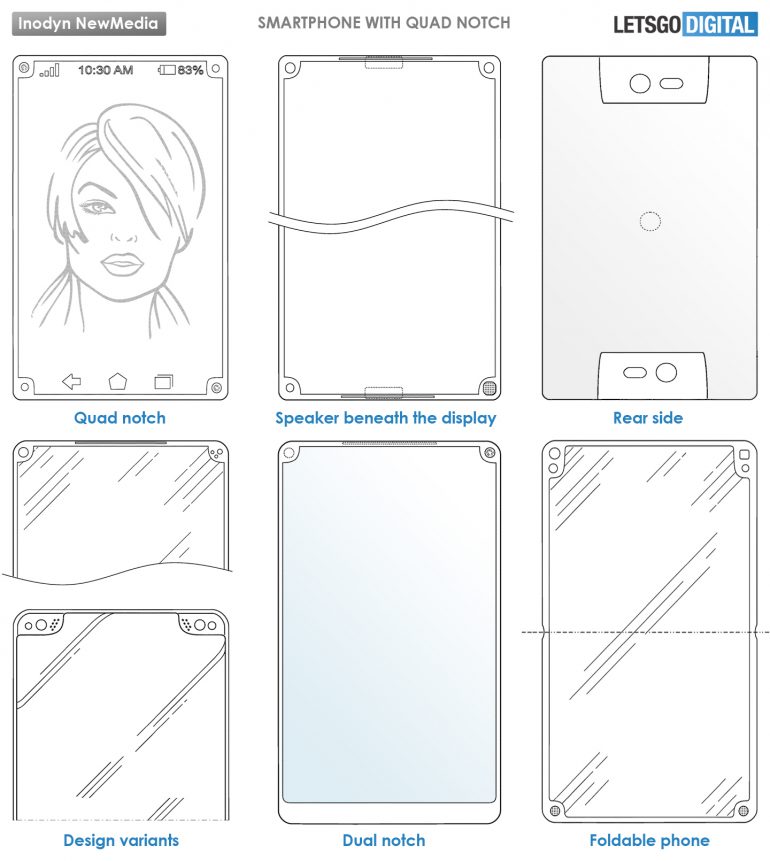
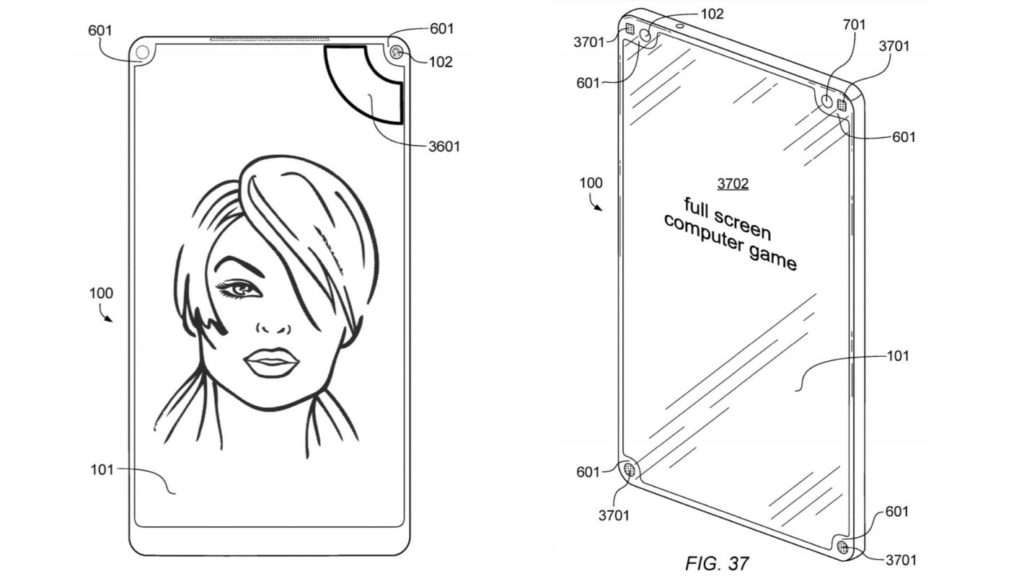
The smartphone designing is not limited to the big corporations. Even, a single person can register the patents. Similarly, a qualified engineer from Germany at Inodyn NewMedia GmbH has registered a patent with quad notch display smartphone. The new patent has been spotted at the United States Patent and Trademark Office (USPTO). If it’s believed than get ready to witness a new smartphone with quad notches.
It appears from the documentation that the new patent focuses on multiple notches at all corners rather than a single notch on the top side. It will give manufacturers an ability to extend functionality either by adding up quad cameras or introducing 3D display using those cameras. Alternatively, documents also mention a dual notch display device with more thinner bezels. The sensors can be organised in different ways, either by placing dual cameras on both the corners or by placing single cameras on all four corners. Although, the display has rounded corners around dual or quad notches.
Beside different notches, the smartphone’s earpiece will take place on top of the display or both sides of the display. Fingerprint sensor can be seen at the bottom right corner, and similarly, left side can be utilised for a UV sensor. Other sensors like infrared sensor, LED flash can make a place in any of the corners.
Moreover, the same design is applicable for foldable smartphones also. It can be further used in other devices such as wearables like watches, etc. The smartphone’s software can ensure that no content gets hidden under these notches. As an example, the text can be centre aligned, or it can be displayed little narrower. There might be many other ways through which these notches can be used to their fullest without hindering the user experience. Other media such as videos and images can be shown with a narrower border on top and bottom side in landscape mode.
The OnePlus 6T was announced in the U.S. yesterday and it all set to go official in India at 8:30 PM (local time). The new flagship phone from OnePlus will be available for purchase from Amazon India. The Chinese manufacturer has already confirmed on the launch offers that will be available for the buyers of OnePlus 6T.
Reliance Jio Offer
Reliance Jio users who purchase the OnePlus 6T will be able to benefit from a total cashback of Rs. 5,400 (~$74). The cashback will come to the user in the form 36 vouchers each worth Rs. 150 (~$2). Customers can make use of these vouchers on Rs. 299 (~$4) recharges until March 31, 2022.
Users can make use of the vouchers each one at a time. It will allow users to avail the benefits of Rs. 299 recharges at an effective cost of Rs. 149. Moreover, Rs. 299 plan will also bring along 3 GB of 4G data along with 100 SMS per day for 28 days.
ICICI and Citi Bank Offers
Buyers who purchase the OnePlus 6T through ICICI credit or debit cards or Citi credit cards can avail a flat discount of Rs. 2,000 on the pricing of OnePlus 6T. The Chinese manufacturer is yet to confirm on the pricing of the smartphone. However, it is speculated that the base model of the phone will be available with a price tag of Rs. 37,999 (~$516).
Pre-booking Deals
Customers who pre-book the OnePlus 6T will be provided with Type-C Bullets earbuds for free. The new earbuds from OnePlus has a usual price of Rs. 1,490 (~$20). Also, customers who pre-book the smartphone will be provided with Rs. 500 Amazon Pay cashback which can be used for purchasing other items on Amazon India.
Customers who place the order for the OnePlus 6T smartphone between Nov. 1 and Nov. 6 will be provided with Rs. 1,000 (~$14) Amazon Pay credit. One should be aware of the fact that this offer is available for prepaid orders only.
The OnePlus 6T features a 6.41-inch FHD+ AMOLED screen that features a smaller notch. The Snapdragon 845 chipset and 3,700mAh battery are present under the hood of the device. It is equipped with 16-megapixel front-facing camera. The backside of the phone is fitted with 16-megapixel + 20-megapixel dual camera setup. Some of the other attractive features of the smartphone include 20W fast charging and in-display fingerprint scanner. The phone lacks support for microSD card and 3.5mm audio jack.
It is speculated that the 8 GB RAM + 128 GB storage and 8 GB RAM + 256 GB storage editions of the OnePlus 6T will be respectively priced at Rs. 40,999 (~$557)and Rs. 44,999 (~$612).
We use cookies on our website to give you the most relevant experience by remembering your preferences and repeat visits. By clicking “Accept”, you consent to the use of ALL the cookies.
This website uses cookies to improve your experience while you navigate through the website. Out of these, the cookies that are categorized as necessary are stored on your browser as they are essential for the working of basic functionalities of the website. We also use third-party cookies that help us analyze and understand how you use this website. These cookies will be stored in your browser only with your consent. You also have the option to opt-out of these cookies. But opting out of some of these cookies may affect your browsing experience.
Necessary cookies are absolutely essential for the website to function properly. This category only includes cookies that ensures basic functionalities and security features of the website. These cookies do not store any personal information.
Any cookies that may not be particularly necessary for the website to function and is used specifically to collect user personal data via analytics, ads, other embedded contents are termed as non-necessary cookies. It is mandatory to procure user consent prior to running these cookies on your website.