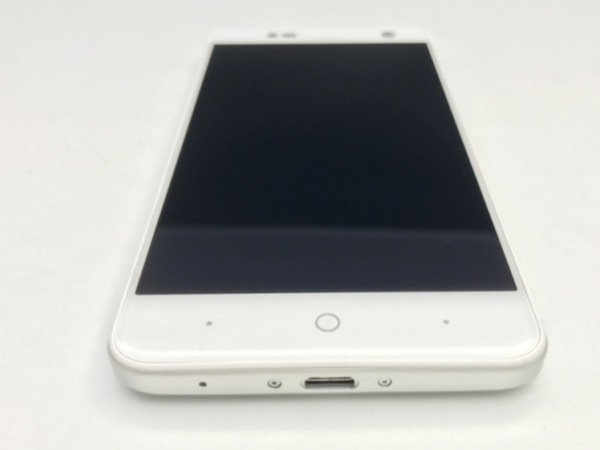
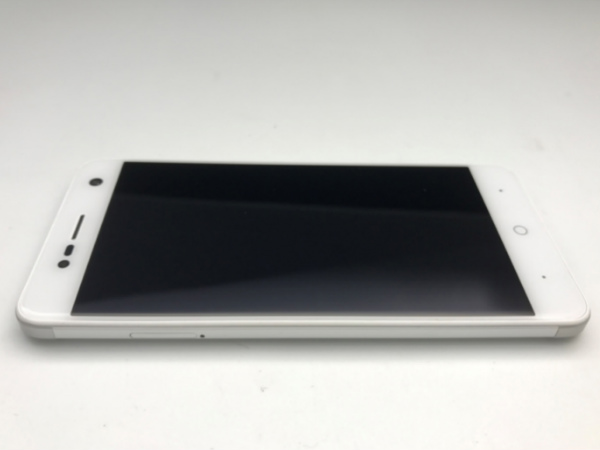
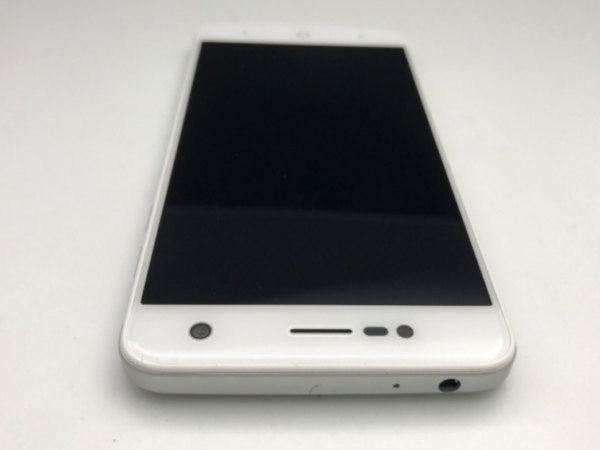
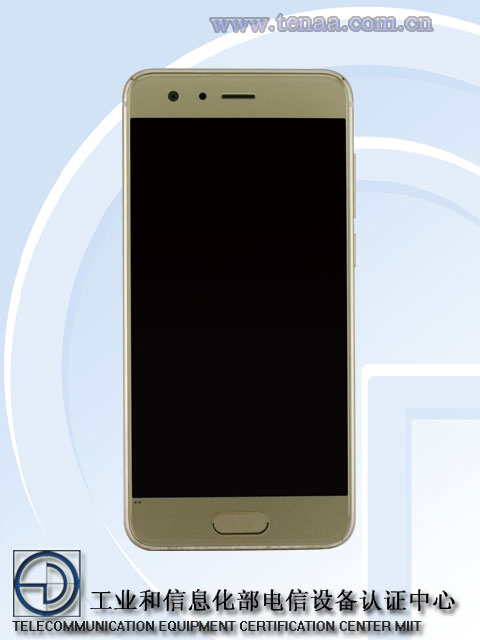
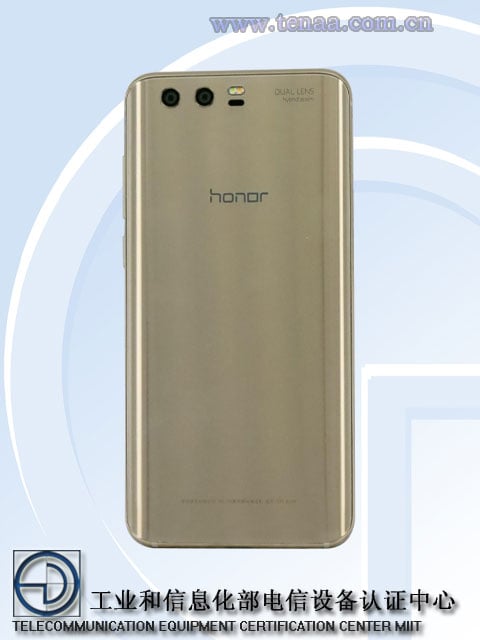
Huawei‘s Honor 9 is expected to hit the shelves soon and as a result, the device has featured in a couple of leaks recently, including one that purportedly showed its real photo. The real photo. The Honor 9 has now appeared on TENAA where it has been certified.
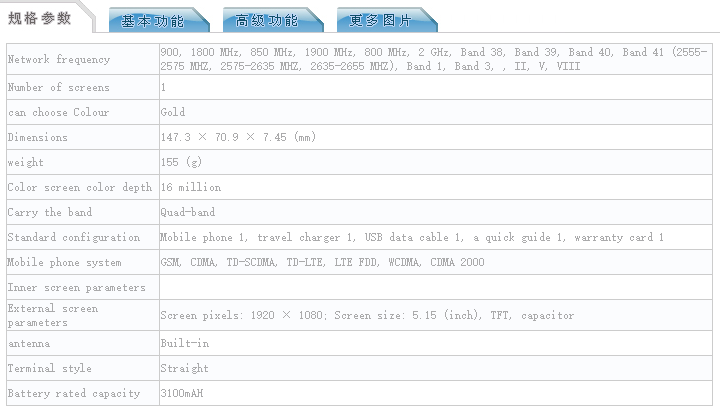
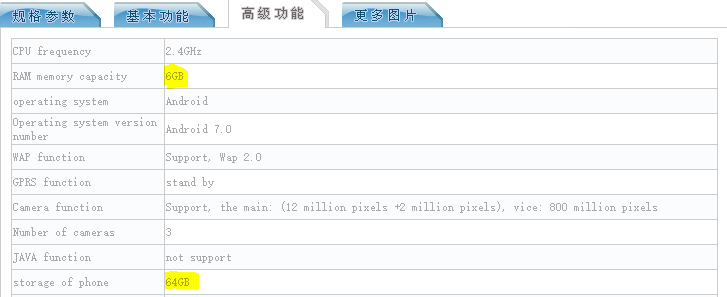
The TENAA appearance shows us what the specification of the device is likely going to be like and also what the device itself looks like. In this case, the Honor 9 is shown to have two different models, one packing a 4GB RAM and another with 6GB of RAM. In terms of appearance, the Honor 9 comes with a 2.5D curved glass while the back is made with a curvier 3D glass design. It presents with a dimension of 147.3 × 70.9 × 7.45mm, weighing in at 155g.
In other specs, the Honor 9 comes with a 5.15-inch display with a resolution of 1980 x 1080p. The device is powered by an Octa-core 2.4GHz processor which is believed to be a Kirin 960 chip. The device comes with 64GB storage on both the 4GB and 6GB RAM models as no 128GB storage version is listed. On the camera end, the Honor 9 which had been rumored to come with a dual camera setup similar to the Mate 9 and P1, sports a 12MP + 20MP rear camera setup while there is an 8MP sensor at the front.
In addition, the device comes with a 3,100mAh battery and also features dual SIM/ dual Standby support as well as entire network support. The Honor 9 is expected to be launched in June and the price is tipped to be 2,299 Yuan ($335) for the 4GB +64GB version while the 6GB + 64GB version will retail for 2,599 Yuan ($378).
In November 2016, a Chinese report claimed that Lenovo would be only selling Moto branded smartphones. In other world, it won’t be selling phones with Lenovo branding. This news had surfaced when the company’s financial results were not impressive. Today, Yang Yuanqing, the Lenovo Group chariman and chief executive, said to Reuters that the Lenovo brand for smartphones will never be phased out.
According to Yang, even though the company is restructuring its business in China, its mobile business will not be affected in the country. The company has already encountered a widening loss after releasing smartphones with Lenovo and Moto branding. However, the company still wants to maintain dual-brand strategy. In some markets, Lenovo is selling smartphones with both branding. However, in other markets, it is only selling Lenovo or Moto phones.
The mobile business generates around 18 percent revenue for Lenovo as it achieves more revenue from its PC business. The mobile division has encountered a huge loss of $566 million. In the previous year, it met with a loss of $469 million. Its data center group has also accounted a loss of $343 million. Wong Wai Ming, Lenovo CFO said that the smartphone and data center businesses is different from PC business. Hence, the company will need more time to understand the business. The CFO added that its smartphone and server business will improve in the near future.
In the previous week, Yang posted on Weibo that China consumers are more interested in smart devices. Hence, the Chinese firm will be soon restructuring its Chinese business. The mobile division which was previously headed by Liu Jun will be joining as the president for Lenovo China and he will be also leading the consumer division for the company. He also claimed that Lenovo will be releasing more products that will cater to the consumers in China.
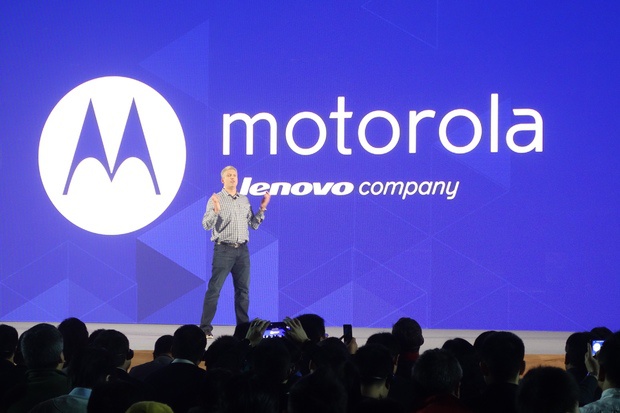
A leaked shot coming from a recently held Lenovo conference clearly shows that the Chinese company will be launching more Moto branded phones this year. It has already launched Moto C and Moto C Plus and soon it will be launching other smartphones such as Moto Z2, Moto Z2 Force, Moto Z2 Play, Moto E4, Moto E4 Plus and Moto X4. Its nearing first half of the year and the company has not launched a Lenovo branded phone so far.
Samsung has finally launched the Galaxy S8 and Galaxy S8+ smartphones in China, the largest smartphone market in the world. Some of the leading brand in China such as Huawei, OPPO, Vivo and Xiaomi are known for their proprietary user interface that are fully loaded with various features. Hence, the Galaxy S8 duo have been optimized with an exclusive UI that are unavailable in their international edition.
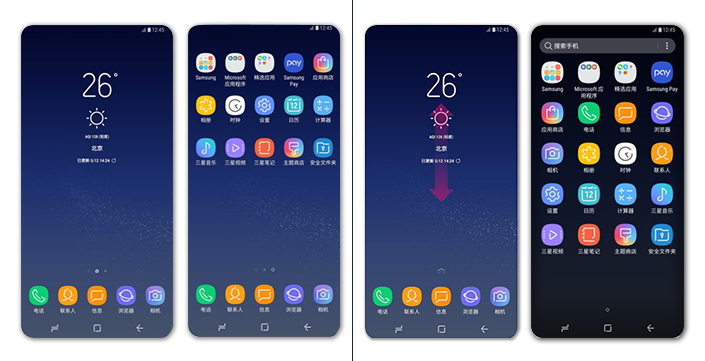
The official blog of Samsung confirms the new and exclusive UI features that are available on the Galaxy S8 and S8+ smartphones. Just as the UI present on some of the leading Chinese smartphone brands do not feature an app drawer, the Galaxy S8 also comes with a modified home screen that has all the apps placed on it as it does not feature an app drawer. The Google Search bar is also absent from the home screen.
The home screen on Chinese Galaxy S8 comes with weather widget and five default apps present at the bottom. The apps present on the home screen can be browsed by swiping horizontally. Users can also switch to vertical arrangement of apps which can be browsed by up or down.
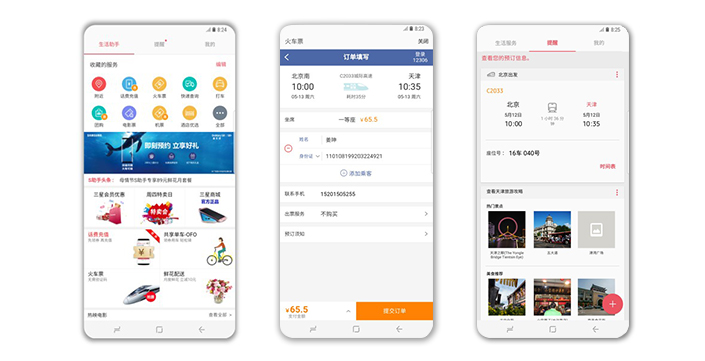
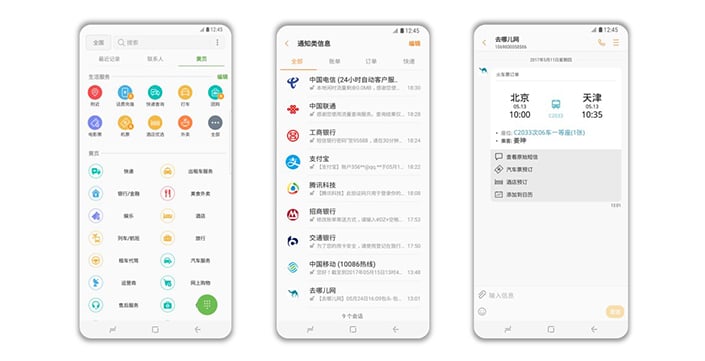
Chinese users are known for carrying out various kinds of activities such as booking movie ticket or setting an appointment with doctor. Such tasks can be done seamlessly by the China-exclusive services such as Samsung Assistant and Yellow Page. After carrying some transactions like booking a journey ticket, the Samsung Assistant will show related information such as departure times, route details, traffic information and so on. In the Messages app, these notifications will be categorized together for easier navigation.
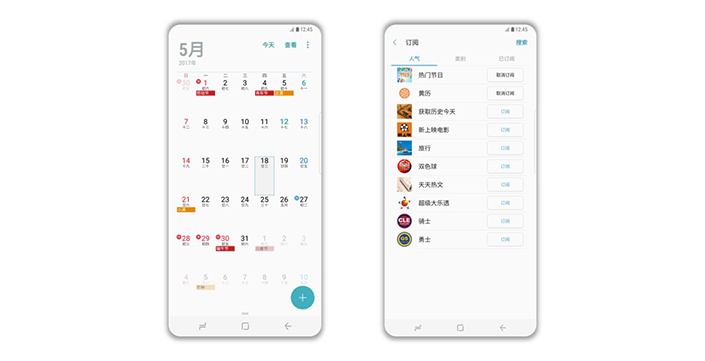
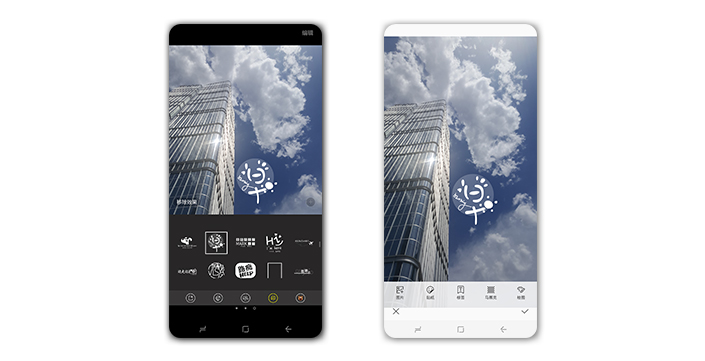
The Calendar app shows both solar and lunar calendars. A subscribable calendar is also available that will provide users with alerts on various events around them. There around 40 stamp designs available exclusively for Chinese audience through the Camera and image editor apps. Smart Manager improves the users.
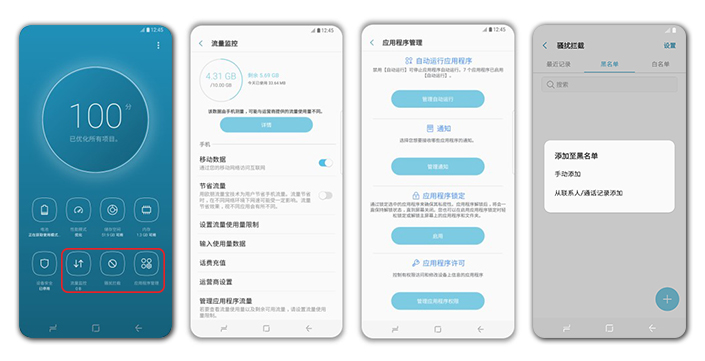
The Smart Manager has been added to improve mobile experience. It allows users to automatically purchase extra data, better control over apps and block spam calls and messages. The Samsung Health provides China-centric details like health events, medicine and clinic information.
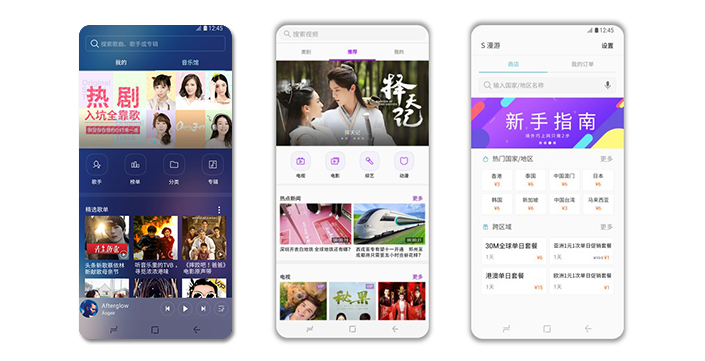
The Samsung Video and Samsung Music provides users with the best of entertainment as the South Korean company has partnered with content service providers from China. The Chinese Galaxy S8 also features a screen recorder function. For Galaxy S8 users who travel internationally, the smartphone provides them with S Roaming feature that let them easily use and manage data services while on roaming.There is a Chinese input tool for easily inputting Chinese text.
The Galaxy Note 7 battery fiasco has now turned to a reference point for smartphone makers especially on safety checks that are needed during the manufacturing process. The exploding battery also threw so many OEMs into becoming more cautious especially in adopting Quick Charge features. Despite the Snapdragon 835 chip coming with Qualcomm’s QC 4.0. All three devices that have so far been launched with SD 835 came without having the technology on board.
So too, a good number of the smartphone makers have been silent about the issue all this while. However, Motorola’s Russ Gyenes has broken the eerie silence just when we thought the last has been heard about the Galaxy Note 7’s battery issue. Russ Gyenes, who is Motorola’s battery engineer, was speaking to a group of Journalists recently when the question of the Note 7’s battery flaws came up. Mr. Gyenes believes that his company would have detected the battery flaws at the early stages. He also disclosed that his company did not make any changes to its battery manufacturing process after the Note 7 issues flared up. He questioned why Samsung wasn’t doing the eight-point safety check before the incident and also gave a detailed explanation of the rigorous procedures that would be exhausted satisfactorily before the battery is mass produced.
The statement is meant to project Motorola’s own process for battery testing which he believed is very safe and tight. This is not the first time Motorola is delving into the battery issues of one of its major rivals. Around September last year, Motorola released an ad poster promoting the Moto Z Droid. Motorola boasted on the ad that unlike other manufacturers, the company adheres to the highest standard in quality and testing of all its batteries.
Although a particular mention of Samsung or the Note 7 wasn’t made, there is no doubt the Galaxy Note 7 was being referred to. But then, Samsung has picked up the pieces in a solid manner with the launch of the Galaxy S8 and S8 Plus which is now making record sales around the world. The company will release a refurbished version of the Note 7 very soon in select markets. How about that for a comeback?
LG pulled a risky move when it launched its flagship phone, the LG G6 with a Snapdragon 821 processor early this year. That move paid off as people were not really bothered about the processor but were blown away with the display and overall design. The move also gave LG the chance to get a head-start in sales before the Snapdragon 835 phones started launching.
LG has already announced that the LG V30 will be its major flagship for the year. It will be powered by the Snapdragon 835, and according to leaks, will feature dual front cameras. Also for the first time, LG’s high-end smartphone will sport an OLED display. We have also seen a patent that shows a bezel-less phone with a dual display that some speculate may appear in the V30 or G7.
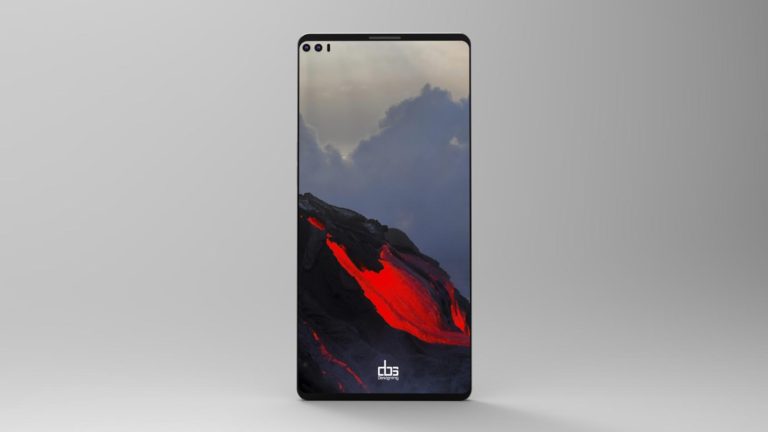
DBS Designing has put together all these details and made a render of the LG V30. It looks really sleek and packs a number of interesting features.
There is a 5.8-inches QHD display with a smaller ticker screen at the top just beside the dual 8MP front facing cameras. It is equipped with 6GB of RAM and 128GB of storage with MicroSD support. The rear cameras are 13MP sensors and there is a 5,500mAh battery under the hood.
Samsung is slated to announce the Galaxy Note 8 flagship phone in August or September this year. Hence, various leaksters are now working hard to reveal fresh information on the Samsung’s upcoming flagship phablet. A Chinese leakster has revealed a short video clip that shows the alleged front panel of the Galaxy Note 8.
He is the same leakster who accurately predicted that the Galaxy Note 8 will not be the first Samsung phone to feature dual rear cameras. He had stated that the Galaxy C10 would be releasing before Note 8 with dual rear cameras. Here is the video showing Galaxy Note 8’s front panel:
Samsung introduced Infinity Display on Galaxy S8 and Galaxy S8+ smartphones which offers a QHD+ resolution of 2,960 x 1,440 pixels along with an aspect ratio 18.5:9. The display occupies over 80 percent of the Galaxy S8’s front screen. The inclusion of Infinity Display on Galaxy S8 has resulted in super-slim top and bottom bezels.
The Galaxy Note 8’s front panel video shows that it will be also arriving with an Infinity Display. The front panel seems to have a cutout for selfie camera. However, the cutout for iris scanner is not visible. Previous prototypes and leaked schematic of Galaxy Note 8 have suggested that the top bezel features an iris scanner.
Samsung Galaxy S7 came with 5.1-inch screen and Galaxy S7 Edge has a 5.5-inch display. However, the Galaxy S8 has a larger screen of 5.8 inches and its larger sibling has a 6.2-inch display. This indicates that the Galaxy Note 8 will come with a larger screen than Galaxy S8+ and this has been confirmed (not officially) through other leaks that it will come with a 6.3-inch dual-edge curved display.
The Galaxy S8 duo have been criticized for the unfriendly positioning of its rear-mounted fingerprint reader. Hence, the Note 8’s fingerprint scanner is speculated to be placed under the front glass. Rumors suggest that it will be arriving in Snapdragon 835 and Exynos 9810 chipset variants. Some of the other rumored specs of Note 8 include 6 GB RAM, 256 GB storage, 3,600mAh battery with wireless charging support, IP68 certified chassis and S-Pen stylus.
The OnePlus 3 was already a stunner when it launched last year. No one was expecting another phone from the manufacturer until they announced the OnePlus 3T, and then ended production for the OnePlus 3.
The same thing seems to be happening again as the launch of the OnePlus 5 draws nearer. A tweet via the official account says the OnePlus 3T will soon be out of stock and from the way it sounds, it is going to be permanent.
In a post about the announcement, OnePlus says both the OnePlus 3T and OnePlus 3 will continue to receive support updates. So fret not, if you own either of the two phones.
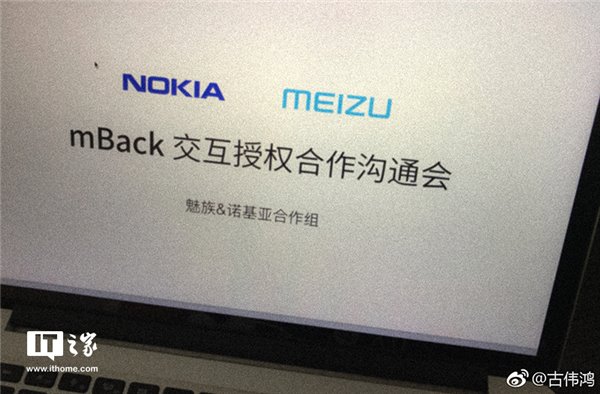
Already, there is news making the rounds that Nokia devices would use the Flyme 6 in the near future but now, the leaked document hints at the inclusion of the mBack design on Nokia phones. the document looks like the front page of a licensing agreement between both companies but no other part of it is visible.
While we cannot say for sure if this is authentic or not, it is not out of place if such collaborative effort is in the works. For one, Meizu has been a long time admirer of Nokia even to the extent of using Nokia devices on a couple of its launch posters. Back in 2015, Meizu sent out the invite for the M2 along with a Nokia 1110 photo and just last year, they also sent out invites for another launch along with a Nokia E71. That doesn’t confirm anything though, so we’ll wait to see what the two companies have in store for us.
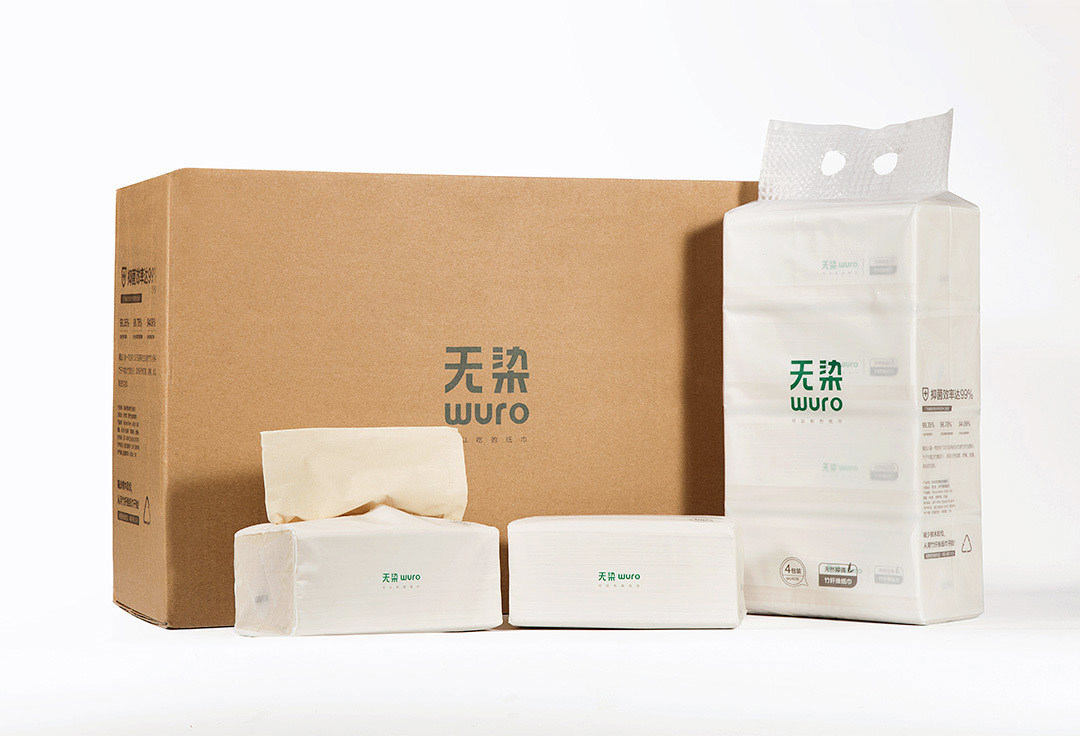
With the recent releases on the Mijia crowd-funded platform, we have decided not to be surprised by whatever product they announce next. Earlier this week they released the Haoyue Bone China Dish Set. Today, their latest item is the Wuro Antibacterial Bamboo Tissue.
The tissue is made from natural bamboo and is manufactured by Hunan Cheng Manufacturing Co. Ltd. The manufacturing process involves cooking the bamboo strips at temperature of up to 150°c and under high pressure.
The Hunan Cheng is FDA approved and has an AP food grade and EOS organic certification. A test by the Guangdong Provincial Microbiological Analysis Testing Center says the Wuro Antibacterial Bamboo Tissue has an effective removal rate of 98.78% for Staphylococcus aureus and 99.35% for E. coli.
During the Mobile World Congress (MWC) 2017, ZTE had unveiled the Blade V8 Mini alongside other smartphones such as Blade V8 and Blade V8 Lite. Since the Blade V8 Mini has now received certification from Federal Communications Commission (FCC), it seems the launch of the smartphone is drawing near.
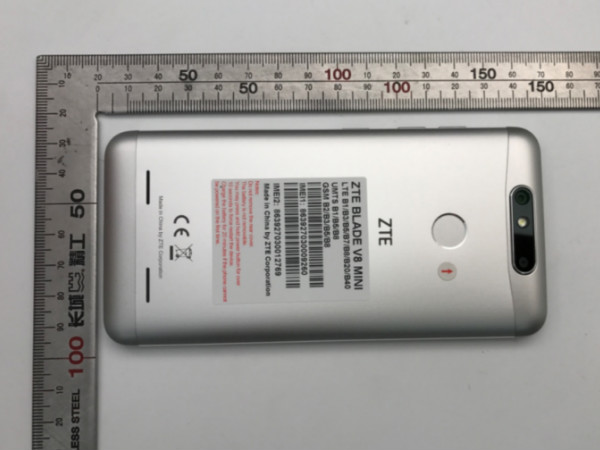
The FCC filing of the ZTE Blade V8 Mini carries the external and internal images of the phone along with its User Manual. However, the FCC certification does not reveal anything new about the Blade V8 Mini as its specs have been revealed during the MWC 2017 event.
During the unveil event, ZTE did not announce any information on the launch date of the Blade V8 Mini. Also, it did not reveal any details on the regions that will be receiving the smartphone. However, one of the internal documents of the phone carries the name of a Mexican carrier called Mexico Telcel, it seems that Mexico will be of the countries that will be receiving the Blade V8 Mini.
It comes with a metallic chassis that features a dual rear camera setup and a fingerprint reader on the back panel. The bottom portion of the rear panel also features a pair of external speakers. The right edge of the phone is equipped with volume buttons. A SIM tray is present on the left side. The top edge of the phone features a 3.5mm audio jack. The display of the phone has a 2.5D glass on it. Above the screen is the selfie camera and below it is the Android capacitive buttons.
The specifications of the Blade V8 Mini suggests that it is a budget phone with dual rear camera. It features a 5-inch screen that produces a resolution of 720 x 1,280 pixels. It Is fueled by Snapdragon 435 chipset and 2 GB of RAM. The native storage of the phone is 16 GB.
On the rear of the V8 Mini is the twin camera module that includes a 13-megapixel sensor and a 2-megapixel sensor. Its front-facing camera is of 5-megapixel. It comes preinstalled with Android 7.0 Nougat OS and it features a 2,800mAh battery.
There is no information available on the pricing of the ZTE Blade V8 Mini, but it is expected to arrive with a competitive pricing to take on phones like Honor 6X, ASUS ZenFone 3 Zoom, and Coolpad Cool1.
Xiaomi Mi Max 2 was finally announced earlier today and the phone is sure to provide one of the best battery life that we will see in a phablet. The overall conference went very well, including the performance from the Chinese girl band, SNH48.
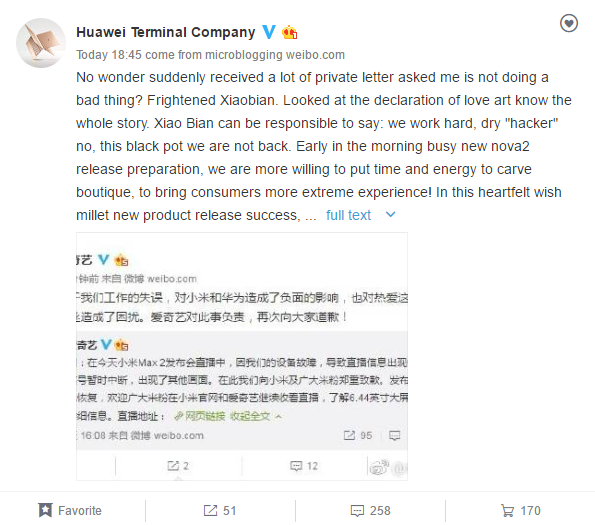
However, there was one thing that surprised everyone during the live streaming. Suddenly, in between the streaming, Huawei logo cropped up on the screen and stayed there for a couple of minutes. Now, remember this is Xiaomi’s conference and Huawei is a direct competitor to the company. So, seeing Huawei’s logo during Xiaomi’s live streaming was not only surprising, but it was also bad for the company’s reputation. And naturally, after seeing the logo, some viewers started to joke that Huawei is probably one of the sponsors of the event.
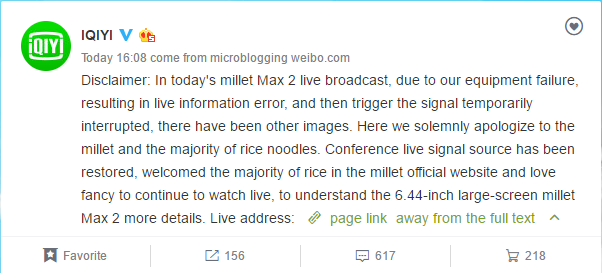
But the actual conference faced no such issues and it went well. So, who was the culprit? Well, iQIYI, is the one to blame here. If you have never heard of this name, iQiyi is China’s largest online video site. They were streaming the conference live and there was some kind of equipment failure in between due to which Huawei’s logo came up on the screen for around 2 minutes. Note that the issue was resolved in a couple of minutes, but the damage was already done.
iQiyi did apologize for this technical snag. It looks like users on Weibo had started sending private messages to Huawei asking whether they were responsible for this. Of course, Huawei was quick to defend itself saying they didn’t have anything to do with their logo coming up on Mi Max 2 live video. Also, it added that Huawei wishes Xiaomi for the launch success.
Although this wasn’t a big issue since the conference went smoothly, online viewers did have something to laugh about in the process.
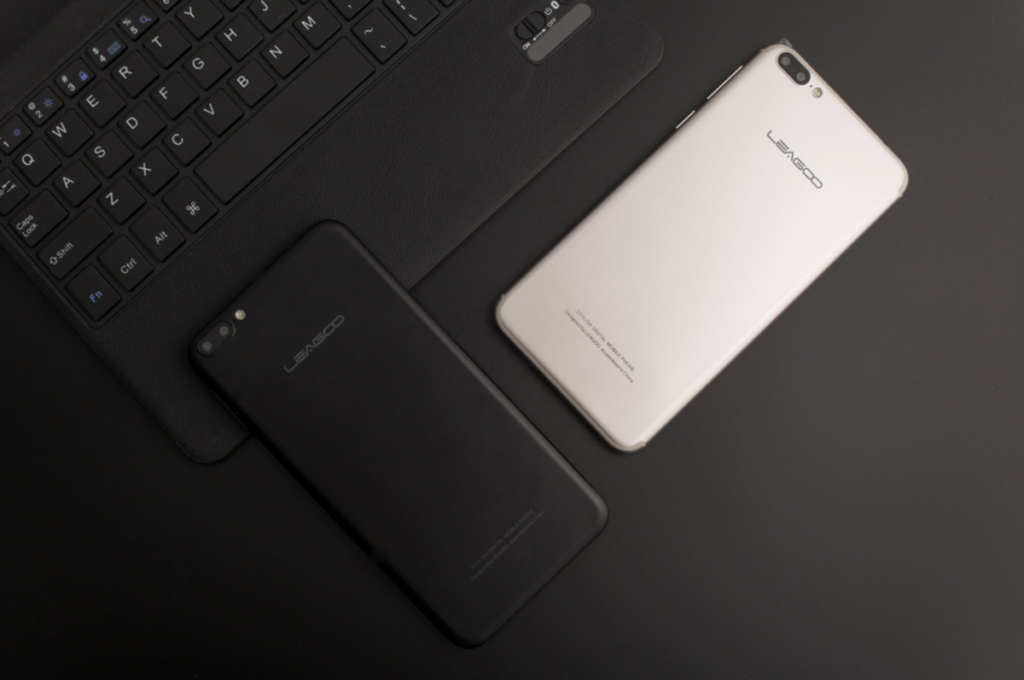
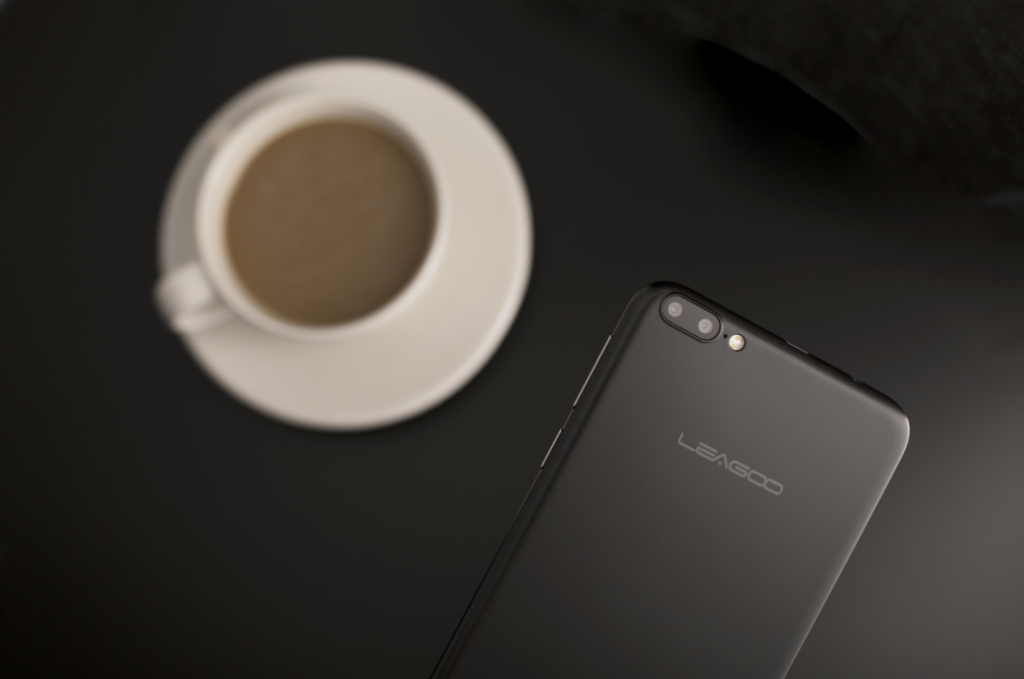
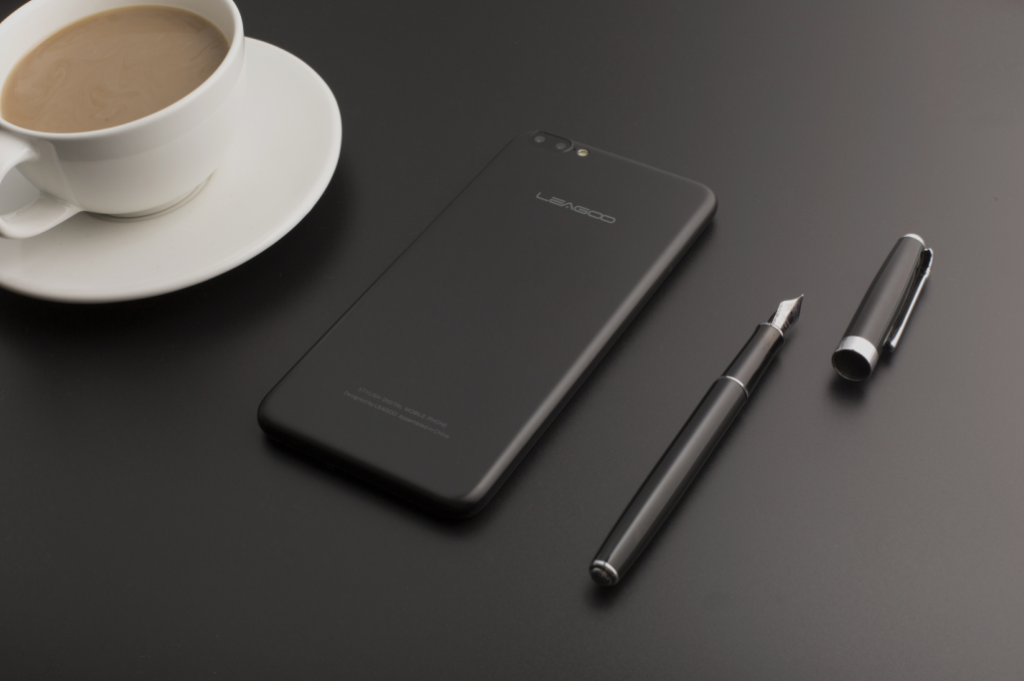
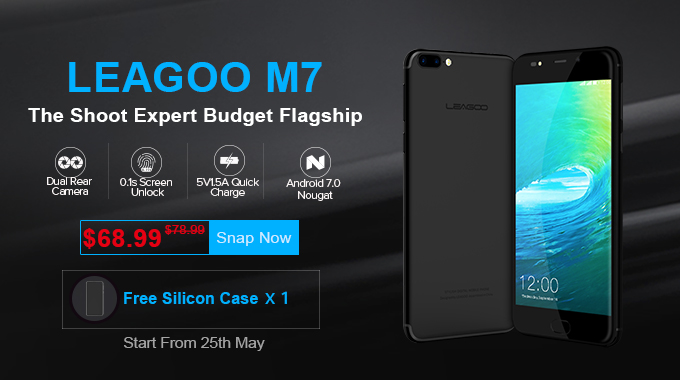
LEAGOO recently released their new model – LEAGOO M7, a low-end smartphone but with iPhone 7 Plus appearance and rear dual camera.
Main features of LEAGOO M7:
MT6580A quad-core chipset
Rear dual camera (8MP+5MP)
Front 5.0MP camera
5.5 inch HD 2.5D display
1GB RAM + 16GB ROM
0.1s front fingerprint ID
Removable 3000mAH battery with 5V1.5A quick charge
Pre-installed Android 7.0 OS
Dual SIM dual standby
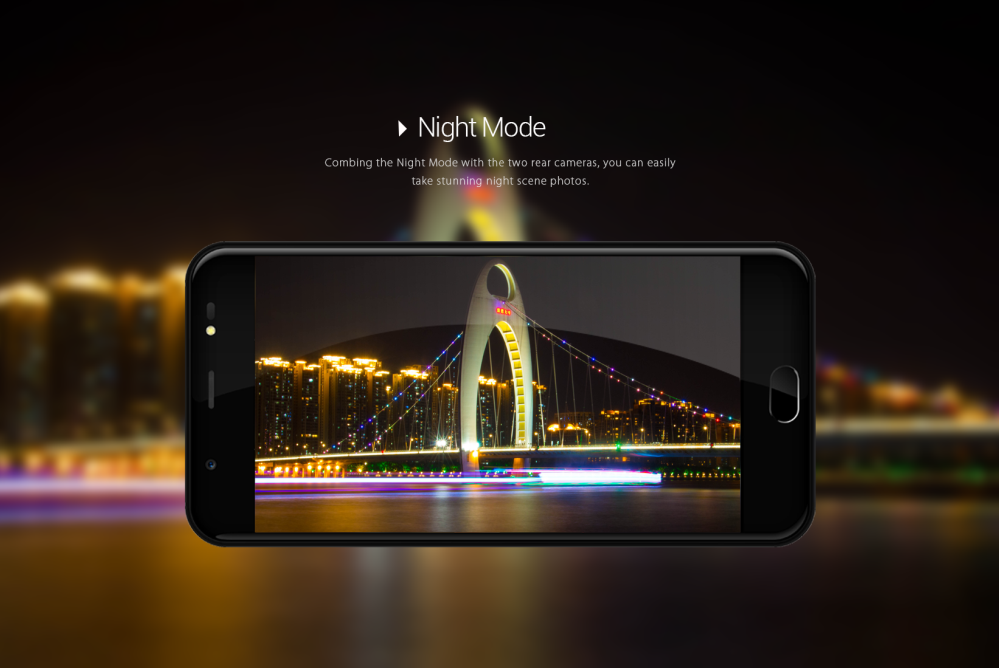
The Eyes of the Night and Night Mode
M7 is the night shooting saver. Dual rear camera works similar to the eyes of the night, along with the F2.2 big aperture and 4P lens to deal with light, Besides, LEAGOO M7 support Night Mode that can always captures clearer images in low light environments.
Rear dual camera with dual LED flash
Dual LED flash supports two rear cameras to take stunning photos. With a combination of two LED lights, M7 detects the brightness and color temperature of circumstance, simultaneously adjusts and flashes light close to natural when taking pictures. Capture more natural and true-to-life pictures with M7.
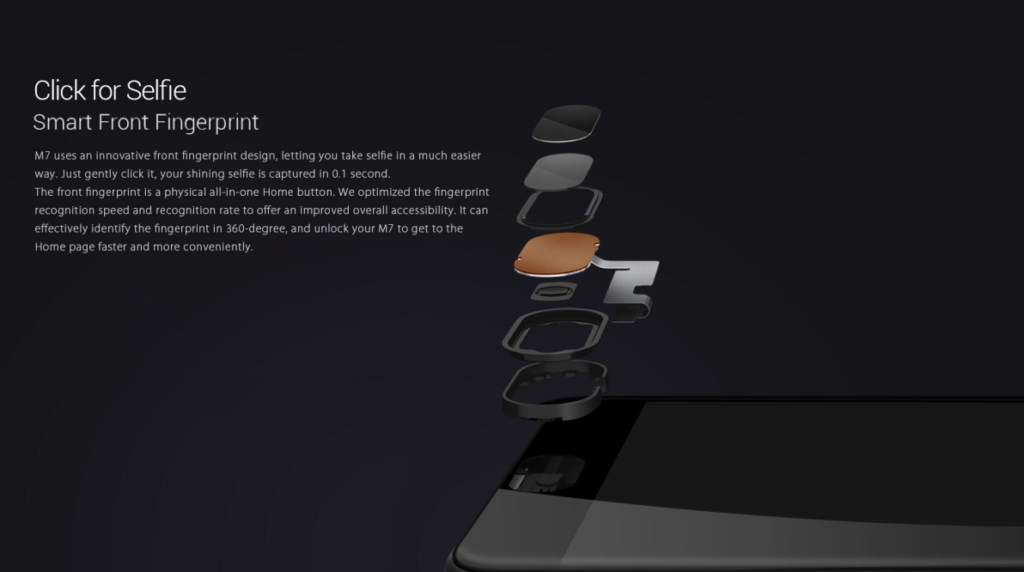
Smart Front Fingerprint
M7 uses an innovative front fingerprint design, letting you take selfie in a much easier way. Just gently click it, your shining selfie is captured in 0.19 second.
The front fingerprint is a physical all-in-one Home button. We optimized the fingerprint recognition speed and recognition rate to offer an improved overall accessibility. It can effectively identify the fingerprint in 360-degree, and unlock your M7 to get to the Home pagefaster and more conveniently.
More Comfortable than Ever
M7 has a simple but clear and impressive 7.9mm unibody withmicro-arc designed curved edges ,providing a more comfortable touch. On the front, the 2.5D arc round edge will make you feel more smooth with a seamless connection to the metallic-touch unibody.
Now LEAGOO M7 pre-order was started, you can save $10 and get a free siliconcase during this campaign period, only 1000pcs limited, just click here: Buy Now
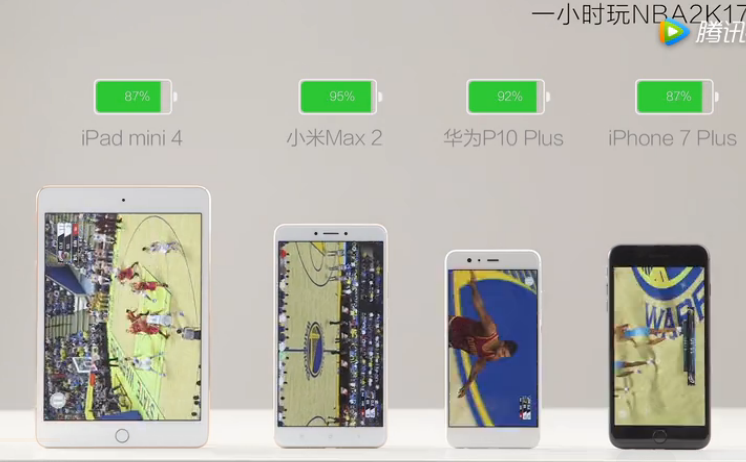
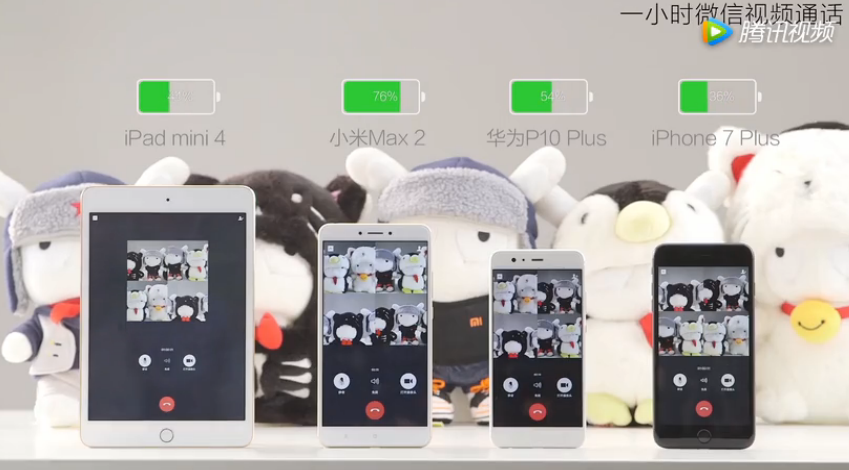
Xiaomi has released another promotional video which, this time around, highlights the battery power of the Mi Max 2. For the avoidance of doubt, the Xiaomi Mi Max 2 packs a 5,300mah battery and the video compares the battery endurance level with those of the iPad 4 Mini, Huawei P10 Plus and iPhone 7 Plus. To clear things up, the iPad Mini 4 packs a 5,124mAh battery, the P10 Plus features a 3750mAh battery and the iPhone 7 Plus uses a 2,750mAh battery.
Another thing to note is that a more powerful and efficient processor is on the iPhone 7 Plus and Huawei P10 Plus. The Apple A8 chip on the iPad Mini 4 could even be more powerful than the Snapdragon 625 chip the Mi Max 2 features. All four devices — three smartphones, and a tablet, were subjected to different activities which are things we use daily on our devices. First, the gadgets were subjected to one hour of gaming, all at the same time, running the NBA 2017 game. Thereafter, 1 hour of video chat was made on all the devices and this was followed by 1 hour of full HD video capture and then a music video was streamed online for 1 hour on all the gadgets.
The iPad Mini 4 was the first to run out of battery, followed by the iPhone 7 Plus and then the Huawei P10 Plus. It is interesting to note that by the time all the three models were out of battery power, the Xiaomi Mi Max 2 battery capacity was still at 50%. This simply means the Mi Max 2 offers twice the battery power and perhaps with more battery management than the others. We cannot conclude on this yet because we haven’t independently verified the test. But this is an indication that the Snapdragon 625 isn’t a power hungry processor and you’ll get an amazing battery life on the Mi Max 2.
If you are having issues watching the video, click here.
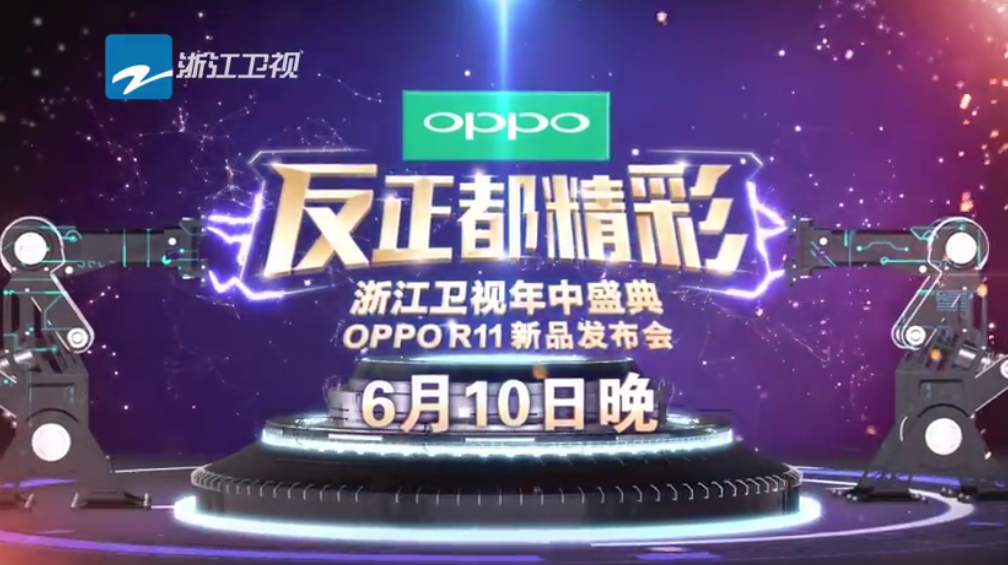
OPPO has released a video trailer which announces the OPPO R11 launch date. The video details the OPPO R11 conference as holding on June 10 and would be broadcasted on Zhejiang Satellite TV across China. Other details like the venue of the conference are yet to be revealed. It is believed this is part of the promotional campaign before the R11 is launched.
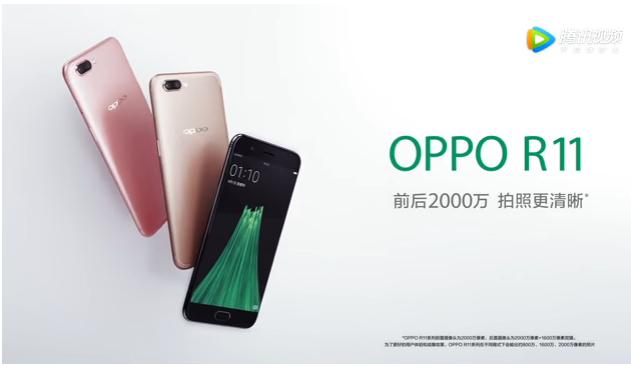
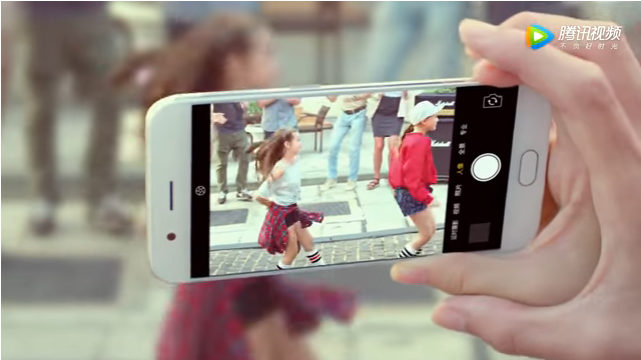
The OPPO R11’s adverts have always pin-pointed the dual 20MP + 16MP sensors it packs at the rear as the main feature which the OPPO smartphone is expected to feature. What makes the dual camera unique is that it isn’t the usual colour + black and white combination but is a telephoto + wide-ande lens setup. There is also a 20MP front-facing camera onboard the device. The camera is also touted as capable of achieving 2X optical lossless zoom and also features a special portrait more which provide a clear image with a blurred background.
The OPPO R11 is expected to be launched along with the R11 Plus which was recently spotted on TENAA but we don’t know about that for now. The company has been silent about the R11 Plus just the same way they were silent about the R9s Plus until the last minute. Both devices will likely be launched on the same day.
To refresh our memories, the OPPO R11 is expected with a 5.5-inch 1080p display and will also feature Qualcomm’s mid-range Snapdragon 660 processor which was announced recently. In a similar vein, the graphics will be powered by an Adreno 512 GPU. The device is also expected to pack a 4GB RAM, 64GB storage and run Android 7.1 Nougat OS. The R11 will be available in Gold, Silver and Black colors.
On the other hand, the R11 plus is expected to feature a 6-inch 1080p display with the same Snapdragon 660 chip firing things up. There is going to be a 3,880mAh battery onboard but the design will be similar to the R11’s. Apart from the display sizes, both models are also expected to differ in thickness with the R1 having a 7.6mm thickness while the R11 Plus is 7.8mm thick. The R11 Plus will be available is Gold, Rose Gold and Black colors.
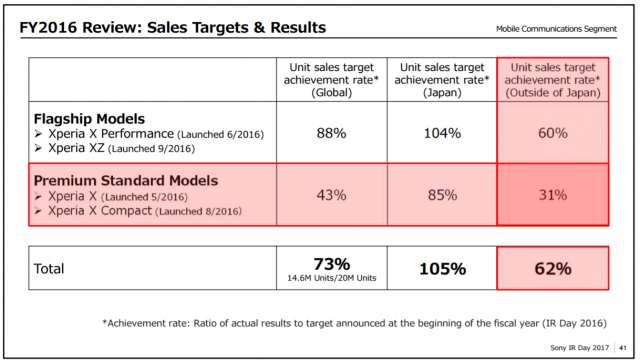
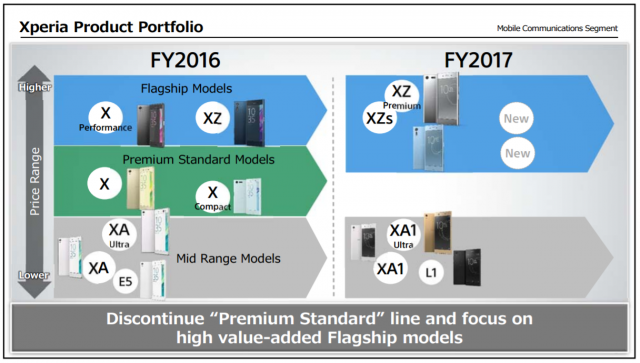
Sony has been selling smartphones like Xperia X and Xperia X Compact that come with nearly flagship specifications along with reasonable pricing. Since these smartphones are not true flagships, such phones have met with lackluster sales. Hence, the Japanese company is going to kill affordable flagship phones. Instead, it will focus more on launching true flagship and mid-range smartphones.
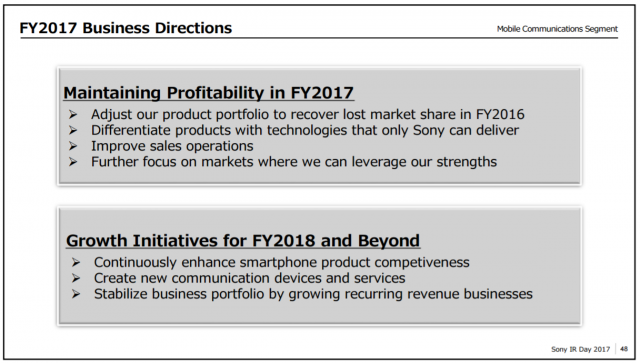
In Japan, the affordable flagships could meet 85 percent of the revenue target set by the company. Outside Japan, this number declined to 31 percent. Sony could meet only 43 percent of its global targets in this segment. During the 2017 Investor Day, the company confirmed that it will be concentrating on releasing premium smartphones like Sony Xperia XZ Premium and Xperia XZs and mid-range phones like Xperia XA1 and Xperia XA1 Ultra. Here are some of the things that were discussed in 2017 Investor Day:
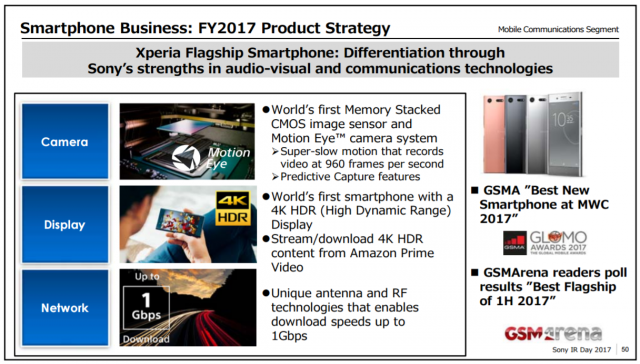
Sony smartphones will be coming with certain features that only it can offer. Sony has introduced the Motion Eye camera system that shoot super slow motion videos at 960 fps. The Xperia XZ Premium is the first smartphone to come with support 4K HDR. This will allow the Japanese company to distinguish its smartphones from other brands.
In the past years, Sony’s market share has fallen significantly. However, in 2017, it aims to increase its market share by featuring its smartphones with such technologies that can be delivered by Sony. Since Sony can leverage the brand strength in markets like Japans, East Asia, APAC, Middle East and Europe, it will be concentrating more smartphones in these regions. The company also wants to make it big in India where the market is flooded with plenty of low-range smartphones that earn low profits.
The Japanese company also wants to improve the popularity of its smartphones in the U.S. This is only possible if the company invests a lot of money in advertising. it aims to sell its smartphones in the U.S. by building a strong partnership with the U.S.-based carries. Since Sony smartphones are not available through leading carriers in the U.S., it handsets have met with poor sales.
The Sony Xperia XZ Premium will be launching next month, but the U.S. consumers are unaware of it because of poor advertising strategy in the country. If Sony follows its new plans, it can achieve popularity in the U.S.
As part of Nokia’s return into the smartphone market, HMD Global revived the iconic Nokia 3310. The relaunch of the legendary phone brought about a feeling of nostalgia that resonated all over the globe. Now that Nokia is fully back in business, we hope to see more of its iconic smartphones given new life.
Joe and I had an interesting discussion on what phones we hope to see Nokia bring back to life. We narrowed them down to five, but we may add more later on. We decided to share our imaginations with you and also hear your feedback. This will be a series that will run over the next couple of weeks and will be authored by either Joe or myself. What we are hoping to achieve from this series is to re-imagine the legendary Nokia phones of the 2000s and see how could we fit them in the current market scenario. A lot of things have changed since the Nokia times and if these phones were to make a comeback, they would need some serious changes, and not just in the colors, but in everything, including the design and the hardware.
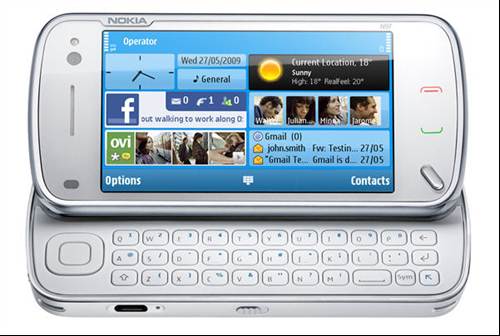
This is how we’ve imagined the Nokia N97 2017 Edition. Feel free to add your thoughts and comments on what you would like to see if this legendary phone makes a comeback.
The Original Nokia N97
1. Nokia N97 (2017)
The first phone we want to see Nokia bring back is the Nokia N97. BlackBerry has proved that there is still a market for phones with physical keyboards and the BlackBerry KEYone is the example that comes to mind.
The original Nokia N97 launched with a 3.5-inch slide-and-tilt touch display, 128MB of RAM and 32GB of storage. That will get you nowhere in 2017.
To pimp this baby up, we are giving it a 5.5-inch FHD display with thin bezels on all sides but a large enough one at the bottom to hold a fingerprint scanner. It will be powered by a Snapdragon 660 processor, while the RAM gets a massive boost to 4GB and storage starts at 64GB. I know you would be tempted to get the SD835 in this baby, but remember, we have to keep the costs reasonable.
The highlight of the N97 is its keyboard, which can only be used in landscape mode. To make navigation easier, we think the keyboard should work like that of the Blackberry Priv. That means we are ditching the D-pad navigation buttons on the original N97. The whole keyboard will now serve as a trackpad so you can navigate through apps and menus without touching the screen.
The original N97 had a 5MP Carl Zeiss sensor for its rear camera. That is unacceptable in this age. We’ll swap it out for the 12MP Sony IMX378 sensor and ditch the slide that covers it. The VGA front camera also gets bumped to a very decent 8MP shooter with a dedicated flash.
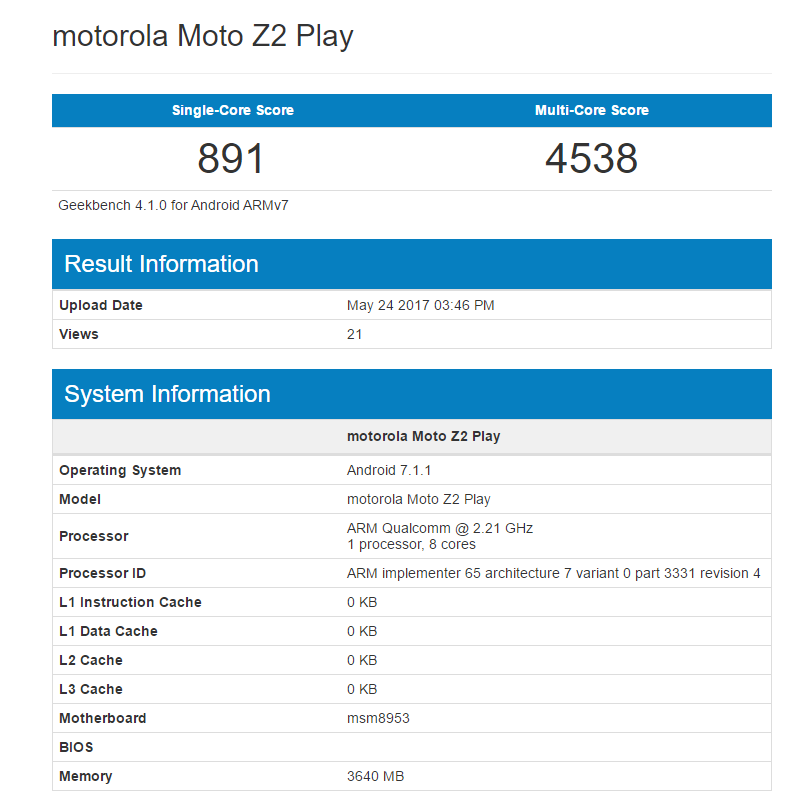
The Moto Z2 Play was seen on Geekbench yesterday. The benchmarking site has revealed the smartphone will be powered by the Snapdragon 626 which is a slight upgrade over the Snapdragon 625.
The test results shows the Moto Z2 Play scoring 891 points on the single-core test and 4538 points on the multi-core test. The listing also reveals the Z2 Play will come with 4GB of RAM and run Android 7.1.1 out of the box.
The Moto Z Play was praised for its great battery life but we may not be able to say the same for the Moto Z2 Play. Unlike its predecessor that has a 3510mAh battery, the Z2 Play will come with a smaller 3000mAh battery.
The only reason I believe led to Lenovo/Motorola taking this decision is so that it can sell off the thousands of battery mods it has unsold in its warehouses. Nobody complained about the 7mm thickness of the Moto Z Play, so shaving off so much battery to keep the thickness under 6mm isn’t an excuse.
Xiaomi Mi Max 2 was announced at an official event in China a few minutes back. This is an important smartphone for the company as it’s only the second large screen phablet from the company in recent years and considering the popularity of the original Xiaomi Mi Max, the new generation Mi Max 2 has some pretty large shoes to fill.
Xiaomi Mi Max 2 Design
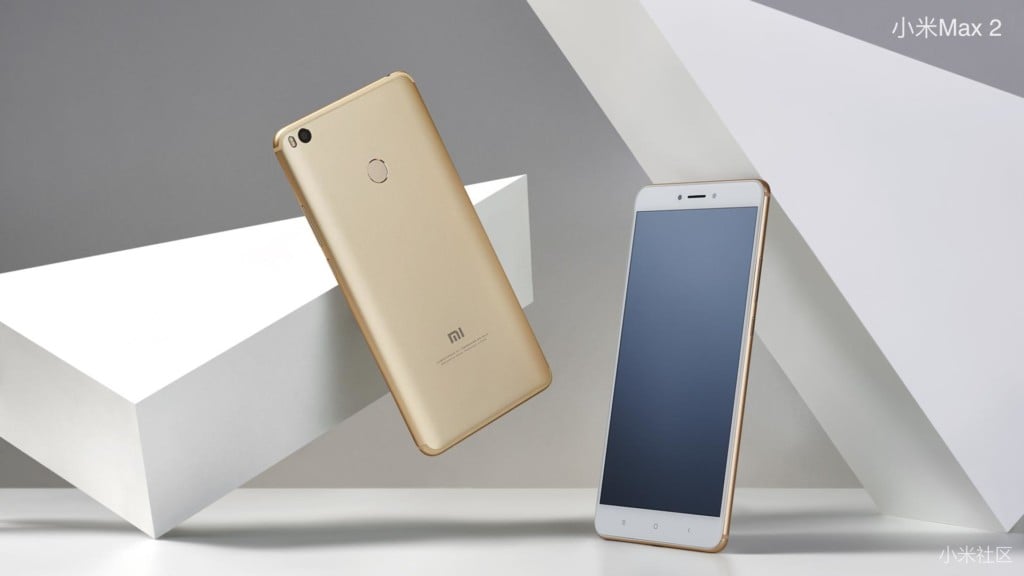
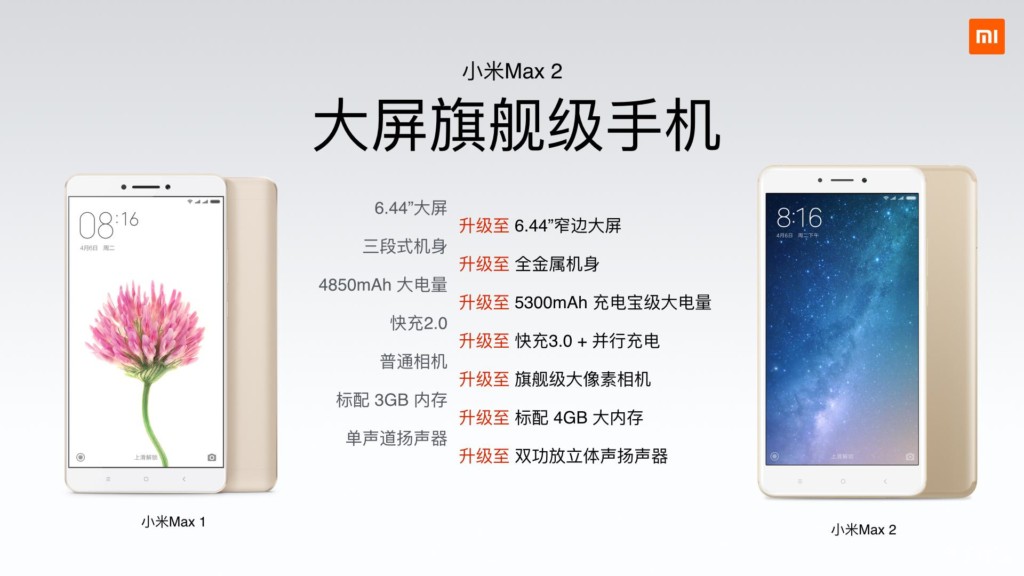
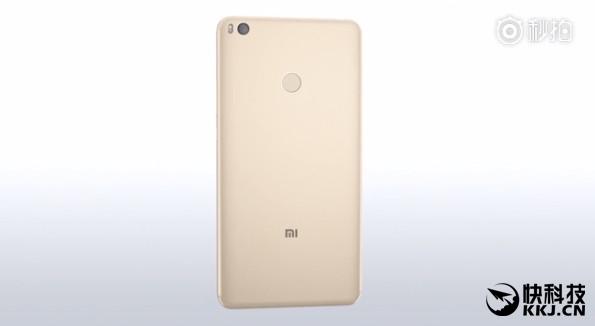
Design wise, the Mi Max 2 does not incorporate any significant changes than its predecessor. What’s changed at the back are the antenna band design on the top as well as the bottom. They are now tucked towards the top and bottom edges, thereby creating a seamless back design. The fingerprint sensor is still on the back. The design looks a bit curvier than before, but we can confirm this only after we get our hands on the phablet.
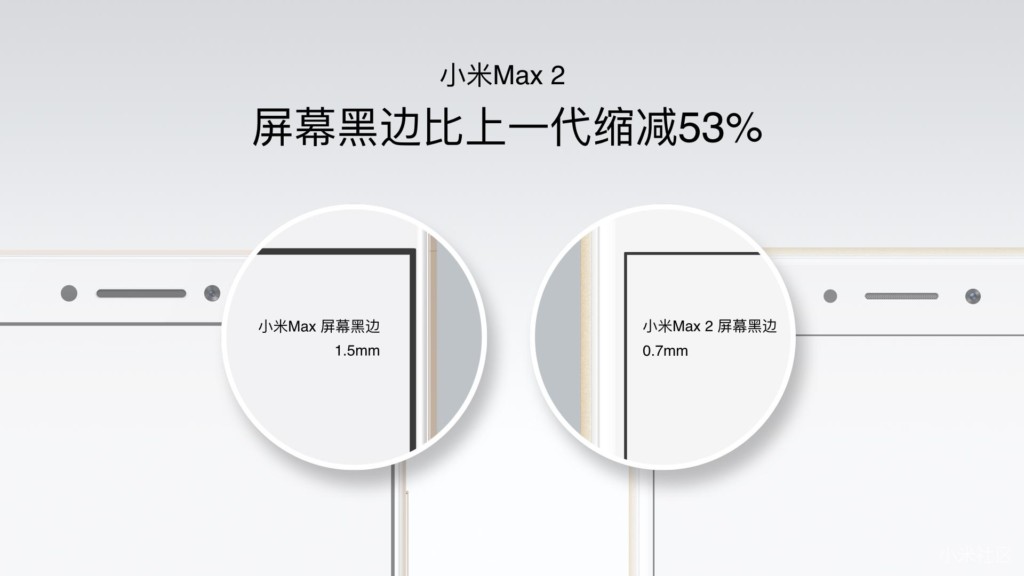
Coming to the front of the phone, everything is almost the same as before. However, Xiaomi adds that the black borders around the screen (which we all hate) are now thinner than the first generation model.
The company seems to have reduced the thickness of the black borders quite significantly, now measuring just 0.7mm, which is great!
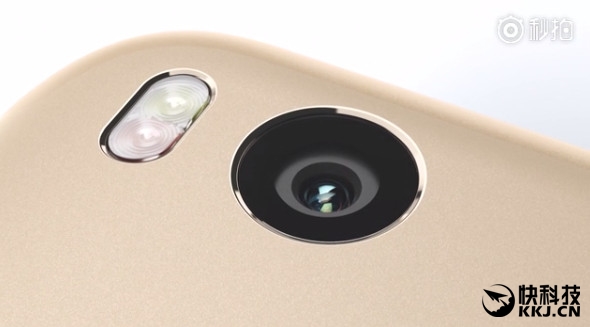
As for the dual LED flash position, it’s now located on the left side of the camera sensor instead of the right. One more thing, there’s a 3.5mm headphone jack on top, so you don’t have to worry about getting Type-C headphones, at least not for this phone.
Xiaomi Mi Max 2 Specs
Xiaomi Mi Max 2 comes with the Snapdragon 625 chipset inside with 4GB RAM and 64GB of internal storage. There’s a 4GB + 128GB model as well. Now, to be honest, it’s disappointing to see SD625 inside the phablet. We were expecting much a better chipset inside, something like the SD660.
The Mi Max 2 comes with the same 12MP IMX386 sensor as the Xiaomi Mi 6. The pixel size has been increased to 1.25um for better quality pictures along with a night mode enhancement feature. Other camera specs include PDAF, dual tone LED flash, and dynamic range adjustment.
Camera Sample 1
Camera Sample 2
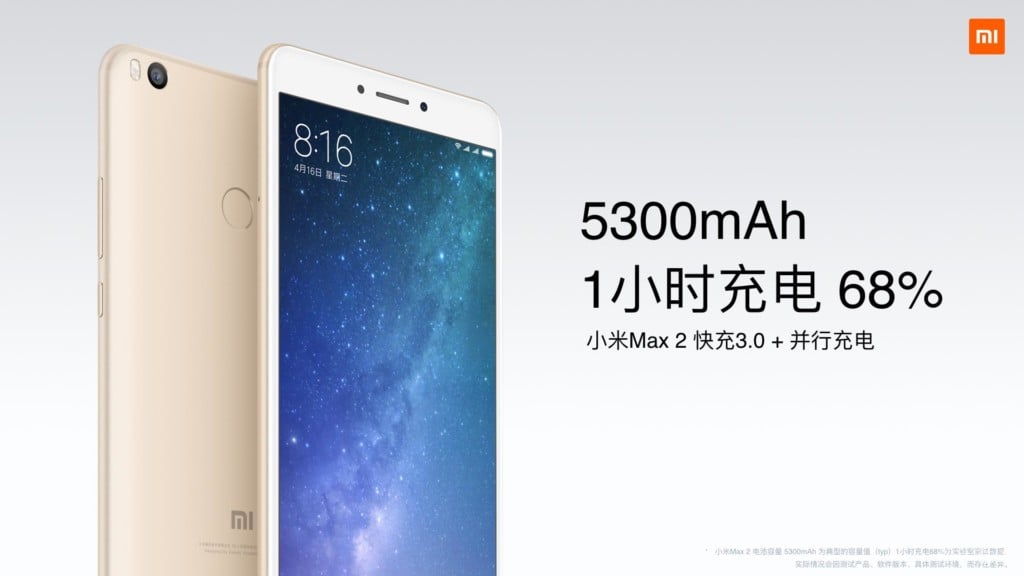
Coming to the battery, Xiaomi has made the Mi Max 2 an even better battery monster. The new generation model now comes with a much larger 5300mAh battery inside that promises up to 18 hours of video playback. You can get up to 9 hours of continuous gaming or 21 hour continuous navigation or 57 hour continuous talktime or even 10 day continuous music playback with this huge battery on board. Further, charging it won’t be an issue since the phone supports QC 3.0 and charges up to 68% in an hour.
You get stereo speakers inside, an upgrade from the single speaker on the Mi Max.
Here’s a basic Mi Max 2 Specs summary:
Xiaomi Mi Max 2 Software
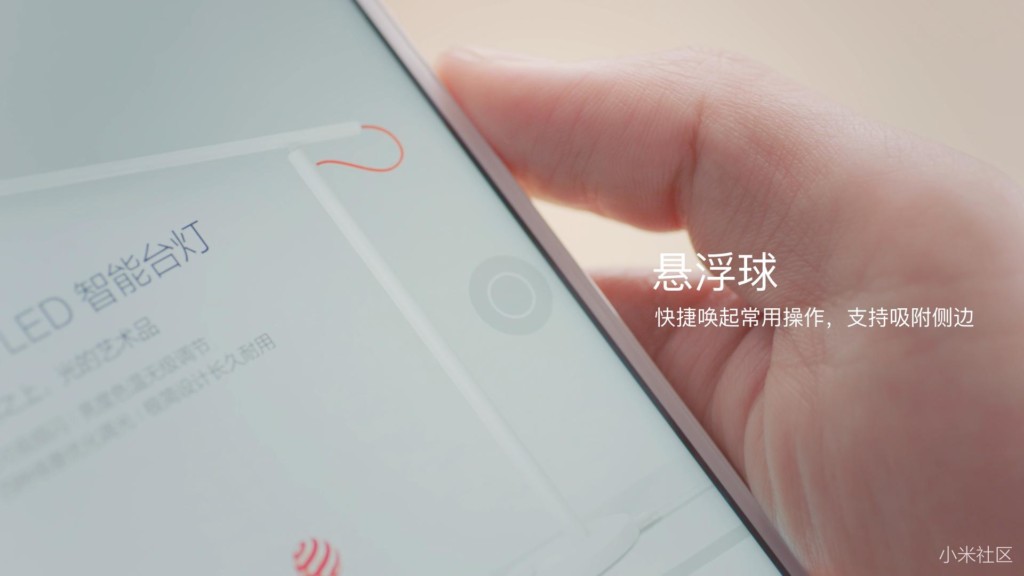
Xiaomi has revealed that it has tweaked MIUI to improve user experience on the Xiaomi Mi Mi Max 2. The phone comes with a floating ball which can be used to open your most frequently used apps. Then there are other features such as one hand mode and others features which will help in the day to day use of the 6.44-inch display phablet.
No word on the Android version yet, but expect at least Android 7.1 with MIUI 8.2.
Xiaomi Mi Max 2 Price & Availability
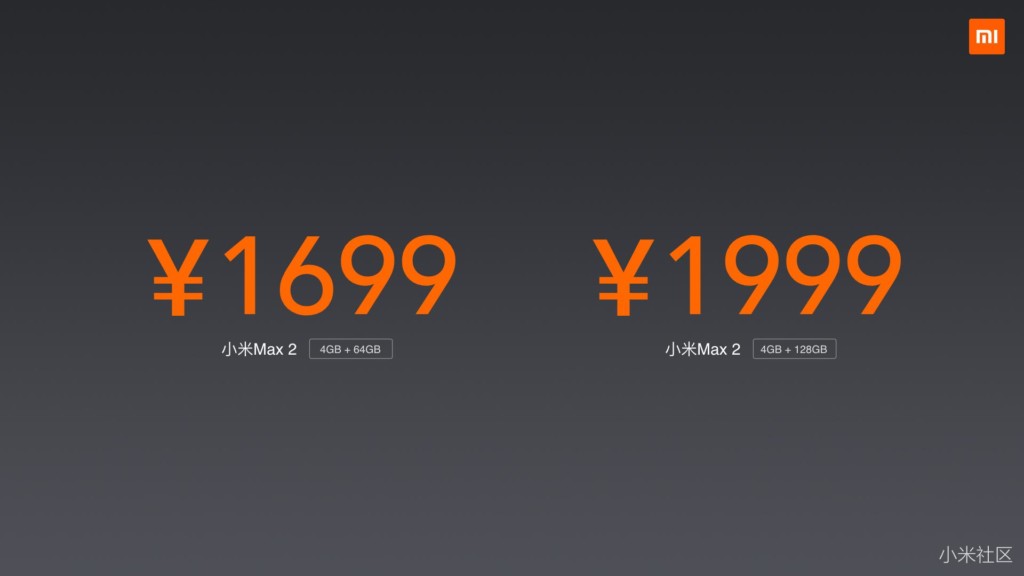
The Xiaomi Mi Mix is priced at 1699 Yuan (~$248) for the 4GB + 64GB version and 1999 yuan (~$291) for the 4GB + 128GB version. It will go on sale on June 1 via online as well as offline stores.
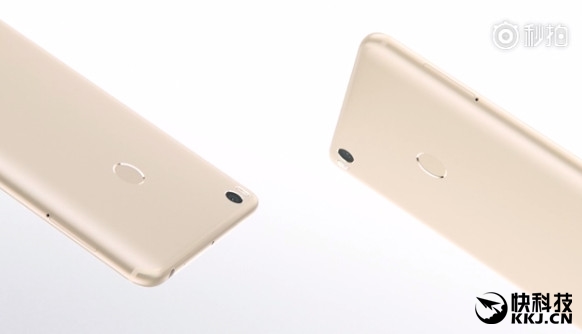
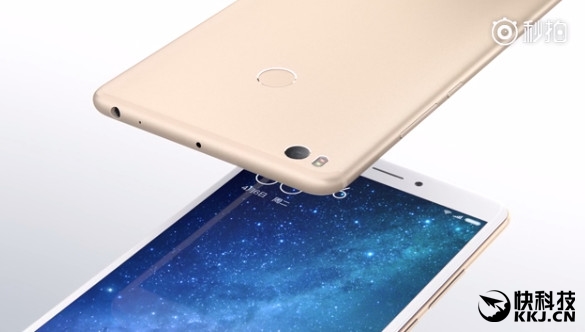
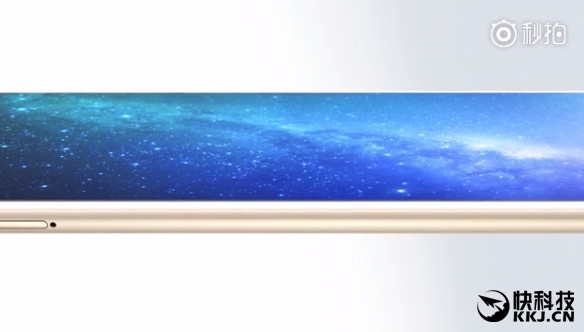
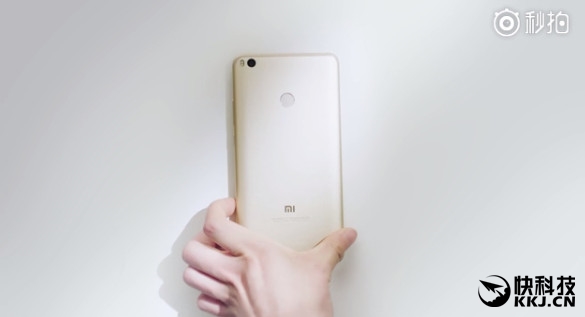
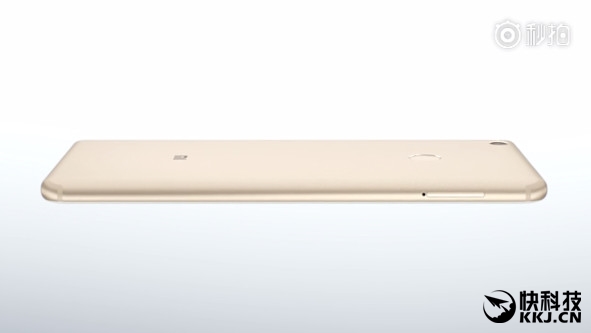
Before the Xiaomi Mi Max 2 finally goes official, a promotional video of the phablet showcasing its design and looks has been released by Xiaomi. The video shows the device from almost all angles, only omitting the part where the USB port is supposed to be located. This could perhaps be a deliberate act to keep us guessing whether the Max 2 features a USB Type-C port or not. No worries, we’ll find out about that soon.
From the video we get to see the beautiful, large display packing smartphone Xiaomi has designed just for us. Despite its large size, and talks of a bigger battery than the Mi Max, the Mi Max 2 still looks like what will come with a thin body built which should make holding it with one hand an easy task. The Mi Max 2 comes with a 6.44-inch display and taking into account the bezels around the display, the entire size of the device could be a little bigger.
There is also a rear fingerprint sensor on the device which is centrally located at the upper rear aspect of the device. The rear camera is tilted to the left side in Xiaomi’s usual pattern with a dual-tone LED flash sitting by its left side. There is also a 3.5mm audio jack onboard.
On the whole, what we see is a beautiful design that would be a hot-selling phablet considering the increasing demand for large display packing smartphones in the market presently. The Mi Max 2 will be official in a moment and we’ll bring you the entire details right here on Gizmochina. Meanwhile, check out more photos from down below. Yo can also check out the 58-seconds promotional video from here.
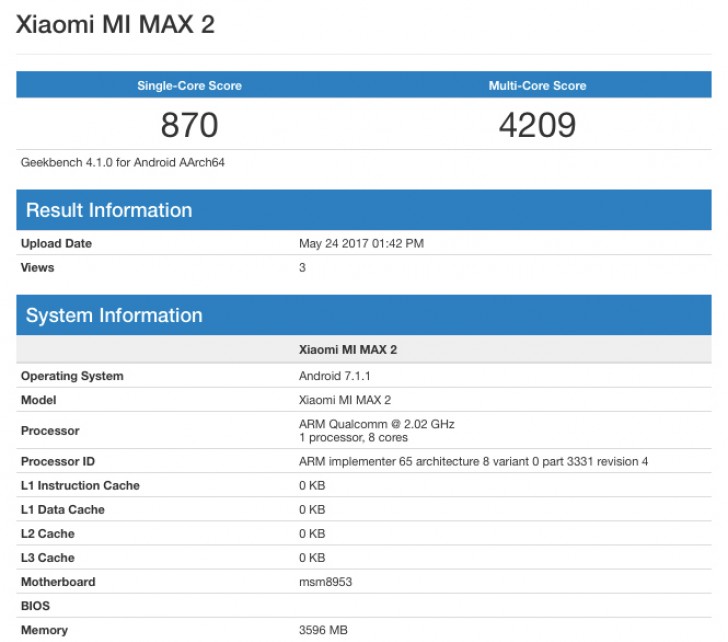
Xiaomi‘s Mi Max 2 phablet is expected to go live today in an event in China and ahead of that launch event, the device has appeared on Geekbench database where it has been benchmarked. Geekbench’s appearance doesn’t usually reveal so much about the specification of the phone but it does reveal something.
In this case, among the listed specs is what should either be a Snapdragon 626 chip or that of the Snapdragon 625. That is because the device is listed as coming with an octa-core MSM8953 processor clocked at 2.02GHz. Ordinarily, this is the SD 625, as the SD 626 chip comes with the model number MSM8953Pro. But the benchmark may have omitted the last three letters so, it’s possible the chip is the Snapdragon 626. Moreover, we have had a leak pointing at the SD 626 on board the Mi Max 2.
In addition to the processor, the Max 2 is listed with 4GB of RAM and it runs Android 7.1.1 Nougat which will most likely be embedded with Xiaomi’s MIUI interface. The Geekbench listing did not reveal any further detail but the Mi Max 2’s appearance on GFXBench revealed the device’s processor uses the Adreno 506 GPU and that is featured by both the SD 625and SD 626 chips. GFXBench also revealed a 6.4-inch 1080p display, 18GB of native storage, a 12MP rear camera as well as a 5MP front-facing camera for selfies.
We use cookies on our website to give you the most relevant experience by remembering your preferences and repeat visits. By clicking “Accept”, you consent to the use of ALL the cookies.
This website uses cookies to improve your experience while you navigate through the website. Out of these, the cookies that are categorized as necessary are stored on your browser as they are essential for the working of basic functionalities of the website. We also use third-party cookies that help us analyze and understand how you use this website. These cookies will be stored in your browser only with your consent. You also have the option to opt-out of these cookies. But opting out of some of these cookies may affect your browsing experience.
Necessary cookies are absolutely essential for the website to function properly. This category only includes cookies that ensures basic functionalities and security features of the website. These cookies do not store any personal information.
Any cookies that may not be particularly necessary for the website to function and is used specifically to collect user personal data via analytics, ads, other embedded contents are termed as non-necessary cookies. It is mandatory to procure user consent prior to running these cookies on your website.

 (source)