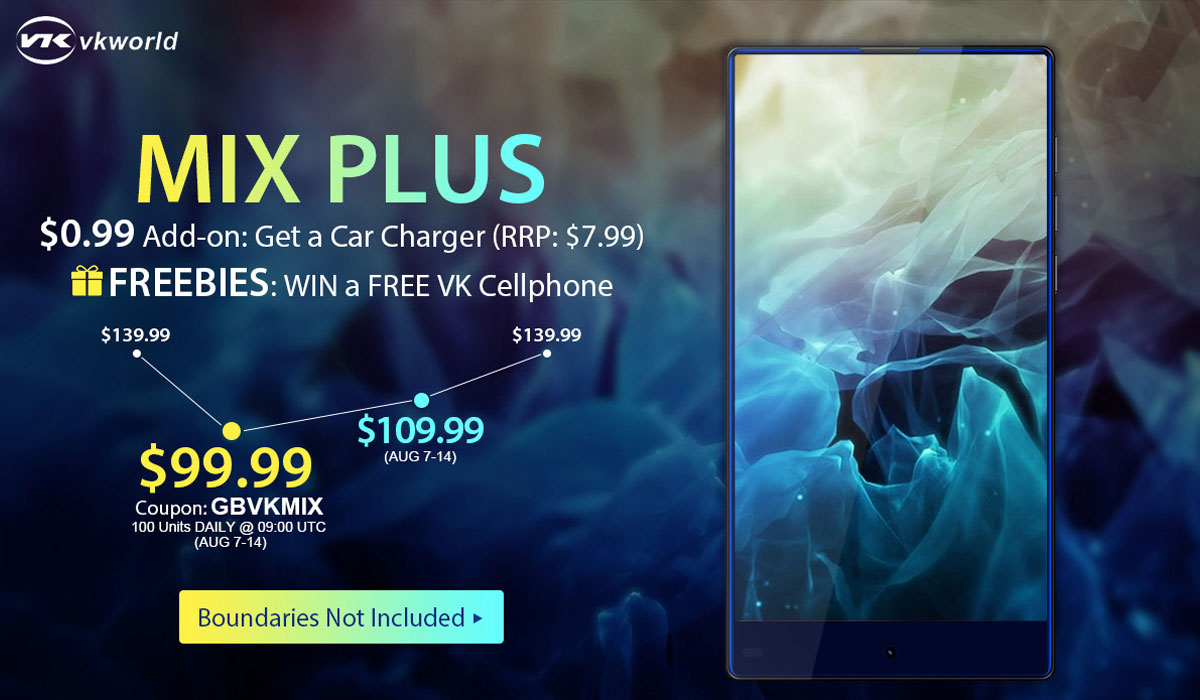
Gizmochina along with VKworld is conducting a VKworld Mix Plus phone as Giveaway gift to one of our lucky readers. Like always, you just have to follow the steps mentioned on the Gleam widget to get a chance to win this amazing phone.
How to entry this giveaway? Just follow these steps via Gleam widget:
Visit VKworld’s Facebook and Twitter, follow them;
Share this article to your Facebook, Twitter, Google+ or other social media;
Terms & Conditions:
1. The giveaway is an international giveaway.
2. We are not responsible for lost shipments.
3. We are not responsible for any duties, import taxes that you may incur.
4. We reserve all rights to make any changes to this giveaway.
5. The prize will be shipped in a week when the giveaway end.
Just follow the steps mentioned in the Gleam widget to participate in the giveaway.
The Google Pixel has a fantastic camera that takes superb photos. The result of the photos is actually a joint work between the sensor and the software which does an amazing post-processing job thanks to the HDR+ feature. Much gratitude to the app developer that goes by B-S-G, as it is no longer exclusive to the Pixels. He was able to port it to other devices which can now take advantage of the HDR+ feature.
This version of the camera is a modified version of Google Camera 4.4.012.156195200 but it will work on phones powered by the Snapdragon 820, 821, and 835. These devices use Hexagon 680 ISP or above that’s why they are supported. It has been tested on the LG G6, OnePlus 3, OnePlus 3T (I’ve tried it too, though selecting slow motion mode force closes the app), OnePlus 5 and the Samsung Galaxy S8.
When you take a shot with HDR+ activated, you get a notification that it is processing.
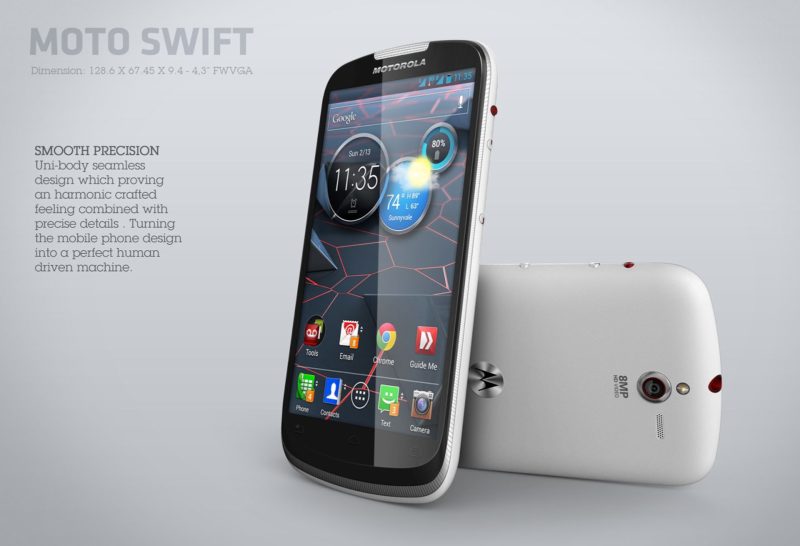
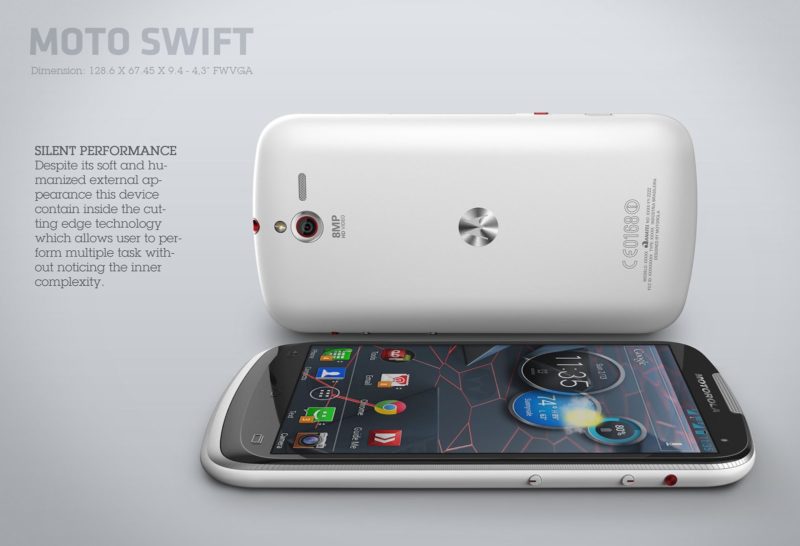
It seems that Motorola had planned a concept phone called Moto Swift in 2012. The Moto Swift was never created but its images have now surfaced to reveal its appearance as well as its features.
The details of the Moto SWIFT suggest that it would have been a mid-range phone for users in Latin America and Asia. It was supposed to feature a 4.3-inch FWVGA screen and it would have arrived with Android 4.0 Ice Cream Sandwich overlaid with MotoBlur UI. An 8-megapixel rear camera with full HD video shooting support was also going to be available on Moto Swift. The chin of the device has the usual Android ICS capacitive keys.
The design of the Moto Swift is similar to Motorola phones of 2012-2013 era such as Atrix 2 and Droid 4. It would have measured 128.6 x 67.45 x 9.4 mm. Its description states that it has a unibody design. A flashy Motorola “M” logo is present at the center arear of the back panel. The right side has round-shaped buttons for Power (red-accented one) and volume controllers. The left side seems to feature another red-accented button and an additional button. One of them seems to belong to be dedicated a camera launcher key.
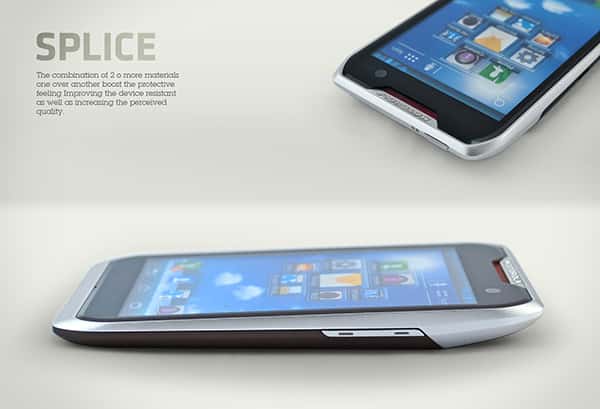
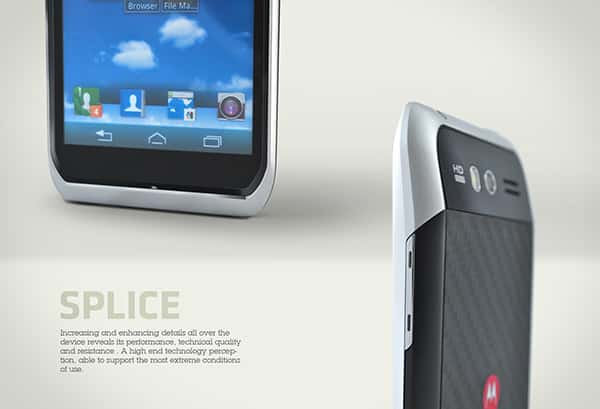
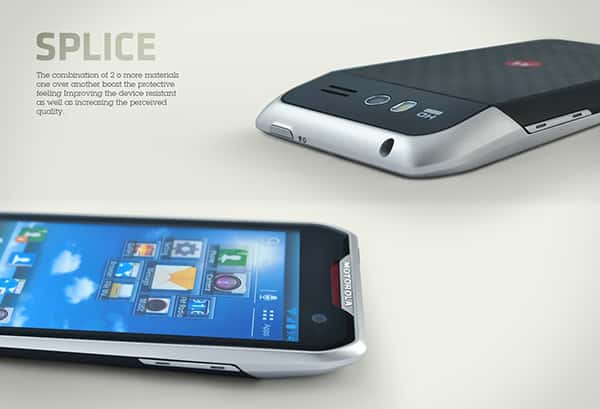
In the previous month, details about the Motorola SPLICE concept phone had appeared. The images show that it would have come with a Kevlar casing. This suggests that the phone would have been usable in extreme weather conditions. Again, the design of the phone is similar to Motorola smartphones of that time. The Motorola SPLICE has a rugged appearance and has a thicker profile.
Like the Moto Swift, the Moto SPLICE would have also launched with Android 4.0 Ice Cream Sandwich OS. The specs of the phone would have been similar to that of Moto Swift as it may have arrived with HD screen and an 8-megapixel full video shooting camera. There is a 3.5mm audio jack on the topside and the volume controllers are on the right. A red colored “M” logo can be seen placed on the back panel of the phone. The top bezel has a Motorola text logo mentioned.
The details on other specs like chipset, RAM and battery are unavailable. There is no information on why Motorola did not release the Moto SWIFT and SPLICE smartphones.
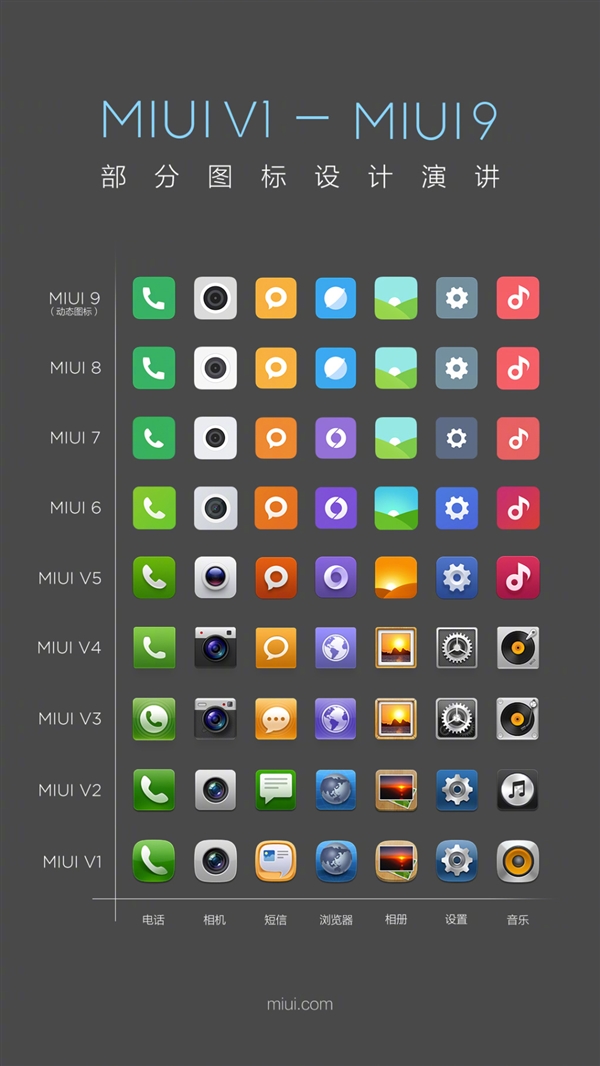
One way to have a clear understanding of the things that have changed over the years in through pictures and this photo showing the icons for the key system apps for the successive generations of MIUI clearly give an understanding of how much the custom ROM which is skin over the Android OS has evolved right from the MIUI 1 through to MIUI 9.
The Xiaomi MIUI is actually a user interface which some users see as better than its native Android version especially in China where creating a custom UI based on Android OS is the norm. The interface is generally beautiful and very user-friendly. Moreso, the MIUI team updates the UI very often so as to fix bugs and other loopholes that are noticed.
Apart from its usability, the visual look of the MIUI embodied by the icons has been another area of interest and one clear indicator of that dynamism is the icon. As could be seen in the image, each version of the user interface brings with it a slight change in at least one of the icons and in some cases more than one. In some cases, the change is in the colour scheme of the icon but there’s always a change. No two generations have exactly the same icons. MIUI 1 has a different camera icon, messaging, phone dial icons and music player icon from the second generation (MIUI 2). The change continues until MIUI 9 with its smooth, refined icons but from version 7, the icons look almost similar.
Apart from changes in the icons, Xiaomi’s UI also comes with even bigger changes in the features it brings with it. The latest MIUI 9 comes with features such as Smart App Launcher, Smart Assistant, Split-screen, Picture-in-Picture mode and Image Search etc.
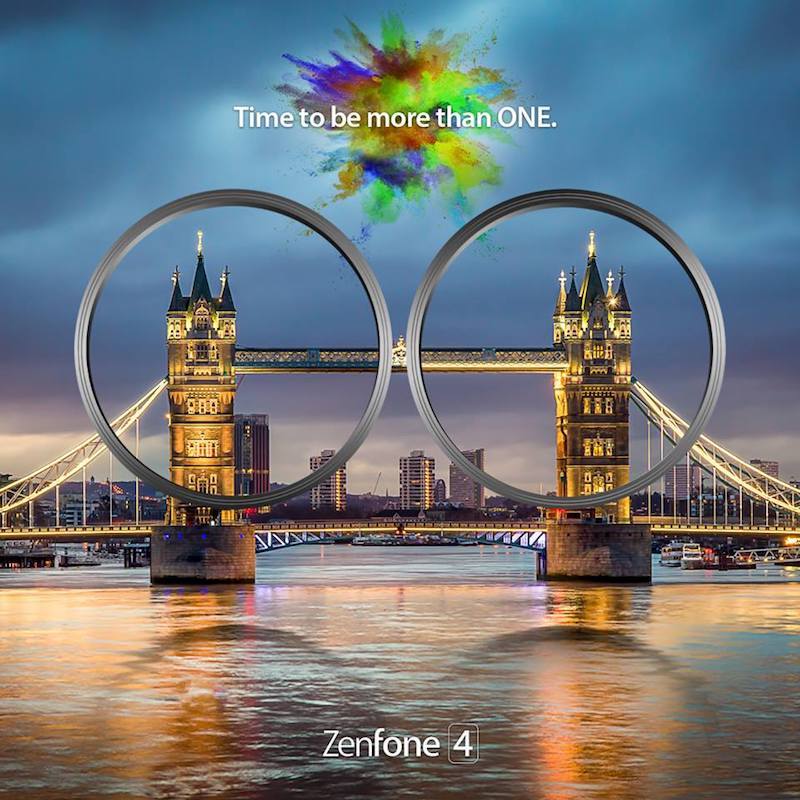
The launch of the rest of the Zenfone 4 series is almost upon us. Last week, details of the Zenfone 4 Selfie & Zenfone 4 Selfie Pro, another Zenfone 4 Max and the mid-range Zenfone 4 leaked, thanks to Roland Quandt. Yesterday, he also tweeted the specs of the US model of the Zenfone 4 Pro.
The Zenfone 4 Pro (ZS551KL) is the flagship of the lot. According to him, the phone will come with a 5.5-inch 1080p display. The Snapdragon 835 clocked at 2.45GHz will power the device. RAM will be 6GB and it will be paired with 64GB of storage. Expect it to have an expandable storage slot too.
ASUS will pre-load it with Android 7.1 out of the box and also include a non-removable 3600mAh battery. The battery capacity is the largest on a Snapdragon 835 powered device till date and we hope ZenUI is well optimized to take advantage of it.
Other features include Bluetooth 4.2 (a future update may push it to 5.0), NFC, and 802.11ac Wi-Fi. The phone’s thickness is also revealed to be 7.6mm. So not only does it pack a bigger battery than most of its peers, it also keeps it in a thin body.
The Xiaomi Mi Max 2 was released a few months ago as a successor to the large-screen Mi Max. Although the upgrades aren’t much, the Mi Max 2 manages to improve upon or keep some of our favorite features from its predecessor.
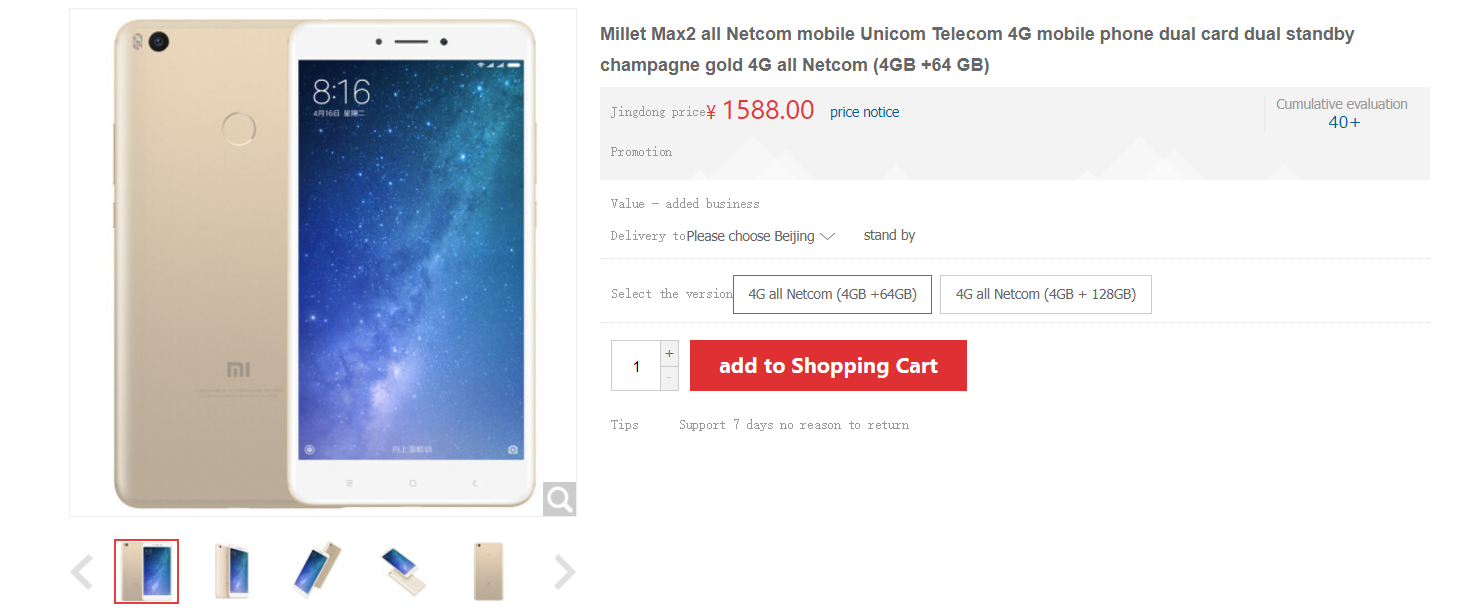
The Mi Max 2 comes in two variants. One has 4GB of RAM and 64GB of storage and the other has 4GB of RAM and 128GB of storage. Their respective official prices are ¥1699 (~$255) and ¥1999 (~$300), but can get it for less on resellers’ sites.
The 64GB version is priced at ¥1588 (~$238) and the 128GB version is ¥1799 (~$270) on JD.com. The store also has enough stock, so if you are planning to get the Mi Max 2, now is the best time.
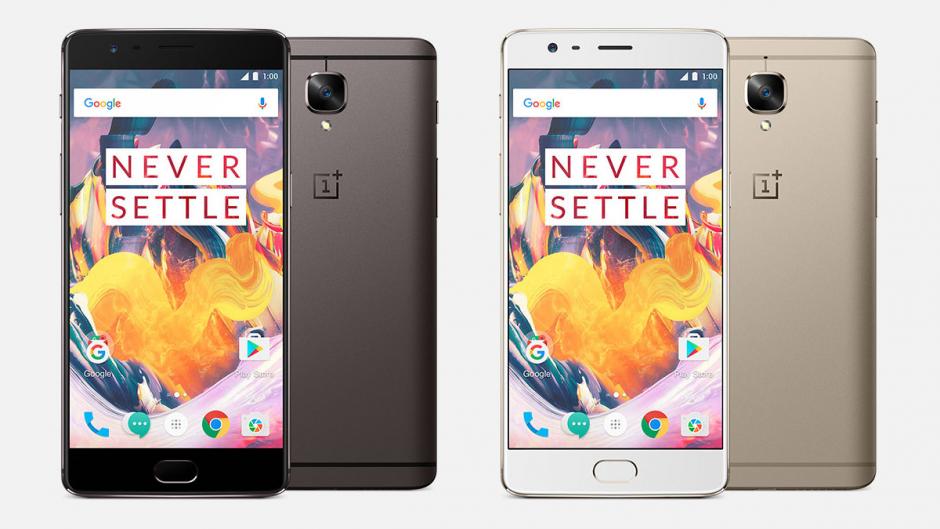
OnePlus was one of the first phone manufacturers to announce an Android O update for its devices (the OnePlus 3 and OnePlus 3T). What it didn’t say then was that it will be the last major update for both phones. The info was revealed by the Head of Product during a Software Support Q&A on the OnePlus Forum.
This means the OnePlus 3 and 3T only gets two major updates before since they launched with Android Marshmallow. Though it does appear that both devices are only getting support for a little over a year, OnePlus says it “will continue to release security patch updates for the foreseeable future”.
During the Q&A, he also mentioned that both devices will get the OxygenOS 4.5 update at the scheduled time. Initially, the plan was to release the update along with the latest security patch level update. However, community feedback resulted in some modifications. The plan now is to release the security level patch this month and the OxygenOS 4.5 update later.
Don’t get too excited about the update as some features available on the OnePlus 5 will not make it to the OnePlus 3 and OnePlus 3T. They are Reading Mode, new off-screen gestures, and DCI-P3 screen calibration. The reason OnePlus is citing is hardware differences. The OnePlus 3 and OnePlus 3T do not have the RGB sensor for the Reading Mode and hardware for the other two features.
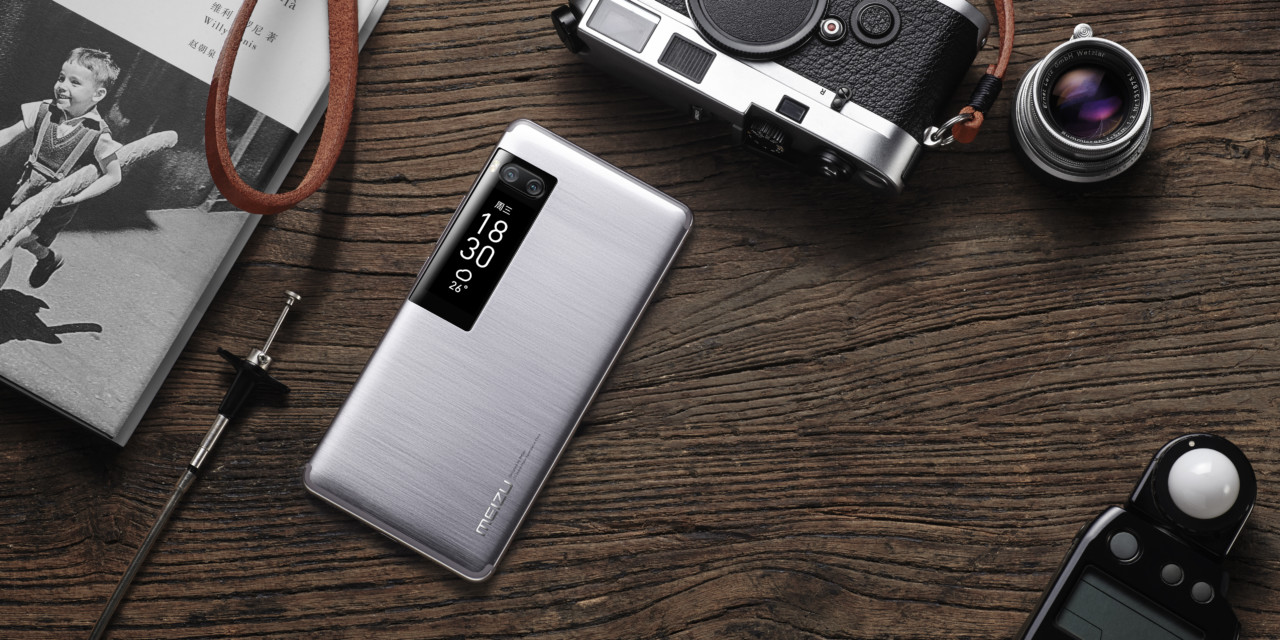
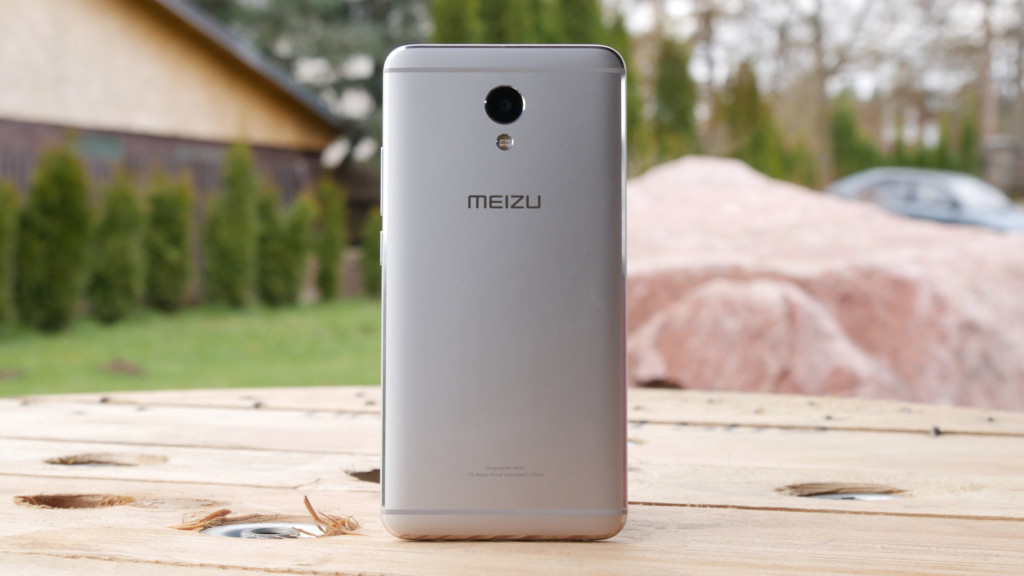
Starting off as a small-time MP3 manufacturer, Zhuhai based Meizu, has come a long way after shifting its focus into the booming smartphone industry in 2008. From its first ever smartphone, the Meizu M8 to the latest Meizu Pro 7, the company has shown tremendous promise with its devices. In fact, the new Pro 7 is one of a kind smartphone featuring a small second screen at the back to enhance user experience. Even the company’s mBack button is often praised for its innovative gestures.
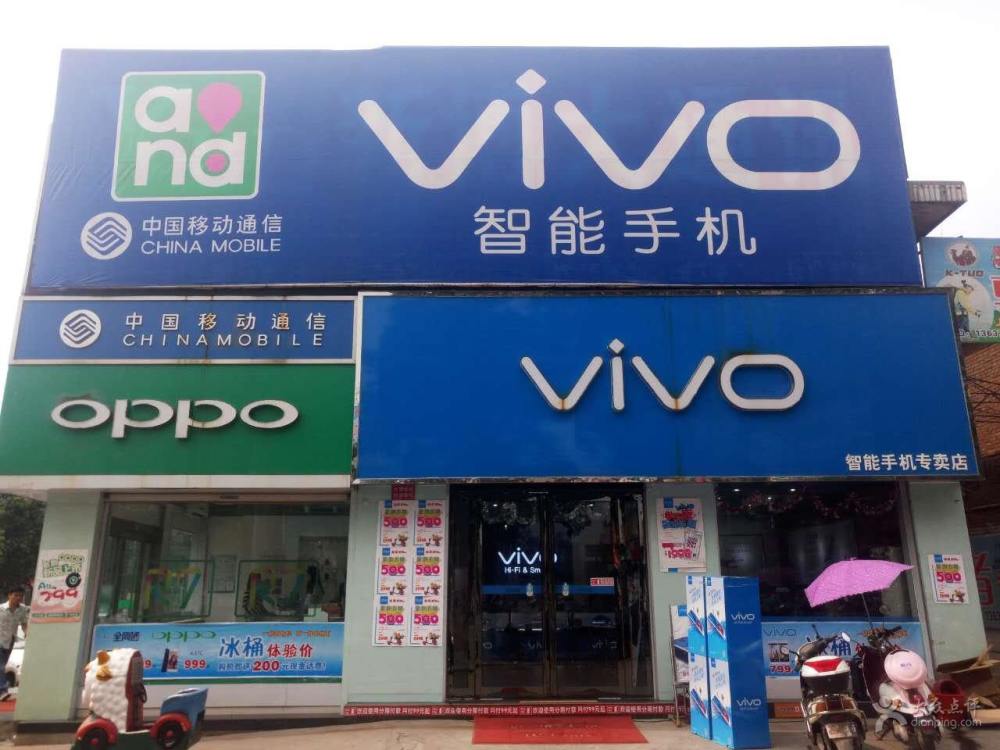
Thanks to these features, Meizu has always been able to go head to head with the big players in the market including its closest rival, Xiaomi. In fact, up until early 2016, if a customer was looking to buy a value for money mid-ranger in China, it often would come down to a Xiaomi or Meizu smartphone. However, with a variety of options from brands like Honor, OPPO, and Vivo flooding the streets, things aren’t the same as before. These smartphones may not be as cheap as the ones from the online focused Xiaomi and Meizu, but their marketing and promotions have given them an edge over sheer specifications.
OPPO and Vivo have changed the way we look at how companies market their phones. Their strategy to take full advantage of offline channels in China has clearly made an impact on the remaining brands, with companies like Xiaomi, who initially focused only on online channels, have now aggressively shifted its focus onto offline stores as well.
Xiaomi’s shift in strategy seems to be bearing fruit, with its sales going up in the recent quarter. The company has already roped in a few celebrities to promote its products and significant efforts are being made to expand the total number of Mi stores in China as well as abroad. In fact, Xiaomi CEO Lei Jun has revealed that the company plans to launch as much as 1000 Mi Stores by 2020. This clearly shows Xiaomi has realized the importance of brick and mortar stores.
But what about Meizu? Once considered as a direct rival to Xiaomi, the gap between these two companies seems to have increased in recent times. In terms of YoY sales, Meizu is still doing well. After having shipped 20 million smartphones in 2015, the company managed to beat this figure by an additional 2 million in 2016. That’s a healthy growth in a market that’s slowed down in the past couple of years. However, it’s not as good as it could have been, as Meizu was expected to ship over 25 million smartphones last year.
Things are looking slow for Meizu in 2017, with limited smartphone launches and issues such as internal layoffs. There have been just six smartphone launches this year, including the two new Pro 7 and Pro 7 Plus models. In comparison, the company had released 15 models back in 2016. We aren’t seeing many promotions or celebrity endorsements for the company either. So, overall, it has been a quiet year for the company so far.
What Happened to Meizu in the Past Few Months?
Meizu went on a hiring spree in 2016, increasing its total employee count to nearly 4400, from just 3000 before. The company expected high growth to continue through 2016, but as the sales figures indicate, it wasn’t as good as expected. With sales being sluggish, it became necessary to make the company more efficient, which is why layoffs came into the picture.
To be fair, it wasn’t just the recent slowdown that forced the company to layoff over 10% of its staff this year. Meizu’s CEO Bai Yongxiang had revealed early last year his plan to adopt Jack Welch’s 20-70-10 vitality curve system, wherein the company would lay off the bottom 10% of the underperforming employees. Last year, it laid off around 5% of its workforce but this year the figure has nearly doubled, thanks to the less than impressive sales.
OPPO R9S was the best selling phone of 2016
The market hasn’t been kind to Meizu either. In 2016, IDC (International Data Corporation) reported that Chinese consumers now preferred to upgrade their smartphones with better specs.As a result, consumers would go on to prefer flagships from OPPO and Huawei (OPPO R9S and Huawei P9 respectively), instead of Meizu, as they are now willing to spend more. This shift in preference has adversely affected companies like Meizu whose focus has been on cheap mid-range devices.
Meizu’s near exclusive partnership with MediaTek could be another reason why the company has not been able to make a mark in the premium smartphone category. Apart from a couple of models like the Meizu Pro 5 which featured Exynos chipsets, all other company models relied on MTK processors. While the cheaper MTK processors gave Meizu cost advantage, the chipmaker’s less than stellar reputation in the premium category did it more harm than good. The Helio X20 and X25 chipsets from MediaTek in 2016 were way less powerful than rivals such as Snapdragon 820/821 and Exynos 8890. Given that Meizu’s most powerful Pro 6 models featured this MTK Helio X25 chipset, the phone couldn’t compete with the likes of Xiaomi Mi 5 / Mi 5S featuring more powerful Snapdragon 820 / 821 chipsets.
The situation this year hasn’t changed much for MediaTek, with the company reportedly struggling with the new Helio X30’s mass production because of its advanced 10nm manufacturing node. On the other hand, Qualcomm’s flagship chipset this year, the Snapdragon 835 (also built on the 10nm node), has already found its place in premium smartphones since April 2017. So, you can see how Meizu’s reliance on MTK’s Helio X30 chipset for its new Pro 7 flagship couldn’t have helped the company in an early launch.
Also, Meizu’s pricing strategy hasn’t been on point from time to time. Take the Meizu M5 Note for example. The phone was launched at the end of 2016, powered by the Helio P10 processor, starting at 899 Yuan ($135). Interestingly, this price was quietly increased on the official Meizu store a month later, in January 2017, to 999 Yuan ($150). Now consider this, at around the same price, you get the Helio X20 (flagship grade) powered Xiaomi Redmi Note 4. Further, there’s a Snapdragon variant of the Redmi Note 4 as well (which by the way is a best seller in India) at a similar price tag. Because of the better chipset inside the Xiaomi models, they seem to offer better value than the M5 Note, driving consumers to purchase the Note 4. For more details on their differences, you can check our Meizu M5 Note vs Xiaomi Redmi Note 4 comparison here.
Meizu m5 Note
As I mentioned above, Meizu has always been an online focused company. But that has done it more harm than good in the past few months. As the demand for affordable phones has saturated in the Tier 1 cities, Tier 2-4 cities will now drive growth for smartphone companies. The customers in these cities are less tech savvy and rely more on offline channels to purchase a smartphone. This is exactly why companies like OPPO and Vivo, who have focused on offline sales channels in the lower tier cities, have managed to grow so quickly.
In order to understand the importance of offline sales channels in China, you have to know the difference between online and offline customers first. Online customers are usually quite tech savvy, hunting for the best deals on the internet. This forces companies like Xiaomi and Meizu to keep the price aggressive with super low margins. On the other hand, offline customers are more brand conscious than price conscious. This is where the huge marketing budget of companies like OPPO and Vivo come into play. Thanks to the aggressive celebrity endorsements of their products, customers in these Tier 2-4 cities often end up buying smartphones seen with their favorite celebrities.
Chinese Actor Liu Haoran with the Redmi Pro
Companies like Xiaomi, who initially preferred to stay away from such promotions, have also started partnering up with top celebrities to market their smartphones. However, as of yet, Meizu seems to lay relatively quiet in this department, which hasn’t helped in its sales.
Of course, with so much marketing, these brands have to pass on the cost to the customers. And you can clearly see this increased cost transferred in the pricing of offline oriented smartphone brands. For example, the Xiaomi Mi 6 with dual cameras, Snapdragon 835 and 6GB RAM is priced at $2499 (~$374). On the other hand, the OPPO R11 which comes with a slower Snapdragon 660 and 4GB RAM starts at a higher 2999 Yuan (~$450). With these lower specs, the OPPO R11 shouldn’t be doing too well right? But there are already reports that OPPO has sold more than 2 million units within the first two months of launch.
To be honest, Meizu might not be in the best financial position to increase its marketing budget immediately. Last year, lawsuits with Qualcomm kept it busy and even the settlement deal with the chipmaker in December 2016 will have cost the company significantly.
So, for now, the company seems to be in the rebuilding/restructuring phase, releasing a limited number of smartphones (Meizu M5S, Meizu E2, M5C, Meizu A5, Pro 7, Pro 7 Plus) in the first half of 2017.
What can we expect from Meizu in the second half of 2017?
Not much actually. The Meizu Pro 7 and Pro 7 Plus with its secondary screens were probably the most exciting products from Meizu this year. According to an earlier leaked roadmap, there are just a handful of smartphones (4 more) expected later in 2017, including Meizu MX7, Meizu M6 Note (launching on August 23) and another Meizu model with a Snapdragon 6XX series chipset.
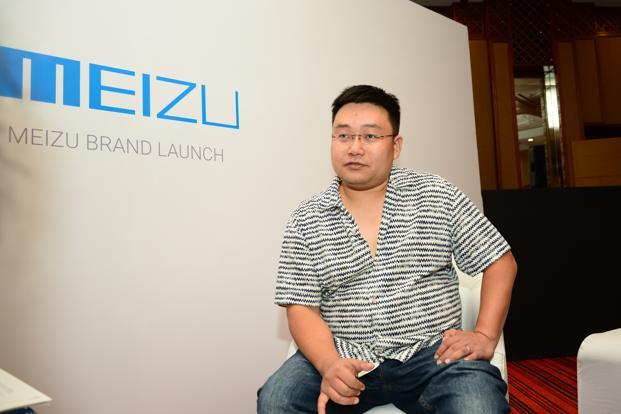
Li Nan, VP of Blue Charm Brand
Although at present things may not look super positive for Meizu, the company seems to be making the right moves in 2017. It’s cutting down costs, focusing on a small number of smartphones in a year. It has already split the company into three focused brands: Meizu will focus on high-end smartphones, Blue Charm brand (M Series) will take care of the affordable smartphone segment and Flyme brand will focus on the development of the software aspect of smartphones. There has been a shuffle in the leadership as well, with founder Jack Wong overseeing company operations, Bai Yongxiang becoming the president of the main Meizu brand, Li Nan taking over as the President of the Blue Charm brand (M-Series) and Yang Yan becoming the president of Flyme.
Meizu’s offline marketing strategy is also getting some traction. The recent Pro 7 launch via offline stores (alongside online channels) were quite successful. Then there are roadshows being conducted across China to promote its brand new flagship. These efforts will help the company increase brand exposure in lower tier cities.
The settlement with Qualcomm should also help the company upgrade its reputation as a premium smartphone maker. High-end Snapdragon 8XX series flagships from Meizu aren’t expected anytime soon, but a Snapdragon 6XX mid-ranger, said to release before the end of this year, should be a good start to the relationship. By next year, we could finally see a top-end Qualcomm chip inside Meizu’s flagship, potentially making it a formidable rival to the big players in the market.
The company is also making significant efforts to improve its Flyme operating system. In the past few months, Meizu has managed to port its Flyme UI to a number of third party smartphones like OnePlus 3T, ZUK Edge, Moto X Style and Moto X Force. This goes in line with the company’s strategy of establishing Meizu (Flyme) as a mobile internet company.
As you can see, Meizu’s recent decisions have been focused on restructuring the company’s strategies. Layoffs, business splits, management shuffles, new partnerships and focus on software are all part of the company’s rebuilding strategy. Therefore, it’s okay if Meizu has a lackluster 2017 as next year is probably going to be the comeback year for the company.
The Meizu E2 is a mid-range smartphone that was released back in April 2017. While the specs aren’t out of the ordinary, the E2 takes a different path in terms of design. The main change is the rear quad LED flash which lies on the top antenna line. A leaked image shows that the Meizu M6 Note set for an August 23 launch will also have quad LED flash.
[envira-gallery id=”144795″]
The photograph shows the back cover removed so we can’t tell if it will sit on the antenna line too. One info it does reveal is that the dual cameras will be stacked on top of one another. Another image shows the front of the phone and it is not different from most Meizu phones.
Early leaks have revealed that the Meizu M6 Note will have a 5.5-inch FHD display and will be available in 3GB and 4GB RAM models. The processor of choice is Mediatek’s Helio P25, further confirming the notion that Meizu is Mediatek’s favorite buddy. Storage will be 32GB on the lower model and 64GB on the 4GB RAM variant. Battery capacity for the Meizu M6 Note is put at 4000mAh.
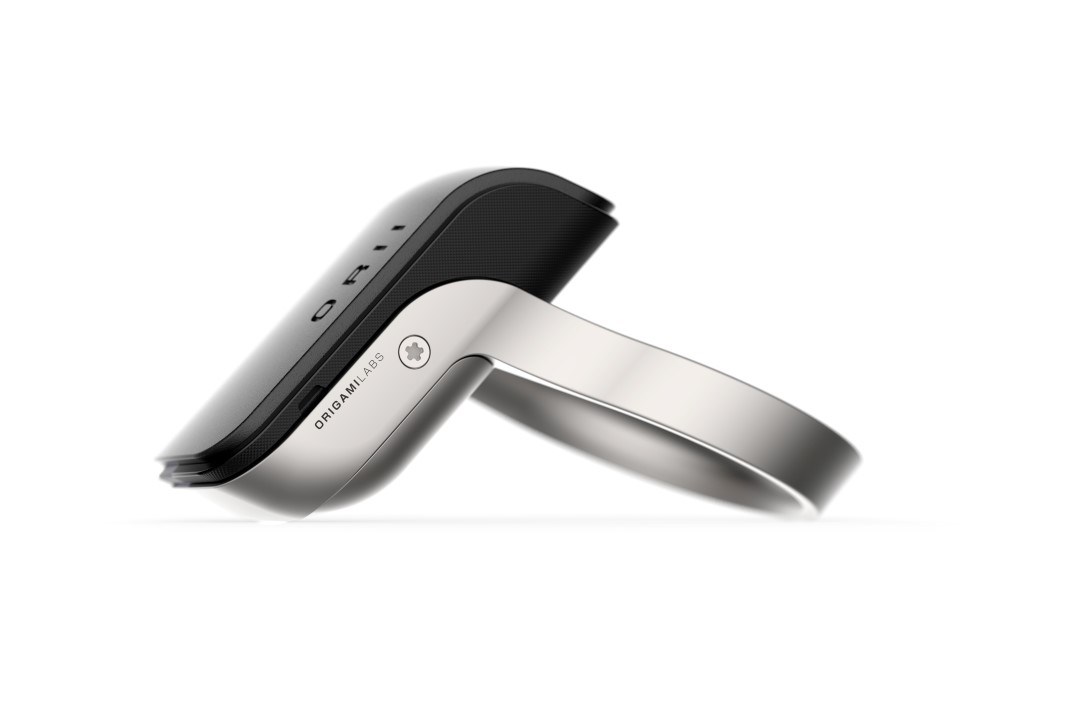
ORII is a smart ring that wants to change how we use our smartphones, and that is by keeping it in our pockets. Those simple calls, text messages, and reminders that you usually have to pull your phone out for will no longer be necessary with the ORII Smart Ring.
You may be wondering how ORII differs from the regular Bluetooth earbuds. While it does pair to your device via Bluetooth, it uses bone conduction technology to transmit audio to your ear. Simply place your finger on the soft part of your ear and press inwards and you can hear the person at the other end clearly through your fingertip even in a noisy environment.
ORII is also comfortable to wear and use. The universal signal for making a call is placing your hand to your ear and that is the exact way ORII works. Unlike Bluetooth earbuds that are awkward as people do not know if you are making a call or talking to them, using ORII eliminates that awkwardness. It is also discreet.
Another advantage ORII has is support for Google Assistant and Siri. Just tap the capacitive button on the ring to wake up your assistant, touch your ear as described above and speak. The dual noise-cancelling microphones will pick up your voice.
ORII has an accompanying app that you can use to configure who you get notification alerts from. There are LED lights on the ring that indicates the type of notifications coming in.
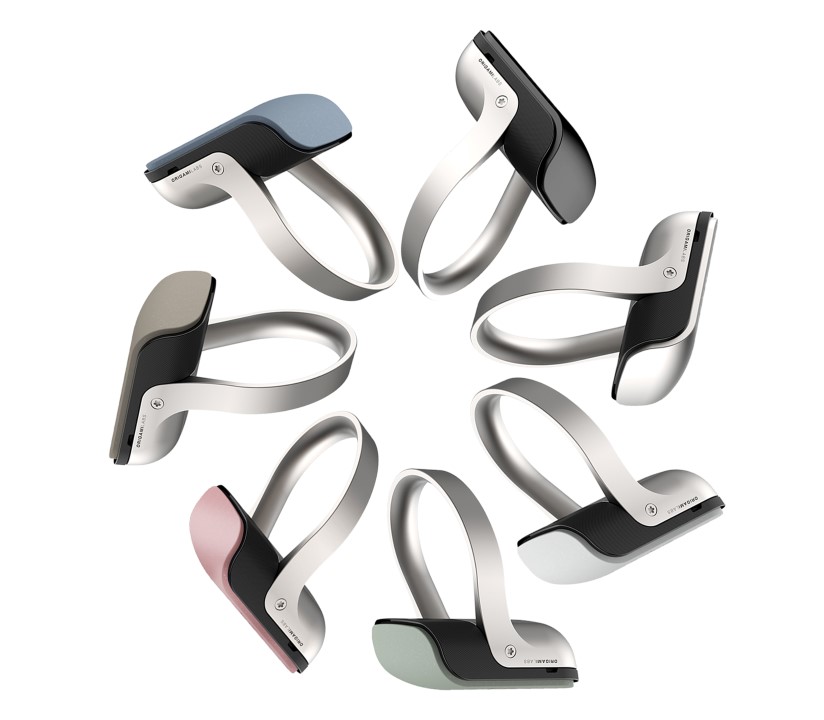
ORII is made of anodized aluminium and comes in four colors. There is sandblasted silver, metallic dark gray, matte black and armor red. There is a 50mAh battery that should last 1 hour of talk time and 45 hours of standby. The duration is short because the device is designed for short calls and those who are more into sending messages. Recharging is via a compact clip though there is also a charging dock that doubles as a case for your ring. The dock is said to be able to recharge it up to 5 times.
The smart ring has an IPX7 rating so it can survive the occasional splashes of water but not full immersion.
ORII will retail for $159 when it launches but you can get discounts if you back it up on Kickstarter. It has already reached its $30,000 funding goal though. Shipping is expected to begin in February, 2018.
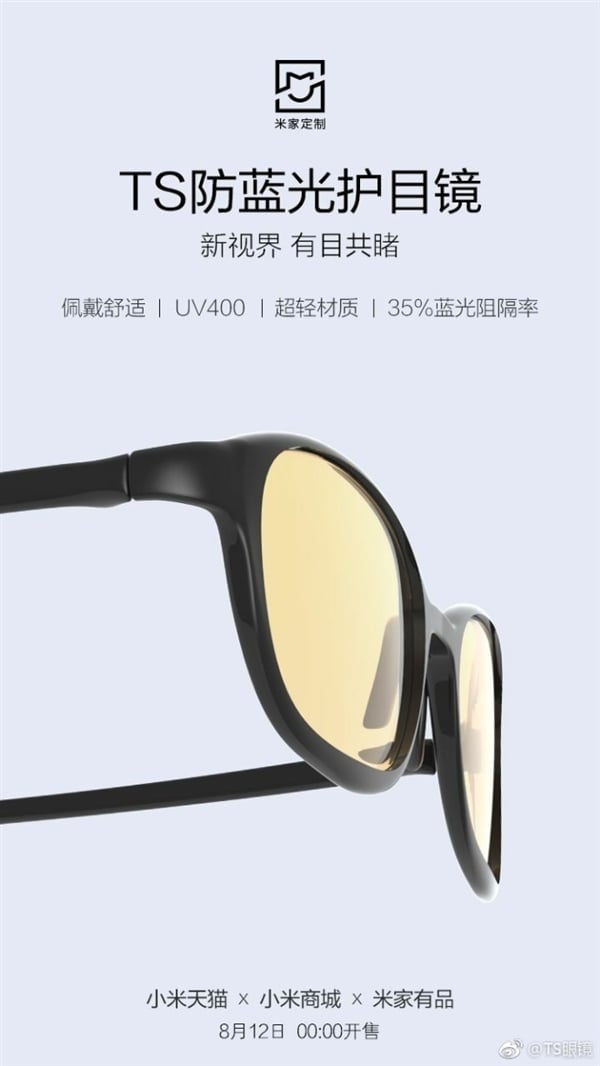
Xiaomi’s MIJIA platform is where the Chinese company announces its crowdfunded items, most of which are under the general lifestyle category. This year it has added eye glasses to its catalog, four so far, and it doesn’t seem it is stopping anytime soon. Turok Steinhardt, the company that made three out of the four glasses, has announced a new pair of anti-blue light glasses.
The glasses protects the eyes from blue light emitted by phone’s LED TVs, computer monitors, and fluorescent lights. Not all blue light is actually bad but just the ones emitted by electronics and LED lights. The effect of blue-light includes dry and strained eyes, blurry vision, headaches and a damaged sleep cycle.
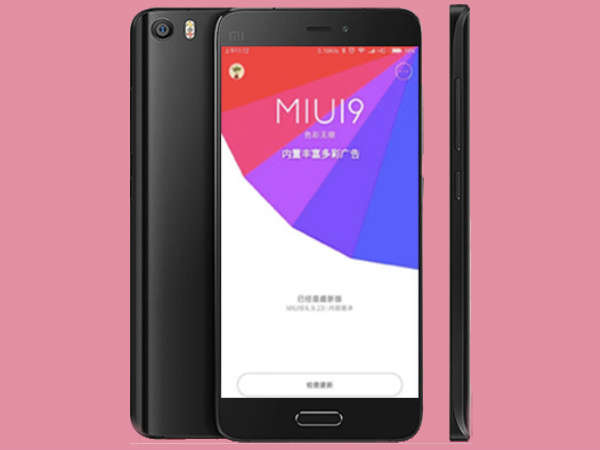
A recent report by research firm, Strategic Analytics recently indicated that Xiaomi has finally found its way back on the top 5 chart of global smartphone vendors with a 6% share of the market in Q2 2017. That means the company phones are popular both in China and outside. So too, its MIUI Custom ROM is also a popular one as millions of people who use the company’s devices also invariably use MIUI. A new security report by eScan Antivirus has fingered the MIUI OS as have some security vulnerabilities.
The discovery centers on the Mi mover app which is a systems app that allows users to easily transfer settings and data from their old phones to the new one. Unfortunately, the app is said to come with a bug which lets it override Android’s sandbox protection thus allowing the app to open without any sign that a password is required. The risk in this flaw is that someone who has the phone can clone all your apps and smartphone settings.
Yet another security flaw is that security apps can easily be deleted without administrator permission. This was demonstrated with the Cerberus anti-theft app which was uninstalled from the Mi Max 2 without any security hurdle. Well, Xiaomi has responded, refuting the report. The tech giant stated that it takes all the possible steps to ensure our devices and services adhere to its privacy policy. The tech giant enjoins phone owners to use a PIN, pattern lock, or fingerprint sensor to minimize the risk of someone getting into their device. This doesn’t sound like a temporary solution so don’t expect the bugs to be fixed soon, that’s if they ever will.
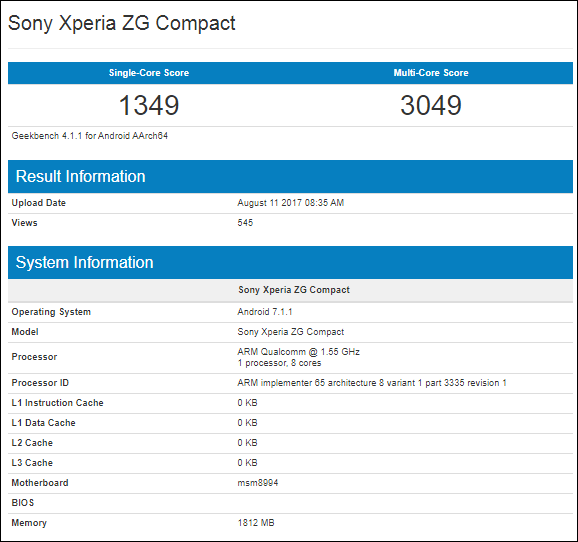
Sony Xperia XZ1 and XZ1 Compact are the upcoming models from the Japanese phone maker which are currently making appearances in benchmarks and leaks. Both models, have in recent times hit Geekbench as well as AnTuTu and are rumoured to launch on August 31 on the eve of IFA 2017 in Berlin. What we may not have known yet is that Sony is likely having another mode in the works which goes by the name Xperia ZG Compact as the model was spotted on Geekbench’s database of recent.
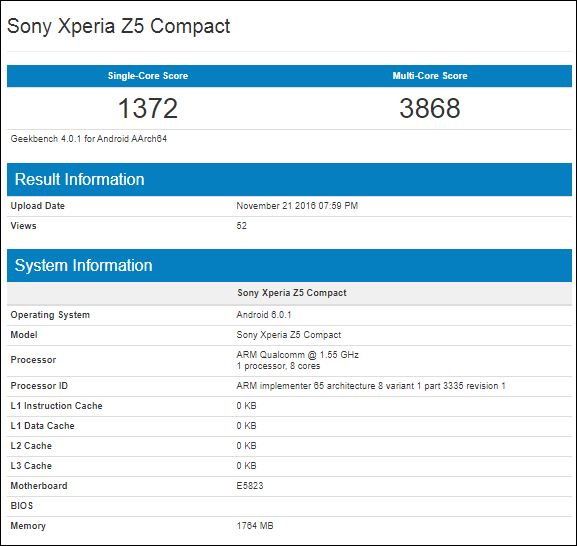
The Sony Xperia ZG Compact is listed to have a Qualcomm Snapdragon 810 chipset which the Z5 Compact launched with in 2015 and this one has a slightly higher performance than the Xperia Z5 Compact. The two models have a slight difference in their RAM sizes with the Geekbench listing showing a 1812 MB RAM for the ZG Compact and a 1764 MB RAM for the Z5 Compact when it was benchmarked. On the motherboard field, the ZG Compact’s processor is listed as MSM8994 which is the Qualcomm Snapdragon 810 chip. The Sony Xperia Z5 Compact also used same chip but don’t be surprised its own motherboard is listed as E5823. That is just the model number of one of the three models the device was available in.Read More:Sony Xperia XZ1, XZ1 Compact Pricing, Color Variants Allegedly Appear on Retailer Site
In addition, the Sony Xperia ZG Compact is listed as running Android 7.1.1 Nougat and that is where it all ends. However, we are not sure if this benchmark result is real or if someone playing a prank by fiddling with the software so that it reports the model as ZG. We can’t say for sure but one wonders why would Sony want to use a Snapdragon 810 chip in 2017. Perhaps, that nails this as fake.
Huawei‘s long held ambition of outpacing fellow rival Apple in smartphone shipment may happen sooner than expected. That is if the report alleged to have emerged from sources in Taiwan’s handset supply chain is anything to go by. The report pitches Huawei as on the path of outpacing Apple to become the second largest smartphone manufacturer in terms of global shipments in the third quarter of 2017. The growth in shipment of Huawei’s high-end P- and M-series as well as the models sold by the company’s Honor sub-brand so far has continued to rise bringing this possibility. Huawei had already closed the gap between it and Apple with a momentious performance in Q2 2017 which saw the company record a total shipment of 38.5 million units representing an 11.3% share in global shipment, according to a report by research firm IDC. On its part Apple is said to have recorded 41 million units (12% share) in shipments for the same quarter which is just 2.5 million units over Huawei’s shipment.
Huawei’s performance cuts across several markets with China at the forefront as Huawei reportedly recorded a 22.6% year-on-year growth in its home ground. For the records, Huawei shipped 23.5 million units in the second quarter of 2017 which accounted for a 21% share. On the contrary, Apple’s shipments in China dropped 7.6% to 8 million units which is just 7.1% share of the highly saturated market. The same momentum was mentioned by Huawei in other markets outside China in the first half of 2017. A year-on-year growth of 45% was recorded in Southeast Asia, Japan and Korea. While in Europe, Huawei’s shipments in H1 2017 grew by 8% from last year’s figure. Majority of that growth is said to have been recorded in Germany, Finland and Poland where it reportedly doubled its sales.
Huawe has already indicated that it plans to continue ramping up its sales for the remaining part of the year. The company is said to have set its sight on shipping over 40 million units in the third quarter of 2017. The tech giant recently hinted that it is making progress in integrating brick and mortar stores in its sales plans in addition to offline sales. The number of physical stores is said to be 42,000 presently, a 19% increase over last year’s figures. The company’s popularity in various markets outside China has been on the increase and the company even predicts higher growth in the next 2-3 years.
Apple’s shipment in Q3 may drop slightly from the estimated 41 million units shipped in Q2. This prediction is based on the speculation that many consumers may withhold their purchases until the fourth quarter when the next-generation iPhone 8 and other models that will be launched become available. With this, Huawei’s expected growth over Apple in Q3 shipments may just be momentary as Apple still has the firepower to reclaim its place in Q4. We’ll be on the lookout to see how this pans out.
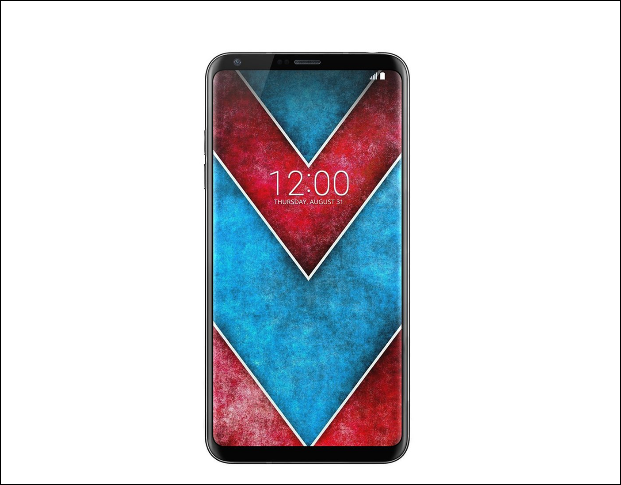
The LG V30 is the device we all know is launching on August 31st in Berlin. New report from Korea says we will be getting two LG V30s instead of one, a first for the series. One will go by the V30 name and the other will be called the V30 Plus.
The info comes from Korean news outlet, ETNews, which says the differences between the two models will be based on storage. The V30 will have 64GB and the Plus may have 128GB of storage. Other differences may include the “audio system” and the addition of wireless charging, similar to what they did with the LG G6 and G6 Plus.
For the audio system, we still don’t know what to expect since the V-series is known for its Hi-Fi audio prowess, so one can’t possibly have a Hi-Fi chip while the other doesn’t. Rumors floating around says the V30 may come with a Bang & Olufsen audio system. It remains to be seen if both phones will feature different variants of the audio system or one will keep the Quad-DAC audio support from the V20.
The pricing detail for the phones were also made public. The LG V30 will sell for $700 and the V30 Plus will be priced at $875. Both devices will go on sale on September 15. Since ETNews says both devices will have the same display, RAM, cameras, battery and IP rating, it means buyers will be paying $175 more for extra storage, wireless charging and a better audio system.
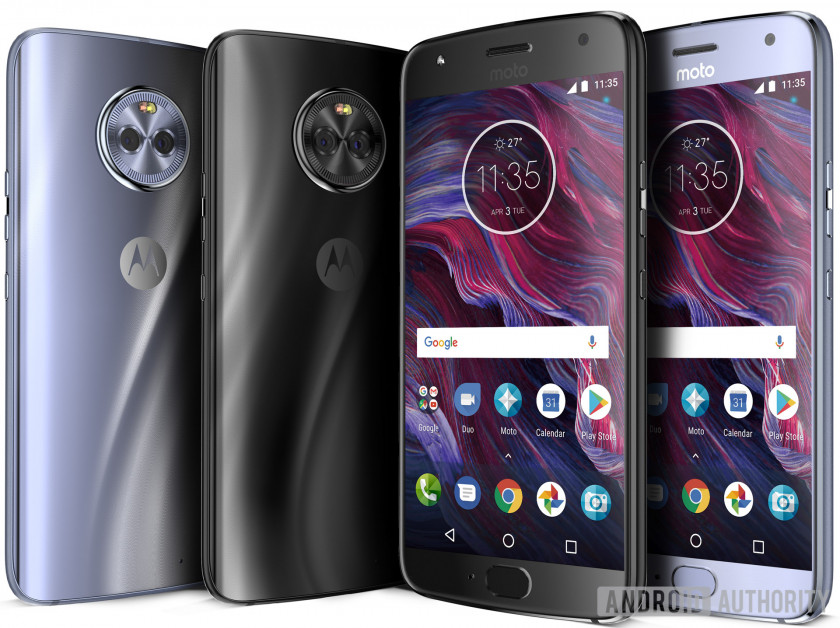
Lenovo’s Motorola is expected to launch a number of smartphones this year and one of the phones expected is the Moto X4. The Moto X4 commands some level of interest due to the fact that the X series hasn’t had a new addition since 2015 and from earlier leaked photos, the X4 promises to come with a sleek design. We now have a more distinct photo of the X4 showing the device both from the front and back.
The Moto X4 is a mid-range device but the photo in question shows a well-designed, premium look that I dare say resembles a flagship model. The design is patently Motorola’s as it resembles what the company had done in the past with the front physical home button which will double as a fingerprint sensor, a common feature on almost all Moto models. The exception thing on the design is the rear camera. At the rear, the device features a unique camera design where there is a dual camera setup with the cameras and flash lying inside a round enclosure which protrudes from the body forming a slight bump at the rear. The dual cameras are in a horizontal alignment with the LED flash sitting at the top in between the two cameras.
The Moto X4 is expected to come with a metal body and the specs have already been revealed to include a 5.2-inch Full HD display with Gorilla Glass protection. The device is expected to feature a Snapdragon 630 processor and that would be backed by a 3GB RAM with 32GB storage. Some models will have 4GB RAM + 64GB storage onboard. There are speculations that the device will pack a Snapdragon 660 chip but that may likely not happen. The Moto X4 will also be IP68 dust and water resistant.
Other expected specifications include a 16MP front camera with f/2.0 aperture and 1.0µm pixel size, which Motorola touts as capable of shooting 4k video at 30 frames per second or Full HD video at 60 frames per second. The selfie camera is also said to be designed for ultra low-light selfies and will come with an Adaptive Low Light mode. At the rear, there will be a 12 MP + 8 MP dual camera setup with dual-tone LED flash and Phase Detection Autofocus as well as the ability to add depth of field effects, like most other dual camera devices. Also, the device will run on Android 7.1.1 OS and a 3,000mAh non-removable battery with TurboCharging feature. Although the X4 is tipped for release in the fourth quarter, no official date has been disclosed.
Google is always late to the party when it comes to features that should already be available on Android. Thanks to third-party versions of the Android OS, we have been able to get some much-needed features without waiting for Google. One new feature coming to Android is in-band ringtone support.
In-band ringtone is a feature that allows your Bluetooth headset to ring with the same ringtone as your phone instead of that annoying beep you hear. This feature has been available on iOS for years and A search on the web will show you Android users have been asking for it to be enabled as far back as 2009.
The feature will be added to Android O when it launches. It remains to be seen if Google will find a way to make it available for previous versions of Android.
Another Bluetooth feature coming to Android is battery level indicator for connected devices. This has been available for years on iOS and some third-party OEMS’s custom version of Android. However, it will just be coming to Android.
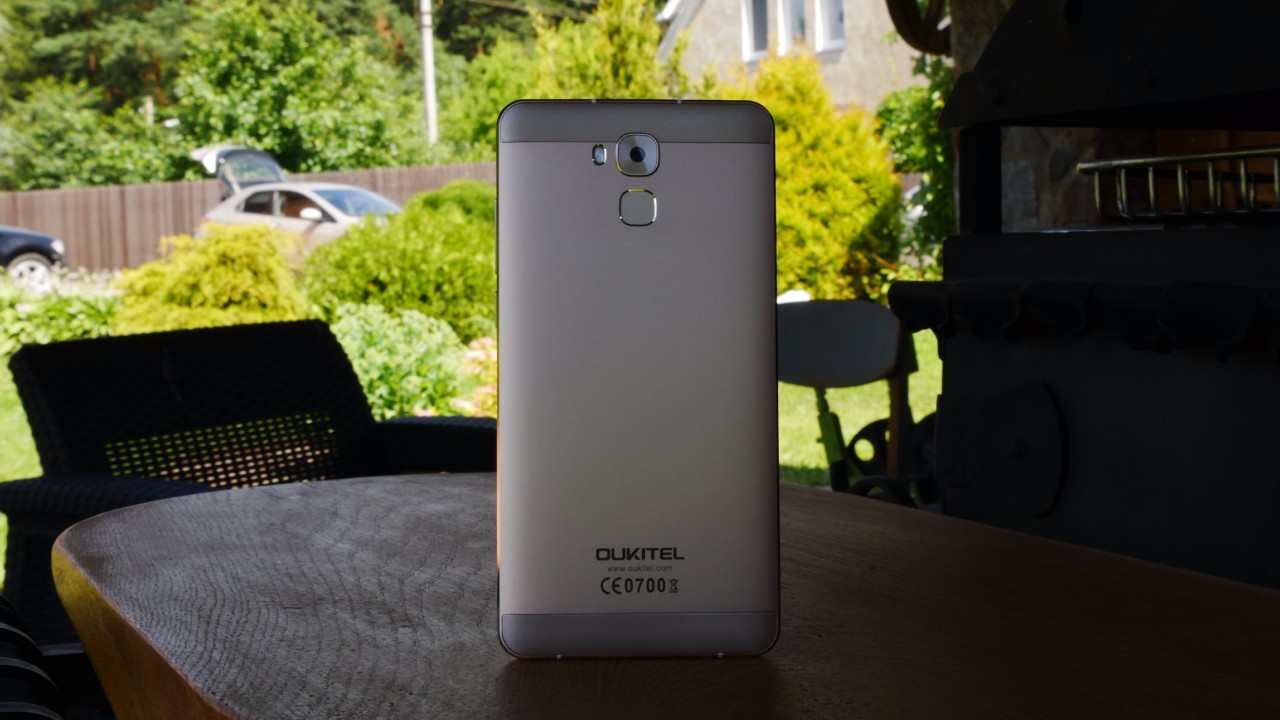
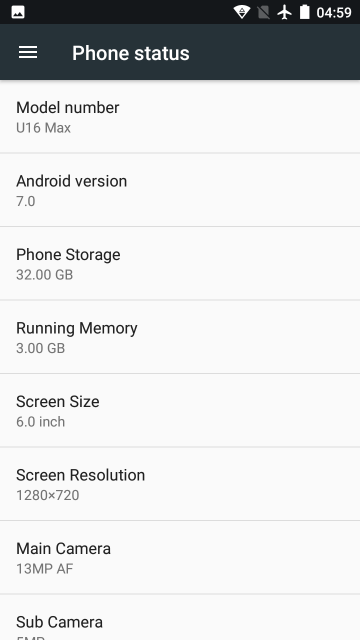
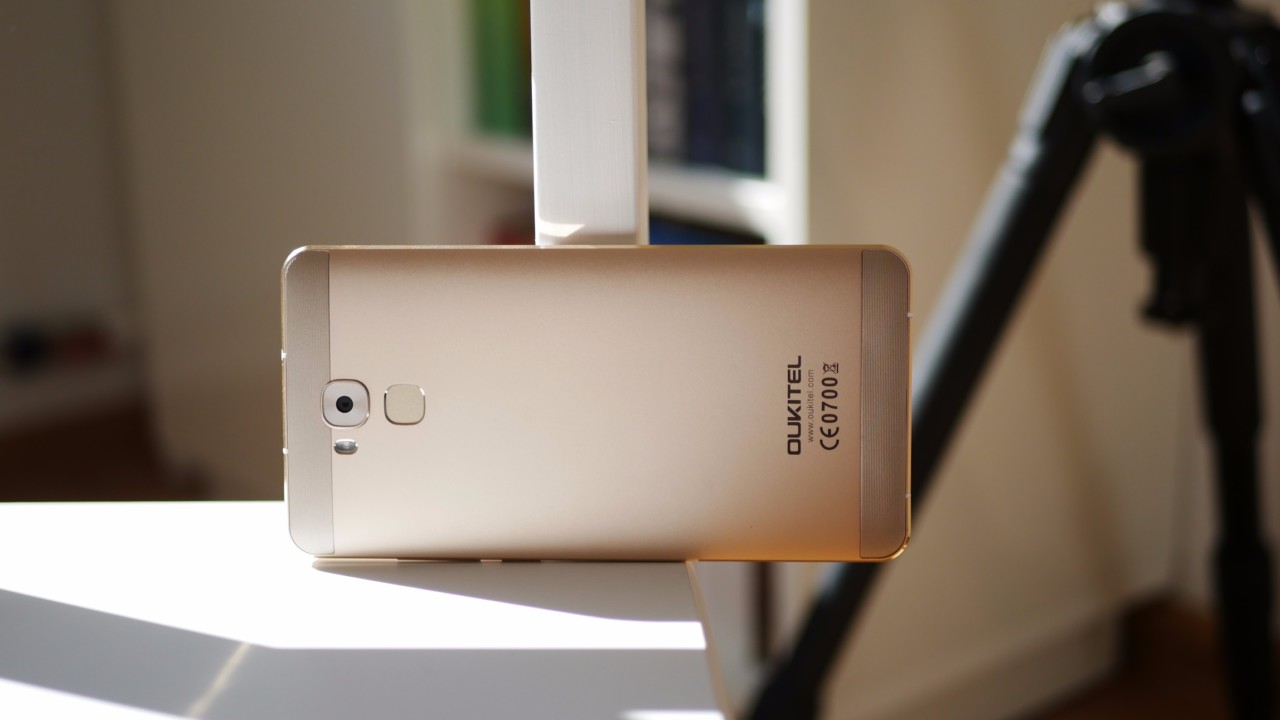
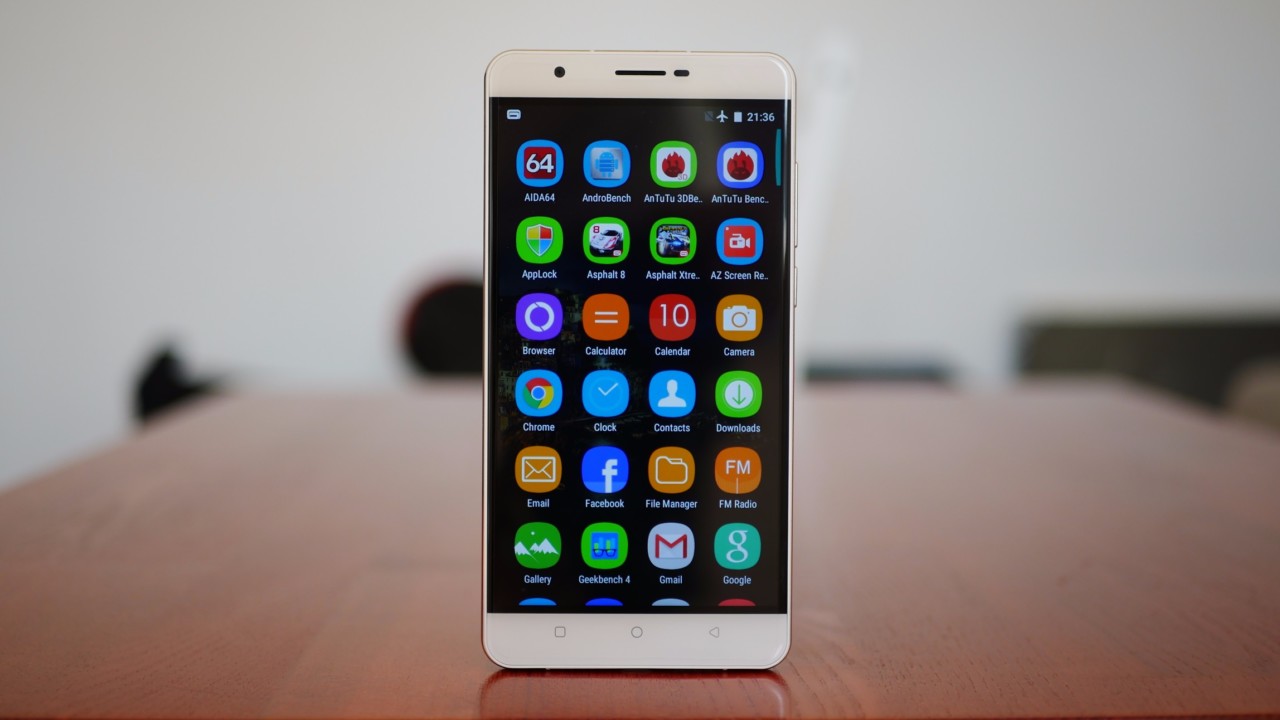
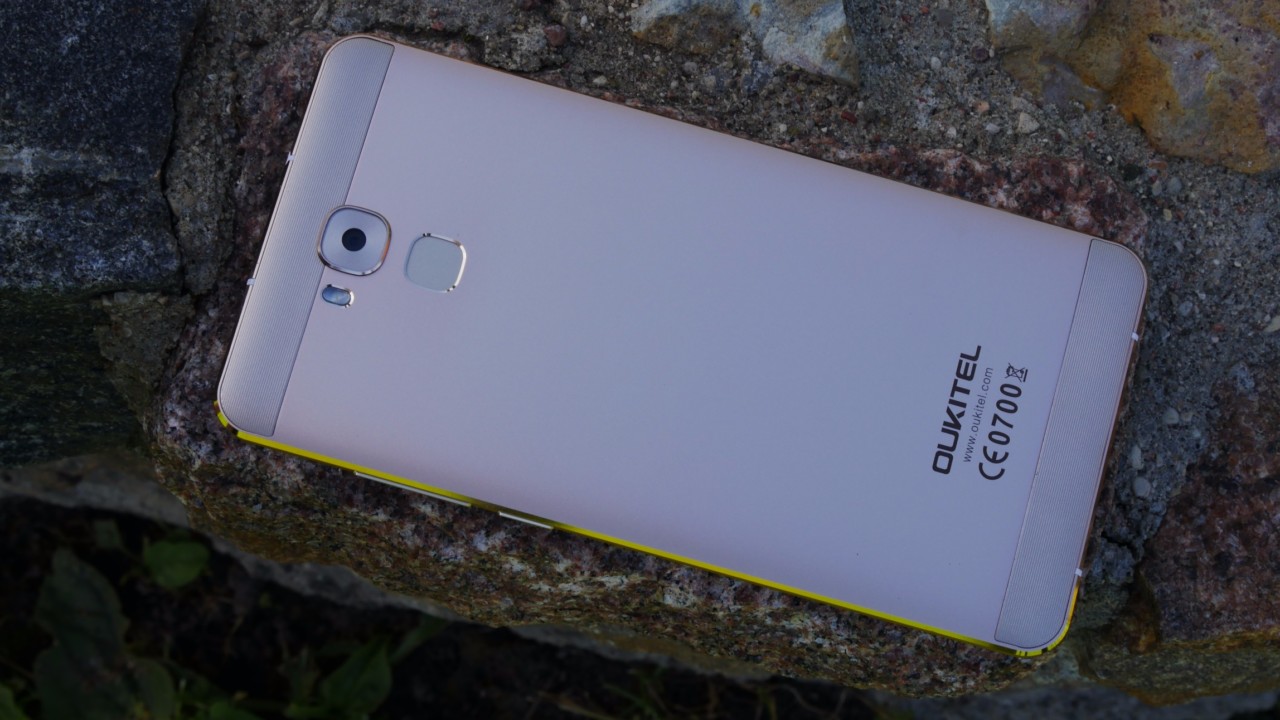
Oukitel may not be the most popular Chinese phone maker but they manage to produce devices that have decent specs and design for the price. The Oukitel U16 Max is one of those phones. It costs about $140 and it has a 6” display, all-metal build and more. Learn more in the full Oukitel U16 Max review.
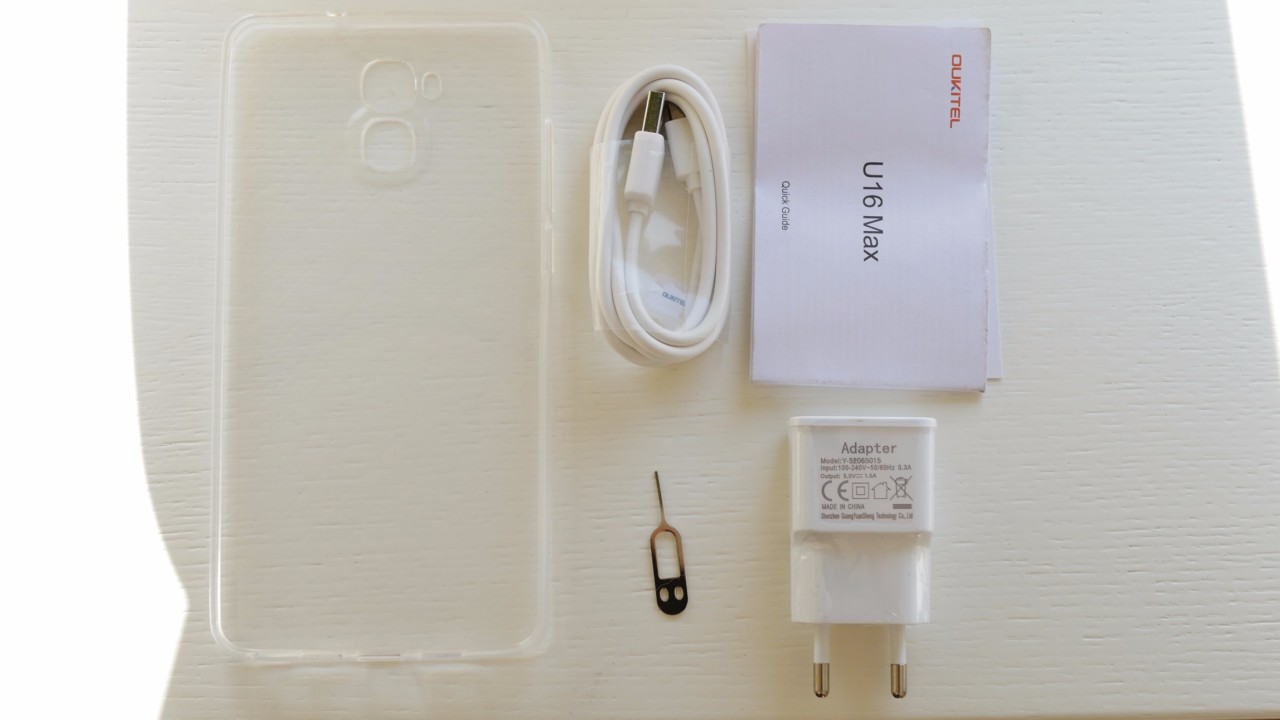
The phone ships with all the usual stuff and some extras include a soft TPU case.
DESIGN and DISPLAY
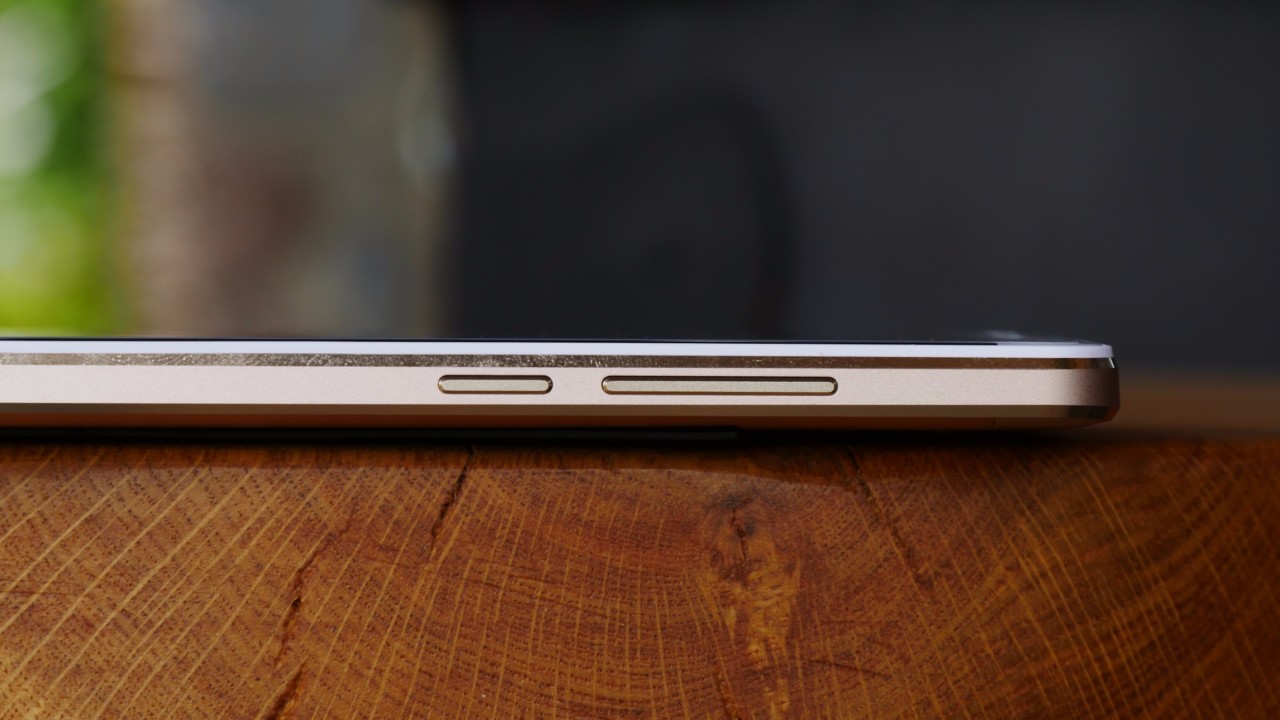
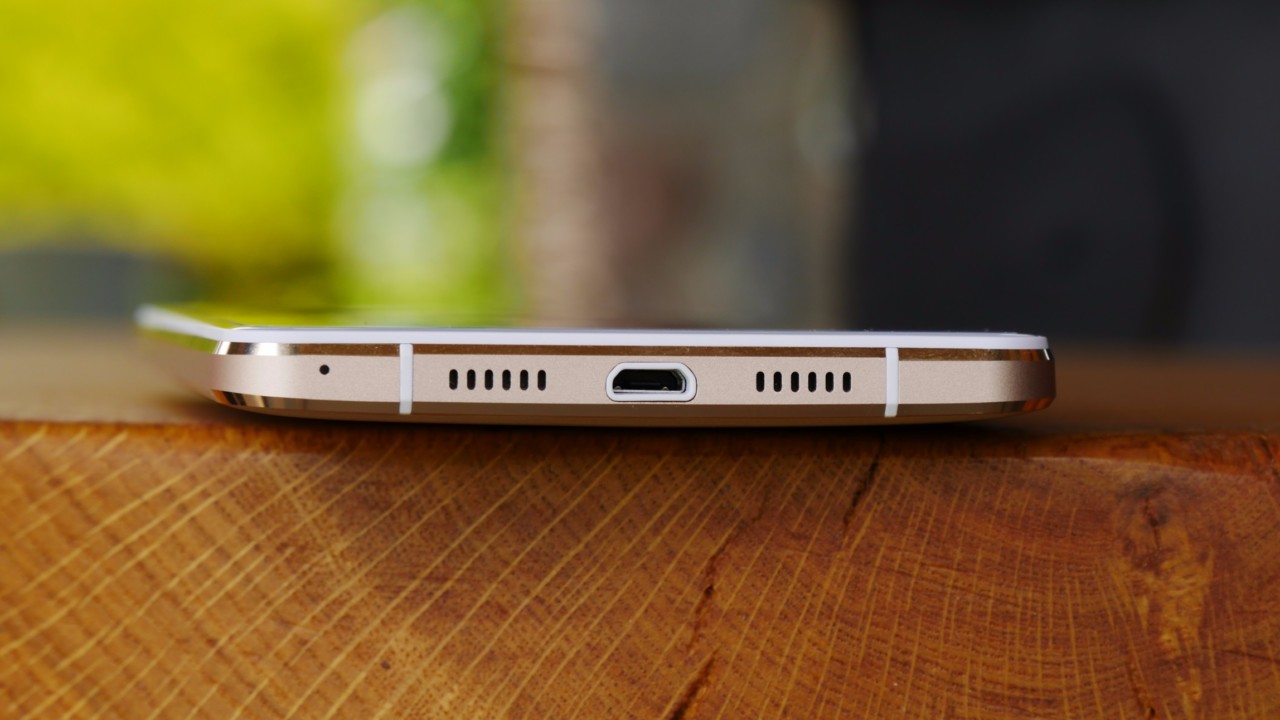
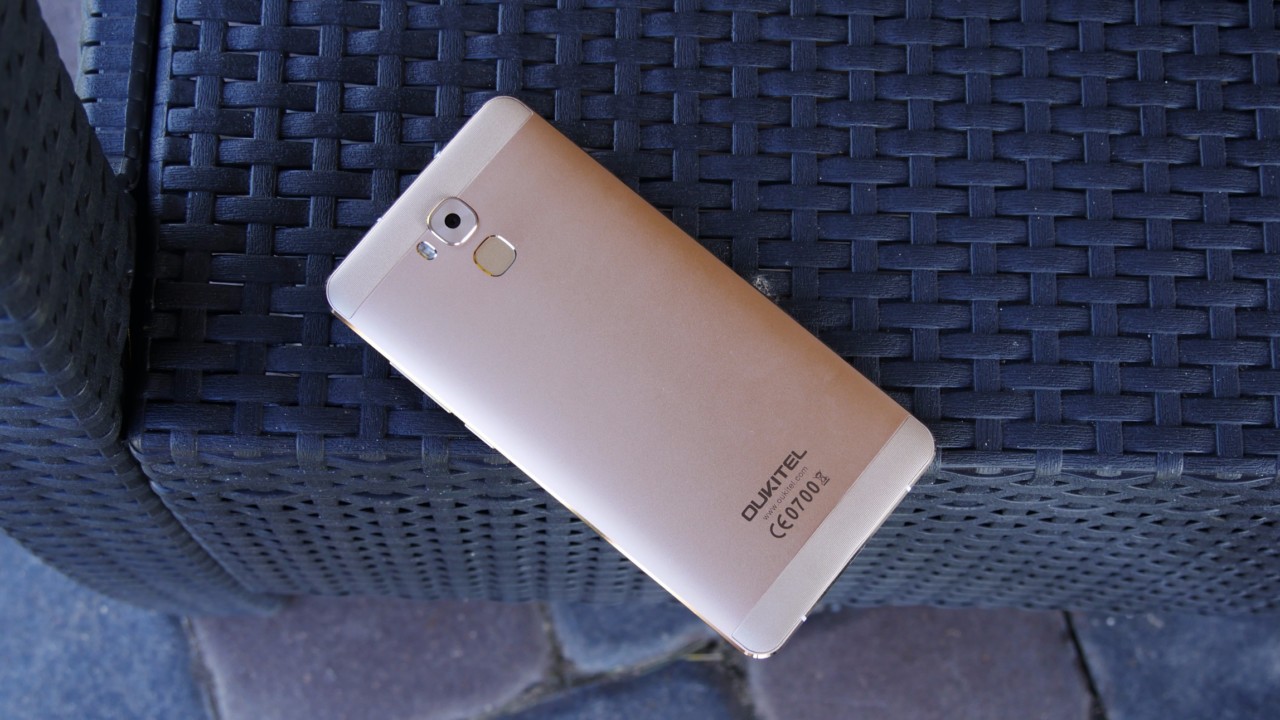
In terms of the design, the phone is made almost entirely of metal (except for the top and bottom parts for antennas) but it is not so easy to manage in one hand due to the sheer size.
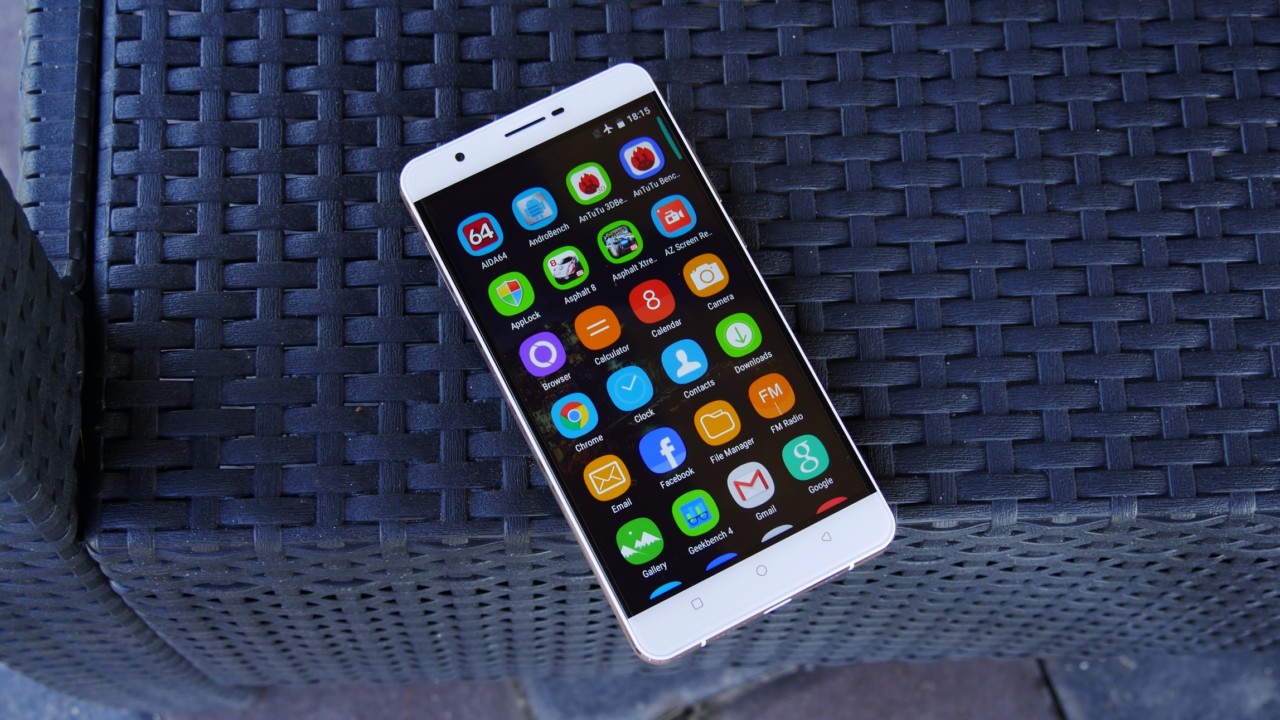
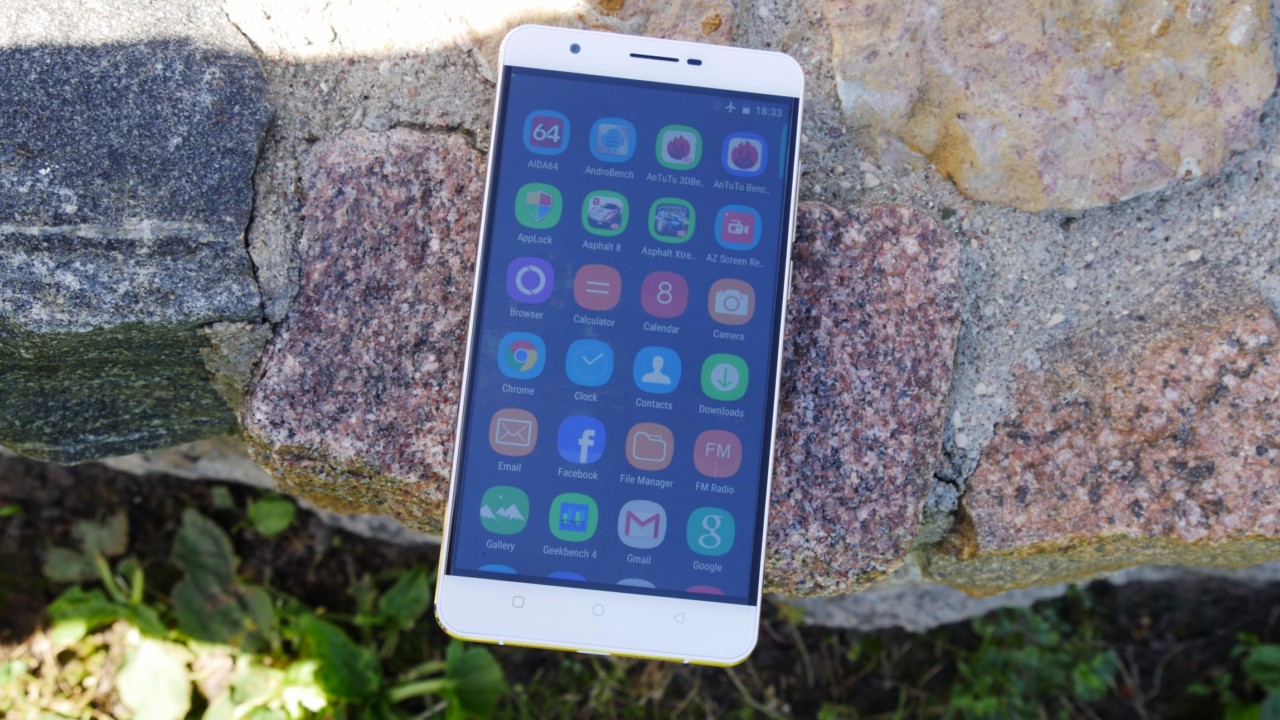
The U16 Max sports 6” 720p display which may have the highest resolution but it plenty sharp for everyday use.
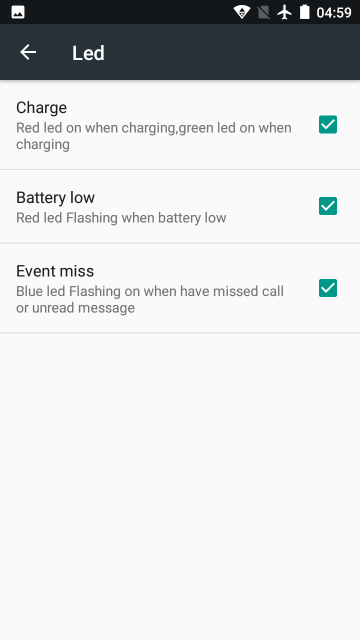
We don’t have backlit capacitive keys but there is a multicolor notification LED light, which sits next to the 5MP selfie shooter.
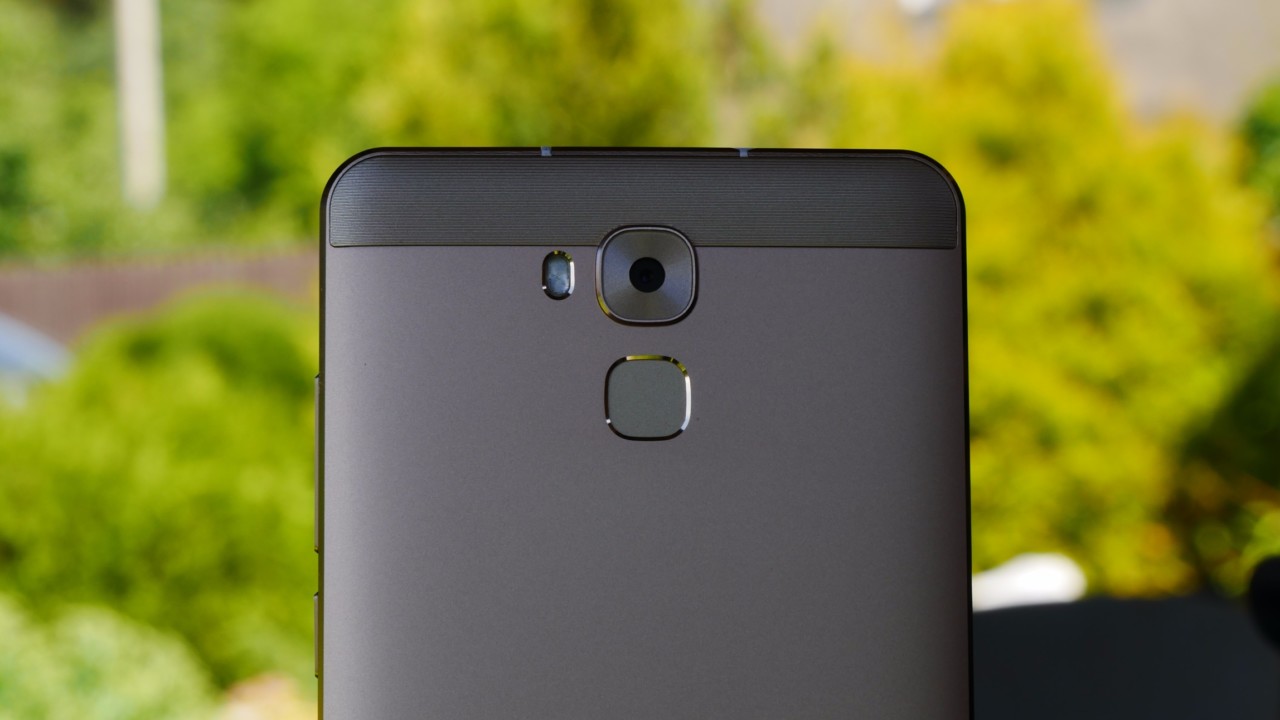
As for the main camera, we have a 13MP sensor that is coupled with a LED flash.
The fingerprint scanner may not be the fastest out there but it get the job done to unclok the phone straight from the standby mode.
I found the buttons to be nice and tactile and the overall build quality is good.
The loudspekaer quality is above average.
HARDWARE and PERFORMANCE
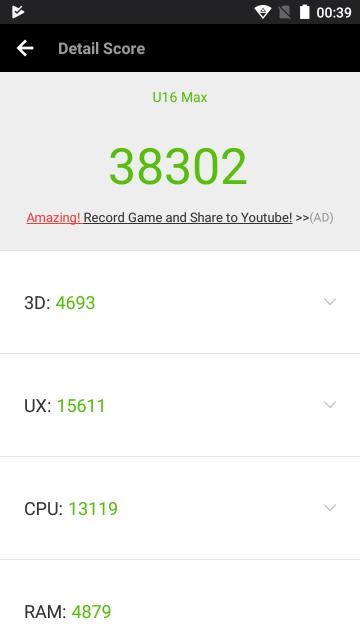
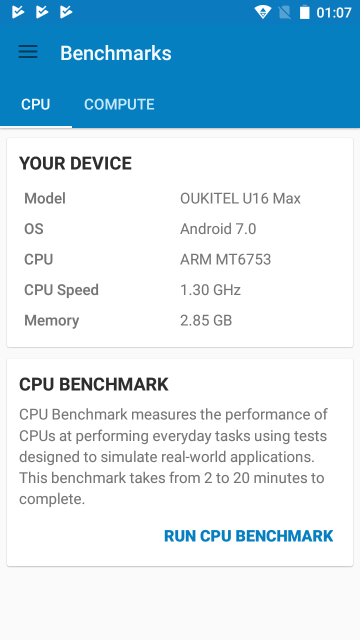
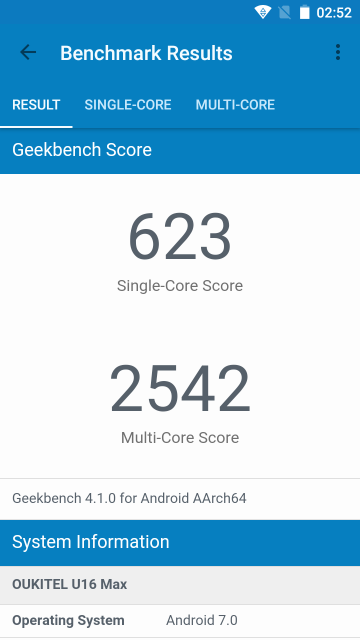
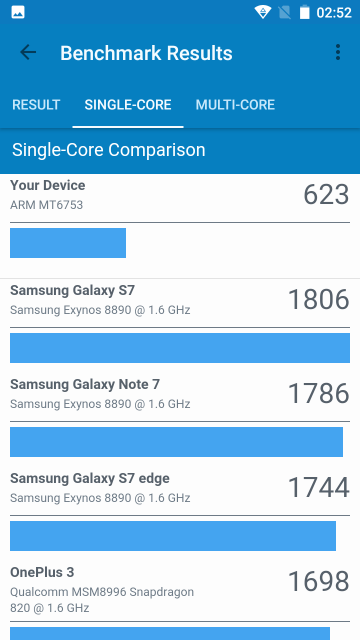
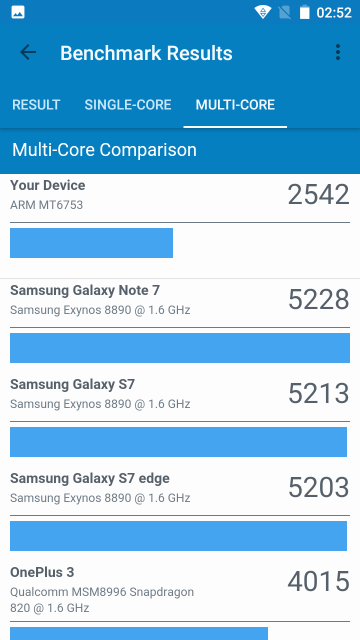
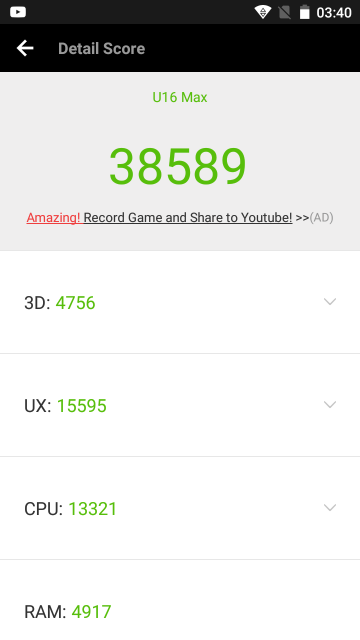
The Oukitel U16 Max has decent specs for the price. it sprots an octa-core MTK6753 chip, 3GB of RAM and 32GB of expandlable storage.
As usual to these MediaTek chips, you will be able to run most of the 3D games on medium graphics without any issues but you should expect quite a few skipped frames and a bit of stutter if you switch graphics to the maximum in games like Asphalt 8.
BENCHMARKS
USER INTERFACE
The phone ships with Android 7 out of the box but we have a customized Oukitel’s skin on top of it that changes the looks and adds some extra features.
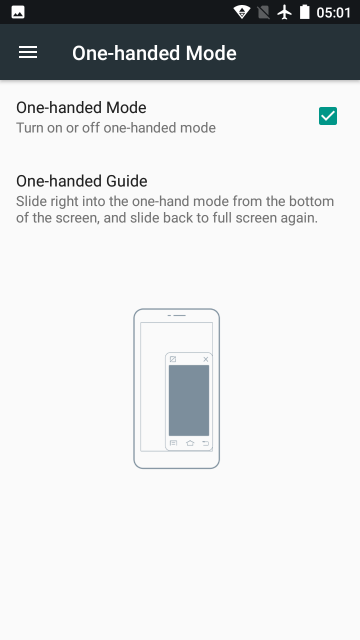
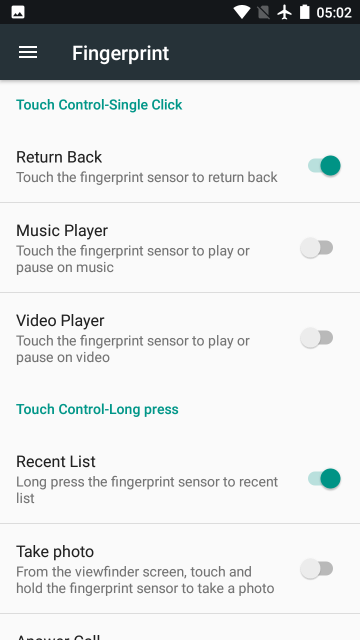
My favorites include some gesture controls that work fine most of the time and fingerprint scanner gestures that are actually really useful since the phone is huge.
Most importantly, I found the phone to be pretty fast on the daily basis even though I installed quite a few apps on it and used 3 different Google accounts.
IMAGE QUALITY
The image quality on this phone could be better. Sure, you can take some decent looking pictures for social media needs but usually the photos lack detail, sharpness, they are overexposed and there is a weird green tint in some of the shots.
The low-light camera performance is kind of poor, like on most of the cheapo phones.
The selfies are usable for social media but there could definitely be more detail and sharpness.
The 1080p video quality is mediocre like on most of the budget phones. Also, there is no continuous auto-focus feature.
The selfie videos are shot at only 480p resolution and the quality is poor. Also, the sound recording quality could be a lot better.
When it comes to connectivity, I have no major complaints. Everything has been working fine, including the GPS that I found to be surprisingly accurate.
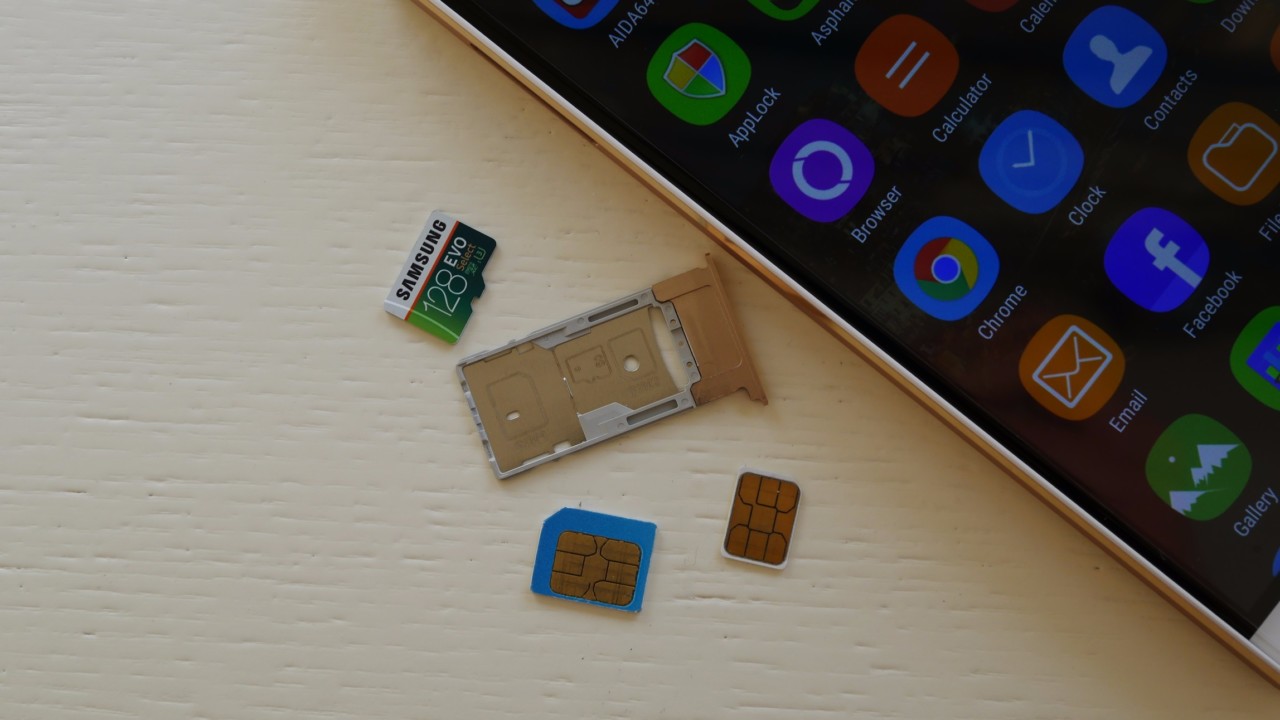
The phone has a hybrid dual SIM card that has a storage expansion option via the microSD card slot.
Unfortunately, the phone lacks a lot of sensors including the gyroscope.
BATTERY LIFE
A 4000mAh battery on this phone has to power a huge 6” display and I was able to get about 6 hours of screen on time, which is a decent result.
Finally, it takes about 2.5h to fully charge the phone with the supplied charger.
CONCLUSIONS
Oukitel U16 Max is yet another cheap phone from China that aims to deliver a lot of value for the price and it succeeds in quite a few ways. I would say this is a decent option for the price but the camera could be a dealbreaker for some.
If you don’t plan to take lots of pictures, the U16 Max is a decent offering for the price if you are in the market for a cheap huge phone.
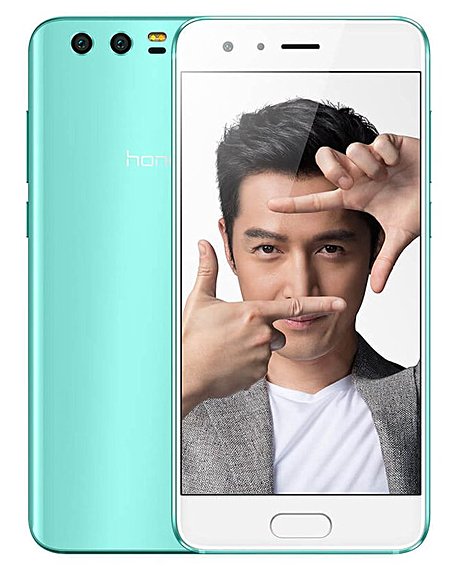
The Honor 9 was released in China first in June before an international release in July. The dual camera smartphone is the successor to last year’s popular Honor 8. During the launch it was announced that the device will be available in Sea Blue, Amber Gold, Black, and Seagull Gray.
A few days ago leaked images showed the Honor 9 in three new colors: orange, yellow and dark pink. Yesterday, Honor officially added a new color variant and to our surprise it isn’t one of those that leaked earlier.
The new color variant is Robin-Egg Blue or Eggshell Blue. It doesn’t matter what you call it, it is an attractive color and not one we’ve seen on any device to the best of our knowledge. The color wraps around the body save for the front which is white.
The Robin-Egg Blue Honor 9 packs the same specs as the other color variants but is limited to the 6GB RAM + 64GB model. It will be available on VMALL.com, Suning, JD.com, TMALL and Gome for ¥2699 (~$405) on August 16.
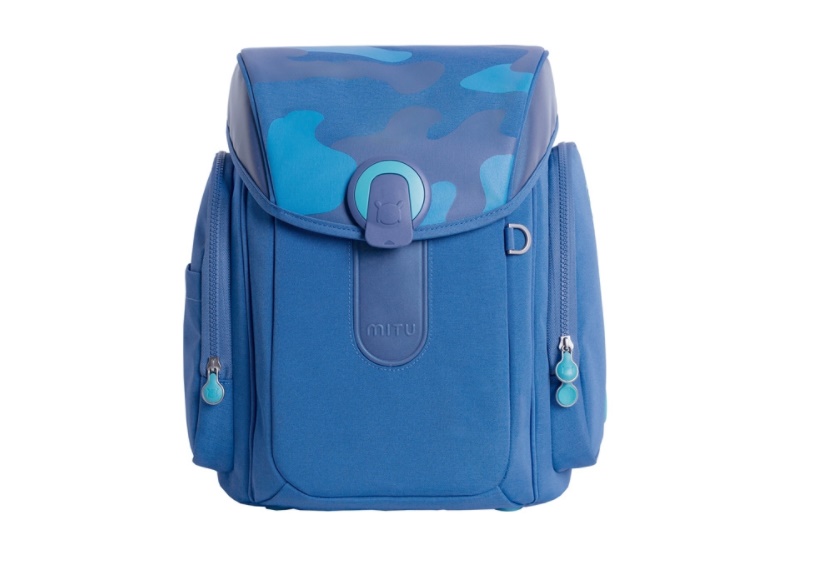
Xiaomi’s tagline should be something like “Taking over your home one item at a time”. The China based company has evolved from being a smartphone maker, to a maker of everything else. Its latest product is the Mi Bunny Kid Backpack which we think you should add to your Back-to-School shopping list.
The Mi Bunny Kids Backpack is made by 90 Points and has been specially designed to reduce stress on the shoulders and spine. The shoulder straps are well padded and the back has a ridge design with a space for the spine.
The main compartment uses a magnetic lock system that is easy for kids to open. It also also has a color coded timetable that helps your child know what to pack on each day. On the sides are two compartments for storing fruits, snacks and drinks. The base has rubber pads that raises the backpack above the ground, preventing it from getting dirty when you set it on the floor.
The backpack is made of PEVA, an environmentally friendly material that is also non-toxic to kids. It is waterproof, so you don’t have to worry about books getting wet when it rains or if liquids spill on it. It is also easy to clean in case of pencil or pen marks.
We use cookies on our website to give you the most relevant experience by remembering your preferences and repeat visits. By clicking “Accept”, you consent to the use of ALL the cookies.
This website uses cookies to improve your experience while you navigate through the website. Out of these, the cookies that are categorized as necessary are stored on your browser as they are essential for the working of basic functionalities of the website. We also use third-party cookies that help us analyze and understand how you use this website. These cookies will be stored in your browser only with your consent. You also have the option to opt-out of these cookies. But opting out of some of these cookies may affect your browsing experience.
Necessary cookies are absolutely essential for the website to function properly. This category only includes cookies that ensures basic functionalities and security features of the website. These cookies do not store any personal information.
Any cookies that may not be particularly necessary for the website to function and is used specifically to collect user personal data via analytics, ads, other embedded contents are termed as non-necessary cookies. It is mandatory to procure user consent prior to running these cookies on your website.