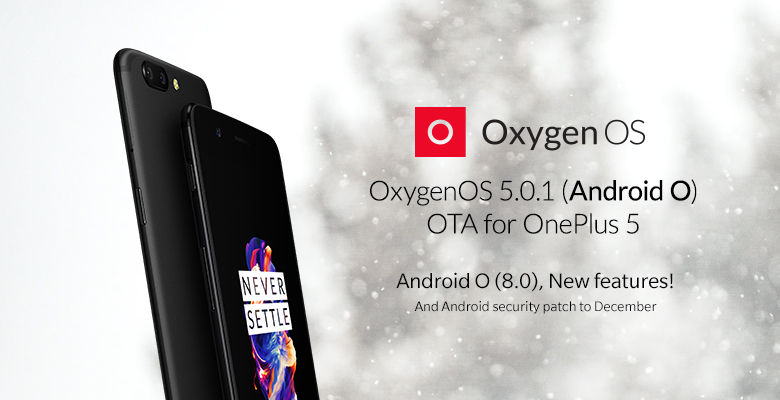
But before that note that the company will be live streaming the event on youtube and you have the option of keeping a reminder for the same on the YouTube page itself. The event is scheduled to start at 12 PM New York / 5 PM London / 7 PM Moscow / 9.30 PM New Delhi / 2 AM Syndey.
So, you have roughly 3 hours left for the event to kick off. Stay tuned to gizmochina as we bring you more updates on the OnePlus 5.
AnTuTu is a Chinese benchmarking tool used to record the performance of devices. AnTuTu also provides monthly reports on general data gathered from devices.
We will be providing a detailed coverage of what each category holds the most popular percentage last month and later lead towards what we will be expecting after this month.
Screen resolution
In this category, it appears that the 1080 x 1920 resolution remains the most popular segment of the market, dominating at 72.41%, followed by 1440p and 720p displays.
We are not surprised by these results, especially the proportion of the 1080p displays. Many Chinese flagships have kept the favoured 1080p display, such as Xiaomi’s Mi 6 and Huawei’s P10; not to forget the upper-mid smartphones such as the Honor 8 and larger counterparts (“Smartphone Model” Plus). We will be expecting the 1080p camp to remain dominant for the next coming months, primarily due to the affordability and lower impact to battery life.
Screen Size
The screen size has a more fragmented market, the highest proportion held by the 5.5-inch screen at 27.51% with the 5.1-inch and 5.7-inch displays coming second and third, respectively.
From the graph beyond the top 3, fragmentation becomes more evident, with 6, 5 and 5.2-inches holding respectable segments also and the remaining 21.93% classified as ‘Others’.
We have mixed views about this, what is clear is that consumers are mostly split between the 5.5-inch and 5.1-inch, however, considering the push for bezel-less screens have become more popular, such as Mi Mix, Nubia, we may also see the increase in screen sizes as consumer may be content with the overall body size of phones but also welcome to increased screen-to-body ratio.
Processors (Brands)
This category shows a greater disproportion in the market, Qualcomm holds monopoly power on the smartphone processor market at 63.84%, whilst the rest is divided by Huawei (15.92%), MediaTek (15.60%), Samsung (2.27%) and other smaller manufacturers.
This hasn’t come to our surprise; the majority of high-end and mid-ranged flagship smartphones are most likely to be powered by a Snapdragon processor. Currently the suspected popular Snapdragon is the 600-series found on many mid to upper-mid ranged devices such as the Oppo R series. Huawei has been doing quite well in relation, due to sales on their Mate-series, P-series and Honor line. MediaTek also provides a healthy number of processor to entry-level to mid-tier smartphones which, judging from the stats, is quite popular as well. We assume that MediaTek has a lower market share currently due to the delayed launch of the anticipated Helio X30.
The results showing the distribution of smartphone processors, by brand, seems quite alarming for people who prefer to have more choice. According to recent articles manufacturers such as Samsung are eager to expand their own branded CPU lines to compete against Qualcomm.
Processor Cores
Expanding from the processor, the distribution of processor cores is less complex. 8-core processors hold a comfortable 60.11% of the market, 33.12% for 4-core processors, 4.33% for 10 cores and the remaining lot at 4.33%
Current and many other 2017 flagships are expecting to run with the Snapdragon 835, Kirin 960 or Helio X30 (the latter not being an 8-core processor) by end of the year.
We believe the 4-core segment is holding its relative large margin is because of the Snapdragon 820 series, found in smartphones like the Mi 5(s), OnePlus 3(T), and Axon 7. The lack of 8-cores in this series was due to the backlash from the Snapdragon 810’s issues. By the end of this year, we are expected to see a fall in the 4-core segment due to the upcoming release of more 8-core and above, smartphones.
RAM
The number of RAM has increased greatly since the past three years. 4GB RAM currently holds the majority at 35.50% however close to heels is 6GB with 32.54%, with 3GB, 2GB and Others trailing behind.
We will certainly see a change in this category of the market, where we would expect a new significant segment, the 8GB, to rise due to the production of high-end devices’ integration. Anything below 4GB will begin to diminish in market share, whilst the 6GB may hold a majority for the remaining half of the year.
Internal Storage
Alongside the increase of RAM, internal storage has also increased size. The current most popular option is 64GB taking 51.04% of the market with the 32GB following at 24.23%.
The statistics have provided an optimistic future for smartphones’ internal storage. The trend of raising internal storage is certainly welcomed. With more high-end phones aiming to provide bleeding edge specifications, we will be expecting the 128GB to supersede the market share of the 32GB very soon.
Android OS
We all know the Android ecosystem is not the best at providing a cohesive collection of the latest software.
From the graph, we can see Android 6.0.1 remains the most popular at 31.62%, 7.0 at 26.92%, 7.1.1 at 16.09%; the remaining either version 6.0 or below.

We understand the Android Ecosystem is fragmented and judging from Android’s record we will expect this to continue, with Android 7.0 variants to slowly replace Android 6.0 variants. A concern with such fragmentation is the potential of being at risk to exploits in the future.
What do you think about the AnTuTu Report last month? What changes would most likely change by next month? Share your thoughts and comment down below.
Xiaomi fans in India may not be getting the Mi 6 but Xiaomi says it will launch a different flagship there later this year. Ahead of that, it has released a couple of other products that should be of interest to its fans.
[envira-gallery id=”137192″]
Mi Power Bank 2 (20,000mAh and 10000mAh)
The Mi Power Power Bank 2 was released this year in China. It is available in two capacities and brings a number of new features.
The 20000mAh version is wrapped in a polycarbonate body and contains battery technology from ATL and Lishen. It has 2 USB output ports and support for Quick Charge 3.0. You can also charge the power bank using an 18W fast charger.
Another new feature Xiaomi has added is support for charging low power devices like the Mi Band and the Mi Bluetooth Headset. All you have to do is double press the power button when you plug a low-power device. You can also use the Mi Power Bank 2 to charge some USB-C laptops. Price is Rs. 2,199 (~$34).
The 10,000mAh version comes with an aluminium finish that is 14.1mm thin. It is portable and will easily fit into your pocket. It has support for 2-way fast charging like its bigger brother. Price is Rs. 1199 (~$19).
Mi Bluetooth Speaker Mini
The Mi Bluetooth Speaker Mini was released last year in China as the Mi Canon Bluetooth Speaker. The speaker comes in a round sand blasted aluminium casing with perfectly cut holes at the top to pump out sounds.
There is a micro USB port at the bottom as well as the power button. It also has a hole that lets you attach a strap. Battery life is 4 hours and bluetooth range is 5m. The speaker is priced at Rs. 1,299 (~$20) but is not yet in stock.
Mi Wi-Fi Repeater 2
The Mi Wi-Fi Repeater 2 is a portable device that helps to boost the range of your Wi-Fi signal. It has dual PCB antennas and has up to 300Mbps transmission speeds. It is powered via USB and can be plugged to a power bank or a USB adapter.
Set up is easy and can be completed in three steps. Download the Mi Home App, add the repeater to the app, and follow the instructions. The Mi Wi-Fi Repeater 2 can connect up to 16 devices at once. Price is Rs. 999 (~$16).
All except the speaker will be available for purchase on Mi.com starting today. The speaker will be available for purchase tomorrow (June 21). You will also be able to buy the power banks on Flipkart and Amazon starting July 7.
A few days ago we saw the Sharp FS8016 on Geekbench. The snapdragon 660 powered phone is yet-to-be-released from the Japanese company. Now, it has made its way to AnTuTu and given us a little more info in terms of its specifications.
The Sharp FS8016 runs Android 7.1.1 and is listed as having a 2040 x 1080 (2K display). Its rear camera is a 12MP sensor and there is an 8MP shooter for the front facing camera. RAM is 4GB and there is 64GB of built-in storage.
These specs point at a top tier mid-range phone, so expect the Sharp FS8016 to be a bit expensive. AnTuTu says its benchmark score is about 110,000 which is similar to that of the OPPO R11, another Snapdragon 660-powered phone.
There are not many negative points about the SamsungGalaxy S8 and Galaxy S8+ flagship phones. However, several users and critics have expressed their displeasure on the unfriendly placement of the rear-mounted fingerprint sensor. The biometric recognition security feature is placed on the right side of the camera lens. Rumors have been claiming that the upcoming Galaxy Note 8 may come with front-mounted fingerprint reader. However, a newer report from South Korea reveals that the Galaxy Note 8 will be featuring rear-facing fingerprint sensor.
A Chinese leakster, @Ice Universe, had revealed that Samsung and Apple are both facing difficulties in placing the fingerprint scanner under the screen. It appears that the portion of the screen where the fingerprint scanner is embedded appears brighter than the rest of the display. With June almost coming to an end and the Galaxy Note 8 phablet slated for an August/September launch, Samsung seems to have taken a decision of placing the fingerprint reader on its backside.
People have complained that the fingerprint reader on the Galaxy Note 8 is not reachable. Users have also said that accessing the fingerprint sensor results in smudges on the camera lens. A new report suggests that the Galaxy Note 8 would be coming with an easily accessible rear-mounted fingerprint reader. Instead of keeping it on the right side of the camera lens (as seen on Galaxy S8 duo), Samsung may place it towards the center of the device. It means it won’t be placed next to the camera system.
Recent rumors have revealed that the Samsung Galaxy Note 8 phablet would becoming with a vertically aligned dual camera system. The dual camera lens is said to be one of the USPs of the Note 8. Samsung may want its users to accidently cause smudges on the dual cameras. Hence, it appears that the fingerprint reader will be placed below the dual camera system which also indicates it will be positioned towards the center.
OnePlus 5’s official launch is couple of hours away and the rumor mill is still working hard to reveal its images. Kumamoto Technology, a Chinese leakster, has revealed couple of hands-on images of the OnePlus 5. Other leaksters has also revealed fresh press renders of the phone.
The OnePlus 5 official renders by OnePlus that have been revealed through teasers have only revealed only a portion of the flagship phone. The above image is the first render that shows the entire front and rear side of the OnePlus 5. The front panel shows a presence of a fingerprint reader below the display. The upper and lower bezels of the phone are thick. Recent information has revealed that OnePlus 5 would be coming with a 5.5-inch FHD that will support DCP-P3 color gamut like the iPkhone 7 Plus.
The back panel shows the antenna bands running along the top and bottom edges of the phone. The dual rear camera system along with a microphone and an LED flash can be seen sitting on the top-left corner of the OnePlus 5. It has been officially confirmed that OnePlus 5 will be coming with a 16-megapixel sensor with f/1.7 aperture lens from Sony and a secondary 20-megapixel f/2.6 telephoto lens. The rear side also features a OnePlus logo.
The design of the rear panel of the OnePlus 5 is very similar to iPhone 7 Plus. The design and placement of the antenna bands, dual camera module, mic and LED flash does not appear different from iPhone 7 Plus. When fans started complaining about the design of the OnePlus 5, the co-founder of OnePlus, Carl Pei expressed that even though people are complaining about the OP5’s design, they will be content with it once it appears in real. Anyway, here are some more renders of the OnePlus 5:
The above images show that the bottom edge of the OnePlus 5 is packed with a 3.5mm audio port, a USB-C slot and a speaker grille. The top edge of OP5 is completely barren, but the Switch key and volume controllers are present on the left side and the Power key can be seen sitting on the right edge.
One of the above images that shows the handset sitting right next to its box shows that there is a notification LED present on the left corner of the upper bezel at the front. Some photos show the different kinds of back cover for OnePlus 5.
The Honor 9 is Huawei’s latest flagship model which was launched just last week. The device takes over from the delectable Huawei Honor 8 and came with a spectacular curved design with the curvatures at both the front and rear. This design ensures the Huawei Honor 9 has an all-glass body. The Honor 9’s teardown is here, courtesy of myfixguide.com and it provide us with an opportunity to have a glance at the internal components of the flagship.
One notable thing the teardown shows is the lack of screws at the bottom which means the outer covering is probably affixed to the fuselage using glue. Of course, the all-glass body makes it difficult to use a screw on the body so, the display screen and the rear panel were glued to the frame of the Honor 9. The back cover had to be heated for about 2 minutes using a hair dryer and then a little bit with a suction cup before a pick could be inserted around the edges to open it gradually.
At the bottom, there are only openings for a speaker, a 3.5mm audio jack and USB Type-C port. While there are only two camera openings and an opening for the flash on the back cover. When the back cover is removed, the Honor 9 could be seen to still be using the classic three-stage design in which the upper part is the motherboard, the middle is the battery, the lower is the USB-C board. In order to achieve better heat dissipation, it uses a large piece of graphite thermal stickers to cover the fuselage. After the back is opened, the screws holding the motherboard to the metal plate can then be unscrewed. The entire workmanship is noticeably relatively complex.
The Huawei Honor 9 features a 5.15-inch 1080p display and is powered by a Hisilicon Kirin 960 chip with 4GB /6GB RAM as well as 64GB /128GB storage versions. The device also packs a 3200mAh battery and a dual 20MP + 12MP camera similar to the Mate 9 and Huawei P10’s but without the Leica branding. Up front is an 8MP sensor. The Honor 9 comes in Sea Blue, Amber Gold, Black and Seagull Gray colours and starts at 2299 Yuan (∼$338). See more teardown photos from below.
The OnePlus 5 flagship is expected to be launched in U.S. on June 20 (today), thereafter, the flagship model is expected to be unveiled in China on June 21. The device is also expected to become available in India on June 22. Ahead of its June 22 launch in India, what is likely the price tags of all the versions have leaked online. The document appeared on China’s Weibo showing the prices of both the 6GB RAM version and 8GB RAM version.
Accordingly, the OnePlus 5 version with 6GB RAM + 64GB storage will retail for Rs 32,999, while the 8GB RAM + 128GB storage version will sell for Rs 37,999 ($589). We are not entirely sure if the prices will remain that way because the US pricing is slightly lower, starting at $499 for the base variant and moving up to $599 for the top-end model.
The poster document also hints at the OnePlus 5 being an Amazon exclusive in India. This is not doubtful as other models have of late partnered with Amazon in India. From the poster, we can also gather that the OnePlus flagship will go on sale at 4.30 PM on the same day it will be launched. It is almost confirmed that the OnePlus 5 will feature a 5.5-inch 1080p display, Snapdragon 835 processor, with 6GB / 8GB RAM versions. The device is also expected to pack a dual rear camera setup which has been the subject of several teasers lately.
Japan Display (JDI) has officially confirmed that it has begun the mass production of 6-inch LCD panels that offers 18:9 aspect ratio. The display is officially named as “Full Active” LCD screen.
The Full Active display offers a resolution of 1,080 x 2,160 pixels. It will be coming with thin bezels on the left and right sides. Moreover, since it incorporates a new high density writing, the bottom bezel of the Full Active display will be as thin as side bezels. Below is the official image that shows that the screen is flanked with very slim bezels on all four sides
The 2nd gen Pixel Eyes technology makes it possible for the display to deliver deep black colors. Another awesome feature of the display is that users with wet fingers will have no trouble in navigating across the screen. It is a vital feature for smartphones that come with water resistant capabilities.
There are three companies that are known for using JDI display such as Sony, Hitachi and Toshiba. However, among the smartphone OEMs, Sony is known for using LCD panels from JDI. Hence, it seems that in the near future, we may see a Sony Xperia flagship featuring the new Full Active display from JDI. LG and Samsung have already pushed the limits by launching 18:9 (or 18.5:9 on Galaxy S8 duo) aspect ratio smartphones this year. Hence, other companies are expected to follow this trend later this year and in 2018.
There is no information on the other flagship phone. There is a possibility that Sony may introduced a new flagship phablet featuring the Full Active module from JDI. Neither JDI nor Sony has officially confirmed on using the Full Active panel on the upcoming Sony flagship. Interestingly, Sony is rumored to be working on a Xperia X Ultra that is expected to come with a 6.45-inch ultra-wide screen. It is pegged to deliver an aspect ratio of 21:9 and will be fueled by Snapdragon 660 chipset.
After launching the Nubia Z17 Mini and Nubia Z17 flagship smartphone, ZTE has now unveiled a low budget phone called the Nubia M2 Play. The new Nubia M2 Play belongs to the M2 series of Nubia phones. The Nubia M2 Play is a camera-centric smartphone has lower specs than the M2 but is similar to the M2 Lite model.
The ZTE Nubia M2 Play is a dual-SIM 4G smartphone that comes with a metallic chassis and its front features a 2.5D curved glass that houses a 5.5-inch TFT screen that offers a resolution of 1,280 x 720 pixels along with a pixel count of 271 ppi. Even the frontal fingerprint reader is also placed under the front glass.
The inclusion of the Snapdragon 435 clearly indicates that it is not a high-end phone. The SD 435 chipset is coupled with 3 GB of RAM. The Nubia M2 is driven by the power efficient Snapdragon 625 SoC and 4 GB of RAM. The M2 Lite is fueled by MediaTek MT6750 chipset and 4 GB of RAM.
It comes with a native storage of 32 GB. Users can use up to 128 GB of microSD card on its external storage. Connectivity ports present on edges of the phone include a 3.5mm audio jack and a microUSB port. The package of the device includes a UBS Type-C adapter.
For photography, the Nubia M2 Play offers a 13-megapixel rear camera from Sony with f/2.2 aperture. It comes with features like intelligent noise reduction, 3D noise reduction, blazing fast focus speed, and dim light photography. Its frontside features a 5-megapixel f/2.4 aperture lens with support 84-degree wide-angle selfie shooting. It is running on Android 7.0 Nougat OS that is overlaid with nubia UI 5.0 skin from the company. It includes a 3,000mAh battery. Other features include Bluetooth 4.0 and dual-band 2.4 GHz Wi-Fi.
The Nubia M2 Play’s tagline is “thinner, stronger, faster.” There is no information available on the performance of the device but the device sports a stronger build as it features a double diamond edge-cut frame on its metallic body. Its thickness is only 7.9mm. The M2 Play has only been made official. There is no information available on its pricing and availability.
Microsoft launched its next-generation Surface Laptop in April this year. The Microsoft Surface Laptop is a full-fledged laptop which features a 13.5-inch PixelSense display and is the first Microsoft device to run Windows 10 S. The Surface Laptop has a unique fabric-Alcantara® covered keyboard that is backlit just like that of the Surface Pro 4 and is also spill resistant. The display has a 3:2 aspect ratio and is touted to be the thinnest LCD touch model ever created and put into a laptop.
The Surface Laptop utilises a clean design with the speaker grills absent and has such stunning features as a touch display, as well as a well-studded specs lineup. Despite its sleek look and rugged specs, the Surface Laptop has gotten some damning verdict delivered on it by iFixit.
Tech blog iFixit tore down the Surface Laptop recently and their observations are causes for concern. The laptop was observed to be difficult to open as there is hardly any screw holding it in place. All the components seem to have been glued to the laptop’s casing. It beats our imagination why a laptop has to be torn open in order to effect a repair on the internals. This could be due to its thin build but then, what happens when the laptop needs fixing. Well, you’ll have to locate an authorised after-sales/service outlet.
iFixit’s verdict is that the Surface Laptop isn’t a laptop but “a glue-filled monstrosity”. The components are not durable and can’t be upgraded and of course, the laptop can’t be opened without destroying it! Who does that?
Here’s a rundown of the Microsoft Surface Laptop teardown photos:-
Tomorrow OnePlus will announce its new flagship, the OnePlus 5. While most of us are still displeased about the design, OnePlus lets us in on what matters to them. The cameras. And how it affected the design. The Verge goes to Shenzhen and gets us this exclusive story.
The OnePlus 5 will be the company’s first dual camera smartphone. But this is not just about doubling the sensors in a phone. It is more than that. OnePlus has gotten virtually everything right when it comes to its phones. Flagship specs, great design, and for roughly half the price of other flagships. But it is not satisfied about their camera performance.
The reviews may call them decent sensors but they are not flagship level. OnePlus hopes that changes with the OnePlus 5. If it is going to win more fans over and keep the ones it already has, it needs to get everything right. This time with the help of two cameras.
OnePlus says it worked hard on getting the sensors right. Worked harder on determining the position to put them. And worked hardest on the software optimization. We believe this is where DxOMark comes into play.
OnePlus 5 Camera Specs
OnePlus has employed the same dual camera system that the iPhone 7 Plus has and they are grateful to Apple for it. “The main camera is a 16MP Sony unit with an f/1.7 aperture lens. The second camera has a 20MP Sony sensor with an f/2.6 telephoto lens” according to CEO Pete Lau. He adds that it is “the highest resolution dual-camera system on a smartphone today.”
The secondary camera will allow you get closer to your subject and also allows you to take portrait mode pictures.
OnePlus says the reason why the cameras are in the position they are is to prevent the phone from being thick. The sensors are large and putting them in the center would have resulted in a large bump. There is even an image showing several prototypes they experimented with. Turns out some of those leaks about the OnePlus 5 were not fake, they were actually prototypes.
A few days ago, Nubia released its flagship smartphone, the Nubia Z17 at the Water Cube in Beijing. Nubia smartphones have impressed us in the past featuring an excellent combination of performance and hardware and we were glad to see that the Z17 continues the same tradition.
Nubia Z17 Design & Display
Nubia Z17 front
Nubia was one of the first mainstream smartphone brands to popularize the concept of bezel-less display on its flagship phones, starting with the Z9. The company has improved the technology in its third generation bezel-less flagship, the Nubia Z17, using a new version of its Refractive Conduction Technology to make the display pop out. The aRC technology is much more refined now and this has enabled the company to reduce the thickness of the phone giving a better in-hand feel. You can see how aRC works in the diagram down below.
arc Refractive Conduction Technical Principle
While aRC tech makes the display really bezel-less, there’s more to these edges. The Nubia Z17 carries forward FiT (Frame Interactive Technology) to enable edge gestures. So, you can still adjust the brightness, go back, switch apps — all via simple gestures on the display edges. We have seen this feature work smoothly on earlier models and I was glad to see the same continues with the Z17. Apart from this, there’s an additional FiT card feature as well, which is basically a smart summary of everything on the phone. The FiT card contains a lot of useful information like your reminders, recent files etc and you have this just one swipe away. It’s pretty cool.
FiT Gesture Control
You can check out our Nubia Z17 hands-on gallery from below.
[envira-gallery id=”135174″]
Nubia Z17 Dual Camera Performance
Nubia Z17 camera settings
Another stand-out feature of Nubia phones has been innovative photography. The camera app offers shooting modes not available on other devices, such as electronic aperture, light painting, star track, time, cloning, delay photography, multiple exposure, etc. These features have been improved upon in the Z17.
Camera Features in one screen
One of my favorite feature on the phone is the clone camera. The app captures a person/ object in different parts of a frame and stitches them together to create one seamless photo. You’ll look like you have a team of clones – or twins – with you in one shot. Once you get the hang of this app and start posting it on social media, I am sure will get a lot of questions from your followers about your Z17.
Clone Camera
The software has always played an important role in a smartphone camera, but the Z17 makes substantial improvements in the camera hardware as well. Adopting the trend, the new Nubia flagship comes with two powerful cameras at the back. Apart from improving the quality of the images captured, the two cameras at the back perform a very important function of creating a smooth SLR like depth of field effect. It’s worth adding that Nubia Z17 makes use of a smart AI technology to ensure the blurring effect is more natural.
If you really take the time to play with the Nubia Z17’s camera, you can capture some amazing bokeh photos. A few samples with depth of field effect are given below.
Blur Photo Sample 01Blur Photo Sample 02
Nubia Z27 Camera sample w/o bokeh effect
Nubia Z27 Camera sample w/ bokeh
The dual rear cameras are 12 megapixels + 23 megapixels (yes, the 23MP sensor is the secondary camera), with 1.4μm single large size pixel similar to the Samsung Galaxy S8, sensor size is 1/2.55 inches, f1.8 big aperture, 2x dual-camera zoom, 10x dynamic zoom. The imaging quality, as you can see from samples, is excellent. The front camera is of 16 million pixels.
Z17’s dual cameras
In your everyday usage, the Z17 will manage to capture very good amount of details with realistic saturation levels. Unlike the Huawei P10 which sometimes oversaturate the images captured, Z17 manages to keep the colors quite realistic. Even in low light situations, the photos come out quite bright, but colors may be a bit dull. I have used the Z17 as well as P10 side by side and I find the Z17 manages to keep the noise extremely low.
Just check out the samples down below to see how the dual cameras at the back perform in real life situations.
[envira-gallery id=”137016″]
Nubia Z17 AnTuTu Benchmark & Hardware
Under the hood, the Z17 is impressive too, with a Snapdragon 835 processor, 6 / 8GB RAM, 64 / 128 GB UFS2.1 flash storage. On the AnTuTu benchmark, the device scored an impressive 180,745, just a tad lower than the iPhone 7 Plus. Note that there’s no headphone jack on board and you have to use a type-C convertor or type-C headphones on the device.
Nubia Z17 Battery Life
With built-in 3200mAh battery together with Nubia NeoPower3.0 technology, the company claims that it provide up to 2.5 days of usage in one single charge. That’s actually a pretty big claim, given the battery capacity. On a realistic note, you can expect the Nubia Z17 to breeze through more than a day even under power use. That’s pretty impressive and says a lot about the efficient 10nm Snapdragon 835 and Neopower 3.0 software optimizations on the phone.
Super Battery Saver Mode at 40%
Even when the battery is falling below 40%, you can squeeze out another day’s usage using the super power saving modes available. Of course, these modes limit the functionality of the phone to a major extent, but it can come in handy during emergencies.
Super Battery Saver Mode at 32%
The Z17 supports Qualcomm quick charge 4.0 by utilizing dual circuit charging to choose the best charging circuit. The result is charging times that’s 20% faster than quick charge 3.0.
So, I ll make one thing clear — Nubia Z17 is indeed the first smartphone with QC 4+ support. But you won’t get QC 4+ speeds yet, because there isn’t a QC 4+ compatible charger yet (blame Qualcomm for this). So, until you can get hold of a fast 4.0 generation charger, you’ll have to be happy with the pretty good QC 3.0 speeds. I personally managed to charge my phone from near 0% to 50% in just 25 minutes, which is pretty good for my everyday usage.
The Z17 is also water-proof, the first Nubia device to do so. So if you’re stuck in the rain or get wet by the pool, have no worries because the Z17 will work fine. You can even talk on the phone during a shower! This is useful because you can simply wash your Z17 when it gets dirty. But do note that the phone is not meant to be used underwater, so don’t get too excited to plan an underwater photography session.
Just wash your Z17 when it’s dirty
There are many more hardware features that are worth mentioning. The Z17 comes with NFC functionality — users can use it to pay, transfer data, and connect to speakers, etc. With MIMO dual antennas, the WIFI connection speed is 100% faster than last generation’s devices. The Z17’s speakers use a professional grade of BASS stuffed material and SmartPA speaker technology. The fingerprint sensor is super fast and works well to unlock as well as make payments with the phone.
Nubia Z17 back
Nubia Z17 Review Conclusion
As far as overall performance goes, Nubia Z17 is a very worthy flagship, making it one of the best Android flagship in the market right now.
With the Snapdragon 835 chip and 6 / 8GB of RAM, the performance on the device is super smooth. There are many other features that make the Z17 special, like the aRC technology, the FiT gestures that has become more mature and the newly added waterproofing feature. But the real highlight of the Z17 is the dual camera setup at the back, a rather good one, which manages to capture great low light images, thanks to the large pixel sensor. The support for high-quality dual camera zoom up to 2x times is an added plus.
If you can ignore the fact that the phone doesn’t have a 3.5mm headphone jack, the Z17 is worthy of being called as one of the best flagship smartphones in the market right now.
One of China’s popular online retail stores, JD.com (Jingdong Mall) carried out its first robot delivery yesterday. Jingdong has been working on using robots in some of its departments just like Amazon. The online mall now has a UAV operations center that oversees the use of robots in logistics and distribution.
At exactly 9:00 AM yesterday, Jingdong delivered its first product using a robot from its branch at the Renmin University of China in Beijing. The package was delivered to a lecture hall a few hundred meters from the store.
Jingdong says for robot deliveries, a message is sent via the Jingdong app, SMS or email to inform owners of their orders. The message also contains a code that will be used to access the robot’s package compartment to retrieve their order.
Jingdong says the robot has sensors that helps it avoid obstacles including cars and pedestrians and will automatically stop once the obstacle is about 3 meters away. It is also able to climb slopes with an incline angle of up to 25°.
Jingdong says it is also testing the new mode of delivery in other universities like the Tsinghua University, Zhejiang University, and Chang’an University to name a few. Each robot can carry up to 5 packages and make between 10 to 20 deliveries per day.
Qualcomm is planning to release a new mobile platform for the entry level category. According to leakster @Rquandt, the new SoC will be called the Snapdragon 450 and will appear in benchmarks as the SDM450. At the moment, the Snapdragon 435 mobile platform is the king of the 400 series and is present in phones like the Redmi 4X and the Huawei Y7 Prime.
Like the SDM435, the Snapdragon 450 is an octa-core chip but built on the 14nm node process, not 28nm. It will have 8 ARM Cortex-A53 cores and have its GPU clocked at 600MHz. This chip will offer low-power consumption like the Snapdragon 625 and 626 mobile platforms due to its configuration.
Other details about the SoC such as the LTE version, camera support and spectral bands are still unknown but we should expect it will have Quick Charge 3.0.
Launch date is also unknown at the moment. We presume it will be announced next quarter and may start showing up in devices in Q4 2017 or Q1 2018. The Snapdragon 435 is still capable and manufacturers will want to clear its stock first before adopting the Snapdragon 450.
Samsung is relaunching the ill-fated Galaxy Note 7 as the Galaxy Note 7 FE. The new Note 7 will have a smaller and safer battery and apparently cost less. The Galaxy Note 7 FE is expected to launch in the first week in July and has shown up on Geekbench ahead of its release.
Listed as the Samsung SM-N935S, the phone runs Android 7.0 and has 4GB of RAM. There is an octa-core processor clocked at 1.59GHz which is the Exynos 8890.
The Galaxy Note 7 FE scores 1963 points in the single-core test and 5965 points in the multi-core test. These figures are similar to that of the Galaxy Note 7 from last year. So apart from the smaller battery, performance should be the same as the original.
Xiaomi has scheduled the launch of its 92nd crowdfunding product on June 20.The product is coming on the heels of the launch of its latest range of products which included the Mini J Retro mini refrigerator announced recently.
The MIJIA product isn’t specified but the teaser shows it has something to do with water. The two posters released so far apparently looks like it is an inflatable floating toy of something similar. Now, we can’t be so sure about that because all we have are clues which could turn out to be something else.
In addition to the smartphone division which is its main preoccupation, Xiaomi also ventures into other lucrative businesses especially smart gadgets but this isn’t likely a smart gadget. Instead, the product falls under Xiaomi’s ecological chain or MIJIA brand where it partners with notable manufacturers in China who rides on Xiaomi’s wave of popularity, and financial prowess to get innovative gadgets out in the market. Xiaomi provides the finance for research and also ensures the products meet its standard in design and quality. The platform will likely aid Xiaomi in boosting its revenue this year.
The Moto Z2 Play was announced earlier this month. The successor to the original Z Play comes with a few design changes, spec upgrades (and downgrade) and a $499 price.
Scheduled to be available for purchase this summer, the Moto Z2 will also make its way to Lenovo’s home country, China. According to industry insiders, the Moto Z2 Play will sell for the same price as the original Moto Z Play in China. That is ¥3299 (~$484), which is just $15 less than the international price.
The Moto Z2 Play has a 5.5-inch FHD AMOLED display and is powered by Qualcomm’s Snapdragon 626 SoC. It is available with 4GB of RAM and 64GB of storage and also has a 3GB RAM + 32GB model.
There is a 12MP f/1.7 dual-pixel sensor on the rear and a 5MP f/2.2 shooter with dual LED flash up front. The downgrade comes in the smaller 3000mAh capacity cut down from 3500mAh battery in favor of a thinner body. The Z2 Play comes with Android 7.1.1 and has NFC and a fingerprint scanner. It also supports old and new Moto Mods.
Earlier, we saw an image of a Moto Z2 Play running ZUI. Lenovo has not confirmed if this will be a China exclusive but that is highly likely. If this happens, then we should expect other Motorola devices launching in China to run ZUI.
OnePlus 5 is undoubtedly one of the most anticipated flagship smartphones of 2017. Our wait ends tomorrow, i.e. June 20 when the company will officially launch the smartphone. Just two days later, the OnePlus 5 will be launched in India, which has become an important market for the brand. While OnePlus has revealed quite a lot of details regarding the OnePlus 5 in the past few weeks, we know almost everything about the upcoming flagships, thanks to the numerous leaks and rumors going around the internet. Some of the leaks did contradict at first, but as the release date neared, the leaks became more or less similar and before its official launch, we have a very good idea as to what to expect from the flagship.
OnePlus 5 Design
One of the areas, where you might be disappointed with the new OnePlus 5 is the design. But before we jump on to the design department, it’s worth noting that the OnePlus has skipped the naming, ‘OnePlus 4’ which should have been the logical successor to the OnePlus 3T. The company has confirmed that they are skipping the OP4 name in favor of OnePlus 5, but the exact reason for such a jump is not explained. It is worth noting that ‘4’ is considered as an unlucky number in Chinese, so the brand probably decided to play it safe by going for a more luck friendly number, hence the name OnePlus 5.
Coming back to the design, you won’t be wrong to say the design resembles the iPhone 7 Plus. Heck, for that matter, the phone looks like the OPPO R11 that was unveiled just recently. To be honest, the design is not at all bad to look at, but the lack of originality is something that could bother some OnePlus fans. Being fair, it’s worth noting that the OnePlus 3T didn’t exactly have a revolutionary design, but it was well accepted by customers worldwide. We could see something similar with the OnePlus 5 as well, especially after hearing the comments from one of the OnePlus’ Product managers.
Metal should be the ideal choice for the body, with the antenna lines hiding near the top and bottom edges. The front features a physical home button that looks bigger than the one on the OP3T. It should also feature the fingerprint scanner.
Overall, the design isn’t revolutionary, but if you can ignore the striking resemblance to other smartphones like the OPPO R11, you should be okay with the phone’s appearance. We haven’t got a confirmation about the headphone jack, but considering OnePlus CEO’s earlier comments, we would be really surprised to see the phone without the traditional 3.5mm jack.
OnePlus 5 Specs
The OnePlus 5 will come with a Snapdragon 835 chipset inside along with at least 6GB and 8GB RAM options. The storage variants are not yet revealed but expect at least 64GB and 128GB editions. No information about a MicroSD card slot, so we’ll have to wait for the official release for this. As for the battery, there are currently two rumors going around — one claiming a large 3600mAh battery inside and another one claiming a decent 3300mAh battery. Dash charging should be of the new generation, which is said to be 25% faster than its previous gen.
A very recent report about the phone’s display revealed that it will support DCI-P3 color space, ensuring amazing display quality. The panel should be Optic AMOLED as the OP3T since Carl Pei recently confirmed continued support for this display type for a foreseeable future.
OnePlus 5 camera
OnePlus will be joining the likes of iPhones 7 Plus, Xiaomi Mi 6, OPPO R11 and others by equipping its newest flagships with a dual camera setup at the back. It won’t likely be a wide angle + telephoto setup as the Mi 6, rather, it should be similar to the Huawei P10’s monochrome + RGB setup. The samples revealed by the company’s CEO look pretty good so far, including a series of images showing off the phone’s HDR prowess. There are actually quite a number of samples taken from the OP5 already revealed to us and you can check them out here. One of the Chinese bloggers with access to the phone even said that the camera is at par with the Samsung Galaxy S8. So, we are all excited to see the real camera performance of the device. While we don’t know the exact camera specs of the setup, expect something like a 23MP + 16MP rear setup and a 16MP front setup.
camera sample from the OP5
OnePlus 5 Pricing, Release & Availability
OnePlus will officially announce the OnePlus 5 on June 20, although a worldwide release date is not yet revealed. But in India, you can get the phone starting June 22, exclusively via Amazon.
Pricing is said to be higher than the previous generation OnePlus flagships, but it should be still within the affordable flagship segment. You can expect the OnePlus 5 to retail for anywhere near $500 (maybe even $520) but the more likely price tag should be $499.
Just one day remain for the OnePlus 5 to be officially announced and all of these details will be confirmed once the phone is launched tomorrow.
There have been rumors floating around about the possible release date of the Galaxy Note 8 lately. Some say it may be released during IFA Berlin which is scheduled for September. We have also heard that it may be announced earlier than that.
New details regarding the launch date and venue have been leaked by leakster @Ice Universe. According to him, Samsung’s next stylus-toting phablet will be announced in the third week of August. That puts the date anytime between 14th – 20th. He also adds that the launch event will hold in New York.
The date is earlier than that of last year’s Galaxy Note 7 which is believed to have been rushed in order to compete with Apple’s iPhone 7 and iPhone 7 Plus.
The Galaxy Note 8 is expected to have a similar design to this year’s Galaxy S8 and Galaxy S8+. Its display will be slightly larger than that of the Galaxy S8+, standing tall at 6.3-inches. Ice Universe also provided an image of the front panel of the device.
Other specification details of the Note 8 include dual rear cameras (12MP + 13MP) with 3X optical zoom, an 8MP front facing camera, and an Exynos 8895/Snapdragon 836 processor.
We use cookies on our website to give you the most relevant experience by remembering your preferences and repeat visits. By clicking “Accept”, you consent to the use of ALL the cookies.
This website uses cookies to improve your experience while you navigate through the website. Out of these, the cookies that are categorized as necessary are stored on your browser as they are essential for the working of basic functionalities of the website. We also use third-party cookies that help us analyze and understand how you use this website. These cookies will be stored in your browser only with your consent. You also have the option to opt-out of these cookies. But opting out of some of these cookies may affect your browsing experience.
Necessary cookies are absolutely essential for the website to function properly. This category only includes cookies that ensures basic functionalities and security features of the website. These cookies do not store any personal information.
Any cookies that may not be particularly necessary for the website to function and is used specifically to collect user personal data via analytics, ads, other embedded contents are termed as non-necessary cookies. It is mandatory to procure user consent prior to running these cookies on your website.