This year has been a fantastic one for Huawei and its sub-brand Honor. Both companies have released amazing devices that have helped propel them to the top of the list. In spite of the success, Huawei won’t be resting on its oars next year, as a new leak has revealed key info about the next gen P-series.
For the Huawei P11 series, the camera might just be the selling point since most of the other key features it will have are already present in the Mate 10 series and Honor V10 such as a full-screen display and the Kirin 970 processor.
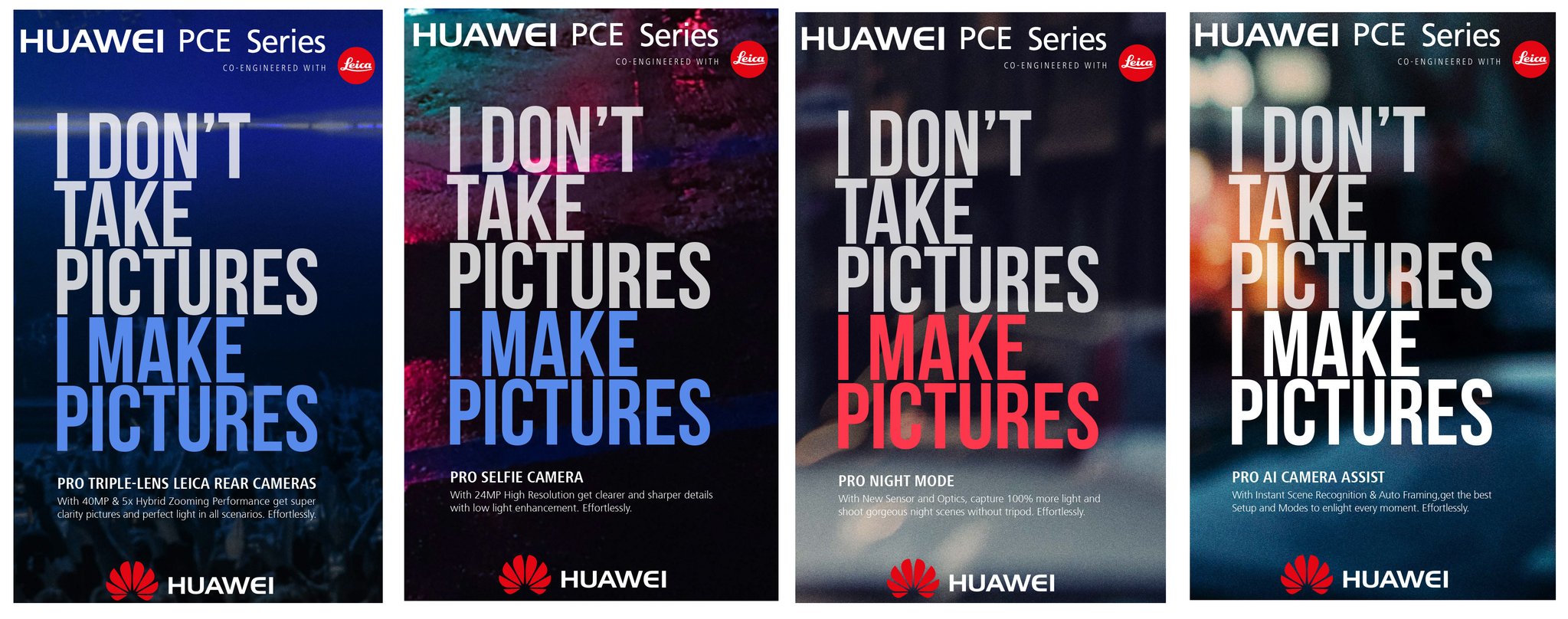
Is the next Huawei P-series going to be an imaging powerhouse? A digital artist at one of the company's creative agencies added these "PCE Series" ads to their portfolio — claiming 40MP, 3 lens rear (5x hybrid zoom) + 24MP selfie, all Leica-co-developed. pic.twitter.com/t8w3VlL55L
According to an image posted by Evan Blass (@evleaks) on Twitter, the next gen Huawei P-series will come with Pro triple-lens Leica cameras with 40MP and 5x hybrid zoom. It will also have a 24MP Pro Selfie Camera with low light enhancement for clearer and sharper details.
Huawei will also be taking a focus at low-light imaging as the picture also mentions a Pro Night Mode. Using new sensors and optics, the cameras will be able to take in 100% more light for better night photos.
The cameras will also take advantage of the AI Camera Assist feature that helps with scene recognition, auto framing, and mode suggestions for the best results.
According to Evan Blass, the image was added to Huawei’s “PCE Series” portfolio by an artist from one of Huawei’s creative agencies. While there is no confirmation yet about the details, the info does look legit.
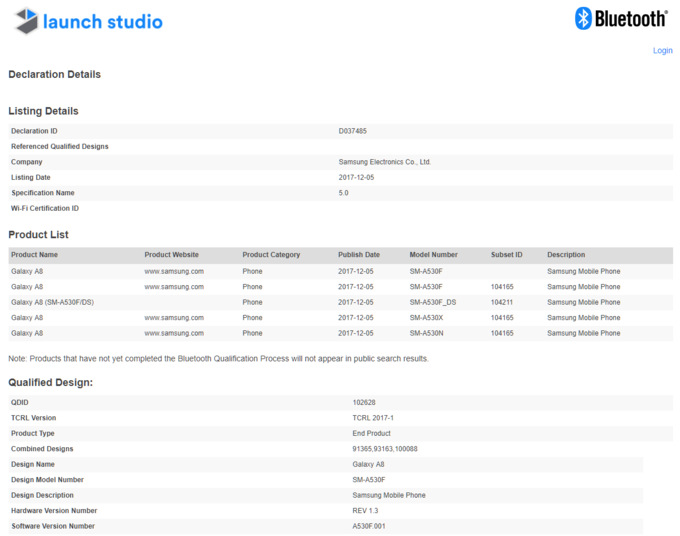
Samsung has been releasing Galaxy A3, Galaxy A5 and Galaxy A7 smartphones each year since 2015. However, the rumor mill has revealed that Samsung won’t be releasing Galaxy A3 in 2018. Moreover, it has also revealed that the phones that were going to launch as Galaxy A5 (2018) and Galaxy A7 (2018) will be arriving to the market as Galaxy A8 (2018) and Galaxy A8+ (2018). The Bluetooth SIG filing of Samsung SM-A530F smartphone has revealed that it would be launching as Galaxy A8 (2018). Also, these phones are enabled with support for Bluetooth 5.0.
Samsung had launched SM-A520F and SM-A720F smartphones as Galaxy A5 (2017) and Galaxy A8 (2017), respectively. Hence, initial reports had claimed that the rumored SM-520F and SM-A720F smartphones would be respectively debuting as Samsung Galaxy A5 (2018) and Galaxy A7 (2018). However, recent reports have revealed these phones would be actually arriving as Galaxy A8 and Galaxy A8+.
Earlier in this week, a leaked photo of the upcoming Galaxy A (2018) smartphone had appeared. It has revealed that the SM-A730F phone has Galaxy A8+ (2018) moniker. And now the Bluetooth SIG filing of SM-A530F shows that it will be introduced as Samsung Galaxy A8 (2018). It has also revealed that it will be available in dual-SIM edition apart from its single-SIM variant. The Galaxy A8+ (2018) is also speculated to arrive in single-SIM and dual-SIM versions.
As of this writing, there is no confirmation from Samsung on why it has decided to rename the SM-A530F and SM-A730F phones. It is speculated that Samsung wants to make the 2018 versions of Galaxy A8 and Galaxy A8+ as toned down versions of the Galaxy S8 and Galaxy S8+. Like the S8 duo, the A8 and A8+ phones are expected to come with features like Infinity Display (18:9 aspect ratio), rear-mounted fingerprint scanner, and Bixby button. These phones are rumored to be powered by Exynos 7885 chipset, but some markets may receive their Snapdragon 660 chipset variant.
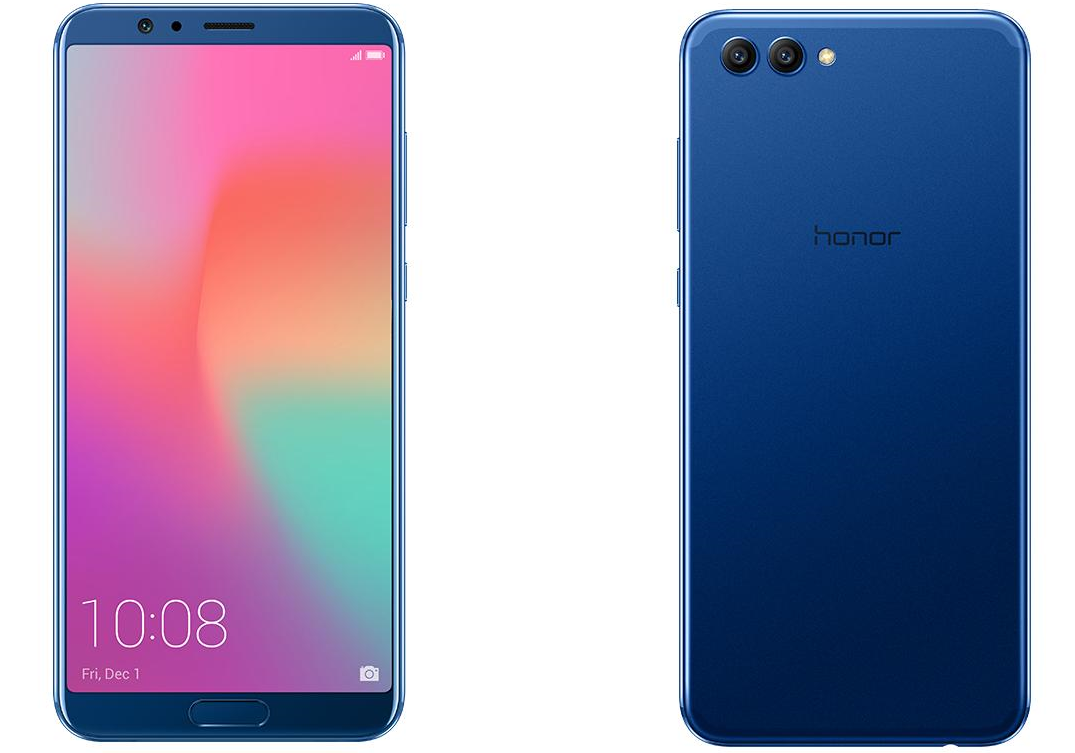
After launching Honor View10 in China last month, the company has now announced that the smartphone will be available in India from January 8, 2018. Along with India, the phone will also be made available in France, Germany, Italy, Spain, Russia, UK, and the United States on January 8.
This was announced at a launch event in London, where the company also launched Honor 7X for the Indian market. In India, the Honor View10 will be available in two colour options — Navy Blue and Midnight Black. While the company has announced the availability details, it has not yet revealed the pricing information.
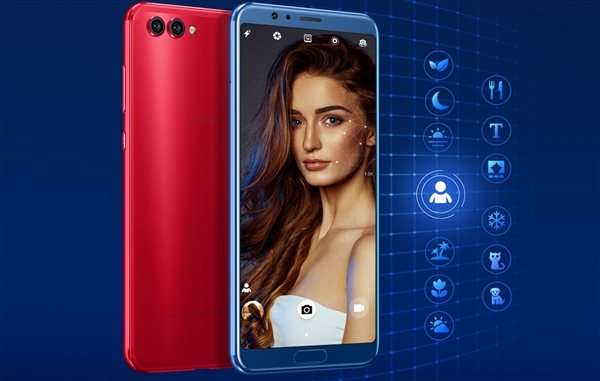
The smartphone comes with a metal body design and features a 5.99-inch Full HD+ display with 18:9 aspect ratio and a screen resolution of 2160 x 1440 pixels. It is powered by the company’s own Kirin 970 processor, which has a dedicated NPU and brings a ton of AI features. Honor claims that the View10 is the “first AI smartphone”.
The device packs 6GB RAM and 128GB internal storage and comes with an option for storage expansion up to 256GB using a microSD card. The smartphone features dual rear cameras with f/1.8 aperture — one is a 16-megapixel RGB sensor and while the other is a 20-megapixel monochrome sensor. On the front, there is a 13-megapixel camera sensor.
Even though the Honor View10 comes with narrow bezels, there is a front-mounted fingerprint scanner. Connectivity options on the device include Dual SIM, 4G VoLTE, NFC, Bluetooth 4.2, 3.5mm audio jack, Wi-Fi, GPS and USB-C port.
The phone comes with facial recognition for authentication. According to the company, the feature is smart enough to detect when someone else is using the smartphone and hides calls and messages.
It runs Android 8.0 Oreo operating system with the company’s own EMUI 8.0 over the top. The phone is powered by a 3,750mAh battery which comes with the support for fast charging via Huawei’s 5V/4.5A SuperCharge technology. The company claims that the phone gets 50 percent charge in 30 minutes and a single charge is good enough to deliver 23 hours of talk time on 3G, and 22 days of standby time.
Smartwatch maker Huami Technology had shared a poster yesterday that suggested a new Amazfit smartwatch was coming and would be available on Blind Pre-sale today. Indeed, a new generation Amazfit watch is in the works but it turns out Huami was only going to reveal the launch date today. The Amazfit Smart Sports watch 2 or whatever new name they may call it, has now been revealed to launch on December 12.
Huami shared a new Weibo post containing a GIF poster today that revealed the December 12 launch date and a few details of the product. The Weibo post accompanying the teaser poster hints at the presence of an industrial design as well as hand-polished ceramic bezels around the display. The round design used on the first-gen Amazfit Sports watch was one of the beautiful things about the smartwatch so, we expect that design to be retained. The GIF image shows the round bezels being hand-polished. However, we expect the new version to come with some improvements over the present model.
As a reminder, the first-gen Amazfit Smart Sports watch was launched in August 2016, and among the features is a 1.34-inch diameter, a 22 mm quick-release replaceable sweat-proof strap, a scratch-resistant ceramic bezel, IP67 certification, 1.2GHz dual-core processor, 512MB RAM, 4GB RAM, Bluetooth 4.0 Low Energy, and WiFi. The display which has a 320 x 300 resolution uses a reflective screen to increase legibility outdoors. There is also an app where users can monitor the readings of the watch. The watch which has a built-in GPS, a pedometer, a real-time heart rate monitor, also displays weather information and was priced at 799 Yuan ($120) when it was launched. This new model may have a slightly higher price tag.
A couple of months ago, HMD Global launched Nokia 7, which is a mid-range smartphone that sits somewhere between the Nokia 6 and the company’s flagship device Nokia 8. The black colour variant went on sale last month and went out of stock within minutes.
Now, the company has also started selling the white colour variant of the smartphone. The phone is now available for pre-order from online retailer JD.com and will start shipping from 12th December. To pre-order the phone, users will have to make a deposit of 99 Yuan (approximately $15).
The white colour variant of the Nokia 7 is priced at 1,999 Yuan (approximately $302) for the 4GB RAM and 64GB storage model. The 6GB RAM model is not yet available. Interestingly, the black colour model, which went on sale last month, starts at 2,499 Yuan.
While both the colour models come with glass body, the company says that they have a completely different feeling. According to the company, the back model has cool and smooth feel while the white model feels warm and delicate. The company said that the white version’s plating process takes seven steps to get completed, while the black version needs around 36 hours to complete the process.
Nokia 7 features a 5.2-inch IPS LCD display with support for full HD screen resolution of 1,920 x 1,080 pixels. The screen is protected by a layer of Gorilla Glass 3 on top. Under the hood, it is powered by Qualcomm‘s Snapdragon 630 processor clocked at around 1.8GHz along with 4GB RAM.
As of storage, it comes with 64GB onboard storage and also has a microSD card slot that allows expanding storage up to 128GB. The device features a 16-megapixel rear camera with f/1.8 aperture and ZEISS lens. On the front, it packs a 5-megapixel camera with f/2.0 aperture and an 84-degree wide-angle view.
The phone has a Dual-Sight mode that simultaneously captures images from the front and rear camera sensors. Connectivity options include USB-C port, 3.5mm audio jack, Cat. 6 LTE modem, Wi-Fi 802.11ac, v5.0 Bluetooth, NFC and GPS. The device runs on Android 7.1.1 Nougat operating system and is fuelled by a 3,000mAh battery.
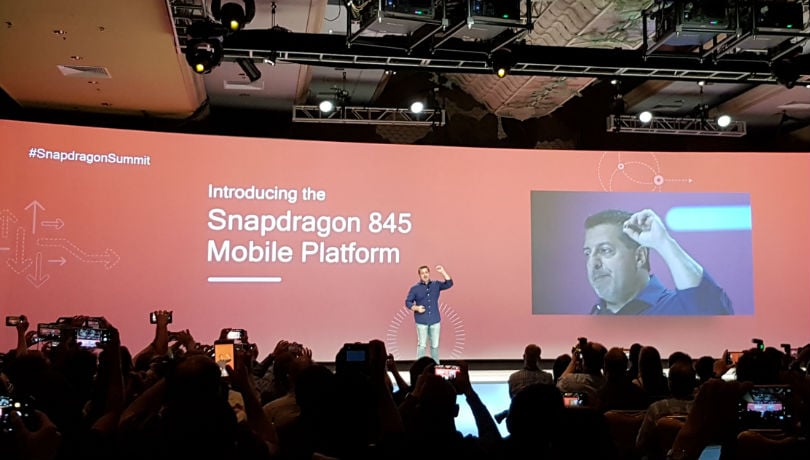
The Snapdragon 845 Mobile Platform was officially announced on Tuesday i.e. on the first day of the ongoing Snapdragon Tech Summit event in Hawaii. Xiaomi CEO Lei Jun took to the stage to confirm that the next flagship smartphone from the company will be powered by Snapdragon 845 SoC.
Even though Jun confirmed that Xiaomi’s upcoming flagship features Snapdragon 845, he refrained from revealing the name of the smartphone. Recent leaks suggest the Xiaomi Mi 7 could be the first Snapdragon 845 from the company. Around two months ago, it was reported that Qualcomm and Xiaomi have collaborated on optimizing the performance of Snapdragon 845 on Xiaomi Mi 7.
Initial reports have suggested that the Samsung Galaxy S9 and Galaxy S9+ smartphones that are speculated to launch in Q1 2018 will be the first Snapdragon 845 powered smartphones to arrive in the market. As far as the Xiaomi Mi 7 is concerned, it could be the first Snapdragon 845 smartphone to launch in China.
In the recent past, Jun had also confirmed that Xiaomi would be focusing on AI on its smartphones in 2018. It is speculated that the AI driven Snapdragon 845 would deliver stellar photography experience on the Xiaomi Mi 7. It is likely to include a 12-megapixel Sony IMX380 sensor and a 20-megapixel Sony IMX35 sensor.
Xiaomi Mi 7 is rumored to feature a 6.01-inch AMOLED screen supplied by Samsung. It is speculated that the Mi 7 would be the first phone from the company to come with wireless charging feature. It is likely to include the same-sized battery that powers the Xiaomi Mi 6. As far as pricing is concerned, the Mi 7 is expected to arrive with a beginning price of 2,699 Yuan (~$408). The Mi 7 won’t be the only Snapdragon 845 powered smartphone from the company. It is speculated that the Xiaomi Mi MIX 3 could be also powered by Snapdragon 845 Mobile Platform.
During the ongoing Snapdragon Tech Summit, Qualcomm has officially unveiled the powerful Snapdragon 845 Mobile Platform that is expected to power most of the flagship phones in 2018. The Snapdragon 845 that has arrived as the successor of the Snapdragon 835 will be offering better performance, improved efficiency along with enhanced image and video processing. Some of other features of Snapdragon 845 include support for AI, VR and AR.
ES Jung who is Samsung Electronics’ President and General Manger of Foundry Business has confirmed that his firm will be manufacturing the Snapdragon 845 chipset. The Snapdragon 835 SoC was built with 10nm manufacturing process. The newly announced Snapdragon 845 is the second-generation 10nm chipset from the company. It is confirmed to feature Snapdragon X20 LTE modem that will be able to produce gigabit connectivity on supported networks.
At the Tech Summit, Xiaomi CEO Lei Jun also confirmed that its next premium smartphone would be powered by Snapdragon 845 SoC. Besides Xiaomi’s 2018 flagship, the SD 845 is expected to power flagship phones from Samsung, Sony, HTC and LG. Previous reports have revealed that the Samsung Galaxy S9 and Galaxy S9+ would be first Snapdragon 845 driven smartphones to arrive in the market. The new SoC is also expected to power non-Android devices such as Windows 10 PCs.
The U.S. based chip maker did not reveal the exact configuration of the Snapdragon 845 Mobile Platform. It has confirmed to give out more details on it on Dec. 6.
At the first day of the Snapdragon Tech Summit, the company had also unveiled Snapdragon 835 powered 2-in-1 form factor that will be brought to the market through partnering companies like ASUS and HP. More information on Snapdragon 845 Mobile Platform is expected to surface in this week as the Tech Summit event will be ending on Friday.
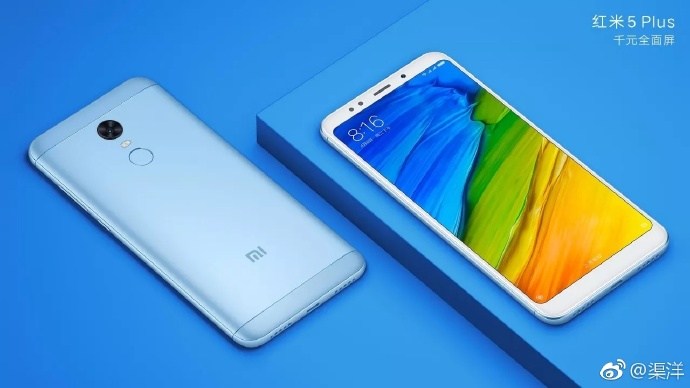
Xiaomi is all set to launch its new smartphones Redmi 5 and Redmi 5 Plus tomorrow, i.e. December 7. But, ahead of the official launch, both the devices have been listed on online retailer Aliexpress.
The seller, who goes by the name “Xiaomi Online Store” has listed Redmi 5 in Black and Gold colour options for $199 while the Blue and Pink colour models are priced at $209. On the other hand, the bigger sibling of the smartphone — Redmi 5 Plus has been listed at a price of $249, while the Pink and Blue colour options will cost $10 more.
The seller doesn’t seem to have any connection with Xiaomi. On the listing, there is a disclaimer stating that the phone is still in “pre-sale” stage, hence the specs and pricing listed are official.
We had earlier reported that the smartphones will go on sale from December 12, with Redmi 5 starting at 699 Yuan (approx. $106) and the Redmi 5 Plus start at 999 Yuan (approx. $151). While the smartphones will be launched tomorrow, we already know the specifications of the devices, thanks to several previous leaks.
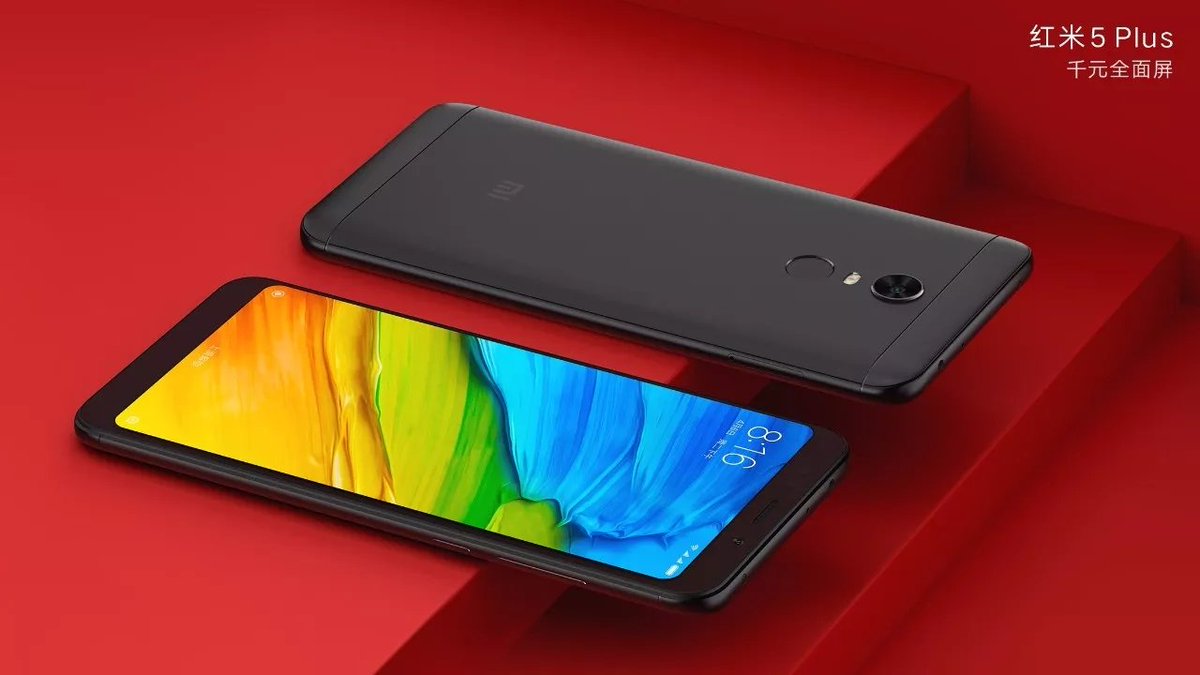
Recently, Xiaomi revealed an official sneak preview of the upcoming Redmi 5 duo. In the images, we can clearly see the Redmi 5 and Redmi 5 Plus sporting full-screen design with narrow bezels. It seems that the devices come with full metallic chassis with a rear-mounted fingerprint sensor.
The Xiaomi Redmi 5 will feature a 5.7-inch HD+ display with screen resolution of 1440 x 720 pixels and an aspect ratio of 18:9. It is expected to be powered by Qualcomm Snapdragon 450 processor, which is the first chipset in the Snapdragon 400 series that is using a 14mm process technology.
The standard variant will come with 2GB of RAM and 32GB of internal storage. There will be another variant of the phone with 3GB RAM and 32GB onboard storage. The device will come with a 12-megapixel camera sensor at the back and a 5-megapixel front-facing snapper. The smartphone will be fueled by a 3,300mAh battery.
On the other hand, the Redmi 5 Plus is expected to feature a 5.99-inch screen that will carry support for FHD+ resolution of 2160 x 1080 pixels and an 18:9 aspect ratio. It will be powered by Qualcomm Snapdragon 625 processor, the same processor that is powering the Xiaomi Redmi Note 4.
It will be available in two variants — 3GB RAM with 32GB internal storage and 4GB RAM with 64GB internal storage. The device will come with a dual camera setup at the back, featuring a 12-megapixel primary sensor and a 5-megapixel secondary sensor. The Redmi 5 Plus will pack a 4,000mAh battery.
It is just a matter of few hours before we know the official specifications, as well as the pricing and availability details of the Redmi 5 and Redmi 5 Plus as the company will soon take the stage to launch both smartphones.
The full-screen design frenzy is still raging in the tech industry and looks like what may be around for a long time to come. You’ll find this design style on flagships and even budget phones. One of the latest models the design features on is the Maze Alpha X. MAZE released the Alpha X a couple of weeks back on pre-sale so you might have spotted the real pictures of the full-screen phone on previous articles.
However, we have got the unboxing video of the Maze Alpha X showing us the device up close and captured from all angles. The video shows the cool black box casing the Alpha X with the letter X boldly inscribed on the front. Opening the box reveals the smartphone with its full-screen 18:9 display. The phone is seen to have a front home button with the fingerprint sensor embedded with it. We also could pick out the USB Type-C interface onboard. The smartphone also comes with a 5V/2A fast charger as well as other tight hardware. Check out the unboxing video below.
The sleek Maze Alpha X with 4GB RAM is presently available on GearBest for $209.99USD. You can buy from here. You can also find out more about the smartphone from Maze’s official website.
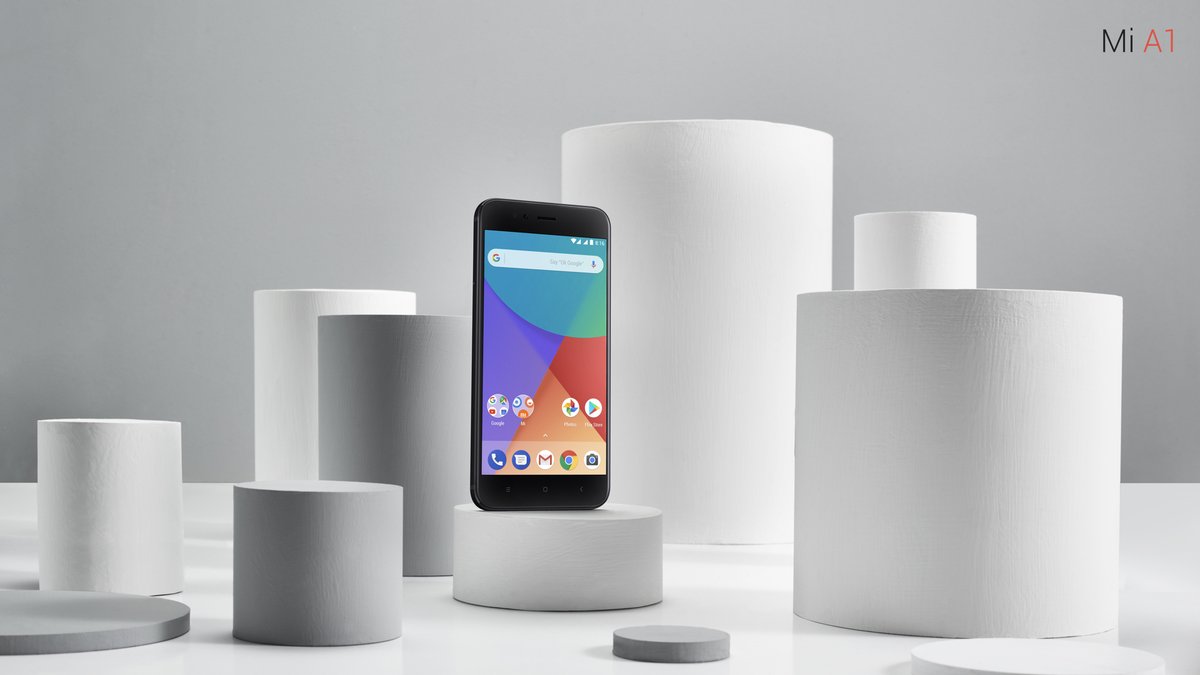
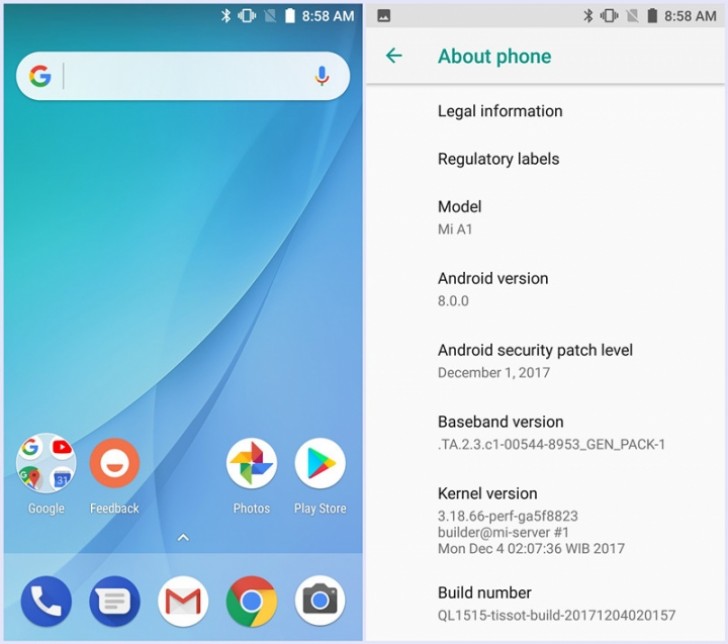
The Mi 5X was launched internationally as the Android One Mi A1. While the former runs MIUI, the Mi A1 runs pure Android. Since Mi A1 is an Android One device, it is scheduled to get Android 8.0 Oreo before any other Xiaomi phone.
Xiaomi has begun recruiting beta testers for Android 8.0 for the Mi A1. The deadline for the recruitment is December 11 at 11:59 PM Beijing time.
Interested participants can join the program via the MIUI Global Forum app. Basic information as well as the phone’s IMEI number will be requested. You will also be required to have a QQ account for communicating with other members when selected. However, mode of communication will be English.
While the recruitment is open to all parts of the world, only active members on the global forum will be selected.
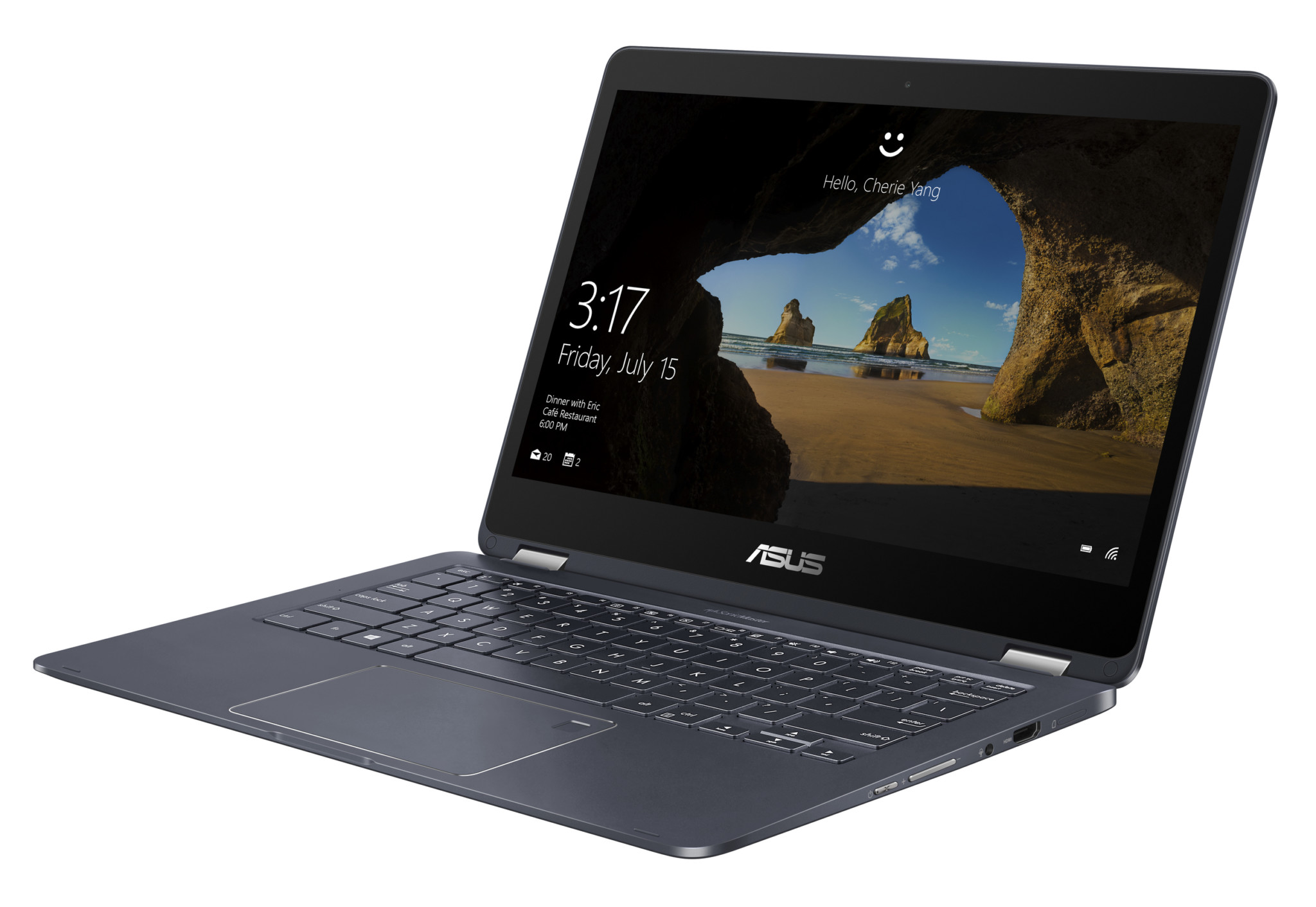
Qualcomm had an event in Hawaii a few hours ago. While it talked about its achievement over the years, the highlight of the event was the unveiling of the ASUS NovaGO – the world’s first Gigabit LTE PC.
ASUS NovaGO
The ASUS NovaGO is the first PC to be powered by a Snapdragon 835 processor which also brings Gigabit LTE to a device other than phones, thanks to the Snapdragon X16 modem.
The ASUS NovaGo is a 2-in-1 hybrid laptop as its hinges let you fold the laptop completely into tablet mode. The bezels are pretty big though and it is a bit heavy, coming in at 1.39kg. It measures 316 x 221 x 149 mm.
The NovaGo has a 13.3” FHD LED touchscreen display. It runs Windows 10 S but can be upgraded to Windows 10 Pro for free as long as you do so before September 30, 2018. It also has support for Windows Ink, Windows Hello, and Cortana.
It comes in two configurations – a 4GB + 64GB model and an 8GB + 256GB. Both are UFS 2.0. For connectivity, the NovaGo uses eSIM and nano SIM. The latter will most likely be the variant available in most markets since eSIMs are still unpopular.
The NovaGo has a SIM tray, HDMI port, a 3.5mm audio jack, volume rocker and a power button on the right side. The left houses two full sized USB ports and the DC power jack. The keyboard is standard without a dedicated number pad and the touchpad is home to a fingerprint scanner.
The battery capacity is currently unknown but ASUS says it should offer up to 22 hours of battery life and 30 days on standby.
Honor V10 and Huawei Mate 10 can be considered brothers. They are two phones released by the same company (the first has been launched by Huawei’s sub-brand) and they are also very similar. The thing which makes them very interesting is the fact that they are Chinese flagship devices, and they are incredibly powerful. Which smartphone will have the best value for money? The older brother by Huawei or the younger one by Honor? Let’s discover this together and let’s evaluate every aspect of these two phones with a complete comparison.
Honor V10 vs Huawei Mate 10: Design
Huawei Honor V10 is a beautiful phone, like every flagship released under the Honor brand in the last few years. It is composed of a back cover made of glass and a profile made of aluminum and it is an incredibly thin device. Its dimensions are 157 x 75 x 7 mm, while its weight is 7 mm. It is compact and very good to hold thanks to its bezel-less design, but even though it has a borderless display, it sports a fingerprint reader on the front side, and it will be fantastic for many people.
We define Huawei Mate 10 an even better phone in terms of aesthetics and build quality. It has a glass back protected by Gorilla Glass and a metal frame, and here we got a bezel-less design too with a frontal Home key that has a fingerprint reader embedded. In addition, this handset is also splashproof and dust-resistant thanks to the IP53 certification.
Honor V10 vs Huawei Mate 10: Display
The display is one of the main differences between these two handsets. Honor V10 has a display with a size of 5.99 inches, the IPS LCD technology, and a Full HD+ resolution of 1080 x 2160 pixels. It is a display with 18:9 aspect ratio.
Huawei Mate 10 has one of the most professional displays, even though it is not the maximum innovation, as it is a classic panel with a 16:9 aspect ratio. Its size is 5.9 inches, it is an AMOLED display and it shows images with a Quad HD+ resolution of 1440 x 2560 pixels. It also supports HDR10 technology. This screen is excellent: it has an impressive detail, deep blacks and also very accurate colors. It is a perfect screen for multimedia use and it can be used outdoor comfortably thanks to its very high brightness. Huawei Mate 10 has a much better display than its opponent, there is no challenge and it wins the comparison.
Honor V10 vs Huawei Mate 10: Hardware and connectivity
Fortunately for people with a low budget for a real flagship, these devices have a very similar hardware side.
Under the hood, Honor V10 has an octa-core Kirin 970 SoC which can run at a max frequency of 2.4 GHz. Three configurations have been launched: one with 4 GB of RAM and 64 GB of internal storage, another with 6 GB of RAM and 128 GB ROM and a 6/64 GB version in the middle, expandable with a micro SD up to 256 GB. The micro SD card uses the secondary SIM slot, so if you expand the memory your device can not be used as a dual SIM phone. This device is incredibly fast and it can be considered one of the fastest phones out there. AnTuTu benchmark gave a score of over 165,000 points to this device. Talking about connectivity, the device is equipped with a USB Type-C port, it has Wi-Fi 802.11 a/b/g/n/ac and Bluetooth 4.2.
Huawei Mate 10 has exactly the same SoC: the octa-core Kirin 970 running at 2.4 GHz, paired with 4 GB of RAM and 64 GB of internal storage. Even though the hardware is the same the performances are slightly better because this phone has been optimized better. According to AnTuTu, the score of this handset on benchmarks is superior to 175,000 points. Indeed, performances are perfect, there is not any lag even with games or heavy apps opened. The connectivity side includes Wi-Fi 802.11 a/b/g/n/ac, Bluetooth 4.2, a USB Type-C port and even an LTE modem which can reach a speed of 1.2 Gbps.
Honor V10 vs Huawei Mate 10: Software
These phones have exactly the same software, so it is hard to establish a winner: they are identical. Both Honor V10 and Huawei Mate 10 have Android 8.0 Oreo installed out of the box, the latest version of the operating system by Google. Android has been customized with the user interface EMUI 8.0. It is one of the best user interfaces in the Android market, only Samsung Experience, MIUI and a few others are at the same level, according to us. It is full of additional features in each Huawei device, and in these two ones, there are some exclusive features as well. Kirin 970 has a Neural Processing Unit (NPU) that makes artificial intelligence and machine learning available in the software of these phones.
You can use AI for many interesting tasks, like adjusting the camera settings depending on the environment, translating texts, using vocal commands and much more. Thanks to EMUI you can also clone apps, enable the picture-in-picture mode, change themes and do many more advanced things. Even though the software is identical on each of these phones, we will still choose a winner: Huawei Mate 10. We prefer this device because we think it will be more supported than Honor V10 in terms of updates. Its predecessor Huawei Mate 9 will be the first Huawei device to receive Android Oreo, while at this moment we do not even know if Honor V9 will receive it.
Honor V10 vs Huawei Mate 10: Camera
There are important differences even in the cameras of these two phones, even though they look apparently the same.
Honor V10 has a dual camera with resolutions of 16 and 20 MP, the sensors’ aperture is f/1.8. There is a LED flash, but it is not a dual flash and there is no OIS. Anyways, the photos shot with this handset should not be bad. The level of detail should be satisfying and we should be able to say the same about the quantity of light captured, thanks to the secondary monochromatic sensor. We will be able to tell you more when it will be possible to test this device, as now it is not even available in the global market.
On the other hand, Huawei Mate 10 has a dual camera with resolutions of 12 and 20 MP co-engineered with a giant of photography: Leica. The sensors have a f/1.6 aperture, they support 2x lossless zoom and the primary sensor is optically stabilized. There is also a dual LED and dual-tone flash. This device has one of the best cameras ever, it can shoot photos with great colors and an outstanding level of detail together with a low amount of noise, even in low light conditions. Huawei Mate 10 is a way better camera phone than its opponent.
Honor V10 vs Huawei Mate 10: Battery
Both these handsets have been equipped with a huge, above average battery, unlike most of the flagships launched in 2017.
The battery of Honor V10 has a capacity of 3750 mAh and it should make it last one day of stressed use. We still do not know how well this battery has been optimized as there is still no chance to test this device, but we expect a very good battery life in every scenario. The phone supports fast charging (4.5V / 5A) and it can reach 58 percent in just 30 minutes of charge.
Huawei Mate 10 has an even bigger battery: with its capacity of 4000 mAh, it can last until the end of the evening with every use. You can forget your charger at least for a day, and it has a very low energy consumption while it is in standby mode. We expected a better optimization, but it is still a great battery life: Huawei Mate 10 should win the comparison. It supports fast battery charging as well, with exactly the same technology as Honor V10 (4.5V / 5A).
Honor V10 vs Huawei Mate 10: Price
When it comes to prices, things totally change between these devices.
Honor V10 is going to be sold with a price tag of about 450 dollars in the 4/64 GB base variant (420 EUR), 450 dollars in the version with 6 GB of RAM and 64 GB of internal storage, and about 530 dollars in the most advanced version (6/128 GB). These are the prices in China, we are still waiting for the launch of the handset in the rest of the world.
Huawei Mate 10 has been launched with a listing price of 700 euros and it can already be bought with a street price of 729 dollars online. Honor V10 wins the price comparison as it is way more affordable, but Mate 10 has a great price if we compare it with the most famous flagships like iPhone X and Samsung Galaxy Note 8.
Honor V10 vs Huawei Mate 10: Winner
Huawei Mate 10 is the winner of the comparison. Apparently, it seems that there is no difference between these handsets, but it is not so. The display is way better on the Mate 10, as well as its camera, and it is also a splashproof phone, unlike its opponent. An aspect for which there is not so much difference is the hardware and software side. The most important difference in favor of Honor V10 is the price: it costs almost 300 euros less and you get a phone with almost the same flagship-level performances, released by the same company: this is great.
Honor has taken the wraps off two new phones -the Honor View 10 and Honor 7X in Europe. The former is the same device as the Honor V10 unveiled in China last week while the Honor 7X is, well, the Honor 7X released 2 months ago in China.
Honor View 10
The Honor View 10 is a flagship device just like the Mate 10 Pro, packing nearly the same specs but with a cheaper price tag. It has a 5.99” FHD+ display with an 18:9 aspect ratio and is powered by the Kirin 970 processor, which has a dedicated NPU and brings a ton of AI features to the View 10.
The View 10 comes in a single 6GB RAM + 128GB ROM variant for Europe with the option for storage expansion (256GB max.). Like the Honor V10, it also features dual rear cameras. One is a 16MP RGB sensor and the other is a 20MP monochrome sensor. For the front camera, there is a 13MP sensor.
The Honor View 10 has a front-mounted fingerprint scanner even with its 18:9 display. There is NFC, Bluetooth 4.2, 3.5mm audio jack and a USB-C port. The phone has a dual SIM slot with support for Dual 4G and Dual VoLTE modes.
Battery capacity for the phone is 3750mAh with support for fast charging via Huawei’s 5V/4.5A SuperCharge technology. The View 10 measures 157 x 74.98 x 6.97mm and weighs 172g. It is thinner than the Galaxy Note 8 (8.6mm) and the iPhone X (7.7mm) both of which have smaller batteries.
The View 10 runs EMUI 8.0 based on Android 8.0 Oreo out of the box. It will sell for €499 (£449) and will be available in Blue. It will go on sale January 8 in the UK, France, Spain, Germany, and Italy.
Honor 7X
The Honor 7X on the other hand is a mid-ranger but also features interesting specs at an affordable price.
It has a 5.93” FHD+ 18:9 display, 4GB of RAM and 64GB of storage. It is powered by the Kirin 659 processor and has support for storage expansion (256GB max.). There are dual rear cameras (16MP +2MP) with PDAF and portrait mode an 8MP front facing camera also with portrait mode, beauty mode, and funny filters.
Google has announced a new version of its latest Android operating system. The version is dubbed Android Go, the new version is built specifically for entry-level smartphones. As result of that, the new OS comes with a lean size and is optimized for Android devices with RAM sizes of 512MB to 1GB RAM. Now, Google can put its money where its mouth is by delivering on that promise with Android Oreo (Go edition) as part of the Android 8.1 release coming tomorrow.
The new Android Oreo (Go edition) would be made available as part of the Android 8.1 update that would be released tomorrow. Google shared some details of the new lite Oreo version, revealing that it is comprised of three aspects; the operating system, Google apps and the Play Store. All three aspects have been optimized to run with fluidity on smartphones with low RAM sizes.
The operating system is said to have been optimized to a point where the average app is 15% faster on the new OS. The OS is also optimized as well as the pre-installed apps to take up 50% less space. In addition, there won’t be a problem of monthly data getting exhausted rapidly by the background apps because Google’s data saver is turned on by default. The Go edition is also coming with just nine apps preinstalled. These apps are super lightweight and they include Google Go, Google Assistant Go, YouTube Go, Google Maps Go, Gmail Go, Gboard, Google Play, Chrome, and Files Go. The optimization also includes the Play Store preinstalled on the Go edition coming with a new section that recommends apps that are tuned for entry-level devices. However, users still get access to all the regular apps on the PlayStore. Google also hinted that devices running Android Go will be delivered in the coming months with disclosing further details. So, we might actually see the launch of Google’s entry-level smartphones soon.
Huawei’s Honor has today launched its Honor 7X smartphone in India during a launch event in London. Earlier, the smartphone was launched in China and now, along with India, it has been launched globally.
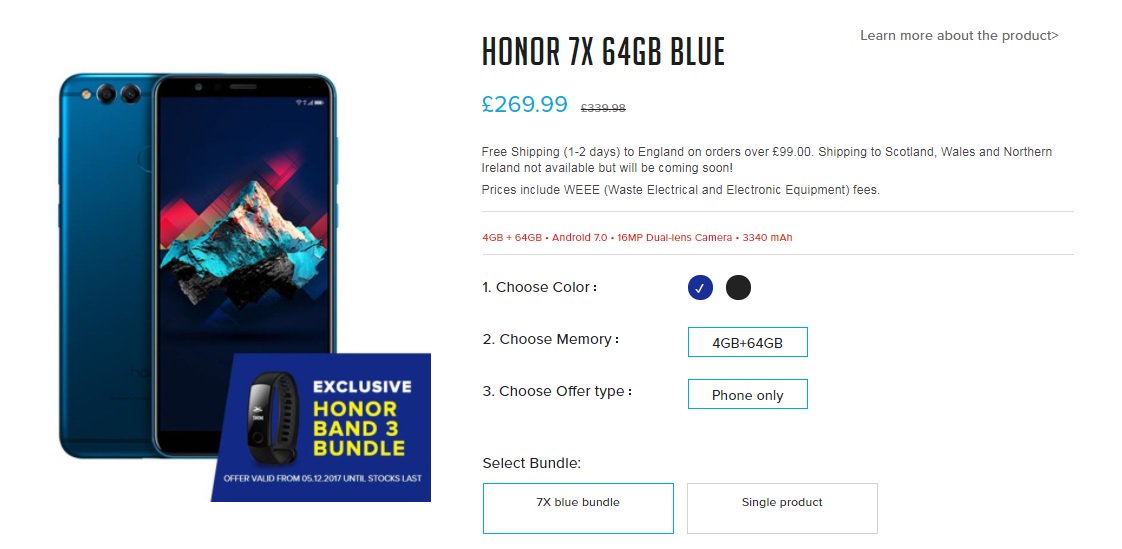
Recently, the company had revealed that the Honor 7X smartphone will be launched in India at an “unbeatable price” and the company has kept its promise. The smartphone’s pricing in India starts at Rs. 12,999 for the 32GB storage model, while the 64GB internal storage variant is priced at Rs. 15,999.
The Honor 7X will go on sale from December 7, exclusively through online retailer Amazon India. Globally, the smartphone will be available through the company’s own HiHonor online store, at a price of €299.
The smartphone, which is the successor of the Honor 6X, features a 5.93-inch Full HD+ full-screen display with narrow bezels and 18:9 aspect ratio with a screen resolution of 1080 x 2160 pixels and a 2.5D screen on top.
Under the hood, this device is powered by an octa-core Hisilicon Kirin 659 chipset — the same processor that powers Honor 9i. It packs Mali T830 MP2 GPU, 4GB of RAM and comes in three options in terms of internal storage — 32GB, 64GB, and 128GB.
However, in India, the device will be available in only 32GB and 64GB storage variants. The smartphone also supports storage expansion through microSD card up to 256GB.
Honor 7X comes with dual-camera setup, featuring a 16-megapixel and 2-megapixel sensors on the rear and an 8-megapixel camera sensor on the front. The smartphone packs a 3,340mAh battery and runs on Android 7.0 Nougat operating system based company’s own EMUI 5.1 custom skin.
Connectivity options on the device include 4G VoLTE, Wi-Fi 802.11 b/g/n, Bluetooth 4.1, and GPS/GLONASS. There is also a fingerprint sensor on the back panel.
In India, the smartphone will be available in Gold, Aurora Blue and Black colour options. The company has also planned for several offers for the users who have registered to buy the smartphone.
Amazon India has mentioned on the landing page that Honor will give away 150 power banks of 10,000mAh capacity and 850 earphones to select registrants. Further, the company said that there will be twenty winners who will receive Honor 7X devices after taking part in the ‘Amazon Registration and Amazon App Event’. For the bumper prize, seven registered users will win holiday packages from Yatra worth Rs. 75,000.
At the launch event, the company also launched its Honor V10 smartphone for the global audience. It went on sale in China today for the first time and was sold out within minutes.
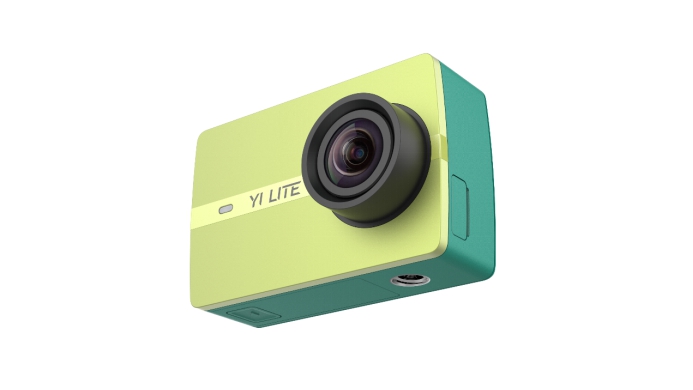
Camera manufacturer, Xiaoyi, today announced a “new” action camera called the Yi Lite Action Camera. This is nearly identical to the Yi Lite released months ago. As a matter of fact, this should be called the Yi Heavy seeing as it packs the same specs but is heavier.
The new action camera has the same design as the predecessor as well as the same internals. The touchscreen display is still 2.0” with Gorilla Glass protection, sensor is still a 16MP f/2.8 Sony IMX206, and the chipset inside the camera doesn’t change from the HiSilicon Hi3556.
The Yi Lite Action Camera can shoot in 4K at 20fps and in 1080p at 60fps. It has support for 9 shooting modes: there is time-lapse, photo-in-video, time-loop recording and slow motion for videos in addition to burst mode, lapse mode, timer mode, and regular photo mode for pictures.
The Yi Lite also lets users adjust settings like exposure, ISO, white balance, metering mode, shutter speed and brightness.
The Yi Lite action camera has Bluetooth 4.1 and dual band WiFi for connectivity. There is also app support for sharing photos to social media. Battery capacity is not stated, but irrespective of the mode you shoot in, the action camera is supposed to last 130 minutes on a single charge. Built-in storage is 4GB and can be expanded by up to an additional 64GB via a MicroSD card slot.
These are the exact specs of the first model released months ago but while the first one weighs 72g, the new variant comes in at 88g. It also comes in the same mint green, ice crystal blue, and star black colors.
Honor V10, the smartphone that was unveiled in China last month, went on sale today in China. According to the company, the smartphone was sold out within minutes of opening the flash sale.
This was expected given that the Honor V10 smartphone received massive interest on China-based online retailer JD.com. The retailer had revealed that it received over 570,000 registrations to purchase the smartphone.
The Honor V10 will again go on sale next week on 12th December. The company has announced that five lucky owners of the V10 will receive Huawei Honor Band A2. To be eligible for the contest, buyers will have to share a screenshot of their purchase.
The smartphone features a 5.99-inch FHD+ display with a screen resolution of 2160 x 1080 pixels and an 18:9 aspect ratio. The device comes with a metal body with ultra-slim design, measuring just 6.97mm in thickness.
Under the hood, the Honor V10 is powered by a Kirin 970 chipset, which comes with a built-in Neural Processing Unit (NPU). The phone is said to have a visual, auditory, learning, cognitive, computing, and decision-making ability.
There are three memory variants of the smartphone — 4GB RAM + 64GB internal storage, 6GB RAM + 64GB onboard storage and 6GB RAM + 128GB internal storage. The camera aspect is piloted by a 20-megapixel and 16-megapixel dual camera setup at the rear. On the front, the smartphone features a 13-megapixel shooter with AI features.
It runs Android 8.0 Oreo operating system based EMUI 8.0 out-of-the-box. The phone packs a 3,750mAh battery with support for 5V/4.5A super fast charge. Connectivity options on the device include 4G VoLTE, Wi-Fi, Bluetooth, and GPS. The smartphone also features a front-mounted fingerprint sensor which also doubles as the home button.
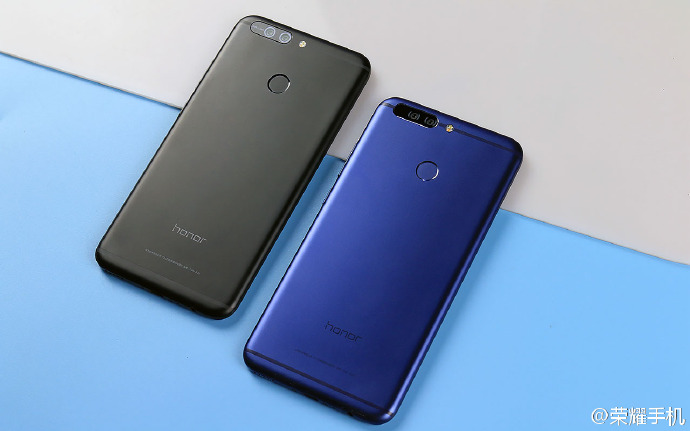
The Honor V10 is available in Magic Black, Aurora Blue, Beach Gold and Charm Red colour variant. As for the prices, the 4GB + 64GB variant costs 2699 Yuan (~$409). The price rises to 2,999 Yuan (~$454) for the 6GB + 64GB version while the 6GB + 128GB version is priced at 3,499 Yuan (~$530).
Honor is going to launch the V10 smartphone globally within a few hours. The company is holding a launch event for the same in London, where it is also going to launch the Honor 7X for the Indian market.
After weeks in beta testing, Huawei has finally announced a stable EMUI 8.0 update for the Mate 9 series. The update also brings Android 8.0 Oreo to the 1-year old flagship.
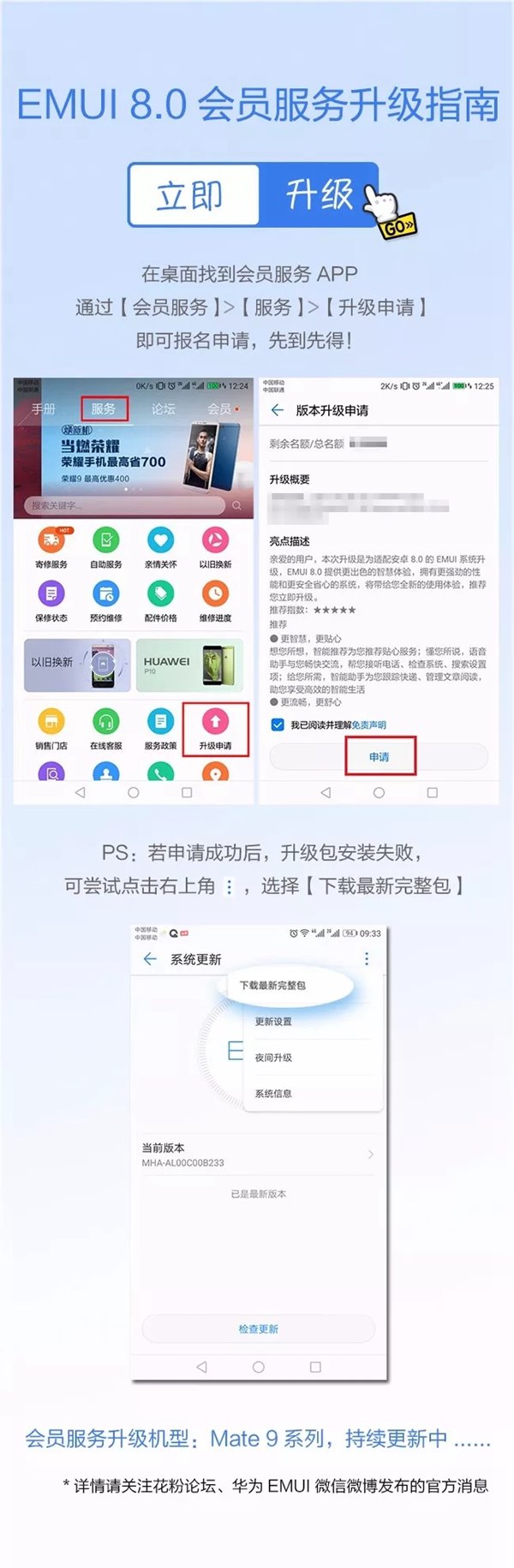
The EMUI 8.0 update is currently not available as an OTA but can be manually downloaded to the phone. Supported Mate 9 versions are listed below:
Users who can’t wait for the OTA can request for the update by going into the Huawei Mobile Services app and selecting upgrade request as seen in the image below.
EMUI 8.0 brings a number of cool features to the Mate 9. Key feature is the AI-experience which works underground and allocates resources to frequently used apps and also on the surface for apps like the camera, which recognizes scenes and provides suggestions.
It also brings PC Mode for a full desktop experience when connected to an external display. This is similar to what Samsung’s Dex does but with the aid of only a cable. With support for dual Bluetooth, you can pair a wireless mouse and keyboard to your device.
EMUI 8.0 also brings a smart split screen feature. This comes in handy when you are watching a video and an incoming notification comes in. The notification pop-up also includes a split-screen icon which when selected allows you go into split-screen mode without interrupting your video.
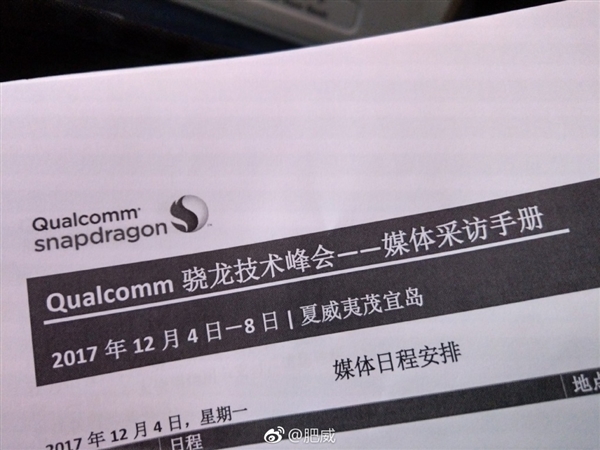
Qualcomm is holding its second Snapdragon technology summit from December 4 to 8 in the U.S state of Hawaii. There are rumours that the next-gen Snapdragon 845 processor will be announced during the summit. The news coming out of China is that Xiaomi’s CEO Lei Jun is in Hawaii to participate in the event. The tech Czar was spotted at an Airport in Hawaii thus fueling speculations that next year’s Mi 7 flagship will be the first Chinese model to have the SD 845 chip.
The Snapdragon 845 is expected to be manufactured using the 10nm FinFET process and would debut on the Samsung Galaxy S9 which may be launched at CES 2018. The LG G7 and Sony Xperia XZ2 are also expected to utilise the flagship chip. While on the domestic scene, Xiaomi is tipped to be the first OEM that would utilise the chip on the Mi 7. Recall that Xiaomi was the first to use the present Snapdragon 835 chip on its smartphone earlier this year. Xiaomi also has a long-standing relationship with Qualcomm. It is reported that right from the debut of the Snapdragon800 series till date, Xiaomi accounts for 66% of Qualcomm’s China shipments.
The Snapdragon 845 chip is said to utilise Samsung’s 10nm LPE process and the CPU is composed of four improved Cortex-A75 Kyro core and four Cortex-A53 small cores. The GPU is said o have been upgraded to Adreno 630 and the chip integrates the X20 baseband with support for five 20Hz carrier aggregation with a maximum download speed of 1.2Gbps.
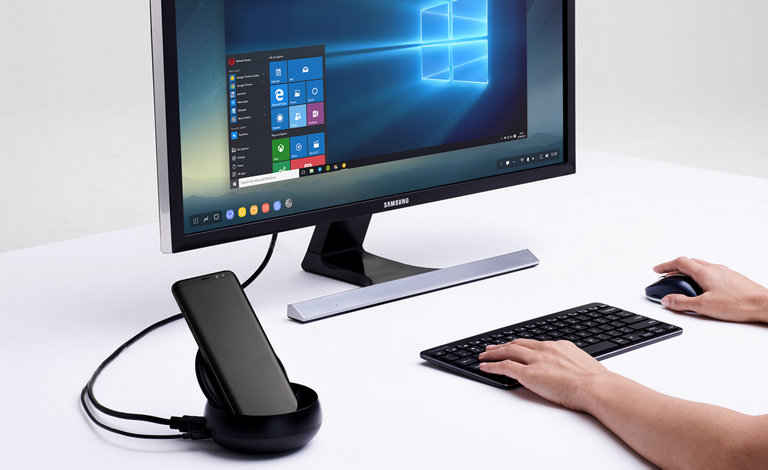
During the launch event of Galaxy S8 in April this year, Samsung had also introduced Samsung DeX desktop docking station. The Samsung DeX can be used to connect a Galaxy smartphone to the dock, a larger display, mouse and a keyboard to create a makeshift workstation. It is currently compatible with three smartphones: Galaxy S8, Galaxy S8+ and Galaxy Note 8. Fresh information suggests that the South Korean company will be unleashing a new edition of Samsung DeX dock at the launch event of Galaxy S9 next year.
It is speculated that the second-generation Samsung DeX will be sporting a different form factor. The current DeX doc allow users to place their smartphone on it in a standing position. However, the upcoming Samsung DeX will let users to lay their phone flat on it in order to use it as a touchpad and a keyboard. In the previous month, well-known leakster Evan Blass had also confirmed on the arrival of an upgraded Samsung DeX dock.
Users will be able to establish connection between the phone and the rumored Samsung DeX pad through USB-C. It is also expected to be compatible with the Galaxy S8, S8+ and Note 8. It is likely to be priced around $150 which is the current pricing of the original Samsung DeX.
Samsung had made the DeX dock available as a pre-order bonus for Galaxy S8, S8 and Note 8 in some regions. Hence, it is speculated that the upcoming Samsung DeX pad could be made available though promotional bundles with the upcoming Galaxy S9 and S9+ smartphones. The Galaxy S9 and S9+ are slated to get announced in the first quarter of 2018. However, the company is expected to showcase the Galaxy S9 duo behind closed doors at the CES 2018 in January.
We use cookies on our website to give you the most relevant experience by remembering your preferences and repeat visits. By clicking “Accept”, you consent to the use of ALL the cookies.
This website uses cookies to improve your experience while you navigate through the website. Out of these, the cookies that are categorized as necessary are stored on your browser as they are essential for the working of basic functionalities of the website. We also use third-party cookies that help us analyze and understand how you use this website. These cookies will be stored in your browser only with your consent. You also have the option to opt-out of these cookies. But opting out of some of these cookies may affect your browsing experience.
Necessary cookies are absolutely essential for the website to function properly. This category only includes cookies that ensures basic functionalities and security features of the website. These cookies do not store any personal information.
Any cookies that may not be particularly necessary for the website to function and is used specifically to collect user personal data via analytics, ads, other embedded contents are termed as non-necessary cookies. It is mandatory to procure user consent prior to running these cookies on your website.