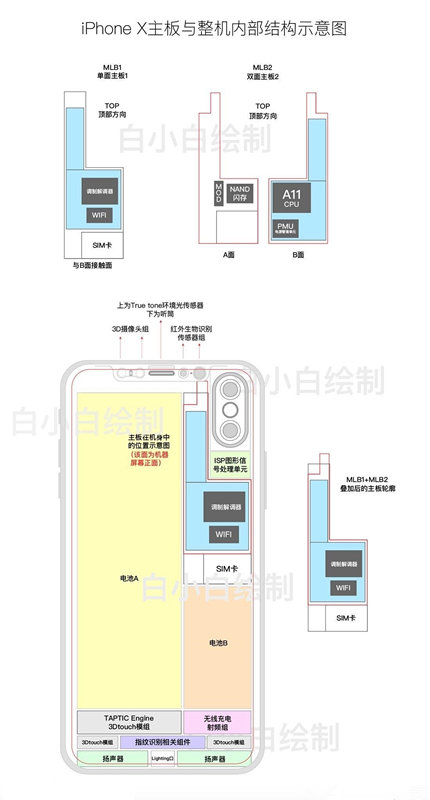
Apple is preparing to release three iPhones this year, one of which is a special edition to mark the 10th year anniversary of the iPhone’s launch. There are rumors that the special edition iPhone will be called the iPhone X but some say it will be called the iPhone 8. A blueprint showing the internal components of the phone leaked recently and the title says iPhone X. We’ll just have to wait till it launches to confirm if its true.
The first thing you’ll notice from the blueprint is the dual rear camera design. Unlike that of the iPhone 7 Plus which lies horizontally, this is positioned vertically but still at the top left corner. Next is Apple’s new generation processor, the A11 chip and the full vision display that extends from the top to the bottom. The new chip will sit below the WiFi and SIM module and should offer an improved performance over the Apple A10 Fusion.
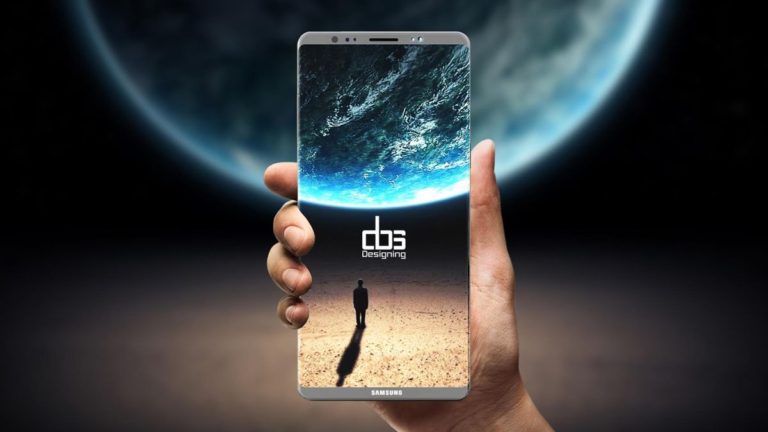
Samsung is working on the Galaxy Note 8 and has even revealed the codename for it. The next stylus-toting phablet is set to launch later this year and there have been rumors surrounding its design. The popular consensus is that the Galaxy Note 8 will just be a bigger Galaxy S8+ with a stylus and a few additions. DBS Designing has put together a video render of their own idea of the Galaxy Note 8, and it is pretty impressive.
Their Galaxy Note 8 Concept sports a 6.4-inch QHD+ infinity display and not a 4K display like most people are expecting. There are practically no bezels on the sides, and the top and bottom ones have been significantly trimmed. Surprisingly, the display doesn’t curve as much as that of the Galaxy S8 at the edges.
The cameras are the major upgrades on the Galaxy Note 8 Concept. Even though the bezels are thinner, the top one holds two 13MP sensors, a light sensor and an iris scanner. The back of the phone has also been redesigned. The Note 8 sports 16MP dual rear cameras similar to the design on the Galaxy S8+ prototype that surfaced after the official launch.
DBS has resolved the major issue with the Galaxy S8 and S8+and that is the position of the fingerprint scanner. Instead of flanking the camera on the right, it now sits below the LED flash and laser module which in turn sits below the vertically stacked rear dual cameras. This allows for the scanner to be positioned lower and prevents users from stretching to reach it.
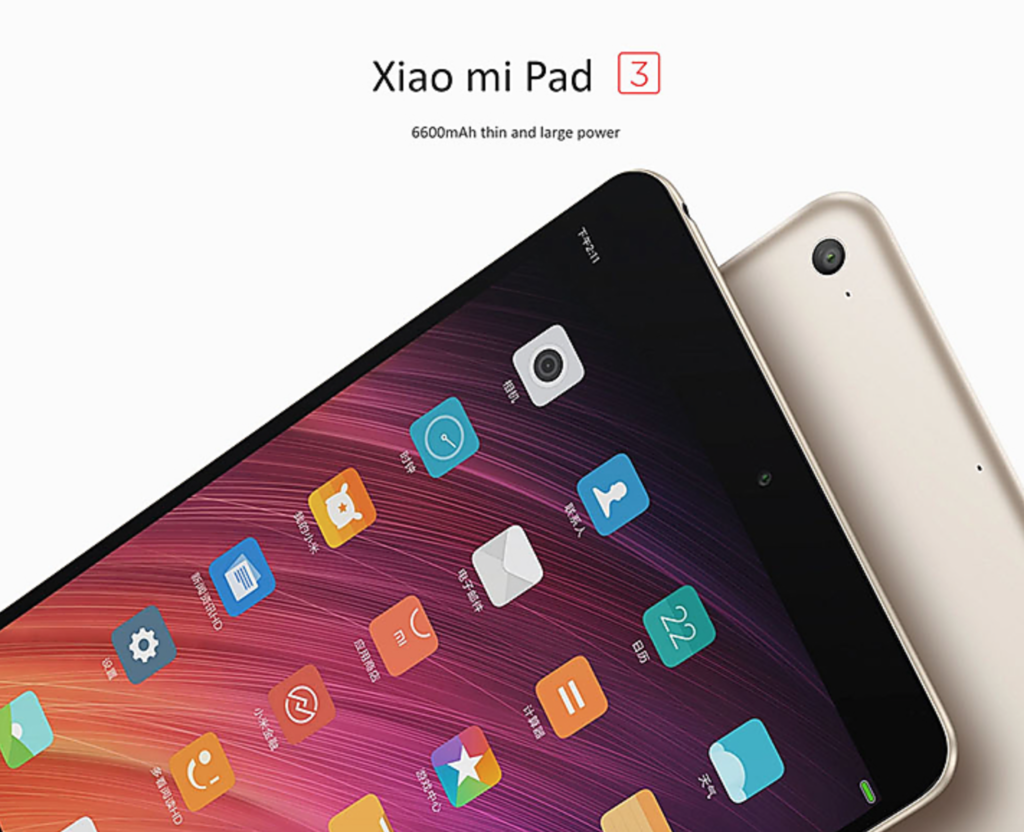
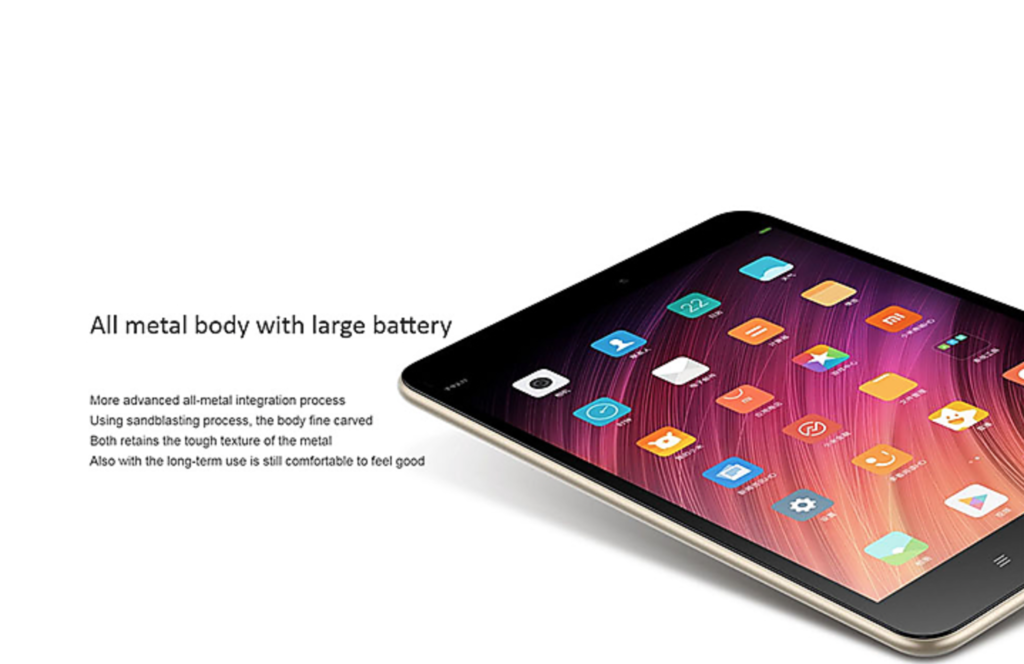
Xiaomi is known for producing great budget smartphones but a lot of people have fallen in love with their tablets too. As usual to the company, Xiaomi’s tablets represent a great combination of design and specs in one package. Xiaomi Mi Pad 3 was announced just a few weeks back and it is one of the better options for the price if you are looking for a compact yet premium tablet.
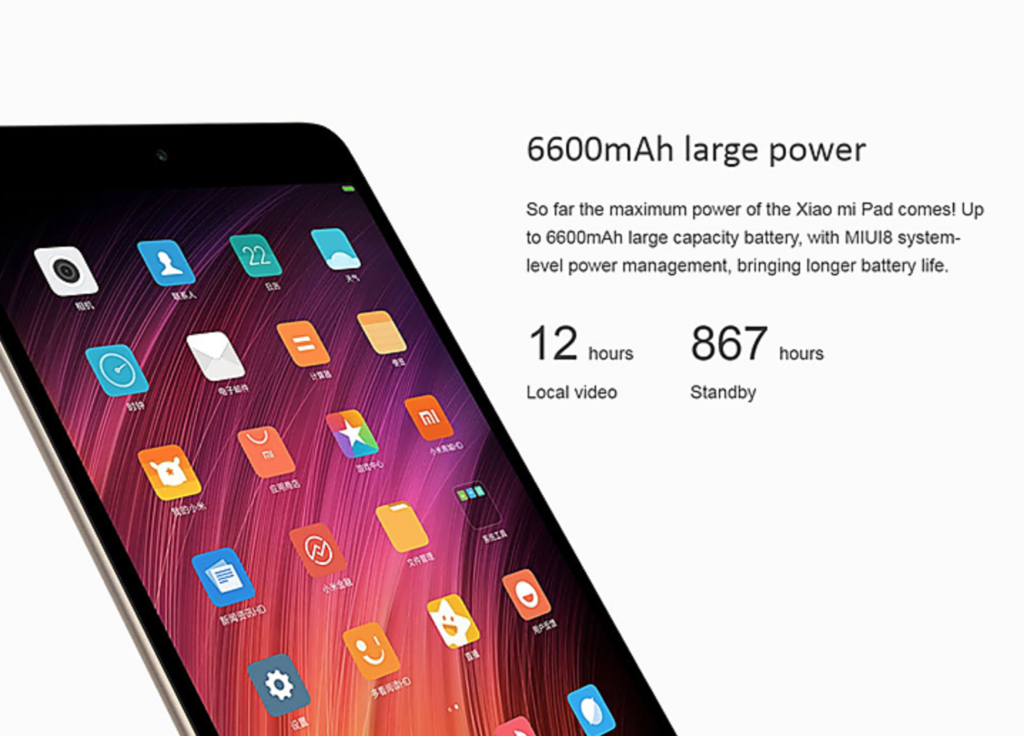
The new Xiaomi tablet comes with all the goodies that you would expect in a device in 2017. You have a large 7.9-inch 2K display up front along with a capable 6600mAh battery to power the device all day.
In fact, Xiaomi claims that the tablet can playback videos for up to 12 hours on a single charge. We’ll confirm that soon. Inside, you have the less popular MTK MT8176 hexa-core processor sporting 2 x Cortex A72 cores + 4 x Cortex A53 cores inside.
Not all heroes wear capes and that rings true for Xiaomi’s CEO Lei Jun. The founder of the Chinese tech company which has a fan base that spreads across the globe is one of China’s billionaires. Last year, Forbes put his net worth at $9.8 billion.
So how does the 47-year old entrepreneur who also doubles as the Chairman of UCWeb Inc. spend his wealth? Is he building a suit of armor or does he don a cape and goes into the night fighting crime? We actually wish he was doing any of the two. However, after reading what he has been up to, we guess he can still be tagged a hero.
Today, Mr.Lei Jun was recognized as one of China’s Top 10 Philanthropists. He was applauded for his service to humanity at the 14th China Charity List Award and the sum of his recorded donations was put at $1 billion.
His act of philanthropy started with his alma matter, Wuhan University where he finished from in 1991. Six years after graduating, he made his first donation to the school, a sum of ¥140,000 which was used to set up a scholarship. He later started two other scholarships, the Lei Jun Computer Scholarship and the Lei Jun Scholarship.
His donations to Wuhan University hasn’t stopped since then. Last October, he donated ¥99,999,999 ($14.5 million) for the construction of a 35,000 square-meter Science and Technology building.
Asides the donations to his alma matter, he also donates to a lot of charity organizations. In May of 2016, he donated ¥200,000 ($29,000) to Zhuhai Charity, an organization that funds schools for migrants. Last December, he also donated ¥100,000 to the villagers of Yangchun for the renovation of schools and mud brick houses, and construction of cultural buildings.
Xiaomi has made an entry into the Russian market for the first time and in their usual manner, they did it in style. The company announced the launch of three “new” smartphones which are going on sale in the Russian market immediately. The phones are relatively not new as they are already available in China but this is the first time they will be officially going on sale outside China. If you are wondering why Russia? Russia is the largest country in the whole world.
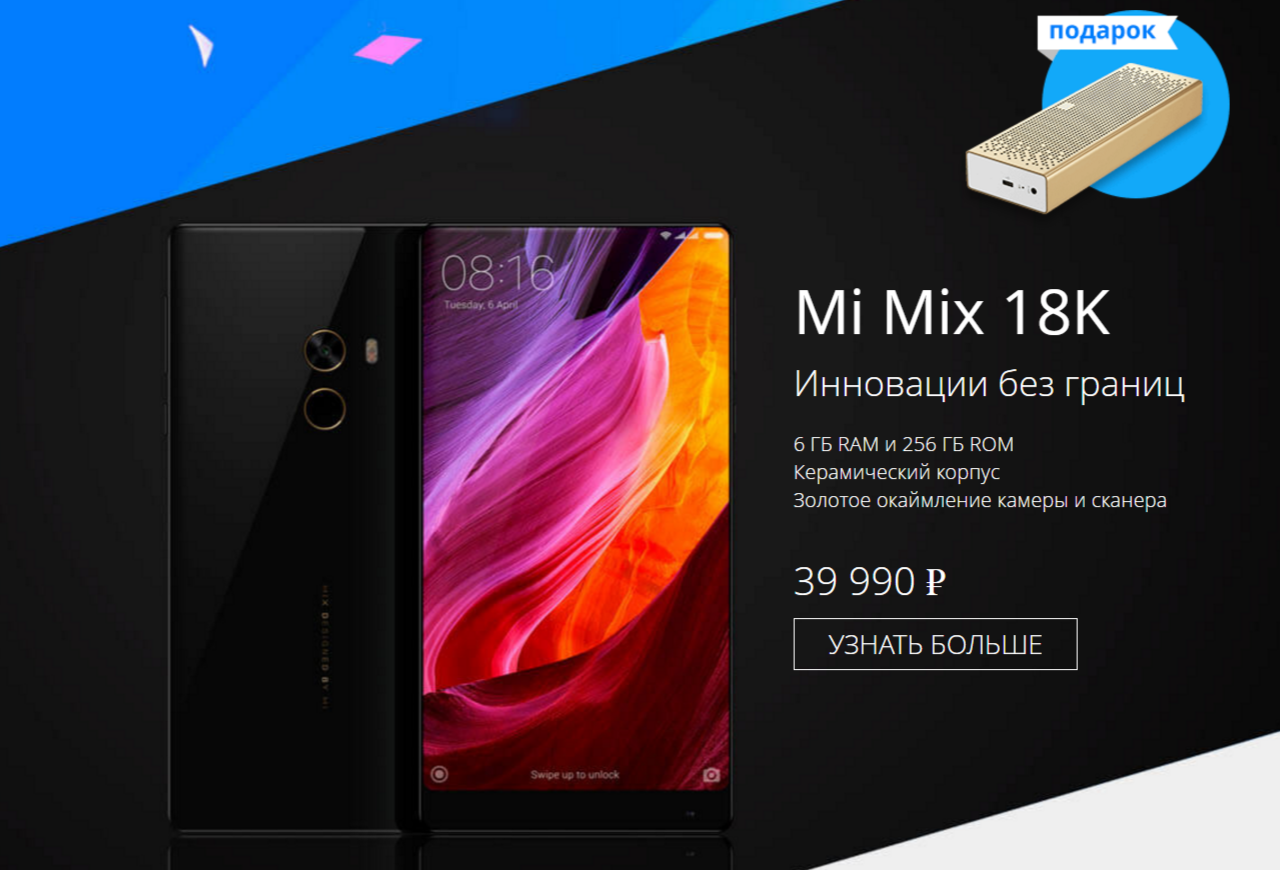
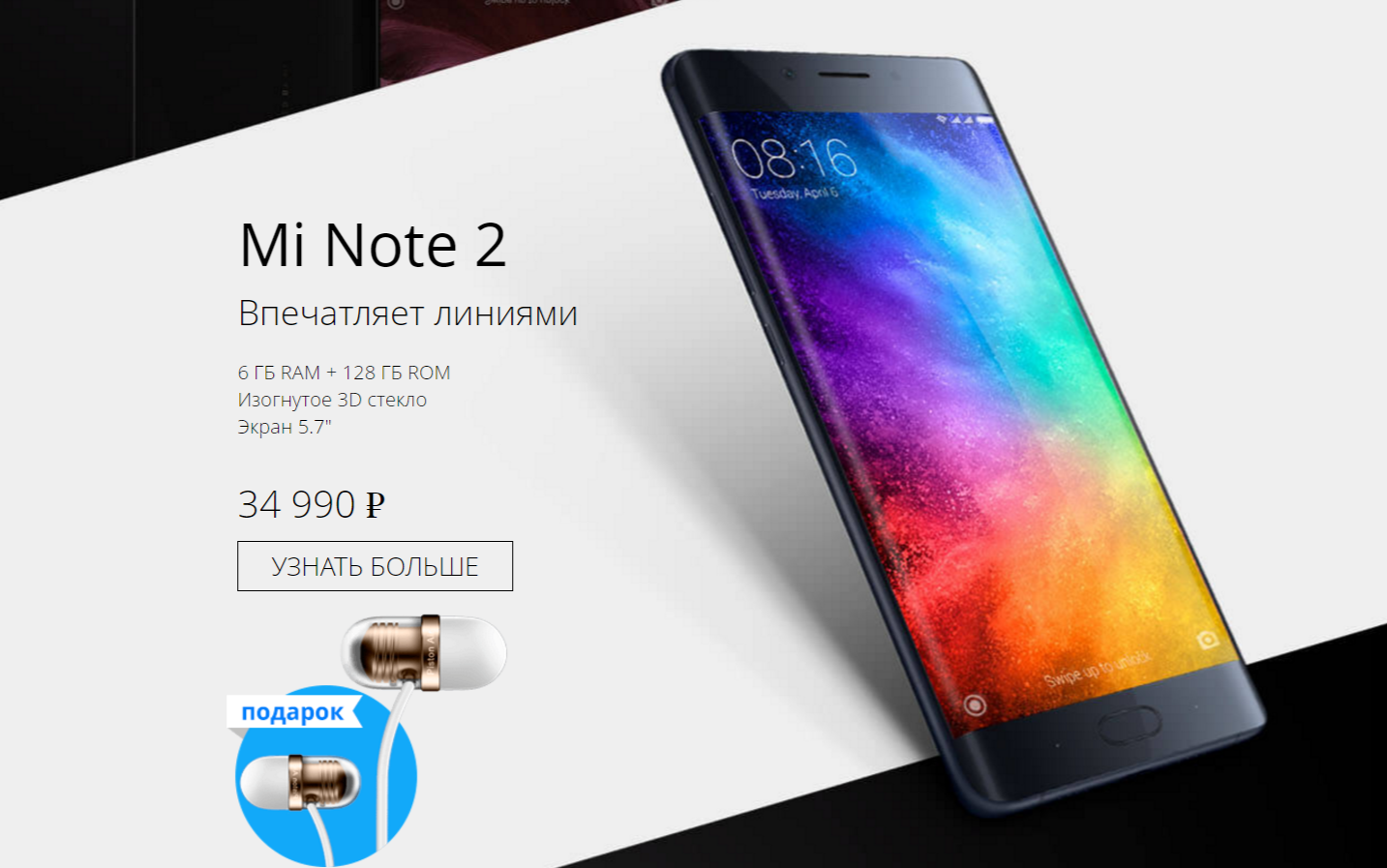
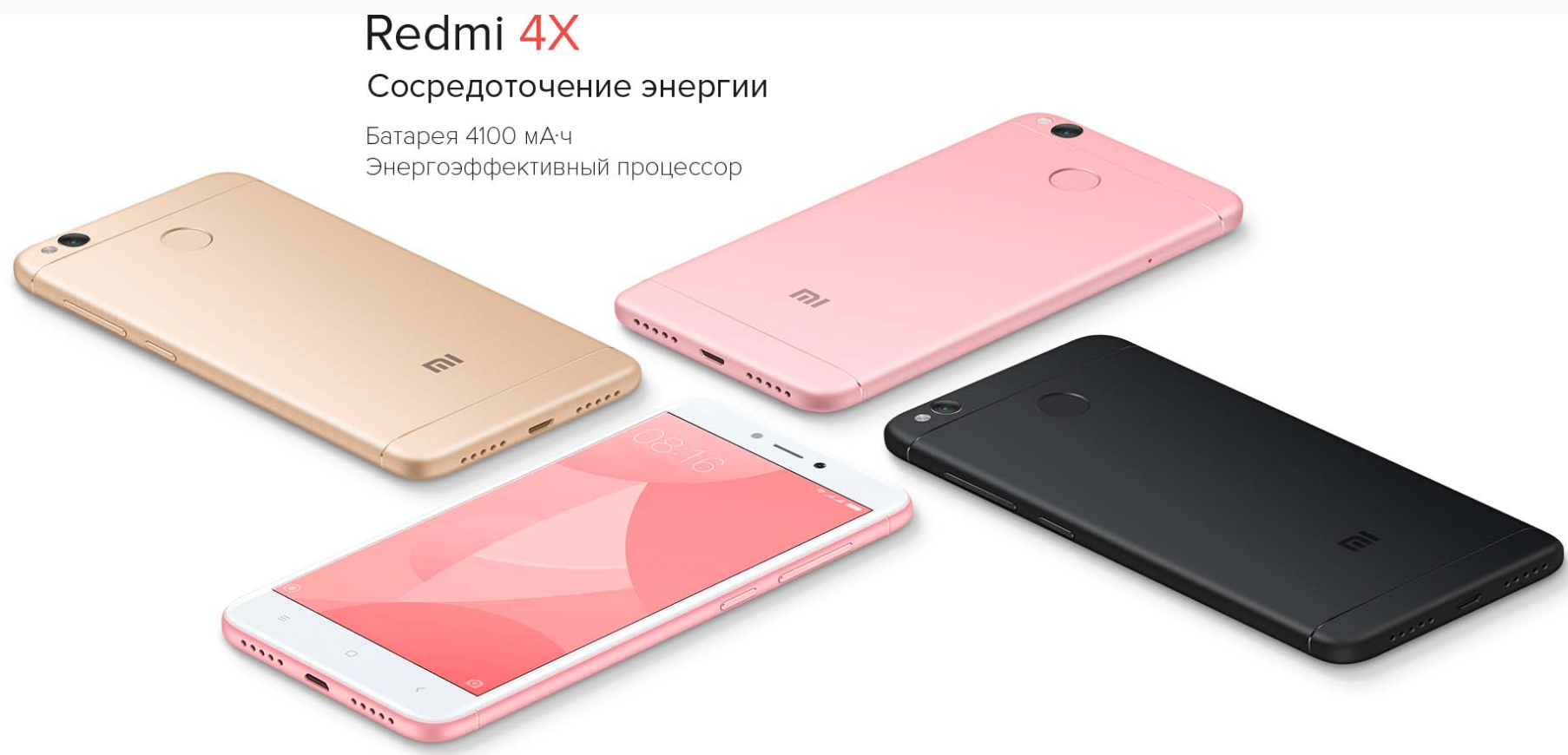
The announcement was made by Xiaomi senior Vice-president Wang Xiang and the smartphones which hit the market are the Mi Mix, Mi Note 2 and Redmi 4X. Although some had expected the Mi 6 to be announced for the Russian market, that didn’t happen, instead, Xiaomi made up for the absence of the Mi 6 by unveiling two of its top-end products in the Mi Mix and Mi Note 2.
The Xiaomi Mi Note 2 is the company’s first smartphone to use a curved edge display and comes powered by a Snapdragon 821 chip backed by 6GB of RAM. So, we’re talking about the high-end version here. This Mi Note 2 version features a whopping 128GB storage as well as a large 22MP rear camera. TheMi Note 2 price is pegged at 34,990 rubles and Xiaomi is offering a free Mi Piston Air headphone with every purchase made before May 2.
The company also announced the bezel-less Mi Mix flagship which comes with a large bezel-less screen. The Mi Mix has a display which almost covers the entire screen, save for a little bezel at the bottom where there is a home button. Only the 6GB RAM + 256GB version is available for a price of 39,990 rubles. There is also a free Mi Wireless Bluetooth speaker with each purchase made before May 2.
Finally, away from the flagship category, the innovative Chinese company also unveiled the Redmi 4X with its price set at 12,990 rubles. The Redmi 4X sports a 5-inch HD display and is fired up by a Snapdragon 435 chip backed by 3GB of RAM. The device also comes with a 32GB storage. The camera combination consists of a 13MP rear camera and a 5MP selfie shooter. The juicy part is the 4,100mAh battery which the Redmi 4X packs. There is also a branded headphone available with the device.
The three Xiaomi phones will be available for purchase online as well as on authorized retail shops from April 26. You can find out more details about the products from Xiaomi Russia’s official online store.
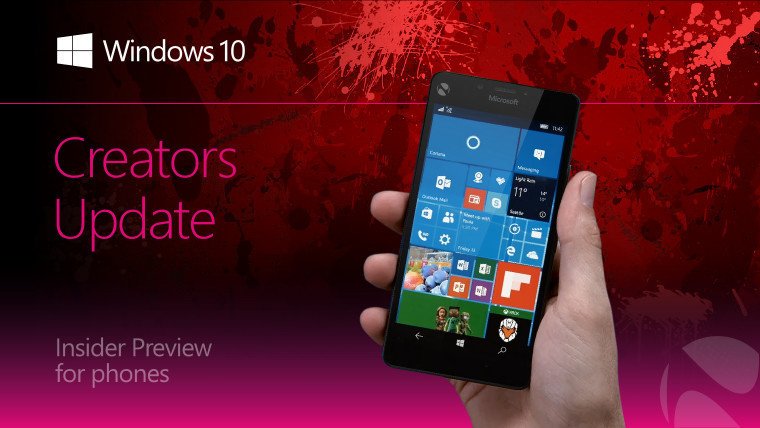
Windows Mobile might be dying but a number of folks still use a Windows phone as their daily driver. Some of these loyal Windows fans own older devices that didn’t get updated to Windows 10 Mobile. Devices like the Lumia 520 and Lumia 635 didn’t get the update because of their small RAM (512MB) and small storage (8GB) while others like the Nokia Lumia 1020 didn’t get updated because of it’s old Snapdragon S4 processor.
seems to be available to the 520 and 635 512MB model
However, those devices might just be able to get the update to Windows 10 Mobile today, thanks to an anomaly. Microsoft earlier released the Windows 10 Mobile Creators Update to the Release Preview Ring of the Insider Program. That’s the equivalent of a developer version of an Android ROM. Twitter user @mccools2013 who checked out the update found out that the it is available for the Lumia 520 and 635 512MB model.
The Creators Update itself isn’t even available to all devices running Windows 10. Although Microsoft says unsupported devices can get the update if they are registered for the Windows Insider program.
Meizu today official launched the E2 mid-range smartphone which is part of its Blue Charm series. The Meizu E2 comes with a design that is honestly innovative that you’d wonder why the company didn’t reserve it for a flagship model. But then, that is perhaps a sign of more innovative design concepts to come because Meizu is yet to release its 2017 flagship. Meizu still didn’t announce the elusive Pro 7 which is expected as its next flagship.
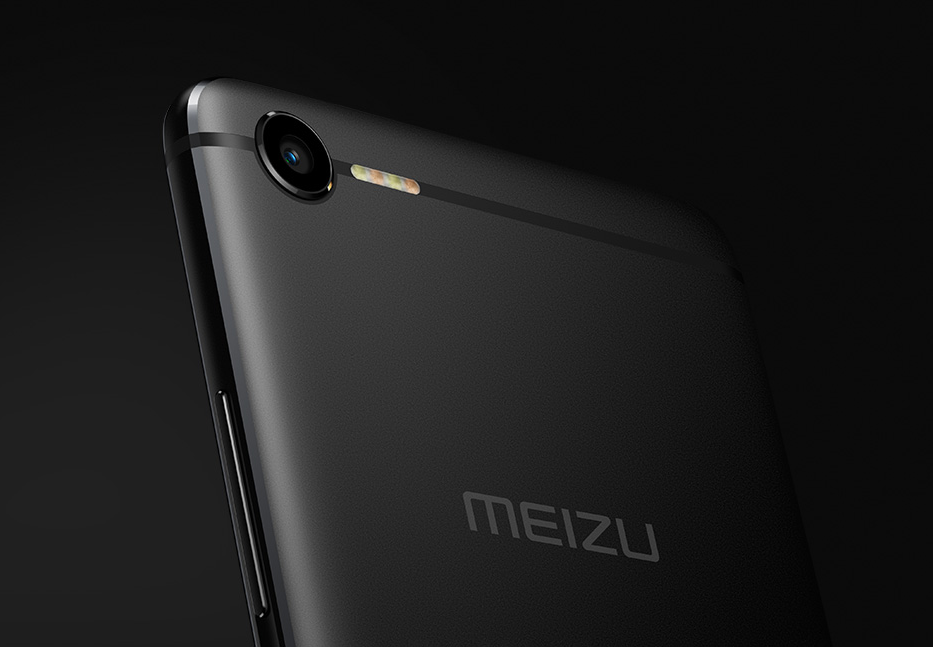
No doubt, the biggest highlight on the E2 is the strip LED flash it uses which is located right on top of the fused antenna line. The unique flash has four LED lights inside which should increase illumination but we are yet to see the camera samples to know how it performs.
The rear camera is also located on top of the antenna band. The E2 uses an all-metal body design manufactured using the nano-injection moulding process. The body is coated using the sandblasting process in order to give it a fine look. The edges are trimmed off using the CNC diamond cutting process. The E2 also feature very narrow bezels at the sides which are just 0.025mm thick. The device also has a slim body which is 7.5mm thick and weighs 155g.
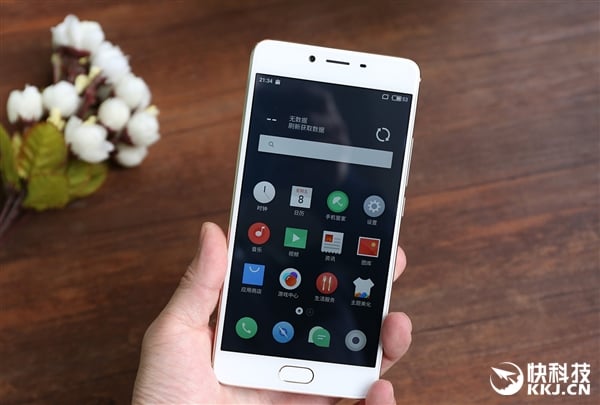
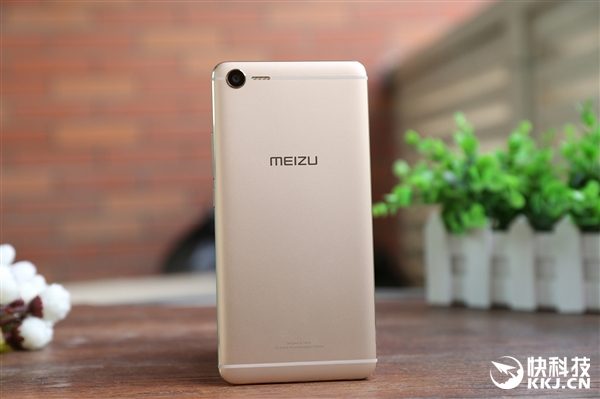
The rest of the E2 specs include a 5.5-inch Full HD display, a MediaTek Helio P20 chip, 3GB RAM + 32GB storage one version and another with 4GB RAM + 64GB storage. The storage is the low eMMC 5.1 version o all models. The Meizu E2 also packs a 13MP rear camera and an 8MP sensor up front. Keeping the lights on is a 3400mAh battery. Here are some hands-on/ unboxing images of the Meizu E2 courtesy of Chinese tech blog Mydrivers. Check them out from under. (Click on the image to enlarge)
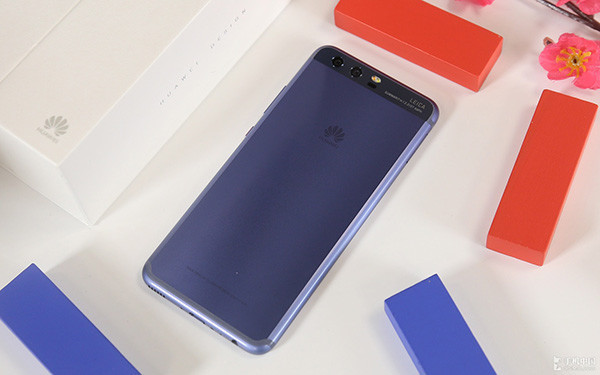
Chinese smartphone market leader Huawei has reclaimed its top position in the domestic market in Q1 2017, knocking off OPPO and Vivo who had both edged out the company from its number 1 spot in the previous two-quarters. This is contained in the latest report by market research firm Canalys.
The analytic data shows that Huawei shipped about 21 million smartphones in the quarter spanning January to March and this amounted to an 18% market share. No doubt, the P10 and P10 Plus accounted for a good proportion of this amount. On the other hand, OPPO fell to second place despite a strong annual growth of 55%. The BBK subsidiary shipped just under 20 million units in Q1 2017. Fellow BBK subsidiary, Vivo, still made it into the top 3 in the domestic market, capturing a 15% share of the market with 17 million units shipped.
Canalys noted that China’s smartphone market saw an increase in shipments by over 9% year on year this quarter which shows the market continues its growth. But a worrisome trend is the seeming consolidation of the market noticeable by the fact that the top three phone makers accounted for more than 50% of shipments for the first time ever this quarter. Last year Q1, Huawei led the market, while Vivo was second and OPPO fourth but they all accounted for 42% of the market. In case you are wondering who occupied the third spot, Xiaomi did, but has since fallen to fifth behind Apple, with just over 9 million units shipped in Q1 2017.
Xiaomi’s bid to recapture the top 3 spots is seriously threatened as it faces increasing pressure from Huawei’s online efforts with Honor, as well as OPPO and Vivo, whose marketing activities have been taking attention away from Xiaomi. Xiaomi’ plans to open up more offline stores is underway and even at that, Huawei plans to increase investment in its offline channel this year. There is no doubt that whatever plan Xiaomi has got, it has to execute them fast in order to still have any chance of making it up the top 3.
In all, Canalys estimates that a total of 114 million smartphones were shipped in China in the first quarter ending 31 March 2017.
Meizu has finally taken off the wraps on its new smartphone, the Meizu E2. Yes, it is called the E2. The new smartphone is the first to deviate from the old and already boring design used by Meizu.
Meizu E2 Design
The major design change in the Meizu E2 is in the LED flash. It is the first of its kind and Meizu deserves some praise for it. Though it is sad that it might not get the recognition it deserves until one of the major manufacturers outside China copies it. *Help, I’m choking on this Apple*.
The Meizu E2 sports 4 LEDs for its rear flash which are embedded in the antenna line. The result is beautiful but we are curious to know how the increase in the number of LEDs affects the outcome of pictures.
The rest of the design remains more or less the same as previous models. The back is made out of metal with Meizu’s name sitting in the middle. The corners are rounded and the buttons do look like they are made out of metal too. The overall design is nice and the phone doesn’t appear thick.
Meizu E2 Specs
The Meizu E2 has a 5.5-inch FHD display and is available in two variants. There is a version with 3GB of RAM and 32GB of storage and another with 4GB of RAM and 64GB of storage. Both are powered by the Helio P20 processor.
The rear camera on the Meizu E2 is a 13MP f/2.0 sensor with PDAF and four LED flash. And for selfies and video calls, you get an 8MP shooter. The E2 has a 3400mAh battery that supports 18W fast charging, dual SIM support, and full network support. There is also a fingerprint scanner positioned below the display under the home button.
Meizu E2 Hi Case
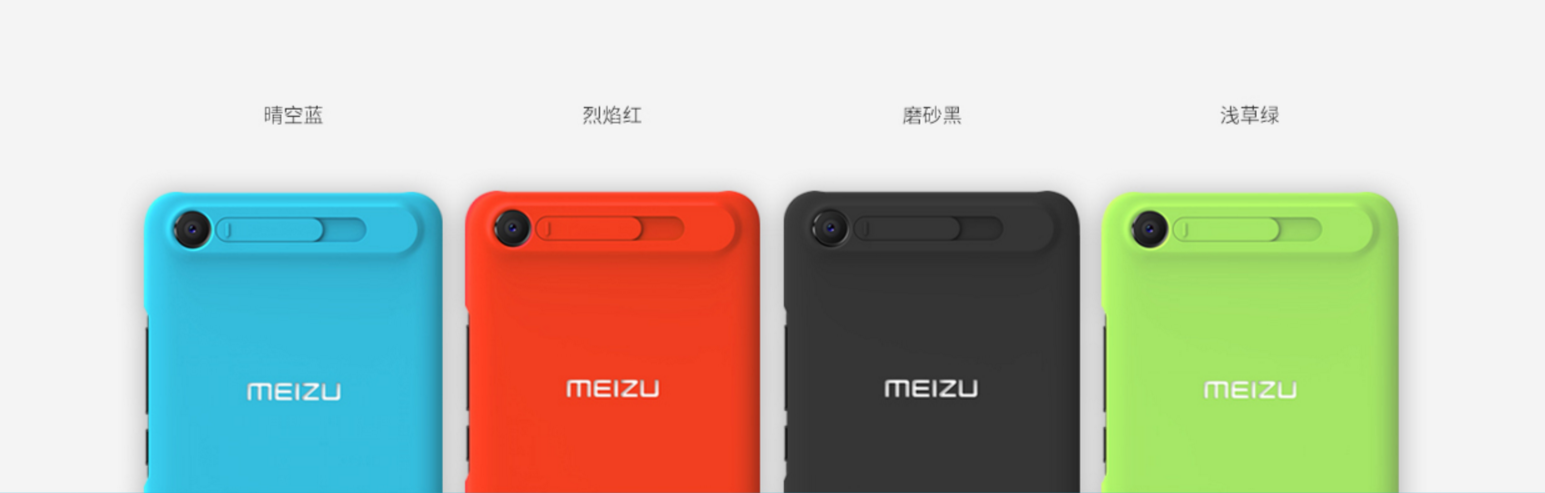
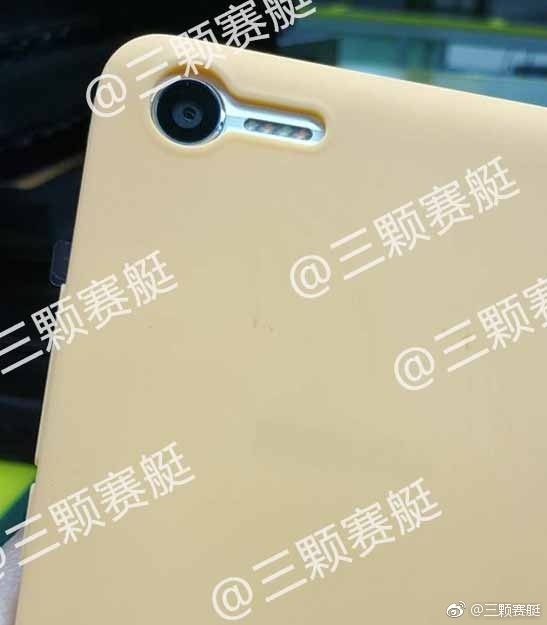
Meizu also announced a bunch of colorful cases it is calling Hi Case. The case is reminds us of the Nexus 6P with its raised rear camera design. It also has a slide that covers the LED flash and protects it when not in use. The Meizu E2 Hi Case comes in black, red, blue, and green.
A few months ago, Lenovo announced that it was planning to integrate all its phone brands under one umbrella. The development stemmed from the challenges it was facing with Motorola Mobility. The plan would see it release all its phones under the Lenovo Moto brand starting with the Vibe line of mid-range phones. But what we didn’t expect was the inclusion of its ZUK Mobile brand since it was an independent part of the Lenovo group much like Honor is to Huawei.
The news is coming from webo user @Old Cool who announced that there will be no ZUK Z3. His post was then responded to by analyst, Pan Jiutang who confirmed that the ZUK hardware business was going to be shutdown. In his post, Jiutang says the company was a success and managed to amass a large fan-base during its short stint as a phone manufacturer.
ZUK Mobile was founded on May 28, 2015 and just a month from its 2nd anniversary, Lenovo is shutting it down. During its short stint as a mobile manufacturer, it announced three phones: the ZUK Z1, ZUK Z2, ZUK Z2 Pro, and the ZUK Edge.
Earlier this year, leaked images of a phone called the ZUK Edge II Special Edition surfaced online but as it stands now, the blue dual camera beauty will never hit the market. For fans of the brand, the ZUK Edge will be the most recent flagship they can buy.
Another Weibo post by @Zheng Jun reveals the new management at Lenovo following the merger of the mobile brands. ZUK co-founder, Chen Xudong will return to Lenovo’s PC business arm; Qiao Jian will be the new head of Lenovo Mobile China; and Kirk B. Skaugen will remain head of Lenovo’s data center operations.
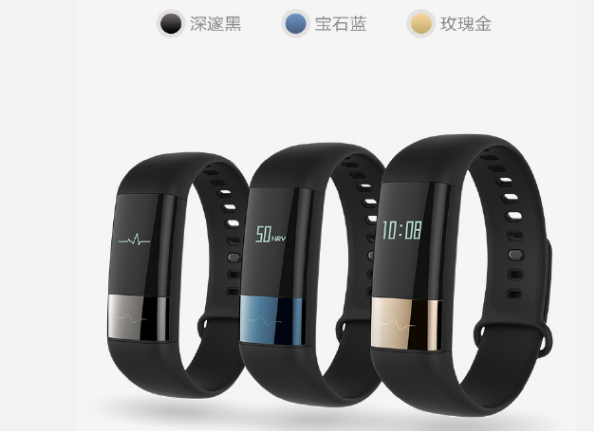
Since leaving Xiaomi’s cloak, Huami has focused on the Amazfit brand, which had a smartwatch to its name. The company has now added a new smart fitness band which functions like the Mi Band 2 and even has more fitness and health tracking features. It is worthy to note that Huami still manufactures the Mi Band 2 for Xiaomi.
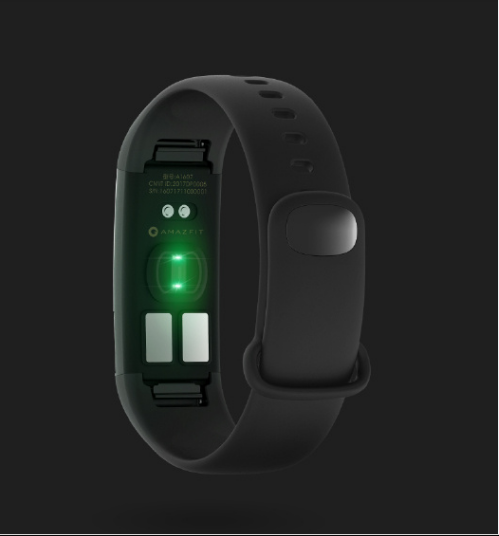
The Amazfit smartband comes with a built-in ECG sensor which performs functions like heart rate monitoring, pulse monitoring and others. The device comes with a body made from both aluminium and stainless steel. While the strap is made from a 19mm-wide skin-friendly rubber. There is a 0.42-inch OLED display at the front and from the display, you can access features such as time and date and other parameters.
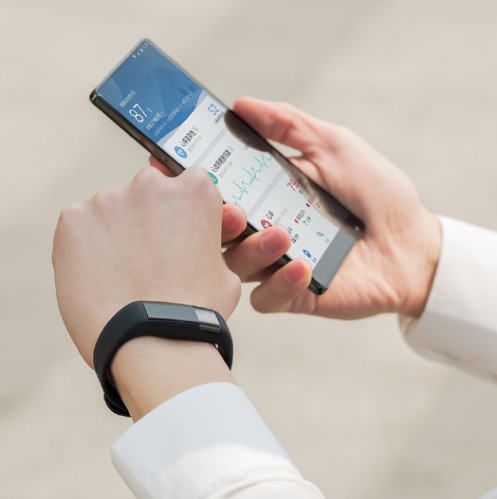
Apart from the heart rate monitor, the Amazfit fitness band is also equipped with a built-in ECG sensor which can track data and display it on its own display or on a connected smartphone. There is also a PPG photoelectric sensor that monitors the heart rate and sleep pattern. The health band detects variation in heart rate and notifies the wearer promptly. It also features a low energy-Bluetooth 4.0 through which it is paired to a smartphone via an app and the fitness data can then be accessed on the phone.
Further, the Huami Amazfit comes with a triaxial acceleration sensor as well as an IP67 dust and waterproof certification. The device is kept on by a 95mAH battery which gets fully charged in just 2.5 hours and can last up to 7 days on a full charge. The fitness band is ultra-light, weighing just 10g.
As far as the price goes, the Huami Amazfit health/fitness band will be sold for a monstrous 699 Yuan (~$101) price, which is like 5 times the current price of the Mi Band 2. The Amazfit health band comes in Deep Black, Rose Gold and Sapphire Blue colour options.
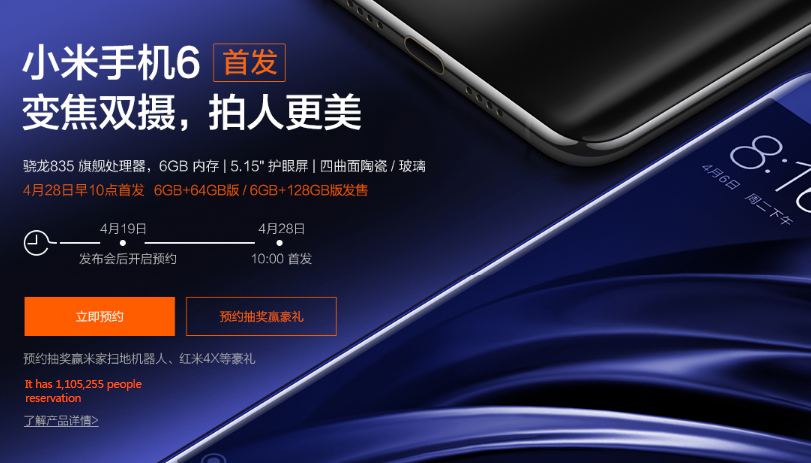
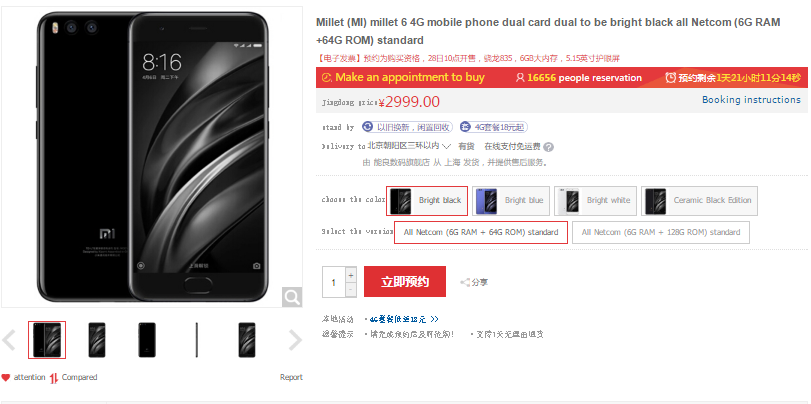
The Xiaomi Mi 6 flagship is scheduled to go on its first flash sale on April 28, and ahead of that event, the product reservation page for the Mi 6 on Jingdong (JD.com) reveals that the registrations on the platform stood at 1,108,192 persons as at the time of writing this post. The number is still on the increase, and at a rapid rate.
The figures aren’t really surprising as the Mi flagship is presently the most powerful smartphone in the domestic Chinese market. It packs a Qualcomm Snapdragon 835 chipset which gives it its firepower. What we are really curious about is that a recent report claims that the first batch of Mi 6 which was shown to have come out of the factory recently is made up of only 80,000 units of the flagship device. That leaves no one in doubt that a lot of the persons who registered might end up not getting the device to buy. Not that we expect all the registrations will convert to real buyers but a good number of them should.
Another interesting thing to note is that this over 1 million registrations recorded by the Mi 6 is on Jingdong only. We don’t have the registration figures from other platforms but if all is added, we should be looking at over two million registrations. The Mi 6 is priced at 2499 Yuan and it seems only the black variant will be available in the first sale. We expect all units of the flagship will be sold out within seconds.
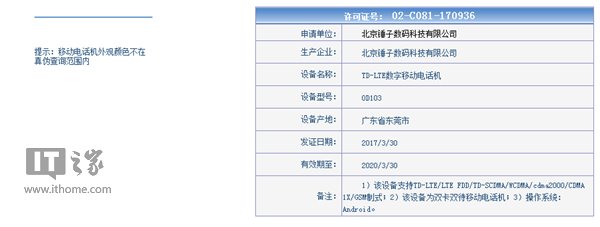
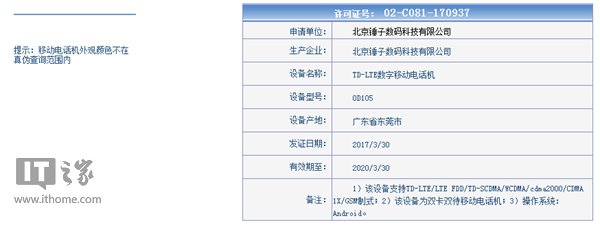
Two new Smartisan models have appeared on TENAA where they have been certified. The two models appeared s Smartisan OD103 and OD105 and in reality, these models have been regulars in leaks. Recently, they were certified by 3C in China and later on the OD105 appeared on AnTuTu where it was benchmarked.
The TENAA listing gave us the network band specs of the two models but their images and other specs details were missing. However, from the AnTuTu appearance, we could grab that the Smartisan OD105 model features a Qualcomm Snapdragon 62 processor with a display resolution of 1920 x 1080 pixels. The OD105 also features a memory combination of 4GB RAM and 32GB of storage and will run on Android 7.1.1-based Smartisan OS. The device is also listed as having a 13MP rear camera and a 4MP front-facing camera.
Apart from these, not much is known about both models but Smartisan has fixed a launch event for May 9 and we expect both models to be released on that day.
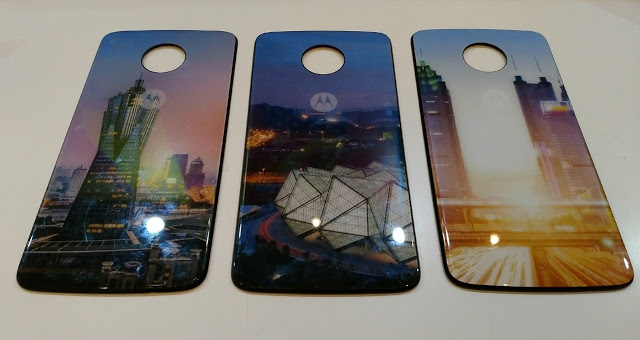
The Motorola Moto Z smartphone that was launched in 2016 can not only be customized by attaching various kinds of Moto Mods accessories, but also by adding interchangeable rear covers called Moto Style Shells. Now, Louie Chan HK, a Weibo user has revealed some of the upcoming Moto Style Shells. Unlike previous Moto Style Shells that were made of different materials like Oak and Leather, the newer ones seem to be focused on certain kind of design.
As it can be seen in the above image that was shared on Weibo, the design of the new Style Shells is focused on scenery. One of them shows the beauty of a skyscraper and another one shows an evening shot of a city and the other one displays a view of the sunset between two buildings.
Like the currently available Style Shells, the newer ones appear quite thin. Moto Z phones have a protruding rear camera module. Hence, adding a Moto Style Shell can help the phone to sport a flat rear.
There is no information on the material of these Moto Style Shells. However, they appear to be built from the same material and have a glossy appeal. There is a possibility that these Moto Style Shells could be made of plastic or metal. The different designs that can be seen may not be engraved on the cover but it could be overlaid by using some kind of material such as vinyl or silicon.
All the three Moto Style Shells have a circular cut-out for the round-shaped rear camera of Moto Z. It seems that it can be also used on the upcoming Moto Z2 flagship that also features a circular-shaped camera housing. Below the camera cut-out is the circular Moto batwing logo on each shell.
The existing Moto Style Shells are available for $20 each. There is a possibility that these new shells that sport elaborate designs which may be printed in a manner to last longer might come with a costlier pricing. It is likely that the new rear covers may launch and become available globally for purchase by this week.
The Moto Z2 and Moto Z2 Play leaked images and details have already surfaced. Since the predecessor models debuted in June last year, rumors have it that Lenovo will be unleashing the next-generation Moto Z phones in June 2017.
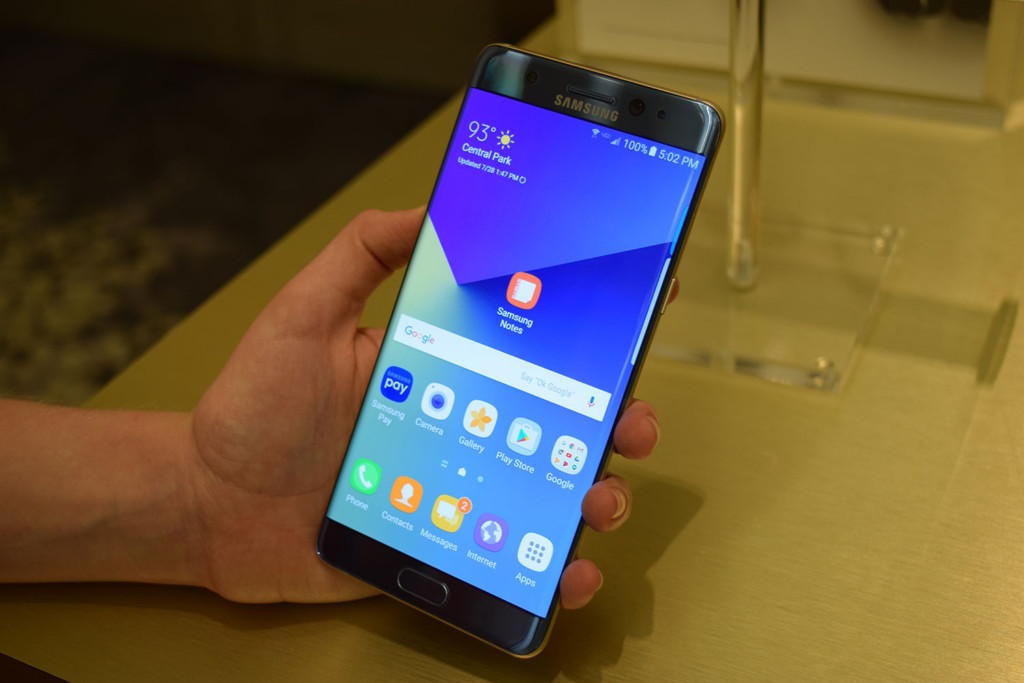
In January, Samsung officially confirmed that its investigations on Galaxy Note 7 explosions is over and the cause of the issue was revealed as faulty battery. In the very next month, Korean media started speculating that Samsung will re-launch the Galaxy Note 7 as a refurbished device along with a cheaper price tag. Fresh information suggests that it will be $250 cheaper than the original pricing of the discontinued Galaxy Note 7.
The Galaxy Note 7 had launched in August 2016 and it was receiving rave reviews from critics. However, its glory was cut short as it met with premature death in October 2016 because of the multiple explosion cases that surfaced from various users across of the world. The decision of discontinuing the Note 7 was taken after two failed attempts to recall it. However, according to ET News, a Korean publication, the refurbished Galaxy Note 7 will soon be releasing at the end of June in South Korea.
The publication has reported that the refurbished phablet would be launching with Galaxy Note 7R moniker. It will be available through South Korea’s major carriers such as SKT, KT and LG. As far as pricing is concerned, it will be launching for around 700,000 won ($620). This pricing may appear costly but it is significantly lower than the launch price of the original Note 7 which carried a pricing of 988,900 ($870).
To say again, the Galaxy Note 7R handsets are not new smartphones but refurbished units that will be sold as “like-new” devices. The refurbished phablet is expected to sport the same specs and design as the original Note 7. However, 3,500 mAh battery that came on the original model is speculated to be replaced by a smaller battery of 3,200 mAh capacity on the Galaxy Note 7R.
The device has recently received Wi-Fi certification which suggests that the arrival of the Note 7R is drawing near. The Wi-Fi certification has also revealed that the Note 7R would be running on Android 7.0 Nougat OS. The model numbers like SM-N930, SM-N930FD, SM-N930F, SM-N930K, SM-N930L, SM-N930S, SM-N930X and SM-N935S.
The release of the Galaxy Note 7R for June seems to be placed strategically. Its arrival in June is couple of months after the March launch of Galaxy S8 and Galaxy S8+ phones and few months ahead of the alleged launch of Galaxy Note 8. For the past two years, Samsung has been launching the Note series in the month of August. However, there is a possibility that the Note 8 may launch in September this year.
Is $620 a good price for a refurbished Galaxy Note 7? Do let us know your thoughts by adding your comments.
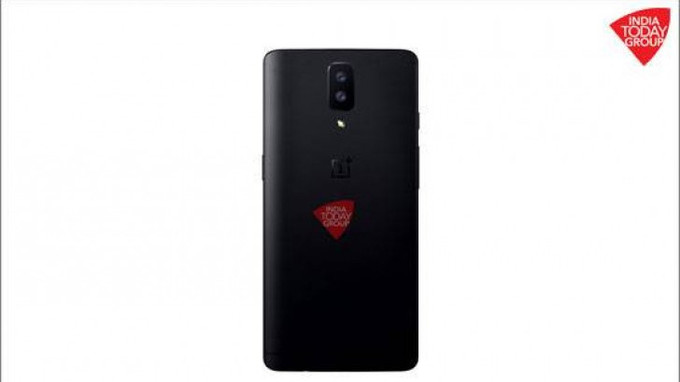
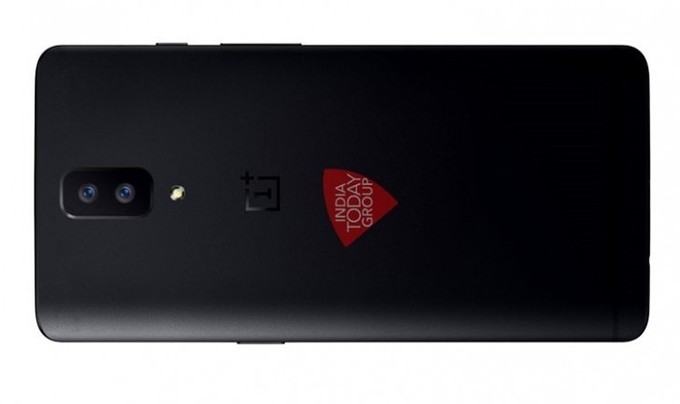
OnePlus had launched the OnePlus 3 smartphone in June 2016. Hence, speculations are rife that the Chinese firm is now preparing to unveil the OnePlus 5 smartphone in June this year. An Indian publication has leaked an image of the rear side of the OnePlus 5 that showcases its dual rear camera setup. It claims that the leaked photo of OnePlus 5 has been acquired from people who have seen the handset.
By looking at the image of OnePlus 5, it can be said the company will continue to use the same design that is available on OnePlus 3T that released in December 2016. Hence, it suggests that a brushed aluminum metallic frame is likely to be available on OnePlus 5 along with rounded corners.
As it can be seen, there is no rear-mounted fingerprint scanner on the phone which hints that it would be probably embedded under the Home button or under the screen at the front. The antenna bands that are present on OnePlus 3T is also present on OnePlus 5. However, they do not appear prominent.
The only major change that can be seen on the rear side of the OnePlus 5 is the dual rear camera setup. The two camera sensors are arranged vertically and below the camera module is a LED flash. Below it is the logo of the company. Since it is a leaked photo, what is seen may not be the final design of OnePlus 5. The company may consider tweaking the design of OnePlus 5 before its launch.
Major Chinese brands like Huawei, Xiaomi, Vivo, LeEco and so on have launched smartphones with twin rear cameras. Last year’s IPhone 7 Plus is also equipped dual snapper on its rear side. Hence, to stay in competition with these brands, OnePlus is heavily pegged to include a dual rear camera feature on its upcoming flagship. However, there is no information on the specifications of the dual camera lenses.
A leaked image showing the alleged case of OnePlus 5 that had surfaced around two weeks ago features cut-outs for twin rear cameras. However, the cut-outs are for horizontally arranged dual cameras. Also, there is no confirmation on its authenticity.
Rumors have it that the model number of OnePlus 5 is A5000 and it is packed with a 5.5-inch screen. Like the OnePlus 3T, it may carry support for full HD resolution. It is likely to powered by Snapdragon 835 chipset that would be supported by at least 6 GB of RAM. It is speculated to arrive in two storage sizes of 64 GB and 128 GB.
There is no concrete information available on the pricing of OnePlus 5. Like predecessor OnePlus phones, its upcoming flagship will carry aggressive pricing to rival against the Galaxy S8 and Xiaomi Mi 6. The 64 GB and 128 GB OnePlus 3T are respectively priced at $439 and $479. Hence, the starting the price of OnePlus 5 could be lesser than $500.
Summer season in China is just by the corner and in its usual manner, Xiaomi is se to release a new product likely for use in the hot summer season. Xiaomi MIJIA brand isn’t just about smart home gadgets but the company has a reputation for releasing some products that are not smart but highly beneficial for use in the society. One of such many products is the 89 Yuan Xiaomi Cloth Pair Fresh air mask and Air wear mask which seem to catch in on the air pollution situation in China.
The new MIJIA product will be launched on April 27 at 10 AM but as usual, Xiaomi only released a teaser and leaves the rest to out imaginations. From the teaser, the product seems to be handcrafted or weaved using silk. The product is thus, likely a new mat for the summer, perhaps for outdoor camping and other fun oudoor holiday events.
To further lend credence to the suggestion that this is a sleeping mat, Xiaomi’s crowdfunding partner 8H which manufatured the 8H Latex Mattress and pillow range also re-broadcasted the MIJIA post. This points at the product likely being an 8H sleeping mat. Whatever product it is, it joins the Weloop smartband that is also billed to launch tomorrow.
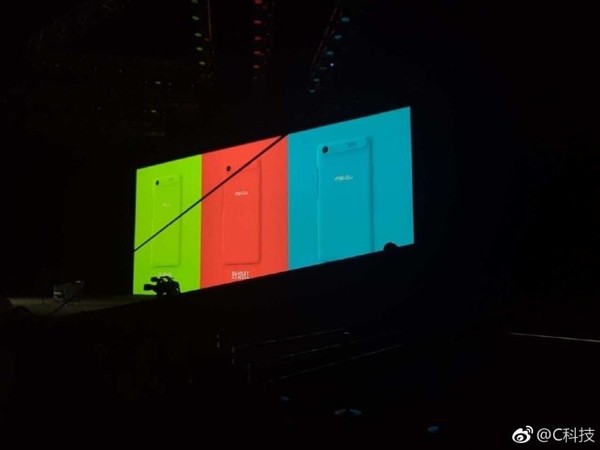
Meizu will be launching the E2 tomorrow and ahead of the launch, there have been series of leaks about the E2. The Meizu E2’s design has been sort of confirmed when the images and specs of the device appeared on TENAA. The E2 design seems to also have featured in a leaked Powerpoint screenshot which seems to be out of the launch venue. The PPT document shows the Meizu E2 would come in different colour variants.
While the Meizu E2 is likely the device that would be launched tomorrow, there are speculations that Meizu may also unveil a flagship series smartphone, the Pro 7 tomorrow. Fans of the Meizu brand have been waiting for the Pro 7 for a while now, with no end in sight to the wait. But some analysts are of the opinion that the Pro 7 might be launched along with the E2 just the same way its predecessor, the Pro 6 Plus was announced along with the M3X in November last year. We can’t say for sure but it is a possibility since there is a precedent.
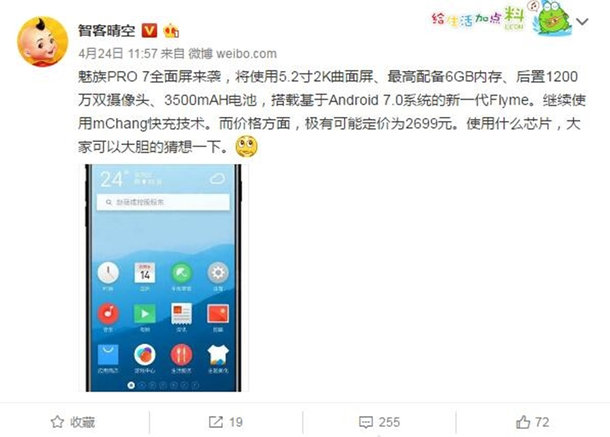
A Weibo user, Monday leaked the likely specifications of the Pro 7 and there is really not much difference from earlier leaks. The Pro 7 will have a 5.2-inch 2K display with its highest version equipped with 6GB of RAM. No mention was made of the processor but the device is said to pack a 12MP rear camera, a 3500mAh battery and run Android 7.0 Nougat-based Flyme OS. The Meizu Pro 7 is also said to come with a comprehensive screen design and Meizu’s mCharge fast charge technology.
The Pro 7 is said to start at 2699 Yuan which is the price the Pro 6S launched with. But recently, the Meizu Pro 6S which is the latest in the lineup got a 200 Yuan price cut. This could be a way to offload the remaining stock before the launch of a new flagship. We can’t be so sure, so we’ll wait and see what the event plays out.
Meizu has an event slated for 3:00 pm tomorrow. The event should include at least a launch of one smartphone and that is the Meizu E2. The official Weibo account has been littered with teaser posters these past few days. There have also been lots of leaks about the device. After filtering the distractions this is what we think of the Meizu E2 and what we expect tomorrow.
What Will It Be called? Meizu E2, Meizu M4E or Meizu M3E Pro?
Flashback to Q3 2016. Meizu was preparing to launch a new device. The name Meizu E was being thrown around. Initially we thought it was for a smartwatch, then new leaks said it was going to be a new line powered by the Exynos processor since Exynos starts with an “E”. To cut the long story short, we finally got to know the name was not Meizu M1E or Meizu E but Meizu M3E.
The same scenario is playing out again and we don’t want to be caught off guard. Since the last time Meizu fooled us with the E tag was for the launch of the M3E, we guess this new phone is a direct successor to it. So we presume tomorrow’s device is either going to be called the Meizu M4E or the Meizu M3E Pro (Plus).
New Design
Meizu’s VP, Li Nan had stated in a Weibo post that the company had a phone scheduled to launch later this month with a new design. It turns out the new design is not a complete overhaul of the phone but limited to the LED flash on the back.
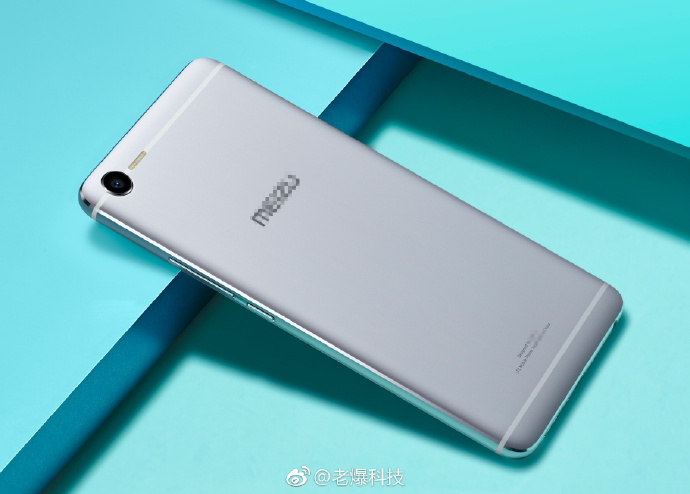
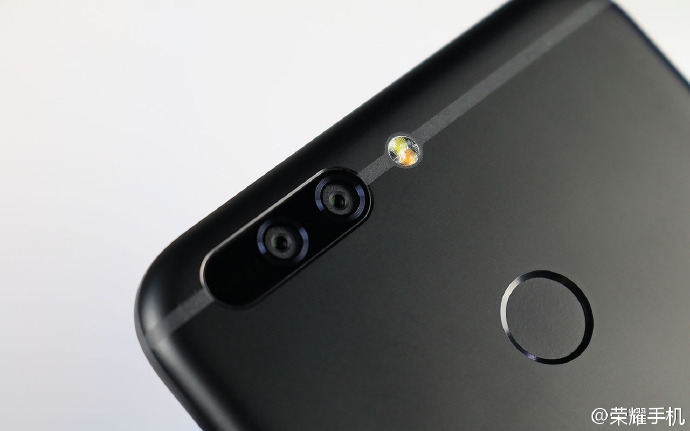
Meizu has positioned the rear camera and LED flash on the antenna line. But what is special about the design is that unlike the Honor V9 (or Honor 8 Pro) that employs the same layout, the Meizu’s E2 LED flash is laid out like a car’s LED headlight and that is because there are more than two LEDs. There are actually four LEDs for the flash.
Honor V9Meizu E2
The rest of the design remains the same like previous Meizu phones. The Meizu name sits in the middle of the metal back and there is the mBack button that doubles as a fingerprint sensor up front.
Meizu E2 Specifications
When news of the Meizu E2 started floating around, it was from a sighting on the Chinese communications website. The listing showed two variants, M741Y and M741A with support for 18W fast charging. Those two variants were also listed on TENAA’s website today and the explanation is that one will run YunOS while the other will run Android. That explains the Y and A ending their model numbers. Apart from that, there isn’t any difference between the two devices.
The E2 will have a 5.5-inch 1080p display, a 2.35GHz processor (probably the Helio P20/P25) and be available in 2GB, 3GB, and 4GB variants. Storage will also vary depending on the RAM. So you get 16GB, 32GB and 64GB in the same order as the RAM above.
The main camera on the Meizu E2 is a 13MP shooter while the one up front is an 8MP sensor. Battery capacity is 3300mAh and there is an option for storage expansion.
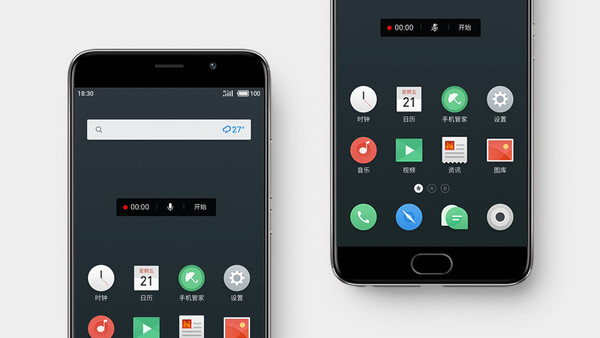
Meizu announced a new version of its Flyme OS last year. Two months later, a stable version was released for eligible devices. Today, a new update for Flyme 6 has been released and it brings a number of new features.
The major feature in the update is the new screen recorder which has been updated to version 2.0. Previously, users could only record without any accompanying sound but the new update now records audio alongside the video.
Other features in the new Flyme update includes a new file management system, an improved update system that guides you in case you wish to downgrade your phone or switch from a beta version to a stable version of the OS.
We use cookies on our website to give you the most relevant experience by remembering your preferences and repeat visits. By clicking “Accept”, you consent to the use of ALL the cookies.
This website uses cookies to improve your experience while you navigate through the website. Out of these, the cookies that are categorized as necessary are stored on your browser as they are essential for the working of basic functionalities of the website. We also use third-party cookies that help us analyze and understand how you use this website. These cookies will be stored in your browser only with your consent. You also have the option to opt-out of these cookies. But opting out of some of these cookies may affect your browsing experience.
Necessary cookies are absolutely essential for the website to function properly. This category only includes cookies that ensures basic functionalities and security features of the website. These cookies do not store any personal information.
Any cookies that may not be particularly necessary for the website to function and is used specifically to collect user personal data via analytics, ads, other embedded contents are termed as non-necessary cookies. It is mandatory to procure user consent prior to running these cookies on your website.