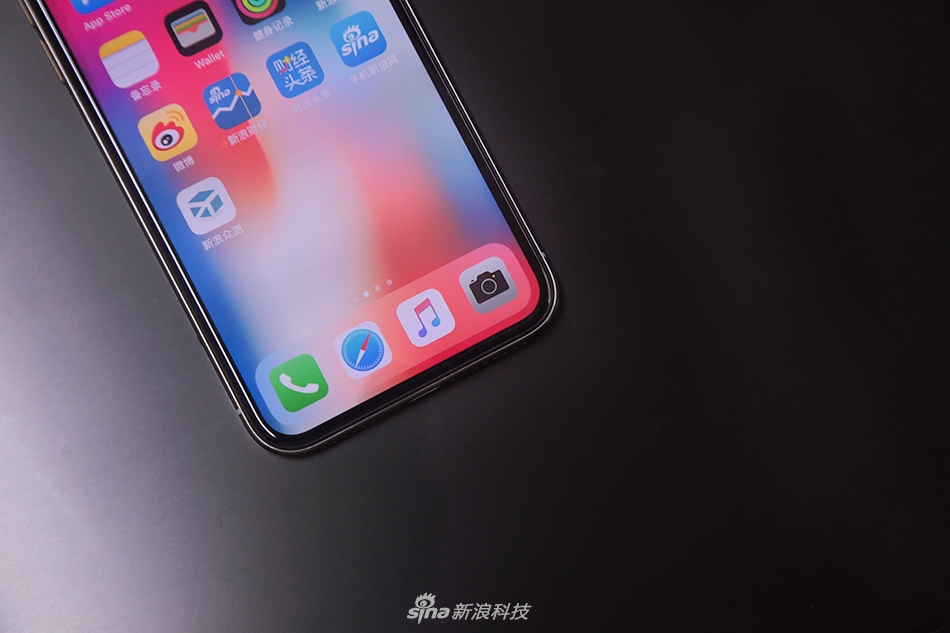
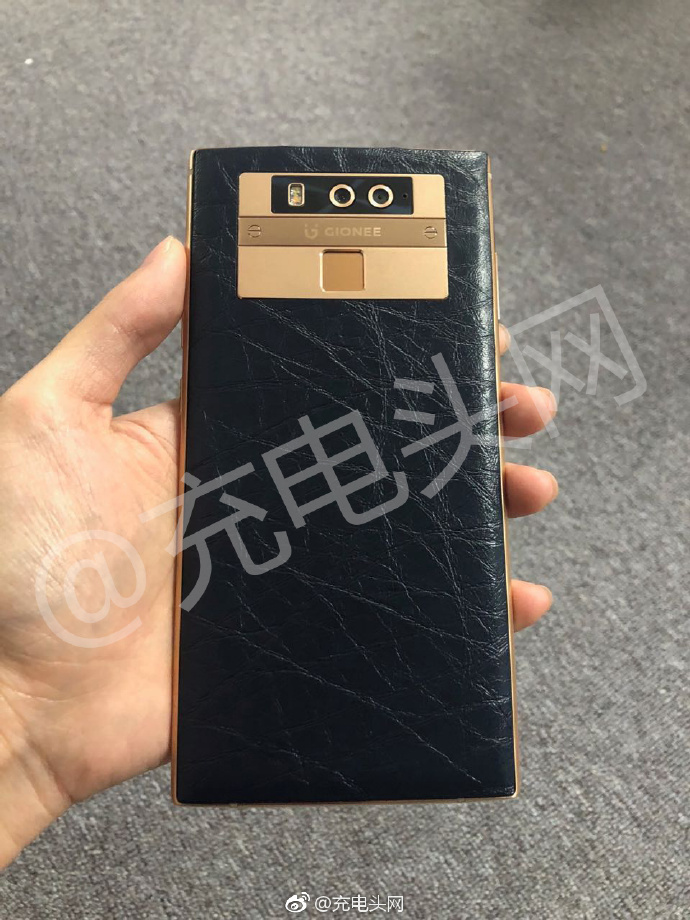
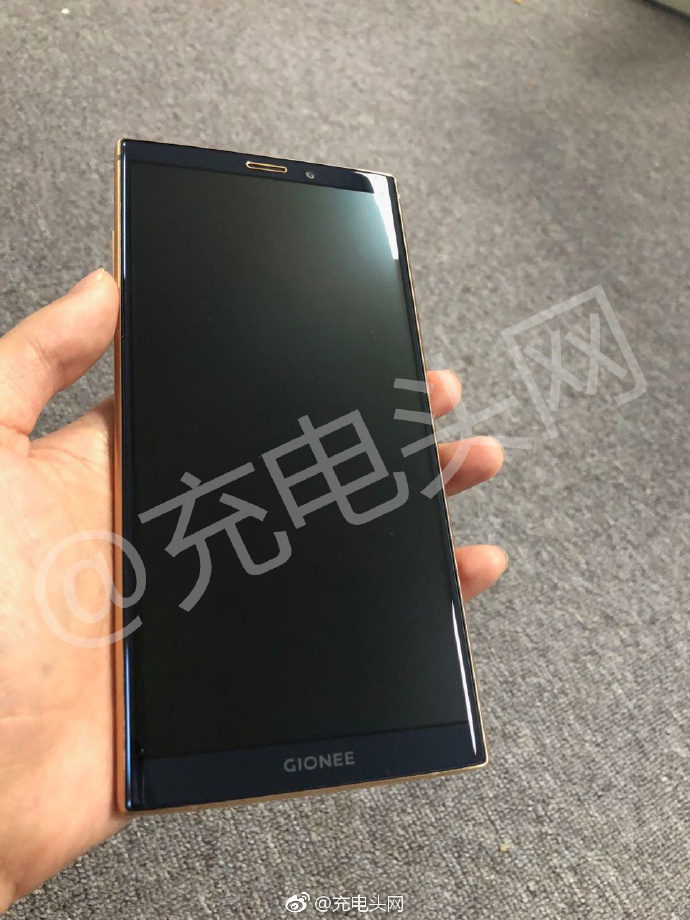
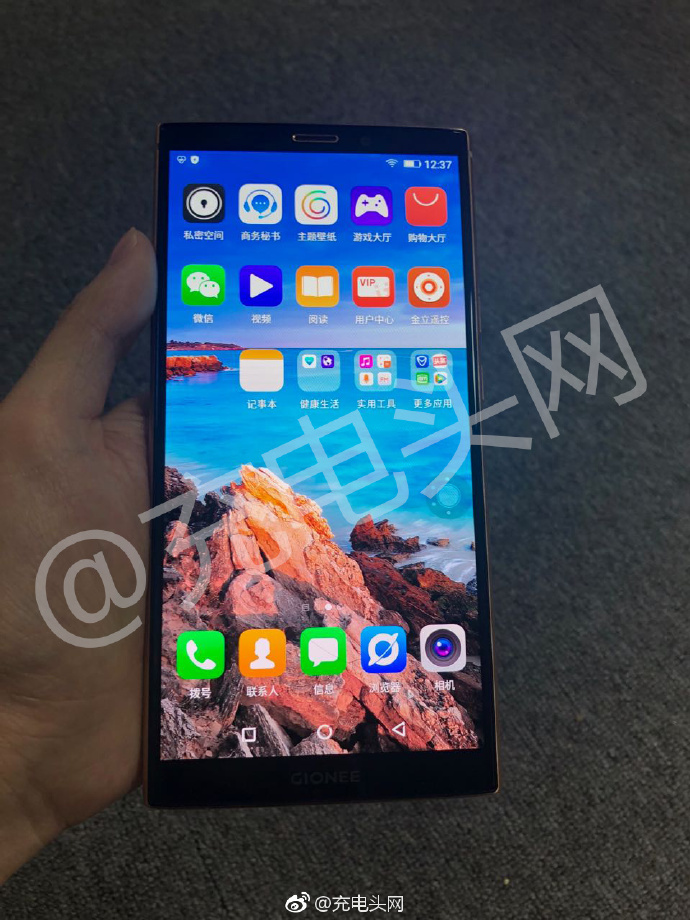
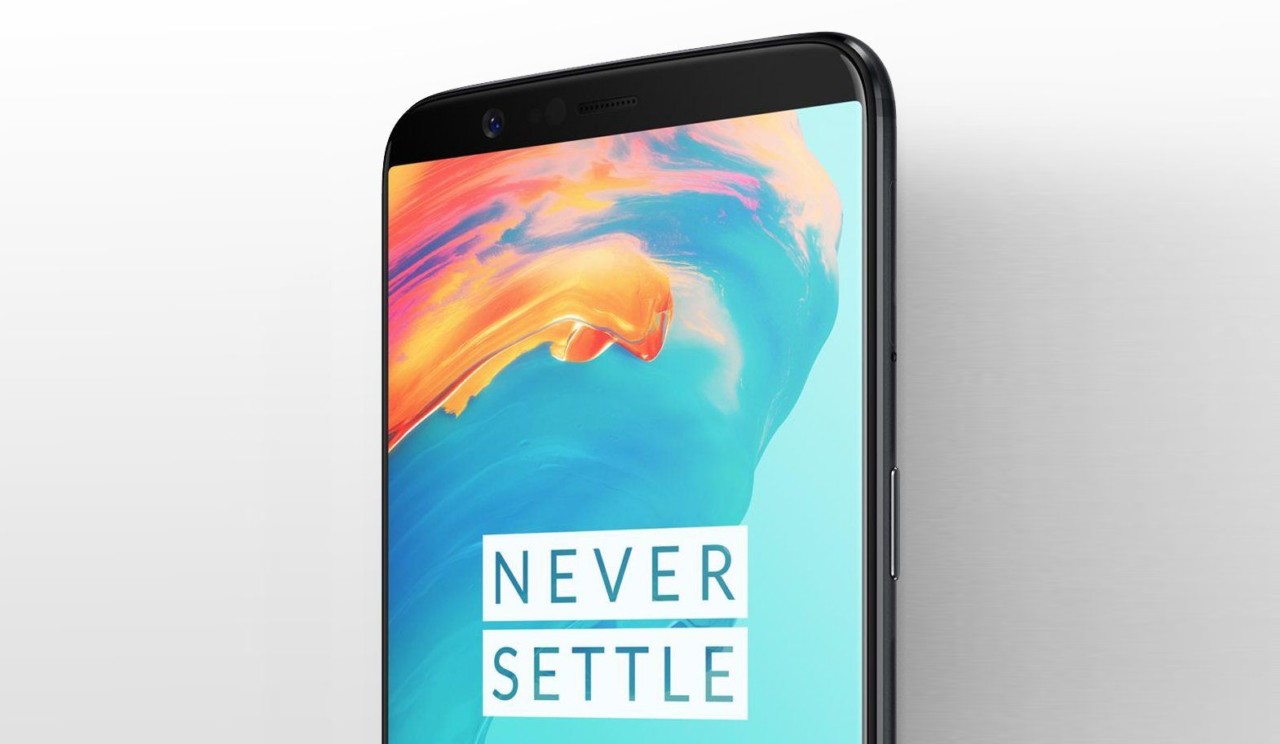
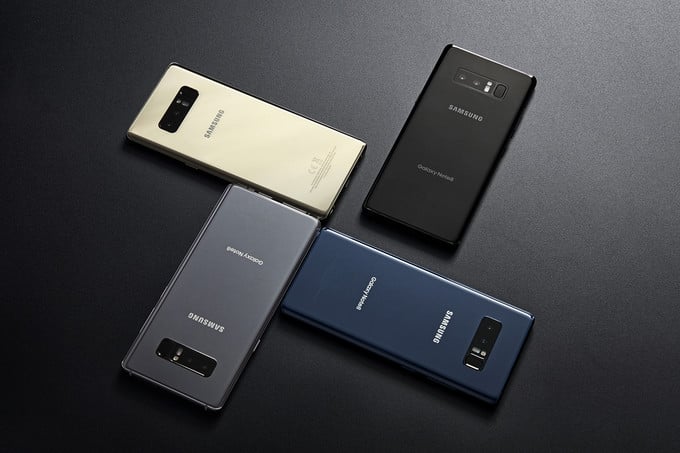
Samsung has been rewarded with the SID Display of the Year Award for Galaxy S7 Edge’s quad-edge flexible display technology by the Society of Information Display (SID). Since the launch of Galaxy Note Edge, the South Korean company has been providing its customers with marvelous smartphones with curved-edge screens. Samsung has also inspired other companies to launch dual-edge curved screen smartphones.
The innovative flexible display products manufactured by Samsung Display have been used in its smartphones since 2013. The South Korean company had was awarded with SID Display of the Year award for a curved AMOLED and a bended AMOLED respectively in 2013 and 2015.
On Galaxy S7 Edge, Samsung debuted the first ever quad-edge flexible technology used in the industry that curves at top and bottom apart from the sides. The radius of the curvature at the left and right edges of the AMOLED screen can be varied by using the special curved technology that makes it possible to have a curved screen with natural curve appeal and better grip. The circuit plan of the screen has cut down the dead space around the edges of the screen to 1.09 mm.
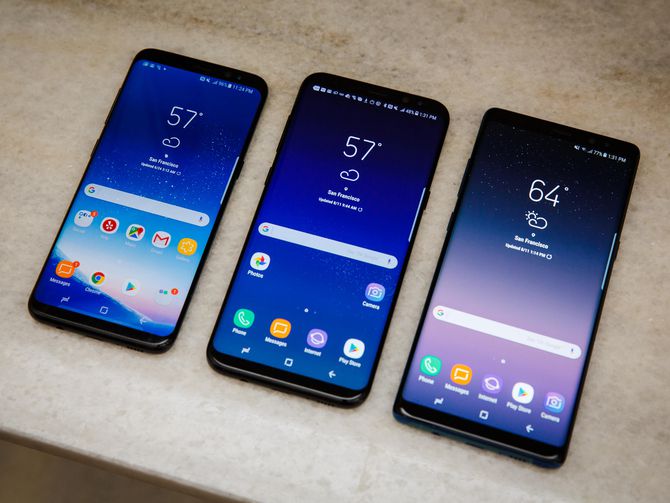
The Samsung Galaxy S8 and Galaxy S8+ flagship smartphones of 2017 feature larger quad-edge display with reduced bezels at the top and bottom. The display technology introduced on Galaxy S8 duo is known as Infinity Display.
The 2016 flagship phones, the Galaxy S7 and Galaxy S7 Edge respectively feature 5.1-inch and 5.5-inch quad HD AMOLED screens. However, the Galaxy S8 has a 5.8-inch S-AMOLED screen whereas the Galaxy S8+ has a 6.2-inch S-AMOLED display. The screens on Galaxy S8 duo offer a higher screen-to-body ratio and supports a screen resolution of 2,960 x 1,440 pixels along with an aspect ratio of 18.5:9. Both the Galaxy S8 duo have received overwhelming response from the audience and critics.
If you’re one of those still looking out for the OPPO Find 9, still hoping OPPO would one day just launch the much anticipated Find 9, then this will make you feel bad. Popular leaster @Kumamoto technology or Kjuma has revealed that OPPO has finally scrapped the Find series along with its N-series, replacing both with the mid-range R series and the A series. He also disclosed that OPPO will release a high-end flagship at the second half of the year.
The OPPO R9 which was launched in 2015 signalled a period of financial breakthrough for the Chinese company.The company’s marketing strategy, coupled with the fast charging technology which the R9 and R9 Plus possessed contributed to their success. This was soon replaced by the R9S and R9S Plus last year and they both continued the success story with amazing results. This may have prompted the company’s decision to halt its flagship Find-series.
We have had quite a number of leaks and rumours surrounding the Find 9 which has been on the radar since last year with rumors claiming it would be launched then. But that did not materialize and until this moment, OPPO is yet to release an official statement concerning the Find or even the N-series. The OPPO N-series on its own part only had the N1, N1 mini and N3 which was released in January 2015. Since then, nothing has been heard about the series. We can’t say for sure if this latest news is true or false until OPPO comes out with a statement on that. So, it is still possible the Find 9 does exist.
Lenovo did reveal that it would be killing its ZUK and Lenovo mobile phone brands and would instead focus on the Moto brand. Despite struggling to regain its past glory, the Moto Z -series remains one of the best in Motorola’s line-up presently and it is no wonder the Moto Z flagship is being touted as having a successor in the works. The Moto Z2 which will take over from last year’s Moto Z is said to have appeared on GeekBench database posting a stunning result.
The device appears as Motorola XT1650 and in reality, there are lots of benchmark test for the Moto XT1650 listed on Geekbench’s database uploaded as far back as August last year. Almost all of the test show there is a Quad-core MSM 8996 motherboard, which is the Snapdragon 821 chip. But in a spectacular manner, the details contained in this listing include the MSM 8998 which is Qualcomm’s latest Snapdragon 835 chip. Secondly, this benchmark result is shown to have been uploaded on January 21, 2017. That again places some doubt over the benchmark result. However, the GeekBench database further shows that the Z2 features 4GB of RAM, Android 7.1 Nougat. The listing also shows the Z2 pulled 1930 points on the single core test and 6207 points on the multi-core test.
In addition to this latest benchmark appearance, images of the Moto Z2 had earlier popped up online, showing the design and features the Z2 may likely come with. The render shows the Z2 may likely feature an ultrasonic fingerprint sensor just as found on the Xiaomi Mi 6. The front view also shows the selfie camera lying at the right side of the earpiece while there is a front flash at the right side. The display also comes with very slim bezels at the sides.
The Moto Z2 is also expected with a metal body and some great improvement at the rear camera. The rear camera is a dual setup and it comes with a two-color warm flash. The Z2 is also shown to come with support for wireless charging.
Xiaomi has a lot of gadgets in their portfolio and some of them do not even cost $10. I’ve been using the 1st generation Mi Amplifier and it works well. Now you can get an upgraded model for just $6.99, which sounds like a bargain considering the feature set this cheap little gadget offers.
Wifi Amplifier does wonders for just $7. I’ve always looked for a great yet cheap solution that can extend the Wifi coverage in my parents’ house. You see, there are some dead Wifi spots and this little gadget helps a lot.
It’s compatible with all the routers and all you have to do is to power it up, quickly set it up using the Mi Wifi app and you are good to go. If you have the Xiaomi Wifi router, you just have to plug it in and everything will sync up automatically.
The Wifi coverage area is said to increase up 2 times. I can’t really confirm that but it definitely killed all the dead spots and I can definitely recommend it.
Although Huawei’s P10 series is the latest flagship smartphone lineup from the company, the Huawei Mate 9 is actually not too old and still stands as a powerful flagship device. With Kirin 960 inside and 4GB of RAM, the phone is as powerful as most flagships in the market today. But given that it’s been a few months since the phone went on sale, the pricing of the device has gone down, bringing it near to the $500 mark.
Considering its beautiful 5.9-inch 1080p display with 2.5D arc screen, powerful 20MP + 12MP dual cameras as well as a large 4000mAh battery, the Mate 9 is a pretty good deal at $550. Huawei is one of the top rated smartphone manufacturers in the market today and the quality of its products have been stellar so far. At $550, the Huawei Mate 9 looks like a good deal, but you can get the phone for an even lower price. We managed to get a special $40 coupon: HMATE9 for the Huawei Mate 9 which drops the price of the flagship right down to $499.99!
Overall, at this price, the phone is a great deal. Just use the coupon: HMATE9 to bring down the price to $499.99. Check out the link below for details.
The Xiaomi Redmi 4X was introduced three months ago when the company announced its Pinecone S1 chip and Xiaomi Mi 5C smartphone. The budget phone had arrived with Android 6.0.1 Marshmallow OS flavored with MUI 8. Xiaomi has now officially announced that Android 7.0 Nougat beta is now available for Redmi 4X.
The company has recently confirmed that MIUI Global Beta ROM 7.5.18 will be coming to a handful of Xiaomi phones such as Mi 5s, Mi MIX, Redmi 4, Redmi 4A and Redmi 4X this Friday. Now, the Chinese firm has confirmed on releasing Android 7.0 Nougat closed beta for Redmi 4X users. It will be available from May 26.
Closed beta also called as private beta are released to specific group of users for testing the firmware update by invitation. The Redmi 4X users can join the beta testing program can accessing this link to take advantage of Android 7.0 MUI 9 beta when its officially made available.
The Xiaomi Redmi 4X comes with a 5-inch HD screen with 2.5D curved glass. It sports a smooth metallic chassis along with rounded corners. It is running on Snapdragon 435 chipset. At launch, Xiaomi had introduced two variants for it such as 2 GB RAM + 16 GB storage and 3 GB of RAM + 32 GB storage. The Chinese firm recently introduced a third variant for it featuring 4 GB of RAM and 64 GB storage. These three models are respectively priced at 699 Yuan ($101), 899 Yuan ($130) and 1,099 Yuan ($159).
At the back, it features a 13-megapixel snapper and a fingerprint reader. Its front-facing snapper is of 5-megapixel. It is packed with a 4,100 mAh battery. It is available in colors like Cherry Blossom, Champagne Gold and Matte Black. This phone has a larger sibling called Redmi Note 4X. Around a week ago, Xiaomi had held its first event in Mexico. The event debut the Redmi Note 4X and Redmi 4X for the Mexican market with respective pricing of MX 5,499 ($285) and MXN 3,999 ($209).
Just yesterday, we brought you the news of a leaked video which popped up on China’s Weibo, purported to be that of the upcoming Nubia Z17 functioning under water. The video was meant to demonstrate the IP67 waterproof feature that the Z17 is said to come with. If you still think the video is fake, you may want to think again.
Nubia co-founder and smartphone general manager, Ni Fei has teased the waterproof feature of the Z17 via a Weibo post on his official account. The post seems to be an analysis of the leaked video which showed the Z17 inside a sink and subjected to running tap water. Ni Fei’s post also contained the picture of a working smartphone under a running water source and quite clearly, we could see that this is a Nubia smartphone.
There is no doubt that the Nubia Z17 will indeed come with waterproofing but we’ll have to wait for more details to know the certification level. It is touted to be an IP67 level which means that it is fully protected from dust and can also withstand being submerged in 1m (about 3.3 feet) of water for up to 30 minutes. The Nubia Z17 is also expected to feature a Snapdragon 835 chip as well as a dual camera setup touted to be configured as a 23MP + 12MP camera combination. There is no word yet on its launch date but it is likely dropping very soon.
Microsoft will be holding a launch event on May 23 in Shanghai, China to unveil a new Surface device. Fresh press renders that have surfaced from China suggests that the company would be unleashing a Surface Pro 2-in-1 device.
Earlier in this month, Microsoft’s Vice President of Devices, Panos Panay had revealed in an interview with CNet that “there’s no such thing as a Pro 5.” He added that the company will introduce a fifth-generation Surface Pro only when there is a need for meaningful hardware changes. Prominent leakster, Evan Blass has now revealed several leaked images of the upcoming Surface Pro tablet.
According to Blass, the new device will be launched with “Surface Pro” moniker. However, in a previous tweet, Blass had said that it would be called Surface Pro 4 Refresh. The device appears quite similar to the Surface Pro 4 from October 2015 as it will be launching as its refreshed edition. The Surface Book was also unveiled alongside the Pro 4. However, a source familiar with Microsoft’s plans has revealed that it won’t be announcing a successor device for Surface Book.
Blass claims the real changes will be present under the hood of the next Surface Pro tablet revealed in the press renders. However, there is no information available on its specifications. The upcoming Surface Pro would be coming with accessories like stylus, mouse and keyboard.
Compared to the accessories of Surface Pro 4, the new accessories would be coming with slight change in design. The images suggest that the stylus will be coming in four colors. Blass claims that the details like specifications, pricing and availability of the upcoming Surface Pro would be available by early next week.
In April, Microsoft expert, Paul Thurrott had claimed that the upcoming Surface Pro may not feature many changes. However, he expects that it will arrive with Intel Kaby Lake processor that is built with 14nm process. It will not only bring speedier performance but also enhance the battery life of the device. He claims that the device will not feature a USB Type-C as the company will continue to feature the Surface Connector proprietary power connector.
Xiaomi has officially released a posted which teases the launch of the next-gen of its large screen smartphone, the Mi Max 2. According to the poster, the Xiaomi Mi Max 2 will be launched at a news conference scheduled to hold on May 25 at 2 PM. The poster also teases that the Mi Max 2 launch will be witnessed by Xiaomi’s CEO Lei Jun as well as top Chinese company execs, including Ma Dong, Luo Zhenyu,@ Chen Rui, and Ge Ke. Chinese based girls band Shanghai 48, best known as SNH48.
The Xiaomi Mi Max 2 is coming as a replacement to the highly successful Mi Max, more than a year after Xiaomi released the Max as its first phablet-sized smartphone. The teaser poster did not reveal any detail regarding the specification of the upcoming phablet but the Mi Max 2 is said to retain the 6.44-inch display which the Mi Max comes with. In addition, the device is also said to come with some improvements in its processor, memory, battery and other aspects.
Specifically, the Xiaomi Mi Max 2 is said to sport a 6.44-inch display with 1080p resolution. The device is tipped to run on Android 7.1.1 Nougat with MIUI 8 and with an increase in the battery capacity to 5000mAh. An earlier rumour also tips the Mi Max 2 as packing a Snapdragon 660 chip backed by 6GB of RAM and 4GB RAM on the standard version. There are indications now that the Max 2 will feature a Snapdragon 626 processor for the 4GB RAM version while the SD 660 chip would be for the higher 6GB RAM + 128GB storage version. The Xiaomi phablet is also expected to come with a 12MP Sony IMX378 sensor at the rear and a 5MP sensor up front. As for the price, an earlier rumor hints that the Mi Max 2’s price may be adjusted slightly but will still fall between 1499 Yuan and 1699 Yuan, not exceeding 1999 Yuan at most.
A new patent from LG reveals a new design that appears to be a hybrid of its high-end smartphones from its G and S series. The LG V series has a secondary ticker screen above the main display whereas the new LG G6 came with a widescreen display. According to the images revealed through the patent document, the secondary screen that is present at the top has a selfie camera right at the center and the entire screen sports super-slim bezels.
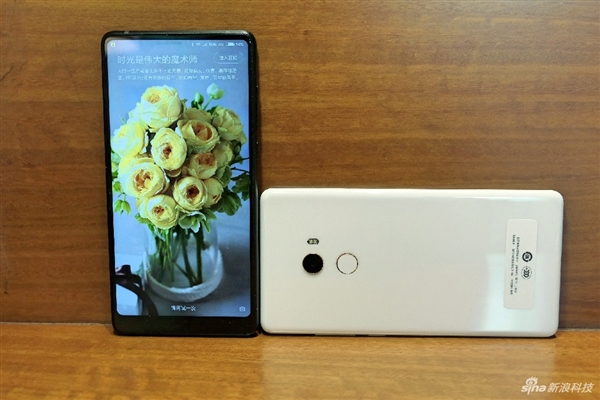
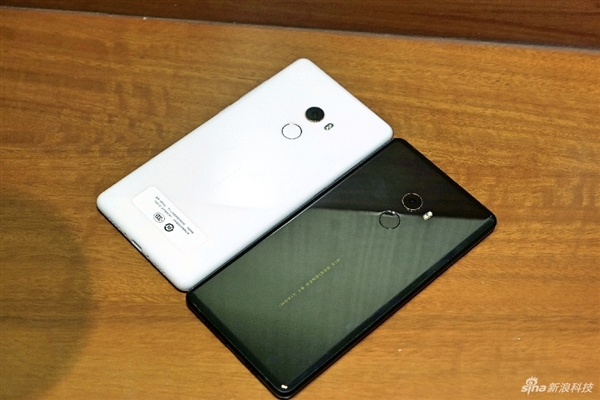
The design is quite unique and goes well with the current trend of large screen smartphones with thinner bezels. The South Korean company is not shy in trying new ideas. The LG G3 came with rear-facing power and volume buttons. LG claims to have introduced the double tap to wake feature. Also, even though the LG G5 was a failure, it did show the brave attempt of the company to bring modular capabilities on a smartphone. The LG V10 and V20 flagship phones come with secondary ticker screen that gives access to shortcuts to some apps, alerts and quick toggles.’
The new patent is dated November 2016 and it has come from Korean Intellectual Property Rights Information Service. From the patent image, it cannot be confirmed whether it has two independent screens or a single display with a break in between to feature the second screen with selfie camera in the upper part. The upper earpiece cannot be seen in the image. It is likely that the company may incorporate a piezoelectric speaker like the one present on Xiaomi Mi MIX.
In the recent years, LG has launched V series phones with flagship specs whereas the G series are the next best smartphones from the company with high-end specs. Since the above image shows the presence of a secondary screen, it could easily end up as a V series phone that will launch in the future. Its bezel-less screen may carry an aspect ratio of 18:9 that was introduced on LG G6.
The bottom side in the new patent shows a single speaker, USB Type-C port and a 3.5mm audio jack. There is no confirmation on whether this new design belongs to the LG V30, but it does suggest that the company may soon introduce this new design.
360 Mobiles is known for their beautifully designed smartphones which come with very affordable price tags coupled with a decent hardware lineup. Unfortunately, the Chinese company’s products are not always available outside China. A new 360 Mobiles smartphone dubbed 360 N5S is set to drop on May 23 and even though we expect a sleek, cool phone, it might not end up in your hands if you’re outside China so don’t get too excited.
However, you may want to look for ways to get it shipped to you out of China (Gizmochina’s shop, Giztop does that) especially since the device is being teased as coming with a new, premium design. A fresh leak has now emerged, showing the N5S will also come with a new interface. The leak captures the new interface the N5S is expected to sport. Almost all of China’s phone manufacturers usually modify Google’s OS, infusing their own user interface into the Android system. That is likely to play out on the N5S but the screenshot (pictured after the post) suggests the N5S would come with a lot less pre-installed apps unlike its predecessor. The apps will only occupy two screen slides as against three slides filled to the brim on previous models. This would give users the freedom to choose the apps they want on their smartphone.
360 N5
We don’t have many details about the upcoming device but apart from a new interface, the 360 N5S is also expected to feature a double-sided glass design and a 5-5-inch 1080pixels display. The device will be powered by a Snapdragon 653 processor with 6GB RAM, 32GB /64GB storage and a large 4000mAh battery.
It is hoped that the N5S would still retain the cheap price regime of the N-series despite its remodelled looks. May 23 isn’t too far away, we’ll find out about that when it drops. You can check out the leaked screenshot containing the N5S interface below.
Shortly after the release of the Mi TV 4, Xiaomi sent a message via its official WeChat account announcing a major event for tomorrow morning. The guess is that the event may be the unveiling of the Xiaomi Mi Max 2 since it has been in the news lately.
The Mi Max 2 is expected to feature a 6.4-inch full HD display. It is said to be available in two models: one with a Snapdragon 626 processor and the other with the new Snapdragon 660. Battery capacity should also get raised to 5000mAh and like last year, it is expected to launch with the new version of Xiaomi’s OS, MIUI 9.
The Mi Max 2 was also spotted on the official website yesterday. The finding is actually not a full listing but more like an easter egg hinting at the upcoming phone. As at yesterday, if you opened the official website and hovered over the tab, you would see the Mi Max 2 listed as one of the devices in the tab information. Xiaomi has removed it and replaced it with just the Mi Max, so you won’t find it there anymore.
Google I/O, traditionally, is a developer-centric conference but we have seen in the past few years that most of the new announcements made at the event directly affect / improve the experience of Google‘s customers. This year was no exception, with the Google I/O 2017 kicking off with some interesting product announcements and updates. Many of the new tech revealed at the event affect us in our day to day life which means it’s worth checking out what’s new from the company. The company seems to have heavily worked on visual recognition and features in 2017 and we can clearly see the advancement in this department in the tech mentioned below.
So, here are some of the key Google I/O 2017 Highlights:
1. Smarter Machine Vision
Google’s Computer Vision AI has become smarter and the camera app itself could get some really cool features such as removing obstacles from the pictures captured on the screen. Using the additional information, the AI can do a lot of things, like automatically make a dull and noisy low-light image clearer. The teaser shown at the event revealed the AI removing the entire fence from the frame to keep the girl playing baseball intact in the image.
BEFORE
AFTER
2. Google Lens
Google Lens seems to be the next big thing in machine-based visual recognition. Google’s visual recognition tech has improved to such a great level that you can get a ton of features by just using the phone’s camera. All you have to do is just point at an object and the phone’s powerful AI will show you relevant content right inside the camera interface. For example, if you point at a restaurant, the Google Lens app will display its ratings right on the camera screen.
If you remember, this app kind of reminds me of the HERE City Lens app that we had on the earlier Nokia Lumia smartphones. It sure was cool back then and with the new tech, the Google Lens app will take things to a whole new level.
The Lens app can do a lot more, like connecting to the Wi-Fi network just by scanning the preset Wi-Fi settings on the router, or identifying a flower just by pointing the camera at it.
Well, get ready to see a lot of people pointing their smartphones at random objects on the road soon.
3. Google Assitant For iPhones
Move over Siri, Google Assistant is here to make you insecure. In just a year after launching the company’s personal assistant for Android phones, the Google Assistant is available to the iPhones via an app on the store. It brings familiar features as the Android version, but it’s not directly baked into the OS, which gives Siri a natural advantage.
Note that Google Assistant for iPhones isn’t a big deal as the assistant is now expanding to a lot more smart home products. Just watch out for the logo (yellow red green and blue dots) on the product to see if it has Google Assistant inside.
4. Android O Enters Beta
Yes, after announcing the developer preview version back in April, the Android O Beta build is now available to beta testers. Unfortunately, you can become a beta tester only if you own a recent Nexus or Pixel device.
Battery life has always been the focus on new Android versions and the same applies to Android O. The new version aims to preserve device battery by limiting resource consumption by each app in the background. There are a lot of smart stuff being tailored in order for the background apps to reduce as much power consumption as possible.
Apart from improving the OS speed, what’s significantly improved is the boot time. For example, the Google Pixel with Android O would take less than half as much time as an Android Nougat running unit. Also, there are new things like picture-in-picture, notification dots etc to improve the user experience.
5. Android Go aka Android Lite
For a lot of current Android users, Android Go may not matter much, but for the billions of users that are still to jump onto Google’s mobile platform, especially from the developing markets where mobile phone specs are entry level to keep the price low, Android Go is a game changer.
It’s a slimmed down version of Android specifically targeted at super low-end smartphones. While I understand that the specifications of entry-level smartphones, even the ones that cost less than $100 have improved significantly, Android Go would probably benefit phones that are even cheaper! We are talking phones with less than 1GB of RAM and a super entry level chip. For them, Android Go would make sense since it uses less data, supports multiple languages and makes Android bearable for low-end hardware. Get ready for a set of Android Go supported Google apps to be highlighted on the play store. Each app is said to be under 10Mb.
Overall, the Google I/O had some really interesting tech announcements yesterday. What do you think?
The OnePlus 5 is no doubt the most anticipated phone at the moment. But a tweet through their official account might be hinting at the release of another product that we think is a new OnePlus Power Bank.
OnePlus released its first power bank in 2015. It was available in silk white and sandstone black just like the OnePlus One and had a capacity of 10,000mAh. There were two USB ports available and a microUSB port for charging.
What I really liked about the OnePlus power bank was its shake feature. It had no buttons, so to find out how much charge you had left, you would have to shake it and the LED indicators would light up. It had 4 LEDs, each one representing roughly 25% charge. The number of LEDs that lit up gave you a rough estimate of how much charge you had left.
Yesterday, OnePlus announced via Twitter that its power bank was out of stock. And it seems it will remain that way for a while as the rest of the tweet says we should stay tuned for some exciting new products. This is a hint that OnePlus is working on a new power bank which is long overdue to be honest.
We already knew it was going to be called the OnePlus 5. OnePlus is aware we know already, but since it has been dropping teasers for its new flagship, they’ve never called it by that name. Not until today.
In an official tweet via the company’s official twitter account earlier today, we finally see them address their next flagship as the OnePlus 5. And that is just half of the news.
The tweet was actually to announce that OnePlus will be “working with DxO Labs to improve the photography experience of the OnePlus 5”. We actually wish they had used the phrase “camera performance” in place of photography experience so we can bicker about if that was a subtle hint that it would have a single rear camera. Anyway, the post still leaves us in the dark about the camera configuration though.
For those of you who do not know about DxO Labs, the company has been involved in the advancement of photography for over a decade. They are best known for the photography benchmark, DxOMark. As at this moment, the king of DxOMark is the HTC U 11 whose release ousted the former champion, the Google Pixel.
See this partnership between DxO Labs and OnePlus in the same light as Huawei’s partnership with Leica but instead of working with a camera manufacturing company, OnePlus is working with one that sets the standard for camera performance. Smart move OnePlus.
Xiaomi has launched its 2017 Mi TV flagship and it turns out to be the Mi TV 4 which was first unveiled at CES. The Xiaomi Mi TV 4 was definitely the stand out product which Xiaomi unveiled on its debut appearance at CES 2017 in Las Vegas. The flagship product is making its first foray into the market in China since it was first showcased.
The Mi TV 4’s main selling point is its ultra-thin built which comes at 4.9mm, thinner tan the iPhone 7. Can you beat that? The Smart TV comes in three different sizes namely 49 inches, 55 inches and 65 inches. The 65-inch model having a spectacular modular design in which the motherboard, sound system, and the large display are three separate components which can be replaced separately. This is indeed an innovative design making sure that you don’t have to shell out a lot of money to upgrade your smart TV. Just replacing the motherboard with a smarter one is enough to bring your TV up to date. In the same sense, the other sizes have their components crammed into a 4.9mm thick TV.
Design & Specification
In addition, the Xiaomi Mi TV 4 comes with a sleek metal body and a frameless display which indeed makes it very beautiful. The screen resolution is up to 4K with an overall awesome visual effect and lots of amazing features. The Mi TV 4 also comes with a transparent stand to blend well with the background for unobtrusive viewing. There’s also a PatchWall software, which is a deep learning AI system embedded right into the TV’s OS. Some of the highlighted features of the software include smart sizing i.e. the size of the recommendation tile will be based on its level of relevancy, infinite recommendations scrolling etc.
That’s not all, the Mi TV 4 hardware includes original Samsung / LG 4K screen, Amlogic 64-bit flagship processor with quad-core Cortex-A53 CPU clocked at 1.8GHz. There is also a Mali-T830 2 +2 core GPU, 2GB RAM and 8GB Flash memory. The TValso supports HDR, 802.11ac dual-band Wi-Fi, BLE low power Bluetooth and more.
Xiaomi Mi TV 4 Price & Availability
As for the price, the Xiaomi Mi TV 4 starts at 3,499 Yuan ($507) for the 49-inch model while the 55-inch version sells for 3,999 Yuan ($580). Reservations for both versions are already being accepted while sales would start on June 1. No word yet on when the modular 65-inch Mi TV 4 would be available and at what price.
Shortly after the Galaxy S8 and Galaxy S8+ were announced, an image of a phone said to be a prototype of the S8+ was released online. This prototype had dual rear cameras leading some sources to conclude that Samsung had flirted with the idea before shelving it.
After that there were rumors that the Galaxy Note 8 will be the first Samsung phone to sport dual cameras but they were put down by more rumors that mentioned the dual camera treatment will appear on a Galaxy C smartphone. That smartphone is the Galaxy C10.
Galaxy C10 New Leaked ImageGalaxy C10 Old Leaked Image
Last week, a Chinese leakster had released an image of what the Galaxy C10 might look like when it launches and save for the dual cameras added, it is no different from the Galaxy C9 Pro. If you remember, the C9 Pro is Samsung’s first 6GB RAM phone, so it doesn’t come as a surprise that the Galaxy C10 will be the first to have dual cameras.
A new image that appears to be from an official poster has been released on Weibo. This is the Pink Gold version of the Galaxy C10 and it is a bit different from the image from last week. The signature split antenna design are at the top and are connected to the dual camera setup by a vertical line. However the LED flash sits in between the two sensors and not on the right. The entire camera housing also has a different design.
The Z line of Moto branded smartphones by Lenovo that were introduced last year include Moto Z, Moto Z Play and Moto Z Force. This year Lenovo is expected to launch the successor models of these smartphones. The leaked renders of Motorola Moto Z2 Play and Moto Z2 Force have already appeared in the recent past. However, it is only now that a leaked render of the Moto Z2 smartphone has appeared.
in April, the well-known leakster, Evan Blass had revealed that the Moto Z’s successor would be arriving with Moto Z2 moniker. The new image has been leaked a reliable source that is familiar with the plans of the company. The leaked photo only reveals the frontside of the phone. It can be said that the Moto Z2 flagship resembles a lot with the Moto Z2 Play smartphone.
The top bezel of the phone features an LED flash for the selfie camera along with some sensors and earpiece. It appears that the Moto Z2 will come with front-mounted fingerprint scanner. The images of Moto branded smartphones usually feature a clock along with the date on the home screen.
It is likely that the photo may have been photoshopped to remove the home screen and clock so that viewers may not see the date on the phone. However, the date present on the home screen of Moto Z2 Play indicates that it would be launching on June 8. Hence, it is likely that Lenovo may launch the Moto Z2 alongside the Moto Z2 Play.
Last year, the Moto Z and Moto Z2 Force came with similar specs, but the latter arrive with a ShatterShield screen. Speculations have it that the upcoming Moto Z2 and Moto Z2 Force would be running on Snapdragon 835 chipset. The Moto Z2 Force is also expected to feature ShatterShield display.
Last year’s Moto Z2 and Z2 Force did not feature a 3.5mm audio jack. However, this year’s Z2 Force will bring back the 3.5mm jack. There is no confirmation on whether the Moto Z2 will be coming with or without the standard audio port.
OPPO continues to tease its upcoming smarphone which is the successr to the R9 series. The OPPO R11 appeared on AnTuTu’s website yesterday, confirming the presence of a Snapdragon 660 chipset on board with a 20MP front and 20MP rear cameras. Although the AnTuTu data didn’t capture the point that the R11 will be a dual-lens camera packing smartphone, OPPO has today revealed the camera specs of the R11 and it’s stunning, really!
The BBK subsidiary took to Weibo to share details of the camera, both the main shooter and the selfie camera. The main camera is listed as a dual setup comprising one 20MP telephoto lens and a 16MP wide-angle lens. On the other hand, the OPPO R11 will feature a large pixel 20MP single sensor. The camera is also teased as coming with a couple of innovative and amazing features. One of the features is a 2X lossless zoom which allows zooming an object closer without a loss in quality and clarity. You get up to 10X zoom capability but quality isn’t that guaranteed. OPPO shared a photo sample of how the zooming pans out during photo shooting. It is interesting to know that the flagship Xiaomi Mi 6 also comes with this unique feature.
Apart from that, the OPPO R11 dual camera steup is also expected to come with a Special Portrait mode which we believe will deliver awesome picture quality. The portrait mode is touted to allow users to capture the portrait of a moving object with the addition of virtual effect. With these latest teasers, if we are to take a cue fro the OPPO R9S, a launch date for the R11 will be coming out soon.
A fortnight ago, leaked renders of the upcoming Honor 9 surfaced online revealing the lack of an audio jack on the device. Although we already mentioned that the image might be a fake, a Weibo post by President of Honor, Zhao Ming may be what we need to quell the rumor.
Mr Zhao Ming had posted a response to the rumor floating around via his official account asking why they would want to remove the earphone jack. The post wasn’t directed to anyone in particular but since he specifically included his location (Shenzhen Longgang District) which is where Huawei has its headquarters and where the Honor 9 is being made. It is safe to infer that he was talking about the Honor 9.
We use cookies on our website to give you the most relevant experience by remembering your preferences and repeat visits. By clicking “Accept”, you consent to the use of ALL the cookies.
This website uses cookies to improve your experience while you navigate through the website. Out of these, the cookies that are categorized as necessary are stored on your browser as they are essential for the working of basic functionalities of the website. We also use third-party cookies that help us analyze and understand how you use this website. These cookies will be stored in your browser only with your consent. You also have the option to opt-out of these cookies. But opting out of some of these cookies may affect your browsing experience.
Necessary cookies are absolutely essential for the website to function properly. This category only includes cookies that ensures basic functionalities and security features of the website. These cookies do not store any personal information.
Any cookies that may not be particularly necessary for the website to function and is used specifically to collect user personal data via analytics, ads, other embedded contents are termed as non-necessary cookies. It is mandatory to procure user consent prior to running these cookies on your website.