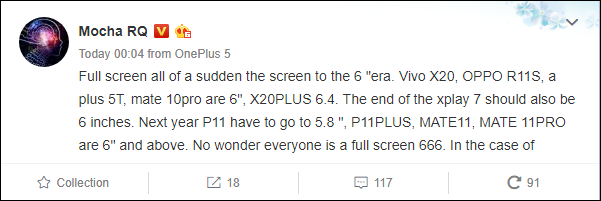
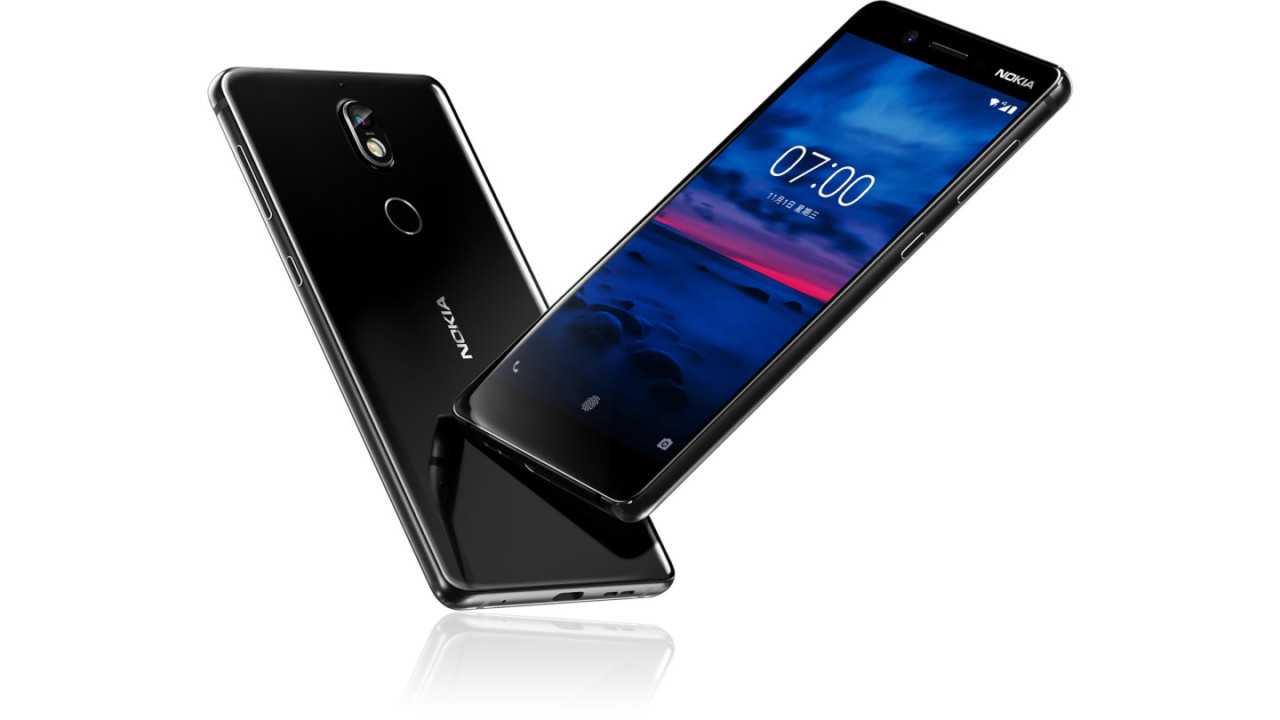
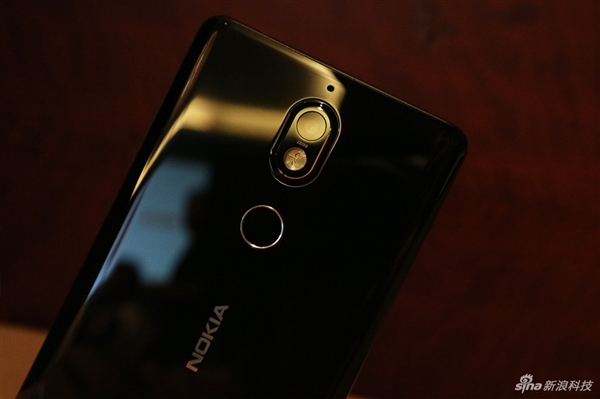
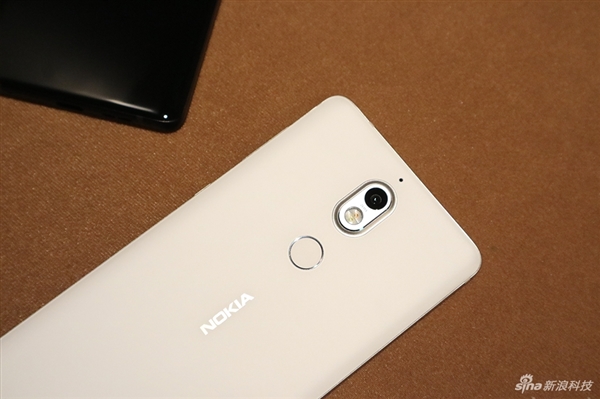
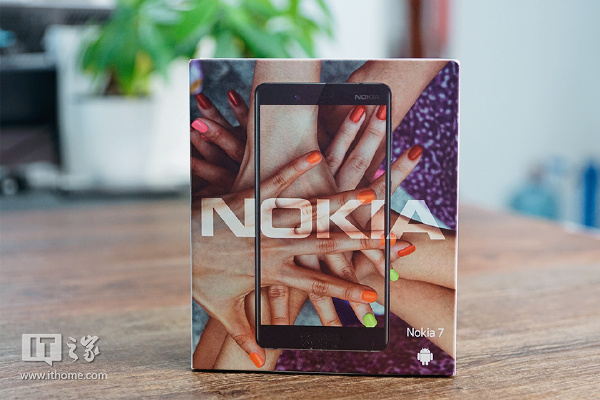
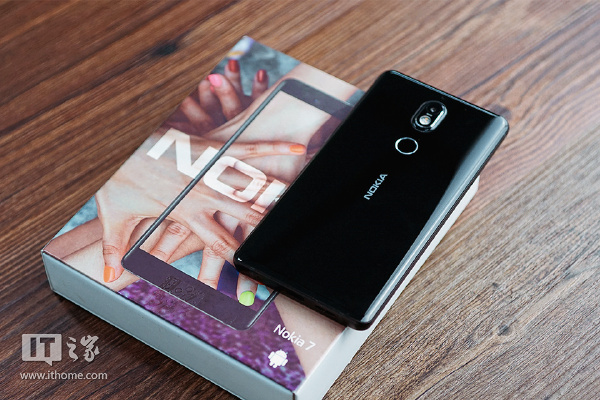
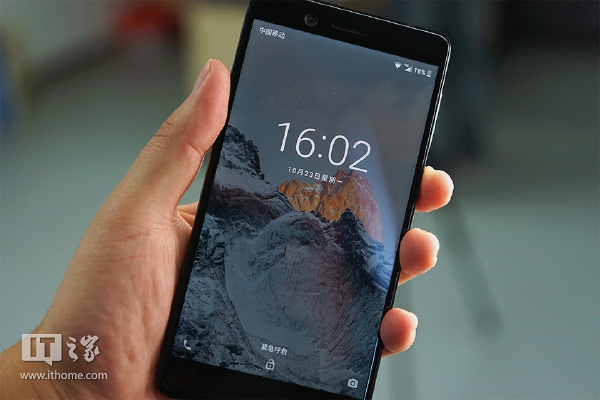
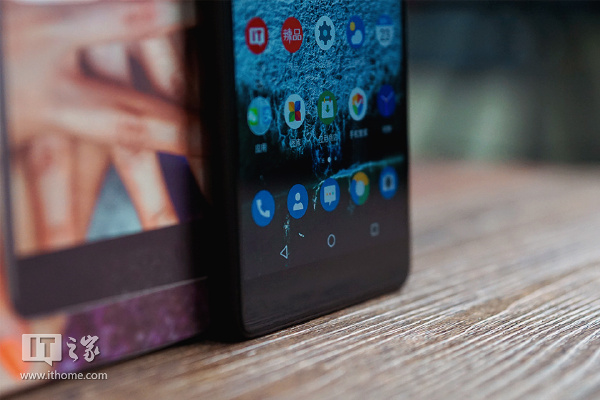
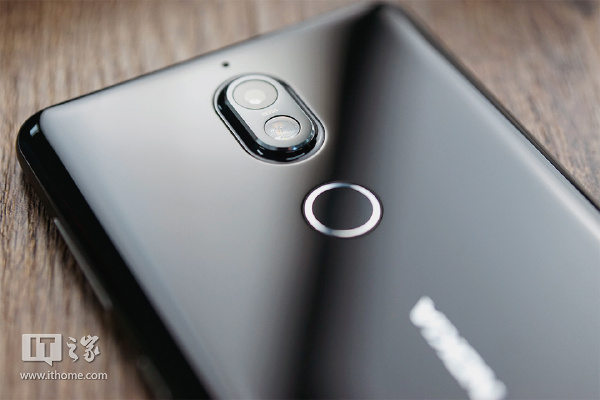
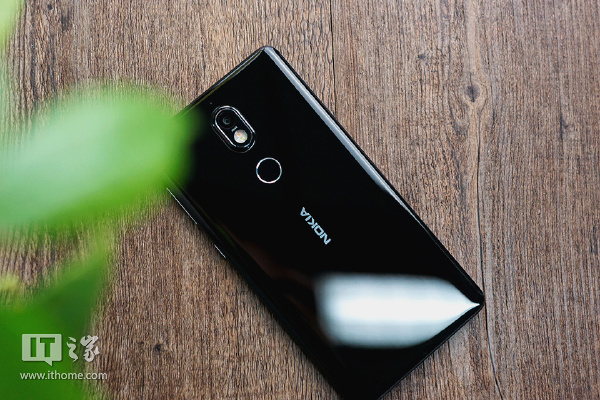
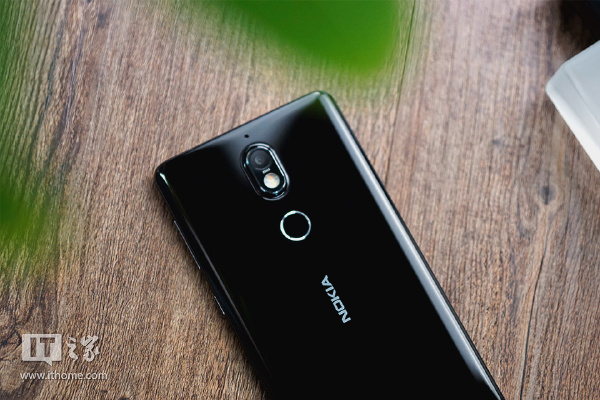
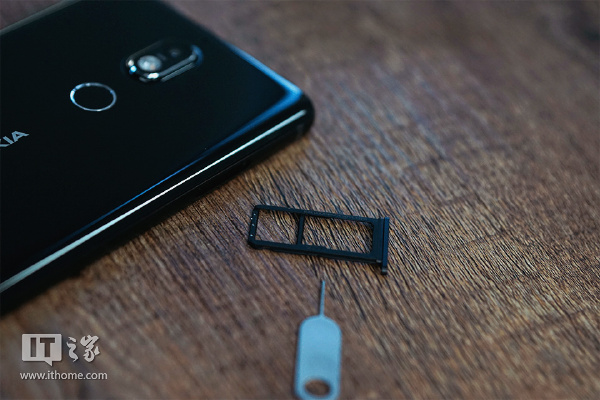
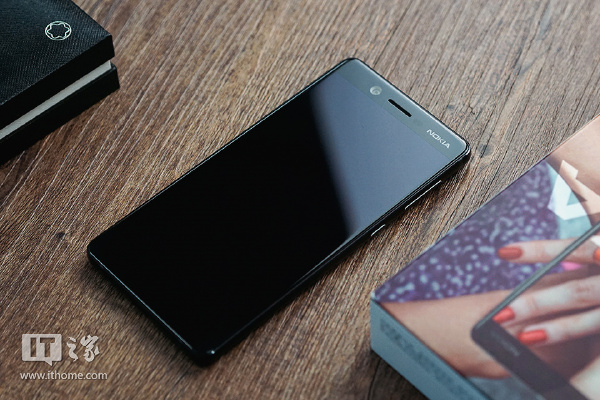
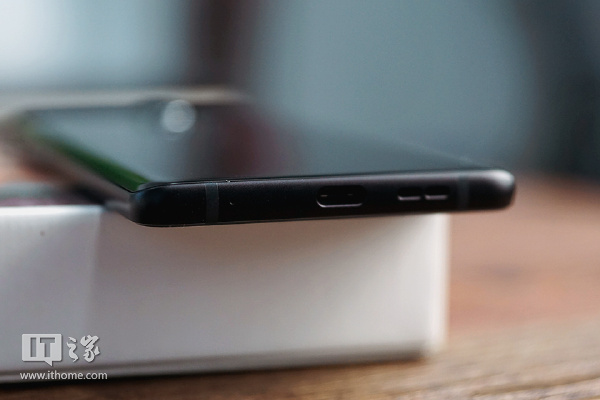
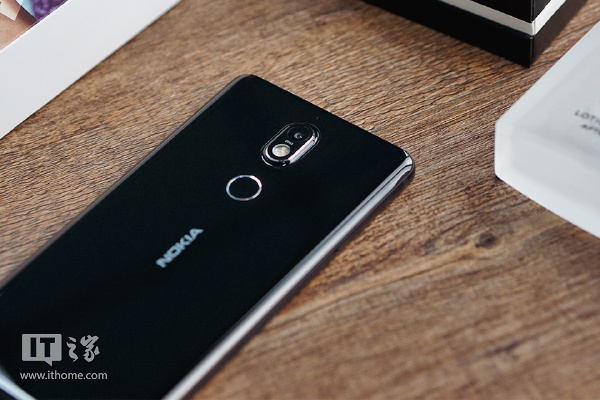
Apart from great hardware, software support is also pretty important. HMD Global wants to make sure it meets both demands. The new Nokia licensee has started rolling out Android 7.1.1 Nougat update to the Nokia 6.
The Nokia 6 is the first Android phone from Nokia released this year. The Android 7.1.1 update first rolled out to owners in China last month and has now started hitting devices in Hong Kong and Taiwan. Apart from the update in software version, it also brings along May’s security patch.
The update is 1.85GB in size and brings new features such as a bunch of new emojis, gif support, and also homescreen app shortcuts. Nokia has also fixed some issues that have to do with USB and 4G networks.
Last month, the Huawei P10 and Huawei P10 Plus were at the center of a controversy. Some users had discovered that the phones had different types of flash memory installed which resulted in varying performance results. Huawei responded to the issue by saying that the discrepancies in the flash memory was as a result of using different suppliers. They also went on to say there was no notable difference in the overall performance of two phones with different flash memories.
We already know Huawei isn’t the only company that cuts corners with flash storage. There have been reports of iPhones with larger storage capacities having faster read/write speed than those with smaller storage. Turns out Samsung also uses various flash storage for their phones and their most recent flagship, the Galaxy S8 isn’t left out.
The finding was discovered by an XDA member who owns the Exynos 8895 version of the Galaxy S8 (SM-G950FD). After finding out his own phone uses a UFS 2.1 storage, he implored other Galaxy S8 and Galaxy S8+ owners to find out what flash storage type is present in their phone. The results were varying. While some Galaxy S8 units have UFS 2.1 flash storage, others have UFS 2.0; but all Galaxy S8+ units tested have UFS 2.1 storage. Poll results below.
Initially, Samsung had explicitly stated that the UFS storage present in the Galaxy S8 is version 2.1 but if you head to the page now, it has now been removed. The asterisked info that says “May differ by country and carrier” is actually for the RAM and storage configuration and not type. Below is a comparison of the previous spec page and the new one.
The difference in performance between a phone with UFS 2.1 storage and another with UFS 2.0 storage isn’t much compared to that of one with an eMMC 5.1 storage. But it is still disappointing that a company as large as Samsung which is one of the largest flash memory manufacturers in the world will behave in such a manner.
The Snapdragon 835-toting HTC U 11 is almost upon us. Scheduled to launch on the 16th of May, new renders of the phone have surfaced online. The renders are from Onleaks and 91mobiles and are said to be based on original factory CAD sketches.
The renders show the phone in a new glossy red coat which is pretty attractive. The antenna lines are black and match nicely with the red back. There is a USB type-C port at the bottom flanked on the right by a mic and a slit for the speaker. There is no audio jack at the bottom neither is there one at the top.
The Power button and volume rocker grace the right side of the phone and the SIM slot sits at the top. You also have the fingerprint scanner sitting on the lower bezel. Overall, we have no issues with the design and we hope the performance turns out to be equally nice.
There are indications that Taiwanese tech giant ASUS is working on a new smartphone which has now been spotted on benchmark website GFXBench. The smartphone appeared on GFXBench with the model number ASUS X00ID. The GFXBench lsiting also gave us a glimpse of the specifications of the new smartphone.
According to the listing, the ASUS X00ID will sport a 5.5-inch display with a 1280 X 720 resolution which effectively places it in the mid-tier category. The device is expected to be powered by a Qualcomm Octa-core processor clocked at 1.4 GHz with 3GB RAM and 32GB internal storage. The Adreno 505 GPU the device is listed with makes the processor likely a Snapdragon 430 chipset, which is the same with that used on the Nokia 6.
Perhaps, the most interesting aspect of the device is the dual rear camera setup capable of shooting 4K videos which it is listed as coming with. The main camera is given as a 13MP + 5MP camera capable of capturing FHD videos. On the front, there will be an 8MP selfie camera. The device is also listed to run Android 7.0 Nougat out of the box.
As at this moment, the launch iterinary for this smartphone is unknown, but the phone is likely a new Zenfone model. Numerous rumours concerning ASUS has been released which range from speculations that the new ASUS ZenFone 4 will be launched in May of 2017 to suspicions that ASUS might use the MediaTek SoCs in its next ZenFone device. So, a lot of information about this device is still pending as the GFXBench listing onlu listed a few. Details such as its battery capacity, pricing and the actual release date are yet to be revealed. We expect more details aboout the ASUS X00ID to come up soon.
Gionee is preparing to launch successors to last year’s Gionee S9. The S9 is just six months old and will be getting not one but three successors. Two were seen on TENAA last week. One has model number S10C with a single rear camera and a 5.2-inch screen and the other has model number S10B with dual rear cameras and a 5.5-inch screen. Another one which is expected to be released as the Gionee S10 Plus with dual front and rear cameras has showed up on TENAA.
The Gionee S10 Plus has a 5.5-inch full HD display, 4GB of RAM on board and 64GB of built-in memory. An octa-core processor clocked at 2.5GHz powers the phone and it draws energy from a 3450mAh battery. Gionee has put a 16MP + 8MP dual camera setup on the back with a slight hump, and a 20MP + 8MP shooter in front. That’s four cameras in total in this phone.
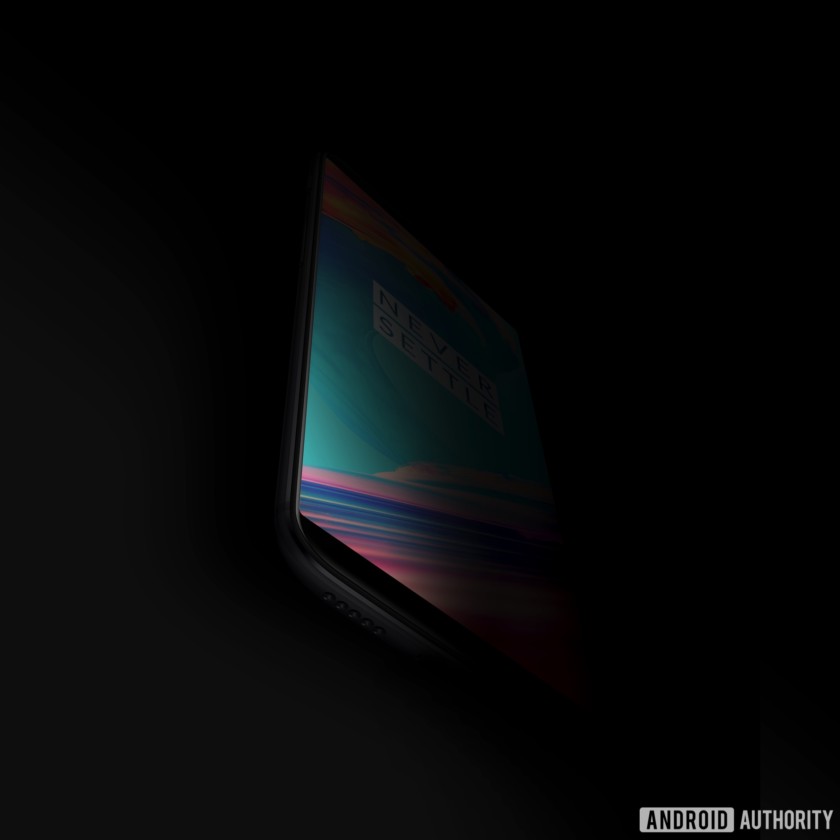
OnePlus continues to get jiggy with its upcoming flagship smartphone which is believed to go by the moniker OnePlus 5. The company has on several occasions released teasers that leave no doubt in our minds that a flagship is coming. OnePlus seems to have used the Star Wars day which is May 4 to share what we suspect is the image of the OnePlus 5.
The photo isn’t distinct enough for us to get a full glimpse of what exactly the phone looks like. But from what we can grab, the device in question will likely have a slim build. The camera bump at the back is indicative of a single rear camera. The phone’s capacitive buttons are also noticeable at the sides. There is really nothing to show this isn’t likely the OnePlus 3T.
While it is almost certain that OnePlus is working on a next-generation smartphone which will be the OP5, we’ll have to wait a while to get the actual render of the device. As for the specification, the OP5 is rumoured as coming with a Snapdragon 835 processor as well as 6GB RAM. There are talks of an 8GB RAM version as well. The device is expected with a 5.5-inch display which would either have a 1080p or 2K resolution and also a 16MP dual rear camera. The OnePlus 5 is expected to launch anytime soon, with talks of a possible launch sometime between June and August.
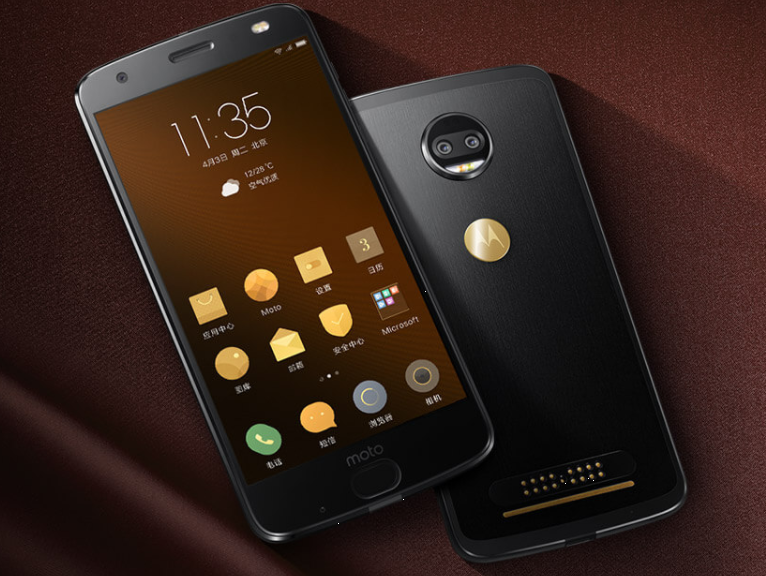
A fortnight ago, we saw official press renders of the Moto Z2 Play surface online. While there weren’t so many changes, one of those we took note of was the slightly thinner body. That singular design change meant that the Moto Z2 Play may feature a smaller battery.
Turns out our prediction was true. The Moto Z2 Play will indeed feature a smaller battery. This was confirmed by VentureBeat, citing a marketing material as their source. Rather than the 3510mAh battery that graced the first-gen Moto Z Play, the Moto Z2 Play will come with a 3000mAh battery. That’s a 14% reduction in battery capacity.
The reduction in battery capacity results in the Moto Z2 Play having its thickness and weight cut down by a millimeter and 20g respectively. The processor is said to be the Snapdragon 626 which is an upgraded version of the SD625 but with a higher clock speed. The RAM has also been bumped up to 4GB and storage is now 64GB.
LeEco and Xiaomi are two Chinese manufacturers that have phones without headphone jacks. Huawei might be joining them soon as leaked images of the yet-to-be-released Honor 9 reveals the lack of an audio jack.
While the images are renders and aren’t confirmed to have originated from Huawei, we can’t rule out the possibility of it happening. It makes perfect sense that the first phone to not have an audio jack may come from the Honor sub-brand and not the main Huawei brand.
Instead of dealing with the backlash and possible sales drop that may arise from the removal of the audio port if it were the flagship Huawei P10 or Huawei P10 Plus. It is safer to test the waters with the Honor 9. The outcome will determine if Huawei will make the decision to either remove or retain the audio jack in the next Huawei flagship.
As competition in the smartphone market gets stiffer, smartphone markets will likely go off-the-hook in their strategies in order to defeat their rivers. Chinese smartphone makers look even more fierce in their attempt to outwit their bitter rivals across the East China Sea. Oppo and Vivo whose street advertisement lend colour to Delhi Metro’s would spend about Rs 2,200 crore (around $350 million) on marketing thereby dwarfing the amount that would be spent by the likes of Samsung and Sony.
A rough calculation shows that the finance allocated for marketing of Samsung, LG and Sony will be inferior to the war chest of the two Chinese brands. The intended expenditure is reflective of a marketing plan that involves expansion of their sales pattern by 25% through unconventional shops, such as smartphone recharge and repair stores, and consumer electronic shops.
Overtaking the current market leader, Samsung, in the next one year is the plan of the Chinese duo. Some top industry executives confirmed that several smartphone shops have been contacted by these two Chinese big wigs asking them to diversify their focus from Samsung smartphones with a promise of compensation in event of a potential loss.
A senior executive with a top cellphone retailer said that Oppo and Vivo are focused on volume sales, pre-paying retailers for their signatures, branding for the next 1-2 years and even giving 5-10% more margin to retailers and sales promoters. An executive of one of the outdoor advert firms in India also disclosed that all outdoor advertising slot that is available in the market is been taken by OPPO and Vivo.
The Vivo X9 was released towards the end of last year. Powered by Qualcomm’s Snapdragon 625 and paired with 4GB of RAM and 64GB of storage, the X9 still falls under the mid-range category. Originally launched in gold and rose gold, Vivo later released a matte black version in February. Vivo has announced a new color variant, bringing the total to four.
The new color variant is actually a limited NBA Edition with a blue back with NBA’s famous logo engraved at the bottom. The antenna lines are white and the front bezels are black. The NBA customization is not limited to the surface alone, it also runs deep into the phone. The user interface is NBA-themed in the form of wallpapers and icons.
Current smartphone shipment data released by research firm, IDC show that China-based manufacturers such as Huawei, OPPO and Vivo somehow continued to ramp up their production and shipments even as Apple suffered a major regression in shipments of iPhone devices to the Chinese market in the first quarter of 2017. The data showed that iPhone shipments by Apple in China slide 26.7% on year to 9.6 million units in the first quarter, which accounts for a 9.2% share compared to 11% recorded in the last quarter of 2016 and 12.7% of a year earlier. According to Apple’s latest financial report, its revenues generated from the China market slumped by 12% on year to US$16.2 billion in the first quarter.
The data showed that iPhone shipments by Apple in China slide 26.7% on year to 9.6 million units in the first quarter, which accounts for a 9.2% share compared to 11% recorded in the last quarter of 2016 and 12.7% of a year earlier. According to Apple’s latest financial report, its revenues generated from the China market slumped by 12% on year to US$16.2 billion in the first quarter.
While Apple was experiencing this deterioration in China, Huawei returned to the top position, displacing their local rival OPPO by ramping up its shipments by 25.5% year on year to 20.8 million units in the first quarter. Huawei also saw its share climb to 20% in the quarter, up from 16.8% a quarter earlier and 16% a year earlier, IDC said.
OPPO on the other hand, ranked second with shipments totalling 18.9 million units for an 18.2% share, while Vivo shipped 14.6 million and took the third position with a 14.1% share.
According to the IDC report, the Chinese market, in the first quarter of 2017 received 104.1 million smartphones which represent a mere 1% on-year growth. This is an indication of the near saturation the Chinese market is currently gearing towards. Smartphone makers release new devices by the day and competition gets keener. Even the top three domestic vendors are unrelenting in their drive to maintain their lead. Huawei recently established more than 1,000 experience shops in core cities in China in its bid to counter the rivals OPPO and Vivo who gained successes by exploring both offline and online sales channels. Huawei is also rumoured as planning to set up over 15,000 retail shops globally. Currently, OPPO has a total of over 200,000 online and offline sales outlets in China, while Vivo has 250,000 offline sales outlets, according to the source. Xiaomi is also looking to increase it offline presence in China with additional offline stores. No doubt, we’ll get the full picture of the winners and losers at the end of the year.
Since the past few months, various leaksters have been speculating on the name of the next flagship phone from OnePlus. However, OnePlus has today officially confirmed to The Verge that its next flagship phone would be launching as OnePlus 5. The Chinese firm has also confirmed that it will be launching the OnePlus 5 in this summer which indicates that the phone may get unveiled in between June and August.
Why did OnePlus opt for OnePlus 5 moniker for its next flagship instead of calling it OnePlus 4? In China, the number 4 is not a lucky number as it symbolizes death. This is the reason why many tech companies have skipped the number in the names of their products. It could be the same reason why OnePlus may have decided to call its next flagship phone as OnePlus 5. OnePlus says that its employees are fans of Robert Horry, a former NBA player who wore number five jersey.
The OnePlus 3 has a model number of A3000 and the model number of OnePlus 3T is A3010. Leaked information has revealed that the model number of OnePlus 5 is A5000. This is also an indication that the company has decided to skip the number 4 from the name of its upcoming flagship.
The Chinese firm has not given out any information on the specifications of OnePlus 5. Like other flagships of this year, the OnePlus 5 is heavily pegged to be driven by Snapdragon 835 SoC. It will be arriving with 6 GB of RAM, but the rumor mill also predicts that it will have an 8 GB RAM variant as well.
Qualcomm‘s latest flagship processor has just made its maiden voyage onboard the Samsung Galaxy S8, Sony Xperia XZ and Xiaomi Mi 6. The flagship Snapdragon 835 is expected on more smartphones but before that can even happen, there are rumours already that Qualcomm is already workin on a next generation flagship chip.
The next generation Qualcomm chip is said to go by the name Snapdragon 845 and was being developed in collaboration with Samsung for the Galaxy S9, just like what played out on the Galaxy S8. Further details have now emerged that the Snapdragon 845 may actually be built on a 7nm wafer. According to reports from Taiwan, TSMC has started developing a 7nm process and trial production began in April. The report also reveals that full fledge production may actually commence next year. Thus, the Apple iPhone 8, expected later this year is ruled out of having a 7nm chip.
TSMC gets patronage from up to30 different chip makers includingvQualcomm, MediaTek, Apple, Huawei and others. The report alleges that more than half of the 30 TSMC customers plan to use the 7nm process to create a high-performance chip. TSMC had earlier disclosed that the 7nm process increases performance over the 10nm by 25% – 35% and about 95% of the components on a 10nm chip can fit into a smaller 7nm chip. So, we’re looking at a more. TSMC’s Chairman had disclosed that Samsung is the only chipmaker competing with TSMC in the race to commercialise the 7nm process. We can’t say if Qualcomm will pitch its tent with Samsung again as it did for the Snapdragon 835 or go with TSMC on this one.
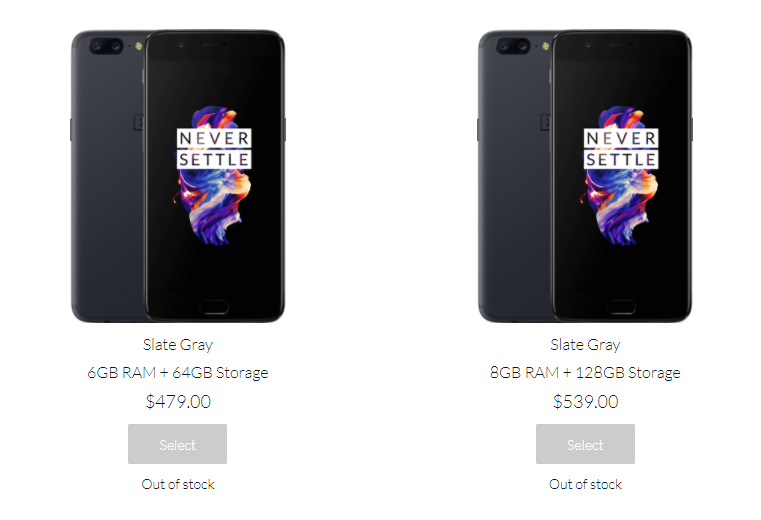
Since the OnePlus 3 and OnePlus 3T smartphones received positive reception from audience and critics, a lot is expected from the rumored OnePlus 5. The rumor mill is consistently revealing leaked information on OnePlus 5. Yesterday, we had reported on the key specs of the upcoming flagship phone. The alleged smartphone is already listed on OppoMart with its entire specifications and pricing even before the official announcement. However, the listing states that it is unavailable for purchase as it “out of stock.”
New rumors claim that the OnePlus 5 would be announced at the end of June. The OnePlus 5 listing that is still available on OppoMart features an image that shows the smartphone sporting a vertically arranged dual rear camera setup. The specs list on the Chinese retailer site shows that it has a 5.5-inch display that carries support for quad HD resolution of 2,560 x 1,440 pixels.
It receives power from the Snapdragon 835 chipset that includes a 2.45 GHz octa-core processor and Adreno 540 graphics. It is available with 6 GB of RAM and it has two storage options such as 64 GB and 128 GB. It is running on Android 7.0 Nougat OS that is flavored with OxygenOS skin.
The specs list states that the rear camera features dual rear camera of 12-megapixel. It does not clearly mention the camera sensor configuration for both the lenses of the dual camera setup. It has a front-facing camera of 8-megapixel. It includes a 3,580 mAh battery that carries support for Dash Charge 2.0 rapid charging.
Some of the specs mentioned in the OppoMart listing contradicts with the leaked information that surfaced yesterday. A Chinese leakster has revealed that the OnePlus 5 won’t be featuring a quad HD screen, but will be arriving with a full HD screen. The report also revealed that the OnePlus 5 would be powered by 3,600 mAh battery, but the OppoMart listing shows the presence of a slightly smaller battery. Even though the photo present on OnePlus 5 listing on OppoMart shows the presence of a vertically designed dual rear camera, new information suggest that the phone would be graced with a horizontally arranged dual rear camera.
The OnePlus 5 is listed with a price tag of $449 on OppoMart. Although the phone is listed as out of stock, the listing states that the phone will arrive at the “beginning of June, 2017.”
Up until a few years back, Huawei smartphones were known for their quality hardware. The camera wasn’t a big advantage of the company’s flagship and most users would lean towards the iPhones or even the Samsung Galaxies for fulfilling their camera requirements. This kind of changed with the Huawei P9. The P-series, which was a rather lackluster and boring mid-range lineup suddenly got all the spotlight last year for the dual cameras at the back. Even last year, dual cameras were not exactly revolutionary (even Huawei had released a dual camera phone, the Honor 6 Plus before) but what really brought the P9 forward into the spotlight was its Leica certification. This made it a dual camera monster and the phone was rated to have one of the best cameras of its time.

Fast forward to 2017 and meet the Huawei P9’s worthy successor, the Huawei P10. Despite the memory scandal surrounding the new flagship, the phone is a powerful dual camera performer, clicking amazing portraits and low light images. The phone still has the Leica certification as well as an upgraded dual camera unit. But P10’s dual cameras are no longer unique and the Leica certification alone isn’t enough to ensure better images than competitors.
Xiaomi Mi 6 vs Huawei P10 Camera Specs
Huawei P10 (L) vs Xiaomi Mi 6 (R) Camera Specs
This is exactly why we need to pit the Huawei P10 with the brand new dual camera contender, the Xiaomi Mi 6. Now, in the Xiaomi Mi 6 vs Huawei P10 camera comparison, you may feel that the latter will click better pictures, especially with its Leica certification. But just look at the comparison down below to see the difference in real life.
To be honest, I couldn’t pick one smartphone as being superior to the other one. The Mi 6 manages to click some surprisingly good images in some instances while the P10 disappoints. But there are some images wherein the P10 captures superior images with better colors.
For example, the Mi 6 managed to capture pretty good colors in the image of the dry leaf. But P10 managed to do better in terms of colors in the case of the pink toy image. Even in low light situations, the P10 manages to click brighter images. But when the lights were very dim, like in the two night time pictures added below, the Mi 6 took brighter images but with more noise. In the same case, the P10 managed to keep the noise level low, but the images were darker.
In the portrait mode camera samples, the P10 seems to be better at the job of blurring the background. Note that while the P10 was quick to effectively blur the background and capture the portrait, the phone became hot after 10 minutes. Mi 6 was decent in taking portrait pictures, not as quick as the P10, but it didn’t get hot. Portraits seem to be P10’s specialty, as the images look better than the portrait samples captured by the Mi 6.
But overall, considering the pricing difference between the two models, I would like to say that the Xiaomi Mi 6 does a pretty good job of keeping up with the P10. Who do you think is better in the Xiaomi Mi 6 vs Huawei P10 comparison?
Check out the second gallery, below this one, for the portrait pictures from both the phones.
Note that the pictures taken from the Mi 6 has watermark, so it’s easy to differentiate the samples.
Sharing the flash sales into three parts would have afforded fans who were unsuccessful in the first flash sale to try their luck again in the second sales as well as the third. Apart from that, it also suggests that Xiaomi may have increased the stock of the Mi 6, even though we usually don’t get figures of the amount sold during each flash sale. But then, the flash sale runs simultaneously on Xiaomi’s official website, Jingdong, Lynx and Suning Tesco, so going three rounds of the flash sale on all four platforms definitely hint at an increase in the available stock of the Mi 6.
Despite this seeming increase in stock, the Mi 6 still is not enough to satisfy the demand as it still sold out on all the flash sales. It should be noted that only the 6GB + 64GB Jet Black version of the Mi 6 priced at 2499 Yuan is available for purchase in the flash sale. While those who desire the 6GB + 128GB version, sold for 2,899 Yuan, will have to make an appointment online and pay in order to get it at Xiaomi flagship stores across China on May 6.
Elephone has begun registrations for its upcoming smartphone, the P8. The Elephone P8 belongs to the high end series which have the alphabet “P” in their names. Photos of the Red Wine variant of the phone have been provided by Elephone and to be honest the device does look good.
The Elephone P8 has a 5.5-inch 2.5D display, 6GB RAM, and 64GB of storage. It is powered by MediaTek’s Helio P25 SoC and that should give you a hint as to why it was initially called the Elephone P25. The octa-core processor was unveiled by MediaTek in February and the Elephone P8 is set to be the first phone to launch with it.
The unique feature of the chipset is its dual ISP chips and support for dual cameras. However, the Elephone P8 won’t be launching with dual sesnors. Instead it will have a 21MP rear camera made by Sony and a 16MP front facing camera. Both cameras will have a dedicated LED flash and will take advantage of the Dual ISP chips.
When Meizu released its budget E2 smartphone not too long ago, what captured the attention of many was the beautiful camera design which the device came with. We had predicted that the design may soon get copied by other smartphone brands but what we didn’t bargain for was that it would be so soon. A new Nubia smartphone with a similar flash design has been spotted on Weibo. This time around the device sports a dual camera setup along with the strip flash.
While we are not sure of the authenticity of the leaked image, it looks very much like the Nubia Z17 Mini which was launched recently, except for the flash design. The leaked image shows the strip LED flash is sill located on top of the antenna line but this time around it is at the left side of the cameras unlike the Meizu E2 which was located on the right.
Meizu and Nubia once shared something in common and that is the small circle which is used to identify the location of the virtual home button. But Nubia later applied for a patent for the design and so Meizu had to change to its latest mBack button. There is no way to tell if we are looking at a similar scenario here but whatever be the case, the Meizu’s latest smartphone was the first device that we first saw the strip LED flash design on. Nubia’s co-founder Ni Fei has even denied the existence of such a design, though, but the company is confirmed as launching a new smartphone, the Nubia Z17 which is tipped as packing a Snapdragon 835 chip soon. We’ll have to wait and see if this design will feature on the upcoming device.
A recent advert posters spotted in a subway in China brings a rather surprising discussion to the table. The ad posters showed that Xiaomi’s main focus in projecting its latest product isn’t the Snapdragon 835 chip inside the Mi 6 but the dual camera setup. The advert highlights the dual camera on the Xiaomi Mi 6 which shoots beautiful images and also provides some level of zoom.
This is coming as a bit of a surprise because ordinarily, we would have thought Xiaomi’s main focus would be the Qualcomm flagship chip which the Mi 6 is the about the third device globally to use it and the first in China. But it turns out Xiaomi isn’t focusing the product marketing on the performance which would appeal only to some who quest for a very powerful processor. The company is perhaps showcasing other amazing features of the device so that the device will be appealing to a lot more persons.
There is no doubt that the Snapdragon 835 chipset backed by 6GB of RAM makes the Xiaomi Mi6 a performance monster but as they say, seeing is believing. Potential buyers can only realise the Mi 6 is a wonderful device when they see the amazing shots it is capable of taking with its dual cameras. Now, the performance of the dual cameras on the Mi 6 isn’t being overrated. We earlier did a practical side by side comparison of the Mi 6 camera with that of the OnePlus 3T which had a 16MP rear sensor and it did floor the 3T.
At some other time, a comparison was made with the dual Leica camera packing Huawei P9. Both the Mi 6 and P9 come with dual cameras but while the setup on the P9 works in the RGB + Monochrome format, those of the Mi 6 that are configured as one 12MP wide-angle lens and one 12MP telephoto lens. Not wanting to judge that alone, we conducted two polls for the OnePlus 3T and Huawei P9 comparisons and the results so far show that more persons think the Mi 6 camera is better than those of the OnePlus 3T and Huawei P9. So, who lights a light and put it under a blanket? Certainly not Xiaomi.
Samsung is preparing to launch the reintroduce the Galaxy Note 7 into the market. The refurbished Galaxy Note 7 is speculated to launch as Galaxy Note 7R. The alleged smartphone has been certified by Federal Communication Commission (FCC) in the U.S. which means its arrival in the country is drawing near. However, rumors claim that the Note 7R will be launched first in the home country of South Korea.
In the previous month, the Galaxy Note 7R had received approval from Wi-Fi Alliance and now FCC has approved three models of Galaxy Note 7R with model numbers SM-N935S, SM-N935K, and SM-N935L. In South Korea, it is speculated to be available through three major operators such as SK, KT, and LG.
Newer information suggests that the Galaxy Note 7R would be available in color choices such as Coral Blue, Silver, Black and White. These color variants are the same ones that were available with the original Note 7.
As far as specs are concerned, the Galaxy Note 7R is expected to feature the same specs as the original phone. However, the Note 7R is speculated to come with two modifications. Instead of the 3,500 mAh battery on Note 7, its upcoming refurbished variant is expected to house a 3,200 mAh battery. Also, the Marshmallow OS would be replaced with the newer Android 7.0 Nougat on Galaxy Note 7R.
The original Note 7 that was launched last year in August came with a pricing of 988,900 won ($869). However, the refurbished Galaxy Note 7 are expected to cost 700,000 won ($615). This leaked information suggests that the Note 7R would be $250 cheaper than the Note 7.
We use cookies on our website to give you the most relevant experience by remembering your preferences and repeat visits. By clicking “Accept”, you consent to the use of ALL the cookies.
This website uses cookies to improve your experience while you navigate through the website. Out of these, the cookies that are categorized as necessary are stored on your browser as they are essential for the working of basic functionalities of the website. We also use third-party cookies that help us analyze and understand how you use this website. These cookies will be stored in your browser only with your consent. You also have the option to opt-out of these cookies. But opting out of some of these cookies may affect your browsing experience.
Necessary cookies are absolutely essential for the website to function properly. This category only includes cookies that ensures basic functionalities and security features of the website. These cookies do not store any personal information.
Any cookies that may not be particularly necessary for the website to function and is used specifically to collect user personal data via analytics, ads, other embedded contents are termed as non-necessary cookies. It is mandatory to procure user consent prior to running these cookies on your website.