Advertisement

ORICO MOUPS 100,000mAh Powerbank Launched- A Universal Charging Powerhouse

Chinese consumer electronics manufacturer Orico has announced a new powerbank with a mammoth 100,000mAH capacity. The powerbank is named MOUPS and has the ability to change multiple devices, even smaller powerbanks, all at the same time. In reality, though, the Orico MOUPS is more of a portable uninterrupted power supply (UPS) gadget, as it can be used to power small refrigerators, TV, radios, mini drones, Notebooks etc.

Orico MOUPS

The Orico MOUPS comes in two capacities, one with 50,000mAh battery capacity and the beast with a 100,000mAh battery. Both versions feature four USB interface which can be used to connect up to four different gadgets. They both also support Quick Charge 3.0 with a maximum output power of up to 18W.

Orico MOUPS

The MOUPS (50000mAh & 100,000mAh) both use Panasonic, Samsung and LG batteries. The device also comes with LED lights that can be used for outdoor camping at night or any other activity in the dark. The gadget also comes with a 220V AC outlet in addition to the DC outlets and four USB ports. In addition, the device can be charged using a 36W solar charging board and that ca also be bought along with the powerbank. You can watch a Weibo video on the full functionalities of the UPS device from here.

orico moups

Read More: Xiaomi’s 20,000mAh Mi Mobile Power Bank 2 Launched

As for their prices, the 50,000mAh version of the MOUPS has a price tag of 1,299 Yuan (~$188) while the price of the 100,000mAh model is even cheaper at 1,999 Yuan (~$290). The 36W solar charging panel costs just 500 Yuan (~$72).

Geotel Note Flash Sale at $9.99 Brings MediaTek MT6737, 3 GB RAM

Geotel Note is a new budget phone that is priced lower than $90. In the previous month, we had published an in-depth review of the Geotel Note phablet. The phablet is now available on a flash sale on Tomtop with a pricing of $9.99.

Starting from April 25 at 4:00 PM (GMT +8) until May 2, the Geotel Note is available for $9.99 through a flash sale on Tomtop. However, there is a limitation which provides only one handset at that price each day until the end of flash sale.

During the same flash period, the Chinese retailer site will be selling 50 units of Geotel Note at $85.99. After the end of flash sale, the Geotel Note will be available with its regular pricing of $89.99. The package of the Geotel Note includes the handset, battery, charger, USB cable, TPU protective case, protective film and user manual.

Geotel Note Tomtop Flash sale

Read More: Full Specification Details of Geotel Amigo Released

The Geotel Note is a 4G budget phablet that does not appear cheap, but it has a premium appeal. The 5.5-inch HD screen and it is driven by MediaTek MT6737 chipset that features a 1.3 GHz quad-core processor and 3 GB of RAM. The native storage of the phone is 16 GB.

The external storage of the phone supports up to 32 GB of microSD. There is a 13-megapixel rear camera with f/2.0 aperture. The frontal shooter is of 8-megapixxel with f/2.0 aperture and 84-degree wide-angle shooting support.

The Android 6.0 Marshmallow OS will be running inside the Geotel Note. The phone is equipped with a 3,200 mAh battery. It is available in color choices Dignity Gold and Phantom Navy.

Even though Geotel is a relatively new Chinese smartphone, its devices have a stylish appeal and come with impressive specs and pricing. Before shipping its devices, Geotel smartphones are made to go through many quality control test procedures. Apart from Geotel Note, it also has another phone called Geotel A1 phone under its belt. Geotel Amigo is one of its upcoming smartphones. Its specifications have already been revealed.


Elephone C1 Max Review: Dual Cameras For The Cheap, Real or Gimmick?

Elephone C1 Max is the latest phablet from the local Chinese manufacturer, Elephone. The phone has been in the news for the past few weeks mainly because of its dual camera setup at the back, making it one of the few phones to actually feature two rear camera sensors at a budget price tag. Apart from the camera setup, another big reason why you should check out the C1 Max is because of its huge 6-inch display up front. I got to play around with the device for the past few days, which means it’s time for a detailed Elephone C1 Max Review.

Elephone C1 Max front


Elephone C1 Max Review: In the BOX

The phone comes with all the usual things that you get inside a smartphone box — the phone itself, charger, manual, and SIM ejector tool. Note that the box also contains a silicone case for the phone, which I think is a nice addition. The phone also has a scratch guard installed right out of the box, so no need to go hunting for that.

Elephone C1 Max Box


Elephone C1 Max Review: Design

The Elephone C1 Max is extremely well built. But that’s not surprising since the built quality of local Chinese phones have improved tremendously in the past couple of years.

Elephone C1 Max back

The phone feels good to hold, even in one hand. But one hand operation won’t be easy given its large 6-inch display. The C1 Max is made out of a premium metal body with a smooth texture at the back. I personally got the mocha gold color variant, which I feel, looks very beautiful. It’s a different shade of gold, which is refreshing from the usual champagne gold and rose gold color shades. The overall built quality and looks of the phone are excellent and I am sure you will be happy with the design.

Elephone C1 Max front

The dimensions of 164*83*8.5mm are pretty decent for a 6-inch phablet. In comparison, the Bluboo Maya Max, which is a close competitor comes with 162.2 x 81.8 x 9mm dimensions. So, the C1 Max is a tad wider and longer than the Maya Max, but its thinner too. Also, it’s nowhere as heavy as the Maya Max, weighing 158 grams as compared to Maya’s 211 grams. Of course, the major difference in weight is because of its battery capacity difference, which is significant, but if you are looking for a relatively lightweight 6-inch phablet, the C1 Max is a pretty good candidate.


[envira-gallery id=”128133″]


The back texture is smooth and does not easily attract fingerprint or dirt. On the top left corner, you have the dual camera setup (13MP + 5MP) along with LED flash. There’s a fingerprint sensor in the middle, which is actually pretty good. Then there’s the Elephone logo along with the usual stuff written — Designed by Elephone, Assembled in China.

On the right side, you have the volume and power buttons. The buttons feel good and clicky, so no issues here. The placement of the buttons are also pretty good, I could reach out my thumb to power on or off the display with ease. But for users with small hands, accessing the power button might not be too easy. Coming to the bottom, there are MicroUSB port and dual speakers. On the left, there’s dual SIM card slot. Finally, on top, you just have a 3.5mm headphone jack.


Elephone C1 Max Review: Display

The Elephone C1 Max has a large 6-inch display. The bezels on the sides are thin, so the display looks quite good. But the bezels on top and below the display are still pretty thick. I feel, keeping these areas thinner would have made the phone even more compact, but then the phone comes with capacitive buttons instead of on-screen ones, so the thickness of the bottom bezel is kind of justified.

Elephone C1 Max display

As for the display quality, don’t expect too much from the large screen, since the resolution is limited to 720p. Despite the resolution being just HD, the display manages to do a decent job in bringing out the right colors. Most of the colors pop out nicely on the screen, which makes it a great device for watching videos. I compared the C1 Max with the Redmi 4A since they both fall nearly in the same price class and despite the larger display with the same 720p resolution, the C1 Max did manage to maintain a decent level of clarity and color reproduction. Note that both phones were set at 50% brightness.

Elephone C1 Max bezel display

Sunlight visibility of the Elephone C1 Max is fairly decent. Under direct sunlight, at 50% brightness, I was still able to read what was on the screen with a little bit of effort. I compared it with the OnePlus 3T under similar conditions and things were not too different.

c1 max vs redmi 4a display
Elephone c1 max (top) vs Redmi 4a display

So, for a $120 ($109 on Gearbest now) device, the C1 Max has a pretty decent 6-inch screen.


Elephone C1 Max Review: Hardware

The C1 Max has nothing great to boast about in this category. The processor inside is the entry level MTK MT6737 quad-core chip. There’s 2GB of RAM on board and 32GB of internal storage expandable via MicroSD. The ARM Mali-T720 is also an entry level GPU, so expect the graphics performance to be basic as well.

Elephone C1 Max About

In the AnTuTu benchmark test, the Elephone C1 Max managed to score 32,301 points. Now, that’s very low in a market where the mid-rangers easily score near 70K on the same test. But real life performance is not as bad as this score suggests. If you are looking for a device with great multi-tasking skills or heavy app crunching power, then the C1 Max isn’t the right one for you. But if you restrict the total apps in the background and use the phone moderately, the phone shouldn’t disappoint.


So, hows the gaming performance?

It’s decent. I mean, you can play games like asphalt without a lot of hiccups. Of course, the graphics don’t look anywhere as good as the Asphalt 8 on the OnePlus 3T, but the overall experience playing on the 6-inch phone is pretty good. If you can get used to some skipped frames while playing, then most of the games should work fine on the phone. I even tried out Subway Surfer and I didn’t see any lag during gameplay. In fact, the colors popped out pretty well on the 6-inch screen. You can check out the gaming screen video in the drive folder added below.


What about the fingerprint sensor?

The fingerprint sensor is one of the highlights of the phone. The sensor was very quick to recognize and unlock the phone, right from the screen off mode. In fact, it’s one of the most accurate sensors I have seen on a $100 smartphone. I never had any fingerprint misreads, which means the display unlocked in less than a second every single time. The placement of the sensor at the back could be an issue if you are like me who places the phone on the desk. But that’s just a personal inconvenience and if I had to judge only the sensor, I would give it 10/10.


Elephone C1 Max Review: Dual Cameras

The camera is naturally one of the most important components that consumers check before buying a smartphone, but with the Elephone C1 Max, cameras have even more importance. The company has used a dual camera setup at the back, which means this is one of the cheapest phones with two cameras at the back. The setup is a rather simple one, a 13MP primary camera sensor supported by a secondary 5MP sensor. This setup is more focused on taking depth of field photos, rather than improving the overall image quality, and I must say that the C1 Max manages to do a decent job in this regard.

Elephone C1 Max Camera Bokeh UI
Controls for background blur

Before I talk about the bokeh effect produced by the phone, it’s important to note that the basic images captured by the C1 Max are nothing out of the ordinary. It gives you images with a decent level of clarity and colors, but you do find some noise, especially when the natural lighting goes down. This makes the phone just like any other low-cost local Chinese budget smartphone. But if I had to comment about the bokeh effect produced by the phone, it’s pretty interesting.

Elephone C1 Max cameras

So, you have control over the amount of background blur produced in the image. It takes some time getting used to the controls, but once you are familiar with the feature, you will be able to get some good photos out of this device.

I have added a few samples down below. As you can see, the quality of images aren’t exceptional, but the bokeh feature works well.

Check out all the samples from here.

As for the video quality, it’s going to be grainy and shaky — so not good enough for your viral video needs.


Elephone C1 Max Review: Battery

All the above departments have been fairly good so far. For a $120 smartphone, the C1 Max gives you good value. But one area where it disappoints is the battery inside.

The charging takes quite a lot of time, especially considering the battery is smaller than 3000mAh. My unit personally took nearly 2 hours to get to 100%. Even the draining is quick. With continuous usage, the battery drains very quickly and you are left with no juice even before the end of the day. That’s expected because of its large 6-inch display gulping a lot of battery. But if your usage is fairly moderate, then the C1 Max could last an entire day. But I don’t think with its large screen, your entertainment needs would be limited to just a couple of hours a day.

So, the battery is a bit of a disappointment on this phone. Something like a 3500mAh capacity battery inside would have been better suited for its 6-inch display. Make sure to carry its charger or a powerbank if you are planning to use this phone as your daily driver.


Elephone C1 Max Review: UI

There are some good looking wallpapers on the phone pre-installed, hence I didn’t have to download from the internet. The icons are quite big, making full use of its large 6-inch display. The app icon graphics isn’t something that I personally like, but I don’t think you would have a problem with them.

[envira-gallery id=”128149″]

With Android 7 Nougat on board, things were pretty smooth on the C1 Max. I did experience minor lag sometimes, but nothing significant.

Elephone C1 Max Review: Conclusion

For $120, the Elephone C1 Max is quite a decent smartphone. The large 6-inch display and dual cameras — the two big attractions of the phone — gives this phone an edge over the numerous $100 competitors in the market today.

Elephone C1 Max hero

The battery is definitely its biggest drawbacks but it kind of help in keeping the phone’s weight low, something that other 6-inch smartphones fail to restrict. For example, the popular Xiaomi Mi Max phablet weighs a good 203 grams. Dual cameras are good for occasional bokeh pics and the display is good to serve your entertainment needs as well. Super fast and efficient fingerprint sensor was indeed a pleasant addition. Finally, with Android 7 on board, there are definitely some good reasons to consider buying this budget smartphone.

MIJIA’s Upcoming Product is a Third Party Smartband & Not Mi Band 3

Xiaomi is all set to launch its 78th crowdfunded product under the MIJIA platform and this new product will surprise you. It is a smartband which looks very much like the Mi Band 2 that some thought it was, perhaps, the Mi Band 3 when Xiaomi teased the product launch yesterday. But all is now clear as the MIJIA platform has explained that it is a third party product manufactured by smartwatch maker Weloop.

The upcoming smartband is teased to have a very long lasting battery which can last up to 30 days while running continuously without any interruption. That is a super powerful fire power which dwarfs the Mi Band 2 battery. At most, the Mi Band 2 can do 7 days with continuous use but 30 days? That is interesting.

A new twist has been added to the mix, with the emergence of a Xiaomi poster with the smartband bearing the name “Xiaomi teleport ring”. The ring is teased as being able to teleport someone from a disaster or unsafe zone to safety. Now, teleportation is a stuff of science fictions and just isn’t possible presently. This might just be some prank as what is likely coming is a smart fitness band that should perform like the Mi Band 2 and even better.

Xiaomi Mi 6, Mi Mix 2, Other Xiaomi Phones Won’t be Releasing Soon in the U.S.

Xiaomi has been hinting that it would be selling its smartphones in the U.S. However, in an interview with Engadget, Wang Xiang, the Global VP of Xiaomi, confirmed that expanding its market in the U.S. is not the priority for the company.

Xiaomi has just launched its flagship phone, the Mi 6. In this year, it is speculated to launch several smartphones such as Xiaomi Mi 6 Plus, Mi Note 3, Mi Max 2, Redmi Pro 2 and Mi MIX 2. However, Xiaomi fans in the U.S. and Europe who are eagerly waiting to see the arrival of Xiaomi fans will have to wait longer as they won’t be able to purchase these phones in their countries this year.

It means the only way to avail Xiaomi phones is to order them from Chinese online retailer sites such as GearBest or Giztop that are selling them with slightly expensive pricing. Xiaomi does not want to sell its smartphones directly in the U.S. like other brands like OnePlus and Honor (Huawei’s sub-brand) are doing. It feels that selling phones directly in the U.S. will not help in building its relationship with the carriers in the U.S. and this could negatively impact the reputation of the company in the U.S.

wang-xiang-presidente-xiaomi

Read More: Xiaomi Mi 6 Is Using A Full Version of SD835, Unlike What’s Written on Its Website

Like other major brands, Xiaomi too wants to penetrate the U.S. market at the right time after negotiating with carrier companies. It also aims to set up full-fledged customer service. Currently, Xiaomi is selling its phones in 30 regions that are considered as developing markets.

Xiaomi is a very popular brand and has a good potential of growing in these markets. Currently, it is on the number two smartphone brand in India and in countries like Ukraine, Indonesia and Myanmar, Xiaomi is at placed at number three position. Since it encountered supply chain issues, it is now on the fifth spot in China. However, the U.S. market is saturated where brands like Apple and Samsung are the ruling the smartphone market. Wang said that it is not in a hurry to arrive in the developed markets.

Before making its phones available through the U.S. carriers, the company should go through extensive testing process for its smartphones. However, it does not have sufficient engineering resources for it, but it is looking forward to making its smartphones available through the four popular U.S. carriers such as AT&T, T-Mobile, Verizon and Sprint.

(source)
 

Google Pixel (2017) Rumors: 3 Smartphones with Snapdragon 835 Launching This Year

Last year, Google introduced the Pixel and Pixel XL that were branded as “made by Google” smartphones. Rumors that surfaced earlier this year revealed that Google may release as many as three handsets this year.

The new information that has surfaced on Android Open Source Project has revealed that Google’s upcoming smartphones are codenamed as Walleye, Muskie and Taimen. Walleye is said to arrive as a successor for Pixel and Muskie could be launching as sequel for Pixel XL. However, Taimen seems to be a mysterious device. Speculations have it that it could be a new tablet with Google branding.

In the last month, it was reported that Taimen could a device that is different from Walleye and Muskie which probably means that Taimen may arrive as a non-Google Pixel phone. Google has been following a pattern of codenaming its smartphones with the names of fishes. Taimen is world’s largest salmonid which indicates that it may arrive with a larger screen compared to Pixel 2 series phones.

Google-Pixel-2017-AOSP

Read More: Google Pixel 2 XL May Have Been Confirmed by New Google Code Update

The other important information that has surfaced through AOSP is that Snapdragon 835 chipset. Rumors that surfaced at the start of this year stated that Google may release a cheaper edition of Google Pixel phone dubbed as Pixel 2B for the developing markets. However, Rick Osterloh who is the Senior Vice President for Hardware for Google has confirmed that Pixel phones will remain premium which means there won’t be any budget friendly edition of Pixel phones.

Osterloh has also shed some information on the Google Pixel 2 release date. He has said that the company will follow an annual launch cycle for it which probably means that Google Pixel 2 and Pixel 2 XL would be launching in October this year.

Early rumors have revealed that Google Pixel 2 phones would be sporting waterproof chassis and they would be also featuring improved cameras featuring large-sized megapixels for advanced low-light photography. Also, the upcoming Pixel 2 smartphones are unlikely to feature 3.5mm audio jack.

(source|via)


Xiaomi Mi Mix 2 To Feature A New Receiver Sound Technology (AAC Actuator)

Xiaomi took the smartphone industry by storm last year when it announced the bezel-less Mi Mix concept phone actually went commercial unlike other concept devices. The Mi Mix was a mixture of innovative technology right from the ceramic body to the display to the earpiece and others. Due to the 91.3% screen-to-body ratio and teh absence of bezels at the top, Xiaomi had to come up with some innovation to place the selfie camera, ear piece and proximity sensor.

Mi Mix
Cantilever Piezoelectric ceramic technology


Thus, the Mi Mix uses a Cantilever piezoelectric ceramic technology which replaces the traditional ear piece.  The technology utilizes the process tht transmits electric signal from the digital to analog converter to the piezoelectric ceramic which turns the electric signal to mechanical energy which vibrates the phone’s frame and the vibration reaches the ear through the screen.


Although the piezoelectric ceramic technology is an innovative one, user experience hasn’t been all that positive and Xiaomi is likely to replace it. There are indications that the Xiaomi MI MIX 2 which is expected to launch this year will bring a different innovation in its ear piece sound aspect. This was said to have been disclosed by industry analyst Sun Changxu on WeChat recently. According to the lady tech analyst, Xiaomi will partner with AAC technologies who will develop a better new generation technology known as AAC actuator which would be used for the ear piece sound output. The AAC actuator is said to achieve a better screen sound especially at low frequency. It also works better with the 3GPP standard.

Related: Xiaomi CEO Announces Mi MIX II Details: Gunning for A Higher Screen-to-Body Ratio

The Xiaomi Mi Mix 2 is expected with a higher 93% screen with a curved display as well as other innovations. The device may launch along with the Mi Note 3 just like Xiaomi did last year.

(via)


Samsung and Qualcomm Already Working on Snapdragon 845 for Galaxy S9

The Snapdragon 835 just started showing up in devices. At the moment, you can count the number of phones powered by the chip on one hand. There will be others definitely but they are scheduled for release later. News has it that Qualcomm and Samsung have started working on a successor currently called the Snapdragon 845.

The Snapdragon 845 is not the confirmed name yet. I don’t even want to think of it as the final name as Qualcomm has been unpredictable with the naming of their chips these past few years. Snapdragon 810, 820, 821, and 835. Who is to say the next chip won’t be called Snapdragon 853 (this is not a typo this time)? Industry sources say the most likely name is 845.

snapdragon-featured

The new chip is expected to power the Galaxy S9 (another unconfirmed name) when it is released in 2018. The Snapdragon will be manufactured by either TSMC or Samsung but the latter seems more likely. Reason is because Samsung has just completed development of its 2nd-gen 10nm FinFET process called 10LPP (Low Power Plus) and since they are also handling the production of the Snapdragon 853, why .

READ MORE: Samsung Facing Supply Issues With Galaxy S8 and Galaxy S+

Xiaomi Defends Removal of 3.5mm Audio Jack on The Mi 6

When Xiaomi announced the Mi 6 last week Wednesday, fans of the brand were disappointed to find out that it lacked a 3.5mm jack. If anyone had predicted a year ago that Xiaomi would follow Apple’s footsteps in ditching the audio jack, no one would have believed him.

Xiaomi is not the only Chinese manufacturer to toe this line. LeEco is another example and actually the first manufacturer in the world to do so. However, they make up for it with the CDLA technology bundled with the phone. They also released the world’s first USB Type-C headphones that takes advantage of the technology.

While most manufacturers will defend the removal of the audio jack as a sacrifice to make the phone waterproof, Xiaomi can’t play that card. The Mi 6 is just splash resistant. That means you can’t dunk it in water or take it for a swim. So what then is the reason for the removal?

Xiaomi Mi 6 3.5mm Audio Jack

An official statement by Xiaomi via their Weibo account says the removal was to make space for other components such as a bigger battery. They also had to keep apart the charging interface and data transfer interface of the phone which would not be possible without the removal of the audio jack.

READ MORE: No More Waiting To Buy The Xiaomi Mi MIX

Third Party Resellers Jack Up Xiaomi Mi 6 Price By More Than ¥600 ($87)

The Xiaomi Mi 6 will go on sale on Friday, April 28. The new flagship is available in two storage variants; there is the 64GB model for ¥2499 ($363) and the 128GB for ¥2899 ($421). These Mi 6 price tags are MSRPs, so if you’re not buying from the official Xiaomi store or licensed partners, you’ll be paying a whole lot more.

Third party resellers are usually the ones that grab the bulk of the purchase during flash sales and there is even a limited supply to begin with. Jingdong Mall says it has recorded 600,000 pre-order registrations and if the news of the first batch of Mi 6 units being a measly 80,000 is true, expect some resellers to jack up prices much higher.

64GB Xiaomi Mi 6 Price

So how much will you be paying if you wish to get it from third party resellers?

A reseller store in China has the 64GB model listed for ¥3099 (~$450), ¥600 more than the official price. International resellers like Gearbest has the 64GB version listed for $599 and the 128GB model for $699. Giztop has it for less though but still more than the official price. The 64GB version is priced at $499 while the 128GB model will go for $599. On AliExpress, only the 64GB is available and the price is $499.99.

READ MORE: Xiaomi Mi MIX 2 Appears on Gearbest with Full Specification Details

Nokia 3310 Version with 3G Band Listed on Swedish Website, HMD Responds

HMD’s Nokia elicited a favourite feeling of nostalgia when it launched the Nokia 3310  at the MWC 2017. The device was announced alongside the  Nokia 3, Nokia 5 and Nokia 6 which had earlier made its debut in China. The new Nokia 3310 is a remodelled version of the rugged, legendary Nokia 3310 released in 2000. The feature phone unexpectedly received a lot of attention but one of its major drawbacks was the 2G band which it features.

The feature phone unexpectedly received a lot of attention but one of its major drawbacks was the 2G band which it features. The 2G network band makes it unsuitable for use in places like the US where the 2G network are gradually being dismantled. Also, some might find it unattractive because of the 2G band. But in a new twist, the Nokia 3310 was spotted on the website of a Swedish retailer and the website listed the 3310 as available in 2G and 3G versions. The retailer is currently accepting pre-orders for both versions.

nokia 3310

While this is coming as a surprise, to further confirm the listing, the prices of both versions vary. The 2G version has a price tag of 699 Swedish Krona (~$78), while the 3G version comes with a price of 899 SEK (~$101). Both prices are clearly stated as tentative and could be adjusted when the device is available. But then, HMD has come out to refute the existence of a 3G version of the Nokia 3310. According to the company’s response, the 3310 remains a 2G phone. Despite this response, the retailer is still accepting pre-orders. Perhaps they know something we don’t know. So we’ll watch out for further details as the device is listed as expected in May.


Read More: Gresso 3310 Gives A Splash Of Luxury To the Legendary Nokia 3310 Design

As a reminder, the Nokia 3310 comes with a 2.4-inch curved window screen with an entire dimension of 115.6 x 51 x 12.8mm.  The device is available in four color options — Warm Red and Yellow with glossy texture and Grey and Dark Blue with Matte finish. You can check out details on the specs from here. The Nokia 3310 is expected to go on sale in Q2 2017 globally for €49 (~$52).

(source)


Huawei Releases Official Statement on Why It Used Different Memory Chips on Huawei P10, P10 Plus

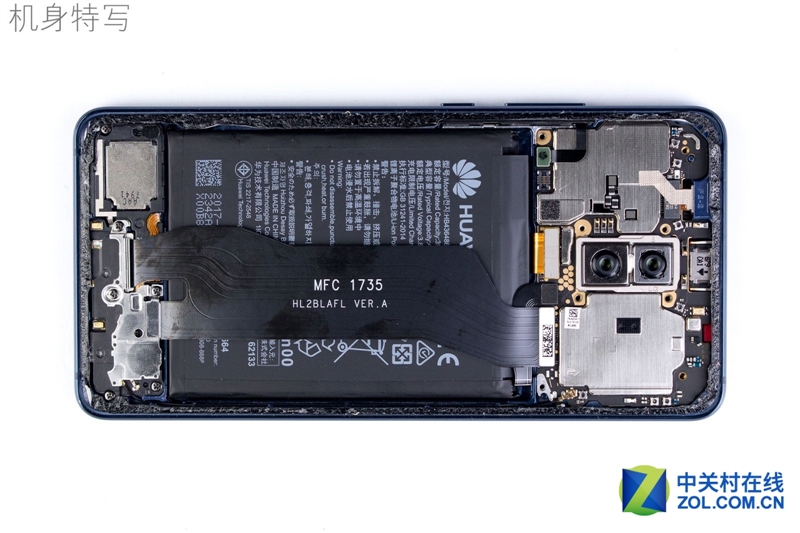
When the Huawei P10 and P10 Plus flagship phones were introduced at the Mobile World Congress (MWC) 2017, Huawei had stated that these phones feature UFS 2.1 storage chips. However, recent benchmarks from AndroBench app of Huawei P10 and P10 Plus have revealed that the Chinese manufacturer has included different storage chips that produce slower read and write speeds. The company has now issued an official statement on why it has done so.

It was revealed on a Huawei forum in China that some P10 users get more than 700 Mbps read and write speeds whereas some could not cross read and write speeds of 300 Mbps. Hence, it is speculated that Huawei may have used six combinations of RAM and storage types on P10 and P10 Plus:

  • LPDDR3 RAM and eMMC 5.1
  • LPDDR3 RAM and UFS 2.0
  • LPDDR3 RAM and UFS 2.1
  • LPDDR4 RAM and eMMC 5.1
  • LPDDR4 RAM and UFS 2.0
  • LPDDR4 and UFS 2.1 storage

The starting three combinations are the worst possible combinations while the last combination offers the best read and write speeds. It was found that the most expensive variant of Huawei P10 Plus that comes with 6 GB of RAM and 128 GB storage is found to include eMMC 5.1 that offers the slowest speeds of less than 300 Mbps.

Read More: Huawei P10 Memory Scandal: Removes UFS 2.1 Description from Official Mate 9 Website

Huawei has now released an official statement which confirms that it has used multiple storage chips on P10 and P10 Plus smartphones since it ordered them from multiple suppliers in a bid to avoid shortages. Here is an excerpt from the official statement:

“To meet global demand of millions of units, Huawei has employed the standard industry practice of sourcing solutions from multiple trusted suppliers to ensure a balance between user experience, quality and sustainable supply. Relying on a single component supply can lead to a shortage, meaning delays for consumers who wish to buy our new products. In the case of flash memory, in this instance, Huawei has chosen multiple simultaneous mainstream solution suppliers.”

According to Huawei, AndroBench app that was used to find out different storage chips on P10 and P10 Plus do not provide benchmark scores on the basis of daily use of these smartphones. It further added that it is randomly using memory chips on P10 and P10 Plus on the basis of the components that it receives from suppliers. So, it means that there is no confirmed way of getting a Huawei P10 or P10 Plus with the best memory chip.

. The company also claims that it has not made any false claims on P10 and P10 Plus. ”Among all Huawei P10 marketing collateral, there has been no commitment to the use of only one specific flash memory,” the company said. It disagreed on making any “discrimination or intention to defraud consumers.”

(source|via)


Xiaomi Mi 6 Is Using A Full Version of SD835, Unlike What’s Written on Its Website

After the Xiaomi Mi 6 was launched a controversy over the Snapdragon 835 processor emerged. In Xiaomi’s official website, the Snapdragon 835 chip onboard the Mi 6 was listed to feature an Adreno 540 GPU with a clock frequency of 653MHz. Whereas, the official Qualcomm listing for the SD 835 pegged the GPU frequency at 710MHz. This, thus, fuel speculations that the Mi 6 comes with a Snapdragon 835 chip with reduced frequency.


This question has remained unanswered since then but a Weibo user has shared a GFXBench result that shows that the Xiaomi Mi 6 was able to attain a GPU frequency of 710MHz and was even able to surpass that up to 800MHz. One wonders what sort of lapse could have caused this reduced GPU listed. Is Xiaomi trying to play safe? Perhaps, an official statement might emerge soon. We’ll keep you posted as usual here on Gizmochina if that happens.

As a recap, the Xiaomi Mi 6 features a 5.15-inch 1080p display and is powered by Qualcomm’s latest Snapdragon 835 chipset backed by just 6GB of RAM on all versions. There is 64GB storage version, as well as a higher 128GB version. Both versions are expandable. The device uses a curved glass body with a metal fuselage and also comes with an anti-splash body.

Read More: Xiaomi Mi 6: Taking a Look at All 6 Generations Of Mi Flagship

The Mi 6 also comes with a dual camera setup at the rear consisting of a 12MP main sensor and 12MP telephoto sensor. It runs MIUI 8 based on Android 7.0 Nougat and has a 3350mAh battery under its hood. The device is available in Blue, Black, White, Silver and Ceramic options. As far as the prices go, the Mi 6 will start at ¥2499 ($363) for the 64GB model and  ¥2899 ($421) for the 128GB version. The special edition with a ceramic body and 128GB of storage will be sold for ¥2299 ($435).

(source)
 

Gionee M6S Plus Official: 6-inch AMOLED, 6GB RAM, SD 653, Large Battery & More!

Gionee has announced a new smartphone today in China dubbed M6S Plus.  The Gionee M6S Plus comes about 9 months after the Gionee M6 and M6 Plus smartphones were announced, with models boasting of mid-budget specifications. The Gionee M6 and M6 Plus perhaps stood out because of the security encryption chip they feature.

gionee m6s official

Gionee M6S Plus – Design & Specification

Design wise, Gionee continues with its reputation of designing beautiful smartphones on the M6S Plus. The Gionee M6S Plus proves itself to be a true phablet as it sports a 6-inch Samsung AMOLED display with Full HD resolution and 2.5D curved glass protecting the screen from scratching. The display looks curved at the sides with ultra-thin bezels, while at the top and bottom, the bezels are minimum. The bottom bezel houses the front home button which comes in an oval shape and also has the fingerprint sensor embedded under. The device also comes with the same fingerprint encryption that featured on the M6 and M6 Plus which can be used to unlock the device and for fingerprint payment etc. It uses a metal body and the body is said to have been trimmed using a diamond cutting method with the edges well-chamfered,  making the phablet easy to hold.
gionee m6s plus launch
 As far the specs go, the M6S Plus packs a Snapdragon 653 processor backed by 6GB of RAM. The phablet comes in two memory variants of 64GB and a higher version of 256GB. Both storages can be expanded up to 256GB via microSD. The new Gionee smartphone is infused with a giant 6,020mAh battery with support for Quick Charge 3.0 fast charge.  The phone also comes with an intelligent power management system which minimizes power consumption.

Talking about the camera, the M6S Plus is equipped with a 12MP rear camera with 1.4um individual pixel, f1.9 aperture, and 0.03s fast focus. The device comes with full network support, 4G+ connectivity, and 16 frequency bands.

Read Also: Gionee S10 Appears on TENAA: Better Dual Cameras, Bigger Battery & Android Nougat

Gionee M6S Plus – Pricing & Availability

The Gionee M6S Plus comes with a price tag of 3499 Yuan (~508) for the 6GB + 64GB version while the higher 6GB + 128GB version goes for 4299 Yuan ($624). The smartphones will go on sale on Jingdong as from May 2.

ZTE Axon 7s Details Finally Surface; Snapdragon 821, 6 GB RAM, Dual Rear Camera, Larger Battery

In the press release that was released on April 17, ZTE had announced the arrival of ZTE Axon 7s, an upgraded edition of the Snapdragon 820 powered ZTE Axon 7 smartphone that was launched in May 2016. ZTE Axon 7s’ press release only revealed that the Axon 7s is fueled by Snapdragon 821 chipset. Now, the Chinese firm has finally revealed the full specifications of the ZTE Axon 7s.

The Snapdragon 821 chipset is accompanied by 6 GB of RAM whereas the ZTE Axon 7 has 4 GB of RAM. The original phone has 64 GB of native storage. However, the newer phone is packed with 128 GB of internal space. As far as the display is concerned, the Axon 7s has the same 5.5-inch quad HD screen that is available on the Axon 7. The new phone also features a microSD card slot and carries support for Google Daydream.

ZTE Axon 7s ZTE Axon 7s ZTE Axon 7s

The Axon 7 has a single camera on its rear panel, but the Axon 7s has a dual camera system. The newer phone still features the 20-megapixel Sony IMX350 sensor (1.25µm pixels) from the original phone. However, it is paired with a 12-megapixel Sony IMX368 camera sensor (1µm pixels) from Sony. It seems that both the cameras have f/1.8 aperture that will allow users to shoot brighter photos in dim lighting conditions. The other camera features include phase detection autofocus and 4K video shooting. For snapping selfies, the ZTE Axon 7s continues to sport 8-megapixel snapper like its predecessor.

Read More: Comparison: ZTE Nubia Z17 Mini vs Huawei Honor 8

ZTE Axon 7s

Unlike the original phone, the ZTE Axon 7s does not sport external speaker grilles that can be seen on the top and bottom bezels of Axon 7. The battery on the Axon 7s is 3,400 mAh which is larger the 3,250 mAh battery present inside the Axon 7. The Axon 7s carries support for Quick Charge 3.0 fast charging through USB Type-C port. The official pricing of the ZTE Axon 7s is not available, but it is speculated to cost around 4,099 Yuan ($595).

(source|via)


More Images & Details of LeEco Le Max 3 Leak: QHD, Dual Rear Camera, 6GB RAM

When LeEco was about launching the Le Pro 3 AI Edition, we had thought that the Le Max 3 was the device in question. Albeit, some were left disappointed when it turned out an Helio X23 and Helio X27-powered Le Pro 3 AI Edition was announced. Well, the idea of a LeEco Le Max 3 coming wasn’t wrong after all, as the device has appeared online in a couple of leaks. The latest leaked image of the Le Max 3 appeared recently on Slashleaks, showing both the front and rear view of the device.

LeEco Le Max 3

The front image is similar to the one we have seen before which leaked as LeEco LeX920, but the rear image can be confused with the LePro 3 AI edition with its biscuit man-looking camera. The camera setup is a dual one with the flash sitting at the bottom, all looking like a face with the two cameras forming the eyes and the mouth. There is also a rear-mounted fingerprint sensor just under the camera ring while the antenna band design is a fused one sitting at the top and bottom extreme edges. The device comes with a metal body and also seems to use the USB Type-C port. The device may also not feature the 3.5mm headphone port.

Read More: New LeEco Le X920 Model Hands-on Images Leaked

The tipster who posted the images on Slashleaks also included the specifications the device would feature. The Le Max 3 is listed as sporting a 5.7-inch QHD display and would be powered by a Snapdragon 821 chipset. The processor would be backed by 6GB of RAM while there will be 128GB storage onboard. Further, the LeEco Le Max 3 will come with a 16MP selfie camera while the dual camera at the rear is said to be a 13MP dual camera.

leeco le max 3

We don’t know when the LeEco Le Max 3 would be launched but considering the fact that LeEco has got fewer smartphones out this year, the Le Max 3 launch may not be too far away.

(source)
 

OPPO R11 Real Photos Leak: Dual Rear Cameras

BBK subsidiary, OPPO may really have laid the Find series to rest for now, since the R-series is recording huge successes for the company. The R9 started the journey and was followed by the R9S and R9S Plus released last year. OPPO looks set to release a new R11 model in China soon. While the Find 9 remains elusive, the OPPO R11 has severally been popping in and out of leaks.

oppo r11

Images of the OPPO R11 has appeared again, this time said to have been grabbed from a TV commercial in China. The pictures show the device in the hands of Chinese pop singer and Actor, Wang Junkai. OPPO and Wang Junkai have a long standing relationship beginning from the R9 days. The Chinese superstar was one of the celebrities who endorsed the R9.

OPPO R11

One feature that can easily be grabbed from the photos is that the R11 will come with dual rear cameras. The dual camera setup is located at the top left corner of the device, arranged in a horizontal plane, with the LED flash located next to it. The camera bump is slightly protruded out of the body of the phone.

OPPO R11

Read More: OPPO R11 or R11 Plus Image Leaked, Dual Camera Setup Similar to the iPhone 7 Plus

The OPPO R11 model also received Radio frequency approval recently and it reveal that OPPO will be coming out with four different models namely, OPPO R11t, OPPO R11 Plus, OPPO R11 Plust, and R11 Plusk. All four models come with entire network function and are likely to vary in RAM and storage. While all versions will be powered by a Snapdragon 660 processor, there will be a 4GB and 6GB RAM versions. The models will also run on Android 7.1.1 OS with Color OS. Apart from dual rear cameras, there may be front dual cameras as well.

No More Waiting to Buy The Xiaomi Mi MIX in China

The Xiaomi Mi MIX may have spawned multiple clones and imitations but none can hold a candle to it. The Snapdragon 821 powered tri-bezel-less phone was released alongside the Mi Note 2 but has been plagued by shortages arising from the difficulty associated with the production of its ceramic back.

New report says the short supply will soon become a thing of the past as Xiaomi will now able to meet up with demand. An insider has revealed that Xiaomi has taken stock of all three color variants. The possible explanation is that the challenges with the production of the ceramic body have been resolved. We do not know if this is as a result of the recent ¥8.7 billion investment in ceramic production by Changying Prescision but whichever way, this is good news for fans of the Mi MIX.

Xiaomi Mi MIX

The official Xiaomi website has the Mi MIX in stock. There is the black variant, the pearl white version unveiled at CES 2017, and the exclusive black gold version with gold plated rings around the camera and fingerprint sensor. The black gold and pearl white models are still out of stock at the moment but hopefully that should change soon.

READ MORE: Xiaomi Mi Pad 3 Arrives Gearbest with $80 Discount

Leaked Meizu E2 Press Image Shows LED Flash Intgrated on The Antenna Line

The Meizu E2 is scheduled for an April 26 launch. That’s just two days away. In the past week we have seen multiple images said to be of the device. And every single one of them sports a different camera and LED flash design.

First, there was the leaked image that showed the Meizu E2 would have a ring camera flash like that of the Nexus 6. It was followed by another image that had the camera sitting on the top left corner with the LED flash missing. Twenty-four hours later, a new image surfaced. This one had a design similar to a dual camera setup but is actually a single camera positioned beneath the antenna line. Fast forward to Friday and a fresh image with a new camera and LED flash design was released again.

We want to believe the last leaked image is the one Meizu is sticking to for the E2 as a leaked press image on Weibo by @Old Technology has the same design. In the new image, the camera sits on the same line as the antenna line.

Meizu E2

The interesting part of the design is the LED flash which is integrated on the antenna band like jewels lining a cloth. It is a new take on the way the LED flash is designed but it looks really good. Zoom in on the image and you can see there are about four LEDs, all a mixture of white and amber. That’s a lot of light for a camera. The rest of  the design is typical Meizu.

READ MORE: Meizu Pro 7 Coming This Month to Take On The Xiaomi Mi 6, Hints Meizu VP

Vivo X9S Plus Receives Radio Certification in China – First Snapdragon 660 Phone!

The Vivo X-Series is one series that pioneered dual selfie camera and also has a premium build that envelopes its mid-ranger position. The series which is made up of the X9 and X9 Plus is set to get another sibling dubbed X9S Plus.

Vivo X9S Plus

The X9S Plus is coming barely half a year after the X9 was announced and a recent leak on the internet indicate that the Vivo X9S Plus has received Radio frequency certification in China. That shows the device is a step closer to being released but we don’t know how soon.

From the details made available, the X9S Plus will likely be the first Snapdragon 660-powered phone. The SD 660 is a new chipset, still unannounced, which uses the 14nm process and integrates an Octa-core Kyro CPU. The SD 660 comes with an Adreno 512 GPU and support dual-channel LPDDR4X memory, UFS 2.1 storage, and X10 LTE baseband.

Read Also: Snapdragon 660 AnTuTu Benchmark Scores Leaked: Great Performance For A Mid-ranger

The Vivo X9S Plus is also expected to come with a dual selfie camera setup and Vivo may decide to take things a bit further by including a dual camera at the rear. If this happens, the X9S will join the likes of Alcatel Flash featuring four cameras.

(via)