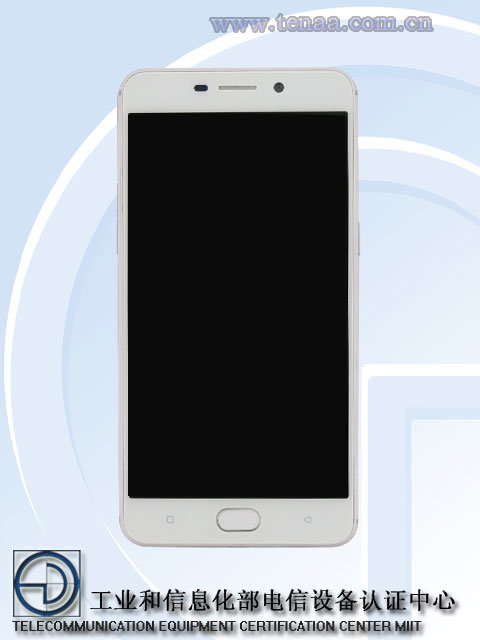
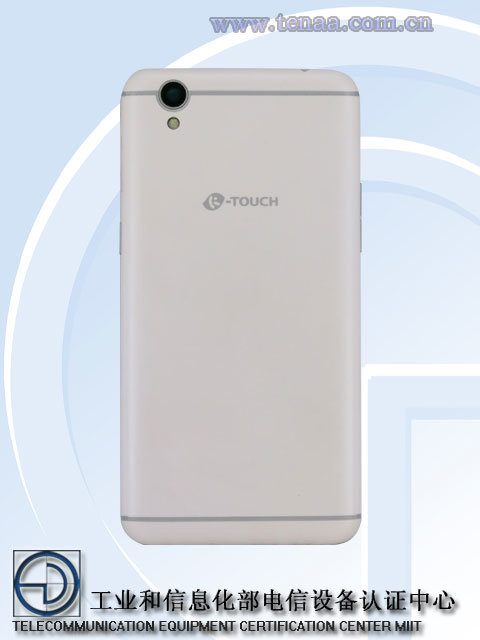
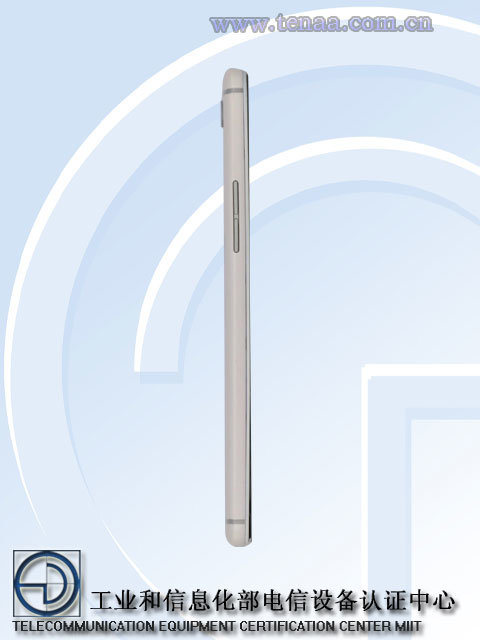
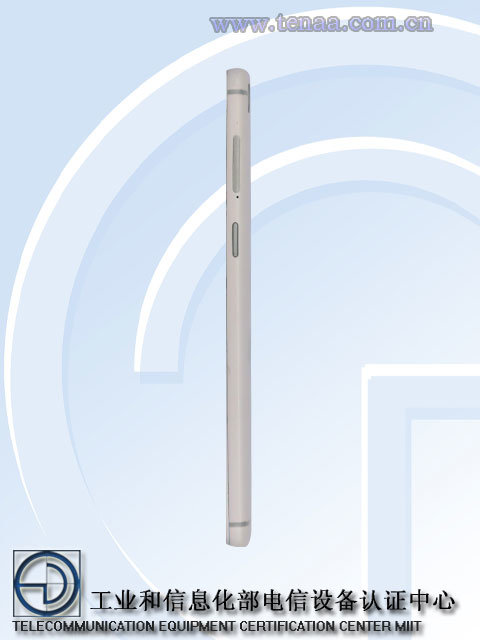
A new TENAA listing of a device is surprisingly identical to the OPPO R9has surfaced on the regulatory agency’s website. That, however, is not the shocker. The surprising thing is that this OPPO R9 lookalike is nothing like the flagship in terms of specs. The specs inside, including the display, are so bad, that only those who literally don’t care about the specs will want this handset.
The device spotted on TENAA looks very much like the OPPO R9. The power and volume keys are all located at the same place, so too is the antenna lines on the back of the device as well as the SIM card slot on the side. This is indeed an OPPO R9 clone, made by a company called K-Touch. In case you are wondering, this is the K-Touch X7 model.
The difference, however, lies in the display resolution and other specs as listed. The TENAA device is listed as featuring a 5.5-inch display with a rather low resolution of 960 x 540 pixels whereas the OPPO R9 had a 1080p resolution. Going further, the TENAA device is listed as equipped with a 1.3GHz processor as against the 1.95GHz processor on the OPPO R9. I understand there will be some who would be able to live with a 1.3GHz quad-core processor, probably the MT6735. However, I don’t know anyone who would settle for a 5.5-inch 540p display! In this day and age, 720p is standard, even in $50 phones, so I don’t know what K-Touch was thinking when they decided to make this model.
Other details listed include a 1GB RAM, 8GB of internal storage, and another version with 2GB RAM and 16GB of internal storage. Furthermore, the device is listed to run on YunOS out-of-the-box and not Android OS as well as having a 2000mAh battery. The TENAA device is listed as having a dimension of 154.5 × 77.4 × 7.8 mm as against the R9’s 163.1 x 80.8 x 7.4 mm dimension. So, its pretty close.
Although this phone is not yet released, do you think anyone in their right mind would buy this device just for the sake of its resemblance to OPPO R9?
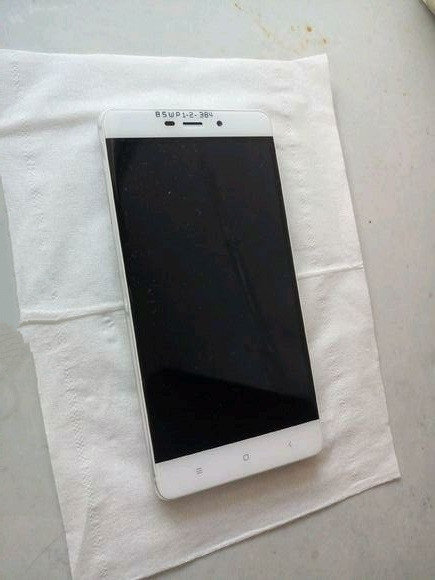
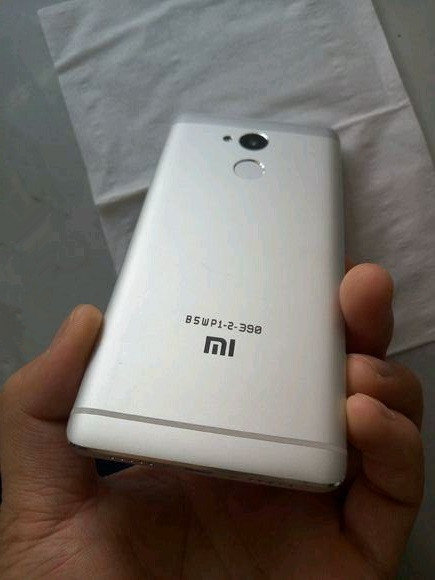
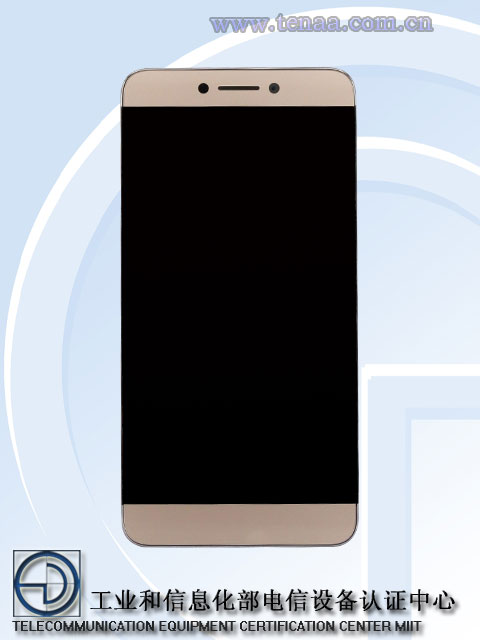
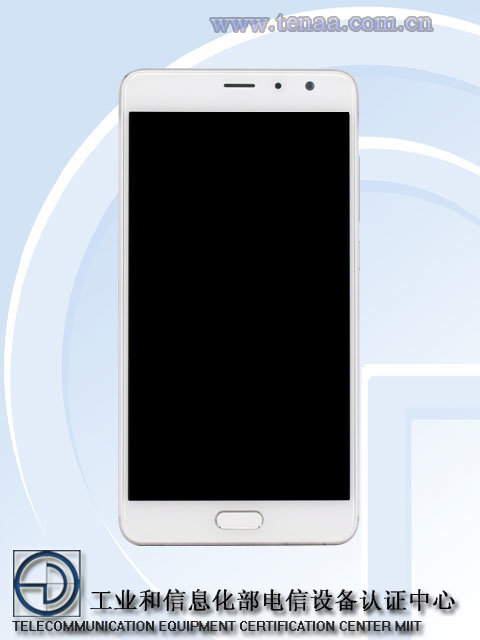
Two of Xiaomi’s expected devices, suspected to be the Redmi 4 and Redmi Note 4 have been spotted on China’s regulatory agency TENAA’s website, revealing some key specs of the device but the images of the smartphones were not revealed.
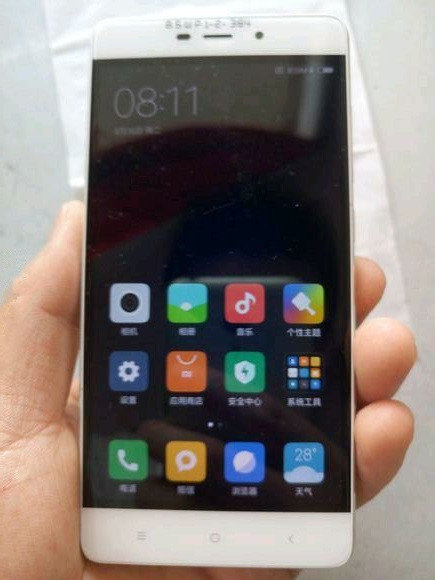
Before now, there has been rumors that Xiaomi will hold a news conference on August 25 where it is billed to release two new smartphones in the Redmi series. This TENAA listing comes just in time to lend some credence to the rumor, considering August 25 is by the corner. In addition, we spotted leaked images of what is likely the Redmi Note 4 with the on screen specs matching those listed on TENAA.
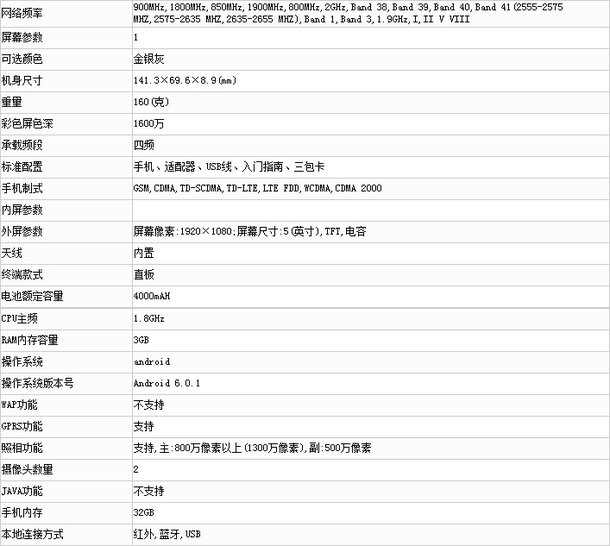
Xiaomi Redmi 4 TENAA
According to the TENAA listing the one suspected to be Xiaomi Redmi 4 features a 5-inch display with 1080 resolution and would be powered by a 1.8GHz processor which is to be the MediaTek Helio P10 chipset. The device is also listed as having 3GB RAM and 32GB of built-in storage . There’s also a 13MP rear camera sensor and a 5MP front camera. The suspected Redmi 4 is also listed to boot Android 6.0 Marshmallow out-of-the-box and will have a huge 4,000mAh under its hood. Quite curiously, the device is also listed to feature infrared transmission.
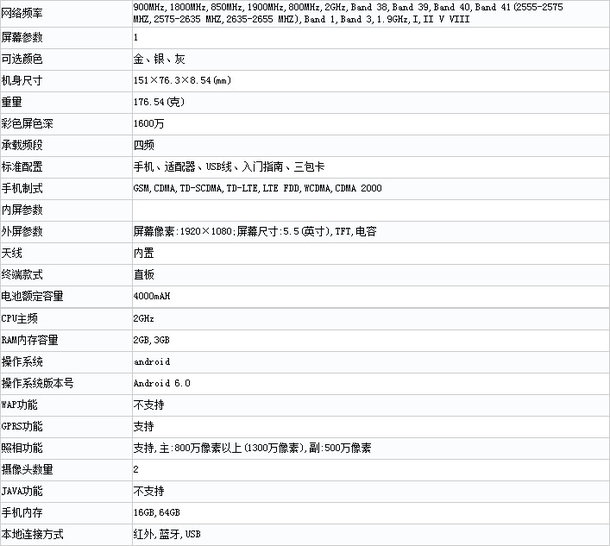
Xiaomi Redmi Note 4 TENAA
On the other hand, the Xiaomi Redmi Note 4 is listed as having a 5.5-inch display with a resolution of 1080p. The smartphone also said to be powered by a 2GHz processor which is suspected to be the Helio X20 chipset as against the Snapdragon 652 processor earlier rumored to be on the device. The Redmi Note 4 is listed as having two versions, one with 2GB RAM and 16GB of internal storage and a higher version with 3GB RAM and 32GB of internal storage.
In addition, the Redmi Note 4 is listed to feature a 13MP rear facing camera as well as a 5MP front facing camera. There is the Android 6.0 Marshmallow oprating system to run the show and the device also support infrared transmission as well as packs a massive 4,000mAh battery under its hood.
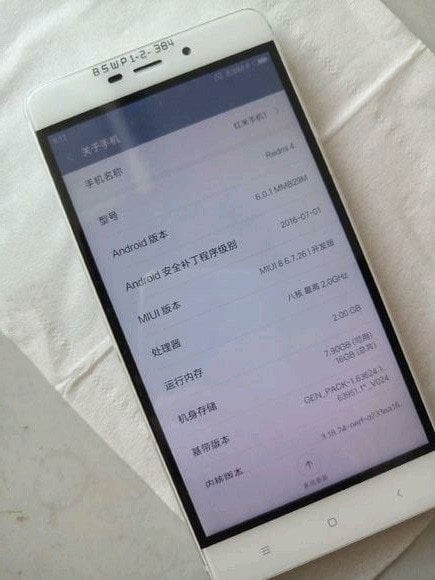
Xiaomi Redmi Note 4
We were also gifted leaked images of what is likely the Xiaomi Redmi Note 4 on Weibo and the device looks quite stunning. Apart from the beautiful design Xiaomi is planning to offer us, we also had an on-screen peek of the specs of what is likely the 2GB RAM + 16GB ROM version of the Redmi Note 4 and they align properly with the TENAA data.
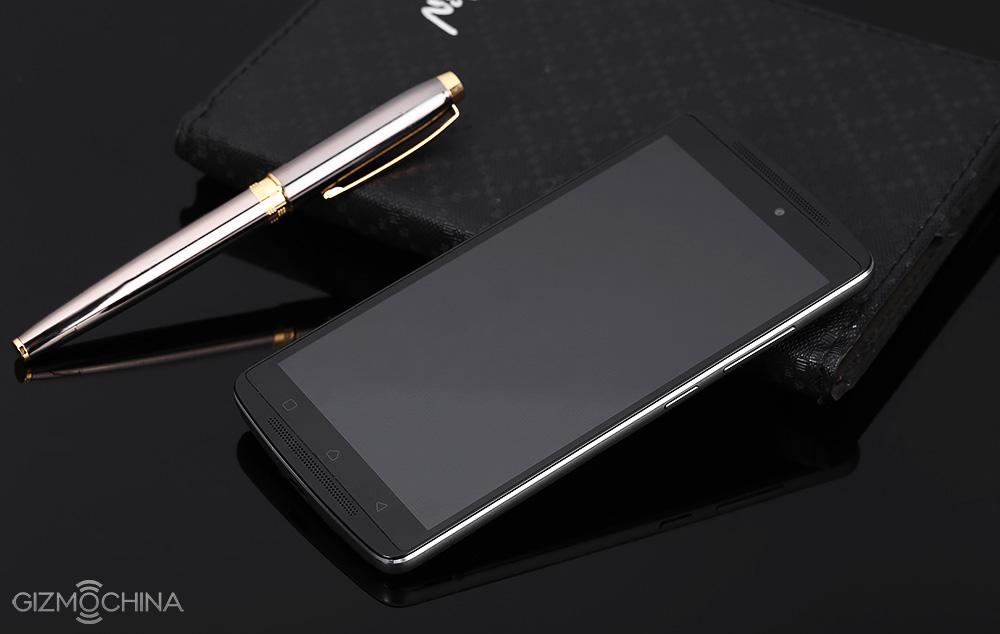
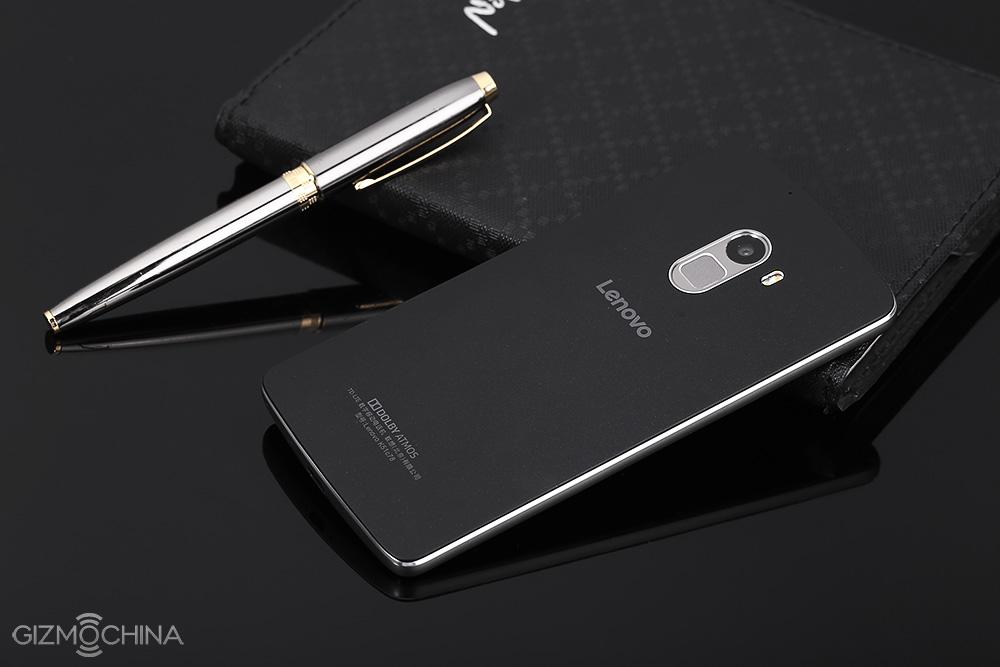
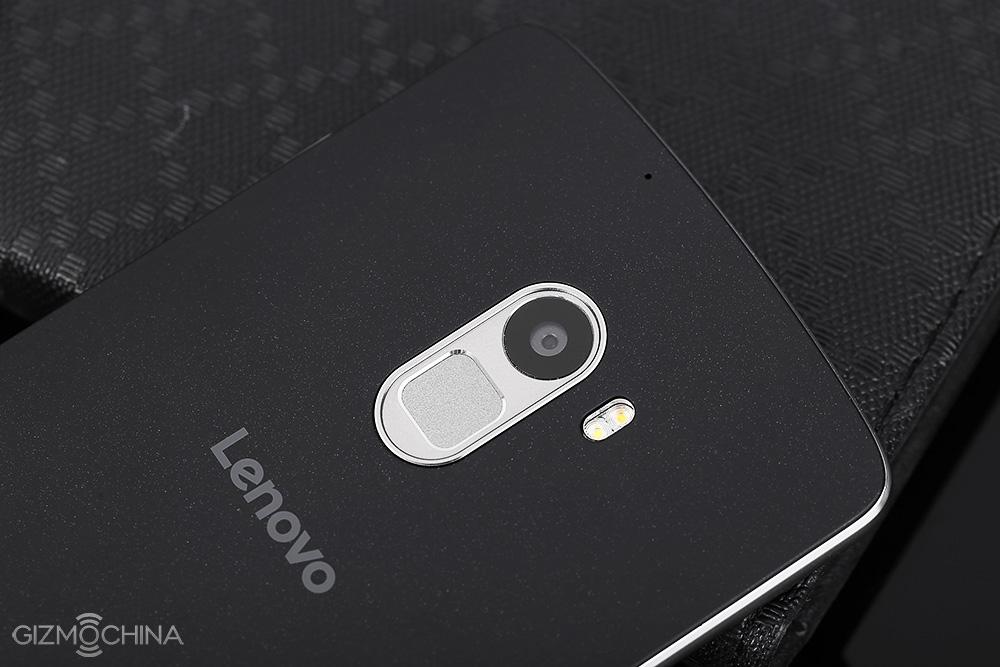
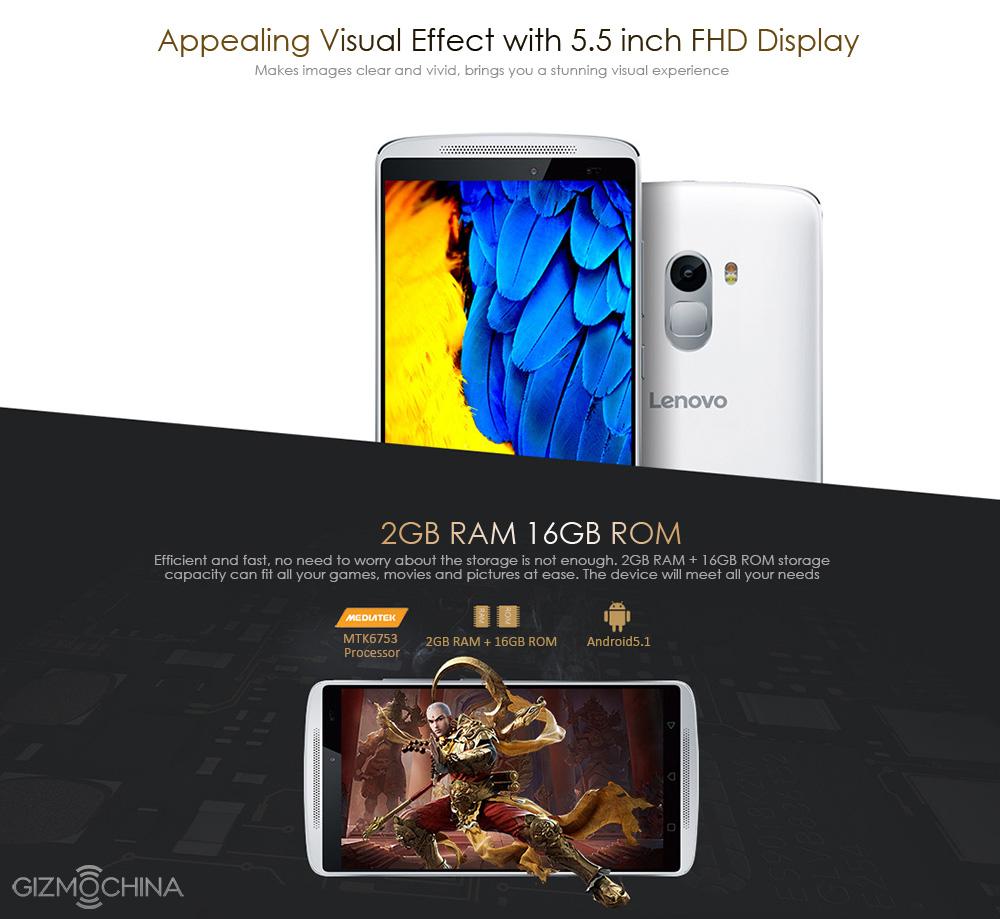
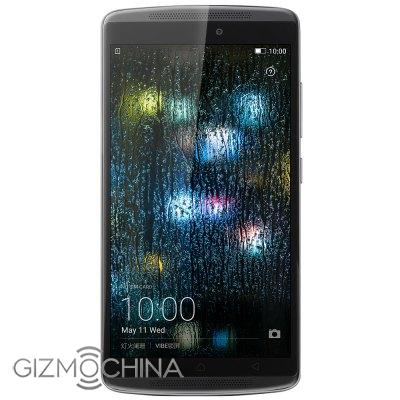
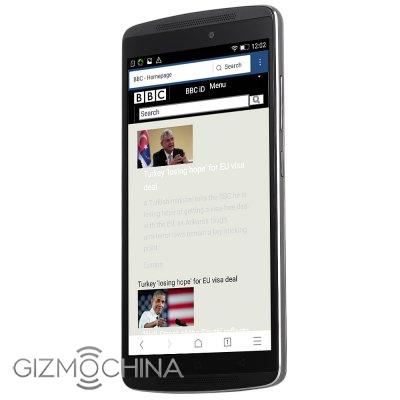
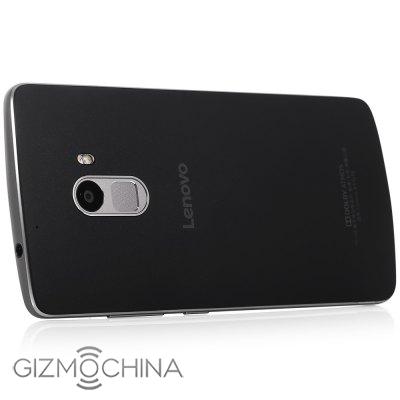
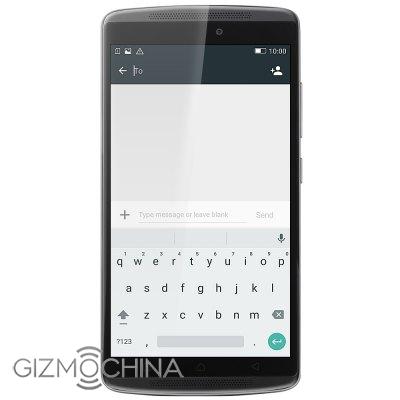
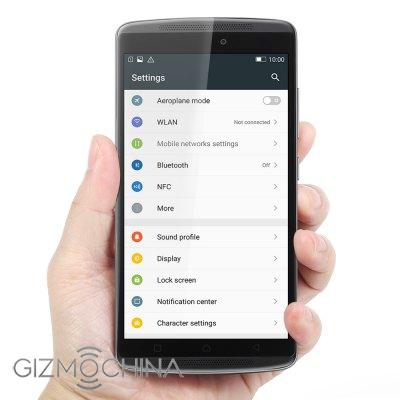
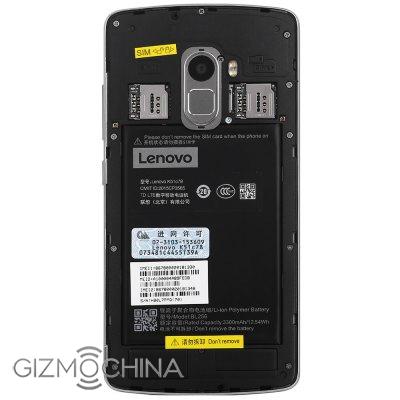
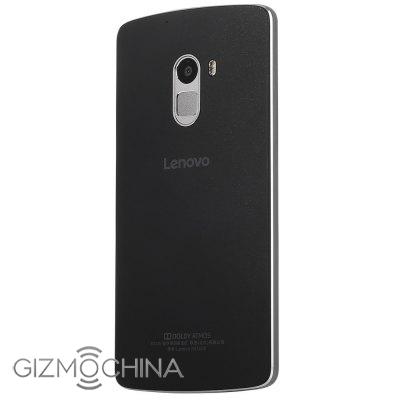
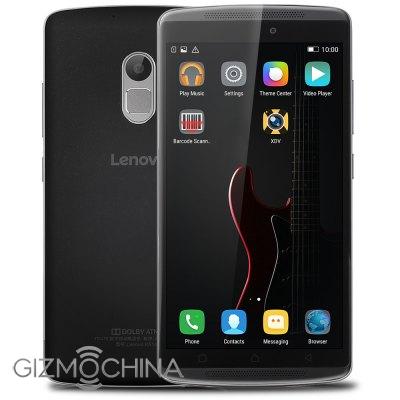
Lenovo has been known for making great devices at affordable prices. Their X3 Lite is a pretty phone for the price and now you can get it for just 133.99$ from Everbuying.net with a coupon code that you will find at the end of this article.
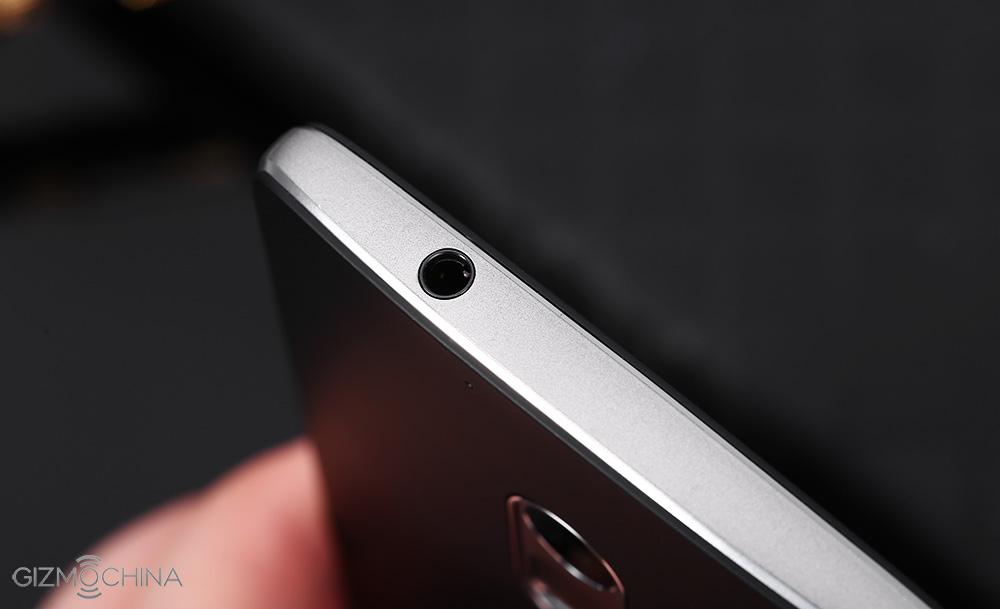
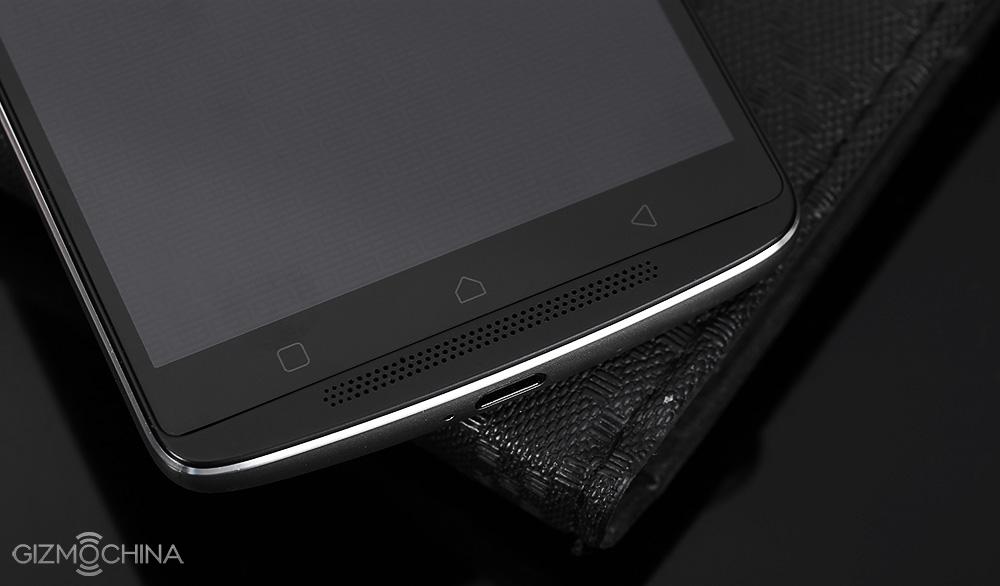
It sports some premium materials like metal in its design. There is nothing we haven’t seen before as far as aesthetics go, but the phone definitely looks a bit more expensive than it is.
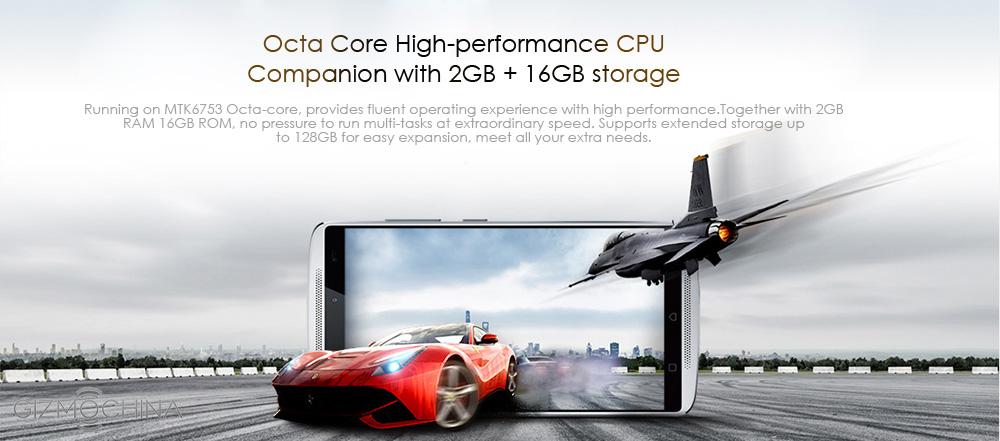
Lenovo put some powerful internals to power up this budget smartphone. It has an octa-core MTK6753 chip, 2GB of RAM and 16GB of expandable storage via the microSD card slot. These specs have already proven to be enough for day-to-day and even some 3D games on medium graphics on many Chinese smartphones. We are sure that the Lenovo X3 Lite is no exception.
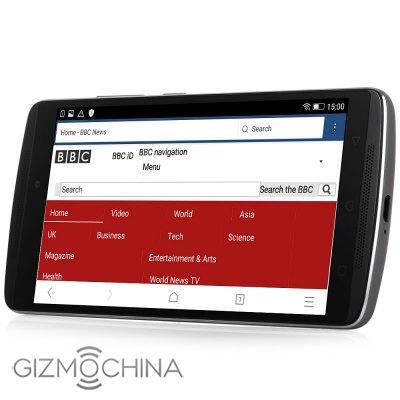
It’s not all the time we get a 5.5″ IPS 1080p display with 401PPI at this price point (usually sub-$130 phones have 720p panels).
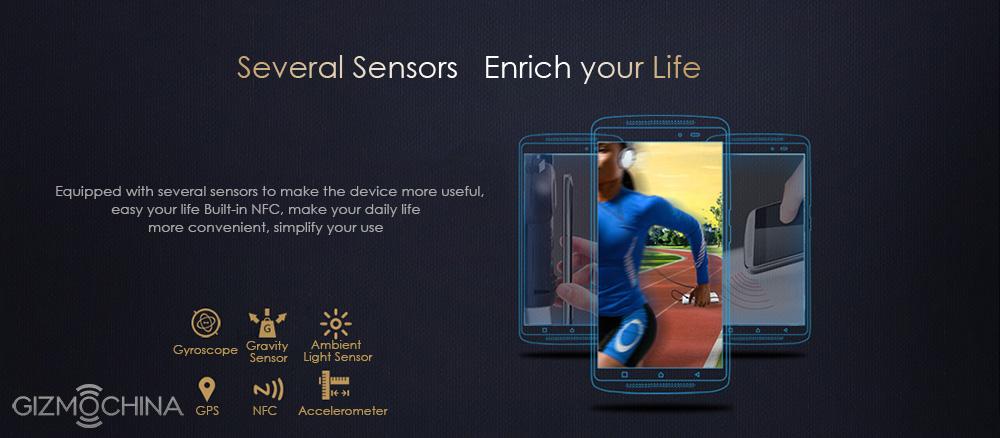
The Lenovo X3 Lite also has a variety of connectivity options and sensors to ensure a great all-around user experience.
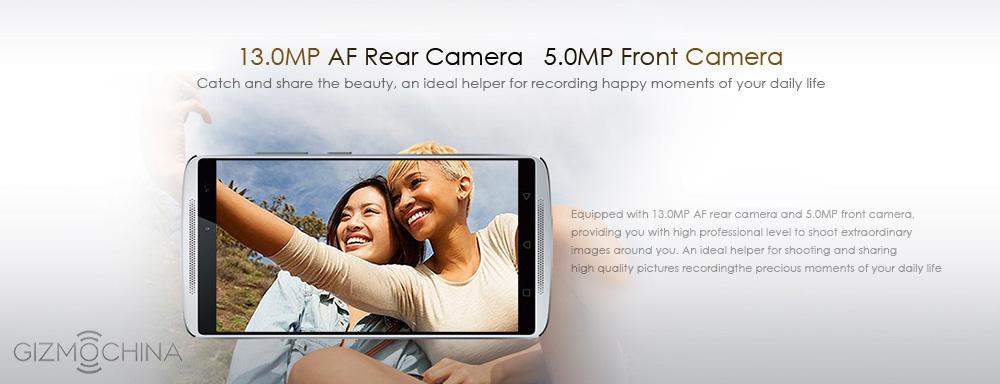
As far as optics go, the phone is equipped with a combo of 13MP/5MP cameras. Usually, we don’t expect much from budget devices but Lenovo has been known for putting great camera sensors even in their affordable smartphones’ lineup.
Lenovo X3 Lite is indeed a compelling offering considering the overall package it offers.
Another day, another giveaway. This time, we are here to giveaway a brand new Pepsi P1S smartphone that has been in the talks for the past few days on our website. Linas has already reviewed it and he thinks its a great smartphone for just $93. Considering the specs, it is indeed a decent phone at this price and make sure you check out our extensive review of the device.
You can participate in the giveaway by following the instructions given in the gleam widget. We would like to thank banggood for sending in the unit for review. Make sure you check out the website for awesome deals on phones, tablets and other gadgets.
One accessory which affects the size and weight of smartphones is the battery. Usually, smartphones with large batteries often weighs more and are thicker than those with moderate to small battery capacity and unfortunately smartphone makers haven’t been able to give us phones with massive capacity battery but thin and light weight.
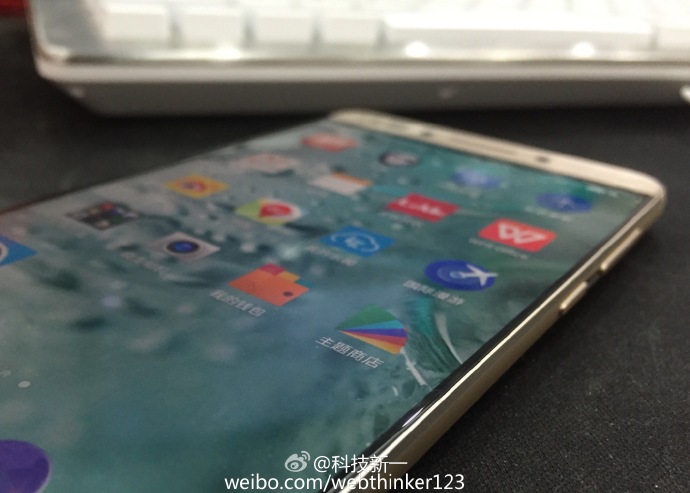
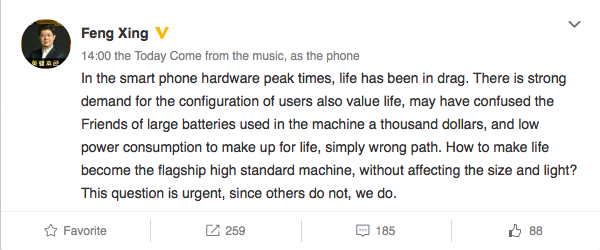
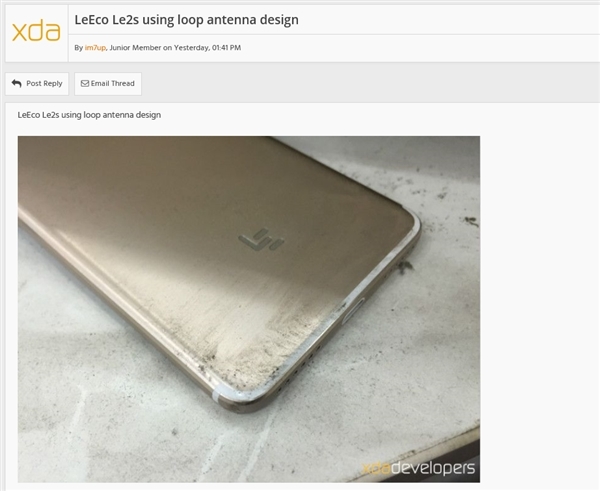
LeEco has however hinted at the possibility of them having the solution to the snag and we’ll see that when it launches its expected Le 2s. The LeEco Le 2s which is said to cram a massive battery (most likely 5000mAh) with a thin battery design, according to a Weibo post by Feng Xing who is the President of Mobile business at LeEco. Mr Xing disclosed that LeEco has got the answer to the question of how to produce flagships with large batteries without it affecting the size and weight of the device. A solution, which he thinks others haven’t got.
There’s a good reason why we think he’s talking about the Le 2S. If you have been a regular reader of gizmochina, you would know that Weibo often reveals the device used to submit the post. In this case, the model is unknown as it’s just shown as LeEco phone, which should be a good indication that this is being posted using an unannounced model, most likely Le 2S.
The LeEco Le 2s will be an upgraded version of the LeEco Le 2 which was released in April. The Le 2s is said to come with 4GB of RAM, 64GB of built-in storage and 5000mAh battery. The smartphone is also rumored to be powered by a Qualcomm Snapdragon chipset which could be the SD820 or latest SD821 variant.The Le 2s is also said to have two versions, one with dual camera set up at the back and a second version with single camera.
Rumour has it that the LeEco Le 2 flagship will likely be launched on September 9.
First, there were single camera smartphones. As smartphone cameras progressed, the MegaPixel count increased, as did the aperture size. Then came the craze for dual camera phones. The craze died down for a while and this year, all thanks to a few companies like Huawei and LG, dual cameras are back in action. But looks like this time, dual cameras are here to revolutionize the smartphone camera segment as almost all major smartphone companies are reportedly working on a dual camera phone this year.
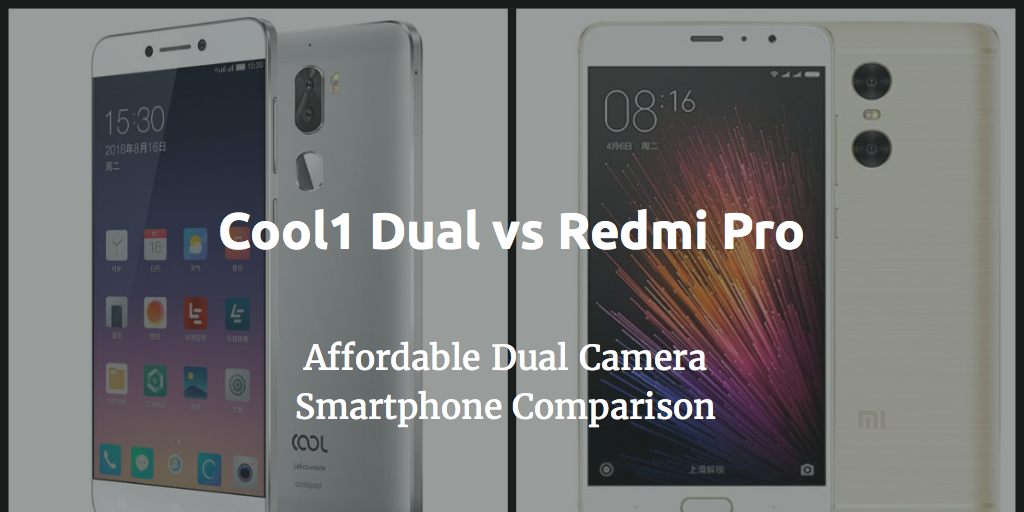
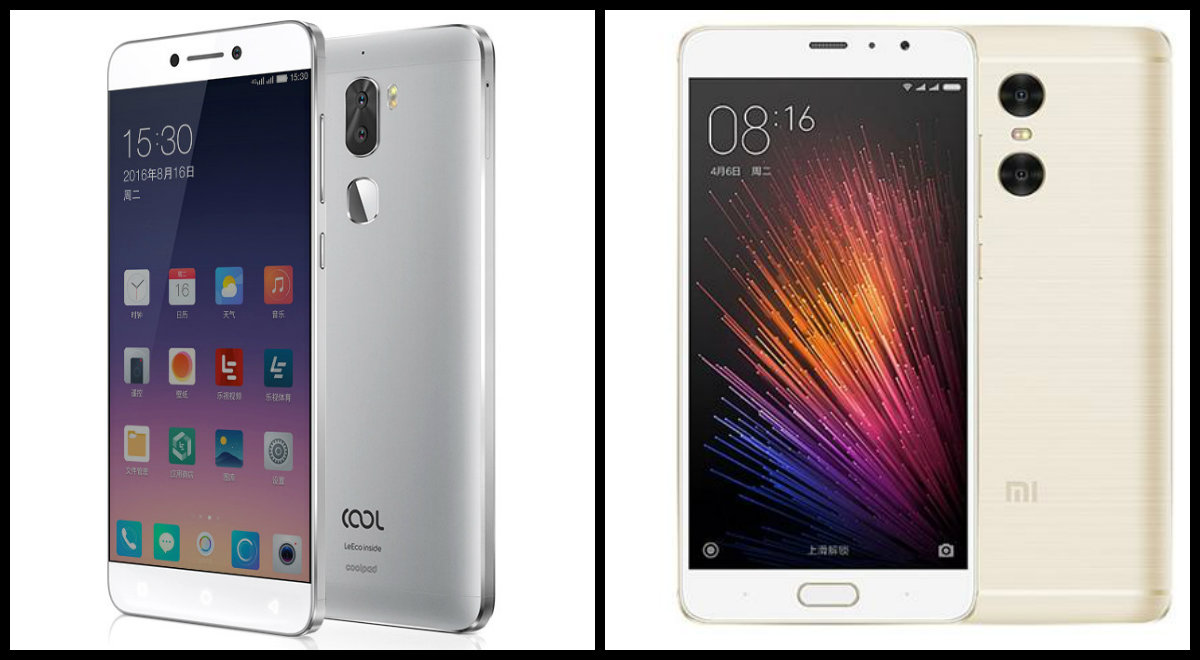
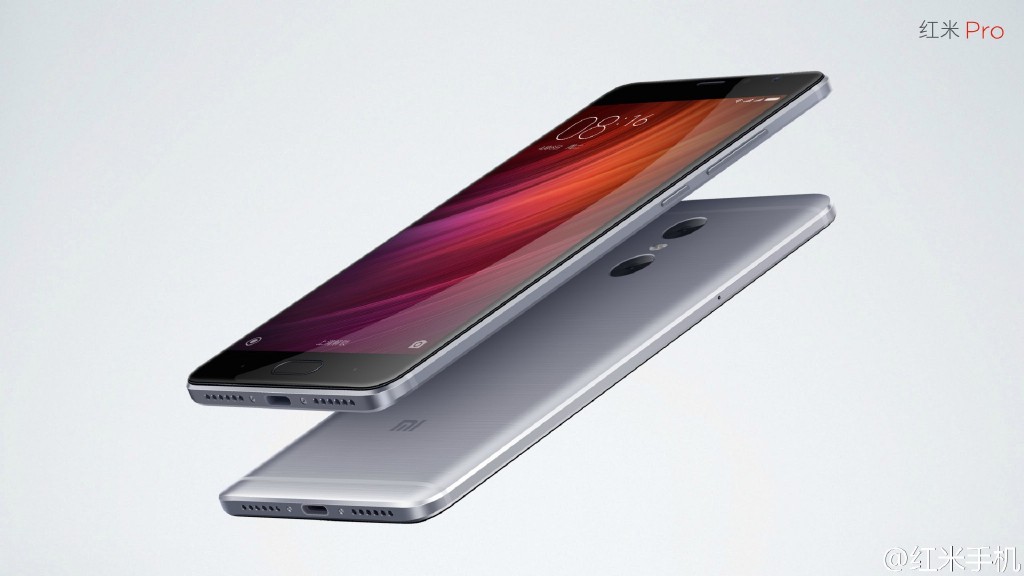
Xiaomi unveiled its first ever dual camera smartphone, the Redmi Pro, a few days back and like always, the phone brings tremendous value for your money. But LeEco was very quick to fight back, and now, we have an even cheaper dual camera device, the Cool1 Dual, released by LeEco in collaboration with Coolpad. We know both LeEco and Xiaomi are top notch Chinese companies and they have changed the way we look at budget smartphones.
Now that you have two dual camera smartphones available in the mid-range price segment, it’s quite hard to choose between the Cool1 Dual vs Redmi Pro. This is where the article comes into the picture, as today we compare the key specs and features of the Cool1 Dual vs Redmi Pro to see whether any particular model has an edge over the other. Turns out, there are a few key differences and some major ones which could affect your buying decision.
Cool1 Dual vs Redmi Pro: DESIGN
As always, design is going to be something that’s based on your personal preference. Both are pretty good looking smartphones and there will be some who prefer the Xiaomi Redmi Pro’s design and some others who like the Cool1 Dual’s Design.
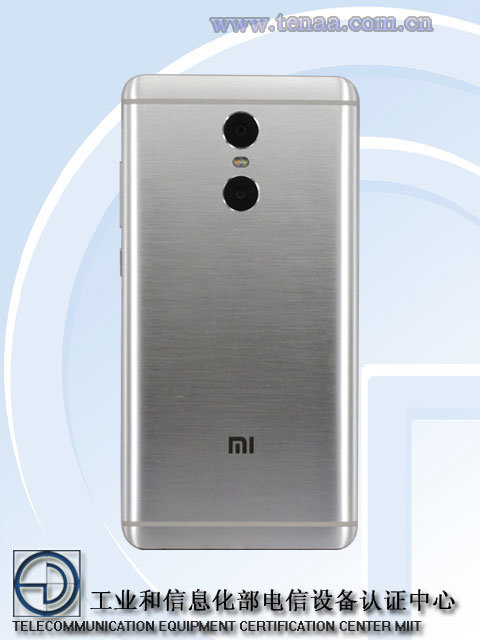
Both feature metal bodies but the LeEco Cool1 Dual comes with a smooth texture. On the other hand, the Redmi Pro has a brushed metal texture. Personally, I like the brushed metal finish on the Pro but I am sure there will be some readers who’ll disagree.
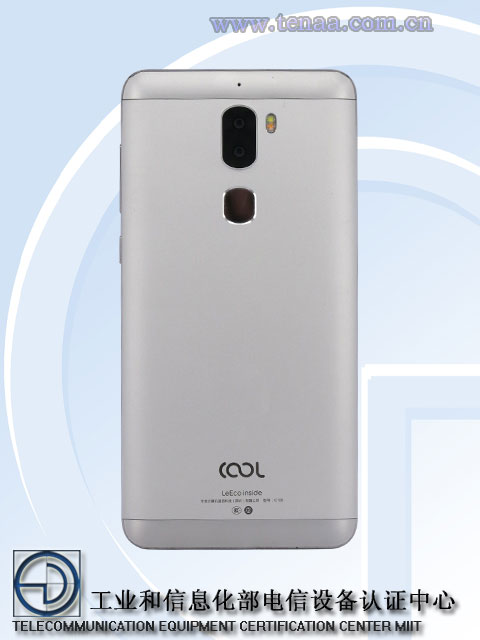
There are other differences as well. The Cool1 dual comes with capacitive keys, while the Redmi Pro comes with a home button up front with two capacitive buttons. As you might have guessed, this means that the fingerprint sensor is also on the front of the Redmi Pro. On the other hand, the Cool1 Dual features a fingerprint sensor at the back of the device. The dual cameras are arranged vertically on both the models, but the Cool1 Dual’s module is integrated in one single housing, while you will clearly see two separate sensors on the Redmi Pro. Both have USB Type-C port as well.
Cool1 Dual Dimensions: 152 x 74.8 x 8.2mm Weight: 173 grams
Redmi Pro Dimensions: 151.5 x 76.2 x 8.15mm Weight: 174 grams
Considering both are 5.5-inch smartphones, they have very similar dimensions. Even the thickness is almost the same, measuring around 8.2mm. As for the weight, it’s once again surprisingly similar, as you can see above.
So, looks like LeEco Cool1 Dual was made for taking on the Redmi Pro from the start. Can’t really pick out a winner here, as both have very similar figures.
Cool1 Dual vs Redmi Pro: DISPLAY
These two phones are using very different displays.
The Cool1 Dual comes with a 5.5-inch 1080p IPS display with 72% NTSC and 450 nit brightness. On the other hand, the Redmi Pro comes with a 5.5-inch 1080p OLED display with 100% NTSC color gamut but with a brightness of 350 nits. Redmi’s OLED panel should be richer in color but the Cool1 Dual should have a brighter screen.
Cool1 Dual vs Redmi Pro: HARDWARE
Once again, both smartphones have different specs. The Cool1 Dual comes with the Snapdragon 652 octa-core chip (4x Cortex A72 + 4 x Cortex A53) clocked at 1.8GHz. Since we want to level the playing ground, in this comparison, I am going to consider the mid-range variant of the Cool1 Dual that features 4GB RAM and 32GB of internal storage, costing 1499 Yuan, exactly as the Redmi Pro’s standard edition.
The Redmi Pro, on the other hand, comes with MediaTek’s Helio X20 chip clocked at 2.15GHz (2xA72 + 4xA53 + 4xA53) with 3GB of RAM. Yes, the base variant of the phone, which retails at 1499 Yuan comes with just 3GB of RAM. There’s 32GB of internal storage as well.
Now, at this point, the Cool1 Dual really looks like the better smartphone with SD652 and 4GB RAM. However, there’s one major flaw in the Cool1. The phone does not have a MicroSD card slot, which is a big disappointment. So, for the two variants (which have just 32GB ROM) of the device, you will be stuck with 32GB of internal storage. On the other hand, the Redmi Pro has an edge in this department, considering it comes with MicroSD card slot (although a hybrid one) expandable up to 128GB.
Now, it comes down to your choice. Either you can opt for a faster processor (better GPU), larger RAM and better third party ROM support (hail Snapdragon!) by choosing the Cool1 Dual (i.e. if you can somehow be satisfied with 32GB internal storage), or you can choose the Redmi Pro, whose Helio X20 is also quite a good performer and comes with expandable storage.
In case you are wondering, both have eMMC 5.1 storages.
Cool1 Dual vs Redmi Pro: Cameras
Now, this is one area which I am sure everyone is interested to see. Once again, the two companies have used different technologies on their respective smartphones. Both have dual cameras and both are aligned vertically, however, the technology is different.
The Redmi Pro as we know comes with two camera sensors, a primary Sony 13MP sensor along with a 5MP sensor from Samsung that acts as a secondary sensor for depth information. The setup is said to take amazing Bokeh images, replicating similar quality as a DSLR.
Other features of the Redmi Pro’s camera module include 5P lens, f/2.0 aperture, PDAF, and color temperature flash. The phone is capable of capturing 1080p and 720p videos at 30fps. Slo-motion videos are captured at 720p @ 120fps. Up front, you get a 5MP shooter with f/2.0 and 85-degree wide angle lens.
Coming to the Cool1 Dual, it uses a slightly different setup. There are two 13MP sensors in the module, one RGB sensor and another monochrome sensor. Information from both the sensors are combined to create images, which should technically feature less noise and better clarity, especially in low light conditions.
Other features of this module include 4K and 1080p video support at 30fps, Slo-mo videos at 720@120fps, f/2.0 aperture, PDAF, 6P lens and color temperature flash. Up front, you get an 8MP f/2.2 aperture sensor with 80-degree wide angle lens.
On paper, the Cool1 Dual seems to have an edge over the Redmi Pro. In fact, during the announcement, LeEco had mentioned that its phone uses dual camera 2.0 technology (RGB + Monochrome setup) as compared to Dual Camera 1.0 tech used by Redmi Pro (Primary cam + Depth sensor). Cool1’s ability to take 4K videos is also a big advantage.
So, at least on paper, Cool1 Dual’s camera could have an edge. We hope that real life images taken from both the phones will confirm this.
Cool1 Dual vs Redmi Pro: BATTERY
As I mentioned above, it’s clear that the company is targeting the Redmi Pro, trying to beat the competition in the segment. So, even in this department, they both have almost identical specs. The Cool1 Dual comes with a 4060mAh battery while the Redmi Pro comes with a 4050mAh battery. Both have fast charging, so it won’t take too long to fill the juice up to 100%. Can’t really choose a particular model in this department.
Cool1 Dual vs Redmi Pro: CONNECTIVITY
Both have very similar specs, with Bluetooth 4.1, Wi-Fi Direct and Wi-Fi display, Infrared sensor, GPS, AGPS, GLONASS, Beidou, USB Type-C common on the two models. However, the Cool1 Dual comes with 5GHz Wi-Fi ac standard which is faster than the Wi-Fi n standard on the Redmi Pro.
Both have fingerprint sensors, with Redmi Pro having it on the front, embedded into the home button, while the Cool1 having it at the back of the phone.
Both the models come with Android Marshmallow running out of the box. The Cool1 Dual features EUI 5.6 while the Redmi Pro, as tradition comes with MIUI 8.
There are two color options for the Cool1 Dual — Silver and Gold, while there are three colors available for the Redmi Pro — Gray, Silver, and Gold.
Cool1 Dual vs Redmi Pro: PRICING
Cool1 Dual is priced cheaper than the Redmi Pro, starting at 1099 Yuan ($167). There are two other variants, retailing at $226 and $257. On the other hand, the Redmi Pro starts at 1499 Yuan ($226) and goes on till $300.
Cool1 Dual vs Redmi Pro: VERDICT
It’s actually easy to pick out a winner in this comparison. The LeEco Cool1 Dual would be a great option if you want a phone which is cheaper, probably with a slightly better camera, 4K video support and Wi-Fi ac.
On the other hand, if you can’t live with 32GB storage (a major deal breaker), want a richer OLED display and love MIUI, then Redmi Pro would be a good buy.
If not for the non-expandable storage, the LeEco would have been the ultimate Redmi Pro killer bringing 4K video support, Wi-Fi ac and better graphics performance at a cheaper price tag.
As you may have already heard, Gearbest.com sells quite a lot of different products and this time around they have the “Back to School” promo going on. Thus, we decided to share with some better tech deals.
The promo starts on August 15thand ends on August 19th. GearBest has FOUR amazing “celebration waves” to share with its customers.
The first celebration wave allows you to get a coupon code for a certain product by simply sharing the product link. Keep in mind that you have to click the share button under the product. Once you’ve shared it, the corresponding coupon code will appear.
Everyone can share different product to get a different coupon code. However, you have to hurry up as it is on from AUG 16 @ 9:00 UTC TO AUG 17 @ 17:00 UTC.
Some of the cool products that we thought you would be interested in:
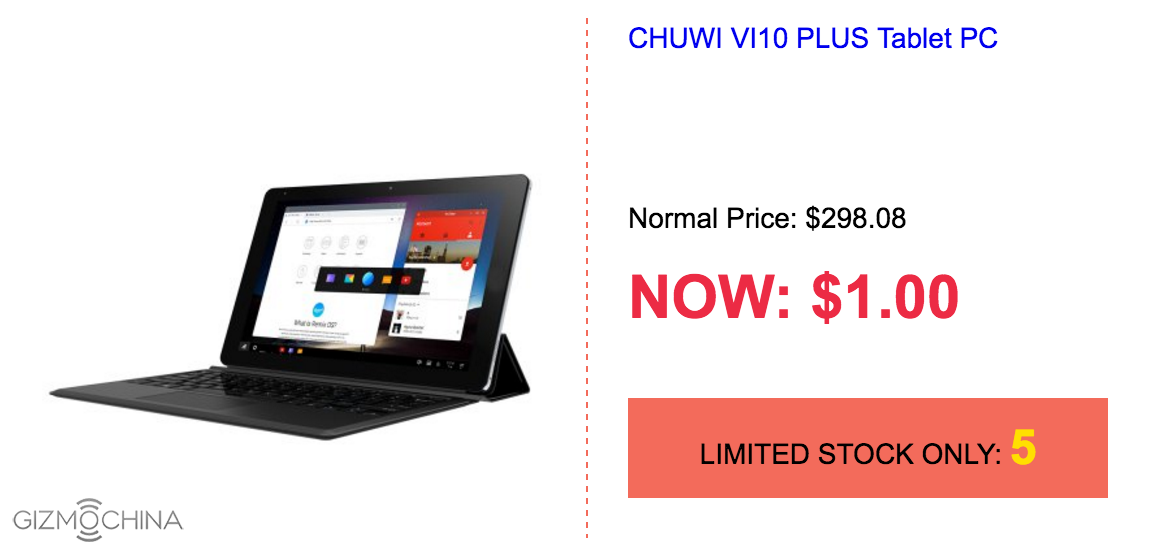
The second celebration waveis called “Grab it at $1”. That means that Gearbest picks up 8 amazing products for you which you can grab it at $1! In this part, the Gearbest will change the product everyday during AUG 16 to AUG 19, you can grab it at every @9:00 UTC and @17:00 UTC. Every product has a quantity limitation, SO BE FAST!
The third celebration wave gives you 10% OFF coupon for all product categories during the Back to School Sale. CouponCode: BTS10OFF(valid till Aug 20th). Customer could use this code ONLY once.
The fourth celebration wave includes a lot of items that start at just $0.99.
Please share your opinions with Gizmochina readers for the best deals you can find!
Huawei has released an official poster for the Huawei G9 Plus which is expected to launch tomorrow, 18th of August. The poster teases some features such as dual cameras, a large battery, video recording (maybe 4K), a fingerprint scanner, NFC (for mobile payments), and mentions a large screen.
There is still a lot we don’t know about the Huawei G9 Plus such as the camera configuration and if the processor type will be one of Huawei’s Kirin chips like the Huawei G9 Lite or a snapdragon processor. RAM and ROM details are also currently unknown. The good thing is we don’t need to wait for long to know these details as the launch is tomorrow.
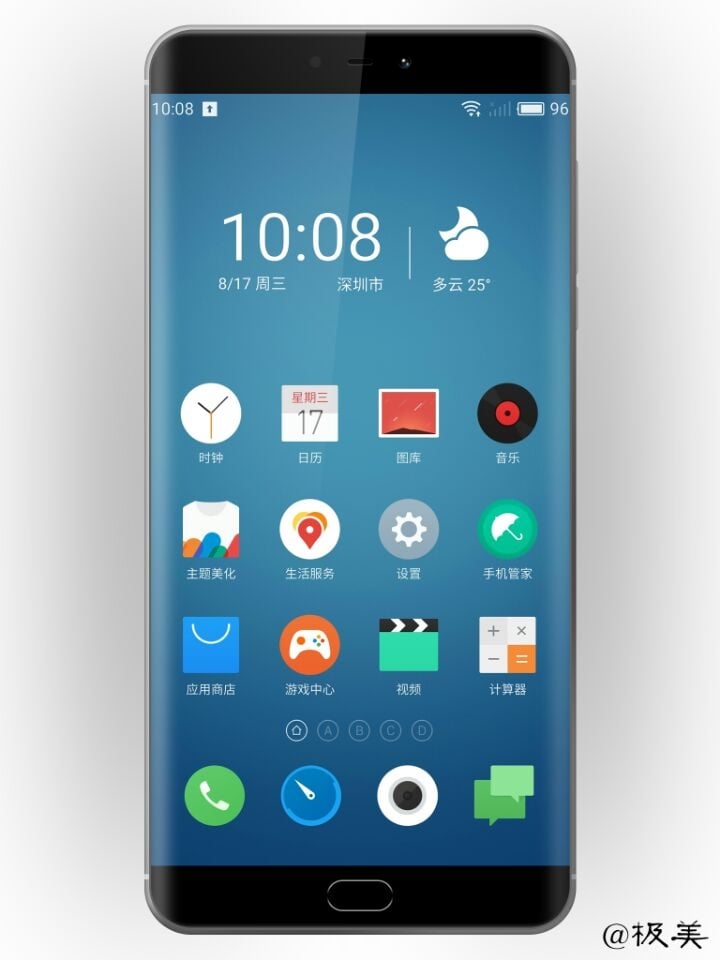
Meizu’s rumored Pro 7 flagship smartphone which was spotted on AnTuTu Benchmark few days back have appeared in image renders spotted online. The device which is said to feature Samsung’s Exynos 8890 chipset is displayed on the Interactive community section of Meizu’s forums.
Meizu Pro 7
One notable feature of the expected flagship revealed on the leaked images is that it would have a curved display screen that extends to the sides. There is an oval-shaped physical Home button as well, just under the display screen.
Meizu Pro 7
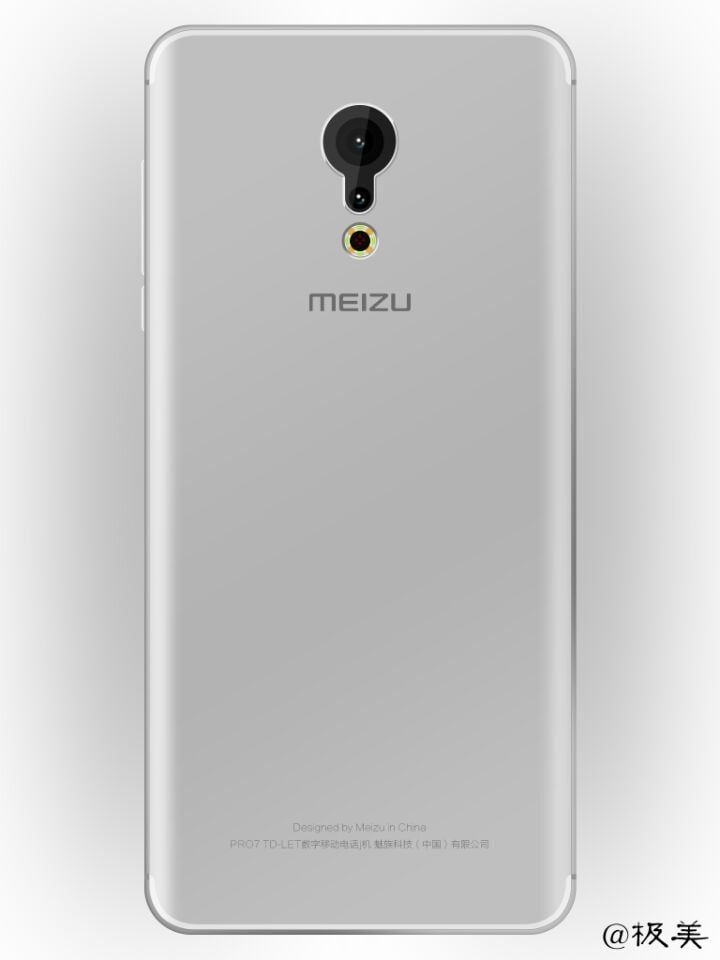
The Meizu Pro 7 renders also reveal a dual camera set up which is visible at the back of the flagship. There’s a large primary camera and just underneath is the supporting camera which perhaps should provide depth of field only. There is also the Meizu exclusive “Ring Flash” just under the second camera. Also visible at the back are antenna lines both at the top and bottom edges.
The name of the device is also clearly written at the rear as Pro 7, shown also to be designed by Meizu in China. According to the AnTuTu records, the device sports a 5.5-inch display which is rumored to have a resolution of 2560 × 1440 pixels.
In other aspects, the Meizu Pro 7 is said to run on Android 6.0 Marshmallow from the go, cram 4GB RAM and 32GB of internal storage space under its hood. The flagship phone also features a 12MP rear camera and a 5MP front-facing camera. The pixel size of the second camera at the back is unknown at this point in time.
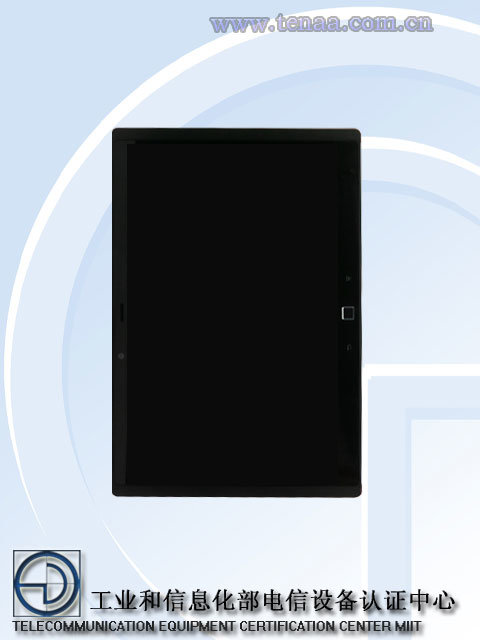
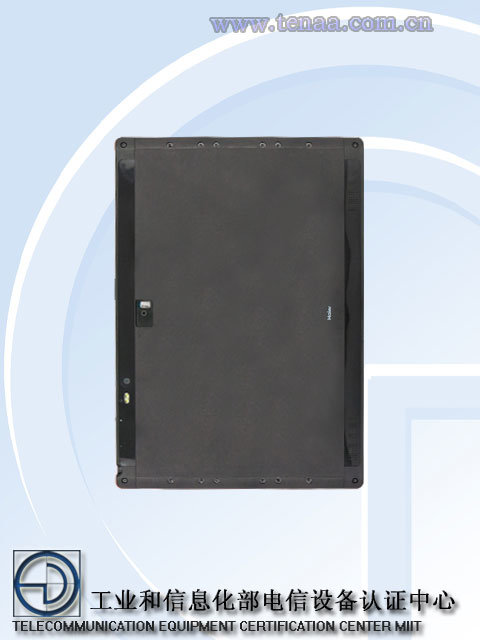
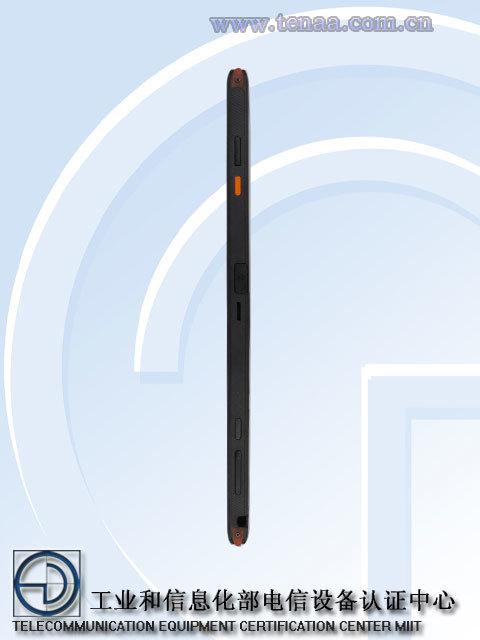
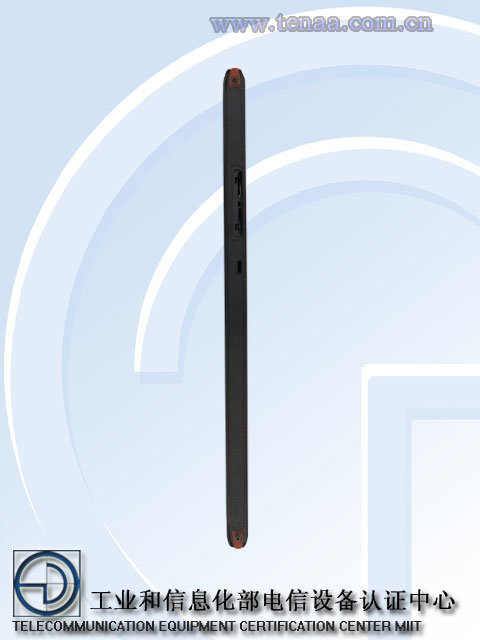
Haier has a new tablet on the way. A large and ugly one with a 10.1” screen. The tablet which was spotted on TENAA is called the Haier S100F.
The large screen tablet which looks like it is unfinished (screws line the sides) features a full HD display, an octa-core processor clocked at 1.5GHz, 2GB of RAM, 16GB of ROM, a 5MP rear camera, and a 2.0 MP front facing camera. It runs Android 5.1 Lollipop and has a 9000mAh battery. And that large battery also makes it thick at 11.1 mm. There is no mention of the weight, but from its looks, it will be pretty heavy.
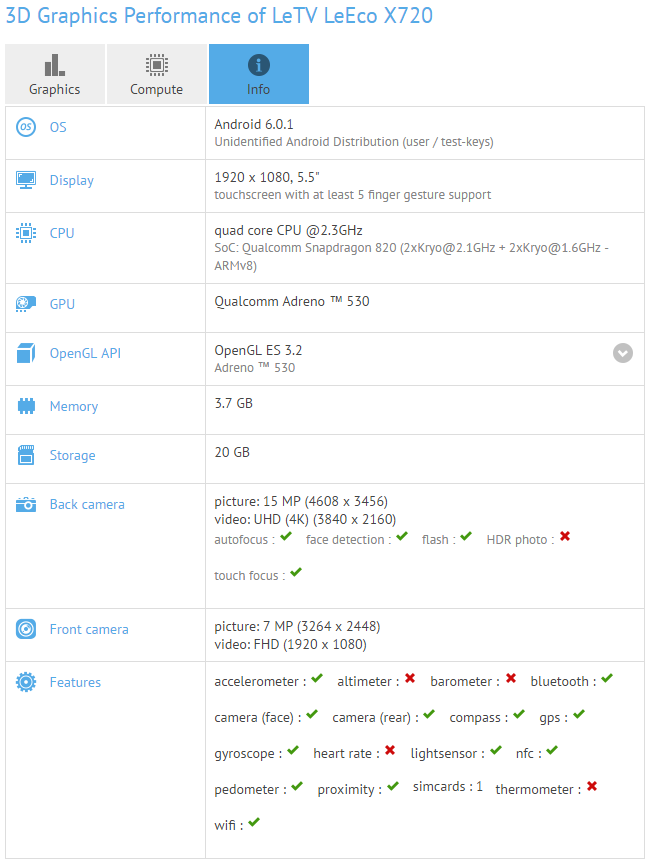
A LeEco phone said to be the Le 2S with model number X720 was spotted on GFXBench with some interesting specifications. The phone has a 5.5” Full HD screen, 4GB of RAM, 32GB of built-in storage, and a Snapdragon 820 processor clocked at 2.3GHz. While we are not surprised about the screen size, the other specs invalidated the rumors of it coming with 8GB of RAM (or 6GB), 64GB of ROM, and the newer Snapdragon 821 chip.
Other details revealed include an 8MP front camera (should be great for Google’s Duo), a 16MP rear camera (can’t tell if it’ll be dual) that can shoot 4K videos, a fingerprint scanner, Android 6.0 Marshmallow, NFC, and USB Type-C. The Le 2S will also have Quick Charge 3.0 support. The specs also show that it has only one SIM card slot.
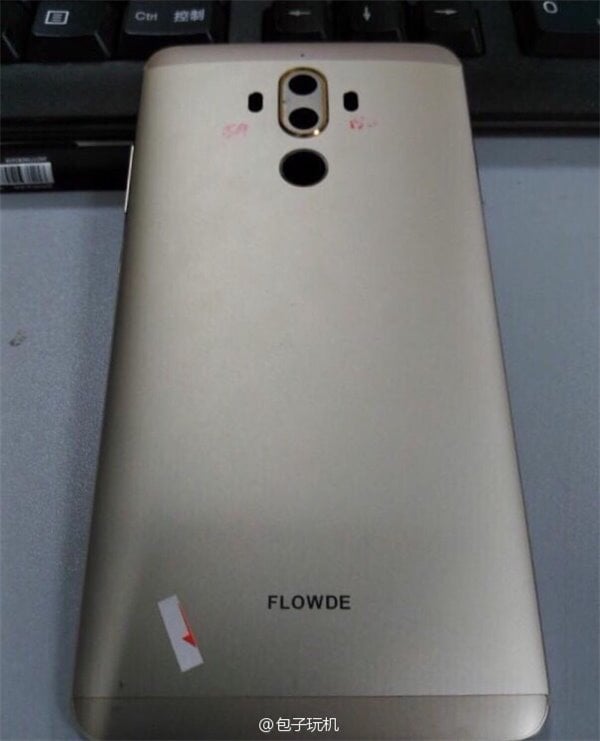
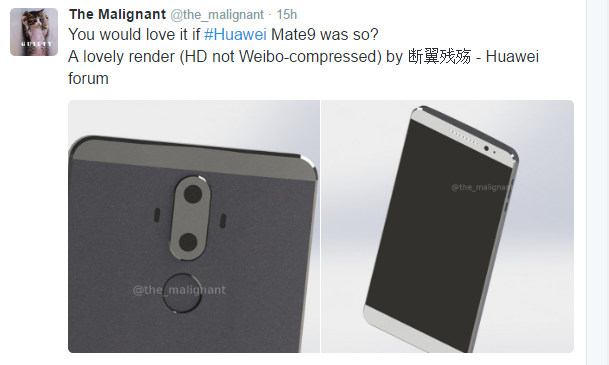
Renders of the Huawei Mate 9 were posted on twitter yesterday by an account with the handle @the_malignant.
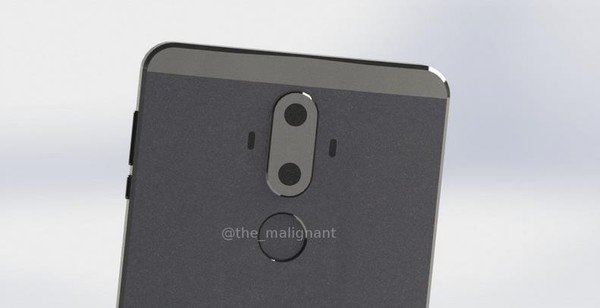
This new render also has dual cameras like the leaked images we talked about earlier this week but is also different in a lot of ways. The cameras are stacked on top of each other but are raised which gives the phone a bump. The back of the phone is also flat and doesn’t have that curve that makes a phone fit into your palm.
The camera is flanked by two slits which some people say is a LED flash and laser sensor combo while others say it’s a LED flash + heart rate sensor combination. This render also has a different colour: its back is grey and appears to be coated in sandstone while the front is white.
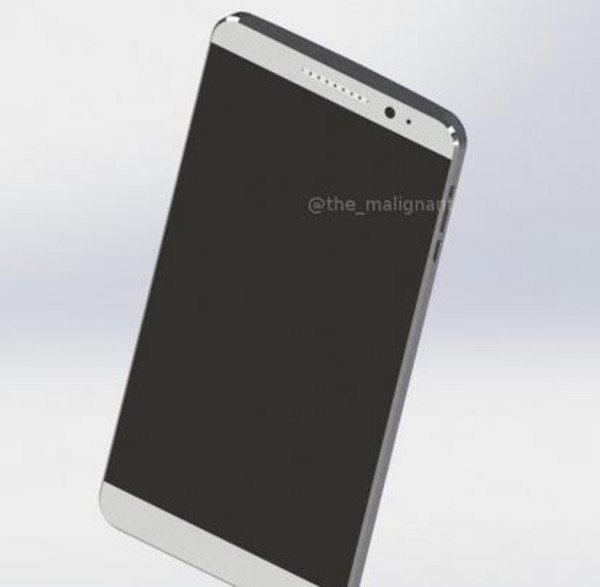
The front shows the 5.9” 1080p display with very thin bezels. You also have a speaker grille, front facing camera, and sensor on the top. There are no buttons on the chin, so you should expect on-screen keys. The power button and volume rocker are also closer to the top which means you’ll definitely be using this phone with both hands.
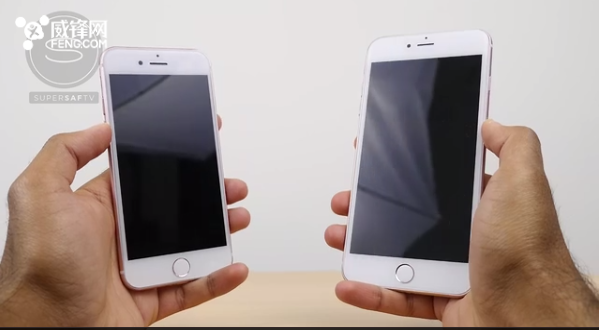
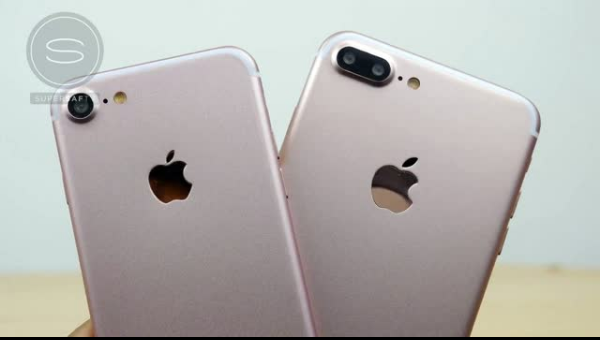
A live video clip of the iPhone 7 and 7 Plus has surfaced online confirming the features the phones had earlier been rumored to possess. The video comes in Ultra HD 4k resolution and clearly shows the details of the phones in high definition. Both the front and back views of the two flagships Apple is expected to officially unveil in September are featured on the video.
One prominent feature noted on the back views are the protruded cameras on both the iPhone 7 and 7Plus. The dual cameras on the iPhone 7 Plus are also very visible as is the antenna lines on the top edges of both phones which are coated in white color. In traditional iPhone design, there are physical Home buttons on both iPhones models and true to rumors, there are no 3.5mm headphone jacks on both the iPhone 7 and 7 Plus.
The video displays the iPhone 7 and 7 Plus in all elegance and we hope to see more, perhaps a working iPhone 7 or 7 Plus in the coming weeks before the launch. You can grab a peek of the two devices down below.
Remember Rovio? Does “Angry Birds” ring a bell? Rovio is the Finnish company that developed the Angry Birds franchise and that is what it is best know for. The thing is, HMD Global Oy, who now has control over the feature phones business of Nokia, has disclosed that it has hired Pekka Rantala, a former CEO of Angry Birds maker Rovio as its Chief Marketing Officer.
The new Chief Marketing Officer was also a former Nokia, having worked for the company from 1994 to 2011. Mr Rantala is said to have joined Rovio as CEO in 2015 but left the Finland based company just a year later. The new exec joins another Nokia veteran, Arto Nummela, who runs HMD Global Oy.
HMD is yet to offer specific details of how it plans to bring back the Nokia brand into the market. The deal with Nokia, provides the company with naming and patent rights, in exchange for royalty payments. Nokia is providing some oversight via a position on the company’s board, though it’s not investing directly in HMD, as per the deal.
What we know before now is the rumor that the Nokia Android powered phones will be manufactured by Foxconn. It has now emerged that Foxconn’s subsidiary, FIH Mobile will likely handle the manufacture and distribution of the two expected Android Nokia phones but the time-table for that wasn’t disclosed.
However, Nokia Networks China and Shangai Bell CEO Mike Wang has hinted in an interview that the expected Nokia branded Android phones and even tablets will likely hit the market by the fourth quarter of this year. The CEO also disclosed Nokia will have to go through brand licensing again after its ill-fated contract with Microsoft expires.
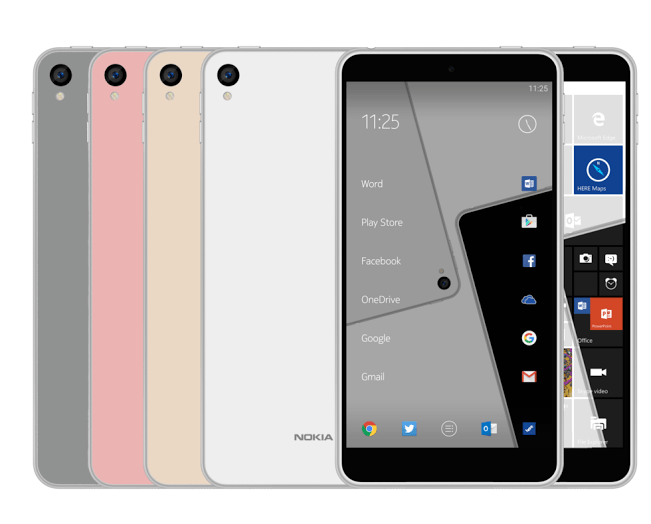
As a reminder, the expected Nokia phones comes with a 5.2-inch and 5.5-inch AMOLED display sizes respectively, both of which will have 2k resolution. The phones are said to boot Android 7.0 Nougat with Nokia’s own Z-Launcher UI on top. All-metal design, camera made of graphene, Snapdragon 820 chipset and IP68 dust and water protection, form the highlight we know so far about the expected Android phones. The phones are rumored to fall within 3000 Yuan ($453) price range and would likely make their first appearance in China when launched.
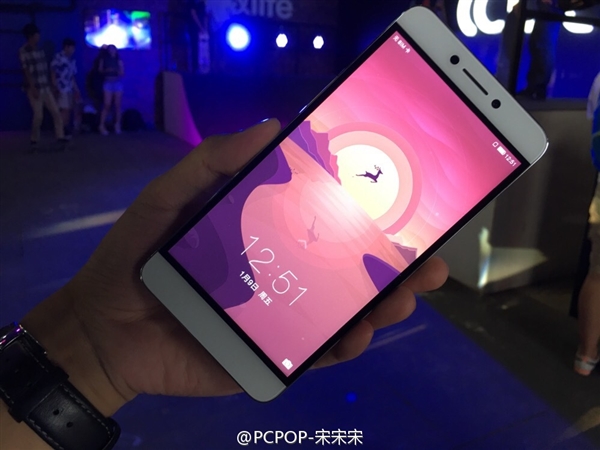
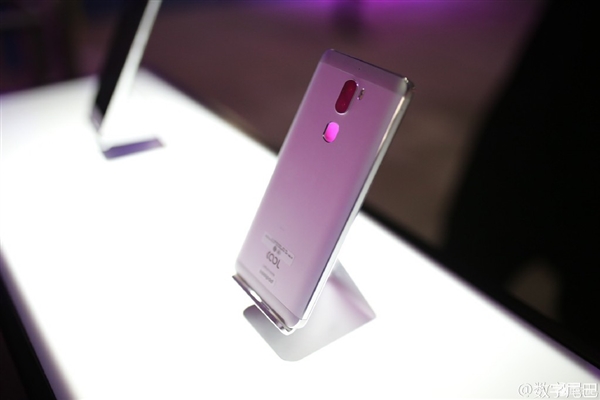
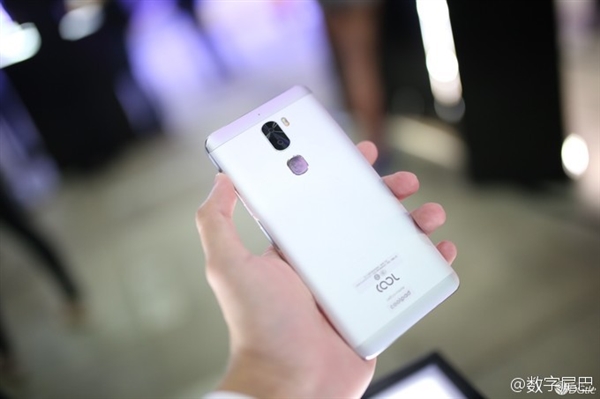
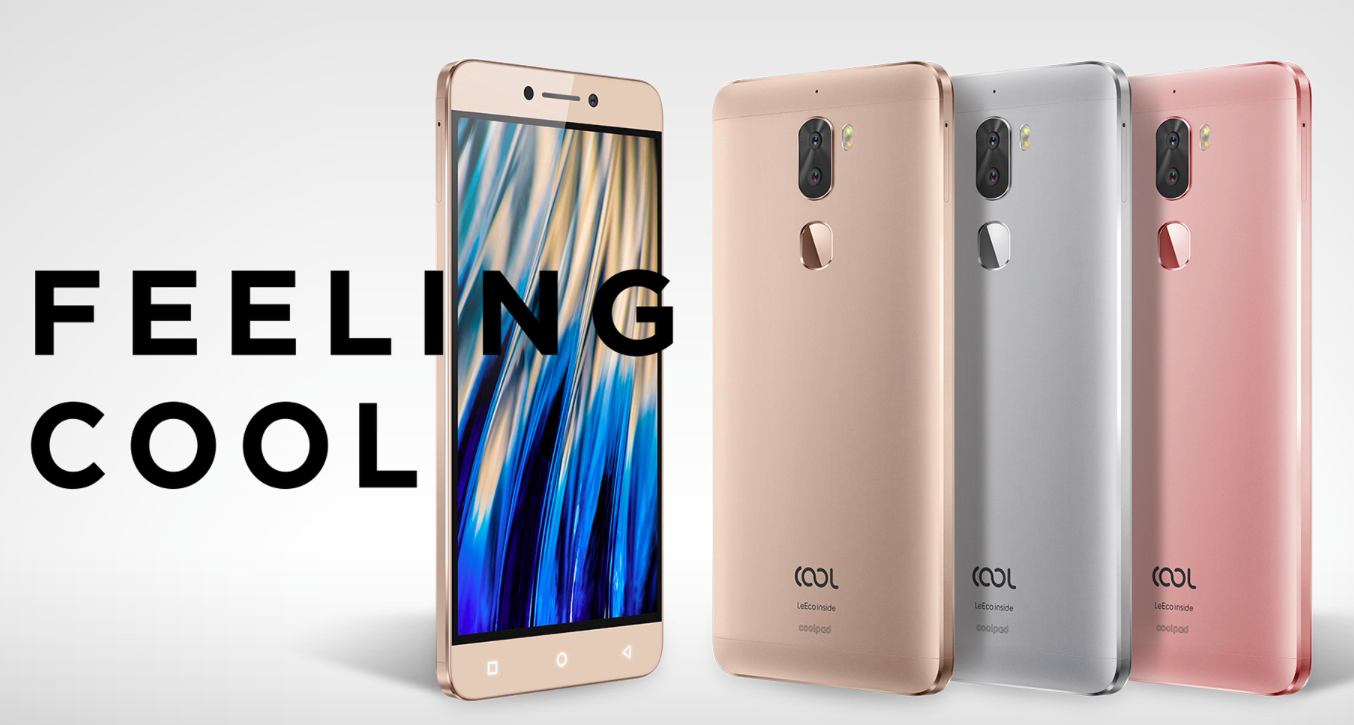
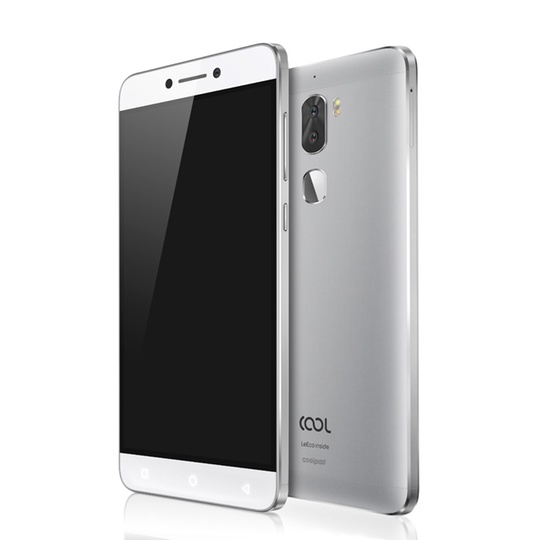
LeEco and CoolPad’s joint smartphone known as Cool 1 was launched a couple of hours ago, tagging along a premium body build and some amazing features. One of the stunning features is the dual camera set up at the rear with an amazing price tag starting at 1099 Yuan ($167).
Cool 1
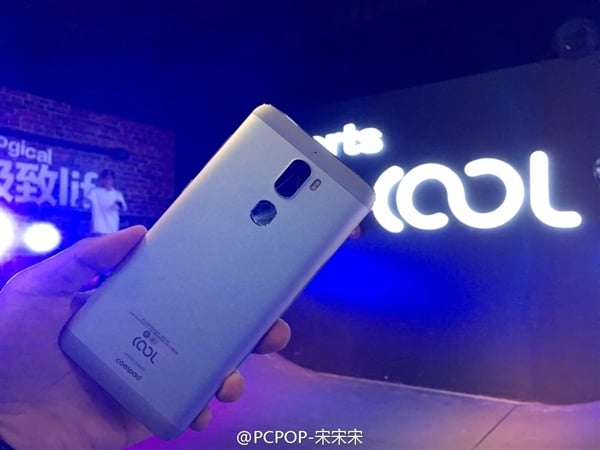
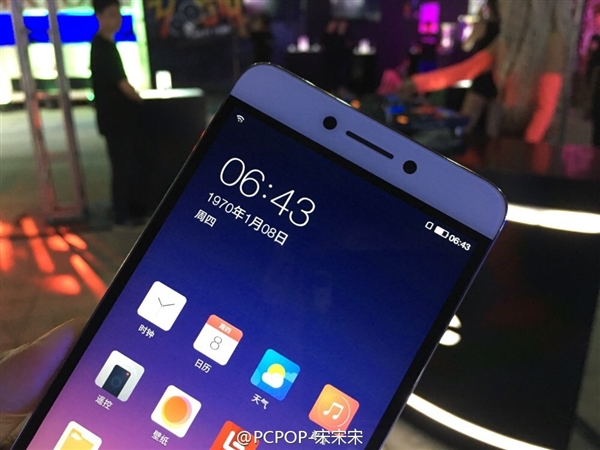
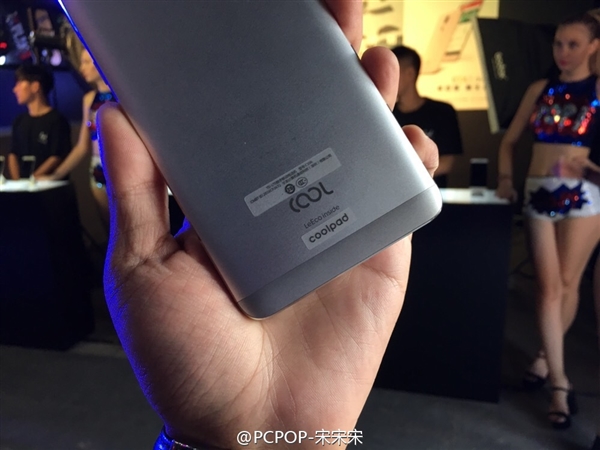
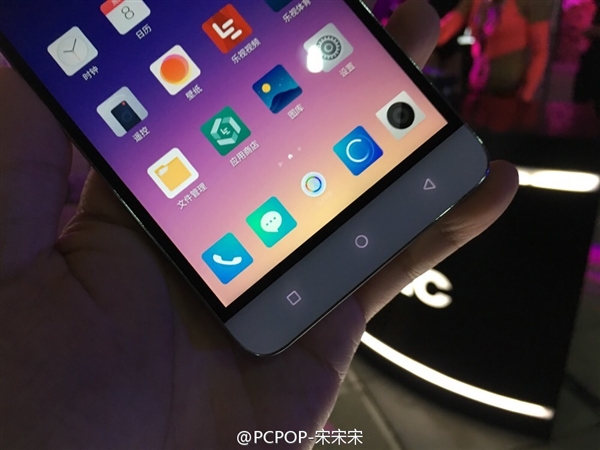
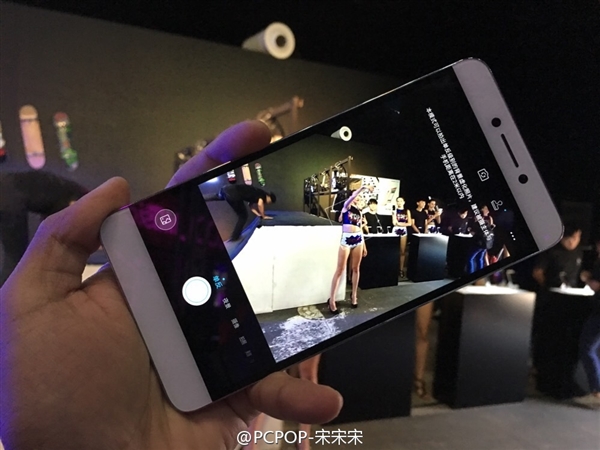
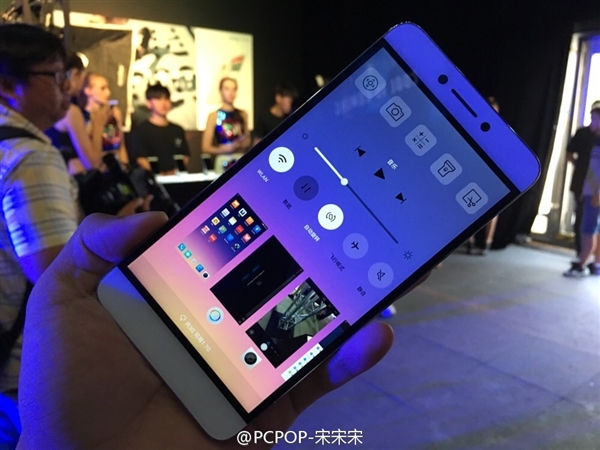
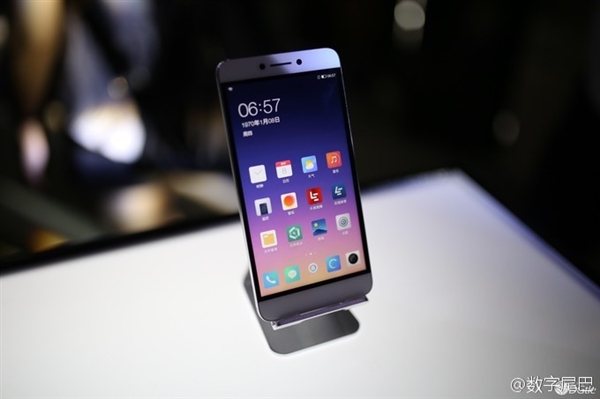
We got hands on photos (courtesy of PCPOP) of the all-metal 5.5-inch Cool1 flagship and the device looks nothing short of being classy. The Cool 1 presents a sturdy build with well-chamfered edges. This should make the device suitable for one-handed operation.
Cool 1
The display design features a flat display screen with narrow bezels at the edges. However, like the other LeEco phones, the black borders are back to haunt us again. There is no visible home button at the bottom as it is embedded within the display and the display output looks sharp and crisp clear.
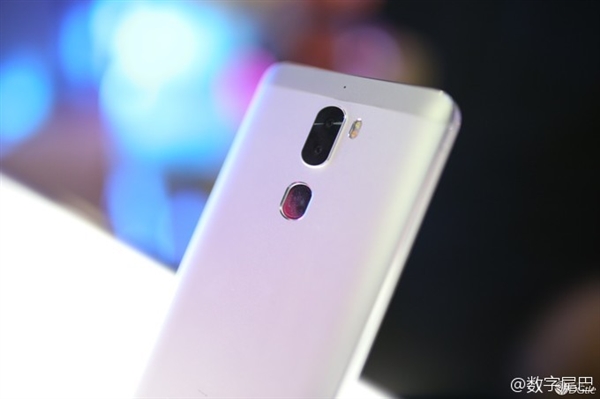
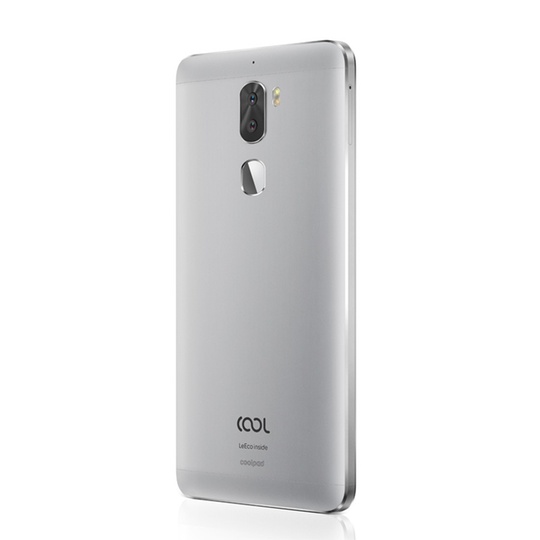
At the back, there is the dual camera setup, arranged vertically together, and slightly protruded from the smartphone. There’s the dual-tone LED flash just by the side of the camera and the fingerprint sensor is situated just underneath the dual cameras.
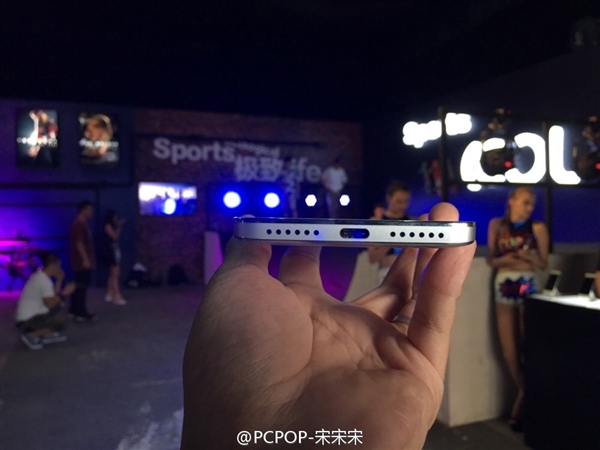
The Cool1 features USB Type-C port on the bottom edge, and there are two speaker grills lying on either side of the USB port. The grill adds to the beauty of the device. Meanwhile, you can check out some more photos of the cool1 smartphone LeEco and Coolpad have jointly cooked up from below.
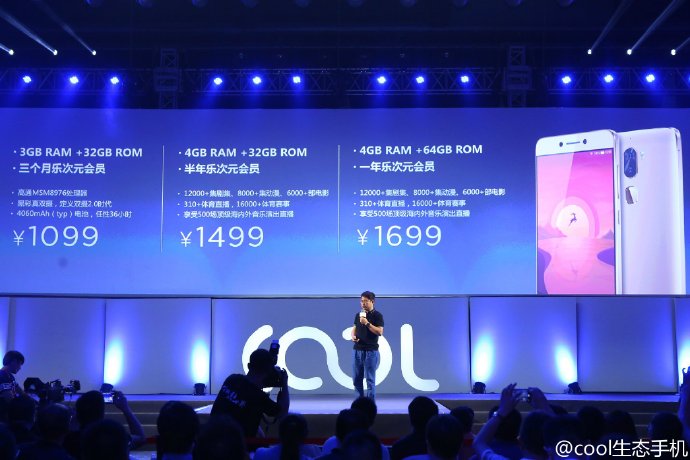
Coolpad and LeEco just announced the brand new Cool1 flagship. The phone comes with dual cameras at the back, joining the likes of Redmi Pro, Huawei P9, V8 and Honor 8 flagships. The Cool1 specs are quite powerful featuring Snapdragon 652 octa-core chip inside, which is one of the best mid-ranger chipsets in the market today. There are three memory variants of the phone, one with 3GB RAM and 32GB storage, another with 4GB RAM and 32GB storage and the top-end version with 4GB RAM and 64GB storage. The pricing is also pretty aggressive, with the standard model starting at 1099 Yuan ($167), mid-range variant at 1499 Yuan ($226) and the top-end model at 1699 Yuan ($256).
Earlier today, during a joint conference by LeEco (LeTV) and Coolpad, it was officially announced that former Huawei President, Liu Jianfeng will be coming on board and taking the reigns as CEO of Coolpad Group. He will also serve as special adviser to LeEco Chairman, Jia Yueting.
Liu Jianfeng was the President of Huawei’s Consumer Business Unit up until 17th of February, 2015 when he announced his resignation. He played a pivotal role towards the company’s current success and he’s expected to replicate that success at Coolpad.
The past few days have been busy for LeEco and Coolpad alike as these two companies, for the first time, were all set to release a smartphone in collaboration, called the Cool1 Dual. Now, this particular flagship device has just become official, revealing its powerful specs and cheap pricing. Looks like the consumers are going to benefit to a great extent with this new collaboration.
The Cool1 Dual flagship is made out of magnesium alloy and undergoes anodic oxidization, CNC edge processing, CCD precision machining and a number of other processes to ensure that you end up with a premium metal body. Looks wise, the phone seems to be inspired from the previous LeEco offerings in the market. At the bottom, you get dual speakers as well as USB Type-C port along with a microphone opening. The back features a dual camera setup, a first for LeEco as well as Coolpad, along with a fingerprint ID sensor. The dimensions are as follows: 152 x 74.8 x 8.2mm and the phone weighs 173 grams.
Before we take a look at the highlight of the LeEco Cool1, i.e. the dual camera module at the back, let’s see the other specs of the device. The Cool1 flagship comes with a capable Snapdragon 652 octa-core chip clocked at 1.8GHz with three memory variants: 3GB + 32GB, 4GB + 32GB and 4GB + 64GB. There will be a 5.5-inch 1080p display on board.
Like the rival Redmi Pro, LeEco and Coolpad have played it smart by incorporating a very large 4060mAh battery on board. This large battery can reportedly also be used for reverse charging via the USB Type-C port. Other features of the Cool1 include universal remote function, fingerprint sensor located at the back, dual SIM dual standby with entire network support, 4G+ and EUI OS. Unfortunately, there’s no NFC.
Now coming to the important part, the cameras. The Cool1 Dual will come with a dual camera module at the back. However, the company claims that the module used inside its new device is using second generation dual camera technology, i.e. Dual Camera 2.0. The first generation dual camera tech used one regular camera sensor along with a depth of field sensor as a secondary camera, like in the case of the HTC M8 and the Redmi Pro. However, in the new generation dual camera 2.0, the Cool1 comes with one black and white camera sensor and a color sensor, whose information are clubbed together to take better-looking photos. This means that Huawei phones like the P9 and V8 are using dual camera 2.0 technology.
The company further adds that using the dual camera 2.0 technology on the Cool1, the phone can enhance the overall image clarity by 20%, reduce noise by 8% and increase brightness by 20%. So, this should mean that the phone will take better low light images as compared to a traditional single camera module. Other features of the module include 6P lens, a number of filter support and stand alone black and white mode.
On the front, the phone comes with a regular 8MP shooter.
Now, coming to the pricing of the three variants, the 3GB RAM + 32GB ROM model starts at 1099 Yuan ($167), the 4GB RAM + 32GB ROM model will retail at 1499 Yuan ($226) and the 4GB RAM + 64GB ROM version will retail at 1699 Yuan ($256). There’s also a Huachen special edition model with only 2000 units available.
The phone will be up for reservations starting today at 6PM and will go on sale at JD.com, Lemall and Coolpad’s online store on August 24 at 10AM.
Another dual camera phone for the cheap and this might be a bit better than the Redmi Pro as well. What do you think? Looks like we will have to look at both these devices in detail very soon!
Xiaomi’s CEO, Lei Jun, announced the company’s NFC based mobile payment at an event last night. The mobile payment service called MI Pay joins other NFC payments such as Google’s own Android Pay, Samsung Pay, and Apple Pay.
NFC payments allows you to store card details (credit, debit, gift, loyalty, and membership cards) on your phone which you can use to pay for items or get access to places without having the physical card with you. MI pay works the same way. All you have to do is to place your NFC enabled phone (after launching the payment app) against the card reader and you’re ready to go.
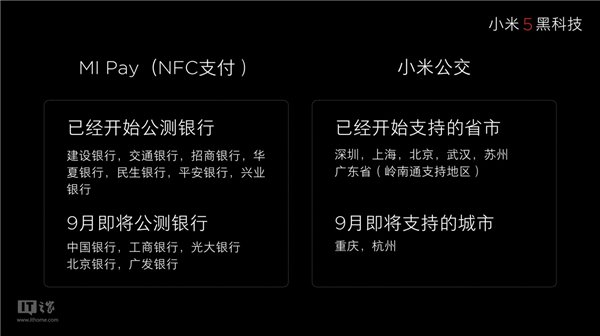
Xiaomi already has a NFC-enabled phone, the Xiaomi Mi 5. So owners of this phone should soon get the service rolled out to them. The company has announced a number of banks that currently support MI Pay: China Construction Bank, Bank of Communications, China Merchants Bank, Huaxia Bank, Minsheng Bank, Ping An Bank, and Industrial Bank. They’ve also announced that more banks (Bank of China, Industrial and Commercial Bank, China Everbright Bank, Beijing Bank, and Guangdong Development Bank) will be added in September.
The International Data Corporation (IDC) has released the second quarter rankings for smartphone vendors in China and the top three winners, Huawei, OPPO, and Vivo grabbed a combined share of 47% of the total market. This is an increase from last quarter’s 45%.
So how did these companies achieve their success? The IDC has narrowed it to three major things:
Strong offline sales
Oppo and Vivo’s strong offline sales is as a result of their shops and advertisements occupying most of the cites that fall within the Tier 3 (e.g. Hangzhou) to Tier 5 categories and making it easy for people living in these cities to access after sales service. For the bigger cities (Tier 1 and 2), they focused on sponsoring major entertainment shows to win over customers.
Focused marketing on key technologies
The top 2 brands for the second quarter, Huawei and OPPO had products that had key technologies which were the focus of their marketing campaigns. The Huawei P9’s marketing campaign focused on the dual camera technology and emphasised on the partnership with German optics manufacturer, Leica. OPPO on the other hand marketed their fast charge technology and camera prowess of the camera-centric OPPO R9 which is one of their best selling phones till date.
Celebrity Endorsements/Brand Ambassadors
Celebrity endorsements isn’t a new trick in the art of marketing but some companies still don’t use it. OPPO hired popular Bollywood stars Hrithik Roshan and Sonam Kapoor as its brand ambassadors for the R9. Vivo initially hired Korean actor, Song Joong Ki as the Vivo X7 ambassador but have dropped him a few days ago. Huawei has also hired a brand ambassador for its Honor line. Even brands like Xiaomi that have been known not to spend on advertising have hired three ambassadors for the Redmi series.
We use cookies on our website to give you the most relevant experience by remembering your preferences and repeat visits. By clicking “Accept”, you consent to the use of ALL the cookies.
This website uses cookies to improve your experience while you navigate through the website. Out of these, the cookies that are categorized as necessary are stored on your browser as they are essential for the working of basic functionalities of the website. We also use third-party cookies that help us analyze and understand how you use this website. These cookies will be stored in your browser only with your consent. You also have the option to opt-out of these cookies. But opting out of some of these cookies may affect your browsing experience.
Necessary cookies are absolutely essential for the website to function properly. This category only includes cookies that ensures basic functionalities and security features of the website. These cookies do not store any personal information.
Any cookies that may not be particularly necessary for the website to function and is used specifically to collect user personal data via analytics, ads, other embedded contents are termed as non-necessary cookies. It is mandatory to procure user consent prior to running these cookies on your website.