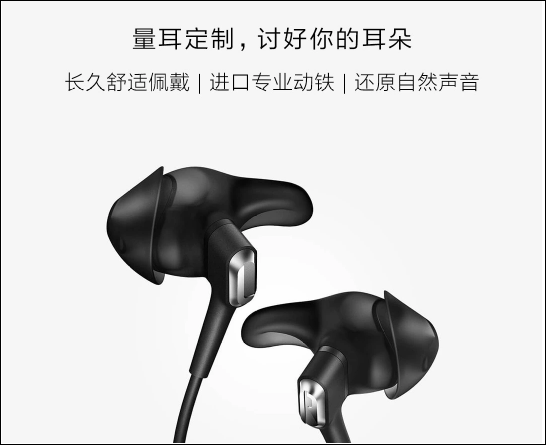
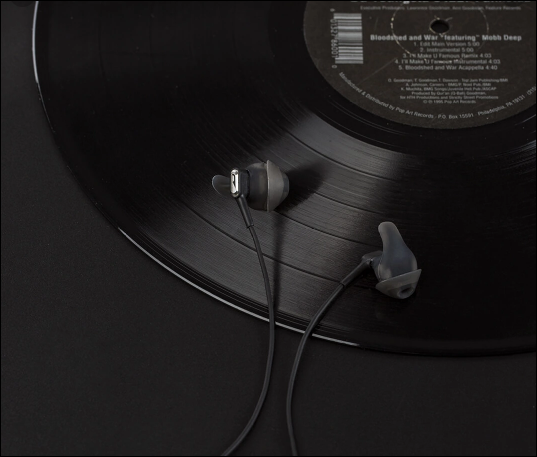
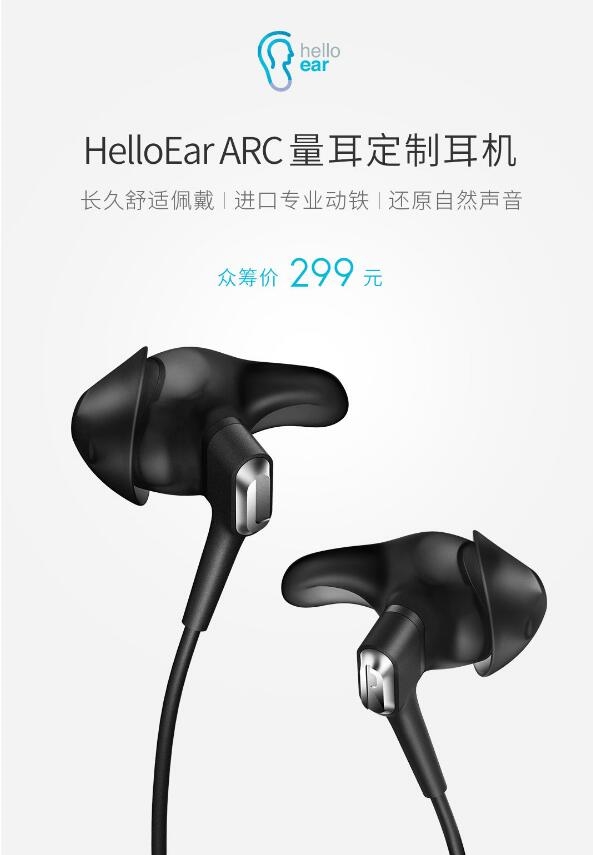
Xiaomi has launched its 96th crowdfunded product and just as we hinted yesterday, the product is an earphone. From the look of things, this isn’t just any headphone but is touted to be a customised earphone. The product is dubbed HelloEar Arc custom earphone and it has a retail price of 299 yuan ($43).
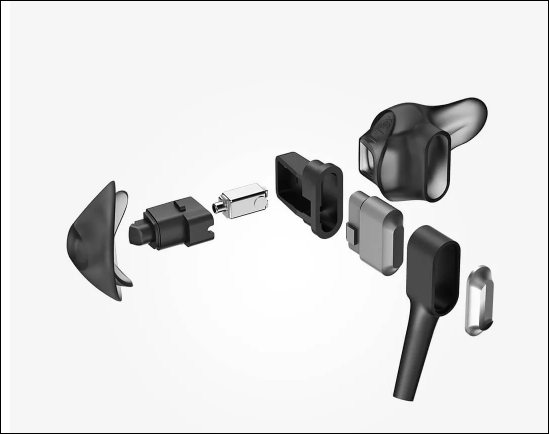
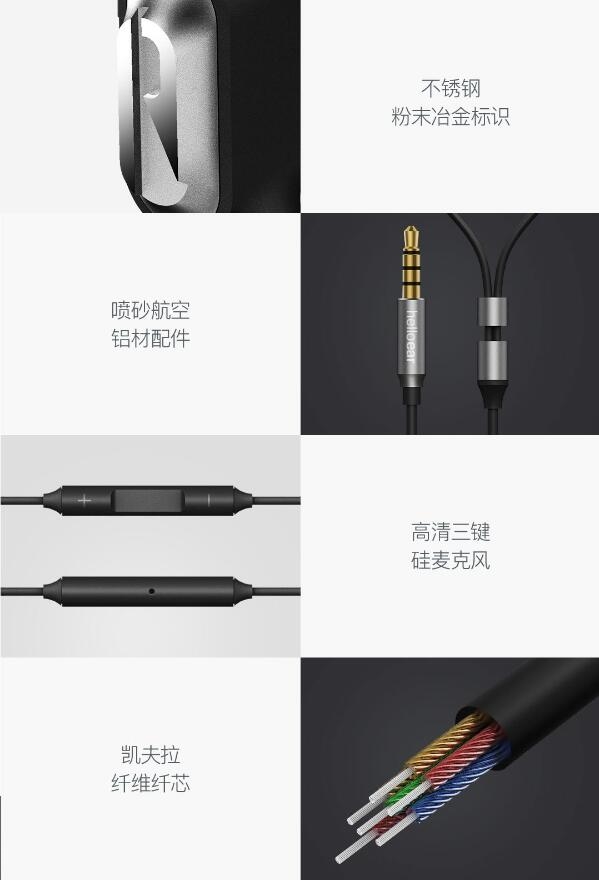
The Xiaomi HelloEar Arc custom earphone uses a 3.5mm audio interface and the is developed in all aspects to provide a comfortable usage devoid of any form of hassle arising from pains from the ear buds or the wires. Talking about the wires, it has a very long cable wire which is 1.2 meters in length. The HelloEar Arc headphone features a Kevlar fibre core while the body is manufactured from aviation-grade aluminium that is sandblasted. The headphone also comes with a high definition silicon microphone with three buttons.
The headset is developed by HelloEar and according to an official of the company, they spent three years on research in order to produce a stunning product. The research involves collecting lots of ear samples, ear 3D scans, and thousands of real ear wearing tests and this has given them a large database of different human ear types. Thus, the HelloEar Arc headphone is designed in a customised way to provide comfort and deliver a great sound.
The product is available in a unique way, first, customers will need to take pictures of their ear and upload so that the company can produce a customised earbud that would suit each person’s unique ear cavity structure. But in all, the HelloEar Arc custom earphone comes with a half-size “Z” shaped support that fits the outer ear like a puzzle and then fills the cavity. Users won’t need to tighten it inside the ear or push it very deeply in to make it solid. The earbud is produced usingmedical grade silicone material with a custom airbag structure which disperses the ear pressure and prevents soreness after being worn for a long time.
The sound quality isn’t forgotten in the entire development process as it uses high-end moving iron speakers with 25 ohms impedance and sensitivity of up to 106.5dB. The speakers also come with a maximum power of 3mW and frequency response range of 20Hertz – 20 kiloHertz.
For 299 yuan ($43), it is hardly disputable that this customised headphone isn’t worth the price. The HelloEar Arc custom earphone is already available on Mi home and is expected to start shipping on August 22.
Yesterday we reported that Xiaomi was planning to launch a new sub-brand that will take on OPPO and Vivo. When we covered the story we didn’t have a name then but this morning we learnt from a popular tech blogger that it will be called Lanmi (Blue Rice).
You might be wondering how we arrived at the name Lanmi. Using Google translate, you can get a transliteration and audio pronunciation of the name 蓝米 (Blue Rice) which is written as “Lán mǐ” and pronounced as “Lan me” respectively.
The blogger who goes by @贰手藝術家 (Second hand artist) on Weibo not only revealed the name but also mentioned the first model. According to him the Xiaomi X1 will launch as the Lanmi X1.
There were reports last week that Xiaomi had scrapped the Redmi Pro 2 for a new phone called the X1. However, a follow-up post revealed that the X1 wasn’t replacing the Redmi Pro 2.
The Lanmi X1, according to another tech blogger @Kumamoto Technology, will be available in two main models with 4 variants each. It is a bit complex to be honest.
One will have a 5.5-inch with a 2160 x 1080p resolution. It will be powered by the Snapdragon 660 mobile platform, have dual Sony IMX362 or IMX368 sensors on the rear as well as a rear-mounted fingerprint scanner.
The first model will likely be available in 4 variants:
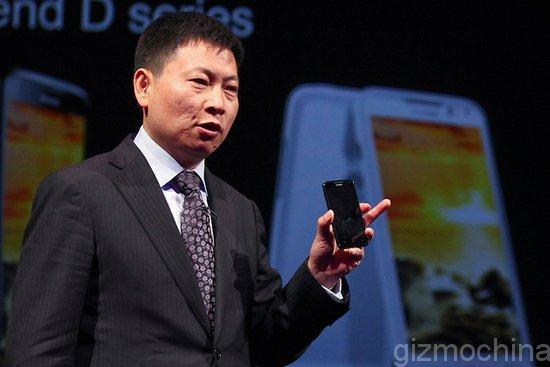
Huawei CEO, Yu Chengdong announced at the 2017 China Internet Conference this morning that his company is developing an AI processor.
The new trend for tech companies now is smart electronics with built-in AI assistants. Silicon makers like Qualcomm and Mediatek recently announced smart chips that will power smart audio devices.
Qualcomm announced a number of new smart audio chips last month and Mediatek’s MT8516 voice chip unveiled in May powers the AliGenie smart speaker. Since Huawei is also a silicon chip manufacturer, the announcement doesn’t come as a surprise.
Mr. Chengdong also mentioned that the company is planning on creating a cloud services platform that will allow users store and recover their data in case of theft or damage of their device. Another project they are working on is HUAWEI PAY which already has support for more than 50 banks and bus transport systems.
If you are expecting a Huawei smart home device, you may want to look the other way as the company has no plans of making one. Their plan is to provide a platform that third party hardware makers can use. Right now, they have gathered over 27 thousand developers to work on creating the Huawei smart ecosystem.
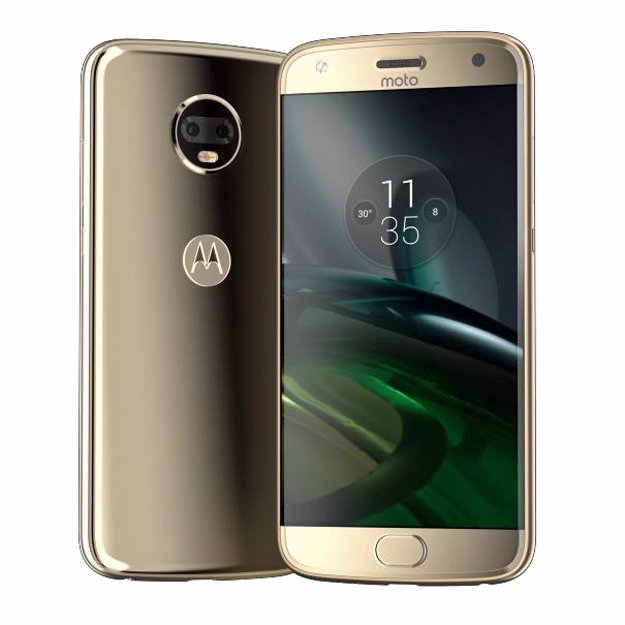
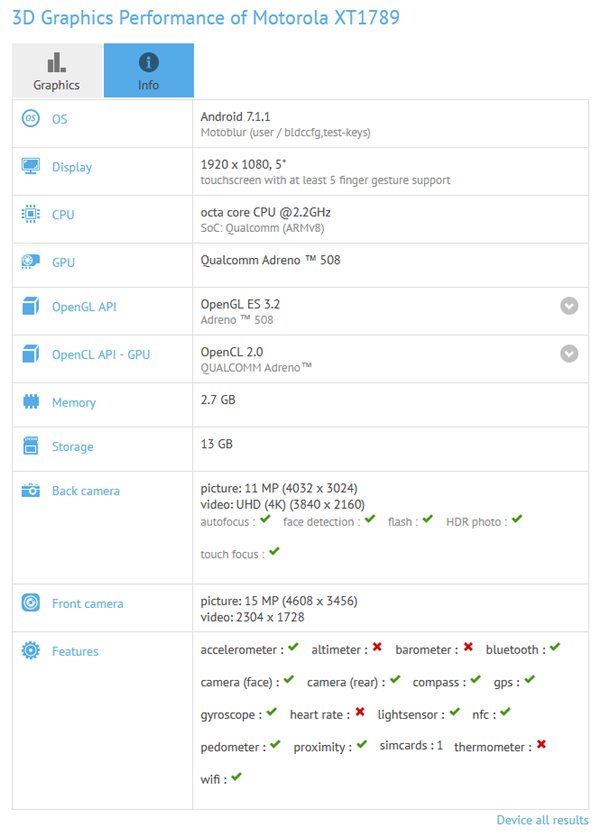
Lenovo’s Motorola brand has planned a flurry of smartphone releases this year and one of the models that are likely coming is the Moto X4. The model has appeared in a couple of leaks recently, including its likely image. We have also seen a leak showcasing its specifications and that leak has got some sort of confirmation. A Motorola model has appeared on GFXBench and is suspected to be the Moto X4.
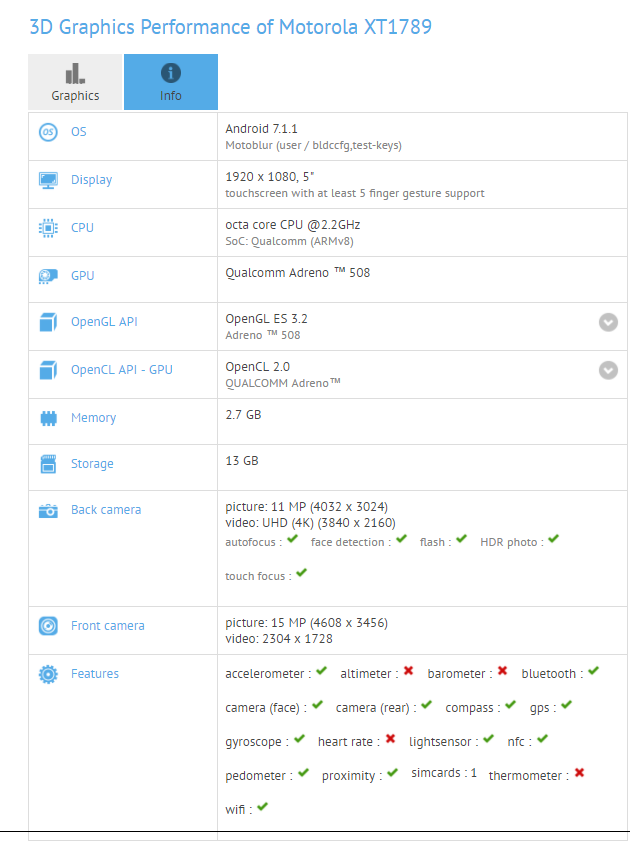
The Moto model appeared with the model number XT1789 and presents with a 5-inch display having a FullHD resolution (1980 x 1080pixels). The GFXBench data also shows the Moto X4 will come packing Android 7.1.1 Nougat OS which may likely feature some customisation in the China version, ZUI perhaps. The device is powered by a 2.2GHz Octa-core Qualcomm chip believed to be the Snapdragon 630 chip due to the presence of an Adreno 508 GPU.
In addition, the Moto X4 features 3GB RAM, 16GB of internal storage. The device is also listed with a 12 MP rear-facing camera with LED flash and a 16MP front-facing selfie shooter. A previous leak had tipped the X4 as coming with a dual camera setup and that was also captured in the leaked image. GFXBench app doesn’t detect dual camera setup so, it shouldn’t be surprising that only one of the cameras was captured. The device will likely have a 12 MP + 8 MP dual camera setup.
GFXBench doesn’t reveal too many details about the specs but other details revealed about the Moto X4 includes that the device will feature an IP68 certified body and a front-mounted fingerprint reader which will be versatile enough to recognize gestures for on-screen navigations. The smartphone is also detailed to be the first non-Google phone that would support Project Fi MVNO. This feature will allow the phone to switch between different networks like Sprint, T-Mobile, U.S. Cellular networks and Wi-Fi hotspots seamlessly. There is also NFC on board as listed on the GFXBench data which makes contactless payment services possible. The Moto X4 is tipped as coming in the fourth quarter of the year which is still a little time away but Lenovo could spring up a surprise before then.
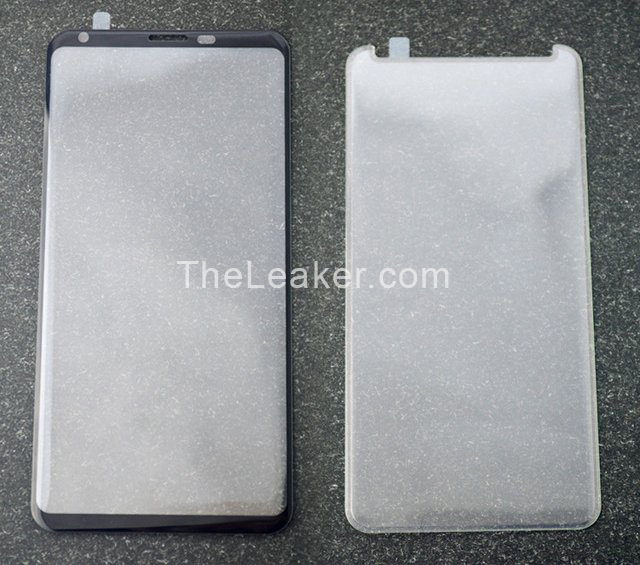
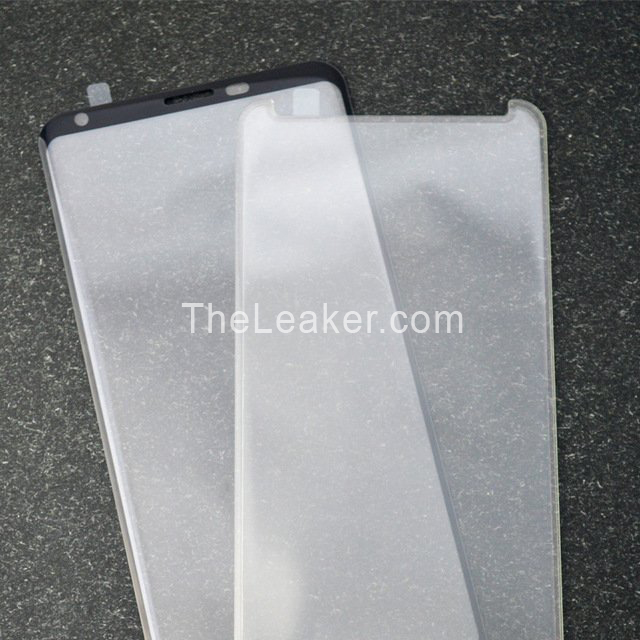
A couple image of the front panel of the Samsung Galaxy Note 8 had appeared in the previous week. The front panel of Samsung’s upcoming flagship phablet has surfaced yet again. These images confirm what kind of design the Galaxy Note 8 will be arriving with.
Samsung introduced full-screen display known as Infinity Display on the Galaxy S8 and Galaxy S8+ smartphones. In both the images, the Galaxy Note 8’s front panel are placed on the left and the protective film is present on the right.
The new images of the alleged Galaxy Note 8 suggests that it would be coming with ultra-thin bezels. The top bezel is slim and it features cutouts for selfie camera and earpiece. The bezel will be featuring some other sensors. The source claims that the iris scanner will be integrated with the front-facing camera. The bottom bezel is also slim. A report carrying 360-degree video of the Galaxy Note 8 would be 162.4 × 74.5 × 8.4 mm.
These images also indicate that the Galaxy Note 8 will boasting a high screen-to-body ratio. Like the Galaxy S8 and Galaxy S8+, the Galaxy Note 8 will be coming with dual-edge curved screen. The Note 8 is rumored to come with 6.3-inch display. Rumors like that it would be supporting QHD+ resolution of 2,960 x 1,440 pixels and 18.5:9 aspect ratio like the Galaxy S8 and S8+. Some rumors are claiming that the Galaxy Note 8 would be supporting UHD resolution. This also seems to be a possibility as the Note 8 is speculated to carry support for AR (augmented reality).
One of the most striking changes that will be coming on the Galaxy Note 8 is the inclusion of the dual rear camera system. With the camera bump, the thickness of the device is speculated to increase to 9.5mm. Despite some early rumors that have claimed the Note 8’s fingerprint scanner would be embedded under the display, but the recently leaked images of the Note 8 have shown that biometric recognition feature will be sitting on the right side of the dual rear camera module.
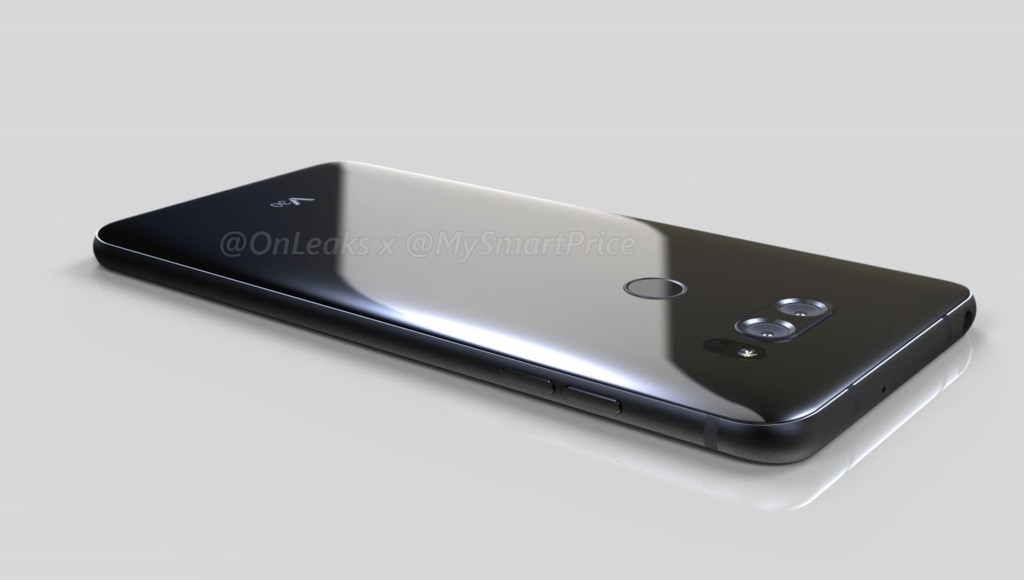
LG is pegged to debut the LG V30 on August 31 and exhibit it at the IFA 2017 tech trade show that begins from Sept. 1. It is the second flagship smartphone from the South Korean company. The 360-degree video of LG V30 based on its CAD designs has revealed its beauty from all sides.
The above video shows that the LG V30 would be featuring a USB-C port and an external speaker grill on its bottom side. The right side of the phone is barren. Its topside features a 3.5mm audio jack. The volume buttons and Power key appear to be present on the left edge.
The rear side of the phone is flanked with dual rear cameras that is arranged horizontally and there is a LED flash on its right. A fingerprint scanner is present below the rear camera module. The V30 moniker is engraved on the bottom part of the rear panel.
The LG V30 measures 151.4 x 75.2 x 7.4mm and it is expected to arrive with a 6-inch display. Last year, the LG G5 had featured a 5.3-inch display and the LG V20 came with a 5.7-inch screen. This year, LG increased the display size to 5.7-inch on LG G6. Hence, it is possible that the upcoming LG V30 would be fitted with a larger 6-inch Full Vision display.
Reports suggest that the most striking change that LG would be bringing on the LG V30 is that it won’t be featuring a secondary ticker screen. It is rumored that the tall display of the phone would have a separate portion on its upper part to display the contents of the ticker screen such as notifications and frequently used apps. Since LG is speculated to display OLED panel on LG V30. The upper part of the display may remain on while the other portion of the display is sleeping. It is expected to work like Always-on Display feature from Samsung.
The LG V30 is expected to feature glass rear panel which suggests that it would be coming with wireless charging feature. Rumors have it that the LG V30 would be driven by Snapdragon 835 chipset and 4 GB of RAM. Earlier reports have stated that it would be coming with 6 GB of RAM. It will also feature a microSD card slot. Speculations have it that it would be the first non-Google branded phone that will debut with LG V30.
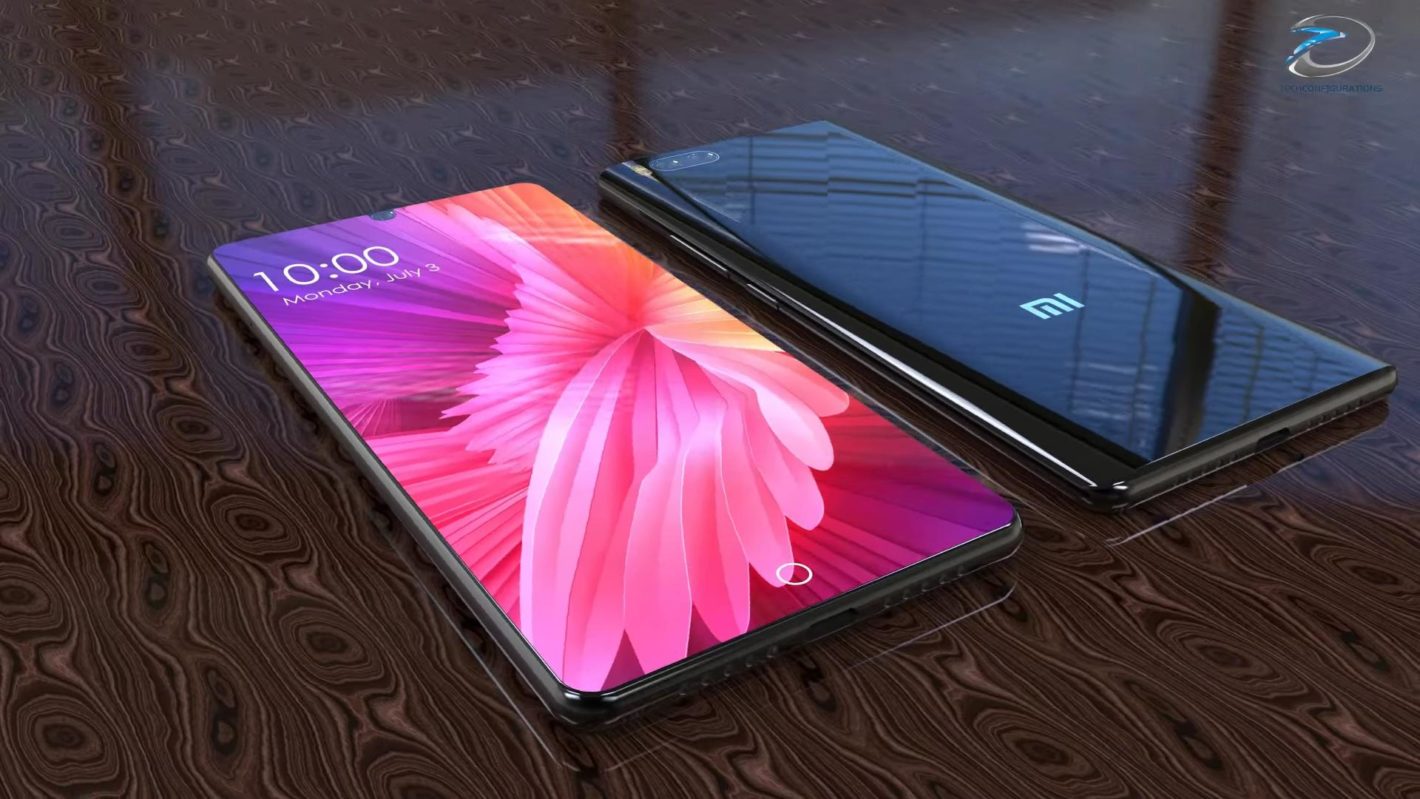
The Xiaomi Mi 6 is barely three months old and already we have started seeing renders of the next generation Mi-series smartphone which should be the Xiaomi Mi 7. A newly released video shows us a fan’s idea of the concept design of the Mi 7, which most likely should be launched early next year. As stated, this isn’t an official render of the Mi 7 but a concept design by a third-party concept designer.
Taking a closer look at the design, the phone features a nicely designed, bezel-less display but retains the metal body covered with glass that was used in the Mi 6. The video shows a device that has a flat display instead of a curved one but there won’t bezels at all four sides. For one minute, you might think this is the MI Mix 2 render but it isn’t.
The rear design, however, shows some curvature and there is a dual camera setup, which is not surprising, considering dual cameras are the rave of the moment. The dual camera setup also has a dual-tone LED flash located on the left side of the cameras. There are capacitive keys on the right side of the phone. The concept designer gives the Mi 7 a 16MP rear sensor apiece, with both OIS and PDAF. The phone also comes with a 16MP front camera and an iris scanner located upfront.
The Xiaomi Mi 7 (if it will be called that) will most likely not feature a design similar to this one but if it does, it won’t be a bad idea. Coming in at 5.7 inches with a QHD AMOLED display (18:9 aspect ratio), 97% screen-to-body ratio, Snapdragon 845 SoC onboard, who wouldn’t want that? Do check out the concept video from below.
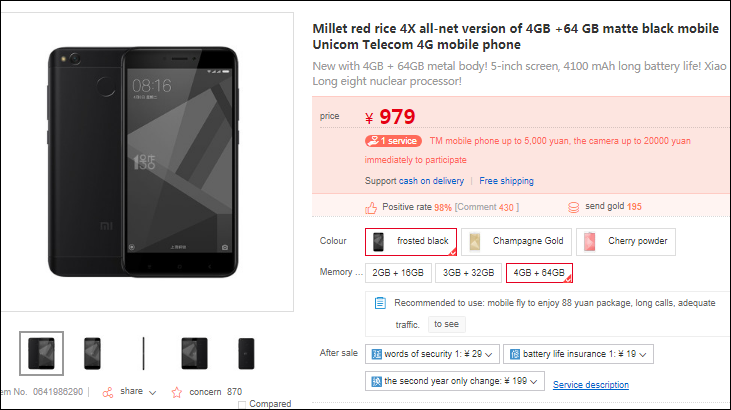
When Xiaomi President Lin Bin was asked which phone he thinks is the cheapest 4GB RAM + 64GB storage phone in the market. His response was the company’s Redmi 4X. Xiaomi has a reputation for building quality models that get slammed super cheap price tags. The Xiaomi Redmi 4X is no exception, coming in at 699 Yuan (~$102) for the 2GB RAM + 16GB version and going for as low as 1099 Yuan (~$159) for the 4GB + 64GB version which was introduced in April this year. But that price has taken a further dip as No. 1 Shop is offering the Redmi 4X 4GB + 64GB version at a reduced price of 979 Yuan (~$144), less than a thousand Yuan!
The Redmi 4X price cut on No. 1 Shop seems to cut across all the versions of the device as the 3GB + 32GB version is now up for 859 Yuan (~$126) instead of 899 Yuan (~$132). Also, the 2GB + 16GB version has a slightly reduced 689 Yuan (~$101) price tag as against the usual price of 699 Yuan (~$102). The offer comes with free shipping option and buyers also get the option of payment on delivery. In case you’re wondering why the price cut, Xiaomi isn’t clearing up for a Redmi 5X or something but No. 1 Shop is celebrating its 9th anniversary. The online e-commerce shop was launched in July 2008.
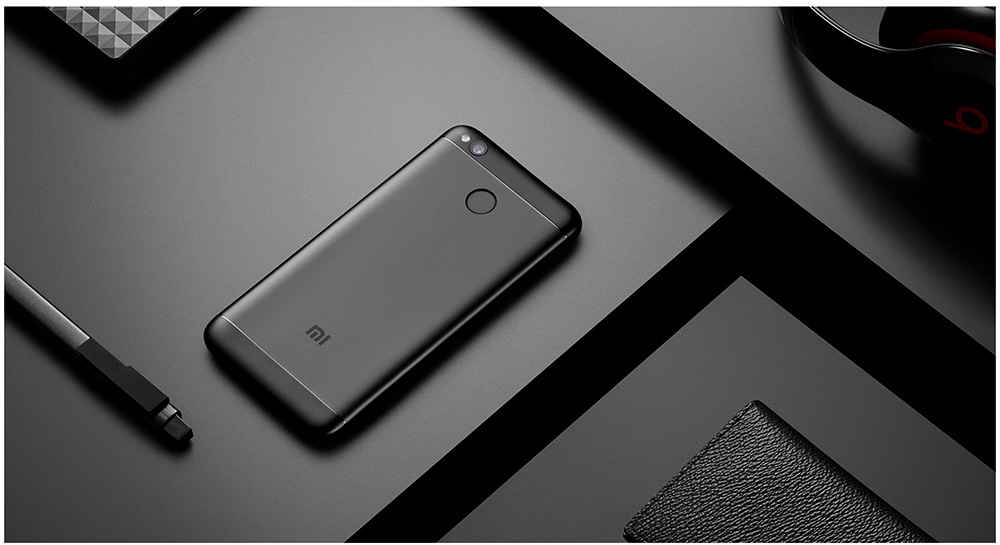
As a reminder, the Xiaomi Redmi 4X comes with a 5-inch 720p display with 2.5D glass on top and a smooth metal body, curved around the corners. The phone is powered by an octa-core Snapdragon 435 chipset and there is a large 4100mAh battery under the hood which should ensure at least two days of comfortable usage on a single charge. The Redmi 4X also packs a 13MP rear camera with f/2.0 aperture, 5P lens, PDAF and LED flash while there is a 5MP selfie shooter with f/2.2 aperture.
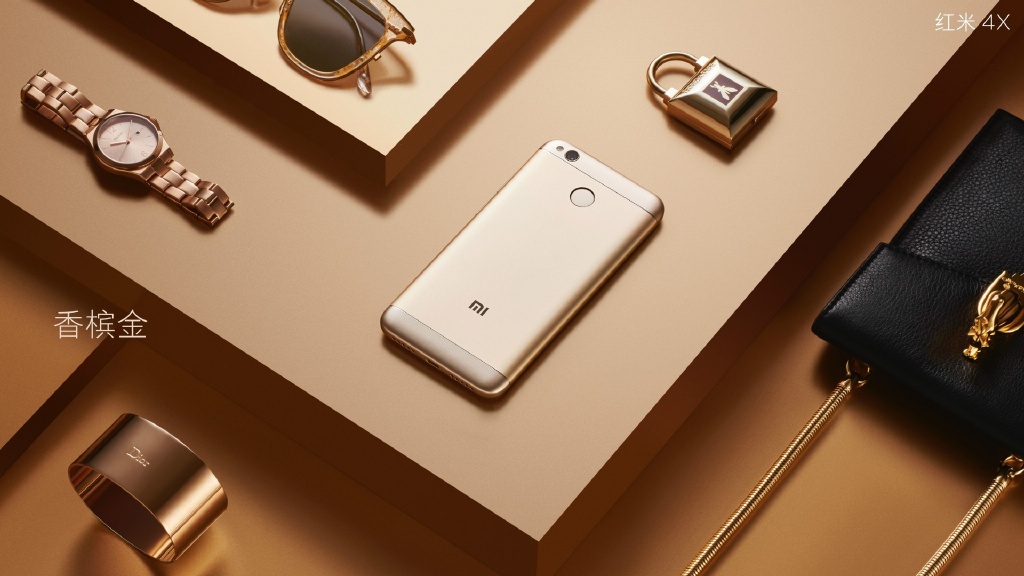
The Redmi 4X comes with a slim 8.65mm body (despite featuring a large 4100mAh battery in a compact 5-inch form factor). At the back, there is also a fingerprint sensor, which is a great addition at this price. The smartphone is available in Cherry Blossom, Champagne Gold and Matte Black colours.
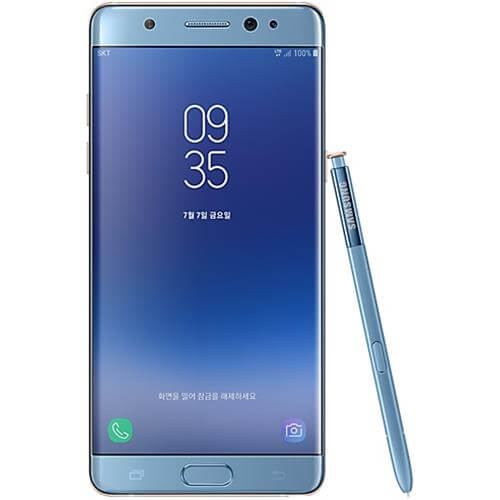
Samsung had begun the sales of Galaxy Note Fan Edition (refurbish Galaxy Note 7) in the home country of South Korea on July 7. Since the phablet has received amazing reception, reports are claiming that the Galaxy Note FE will be debut in other regions later this month.
The South Korean company had previously confirmed that it will be only selling 400,000 units of Galaxy Note FE in South Korea. Information coming from local carriers have revealed that the number of mobile subscribers have reached 24,000 since July 7. Before the Galaxy Note FE’s release, the average rate of daily device activations was 15,000. The 60 percent spike indicates that the Galaxy Note FE is selling well in South Korea. The telecom operators are silent on the number of Galaxy Note 7 units that have been sold so far.
Black Onyx and Blue Coral color variants of the Galaxy Note FE are quite popular compared to other options such as Gold Titanium and Silver Platinum. An official from the South Korean company had said that the limited edition Galaxy Note FE’s stock will not be replenished once it gets sold out.
An insider has confirmed to The Investor that the Samsung may debut the Galaxy Note FE in other markets by the end of this month. However, he has not revealed which markets will be receiving the Note FE. It appears that the Note FE would be made available in limited markets.
Just like the South Korean Galaxy Note FE, the international edition is expected to be priced considerably less than the discontinued Galaxy Note 7 and it is expected to feature 3,200 mAh battery, Android Nougat OS, and partial support for Bixby AI. Rumors claim that the international edition of Note FE will be driven by Snapdragon 821 chipset instead of the Snapdragon 820 that came with the Galaxy Note 7. The Galaxy Note FE is selling for KRW 699,000 (~$608) in South Korea.
The Galaxy Note FE is made from recalled Galaxy Note 7 units. However, Samsung will not be refurbishing all the Galaxy Note 7 units as some of them will be recycled or used for internal testing purposes. Samsung is expected to unleash the Galaxy Note 8 by the end of August and make it available for buying at some point in September.
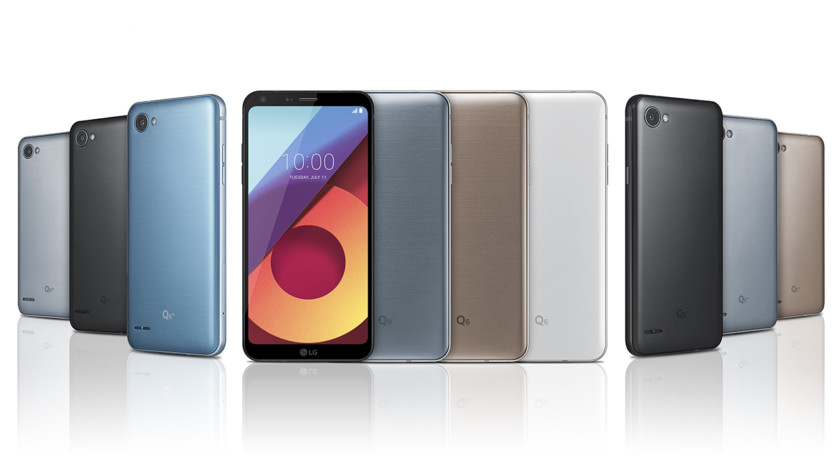
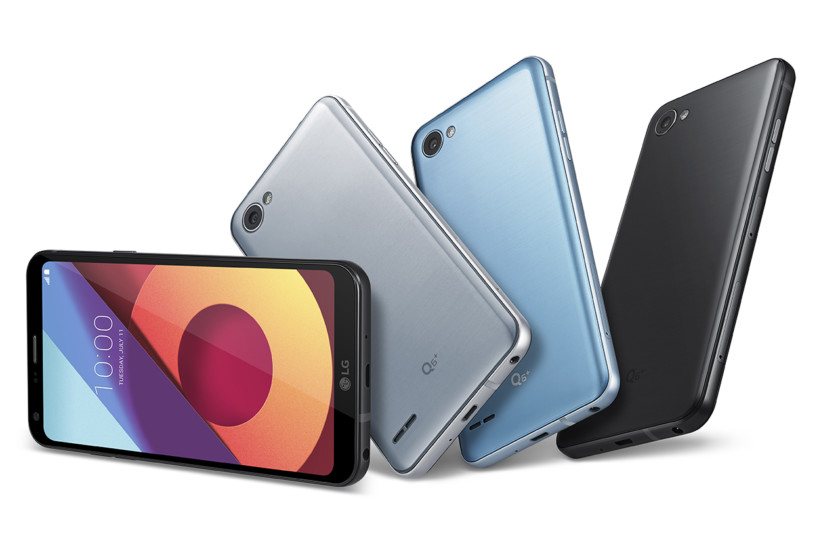
LG Q6, the smaller version of the LG G6 has been officially announced and the smartphone comes in three variants such as LG Q6, LG Q6+ and LG Q6a. LG had introduced full-screen called Full Vision on LG G6. The smartphone supported an aspect ratio of 18:9 and a resolution of 2,880 x 1,440 pixels. The South Korean has also included the Full Vision display in the LG Q6 series.
LQ Q6, LG Q6+, LG Q6a Specifications and Features
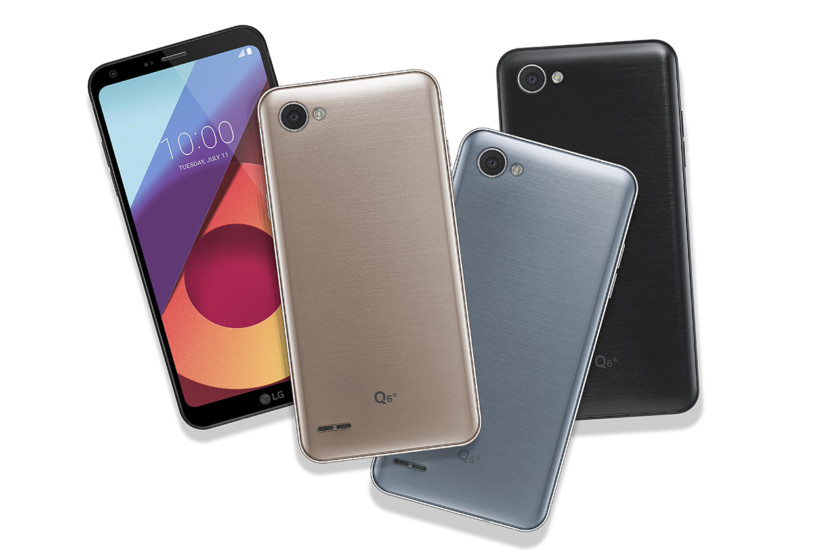
All the LG Q6 models come with 5.5-inch display and support full HD+ resolution of 2,160 x 1,080 pixels along with a pixel density of 442 ppi. The screens of these phones are curved at the edge and their chassis are also curved. LG has incorporated 7000 series aluminum frame along the edges of the LG Q6 phones. As it can be seen in the images of the LG Q6, these phones feature very less bezels.
The LG Q6, Q6+ and Q6a are all powered by Snapdragon 435 chipset. The LG Q6+ has 4 GB of RAM and 64 GB of storage. The LG Q6 features 3 GB of RAM and 32 GB of storage. The LG Q6a is the lower-end model featuring 2 GB of RAM and 16 GB of storage.
All the three LG Q6 models come with 13-megapixel camera coupled with single LED flash. On the front side, there is a 5-megapixel wide-angle selfie snapper that is coupled with face recognition sensor. LG has not included a fingerprint sensor on this phone. The LQ Q6 series phones are running on Android 7.1.1 Nougat OS that is customized with LG UX 6.0. These three phones also feature the same 3,000 mAh non-removable batteries.
Other common features of LG Q6, LG Q6+ and LG Q6a include LTE/3G/2G data connectivity, Wi-Fi 802.11 b/g/n, v4.2 Bluetooth, NFC and USB Type-B 2.0. These three phones measure 142.5 x 69.3 x 8.1 mm and 149 grams. The color variants of LG Q6 are Astro Black, Ice Platinum, Mystic White and Terra Gold. The LG Q6+ comes in colors like Astro Black, Ice Platinum and Marine Blue. The LG Q6a would be available in colors such as Astro Black, Ice Platinum and Terra Gold.
LG Q6+LG Q6a
LQ Q6, LG Q6+, LG Q6a Pricing and Availability
The South Korean company has not confirmed the pricing of the LG Q6 phones. However, it has said that these phones will be first available in Asia starting from August. Later, the Q6 series will also arriving in other markets like Europe, Latin America and North America.
A new Motorola device just appeared on GFXBench. The Motorola XT1789 has unusual specs that do not correspond to any of the upcoming Motorola phones making us wonder if this is a new device entirely.
It is not the Moto G5S because that is supposed to have a 5.2-inch display. Neither is it the G5S Plus as that will launch with a 5.5-inch screen. The camera configuration also differs from that of the Moto X4. So what device is this?
The Motorola XT1789 has a 5.0-inch FHD display. There is 3GB of RAM, 16GB of storage and an octa-core processor. The processor is clocked at 2.2GHz and is paired with an Adreno 508 GPU. This is either the Snapdragon 630 or Snapdragon 660.
For optics, the Motorola XT1789 has a 12MP rear camera that can record in 4K. The front camera is a 16MP sensor which is an unusual pixel count on a Motorola phone. The XT1789 runs Android 7.1.1 and has NFC too.
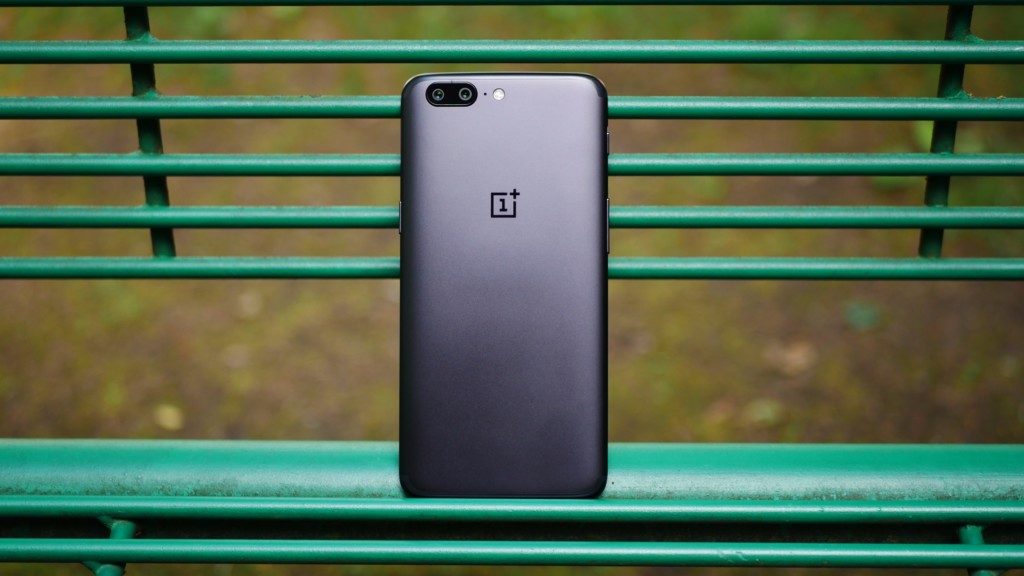
Each year OnePlus manages to create a huge hype about their upcoming smartphone and they did that again with their OnePlus 5. This is the most mature, the most powerful and the most expensive OnePlus the company has ever made. Is the so-called flagship killer worth $500? We have used the OnePlus 5 for quite a bit of time and here our full OnePlus 5 review.
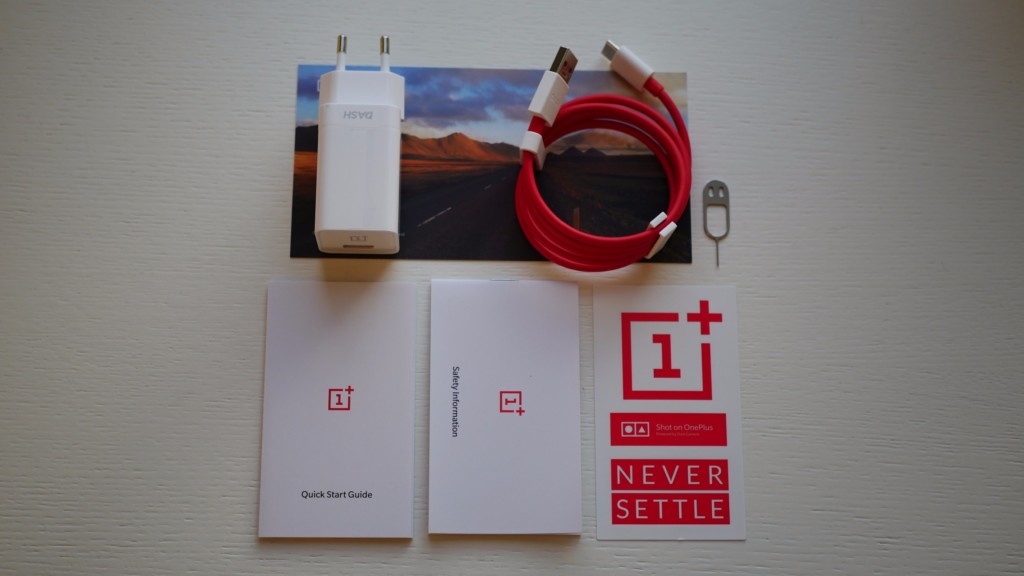
As usual, the phone comes in the OnePlus style box where all the items are packed neatly. Besides all the usual stuff, you get a OnePlus sticker and a super fast Dash charger.
DESIGN and DISPLAY
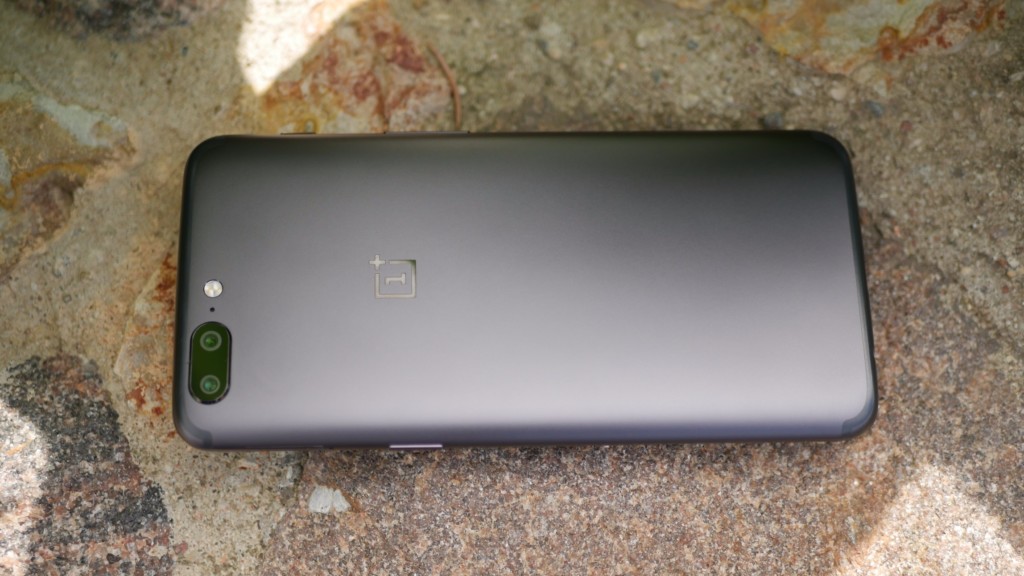
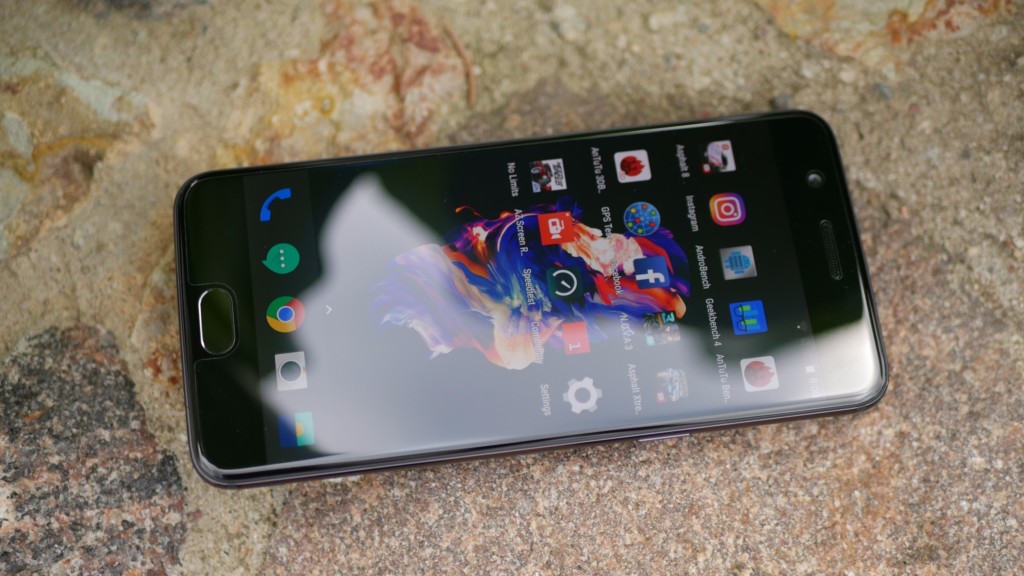
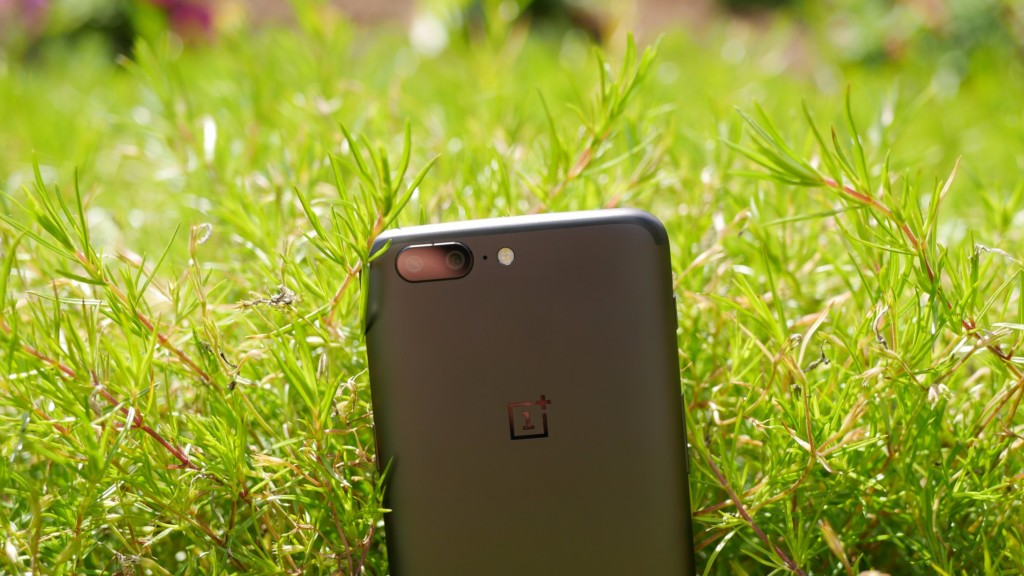
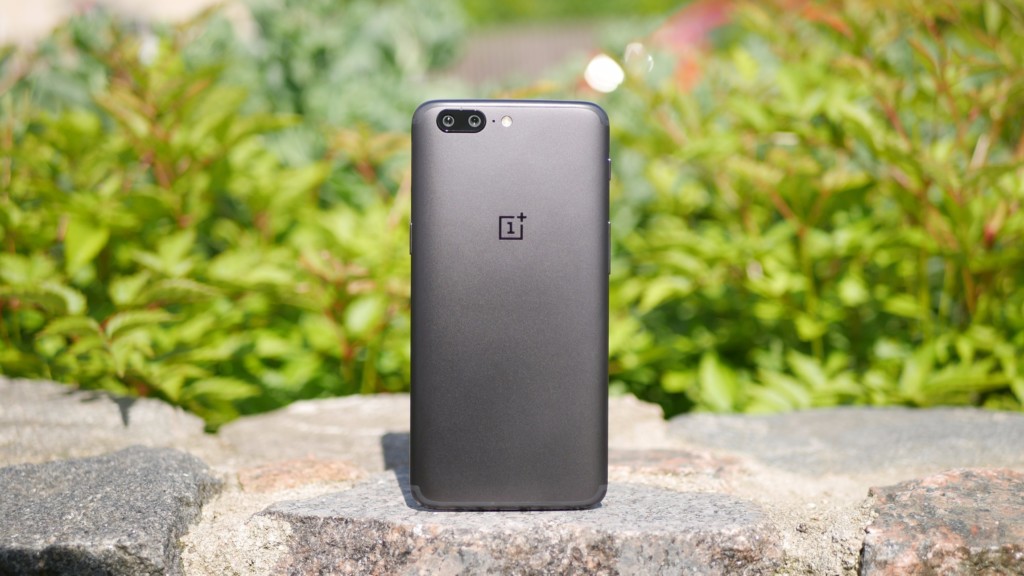
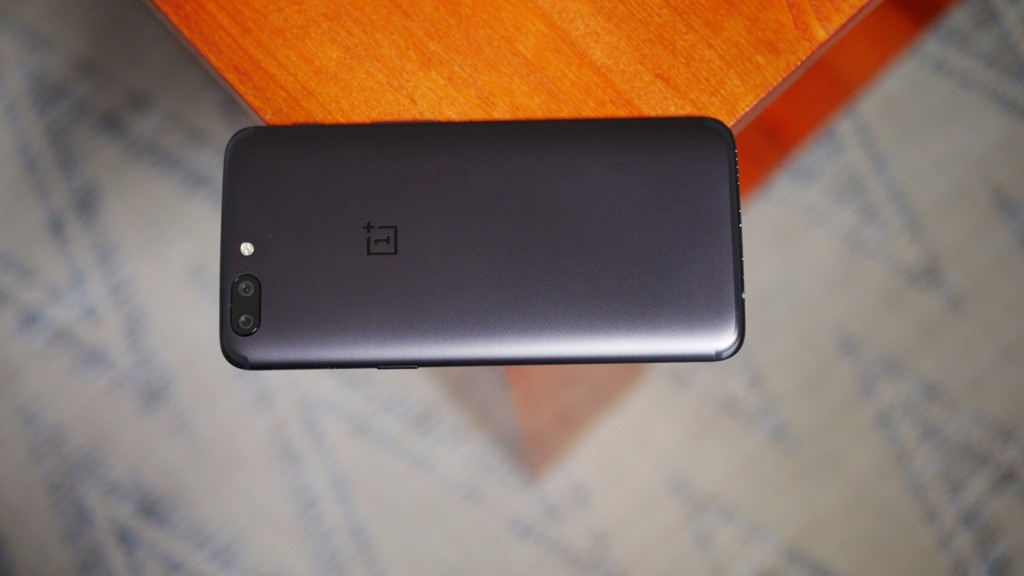
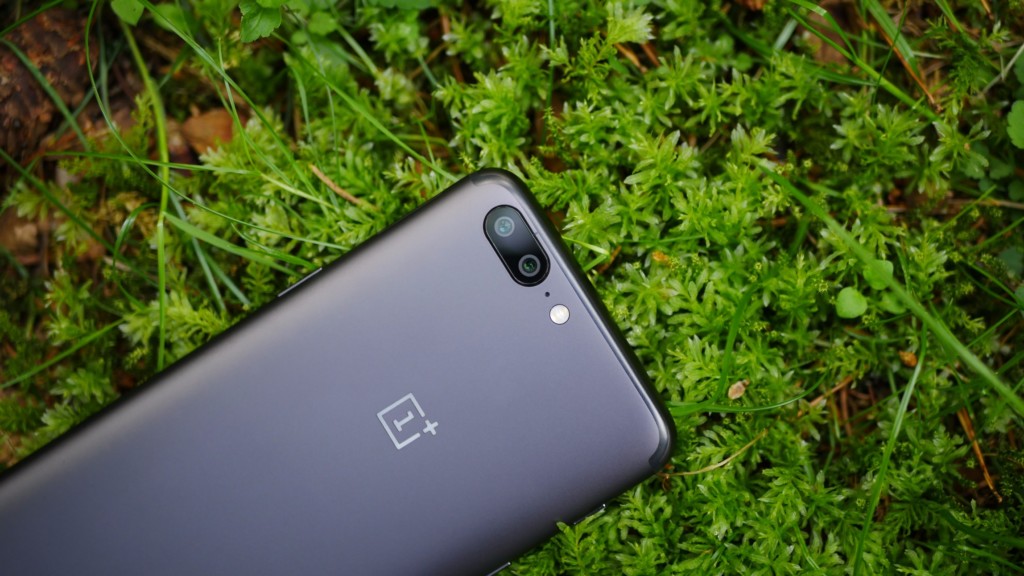
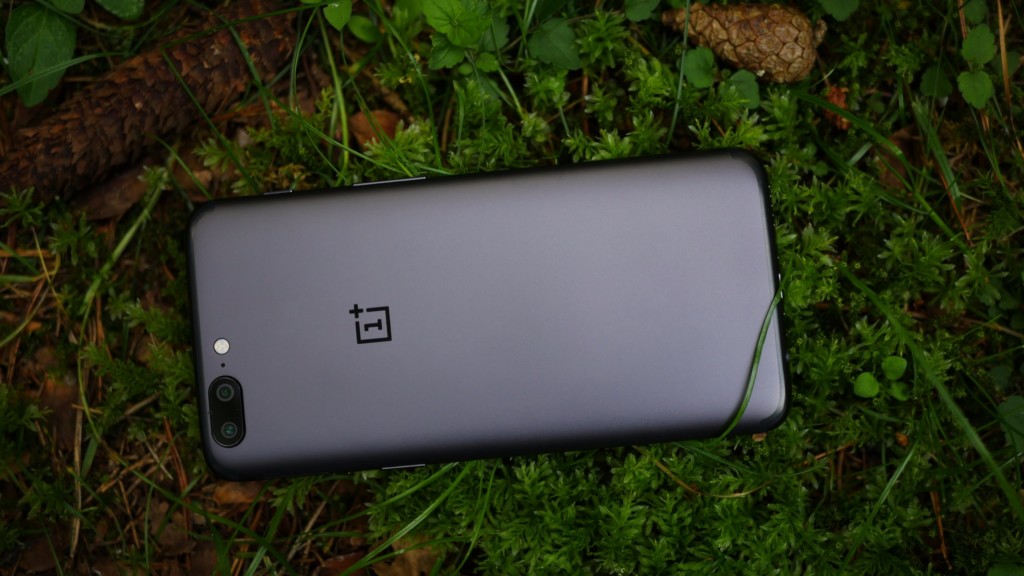
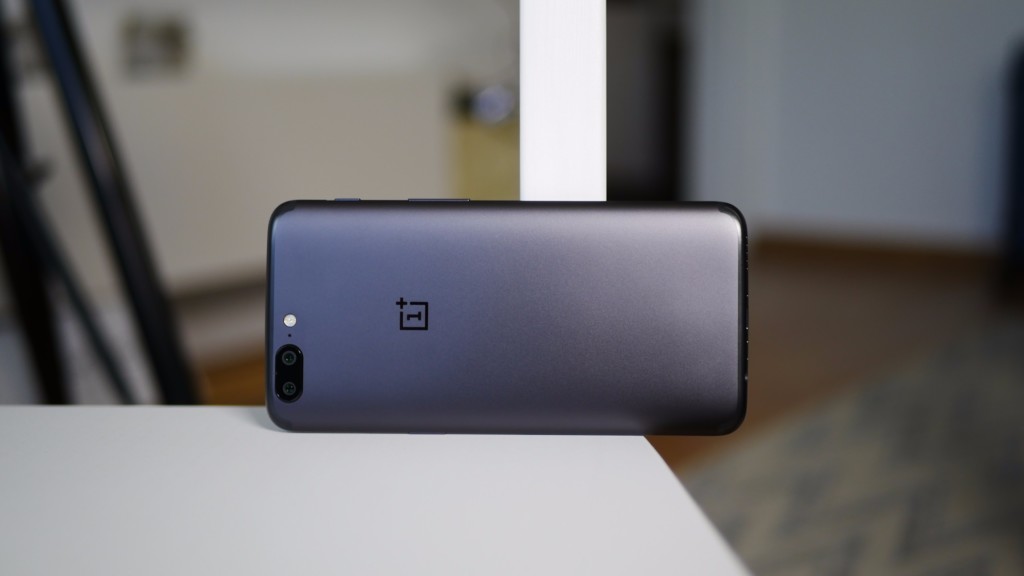
Right off the bat, you will notice that the phone is very similar to the iPhone 7 Plus and that it obvious from a metal backplate, dual camera setup and plastic inlays for antennas.
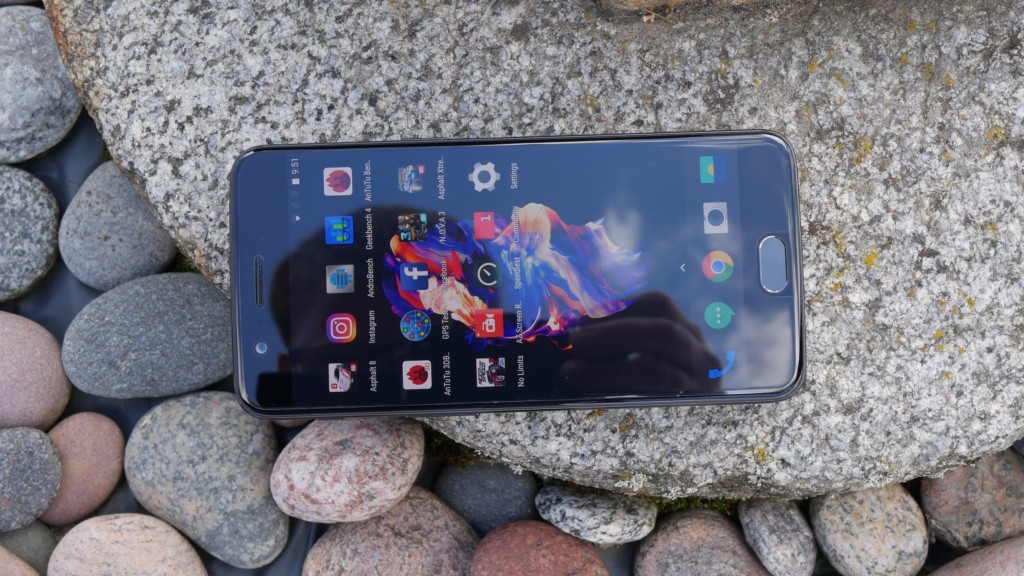
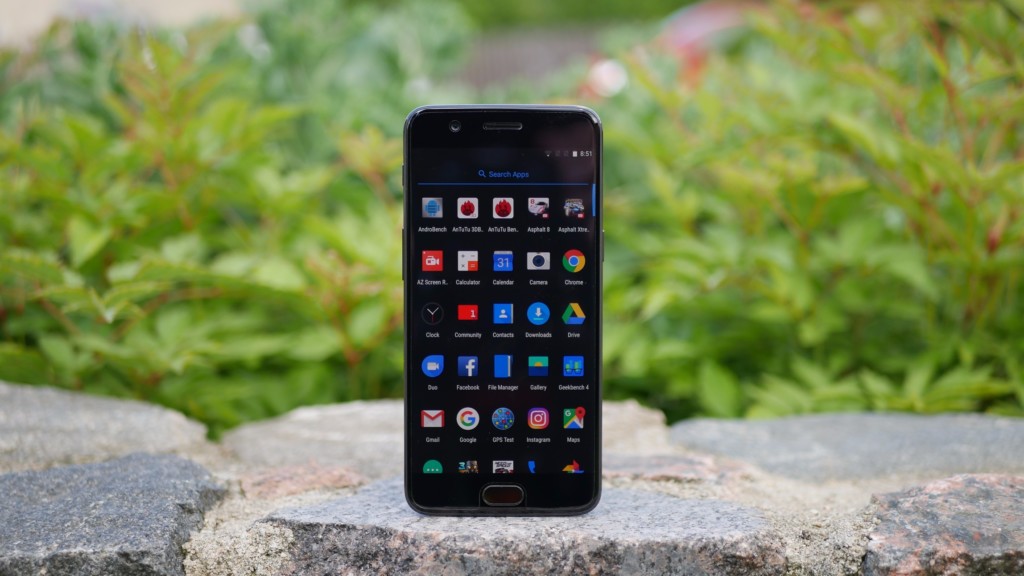
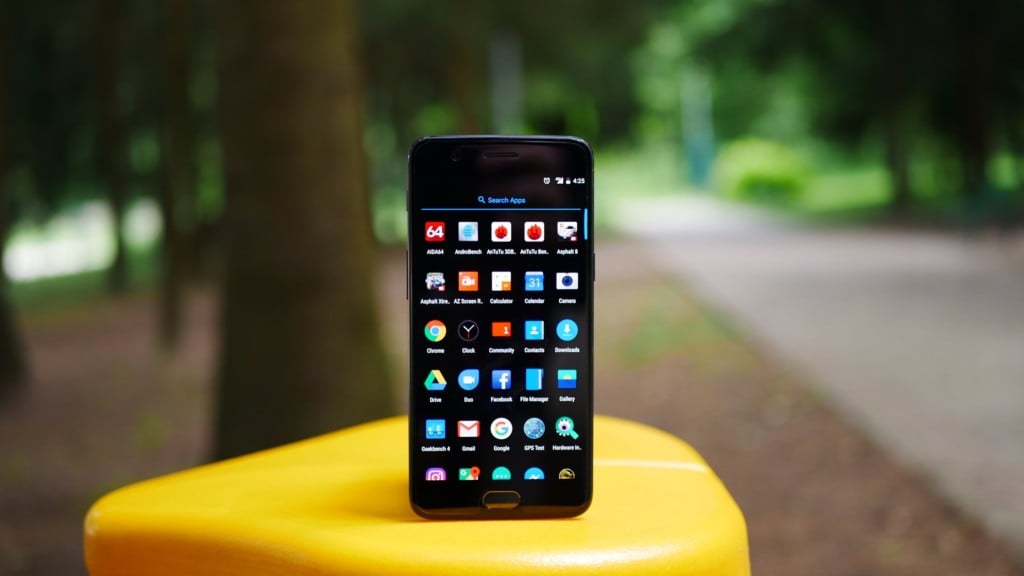
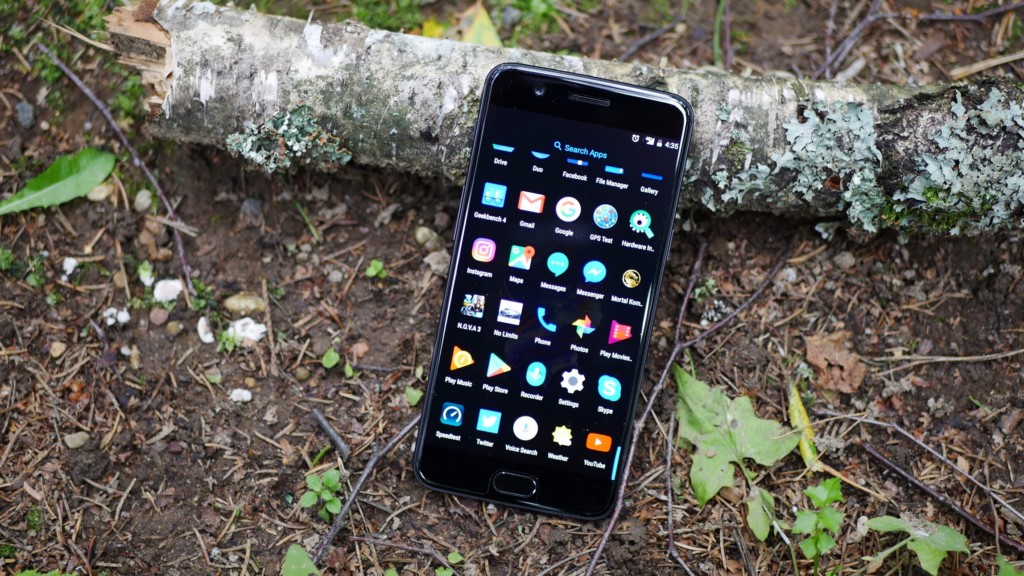
Things are different on the front as we have a usual OnePlus look. A 5.5” display is still 1080p but I’m absolutely okay with that because it is punchy, vibrant, sharp, it has deep blacks and it has a decent outdoor visibility.
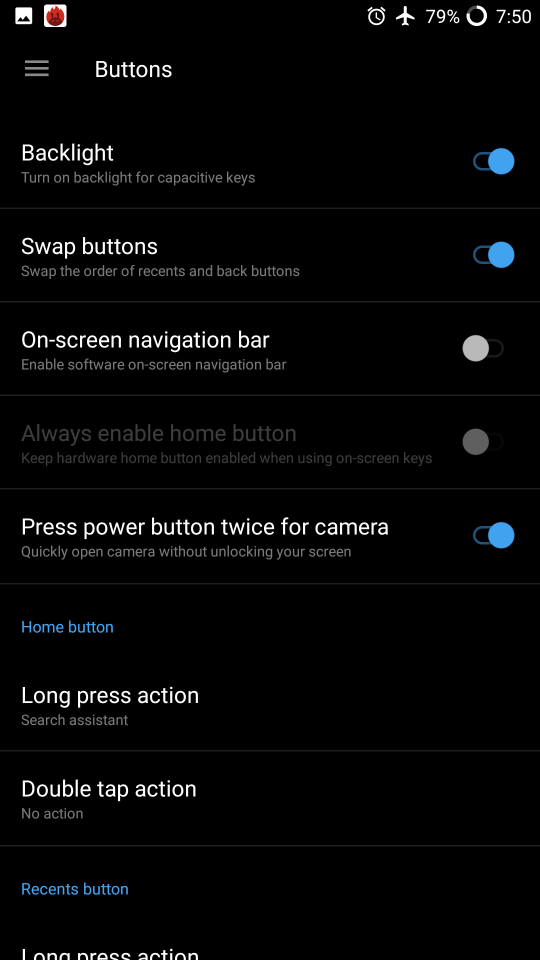
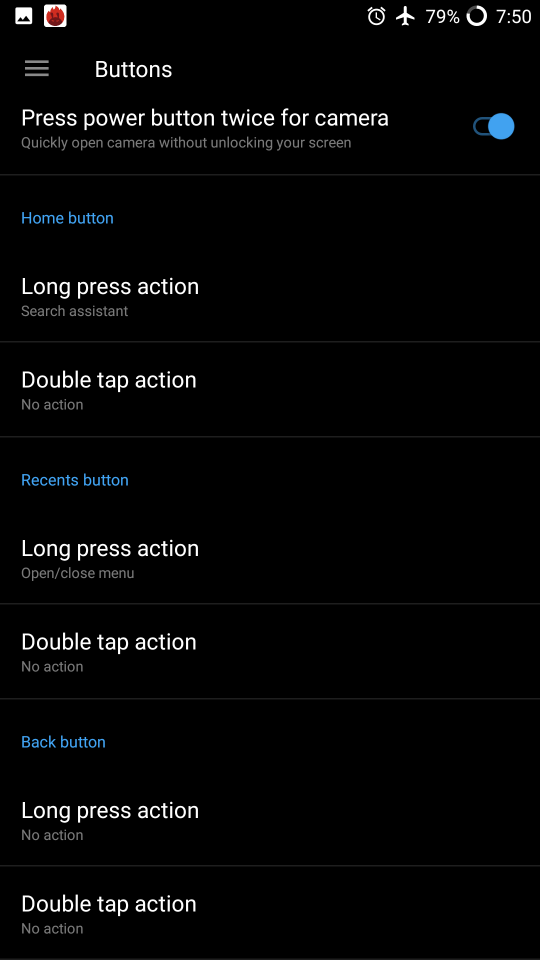
Also, we have a familiar button layout that consists of nicely backlit capacitive keys, which are highly customizable and they have a nice haptic feedback. We also have a ridiculously fast and accurate fingerprint scanner. It unlocks the phone 10/10 times. A lot of users appreciate a highly customizable multi-color notification Led light and I like it too.
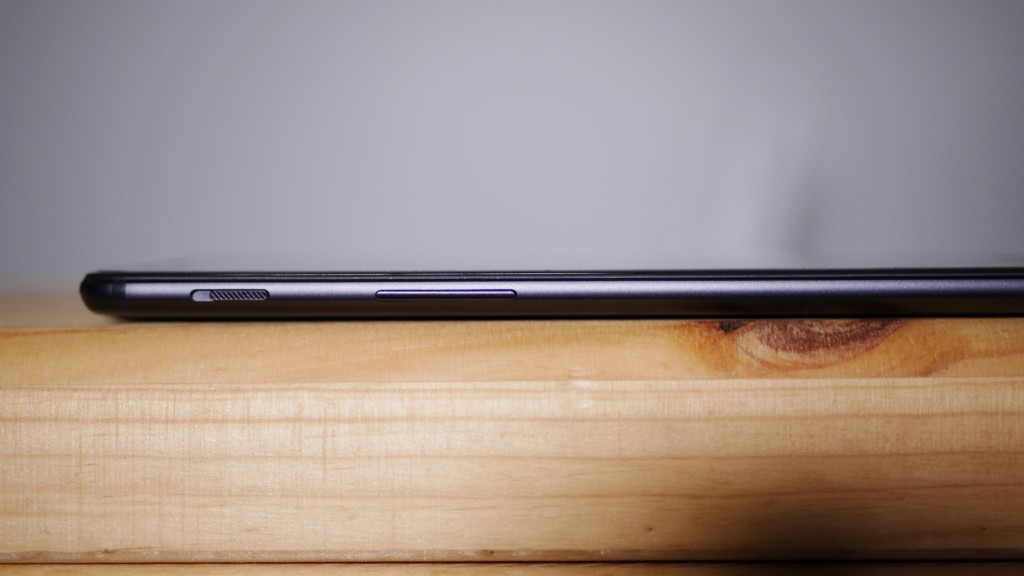
A 3 position notification slider is back and I have always loved this feature as it serves well in practice.
When it comes to optics, we have one of the most powerful setups that are available on the market, well, at least on paper. The OnePlus 5 sports one 16MP shooter with f/1.7 aperture lens and EIS that is based on the gyroscope sensor. There is another 20MP camera with f/2.6 aperture lens, phase detection autofocus, 2x optical zoom and dual-LED flash.
On the front, we have a beefy 16MP selfie shooter that uses f/2.0 aperture lens and EIS.
Overall, the build quality is great and the phone is comfortable to hold in the hand. However, the volume rocker moves and rattles a little bit, which is a shame to see that on a $500 phone. Hopefully, this is my unit only as I already dropped the phone a few times.
HARDWARE and PERFORMANCE
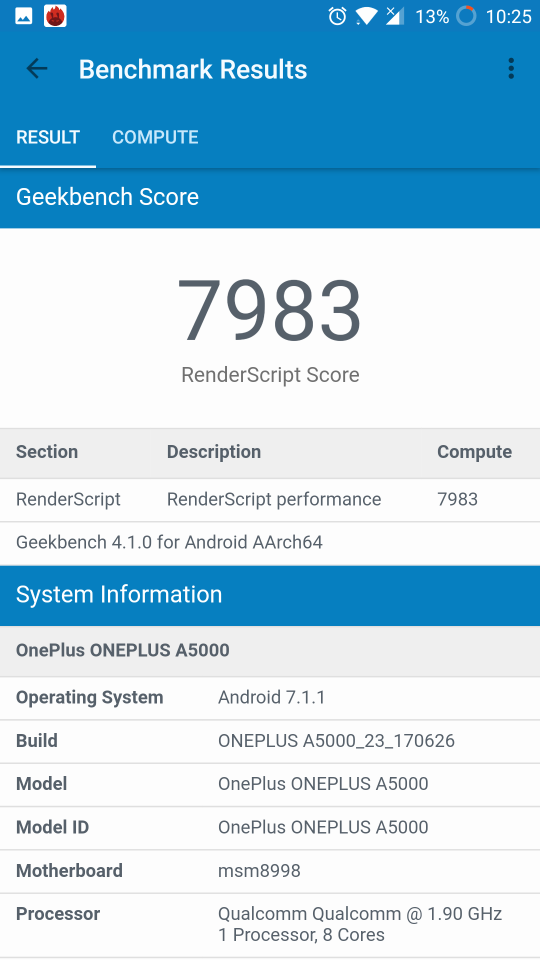
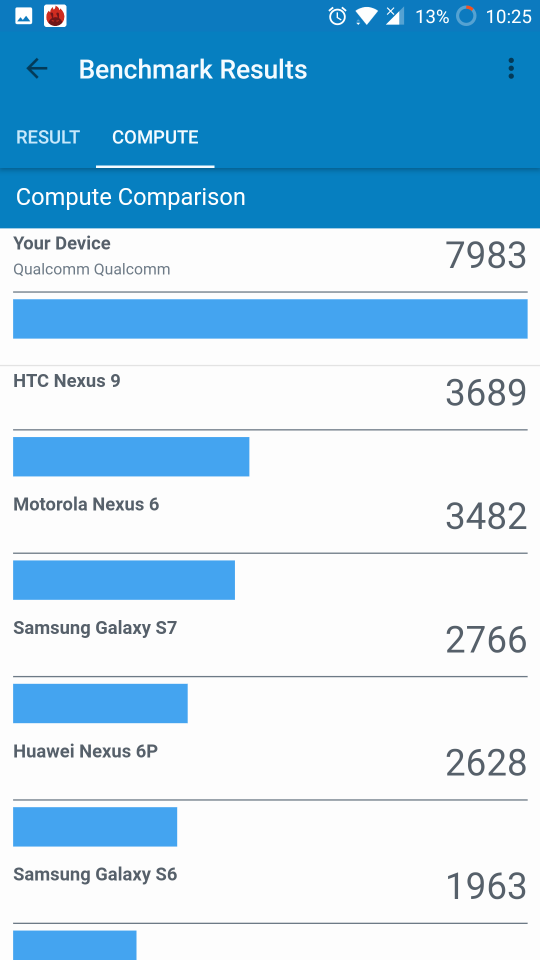
When it comes to hardware, the OnePlus 5 is one of the most powerful phones the money can buy.
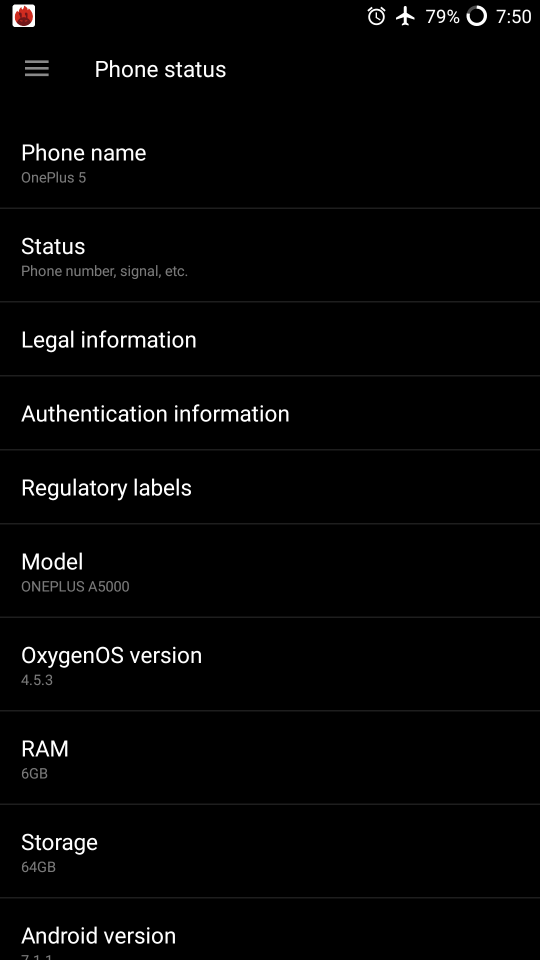
I have a 6GB of RAM and 64GB of storage model but if you pay extra, you can get a phone with 8GB of RAM and 128GB of non-expandable storage.
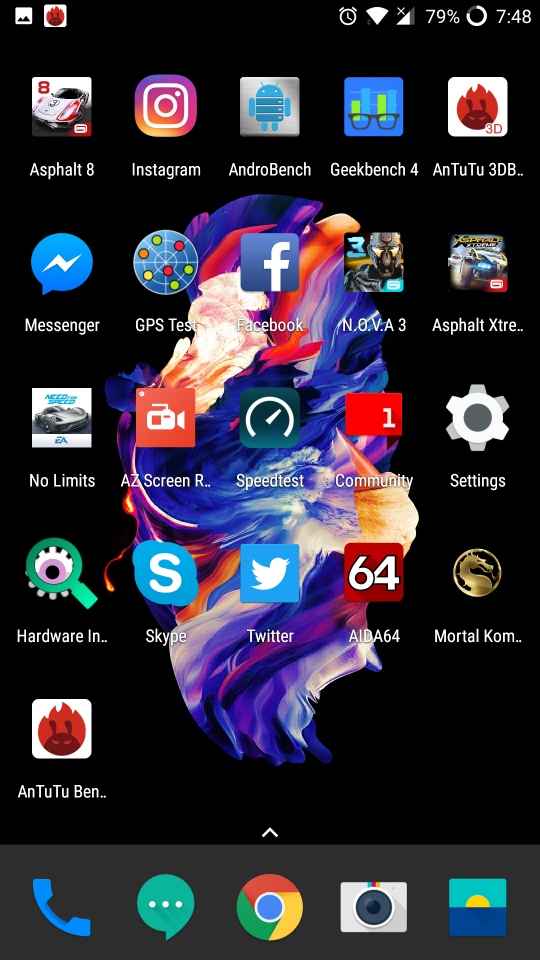
As expected, the phone just flies through everything and all the latest and the most graphically intensive 3D games work fine. I did notice, however, that the phone gets quite hot after 30 mins of gaming and then a bit of lag kicks in but I can’t really complain about that.
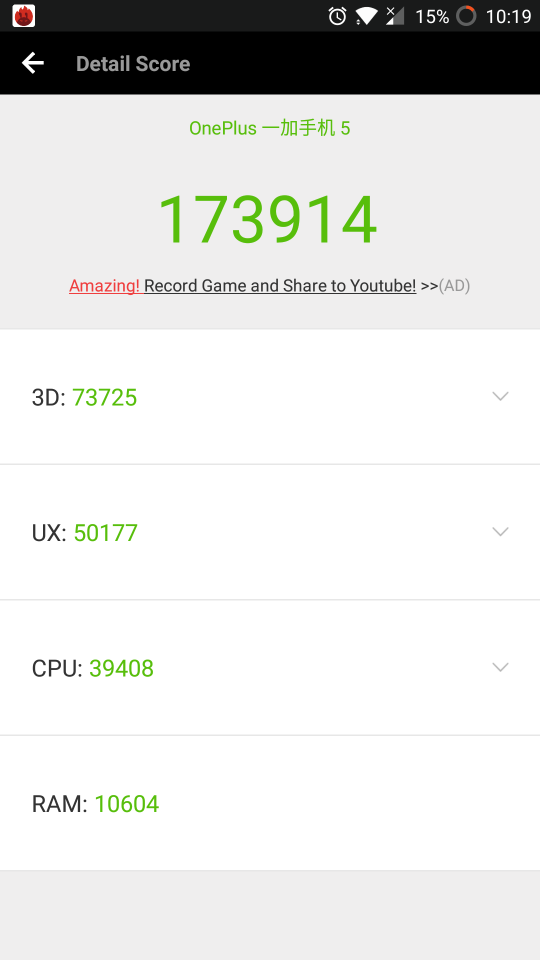
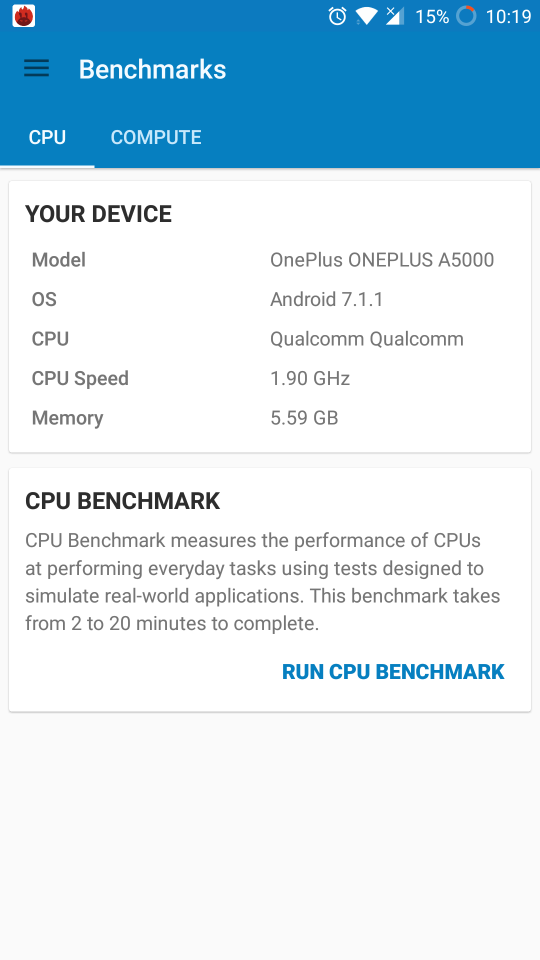
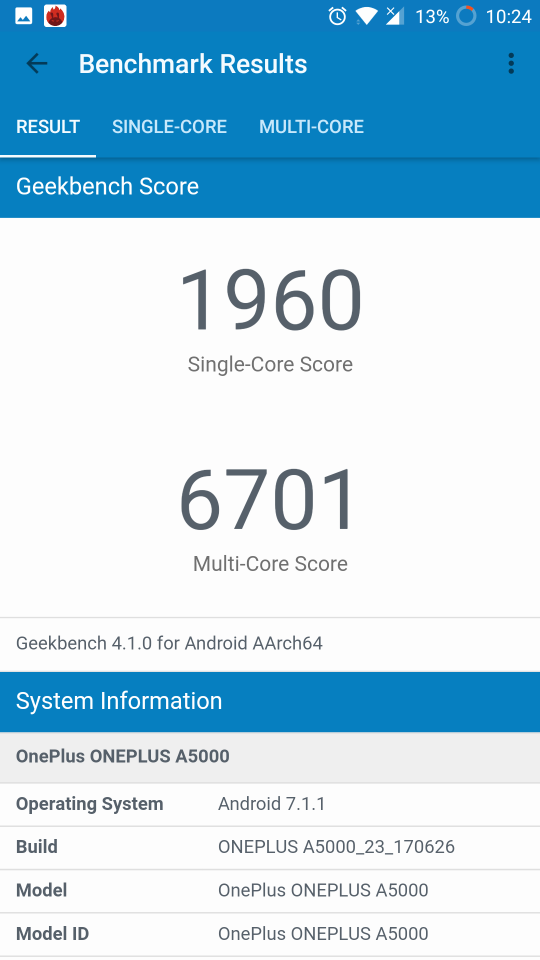
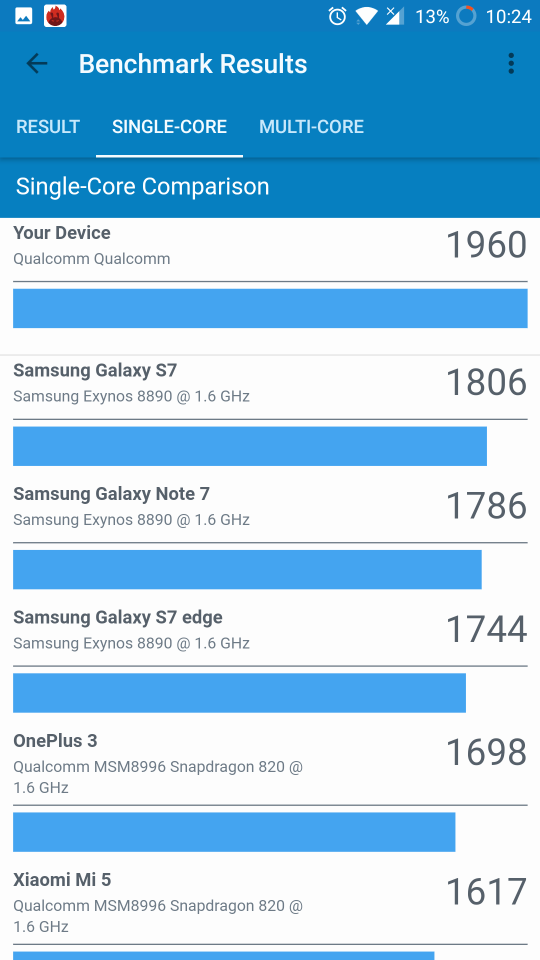
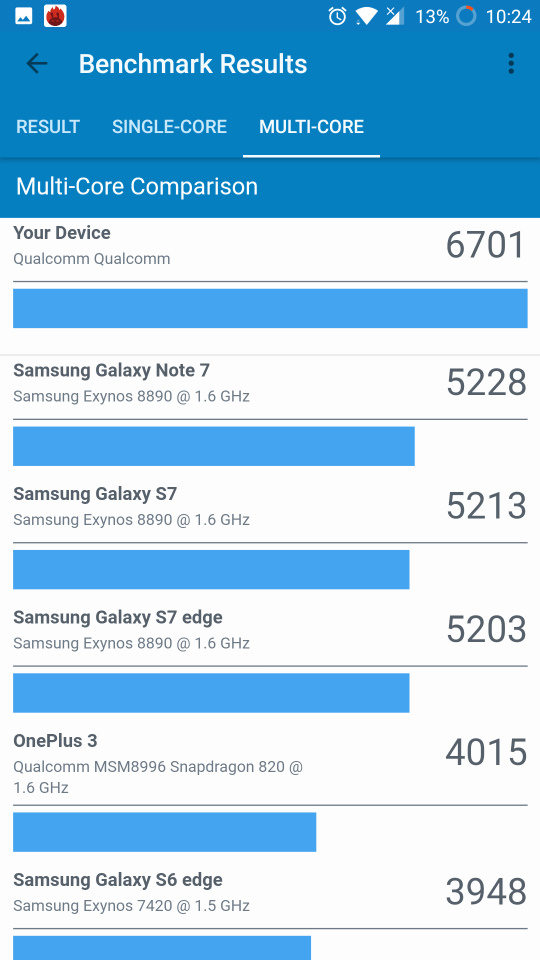
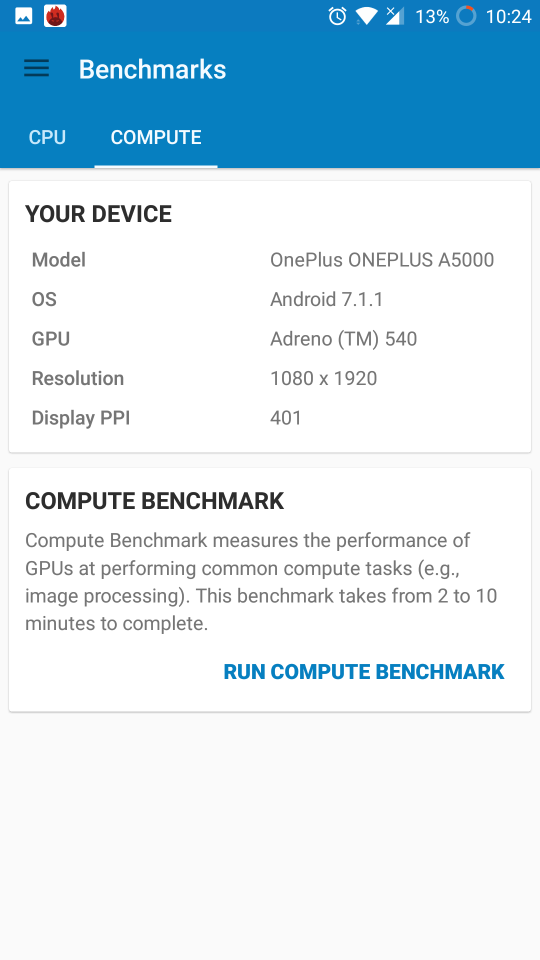
BENCHMARKS
USER INTERFACE
If you follow my channel, you probably know that Oxygen OS, that is based on Android 7.1, is one of my favorite implementations of Android ever.
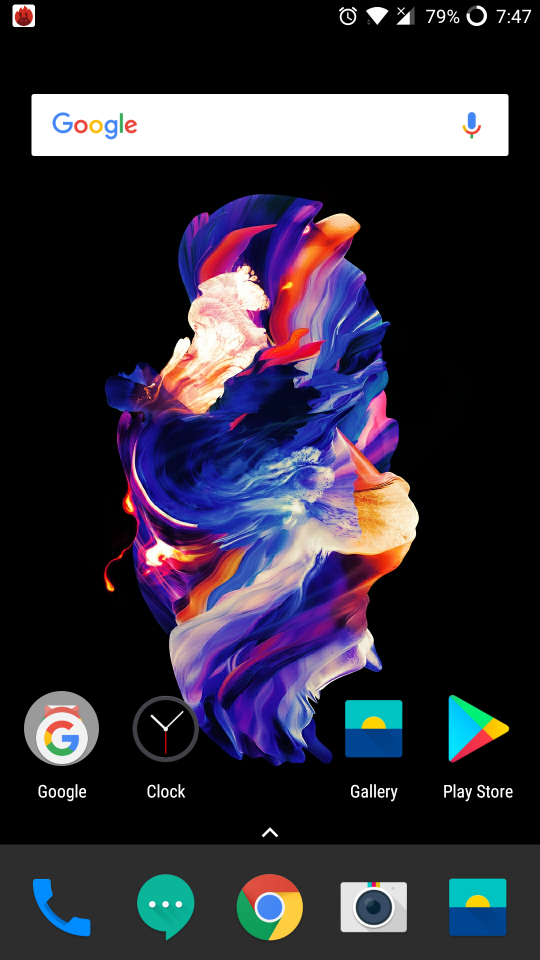
Well, the looks haven’t changed much. It’s just like stock Android with plenty of features, customization options and little tweaks to make the phone look your own.
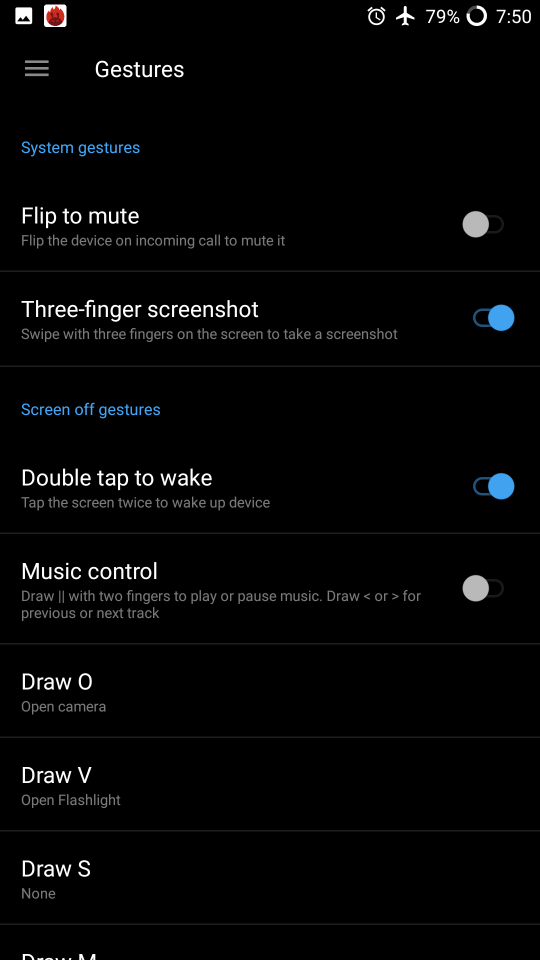
Just to name a few, I love the ability to customize the capacitive keys or choose the on-screen buttons. You can also choose from quite a lot of gesture controls and quick launch features that work just great. My favorites include double pressing a power key to open up the camera, drawing a V to open up the flashlight or a classic double tap to wake feature.
There are some other cool features to play with but the most important thing about the OnePlus 5 is the speed and fluidity. I’ve said it a couple of times already but I think that the Oxygen OS is probably the fastest Android operating system. All the apps open up and close fast and honestly, it’s impossible to make this phone lag.
CAMERAS
The camera app can take pictures very fast. There are some shooting modes like a pro mode that allows you to adjust some image settings. Also, there is a slow-motion video mode and a portrait mode that allows you to utilize that secondary camera sensor.
The portrait pictures usually look pretty good and we have a nice bokeh effect. However, some of the pictures came out of focus.
You can also take pictures with 2x optical zoom. The quality is definitely better than using a digital zoom but there is quite a bit of noise left in the images.
The daylight image quality is very good. There is plenty of detail, the pictures come out sharp and the colors look nice. Also, the phone has an auto-HDR mode, so the dynamic range adjustment is usually good. However, this is not a true flagship-grade quality, as the Samsung Galaxy S8 takes better-looking pictures.
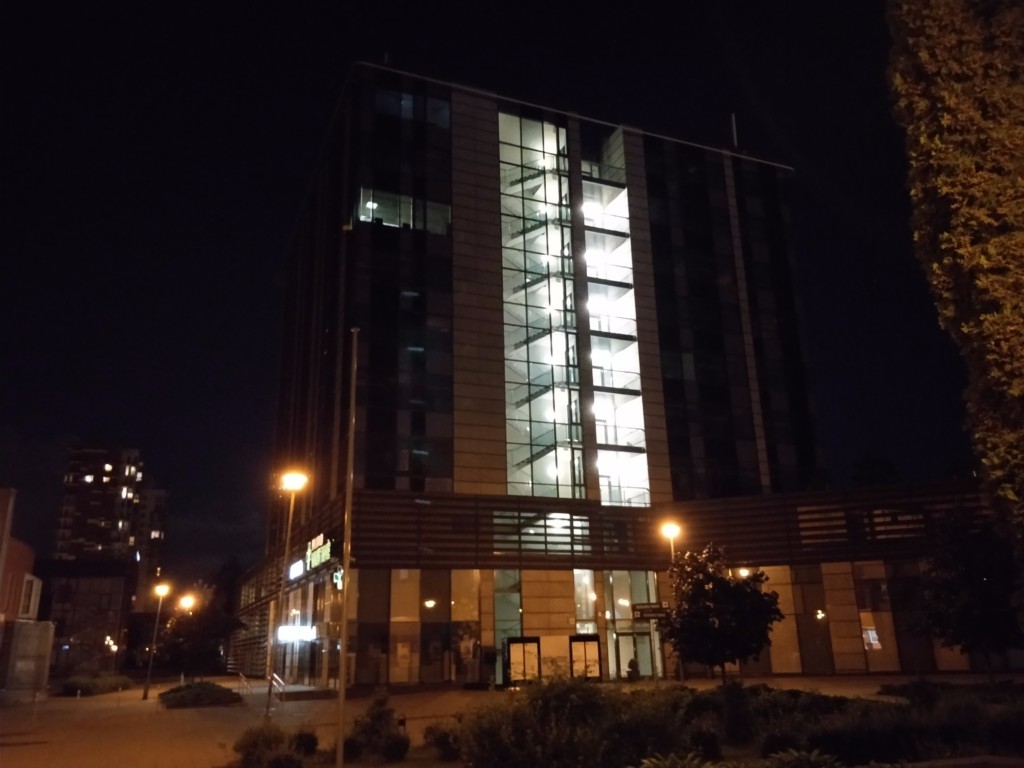
The low-light camera performance is pretty good for a $500 phone but if you compare the pictures side by side with the Galaxy S8, we still see that the OnePlus 5 is lagging behind.
A 16MP selfie shooter is just great. The pictures come out sharp and detailed and the quality is even better than on the S8.
The 4k video quality is good yet not great. I love that there is plenty of detail, the colors look nice and the continuous auto-focus feature works fine. However, there are quite a few video artifacts going on and most importantly, the footage is shaky due to the lack of OIS.
1080p video quality is good and the footage is much better stabilized but naturally, there is less detail. Also, there is a little bit of jello effect going on since the phone uses a gyroscope sensor to stabilize the footage.
The 1080p selfie video quality is quite good and I’m happy with the sound recording quality. However, I noticed that some video artifacts kick in if you shoot under direct sunlight.
In general, I think that the OnePlus 5 has great all-around cameras for a $500 phone but it is still behind the true flagships like the Samsung Galaxy S8.
The loudspeaker sound quality is great. It’s loud, the sound is balanced and rich. However, I don’t like the placement on the left corner because I usually ended up covering it up once I held the phone in the landscape mode.
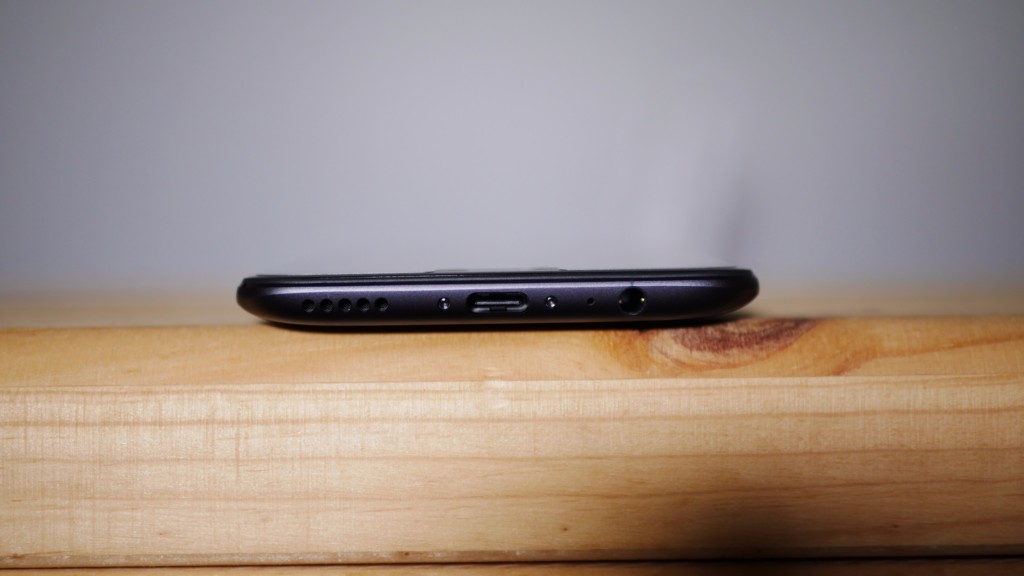
The sound quality via the headset jack is good too, I have no complaints here.
CONNECTIVITY
As far as connectivity, I didn’t have any issues at all. The signal reception and the call quality have been excellent, the Wifi speed and range are great and finally, the GPS is very accurate. The phone has most of the sensors, including a gyroscope,so you are all set in this department.
One thing you have to know is that the phone does not have a microSD card slot for storage expansion.
BATTERY LIFE
The OnePlus 5 has a 3300 mAh battery that performs quite well but I expected a bit better results. I usually managed to get about 4.5 hours of screen-on time but your results may be better since I’m quite a heavy user and I usually install a lot of apps and lots of social media accounts.
Dash charge is still one of the best in the business. It takes just about 1 hour to fully charge the phone.
CONCLUSIONS
So, there you have, the OnePlus 5. This is easily one of the best if not the best phone you can buy for about $500.
It’s well built, the display is great and the phone is very fast no matter what you throw at it. Also, the phone has a good loudspeaker, plenty of customization options in the UI and decent battery life with a fast charging.
However, the camera is very capable but it is still lagging behind true flagship phones and the OnePlus 5 lacks some flagship features like water resistance.
At the end of the day, the OnePlus 5 is a very solid phone and it is an easy buying recommendation but may also want to check out some of the last year’s flagship phones (e.g. Samsung Galaxy S7 edge) since you will be able to get them for a similar price.
Huawei’s Honor brand is proving to be a very lucrative cash cow for the company. It has been from one success story to the other for the Honor brand and the Honor 9 which was launched about a month ago has joined the winning party. Honor’s President of its Business unit has revealed via a Weibo video post that the company has been able to sell up to 1 million units of the flagship model in less than a month.
According to the Weibo post, the Honor 9 shipment surpassed 1 million units in just 28 days. The Honor president also disclosed in his post that the number of patronages was far beyond their expectations, thus leading to regular shortages of the model. He also disclosed that they would increase productivity while sticking to the high quality the brand is known for. This figure is only for the Honor 9 shipment in China and does not include the sales in Europe which is also ongoing.
The Honor 9 offers a lot of what the high-end flagship phones do right now, but for a much lower price. The model comes with a great design, fantastic performance and lots of nice touches which make it an impressive and affordable phone. As a reminder, the Huawei Honor 9 features a 5.15-inch 1080p display and is powered by a Hisilicon Kirin 960 chip with 4GB /6GB RAM as well as 64GB /128GB storage versions. The device also packs a 3200mAh battery and a dual 20MP + 12MP camera similar to the Mate 9 and Huawei P10’s but without the Leica branding while at the front, there is an 8MP sensor. Apart from The Honor 9 comes in Sea Blue, Amber Gold, Black and Seagull Gray colours and starts at 2299 Yuan (∼$338).
Xiaomi already releases its smartphones under either the Redmi or Mi name. Latest report says we may be getting a third sub-brand soon with the first model launching this month.
The new sub-brand has no name yet but it will take on OPPO and Vivo and have a top celebrity as its brand ambassador.
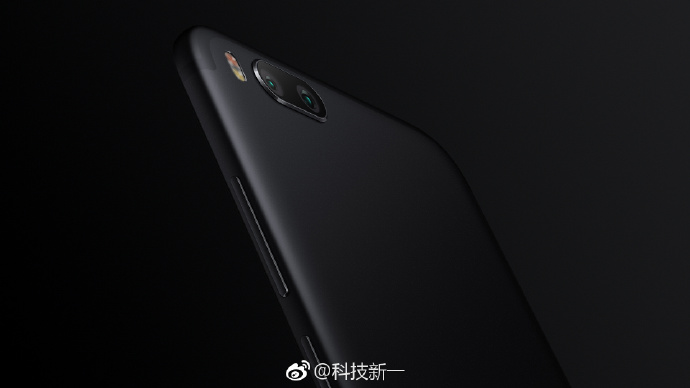
Alongside the rumor of the new line comes an image said to be of the first phone from the new sub-brand. The image shows the back of a phone with dual rear cameras and a LED flash on the left.
The camera design is almost identical to that of the OnePlus 5 as both sensors sit in a single housing that is slightly raised. We can also see a U-antenna line that runs from the left corner to the top.
Phones from the new sub-brand will most likely be sold strictly offline. Xiaomi realized a little late that offline stores are equally important causing it to lose market share to OPPO and Vivo. Now, it is working on opening Mi Home stores in all the countries where it is present.
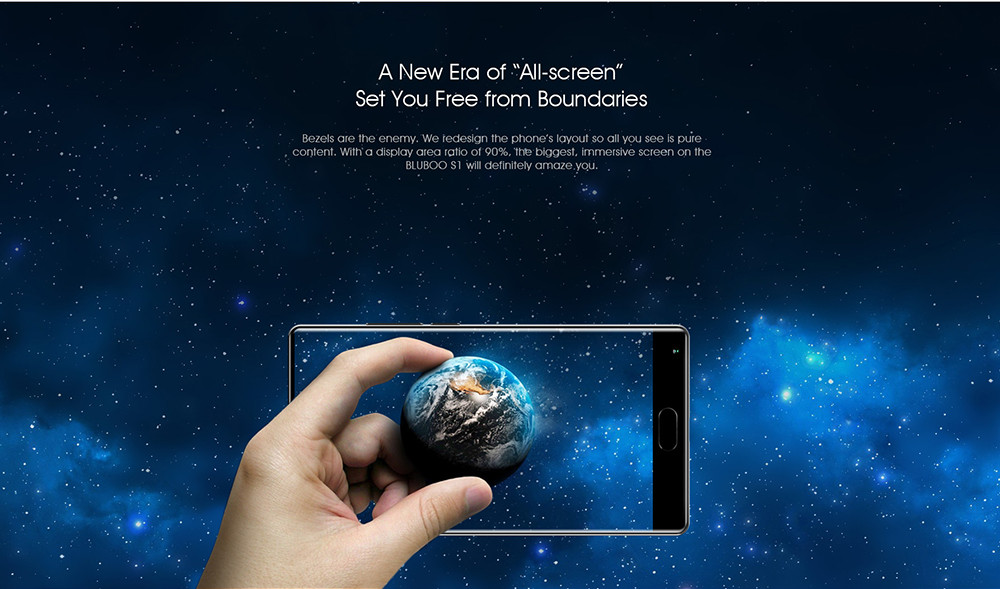
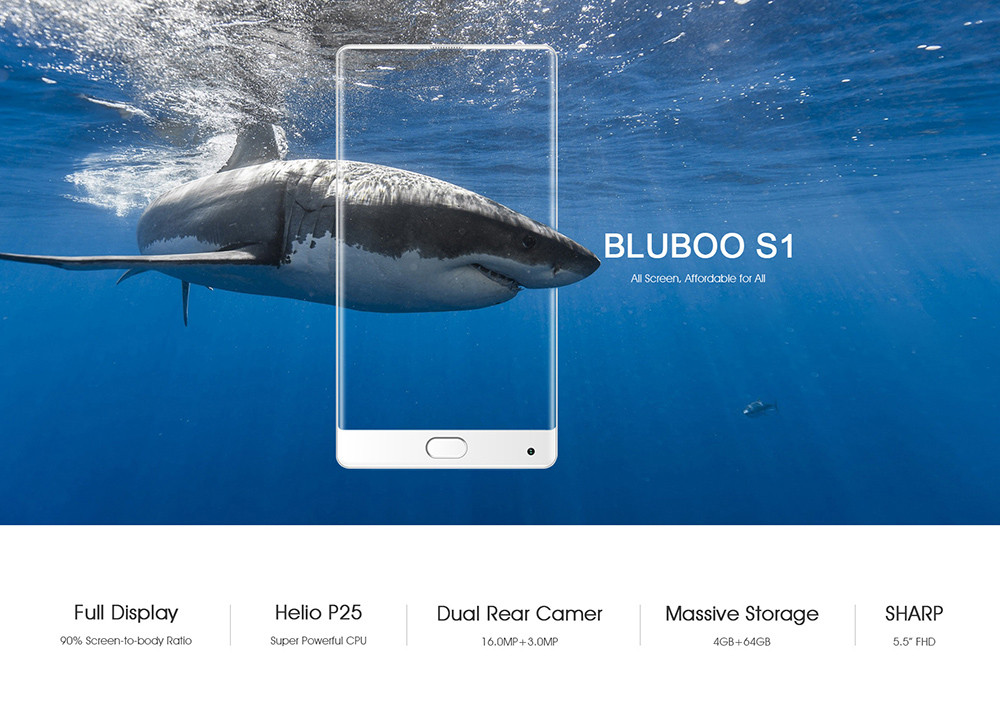
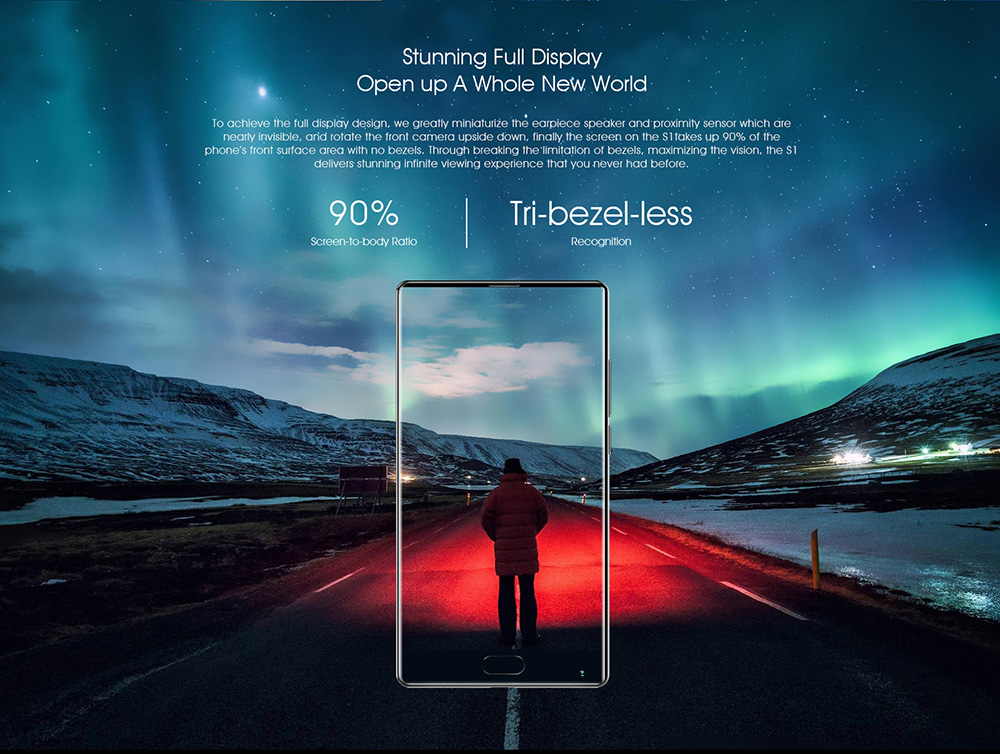
The phone sports a 5.5″ 1080p panel and the phone has 90% screen-to-body ratio.
In addition, the Bluboo S1 sports pretty good specs for the price that includes a Helio P25 chip, 4GB of RAM and 64GB of storage. Also, the device has a dual camera setup that consists of one 16MP sensor and another 3MP snapper.
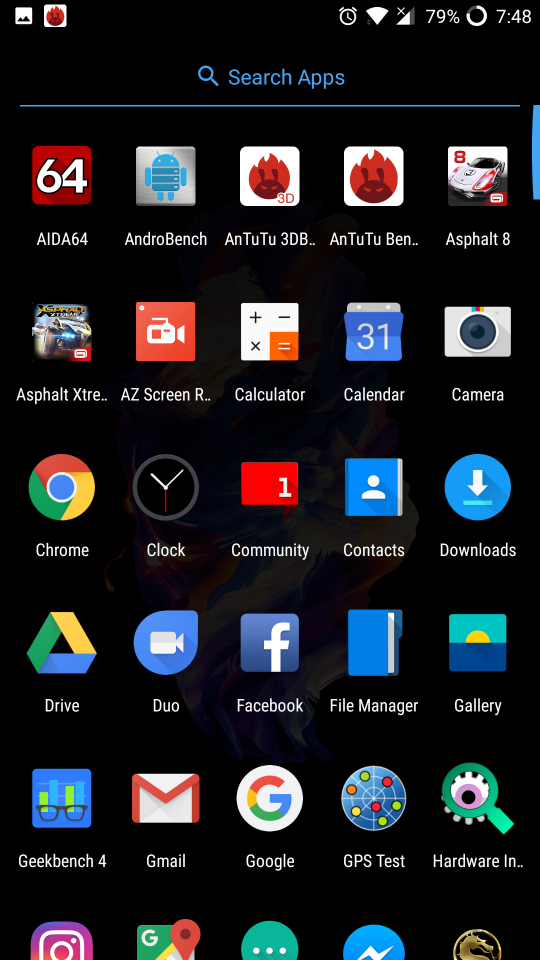
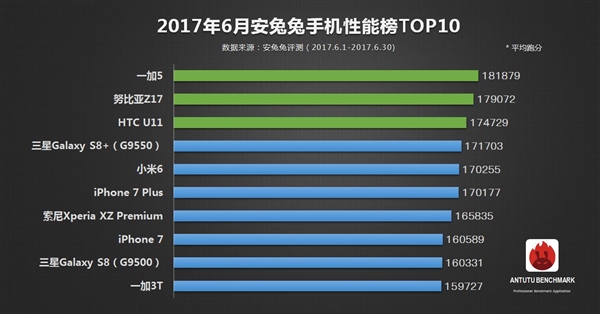
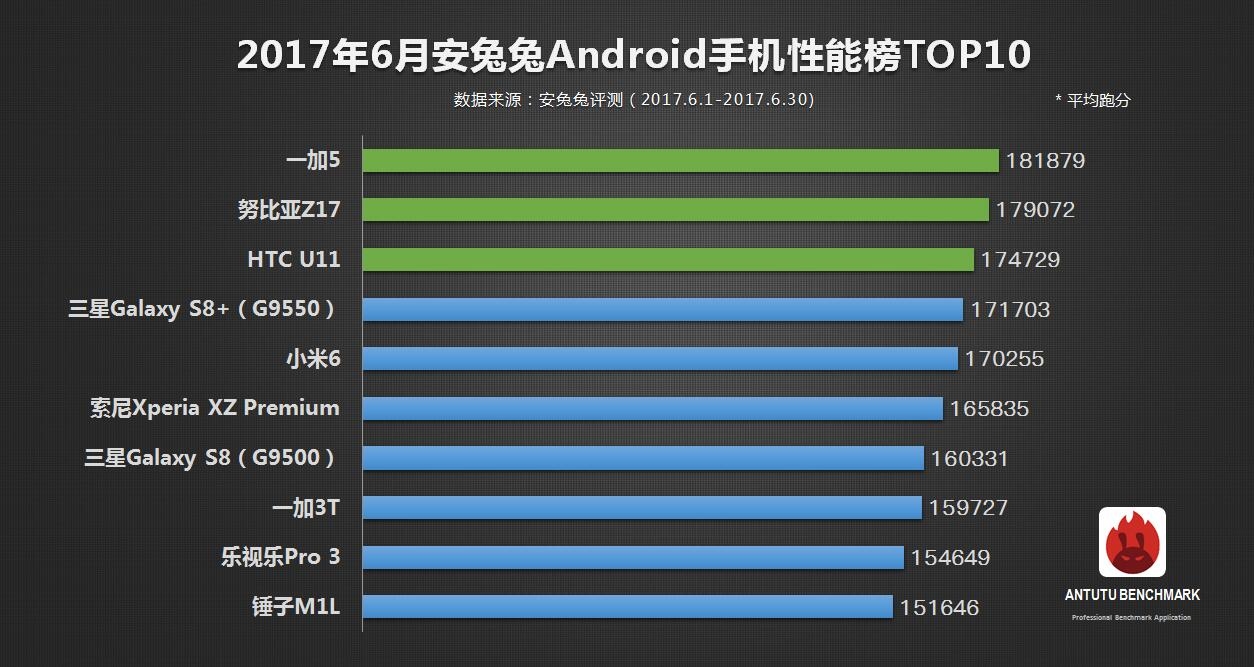
Every month, AnTuTu releases a list of the overall top 10 smartphones. There is also a list for each operating system (Android and iOS). The lists for June have been released and Android takes the lead again with the OnePlus 5.
For the month of May, the HTC U11 was the king of smartphones, however the OnePlus 5, released last month has dethroned it.
The OnePlus 5 claims the top spot with 181879 points, making it the first device to cross the 180k mark. It is followed by the ZTE’s Nubia Z17 and not the HTC U11 as it was released in June too and packs 8GB of RAM. The U11 claims the third spot.
The Galaxy S8+ comes in at number four with 171703 points while Xiaomi’s Mi 6 takes the fifth position with 170255 points. The iPhone 7 Plus is still on the list and sits at number six and the iPhone 7 is number eight on the list losing the seventh spot to Sony’s Xperia XZ Premium. The Galaxy S8 takes the ninth spot and the Snapdragon 821-powered OnePlus 3T is the tenth.
For the next few months until the new iPhone(s) release, expect to see Snapdragon 835 phones take the lead.
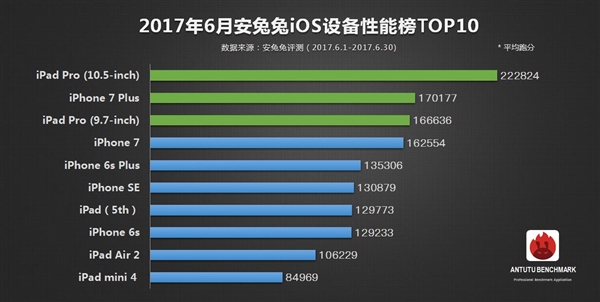
The top ten iOS devices sees the new 10.5-inch iPad Pro take the lead with its Apple A10X Fusion chip. The iPhone 7 Plus is second and the iPad Pro 9.7 comes in at number three.
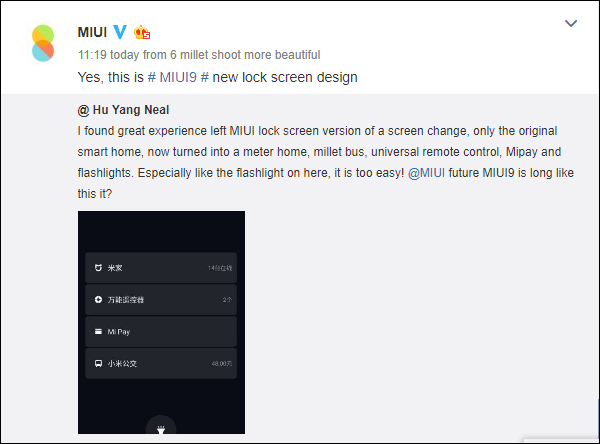
It has been over 8 months now since Xiaomi kick-started the development of its next-gen MIUI intuitive and we’re sure it is almost time the custom ROM is made official. To that end, a Xiaomi official has hinted that the MIUI 9 will be released before August 16 which is a little over a month from now.
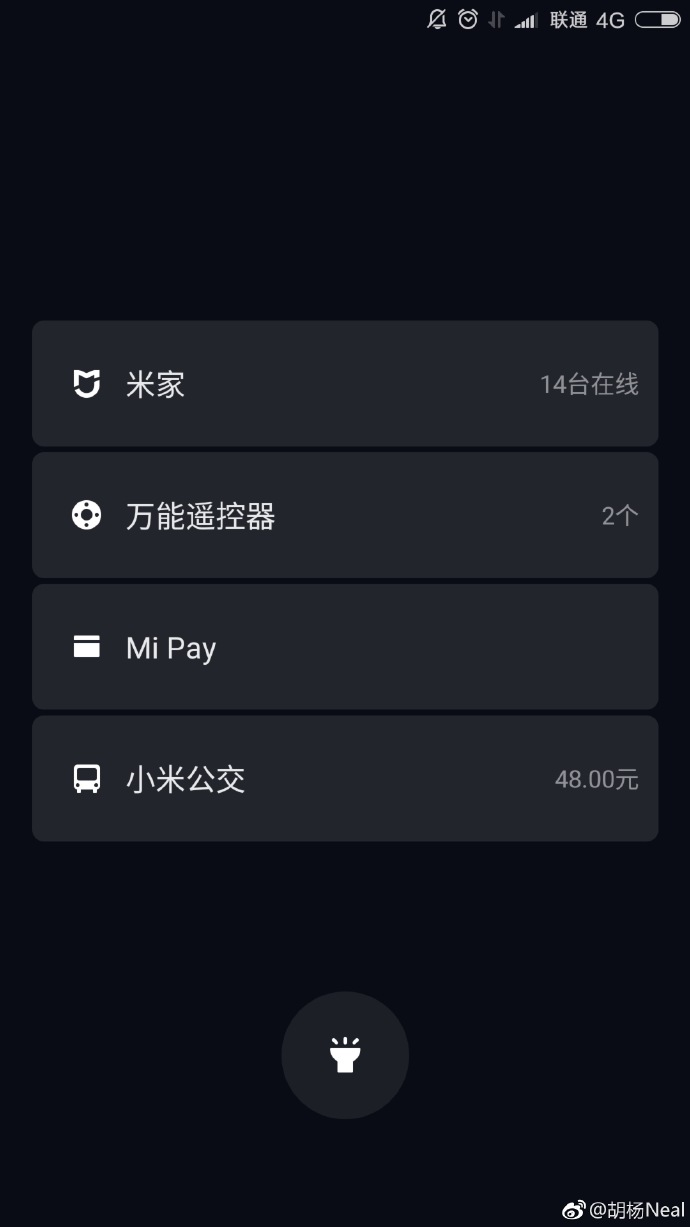
There are indications that the launch is imminent, apart from the fact that it is long due. One of such indication is the rate at which the MIUI 9 features have been coming out. A leaked screen shot said to be he MIUI 9 Interface’s lock screen’s new look appeared online and it was immediately confirmed by Xiaomi via the MIUI Weibo account that the interface is really for the MIUI 9.
Taking a closer look at the screen shot, the interface’s lock scren design will see a slight change from that of the MIUI 8. The screenshot shows the locked screen will have a few app shortcuts to MIJIA app, Universal Remote control app, Mi Pay, Mi Bus card, while at the bottom there is a quick launch button for the flashlight. The apps shortcut may likely be customizable and not necessarily be specifically for the apps shown.
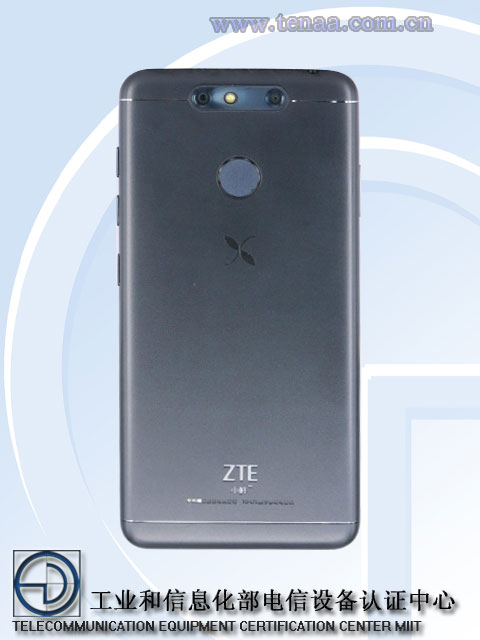
A new ZTE phone has been benchmarked on Geekbench. The ZTE V0840 is another mid-range smartphone that most likely belongs to the Blade series.
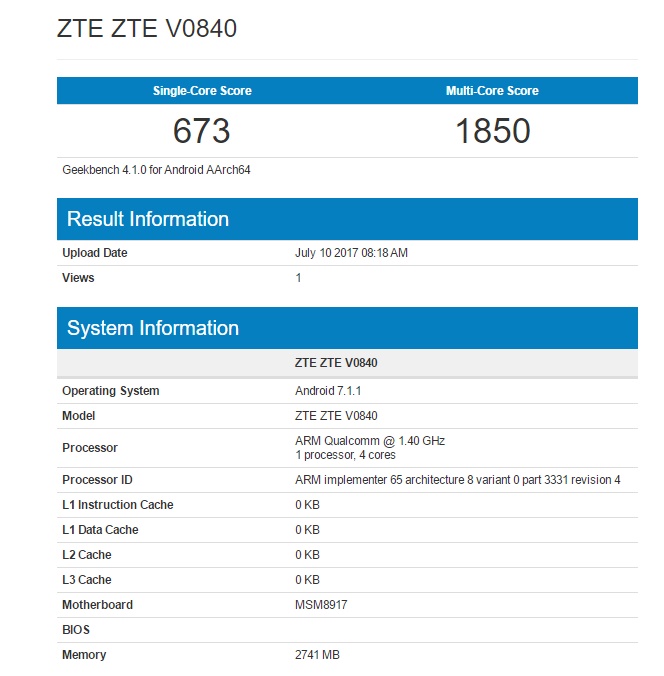
The ZTE V0840 appeared on TENAA back in June with multiple RAM and storage versions but the Geekbench listing comes with 3GB of RAM. It runs Android 7.1.1 and is powered by a MSM8917 a.ka. Snapdragon 425.
This is a quad-core chip clocked at 1.4GHz with an Adreno 308 GPU. Maximum display support is 720p and that is exactly what you get in the ZTE V0840.
The device scores 673 points in the single-core test and 1850 points in the multi-core test.
According to the TENAA listing, the ZTE V0840 will have a 5-inch display that will draw power from a 2500mAh battery. Like the other Blade phones released this year, it will have dual rear cameras (13MP + 2MP) and a 5MP front facing camera.
The dual screen design of the Meizu Pro 7 is all but officially confirmed. The design has featured in several leaked renders, including a video render which appeared online showing the Pro 7 and Pro 7 Plus from all angles. The Meizu Pro 7 has once again appeared in a leak which claims the device was spotted in a TV commercial in China.
The Pro 7 is tipped to launch later this month along with the Pro 7 Plus so, it would really not be a surprise if Meizu has started its advert campaign as a way of preparing the ground for a successful launch. We couldn’t lay our hands on the video clip but the screenshots that were leaked shows a man holding the Pro 7. Even though the images are a bit grainy, we can still make out that this is the Pro 7 design we have been seeing so often.
Meizu Pro 7 is expected to be the first smartphone to launch with MedaTek’s Deca-core Helio X30 chip and that is already confirmed by MeidaTek. Also, the device is expected to pack dual 12MP Sony IMX386+ 12MP Sony IMX286 sensors at the rear with a ring flash having 10 LEDs. The camera will likely be one of the main selling points of the device if the photo leaked by Meizu VP Jeffery Yang was actually shot using the Pro 7’s camera. The front camera is said to have a 16MP sensor. The display is expected to be a 5.2-incher while the secondary screen is said to be 2 inches wide. The Pro 7 is also expected to start at 2799 Yuan (~$410).
Blackberry seems to be making a move to reenter the Chinese market. Although TCL, one of the companies with a license to release smartphones under the BlackBerry name is a Chinese company, its home country hasn’t gotten any of the new releases. It appears that might be changing soon.
Recently, BlackBerry opened an official WeChat account under the name “BlackBerryMobile”, now it has opened an official account on Weibo. The general consensus is that the smartphone company is trying to create a social media presence before launching its new products.
Two phones have been released this year under the Canadian brand. There is the BlackBerry KeyOne that was announced at MWC 2017 and there is the Indonesian exclusive BlackBerry Aurora. The latter isn’t made by TCL but by a joint venture company called PT BB Merah Putih. The Aurora is also the first dual SIM Blackberry phone ever.
We use cookies on our website to give you the most relevant experience by remembering your preferences and repeat visits. By clicking “Accept”, you consent to the use of ALL the cookies.
This website uses cookies to improve your experience while you navigate through the website. Out of these, the cookies that are categorized as necessary are stored on your browser as they are essential for the working of basic functionalities of the website. We also use third-party cookies that help us analyze and understand how you use this website. These cookies will be stored in your browser only with your consent. You also have the option to opt-out of these cookies. But opting out of some of these cookies may affect your browsing experience.
Necessary cookies are absolutely essential for the website to function properly. This category only includes cookies that ensures basic functionalities and security features of the website. These cookies do not store any personal information.
Any cookies that may not be particularly necessary for the website to function and is used specifically to collect user personal data via analytics, ads, other embedded contents are termed as non-necessary cookies. It is mandatory to procure user consent prior to running these cookies on your website.