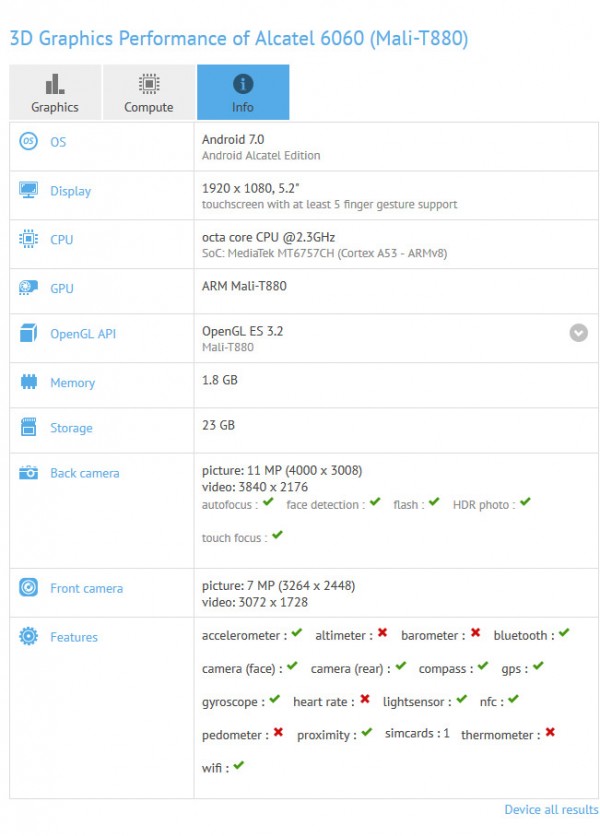
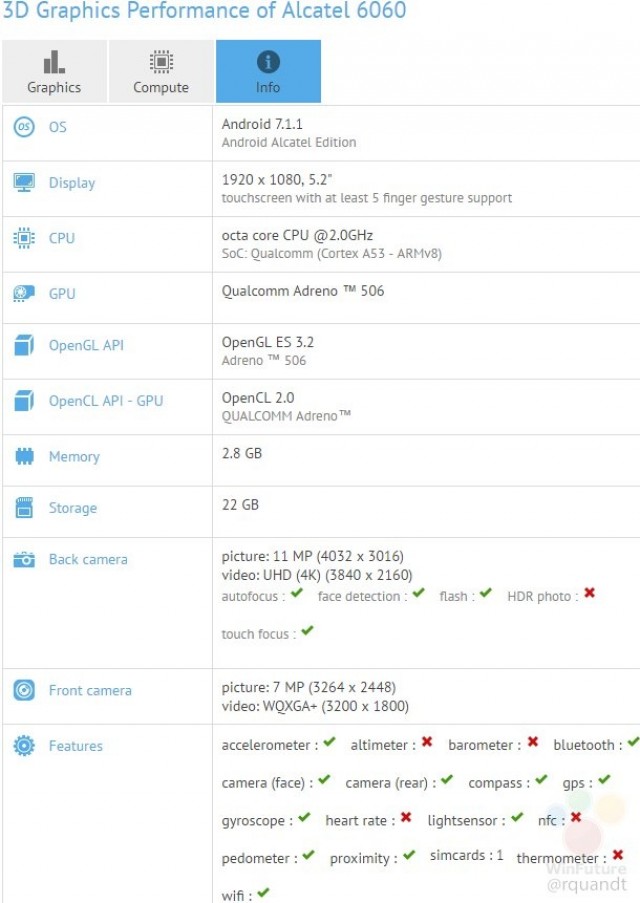
The Alcatel 6060 had appeared in the previous month on GFXBench benchmarking platform. The same handset has been spotted yet again on GFXBench, but there seems to be some difference in both the listings. Speculations are rife that the Alcatel 6060 would be launching as Alcatel Idol 5.
The new GFXBench listing for A6060 reveals that the purported Alcatel Idol 5 would be featuring a 5.2-inch display that offers a full HD resolution of 1,920 x 1,080 pixels. It is fueled by MediaTek MT6757CH chipset (Helio P20) that features an octa-core processor working at 2.3 GHz and Mali-T880. The SoC is supported by 2 GB of RAM and 32 GB of native storage. It is running on Android 7.1.1 Nougat OS and supports NFC
The differences that can be seen in the previous GFXBench listing of the alleged Idol 5 is the inclusion of Snapdragon 652 chipset, 3 GB of RAM and Android 7.0 Nougat OS. Also, it does not support NFC. Both the listings also show that the smartphone would be featuring a 12-megapixel main camera that will carry support for 4K video shooting and HDR and 8-megapixel selfie snapper.
There is a possibility that Alcatel will be releasing the Idol 5 in two chipset variants of Snapdragon and MediaTek. The Idol 5 with Snapdragon 652 is expected to be available in the U.S. markets whereas the MediaTek variant may be arriving in Asian markets.
This is the Alcatel Idol 5S (6060C) for Cricket Wiress (left) next to the Idol 4. pic.twitter.com/VLf0XETLfY
The speculated Alcatel Idol 5 is expected to launch as a successor for Idol 4. A leaked photo of Idol 5 featuring it alongside the Idol 4 had appeared in April. The model that was revealed by popular leakster, Roland Quandt has a model number of 6060C. The leakster has claimed that the smartphone present on the left side in the above tweet would be launching as Cricket Wireless variant. The alleged Idol 4 seems to be featuring improved upper and lower external speakers. The position of the Boom key appears to be moved down a bit.
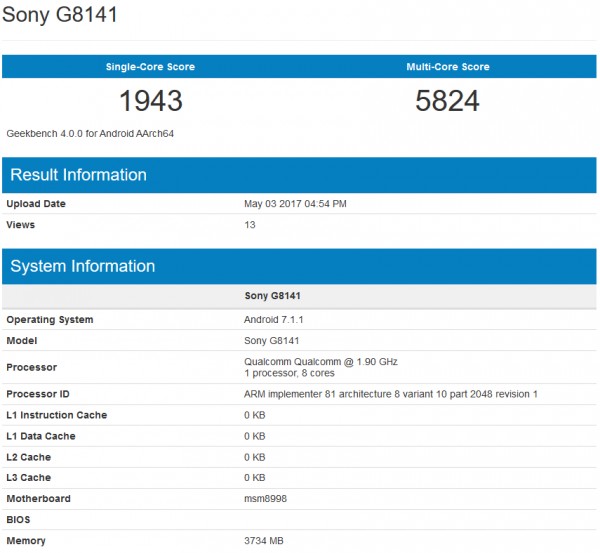
Some may think that the Samsung Galaxy S8 and Galaxy S8+ smartphones that debuted on March 29 are the first smartphones to feature Snapdragon 835 chipset. It may be true to a certain extent, but the Sony Xperia XZ Premium running on the same chipset was announced at Mobile World Congress (MWC) 2017 in February before the launch of Galaxy S8 and S8+ phones. However, the Sony’s flagship is still not available for purchase yet. The smartphone has now appeared on Geekbench benchmarking platform to reveal what to expect from its performance.
According to Geekbench listing of Sony G8141 which is the model number of Sony Xperia XZ Premium, it is powered by Snapdragon 835 SoC and it is running on Android 7.1.1 Nougat OS. The SoC is coupled with 4 GB of RAM. In the single-core test, it has scored 1943 points and in the multi-core test, it has scored 5824 points.
There is no confirmation on whether the Xperia XZ Premium that has been spotted on Geekbench is a retail handset or a testing device. The Geekbench scores appear promising, but it is less than the scores of Galaxy S8 and S8+ and Xiaomi Mi 6.
The Galaxy S8 has recorded 2008 and 6575 points respectively on single-core and multi-core tests. And the larger Galaxy S8+ has score 2006 and 6708 points respectively on single-core and multi-core tests. The Xiaomi Mi 6 that appeared on Geekbench has recorded 2006 and 6438 points respectively on both tests.
These findings show that the multi-core performance of Xperia XZ Premium is still behind the Galaxy S8 duo and Xiaomi Mi 6 on Geekbench. However, the difference appears to be negligible. There is a possibility that the Xperia XZ Premium could be running on an under-clocked edition of Snapdragon 835 or the benchmark tests were carried out on a pre-production software.
It is also likely that the 4K display supporting a resolution of 3,840 x 2,160 pixels would be influencing the performance of the SD 835 chipset. In comparison to Xperia XZ Premium, the Galaxy S8 duo offers QHD+ resolution of 1,440 x 2,960 pixels resolution and Mi 6 produces full HD resolution of 1,920 x 1,080 pixels.
The Sony Xperia XZ Premium is expected to go on sale by this month. It is expected to be available on in the U.K with a pricing of £645 ($830) and its pre-orders are expected to begin on May 22. In Germany, O2 will begin shipments of the Sony’s flagship by June 1 with a price tag of €749 ($815).
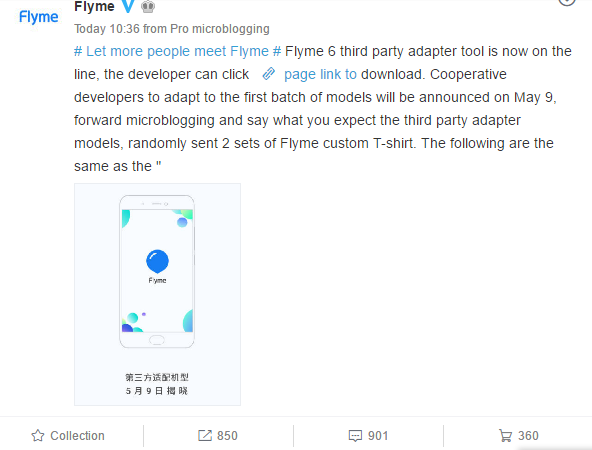
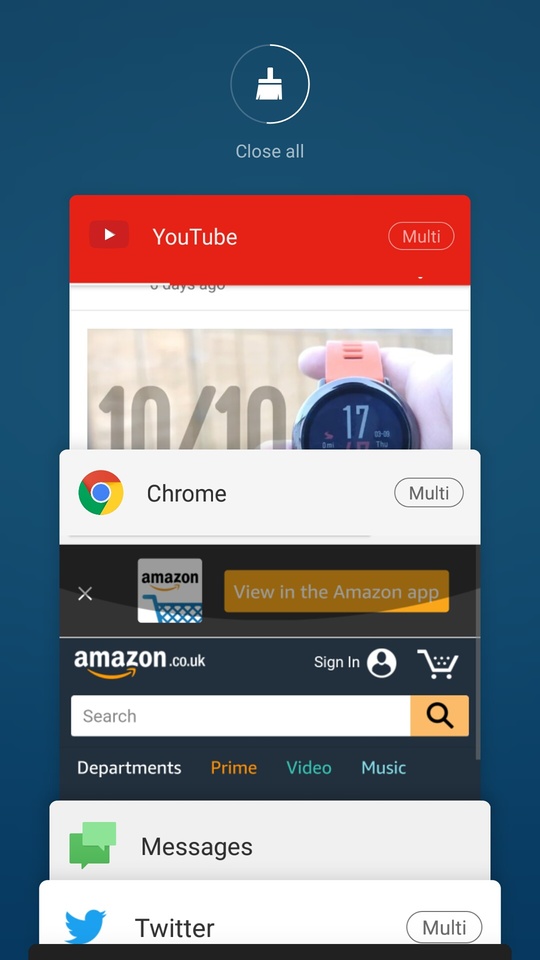
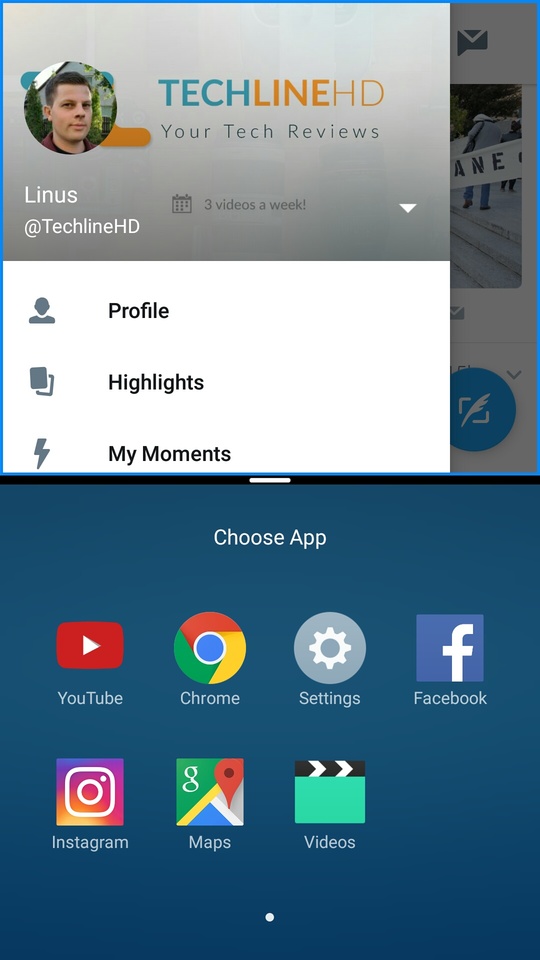
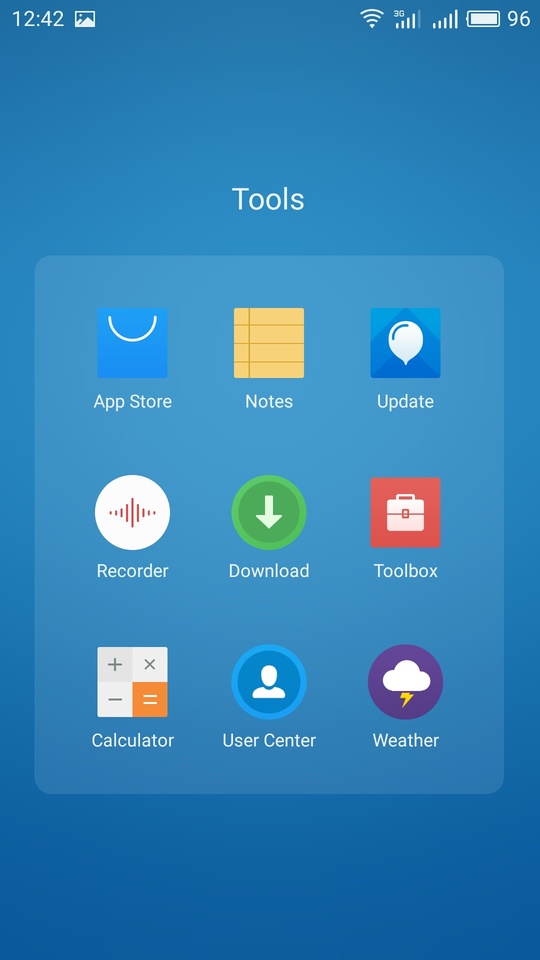
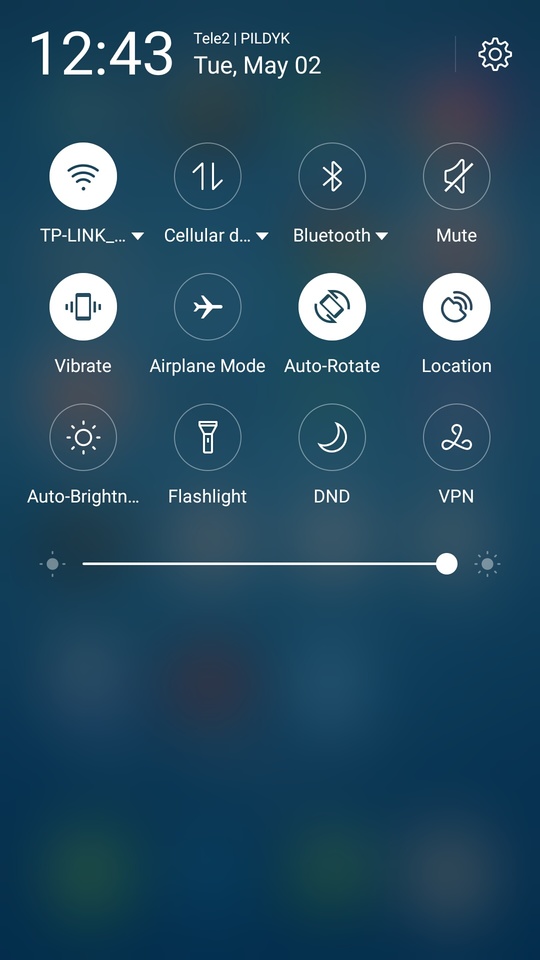
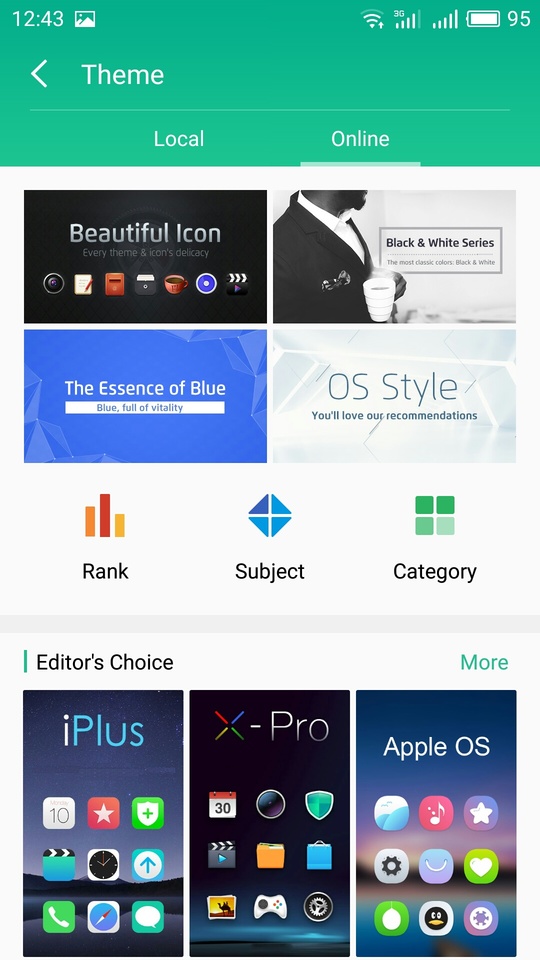
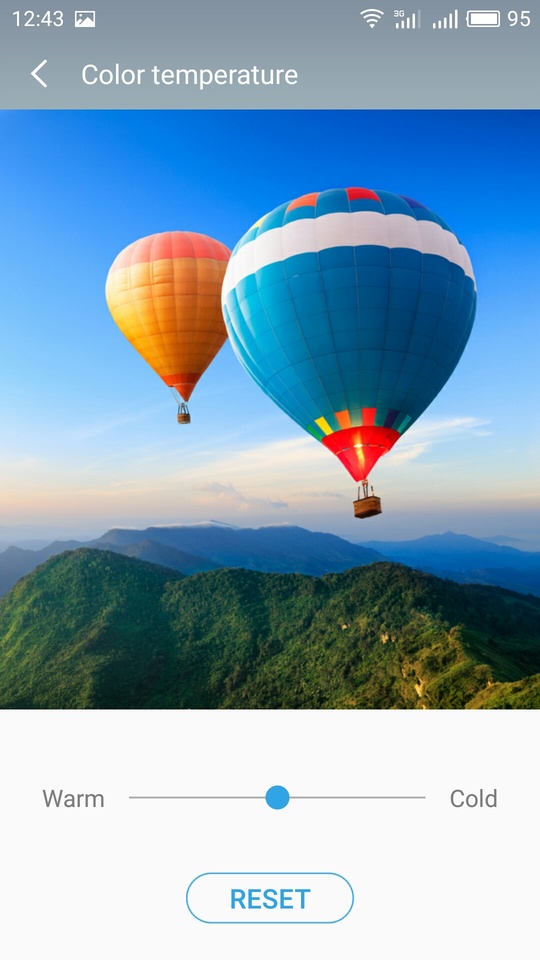
Meizu has announced via a Weibo post that the latest version of its custom OS, Flyme 6 has now been adapted for use by other phone models and the company would be releasing the list of supported models on May 9. Already, the company has made the Android Marshmallow with Flyme overlay available on file sharing website Github.
It is not uncommon for custom ROM developers to adapt their ROM for third-party brands. Xiaomi currently does that for its MIUI ROM. The Flyme code can be injected into the native system’s framework and can enable the phone’s user to run their device entirely on Flyme 6 or enable some Flyme features on their devices. However, in this case, developers may need to independently adapt and continue to maintain and ensure synchronization updates for their our models.
The Flyme 6 comes with a number of cool features which includes a new search feature which allows users to search for answers on the internet via their phone’s camera. All that is needed is to snap the photo of the problem or question and then it gets uploaded up into the cloud (Meizu’s database) automatically. In some cases, it takes as fast as 0.5 seconds to display the answers and the answers are elaborate. Meizu claims it has got more than 65 million study questions with their answers in its database ranging from subjects like Physics, Chemistry, English language, Political science, History and other. The OS also lets users edit the theme onboard in order to personalize them and the videos in the gallery can be edited and filters added. There are much more the Flyme 6 offers but as they say, the taste of the pudding is in the eating.
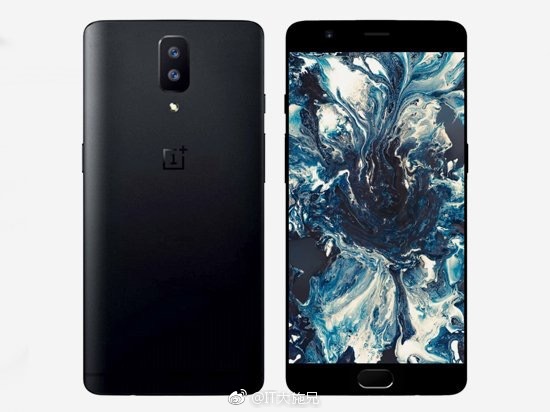
It is no news that OnePlus is working on the OnePlus 5 already. The Chinese manufacturer is doing a good job keeping details of the phone closely guarded. But we are itching to know more about this upcoming device. While we wait for more details to surface, we have put together a list of the features the OnePlus 5 needs to have to be 2017’s flagship killer.
Display/Design
I am lumping this together because the display plays an important role in the overall design of the phone. OnePlus CEO, Pete Lau, recently teased an image of a phone with a dual-curved display. Whether this is just to mislead the public or to hint at the OnePlus 5 coming with a curved screen is still unconfirmed. There is a chance the display might be bigger than the traditional 5.5-inches OnePlus has been using since their first phone launched. However, the phone itself need not be bigger. The only way to achieve that will be to trim the bezels.
We also hope OnePlus adds some new colors to the mix. A red variant and an electric blue variant are the favorites. Black should be a default color now and not a special edition. So grey, black, gold, red and blue.
Dual Cameras
Dual Cameras have been trending since 2016 and some are of the opinion that OnePlus needs to join the train. What really matters is how OnePlus takes advantage of the hardware. The performance must be better than what a single camera offers and the software must be optimized to make best use of the cameras. How the sensors are setup is left to OnePlus. The Huawei P10 is the king when it comes to the Monochrome + RGB format while the iPhone 7 Plus leads for the telephoto + wide angle lens configuration. Whichever one the OnePlus 5 comes with has to match either one of the two.
Water Resistance
Most flagships this year will have one form of water resistance. This may definitely drive up the price of the phone but its the sacrifice we have to make to survive that accidental drop in the sink or a spill. OnePlus may want to keep it at being just spill resistant like the Xiaomi Mi 6 just to keep the price less than $500.
3.5mm Audio Jack
Whatever excuse anyone might come up with to defend the removal of the audio jack on a phone won’t be accepted by the majority of consumers. But manufacturers keep trying to shove phones lacking the audio output port down our throat. This is one ship we never want to see OnePlus sail on and we hope they don’t. Audio Jack is bae, and the OnePlus 5 will definitely be bae if it keeps the audio jack.
MicroSD Card Slot
None of the five devices released by OnePlus so far has a microSD card slot. It is time OnePlus embraced support for expandable storage. 64GB or 128GB should be the memory variants for the OnePlus 5 but users should have the option to expand the memory at will. Maximum capacity supported can be capped at 2TB.
Snapdragon 835 Processor
I shouldn’t even be writing this because what else other than the Snapdragon 835 processor should power the OnePlus 5?
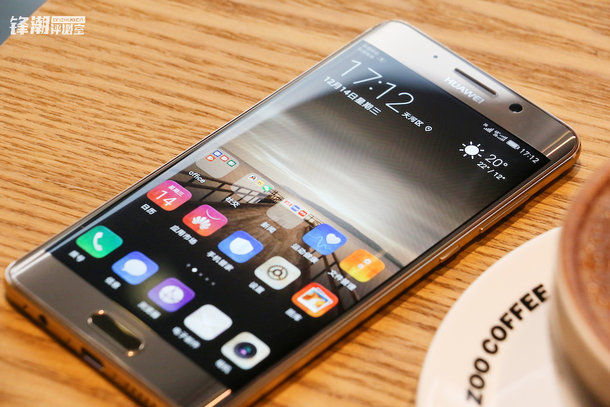
The dust is yet to settle on Huawei‘s decision to use an eMMC 5.1 storage on the P10 and P10 Plus which they attributed to a shortage of UFS 2.1 storage. Huawei had issued several statements both from its CEO and from the company but none seems to douse the furore generated by the issue.
Perhaps, the quell things, the company edited the product page for the Mate 9 and took off the part which states it came with UFS 2.1 flash memory. It later turned out the company was likely trying to play safe by avoiding more controversies because not just the P10, but the Mate 9 was part of the controversy. A Twitter user had revealed that some units of the Huawei Mate 9 shipped with a lesser UFS 2.0 storage. So, they ended up generating more controversy by removing the UFS 2.1 storage detail from the Mate 9 specs page.
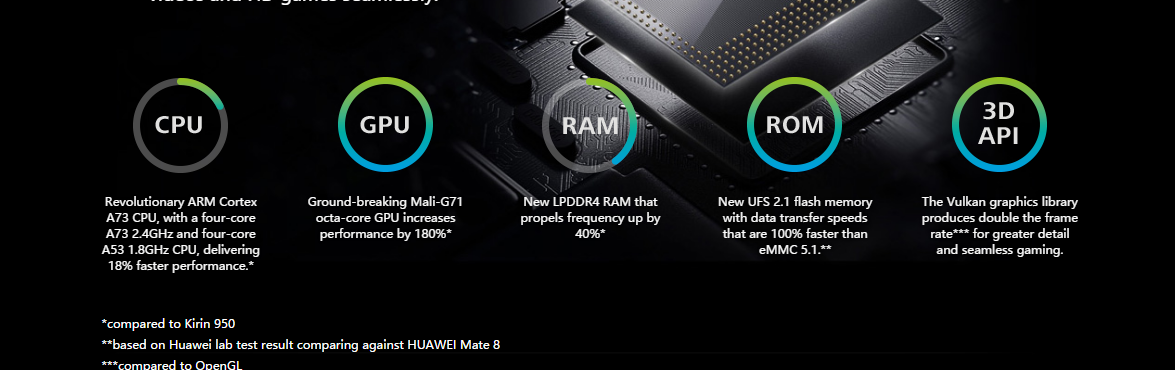
The company may have realised its folly and has now included the detail that the Mate 9 features a UFS 2.1 storage. Recall that Huawei, in its defence of the use of eMMC 5.1 flash memory on the P10 stated that the eMMC 5.1 storage did not bring any reduction in the speed of the device because of the P10’s optimisation. But ironically, the product detail states that the Mate 9 comes with “new UFS 2.1 flash memory with data transfer speedsthat are 100% faster than eMMC 5.1“. If you ask me, this contradicts the company’s earlier statement but then, you might likely notice this if you’re transferring large files to or from the P10 units using eMMC 5.1 or Mate 9 using UFS 2.0 storage. If not, the Mate 9 and P10 remain two capable flagship devices fired up by the latest Kirin 960 chip.
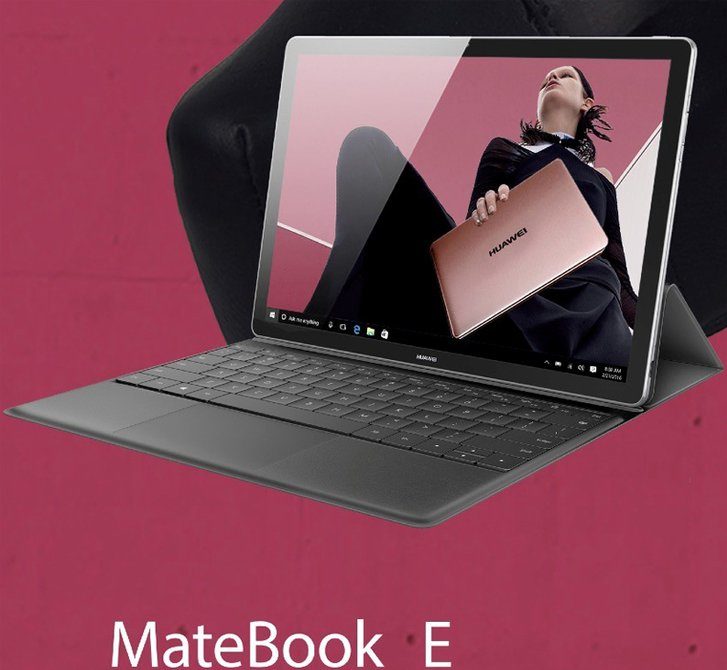
Yesterday, Microsoft unveiled its new Surface Laptop. Microsoft has compared some of its features to that of the MacBook and it seems it might just be the competitor powerful to take on Apple. Turns out Microsoft isn’t the only one planning to take on the MacBook. Financial Times reports that Huawei is set to release a high-powered notebook by month-end that will give Apple a run for its money.
The new notebook is said to be aimed at the average consumer and not necessarily the business professional. Although configuration details of the Windows 10 laptop weren’t mentioned, the pricing is said to be quite high.
Qualcomm was earlier this year rumored to be working on the Snapdragon 660, SD 630 and SD 635 chipsets which would help cement its stronghold on the mid-range market. Qualcomm presently almost enjoys a monopoly in the flagship category with its Snapdragon 835 chipset dominating debates and discussions, such that we forgot MediaTek has released the Helio X30 chip, which is yet to find a patron smartphone, by the way. Whereas the SNapdragon 835 is already on the Samsung Galaxy S8, Sony Xperia XZ, Xiaomi Mi 6 and soon on the HTC U11.
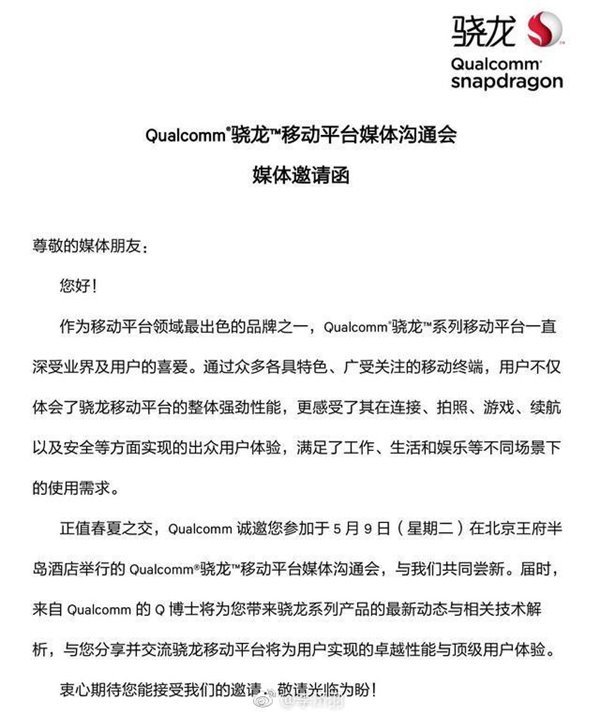
The US company has now sent out invitations to the launch of the Snapdragon 660 processor in China. According to the invitation, the Snapdragon 660 processor will be announced officially on May 9. The Snapdragon 660 will come as a ready alternative to smartphone manufacturers who cannot afford to have the Snapdragon 835 on their smartphones. The SD 660 is a mid-range chipset but it also comes with some level of optimization in performance, battery usage and others.
The Snapdragon 660 is rumored to have been manufactured using Samsung’s 14nm LPP process and have an octa-core arrangement which may be a combination of the Cortex-A73 and A53 cores. The chipset is said to come with the Adreno 512 GPU and support dual-channel LPDDR4X-1866 memory, UFS 2.1 storage, up to 24MP camera, LTE Cat. 10 and three carrier aggregation. Already, the OPPO R11 as well as Vivo X9s Plus are expected with the mid-range chip and many more will sure follow suit because its Snapdragon.
Chinese smartphone manufacturer, Smartisan has an event scheduled for May 9 at the Shenzhen Spring Cocoon Gymnasium. The event should see them announce a new phone called the Smartisan Nut Pro.
The Smartisan Nut Pro is rumored to be the Smartisan OD105 we saw on AnTuTu a week ago. Powered by the Snapdragon 626 and running Android 7.1.1, the Nut Pro should also launch with 18W fast charging. Although we saw a leaked image of the rear of the phone, the overall design of the phone is still unknown.
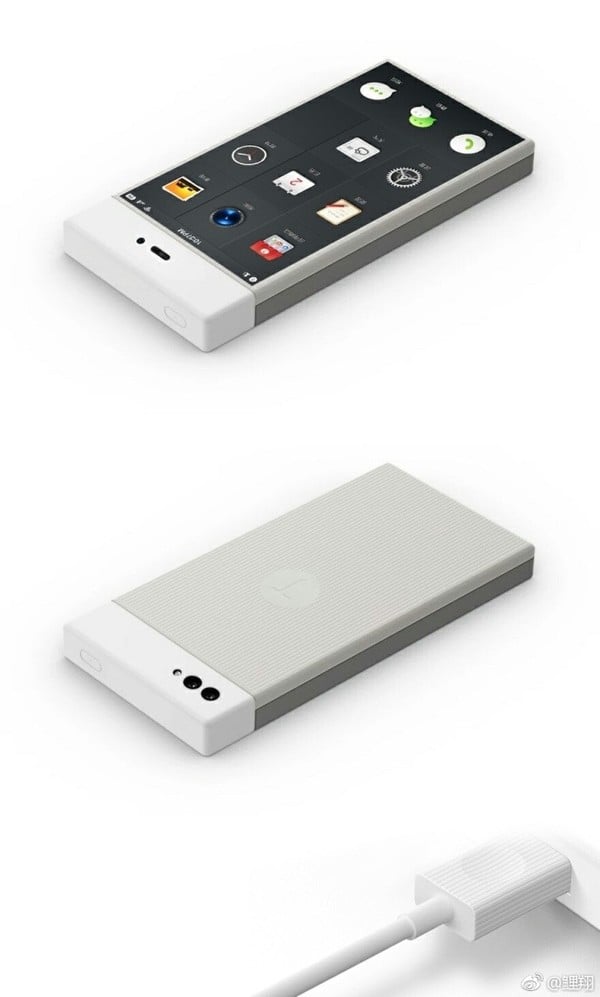
Weibo user @Xiang carp posted renders of the device and for the sake of designers who work hard day and night, we hope the phone never looks like this. The render can best be described as a refined block of wood.
The thickness of the device looks to be almost 1.5cm. It also sports a tri-bezel-less display only that instead of retaining the bottom bezel, it keeps the top one. There is a front facing camera and a cut-out for the earpiece but no sign of any other sensor. There is also what appears to be a power button at the top. The phone also doesn’t appear to have volume buttons or a SIM slot on any of the sides.
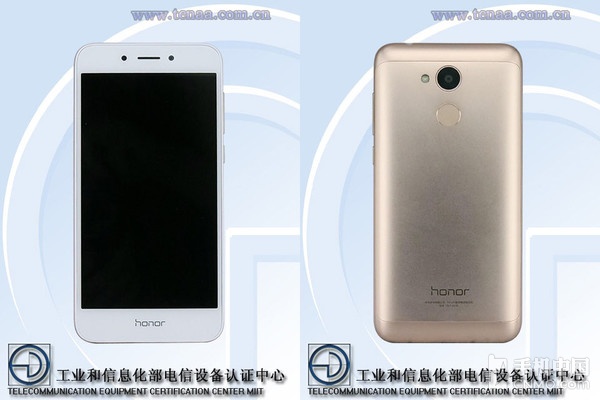
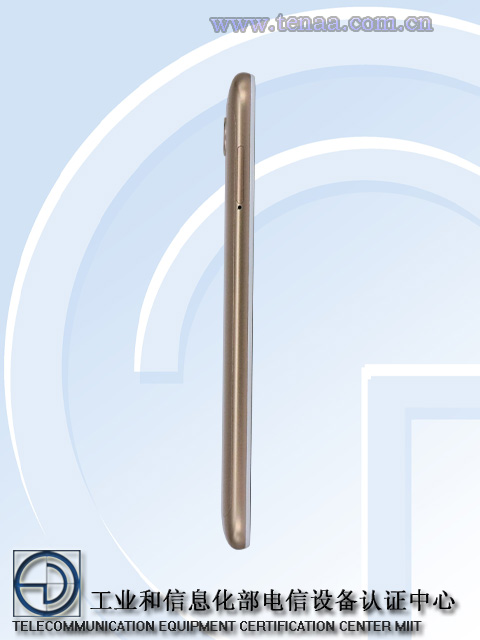
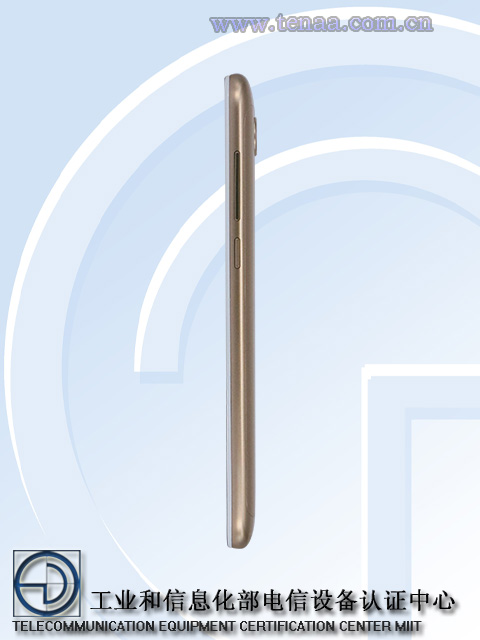
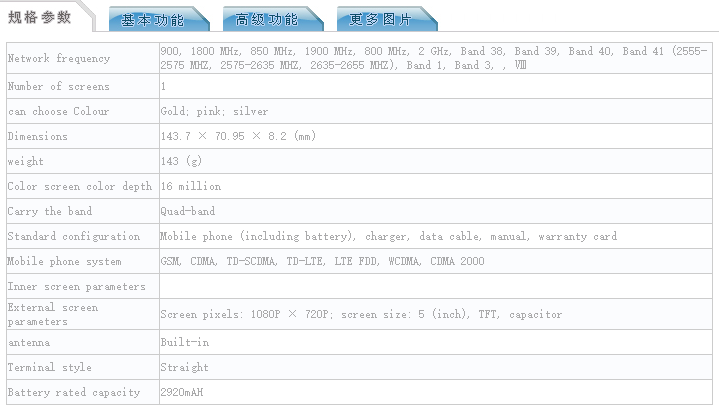
A new Huawei device under the Honor brand has appeared on the website if the Chinese telecoms regulatory agency TENAA where it has been certified. The device comes with the model number Honor DLI-AL10 and adorns a design that shows it is a mid-ranger.
This is coming on the heels of the launch of the Enjoy 7 Plus but there is hardly any chance this is the Enjoy 7 since it has the Honor branding. Specs wise, the Huawei smartphone sports a 5-inch TFT display with its resolution listed as 1080p x 720 pixels. The device comes with a dimension of 143.7 x 70.95 x 8.2mm and weighs just 143g. The slim build, only 8.2mm thick, could be connected to the rather small 2,920mAh battery which it packs. The device is expected to come in Gold, Pink and Silver colours.
Further, the device is equipped with a 1.4GHz Octa-core processor, backed by 3GB of RAM. There is also 32GB of storage on the device. The camera aspect is taken care of by a 13MP main camera at the rear and a 5MP front facing shooter. The Huawei device runs Android 7.0 Nougat out of the box and packs a rear-mounted fingerprint sensor.
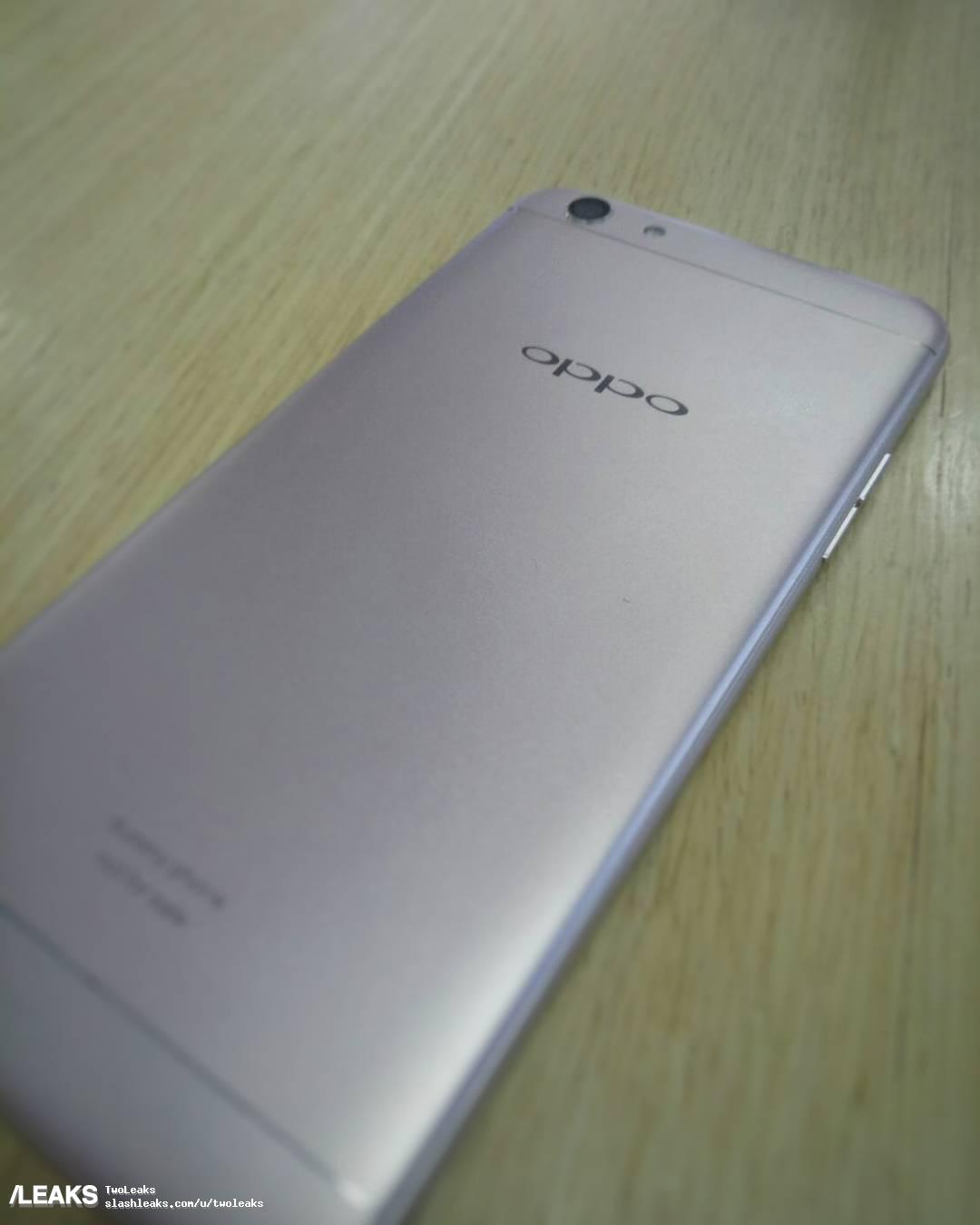
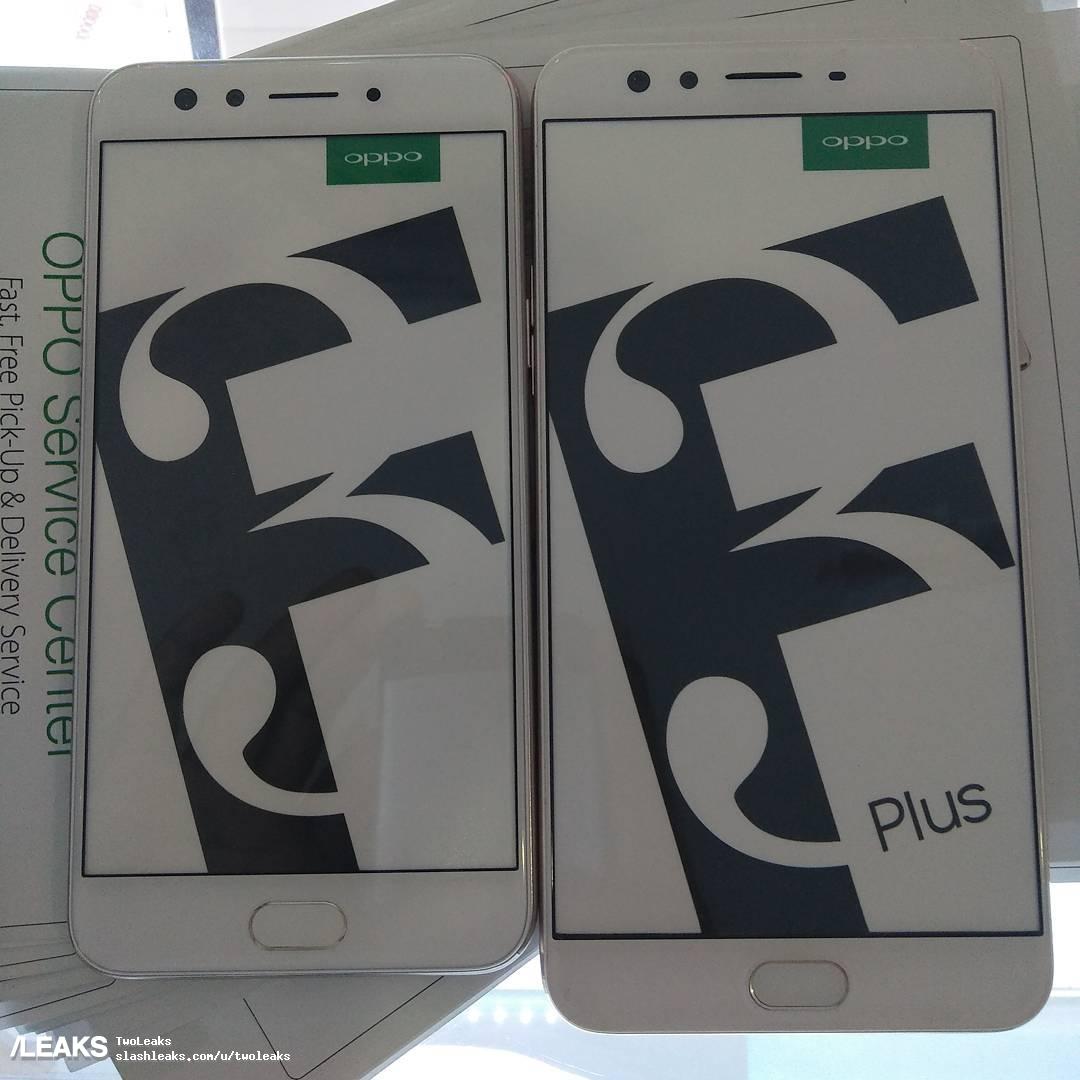
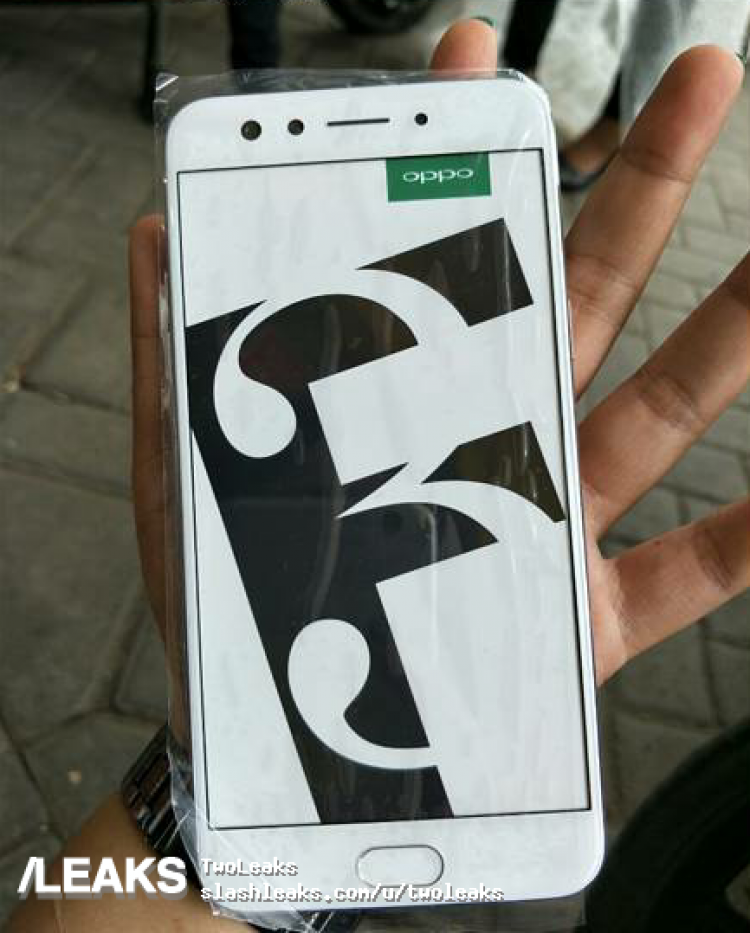
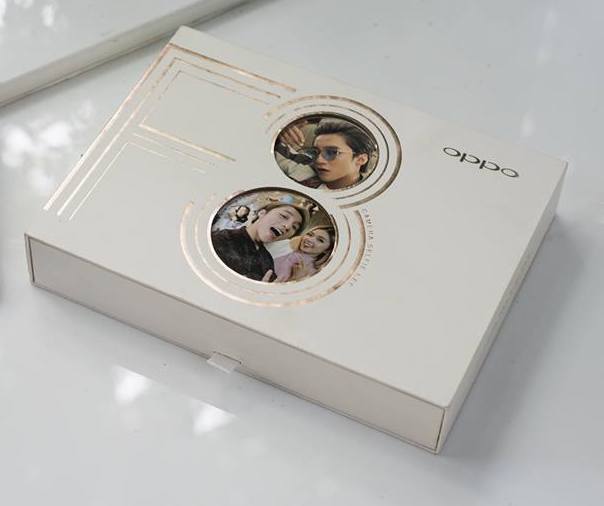
Last month, OPPO had unveiled the OPPO F3 Plus smartphone. Even though the rumor mill had predicted that the OPPO F3 would be unveiled at the same launch event, the Chinese firm delayed its launch. The company has officially confirmed to launch Oppo F3 on May 4. The rumor mill has revealed plenty of information of the smartphone such as specifications, features, pricing as well as leaked shots before its official launch.
OPPO F3 Specifications, Features
Rumors have revealed that the OPPO F3 is arriving with a 5.5-inch IPS LCD display that carries support for full HD resolution of 1,920 x 1,080 pixels. It is flanked with Gorilla Glass 5. The MediaTek MT6750T chipset featuring a 1.9 GHz octa-core processor and Mali T860 is present under the hood of OPPO F3.
The OPPO F3 features 4 GB of RAM and its native storage is 64 GB. The external storage slot of the phone supports up to 128 GB of microSD card. The phone is preloaded with Android 6.0 Marshmallow OS that is modified with ColorOS 3.0. It features a fingerprint scanner embedded under the physical Home button.
Its rear camera is speculated to be of 13-megapixel and the front side will be coming with a dual camera setup of 16-megpaixel + 8-megapixel sensors. The selfie shooter will support 120-degree wide angle shooting. The size of its battery is 3,200mAh. Other specs include dual-SIM support, 4G LTE, Wi-Fi 802.11ac, v4.1 Bluetooth, NFC and GPS. The phone measures 153.3 x 75.2 x 7.3 mm and its weight is 153 grams.
OPPO F3 Price
The OPPO F3 is speculated to sell with a price of Rs. 21,990 ($342) in India. It’s bigger sibling, the OPPO F3 Plus costs Rs. 30,990 ($483) in India. It is pegged to cost 16,990 peso ($393) in Philippines.
Previous rumors had stated that the Snapdragon 653 would be fueling the OPPO F3. However, the appearance of the OPPO CPH1609 phone which is said to be the alleged OPPO F3 on GFXBench and Geekbench benchmarks have revealed the presence of MediaTek MT6750T chipset inside the F3. On Geekbench, the smartphone has scored 763 and 2,793 points on single-core and multi-core test, respectively.
The Huawei Honor 6X is one of the cheapest dual camera smartphones available. The phone was unveiled at Consumer Electronics Show (CES) 2017 in January. At the launch event of Honor 6X, Huawei had confirmed that the phone would be getting Android 7.0 Nougat and EMUI 5 by the second quarter of the year. The company has now successfully fulfilled its promise by beginning the rollout of Android 7.0 Nougat update with EMUI 5.0 starting from May 2.
Since the update rollout has started, it would be gradually coming to all the global users of Honor 6X by the end of this month. The EMUI 5.0 update is a major update over EMUI 4.1 as it carries design changes and new features. Its interface is mostly white and has lots of black and blue colors as well instead of the teal colors available in the previous version.
The EMUI 5.0 also brings along an improved interface for Camera app, a new app drawer, revamped notification bar and a new mode called “Eye comfort” that comforts the eyes by filtering the blue light emitted from the screen. App Twin is a new app on EMUI 5.0 that allows users to add launch two versions of the same app for accessing different accounts simultaneously.
The arrival of the update will show up as automatic notification on Honor 6X handsets. If the update does not appear automatically, users can navigate manually to Settings > About Phone > Check for Updates. Since the update can consume a lot of data, it is advisable to install the update using a stable Wi-Fi connection.
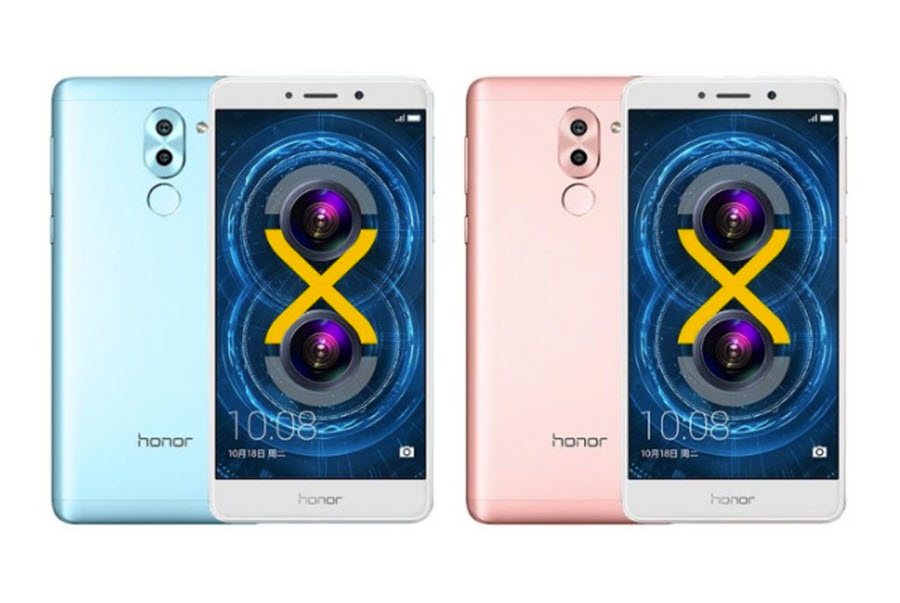
The unlocked Honor 6X is currently selling with a pricing of $249 in the U.S. which can be used only on GSM networks such as AT&T and T-Mobile. The phone was launched in China in October 2016. The phone is available in color choices such as Gray, Silver and Gold. In the previous month, Huawei had introduced two new color variants for Honor 6X that can be seen in the above image.
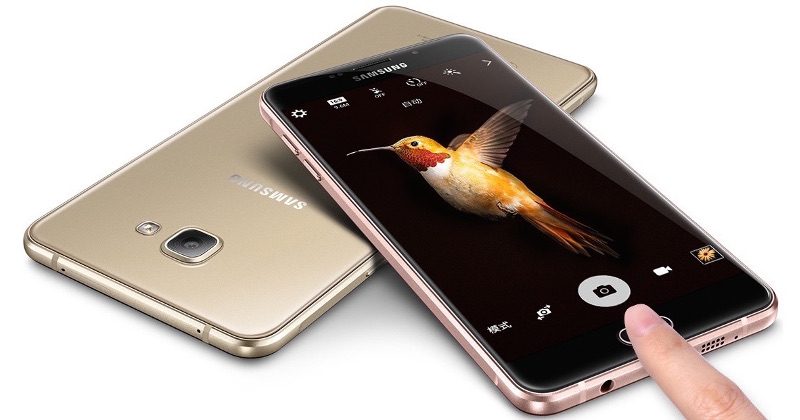
Samsung was expected to use a dual camera setup on the flagship Galaxy S8 and S8+ flagship but the tech giant ended up releasing the smartphones with a single main camera apiece. This left some fans disappointed considering that dual camera setup is one of the trendy add-ons presently both on flagship and even budget devices.
Samsung Galaxy C9 Pro
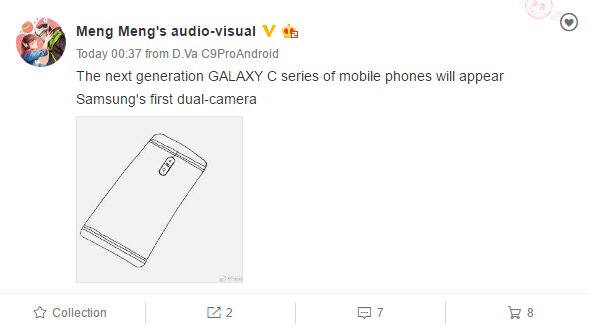
There is a rumour making the rounds right now on China’s Weibo that Samsung is planning to have its first dual camera-sporting smartphone and it isn’t the Galaxy Note 8 as speculated. A Weibo user has just hinted that the next Galaxy C-series smartphone would come with a dual camera setup. The post was accompanied by a sketch of a Samsung smartphone with a vertically inclined dual-lens camera.
We are not surprised this information is coming out of China since the Galaxy C-series smartphones are meant for the Chinese / Asian market. The C-series is not new to coming out with several innovations. The Galaxy C9 Pro was Samsung’s first smartphone with 6GB RAM onboard which is aimed to compete in a market where large RAM size is a driving force. So, it won’t be out of place if Samsung is adding dual cameras to the mix because that is another aspect of keen competition among smartphone makers in China.
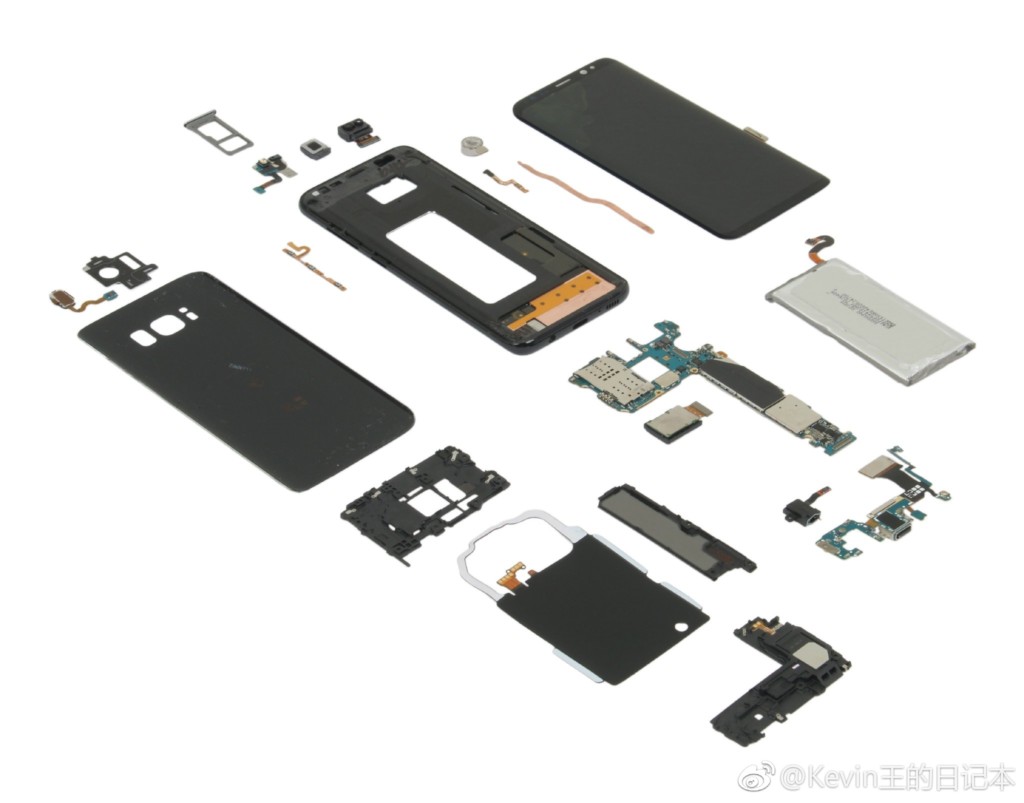
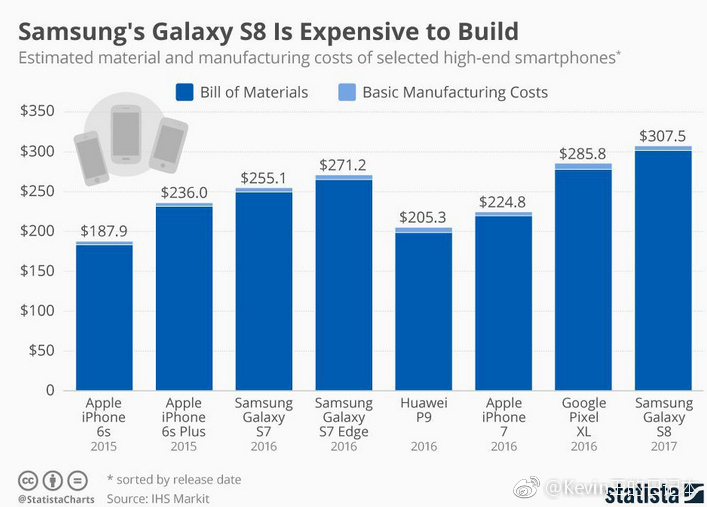
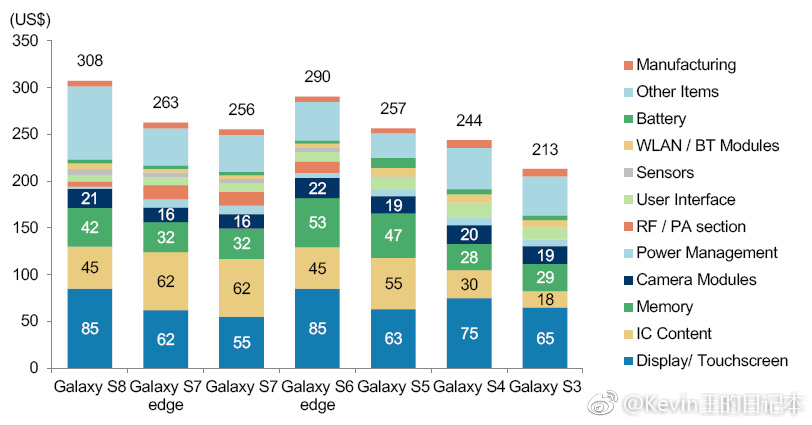
The component cost of SamsungGalaxy S8 analyzed and released by IHS Markit last week surprised us with the highest costs among the high-end smartphones across the globe, way higher than that of iPhone 7 and others.
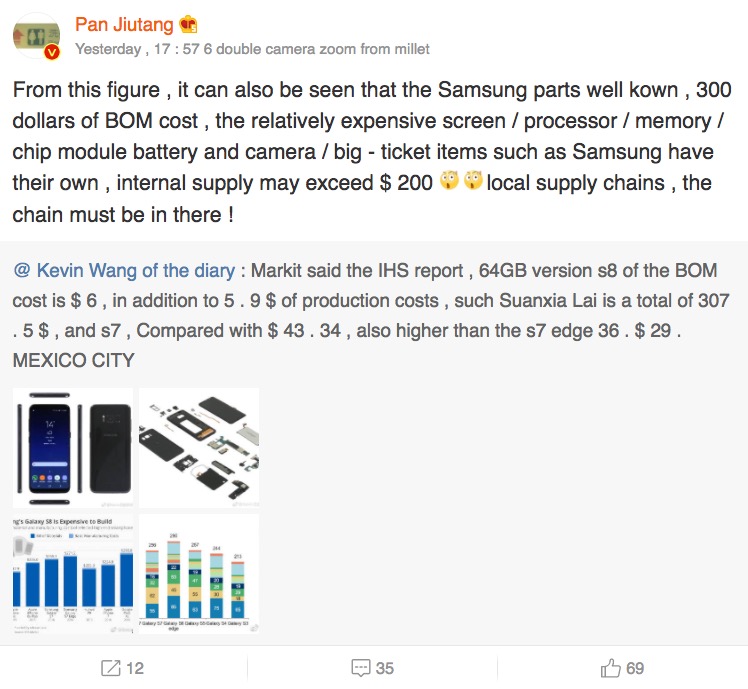
Yesterday afternoon, a new IHS Markit report with detailed breakdowns released by insider @Kevin Wang’s diary via his official Weibo account also confirmed this. Samsung Galaxy S8 topped number one with $307.5 for Bill of Materials (BOM) and manufacturing costs.
Analyst Pan Jiutang reposted and claimed that, among the over $300 BOM cost, the relatively expensive ones including display / touch screen, processor, memory, camera module, and battery are the ones among Samsung’s product portfolios, of which over $200 can be supplied by Samsung internally.
Pan speculated that Snapdragon 835 system in S8 costs over $60, and 64/128GB UFS flash memory near $24 and $34 respectively (which will be $21 and $40 for the capacity of eMMC); LPDDR4x DRAM, 4/6GB estimated at $20 and $35 respectively.
Chinese phones’ key components, however, are all subject to external supply except Huawei’s Kirin processors that can fulfill its own needs and Xiaomi’s processor just hitting the market.
It is therefore obviously that Chinese phones still have a long way to go if they are to surpass Samsung.
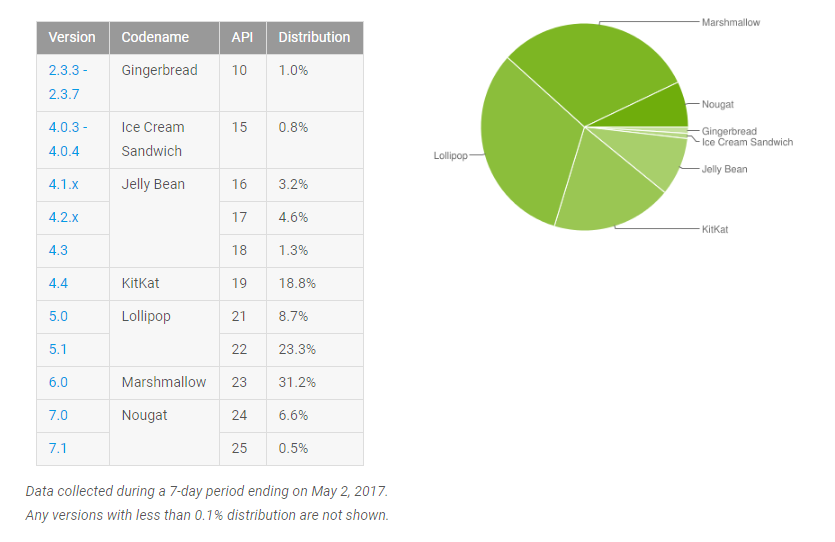
The Android 7.0 Nougat was officially launched in August last year. Since then, newer phones have been gradually receiving the latest Android version. These days many new smartphones also come preinstalled with Nougat. It was launched to replace the older Android 6.0 Marshmallow OS. Fresh Android distribution figures until May 2 have emerged that shows the latest numbers on the basis of all kinds of Android devices like smartphones or tablets that have accessed the Google Play Store in the past seven days.
The latest Android distribution reveals that Android 7.0 Nougat is now running on 6.6 percent Android devices whereas the newer 7.1 Nougat is running on 0.5 percent devices. In other words, 7.1 percent devices are running on Nougat. In the last month, Nougat 7.0 and 7.1 were respectively available on 4.5 percent and 0.4 percent (total 4.9 percent) Android devices. Compared to the stats of the previous month, 45 percent more Android devices are running on Nougat OS.
However, the number is still less compared to Android 6.0 Marshmallow that is running on 31.2 percent Android devices. Still, the Android 5.0 and 5.1 Lollipop is leading the pack with a distribution figure of 32 percent. It seems that user base of Android 6.0 Marshmallow may surpass that of Lollipop by the time the next Android distribution figure arrives in the coming month.
The older Android 4.4 KitKat is running on 18.8 percent of Android smartphones and tablets. Behind it are the different versions of Android Jelly Bean such as 4.1.x, 4.2.x, 4.3 and 4.4 that are now running on 9.1 percent Android devices. The Android Ice Cream Sandwich versions like 4.0.3 and 4.0.4 were found on 0.8 percent devices and the Android Gingerbread editions like 2.3.3 – 2.3.7 are running on 1 percent of devices.
Any edition of Android that has a distribution figure of less than 0.1 percent are unavailable on the list. Hence, the other older Android versions such as Froyo, Éclair, Donut and Cupcake cannot be seen on the list. The original build had released in December 2016 and now Google is prepping of Android O. It is pegged to get unveiled at Google I/O 2017 this month and its final version may become available in third quarter of the year.
These days there are plenty of large-sized Android smartphones that come with huge displays. However, Jelly is a surprisingly different 4G smartphone that runs on Android 7.0 Nougat OS and features a small-sized screen of only 2.45 inches. The Kickstarter project for this Jelly phone has started from today
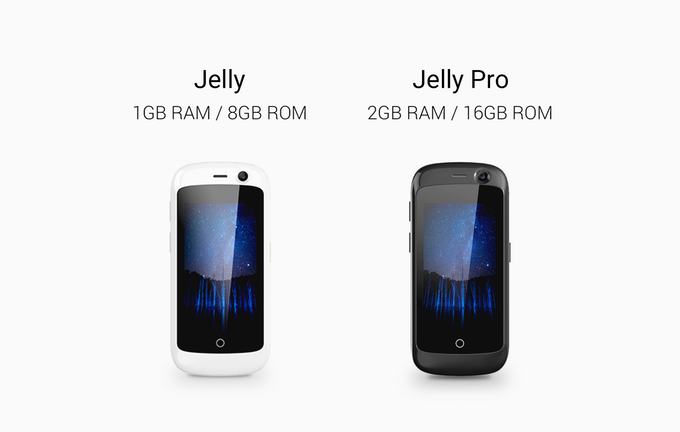
Unihertz, a company based in Shanghai is manufacturing the Jelly phone. It is a perfect that can be used an environment where using a large-sized smartphone is not convenient. Its claims that it is so small that it can easily fit even in a coin pocket. It comes in two models, the Jelly and the Jelly Pro.
The Jelly and Jelly Pro smartphones have a 2.45-inch TFT screen that offers a resolution of 240 x 432 pixels. They feature a quad-core processor under its hood that works at 1.1 GHz. However, the manufacturer of the processor for the Jelly phones have not been disclosed yet. Both phones are packed with 950 mAh battery
The Jelly and Jelly Pro phones are 4G LTE enabled handsets that support two nano SIM cards. It is good to see that these miniature smartphones are running on the latest version of Android. Their rear camera is of 8-megapixel and the front-facing shooter is of 2-megapixel.
What sets that the Jelly phone from Jelly Pro? The former is a base model that features 8 GB of storage of 1 GB of RAM. On the other side, the Jelly Pro has 2 GB of RAM and its native storage is 16 GB.
The Jelly phones are not designed to replace the smartphones of the users, but it can be used as a handy secondary phone. Readers who wish to back the Kickstarter project can head on to this link. Unihertz has pledged a revenue goal of $30,000 and at the time of writing it had nearly reached $94,000 with 1,152 backers onboard.
The Jelly and Jelly Pro are respectively priced at $69 and $85. Early birds can avail these phones with a respective discounted pricing of $59 and $75. The retail pricing of both phones will be $109 and $125 and will start shipping from August. The Jelly and Jelly Pro can be bought in three color choices such as Pearl White, Sky Blue and Space Black.
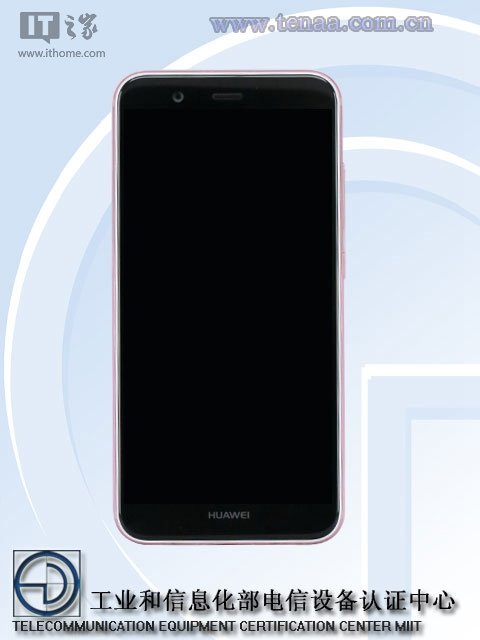
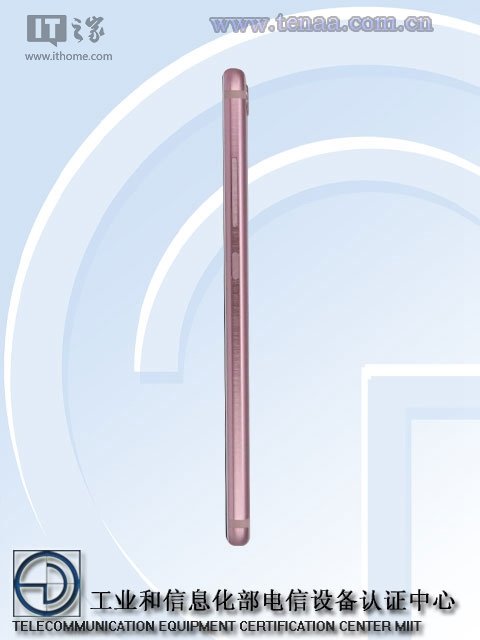
Huawei has always maintained its resolve to capture not only the high-end, flagship category but also the mid-range section with a couple of sleek mid-rangers like the Huawei Nova and Nova Plus which were unveiled last year both in Europe and China. Now, photos of two Huawei smartphones which are believed to be mid-rangers have appeared on TENAA, China’s Telecom regulatory agency.
The smartphones are believed to be the next generation models of the Nova and Nova Plus and are said to go by the names Huawei Nova 2 and Nova 2 Plus. The Nova 2 looks smaller in size, perhaps a 5.1-inch display but with a design different from the Nova in that there is no front physical home button. The device also has an entirely black coloured display.
Perhaps, the most outstanding feature noticed on the two phones that appeared on TENAA is the dual rear cameras which are situated in a horizontal plane on both devices. The Huawei Nova and Nova Plus only feature single lens shutters at the rear but if this is really the Nova 2 and Nova 2 Plus, we really should brace up for some spectacular design on the camera aspect. As a matter of fact, both devices have strikingly similar design are the rear which could make one of them be mistaken for the other.
The Nova 2 Plus, on the other hand, looks bigger with its screen size rumoured to stand at 5.5 inches with the display coloured in white. The Nova 2 and its Plus-size sibling are said to utilise a 16nm Hisilicon Kirin 660 processor and a rear-mounted fingerprint sensor is visible at both smartphone’s rear. Other details of the device are not clear at the moment but we promise to bring you more on this as they unfold.
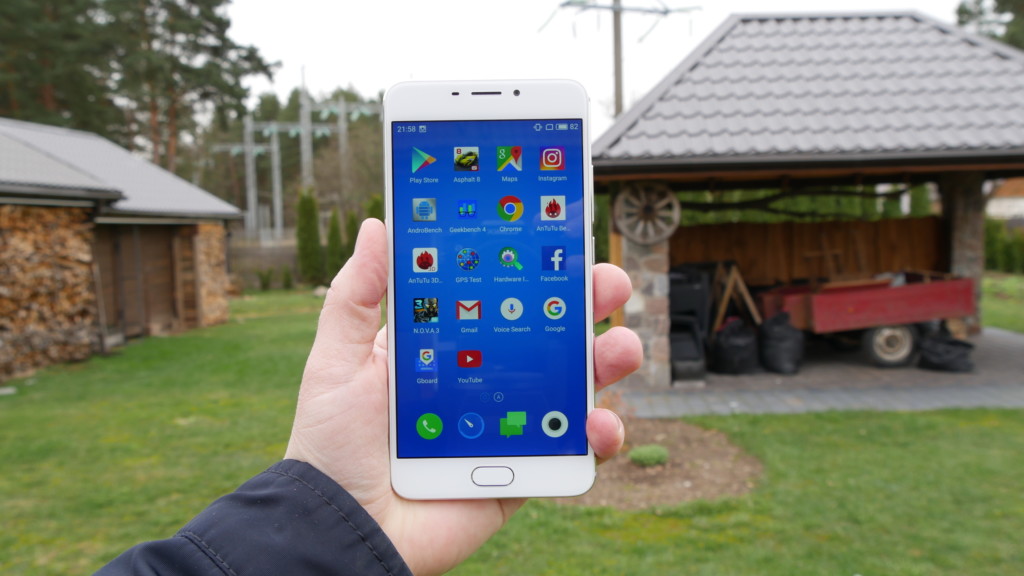
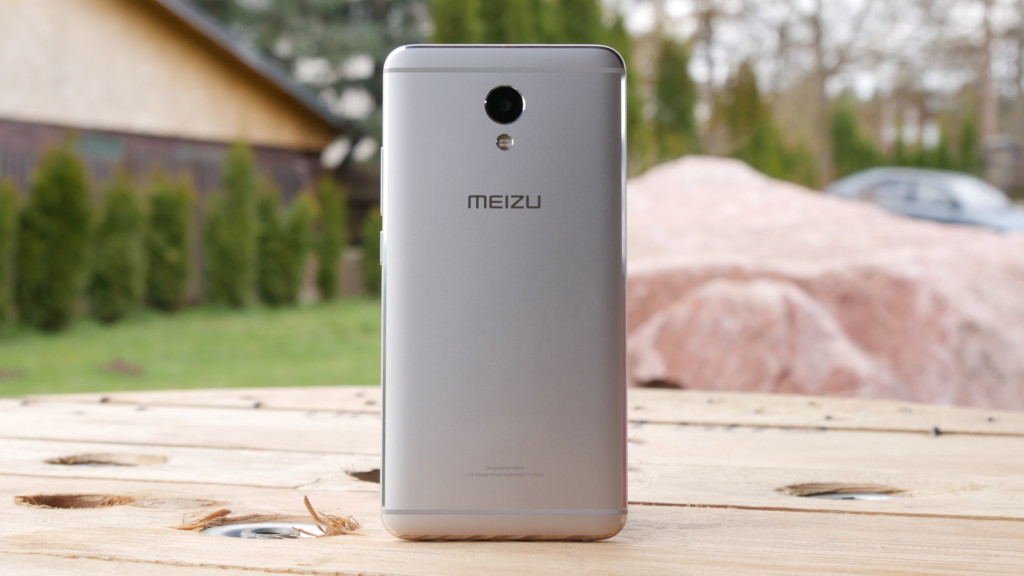
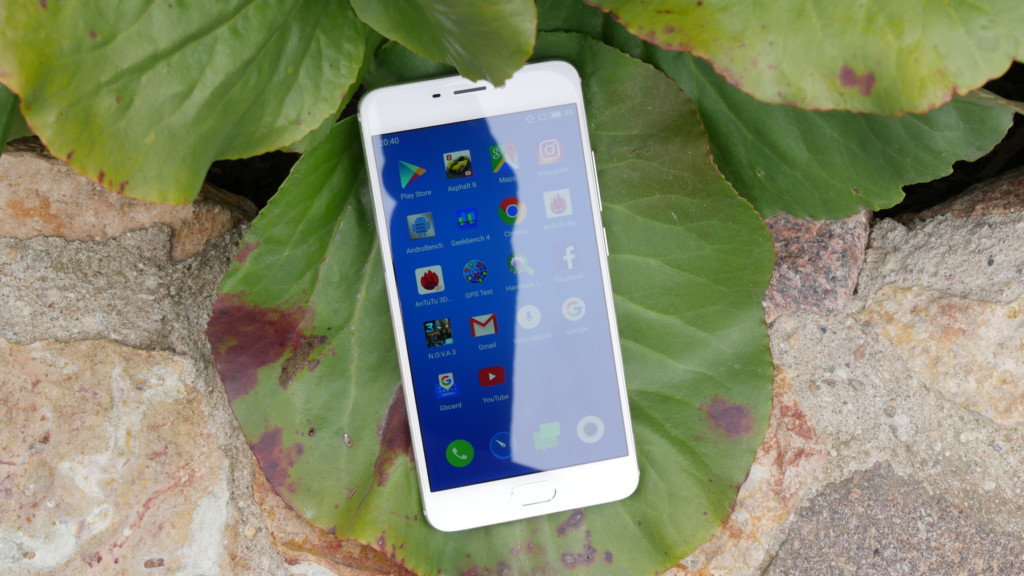
Meizu is a well-known Chinese manufacturer that loves saying that its phones are better than Xiaomi’s. The Meizu M5 Note is one of the company’s latest budget offerings that has a flagship-grade build quality, decent specs and a lot more. Learn more in our full review.
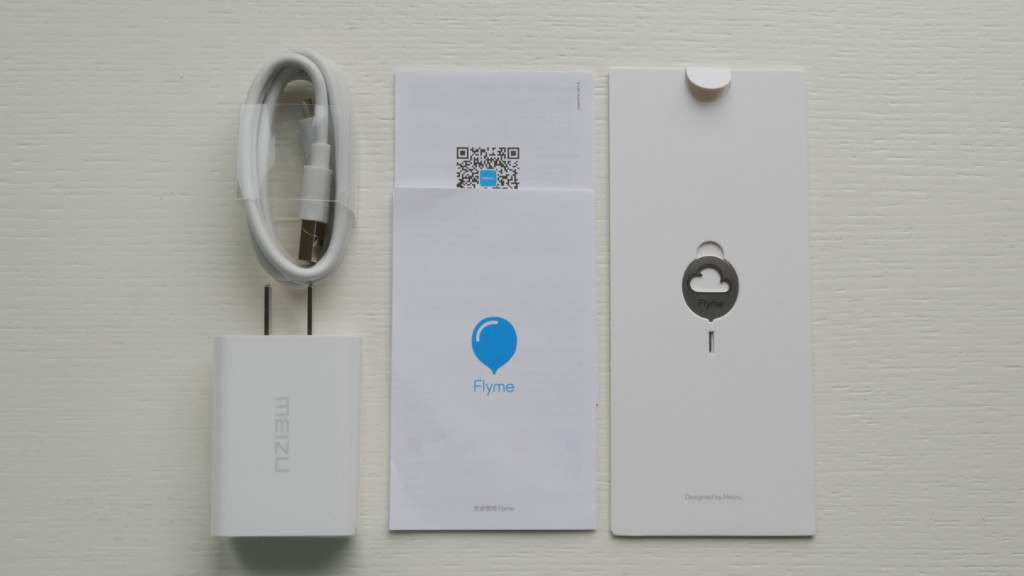
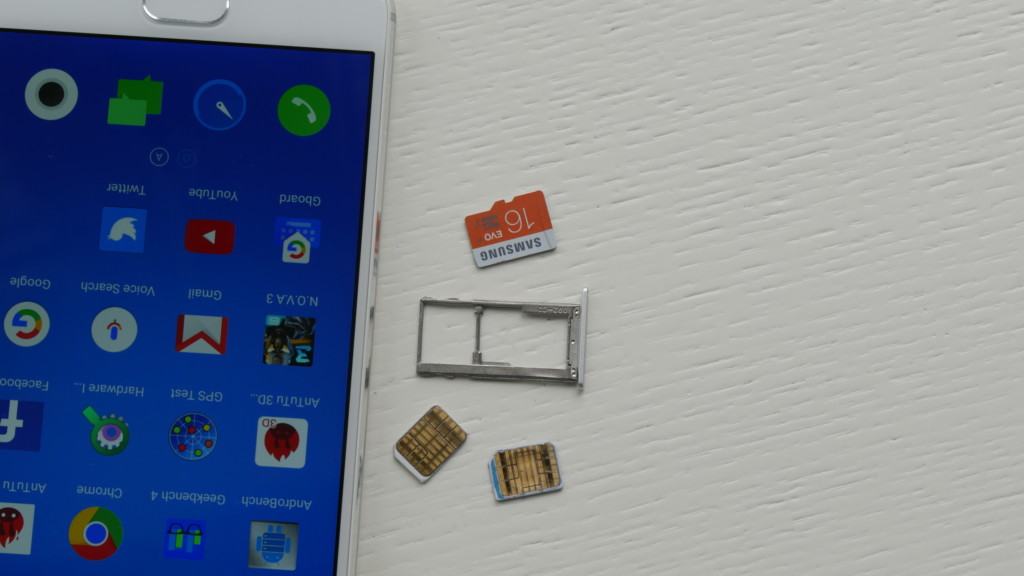
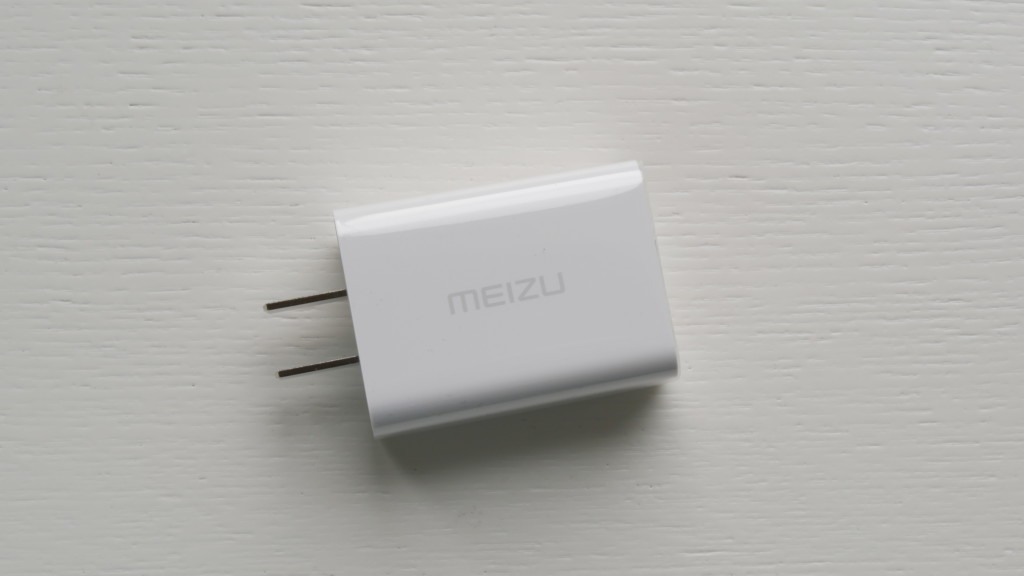
In the box, you get all the usual stuff that includes some paperwork, SIM ejector pin, USB cable and a fast charger.
DESIGN and DISPLAY
What I absolutely love about the M5 Note is a flagship-grade build quality.
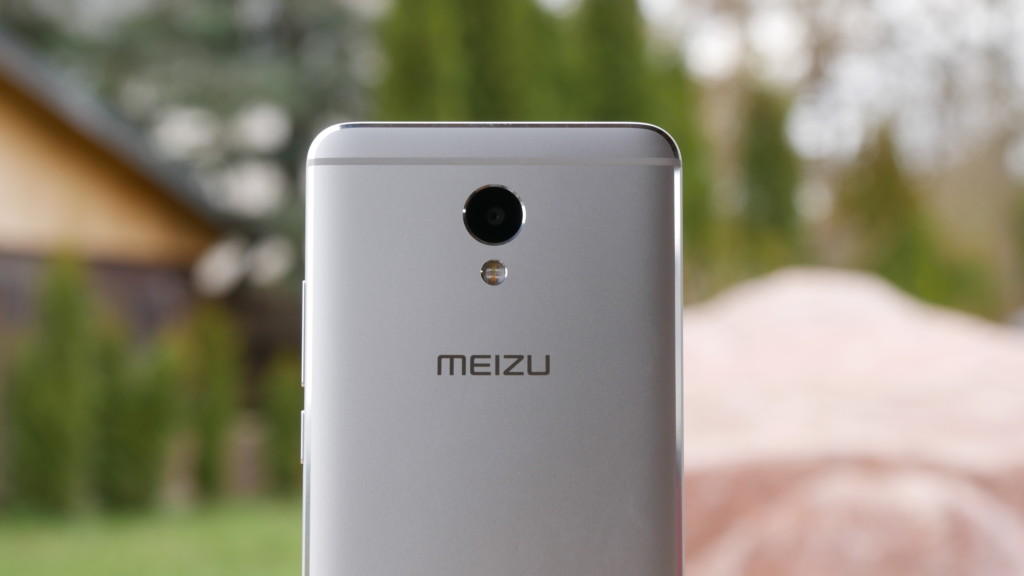
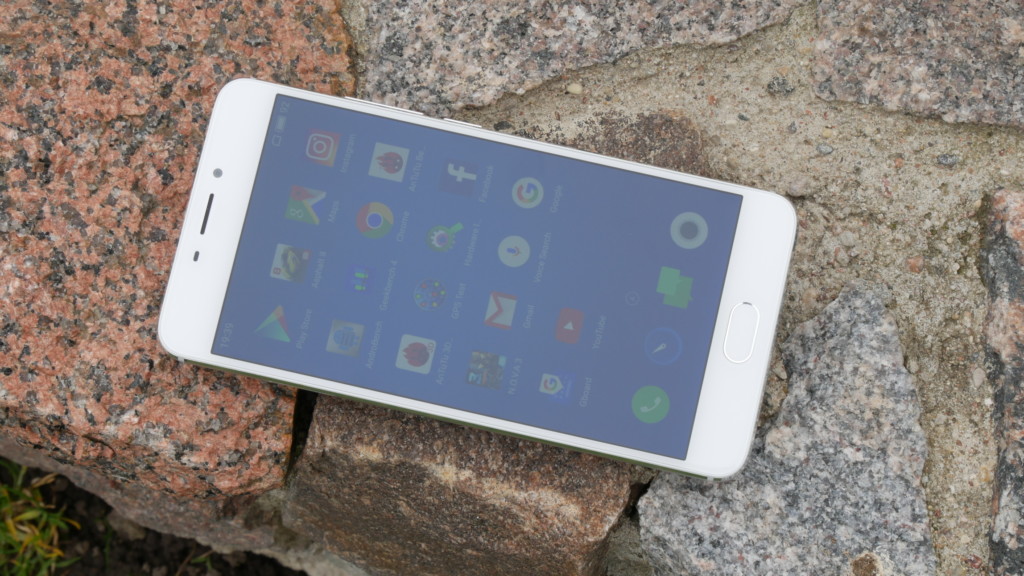
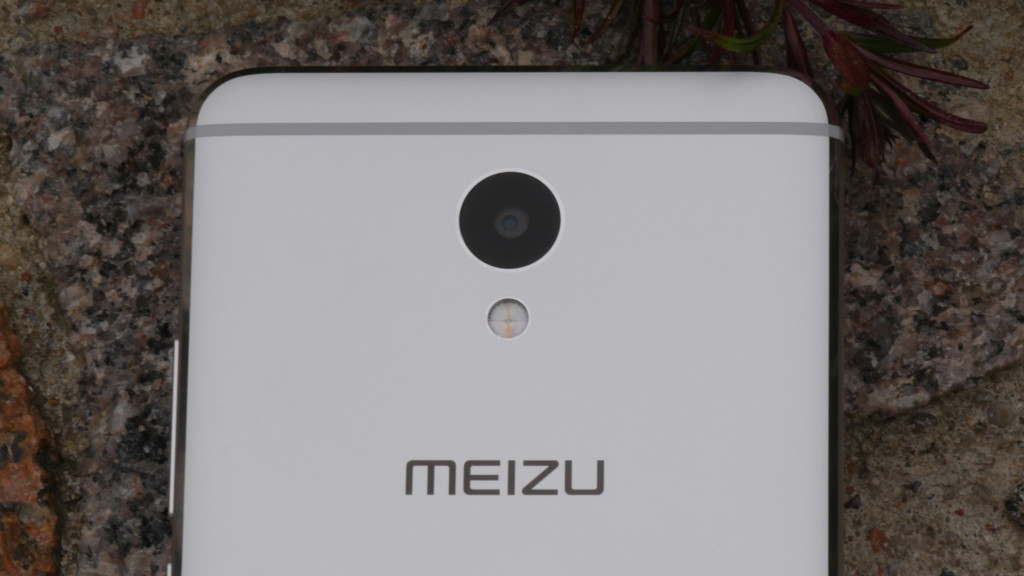
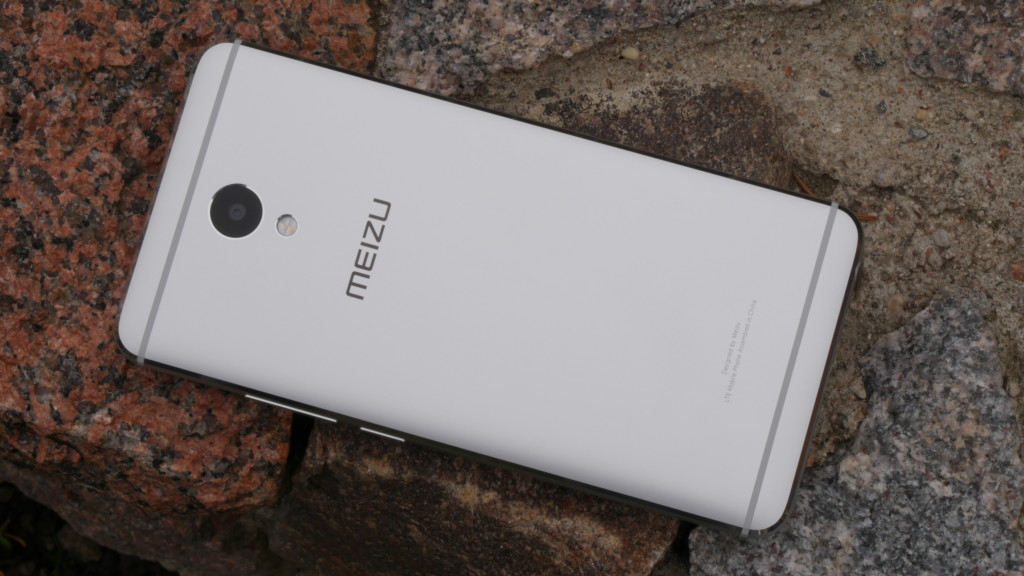
Just look at it, the phone is made entirely of metal, a silver aluminum finish does not attract fingerprints and smudges quickly and the phone feels nice in the hand. I am so excited because I prefer metal phones over the glass-made ones.
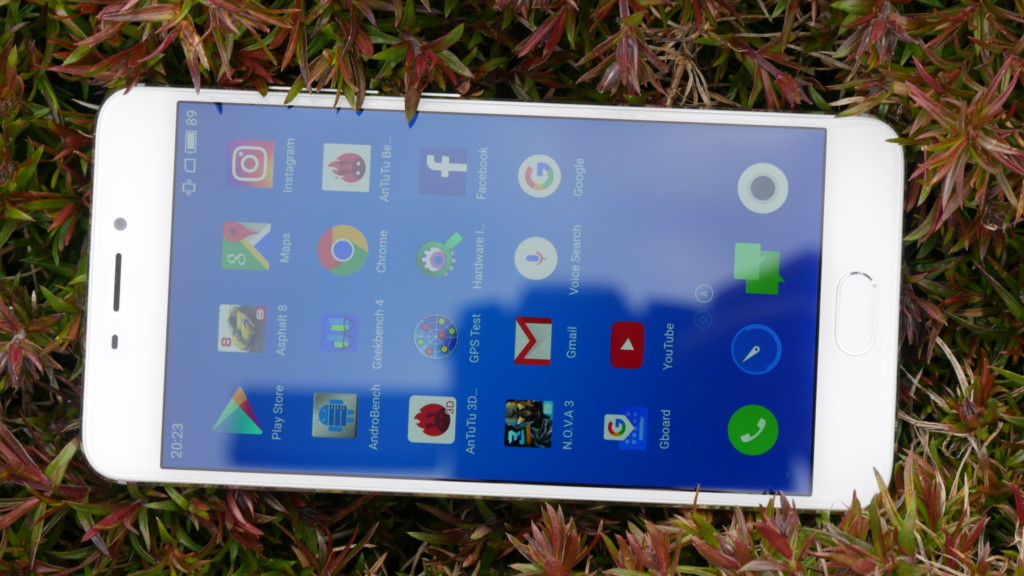
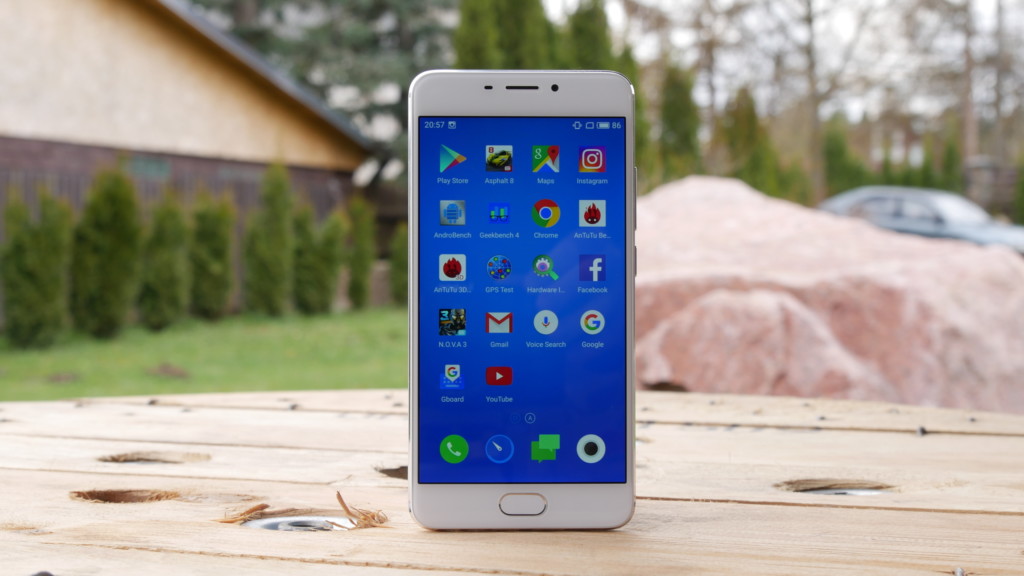
The M5 Note has a 5.5” 1080p display that is just gorgeous to look at. It is sharp and vibrant but the sunlight legibility is just average.
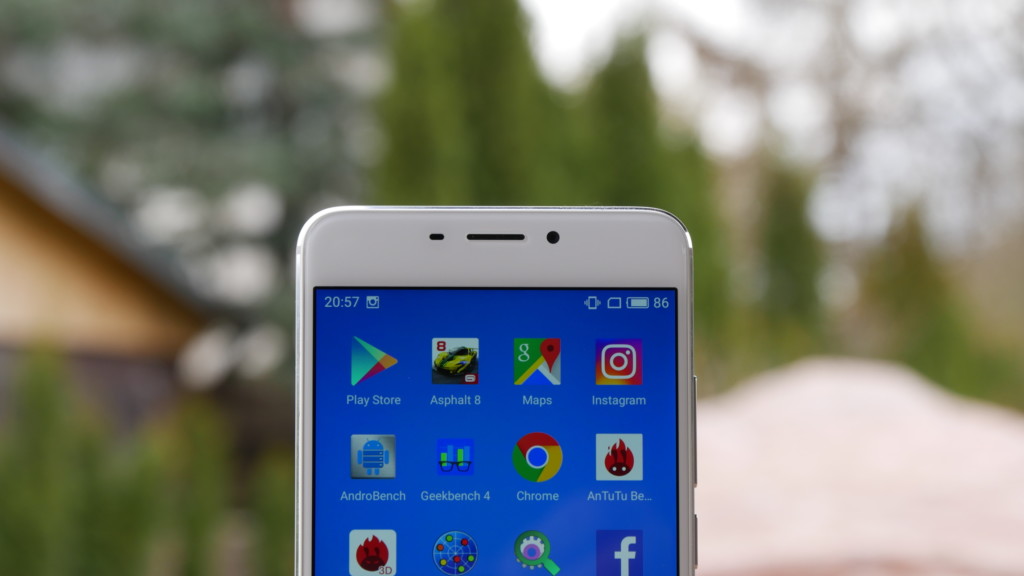
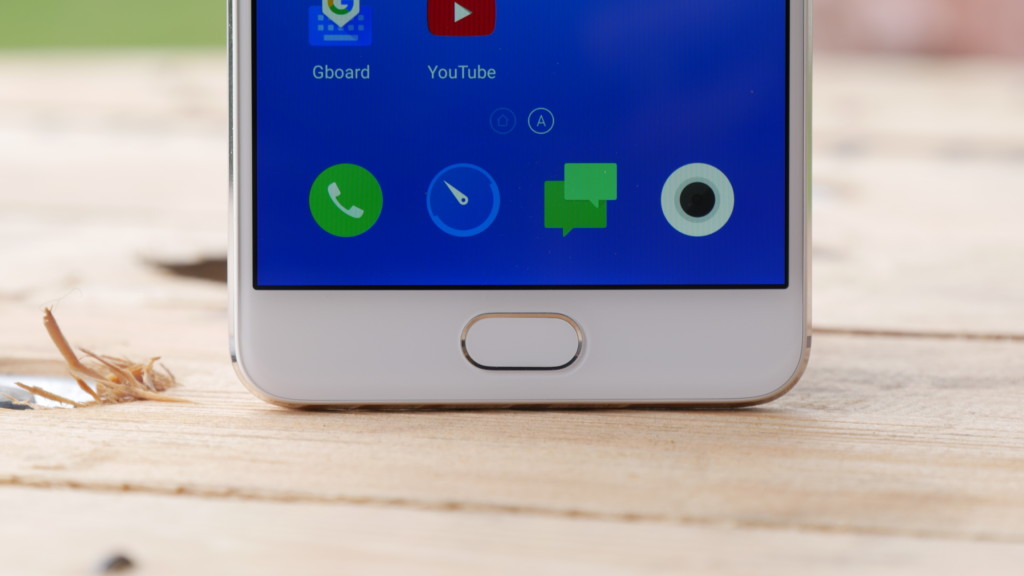
We have a 5MP selfie camera and a notification LED light on the top and on the bottom, there is just a home button that can be either physically pressed or just tapped if you want to use it as a back key. Also, the home button doubles as a fingerprint scanner, which is very accurate but you have to wake the phone up first in order to use it.
As far as optics go, there a 13MP shooter coupled with a dual LED flash.
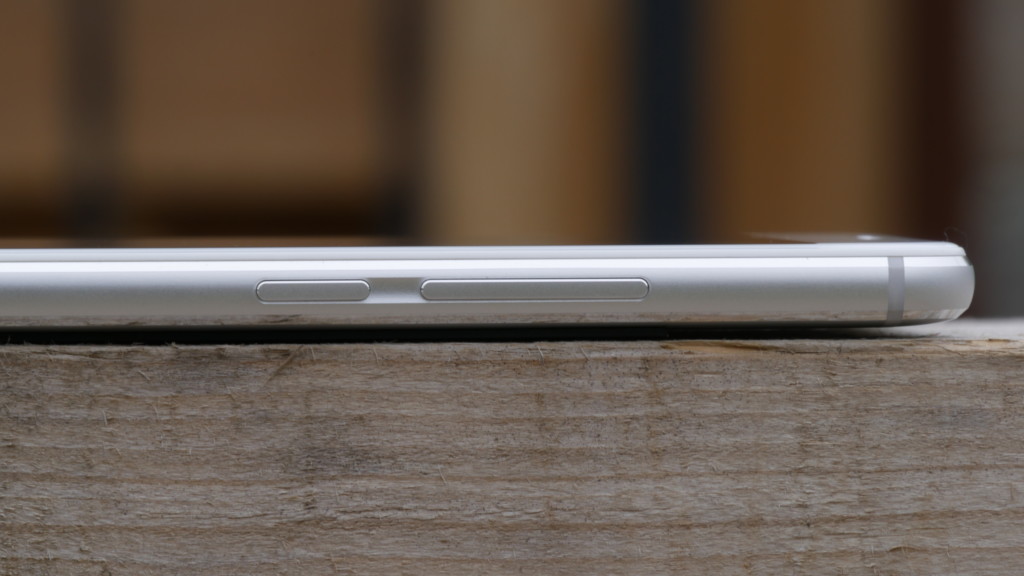
I love that the buttons are tactile and they do not rattle once pressed.
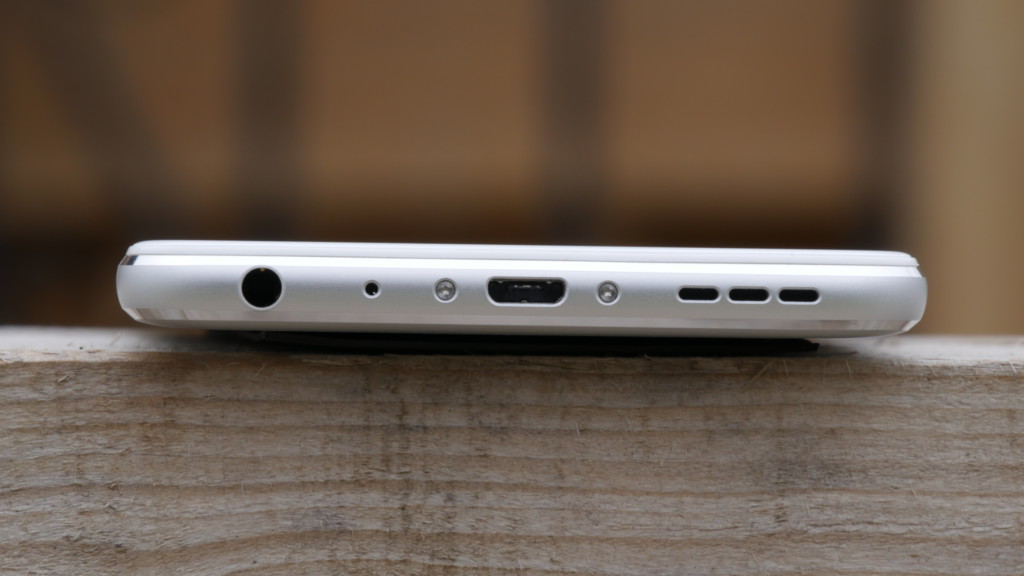
The sound via the headset jack is great. No distortions and great overall quality for a budget phone. The loudspeaker is also good. In fact, it is one of the better ones in this price range.
HARDWARE and PERFORMANCE
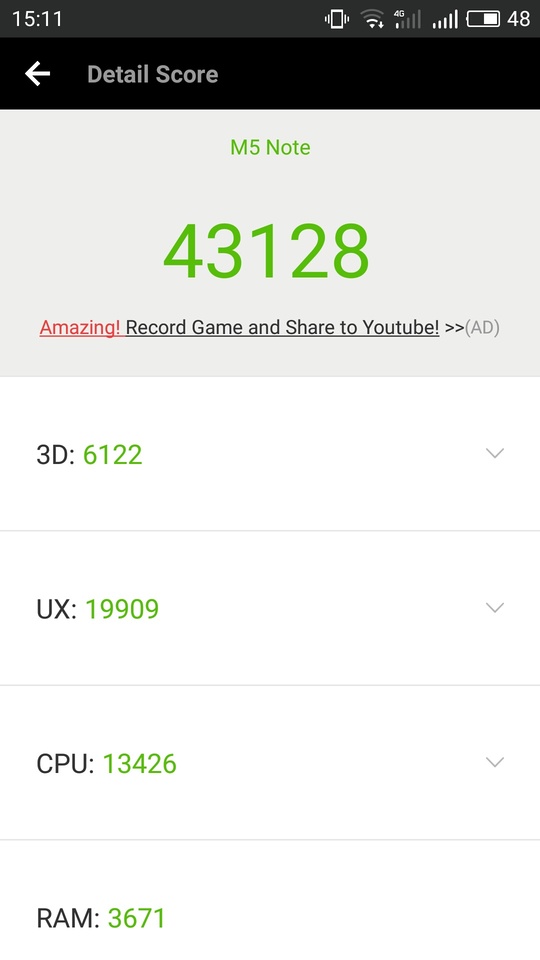
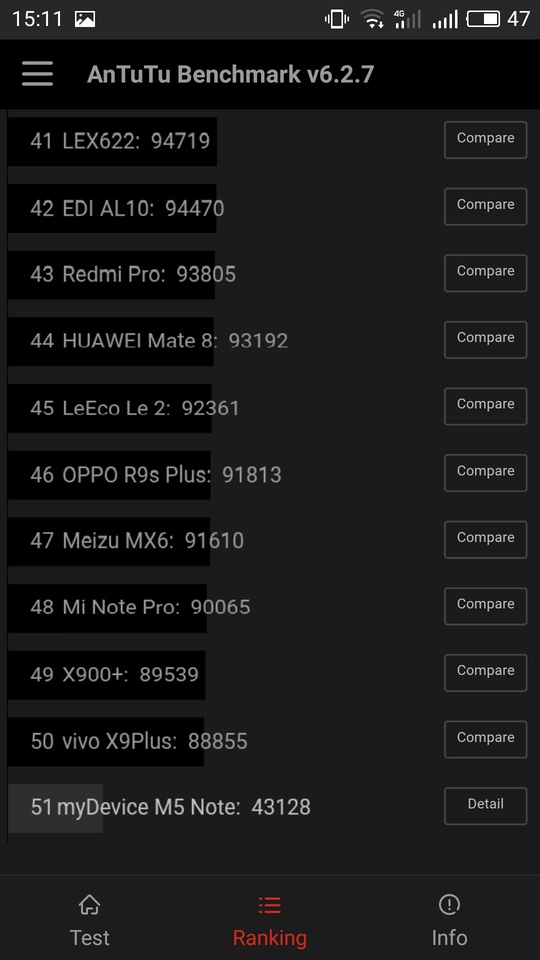
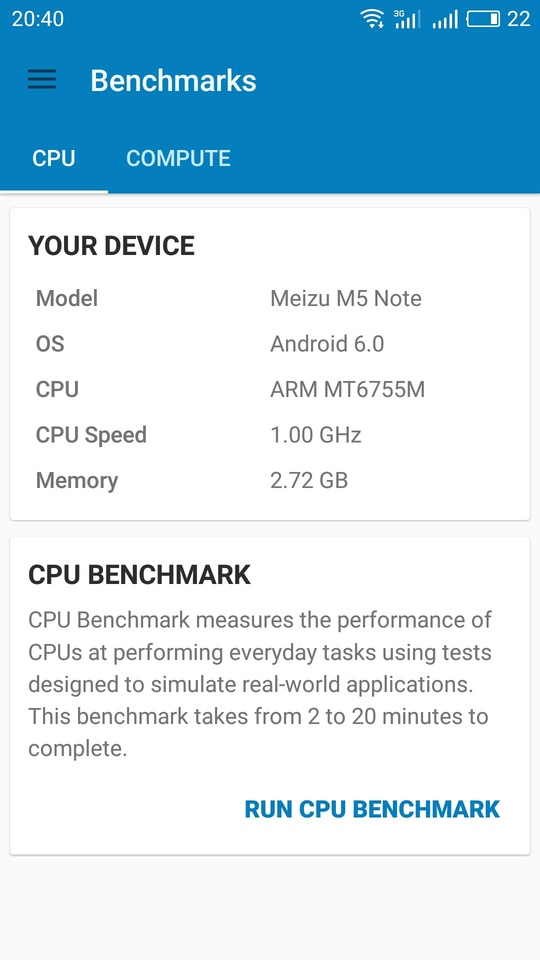
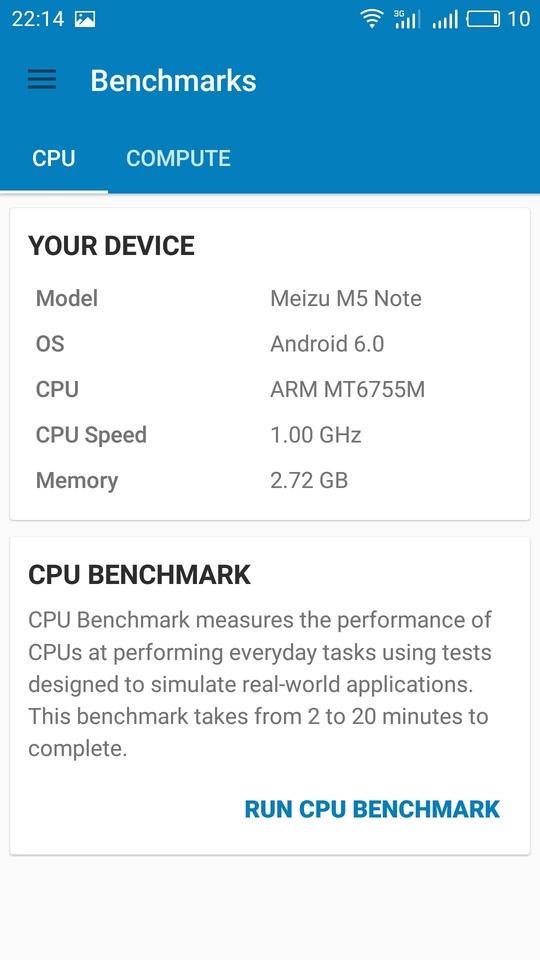
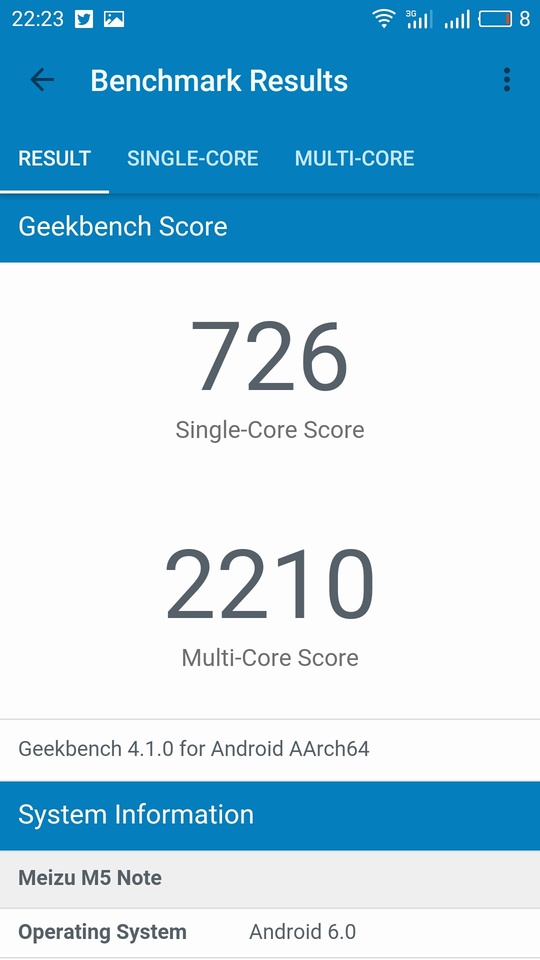
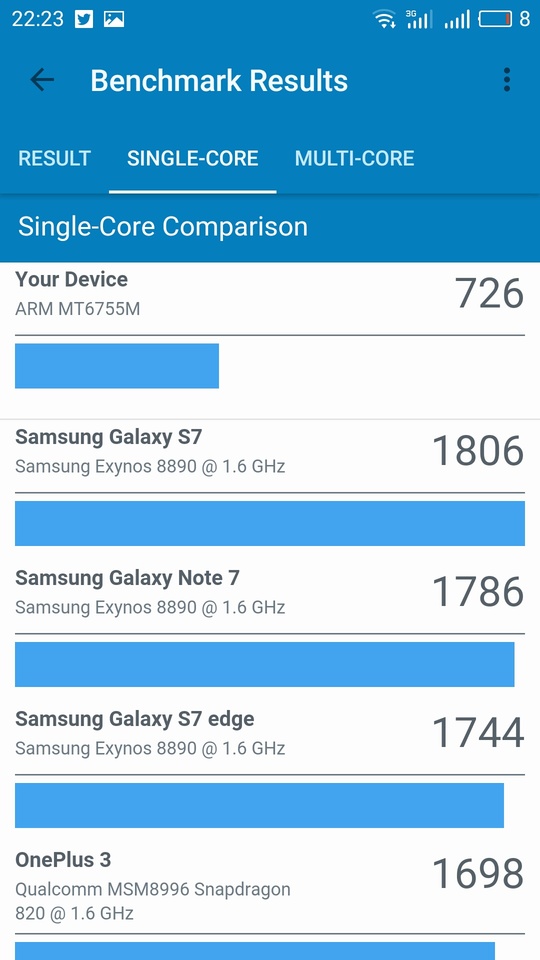
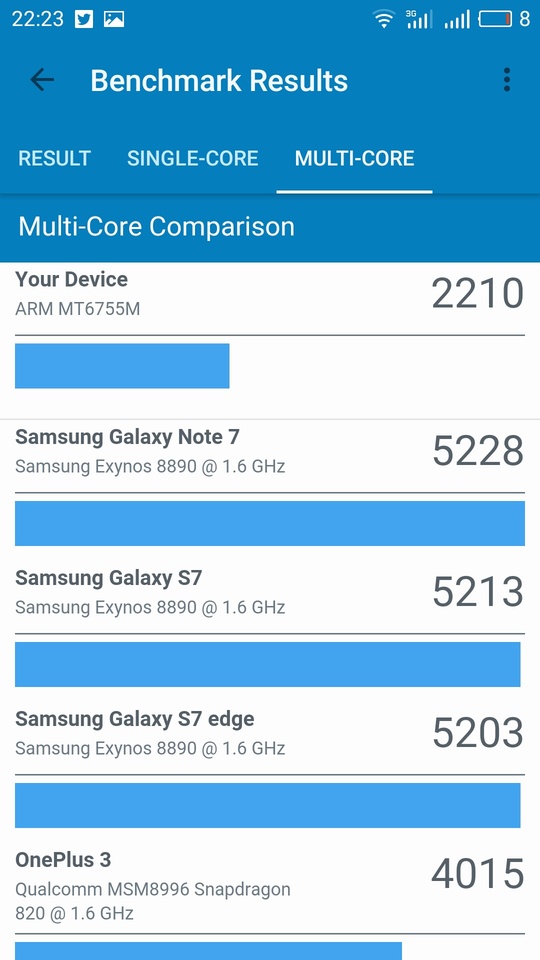
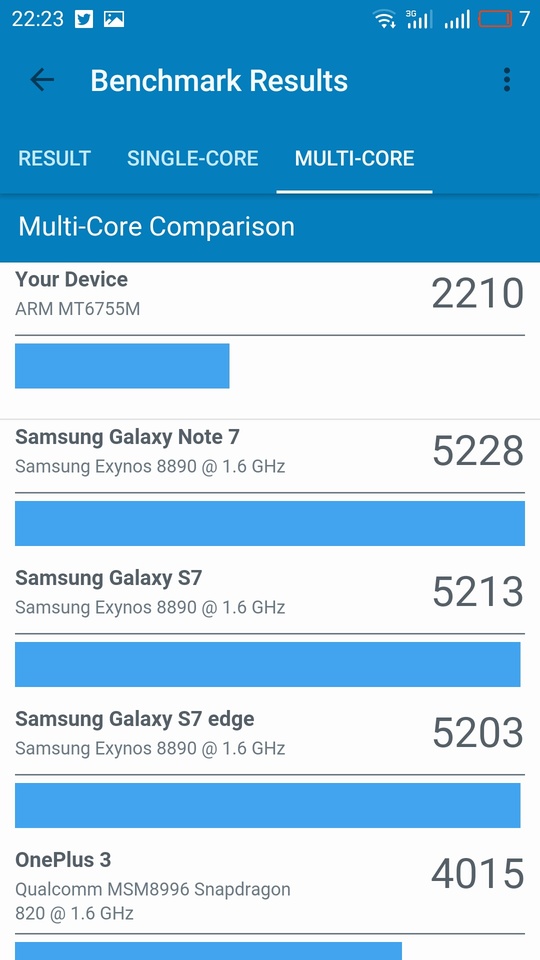
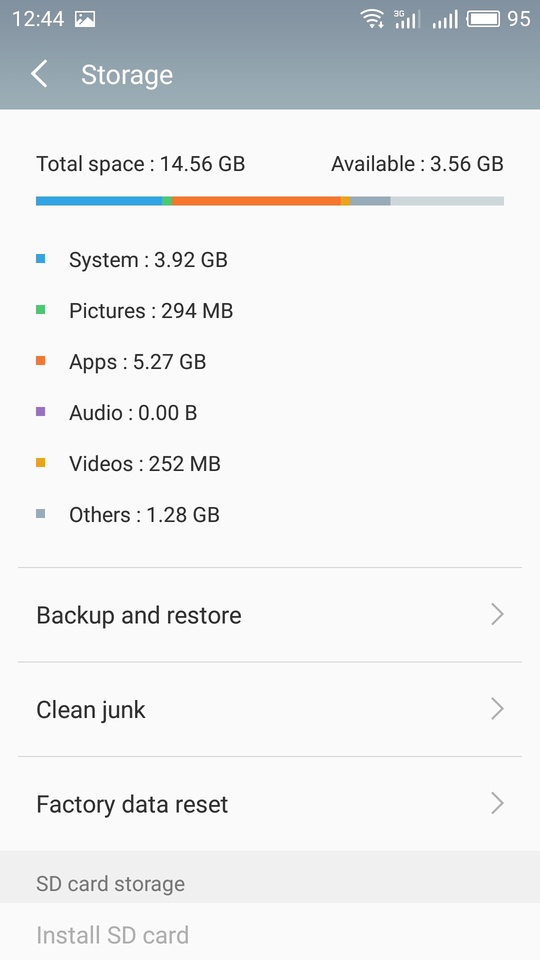
When it comes to hardware, things don’t sound that great. Well, the Meizu M5 Note definitely has enough power for most of the daily tasks since it has 3GB of RAM and optional 16/32 or 64GB of expandable storage but the Mediatek Helio P10 chip can’t handle the most intensive tasks like gaming.
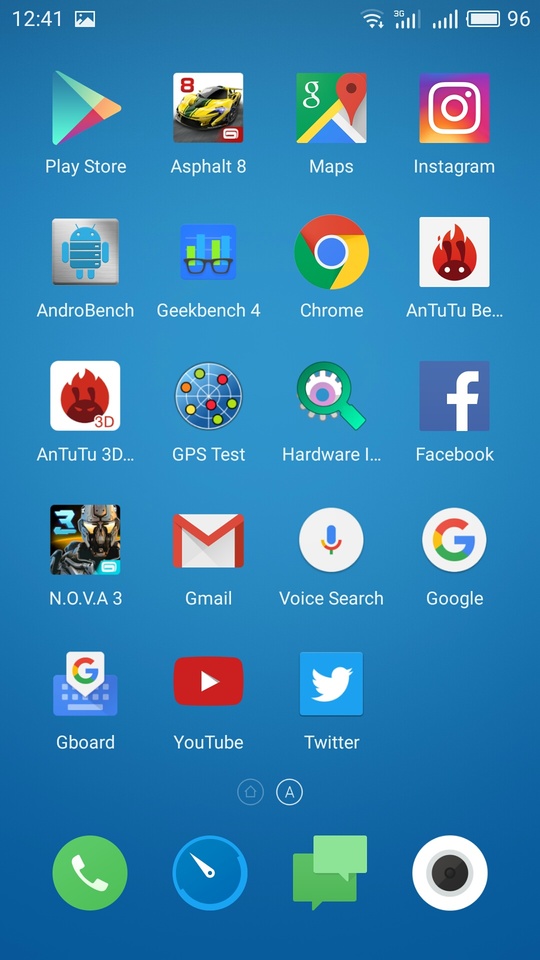
If you play games like Asphalt 8 on the highest graphics, you should expect a lot of stutters and quite a few skipped frames. You can fix this issue only if you switch the graphics setting to medium. Other games like Nova 3 run fine.
BENCHMARKS
USER INTERFACE
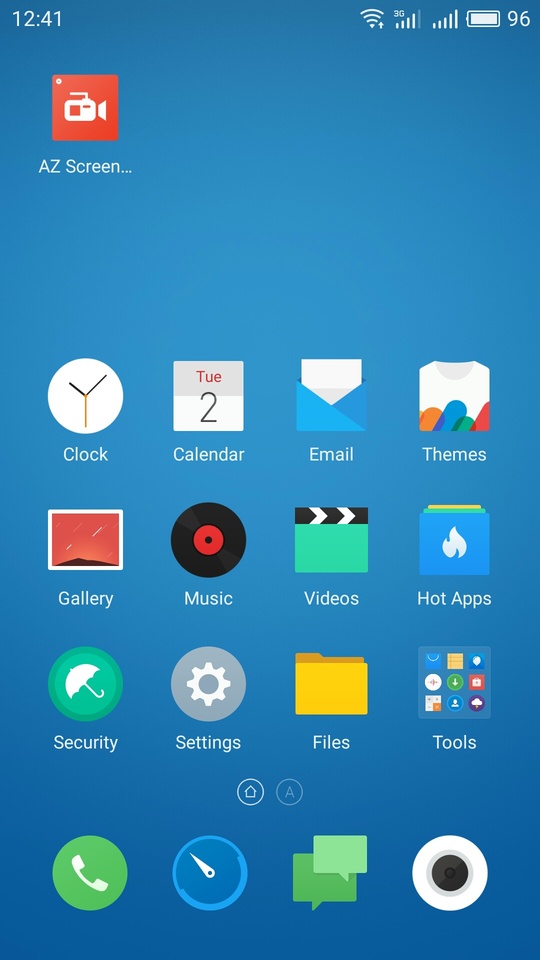
I have always loved the Flyme Os because of the way it looks it works. Sure, it would be nice to see the latest version of Google’s OS but the Android 6.0-based user interface is fast, there is no stutter or lag no matter what you do with it.
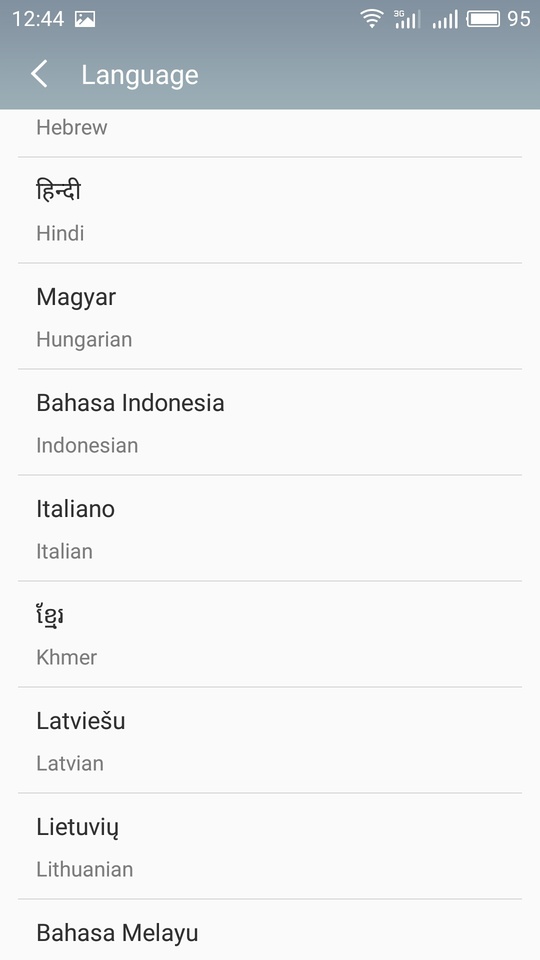
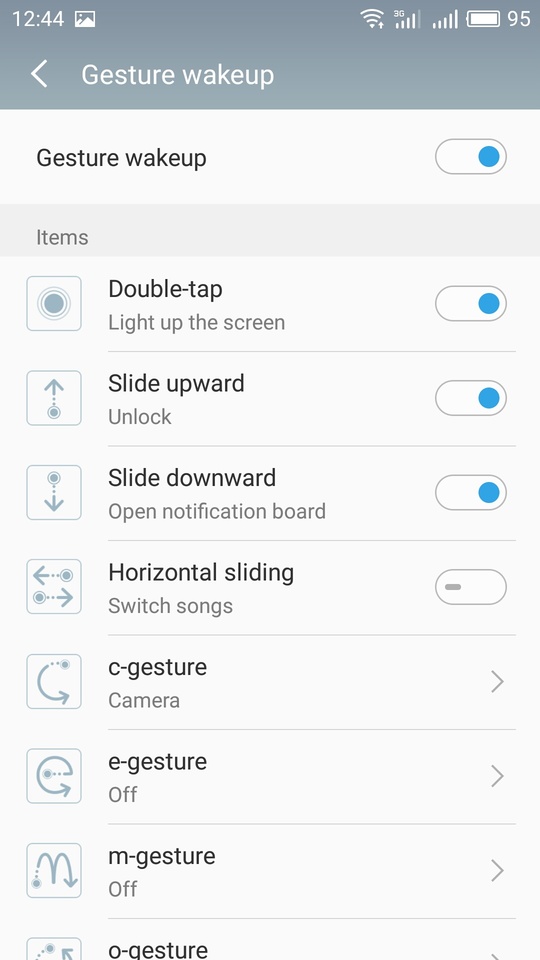
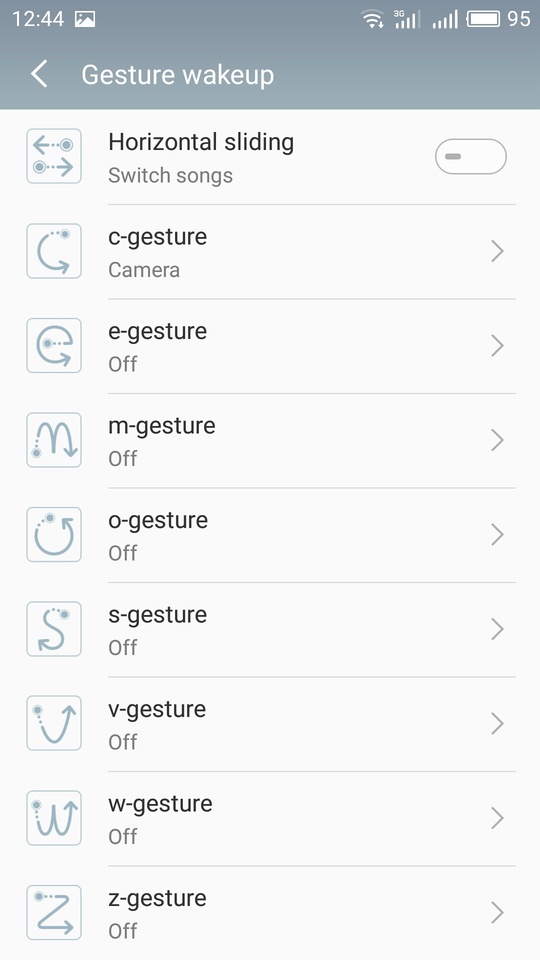
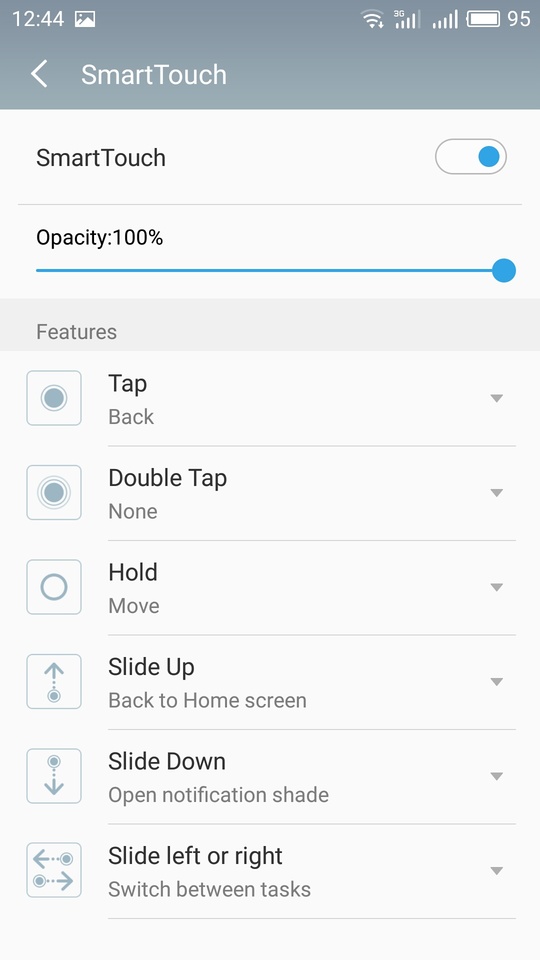
Also, there are some cool features like gesture and motion controls and they work perfectly. I just love those basic gestures that allow you to use the phone in one hand quite easily. You can also customize the phone by changing themes, wallpapers and so on. Finally, my international review unit comes with most of the languages, google play installed and there is no chinese bloatware.
CAMERAS
I like Meizu’s camera app because it is fast and responsive. However, there are a few things the company didn’t fix for a long time, e.g. the shooting modes and settings menus work only in portrait mode for some reason. You can select from a few shooting modes that include a manual mode or slow motion in 720p video mode.
IMAGE QUALITY
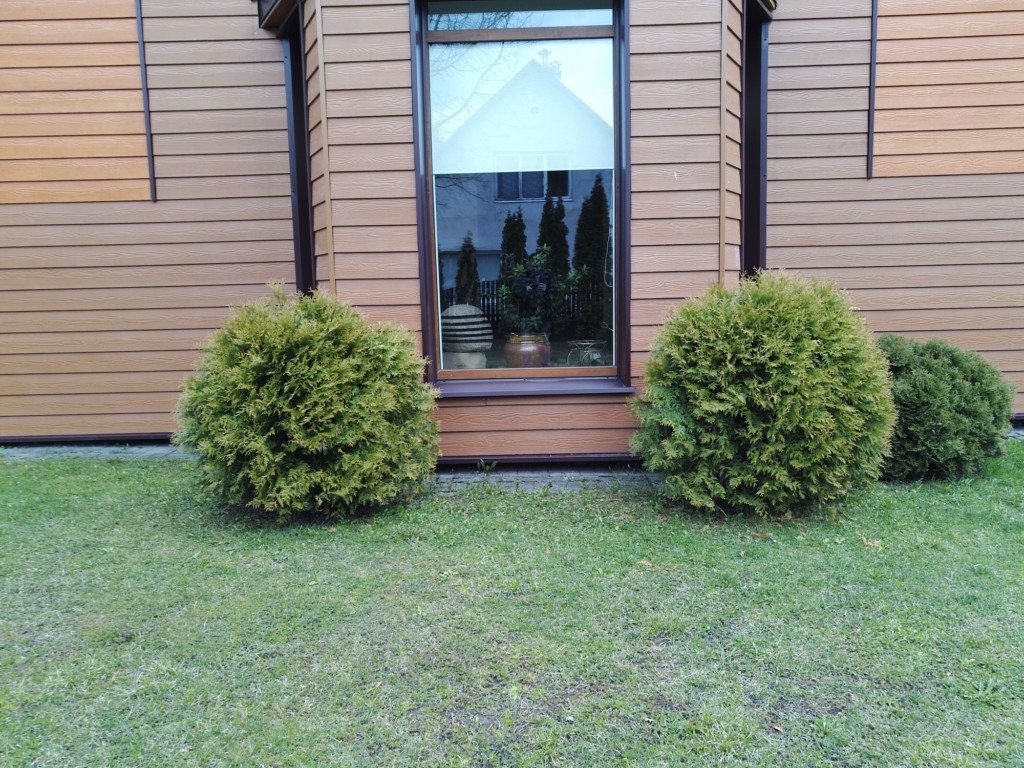
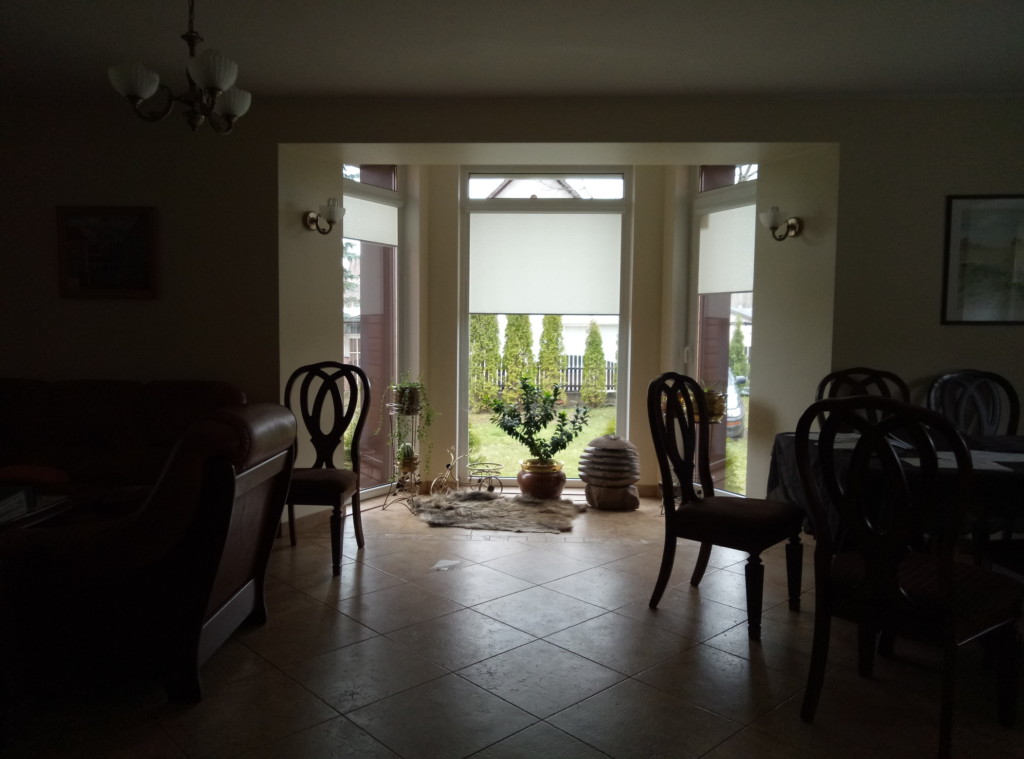
Meizu M5 Note takes one of the best pictures you can get on any sub-$150 phone. You will usually get photos that have plenty of detail and sharpness, and the colours will look nice. The dynamic range and white balance may be off in some of the shots but the HDR mode does a decent job bringing the detail back to the shadows (at the expense of a bit unnatural looking picture).
The low-light shots have qutie a bit of noise and grain but this is usually a case with all budget phones.
The 1080p video looks okay. Not very impressive in general but pretty good for a budget phone.
The selfies look pretty good except for the fact that the colours look a bit washed out.
The 1080p selfie video looks good but again, the colors are washed out. Finally, the sound recording quality is really good for a cheap phone.
When it comes to connectivity, the M5 Note remains solid. Call quality and signal reception are great, wifi and 4g speeds are good and the Bluetooth works fine. However, I found the GPS to be less accurate than flagship phones.
BATTERY LIFE
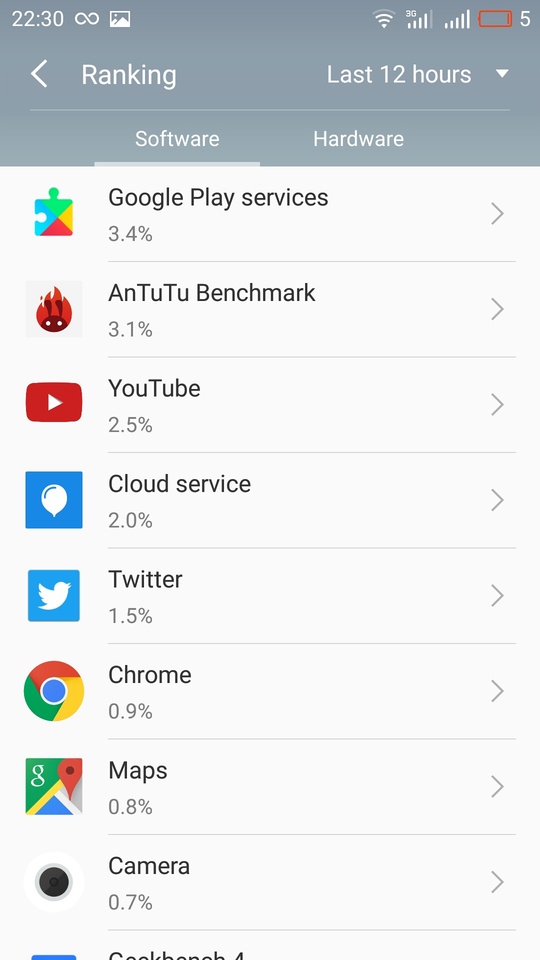
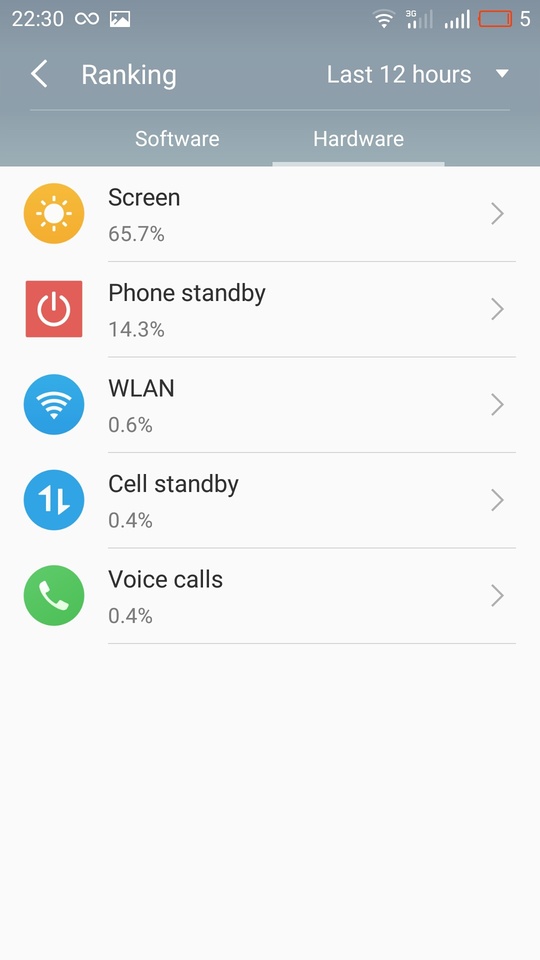
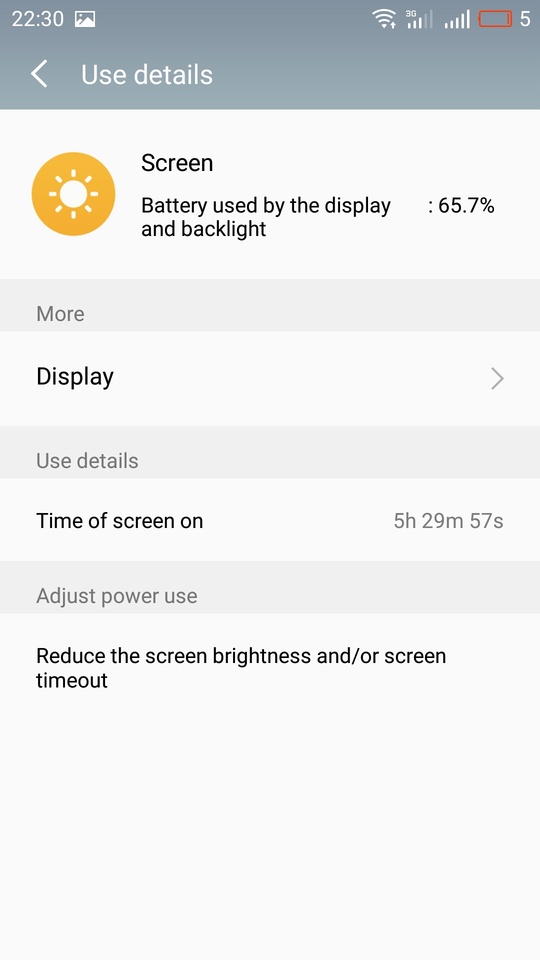
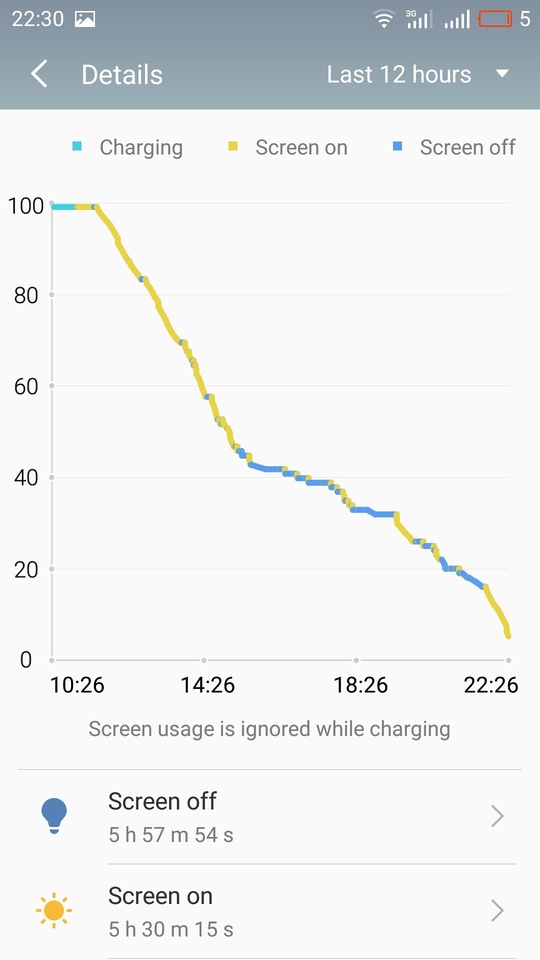
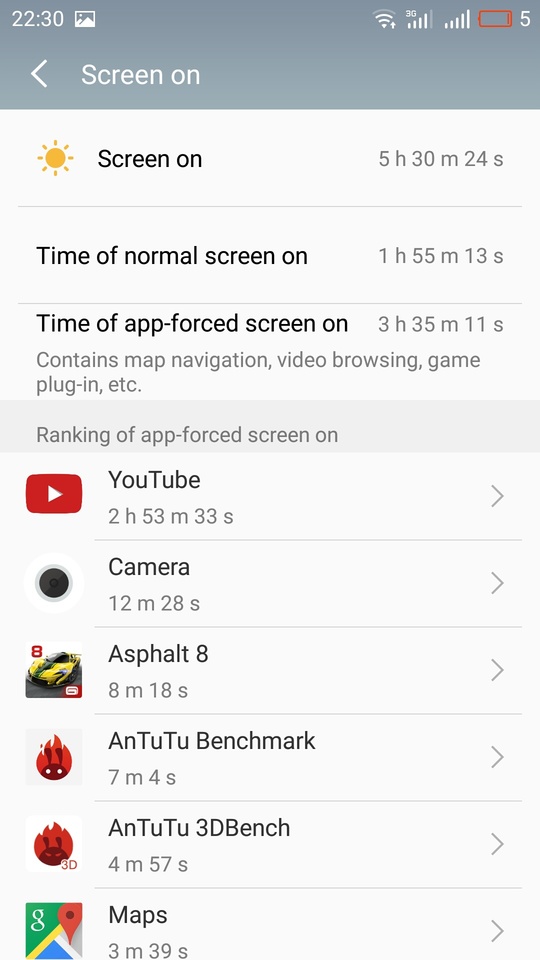
A 4000 mAh battery is one of my favourite features of the Meizu M5 note. Your results may vary but with my usage, I could constantly get over 5 hours of screen-on time with 2 SIM cards and quite a heavy usage of the phone.
If you need to recharge the battery, you can do it quickly in just over 1:30 h with the supplied fast charger.
CONCLUSIONS
The Meizu M5 Note is a very solid budget smartphone that delivers in a lot of ways. I absolutely love the design and build quality of it, the speed and feature set of the UI, the camera, and outstanding battery life.
My main complaints would be that the phone uses Helio P10 chip which is not designed for gamers. Also, the phone still runs on Android 6.0 and we still have a regular micro USB port for charging.
Other than that, Meizu M5 Note is a great offering for the price if you don’t mind those shortcomings.
Microsoft has launched the next Surface….Laptop. Not a Surface Book but a full fledged laptop. The Surface Laptop sports a 13.5-inch PixelSense display and is the first Microsoft device to run Windows 10 S.
Windows 10 S
Windows 10 S can best be described as Microsoft’s answer to Chrome OS. All apps that will run on Windows 10 S will be downloaded from the Windows Store. Microsoft says Windows 10 S is aimed at students, most especially those leaving high school for college. The Surface is the first device to ship with it but other manufacturers are expected to release devices running the new OS.
Surface Laptop Design
The Surface Laptop has a fabric Alcantara® covered keyboard that is backlit just like that of the Surface Pro 4 and also spill resistant. The display has a 3:2 aspect ratio and is “the thinnest LCD touch model ever created and put into a laptop” according to Panos Panay, Chief of Devices at Microsoft. Since it is a touch display, this means owners will be able to write on it with the Surface Pen.
The laptop has a clean design and that’s because you won’t see any speaker grilles or cutouts for the speakers. The speakers are positioned underneath the keyboard, so you should literally feel the sound beneath your fingers.
For ventilation, the Surface Laptop has integrated vapor chambers positioned at the back to keep it cool. The Surface Laptop comes in Platinum, Cobalt Blue, Burgundy, and Graphite Gold.
Faster than the i7 MacBook Pro, More battery life than any MacBook Air
Surface Laptop Specifications
The Surface laptop is powered by Intel’s latest Core i5 and Core i7 processors. Microsoft claims the battery life will last for 14½ hours due to the processors and also says it is faster than the i7 MacBook Pro. The Core i5 version will ship with 4GB/8GB of RAM, 128GB/256GB SSD, and Intel HD Graphics 620. The Core i7 version will have 8GB/16GB of RAM, 256GB/512GB SSD, and Intel Iris™ Plus Graphics 640.
There is one USB 3.0 port, one Mini DisplayPort, and an audio jack on the left, and a Surface Connect Port on the right. The laptop measures 308.1 mm x 223.27 mm x 14.48 mm and weighs 1.25kg. It also has support for the Surface Dial off-screen.
Surface Laptop Price
Preorders for the Surface Laptop will start today and will set you back $999 for the Core i5 version with 4GB RAM/128GB SSD. Shipping will begin on the 15th of June, so you should be able to get your shiny new laptop in time for school.
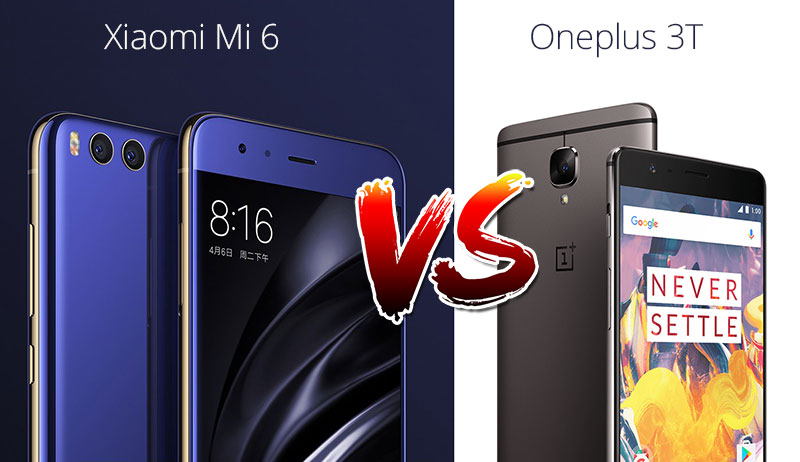
Xiaomi and OnePlus are the two companies that are known for releasing flagship smartphones with affordable pricing. Xiaomi recently released the Mi 6 flagship phone with powerful specifications. Given its cheap pricing and top-end specs, Mi 6 naturally is one of the major rivals for OnePlus 3T flagship phone of the previous year. Just a week ago, we had reported that OnePlus 3T is sitting in the numero uno spot in AnTuTu’s top 10 list of most popular smartphones for March 2017. The Xiaomi Mi 6 with its lethal Snapdragon 835 is stacked against the OnePlus 3T to find out the best flagship between the two with affordable pricing.
Xiaomi Mi 6 vs. OnePlus 3T: Design
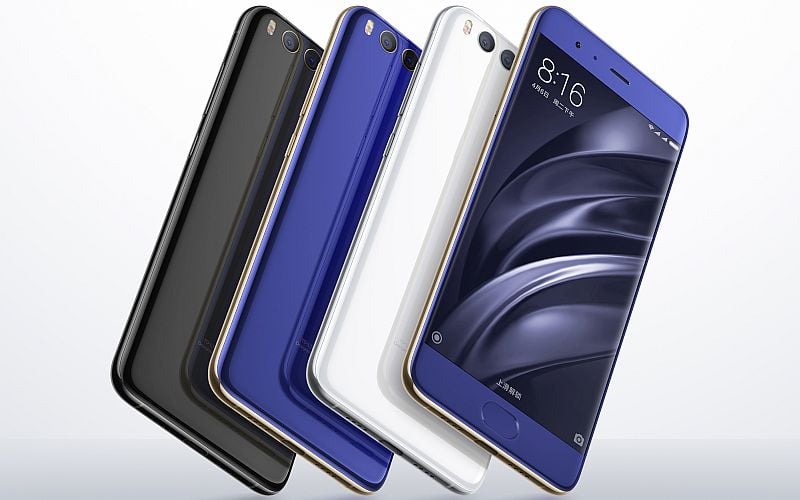
The Xiaomi Mi 6 wears a splash proof full metallic chassis that measures 145.2 x 70.5 x 7.5mm and its weight is 168 grams. The Ceramic variant of Xiaomi Mi 6 weighs 182 grams. It is available in color variants like Ceramic Black, Black, Blue, and White. Xiaomi is speculated to make the Mi 6 available in 7 more colors in the near future. One of the most noticeable design change is that the company has axed the 3.5mm audio jack feature. Users can either use wireless headphones or USB Type-C enabled headphones to listen to music on Xiaomi Mi 6. The company also provides an adapter with Mi 6 that can be used by connect 3.5mm headphones to it.
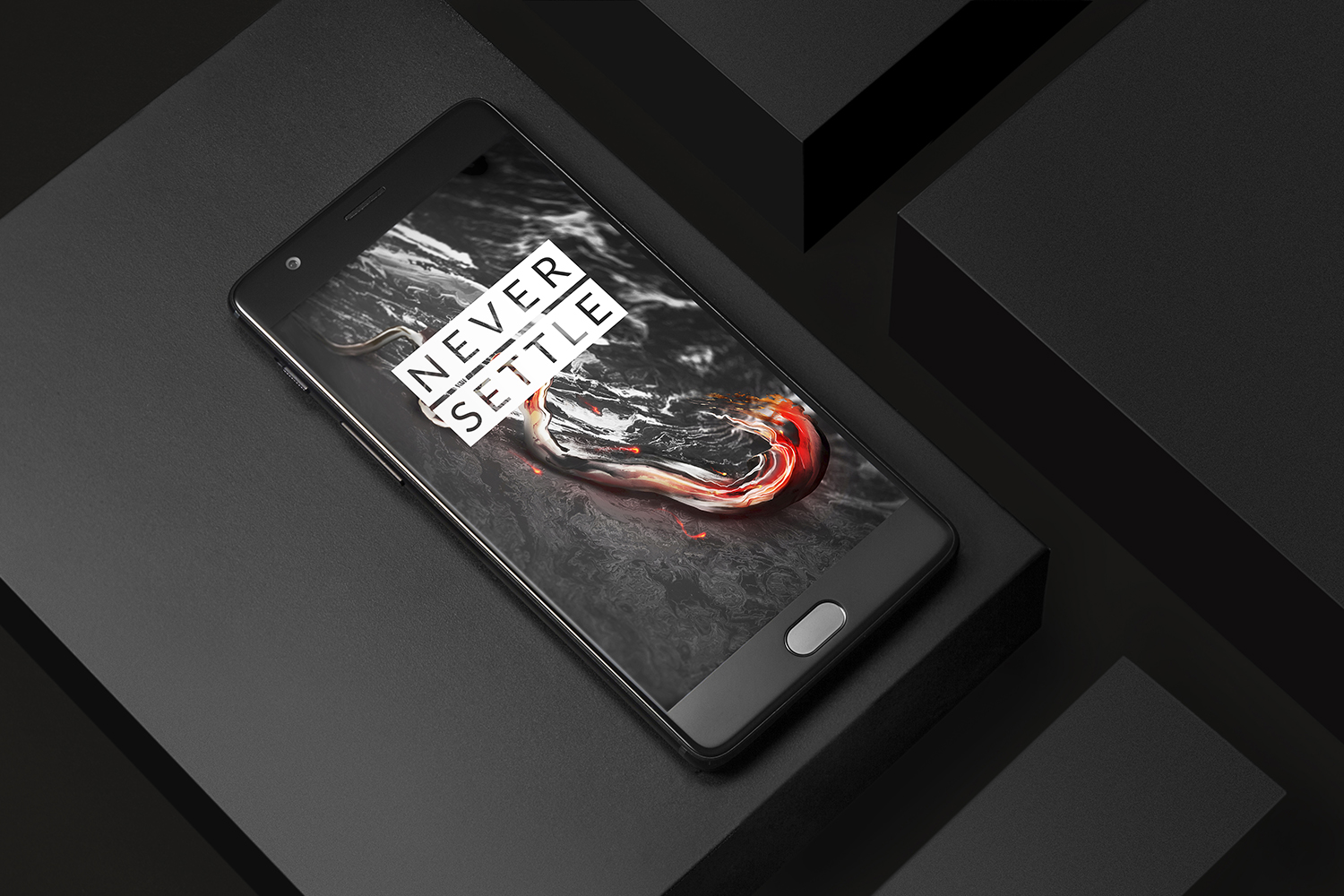
The OnePlus 3T also bears a full metal design, but the body is not waterproof or dustproof. It measures 152.7 x 74.7 x 7.4mm and its weight is 158 grams. It is available in colors like Gunmetal, Soft Gold and Midnight Black.
Xiaomi Mi 6 vs. OnePlus 3T: Display
Xiaomi Mi 6 is not a phablet device as it features a 5.15-inch IPS LCD screen that produces full HD resolution of 1,920 x 1,080 pixels. It delivers a screen-to-body ratio of 71.4 percent. Its ‘eye care’ feature presents a reduce glared mode that protects the eyes by decreasing the blue light from the screen. It offers a maximum brightness of 600-nits. The OnePlus 3T phablet has a 5.5-inch Optic AMOLED screen that boasts a higher screen-to-body ratio of 73.1 percent and consumes less power by
The OnePlus 3T phablet has a 5.5-inch Optic AMOLED screen that boasts a higher screen-to-body ratio of 73.1 percent and consumes less power by turning off the LED while displaying black color. It also carries support for full HD resolution. The max brightness offered by OnePlus 3T is 407-nits.
Xiaomi Mi 6 vs. OnePlus 3T: Specs
CPU
The Xiaomi Mi 6 is powered by Qualcomm’s most powerful mobile chipset, the Snapdragon 835. The new SoC is the successor of Snapdragon 821 and 820 chipsets that powered most flagship phones in the previous year. It includes four Kyro cores working at 1.9 GHz and another four cores running at 2.45 GHz along with Adreno 540. The recently launched Galaxy S8 duo are also powered by Snapdragon 835 chipset.
On the other hand, the OnePlus 3T is driven by Snapdragon 821 which is also a highly potent chipset that powers other smartphones like Google Pixel, Google Pixel XL, Mi Note 2, Mi 5s and Mi 5s Plus and LG G6.
RAM and ROM
Both the smartphones are equipped with 6 GB of RAM. Even in the internal storage department, both phones provide users with two options such as 64 GB and 128 GB. A microSD card slot is absent on Mi 6 as well as OnePlus 3T.
Battery
The Xiaomi Mi 6 houses a 3,350 mAh battery that supports Quick Charge 3.0 fast charging feature through USB Type-C port. On the other hand, the OnePlus 3T has a slightly smaller 3,400 mAh battery that is coupled with the company’s Dash Charge rapid charging technology.
Xiaomi Mi 6 vs. OnePlus 3T: Software
The Xiaomi Mi 6 is running on Android 7.1.1 Nougat and MIUI 8.0 skin. The OnePlus 3T had launched with Android 6.0 Marshmallow, but its users have already received Android 7.1.1 Nougat upgrade along with the latest version of OxygenOS skin.
Xiaomi Mi 6 vs. OnePlus 3T: Cameras
The USP of the Xiaomi Mi 6 is dual rear cameras which include a pair of 12-megapixel camera sensors. It comes with features like 4-axis OIS, PDAF and dual-LED flash. Its front-facing snapper is of 8-megapixel. The OnePlus 3T has a 16-megapixel rear camera that is enabled with features like OIS, PDAF and LED flash. Its selfie camera is of 16-megapixel.
Xiaomi Mi 6 vs. OnePlus 3T: Pricing & Availability
The Xiaomi Mi 6 that was unveiled on April 19 will start shipping to users from April 28 in China. There is no information on when will it be hitting the markets outside of China. The 64 GB Xiaomi MI 6 and its 128 GB variants are respectively priced at 2,499 Yuan ($362) and 2,899 Yuan ($420) in China.
The OnePlus 3T that was released in November 2016 is now available for purchase in various markets across the world. Its 64 GB model is priced at $439 whereas the 128 GB model can be availed for $479.
For the past couple of months, two Smartisan smartphones have made the rounds, first receiving 3C certificates, then appearing on TENAA and finally on AnTuTu benchmark. The devices were identified as OD103 and OD105 on TENAA. Also, Smartisan recently announced that they would be holding a launch event on May 9, 2017, in China. The device expected to launch has been identified as the Smartisan Nut Pro.
The Smartisan Nut Pro is said to pack a Snapdragon 626 processor backed by 4GB of RAM. The device may likely have two storage versions of 32GB and 64GB respectively. The Nut Pro possesses all the features of a decen mid-ranger including a 13MP rear camera as well as 4MP selfie shooter. There is also the Android 7.1.1 Nougat OS providing the interface.
While the specifications are not new, what’s new is that Smartisan may likely include some level of optimization on the device. The latest teaser poster shared by the company gives this impression. The poster talked about mobile phone chips coming in faster than 310% over the years but the phones don’t perform faster than 13%. While the poster is just meant as a countdown to the launch event, it could also contain some clue that Smartisan is planning to surprise us with some features other than those offered by the decent Snapdragon 626 chipset.
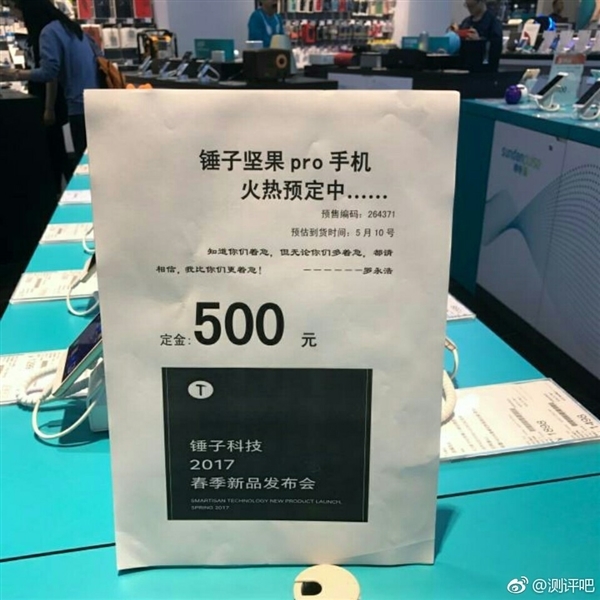
Already, booking for the Nut Pro has opened, where participants would need to deposit 500 Yuan to register. The device is set to ship on May 10 with its price likely set at 1,799 Yuan.
We use cookies on our website to give you the most relevant experience by remembering your preferences and repeat visits. By clicking “Accept”, you consent to the use of ALL the cookies.
This website uses cookies to improve your experience while you navigate through the website. Out of these, the cookies that are categorized as necessary are stored on your browser as they are essential for the working of basic functionalities of the website. We also use third-party cookies that help us analyze and understand how you use this website. These cookies will be stored in your browser only with your consent. You also have the option to opt-out of these cookies. But opting out of some of these cookies may affect your browsing experience.
Necessary cookies are absolutely essential for the website to function properly. This category only includes cookies that ensures basic functionalities and security features of the website. These cookies do not store any personal information.
Any cookies that may not be particularly necessary for the website to function and is used specifically to collect user personal data via analytics, ads, other embedded contents are termed as non-necessary cookies. It is mandatory to procure user consent prior to running these cookies on your website.