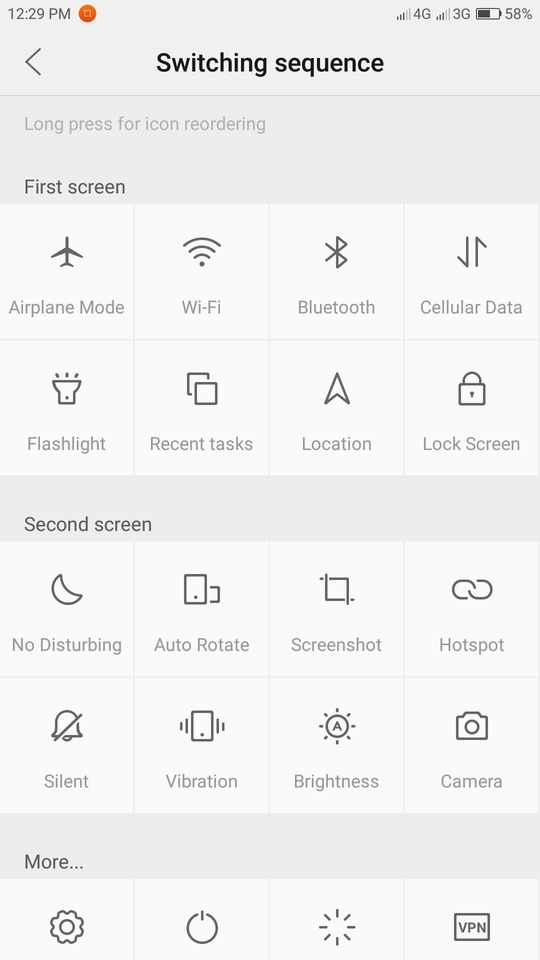
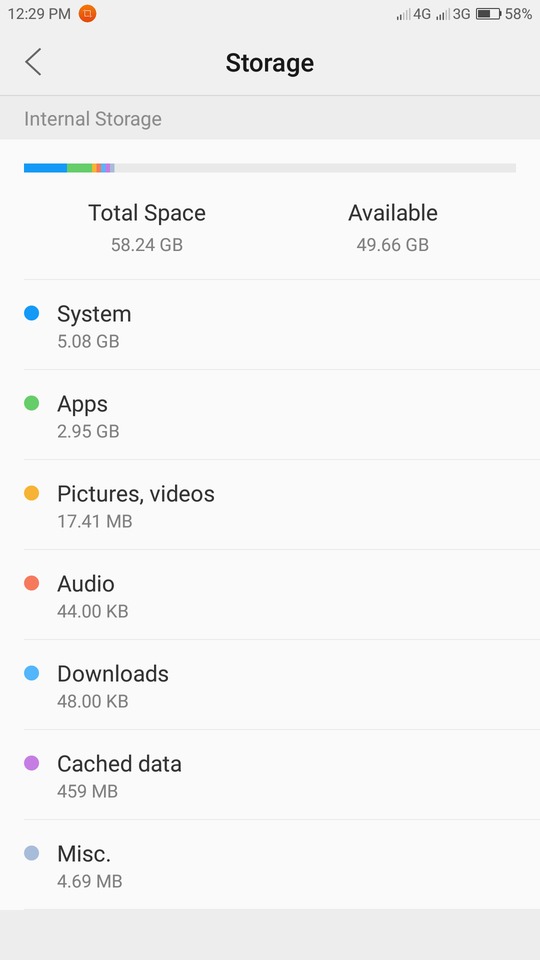
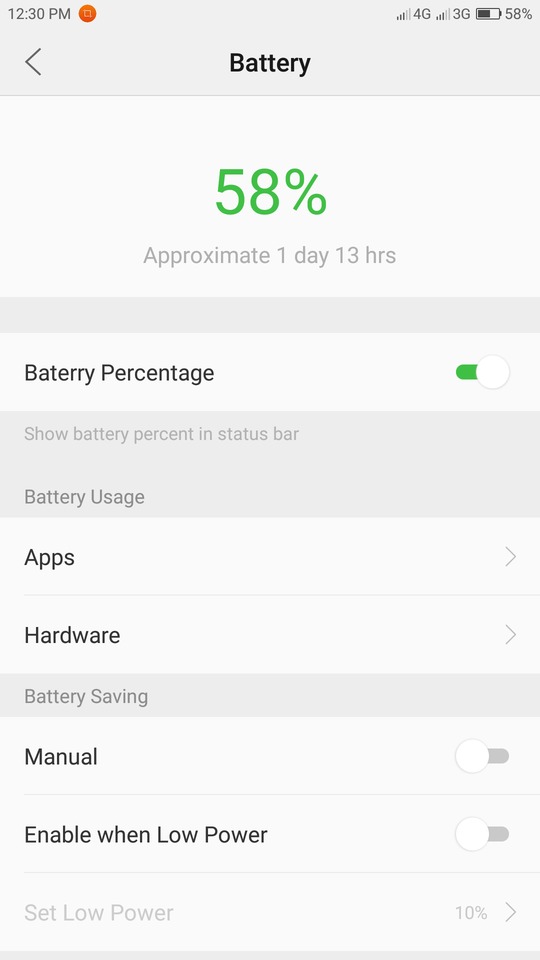
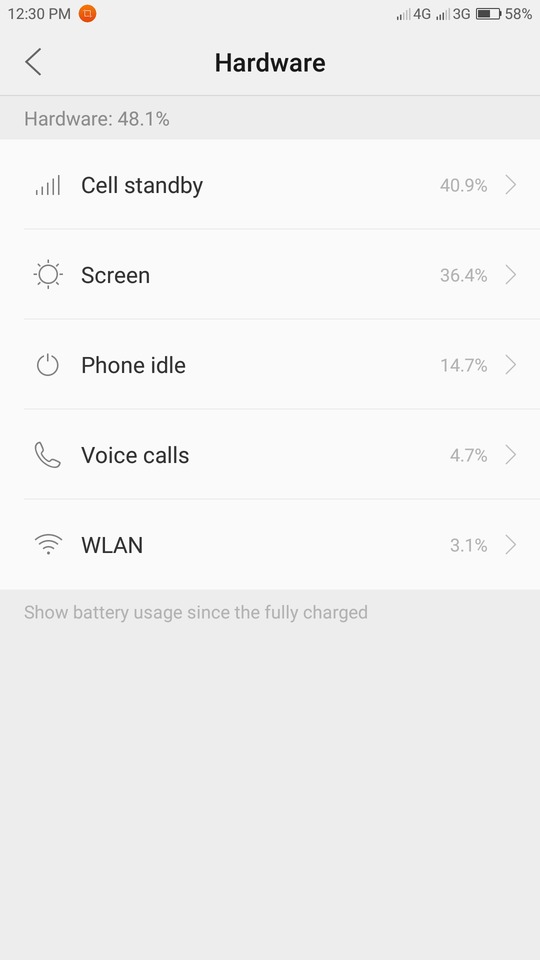
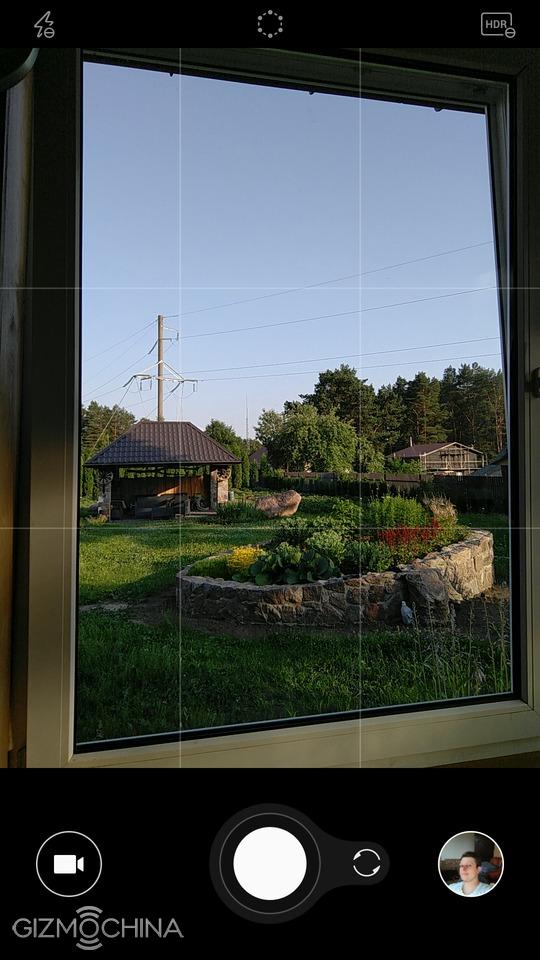
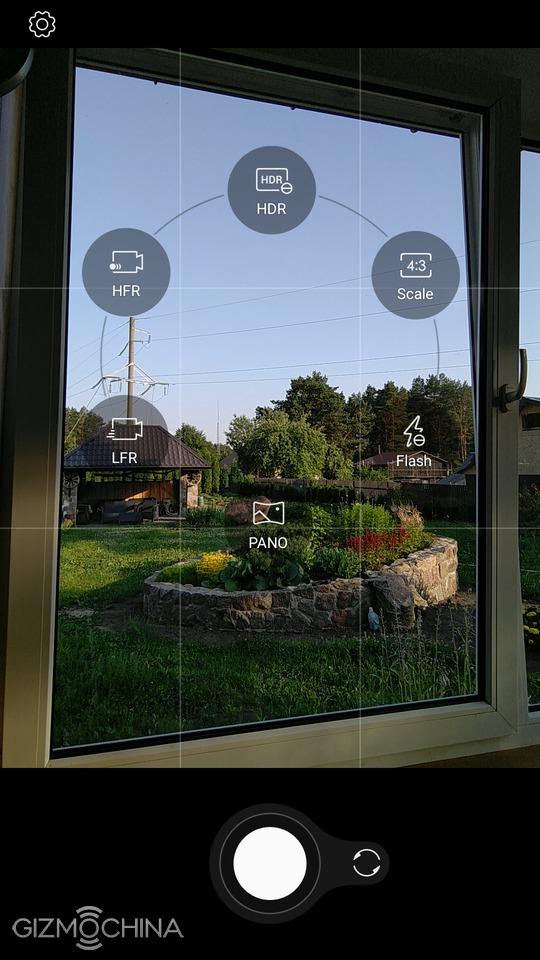
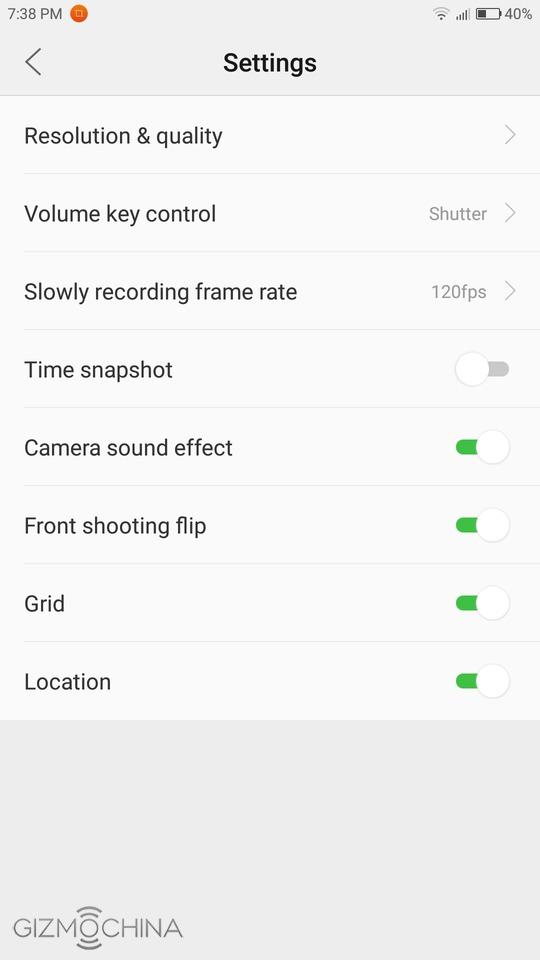
These actions were interpreted to mean there was a Meizu-Nokia collaboration on the products but as we all know, none of them had any links to Nokia.
A teaser poster that was released online yesterday reveals we may be seeing that partnership manifest come next month. The poster has the iconic “Nokia handshake” with two lines of text that roughly translates into “paying tribute to the classic” and “Meizu Blue Charm and Nokia Joint Conference Next Month”.
The poster doesn’t reveal much. Some speculate that Nokia may be working with Meizu to release some of its phones with Flyme OS. It is still a wide guess for now.
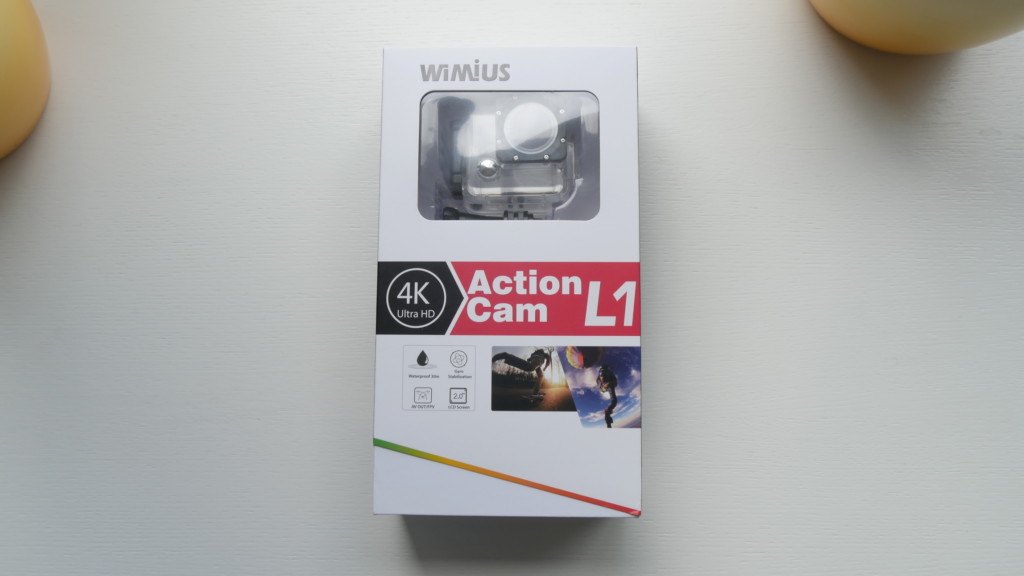
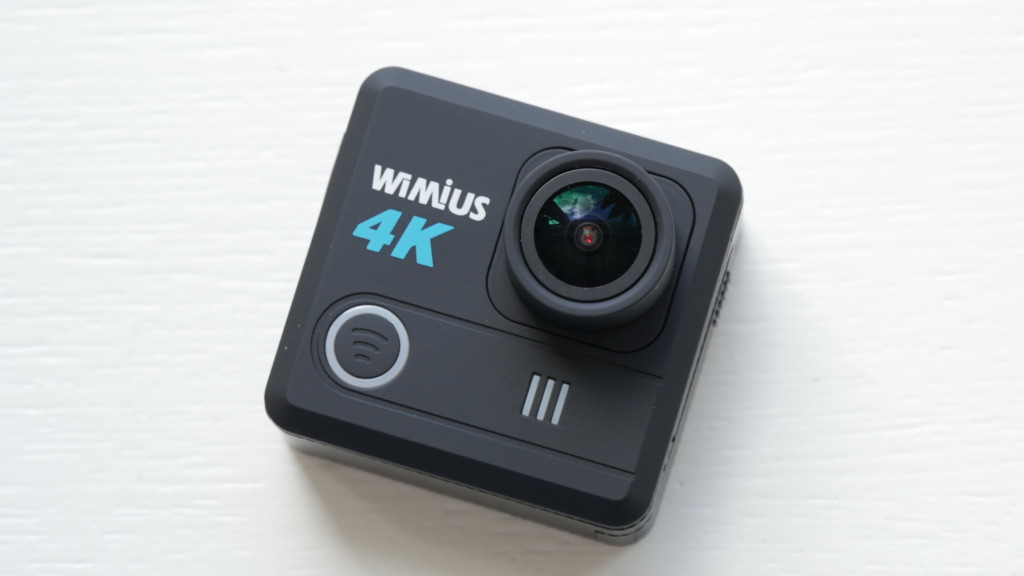
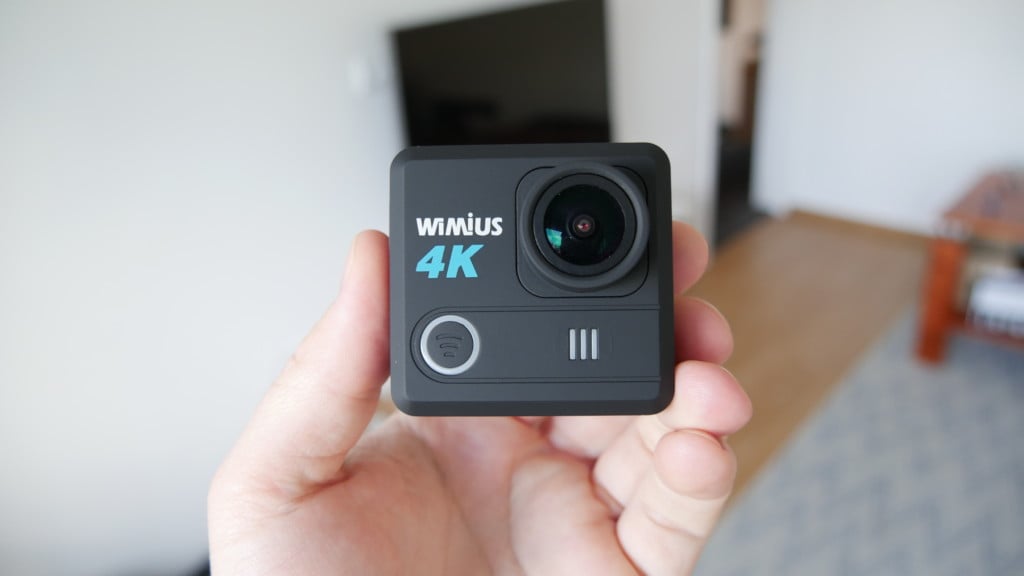
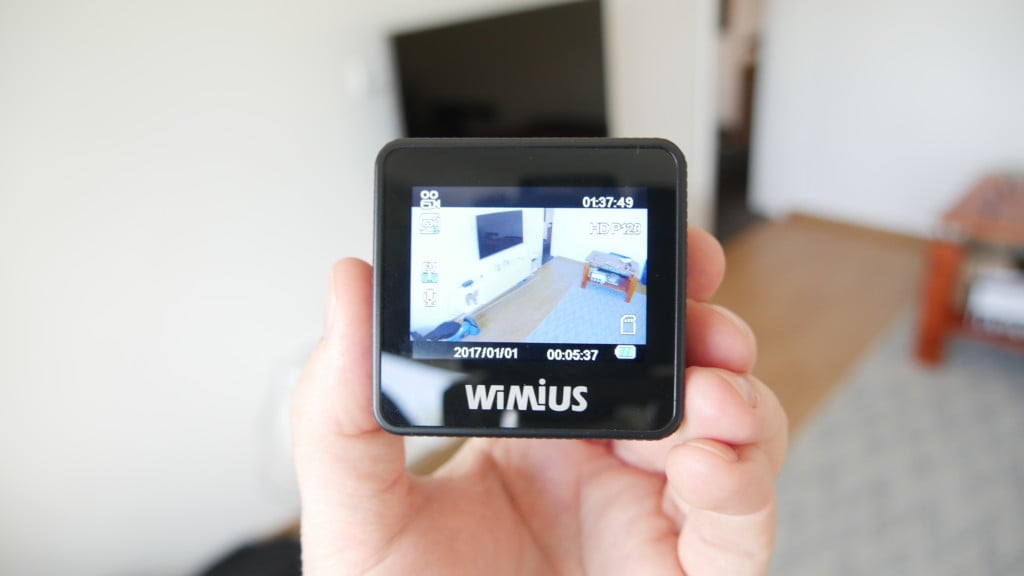
The market of cheap action cameras is pretty crowded but we just came across an affordable camera made by Wimius. It costs just about $70 but it has quite a few features like 20MP Sony CMOS sensor and 4k video recording. Learn more in our full review.
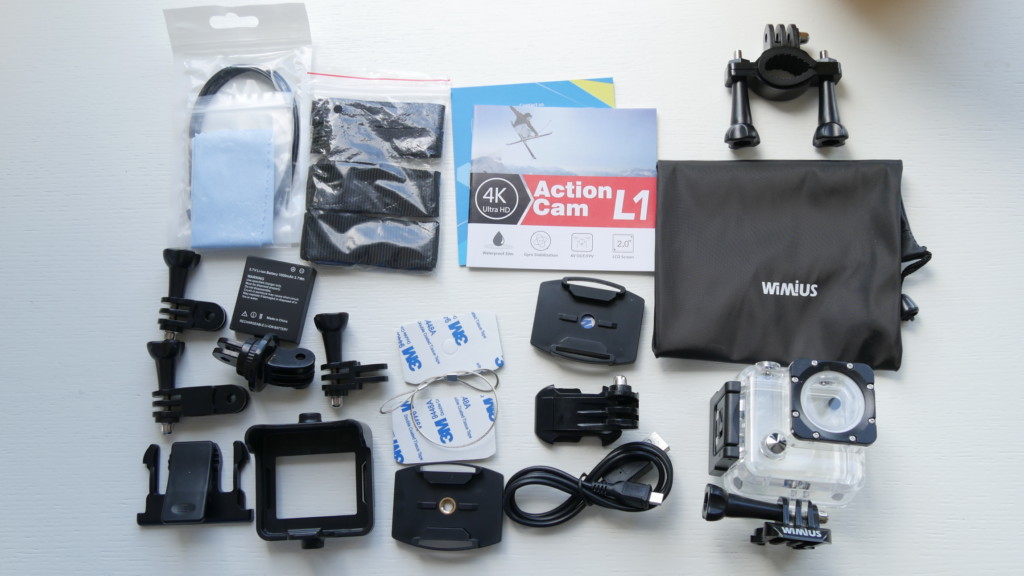
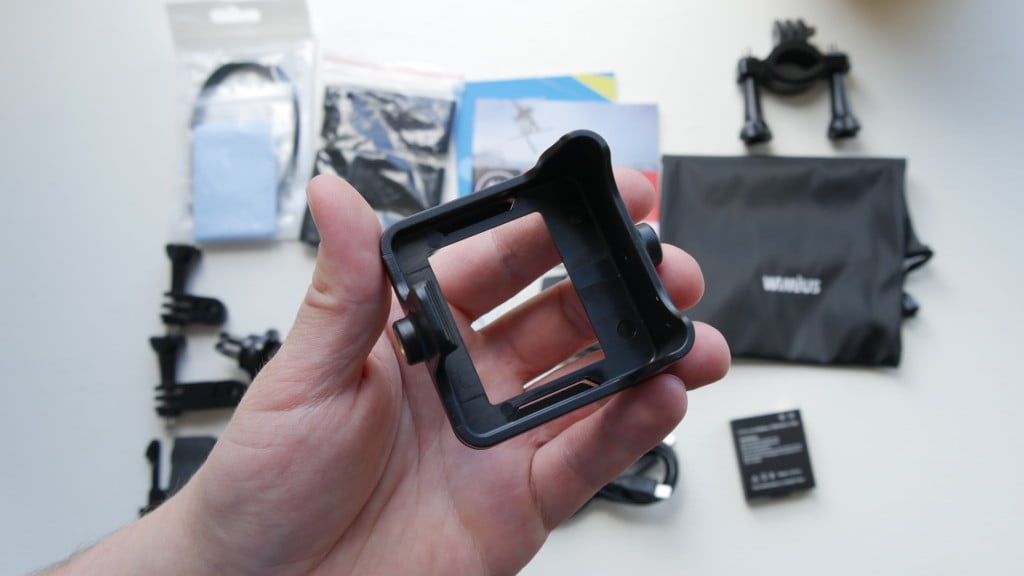
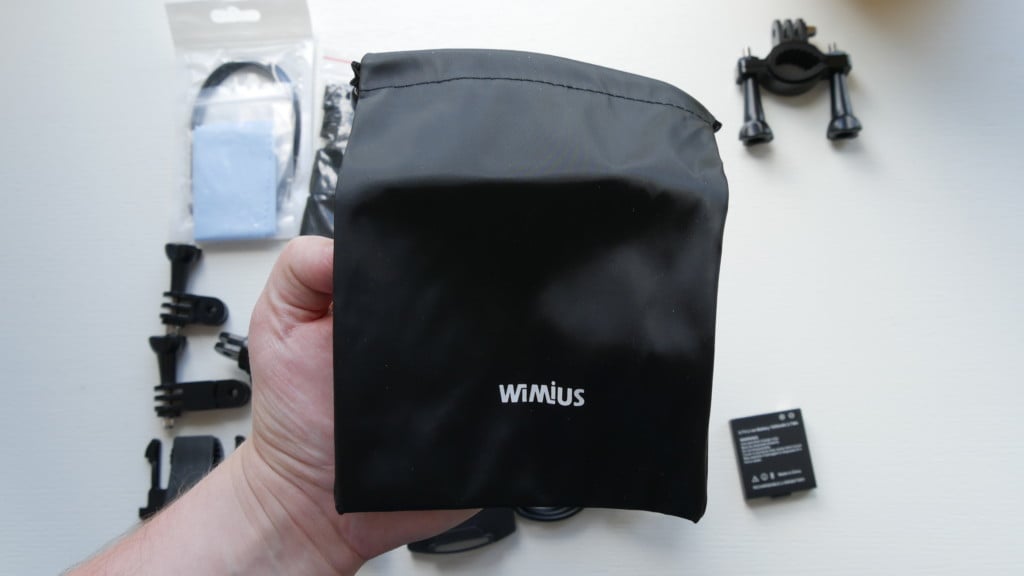
As usual to most of the cheap action cameras, it comes with a ton of accessories that include all sorts of mounts, cradles and so on. A few notable accessories are a waterproof case, a spare battery, and the bike cradle.
DESIGN and FEATURES
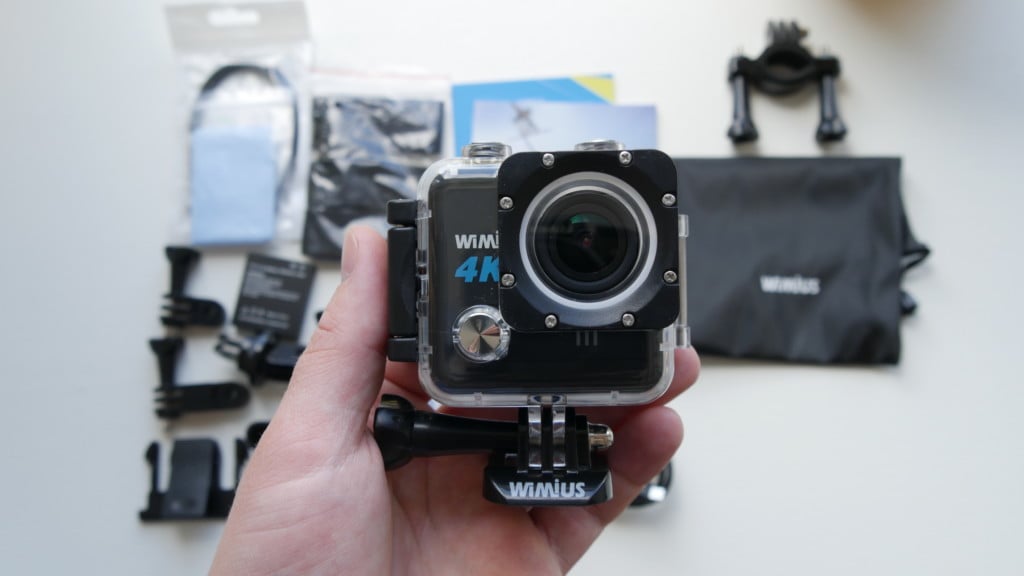
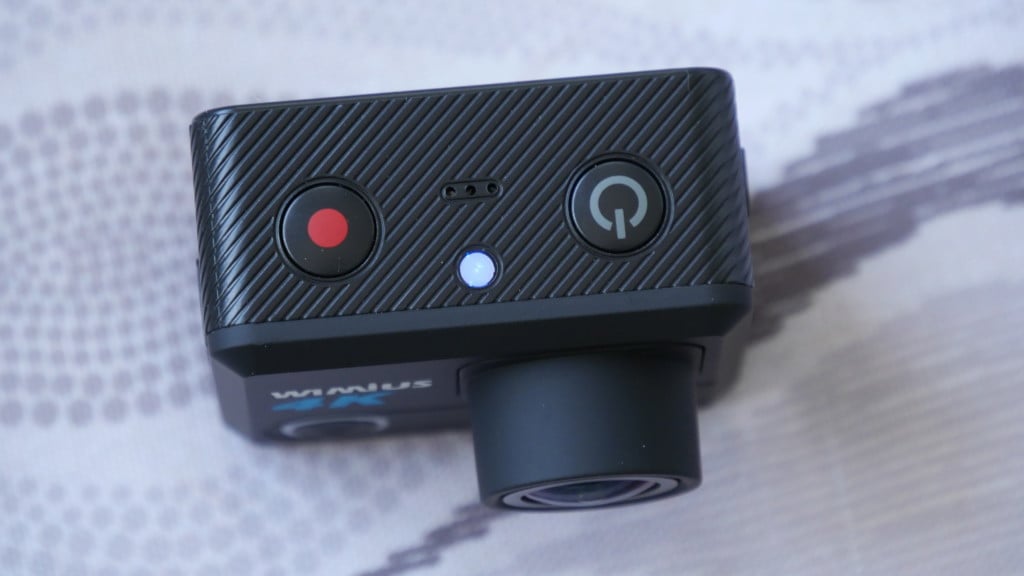
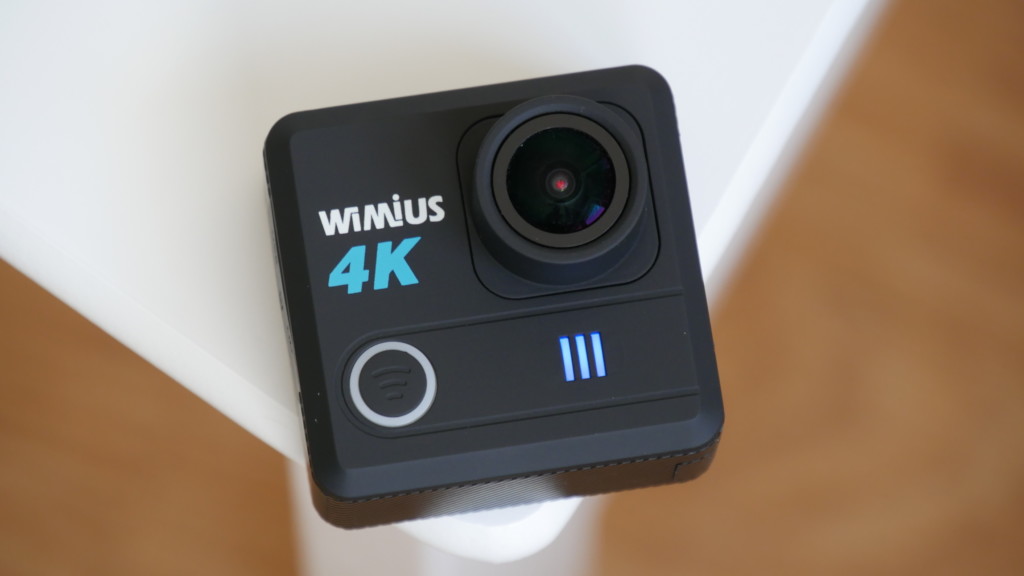
The Wimius L1 sports a bit different than classic action camera design. It has a quadratic shape, it’s made of plastic, the build quality is pretty good and it is very light.
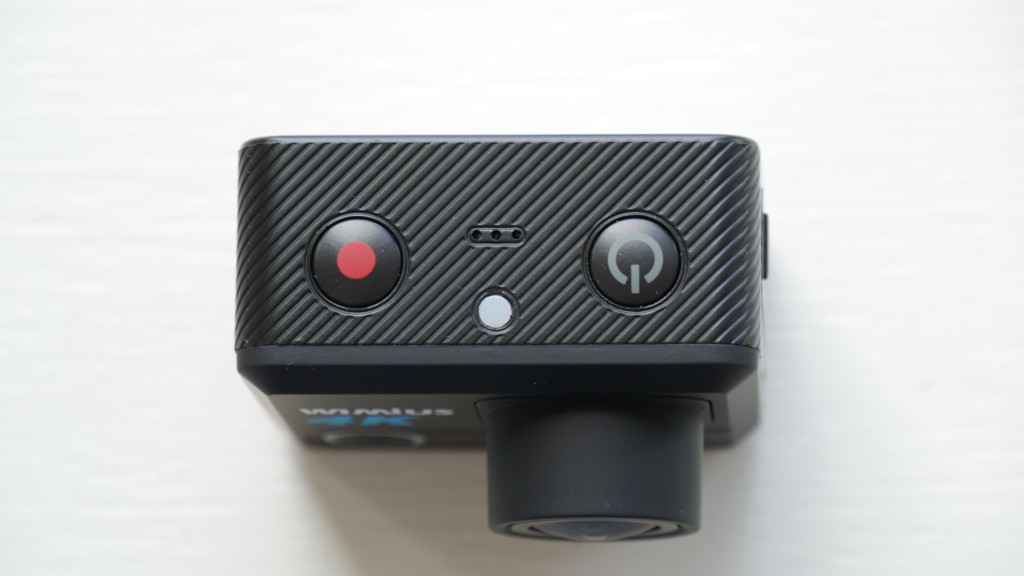
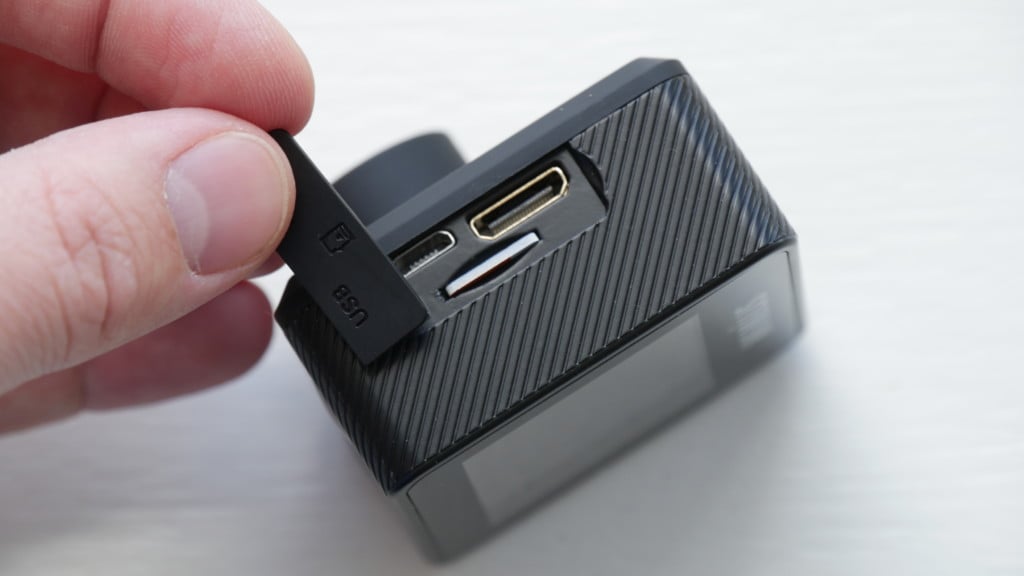
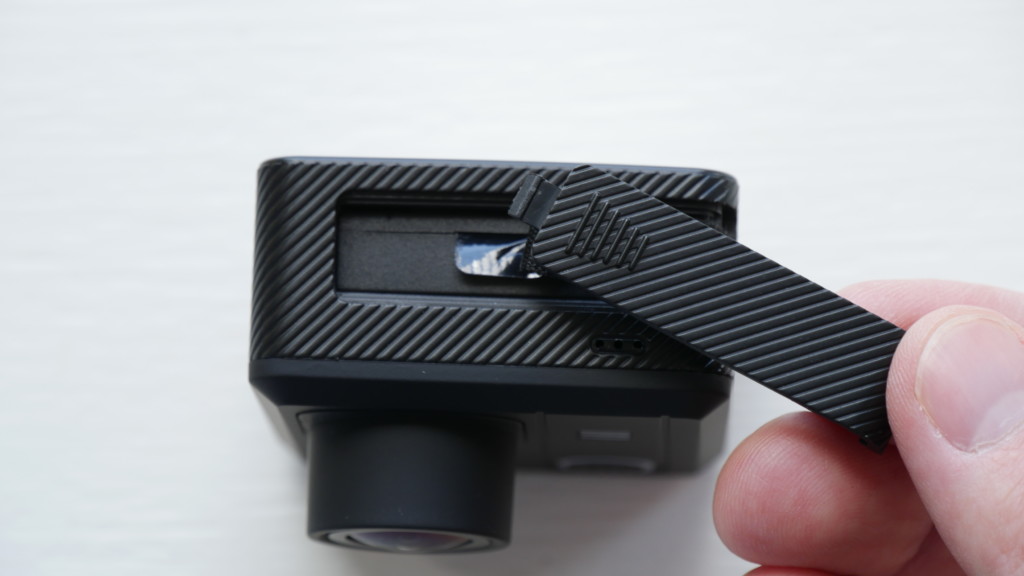
The buttons are nice and tactile and we have a few ports that include the micro USB, micro HDMI, and the microSD card slot.
As for the camera, we have a beefy 20MP SONY IMX078 CMOS sensor with 170° wide angle lens. There is also Novatech 96660+ chipset that does the image processing.
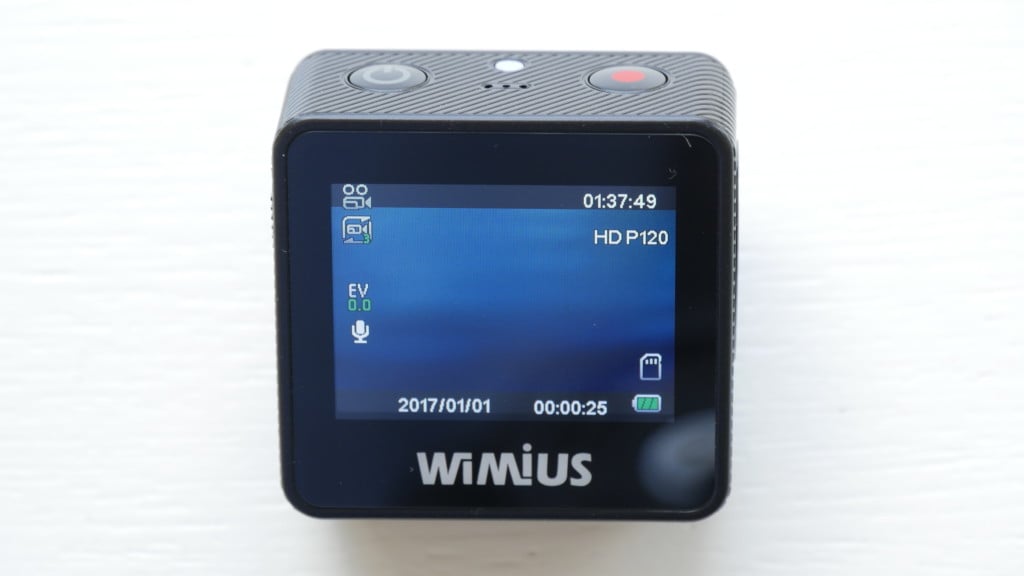
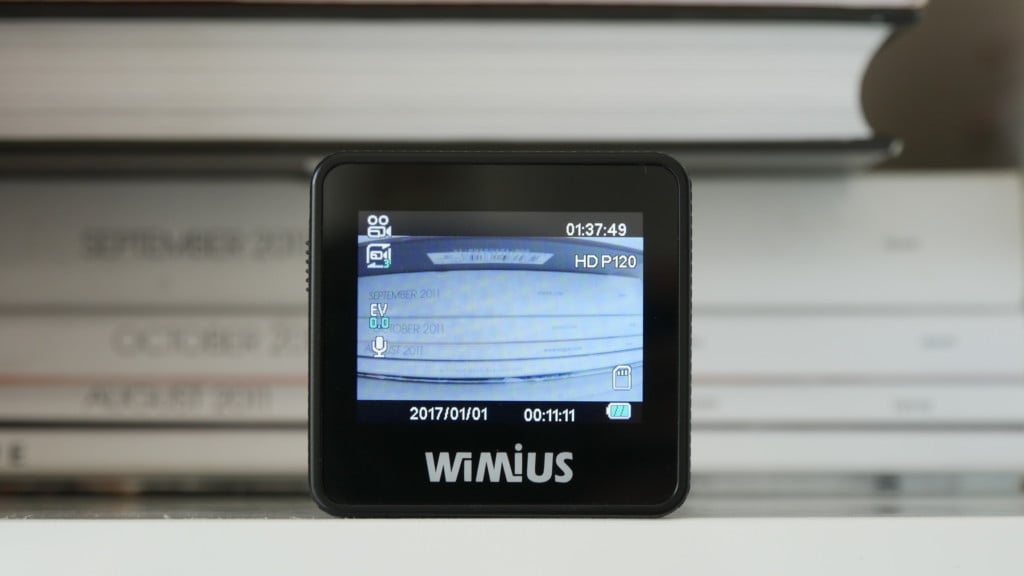
A 2” display does not have the highest resolution but it gets the job done for an action camera and I had no issues seeing it indoors or outdoors.
FUNCTIONALITY
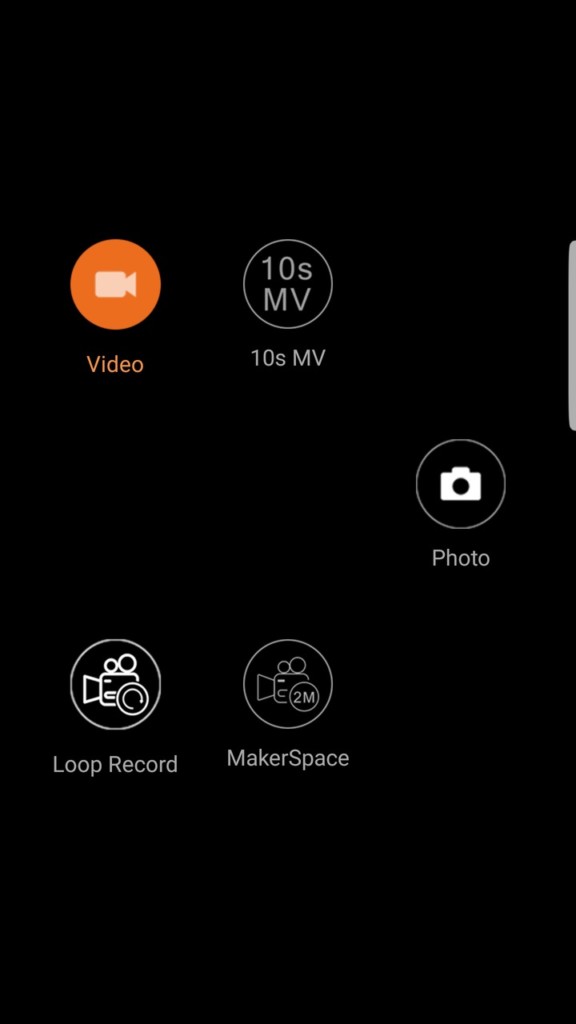
You can navigate through the menus using the buttons and the user interface is pretty straightforward. You can adjust the resolution, play with the image settings and adjust quite a few different settings if you wish so but I guess that most of us just use the auto-mode. You can also view the pictures you took or the videos you shot straight on the camera display. Check out the video review for a user interface walkthrough.
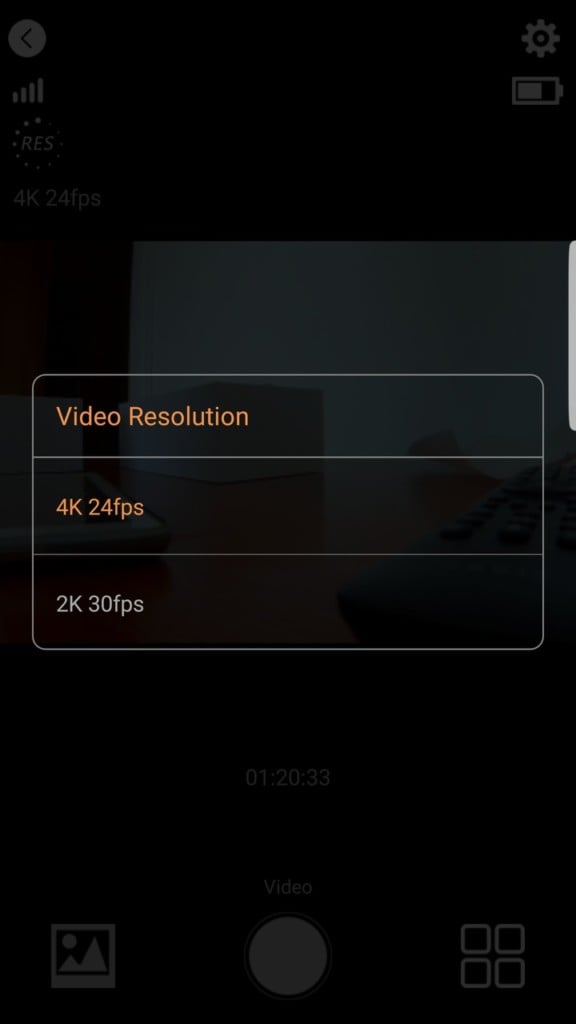
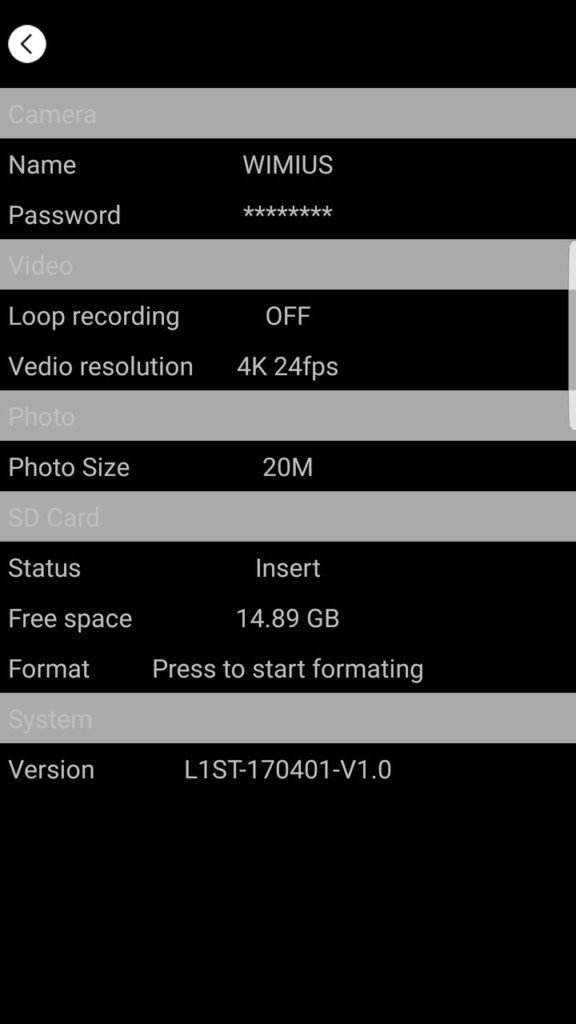
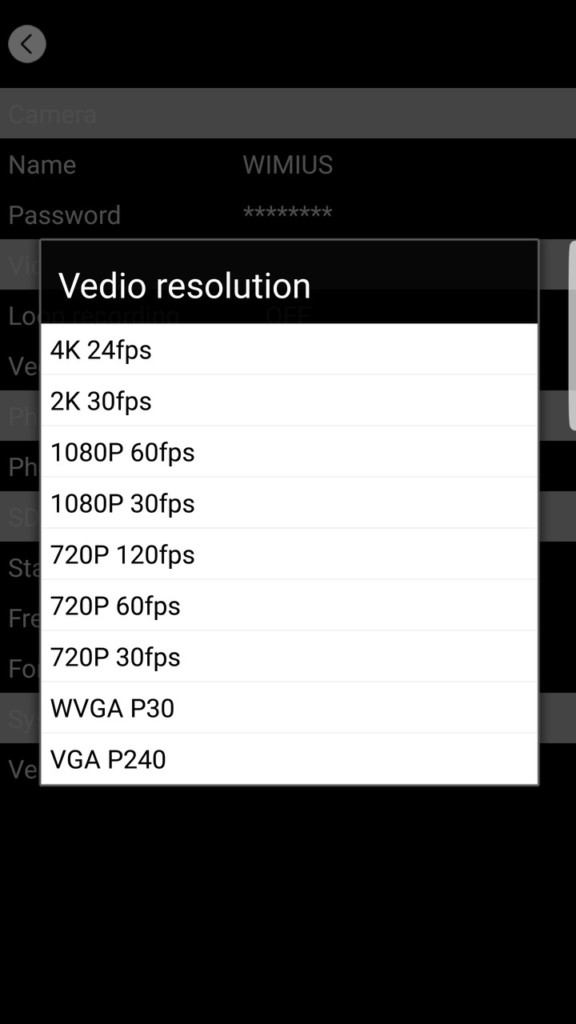
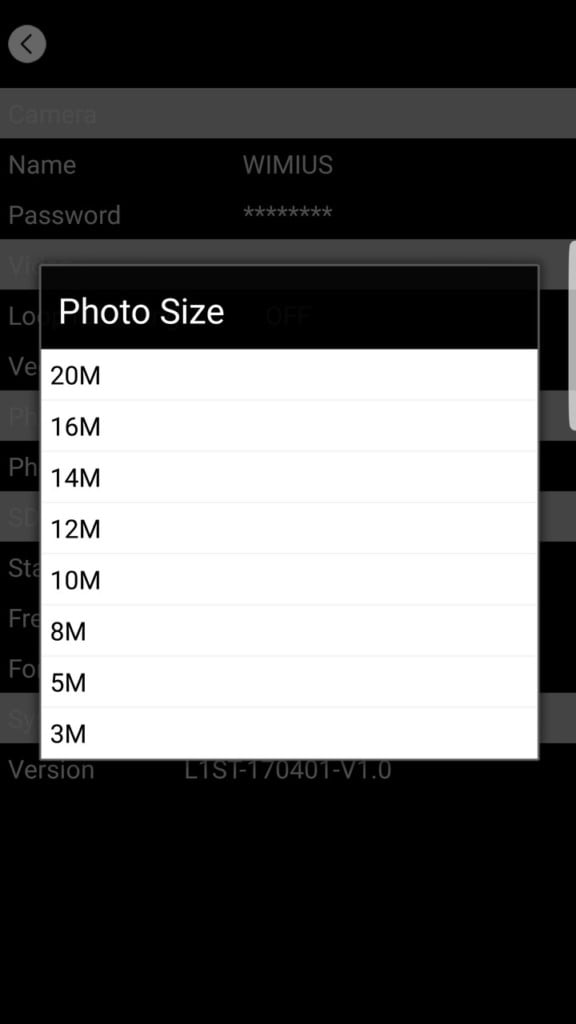
The camera also has a built-in Wifi and that means that you can connect it to your phone using the app. The app allows you to use the phone as a viewfinder. There is a slight delay like on most of the action cameras.You can also watch the videos you shot or adjust some settings and so on.
IMAGE QUALITY
In order to test the quality of 4k and 1080p video, I used the Zhiyun Rider-M gimbal for action cameras. It stabilizes the footage of action cameras very well.
This camera can shoot videos at the max. resolution of 4k at 24fps. I have to say that the video quality is pretty good for such a cheap camera. Sure, there could be more detail but you simply can’t ask more for the price. The 2.5k video at 30fps looks a bit smoother due to a higher count of frames per second but naturally, there is a bit less detail. 1080p video at 30fps looks pretty good for a cheap camera. 1080p video at 60fps is probably my favorite format for action cameras if you shoot a lot of moving objects or you move quickly yourself. The sound recording quality is terrible, like on most of the cheap action cameras. Slow-motion video at 720p is usable but there could be a lot more detail.
As for still image quality, it is really good for a cheap action camera. There is a good amount of detail, pictures look quite sharp and even color reproduction is decent.
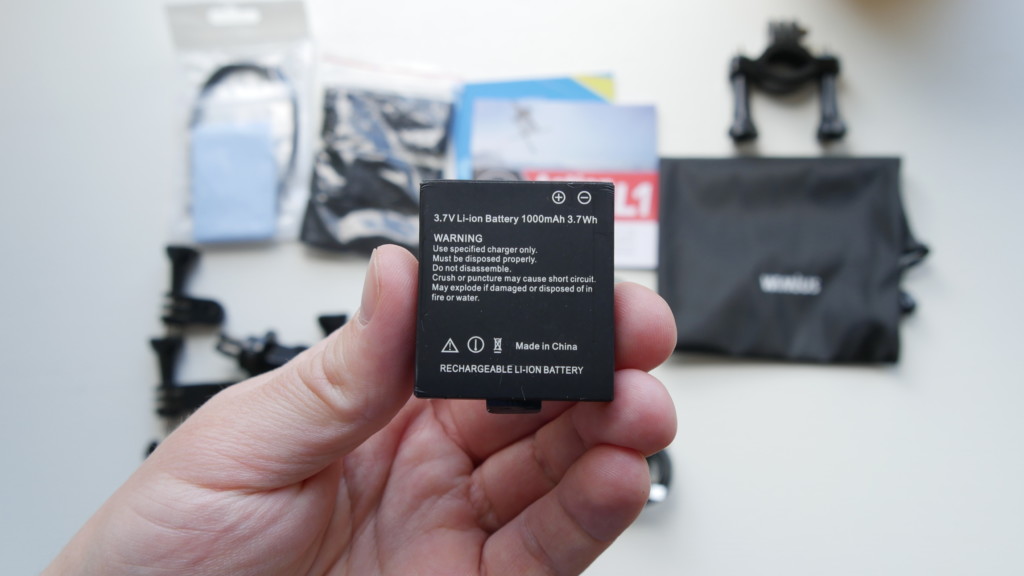
The 1000mAh battery performs great knowing the fact that the camera has a 2” display. I could get 1:20 h of 4k video recording and around 3 hours of total usage per charge.
CONCLUSIONS
All in all, the Wimius L1 4k Action Camera is a great choice for those who don’t want to spend hundreds for a GoPro but still want to have a small device that can shoot videos or take pictures.
For the price of about $70, video and still image quality are really good. Finally, if you are looking for a cheap action camera, the Wimius L1 is a good offering for the price.
There is a coupon code for Amazon US: Coupon Code: 5TOZ6U2V, Deal price: $62.77
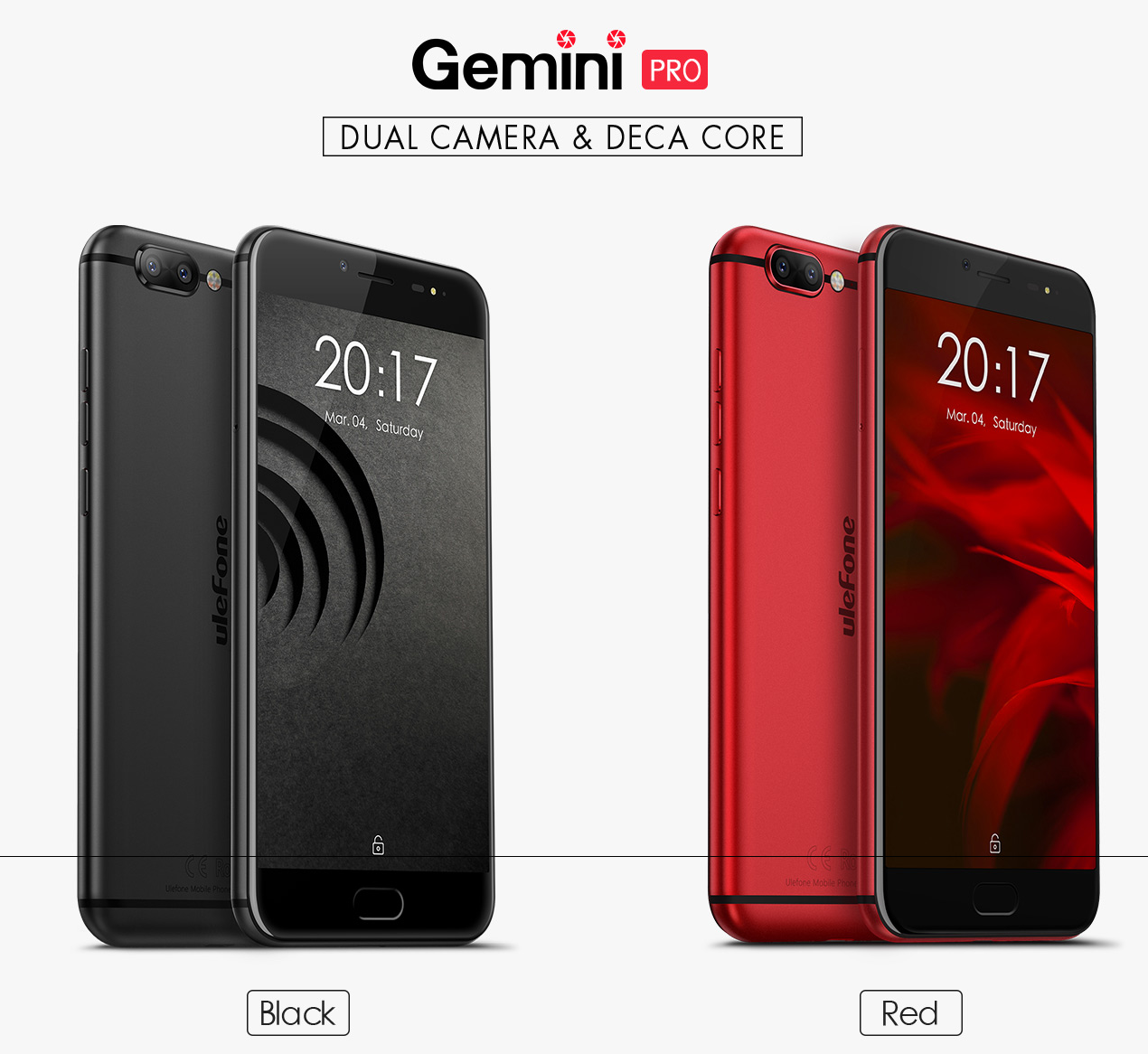
Earlier today, Ulefone released its new flagship phone, the Ulefone Gemini Pro. The new smartphone sports dual rear cameras packed in a beautiful metallic body.
The Ulefone Gemini Pro features a 5.5-inch FHD display with Gorilla Glass 3. It is powered by Mediatek’s Helio X27 clocked at 2.6GHz and paired with 4GB of RAM. There is 64GB of storage on board with the option for expansion via a SD card slot (256GB Max).
Its unique selling point is its dual Sony IMX258 13MP rear cameras that are positioned at the top left corner along the antenna line. One sensor shoots in monochrome while the other captures chromatic images. This should allow for better pictures under low-light conditions. Flanking the camera on the right, is a LED flash that also sits on the antenna line.
The Gemini Pro will be able to record in 4K, take bokeh photos, 3D images, and also have a super night mode function. The front camera doesn’t get left out of the action. Ulefone has put a 13MP sensor with soft light for selfies. Sitting at the bottom of the display is a physical home button that doubles as a fingerprint scanner.
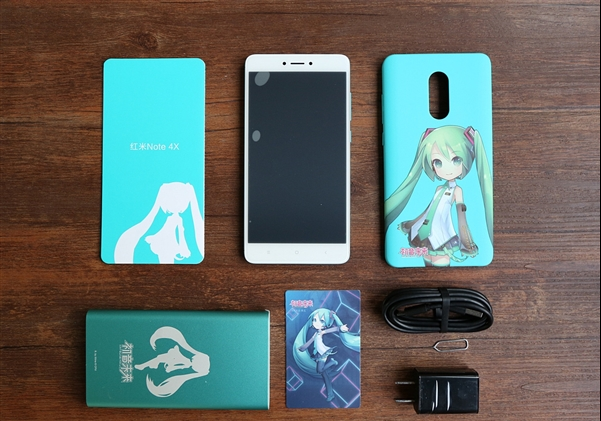
Xiaomi launched the Redmi Note 4X with its beautiful design and modest specs lineup around February this year. The company took things a step further when it announced a limited Hatsune Miku special edition of the model. The Xiaomi Redmi Note 4X Hatsune Miku Edition brings out the sleek and premium design the smartphone features as a result of the attractive color it adorns.
The customised version comes in green paint job only and has a fused antenna band design that is coated in silver. The camera and fingerprint sensor has a silver coated thin ring surrounding them. The sleek design alone doesn’t account for the 1,299 Yuan($189) price tag the Redmi Note 4X Hatsune Miku edition has got. In addition to the sleek smartphone, Xiaomi also included a gift box containing a limited edition mobile power bank, a customised casing for the phone as well as the opportunity to download Hatsune theme in the future.
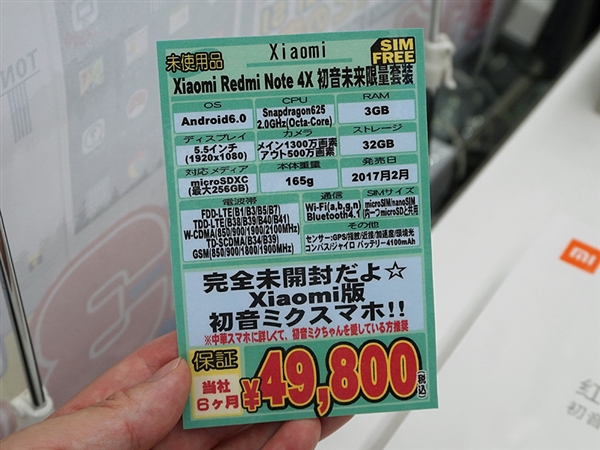
Turns out the Redmi Note 4X Hatsune version is very popular in Japan where the VOLACOID character Hatsune Miku originated from. The smartphone was recently seen in a Japanese retail shop in the Akihabara business district and the price was very shocking. The device was listed up for sale for 49,800 Yen which is about 3,066 Yuan. That is more than twice the original amount the device is sold in China and the poster shows it is the same model with the one sold in China. It is relieving to note that the power bank and other gift items are still included and are not being sold separately. That is likely the handiwork of one smart retailer who, perhaps, paid a premium to get the models imported from China.
China is full of interesting smartphones and we have got some of the finest flagships in the market from this country. However, there’s another side to the Chinese market, which is also quite popular internationally, and it’s the Chinese smartphone clone market. While big brands like Huawei, Xiaomi and OPPO are set to create its own identity with special specs and features distinguishing its phones from international brands, there are some phones which imitate these big brands.
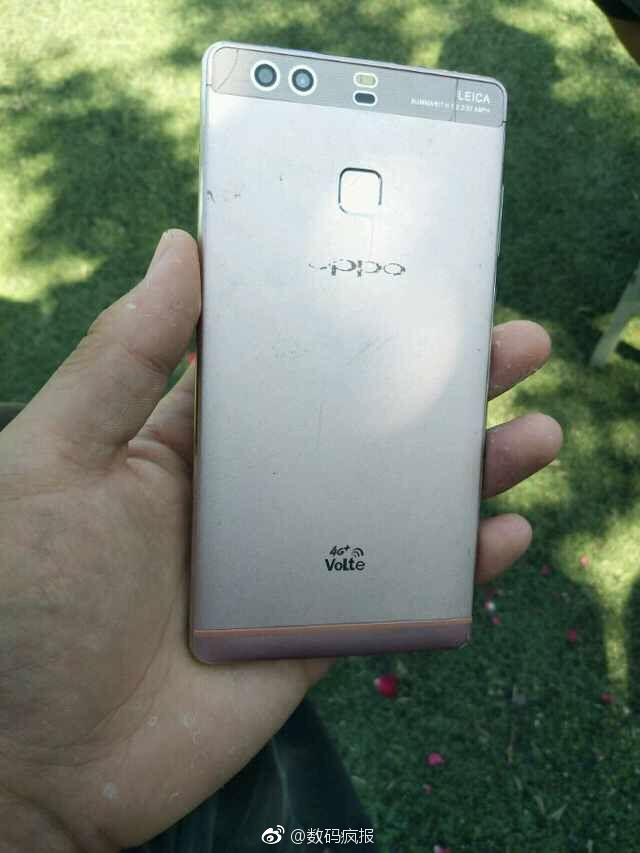
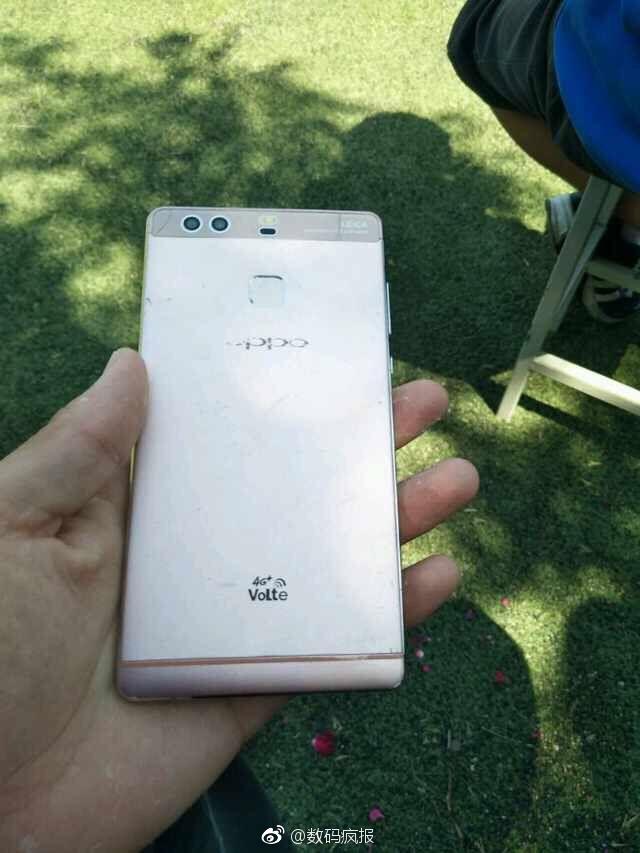
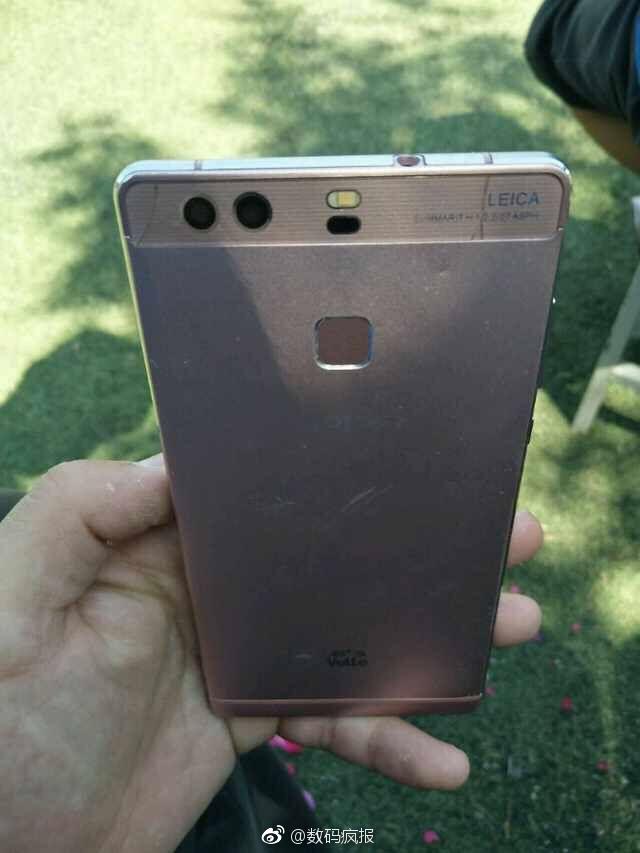
OPPO is huge in China at the moment and the company seems to be doing very well in the market. So, there’s no surprise that China has a number of OPPO clones. One of the recent clones we managed to spot is actually quite unique. If you loved Huawei P9’s design but are desperate to get OPPO’s branding on the back, here’s something for you.
This is what an OPPO branded Huawei P9 would look like, and we may even call it the OPPO P9. And guess what! There’s the Leica certification at the back as well. So, if Huawei and OPPO had an ugly baby, it would probably look like this. I mean, the build quality sucks for sure, look at the cracks on the back. Plus, the top band looks like a sticker, where we can see the dual cameras. Needless to say, the built quality is less than impressive. But you do get 4G+ VoLTE, or so it says!
No ideas about the pricing of the device though, but it surely will be super cheap. We have seen many clones that actually have pretty good built quality (unlike this one) and it’s very easy to mistake a clone for the real one. So, if you are ever in China looking for a smartphone, make sure to check the product before purchase and stick to the popular stores in the area.
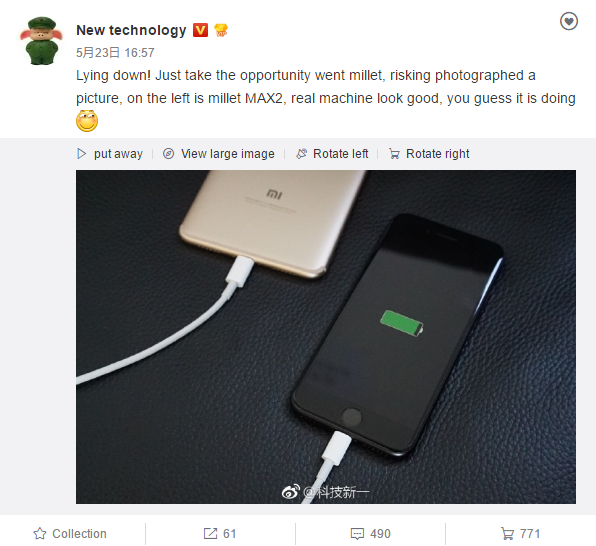
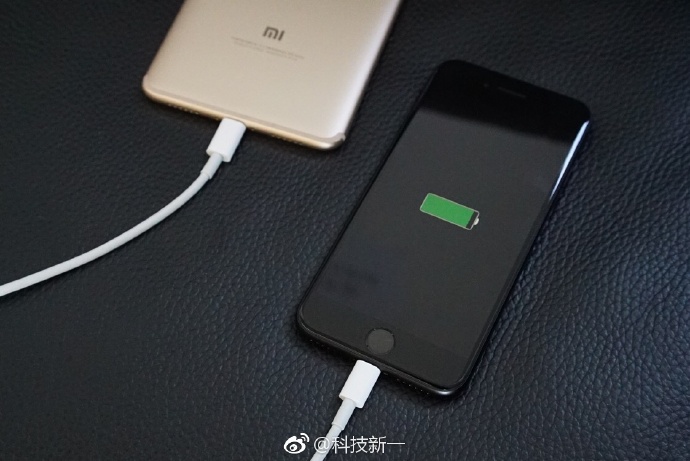
Xiaomi is all set to officially launch the Mi Max 2 in an event scheduled for tomorrow. Ahead of the launch, there is one last dash leak of the phablet which suggests that it would feature a USB Type-C port that would make it support reverse charging. The leaked image of what could pass for the Xiaomi Mi Max 2 connected to an iPhone with an OTG cable and the iPhone 7 was actually charging. Which suggests that the Mi Max 2 was reverse charging the iPhone.
Now, it would be an awesome feature if the Mi Max 2 joins the league of mobile devices with OTG functions meaning apart from getting a phablet-sized smartphone, buyers would also get a power bank which can come in handy someday. The good thing about USB-OTG is that the Mi Max 2 would be able to charge not just a second smartphone but other gadgets like camera and others.
While we cannot say if this is actually true, it aligns properly with an earlier rumour that the Mi Max 2 would pack a large 5,349mAh battery, higher than the large 4,850mAh battery on the Mi Max. A battery that size would be enough to power the device and charge other gadgets. But we’ll advise you take this with a pinch of salt because the entire charging cord is not visible so we’ll know if it’s the Mi Max 2 that is actually charging the iPhone.
In addition, the Xiaomi Mi Max 2 will feature Qualcomm’s latest Snapdragon 660 chip which comes with power efficiency. There is a base model packing an equally power-efficient Snapdragon 626 chip. Other features include a 4GB + 64GB version and a higher 6GB + 128GB version. The Xiaomi phablet is also expected to come with a 12MP Sony IMX378 sensor at the rear and a 5MP sensor up front. As for the price, an earlier rumor hints that the Mi Max 2’s price may be adjusted slightly but will still fall between 1499 Yuan and 1699 Yuan, not exceeding 1999 Yuan at most. We’ll find out more about this device tomorrow.
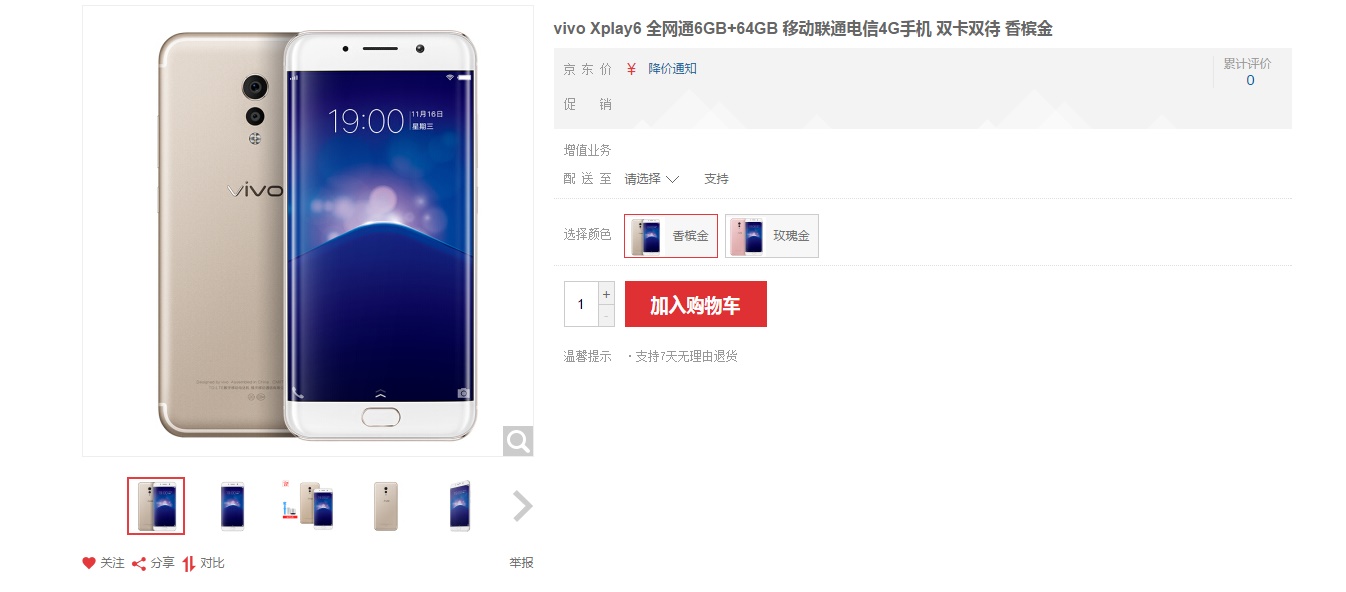
The Vivo Xplay6 was released last year sporting a dual curved 5.46-inches 2K display and a Snapdragon 820 processor. Although there were complaints regarding the choice of the chipset seeing as the Snapdragon 821 was already in the market, the Vivo Xplay6 has gone on to sell a lot of units.
Originally launched with 6GB of RAM and 128GB of storage, Vivo is breathing new life into the phone by releasing a new variant. The new version will have 64GB of storage but still keeps the 6GB RAM. However, just like the original, it wouldn’t have a MicroSD card slot.
You still get a 4080mAh battery, a 12MP Sony IMX362 sensor paired with a 5MP camera for depth of field effect on the rear and a 16MP front facing camera. There is also a fingerprint scanner embedded underneath the home button.
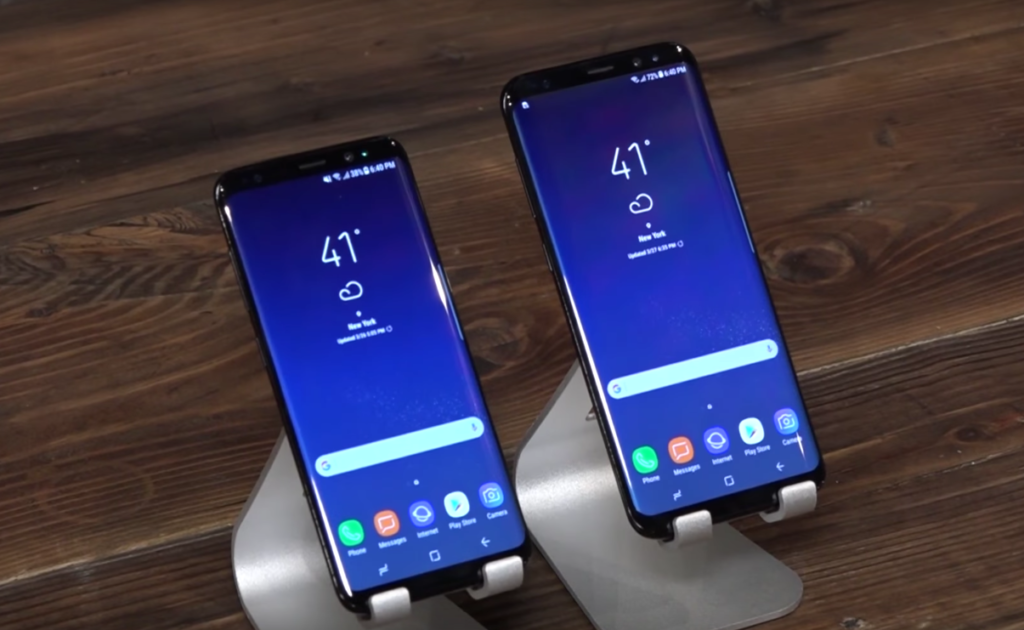
Samsung has reportedly started working on Galaxy S9 and Galaxy S9 Plus. The 2017 Samsung flagship phone, the Galaxy S8 was codenamed as Dream. A South Korean publication has revealed that the “Star” and “Star 2” are respective codenames of Galaxy 9 and Galaxy S9 Plus.
The publication claims that the Galaxy S9 will be releasing in the first half of 2018. Since it is codenamed as Star, speculations have it that it may not be the rumored foldable phone from Samsung. Compared to Galaxy S8, the production of Galaxy S9 is 3-4 months ahead of schedule. This is probably because Samsung is adhering to a rigid quality control process after the premature death of Galaxy Note 7 in 2016. Hence, the South Korean firm may announce the Galaxy S9 early in 2018.
Codenames usually denote a characteristic of the device. A Samsung representative had revealed in an earlier interview that the Galaxy S8 was codenamed as Project Dream because it was the company’s dream to overcome Apple with Galaxy S8.
Since the Samsung Galaxy S9 is in its initial stage of development, it is difficult to predict the specifications of the 2018 flagship phone. The Galaxy S9 would be sporting a similar display like the one present on Galaxy S8. It suggests that Samsung Galaxy S9 may continue to feature bezel-less ‘Infinity Display” that was introduced on Galaxy S8. The Galaxy S9 is also pegged to come with a front-mounted fingerprint reader and dual rear cameras.
Rumors have it that the Samsung Galaxy S9 and Galaxy S9 Plus would be powered by the alleged Snapdragon 845 chipset, the successor SoC for Snapdragon 835. A report from previous month revealed that Qualcomm and Samsung have reportedly began working on the Snapdragon 845. The report also revealed that the Galaxy S9 would be featuring a 5.8-inch screen whereas the Galaxy S9 Plus would be packed with 6.2-inch display like the Galaxy S8 duo.
Samsung is also expected to include a 6.3-inch Infinity Display on the Galaxy Note 8 phablet which is codenamed as “Great.” It is expected to launch by August or September this year. Before it, the company is expected to launch the Galaxy Note FE (refurbished version of Galaxy Note 7) in the next month. It is said to be codenamed as Grace R.
Huawei’s upcoming Honor brand smartphone dubbed Honor 9 has been in the news for a while now and has almost been confirmed as launching on June 27 but a real live photo of the device is still elusive. Huawei lid over its smartphones is always not so tight, such that we are lucky to have a preview of most of its models (albeit unofficially) before they are launched. But till this moment, that cannot be said of the Honor 9. Well, except this leaked image of the smartphone in the hands of a guy are actually the Huawei Honor 9.
The purported photo of the device popped up on China’s Weibo recently and shows some bit of details of the Honor phone. We must point out that we can’t say for sure if the image is real and even the leakster wasn’t so sure about that as well. However, one prominent detail that we can grasp from the leaked image is the absence of a rear fingerprint sensor on the device.That could mean the Honor 9 is charting a different course from the Honor 8 which featured a rear fingerprint scanner. Due to the large phablet size of the Honor 8, there were some criticisms of that design because of the difficulty which would be encountered while attempting to use the fingerprint sensor during one-handed operation.
As you would have heard by now, the Honor 9 is expected with a dualrear camera and that is featured in the leaked photo. The camera is said to be the same 20MP + 12MP sensors used on the Mate 9 and Huawei P10 but the Honor 9’s would be without the Leica badge.
The photo only revealed the rear view of the device, leaving much of what the front view looks like to our imaginations. We’ll take this with a pinch of salt, though, while we with some other leaks to emerge.
It is still not confirmed as to how many iPhones will be released by Apple this year. Rumors are hinting that iPhone 7S, iPhone 7S Plus and the tenth anniversary special edition iPhone 8 (iPhone X) would be arriving this year. Even though leaksters and iPhone fans are speculating on next-generation iPhones, a South Korean publication has revealed new information on iPhone 9 that will be probably launching in 2018.
After launching 4-inch iPhone 5 in 2012 followed by 4-inch iPhone 5C and iPhone 5S in 2013, the company introduce 4.7-inch iPhone 6 and 5.5-inch iPhone 6 Plus in 2014. Since then, Apple iPhones have been launching in 4.7-inch and 5.5-inch sizes. This year too, Apple is expected to launch 4.7-inch iPhone 7S and 5.5-inch iPhone 7S Plus. However, the Korean source claims that the size of the iPhones will increase in 2018.
The iPhone 9 is speculated to arrive with 5.28-inch screen whereas its larger sibling will be arriving with a 6.46-inch display. The iPhone 9 and iPhone 9 Plus are pegged to come with OLED panels. Samsung is expected to supply OLED panels for iPhone 9 models. The South Korean company is likely to ship 180 million units of OLED panels to Apple. Both companies have reportedly entered a non-disclosure agreement and hence they are unlikely to reveal any details on the screen size for 2018 iPhones.
Samsung is expected to ship 80 million OLED panels for the 5.8-inch iPhone 8 that is expected arrive later this year. However, for large-sized screens of iPhone 9 and iPhone 9 Plus, the South Korean company is likely to ship 180 million OLED units. Speculations have it that Samsung is planning to build a new manufacturing unit that will exclusively produce OLED panels for the Cupertino company.
As of this writing, there is no other information available on the specifications of iPhone 9 and iPhone 9 Plus. Previous speculations have stated that iPhone 9 may be equipped with micro-LED screens. It was also reported that the mass production of micro-LED panels by the end of this year.
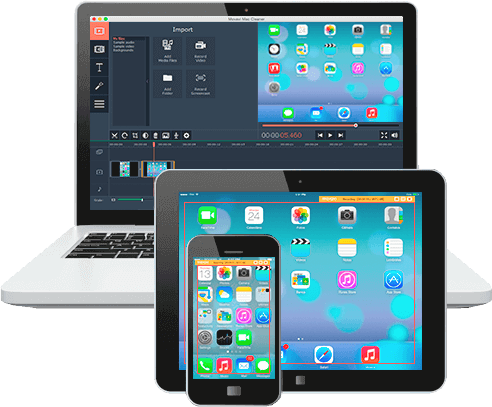
Recording video footage from your screen can be useful in multiple ways, and the same applies to your Apple device. Regardless whether you’re using an iPhone or iPad, you may have thought about recording what’s on its screen so that you could create video guides, save video calls, or even capture footage of an app or game that you’re playing.
While there are admittedly several ways that you can record videos from the screens of Apple devices, none are as easy or versatile as if you opt to use Movavi Screen Capture Studio for Mac. All that you need aside from it is the standard lightning-to-USB cable to connect your Apple device to your Mac, and you’ll be able to start recording the video footage that you want.
Easily Set Up the Video Recording
Part of what makes Movavi Screen Capture Studio for Mac a great screen recorder for iOS devices is how easy it is to set it up. In fact as soon as you connect your Apple device to your Mac, it will sense the connection and let you choose whether you want to record its screen in vertical or horizontal orientation.
Aside from that it will also provide you with full control of all the other recording parameters such as the frame rate, audio source, and so on. Adjusting these parameters and setting them up according to your needs couldn’t be easier and in general it will just take a few clicks at most.
Edit and Improve the Video
Once you have recorded a video, Movavi Screen Capture Studio for Mac will let you make use of its built-in editor to improve your video and tweak it in various ways. Normally the best starting point is to process your video footage and enhance its quality, fix any issues, trim out unwanted parts, or merge clips together.
Rest assured it won’t be difficult to accomplish any of that, and you can start by manually adjusting the color settings or using the automated features to enhance its quality. After that you can look into splitting the video into segments in Movavi Screen Capture Studio for Mac so you can trim out the bits you don’t need, or add additional video clips and arrange them by dragging them into place.
Of course if you want your video to really stand out then you should also give it some flair, and Movavi Screen Capture Studio for Mac has no shortage of options on that front. Some of the ways in which you could make your video stand out include by adding background music or voiceovers, applying special effects, inserting stylish animated transitions, adding captions, and so on.
If and when you’re satisfied with the video that you’ve created, you can save it in practically any format under the sun. Additionally Movavi Screen Capture Studio for Mac has hundreds of built-in presets that you can use to automatically optimize your video for various devices and platforms – including mobile devices, online video sharing platforms, and social media.
Suffice to say Movavi Screen Capture Studio for Mac is the one and only screen recorder that you need to record video footage from Apple devices. Its versatility and intuitive nature are unparalleled and will give you all the features you could possibly need to record and produce the kind of video that you want.
OPPO continues its advert drive aimed at projecting its camera flagship phone, the R11 even when the device is yet to be launched. OPPO’s ads have been everywhere, from the train station, airport, popular landmarks in China to TV commercials. If you must know, the Chinese innovative tech giant has contracted a whopping eight different music superstars in China who will endorse the R11 and their popularity will hopeful help the sales drive.
The interesting aspect in all that is happening is the R11 itself. OPPO isn’t hoping to sell us just another smartphone but the R11 is super packed with features. The OPPO R11 features Qualcomm’s latest mid-range Snapdragon 660 processor which is specifically suitable for the camera setup the R11 is coming with. As for the camera, there is a 20MP selfie camera while the rear camera is a dual camera affair which is a 20MP wide-angle + 16MP Telephoto lens. The camera is touted as coming with a professional portrait mood which would enable the camera capture portrait photos with top notch quality and a blurred out background.
OPPO has now released sample photos captured by the R11’s dual cameras in Portrait mode. The images are clearly portraited shots captured in the portrait mode but at different locations. The clothing of the subject is also different on each shot, perhaps to show how the camera pans out when the exposure in on a subject putting on a dull or bright-colored dress. It is particularly thrilling to notice how the bright yellow coloured dress worn by one of the subjects comes out distinctly without any trace of fading out. So too, the skin colours were rendered very well. All the facial features on the subjects were captured accurately and clearly too. You can check out a few more sample photos from down below.
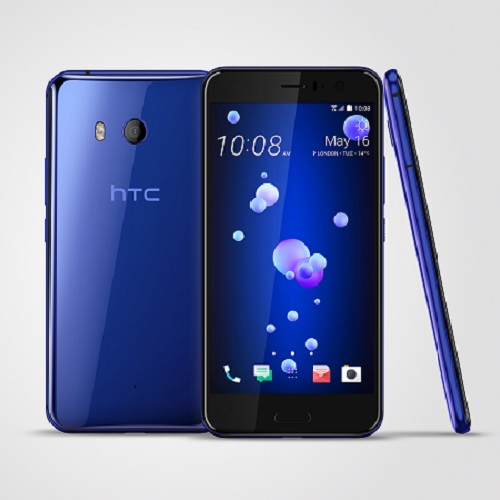
HTC U11 has a stellar rear camera that can capture images with great details and topnotch clarity. Several photos that were shot at the night using the HTC U11 have surfaced. The photos reveal that the HTC U11 can snap amazing photos even in low-light conditions.
Even though the current smartphones come with impressive cameras, low-light photography is one area that they fail to impress users. An Asian user has uploaded several photos that were shot at night. All the images have been show in high resolution of 4,032 x 3,024 pixels in the gallery below. We have added those images in smaller resolution in the gallery. Readers can visit the source to view them in the photos in original resolution.
DxOMark benchmarking platform for camera sensors have given 89 points to Google Pixel’s 12-megapixel main camera. It was the highest ever score achieved by a smartphone camera until the HTC U11 was introduced. At the launch event of HTC U11, the Taiwanese company confirmed that the 12-megapixel rear camera has achieved a milestone score of 90 on DxOMark. The Google Pixel also struggles to capture impressive photos in low light. However, the night shots photographed through HTC U11 clearly shows that no other smartphone can shoot such remarkable images in low light.
In the gallery below, some of the photos have been shot indoors and there are other images that are taken in night at Taipei City. The decorative lightings on the buildings appear stunning even though there is no natural light available at night. There is no confirmation on whether HDR was used to shoot these photos. It seems that the images were shot in auto mode.
The HTC U11 has a 12-megapixel rear camera featuring Sony IMX362 sensor with f/1.7 aperture. It is coupled with features Phase Detection Autofocus, Optical Image Stabilization and dual-LED flash.
The HTC U11 was announced on May 16 and it is now available on pre-orders and its shipments will begin in the coming month. It has a 5.5-inch Super LCD 5 display that offers QHD resolution and is fueled by Snapdragon 835 chip. Depending on market, HTC is selling 4 GB RAM + 64 GB storage and 6 GB RAM + 128 storage options of HTC U11. It is running on Android Nougat and features a 16-megapixel selfie snapper. It is packed with 3,000mAh battery with Quick Charge 3.0
Have a look at the images and let us know whether they indicate that the HTC U11 has the best smartphone camera:
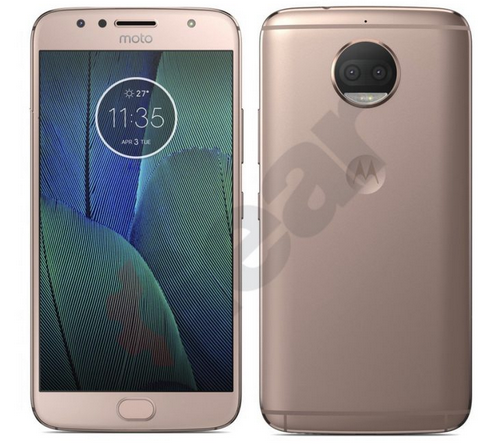
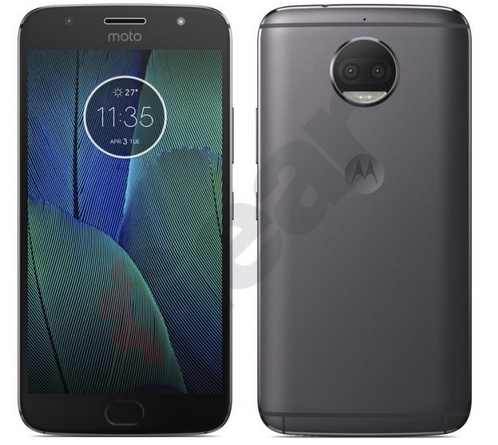
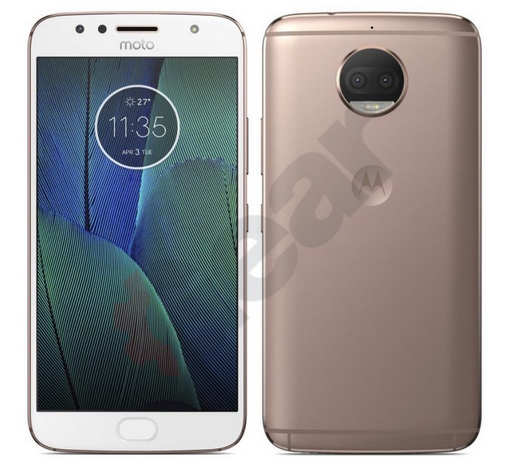
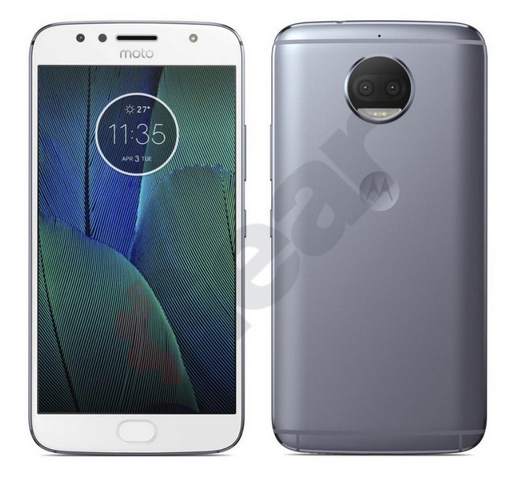
Yesterday, leaked renders showing the metallic Moto G5S had surfaced. The renders had revealed the three color variants of the smartphone. Today, the leaked renders of its elder sibling called Moto G5S Plus have surfaced.
Unlike the Moto G5S, the Moto G5S Plus can be seen in four colors likeGold, Grey, Silver model with White front and Gold model with White front. It is also expected to come with a full metallic chassis. Also, the images show that the smartphone sports a dual rear camera module.
The Moto G5S Plus is expected to be the first Motorola smartphone to feature twin rear cameras. It also is a front-mounted fingerprint scanner and a 3.5mm audio. Its front-facing camera seems to be enabled with LED flash. The Moto logo with its trademark dimple can be seen at the rear. There are no plastic cut-outs for antennae bands. Instead, it features distinctive antenna lines.
The Moto G5 and Moto G5 Plus come with aluminum chassis and their sides are made up of plastic. However, the Moto G5S and Moto G5S+ are both expected to come with full metallic chassis. The information about Moto G5S and G5S+ first appeared in the leaked shot that was reportedly taken during a Lenovo event. The snapshot revealed that the Moto G5S smartphones will have larger screens the Moto G5 phones.
The Moto G5 has a 5-inch FHD screen and the Moto G5 has a 5.2-inch FHD screen. The Moto G5S is rumored to come with a 5.2-inch FHD and the Moto G5S Plus is expected to house 5.5-inch FHD screen. The other specs of both smartphones are not known. However, both smartphones are expected to run on Android 7.0 Nougat OS.
The Moto G5 Plus that was announced in February at the Mobile World Congress (MWC) 2017 is powered by Snapdragon 625 SoC. It comes in RAM and storage editions like 2 GB + 32 GB, 3 GB + 32 GB and 4GB + 64 GB. It has a 12-megapixel rear camera, 5-megapixel front camera, and 3,000mAh battery. The Moto G5S Plus may come with slightly better specs than G5 Plus.
There is no information available on when the Moto G5S and G5S Plus will be launching. 2017 is a busy year for Lenovo as it has plans to launch multiple moto branded phones this year. The list includes Moto Z2, Moto Z2 Force, Moto Z2 Play, Moto E4, Moto E4 Plus, and Moto X4. As of this writing, the company has only launch Moto C and Moto C Plus phones so far.
Xiaomi has a few Bluetooth speakers in the market, one being the traditional box-shaped speaker and another range featuring a cylindrical design. Oh yes, there’s a bunny shaped Xiaomi speaker (Mi Rabbit Mini) too, well, because, why not!
So, basically, what I am trying to say here is that you could be confused with the sheer number of Xiaomi Bluetooth speakers in the market, so I’ll make it clear about the device up for review. What I’m reviewing today is the Xiaomi Mi Bluetooth Speaker 2, the second generation model in the company’s cylindrical speaker range. It’s available at present for just $25 which is a great price considering the quality of output from this compact device. More details on its sound output down below.
Xiaomi Mi Bluetooth Speaker 2 Design:
I am not going to talk about the speaker’s box because there’s literally nothing to talk about it. It’s just a basic white box with a couple of cushions that keep the speaker in place and a manual that’s useless to most readers here since it’s only in Chinese.
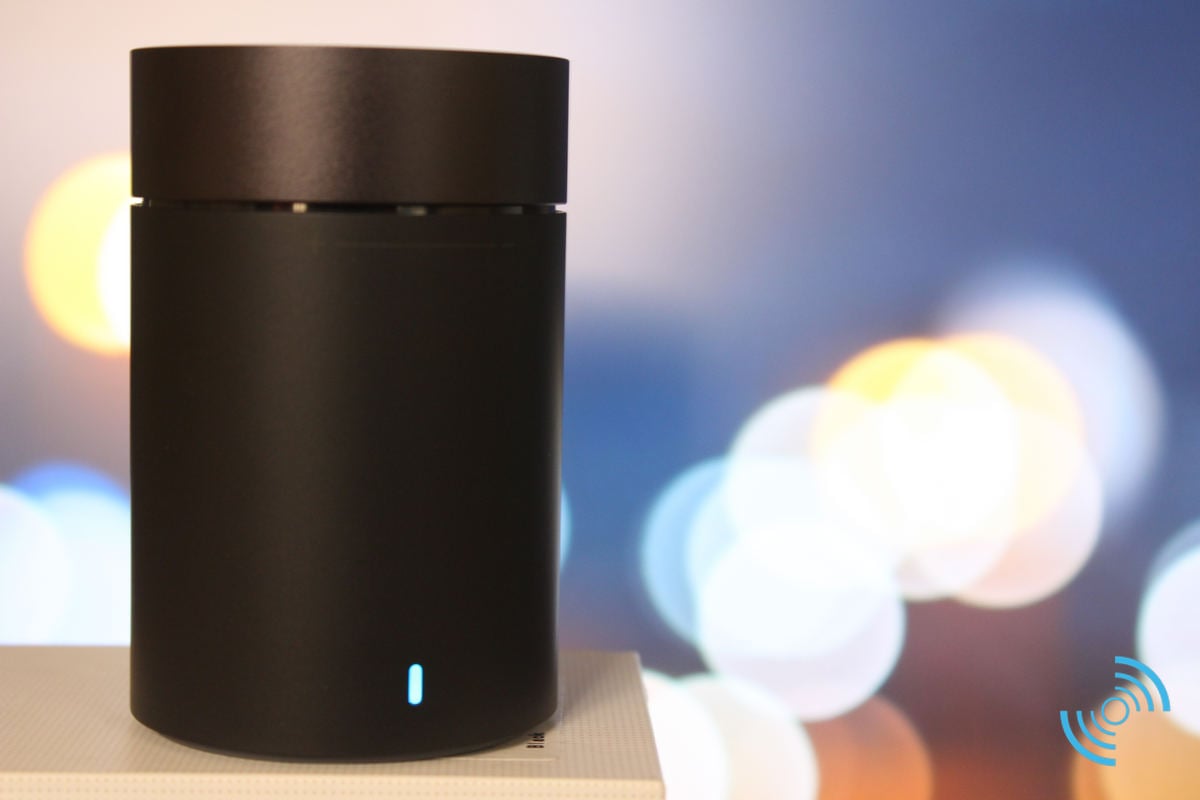
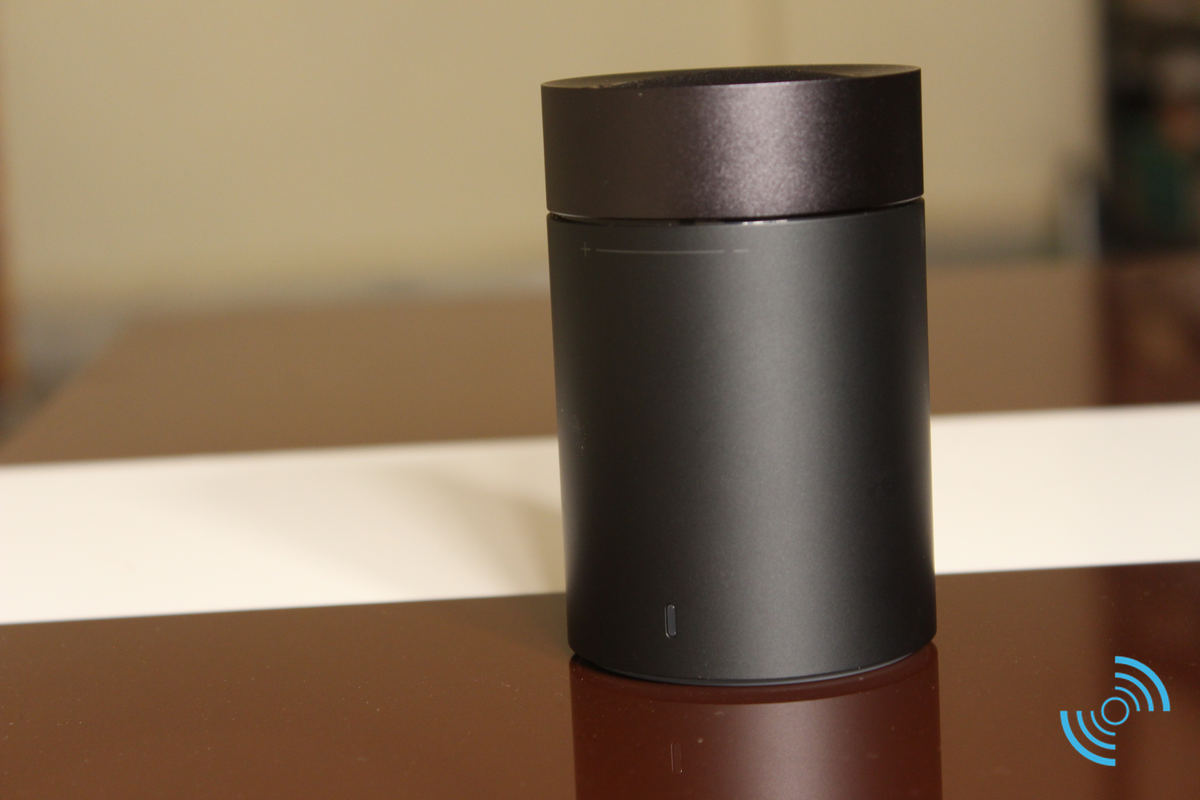
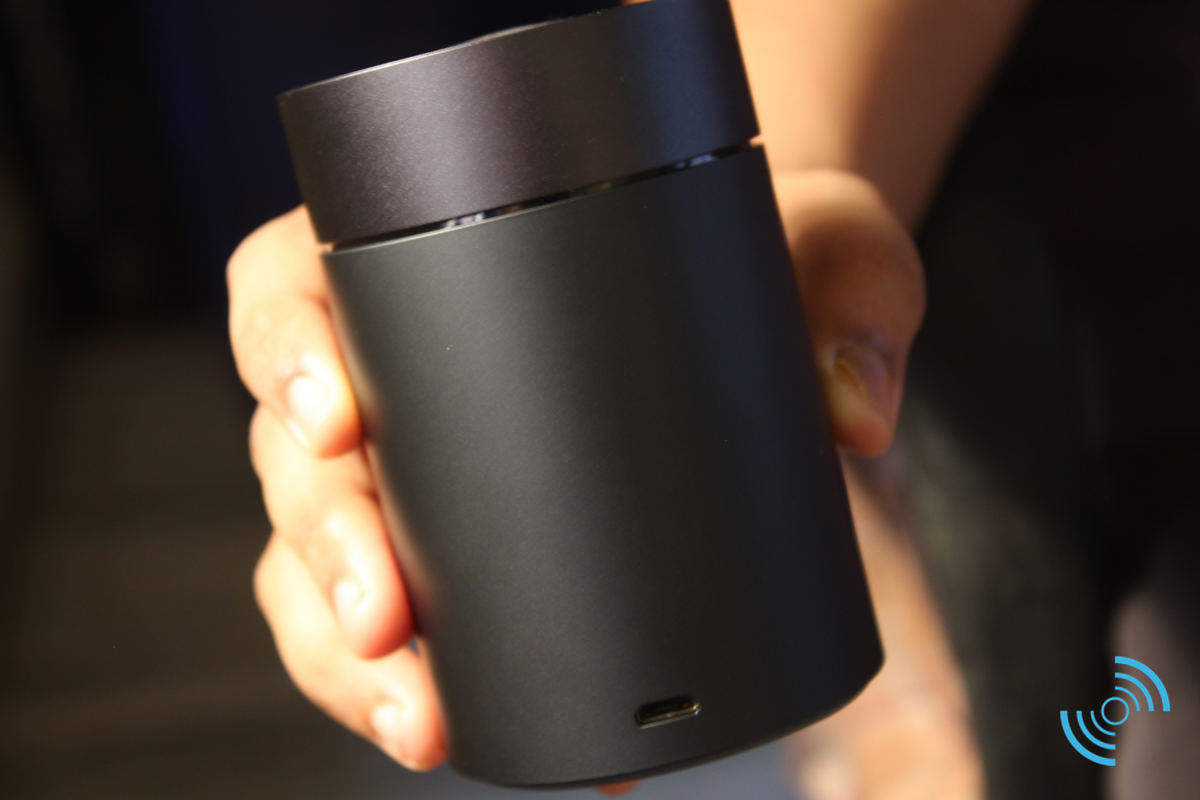
Coming to the actual design, just like other Xiaomi products, the company has kept things simple. So, there are no protruding parts or buttons that stand apart from its simple design. In fact, as you might see in the pictures, there are no buttons at all.
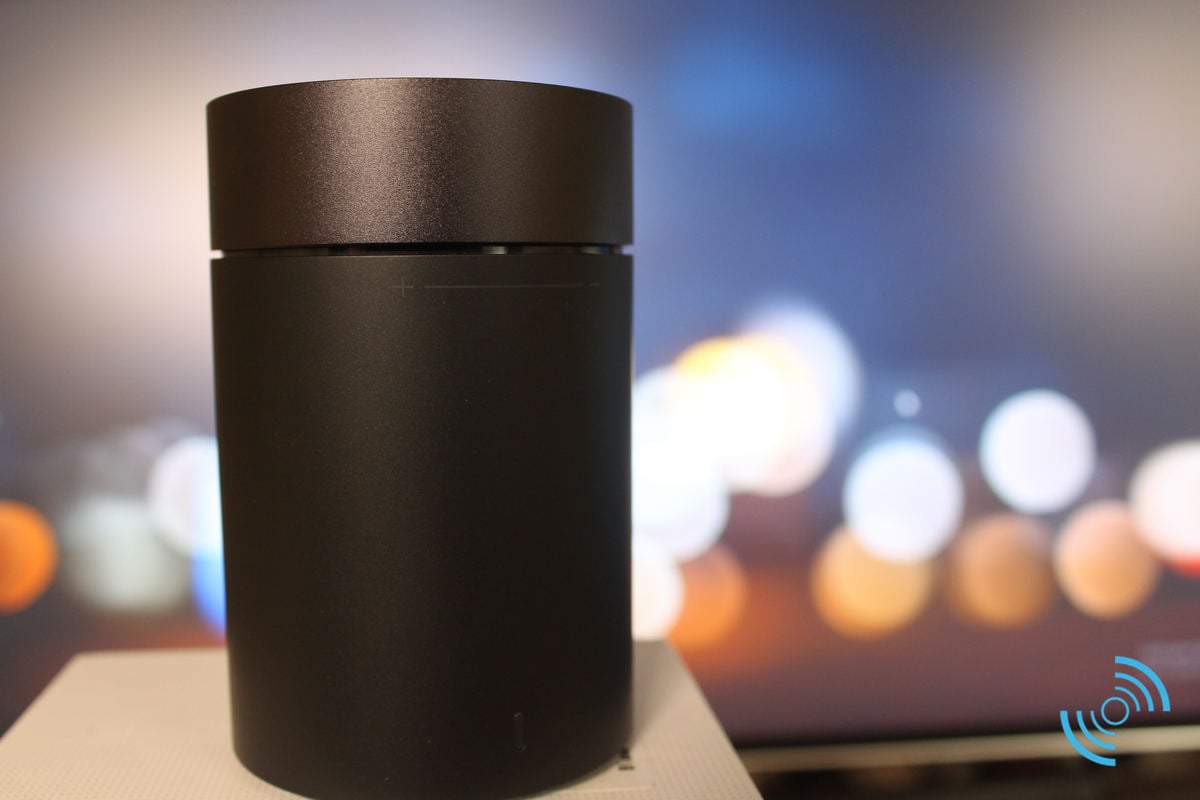
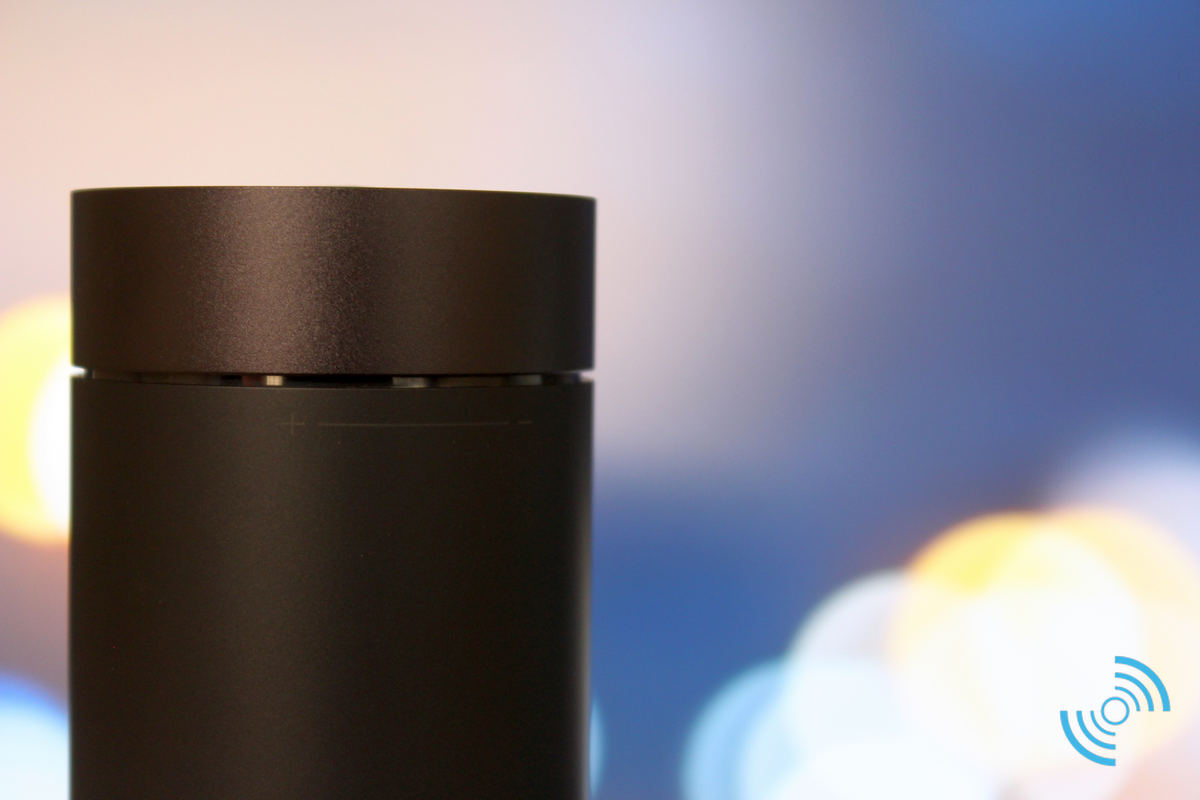
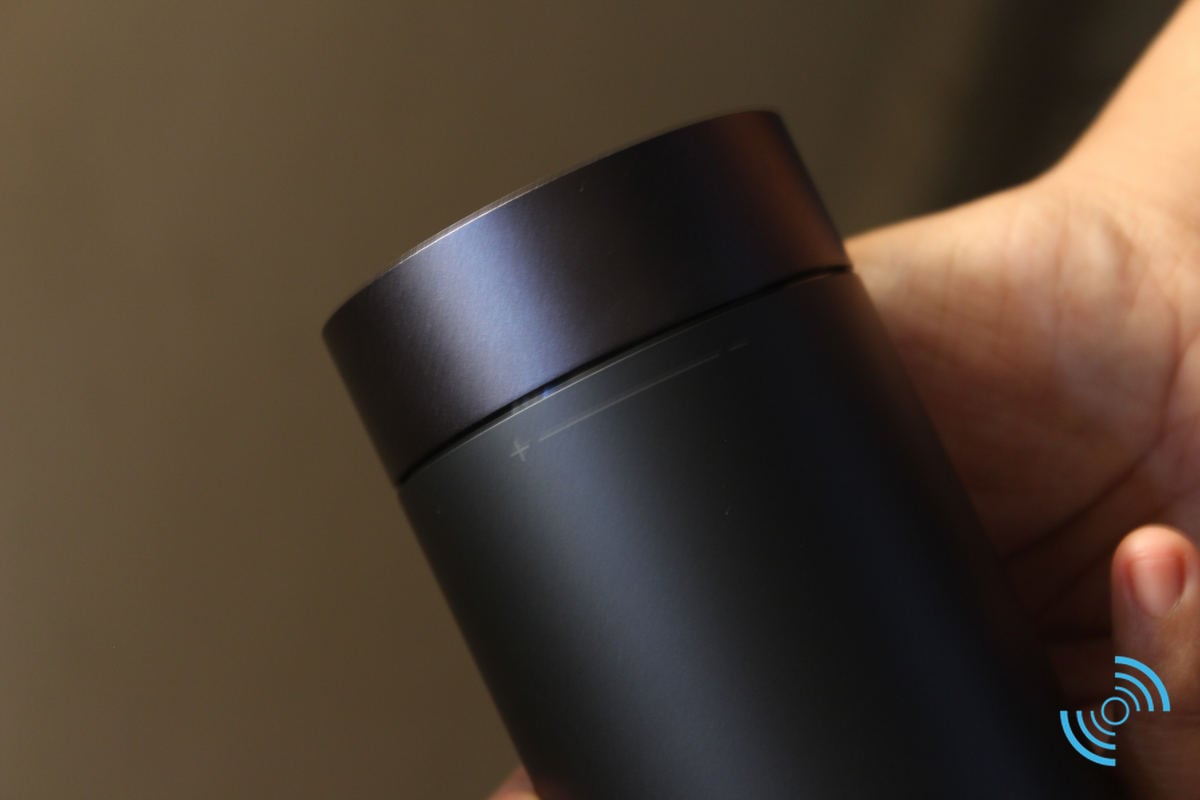
The Mi Bluetooth Speaker 2 uses a two-stage design, which means there are two major parts to the speaker. The top half, which takes up just a third of the overall height is the place where the real controls are. So, the top half of the speaker is pressable and it’s very easy to figure out how the speaker works. But more on that later.
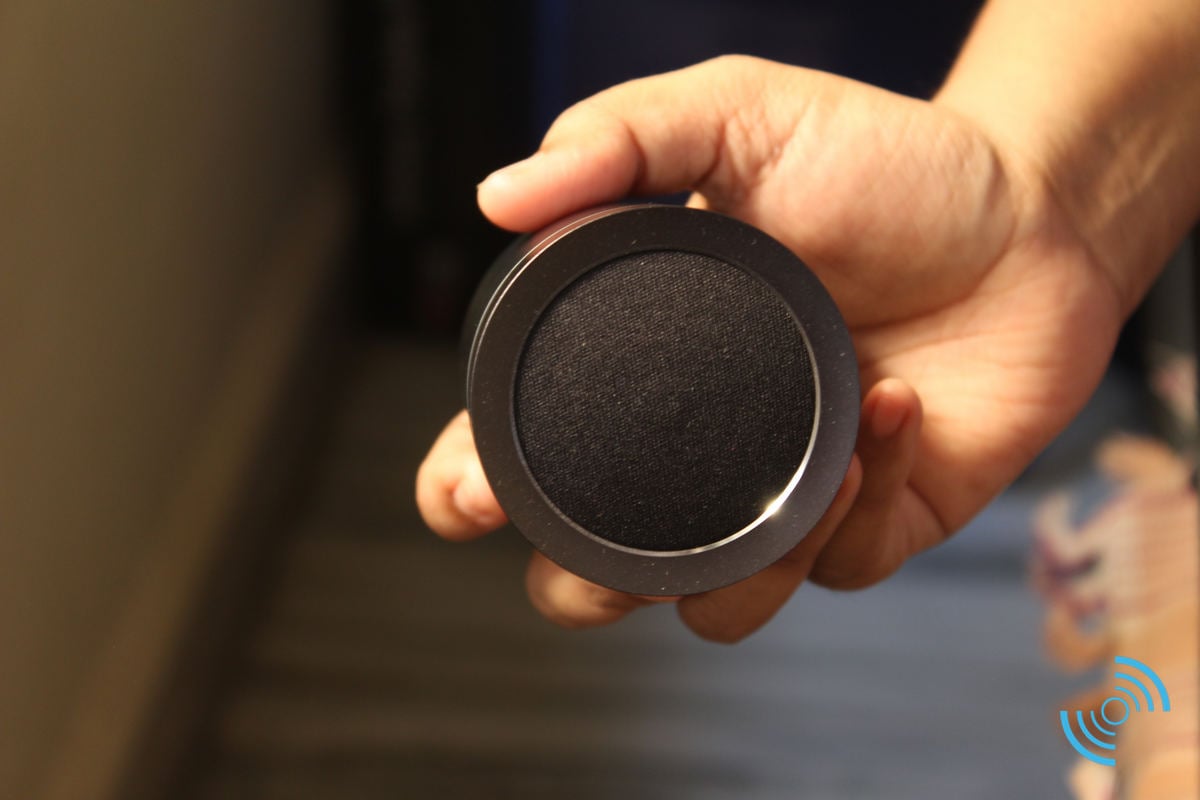
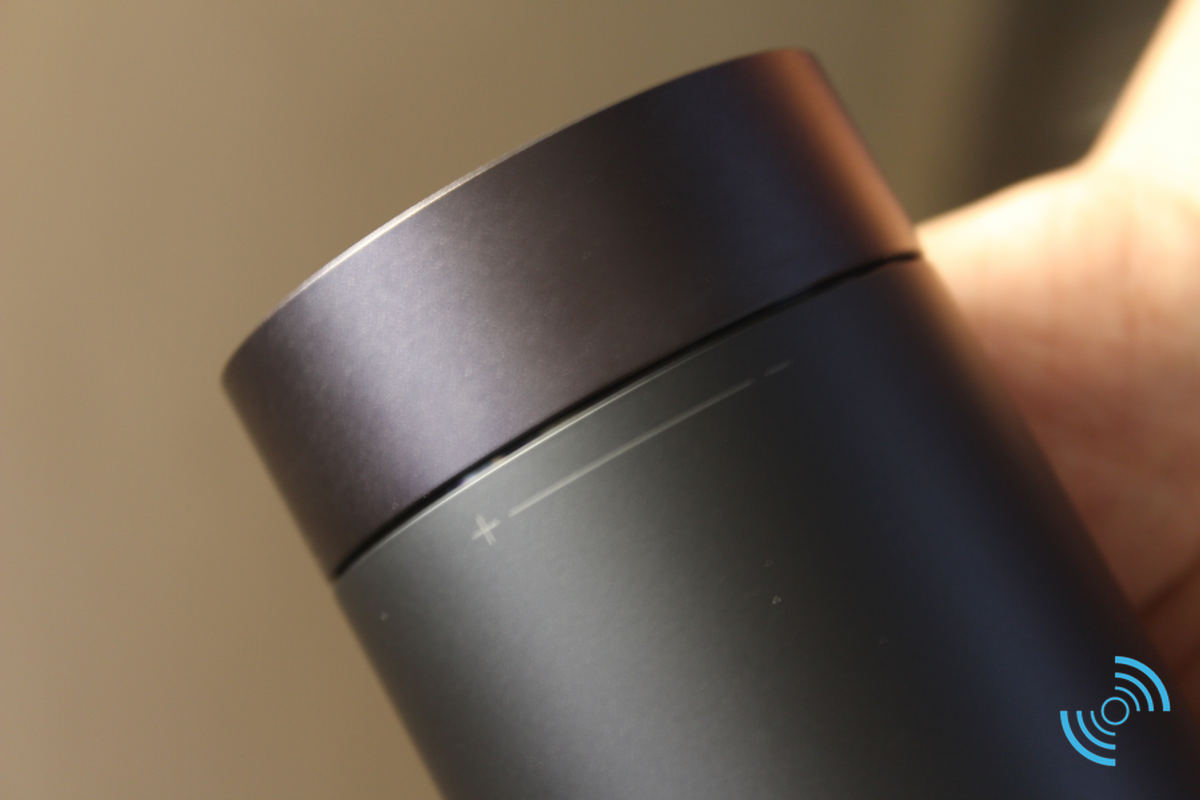
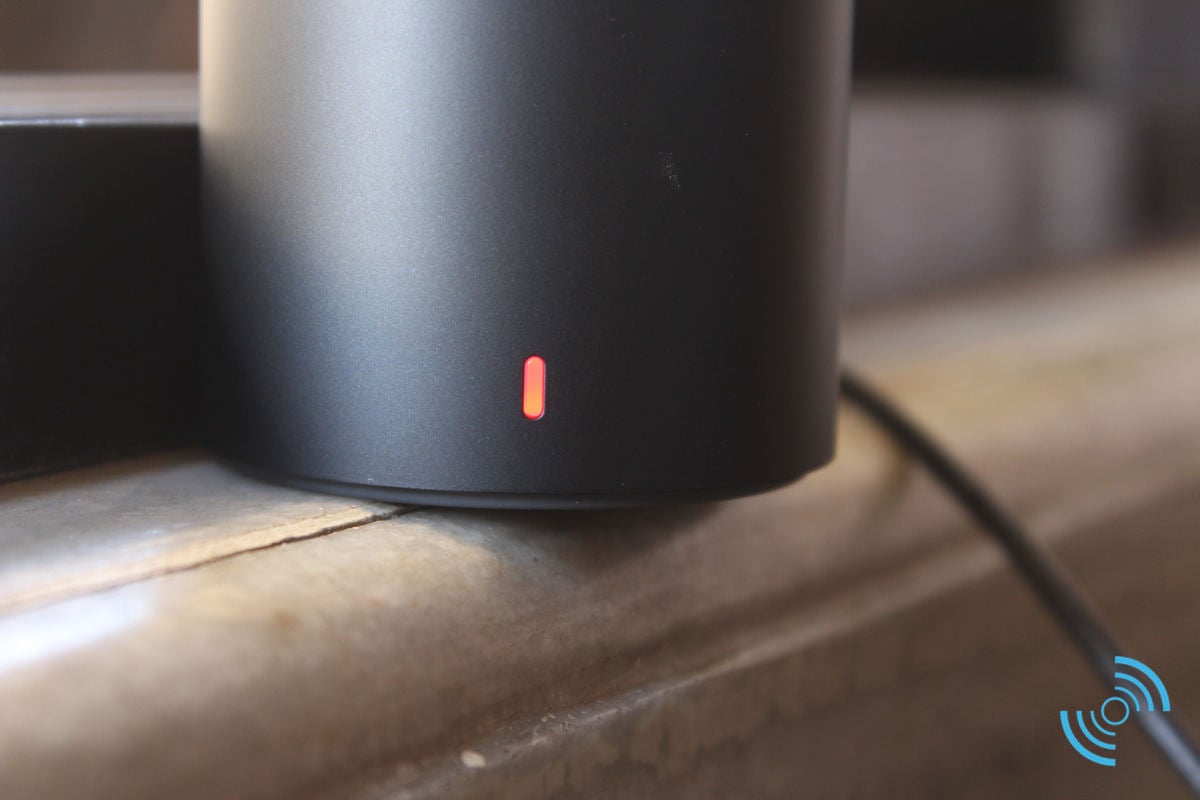
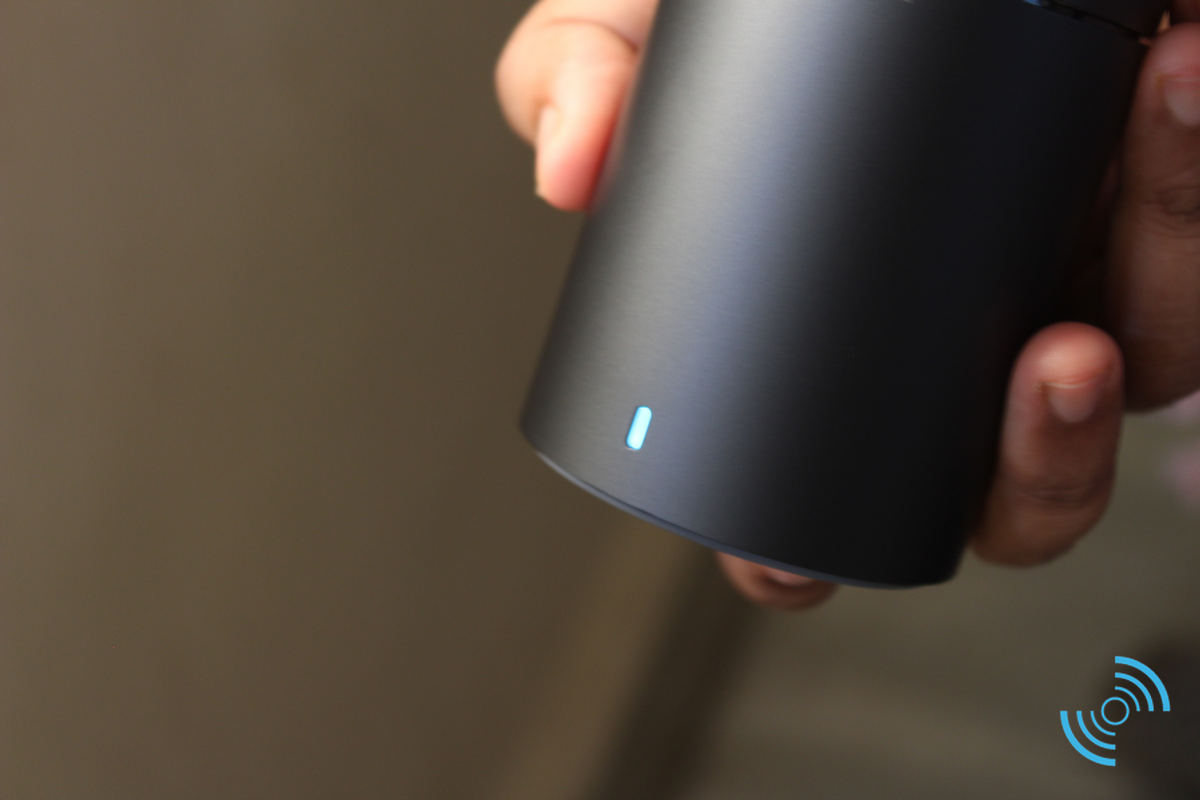
The speaker output comes from the top of the cylindrical body, which is evident from the mesh on top. The top half acts as a dial as well as a button. You can also see the markings for volume controls that show how to move the dial to increase or decrease the volume. Coming down to the lower half, you’ll find just a LED light (Red and Blue colors) and an opening for a standard MicroUSB port for charging.
LED turns constant Red while charging
The size of the speaker is actually quite compact and the metal feels good to hold. It’s compact enough for me to cover it with my palm. The build quality of the speaker is stellar, with everything working perfectly, including its dial.
As for the color options, there are two available, Black, and White + Silver. Black has a shinier top half, but the difference isn’t as evident as the white colored model which features a silver top.
Xiaomi Mi Bluetooth Speaker 2 Connection & Controls:
As I said earlier, the controls are very simple. Just long press the top and you’ll see the blue light blinking. This means that the speaker is ready for connection. Connecting and pairing any smartphone to the speaker takes just a few seconds and you are good to go in under a minute!
blinking LED during connection
Once connected, you’ll see the blinking blue light on the notification LED. That’s normal and indicates that the phone is connected. The light remains Blue most of the time, with an exception being during charging when it turns a constant red. Even when it’s charged completely, the LED light turns blue.
The Mi Bluetooth Speaker 2 controls are easy as well. You turn the dial clockwise to increase the volume and anti-clockwise to decrease it. There are clear markers on the speaker to indicate the right direction. Now note that this is a continuous dial which means there’s no upper limit or stopper to let you know that you’ve hit the max sound. So, it keeps on turning in any direction even after you have reached the max / min sound limit. I, personally, am not a big fan of continuous dials, as I like to know when I hit the max sound limit or vice versa. But I am sure most users won’t mind this or may even love this design.
Pressing the top ‘play / pauses’ the soundtrack and that’s about it for the controls. Rest of the things like jumping to the next song or hitting the previous track are all controlled via the smartphone. Note that, for some reason, the speaker fails to continue the song where you left it off after you hit pause. It starts again from the beginning and this is kind of annoying especially if you have to pause / play the speaker multiple times. Of course, the controls via the smartphone music player work perfectly well and this is just the case if you try to control it via the speaker dial.
And one more thing, there’s a microphone on the speaker, so it accepts hands-free calling. I did receive a few calls while I was playing with it, and everything went perfectly, as in, I could have a clear conversation using the speaker.
Xiaomi Mi Bluetooth Speaker 2 Review: Sound Quality & Output
Xiaomi’s products are known for its top-notch quality and the same applies to the Mi Bluetooth Speaker 2. This handy little cylindrical device produces enough sound to give tough competition to the number of cheap portable speakers in the market today. It is loud enough to keep everyone in the room in tune with the music.
But being loud isn’t enough. We expect a Bluetooth speaker to do a lot more and I must say that this nifty little device manages to impress.
The quality of sound output is impressive considering its super-compact form factor. So, along with it being loud, the output is clear and crisp. The treble is great and the mids are also pretty good. The bass is not as good as I expected — it’s pretty decent but I feel the lows could have been better and thumpier.
I have to add that the vocals are super crisp and it’s a pleasure to listen to vocal rich songs on this speaker. At $25, the overall music output is definitely impressive.
As for the battery life, I could easily get over 7 hours of music playback on a single charge. And it doesn’t have to be continuous. You can listen for a few hours one day, switch it off, and get a few more hours (total around 7 hours) the next day.
If you can ignore the fact that the Mi Bluetooth Speaker 2 comes with a Chinese manual and a Chinese voice (only when you connect or disconnect your phone), then this nifty little speaker is definitely something that you should check out! It’s light, compact and looks good, so you can carry it around wherever you travel, which is exactly what I do.
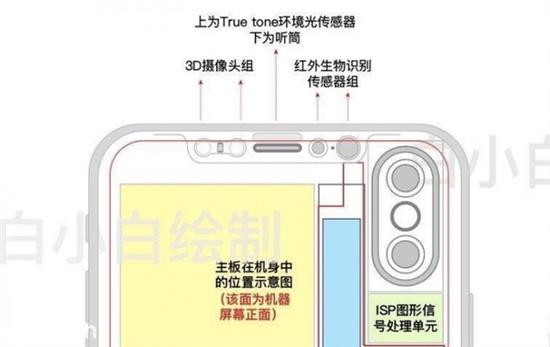
Apple is expected to release its flagship iPhone 8 later this year but the device has repeatedly been dogged by rumours that the launch could be delayed as a result of some technical hitch. While that is yet to be clarified, a fresh rumor has emerged that the iPhone 8 would come with a dual camera setup up front which is capable of shooting 3D images. The dual cameras are also detailed to feature a special selfie portrait mode. This rumor emerged from Twitter tipster @VenyaGeskin1.
The front dual camera setup is in addition to the rear dual cameras the device is equally said to feature which would be similar to that of the dual camera-packing iPhone 7 Plus. The iPhone 7 Plus also came with a portrait mode on its rear camera but this tie around it is said to be at the front with the same algorithm and landscaping. This no doubt would make the selfie camera output more beautiful and could see some selfie fans getting on the Apple train. The front camera is also said to have a 3D facial recognition technology developed by LG/Innotek which would make i the first smartphone in the world to have such.
If the piling features which would be on the iPhone 8 should elicit your interest in the flagship, just know you’ll have huge price tag to contend with on this one. Well, that’s if the latest rumor about the price is anything to go by. According to UBS analyst Steven Milunovich, the iPhone 8 could be priced at $870 for the base model while the top-end 256GB version would go up for as much as $1,070. We are not sure about that but since it is Apple, they can set the price so high and still there’ll be scarcity of the device.
A couple of weeks ago, Xiaomi’s Mijia crowdfunding platform launched the Planet Cup, a ceramic tea cup with a planet-shaped wooden handle. This week, Mijia’s new product, the Haoyue Bone China Dish Set is the missing piece of the puzzle in Xiaomi’s quest to conquer your kitchen.
The Haoyue Bone China Dish Set includes 4pcs of rice bowls and 4pcs of flat plates. The rice bowl has a diameter of 121 mm, a height of 45mm, and weighs 45g, while the flat plate has a diameter of 213mm, is 23mm deep and weighs 355g.
The Haoyue Bone China Dish Set is available in plain white or plain white with gold rims. The plain white set is priced at ¥119 (~$18) while the set with gold rims will sell for ¥159 (~$23). The dish set is expected to start shipping out to backers by 6th of June.
In the tech industry, it is common to see company executives and directors moving over from one company to the other in pursuit of a better offer an improved pay package. But when the officer cross carpeting is the Chief operations officer and president, then it is usually a surprising move. That is the case with reports which started out as rumours that former TCL global COO and president of the company’s China region, Yang Zhe has left the company and moved over to fellow smartphone maker Meizu Technology Co.
Yang joins Meizu as part of the sweeping organisational restructuring which had seen the company shared into three divisions – Meizu, Charm Blue and Flyme divisions. Yang will function as senior VP in charge of high-end smartphones which falls under the Meizu division. Under this scenario, Yang Zhe will work closely with Jack Wang who oversees the entire operations and president of the division Bai Yongxiaong.
Yang Zhe joined TCL around December 2015 as global COO and president in China. Before then, he has had stints in Samsung from where he departed in October 2012 to join Huawei. After that, Huawei’s mobile phone brand style saw significant changes. On September 4, 2014, Huawei launched its flagship smartphone Mate7 in Germany with the idea of a “jazz life”. Industry watchers commented that Huawei transformed from a “technical nerd” to a “young artist” with that stylistic change.
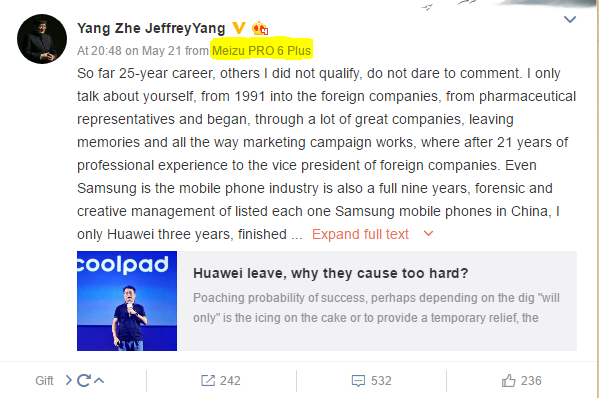
Yang would leave Huawei at the end of October 2015 and by December 2015 he was at TCL. Unfortunately, he wasn’t able to turn around the fortunes of TCL before his exit. So, he comes to Meizu with a rich chest in marketing which runs across Novartis, Motorola, Apple, Lexmark (Lexmark), Samsung, RIM and other companies. Meizu did not release an official statement but they confirmed it when an enquiry was made. Mr Yang himself also confirmed the latest move via his Weibo account.
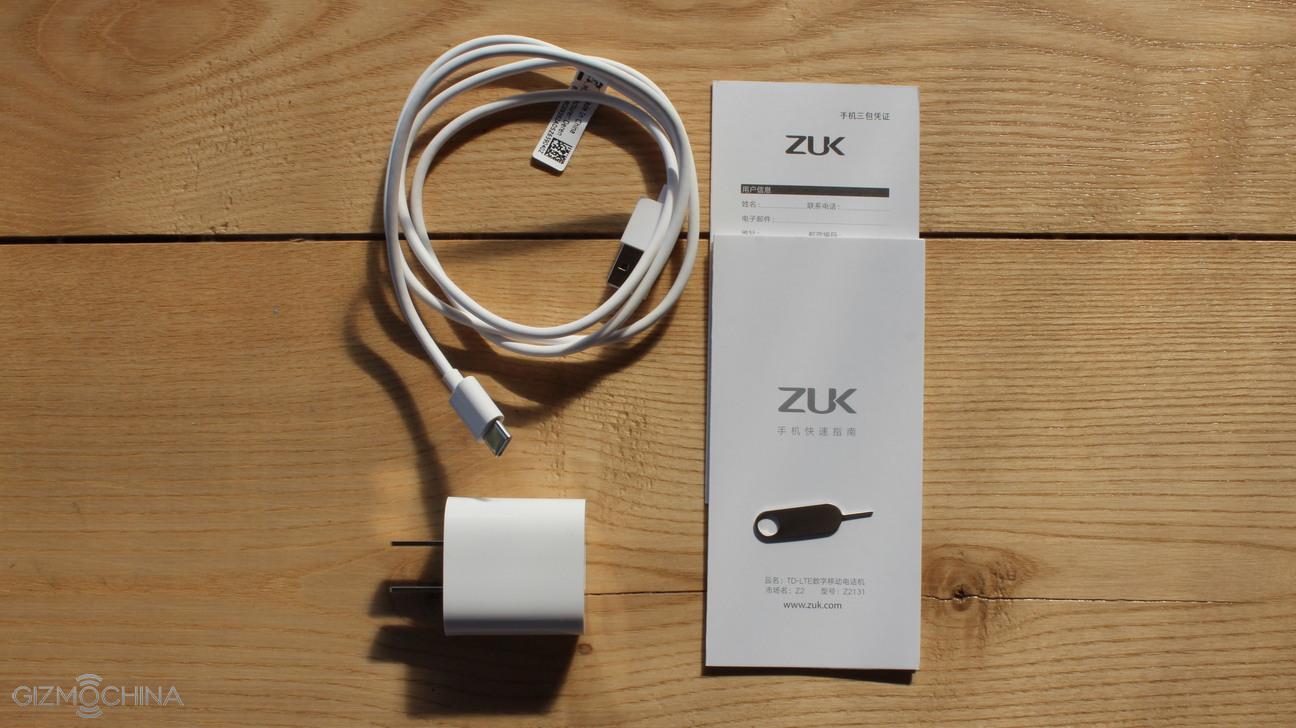
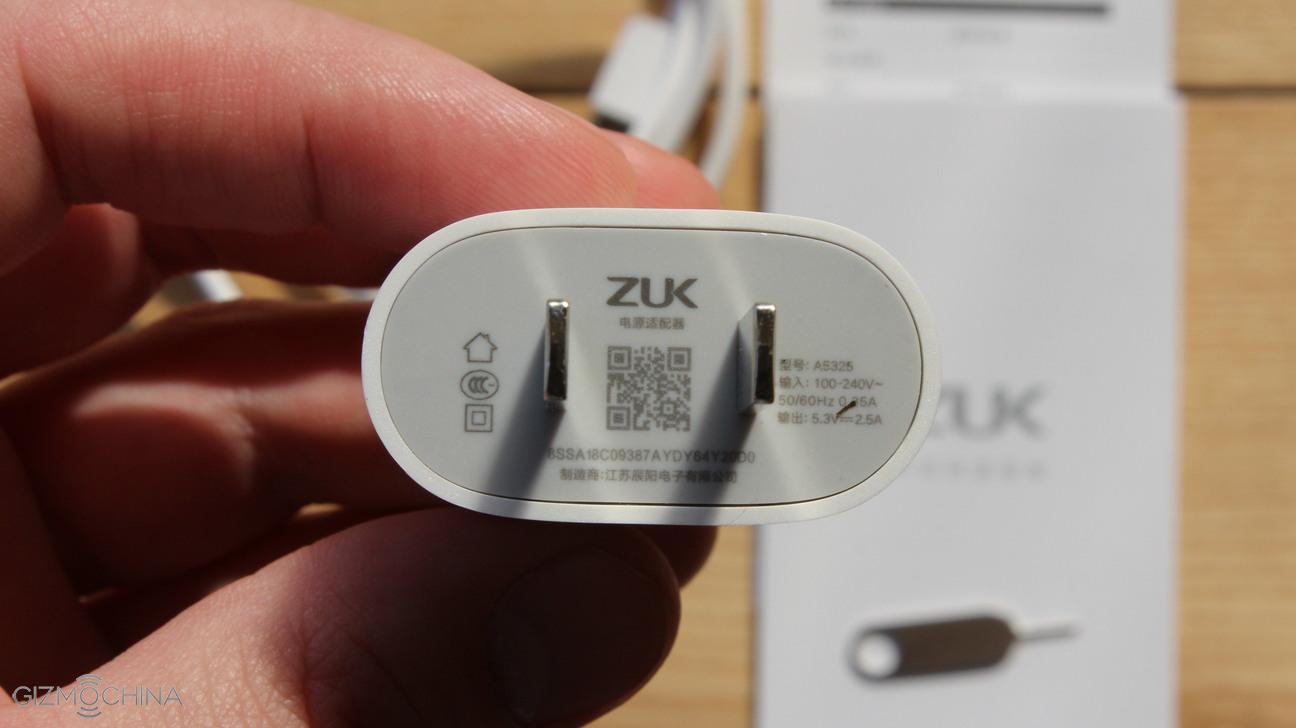
Last year a Lenovo-backed company released a ZUK Z2 – a phone that had a great design and killers specs. Right now you can get this phone for just about $180 and it seems to be one of the best phones for the price since it has a Snapdragon 820 chip, 4GB of RAM and a lot more! Learn more in our ZUK Z2 review after 1 year.
As far as design goes, it has changed quite a bit if we compare it to the ZUK Z1.
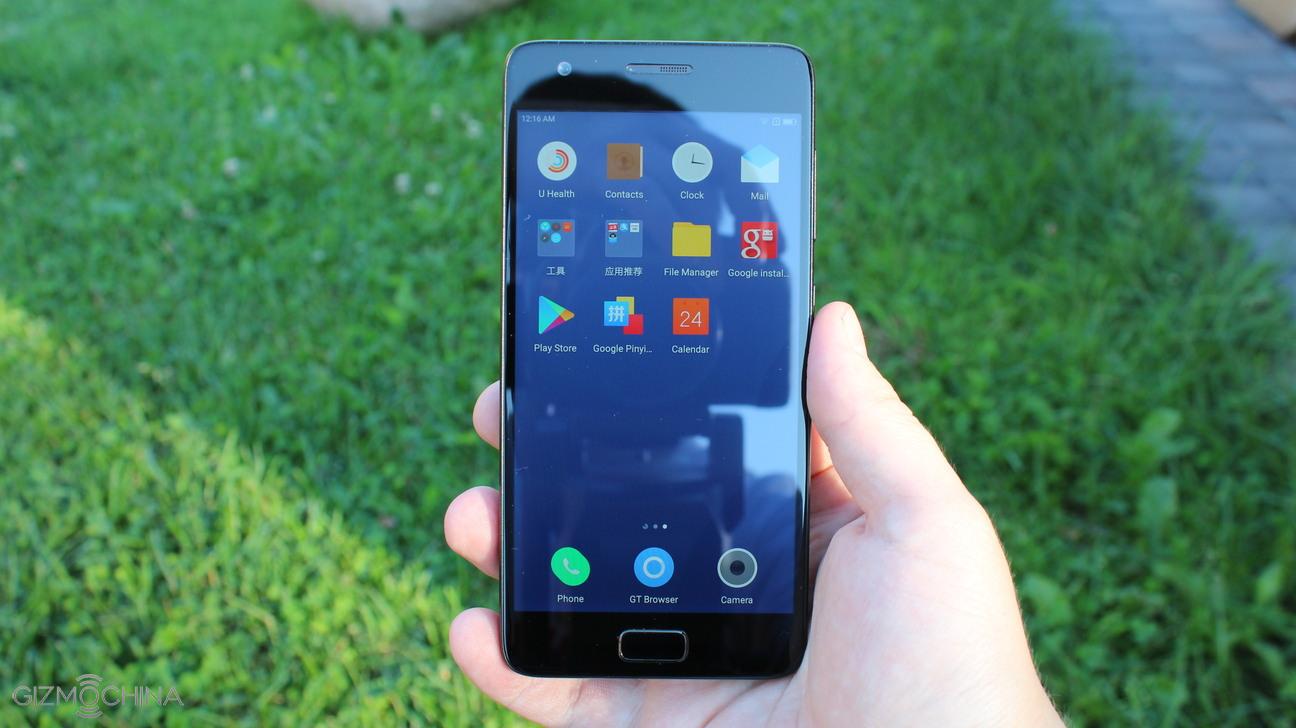
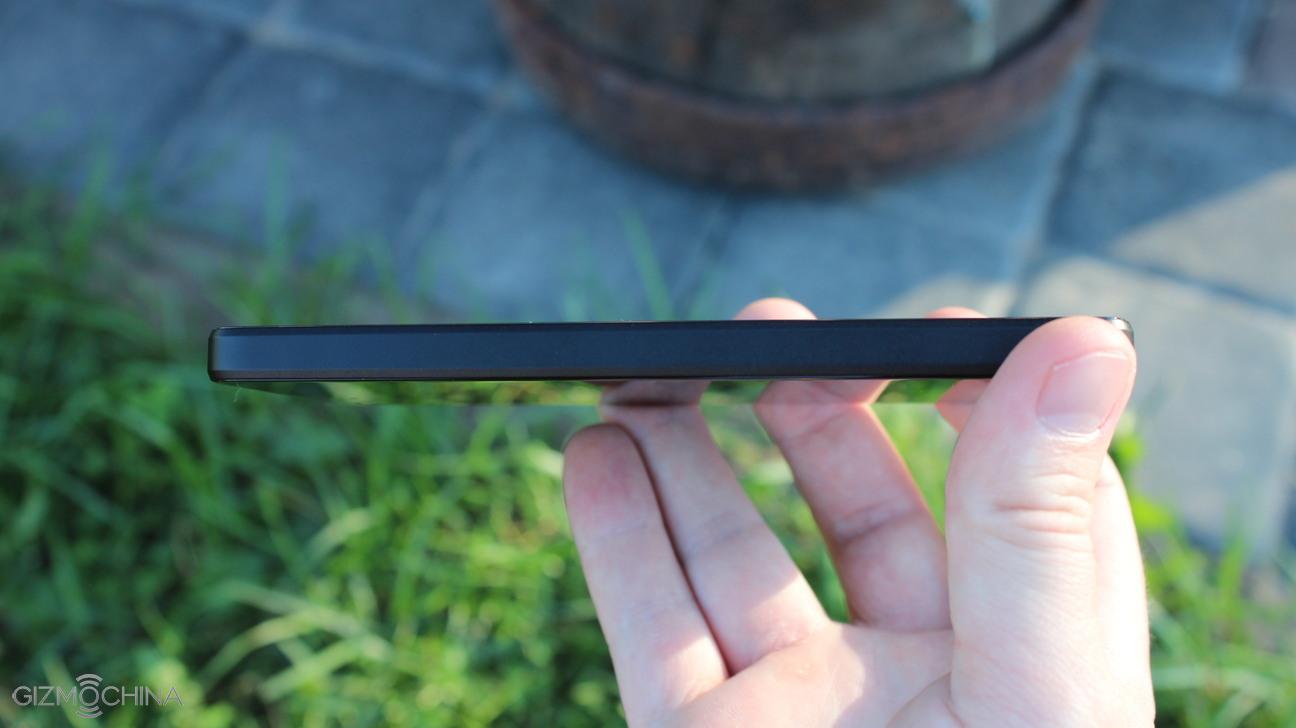
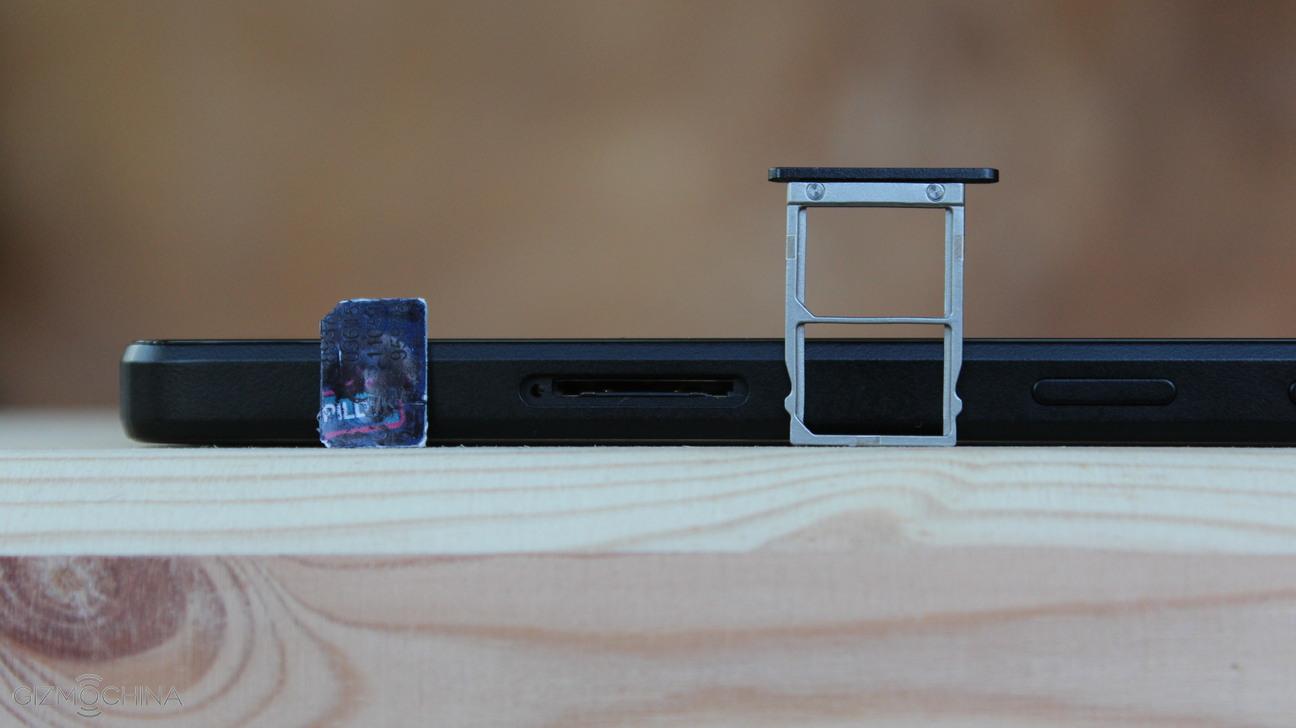
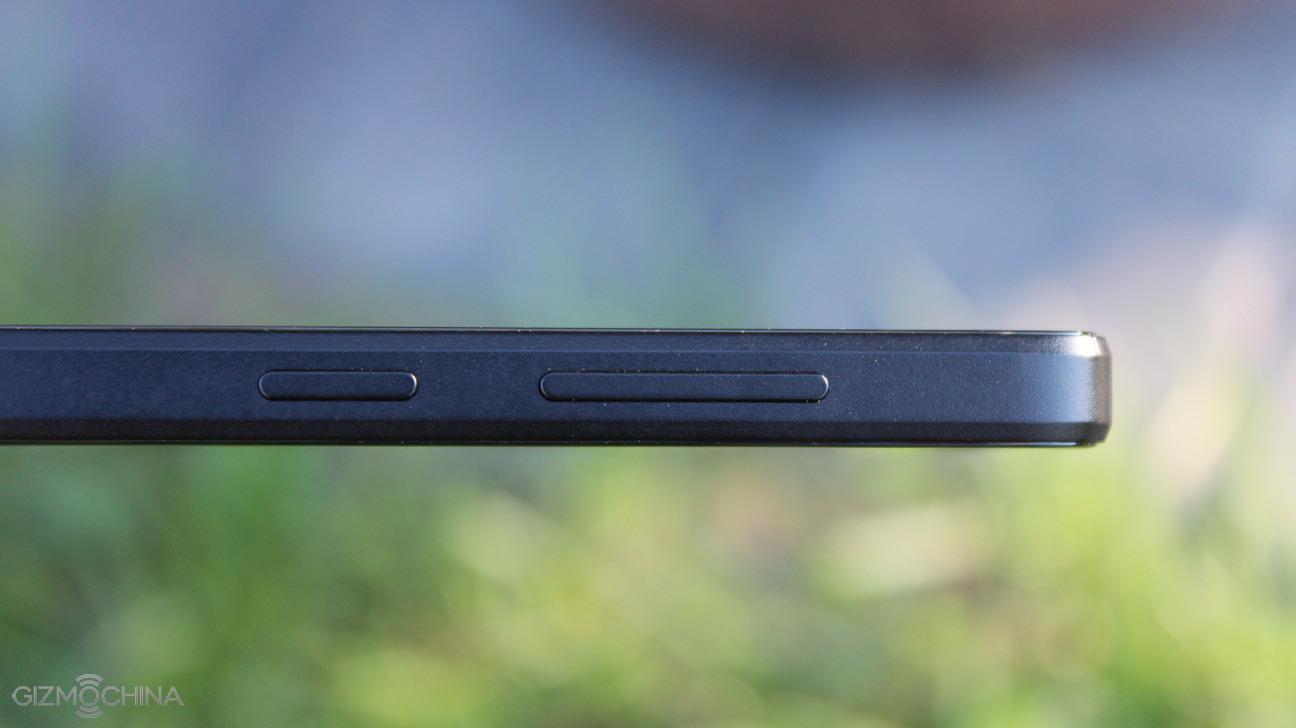
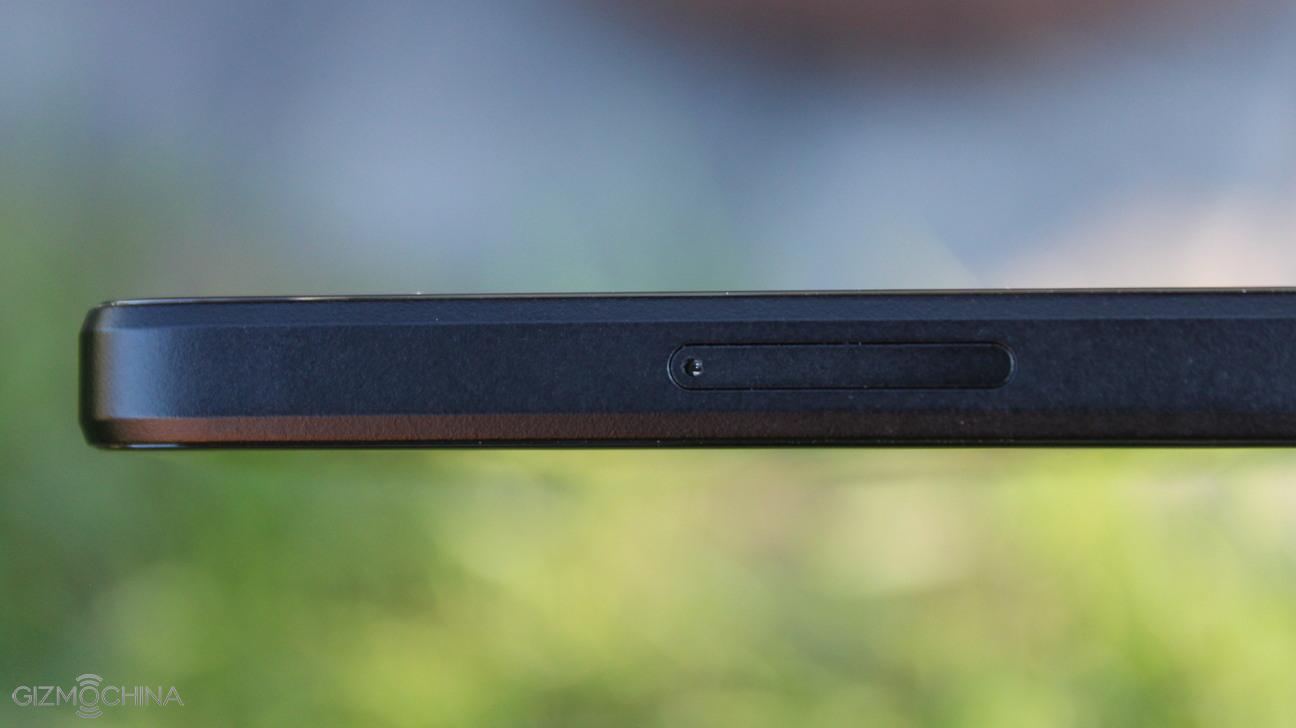
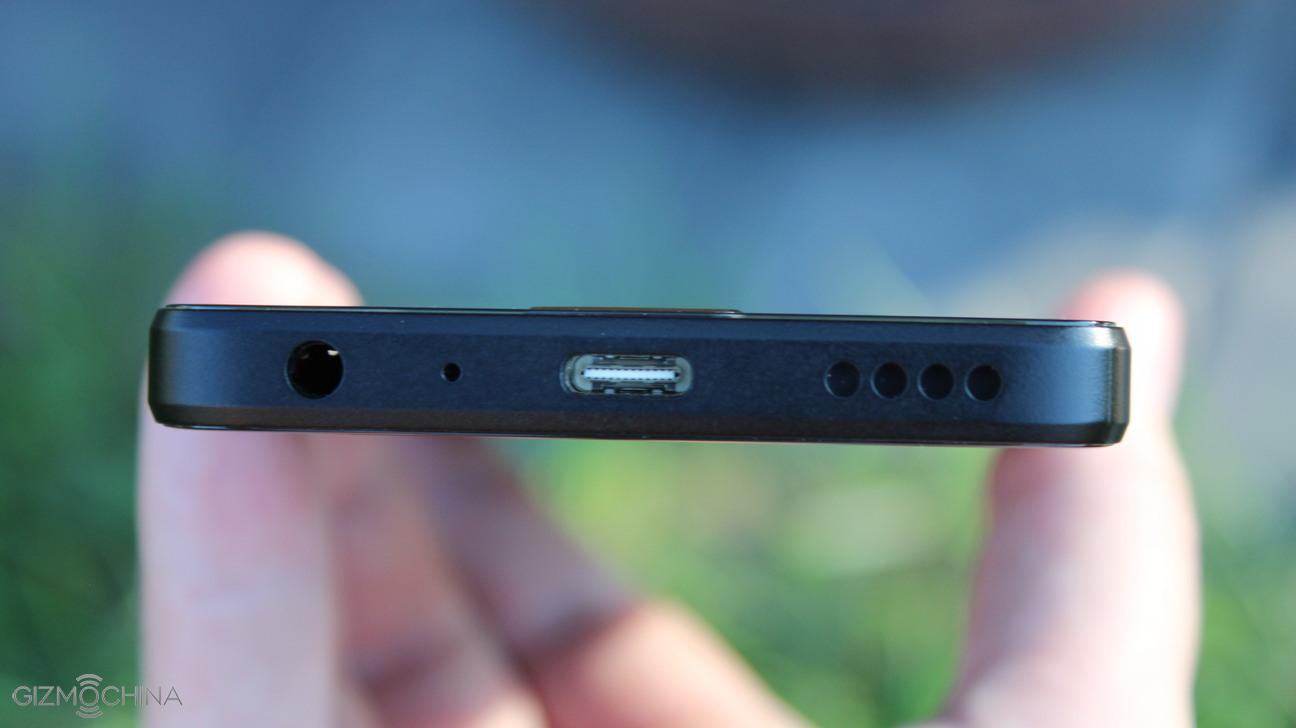
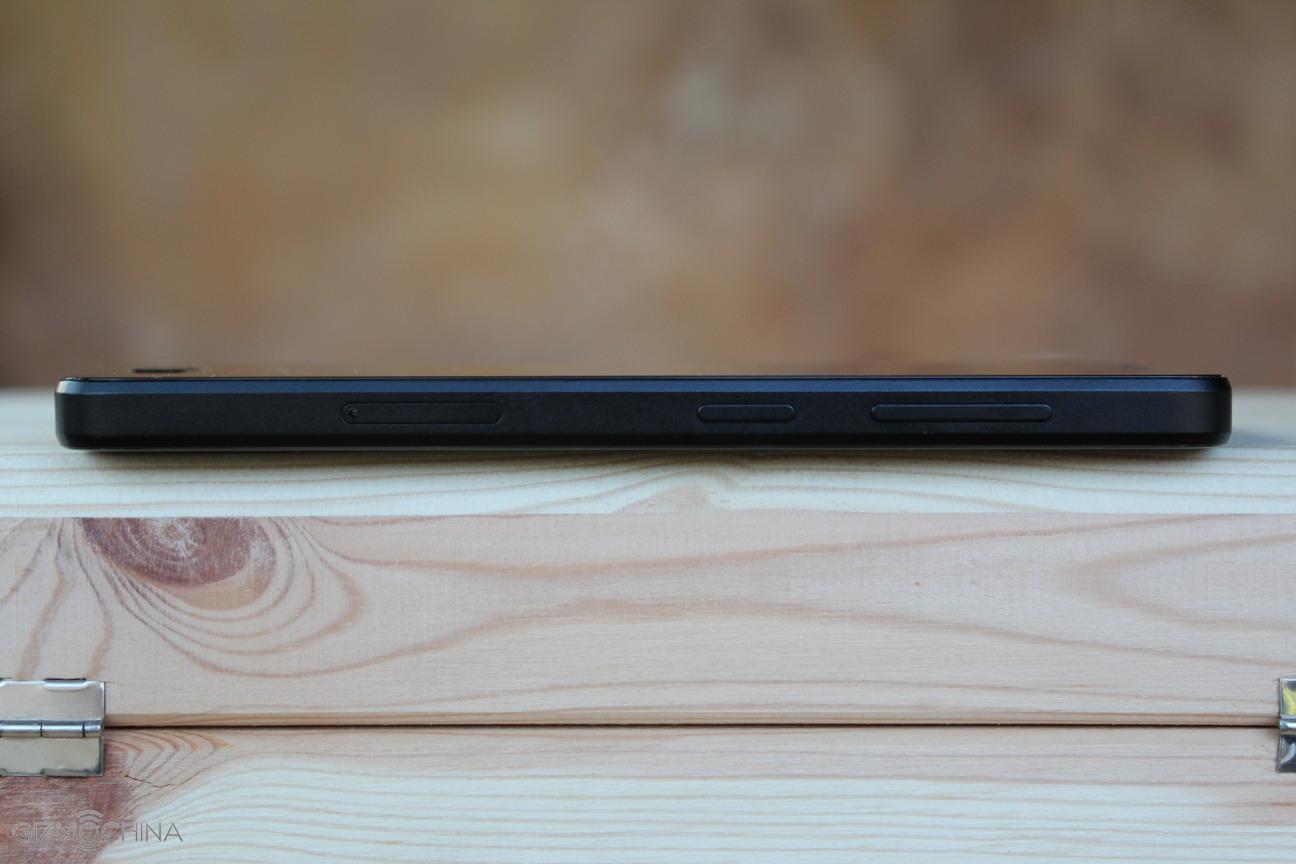
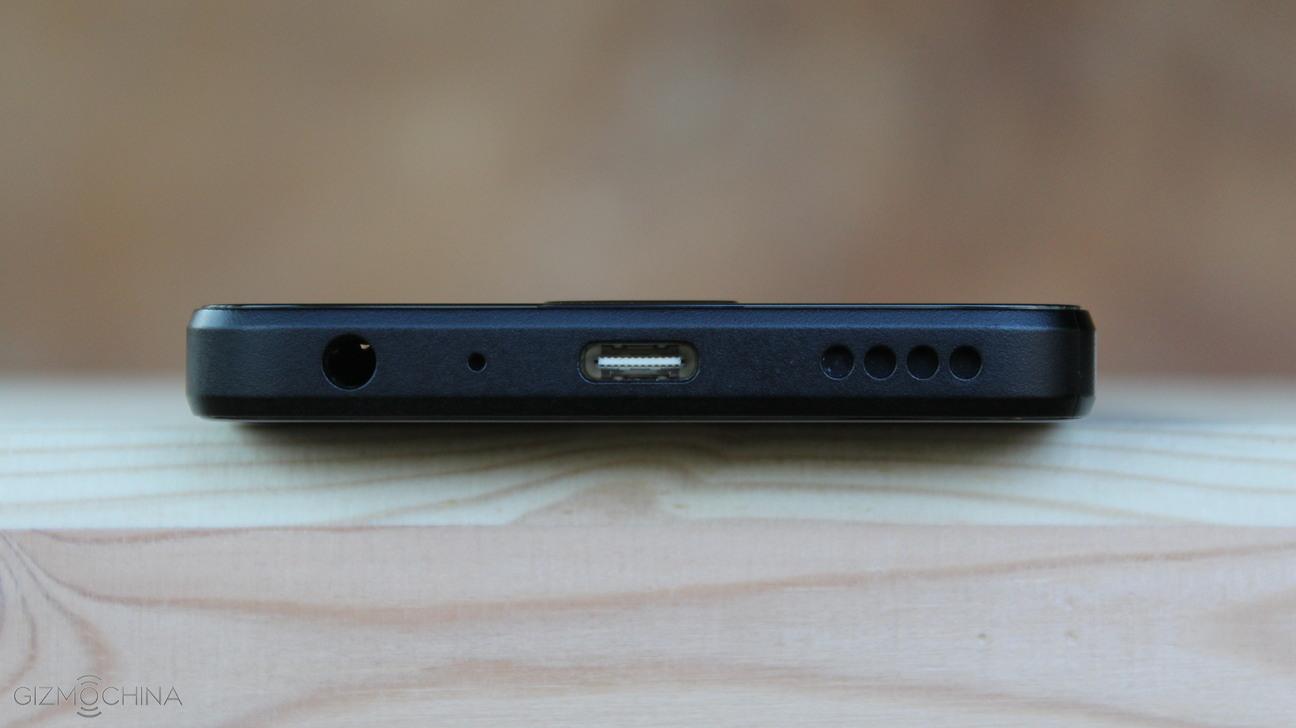
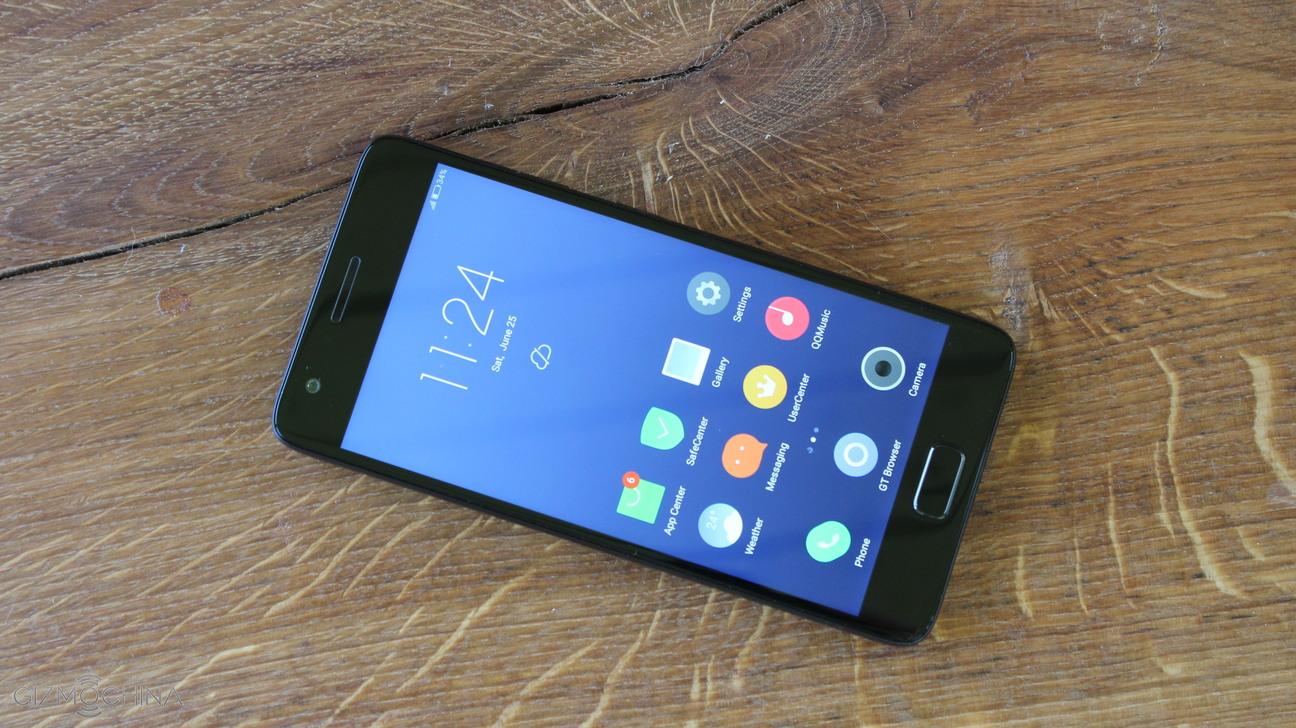
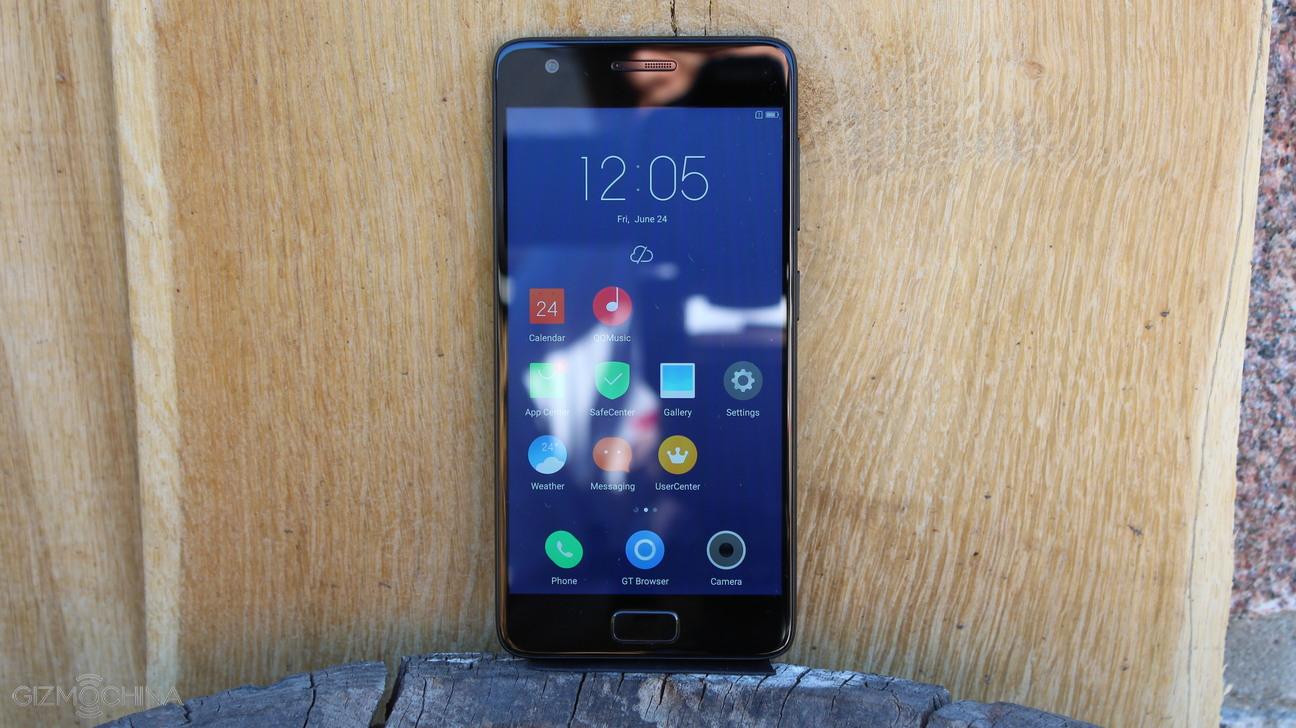
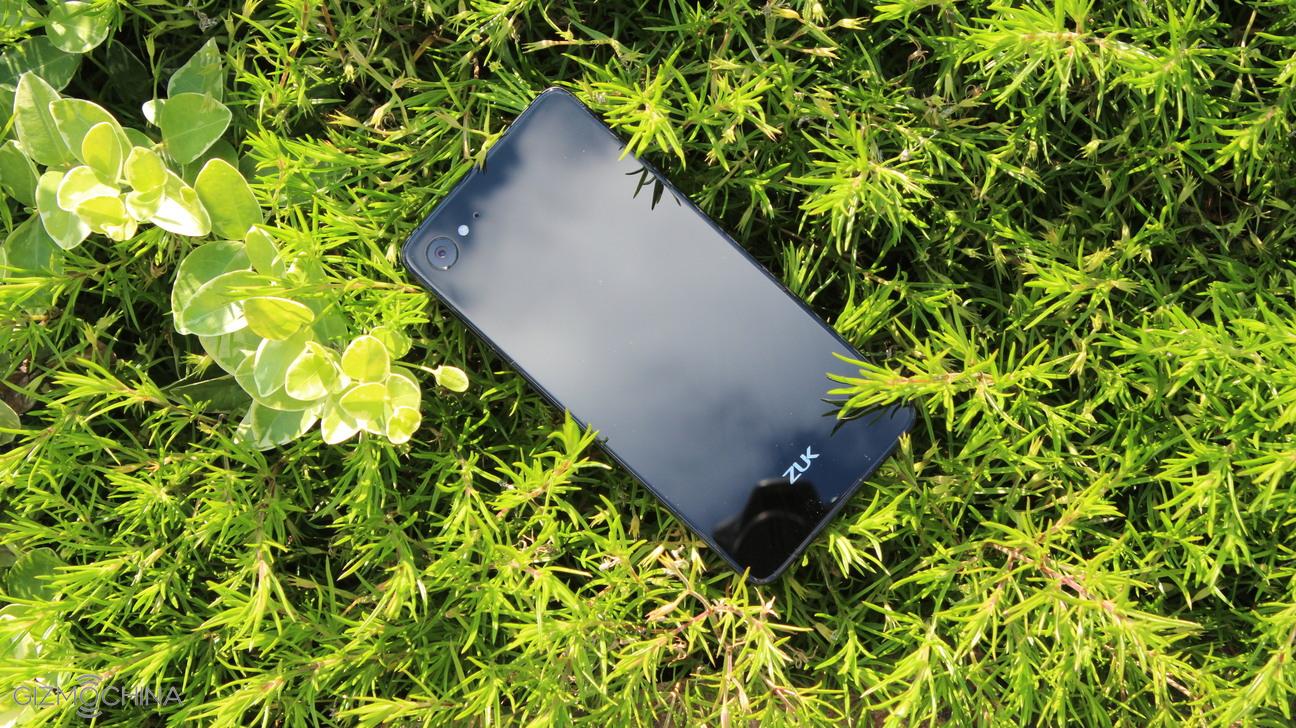
Now we have a rather compact phone, which uses a very high quality and sturdy metal frame around the device. I love the fact that all the buttons and a dual SIM card tray are on the right and all other stuff is on the bottom. Thus, other sides of the phone look clean.
The sound quality from the loudspeaker is pretty good but nothing we haven’t heard from similarly priced phones.
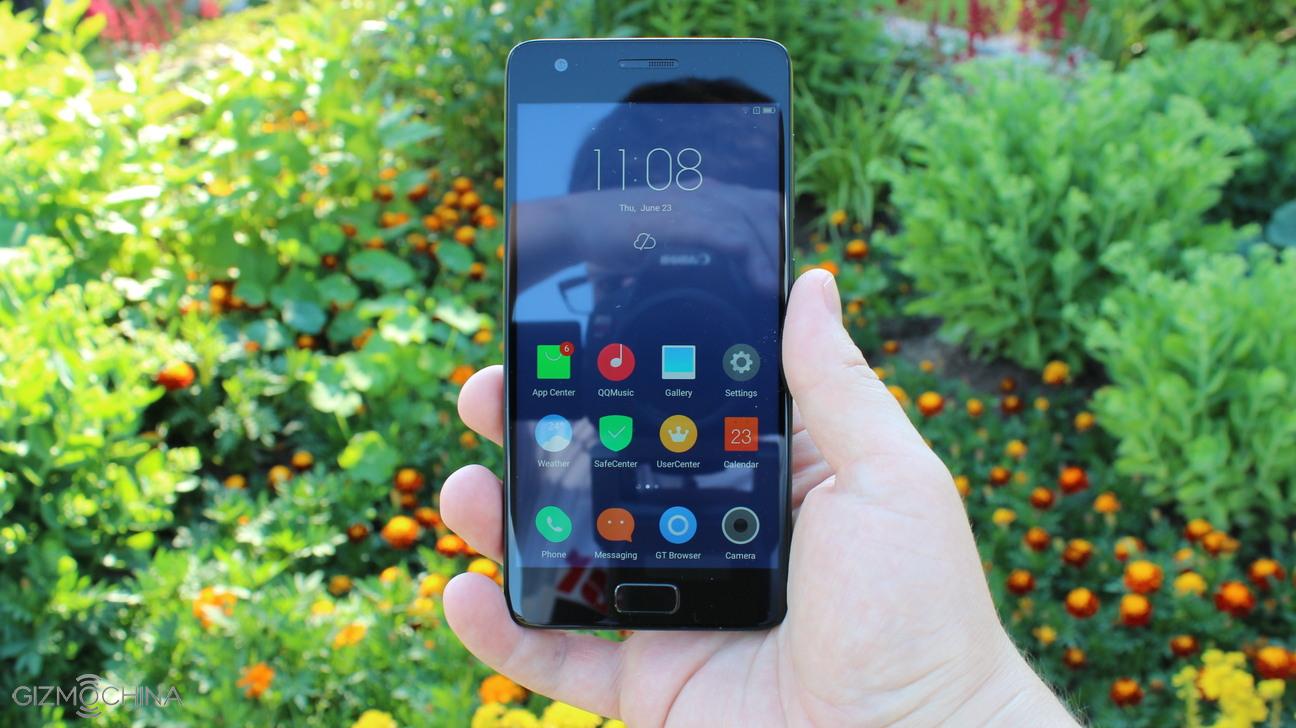
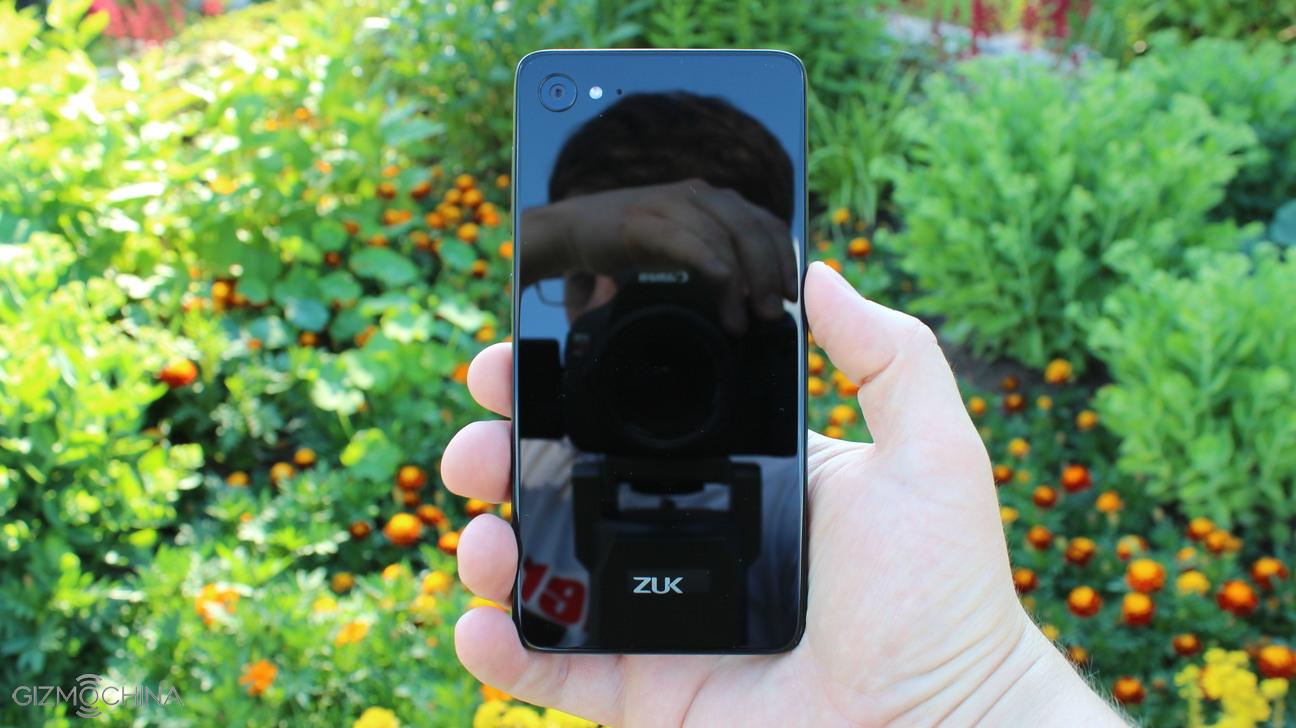
Also, we have Gorilla Glass 4 on the front and rear. A great thing is that the phone has some sort of anti-fingerprint coating and it does its job very well.
We have a 5” 1080p display, which is nice and sharp but it could be slightly brighter for a better sunlight legibility.
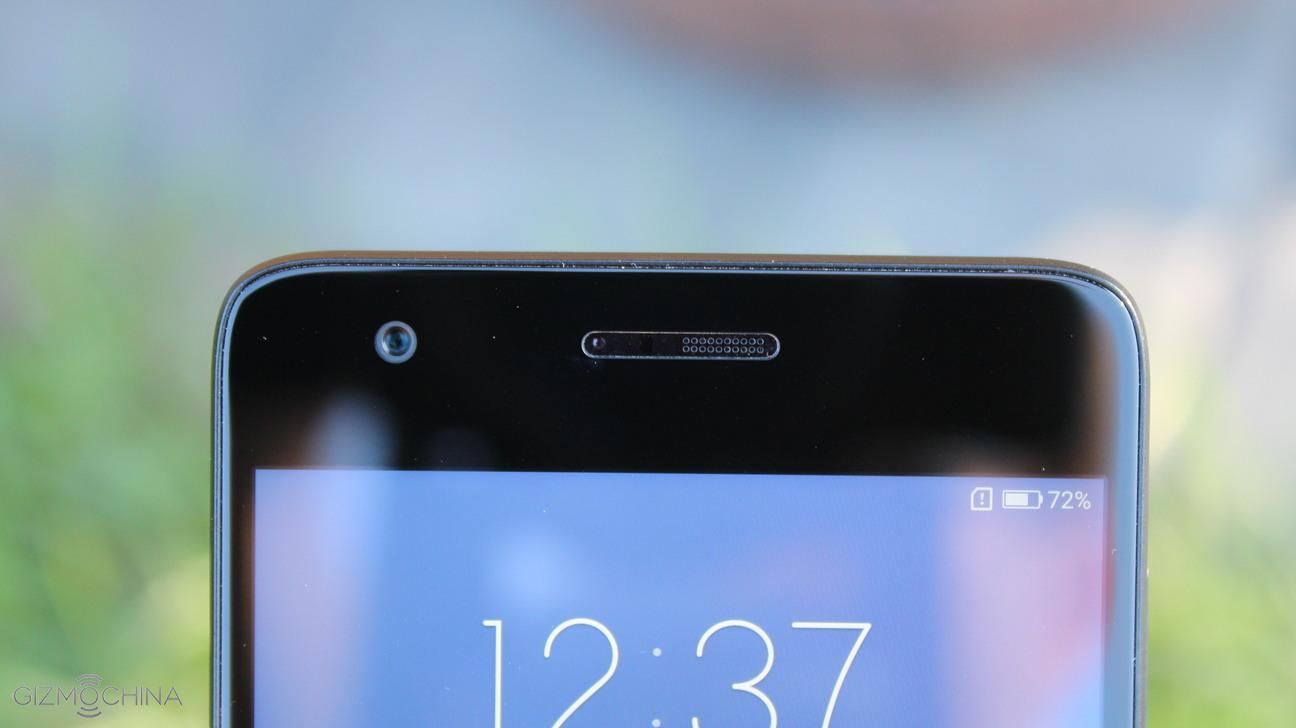
An 8MP shooter is here for selfies along with a notification LED light on the top.
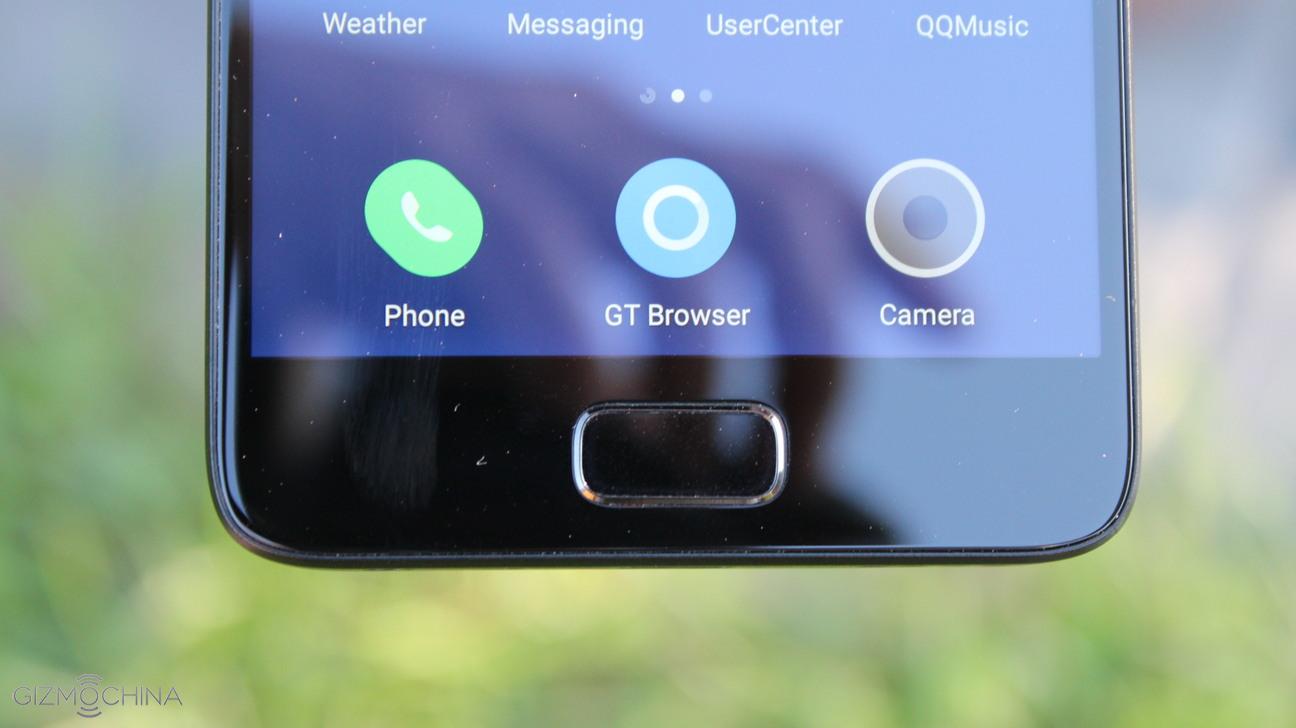
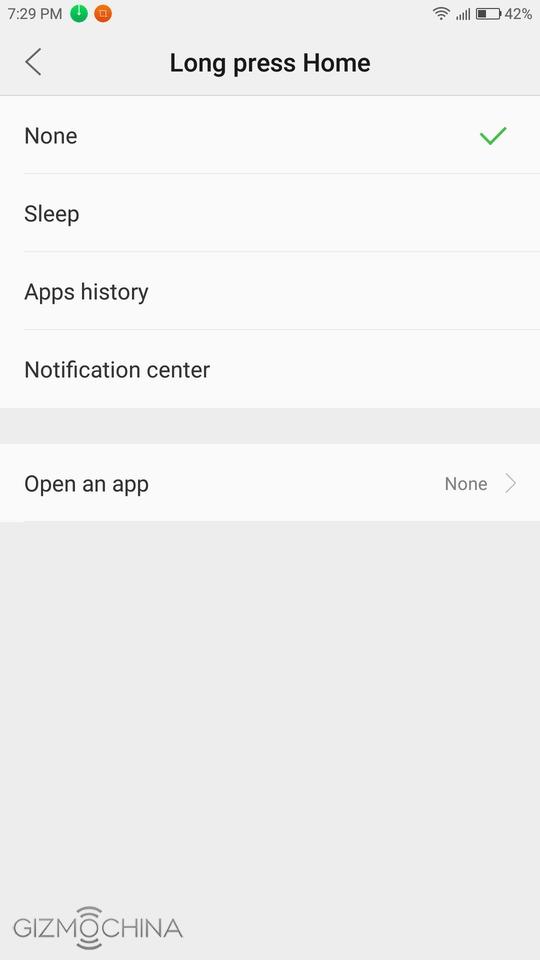
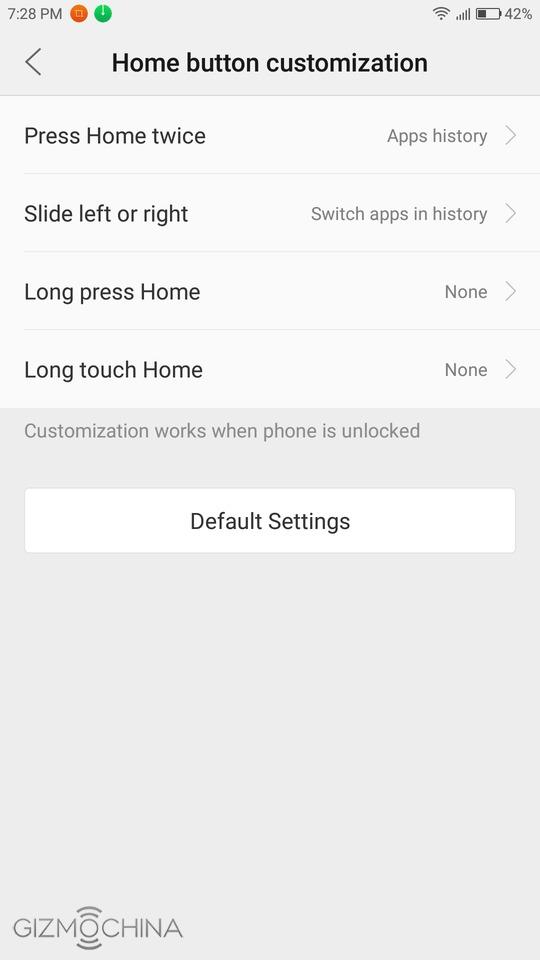
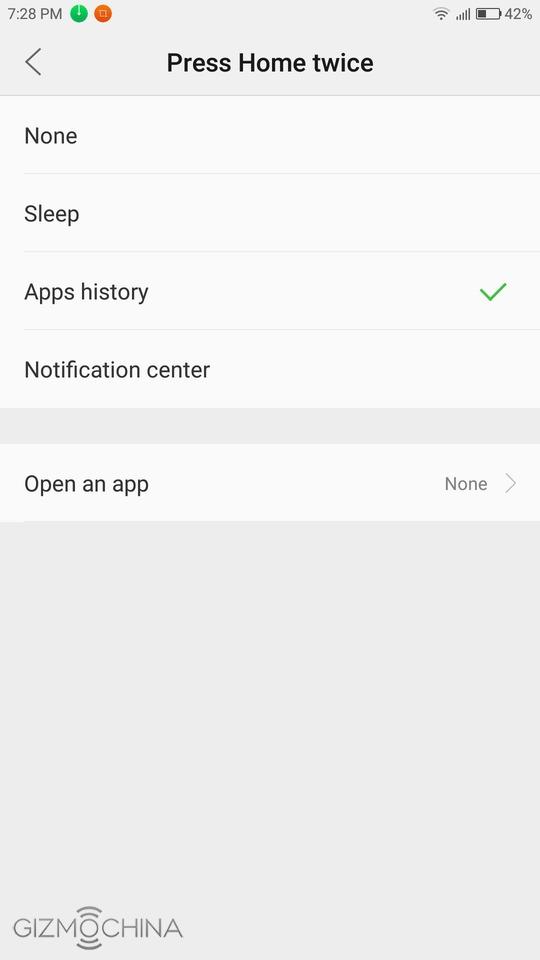
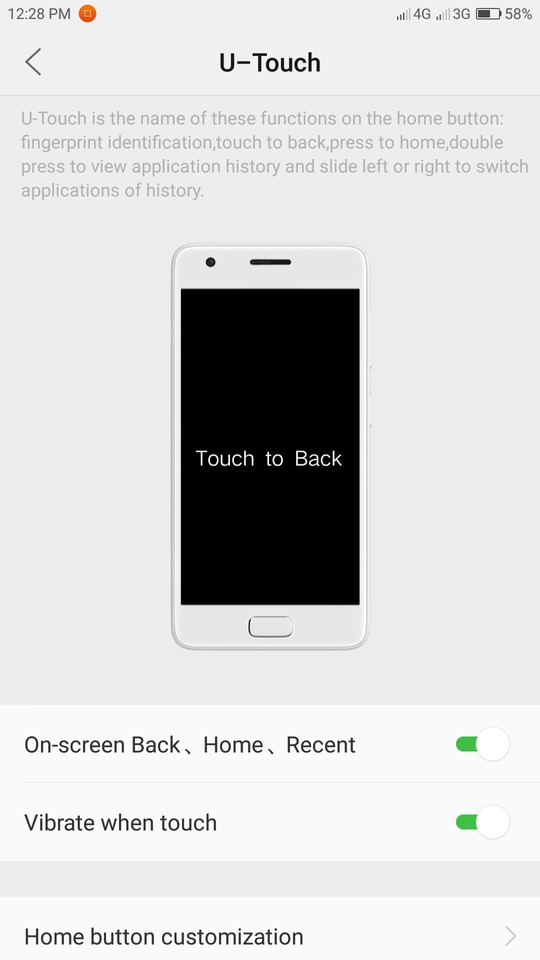
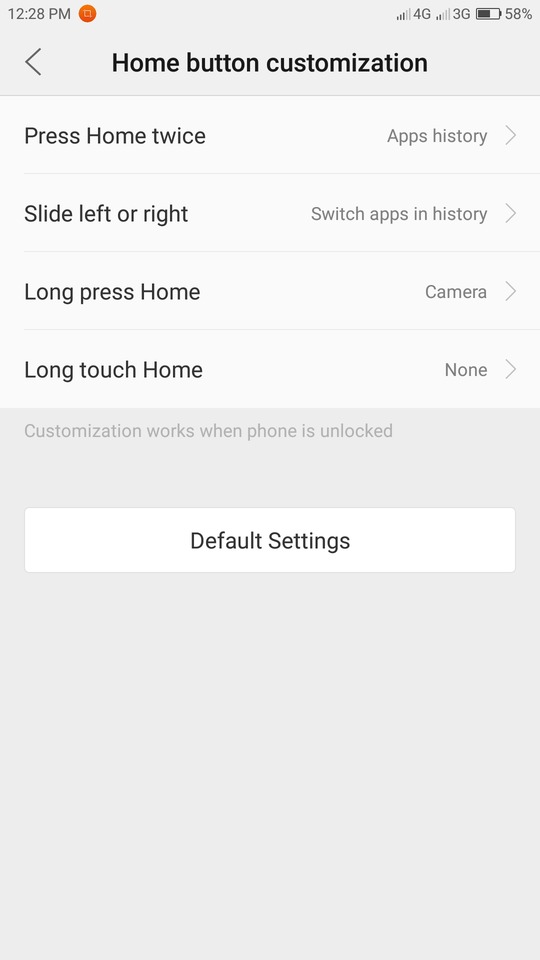
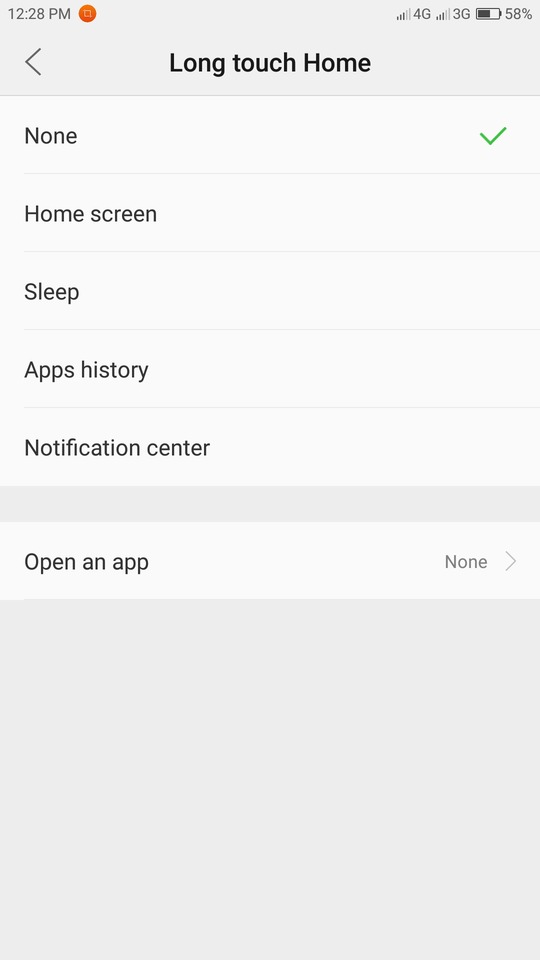
On the bottom, we have just one physical home button but it has tons of features. First of all, you can physically press it and it takes you home. Also, you can tap it and it acts as a back button or swipe it from left to right if you e.g. want to access your recent apps. Also, the button is highly customizable and you can assign different tasks. I have to say that this is one of the best home button implementations I’ve ever seen.
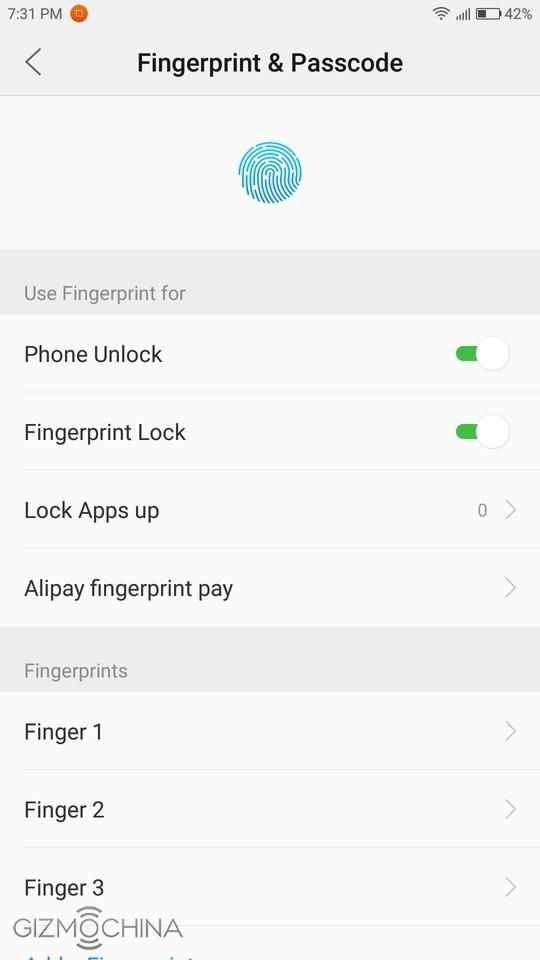
Last but not least we have a fingerprint scanner, which is accurate and it reads a fingerprint straight from the standby mode.
On the back, we have a 13MP shooter with f/2.2 aperture and a single LED flash.
Overall, the phone is well-built, it feels nice in the hand and it sports some flagship-worthy materials in the construction.
ZUK Z2 Review: HARDWARE and PERFORMANCE
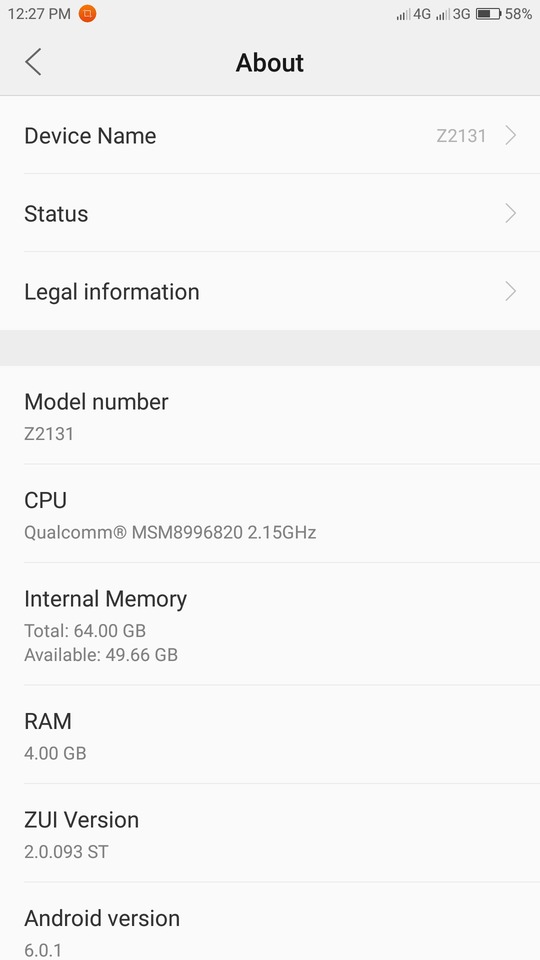
ZUK Z2 still sports some flagship-grade specs. It has a Snapdragon 820 chip, 4GB of RAM and 64GB of on-board storage without the microSD card slot.
As you may have guessed, the phone can handle anything you throw at it without a sweat. All the games ran almost perfectly on the highest graphics. However, the phone does quite warm on the top portion of the device but there are no overheating warnings or anything that could impair the performance.
ZUK Z2 Review: USER INTERFACE
When it comes to the user interface, there are two different versions. The one I reviewed like 8 months ago shipped with the Chinese ROM that had quite a bit of bloatware and no Google services. The one I have ships with the fully de-bloated ZUI rom, that is built on top of Android 6.0.
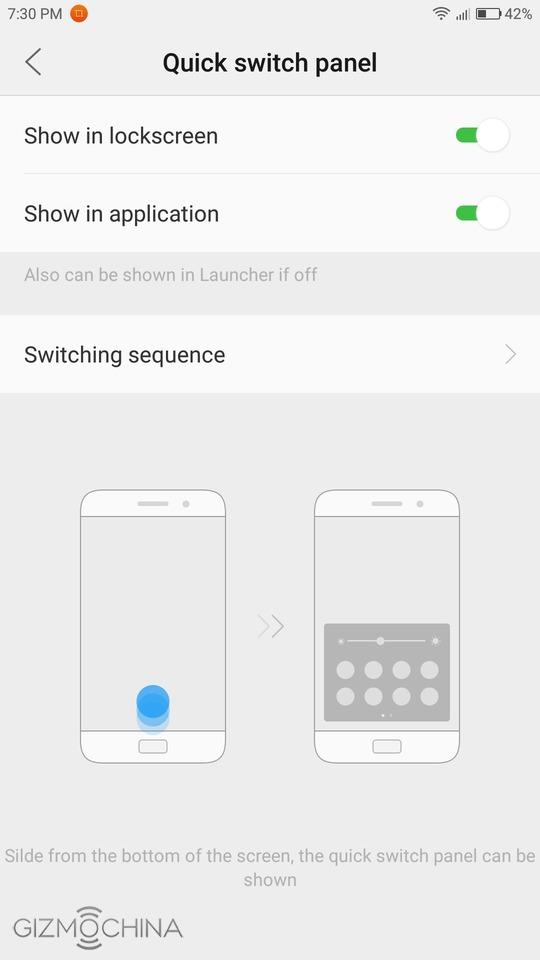
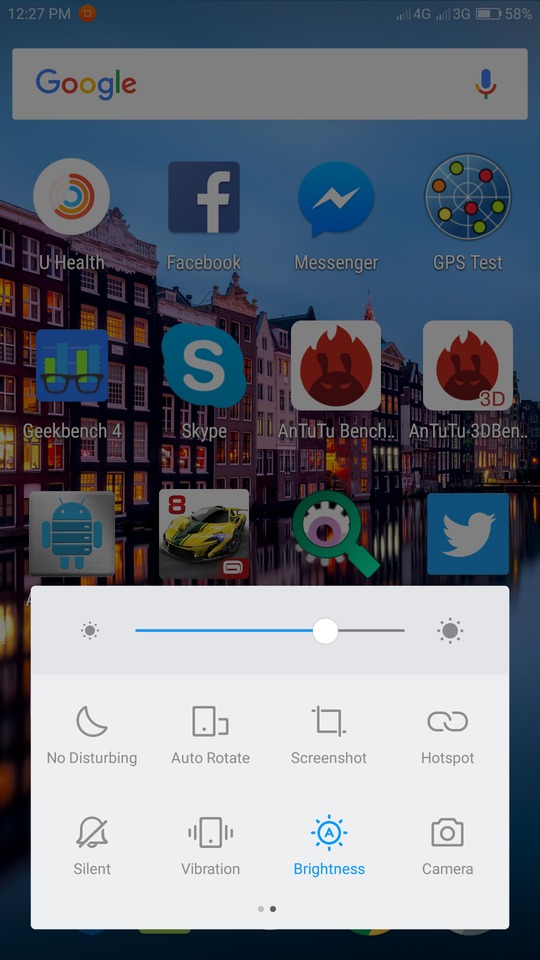
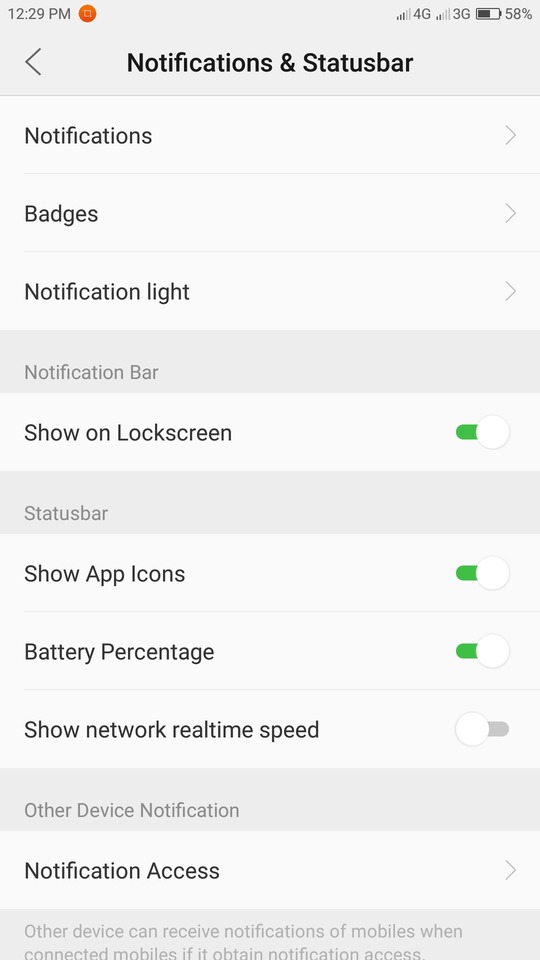
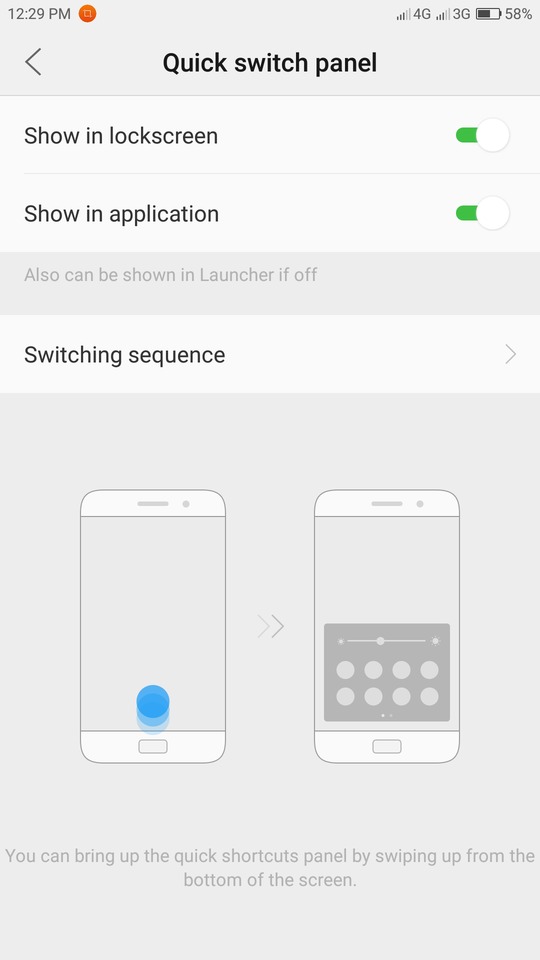
First of all, I love that the UI looks clean and it is fast and fluid. Also, there are some extra features and customization options. Besides the ability to do a lot of stuff just by swiping on the home button, you can swipe from the bottom to open up quick settings toggles, which are highly customizable too.
It would be great to have the Android 7 on this ROM but honestly, I really love it and so far it looks a lot better than the Chinese ROM.
ZUK Z2 Review: CAMERA
When it comes to the camera, we have a few shooting modes but there is no manual mode to take a full control of the images you take. Also, there are some basic settings to play with. In addition, the phone can take pictures very fast, which is probably the most important aspect for most users. Finally, the device triggers HDR mode automatically.
ZUK Z2 Review: IMAGE QUALITY
ZUK Z2 can take some nice looking daylight images with a good amount of detail, accurate looking colors and sharpness.
The camera starts struggling in lower-lit situations as the images have quite a lot of noise and less detail. Still, you can get some usable images out of this phone.
The 4k video looks really good for a $180 phone. However, the footage could have less noise and compression, and the green color of the grass looks oversaturated. See a video review for a video sample.
An 8MP selfie snapper can take some decent looking selfies for social media needs.
Overall, ZUK Z2 does not have a perfect camera but it is definitely one of the better cameras in a $300 phone.
ZUK Z2 Review: CONNECTIVITY
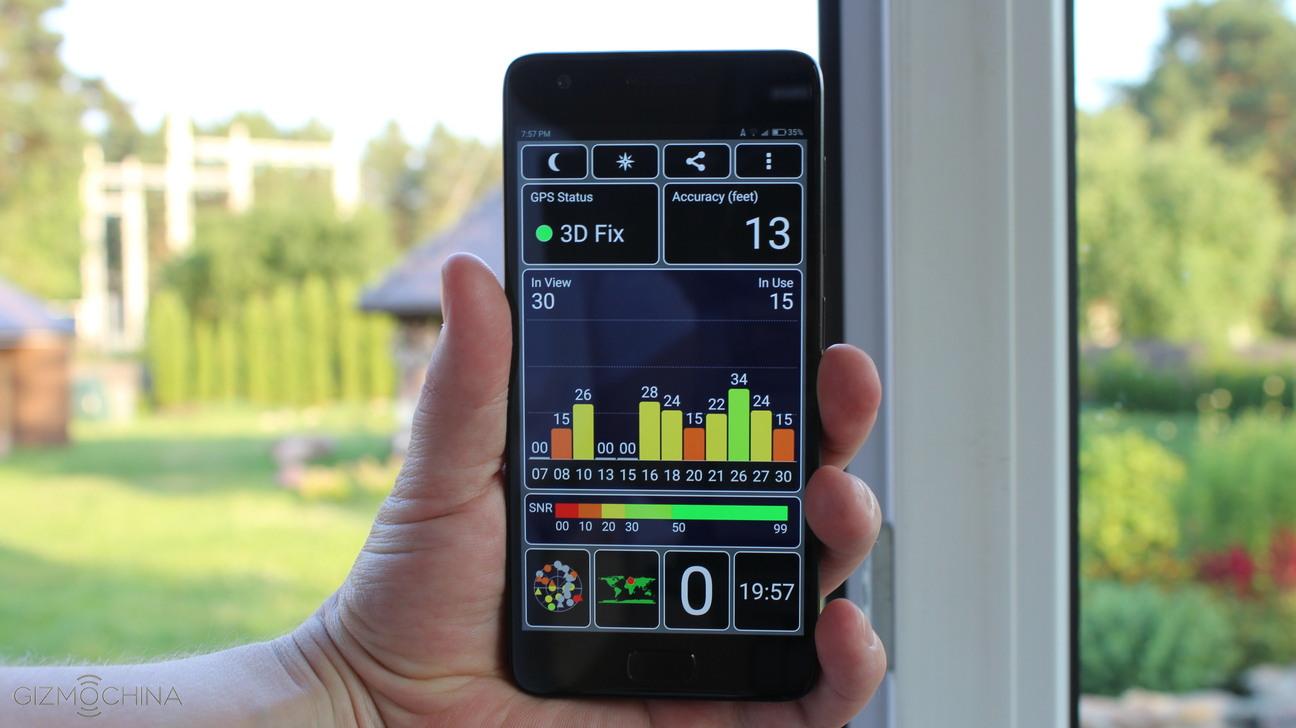
GPS test (indoors)
I didn’t have any connectivity issues with the phone as the signal reception was good and the call quality was decent. Also, the Wifi worked fine and the GPS was accurate.
ZUK Z2 Review: BATTERY LIFE
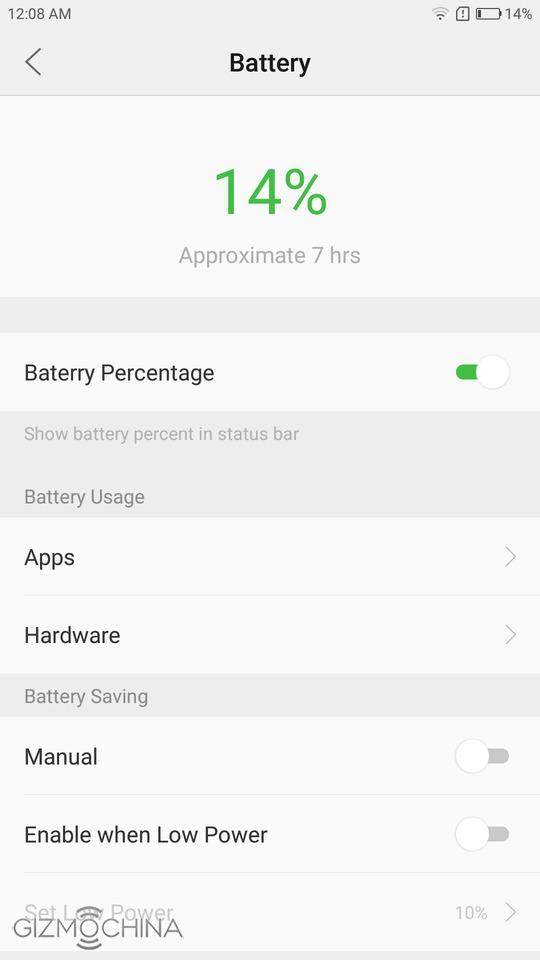
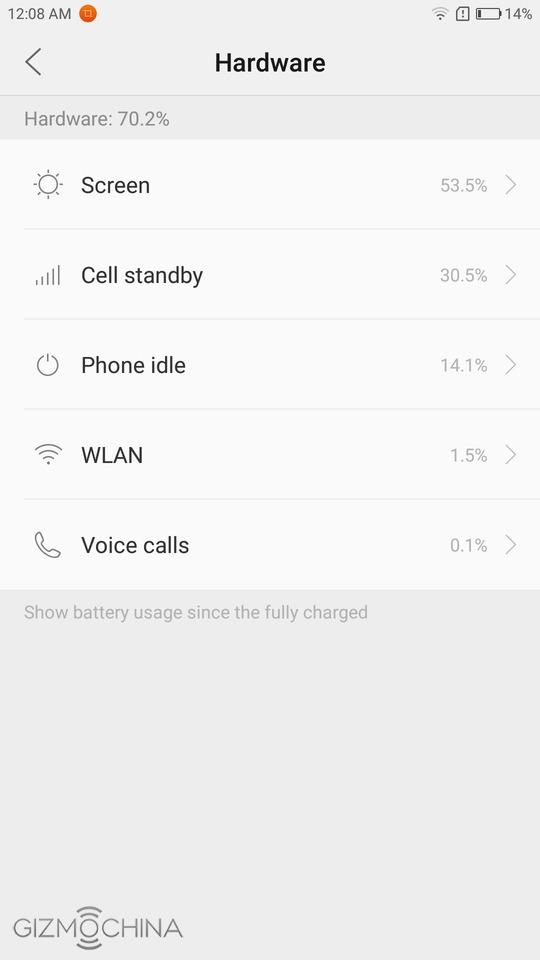
The ZUK Z2 ships with 3500mAh built-in battery and it performs great.
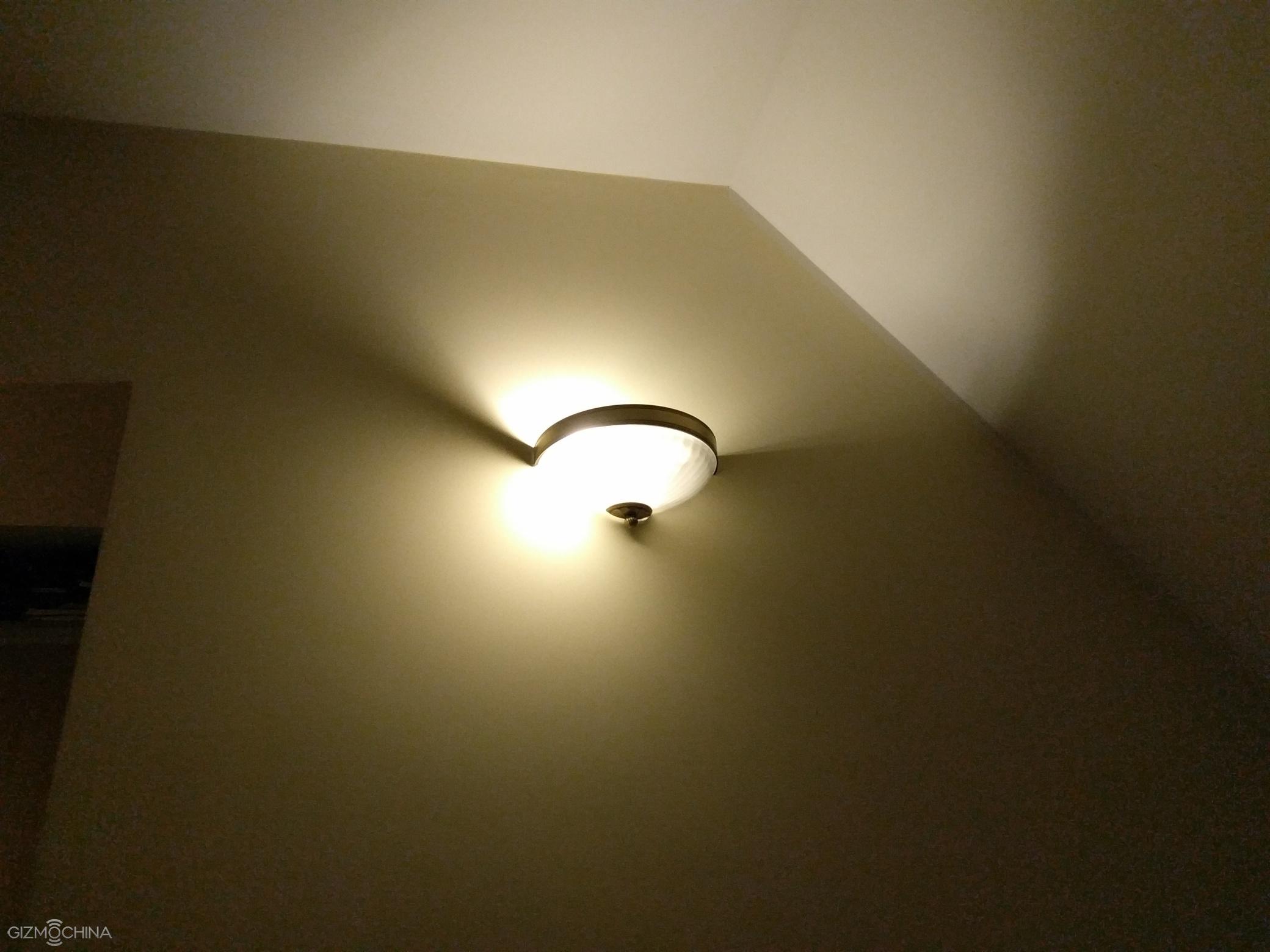
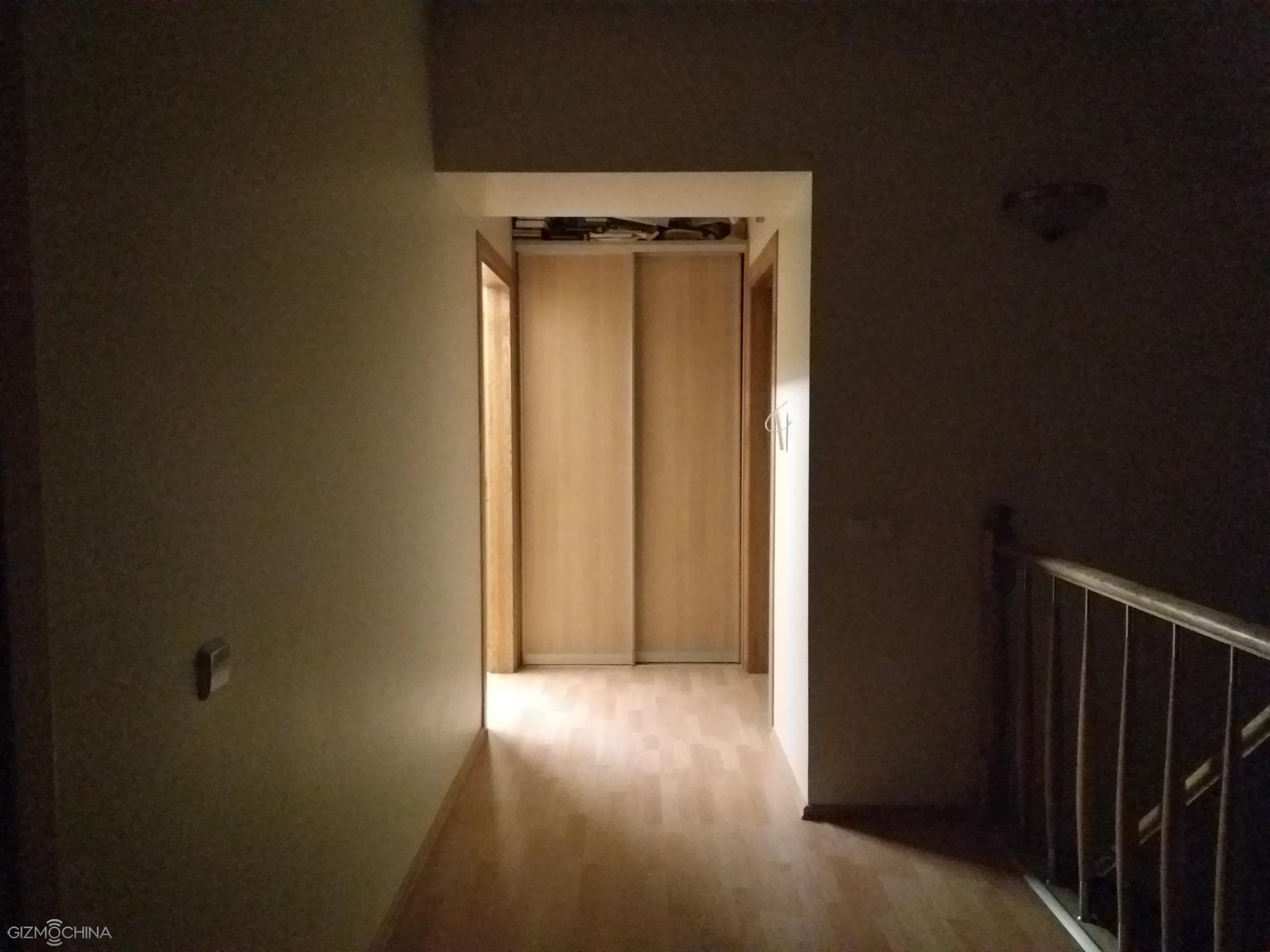
I could constantly get over 5 hours of screen-on time on a mixed use, which involved using the camera, browsing the web, a bit of gaming and so on.
The phone ships with a fast charger and I was able to fully charge the phone in 1 hour and 30 mins.
ZUK Z2 Review: CONCLUSIONS
So, there you have it, ZUK Z2 after the buzz. With the recent price drops, I honestly believe that this is one of the best phones you can buy. Sure, it has a few shortcomings to consider but given the fact that it has really powerful internals, great and compact design, the ZUK Z2 is a fantastic offering for about $180.
These past week must have been pretty hectic for those working for either Huawei or its sub-brand Honor. Both companies scheduled today for the launch of a bunch of new products. While Honor announced the Honor 6A, the Honor Router X1 and Router X1 Plus, the Play Pad 2, and the A2 Smartband earlier today in China, Huawei unveiled the MateBook D, MateBook E, and MateBook X in Berlin a couple of hours ago.
MateBook E
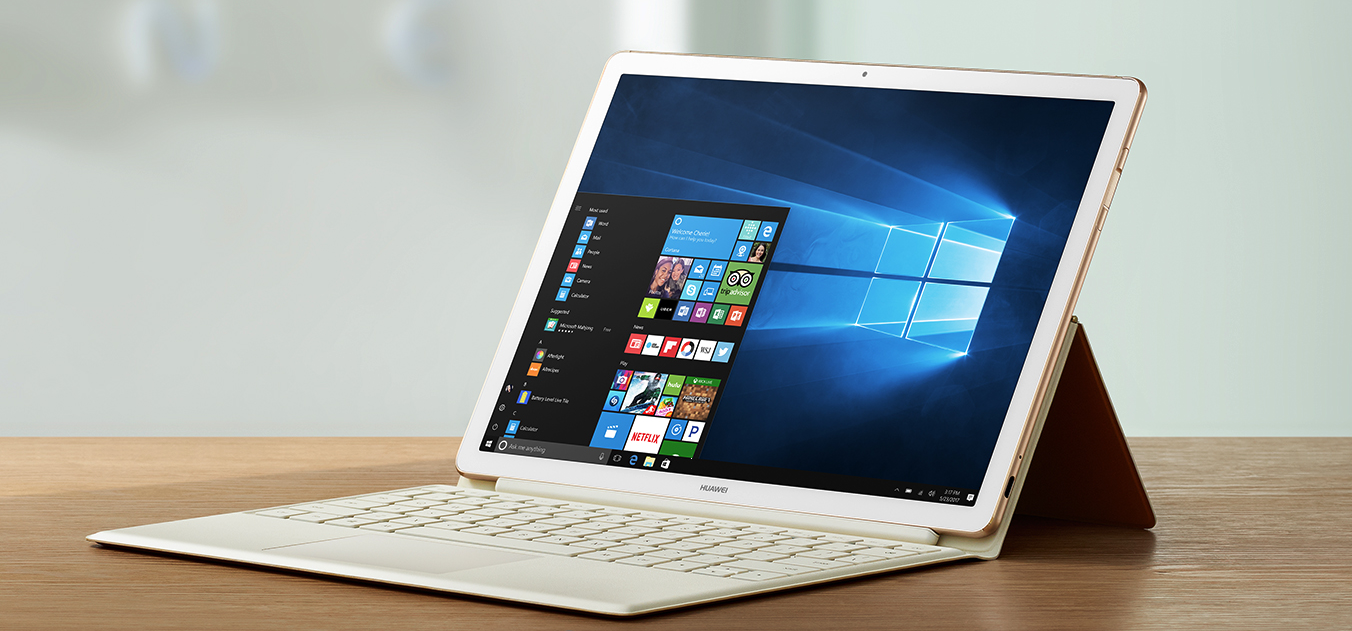
The MateBook E is the real successor to last year’s model. It is the competitor to Microsoft’s Surface Pro and Samsung’s Galaxy Book. The 2-in-1 race just got hotter.
The MateBook E is just 6.9mm thick and has a 12-inch 2K touch-screen display with a 160° viewing angle. There are two versions: one with a 7th Gen Intel Core M3-7Y30 processor and the other will have a Core i5-7Y54 processor. Both will have Intel’s HD Graphics 615. Memory configuration is either 4GB or 8GB, and SSD storage starts at 128GB and maxes out at 512GB.
The MateBook E has a new Folio keyboard with backlight and a hinge design that can be adjusted steplessly up to 160°. Huawei has partnered with Dolby to provide the new Matebook with custom-designed speakers. Dubbed Dolby Audio Premium, Huawei says you should expect cinema-level audio quality when in use.
The MateBook E has a 33.7Wh battery (4430mAh battery) that should last for up to 9 hours when watching a movie. For security, the matebook has a fingerprint scanner with a security chip on the side.
There is no pricing detail yet but the MateBook E will be available in titanium grey and champagne gold. The matebook will come with a keyboard but you can pick up the MatePen which has support for 2048 levels of pressure or throw in a bluetooth mouse
We use cookies on our website to give you the most relevant experience by remembering your preferences and repeat visits. By clicking “Accept”, you consent to the use of ALL the cookies.
This website uses cookies to improve your experience while you navigate through the website. Out of these, the cookies that are categorized as necessary are stored on your browser as they are essential for the working of basic functionalities of the website. We also use third-party cookies that help us analyze and understand how you use this website. These cookies will be stored in your browser only with your consent. You also have the option to opt-out of these cookies. But opting out of some of these cookies may affect your browsing experience.
Necessary cookies are absolutely essential for the website to function properly. This category only includes cookies that ensures basic functionalities and security features of the website. These cookies do not store any personal information.
Any cookies that may not be particularly necessary for the website to function and is used specifically to collect user personal data via analytics, ads, other embedded contents are termed as non-necessary cookies. It is mandatory to procure user consent prior to running these cookies on your website.