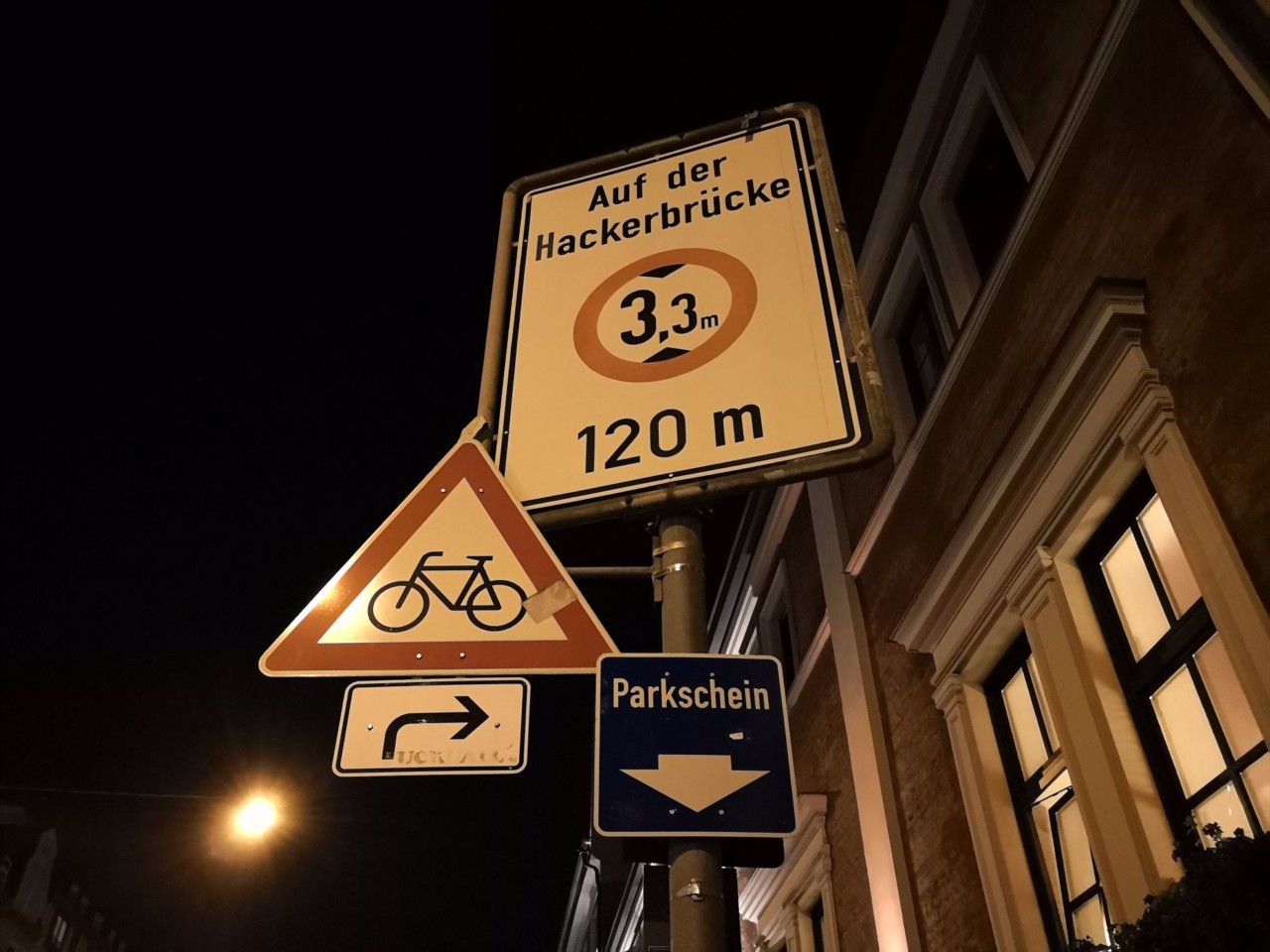
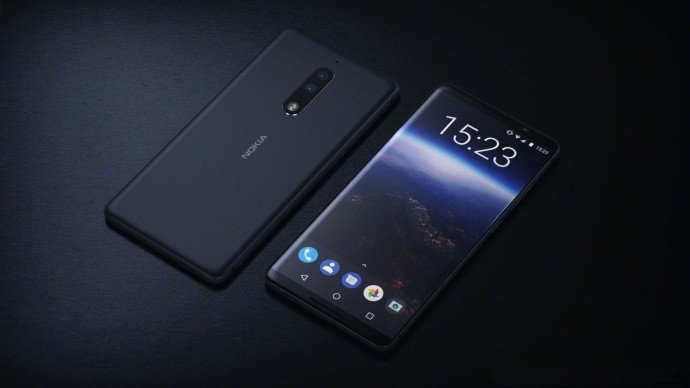
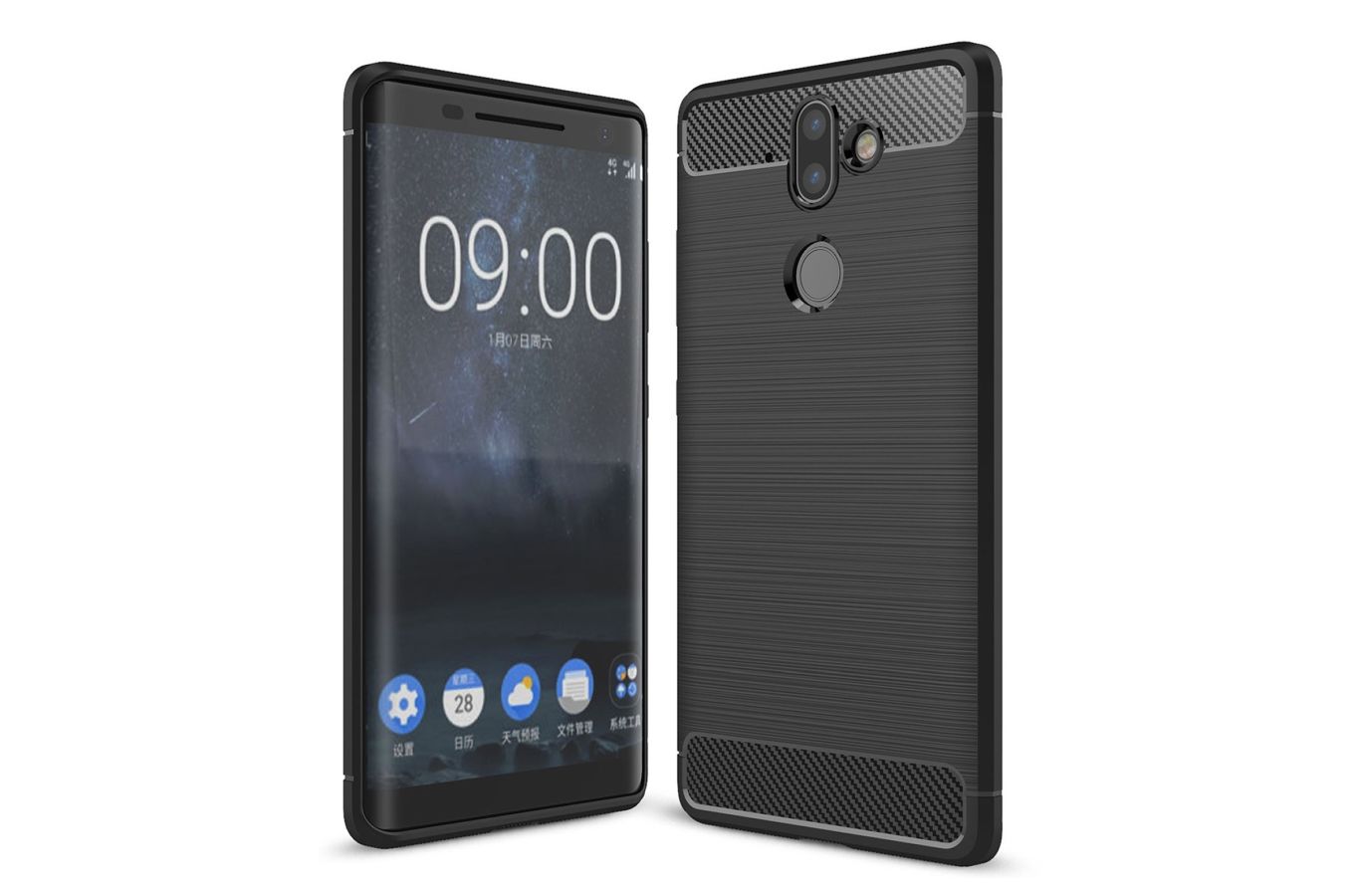
OnePlus has already confirmed through a launch poster that OnePlus 5 would be coming with a dual rear camera system. There is no official information available yet on the camera specifications of the phone, but the Chinese company is now teasing the camera capabilities of OnePlus 5. It has now released some camera samples on its official Twitter and Weibo.
The first image that we have here is available on the Weibo account of OnePlus. The mouth-watering food that we see in the image has plenty of detail and appears rich in color. It appears that it is a zoomed image. Since the image is rich in detail, it seems that the dual rear cameras of OnePlus will support loseless zoom. The image’s depth of the field look shows a bit of bokeh effect.
OnePlus has also released another camera sample on its Twitter account. The image seems to be allegedly shot using the OnePlus 5 smartphone. It showcases the bokeh effect prowess of OnePlus 5’s dual rear camera as the subject appears very clear with a blurry background. The same feature along with 2x optical zoom is dubbed as Portrait Mode on iPhone 7 Plus.
Earlier this week, OnePlus CEO Pete Lau had released a black and white portrait image of a young boy. It was allegedly shot using a OnePlus 5 smartphone. The black and white image suggests that OnePlus 5’s dual rear camera module includes a monochrome sensor and a RGB sensor. The inclusion of a monochrome sensor can capture more light and detail along with a RGB sensor rather than shooting images using only a RGB sensor.
On May 30, OnePlus had teased an image that contained two parts. The left part of the image appears dull whereas the right side of the image appears crisp and clear. It seems that the right part of the image was allegedly shot using OnePlus 5 which indicates that its rear-facing cameras will be able to capture impressive photos in dim light conditions.
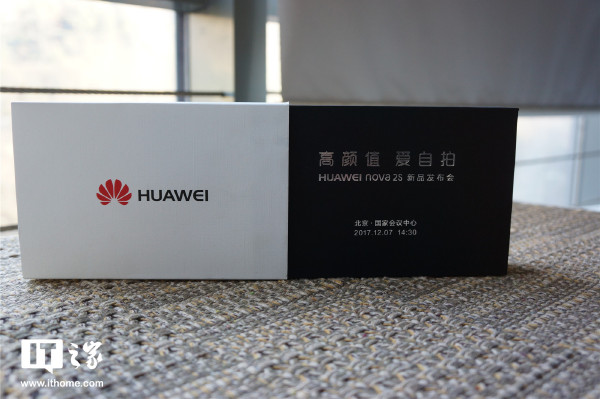
Since the official launch of OnePlus 5 is less than a week away, the company has started sending media invitations of the upcoming unveil event. The media invites more like a press kit that contains what appears to be a kevlar case for OnePlus 5. The case features an elongated horizontal cutout which would is probably meant for the dual camera system of OnePlus 5. According to the media invite, OnePlus 5 would be announced through a launch event in Beijing that will be broadcast across the world.
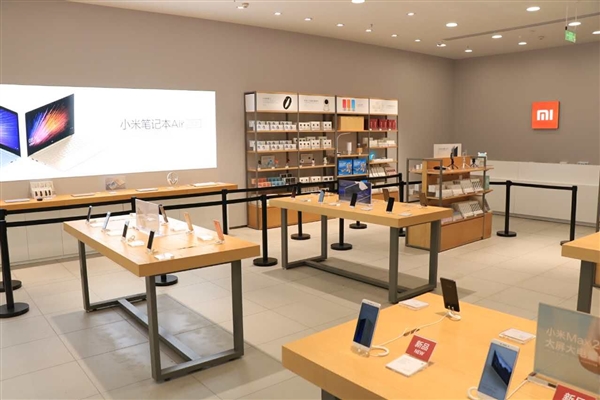
Xiaomi is expanding its business at a steady pace. Now, it has entered Greece as it is soon going to open its first offline store in the country. The Chinese firm has teamed up with a local firm called InfoQuest Technologies to begin its first Mi Home store in Athens
At present, the company is in search of tech consultants for the upcoming store through a job-seeking website Kariera.gr. Xiaomi’s official distributor is currently looking for a full-time saleswoman or salesman, a part-time sales assistant and service support. Ideal candidates who can work Xiaomi’s new store would be someone who loves the products and technology of the company.
The new Xiaomi Mi Home store in Greece will not only sell smartphones, but also other Xiaomi devices such as drones, smart lamps, cooking appliances, bicycles and more. The arrival of Xiaomi in Greece indicates that the Chinese firm will soon expand its business across other European nations. The Mi Home store in Greece is expected to open in October this year.
In May, Xiaomi had held its first event in Mexico and eventually began the sale of Redmi Note 4 and Redmi smartphones. These phones are available both online and offline. Also in May, the Chinese firm also began its first Mi Home store in Bengaluru, India.
The company is looking forward to launch stores in popular metro cities of India such as Delhi, Mumbai, Chennai and Hyderabad. Xiaomi India’s Vice President, Manu Kumar Jain has said that the company aims to build 100 Mi Home stores all over India in the next two years.
There has been an upsurge of flagship smartphones coming with 8GB of RAM on some variants lately. Some erroneously think the Nubia Z17 is the first model to pack such but what is usually not known is that Taiwanese tech giant ASUS launched a flagship device dubbed Zenfone AR at CES 2017. Perhaps, the non-recognition of the ASUS Zenfone AR may be unconnected with the fact that since it was launched at CES, the device is yet to go on sale. Well, the Zenfone AR has now gone on sale in Taiwan and the price may surprise you.

The ASUS Zenfone AR retails for a whopping 24,990 New Taiwan Dollars which is about 5,600 Yuan or $825 USD. We’ll quickly compare it with the Nubia Z17 which equally has an 8GB version. The Nubia Z17’s 8GB RAM version comes with a price tag of 3999 Yuan ($587) even though sales is yet to commence for the topmost model. We expect the OnePlus 5 which also has an 8GB RAM version to sell for even less than the Z17. Mind you, the Zenfone AR is fired up by a Snapdragon 821 chip while the Nubia Z17 gets its juice from the latest Snapdragon 835 chip which is touted to be more efficient and powerful than the SD 821. OnePlus 5 is also coming with a Snapdragon 835 processor.
As for other specification, the Zenfone AR sports a 5.7-inch 2K display and there is also a 6GB RAM version. The smartphone comes in four expandable internal storage versions of 32 GB, 64 GB, 128 GB and 256 GB. The Zenfone AR also features a 3,300mAh battery and has support for dual SIM/ dual Standby. The Zenfone AR is also the world’s first Tango and DayDream ready smartphone. It features a 23MP high-resolution camera with Sony IMX sensor and f/2.0 aperture. The camera comes with features like 4-axis OIS, EIS, RAW photography and dual LED flash. There is also an 8MP selfie camera with f/2.0 aperture and dual-LED real tone flash.
The ASUS model runs on Zen UI 3 based on Android 7.0 Nougat and comes with a USB Type-C port as well as a fingerprint scanner. So, would you buy the Snapdragon 821-powered Zenfone AR for $825? What do you think about the price? Let us know your thought in the comment section.
There are strong indications that Samsung may launch the Galaxy Note 8 at IFA Berlin 2017. Sammobile reports that the tech giant has some chances of launching the successor to the defunct Note 7, as against recent reports that stated otherwise. The flagship Galaxy Note model is expected to debut this year with a better design and more thorough safety checks that would make a hurried launch unlikely. This is obviously to avoid a repeat of the unfortunate issues that bogged the Galaxy Note 7 and led to its total recall.
Even though Samsung is yet to share any detail of the Galaxy Note 8, Sammobile quoted internal sources as saying the tech giant is planning to release the Galaxy Note 8 at the tech conference held annually in Berlin. To buttress their claim, the internal sources gave the point that Samsung had always unveiled a device during IFA and that the Gear S4 which could possibly be the alternative gadget that might be unveiled is unlikely to be ready before the conference. This they attributed to the fact that the development of a Tizen 3.0 wearable has only just started.
Xiaomi has managed to achieve worldwide popularity in a couple of years. Moreover, it had been the smartphone market for several years consecutively. The Chinese firm started with a small team and now that it has become a global brand, it is driven by numerous employees from executives to engineers. In order to provide a better insight on the brand and to let Xiaomi fans who’s working in different departments of the company, Xiaomi has decided to bring into spotlight those people who run the company.

Most Xiaomi fans know Lei Jun, the CEO of the company. It is time to know other people who play integral roles in the company. Li Wanqiang who is employed as the director of eCommerce and marketing with Xiaomi was previously working as the CEO of Kingsoft and has played vital role in developing Kingsoft products like Kingsoft Antivirus, Kingsoft Dictionary and WPS Office.
De Liu is the one who has designed products for Xiaomi’s sub-brand called MiJia. Previously, he was the dean of Department of Industrial Design belonging to Beijing’s University of Science and Technology. Tang Mu is the one who develops routers and VRs for Xiaomi. He is one of the most proficient UI-engineers of the country and has a previous work experience with Tencent.
Liang Feng, the professional web-designer creates amazing interfaces for various Xiaomi products on their websites. Doo Lord is the one who has given birth to Mi Bunny, the symbol of Xiaomi.
Robin Zhu designs the visually attractive interfaces for MIUI and Mi TV. He was previously leading the Microsoft Design Center in Asia. Chen Qiaozhao was also working at Microsoft Design Center, Asia as a UX-designer. For Xiaomi, he is pioneering the MUI design department. Wang Kian, the creative director of MIUI dept. had worked for LG China Design Center in the past. Lastly, Liu Xu Shu is serving as the senior designer for Xiaomi.
Most of the senior executives of Xiaomi have served well-known companies like Microsoft, LG, and Tencent in the past. The reason why Xiaomi is able to produce various kinds of products and deliver quality service is because of its highly experienced staff. It is also because of these people that Xiaomi has become a global brand. With such a power packed team working in the background, we can expect Xiaomi to continue to release topnotch products.
The Meizu E2 budget smartphone was announced in April this year. Now, the Chinese firm has released a special version of the phone called Meizu E2 Transformers Edition. It is a limited edition version that was announced in May, but it is only now that it has been made available for purchase in the home country. This special edition of Meizu E2 has been introduced just ahead of the upcoming launch of the movie “Transformers: The Last Knight.”
Compared to the original Meizu E2, its Transformers Edition appears has a distinctive appeal. It is matte black in color and it comes with an enhanced design. The Autobot logo as well as the text “Transformers” is present on the backside of the phone. The Meizu branding can be seen above the logo and the rear camera is present at the top-left corner along with its dual-LED flash.
The frontside of the Meizu E2 Transformers Edition is not different from the original handset. The top bezel houses the selfie camera and the bottom bezel has the Home button under which the fingerprint scanner is embedded. After turning on the device, users will know that Meizu is providing this special phone with custom theme which brings the black and blue colored icons in the notifications shade.
Even the package of the Meizu E2 Transformers Edition is different. The limited edition package is black in color and the frontside of it has an image of Optimus Prime. Once the package is opened, buyers are greeted with an Autobot logo. The package has all the regular accessories and it also includes a USB flash drive that appears like Autobot.
The hardware specifications of the Meizu E2 Transformers Edition are identical as the original model. It comes with a 5.5-inch display that churns out a full HD resolution of 1,920 x 1,080 pixels. It Helio P20 chipset from MediaTek under the hood along with 4 GB of RAM. It comes with a native storage of 64 GB.
The rear side of the phone features a 13-megapixel snapper and its front-facing camera is of 5-megapixel. It is a 4G phone that is packed with usual connectivity features like Wi-Fi and Bluetooth. It includes a 3,400mAh battery.
The Meizu E2 Transformers Edition is loaded with YunOS and is available in China with a pricing of 1,799 Yuan (`$264). The original Meizu E2 is selling for 1,699 Yuan (~$250).
Mijia has a new product launching tomorrow. A teaser poster released earlier, suggested the product is an ice box. However, two additional teaser posters released today make us think its actually a mini refrigerator.
The first of the new poster images shows a woman reclining on a sofa with the product beside her. A berry-like fruit is in each of the three compartments of the item. A rough translation of the text in the image says “fresh litchi (lychee) is my favorite”. Litchi is the fruit of a tropical tree native to Guandong and Fujian provinces of China. It also grows in other countries such as India Thailand and India.
Since this teaser mentions keeping the “freshness” of the fruit and the very first teaser shows ice cubes in the compartments, it probably is a mini refrigerator.
Not too long after we reported that the ZUK Edge was being given a lifeline in form of Meizu’s Flyme 6 OS, another ailing model has got a similar treatment. Surprisingly, it is another Lenovo model, this time around the Moto models. Meizu has revealed that its developers have concluded works on a Flyme 6 third party ROM that is compatible with the Moto X Style, Moto X Pro which isthe international version of the Nexus 6,. Other compatible models include the Moto X Force, and Moto X 2014 (second gen Moto X).
Meizu only last month hinted that it would be making its Flyme 6 OS available for use on third party smartphones with the OnePlus 3T, ZUK Z2, Nexus 6P and a few others joining the early birds. Although Moto phones come with their own custom UI, the features on the Moto UI isn’t up to that on the Flyme OS. The Flyme OS is outed as one of the best custom ROM around.
On its part, the Flyme 6 comes with a number of cool features which includes a new search feature which allows users to search for answers on the internet via their phone’s camera. All that is needed is to snap the photo of the problem or question and then it gets uploaded up into the cloud (Meizu’s database) automatically. The OS also lets users edit the theme onboard in order to personalize them and the videos in the gallery can be edited and filters added. To learn how to flash the custom Flyme ROM on the supported Moto models, head over to the Flyme forum from the following source link.
OnePlus has always been known for its innovative flagships right from the OnePlus 1, which all surprisingly come cheaper than their contemporaries. That was what we were expecting on the OnePlus 5 but the disappointment in the design continues to build up. The design of the OP5 is again enmeshed in controversy as a couple of leaked protective case has highlighted the similarity between the OnePlus 5 and the recently launched OPPO R11.
The images show the OPPO R11 encased inside the OnePlus 5 protective case and surprisingly, it fits perfectly. All the ports, as well as the power and volume buttons, are rightly positioned where there are cutouts. The dual rear camera and LED flash are also well suited on the casing. In addition, both devices seem to have the same size which would then mean that the OnePlus 5 will come with a 5.5-inch display size.
So, apart from looking like the iPhone 7 Plus, the OnePlus 5 also has a look-alike in the OPPO R11, Despite the similar design, though, the OP5 has a lot of features and hardware which perhaps places it above both models. The OnePlus 5 is coming with the latest power chip in town and would have a massive 8GB RAM on one of its versions. The OnePlus flagship has also been revealed to feature a super-fast UFS 2.1 flash memory.
Meanwhile, reservation for the OnePlus 5 is still going on at JD.com and presently, the figures are over 160,000 presently. The OP5 is expected to go official on the 21st of July in a news conference holding in China.
Google doesn’t make public the number of phones it has sold. The income from sales is usually bundled under other revenues. Notwithstanding, a Play Store data might have given us a rough estimate of the number of Pixel phones sold.
The number of Pixel units sold was gotten from the number of installs from a Play Store app, in this case the Pixel Launcher. The Pixel Launcher is an exclusive app for the Pixel phones, so an install count provides a rough estimate of devices sold.
There is however a clause with installation number count on play Store. The figures are usually listed as milestones like 100,000 – 500,000 and 1,000,000 – 5,000,000. So how do we know the app install count isn’t closer to 5 million rather than 1 million?
That is because it just crossed into that range, plus AppBrain, a third party tracking site still lists the app install counts as 500,000. So even if it has surpassed the 1 million mark, it is probably only by a couple of thousands or ten thousands.
You might also wonder why we are using the Pixel Launcher since it comes by default with the phones. The app install count also includes apps pre-installed with the phone. So when you check the app install count for a “not-so-useful” app on Play Store and you see a very high figure, that app probably comes pre-loaded on a lot of phones. And the count is only once per device irrespective of the number of times you wipe the phone and reinstall or update the app.
If you are a smartphone enthusiast, you’d agree to the fact that, ZTE Nubia Z17 and Xiaomi Mi 6 are undoubtedly two of the best devices to come out of China at the moment. Both, the Z17 and the Mi 6 are the flagship devices of the respective brands, announced over the last couple of months, and features the best-in-class RAM and processors.
Of course, if you are out in the market looking for a high-end flagship smartphone, it’s a huge dilemma as to whether you should opt for the one from ZTE or Xiaomi. Here in this post, we will help you select one of these two phones depending on your requirement, usage, and budget.
ZTE Nubia Z17 v/s Xiaomi Mi 6
Design & Display
Talking about the design, both these phones, as expected, sport top-notch slim design that’s elegant on the eyes and feels great in the hands. Talking about the dimensions of these phones, the Z17 measures 152.6 x 72.4 x 7.6 mm whereas the Mi 6 measures145.2 x 70.5 x 7.5 mm. As you must have already noticed, both these devices are almost equally thin however, the Z17 is a meager .1 mm thicker to the Mi 6 measuring 7.6 mm. In terms of weight, the Mi 6 is slightly lighter at 168 grams to its counterpart – Z17 that weighs 173 grams.
Display:
Both the phones come with IPS LCD capacitive touchscreen with Corning Gorilla Glass display, however the Nubia Z17 sports a slightly bigger screen that’s – 1080p 5.5″ screen with ~74.7% body to screen ratio and ~403 PPI pixel density. On the other hand the Mi 6 1080p 5.15″ screen with ~71.4% body to screen ratio and ~428 PPI pixel density.
Color Options:
The Mi 6 comes in four body color options namely Black, Blue, White, and Ceramic Black; whereas the Z17 comes in five color options to choose from i.e. Obsidian Black, Solar Gold, Black Gold, Flame Red, & Aurora Blue. Also, as we had reported earlier, Xiaomi has axed the 3.5 mm audio jack in the Mi 6, and now ZTE has decided to go with the same decision as well.
Winner: It’s a tie between both these devices considering both the companies have chosen their own design language which is appealing to its own set of users.
Hardware Specifications
Processor & Storage:
Both, the Z17 and Mi 6 are powered by Qualcomm’s newest and fastest Snapdragon 835 processor and interestingly enough, these are the only two devices to come out of China that are powered by this chipset. It has octa-core chipset which includes four 2.35 GHz Kryo & another four 1.9 GHz Kryo processors coupled with Adreno 540 GPU.
Coming to the storage and RAM in these devices, the Z17 comes in two variants i.e. 64/128 GB ROM + 6 GB RAM and 128 GB ROM + 8 GB RAM. It is important to note that the Z17 is among only a handful devices to feature 8 GB RAM on board. It makes the Z17 a powerhouse in terms of processing speed and capabilities. On the other hand, Mi 6 comes with 64/128 GB of internal storage option with 6 GB RAM.
Both these devices do not support storage expansion slots so it’s important for you to decide which variant to go for depending on your future storage needs.
Battery:
Despite having a larger 5.5″ screen and increased RAM on the Z17, it has a slightly smaller battery of 3200 mAh whereas the Mi 6 comes with a 3350 mAh non-removable battery. So if you are someone who’s a power user and remain on the go most of the time, we would recommend you the Mi 6 over the Z17.
Winner:
After reading the above paragraphs, it would be obvious to most of you that if you’re a power user but can manage with the slightly smaller battery then you should be undoubtedly going for the ZTE’s flagship of the year.
Camera
Another important yet overlooked aspect for all the smartphone buyer is the Camera capability. Thankfully, both of these phones come with dual-lens. The Z17 has a 12 MP lens with f/1.8 and another 23 MP lens with f/2.0 and face detection, auto-focus, 2x optical zoom feature. On the other hand, both the lens for the primary rear camera on the Mi 6 is loaded with 12 MP lens with f/1.8, and f/2.6 aperture. Needless to mention, both these smartphone cameras have the common features namely geo-tagging pics, touch focus, face detection, click on smile, and so on.
For snapping selfies, the Z17 has a 16 MP lens while its counterpart Mi 6 has only a 8 MP sensor.
Being the flagship devices of their respective brands, both, the Nubia Z17 and Mi 6 comes with most of the features seen on high-end smartphones these days including support for 4G LTE, Wi-Fi, Bluetooth, NFC, a fingerprint sensor, etc.
In terms of OS, both of them are loaded with Android’s latest Nougat v7.1.1 operating system out of the box with the brand’s proprietary UI on top of it namely Nubia UI 5.0 in the Z17 and MIUI 8.0 in the Mi 6.
Winner: Tie
Availability & Pricing
Both the phones have been launched in the Chinese market already and the 64 GB and 128 GB versions of Mi 6 are priced at 2,499 Yuan (about $367) and 2,899 Yuan (about $425) in China. On the contrary, the ZTE Nubia Z17 6 GB/64 GB version, 6 GB/128 GB, and 8 GB/128 GB versions cost 2,799 Yuan (~410 USD), 3,399 Yuan (~500 USD), and 3,999 Yuan (~590 USD) respectively.
Winner:
If you are looking for something that would make a smaller hole in your pockets yet give you the flagship experience than definitely go for the Xiaomi‘s Mi 6. However, if budget is not a constraint for you, the Nubia Z17 is definitely the winner considering its design, features, and specifications.
If you want to compare the full specifications of the Xiaomi Mi 6 vs Nubia Z17, check out this link.
Last year, MediaTek announced the Helio X30 as its first 10nm chip. Almost seven months later and we are yet to see a phone powered by the chip.
The Helio X30 is supposed to replace the Helio X20, offering up to 35% increase in performance and a 50% decrease in power consumption. It will also have a better GPU performance as it has ditched the Mali GPU for a PowerVr 7XTP-MT4.
When it was first announced, there were a number of manufacturers said to have signed up for the chip. OPPO, Vivo, Meizu, Xiaomi and LeEco are the big names while smaller companies such as Vernee, Ulefone and Doogee were also mentioned. Of the big names, only Meizu is still associated with the processor and it is expected to power its Pro 7 flagship next month. The others have moved to Qualcomm chips or settled for the older Helio chips.
The smaller companies like Ulefone, Vernee and Doogee have it tough as they rely heavily on MediaTek for their chipsets. Vernee for instance announced their flagship phone, the Apollo 2 at MWC 2017 and scheduled it to launch in May. We are half way through June and nothing has been heard about the phone. These manufacturers will have no choice other than to settle for older processors like the Helio X20 or the more recent Helio X27.
We have what is said to be the real render of the OnePlus 5 flagship coming right from a Brazilian blog, this time capturing the entire device. Recall that Android Police leaked what could be termed the first real photo of the upcoming flagship last week but the photo only showed the top half of the device. But in this case, we are shown the entire device revealing both the front and rear views.
From the photo, the OnePlus 5’s display will likely be 5.5 inches in size and as earlier captured in leaks, the display will be a Full HD display. The full image also affords us the opportunity to see what the fingerprint sensor looks like. The sensor looks rather large despite it having an oval shape. We would have concluded this was an iPhone 7 Plus renamed OnePlus 3 if it had been round. The renders also give us a glimpse of how thin the OP5 will be.
Apart from the fingerprint sensor on this bottom half which we are seeing for the first time, all other features of the OP5 have already been seen in previously leaked photos. Almost all the specs have been confirmed such as a Snapdragon 835 chip, 6GB RAM and 8GB RAM on another version, a 3,300mAh battery with DASH charge technology and 20MP + 16MP rear dual cameras. The OnePlus flagship is said to come with a Bluetooth 5.0 which also featured on the Galaxy S8 and UFS 2.1 flash storage.
Since the beginning of the year, Meizu has released multiple phones for the entry level and mid-range category but not a single flagship device. That is about to change with the Pro 7 that has been making rounds lately. Although it will arrive late to the party, coming after Xiaomi’s Mi 6, Nubia’s Z17, and even the OnePlus 5, it has managed to stir up a bit of excitement thanks to its rumored secondary display.
There are a bunch of phones with secondary displays. There is the YotaPhone 1 and 2, the LG V10 and V20, and the HTC U Ultra. However, Meizu’s design stands out. Unlike the HTC U Ultra and LG V series that have their secondary display right above the main one, Meizu has its own at the back.
The second display is said to be an e-ink variety like that of the YotaPhone but only occupies a small area. It will show notifications, weather information and other important info.
We have seen renders of the phone and leaked images of the chassis. Today, we get to see a real life image leaked online by Weibo user @Fotoball. The image shows only the back, giving us a glimpse at the secondary display in action. We can also see the dual rear cameras and the LED flash positioned right above it.
Meizu Pro 7 is now enjoying the front seat in the media as more and more leaks of the device emerge. Meizu is known for its quality phones and the Pro 7 seems set to take the bar even higher if the leaks we are getting are anything to go by. Recently, a couple of leaked renders of the Pro 7 surfaced, suggesting that the device will not only have a front display but will also feature a secondary display.
Another real live image of the Pro 7 which shows the design has appeared in a new leak. The leaked photo shows the rear cover of the device where the secondary display will sit. The rear casing is captured in two images showing the external and internal view of the device. The secondary display will be at the left corner and its function may be to display time and date, reminders, WeChat message notification and others. The display may likely be made from e-ink which would make it less energy consuming.
Despite the innovative design, we are still at a loss as to why a smartphone will come packing a rear display but then, there may be more to it than we know presently. Apart from the secondary display, the Meizu Pro 7 is also expected to come with an innovative design which includes an ultra-thin frame and Meizu’s mBack. The device is also tipped as packing a MediaTek Helio X30 chip, a 5.2-inch 1080p display up front and a dual Sony IMX386 + IMX286 dual camera etc.
A leaked render of the Google Pixel 2 has smartphone has surfaced to reveal what to expect from it. Samsung has the impressed the world with the full-screen design that it introduced on Galaxy S8 and Galaxy S8+. The upcoming smartphones like Galaxy Note 8 and iPhone 8 are both expected to come with screens that will be surrounded by super-slim bezels around the four sides. Both the phablets are also expected to come with dual rear cameras. Hence, in order to rival with the Note 8 and iPhone 8, the upcoming Google Pixel 2 should come with full-screen design and dual rear camera feature. These features are available on the newly leaked render of the Google Pixel 2.
The Google Pixel 2 and Pixel XL 2 smartphones are slated to get announced in October this year. The leaked render that we have here cannot be confirmed as a real thing. It appears more like a creation of someone who wanted to add full-screen display and dual camera feature without bringing major changes to the design of the original Google Pixel phones.
As it can be seen in the above image, the Pixel 2 appears quite similar to the original Pixel smartphone. The most obvious change that can be noticed is that the phone has super-slim bezels on the left and right sides of the screen. The upper and lower bezels appear thick. The upper bezel houses a selfie camera.
The top portion rear side of the Pixel 2 shows the horizontally arranged dual camera feature that is coupled with a LED flash. There is no way to confirm yet whether Google will introduce twin rear camera feature on the upcoming Pixel 2 smartphones.
Some rumors have claimed that the Pixel 2 phones won’t be featuring the standard 3.5mm audio jack. However, the audio jack can be seen at bottom edge of the phone which appears to be a more convenient placement. The original Pixel phones have the audio port at the top edge. The bottom side of the phone also feature a USB Type-C port. The right side of the phone has a Power key and a volume controller whereas the left side has a SIM slot.
A few days ago we reported seeing a Lenovo XT1902-3 powered by the Helio X20 chip on Geekbench. We strongly believe it is the Moto M2 based on the configuration. A new Moto XT1902-2 seen getting WiFi certified may just be the second variant of the phone.
The Moto XT1902-2 was seen listed in a document from the WiFi Alliance. It runs Android 7.1.1 and has a MT6757CH a.k.a Helio P20 processor. Since the model numbers are almost identical, it shows that one is a variant of the other.
Last year when the Moto M was released, it came in two versions. The China version had a Helio P10 chip and the Indian variant featured a Helio P15 processor. It is not surprising that Lenovo/Motorola is following the same pattern this year for the Moto M2.
Apple HomePod, Google Home and Amazon Echo are some of the products that indicate that more and more companies are working on releasing smart home products. The Voice and Music division of Qualcomm has launched a couple of audio products at a developer conference in China that is expected to bring more features and improvements to audio devices and smart home products.
Qualcomm has announced a new high-end flash chip named CSRA68100 for wireless speakers and headphones. It has also launched a range of Bluetooth chips that belong to QCC3XXX family for low and mid-tier devices. For wired connections, Qualcomm has launched WHS9420 and WHS9410 chipsets that will work on USB Type-C enabled devices. It has also unveiled DDFA class-D amplifier that can be used with high-end speakers. To provide more power to the recent smart home speakers, the U.S. based chipmaker has introduced its smart audio platform that is driven by its Snapdragon technologies.
The CSRA68100 chip and QCC3XXX family chips are enabled with Bluetooth 5.0. These chips also support aptX codec from Qualcomm. It will be able to deliver the same sound quality even if the user is using a supported product based on older Bluetooth version. Its DSP capabilities are four times better than the predecessor CSR8675 chip. It carries support for voice control as it offers 24-bit 192 KHz codec through inputs and outputs. Its other features include NFC support, capacitive touch controller, and inbuilt power management features.
The QCC3XXX is an entry-level chip and does not come with most of the features that are mentioned above. However, its built to provide high-end features on lowly priced devices. The new range include 8 chipsets, out of which three are meant for Bluetooth speakers and the other five are built for different headsets. The support features include aptX codec, Bluetooth 5.0, ambient noise cancellation and TrueWireless tech from Qualcomm.
Newer devices allow audio support through USB Type-C. Some of these devices do not even feature the standard 3.4mm audio port. The WHS9420 and 9410 chipsets are built for catering earphones and other USB-Type C enabled devices that receive audio support from smartphones. The Direct Digital Feedback Amplifier (DDFA) has a lower power class-D design that will let original equipment manufacturers to configure output transistors for different power points on wide range of products like portables, home theater soundbars as well as high-end headphones.
The new Smart Audio Platform that is based on Snapdragon 425 and Snapdragon 212 supports Linux and Android. It has been developed to provide stellar audio experience by removing modem and camera capabilities. Even display and graphics capabilities have ben reduce, but it continues to feature Bluetooth and Wi-Fi support.
It can do more than a regular audio SoC because it is equipped with quad cores of Cortex A53 or A7, Hexagon DSP capabilities and All-Ways Aware technology as an optional feature. It supports numerous apps, voice recognition, 32-bit 192 KHz audio streaming, VoIP, digital assistants and biometric recognition through voice. It also supports 24-bit aptX HD wireless audio, noise cancellation, and AllPlay speakers. Also, the Smart Audio Program is enabled with support for touch screen display and configurable speaker output power.
With the Honor 9 released, the world’s eyes now turn to OnePlus 5 imminent launch on the 20th June. The upcoming, highly anticipated OnePlus 5 is expected be available for sale the next day, June 21st. OnePlus CEO, Pete Lau has been boosting the hype through social media.
Currently, all we have factually are the images posted by Oneplus’ Twitter account. Revealing the OnePlus 5 sporting two shooters, one monochrome and the other an RGB sensor paired with picturesque photos promoting the idea that OnePlus is putting a clear emphasis on improved picture quality reproduction.
Recently, OnePlus CEO shared a picture of a winding road and commented on its beauty. However, one of the users suggested that this picture is probably a good depiction of the struggles it will take to get hold of the new OnePlus 5 once it launches on June 20. From the commentary, it suggests that OnePlus will have fans overcome a number of ‘winding obstacles’ for the OnePlus 5.
We believe this concern has become more prominent due to the issues with Qualcomm’s short supply of the Snapdragon 835, where other flagship phones, like LG’s G6, have skipped the component to reach the market early.
With concern from OnePlus fans about the OnePlus 5’s availability, OnePlus’ CEO stated the release will be a “relaxed and happy” experience, attempting to reassure consumers that OnePlus has enough Snapdragon 835 in stock for this year’s flagship; Pete Lau has seemed very confident when he stated this.
Another concern is the potential price hike of the flagship, suggestions point to a price increase to €550 ($615+), however this figure has not been confirmed.
Only time will tell if there’s enough stock of the OnePlus 5 to meet its possible huge demand.
What are you thoughts on the CEO’s claims? Share your thoughts down below.
The Moto Z line of smartphones were introduced last year. The original Moto Z phones as well as other Moto branded were sold as Lenovo devices in 2016. The Chinese firm is undergoing restructuring process and one of the things it is doing is bringing back the Motorola brand. This is proved through a new media invitation that has been released by the company for an upcoming launch event on June 27. Speculations are rife that Motorola may launch the Moto Z2 and Moto Z2 Force smartphones on June 27.
The other 2017 Moto phones that have not released yet include Moto G5S, Moto G5S+, Moto X4, Moto Z2 and Moto Z2 Force. Except for the Moto G5S, rumors have revealed all the other smartphones will be coming with dual rear camera feature. The above image of the launch invitation shows a girl holding a mysterious Moto phone that has dual rear cameras. This indicates that Motorola may unveil any of the aforementioned dual cam smartphones Since the invitation reads “Motorola is back,” it is likely that brand will return with a bang with the launch of Moto Z2 phones. However, there is no confirmation on it.
The above image shows that Motorola is also holding a launch event in Brazil on June 21. Recently, an unidentified Moto branded phone featuring a 5.5-inch screen and Snapdragon 430 chipset and 3,000mAh battery had received FCC certification. This phone could be the Moto G5S, an improved version of the Moto G5 that is powered by the same Snapdragon 430 SoC. Hence, it is likely that the Moto G5S and Moto G5S+ may get unveiled on June 21.
As far as Moto X4’s arrival is concerned, recent information has revealed that the Moto X4 may get announced at the end of this month on June 30. It is speculated to be an upper-midrange and first smartphone from the company to be powered by Snapdragon 660. Motorola has been releasing Moto X series flagship phones since 2013. However, in 2016, the Moto X was replaced by Moto Z phone. There is possibility that Motorola brand is coming back on June 27 with the launch of Moto X.
We use cookies on our website to give you the most relevant experience by remembering your preferences and repeat visits. By clicking “Accept”, you consent to the use of ALL the cookies.
This website uses cookies to improve your experience while you navigate through the website. Out of these, the cookies that are categorized as necessary are stored on your browser as they are essential for the working of basic functionalities of the website. We also use third-party cookies that help us analyze and understand how you use this website. These cookies will be stored in your browser only with your consent. You also have the option to opt-out of these cookies. But opting out of some of these cookies may affect your browsing experience.
Necessary cookies are absolutely essential for the website to function properly. This category only includes cookies that ensures basic functionalities and security features of the website. These cookies do not store any personal information.
Any cookies that may not be particularly necessary for the website to function and is used specifically to collect user personal data via analytics, ads, other embedded contents are termed as non-necessary cookies. It is mandatory to procure user consent prior to running these cookies on your website.