Apple joined the smart speaker race with the Siri-powered HomePod. The HomePod which was unveiled in June might be a smart speaker first but its selling point is its Hi-Fi audio.
Initially billed to arrive in December in time for the holidays, Apple has announced that it needs ”a little more time” before the HomePod will arrive. So if you already had plans to show off your speaker to your cousins this holiday, sorry to burst your bubble.
Below is the official statement from Apple:
“We can’t wait for people to experience HomePod, Apple’s breakthrough wireless speaker for the home, but we need a little more time before it’s ready for our customers,”
Apple says they’ll start shipping the speaker in the US, UK, and Australia in early 2018.
The speaker will sell for $349 and will compete with other AI powered-speakers like the Google Home Max which also offers impressive audio performance, costs $399 (12-month YouTube Music subscription inclusive) and will also be available in December. There is also the Amazon Echo series and the Cortana-powered Harman Kardon Invoke.
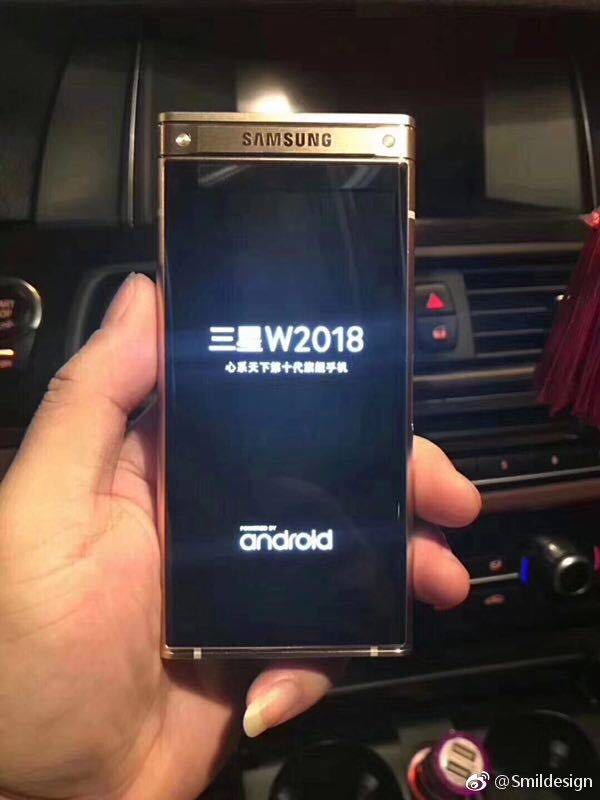
Are you a lover of flip-phones? Then rejoice as the Samsung W2018 has gotten a launch date. The date was revealed on Twitter by a user named @MMDJ_ known for his Samsung related tweets.
According to his post, the Samsung W2018 will be launched in Xiamen, China on December 1. Accompanying the tweet is an official poster that includes the W-series for the past 10 years and celebrity guests invited to the launch which also doubles as a charity event.
For the past 10 years, Samsung has always used the launch of its W-series phone as a platform to raise funds for charity. A follow up post by @MMDDJ_ includes a mash up photo that shows various charity acts and photos from previous years.
The Samsung W2018 will be its most powerful flip phone ever made. Aside its dual 4.2” FHD displays, the phone will be powered by Qualcomm’s Snapdragon 835 mobile platform. It will also have 6GB of RAM and 128GB of built-in storage.
Although the Samsung W2018 won’t sport dual rear cameras, rumor has it that it will be the first smartphone to have a camera with a F/1.5 aperture. The rear camera is said to be a 12MP sensor and a 5MP front-facing camera is available for selfies.
From the leaked images provided last week, the phone is shown to have its fingerprint scanner on the back just like the other Samsung flagships released this year. However, @MMDDJ_ says it will also have an iris scanner.
The Samsung W2018 will also come with Bixby and have a dedicated button for it. Samsung is expected to launch the Chinese variant of its AI assistant this month ahead of the W2018’s release.
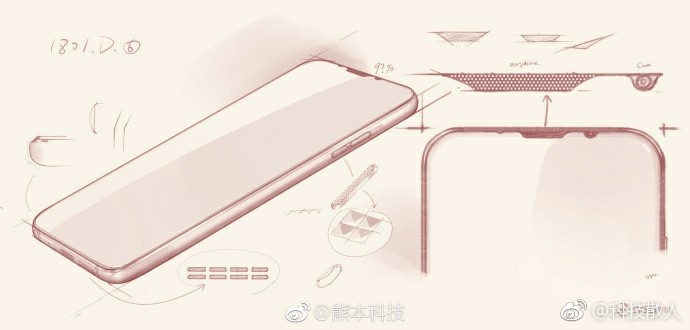
Last month, a 360 Mobiles smartphone with a full-screen display was seen on TENAA. The phone with model number 1713-A01 packs an 18:9 display of unknown size and also has a rear fingerprint scanner. It appears the phone will launch as the N6 Pro and may likely be announced next week.
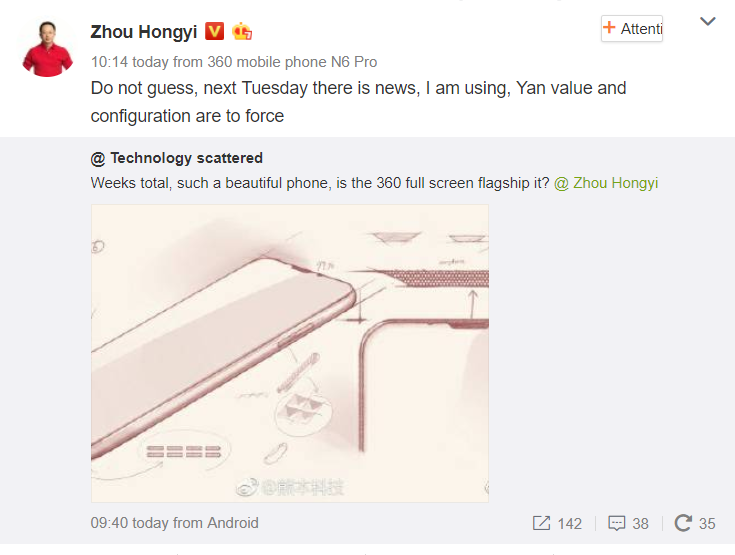
As you already know by now, Weibo usually reveals the device type used in making a post. 360 Mobiles CEO Zhou Hongyi took to the micro-blogging site to respond to a post in which he was tagged in.
The post in question shows schematics of a full-screen phone which the person is asking if is the 360 full-screen flagship. The CEO’s response doesn’t acknowledge the schematics as that of the phone, but he does mention that there will be an announcement next week Tuesday (21st of November).
Some sources say that the phone may be launched that day while others say it may be the launch date that will be revealed. But whichever one it is, it sure will relate to the upcoming smartphone.
The other interesting part of the response is that the device used in posting the reply is revealed as the N6 Pro. At the moment, the phone manufacturer has no device in the market that goes by that name. Its latest device is the 360 Mobile Vizza, so the only plausible explanation is that the N6 Pro is the full-screen device set to launch soon.
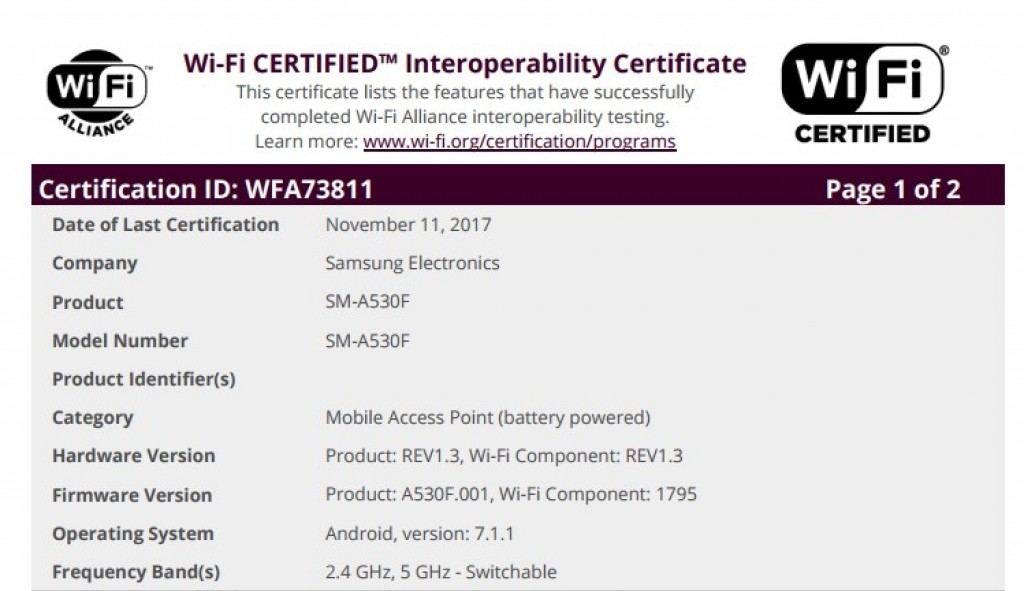
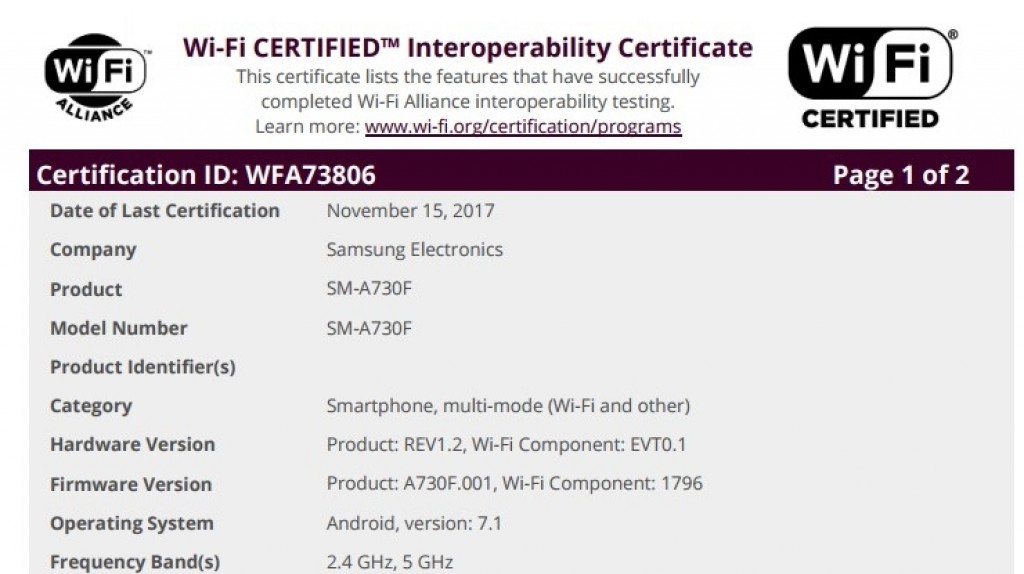
Recent leaks have revealed that the upcoming Samsung Galaxy A5 (2018) and Galaxy A7 (2018) smartphones have respective model numbers of SM-A530F and SM-A730F. The arrival of these smartphones seems to be approaching fast as both the model numbers have been granted certification by Wi-Fi Alliance.
The Wi-Fi certification of the SM-A530F and SM-A730F have revealed that the both the smartphones will carry support for Wi-Fi 802.11 a/b/g/ac and will arrive preinstalled with Android 7.1.1 Nougat. This is an indication that these phones are unlikely to deliver Android Oreo out of the box experience.
Samsung is known for providing some of the best features from Galaxy S devices on Galaxy A series smartphones. However, the Galaxy A phones are launched with older versions of Android OS.
For instance, the Galaxy A (2017) smartphones such as Galaxy A3, Galaxy A5 and Galaxy A7 that were introduced in January this year came preloaded with Android Marshmallow. These phones were later on updated to Android Nougat.
Samsung is expected to use the same strategy on the upcoming Galaxy A5 (2018) and Galaxy A7 (2018) phones. These phones are likely to arrive Nougat OS preinstalled and may receive Oreo update by the middle of next year.
Read More: Samsung Galaxy J5 Prime (2017) Key Specs Leaked on GFXBench
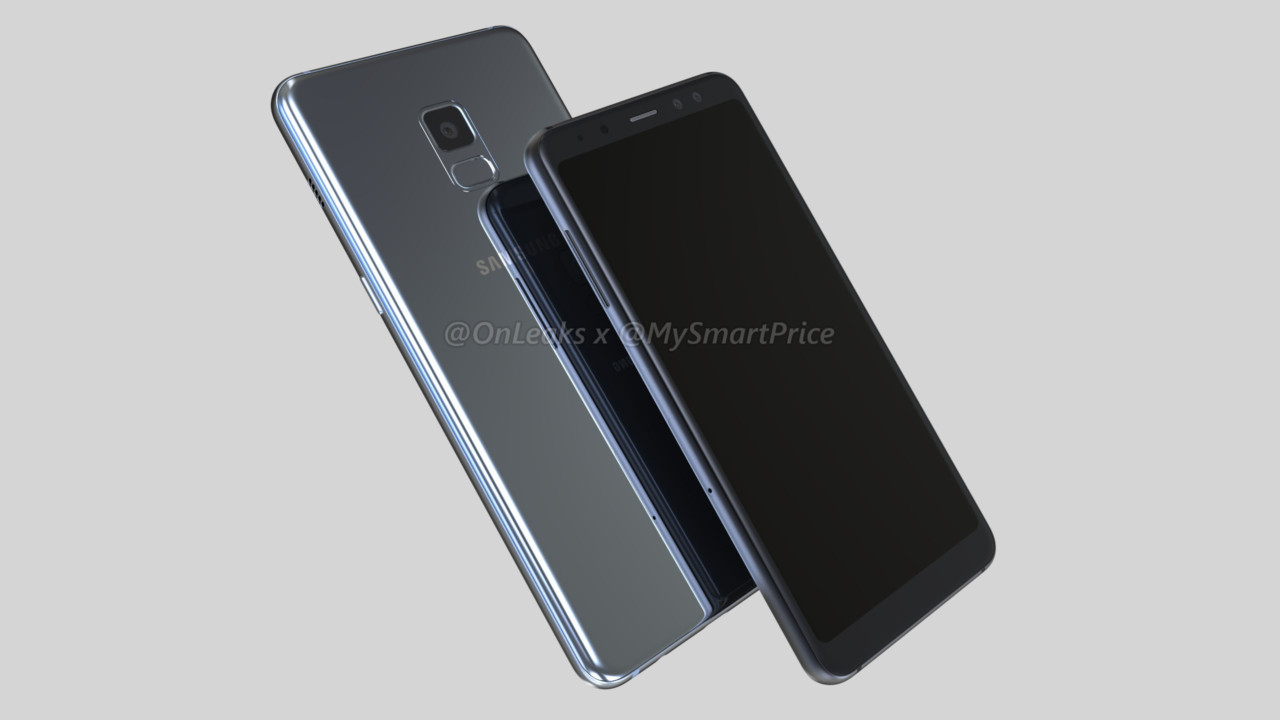
Rumors have revealed that the Galaxy A5 (2018) and Galaxy A7 (2018) will come with Infinity Display full screen design like Galaxy S8 and Galaxy Note 8. These phones are rumored to feature dual front cameras and a dedicated button for accessing Bixby. Previous reports have revealed that both the smartphones will be powered by Exynos 7885 chipset.
The 2018 editions of Galaxy A5 and Galaxy A7 have already received FCC certification. These phones have also received Bluetooth SIG certification. Since these phones have already bagged all the necessary certifications, it seems that the 2018 Galaxy A5 and A7 may launch either in the next month or early in January 2018.
A few days ago, the Samsung Galaxy A5 (2018) was confirmed by the company. as it was listed on the support page of the official website. Now, a similar thing has happened with another smartphone of the same lineup — Galaxy A7 (2018). As per the reports, Samsung Kazakhstan, the Russian-facing website of the company, has listed the smartphone carrying model number SM-A730F.
The listing doesn’t confirm anything related to the upcoming Galaxy A7 (2018) smartphone apart from its existence. There is no information about the phone’s features, specifications or pricing. The listing appears to be the placeholder pages, which will be updated once the devices will be launched.
While it does not reveal anything about specifications, previous leak surrounding the smartphone suggests that the smartphone will feature a Super AMOLED Infinity Display with an 18:9 aspect ratio. It will be similar to the one we saw on Samsung’s 2017 flagships. Expect an edge-to-edge display with virtually no bezels.
Under the hood, the Samsung Galaxy A7 (2018) is expected to be powered by a brand new 14nm Exynos 7892 octa-core chipset, which will have two ARM Cortex-A73 cores and six ARM Cortex-A53 cores and will also pack 6GB of RAM.
As per the rumours, the smartphone will also come with IP68 certification, which means that the device will be dust and water resistant. Some reports also suggests that the phone will come with dual cameras at the back, and will have a USB Type C port and Bluetooth 5.0. It is expected to run on Android 7.1.1 Nougat-based operating system with the company’s own TouchWiz UI on top.
In comparison, the current generation Galaxy A7 smartphone has a 5.7-inch full HD Super AMOLED display, with 3GB of RAM and 32GB internal storage. It runs an Exynos 7880 octa-core chipset and packs 16-megapixel rear and a 16-megapixel front-facing camera. The smartphone runs on Android 6.0.1 Marshmallow operating system and is fueled by a 3,600mAh battery.
The Samsung Galaxy A7 (2018) and the Galaxy A5 (2018) are expected to be introduced in January. However, Samsung could also announce the devices next month as the support pages have already surfaced online. We’ll just have to wait and watch.
OnePlus announced during the Onelus 5T launch that Android Oreo-based OxygenOS open beta for the OnePlus 5 will start rolling out this month. In the same vein, the newly launched OnePlus 5T will get its own update in December.
The BBK subsidiary also disclosed that users should expect Android 8.0 Oreo-based OxygenOS stable ROM to hit their devices in early 2018. The company didn’t elaborate on when the new stable ROM will be available specifically.
Earlier rumors had tipped the OnePlus 5T would run Android 8.0 Oreo out of the box but that didn’t happen in the end. The device was announced with Android 7.1 Nougat providing the interface. The 5T is basically a design update of the OP5 released just a couple of months back. But it comes with an upgrade of its rear cameras which is still a dual setup but the second lens is a wide-angle module in an effort to improve low-light photography. Apart from that, the OP5T also comes with a 6.01-inch full-view display with an 18:9 aspect ratio. Surprisingly, the price tag remains the same. Its price starts at $500 (€500) for the 64GB model and $560 (€560) for the 128GB variant. Sales would commence on November 21.
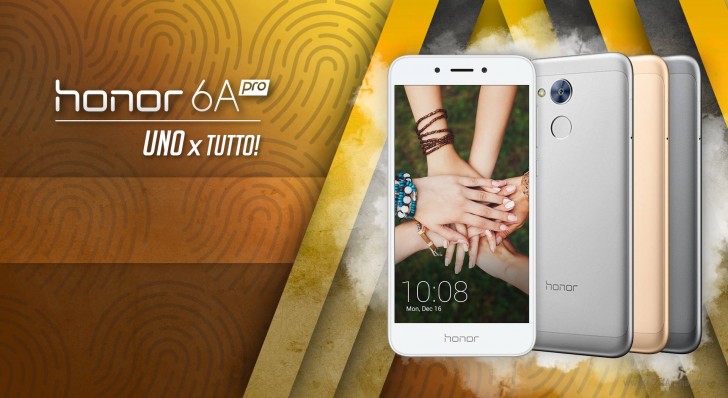
Honor had introduced the budget-friendly Honor 6A smartphone earlier this year. The same smartphone has been launched in Europe (specifically in Italy) with Honor 6A Pro moniker.
The smartphone is available as Honor 6A in markets like China and Malaysia. In India, it was recently unveiled as Honor Holly 4. The Honor 6A Pro that has landed in Europe features a 5-inh display that delivers an HD resolution of 720 x 1280 pixels.
The Snapdragon 430 chipset of the Honor 6A Pro is coupled with 3 GB of RAM. It has internal storage of 32 GB and it also includes a microSD card slot. it has a rear-facing camera of 13-megapixel which focus on the subject in just 0.5 seconds. It has a front-facing camera of 5-megapixel.
The Android 7.0 Nougat comes preloaded on Honor 6A Pro along with EMUI 5.1. It includes a decent battery of 3,020mAh capacity. The backside of the smartphone features a fingerprint sensor. Also, the smartphone supports dual-SIM cards. The metallic body of the 6A Pro exhibits a sleek appeal. It measures 143.7 x 70.95 x 8.2mm and its weight is 144 grams. It comes in color choices such as Gold, Grey and Silver.
It Italy, the Honor 6A Pro can be availed on contract with a starting price of 29 euros on a carrier plan of 10 euros per month. The off-contract price of the Honor 6A Pro is 150 euros (~$177).
After months of leaks, OnePlus 5T was unveiled to the world this Thursday. Many OnePlus fans may have wanted the OP5T to come pre-installed with Android 8.0 Oreo flavored OxygenOS. However, the smartphone will come preloaded with Android 7.1.1 Nougat OS. Fresh information suggests that the Android 8.0 Oreo update for OnePlus 5T will be available at the start of next year.
According to OnePlus, the OnePlus 5T and its predecessor phone, the OnePlus 5 have identical software. They feature the same Snapdragon 835 chipset and same amount of RAM. Hence, both the phones are expected to be paired for receiving software.
The Chinese firm has said it will be releasing Android 8.0 Oreo update for OnePlus 5T in early 2018. Last year, OnePlus had managed to release Android Nougat update for OnePlus 3 and 3T at the end of the year. However, OP5T users will have to wait until next year to receive the newest Android version.
OP5T owners can still taste the Android Oreo by enrolling for the open beta. OnePlus 5 users are scheduled to receive the Android Oreo open beta later this month. However, OP5T will be getting the open beta until late December.
OnePlus is aiming to release Android Oreo update as soon as possible to its smartphones. However, some manufacturers like Sony and Huawei have already launched their flagships with Android Oreo preinstalled. Other smartphone OEMs like Samsung and Nokia are also preparing Android Oreo updates for their smartphones.
Do you think that the OnePlus 5T should have arrived with Android Oreo preinstalled? Share us your thoughts by adding your comments.
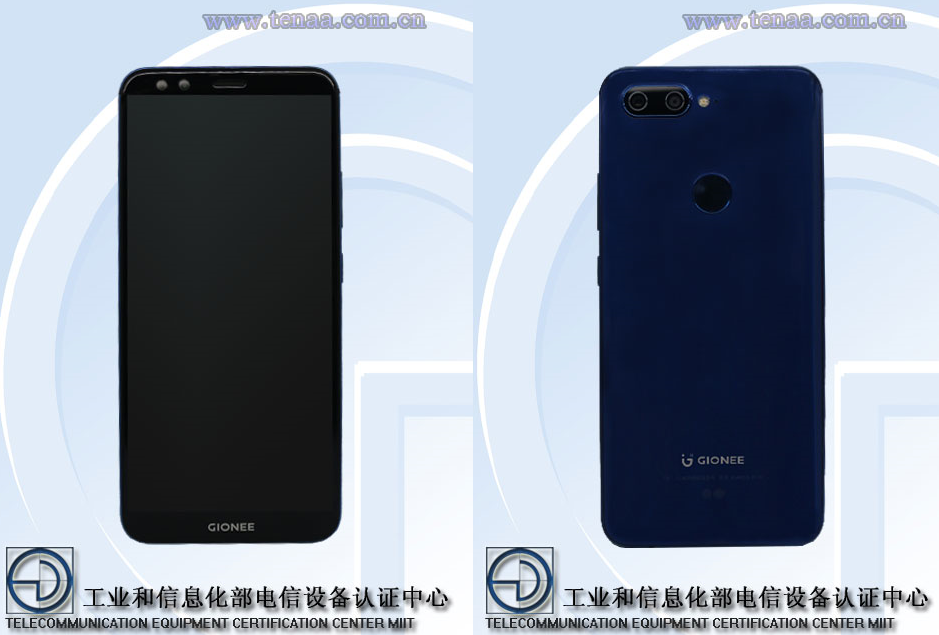
The Gionee S11S was seen on TENAA a couple of months back. One of its key features is its dual front and dual rear cameras just like its predecessor, the Gionee S10. Expected to be one of the devices launching on November 26, camera samples of the phone has been posted online.
[envira-gallery id=”158450″]
Based on the specs on TENAA, the Gionee S11S will have a 16MP + 8MP combo in front for selfies, and a 20MP + 8MP configuration on the rear. The camera configuration is the same as that of the Gionee S10, but we presume that Gionee may have modified the aperture size and worked on improving the overall camera performance. So there is a chance both phones will provide different camera results.
Like the OnePlus 5T, the main change coming to the Gionee S11S is the new 18:9 display. Though TENAA reveals it will have a larger RAM and a slightly bigger battery.
Gionee S11S as seen on TENAA
The Gionee S11S will launch with a 6.01” 2160 x 1080 AMOLED Full View display. It will have thinner bezels at the top and bottom of the phone and will have its fingerprint scanner on the rear.
Unlike the S10 with 4GB of RAM, the S11 has 6GB but keeps storage at 64GB. It also packs the same Helio P25 processor. It will launch with Android 7.1.1 Nougat out of the box and come with a 3,600mAh battery.
The Gionee S10 launched in three variants – the S10, S10B, and S10C. The same may apply to the S11 too. We already know of two variants – the S11S above, and the S11 which will also come with dual front facing cameras in the same configuration as the S11S but with a 16MP + 5MP configuration on the back. It will also have a Full View display.
Both phones are expected to be launched on the 26th of November alongside six others.
There is no such thing as a perfect smartphone, but when the OnePlus 5 was released and discovered to have got a “jelly scrolling” issue with its display, it took imperfection to a new height. That is because the OP 5 was supposed to be a flagship model that shouldn’t have such obvious flaws. Whatever disappointment that was on the OP 5 seems to have been corrected on the newly launched OnePlus 5T. XDA Developers have been able to unravel that the newly-unveiled OnePlus 5T does not experience such issue.
In case you don’t know what “Jelly scrolling” means, here is the thing. It is a phrase used to describe the undesired effect noticed on the display whereby some content on the screen appear stretched and squashed when scrolling. Just like a jelly, the screen doesn’t respond swiftly when scrolled instead the screen content seem to lag behind. A theory was put forward back then that the jelly scrolling issue may be as a result of the fact that the OnePlus 5 uses an inverted screen. This was discovered when the OP5’s teardown was compared to that of the OnePlus 3T and others. Also, the kernel source code for the display was dug up by a developer and it clearly showed the inversion was captured in the source code.
OnePlus later acknowledged the issue but stated that it was perfectly normal but some users would have none of that as they find it distracting and annoying. Some even took advantage of the 15-day return window to send back the smartphone and get a refund. But in the real sense, it could easily be ignored. You won’t have to ignore or live with the same issue on the OnePlus 5T, though, as the issue is none existent or so we are told. We’d have to wait for the teardown to know if we still have an inverted screen or if the screen has been turned upright. But a check on the code of the display panel by an XDA Developer shows it is not inverted but is sitting upright at 180 degrees. We’ll surely bring you Linus’ review here on Gizmochina. Wait for it to confirm if actually the issue has been sorted out.
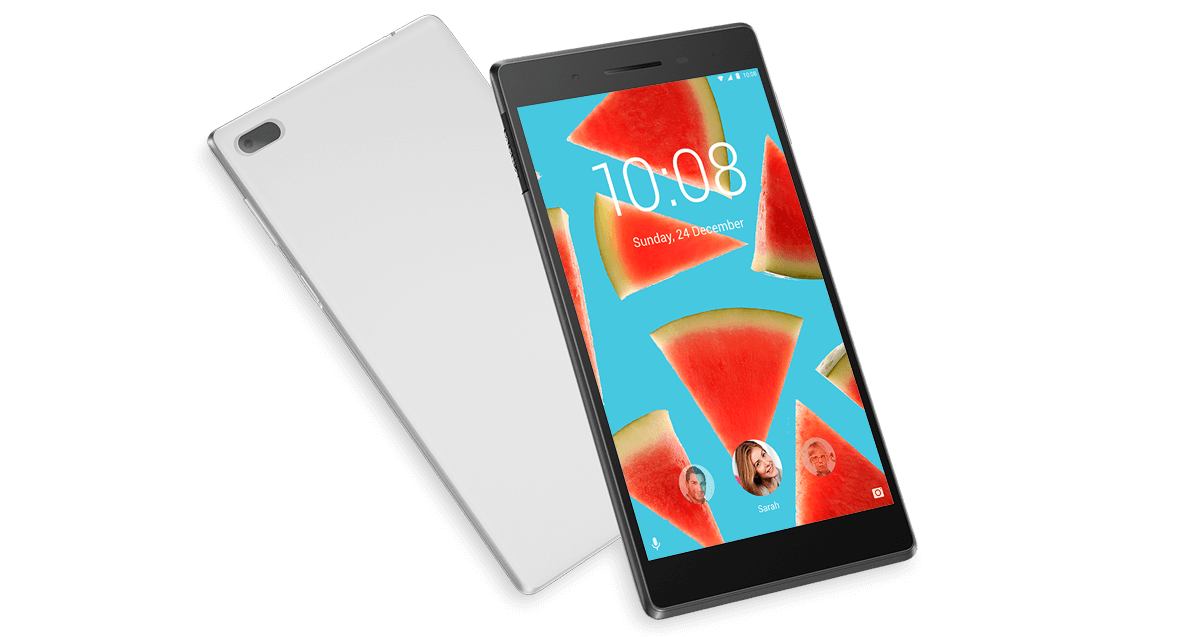
It has been only two months since Lenovo announced its Tab 4 series. A few days ago, the Chinese manufacturer launched two new tablets – the Tab 7 and the Tab 7 Essential with entry level specs and super affordable price tags.
Lenovo Tab 7
The Lenovo Tab 7 as the name suggests packs a 7-inch display with a 1280 x 720 resolution. It is powered by MediaTek’s MT8161 quad-core processor clocked at 1.3GHz. It is paired with 1GB LPDDR3 RAM and 16GB of built-in storage.
The Tab 7 has a 5MP primary camera and a 2MP front facing camera for video calls. There is a single mono speaker with Dolby Atmos immersive audio.
It runs Android 7.0 Nougat out of the box and boasts a 15-hours battery life. There is Bluetooth 4.0 and Wi-Fi for connectivity and a micro USB port and 3.5mm audio jack at the bottom.
Available in black and white, the Tab 7 will sell for $99.99.
Lenovo Tab 7 Essential
The Tab 7 Essential has a 7-inch display too but with a 1024 x 600 resolution. It is powered by the MediaTek MT8167D quad-core processor also clocked at 1.3GHz. You also get 1GB of RAM but DDR4 in this case, and 16GB of storage.
Both cameras are 2MP sensors and there is a single front-facing speaker. It runs Android 7.0 Nougat, has Wi-Fi, and Bluetooth 4.0.
The Tab 7 Essential also boasts a 20-hours battery life and is available in black. It is priced at $79.99. Both tablets are available on Lenovo’s official website.
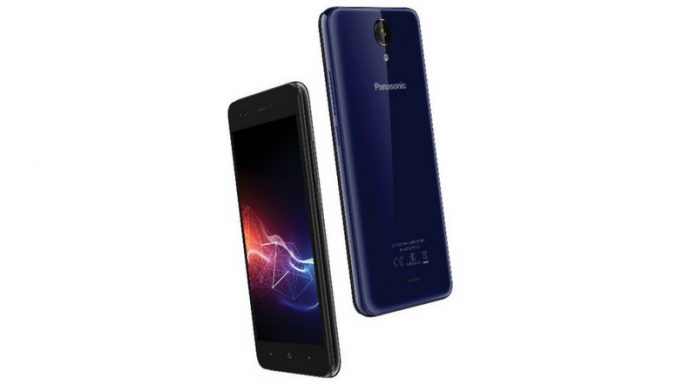
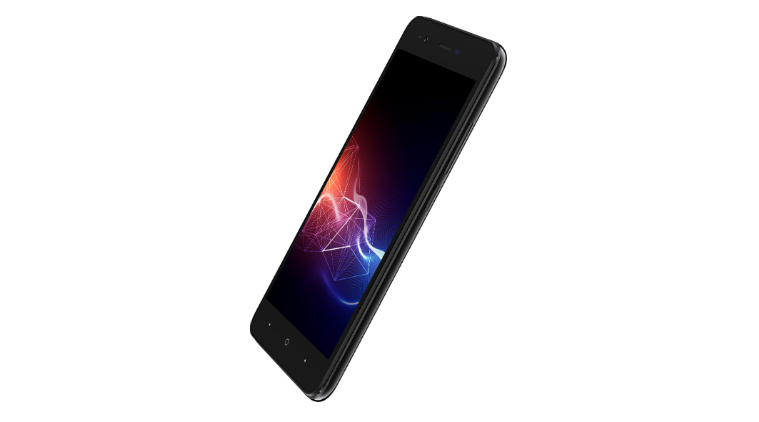
Panasonic P91 is the latest low-budget smartphone from the company. It is equipped with multi-mode camera and comes with an attractive pricing.
Panasonic P91 Specifications and Features
Panasonic P91 has a textured glossy rear that comes in color choices like Blue, Black and Gold. It features a graphite film that the prevents the phone from overheating. The P91 includes a 5-inch IPS display that offers a pixel density of around 260 ppi.
The MediaTek MT6737M chipset that includes a 1.1 GHz quad-core processor that is supported by 1 GB of RAM. The native storage available on the P91 is 16 GB and it also features a memory card slot for adding up to 128 GB of microSD card. The smartphone is running on Android 7.0 Nougat. Smart Gesture and Smart Action are the gesture-based features available on Panasonic P91.
For photography, there is an 8-megapixel autofocus enabled smartphone that is coupled with an LED flash. It is enabled with features such as QR code scanner, automatic scene detection, portrait mode and professional mode. The front side of the P1 is flanked with a 5-megapixel camera.
The connectivity options available on the Panasonic P91 are dual-SIM support, 4G with VoLTE, Wi-Fi, Bluetooth and microUSB. It receives power from a 2,500mAh battery that promises nine hours of offline video playback.
Panasonic P91 Pricing
The Panasonic P91 carries a price tag of Rs. 6,490. It will be available for buying through all the authorized outlets of the company.
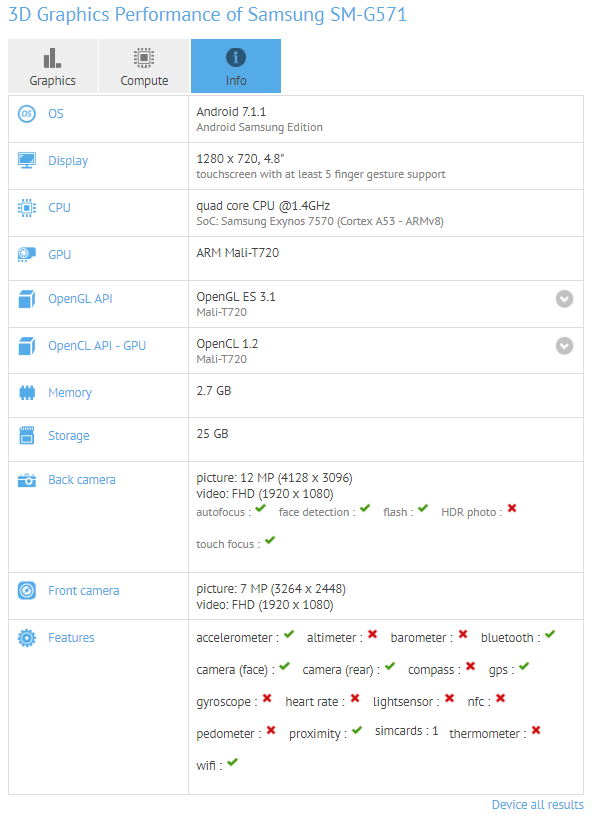
The Samsung Galaxy J5 Prime (2016) with model number SM-G570 was launched in September last year. A new Samsung phone with model number SM-G571 has surfaced on GFXBench benchmarking platform. It is speculated that the SM-G571 may debut as the Samsung Galaxy J5 Prime (2017).
According to GFXBench listing of SM-G571, the smartphone features a 4.8-inch display that carries support for HD resolution of 720 x 1280 pixels. The Exynos 7570 chipset that features a 1.4 GHz quad-core processor is present under the hood of the phone along with 3 GB of RAM.
The inbuilt storage of the alleged Galaxy J5 Prime (2017) is 32 GB. It will be arriving with a rear camera of 13-megapixel and the front panel is expected to be flanked with 8-megapixel selfie snapper. Both the cameras carry support for full HD vide shooting.
The Galaxy J5 Prime (2016) features a 5-inch display. However, rest of the specifications of the phone is same as that of SM-G571 phone. There is no confirmation on the launch date of the rumored Galaxy J5 Prime (2017). It should have become official in September this year as the predecessor model was launched in the same month last year.
Now that the South Korean company has already released its 2017 flagship phones, it seems to be busy working on the launch of cheaper smartphones. The rumor mill has already revealed the specifications of the 2018 editions of Galaxy A5 and Galaxy A7 that are expected to arrive with Infinity Display full screen design. These 2018 Galaxy A phones may either launch next month or in early January 2018.
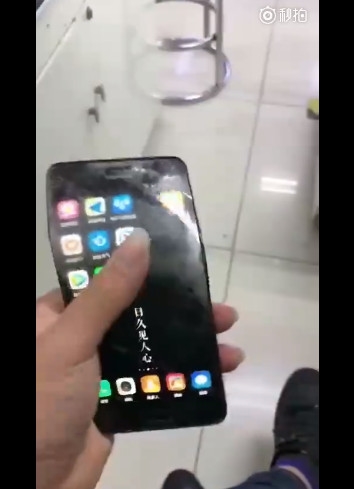
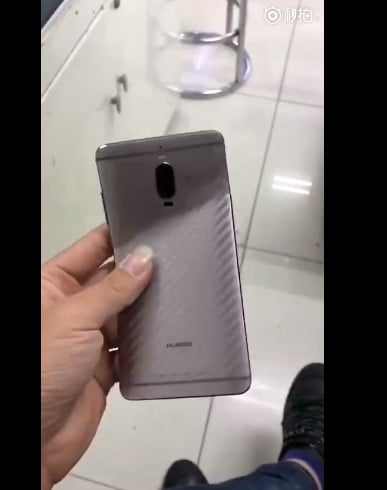
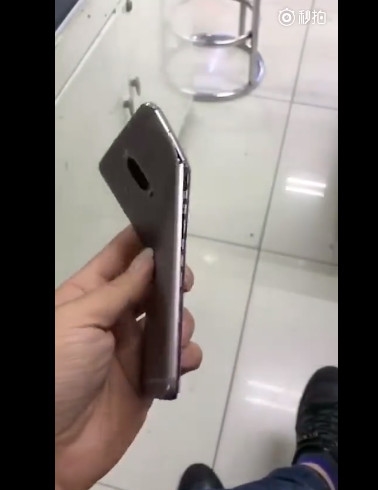
Huawei introduced the Mate 9 Pro around this same period last year as a variant of the flagship Mate 9. The Mate-series was already established as Huawei premier flagship series but the Mate 9 Pro and Porsche Design added some colour, making it look more premium. The video you are about to watch now is more or less an exhibition of the properties of the Mate 9 Pro’s display. The device was badly damaged such that the screen was completely bent backwards, making an angle of almost 20 degrees with the rest of the body. The surprise here is that despite the damage, the Mate 9 Pro continue working and not only that, the display was still functioning with the touchscreen functions still operational as well.
As would be recalled, the Mate 9 Pro features a 5.5-inch curved OLED display with Gorilla Glass protection. The body also comes with a metal fuselage and while it is expected that the metal can take a bend, the surprise is the display and internal panels weren’t damaged. No, the Mate 9 Pro isn’t packing a flexible OLED display but the thing is likely that the bend wasn’t enough to cause any other damage other than the physical damage. Perhaps, a bend greater than the one we’re looking at would have damaged the display panel.
All the same, it is astonishing to see that the device is this durable at a time a slight fall would have damaged the screen of a lesser model. We can’t say if the Mate 10 Pro is this durable, but we expect Huawei has done a better job on the Mate 10 Pro. Coincidentally, the Huawei Mate 9 was also revealed with a similar bend soon after its launch last year and in the same manner, the screen was unbroken and the device continued working flawlessly. You can check out the video of the bent Mate 9 Pro from below.
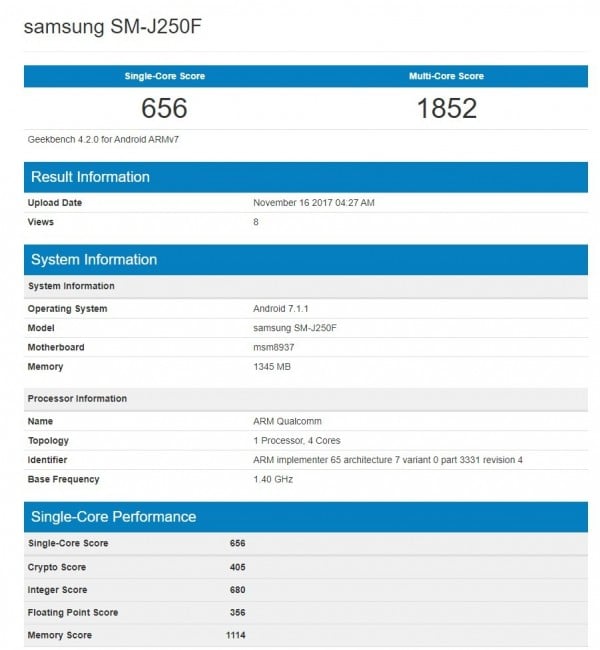
A new smartphone with model number SM-J250F has appeared on Geekbench. The same model number along with its dual SIM variant has been also found listed on the support page of Samsung’s South African website. Speculations have it that it could be the successor of the Galaxy J2 Pro (2016) that was released in July last year.
According to Geekbench listing, the SM-J250F is running on Android 7.1.1 Nougat. The msm8937 chipset that is driving the smartphone is the Snapdragon 430. The SoC is coupled with 2 GB of RAM. On single-core test, it has scored 656 and on multi-core test, it has recorded 1852.
Previous reports have revealed that it features 32 GB of native storage and a removable battery, which is a rarity these days. However, the exact size of the battery is not known.
In the previous month, a Samsung phone with model number SM-J250G had appeared on GFXBench benchmarking site in the previous month. It had revealed that the smartphone features a 5-inch display that supports a resolution of 960 x 540 pixels and is powered by Snapdragon 425. It has 16 GB of storage and 1.5 GB of RAM. It only carries support for single-SIM.
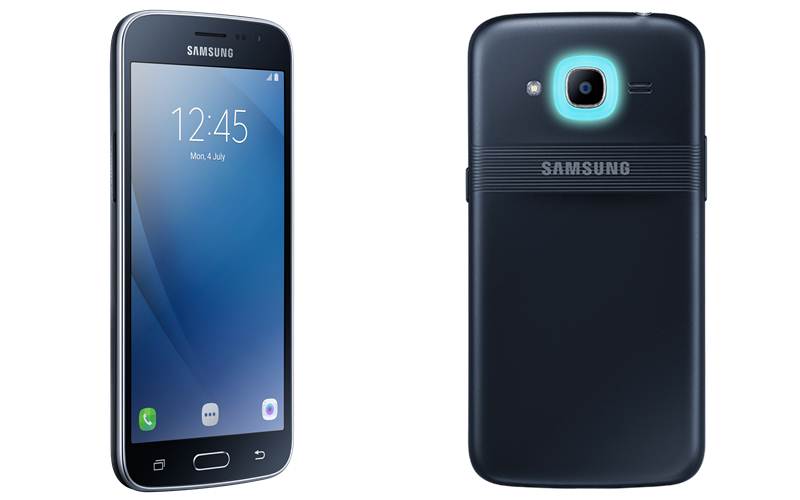
The rumored Galaxy J2 Pro (2017) is expected to feature the same round-shaped Smart Glow LED around the main camera that is available on the predecessor phone. The Smart Glow ring can light up to alert users on incoming SMS, emails, phone calls and so on.
The arrival of the SM-J250F seems to be close at hand as the smartphone has been certified by FCC and Bluetooth SIG earlier in this month. This suggests that the alleged Galaxy J2 Pro (2017) may launch in time for the upcoming holiday season. It is likely to be aimed towards Europe and select markets in Asia.
The new OnePlus 5T is a solid flagship, but is it worth upgrading from the OP5? We try to answer the question!
Until some weeks ago, nobody would have bet on the official launch of the OnePlus 5T, but the Chinese company has surprised its fans by officially announcing the arrival of the advanced version of its last flagship, just like it did in 2016. But is it worth buying this device or upgrading from OnePlus 5? A high percentage of OnePlus 5 owners and other people in need of a new powerful device are probably asking themselves if this flagship is worth the money. And in this article, we help you out by listing out the reasons why you probably shouldn’t upgrade/buy the OP5T.
No hardware upgrades (SoC and RAM)
OnePlus 5T has exactly the same SoC as the OnePlus 5; we are talking about the octa-core Snapdragon 835, which can run at a max frequency of 2.45 GHz. Unlike last year, in 2017, Qualcomm launched just a single flagship processor, so OnePlus won’t be upgrading the SoC on its newest flagship. Snapdragon 835 is still the best processor in the Android market, so if you want a real flagship phone OnePlus 5T is the correct choice. But if you already have OnePlus 5 and you want a much better performance, then there is no sense in buying OP5T. Further, note that OnePlus 5 is actually the best Android phone on benchmarks, according to the famous benchmarking platform AnTuTu; so it is already among the fastest and smoothest phones ever. The RAM configurations are the same as OP5 as well: there will be variants with 6 or 8 GB, which are the maximum amounts of RAM ever seen on a mobile phone. The internal storage remains 64 or 128 GB depending on the variant.
OnePlus 5T still has a Full HD 1080p Display
While most of the best flagships phone in the market have a display with 2K resolution (at least Quad HD with 1440 x 2560 pixel), OnePlus will stick to Full HD resolution. Yes, you would argue that the OnePlus 5T has a bigger screen than the OnePlus 5, but note that, it still has a 1080p resolution with 2160 x 1080 pixels. This will make it average if we were to consider that on a 6-inch display the pixel density is lower and the level of detail decreases. Fortunately, while OnePlus 5 has exactly the same panel as OnePlus 3T the new 5T has an upgraded display, and it supports sRGB and DCI-P3 technologies. So, at least you get nice colors.
OnePlus 5T is not waterproof, neither dust-resistant
OnePlus 5T won’t have any kind of IP certification: it won’t be water-resistant and it won’t even be dust-resistant. OnePlus 5 did not have any IP certification as well, but the company has confirmed that it is a splashproof phone, even if it is not mentioned anywhere on its specs sheet.
Similar camera without OIS
On the rear side, OnePlus 5T has a dual camera setup which works similar to the one from OnePlus 5. The main sensor of the camera is exactly the same: a Sony IMX398 with a resolution of 16 MP. The secondary sensor is slightly different: it is a Sony IMX376K (OP5 has a Sony IMX350), but it still has a resolution of 20 MP. See that the primary sensor is the same, camera performances should not be so different between the two models. Even though the secondary sensor has a f/1.7 aperture and it should provide better performances in low light conditions. Further, just like the OP5, its successor has no optical stabilization (OIS). There is still an electronic stabilization (EIS, working with 4K too) which works good, but it is not at the same level of the optical stabilization.
Design and materials are far from being original
There is not so much innovation in the design of OnePlus 5T. To be honest, its design is becoming a bit outdated and it may be good for a mid-range phone, but not for a flagship one. OnePlus 5T sports a full metal unibody design with a rear side that is very similar to the ones from OnePlus 5 and Oppo R11s. Some say that OnePlus 5T is just a re-branded Oppo R11s: well, it is not so, but aesthetically they are the same. Even the latest iPhones switched to a glass back, but OnePlus keeps opting for a full metal unibody design which seems so 2016, similar to the one of iPhone 7 and 7 Plus. The display has a very high screen-to-body ratio and it is true, but it seems similar to Samsung Galaxy S8… OnePlus 5T definitely does not have the most original design, even if, on the other hand, it will probably be less fragile than a phone with a glass back.
No Home key and fingerprint reader on the back
Due to the full borderless design and the big display, if you buy OnePlus 5T you won’t get any physical Home key on the front side. This means that you will no longer be able to use keys placed outside the screen for a better navigation, and you will have to say goodbye to many gestures and shortcuts. The on-screen virtual keys will be mandatory to use without a Home key. As you probably know, Home keys always integrate a fingerprint reader: this means no Home key, no fingerprint reader on the front panel. On the OnePlus 5T, the fingerprint reader is placed on the back side, and it is a less comfortable position compared to a fingerprint reader placed under the display. When you hold your phone, you will be forced to find the fingerprint reader with your finger without looking at it, and if you use the fingerprint reader as the main method of authentication, you will not be able to unlock the phone if it is placed on a table or other surfaces.
Bigger screen but same battery
OnePlus 5T has a bigger display than its predecessor: it is a 6-inch panel with the Optic AMOLED technology, narrow borders and the Gorilla Glass 5 protection by Corning. The device is also slightly bigger than OnePlus 5, even if the difference is minimum. But, even if it is a bigger phone with a bigger display, it has a battery with exactly the same capacity: 3300 mAh. Other 6-inch phablets usually have much bigger batteries. Just to make an example Huawei Mate 10 (5.9 inches) has a battery with a capacity of 4000 mAh, while Samsung Galaxy S8+ (6.2 inches) has a 3600 mAh battery. We hope that the battery optimization has been improved at least, but keep in mind that a bigger screen requires more power. So, there may not be improvements in terms of battery life, if we compare OnePlus 5T with its predecessor.
No Android Oreo
Some companies have already started updating their most important devices to Android 8.0 Oreo, which is the latest version of the OS released by Google. Some handsets have been launched with Android Oreo out of the box, too. It is the case of Google Pixel 2, the Sony Xperia XZ1 series, HTC U11 Plus and others. OnePlus 5T will be late to the party as it will still be launched in the market with Android Nougat out of the box. Anyways, the update to Android 8.0 Oreo will be released before the end of the year, together with the Android Oreo update for OnePlus 5.
Higher Price than OnePlus 5 (US only)
Carl Pei has declared that most fans will like OnePlus 5T, but he has also suggested that it will cost more than OP5. Indeed, the price has been increased, but for the US market only. From his words, it seems like that the higher price for the components makes the listing price increase as well. The first smartphone launched by OnePlus had a price tag of 299 dollars on the official site. The price of the most entry-level version (so the one with 6 GB of RAM and 64 GB of internal storage) has been increased by 20 dollars compared with the price of OnePlus 5, so it will cost 499 dollars. The 8 GB of RAM instead will have a price of 559 dollars. In Europe the price remains the same: 499 and 559 EUR, as well as in the other continents. If you already own a OnePlus 5, in our opinion it is not worth buying a OnePlus 5T. In terms of important improvements, you would only pay for a bigger and more comfortable display and a slightly better camera: it has no sense to upgrade, according to us. Further, you may encounter some disadvantages: OnePlus 5T will be more fragile than OP5 due to its bezel-less design and if the company did not do a good job at optimizing the phone, you may also get a worse battery life.
Is OnePlus 5T still a convenient flagship?
Yes, it is, but only if you want to buy it “from scratch” (so if you do not own an OP5 already). For customers from the US, even though the price has increased, the device remains among the most convenient flagships in the market. Indeed, the price of other flagships has increased as well in this year. OnePlus did not pass the 600 dollars threshold, while almost every famous company did. Samsung devices cost way more, as well as Huawei flagships. In our opinion, the only company which has flagships that can compete with the ones from OnePlus at the same price is Xiaomi.
The highly anticipated OnePlus 5T has been officially announced. OnePlus has confirmed that it will be brining Android Oreo beta update for OnePlus 5T and OnePlus 5 users in the next month. The Chinese firm has not forgotten the users of OnePlus 3 and OnePlus 3T as the company has a new OxygenOS update for these phones.
OnePlus 3T users who have enrolled in the beta program are now getting Open Beta 18 and OnePlus 3 beta users are now receiving Open Beta 24. Following are the changes and improvements that are arriving with the new update:
New UI for Do Not Disturb (We’ve made the Do Not Disturb setting easier to understand)
Optimized standby battery usage
Smart Text Selection improvements (This option should now work as intended)
General performance improvements
Updated OnePlus and GMS applications (We’ve updated OnePlus Gallery, and fixed some bugs in Weather, Recorder, and File Manager)
Updated Google security patch (October 2017)
Other bug fixes and optimizations (Updates to language localization, fixes for extended screenshot in some applications, Bluetooth performance enhancements, camera gesture fixes, and memory optimizations)
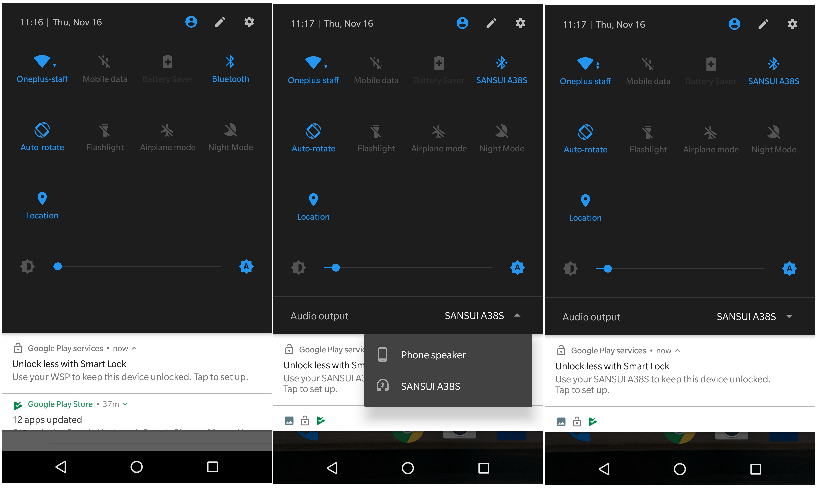
The new Open beta builds for OP3 and OP3T contain two UI bugs. Those bugs can be seen in the above snapshot. As it can be seen, there are some blank spaces in the Quick Settings menu. Also, the “Audio output” option is missing in the leftmost snapshot. Apart from these bugs, the new beta update also includes plenty of bug fixes and customizations.
Users should be aware of the fact that these are not stable builds. Users who are not satisfied by the new Oxygen OS beta for OnePlus 3 and 3T can revert to the Open Beta N build. However, downgrading to Nougat on Open Beta requires users to follow special instructions. Doing so ca also lead to partial loss of data. Hence, users are advised to read well before installing Oreo builds. More information is available in the source link.
HMD Global doesn’t seem to have done badly with its android-powered Nokia smartphones. Though its figures definitely pale to what manufacturers like Huawei, OPPO, Vivo, and Xiaomi ship monthly. To be fair, its going to need more time to pull in those numbers.
According to analyst, Pan Jiutang, even with the figures pushed by its competitors, Nokia has one phone that ships nearly 10 million units per month. You might be wondering which of its new smartphones it is. Is it the Nokia 6 which was released first or the Nokia 8 with its dual cameras and OZO audio?
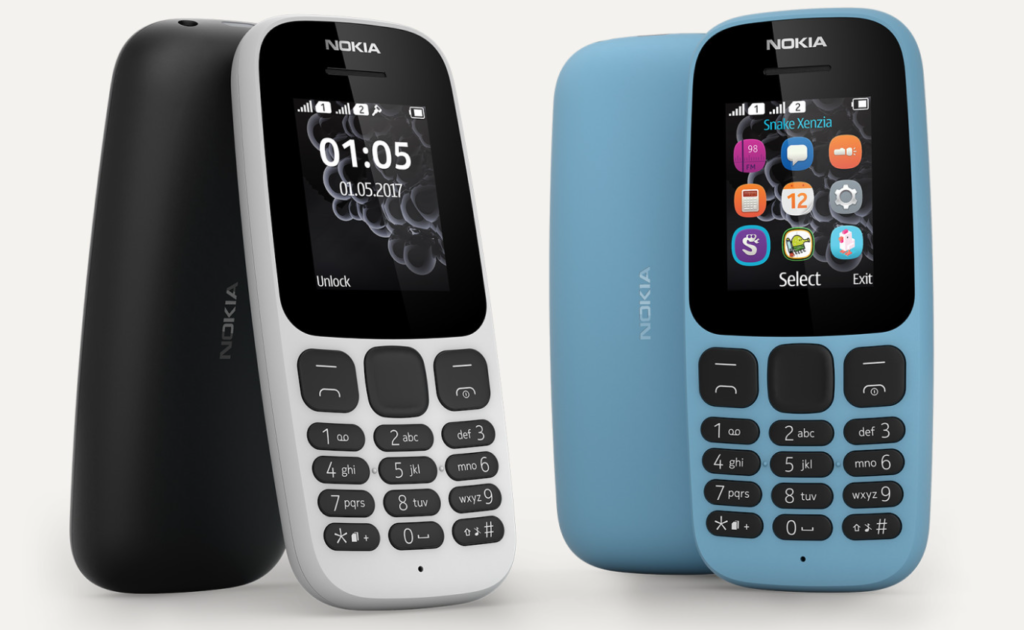
Sorry to burst your bubble, it is actually a Nokia feature phone. But sadly, he doesn’t mention the specific model.
Even with the popularity of smartphones, there is still a market for feature phones. They come in handy and are pretty useful thanks to their superior battery life and durability.
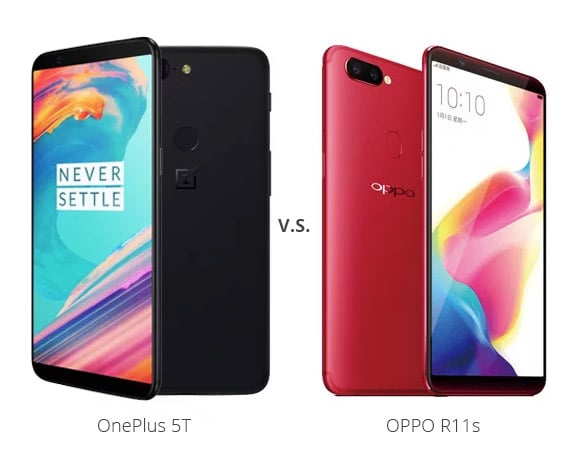
OnePlus 5T has finally been announced and now, at last, we can establish its awesomeness. It is definitely one of the best Android phones for quality-price ratio, and according to us, it is also in the podium of the best Chinese phones released until now. Another one of the best premium Chinese handsets for the quality-price ratio is the new Oppo R11s, released by the same Chinese giant which owns OnePlus: BBK. For this reason and also for the fact that they are aesthetically similar, we can define these two devices as “twins”. But there are some hidden differences between them, and in this comparison, we will help you to understand which one fits your needs the most.
OnePlus 5T vs Oppo R11s: Design
Aesthetically, these phones are nearly identical. There are just some small differences that, in our opinion, do not have any importance.
Both OnePlus 5T and Oppo R11s have a full metal unibody design and they have been announced in various anodized hues. The antenna bands are positioned on the borders for a better look, but the rear side the design of these handsets is nothing new and it looks similar to many devices launched in the last year. There is something better on the front side, as these phones have a full bezel-less display with a very high screen-to-body ratio. It makes the phone be compact even though the display is huge. But the presence of the borderless screen does not mean that the phones are unique. Indeed, the front panel is similar to the one we saw on Samsung Galaxy S8 and S8+. To be honest, some may say, it is even less attractive.
But it is not a bad design and in both cases, they are very thin and nice to hold. Also, they have a solid build quality and their display is protected by Gorilla Glass 5, the sturdiest protection ever made for a display of a mobile phone. Unluckily, the fingerprint reader is on the back on both phones, and it is not so comfortable to use.
If you force us to pick a winner, we would choose Oppo R11s because it is smaller (156.1 x 75 x 7.3mm for OP5T vs 155.1 x 75.5 x 7.1 mm for R11s), thinner and more lightweight (162 g vs 153 g).
OnePlus 5T vs Oppo R11s: Display
The display is similar as well on these two phones, so it is very hard to pick a winner and you will hardly notice the difference.
These devices sport a 6.01-inch AMOLED panel. The one from OnePlus 5T is called Optic AMOLED panel and it has a Full HD+ resolution of 2160 x 1080 pixels. It also has an 18:9 aspect ratio, as you may have already guessed. This panel can offer very vivid colors and deep blacks, as well as a good level of detail. But its detail is not at the same level of the most expensive flagships which are actually in the market. Thanks to this display we get an 80.5% screen-to-body ratio, that is impressive.
Oppo R11s has an AMOLED display and it has a Full HD+ resolution as well, with 1080 x 2160 pixels. But this display is not an “Optic” AMOLED panel, even though we still do not know whether this stands for a noticeable difference in the viewing experience or it is just marketing. Anyways, the color reproduction is pretty nice on this phone too, and the Full HD+ resolution is nice for a device with its price tag (it has a lower price than OP5T and it is not a real powerful flagship as you will see in the next paragraph). We think the display from OP5T will be slightly better because of the company’s intense optimizations, but we can not say it for sure, at least until we test it.
OnePlus 5T vs Oppo R11s: Hardware
The differences between these two devices in terms of hardware is very big: in short, we are talking about a flagship versus a upper mid-range phone.
OnePlus 5T has the best SoC that you can see in the Android market: an octa-core Snapdragon 835 with a max frequency of 2.45 GHz. In the cheapest variant there is 6 GB of RAM and 64 GB of internal storage, while the most expensive one has 8 GB of RAM and 128 GB ROM. In both cases there is no micro SD slot, so you will not be able to expand the memory. But the phone is still dual SIM (dual stand by) This phone is one of the best in terms of performances, it is incredibly fast and smooth. OnePlus managed to provide the best software optimization according to AnTuTu, as its predecessor OP5 is actually the best Android phone on benchmarks.
Oppo R11s has an octa-core Snapdragon 660 SoC that can run at a max frequency of 2.2 GHz, paired with 4 GB of RAM and 64 GB of internal storage. In this case, you can expand the memory through a micro SD and you can reach up to 256 GB. The micro SD uses the secondary SIM tray, so if you expand the memory you will lose the secondary SIM slot. The micro SD slot is an advantage over its opponent, but it is totally obscured by the SoC. This phone has a mid-range processor that is never able to provide similar performances to the ones of the Snapdragon 835. It is still a great SoC, the best from the mid-range segment, but its speed and its graphics card is not comparable to the one inside the Snapdragon 835. Also, on Oppo R11s there is less RAM, and this means that you will be able to open a lower number of apps at the same time without experiencing lags, reloads or other limits in performances.
OnePlus 5T wins the hardware comparison as it performs way better than its opponent.
OnePlus 5T vs Oppo R11s: Software
OnePlus 5T and Oppo R11s have a different user interface, but both UIs are based on the same Android version.
The new OnePlus flagship has OxygenOS installed, 4.7 version based on Android 7.1.1 Nougat. There are important new features brought by OnePlus in this new version of its user interface. If you buy it, you will find a new Gallery app which will make you search for photos basing on the place in which you shot them. There is a Parallel Apps feature to clone applications, and you will also find a new Face Unlock feature that is able to unlock. This feature will make you unlock your phone with facial recognition in less than a half second.
Oppo R11s has Color OS, which offers similar features and it is also based on Android 7.1.1 Nougat. It has a smart gallery app as well as facial recognition. Unlike on the OP5T, here facial recognition can also be used to shoot selfies together with AI. Thanks to it, the phone can recognize and highlight certain parts of your face to make it beautiful. Anyways, we think OnePlus 5T has a better software, with a better optimization, and it may also be supported in a more immediate way. The company has already confirmed that the phone, together with OP5, will officially be updated to Android Oreo before the end of the year (beta).
OnePlus 5T vs Oppo R11s: Camera
At least on the paper, the cameras from both these handsets are very similar. You will get a great camera phone by buying each of them, but the differences are present.
OnePlus 5T has a dual camera setup on its back, with resolutions of 20 + 16 MP and f/1.7 aperture. The secondary camera aperture on the OP5T is f/1.7 as well (unlike OP5 which had a f/2.6 aperture): the secondary sensor is a special low light shooter that will help the device to solve the most important problem present in Chinese phones: making photos in low light conditions better. Unfortunately, there is no OIS, just like on the OP5, but there is EIS for basic stabilization. Videos can be recorded with resolutions up to 2K (2160 fps) and Full HD at 60 fps is supported as well. The front camera is the same as the OP5, it has a 16 MP resolution (f/2.0) and it is stabilized (EIS).
Oppo R11s has a dual camera with exactly the same resolution and aperture as its opponent: 16 + 20 MP f/1.7. But it is not as efficient as its opponent in terms of stabilization. Expect a great detail, colors and good performances in low light conditions, though. The front camera has the same resolution: 16 MP, it has a f/2.0 aperture but it has no electronic stabilization. So probably you have already understood, OnePlus 5T has a better camera department and it wins the camera comparison even though Oppo R11s supports AI for selfies as described in the “Software” paragraph.
OnePlus 5T vs Oppo R11s: Battery
OnePlus 5T is thicker than R11s, but it also has a slightly bigger battery. The lithium unit of this phone has a capacity of 3300 mAh and it supports the Dash Charge technology for fast charging. We still do not know how the battery life will be if we compare it with OP5, but we expect a more than sufficient performance. The battery should provide almost a day of stressed use and it will probably charge itself very fastly.
On the other hand, Oppo R11s has a slightly smaller battery with a capacity of 3200 mAh. This battery still provides a sufficient battery life together with Snapdragon 660 which provides a low energy consumption. Further, it supports the VOOC fast charging technology, so it should charge as quickly as the OP5T. But OnePlus 5T should last a bit more, at least if we do not stress it too much. So, at least on the paper, OP5T wins the comparison.
OnePlus 5T vs Oppo R11s: Price
While OnePlus 5T will be available to purchase worldwide, R11s is only available to purchase in Asia. Anyways, let’s talk about the prices. For the new flagship, the company has decided to keep exactly the same price as its predecessor OP5, except for the US, the only place where it will cost $20 more. The price will be $500 in the US for the 64 GB version and $560 for the 128 GB version. In Europe, the prices will be 500 and 560 EUR.
Oppo R11s, instead, is going to cost about 450 EUR in Asia, and that is a cheaper price. You will be able to find it with a street price of about 480 dollars if you choose to buy it online. Oppo R11s wins the price comparison as it can be found with a lower price, and much time will pass before the listing price of OP5T will decrease. Even if it happens, the price will probably go down on third-party online stores and not the official OnePlus store.
OnePlus 5T vs Oppo R11s: Winner
OnePlus 5T is the winner of this comparison without any doubt. Why? Simple, it offers much better performance thanks to its more advanced processor and the higher amount of RAM, it has a better camera side and probably a better display too. There is no department where Oppo R11s is noticeably better than its opponent. But note that R11s is a bit cheaper, so it would make you save some money, if you really are on a tight budget.
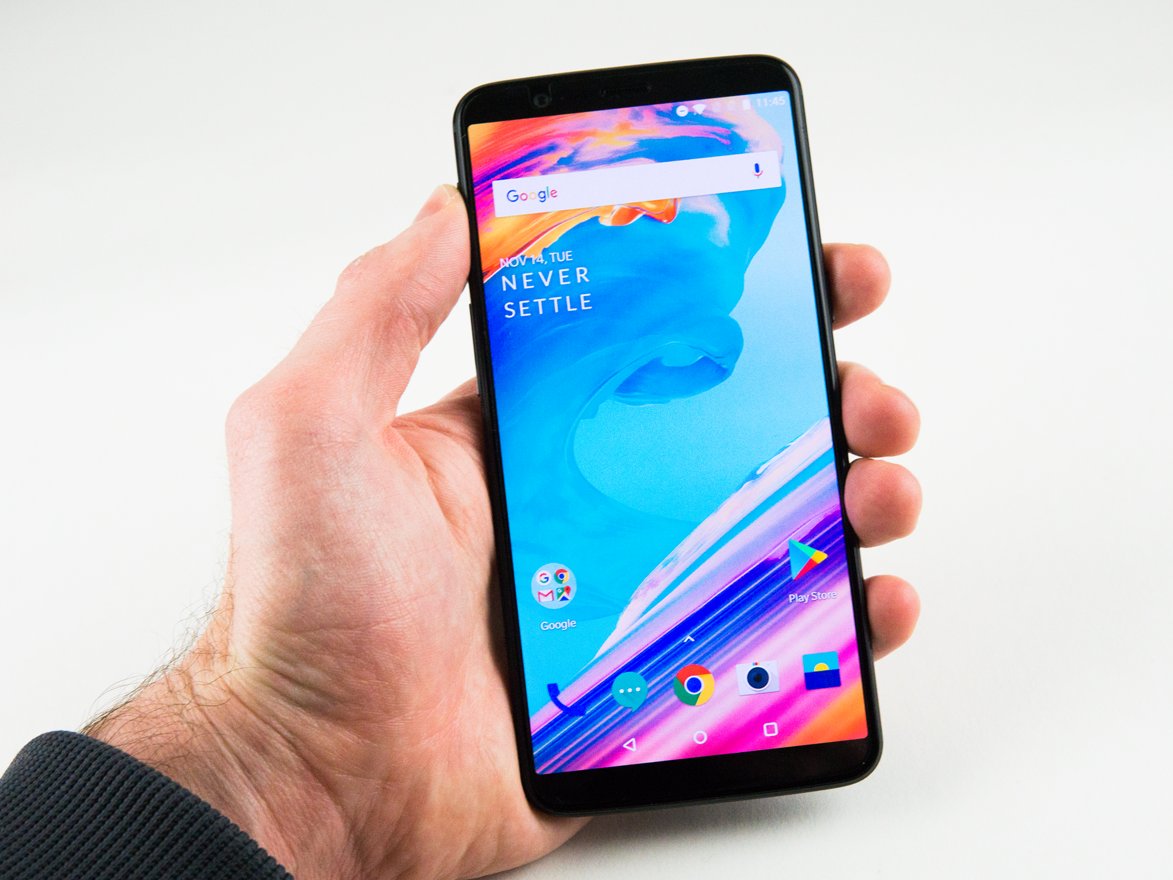
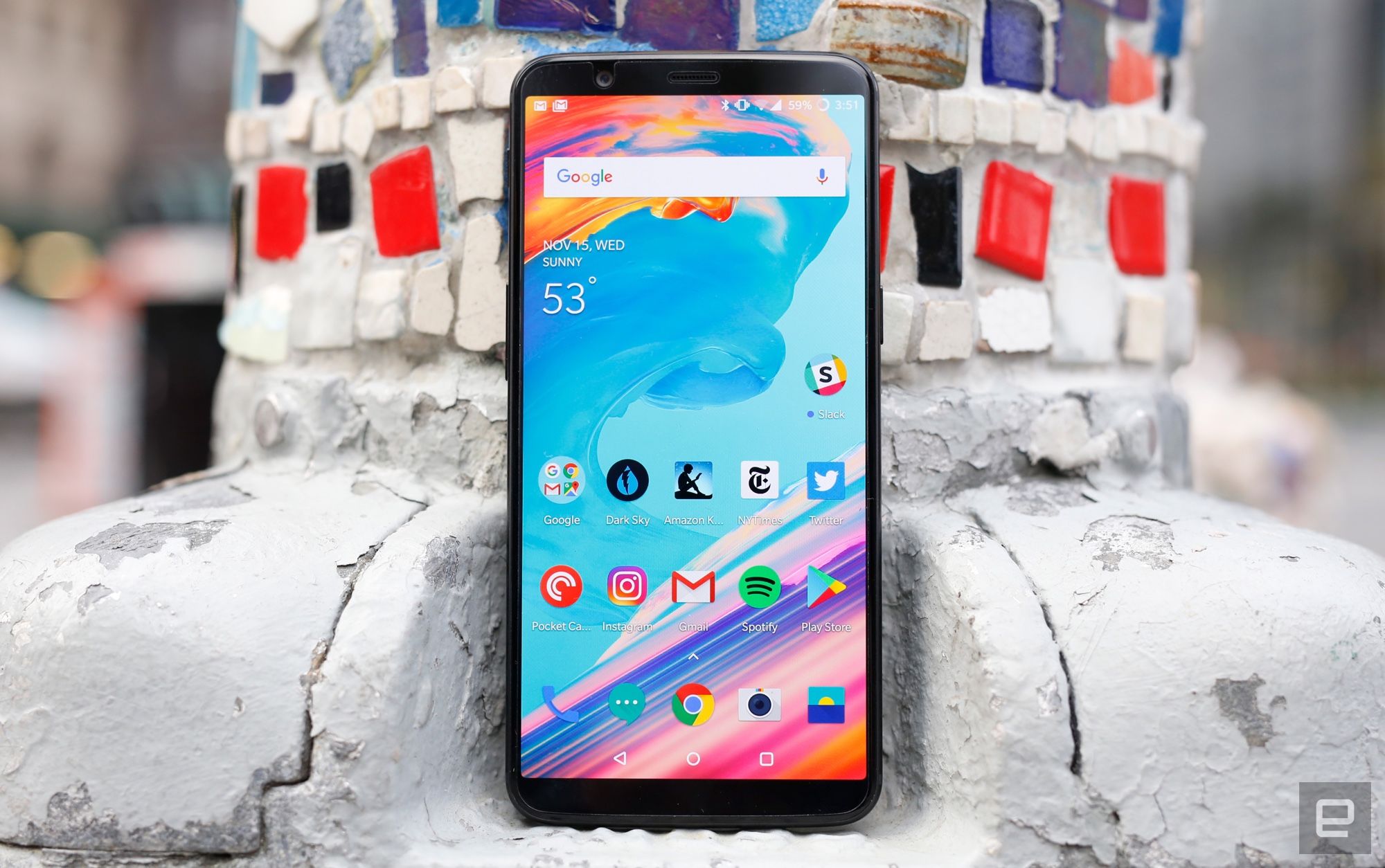
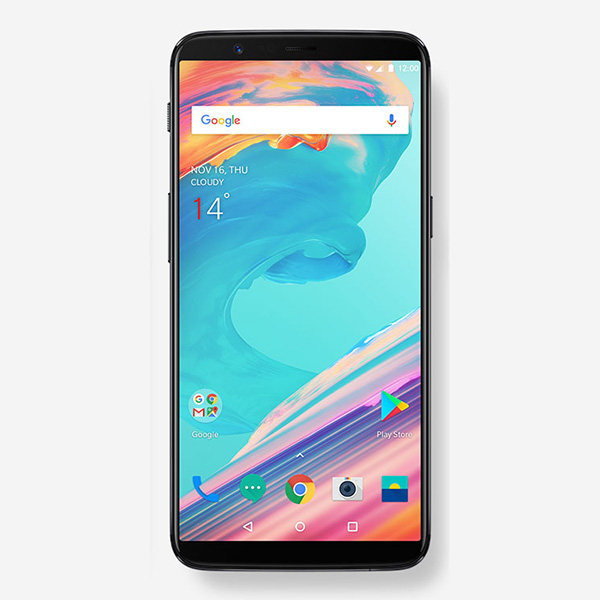
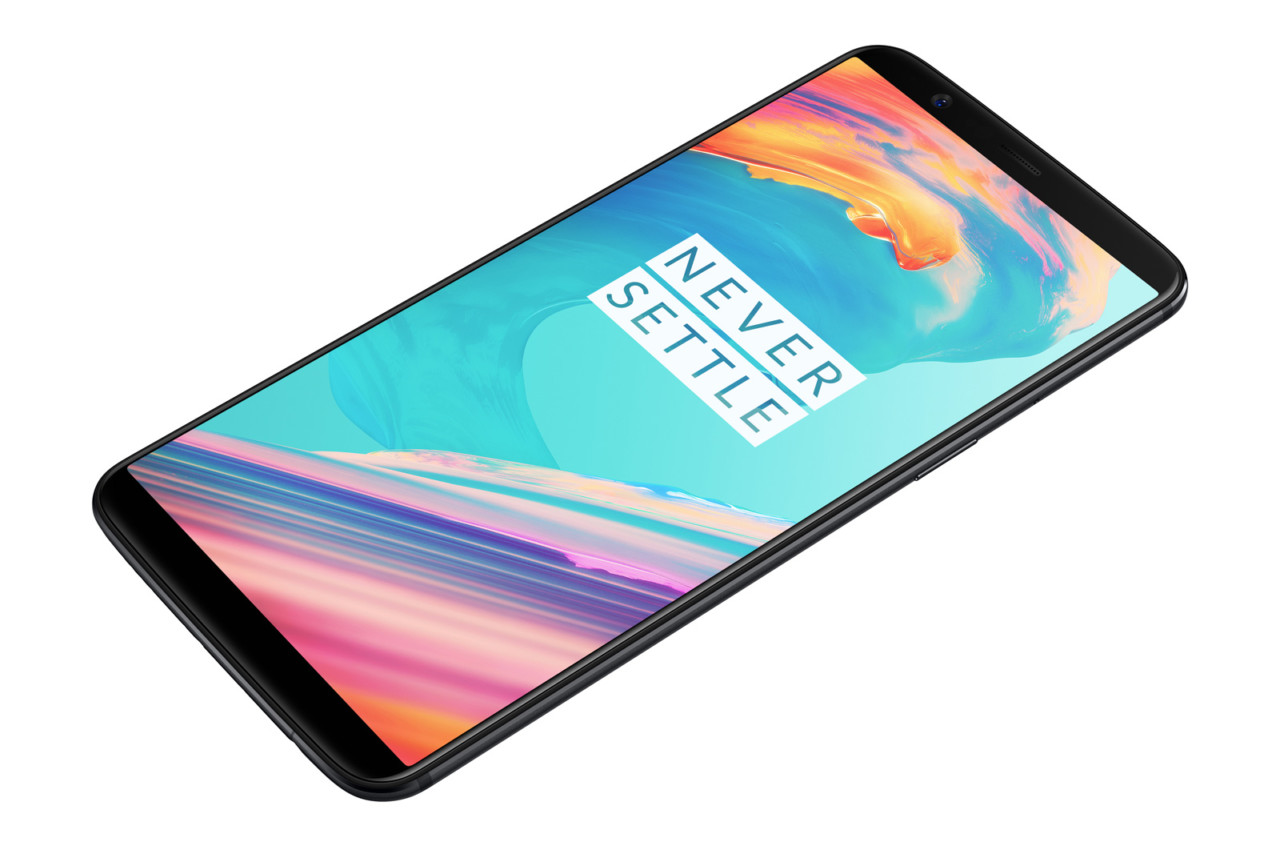
After months of leaks, rumors and speculations, the OnePlus 5T smartphone has been officially launched by the company at an event in New York. The smartphone, which aims to take on the premium offerings from the likes of Apple and Samsung, comes with a stretched-out display, facial recognition, new camera system, improved software, among others.
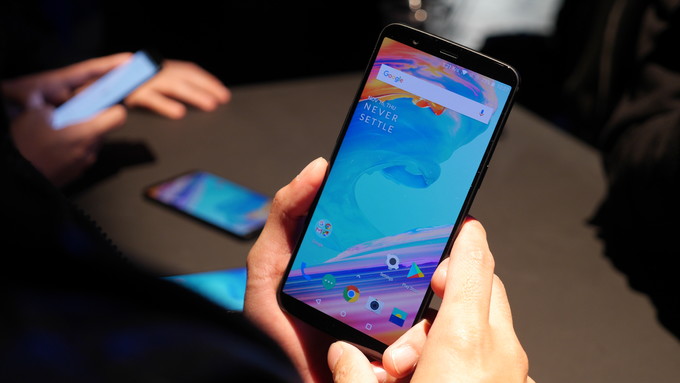
One of the highlight of the smartphone is its display. The OnePlus 5T comes with a 6.01-inch Full HD+ Optic AMOLED display with an 18:9 aspect ratio which is quickly becoming a standard form factor. It has 80.5 percent screen-to-body ratio and comes with DCI-P3 color coverage.
There is a layer of Corning Gorilla Glass 5 on top, protecting the display from minor scratches. The company still insists on the Full HD display and has thus passed over Quad HD display which most of the premium devices are offering.
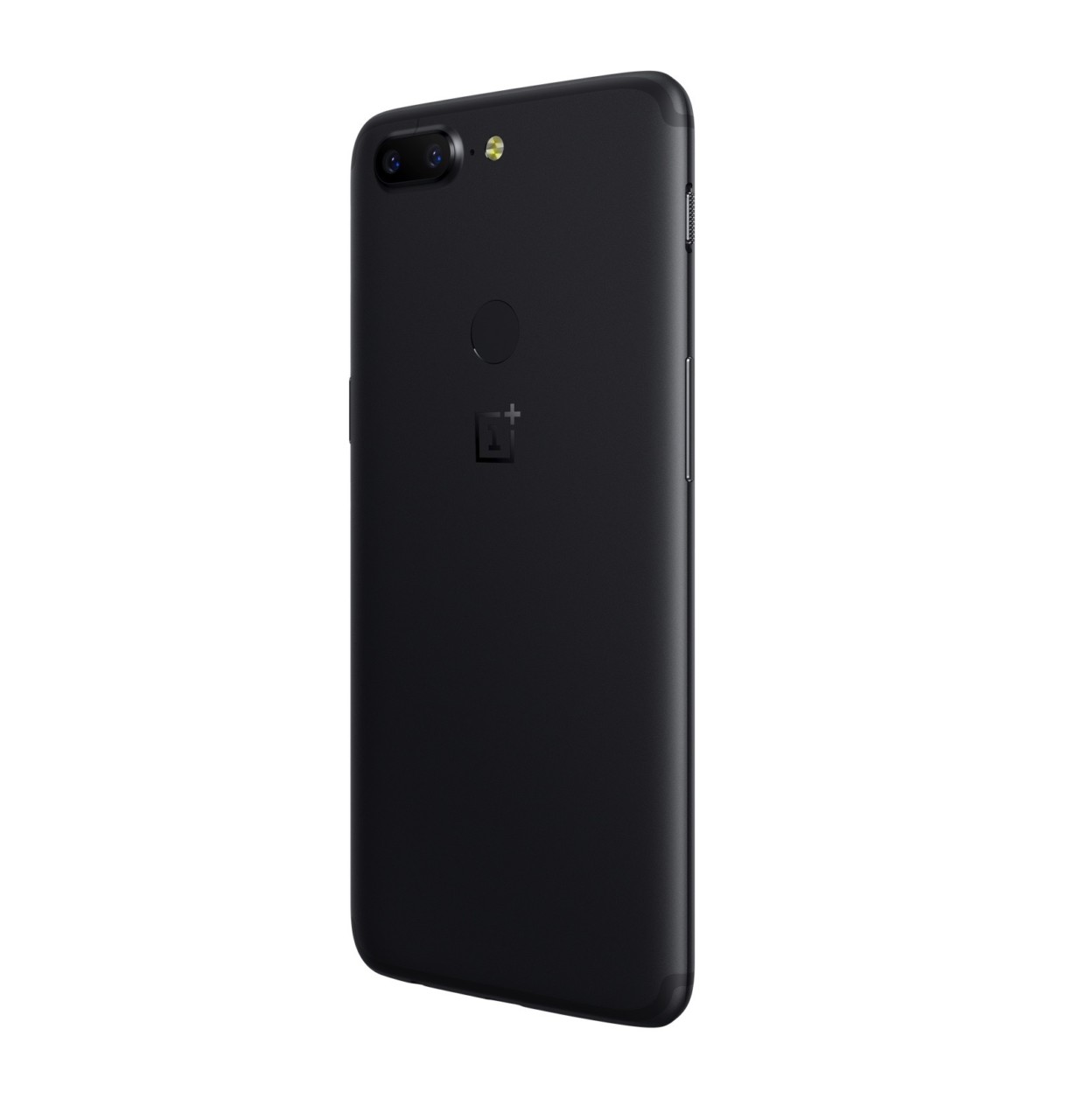
Due to the larger display on the front, there is no space for a home button. As a result, the fingerprint sensor has been moved to the back, just above the OnePlus branding. The company claims that fingerprint sensor can unlock the phone in under 0.2 seconds.
Interestingly, the phone also comes a new “Face Unlock” feature that has over 100 identifiers for distinguishing various faces. However, it cannot be used for authenticating purchases as it is not secure enough.
In terms of specifications, most of the internals remains same as its predecessor. It is powered by a Snapdragon 835 processor, which is currently the top-end smartphone chipset from Qualcomm. The smartphone will be available in two variants — 6GB RAM with 64GB of internal storage and 8GB RAM with 128GB of internal storage.
Apart from display, the company has also focused on improving the camera performance. It still comes with the same 16-megapixel primary sensor at the back, with wide-angle lens and large f/1.7 aperture. However, the secondary tele-photo lens has now been replaced by 20-megapixel sensor with f/1.7 aperture for better low-light photography and improved depth-of-field.
The company has implemented something called “Intelligent Pixel Technology” on the OnePlus 5T which groups pixels together when taking low-light shots to capture enough light and dark data. As per the company, the result should be cleaner low-light shots.
At the launch, the company took a lot of time talking about the OnePlus 5T’s software. So we expected the smartphone to come with Android 8.0 Oreo out-of-the-box, but instead, it still runs Android 7.0 Nougat based OxygenOS, which comes with some new features and improvements. OnePlus says that the beta version of Android Oreo will be available by the end of this year, but for the stable build, users will have to wait till “early 2018”.
The smartphone is powered by a 3,300mAh battery which also supports Dash Charging. Connectivity options on the device include 4G VoLTE, WiFi 802.11ac dual-band (2×2 MU-MIMO ), Bluetooth 5.0 aptX HD, GPS/GLONASS/Beidou, USB 2.0 Type-C and NFC.
The OnePlus 5T will cost $499 for the 6GB RAM and 64GB internal storage variant while the 8GB RAM and 128GB storage model is priced at $559 — same as its predecessor. The smartphone will be available in Midnight Black colour and will go on sale from November 21 in India, North American and Europe.
We use cookies on our website to give you the most relevant experience by remembering your preferences and repeat visits. By clicking “Accept”, you consent to the use of ALL the cookies.
This website uses cookies to improve your experience while you navigate through the website. Out of these, the cookies that are categorized as necessary are stored on your browser as they are essential for the working of basic functionalities of the website. We also use third-party cookies that help us analyze and understand how you use this website. These cookies will be stored in your browser only with your consent. You also have the option to opt-out of these cookies. But opting out of some of these cookies may affect your browsing experience.
Necessary cookies are absolutely essential for the website to function properly. This category only includes cookies that ensures basic functionalities and security features of the website. These cookies do not store any personal information.
Any cookies that may not be particularly necessary for the website to function and is used specifically to collect user personal data via analytics, ads, other embedded contents are termed as non-necessary cookies. It is mandatory to procure user consent prior to running these cookies on your website.