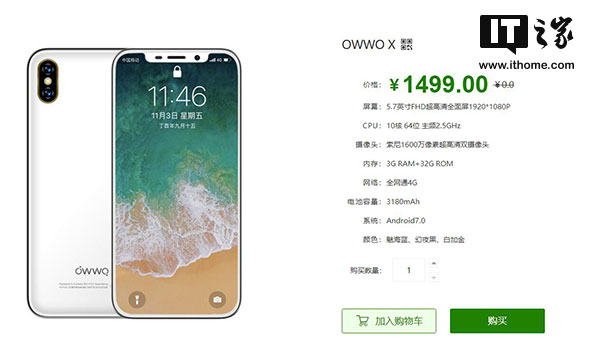
Another iPhone X clone is now official in China. The OWWO X shares a striking resemblance to Apple’s bezel-less flagship. Not only with its X name and near identical design, but also down to the same default wallpaper found on the iPhone X.
OWWO X Specifications
The OWWO X has a 5.7” FHD (1920 x 1080) screen which is surprising, as not only is the TENAA listing (5.5 HD+) different, it beats us as to how a phone with such a display can have such a resolution.
The rest of the specs also conflict with what is listed on TENAA. It is said to have a 2.5GHz octa-core processor while TENAA states it’s a 1.3GHz quad-core chip. There is 3GB of RAM and 32GB of storage but TENAA lists 1GB, 2GB, and 3GB RAM variants with 16GB, 32GB, and 64GB of storage respectively.
The rest of the official specs mentions dual cameras on the rear are a 16MP + 5MP combo but doesn’t mention the front camera. However, OWWO says it has face unlock which can identify over 128 different facial features. That should compensate for its lack of a fingerprint scanner.
It also runs Android 7.0 Nougat and has a 3180mAh battery with a ¥1499 price tag (~$239). There is also a blue variant if white isn’t your style.
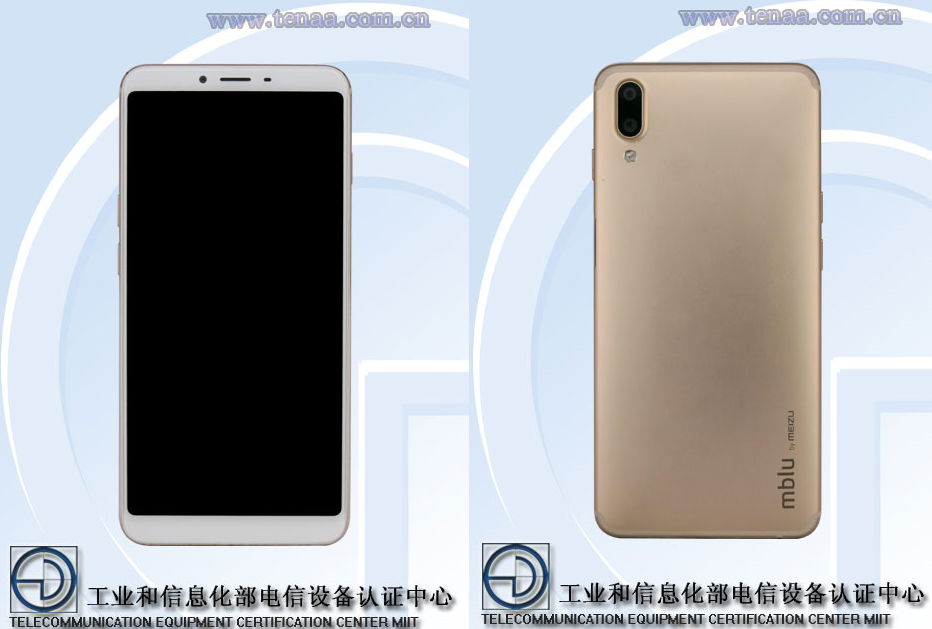
Meizu’s upcoming mid-ranger the Meizu E3 has showed up on TENAA. The full listing is not yet available but the photos leave nothing to the imagination.
Just like the Meizu M6s, the Meizu E3 packs an 18:9 display. The bezels are more or less the same thickness and the bottom one is also missing the mBack button. To not make it identical to the M6s, Meizu has swapped the position of the front camera and sensor. The former is now on the left and the latter on the right.
The rear of the Meizu M3 is much more different though Meizu seems to not have been able to resist joining the iPhone X bandwagon. This is evident from the design of the dual rear cameras.
Beneath the camera housing is a LED flash. There are also antenna lines at the top and bottom and at the bottom right corner is a “mblu by Meizu” text.
The Meizu M3 has its fingerprint scanner on the right and above it is the power button. For those who are used to the scanner being on the front or back of the device, this will take some time getting used to. Volume rocker now keeps the SIM tray company on the left side of the device.
Microwear is a relatively small Chinese tech company that mainly produces smartwatches. If you follow Gizmochina, you may know that the company has released quite a few affordable yet feature-packed watches. The Microwear H5 costs less than $100 but it offers a nice-looking design and a ton of functionality. I’ve used this watch for more than enough and here is our Microwear H5 review.
UNBOXING
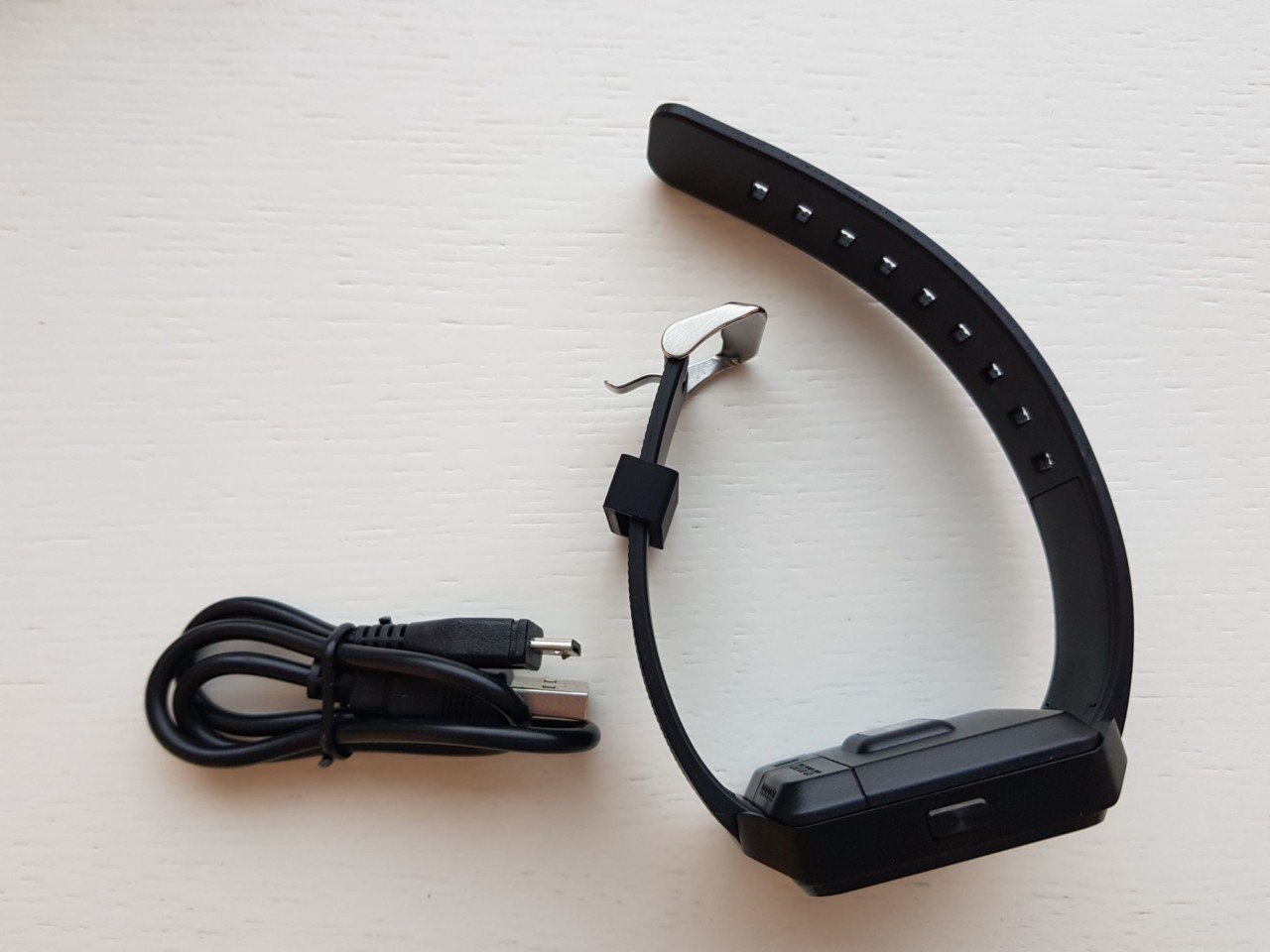
The watch comes just with the micro USB cable since it does not use any proprietary cradles like some other watches.
DESIGN and FEATURES
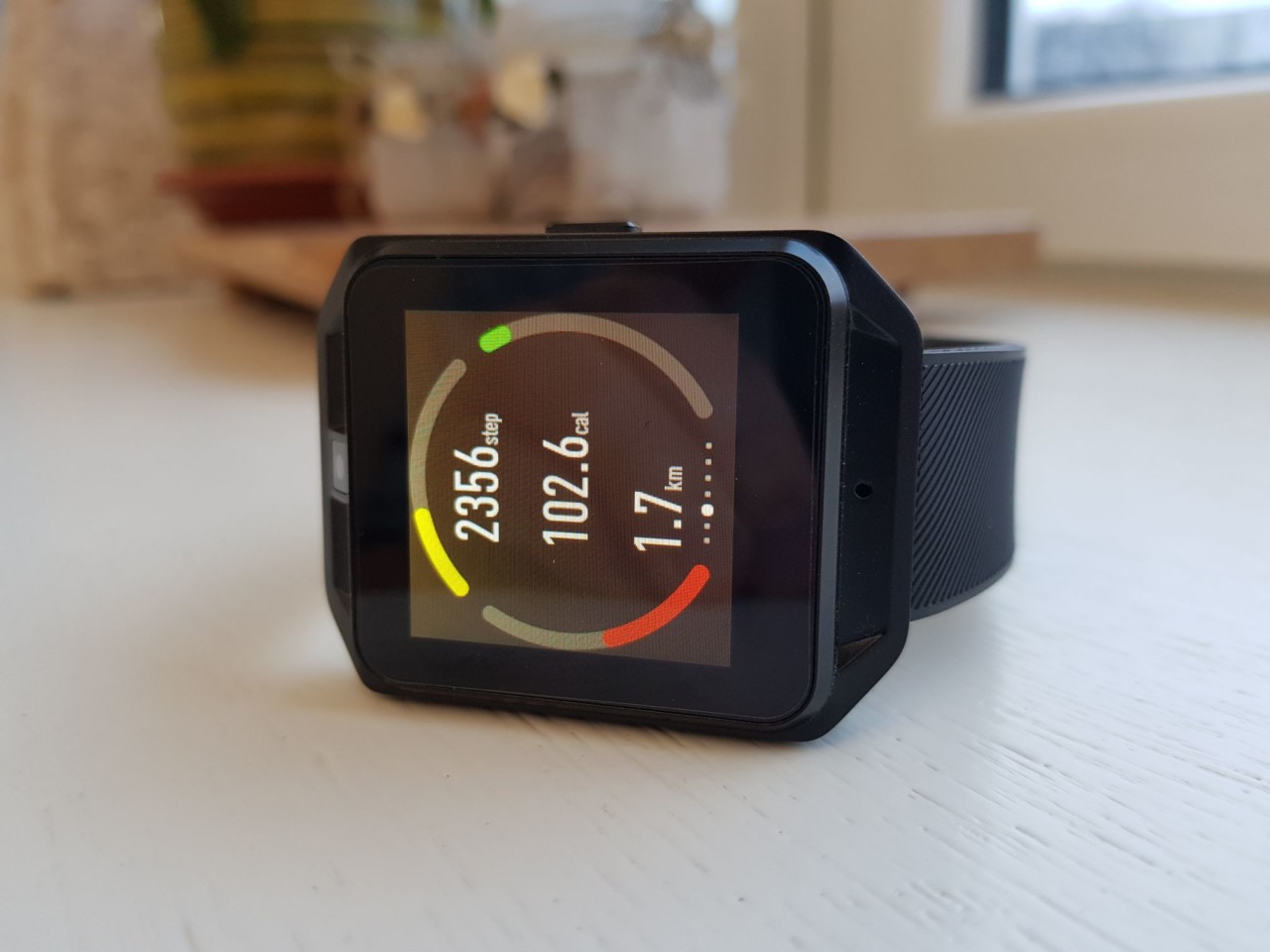
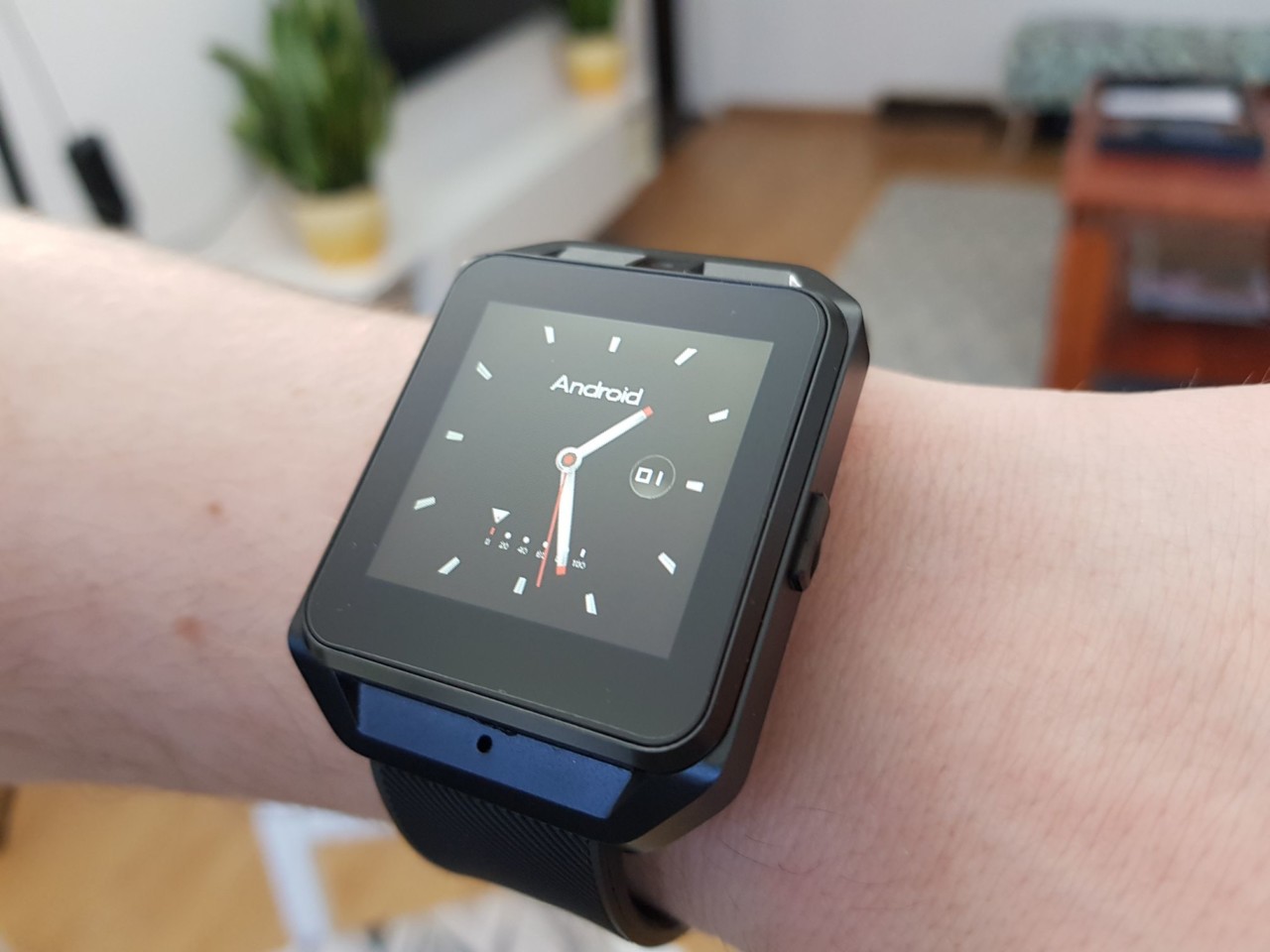
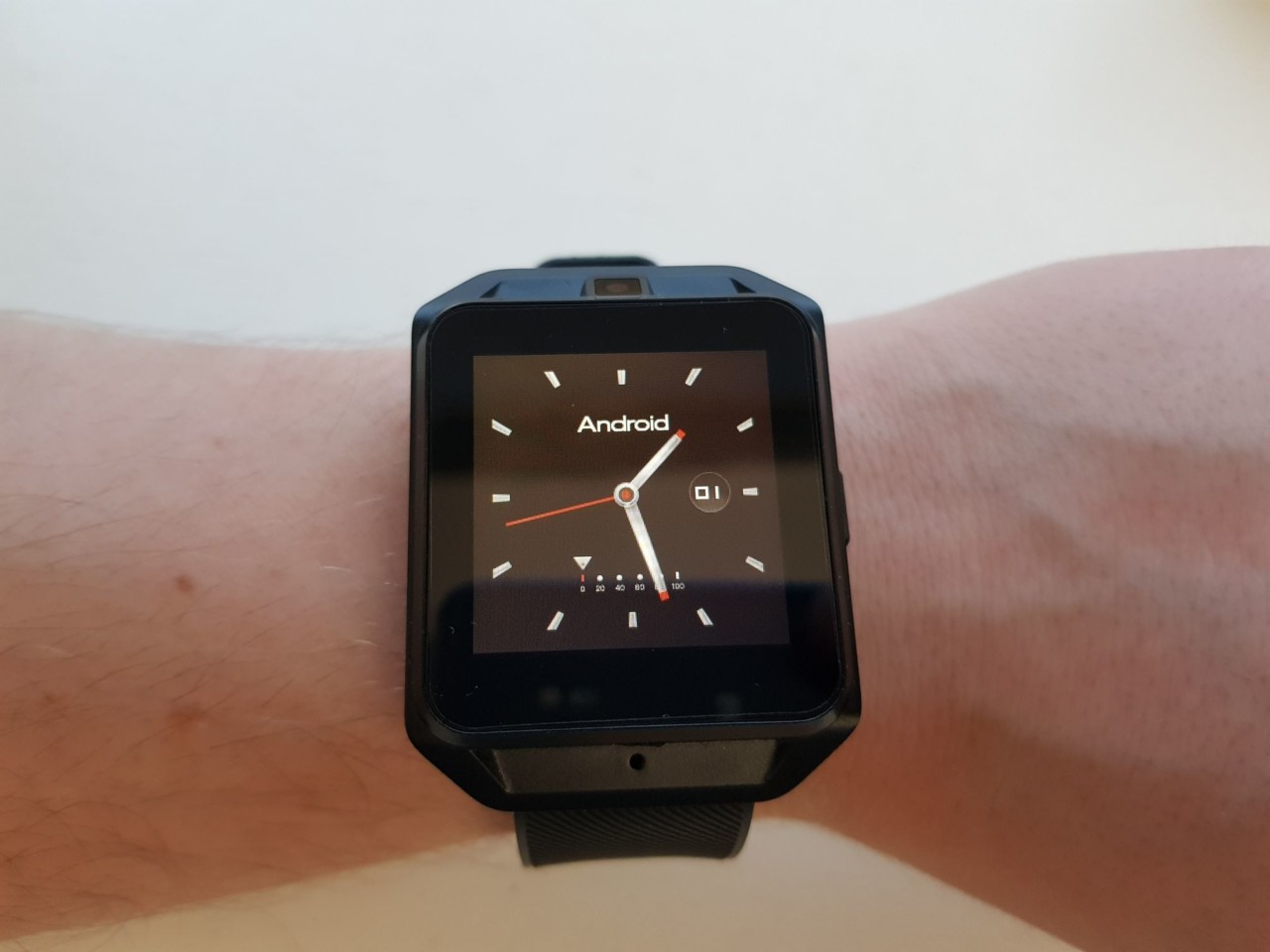
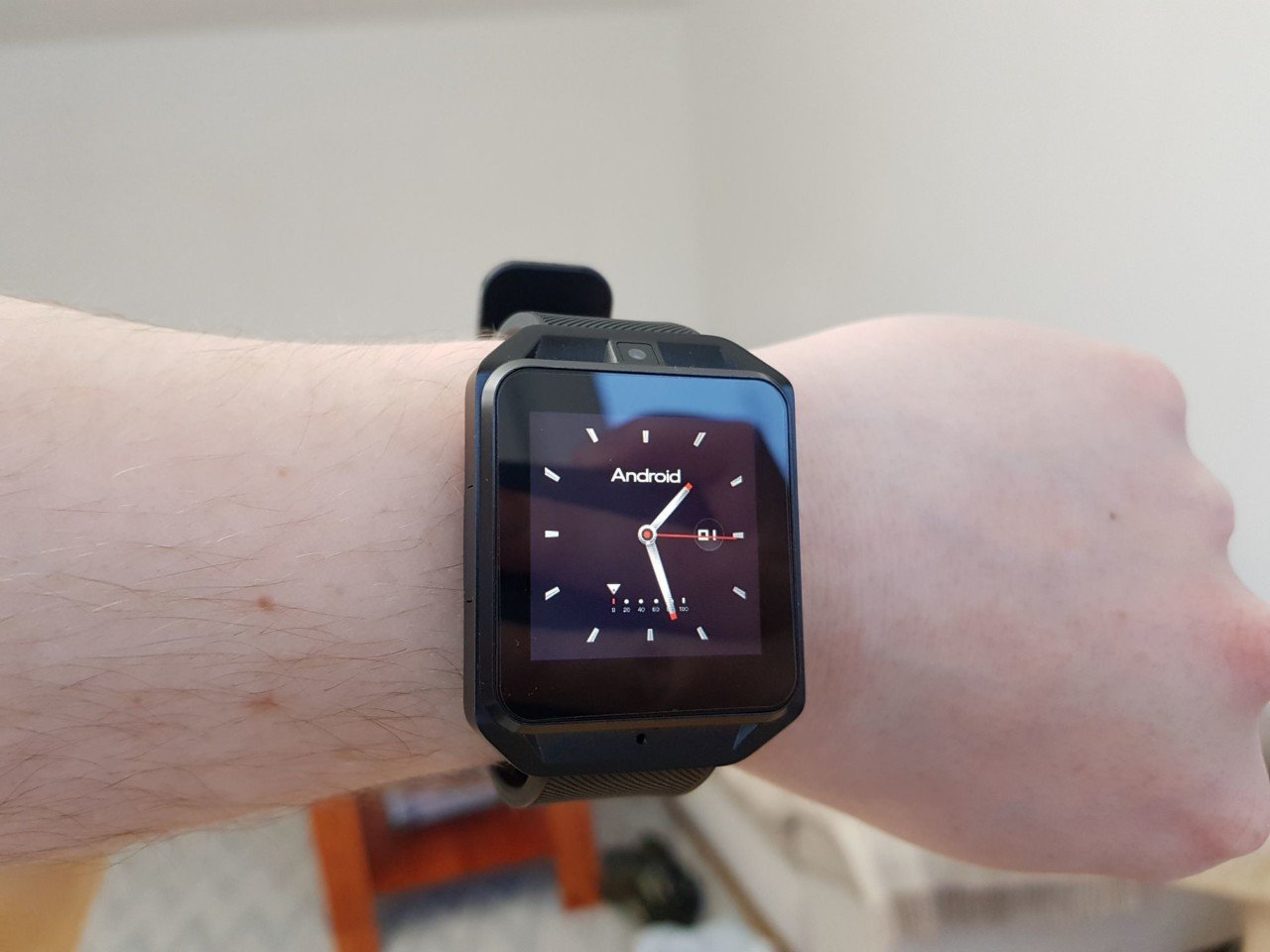
Let’s talk about the design, which is always subjective, especially when we talk about watches. Many people prefer round-shaped watches but I think that square-shaped ones also look nice. I like that watch is sturdy and well-made, thanks to the aluminum alloy casing.
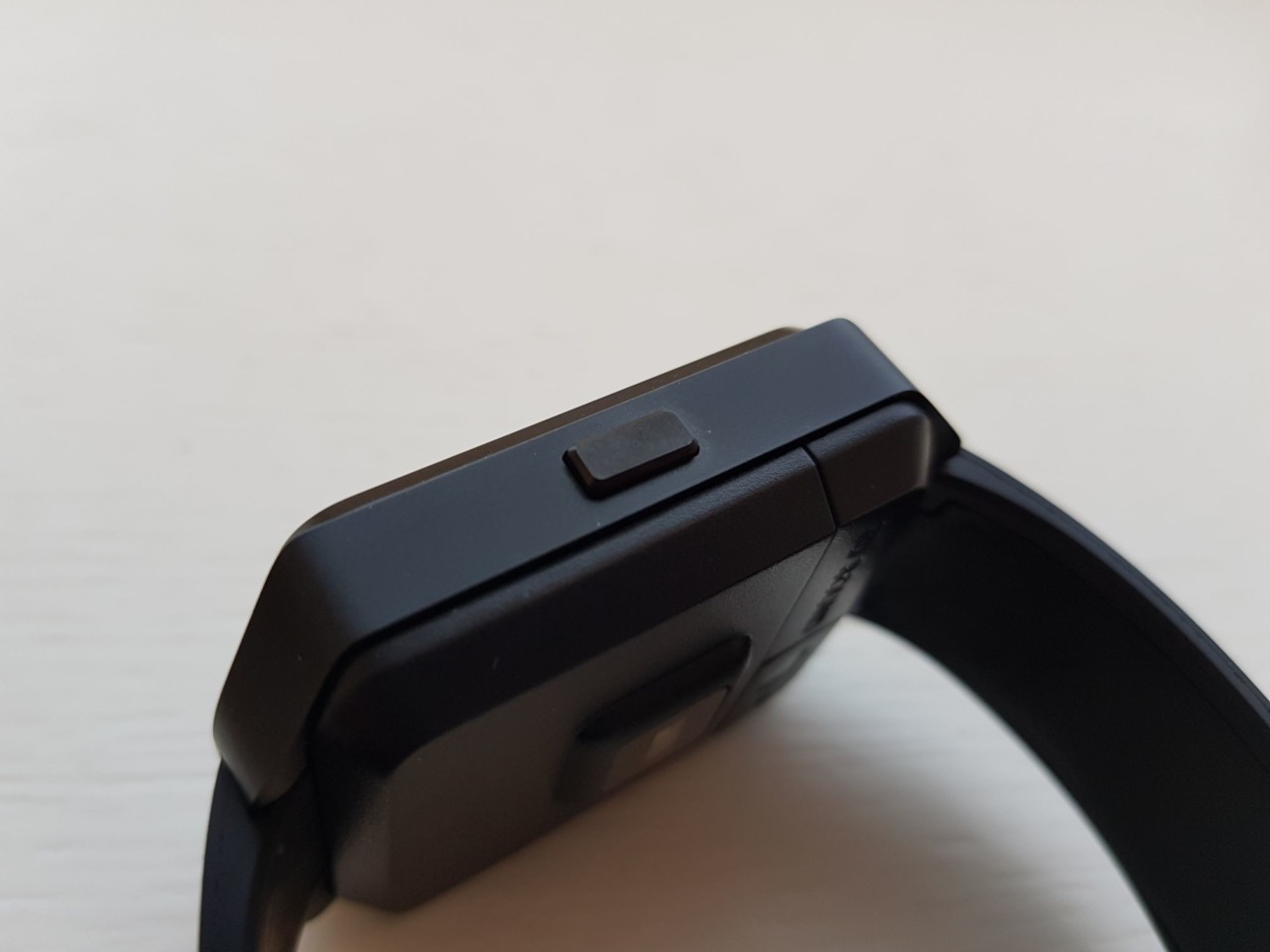
On the side, we have just one home/power button.
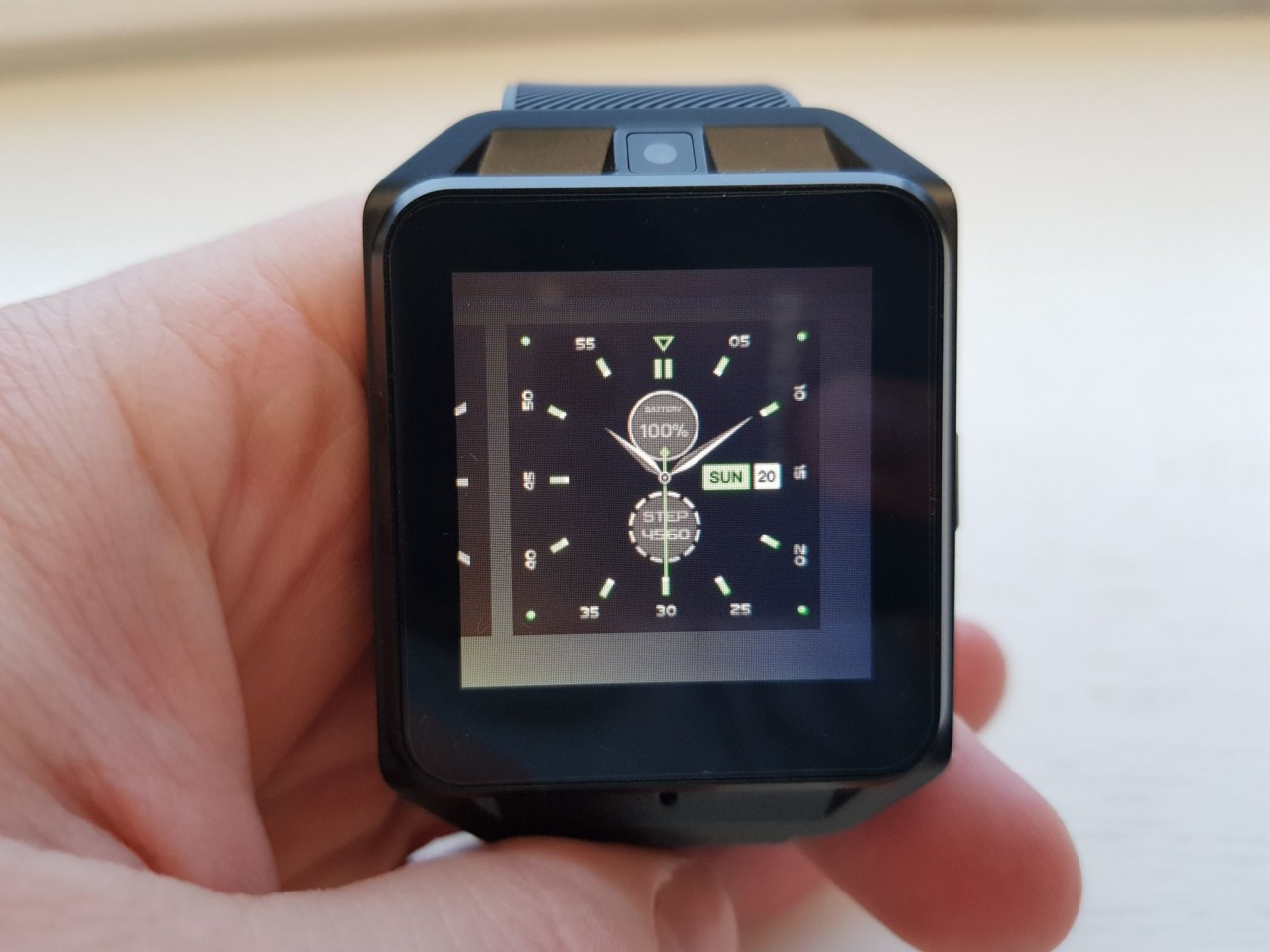
I found a 1.54″ panel is not the sharpest out there but I found it to be decent for a smartwatch except for average viewing angles.
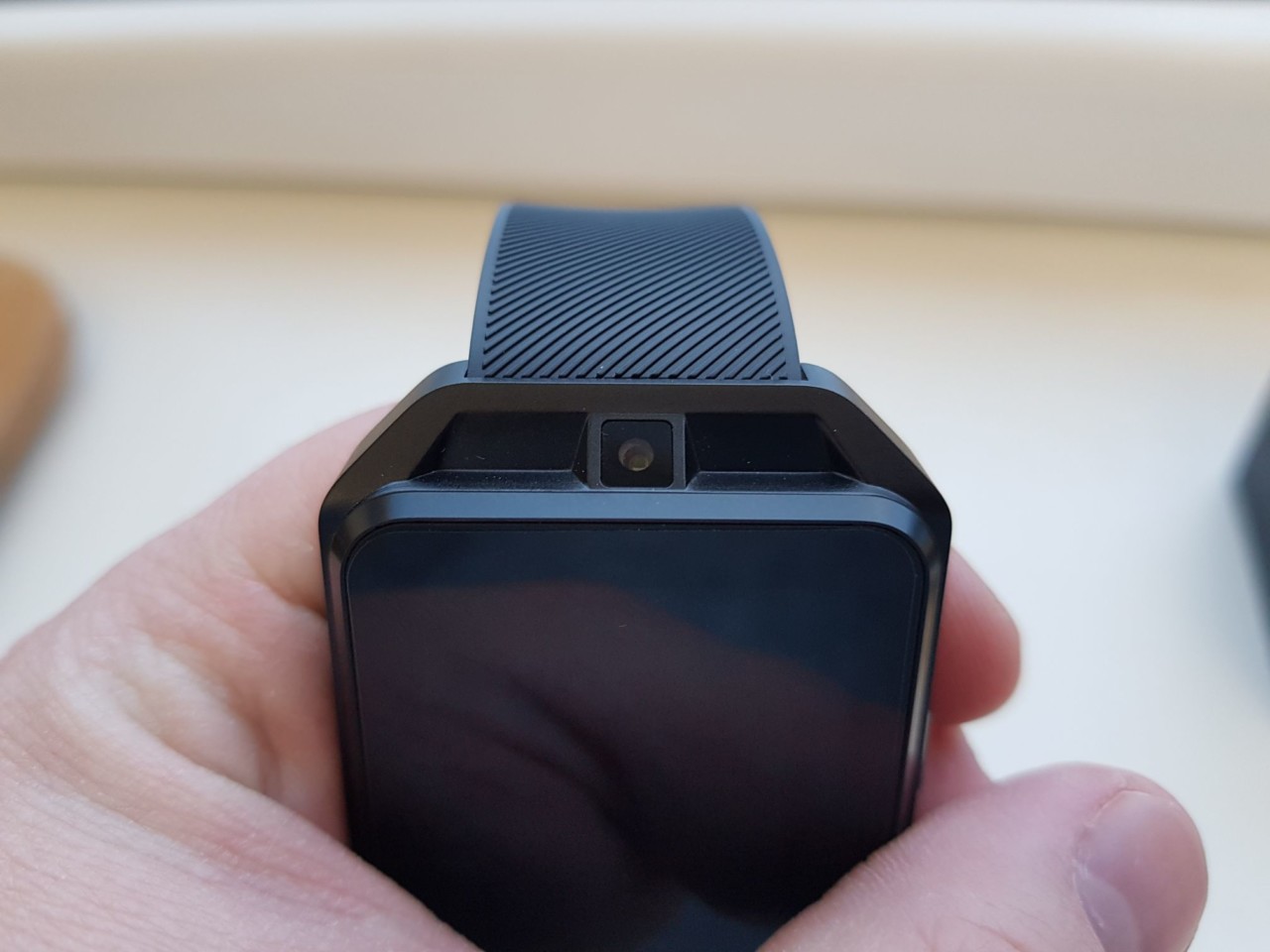
Just above the display, we have a 2MP camera, which is a cool feature on a smartwatch but I didn’t really use it. It’s simply uncomfortable to take pictures from your wrist. Also, the camera is implemented at an angle, which makes it really difficult to use.
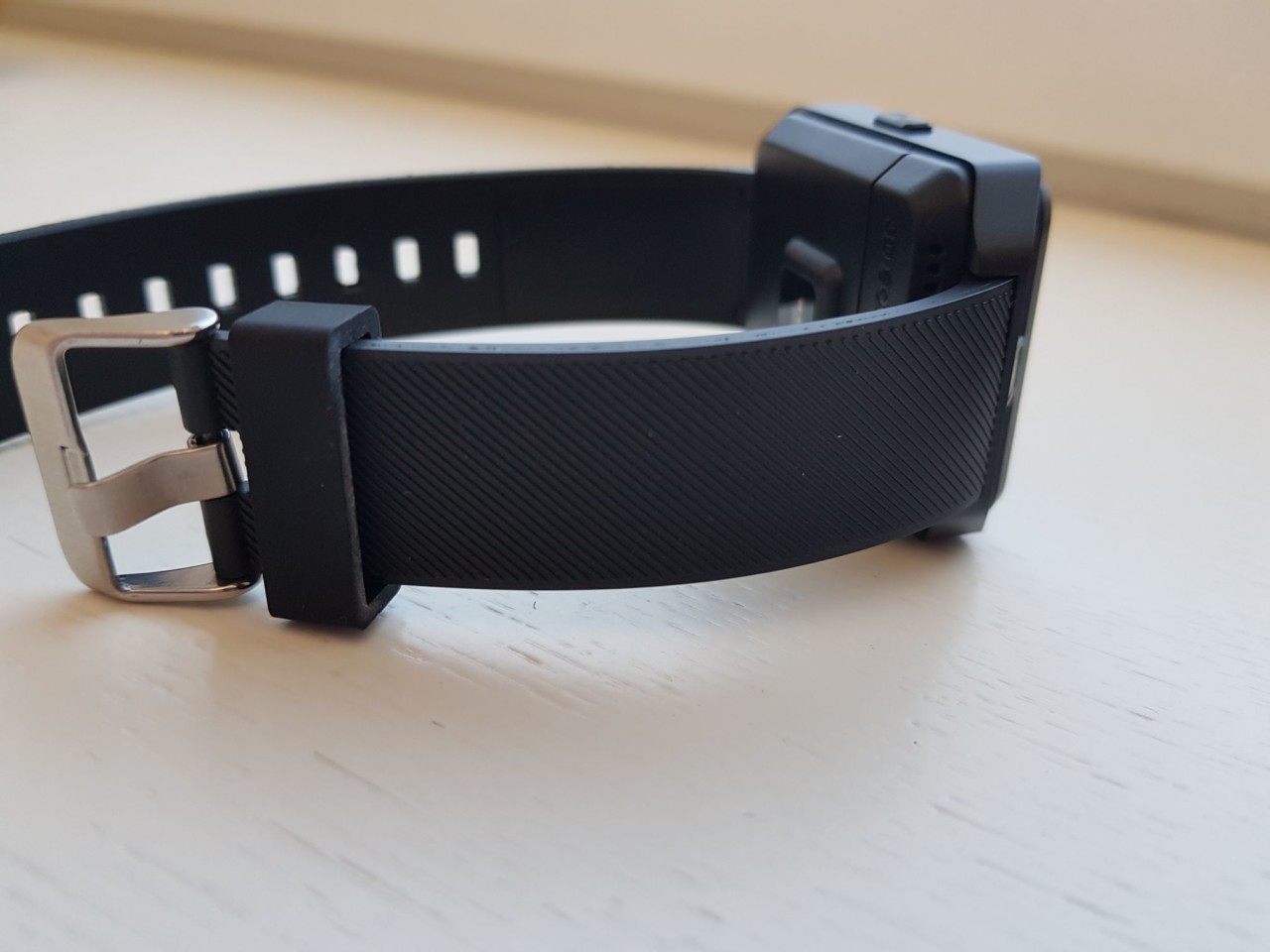
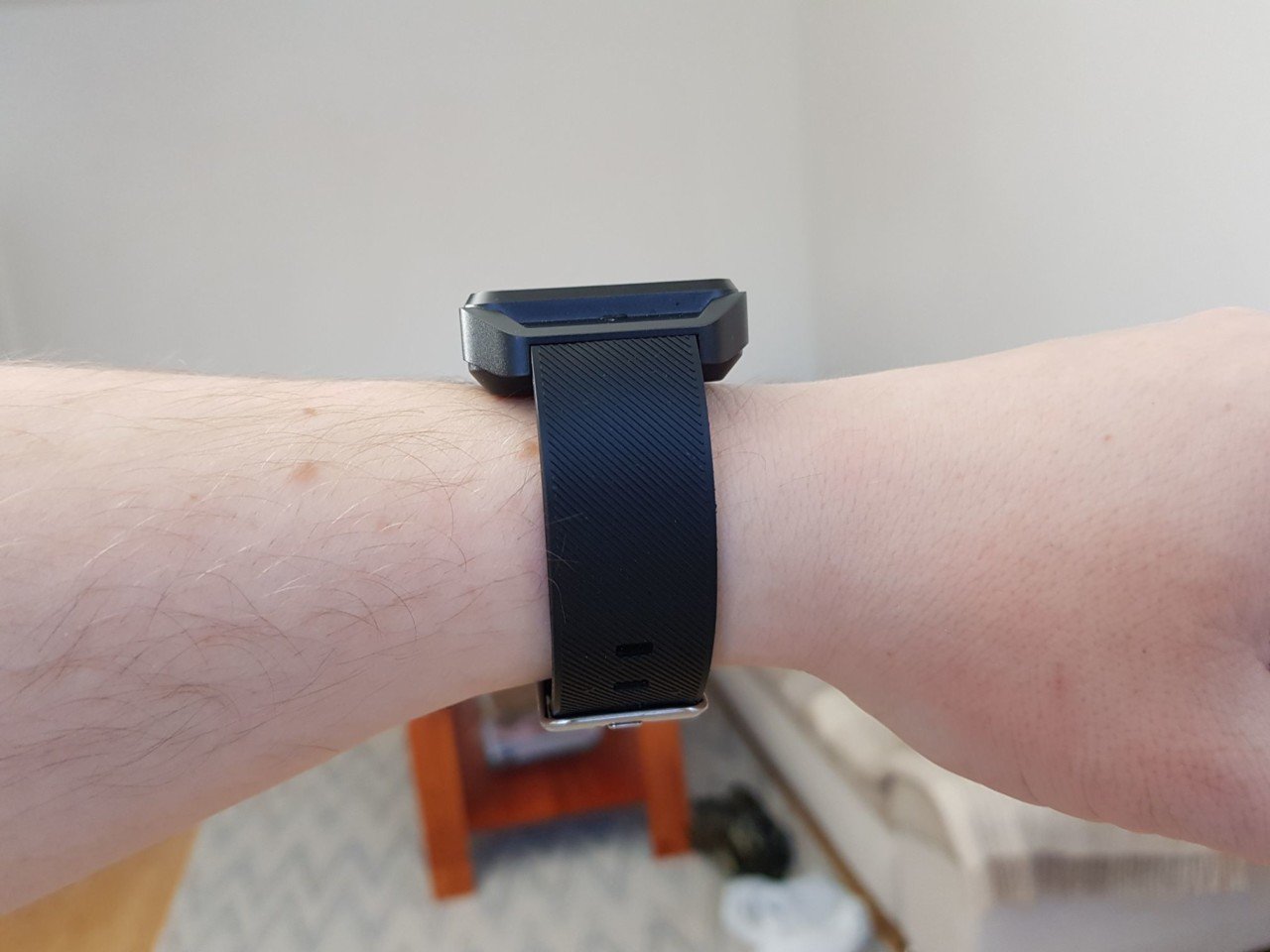
The rubber strap does not look expensive but I found the H5 to be comfortable on my wrist.
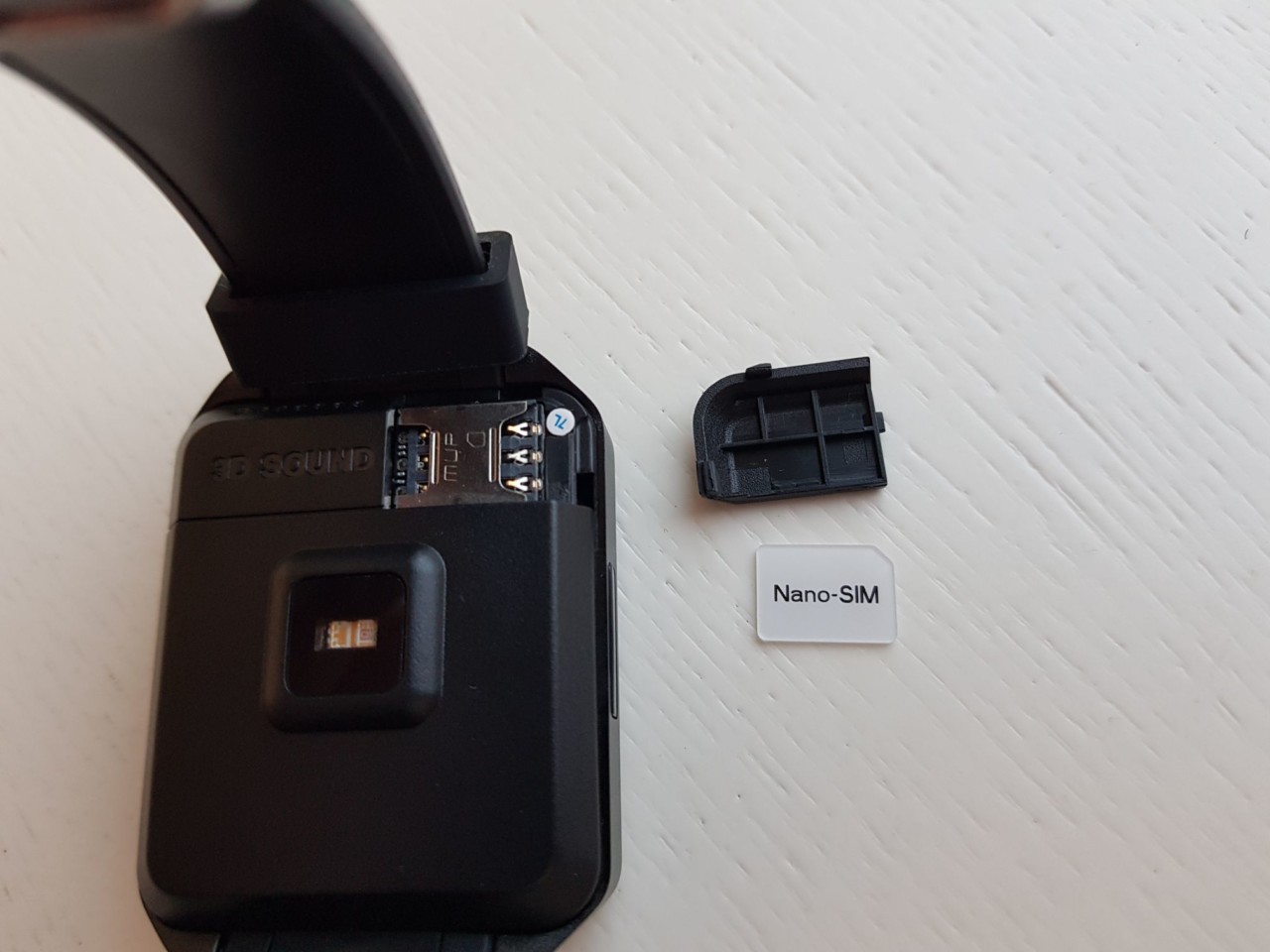
On the back, we have a heart rate sensor and a SIM card tray since this watch can act as a smartphone for calls, browsing the Internet etc. In fact, Microwear claims this is the first 4G enabled smartwatch in the world.
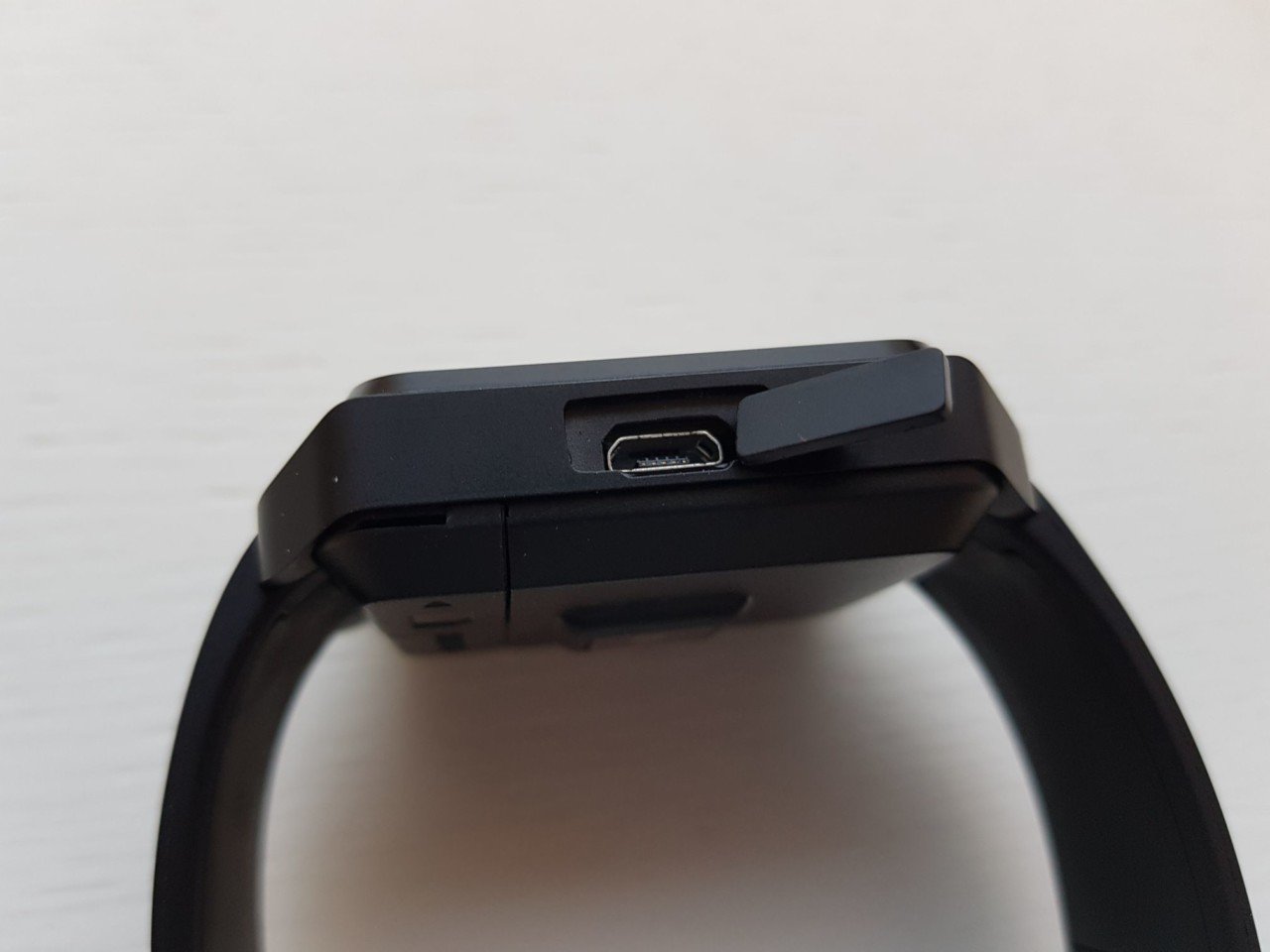
On the side, there is a micro USB port for charging. Sure, it would have been nice to have USB-C port but I’m so glad that Microwear didn’t choose to implement any proprietary solutions that require carrying a specific cable or a charging dock.
The H5 is not water-resistant, which may be really frustrating for a lot of users but that’s a tradeoff of having a nano SIM card tray easily accessible and the micro USB port for charging.
HARDWARE and SOFTWARE
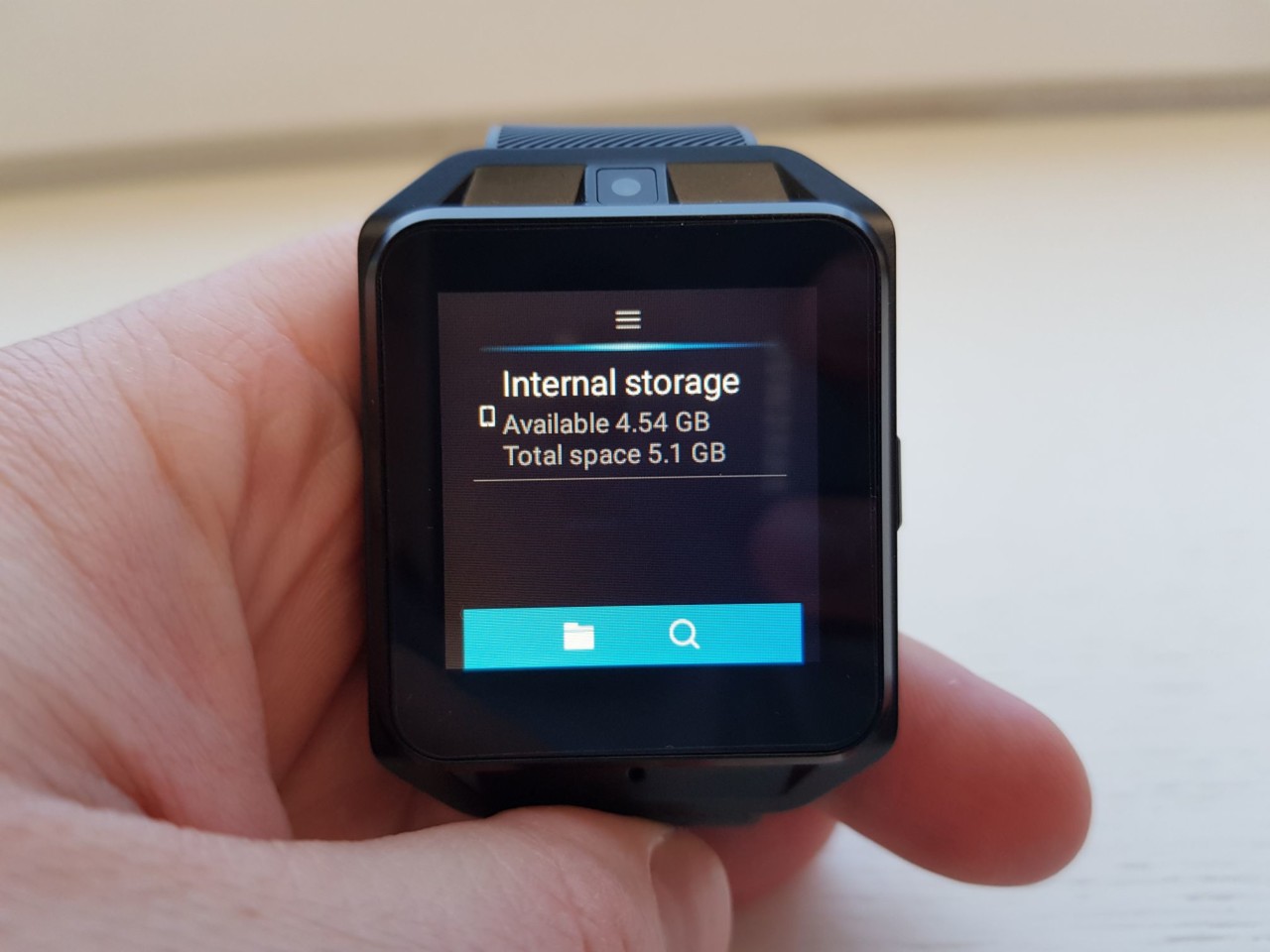
When it comes to hardware, the watch has specs that are still used on some entry level phones. The device ships with the MTK6737 chip, 1GB of RAM and 8GB of storage.
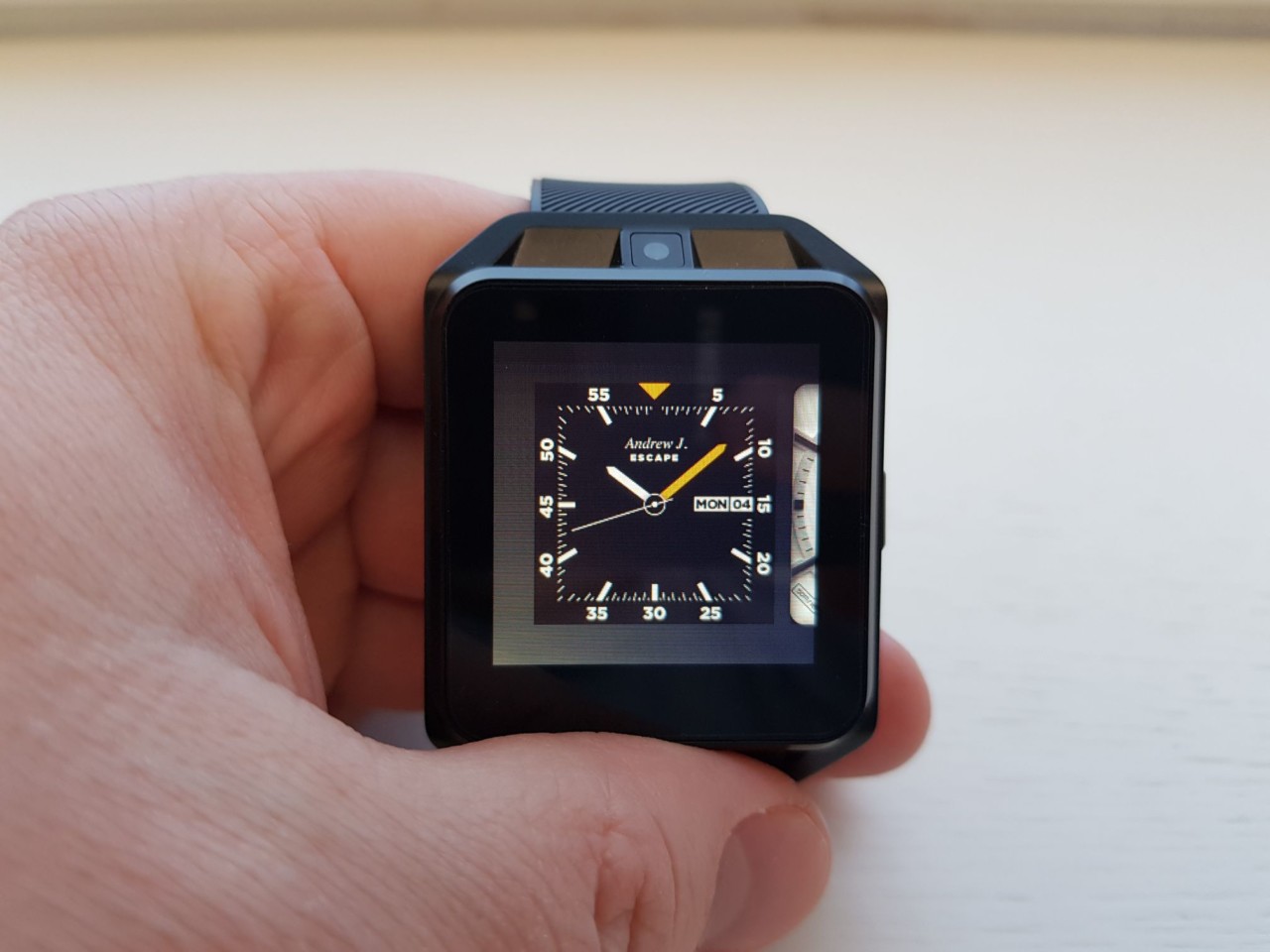
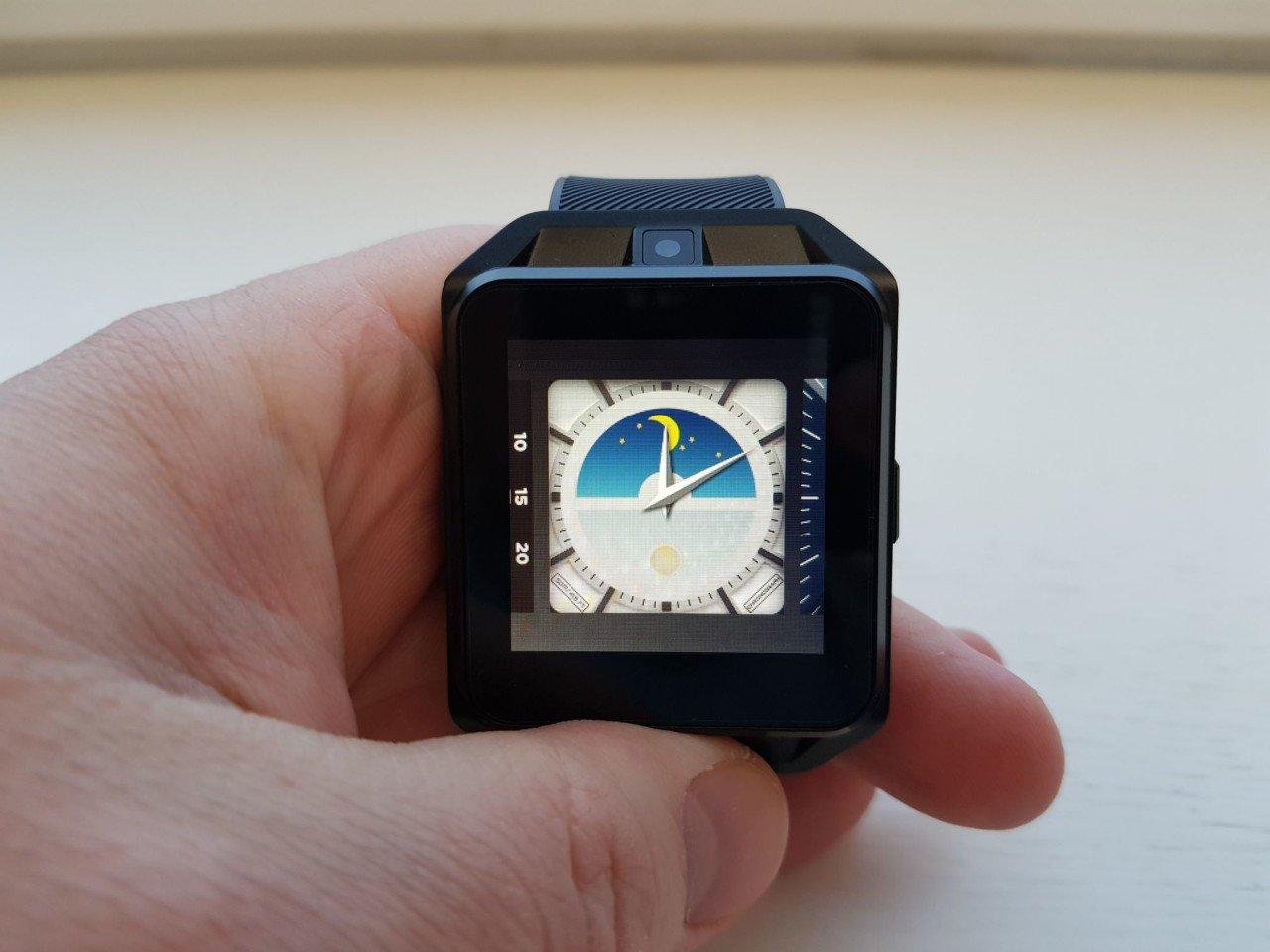
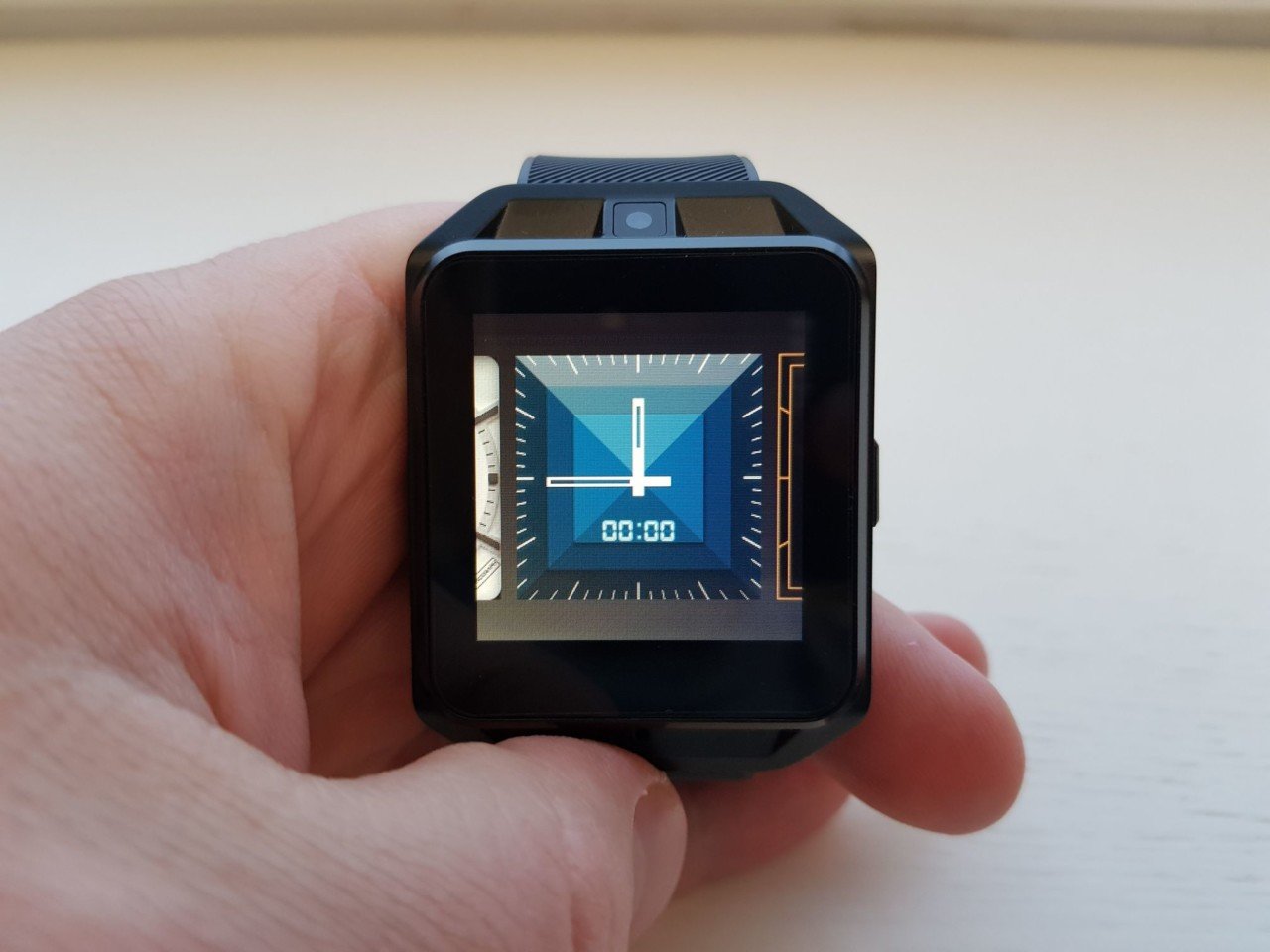
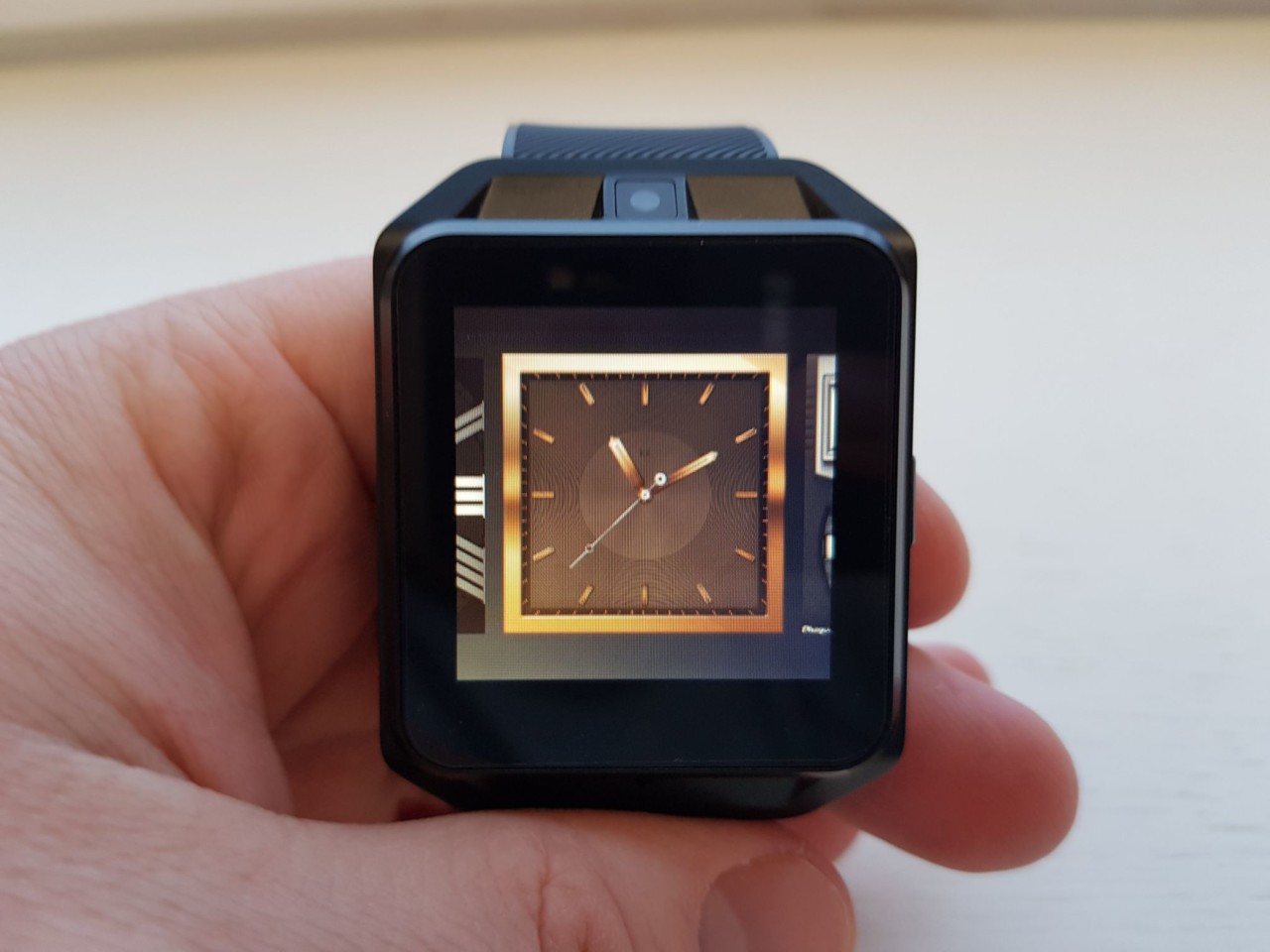
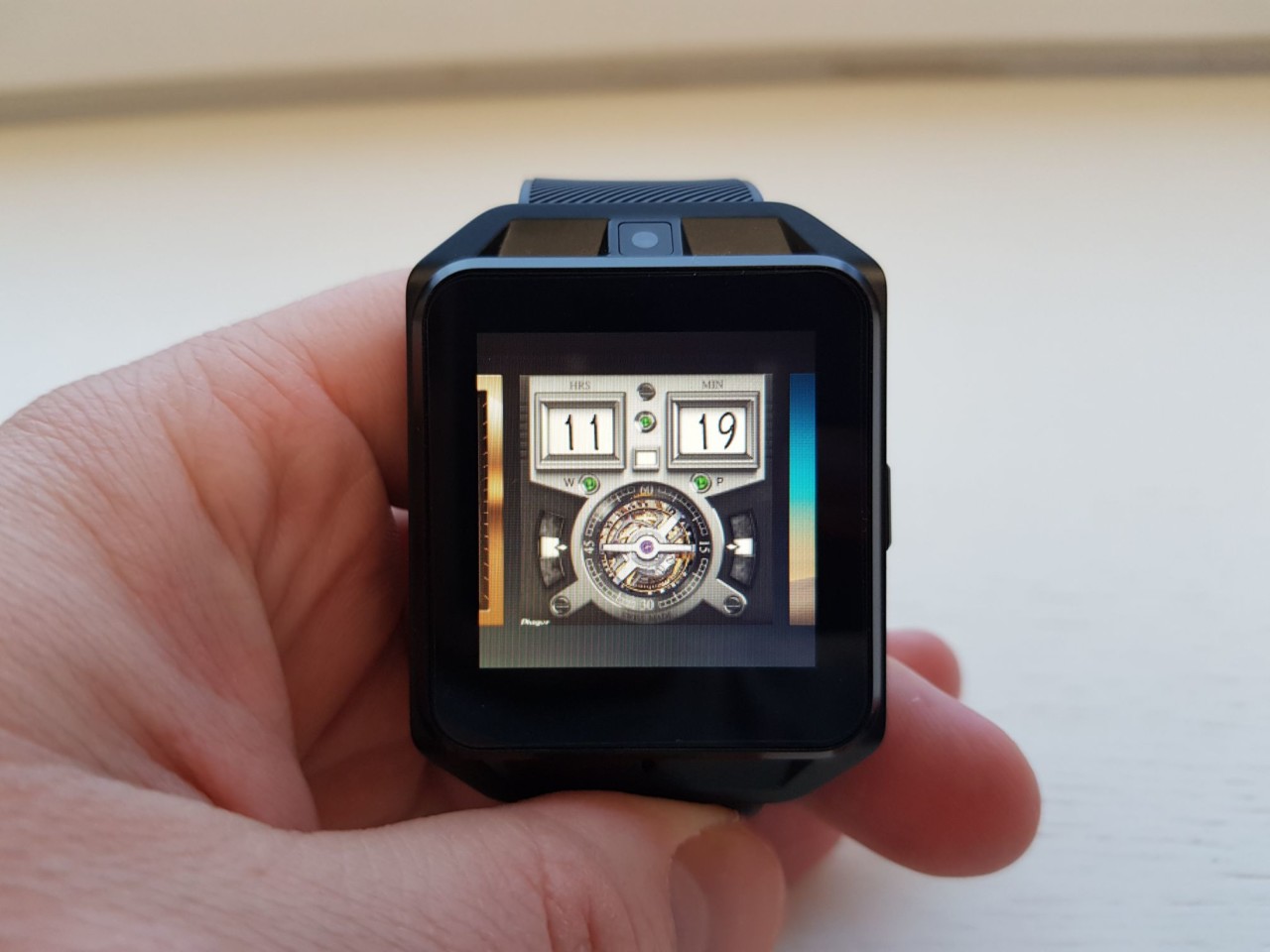
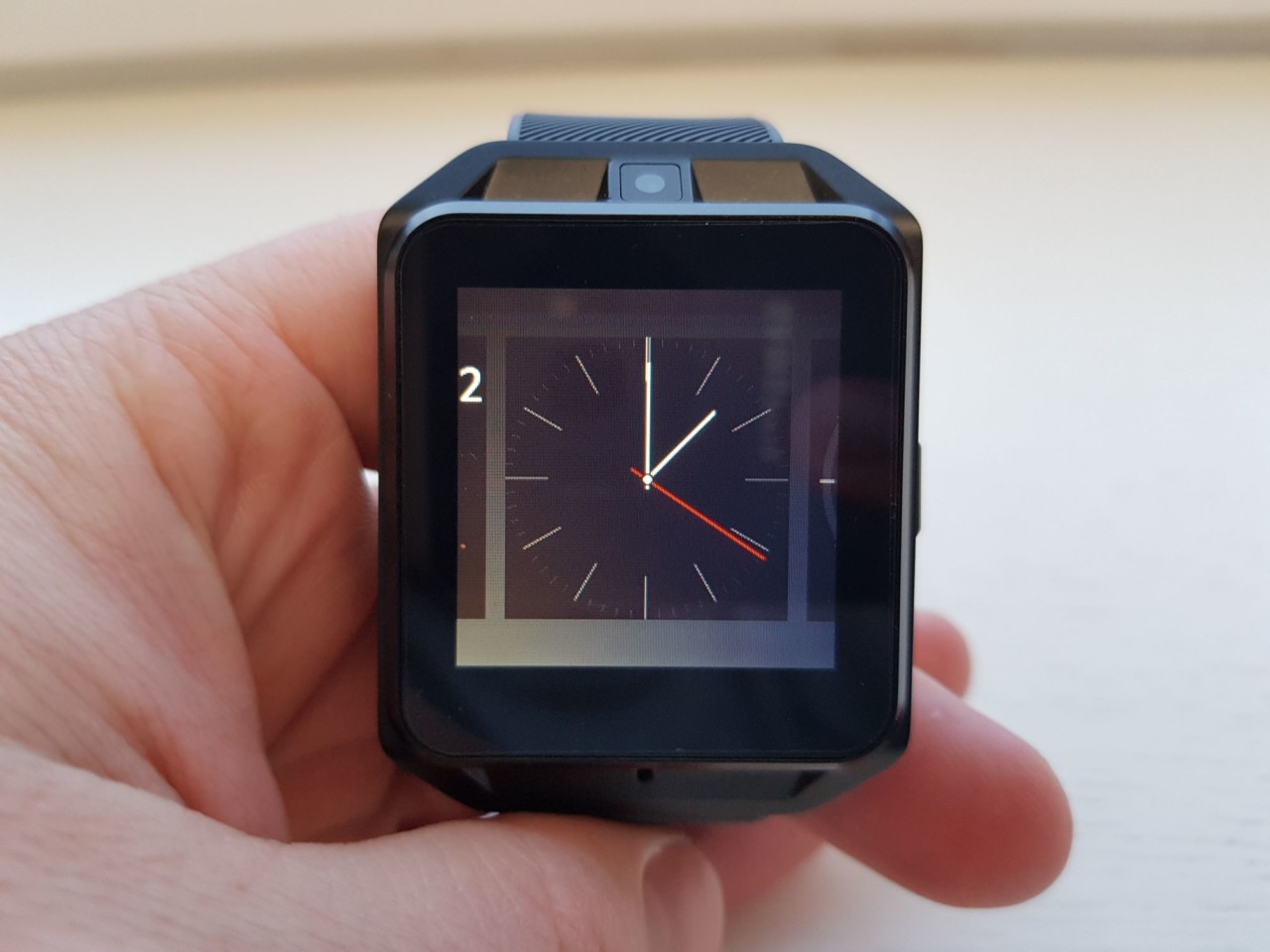
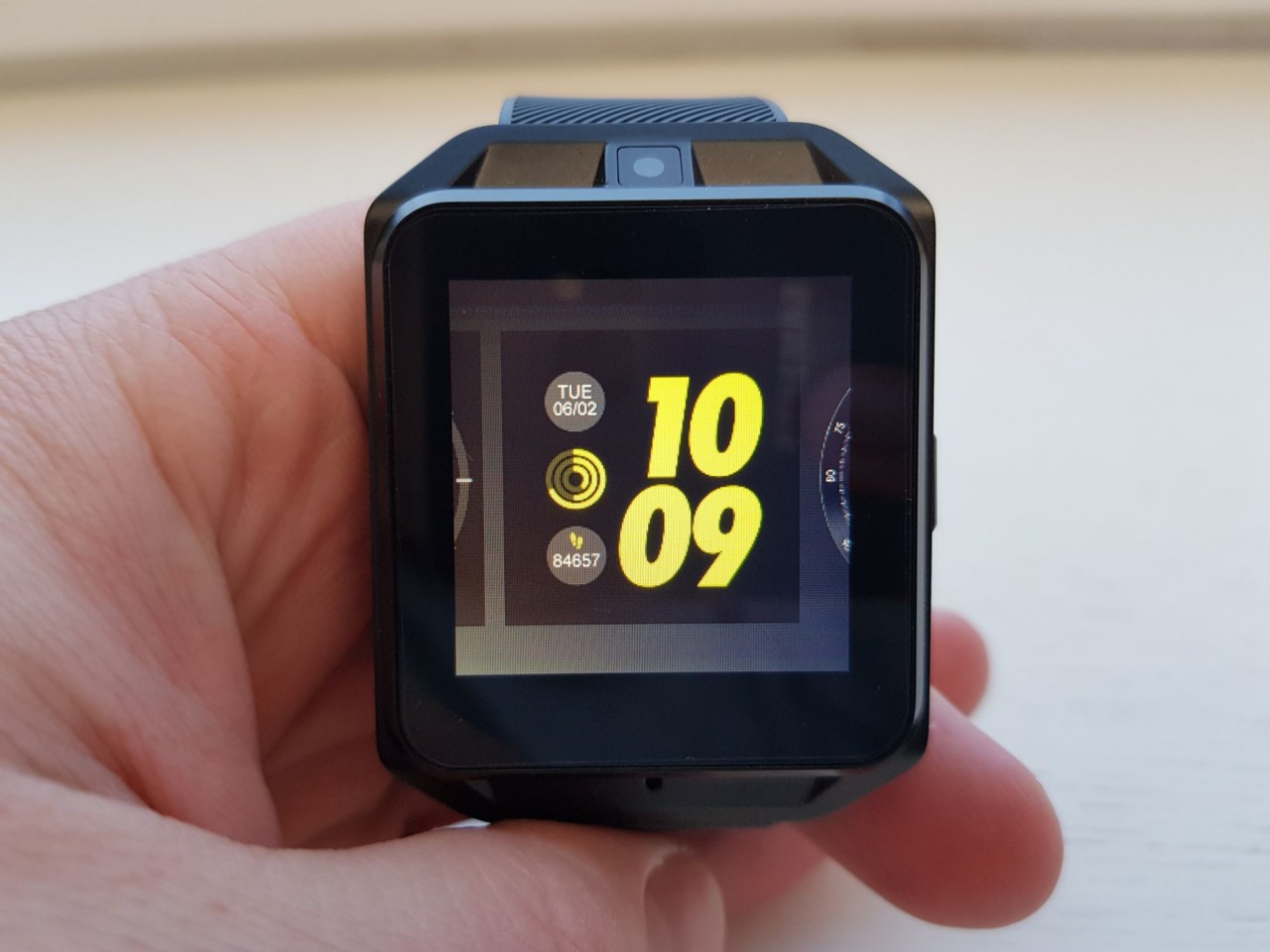
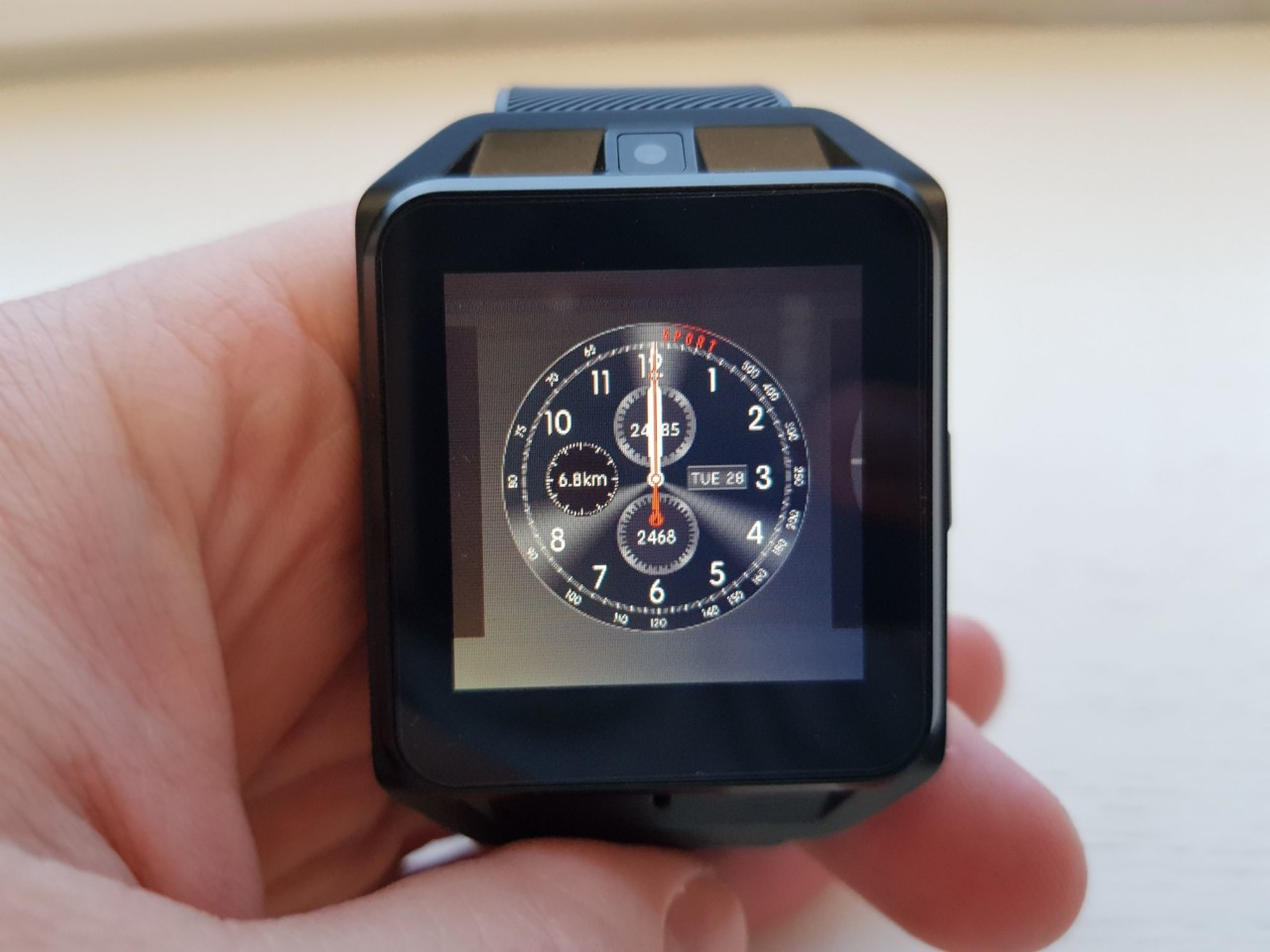
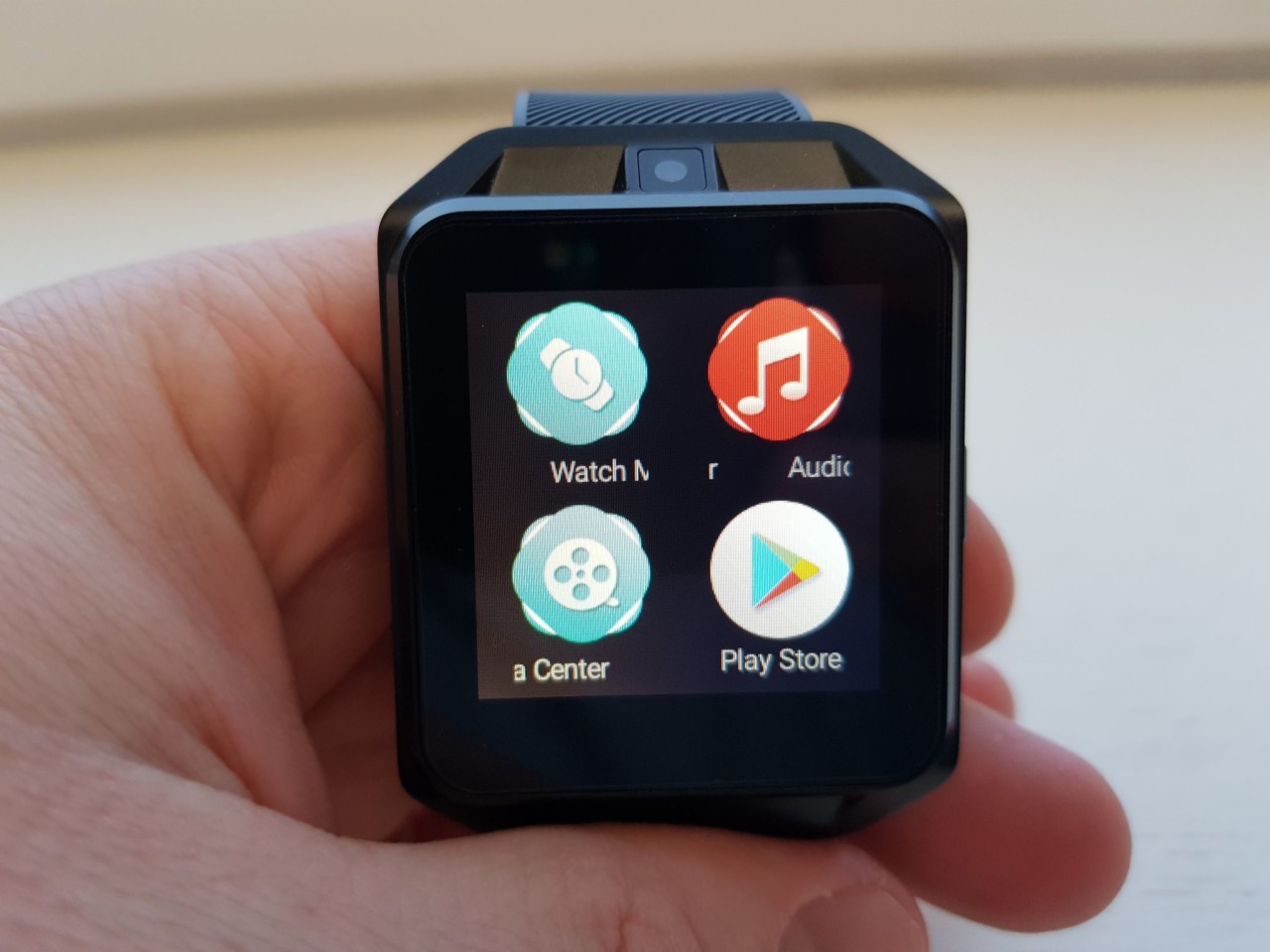
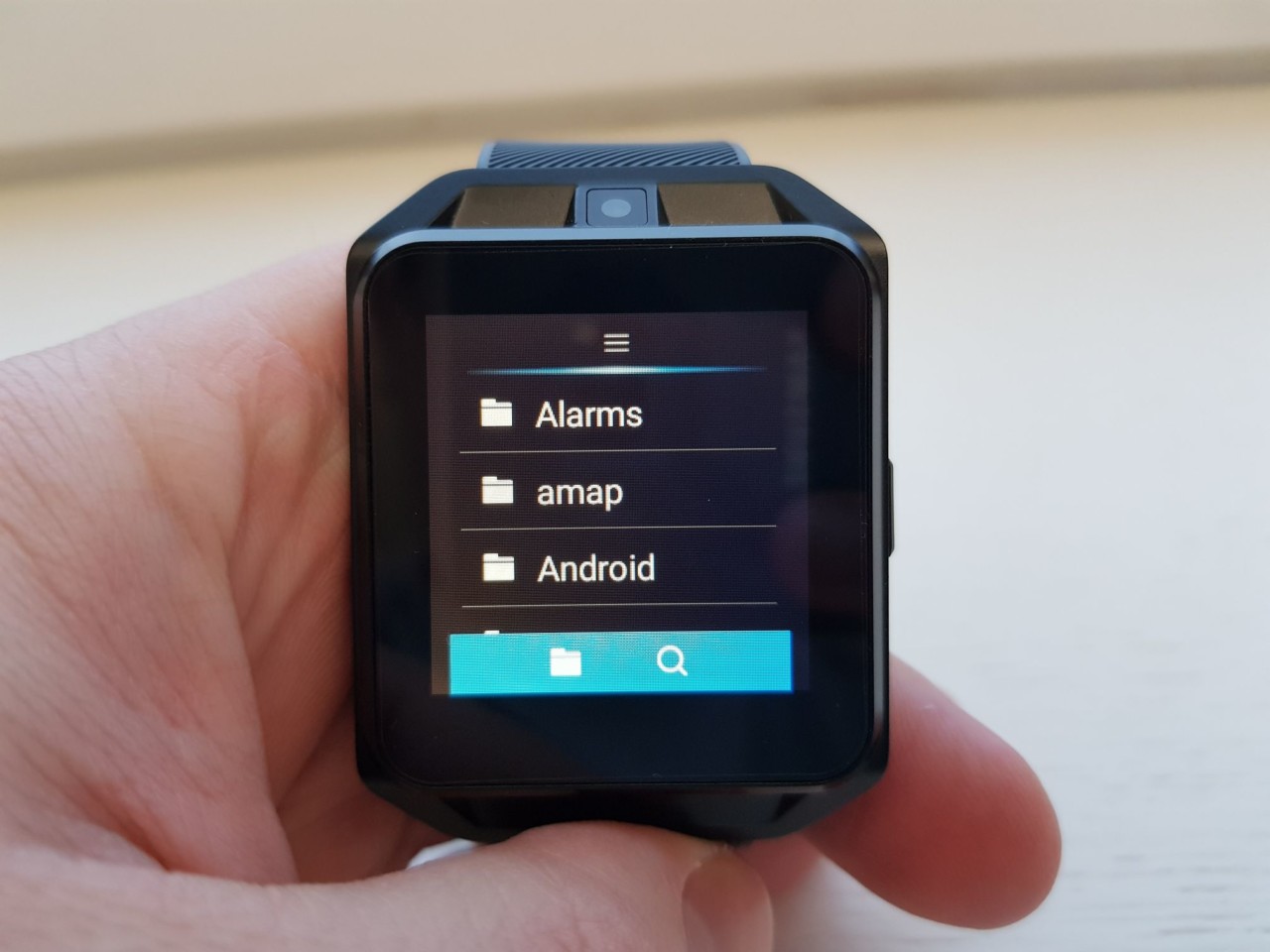
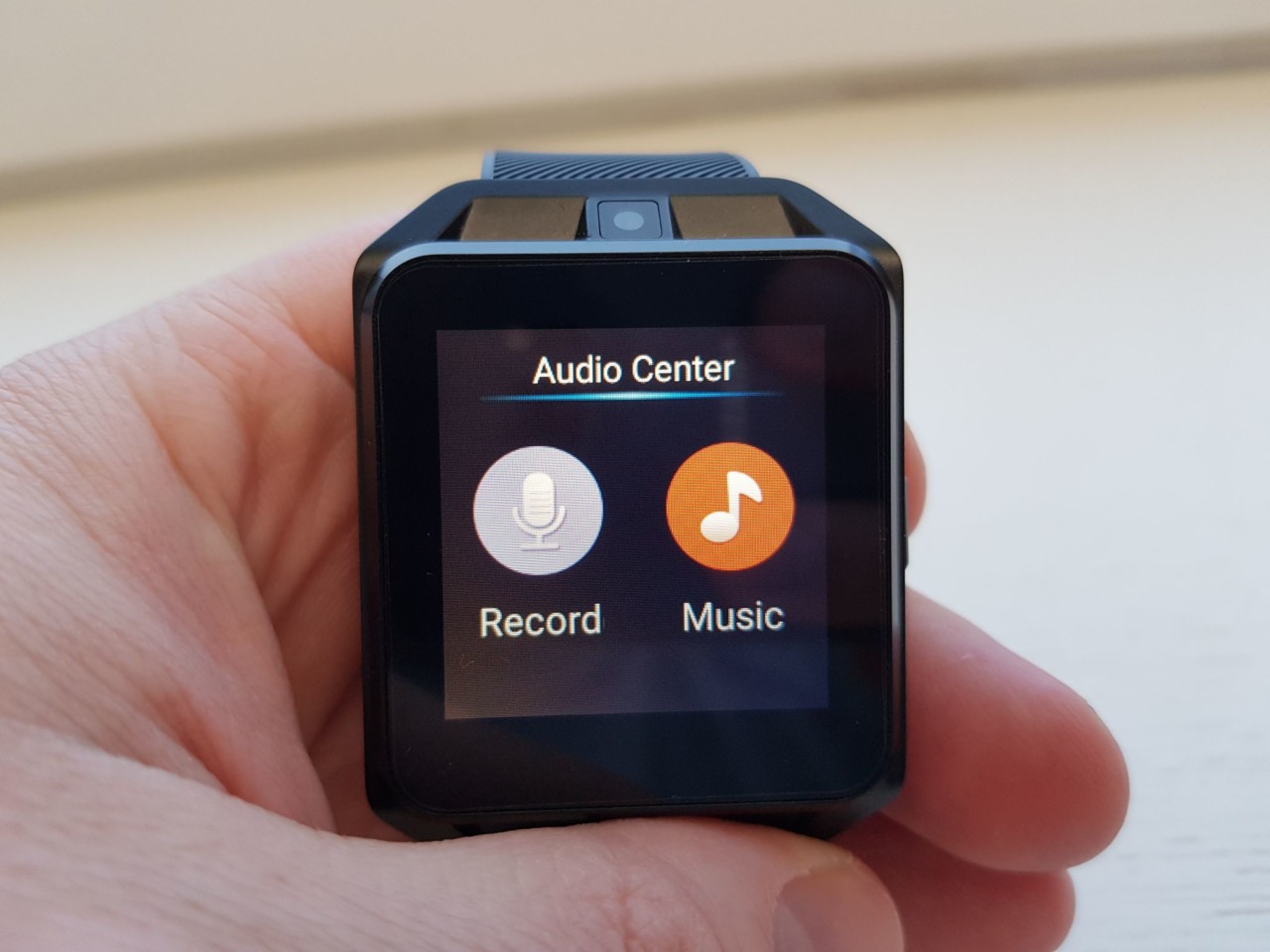
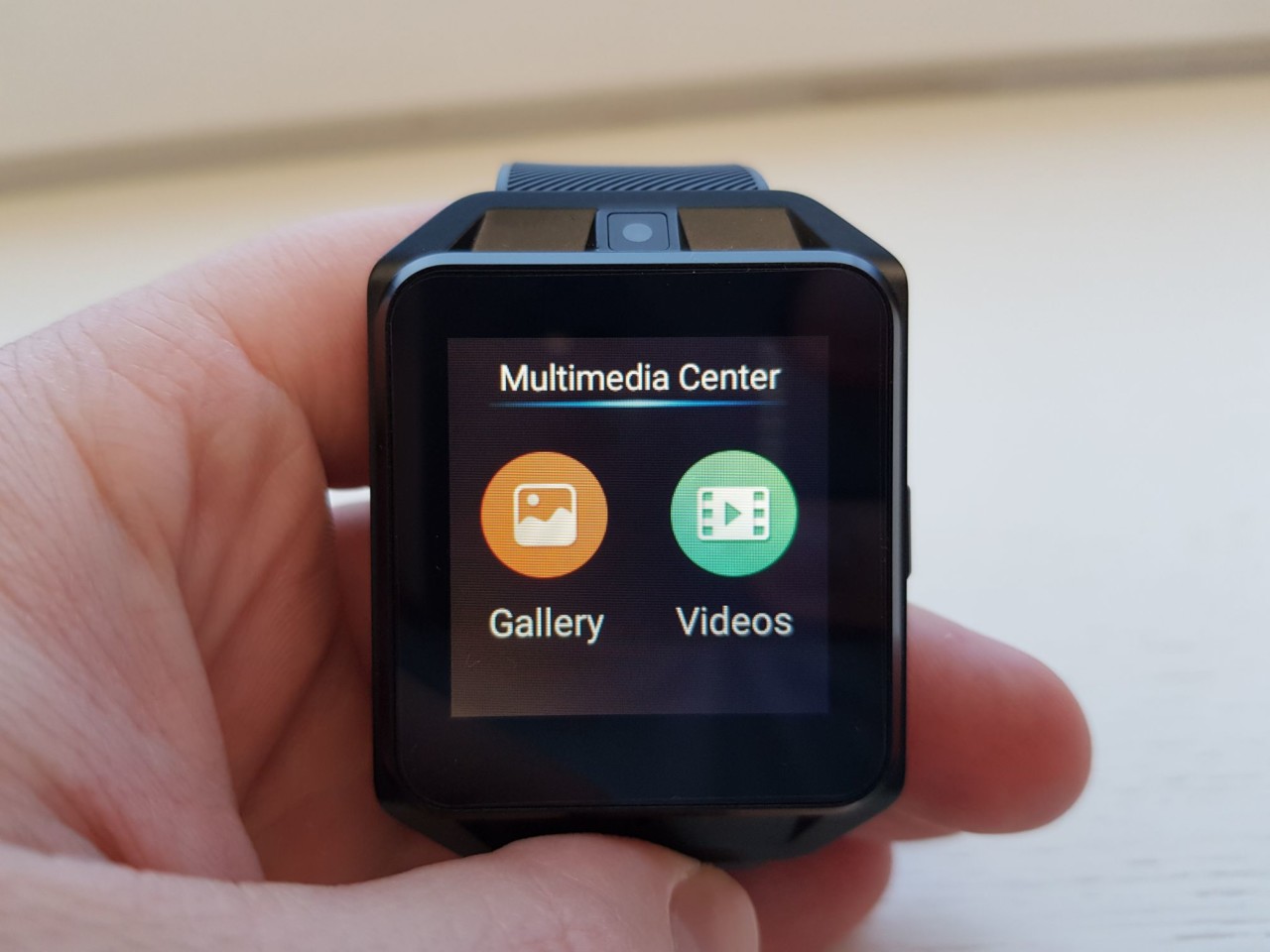
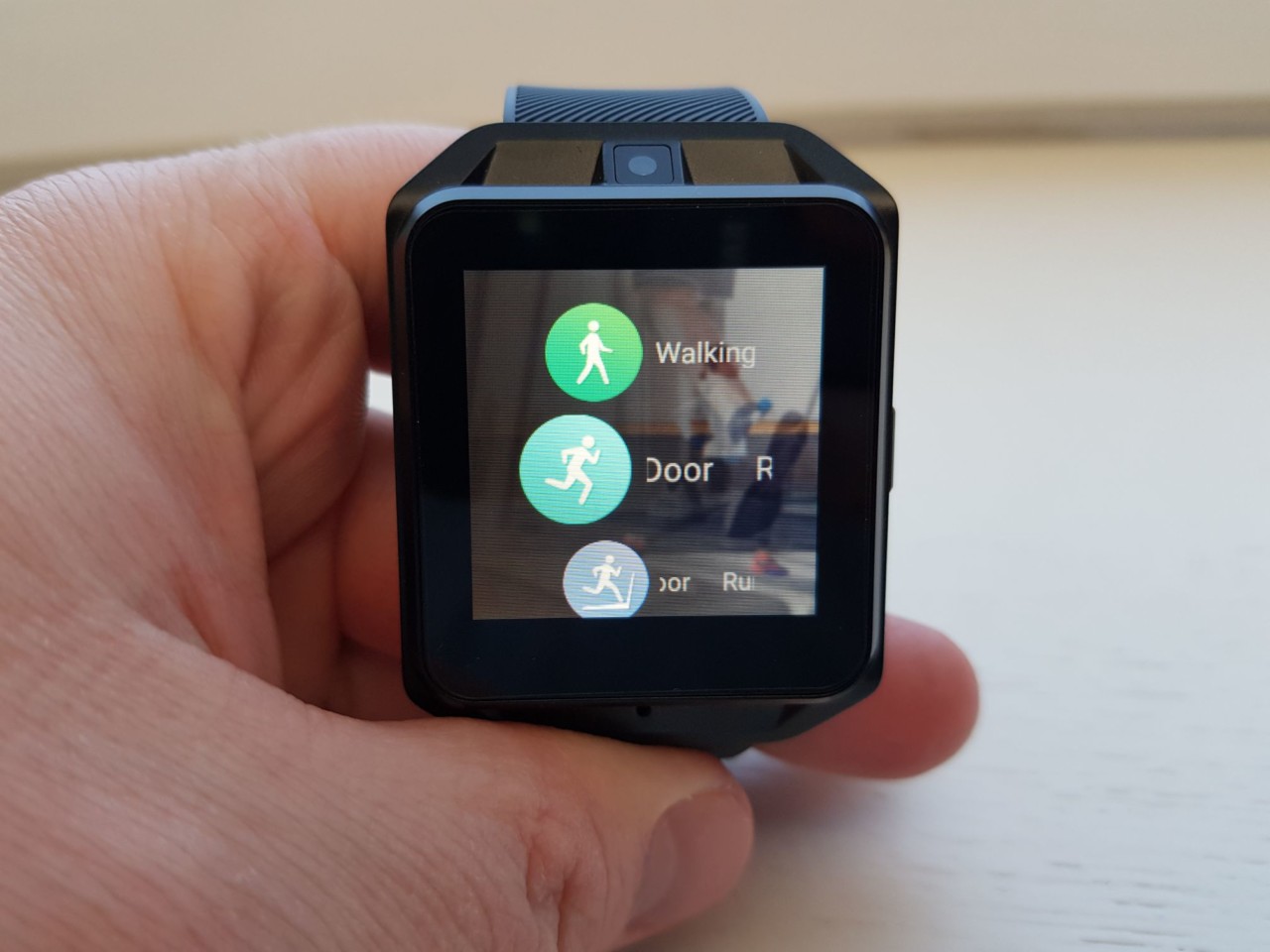
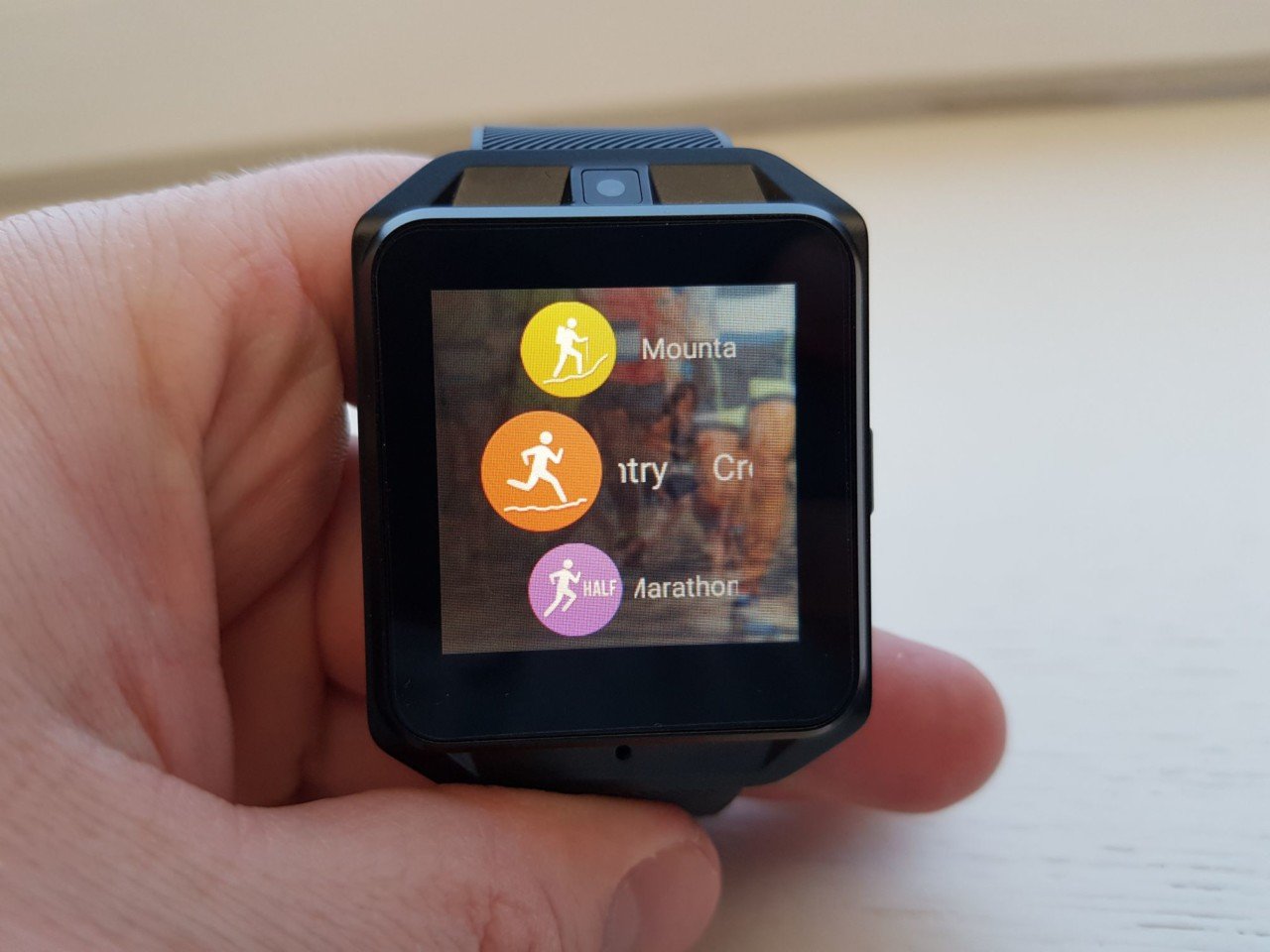
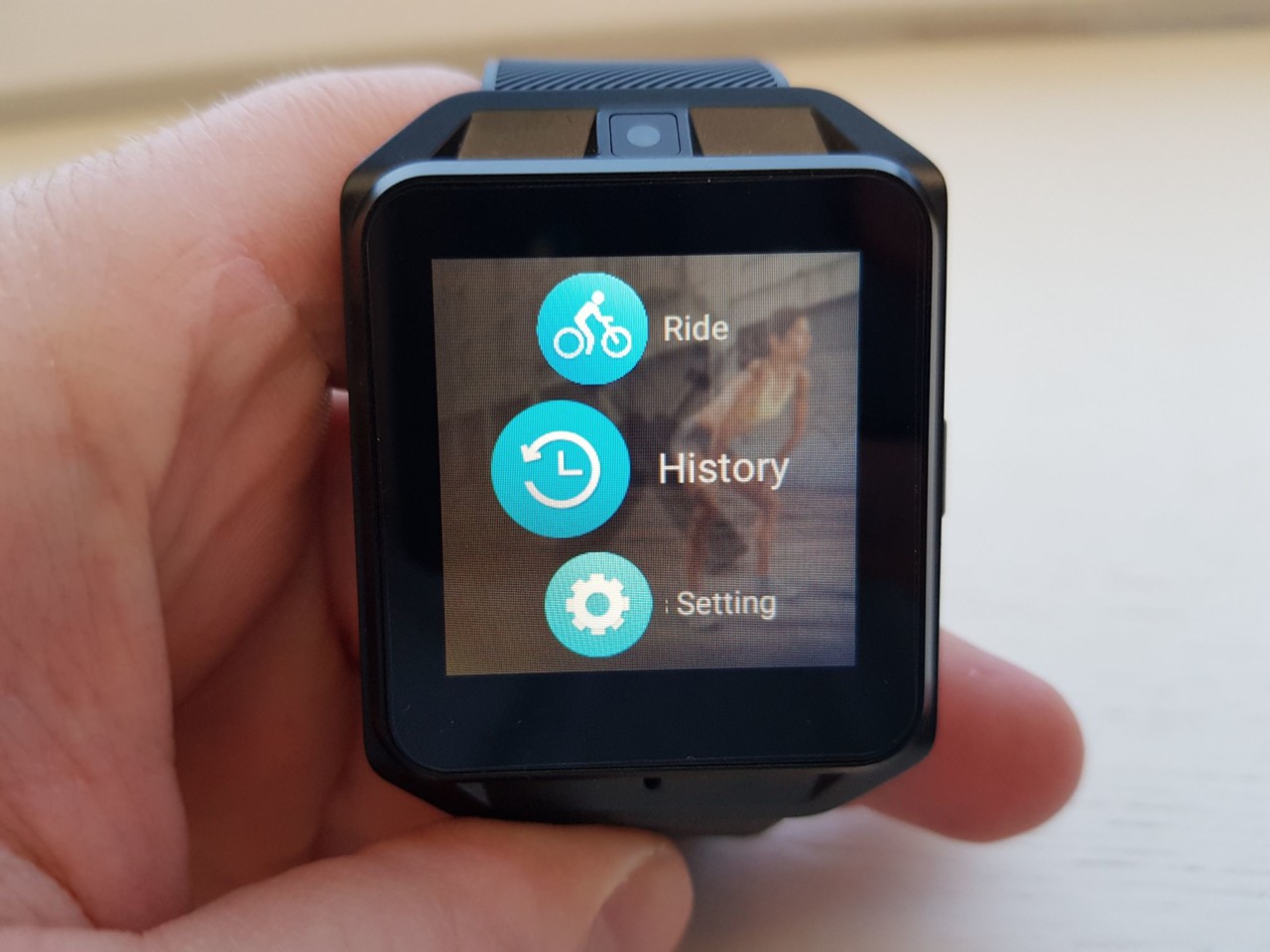
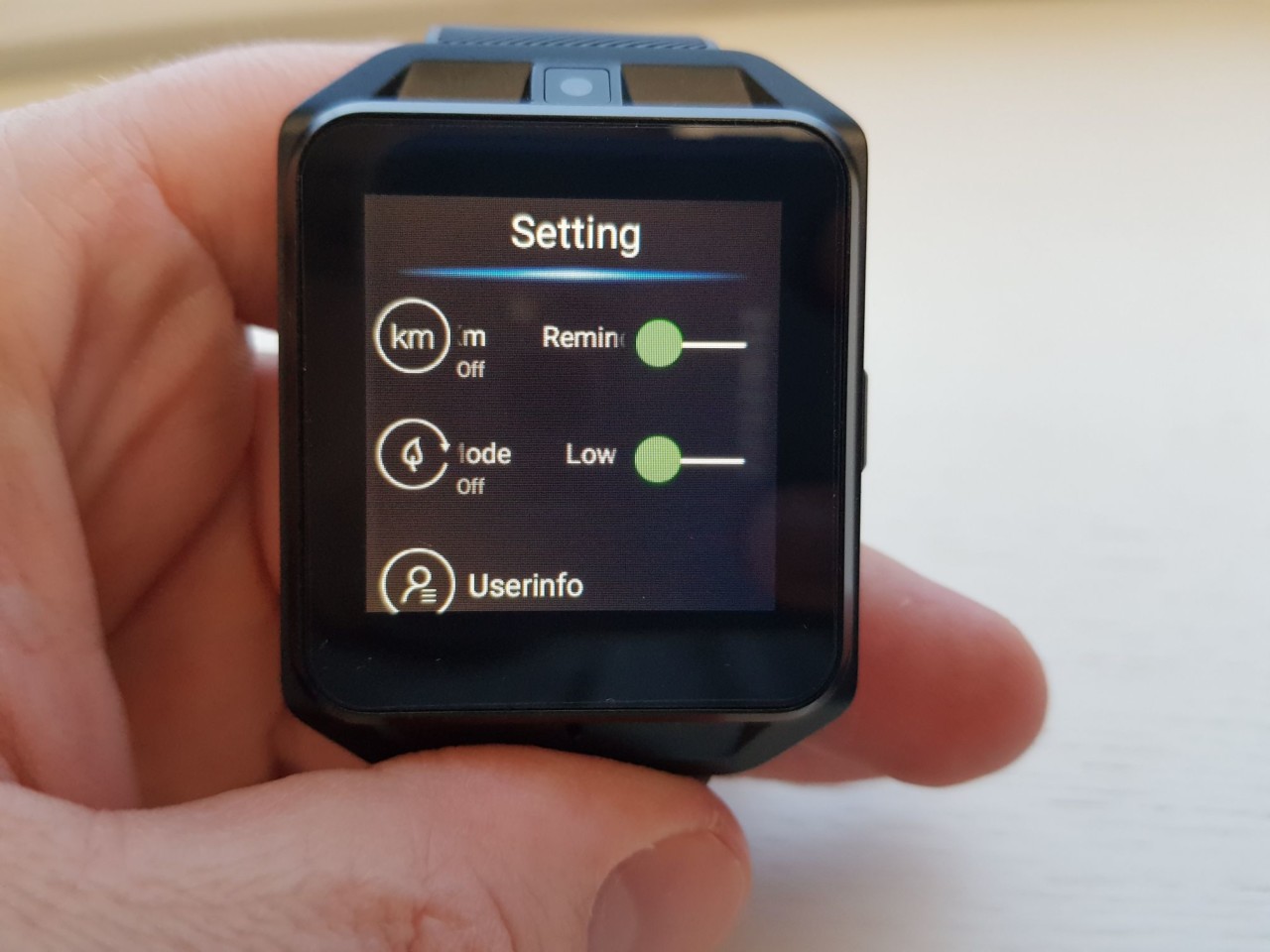
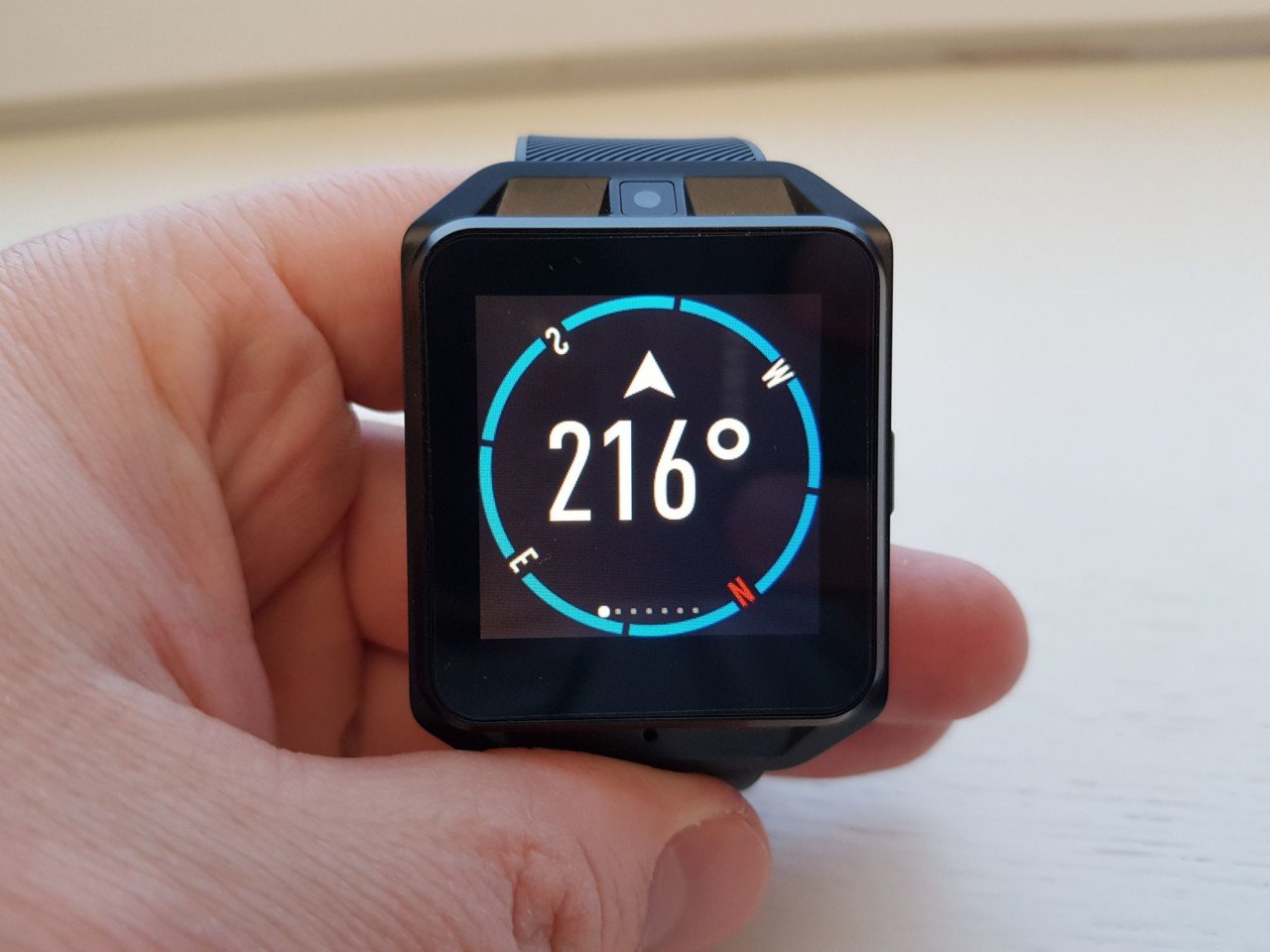
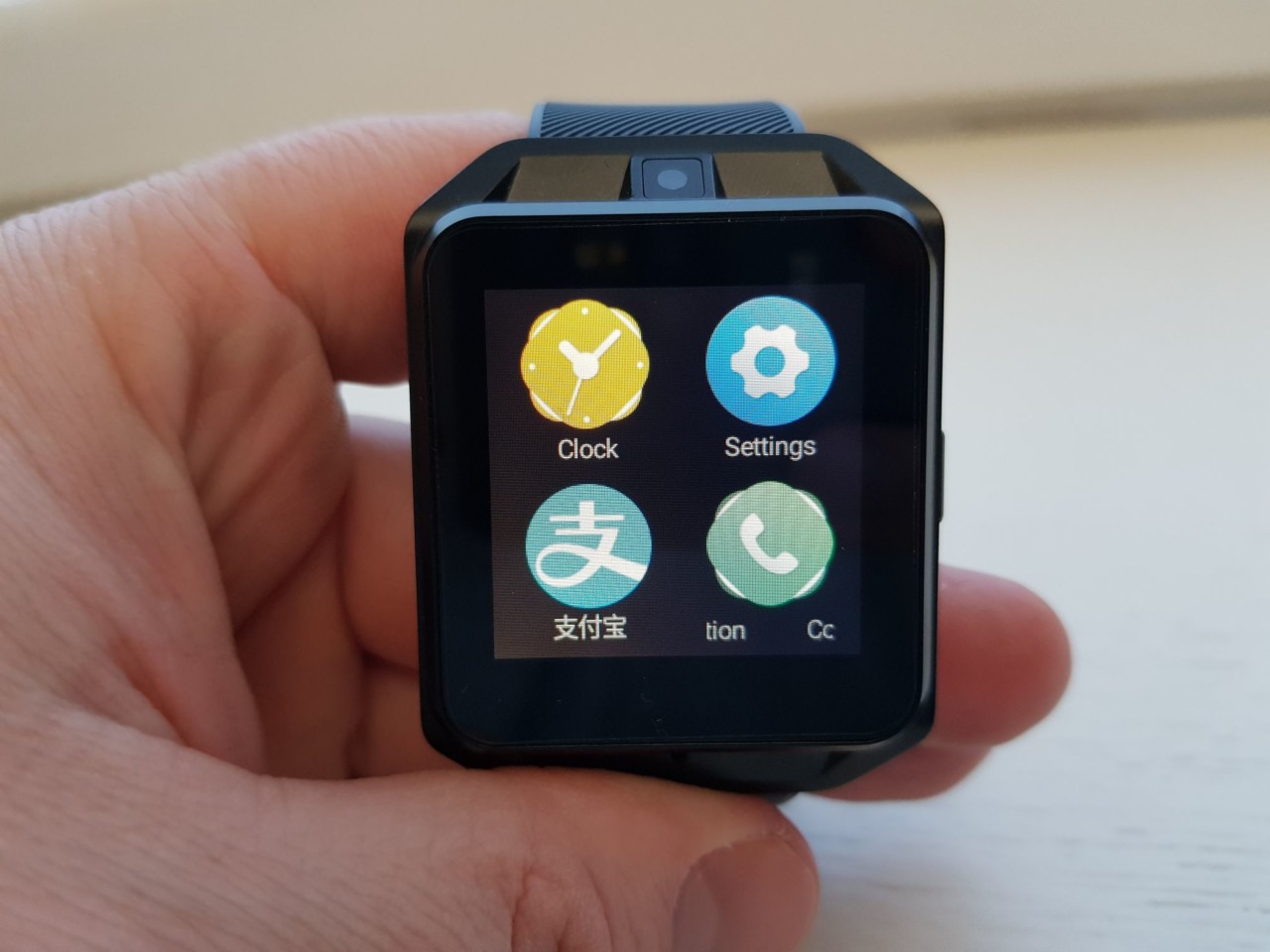
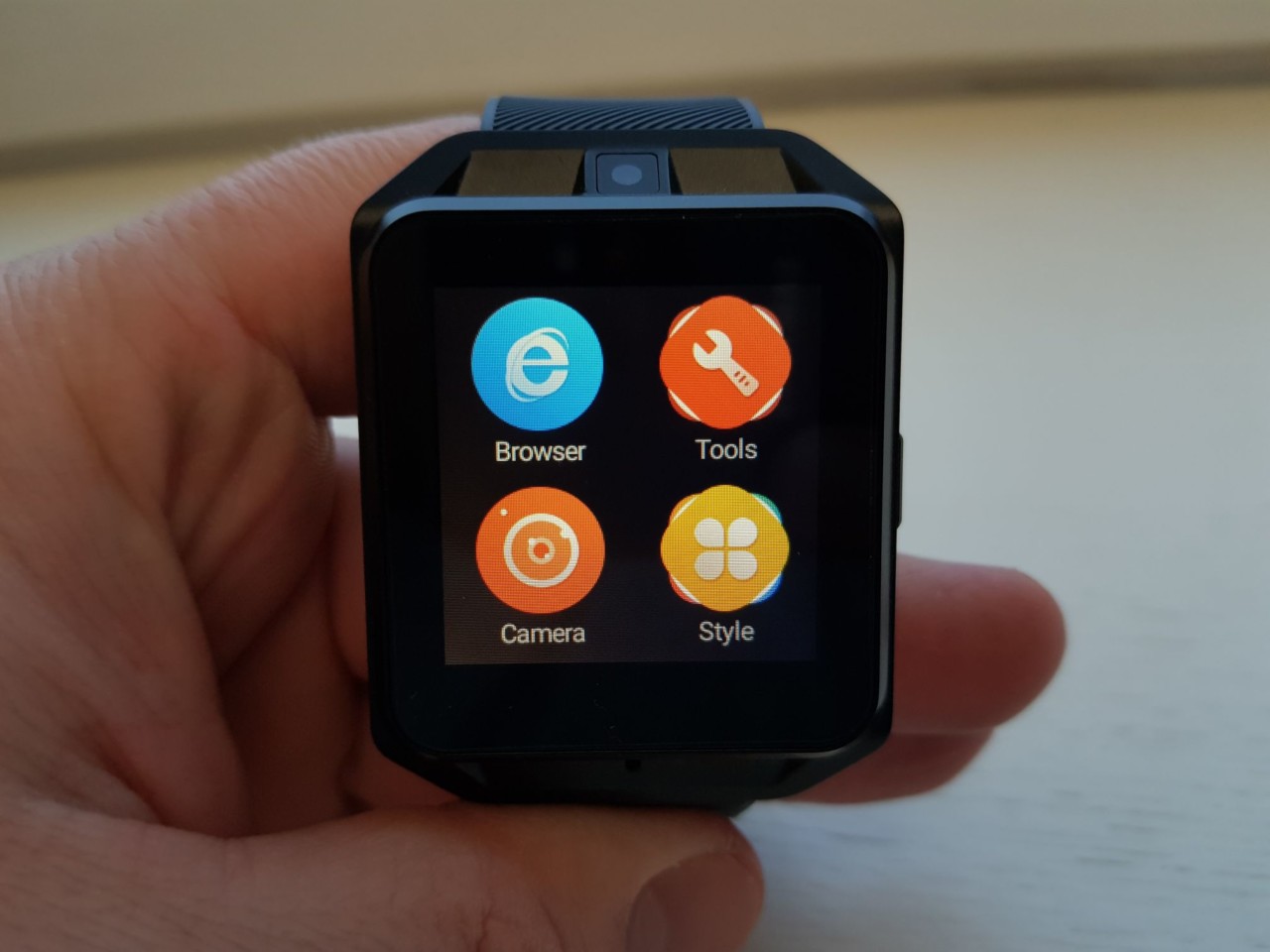
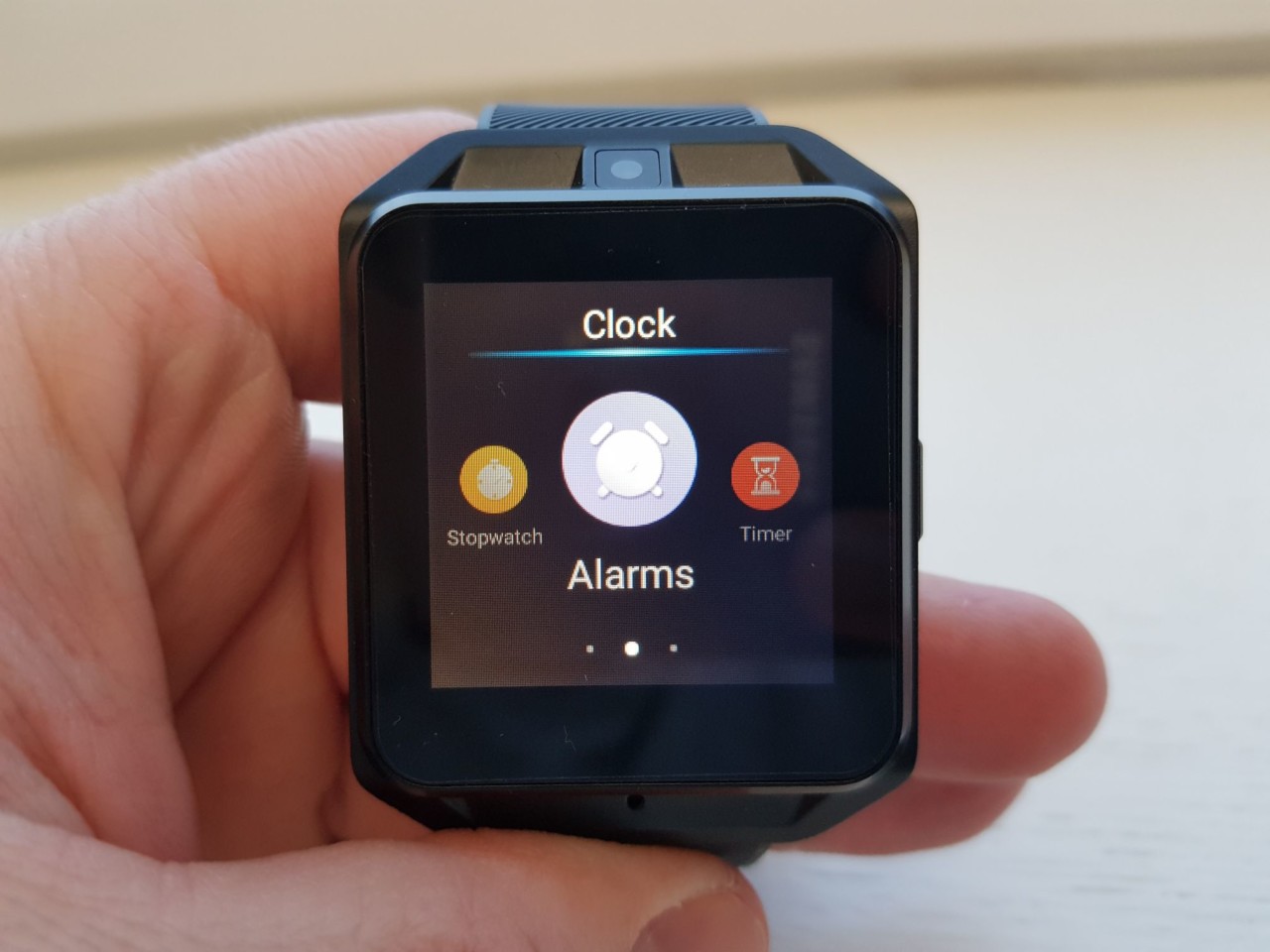
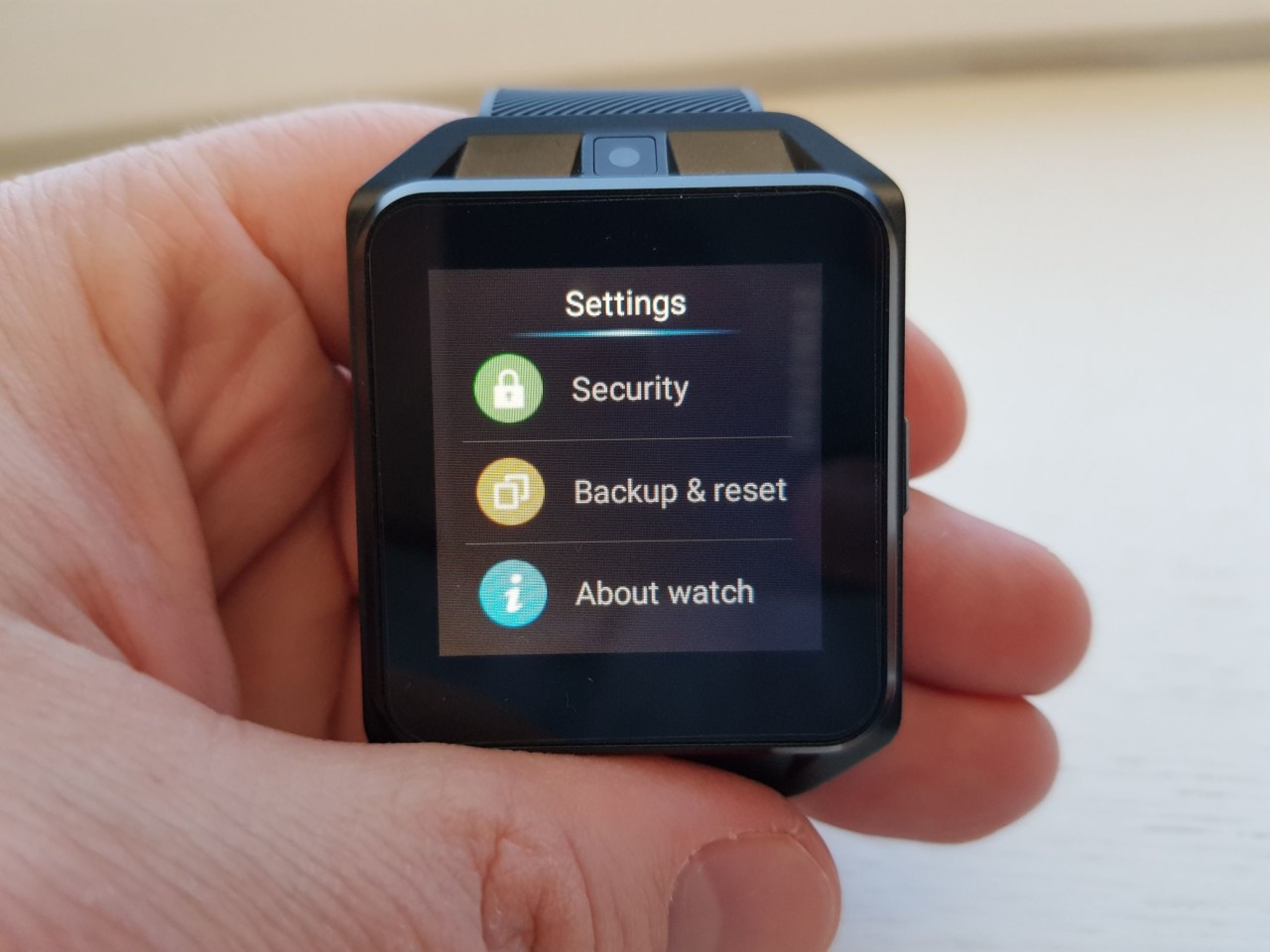
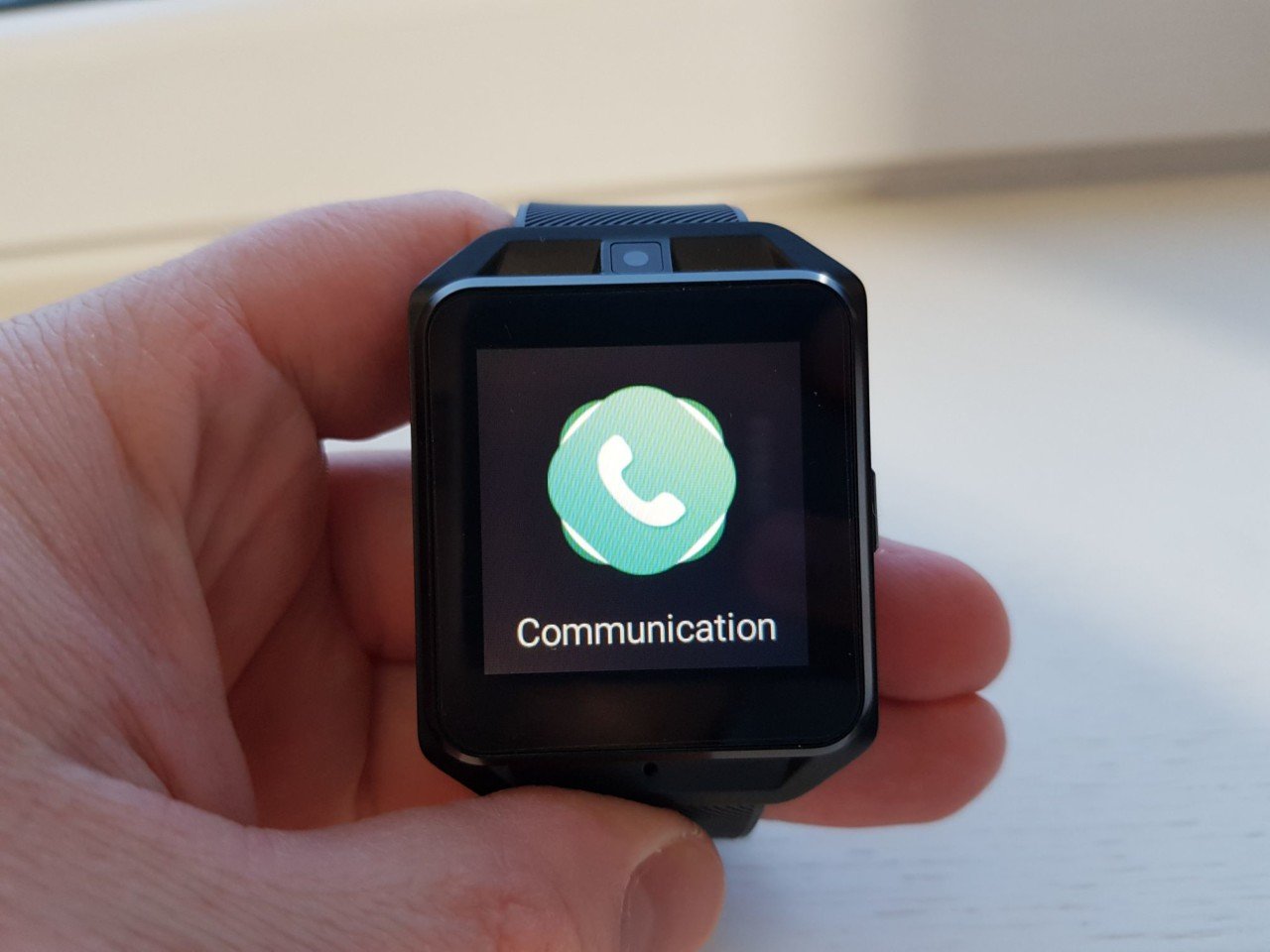
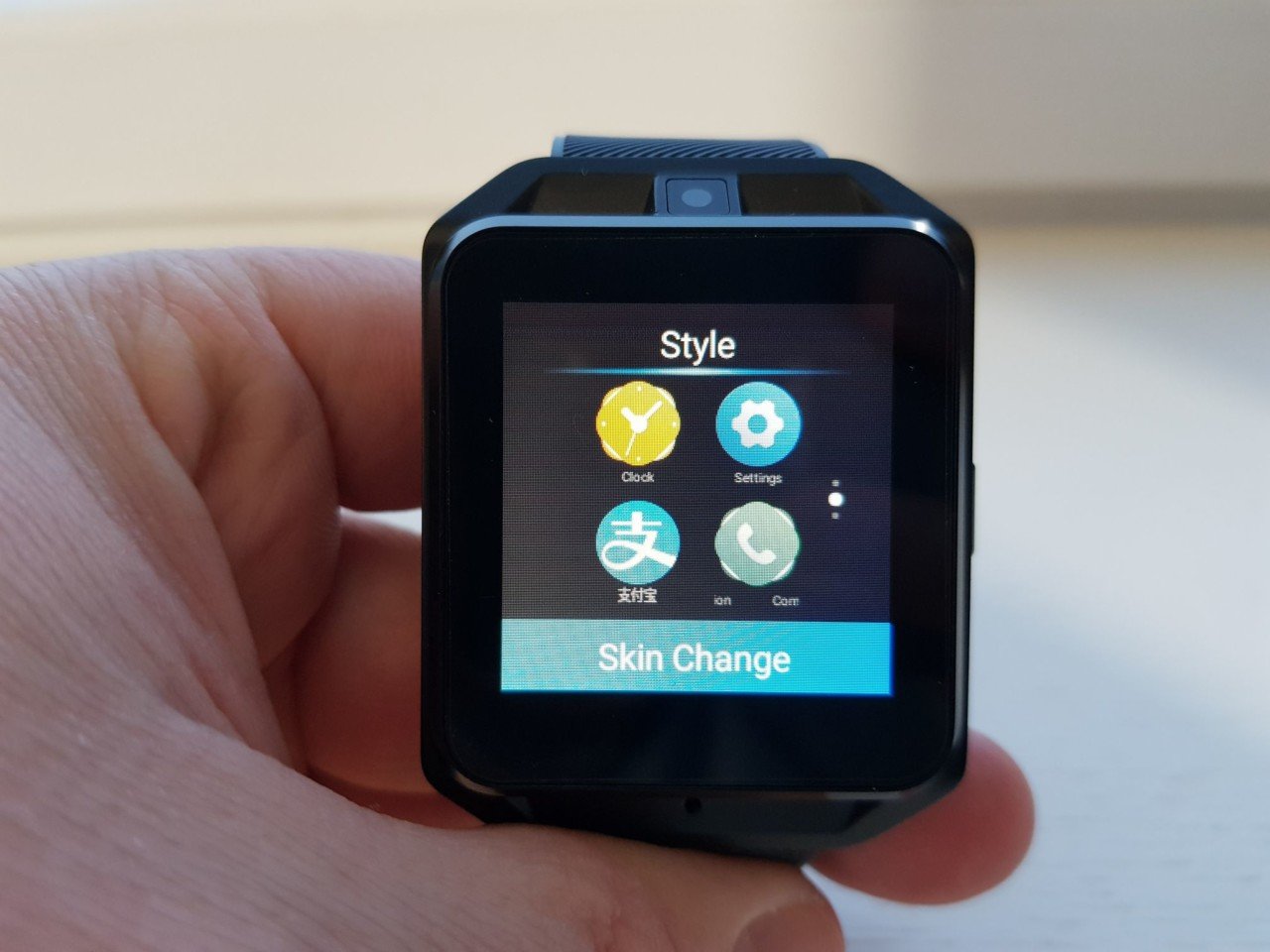
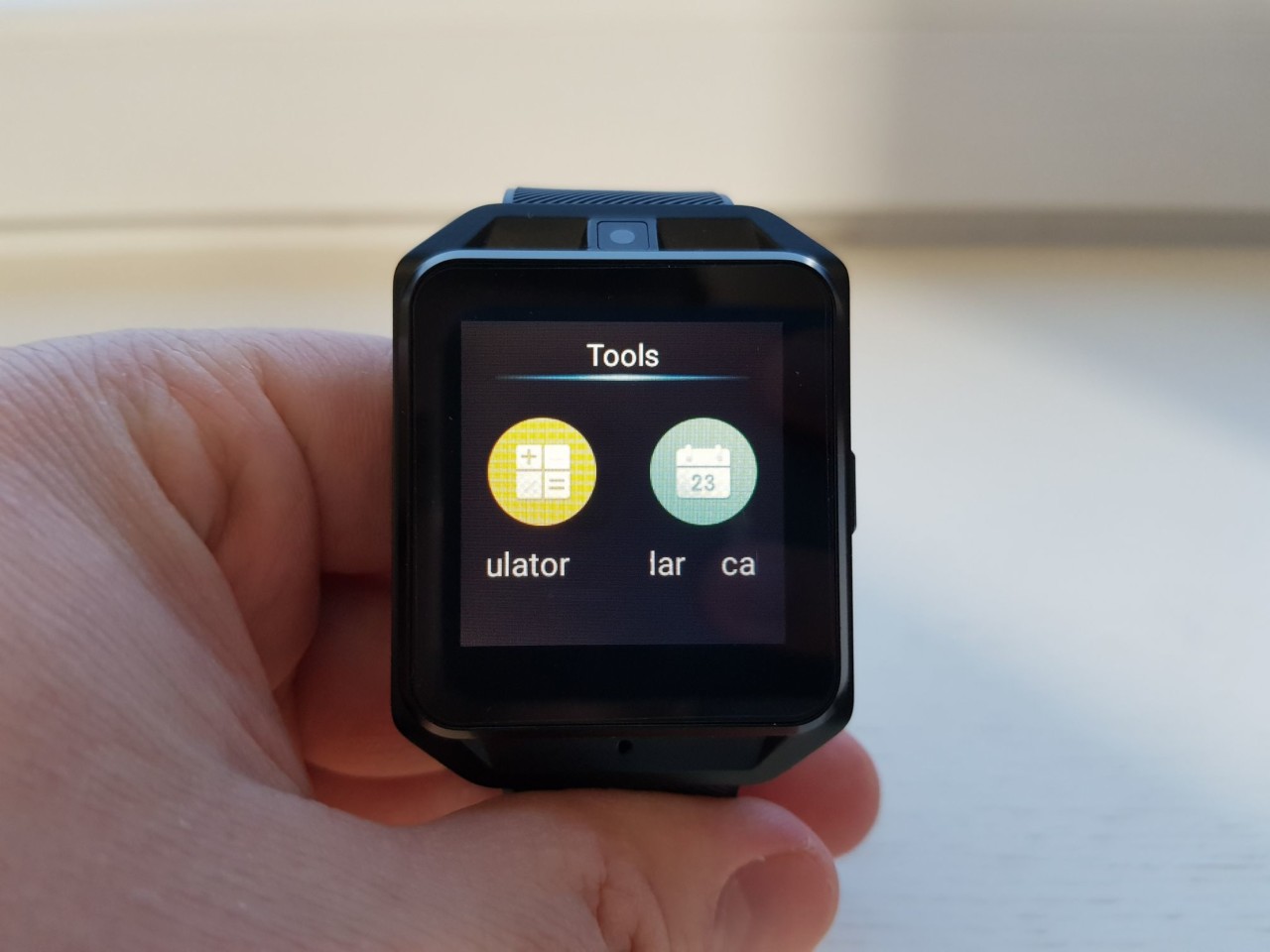
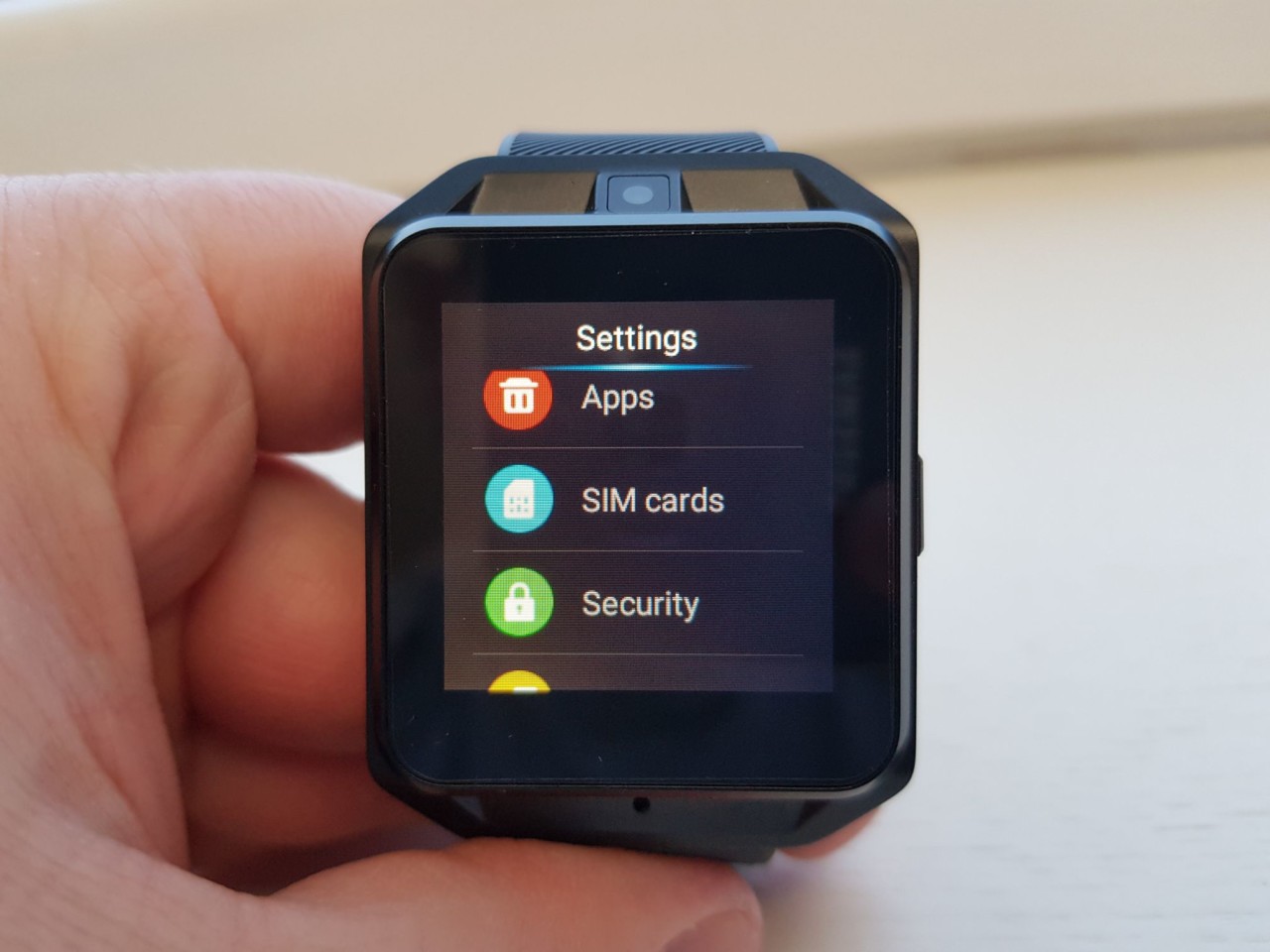
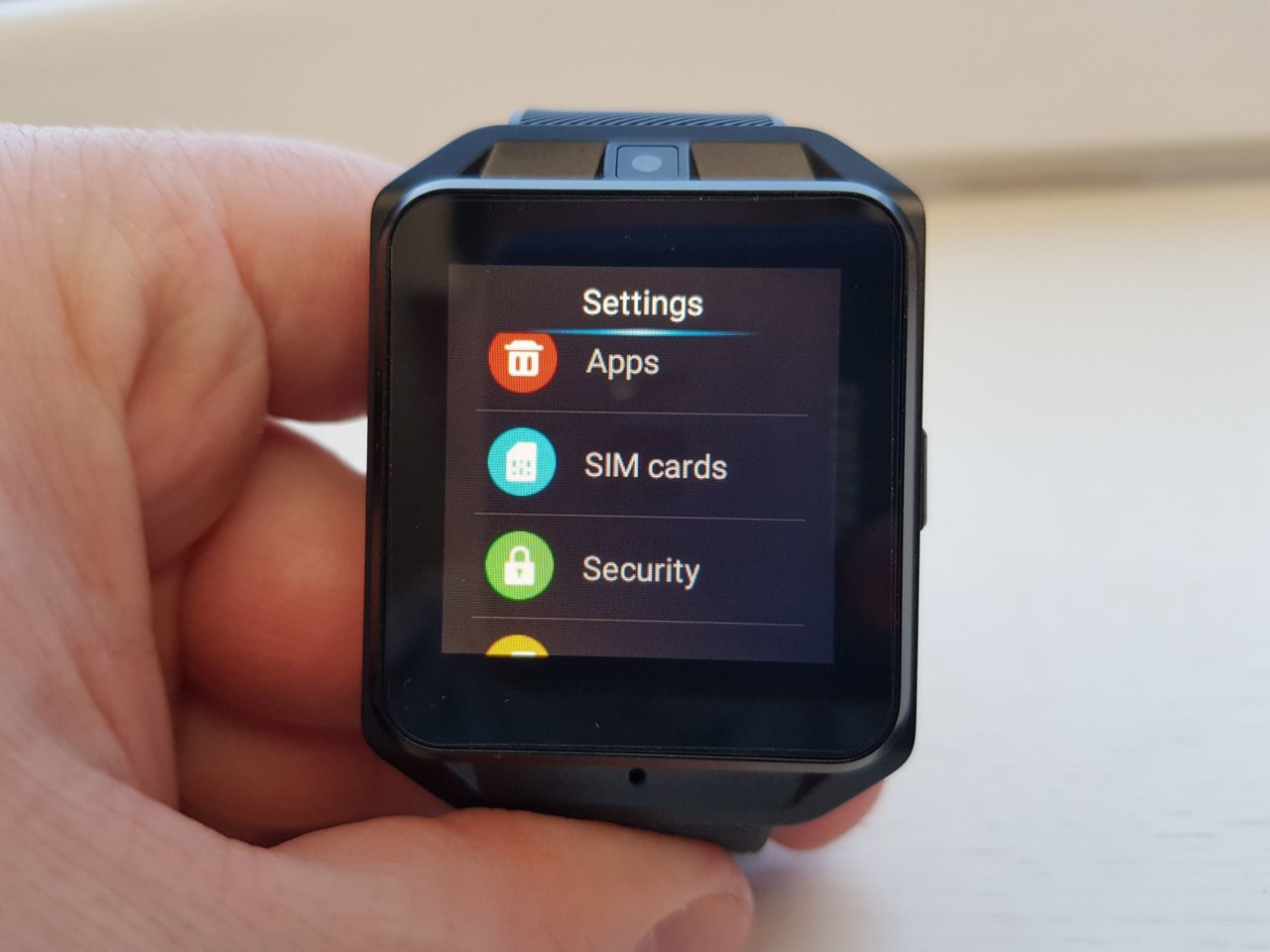
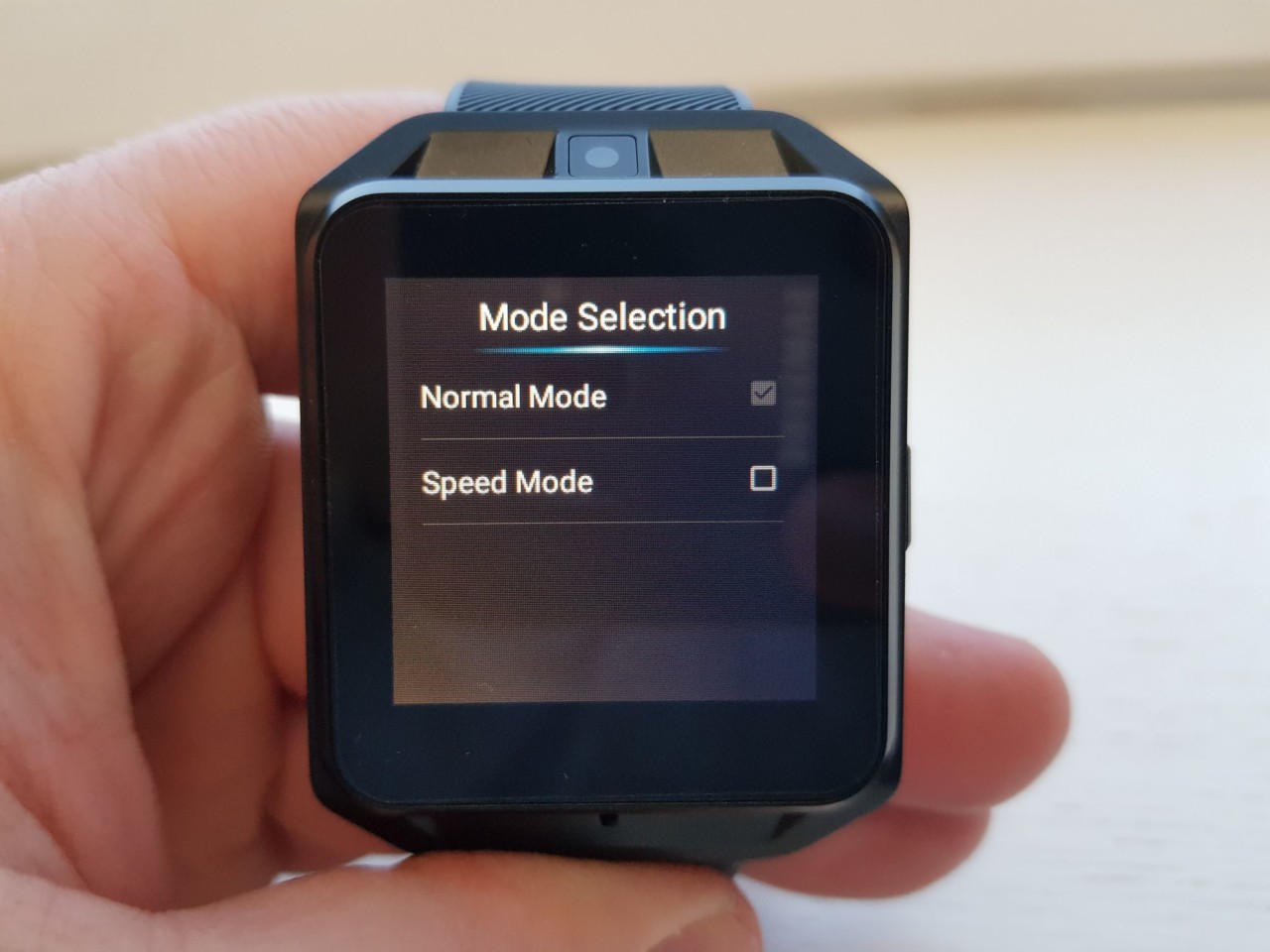
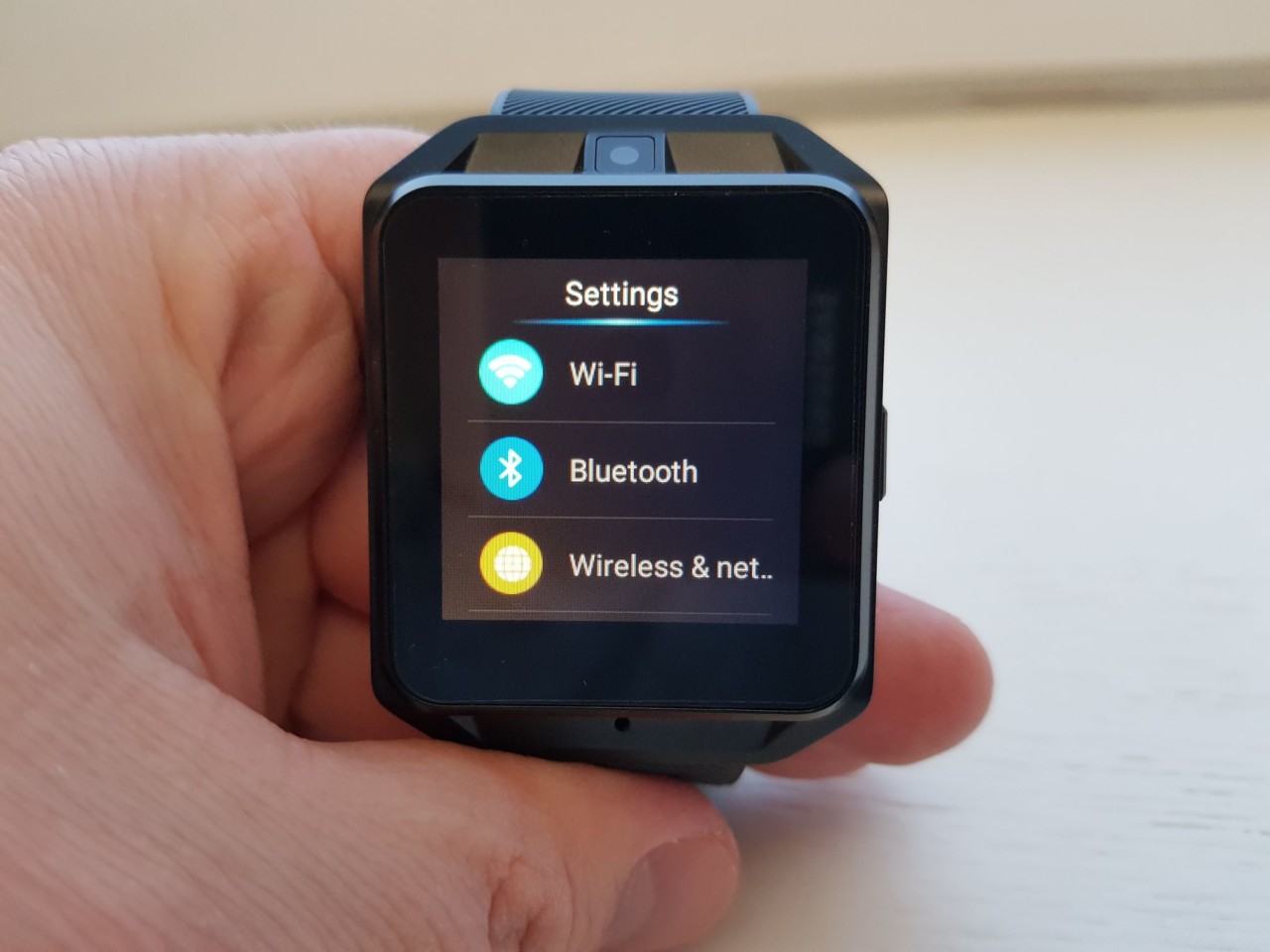
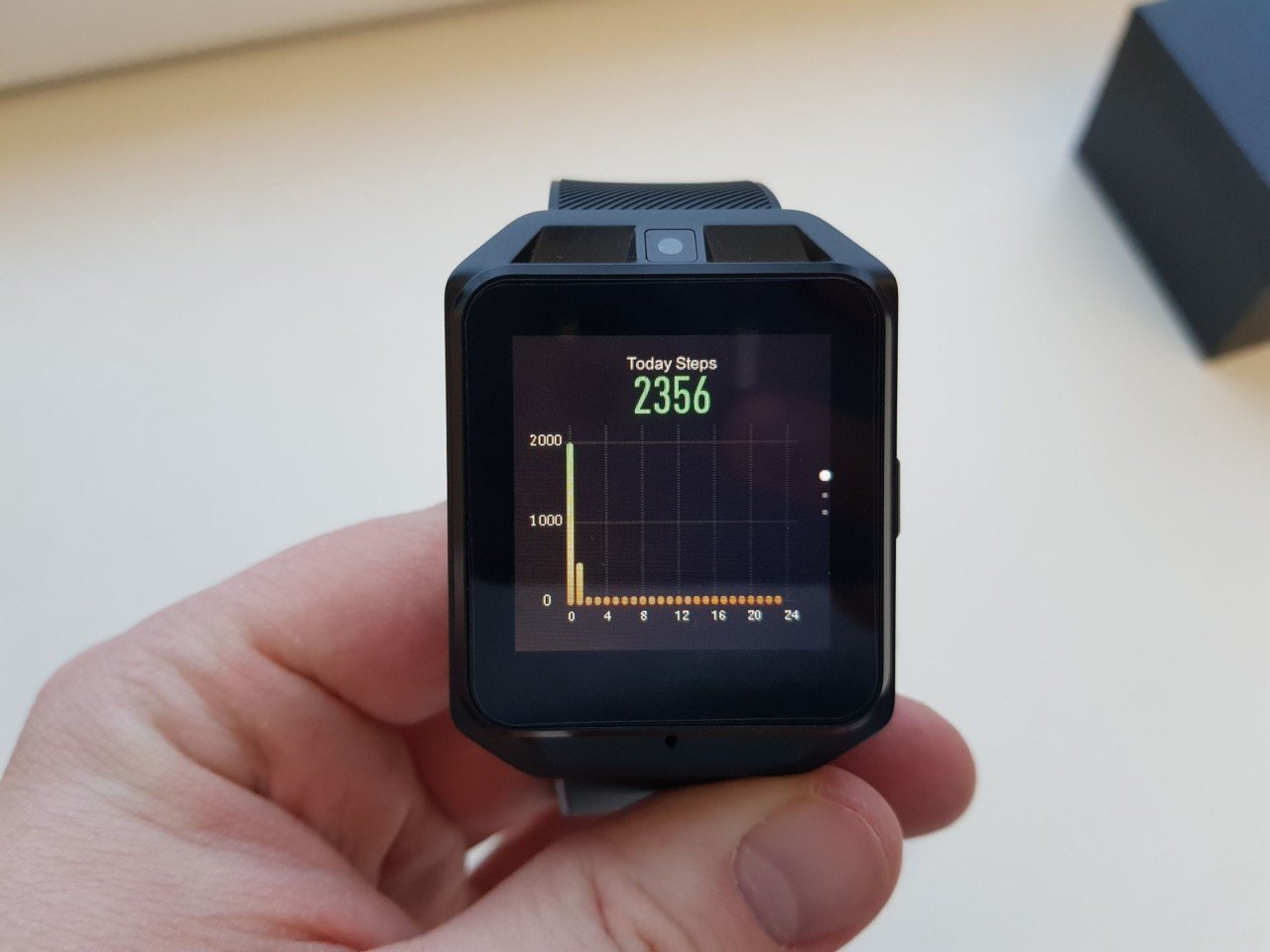
What can you do with all those specs? Well, you can install plenty of apps from the built-in Google Play store, which, however, does not always fit into a small screen of the watch. You can do all that thanks to Android 6.0 that has the Fun OS skin built on top of it. You can also make or receive calls since this watch can work as a standalone 4G smartphone with its dedicated SIM card slot. I found the call quality to be quite decent and the built-in loudspeaker can not only be used for calls but also for listening to music. The loudspeaker is not that great but it is usable. You can also choose from plenty of different watch faces and some of them look really nice. In addition, there are quite a few settings to play with. Obviously, you can track your fitness routines using a pedometer, barometer,or a heart rate monitor, which I found to be pretty accurate. I found the GPS to be pretty accurate since it is integrated into the MTK6737 chipset. There is also a built-in Wifi, so you can browse the web and so on. The overall performance is pretty good, the watch is fast and responsive all the time, and you can even try playing some games on this tiny display.
BATTERY LIFE
As for the battery, you should be ready to recharge the watch almost every single day or every two days, depending on how you use the watch. Not the best result, but this what you have to expect given the overall feature set. It takes just over 2 hours to fully charge the battery via the micro USB port.
CONCLUSIONS
All in all, I was really surprised by how good the Microwear H5 is and it has a ton of features for just about $100. I like its design, decent display, good overall performance, the ability to make or receive calls on the 4G network, decent GPS performance. Also, as many smartwatches, it makes you move a bit more since features like a pedometer, heart rate sensor motivates you to exercise (well, at least me).
My main complaint would be an awkward camera placement but I’m not taking pictures with the smartwatch anyway. Also, if this watch was water resistant, it would have been almost perfect. Other than that, the Microwear H5 turns out to be a very good smartwatch, especially if you consider all the feature set it offers for less than $100.
Better late than never they say. Yesterday, Vivo announced its plan for Android 8.0 update and the devices that will be getting them. The list is pretty small and only includes the brand’s flagship devices.
The Android 8.0 update will come as an upgraded version of its FunTouch OS custom UI and will begin hitting devices starting mid-April. Below is the list of devices getting the update:
Vivo X20
Vivo X20 Plus
Vivo X9s
Vivo Xplay6
Vivo X9
Vivo X9 Plus
Vivo X9s Plus
It is surprising that none of the recently released mid-range phones are on the list. While Vivo is known to have a terrible track record when it comes to updates, it still comes as a surprise that nothing is being done to change things.
The Samsung Galaxy S9 and Galaxy S9+ will be launched in about 2 weeks from today, February 25 to be specific. Ahead of the launch, pictures of official cases for both devices have surfaced online.
For its new flagships, Samsung has gone all out in terms of design, functionality, and material and you will be hard pressed not to find at least one that suits you. The cases cover are also available in multiple colors.
There is the Clear View Standing Cover which surfaced in a video last week, followed by the LED View Cover which shows you important notifications and statuses using LEDs. There is also the Alcantara Cover case that has a premium look and touch.
[envira-gallery id=”172741″]
Samsung has also made a new Hyperknit Cover case which like the name says is knitted with a plastic frame underneath. This case comes in dark blue and bright red.
Tired of the ASUS Zenfone 5 leaks? Don’t be, as more details have surfaced and this time they include images of the main Zenfone 5 with its iPhone-X style notch in addition to more info on the Zenfone 5 Lite. The fresh details come courtesy of Roland Quandt and Evan Blass.
Zenfone 5
A few days ago, Roland Quandt revealed in a tweet that a number of phones released this will have a notch in its display including the Zenfone 5. To back up his claim, he has released renders of the Zenfone 5 from a manufacturer’s manual.
ASUS Zenfone 5
The Zenfone 5 (ZE620KL/X00QD) shares a lot in common with Apple’s iPhone X. The display has a similar-sized notch but houses just the camera lens, earpiece, and sensor.
Although it doesn’t have the iPhone X’s IR sensor for Face ID, we can be sure it will have its own face unlock technology. The lower bezel is shown to be slightly thicker but is no longer home to a fingerprint scanner.
On the rear, the ASUS Zenfone 5 continues its imitation of the iPhone X with the design of the dual rear cameras. The setup is slightly raised and houses just the two camera lens. The LED flash is outside and a few centimeters to its right is a fingerprint scanner.
The ASUS Zenfone 5 has a metal frame that lies between two sheets of glass. Volume rocker and power button are on the right, SIM tray is on the left, and the bottom is home to an audio jack, USB-C 2.0 port, microphone and speaker grille. At the top is a secondary microphone for noise cancellation.
Zenfone 5 Lite in black, white, and red
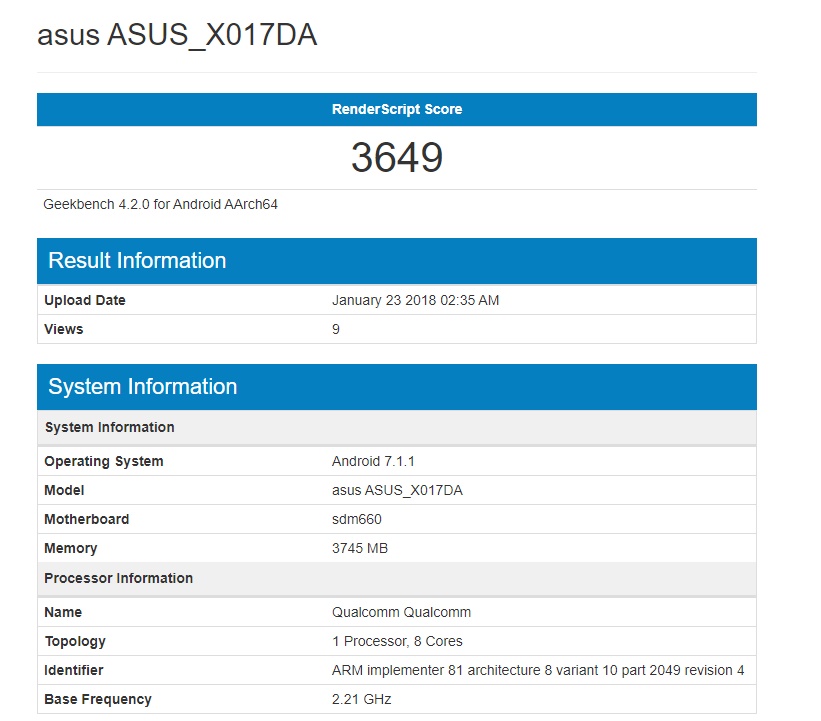
Zenfone 5 Lite (ZC600KL/X017DA)
We already saw an official render of the Zenfone 5 Lite yesterday thanks to Evan Blass. In addition to that is another official render (above) that shows the phone in two new colors, and a 2D render that reveals some angles not visible in the official renders.
ASUS Zenfone 5 Lite
The display has an 18:9 aspect ratio but with thicker bezels compared to the Zenfone 5. There are two cameras on opposite sides of the earpiece at the top which are said to both be 20MP sensors. There is also a LED flash and a LED notification lite at the far right corner.
The Zenfone 5 Lite also rocks dual rear cameras (16MP + 16MP) which sit in the middle of the device. One of the sensors is said to be a 120° lens for wide-angle shots. A LED flash flanks it on the left and a fingerprint scanner is below the camera setup which is shown to have a small bump.
ASUS has settled for a micro USB port for the Zenfone Lite and have put the audio jack at the top.
The highly anticipated Xiaomi Mi Mix 2s is in the news again, this time around an official-looking banner housing the renders and specification of the expected flagship have leaked. The leaked banner surfaced on Weibo this weekend and while we are not sure it is officially from Xiaomi, the renders and specs bear some similarity to previously leaked ones.
The Mi Mix 2s is expected to pack a Snapdragon 845 flagship chip and that is contained in the said banner. Also listed is a 5.99-inch display which is a full-view display with highly reduced bezels compared to the Mi Mix 2. The device is also tipped to come with 8GB of RAM and 256GB of storage which may likely be on one of the variants. There should be a 6GB RAM-packing variant as well.
Perhaps, the most interesting aspect isn’t the 8GB RAM but the renders which reveal a full-screen design 3.0. The front render shows a higher screen-to-body ratio than what we had seen on previous full-screen phones. It really does take the edge-to-edge display concept to a whole new level. There are side bezels but the top and bottom bezels are much reduced than the Mi Mix 2. The front camera is also moved from the bottom right corner to the top right corner creating a slight notch at the edge. Other details contained in the leaked banner include a dual 12MP rear camera with Sony IMX363 sensors and since there is no rear fingerprint sensor, the device is tipped to pack an under-display fingerprint sensor and facial recognition. There is also listed an AI technology onboard which powers the facial recognition algorithm. We can’t say if these details are accurate but we really hope they are because they make the Mix 2s look quite interesting to look forward to. The Xiaomi Mi Mix 2s is rumoured to be unveiled before MWC 2018 but no word from Xiaomi yet in that regard.
After the Spring Festival, Meizu will get into full gear for the year. There are two main launches on the horizon for now – the Meizu E3 which is scheduled for March 6 and the Meizu 15 Plus launch whose launch date is still unknown.
When the Meizu 15 Plus launches, we expect it to come with a sibling which we have always referred to as the Meizu 15 until a few weeks ago when we learnt that it would be called the Meizu 15 PRO. However, that doesn’t seem to be the case.
Chinese leaker @MMDDJ_ revealed in a tweet yesterday that the second phone will actually be called the Meizu 15 and not the Meizu 15 PRO but he also mentioned a third device called the Meizu 15 Lite. This means Meizu will be announcing three new phones to mark its 15th anniversary and not two.
China is known for its strict privacy and surveillance rules but the world’s most populated country has taken it to another level. Security operatives have begun using smart glasses equipped with facial recognition technology to identify citizens.
With a database of citizens, the police will be able to identify culprits, missing persons, or crime witnesses by scanning the faces in a crowd. At the moment, China has CCTV cameras that can identify citizens and even track their movements around places, so authorities will basically use the smart glasses in areas where there are no cameras available or to speed up identification.
The glasses are made by LLVision Technology Co., a Beijing-based company, but are currently in use at Zhengzhou, a large city in east-central China. They are used by officers in train stations to scan those traveling for the Chinese New Year Holiday. Report has it that seven suspects have been nabbed as well as 26 persons travelling with forged identifications.
The glasses which are priced at ¥3999 (~$636) per unit, uses a combination of AI and an offline database of 10,000 suspects. It is able to identify suspects in just 100 milliseconds. It can also connect online to update the database at intervals.
Banggood’s massive Spring Clearance promo allows you to buy numerous items at a heavily discounted price. The promo has been split into multiple categories with each category comprising several electronics and other coveted items.
Daily Specials
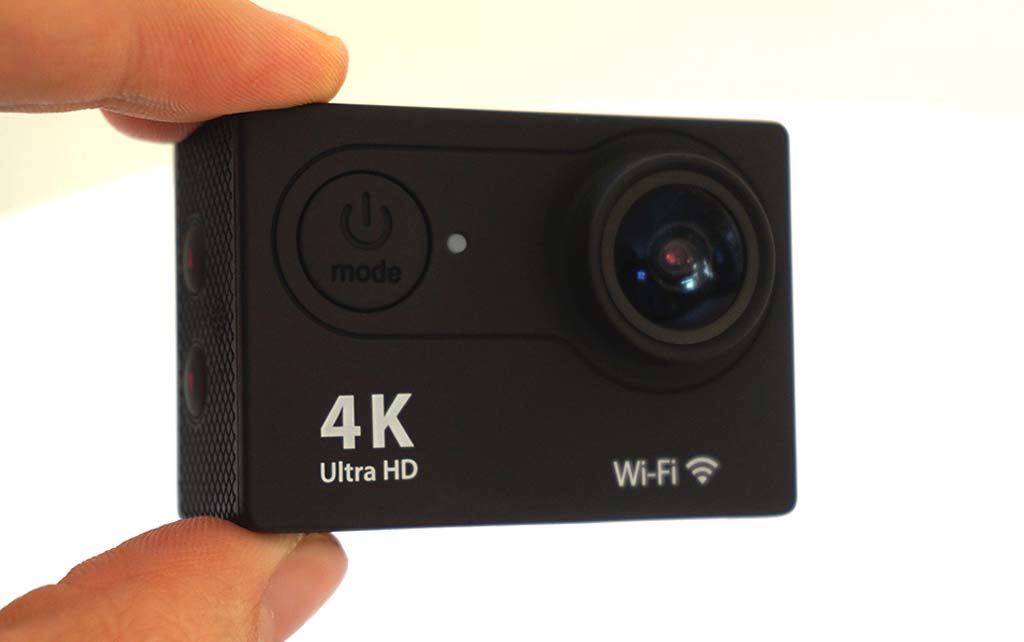
Deals in this section of the Spring Clearance promo will be kicking off daily at 10:00 am (UTC+8) starting Tuesday, February 13. For instance, from February 13 to February 14, you can get a considerable 30% off on EKEN H9R Sports Action Camera, which carries a price sticker of $68.12 without the discount.
Likewise, from February 15 to February 16, the site is offering 18% discount on the original asking price of Geekcreit ESP32 Development Board. As a result, you can now buy it by shelling out only $6.59. The Daily Special category will be active until February 20.
Buy 1 Get 1 Free
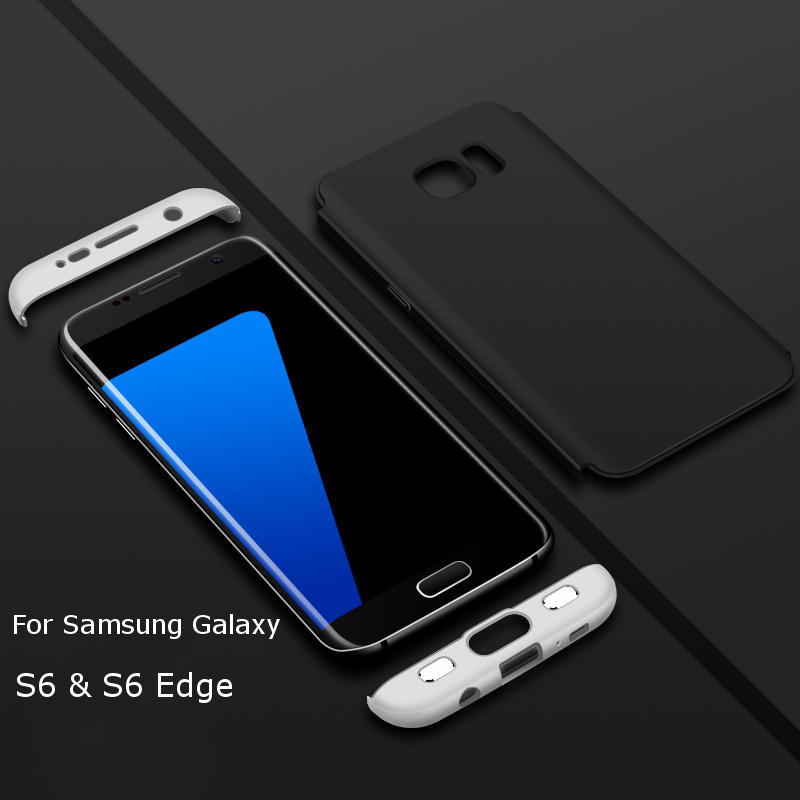
Hot Sale: Here you can buy different items at a discounted price by using specific coupon codes. Among a myriad of other products, the Hot Sale section provides a coupon code for the Bakeey hard PC case for Samsung Galaxy S6/S6 Edge, which has a 20% off on its original asking price.
Best Deals: Each product featured in the section can be purchased at a discounted price. Lining with this, you can buy Bakeey PC Case with tempered glass film for iPhone X for just $9.99. On top of that, you can use a coupon code to save more money at the time of checking out.
Combo Deals
From RC toys, electronics, smart tech to outdoor items, this category offer buyers an opportunity to shop in an unbeatable package. For instance, you can buy DOOGEE BL7000 4G smartphone at a discounted price of $149.99, along with Drillpro DIY Sander Sanding belt adapter, which is available for a reduced price of $21.18 on Banggood.
Normally, you’d pay $171.17 for buying the aforesaid products together even at a discounted price; however, Banggood is selling these items for only $159.98 as a combo deal. Buyers can save a considerable amount of money on many other combo deals featured in this section.
RC Toys
As expected, RC Toys enthusiasts haven’t been overlooked in the Spring Clearance promo. You can choose from a broad range of remote control toys without worrying about burning a hole in your pocket. This category offers a considerable 14% off on REMO 1631 1/16 SMAX RC Car, bringing its original asking price of $119.62 down to only $102.99.
Apart from that, there’s a massive 41% discount on the XK STUNT X350 RC Quadcopter, which sells for $245.57. You can now get your hands on the device for only $145.99 on Banggood.
Smart Tech
Smart technologies can be found in nearly every aspect of life. But much to the chagrin of budget-conscious buyers, these smart devices bear a relatively steep price tag. Thankfully, Banggood is offering discounts on a slew of highly sought after smart gears and accessories.
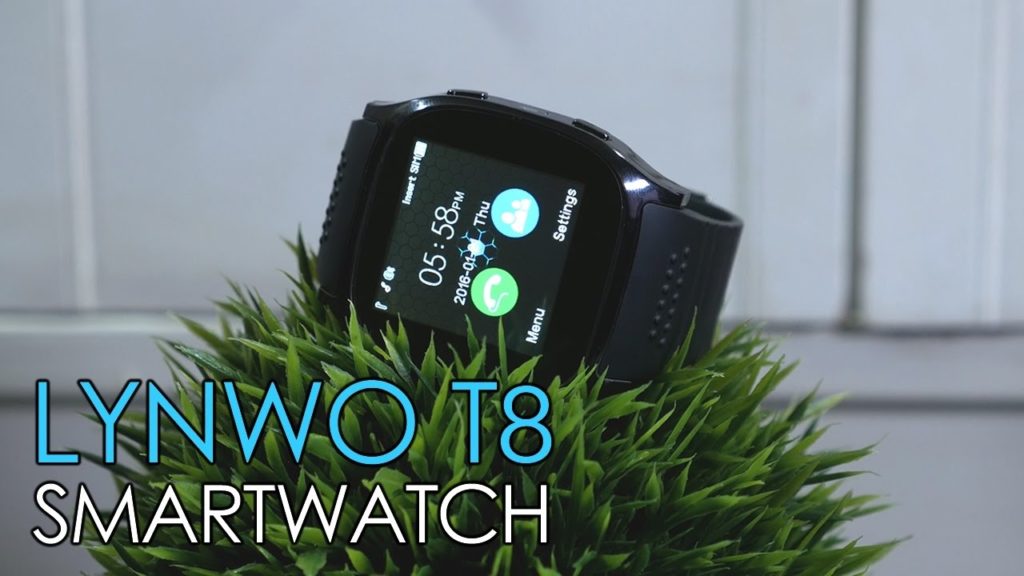
Among other smart gadgets, you can buy LYNWO T8 smartwatch for just $18.99 on Banggood. This is a considerable 17% reduction in the device’s original selling price of $22.99.
Electronics
This segment of Banggood’s promo features an array of useful electronic items at a discounted price. In line with this, you can buy Drillpro Step drill bit set for only $4.69 on Banggood, even though its original selling price is $6.25.Similarly, with a 25% discount on Raitool Styrofoam Cutter Craft Pen Foam Cutting Tool, you can get it for only $14.99 on Banggood. It’s worth noting that the tool is sold for $19.90 without the discount.
Outdoor
Adventure junkies have something to shout about as well. The Outdoor section comprises items that come in handy during outdoor activities.You can buy FREE SOLDIER outdoor backpack for only $123.33 ~ 143.33 on Banggood. This highly useful hiking shoulder bag for men is up for grabs in two color options including mud color and CP camo.
You can head straight to this link to check out all the products and take advantage of the promo before it comes to an end.
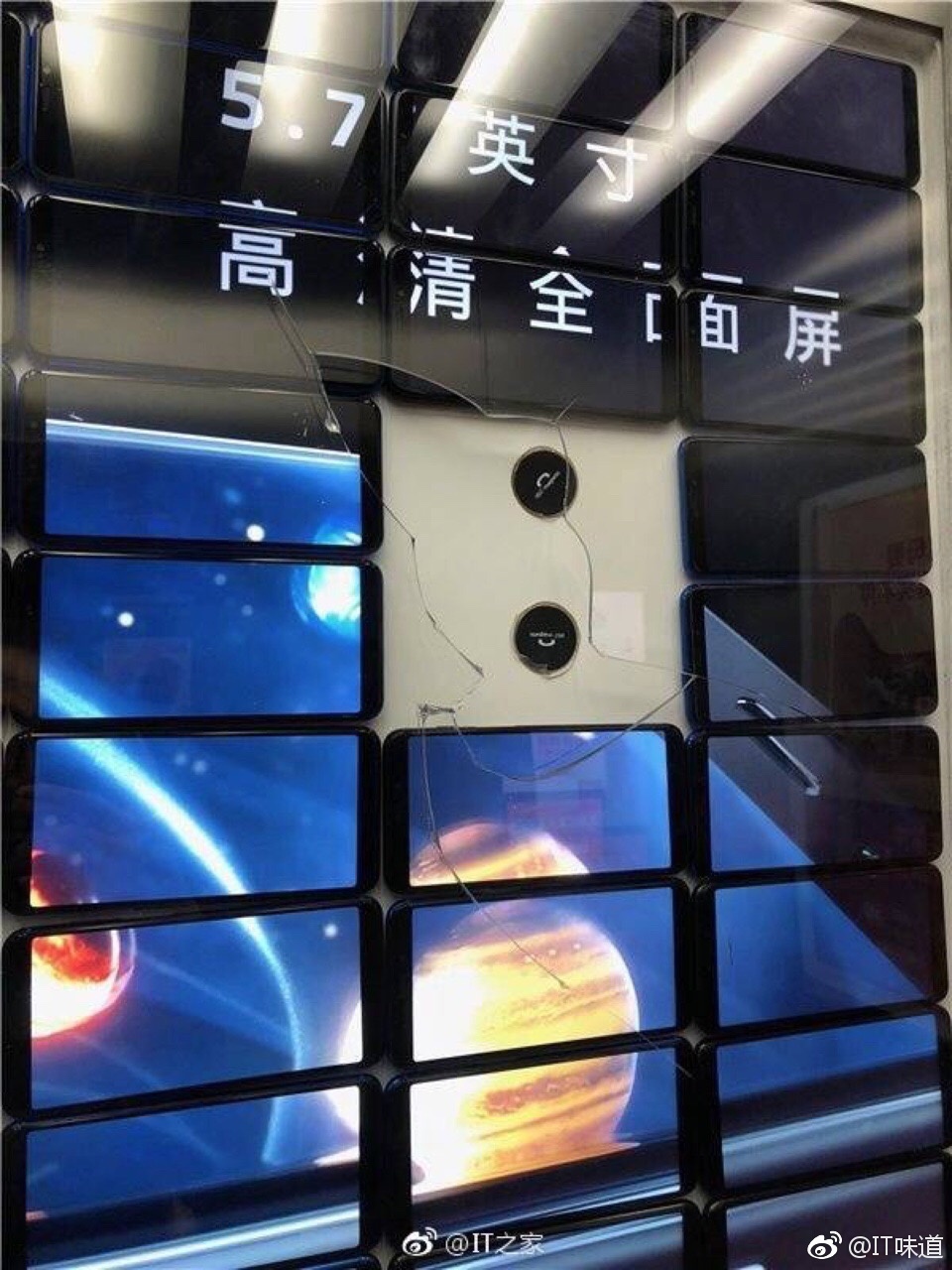
Meizu’s latest smartphone dubbed Meizu M6s is relatively a budget device which was launched in January with a price tag hovering around $150. The device is albeit spectacular in that it utilises the trending full-screen design with a curved glass over the display and its design looks attractive. Perhaps riding on the shoulders of the M6s’ attractive design, Meizu mounted a billboard in a bus stop in Beijing which was designed using over 200 units of the full-screen smartphone stacked in a landscape arrangement with the displays all functioning as a single unit.
This is no doubt an innovative concept especially since all the over 200 units formed a giant billboard promoting the new smartphone. It is an attractive sight to behold and indeed, it attracted passersby. Such was the attractiveness that it got bungled. Someone broke the glass covering the billboard and made away with some of the units. Meizu’s VP Li Nan made the disclosure himself on Weibo and from the photo shared, we could see that two of the units were stolen after the glass was broken.
Meizu’s Blue Charm official Weibo page called the billboard as probably the most expensive billboard per unit area in China. This may not be entirely correct but it sure is an expensive one and quite innovative.We are sure this is the first time the company is embarking on such venture. The billboard highlights the full-view display potential of the M6s as the individual display units fuse with each other quite seamlessly to form a big display and the bezels are not too obvious especially when viewed from afar. We’re sure Meizu will have to replace the stolen units and perhaps put some form of reinforcement or security in the vicinity to forestall a recurrence. We’re not sure Meizu will want to continue with such project considering what happened to this pilot billboard.
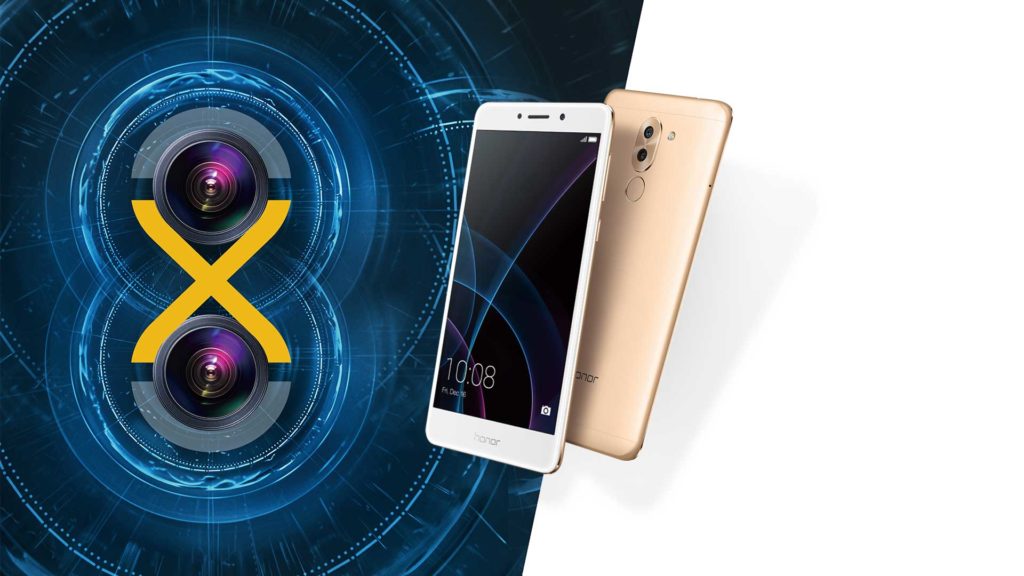
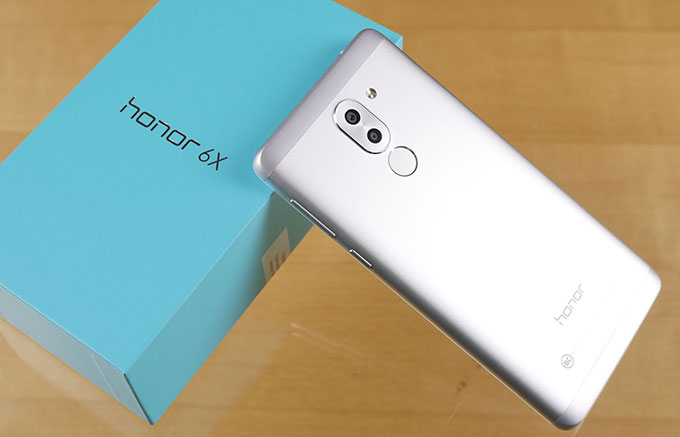
As a phablet, Huawei Honor 6X sports a huge 5.5-inch display with a screen resolution of 1920 x 1080 pixels. The device runs on Android 6.0 operating system to ensure seamless user experience.
Although the Honor 6X garnered considerable popularity among smartphone enthusiasts, it didn’t quite grab the attention of budget-conscious buyers who are not willing to spend that kind of money on a handset.
Bearing that in mind, GearBest is currently offering a considerable 30% discount on the golden color version of Honor 6X’s original selling price as part of its latest Flash Sale. As a result, the Huawei-branded 4G phablet is currently up for grabs for only $169.99 on GearBest.
Huawei Honor 6X 4G phablet is powered by a robust Kirin 655 processor and it offers 3GB of RAM coupled with a hearty 32GB onboard storage. The dual-SIM phablet is also available in a silver color version with a 17% discount on GearBest for 6 more days.
Likewise, the Flash Sale for the golden version of the Honor 6X 4G phablet is slated to end in 7 days. Moreover, there were only 82 pieces left at the time of writing.
You can head straight to this link to take advantage of the Flash Sale before it comes to an end. It is equally important for you to bear in mind that the remaining pieces are likely to be sold out soon as well.
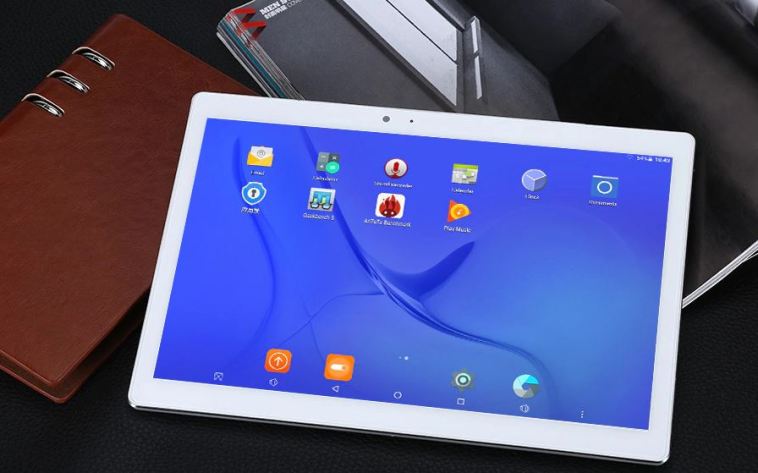
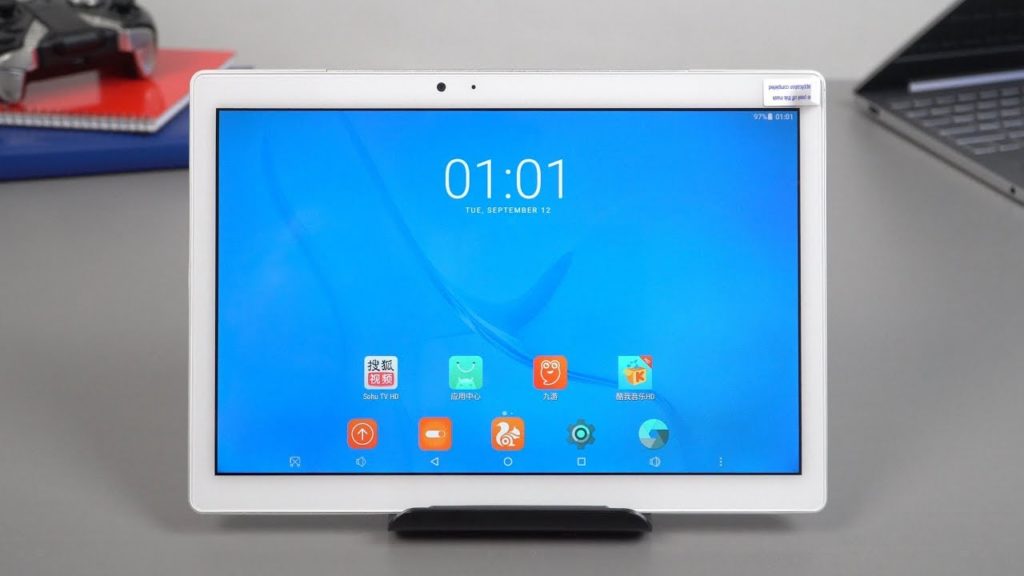
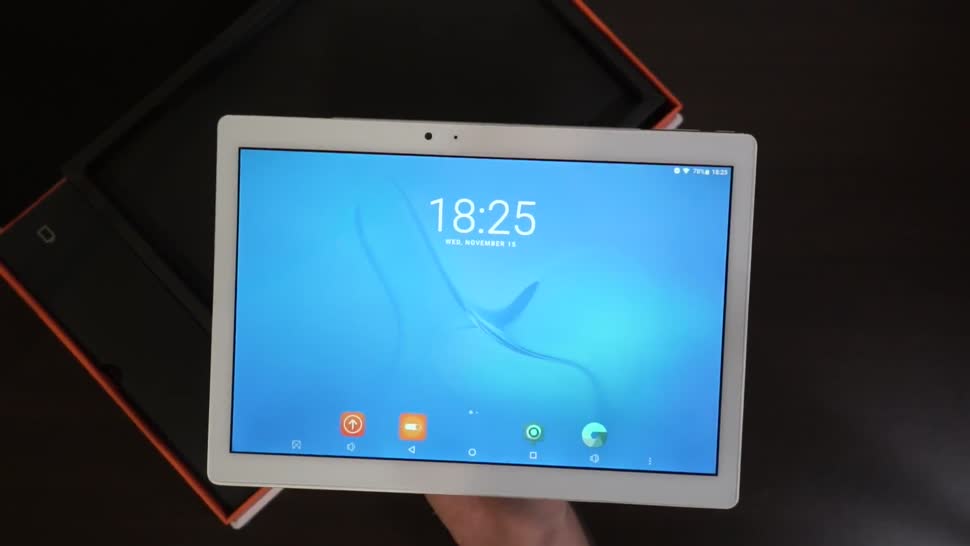
Despite bearing an affordable price tag, Teclast Master T10 tablet PC boasts an array of awe-inspiring specs and features. If you have been waiting to buy the T10 without spending a lot of money, we have good news for you. You can now get your hands on the Teclast Master T10 at a discounted price on GearBest.
As part of its Flash Sale, the site is offering 13% discount on the original asking price of the well-received tablet PC, but only for a limited period of time. Here’s what you can expect to get in terms of specs by shelling out $239.99 for the T10 tablet PC on GearBest.
Teclast Master T10 sports a 10.1 inch 10-point touch IPS display with a screen resolution of 2560 x 1600 pixels to breathe life into your photos and videos. Moreover, it runs on Android 7.0 operating system that ensures an exceptional user experience.
Under the hood, the T10 packs a powerful MTK8176 Hexa Core 1.7GHz processor along with 4GB of RAM and 64GB of onboard storage. Moreover, the tablet PC also accepts a compatible card up to 128GB for seamless expansion.
On the photography front, the T10 sports an 8.0MP rear-mounted camera and a 13.0MP front shooter. It also features a 3.5mm headphone jack.
It’s worth noting that this power-packed Teclast Master T10 tablet PC will be up for grabs at a discounted price on GearBest for just 1 more day. On top of that, there were only 96 pieces left at the time of writing.
But if that doesn’t impress you much, you can use coupon code’ GBFEB180’ at the time of checking out to get an additional discount that brings your subtotal down to only $218.99. To take advantage of the Flash Sale before it comes to an end, you can head straight to this link.
As part of its New Year Promotion, Banggood is offering heavy discounts on selected Caddx FPV Cam, Lens, and other accessories. Let’s delve straight into the details.
Caddx FPV Cam and Lens
This section comprises a slew of cams and lens bearing discounted price tags. You can get your hands on the Caddx Micro Turbo S1 FPV camera which carries a quoted price of $28.99 by shelling out just $24.99 on Banggood. This is a considerable 14% reduction in the cam’s original asking price.
Likewise, the site is giving 26% discount on the actual selling price of Caddx LS101 M12 FPV camera lens, bringing it down to only $6.99 for a limited period of time. In addition to saving money, buyers will also earn Banggood points.
Caddx Cam Case and Board
This category features all sort of cases for FPV cameras, boards and case set that you can buy at a lowered price. For instance, Banggood is selling Caddx CM02 case set, which carries a price tag of $6.99 for just $5.99. Banggood is also offering 24% off on the Caddx MB02 main board which works with Micro F1 and F1 FPV camera. The board’s original asking price is $16.99; however, Banggood is selling it for only $12.99 as part of its latest promo.
It is imperative for you to bear in mind that the New Year Promotion is slated to wrap up on Monday, February 12. You can click here to take advantage of the discounts before the promo comes to an end.
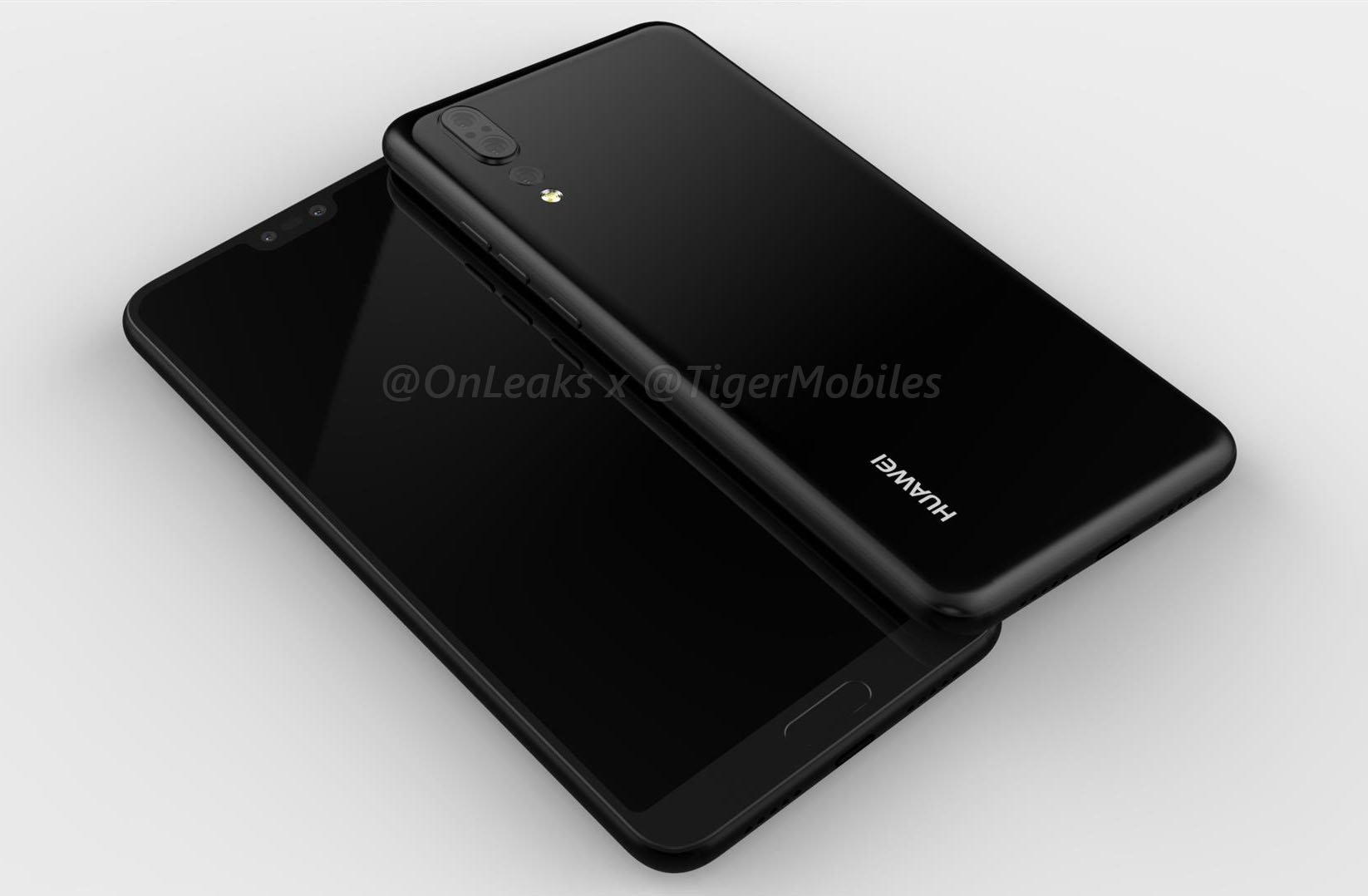
In the last 48 hours we have seen 3D renders of the Huawei P20 Lite and P20 Plus. To complete the P-series trio, renders of the Huawei P20 have also surfaced.
Just like the other two renders, this leak is a collaborative effort between @OnLeaks and @TigerMobiles. It includes photos, dimensions, and a video.
The Huawei P20 and P20 Plus are mostly similar but differ in some areas too. First, let’s run through the similarities.
Huawei seems to be giving all three models a notched display as the P20 is shown rocking one too. It also has an identical rear design as the P20 Plus i.e. triple cameras and glass back. The bottom of both phones are also the same.
However, that is where the similarities end. OnLeaks says the Huawei P20 has a 5.7” display which is smaller than the P20 Plus’ 6”. It is also shown in the render to have a home button on the lower bezel. The latter difference is not cast in stone as Huawei is reported to also have a prototype without a home button.
Another key difference are the buttons. Although they are still on the right side of the phone, the volume rocker has been split into separate buttons like we saw in an earlier leak.
There is also just one hole at the top of the device which is said to be too small to be an audio jack and is likely an IR blaster. The P20 Plus has two holes and the second one is no doubt a secondary microphone.
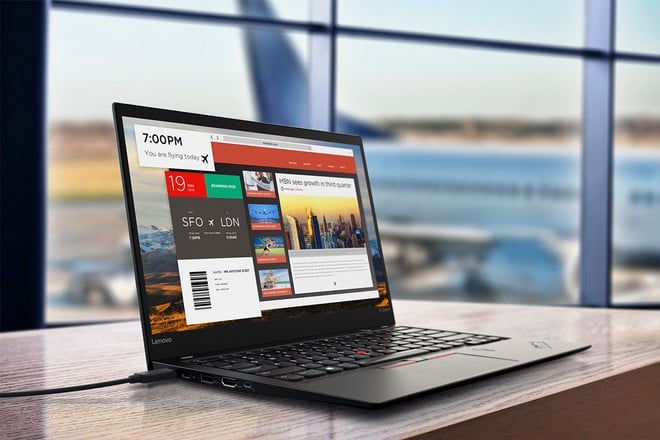
If you own the Lenovo ThinkPad X1 Carbon Black, then you should start worrying, because the company has recalled several units of the device. According to the Chinese company, the notebook is affected by battery issues that could damage the user in certain conditions. Not every unit of this laptop is affected by the problem, but only some specific units. We are referring to some units of the laptop belonging to the 5th gen (20HQ, 20HR, 20K3, 20K4).
Lenovo has just opened a support page which allows you to recognize the model number of your device and verify if it is affected by the problem. If your Lenovo ThinkPad X1 Carbon Black 5th gen is eligible, you can get either a free replacement for your unit or a free repair. The cause of the issue is an unfastened screw, which, according to the company, can damage the laptop’s battery causing overheating, potentially posing a fire hazard. It is a serious problem that requires attention because it can affect the safety of the users, so it is highly recommended to let Lenovo know about the problem and ask for a replacement or repair.
You can do it by heading to the source link below which will bring you to the Lenovo support page. Once there, select the model number of your Lenovo ThinkPad X1 Carbon Black 5th gen (if it is not in the list, then your device is not affected), then enter the serial number. Once you click Submit, you will know if your laptop is eligible for a free replacement/repair or if it is not affected by the problem. If it is affected, select the zone in which you live to send the request. Then, wait for the company to let you know about the recall.
In the last few weeks, there have been a steady stream of leaks related to ASUS’ Zenfone 5 series. The latest is the most exciting so far, as it not only gives us our first official look at one of the phones in the Zenfone 5 series but also mentions some key specs.
The new leak is courtesy of Evan Blass (@evleaks) and is an official render of the Zenfone 5 Lite. We actually think this is the Zenfone 5 Selfie Lite which succeeds the Zenfone 4 Selfie Lite as there is no Zenfone 4 Lite. However, we can’t be too sure ASUS hasn’t messed up the naming scheme again, so we’ll refer to it as the Zenfone 5 Lite.
The phone is shown in white, though we believe there will be other color variants. Its bezels are smaller and it doesn’t have a home button on the chin. At the top, we can make out two camera lens on opposite sides, a LED flash, earpiece, and the proximity/light sensor.
The back is also home to dual cameras stacked on top of each other and in a design that reminds us of the Honor 6X. There is a LED flash flanking the setup on the left and a fingerprint scanner beneath it. We can also make out a USB port flanked by speaker grilles on the bottom.
According to @evleaks, the Zenfone 5 Lite has a FHD+ resolution. The display size isn’t specified but we presume its between 5.7” to 5.9”.
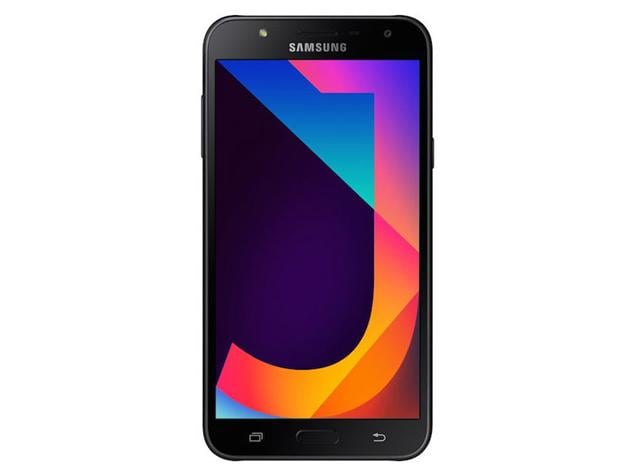
Prepare to discover two new budget devices by Samsung, as two monikers have just been trademarked by the Korean leader of the smartphones market: Samsung Galaxy J7 Star and Galaxy J3 Star. We define them budget phones because the J series is the cheapest one by Samsung, while the A is the series of the high-end phones and the S series is the flagship one. The patent has been filed at the US Patent and Trademark Office, so it is confirmed that two phones with these names will be released, and it may happen this year.
Samsung Galaxy J7 Star and J3 Star are not the only variants of the J3 and J7 handsets. Besides these ones, there are the Pro, Prime, Max, Ace and Nxt variants. Each one differs in some specs, and some of them are exclusive to just some markets. Samsung Galaxy J7 Star and J3 Star should be better than the above-mentioned variants and they should be sold with a higher price tag, even though they will obviously remain affordable devices. The Samsung Galaxy J3 Star should be the most entry-level phone and it will be a low-end device.
The J7 Star instead will be a midrange device. Sadly, nothing is actually known about their specs. The latest standard variant of the J7 released (Samsung Galaxy J7 2017) has a 5.5-inch display with a Full HD resolution of 1920 x 1080 pixels. It is equipped with an octa-core Samsung Exynos 7870 SoC, 3 GB of RAM and 16 GB of internal storage which is possible to expand with a micro SD up to 256 GB. It sports pretty nice 13 MP cameras and a big battery with a 3600 mAh capacity. The J3 (2017) instead is a compact device with a 5-inch HD panel, 2 GB of RAM, a 13 MP rear camera and a 2400 mAh battery.
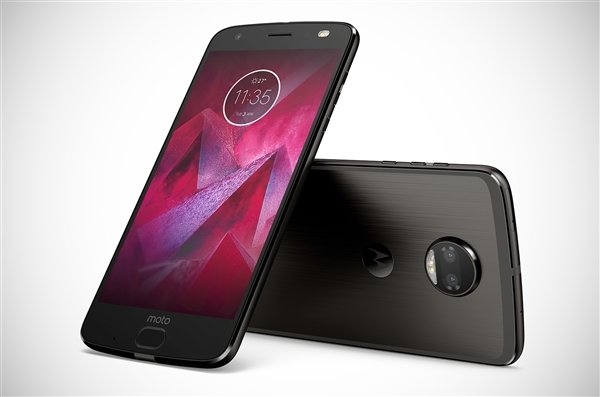
After almost eight months since its official announcement, Motorola is going to launch Moto Z2 Force in India. The U.S. tech giant acquired by Lenovo will hold a live event on YouTube at 12:00 a.m. on February 15 in which it will unveil all the details about the pricing and availability of its latest flagship in the Indian market. In the U.S. the starting price of the handset is $799, which roughly translates into Rs. 51,460.
Together with the flagship, Motorola will launch the Moto TurboPower Pack MotoMod which will be possible to connect on the back of the device, through its dedicated pins. It is just a battery pack and it provides 3500 mAh of additional capacity to prolong the battery life of Moto Z2 Force. It also supports fast charging thanks to its 15W output, so, even though the capacity is high, it will not take much time to charge the MotoMod. There is a chance that Motorola Moto Z2 Force will be sold in a bundle with the Moto TurboPower Pack MotoMod in India.
The flagship distinguishes from the competition for its great build quality: its body is made of 7000 series aluminum and its display has the ShatterShield technology which makes it very resistant (but apparently not peel resistant). The display has a size of 5.5 inches and a QHD resolution (with bezels). Under the hood, there is a Snapdragon 835 SoC paired with 6 GB of RAM and 64 or 128 GB of expandable storage, while on the back there is a dual camera configuration composed of two Sony IMX836 sensors with a resolution of 12 MP (the secondary sensor is monochromatic).
Ever since Windows 10 Mobile existed, many people’s dream was to transcend this operating system’s limitation and install the full desktop version of the OS. Now that the Mobile OS is dead and Microsoft announced that there will be no more feature updates and no more builds for Insiders, the desire to install the desktop operating system is even stronger for those who still own a Windows mobile handset.
A hacker who is identified on Twitter with the nickname Blaze_CW has just installed the recently announced Windows 10 for ARM on a Microsoft Lumia 950: now, he can enjoy a full desktop experience on his almost obsolete mobile device. This has made people hopeful for the old Microsoft Lumia devices in becoming useful again. Unfortunately, at this moment we do not know whether the operating system ported on the Lumia 950 is usable or whether it is too unstable. The version of the OS installed on the Lumia 950 is Windows 10.0.16299.15 for ARM.
Some are already speculating that, maybe, when Microsoft will launch Windows Core OS, Lumia devices will be given new life with a brand new and useful operating system. At this moment the Windows 10 Mobile situation is critical: with no updates and with developers losing interest for an abandoned platform, it can be defined a dead operating system.
We use cookies on our website to give you the most relevant experience by remembering your preferences and repeat visits. By clicking “Accept”, you consent to the use of ALL the cookies.
This website uses cookies to improve your experience while you navigate through the website. Out of these, the cookies that are categorized as necessary are stored on your browser as they are essential for the working of basic functionalities of the website. We also use third-party cookies that help us analyze and understand how you use this website. These cookies will be stored in your browser only with your consent. You also have the option to opt-out of these cookies. But opting out of some of these cookies may affect your browsing experience.
Necessary cookies are absolutely essential for the website to function properly. This category only includes cookies that ensures basic functionalities and security features of the website. These cookies do not store any personal information.
Any cookies that may not be particularly necessary for the website to function and is used specifically to collect user personal data via analytics, ads, other embedded contents are termed as non-necessary cookies. It is mandatory to procure user consent prior to running these cookies on your website.

















 Similarly, with a 25% discount on Raitool Styrofoam Cutter Craft Pen Foam Cutting Tool, you can get it for only $14.99 on Banggood. It’s worth noting that the tool is sold for $19.90 without the discount.
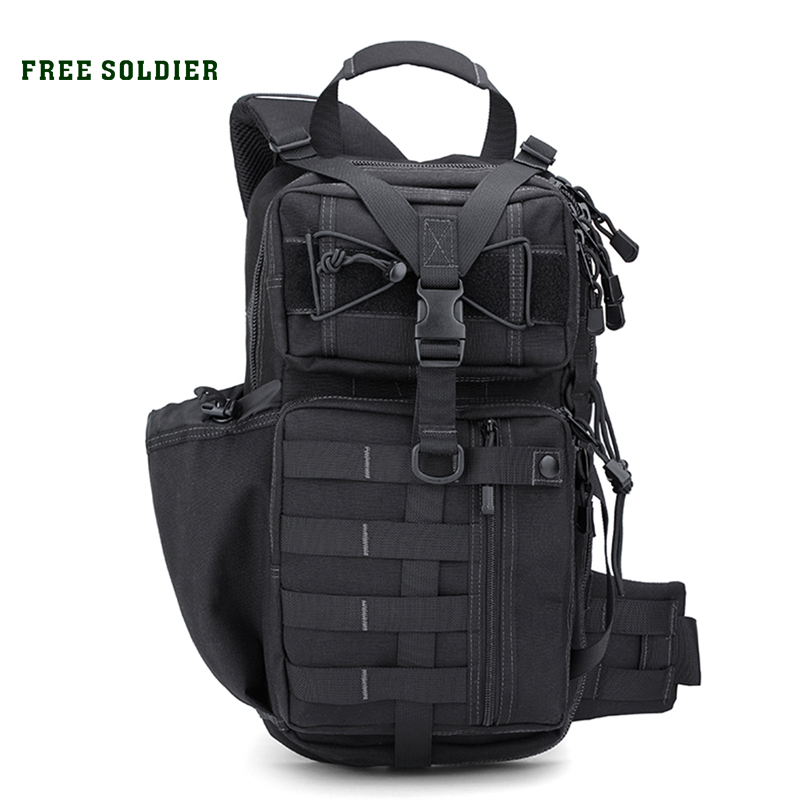 You can buy FREE SOLDIER outdoor backpack for only $123.33 ~ 143.33 on Banggood. This highly useful hiking shoulder bag for men is up for grabs in two color options including mud color and CP camo.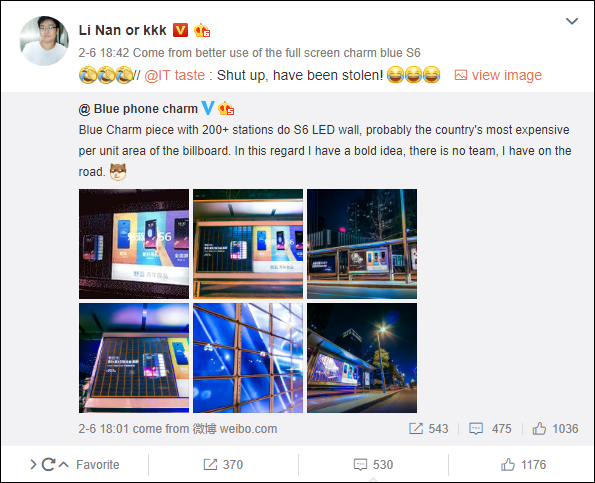






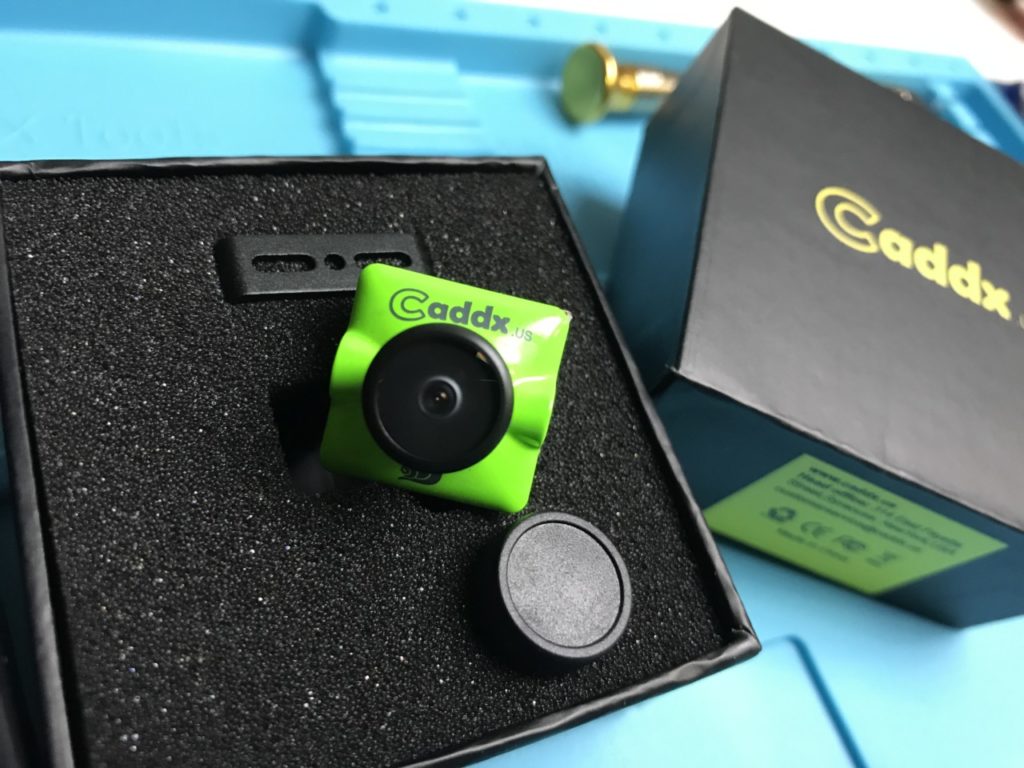
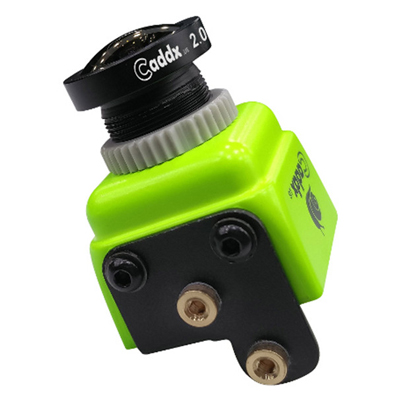 Banggood is also offering 24% off on the Caddx MB02 main board which works with Micro F1 and F1 FPV camera. The board’s original asking price is $16.99; however, Banggood is selling it for only $12.99 as part of its latest promo.