In the previous week, the rumor mill had revealed that Apple would be unleashing the iPhone 8, iPhone 7S and iPhone 7S Plus on Sept. 12. According to a new report on Wall Street Journal, Apple has decided on keeping a launch event on Sept. 12 at the newly built Steve Jobs theatres which is located on Apple’s campus.
A market research firm has revealed that there is a huge demand for the premium iPhone 8. The research revealed that 52 percent of the consumers who are looking forward to purchasing a smartphone in the next three months have said that they wish to buy an iPhone. This is highest ever demand for buying an iPhone since 2010.
The Cupertino company is expected to launch a new premium iPhone in celebration of the tenth anniversary of iPhones. Even though the rumor mill is referring to it as the iPhone 8, it is not the official name. Some reports are calling it iPhone X or iPhone Pro.
The iPhone 8 could be the first smartphone from Apple to feature an OLED screen with a full-screen design. Reports claim that it may not feature a Touch ID sensor, but may feature a robust facial recognition system. It is also expected to house an L-shaped battery that will deliver a longer battery and is also pegged to carry support for wireless charging. The Apple A11 chipset is rumored to power the iPhone 8 that will feature some AR capabilities. Speculations have it that it would be coming in storage sizes like 64 GB, 256 GB and 512 GB and it would be priced around $1,000 to $1,400.
Apple is also expected to launch the iPhone 7S and iPhone 7S Plus as upgraded models for the last year’s iPhone 7 and 7 Plus. These smartphones are expected to feature LCD screens, Touch ID, Apple A11 chipset and wireless charging. The Cupertino company is also rumored to debut LTE enabled Apple Watch 3 at the same launch event. It is likely to feature an embedded SIM to make it possible to access the internet without pairing with an iPhone.
The construction of the 1000-seater Steve Jobs Theater is still not finished yet. If the construction does not finish on time, the company may hold the launch event at Bill Graham Civic Auditorium in San Francisco where it has been keep launching events since the past two years.
Flip phones are not dead yet and Samsung seems to be the only major manufacturer keeping the design alive. About a month ago, the Korean company announced the SM-G9298, a flip phone with dual screens and a Snapdragon 820 SoC. That’s pretty high end for a flip phone. The Vkworld T2 Plus is also a flip phone but keeps the specs moderate and the price affordable.
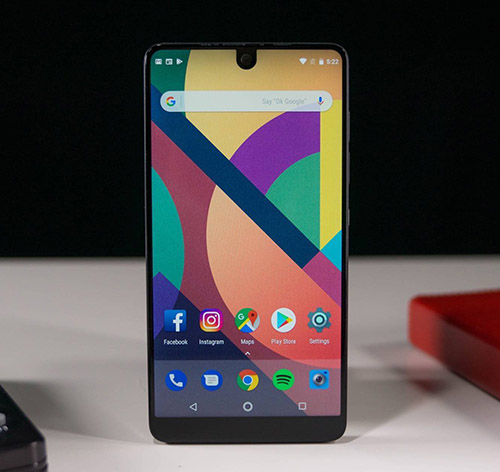
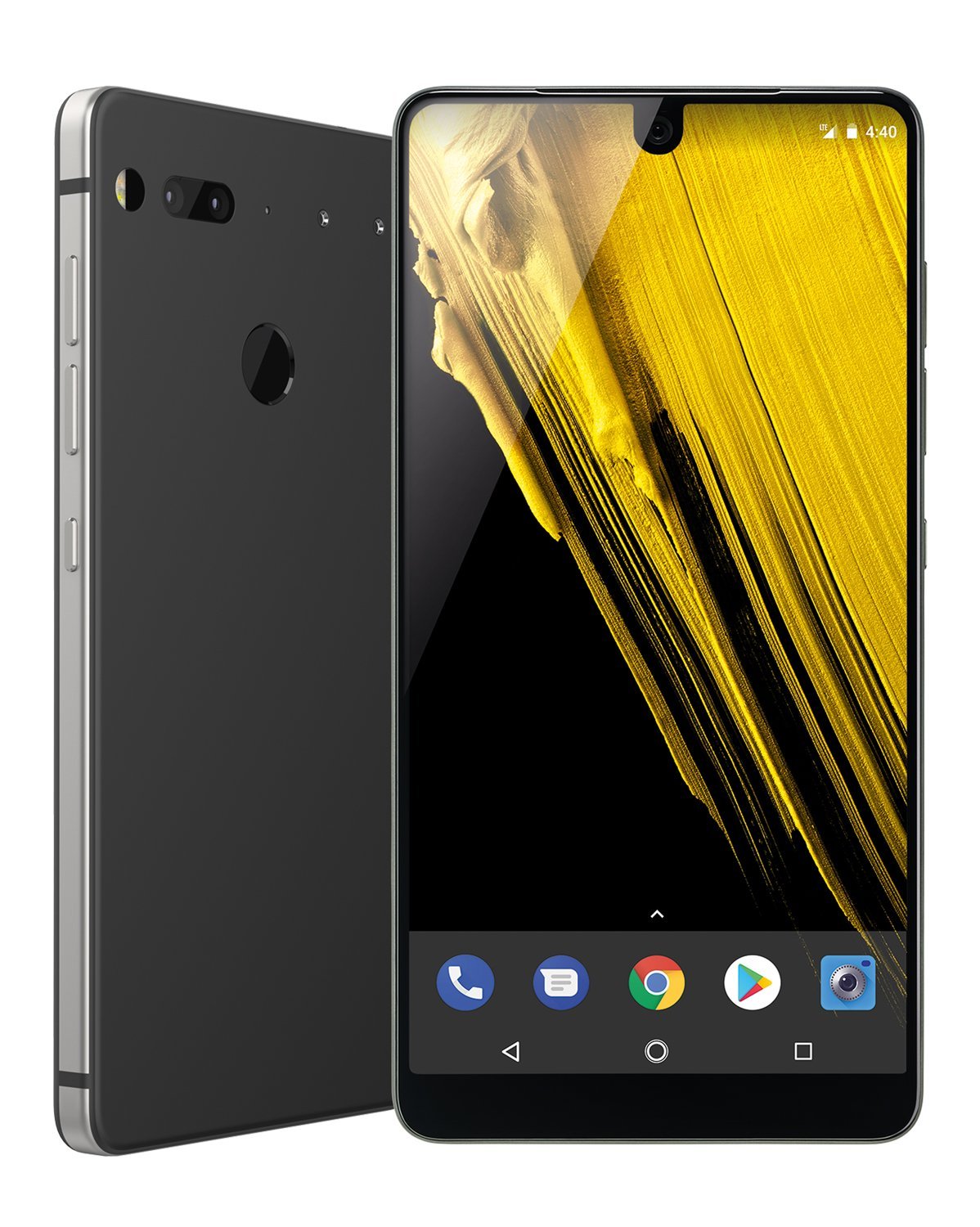
The T2 Plus will have a 4.2-inch display with a 1280 x 768 resolution on both sides. Both screens will be covered by Gorilla Glass 4 for protection. The Vkworld T2 Plus also packs a titanium body just like the Essential Phone, that makes it more durable than your regular device. This is the first time we will hear of a flip phone with a titanium body.
Vkworld will release the phone in two variants. There will be a 2GB RAM +16GB ROM version and a 3GB RAM +32GB model. It will have a 13MP sensor on the rear and a 5MP camera in front for selfies.
There are still some details that haven’t been released yet such as the processor, battery capacity, the version of Android, and the pricing. Rumor has it that the Vkworld T2 Plus will be priced under $150.
The Vkworld T2 Plus will come in three styles. There will be one with a glass design, another with a leather design and the last will be another leather design with a different pattern
Leagoo is one of those Chinese manufacturers that usually produces great phones at affordable prices. The Leagoo T5 offers very good specs like 64GB of storage, 4GB of RAM for less than $130. My name is Linus, stay tuned.
The phone ships with all the usual stuff and some extras include a pair of cheap earphones and a soft TPU case.
DESIGN and DISPLAY
When it comes to the design, we are looking at a well-built phone that is made mostly of metal. The device feels sturdy and I have no complaints about the build quality. A 5.5” 1080p display is great. It’s sharp and vibrant and even the sunlight legibility is decent.
There is no LED notification light but we have LED flash for night selfies that can be taken with a beefy 13MP camera. The on-screen navigation keys can be customized, which is great.
You also get a dual-camera setup that consists of one 13MP shooter and another 5MP sensor. The fingerprint scanner is on the front and it is accurate but I found that the display lights up quite slowly once the fingerprint is recognized.
The loudspeaker quality is just average. Also, the sound starts crackling at the highest volume settings.
The sound quality via the headset jack is surprisingly good for such a cheap phone.
HARDWARE and PERFORMANCE
The Leagoo T5 has really good specs for the price that includes an octa-core MTK6750T CPU (1.5GHz), 64GB of expandable storage and 4GB of RAM.
The gaming performance is surprisingly good. I was able to play most of the games on the highest graphics settings with just some skipped frames. If you reduce the graphics settings, the phone can handle 3D games without any issues. However, I found the device to get quite warm quickly.
BENCHMARKS
USER INTERFACE
The phone ships with Android 7.0 with the Leagoo’s skin on top of it that has some extra features and customization options. You can select from quite a few themes, wallpapers or choose different transition effects. There are also a few gesture controls. Some of them work fine while other gestures are not always recognized fast.
Most importantly, I found the phone to be fast on the daily basis. I didn’t have any hiccups or lag even after installing quite a few apps and running them in the background.
CAMERAS
The daylight images look quite good for a cheap phone but they are definitely not perfect. Most of the shots have a decent amount of detail while others could have more sharpness. Also, the dynamic range is usually off. That dual-camera setup allows you to take pictures with the bokeh effect. You can take some images that may look nice on social media but the blurred background may look artificial in some of the shots.
The night images are like on most of the cheap phones -they look kind of poor with lots of noise.
The selfie pictures look very good for a cheap phone.
The 1080p video looks kind of mediocre. Obviously, you can’t expect much better image quality in this price range of phones but I was very disappointed by a horrible sound recording quality.
Surprisingly, the sound recording quality is a lot better once you use the front facing camera for videos. The quality of the footage is pretty good, especially considering the fact that the videos can be recorded at the max. resolution of 480p.
As for connectivity, I didn’t have any issues with the call quality, signal reception, Wifi or Bluetooth. The GPS may not be the most accurate out there but it gets the job done for navigation.
The phone comes with a hybrid dual-SIM card tray that can take either 2 SIMs or 1 SIM and the microSD card. What is frustrating is that the Leagoo T5 lacks a gyroscope sensor meaning that you will not be able to use it with VR headsets.
BATTERY LIFE
A 3000mAh power bank delivers a pretty much standard battery life of about 5-5.5 hours of screen-on time while using the phone with a lot of apps installed and social media accounts running in the background. The supplied charger fully charges the phone in about 2 hours.
CONCLUSIONS
The Leagoo T5 is a surprisingly good phone that does not even cost $130. Obviously, the camera remains the weakest point of this device. Also, the phone lacks notification LED light and a gyroscope sensor.
However, if you consider all pros and cons, the Leagoo T5 offers a lot of value for the price as it has an all-metal build, brilliant display, and a good overall performance.
The Samsung Galaxy Note8 was announced in four colors – Orchid Gray, Midnight Black, Deep Sea Blue and Maple Gold. So far only three colors seem to be available for now.
In the US, there is Orchid Gray and Midnight Black. In Korea, KT Olleh’s Galaxy Note8 pre-order page lists the phone in Midnight Black and Deep Sea Blue. So it seems the Maple Gold variant is missing in action.
Move over to Taiwan and it is a different case entirely. The Samsung Taiwan website shows the Galaxy Note8 in Orchid Gray and Maple Gold. Not only does it get the Maple Gold, Samsung also unveiled a new Star Pink color variant. That makes it two new colors that are not available elsewhere for now. Taiwan also gets the Galaxy S8+ in Rose Pink.
Sources say the reason for releasing a pink variant is because the color is very popular among consumers, even accounting for up to 30% of all smartphones sold.
Meizu may as well be the only Chinese manufacturer to use processors from all the major chip makers. An interview conducted with an executive has revealed that Meizu phones will be powered by chips from the three SoC giants.
If you still remember, Qualcomm dragged Meizu to court last year following accusations of patent infringement. That case has been settled as both companies now have a good working relationship. Last week, it released its first Snapdragon-powered phone, the M6 Note.
Since it has settled with Qualcomm, you might be wondering which of the chip makers will be Meizu’s favorite. According to Li Nan, Senior VP at Meizu, “Blue Charm will use all three platforms, that is Qualcomm, Samsung, and MediaTek”.
While that does make for exciting news, there is a key info most people may have missed. He didn’t say “Meizu” but said “Blue Charm”. Now this is no mistake as he could have easily used “We” or “Meizu” but instead used “Blue Charm”. This means the news about the company splitting into two separate units is true. It also means we will see the Blue Charm series powered by Samsung’s Exynos SoCs.
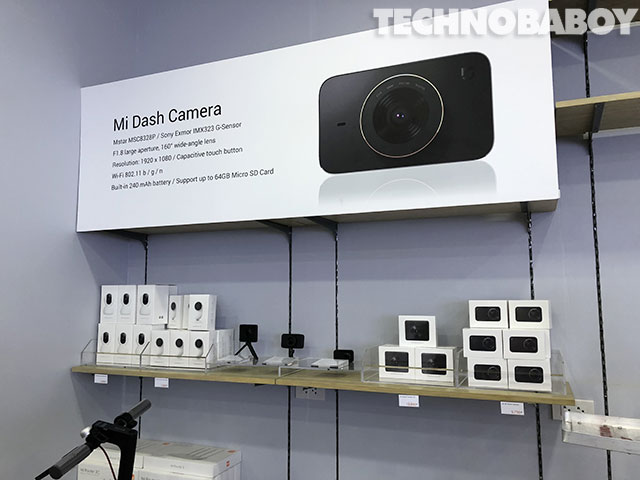
Azdome is the Chinese manufacturer that specializes in the making car dash cameras and other accessories. As the first dual lens dash cam in this industry – Azdome GS65H, it has caused widespread concern since it was announced and becomes a popular product on Amazon.
The dash cam is equipped with Novatek96655 chip and Sony IMX323 sensor, away from blurring video quality. Meanwhile, GS65H is also a fashionable and beautiful dash cam with the unique appearance design, 2.4 inch LCD screen makes the device more compact, convenient for hidden installation.
Besides the practical functions, in terms of accessories, Azdome has also prepared carefully, a range of accessories includes the car charger with USB port, suction mount, 3.5m car charger cable, USB cable, cable clip, instruction book with multi-language.
The suction mount is of great importance to the dash cam, the dash cam will be unstable with inferior suction mount, and it can easily cause the shaking during driving process.
Azdome specially designed a kind of anti-shaking suction mount, which adopts silicone with greater force of friction on the bottom, the dash cam will be more stable with this kind of silicone suction mount and will not lead to shake, the use of silicone also makes it easier to install and take down the suction mount; and the suction mount supports 360 degrees rotation on the left and right, so the driver can easily adjust the direction and angle of the dash cam.
Have you ever noticed the unique design of GS65H suction mount?
MediaTek has announced two new processors in the mid-range Helio P series and they are the Helio P23 and P30 chips. The two chips join the Helio P25 to form what MediaTek calls its “premium” mid-range lineup. The processors are expected to feature on the top mid-range models like the Moto G.
The Helio P23 and Helio P30 come with almost similar configuration except for a few differences like the clock speed on the GPS. Both processors use the Mali G71 MP2 but while the Helio P23 features a clock speed of 770MHz, the Helio P30 has a clock speed of 950MHz. Another key difference is that the P30 is capable of handling dual 16-megapixel cameras or a single 25-megapixel camera but the Helio 23 can only handle dual 13-megapixel cameras or a single 24-megapixel camera.
Aside these two differences, both the P23 and P30 feature an octa-core Cortex-A53 cores running at a frequency of 2.3GHz. The processors also pack MediaTek’s CorePilot 4.0 technology which brings on power aware scheduling, thermal management, and UX monitoring. With this technology, this allows the chipsets to work well in high-performance mode, and still offer a consistent user-experience. The Helio P23 and P30, as usual, is touted to bring an increase in performance and reliable connectivity and also provide better battery life.
The Helio P23 offers world class dual SIM capabilities where both SIM slots have 4G VoLTE/ViLTE support. Both the Helio P23 and Helio P30 also come with 4G LTE WorldMode modem which means that both processors are capable of supporting every single network in the world on one chipset. MediaTek did specifically mention that this includes CDMA networks like those offered by China Telecom in China as well as on Sprint and Verizon in the U.S. The mid-range chipsets also utilize a unique combination of Cat-7/13 bands which offer download speeds of up to 300 megabit per second download and upload speed of 150 megabit per second. Both processors also pack MediaTek’s TAS 2.0 smart antenna technology inside which provides better signal.
Yet another unique feature is the new Vision Processing Unit (VPN) on the Helio P30. The VPN is a digital signal processor running at 500MHz. It is a standalone processor and frees up some of the resources on the device to accommodate other things. The VPU also reduces power consumption while providing a smoother visual experience by boosting performance.
As for their availability, both chips will be rolling out in smartphones globally in the fourth quarter of this year. The Helio P30 will first become available in China where MediaTek enjoys most of its patronage, before it will be available in other markets.
The K3 is the latest flagship from Chinese smartphone manufacturer OUKITEL. Starting today, the OUKITEL K3 goes on presale and will cost $139.99 instead of its original price of $179.99.
The OUKITEL K3 is marketed as a flagship for the business class. While it reflects that in its design, it also justifies it with some impressive specs and features.
The K3 has a 5.5-inch Full HD display supplied by Sharp and covered with Asahi Glass. It is powered by MediaTek’s MT6750T processor and packs 4GB of RAM and 64GB of built-in storage.
The OUKITEL K3 has two unique selling points. First it has 4 cameras, two on each side which are the same 16MP + 2MP configuration. It’s second selling point is its 6000mAh battery which supports 9V/2A fast charging. OUKITEL says the phone should be fully charged in under 2 hours.
Other features of the OUKITEL K3 include a front-mounted fingerprint scanner, a micro USB port with support for reverse charging, a gyroscope and a geomagnetic sensor. It also has a 3.5mm audio jack and runs Android 7.0 out of the box.
Previous rumors had revealed that the Samsung Galaxy J7+ could be the first smartphone from the South Korean to feature dual rear cameras. It was believed that before debuting the dual rear camera feature on a flagship, it would first make it available on a mid-range phone to check the market response. However, it appears that the South Korean company may have altered its strategy as the Galaxy Note 8 flanked with dual rear cameras was launched last week. It appears the arrival of the Galaxy J7+ is not so far away as new live images of the smartphone have appeared.
In the past week, several official looking promotional images of the Galaxy J7+ had appeared. The top bezel of the Galaxy J7+ features a selfie camera and a dedicated LED flash for it. The bottom bezel has a Home button that is embedded with a fingerprint reader. The side bezels of the screen appear slim.
Rumors have revealed that the Samsung Galaxy J7+ will be supporting full HD resolution on its 5.5-inch screen. Another image shows that the smartphone will carry support for Always-on Display feature that are available on Samsung’s flagship phones. It is speculated to come with a 5-megapixel selfie camera.
The backside of the smartphone has the vertically dual rear cameras. Previous reports have revealed that it includes a 13-megapixel sensor and a 5-megapixel sensor. The left side of the handset features an exclusive button for launching the Bixby voice assistant. The right side seems to feature the Power button and the volume controllers. The headphone slot is not visible in these leaked shots, but it appears it will retain the 3.5mm audio jack.
The Exynos 7870 chipset that includes a 2.4 GHz octa-core processor is expected to power the smartphone with 4 GB of RAM. It is expected to arrive with a native storage of 32 GB that will preloaded with Android Nougat OS. A 3,000mAh battery is expected to power the handset.
In one of the above photos, the Galaxy J7+ can be seen alongside the OPPO R11. Samsung’s market share has been drastically falling in China. There are plenty of budget friendly phones from various smartphone OEMs with dual rear cameras in China. The image suggests that the Galaxy J7+ will be competing with other mid-range phones dual rear cameras in China. There is no information on its launch date, but it is expected to arrive first in Asian markets starting with Thailand.
China is now set to enforce a new law which would make it compulsory for internet users posting comments on any blog or platform to show their real identities. The new law will become effective from October 1st and would require tech firms to take down the identities of every one that is posting a comment on internet message boards they control. The Chinese government explains that the new measure is a to discourage “false rumors, filthy language, and illegal messages.”
This isn’t coming as a surprise as it is just the latest in a series of clampdown which the government has continued to institute, with an increased intensity in the past few months. It is viewed as yet another censorship of the internet which is aimed at curtailing free speech. Truth is, fewer persons would now want to challenge or criticise the government knowing fully well that the security agents can easily track you down. China is well known for its clampdown on dissidents, some of whom are hurled into prison or placed under house arrest. Also recall that the government recently strengthened its grip on the internet with a recent order that the three main state-owned telecoms network carriers – China Mobile, China Telecom, and China Unicom block all personal VPNs by February 1, 2018, according to a report from Bloomberg.
Apart from the recent clampdown on VPN, Facebook has for long being a casualty of the government’s internet censorship as well as Snapchat, Twitter and other social media apps, except those complying with the government’s censorship rules like WeChat, Weibo, and Baidu. Whatsapp was recently affected by the censorship policy as sending or receiving images and of course, videos via Whatsapp is practically impossible without the use of VPN. The government’s sledgehammer has also descended almost all of the foreign content hosted on the two popular video sharing websites — AcFun and Bilibili have vanished overnight. These two websites were extremely sought after by the Millennials in China because they had some of the most popular TV shows and movies from US, UK, South Korea and other foreign countries. Unlike Sina, iQiyi, and other Chinese video platforms, these two websites don’t have strict in-house censorship, which in turn made them popular hubs for foreign content. But all that has now changed, all thanks to the intervention of the Chinese government.
These moves are viewed as being precipitated by the upcoming national congress of China’s ruling party which will be held later this year. The government is known to often enforce strict clampdowns targetted at opposition elements in order to avoid anything that would be embarrassing to the government as well as to discourage criticism of party policies. Why this latest move is different is that the government is now going after the content directly unlike in the past when its censorship was centered around services.
Huawei’s Honor brand launched the Honor V9 in China at the tail end of February with a special dual camera-packing flagship look. The device later went on sale clutching a price tag starting at 2599 Yuan ($377) for the base version. The V9 ranked as one of the most preferred flagship in China and was top in its price category. The device was also among the Top 10 best selling models on Jingdong’s 6.18 sales. There are indications now that Honor has got a small-size version of the Honor V9 in the works, perhaps to continue the V9’s successful run. The photos of the Honor V9 have appeared in a couple of leaks on Weibo.
Honor V9 Black & Blue Variants
According to the leaksters, the Honor V9 look-alike will be called Honor V9 Mini and would only come with a slight difference in size from the phablet Honor V9. As a reminder, the Honor V9 packs a powerful Kirin 960 chip inside a 5.7-inch QHD LCD screen. The processor is backed by 4GB RAM on some models and 6GB of RAM on the top models. There is the option of a 64GB or 128GB storage version to choose from. The V9 also sports a 12 MP + 12 MP f/2.2 dual cameras on the back (one sensor is monochrome ) with laser autofocus, LED flash, and 4K video capture. This isn’t a Leica branded shooter, but it is still a decent setup. A 4,000mAh battery capacity ensures the device can give some extended hours of usage.
Suspected Honor V9 Mini (Blue)- Notice the smaller size?
From the leaked photos we can gather that the Honor V9 Mini will adopt a similar design to the Honor V9 but it seems to have a slim body and a smaller size which looks like 5.5 inches. We can’t say if the configuration is the same but that isn’t likely going to be the case. The V9 Mini also looks like what will have the same colour variants as the V9. The leaked photos reveal it will be available in Blue color. Another detail we can grab from the photo is that the 3.5mm audio jack will be absent on the Honor V9 Mini as seen in the second photo and also, the USB port will not be a Type-C port. It is possible, though, that the 3.5mm audio port is relocated to the upper edge since we have only seen the lower part. The rear camera is covered with the V9 on top and that has got us wondering if there is a surprise in that aspect too or it is going to be the same dual camera setup. The specifications are not known but since the real photo has leaked, its launch may not be too far off.
The LG V30 is debuting on Aug. 31 and it will be one of the major competitors for the Galaxy Note 8 and some of the upcoming flagships like the iPhone 8 and Google Pixel 2 XL. LG has revealed plenty of information on the upcoming features that will be arriving on the LG V30. Here is everything you wanted to know on its specifications, features and pricing.
LG V30 Launch Event and Livestream
The LG V30 unveil event will be held at Berlin, Germany at 9 AM CET on Aug. 31. In the U.S. it will begin at 3 AM EDT and in the U.K., it will be viewable at 8 AM BST. In China, it will start at 3 PM and in India, it will begin at 12:30 PM. The event will be livestreamed on YouTube and Facebook channels of LG Mobile. The LG V30 is also expected to be showcased at the IFA 2017 event that runs between Sept. 1 and 6.
LG V30 Design and Specifications
LG has confirmed that LG V30 will be coming with a 6-inch FullVision OLED display that will produce a resolution of 2,880 x 1,440 pixels and deliver an aspect ratio of 18:9. It will not feature a secondary ticker screen and instead feature a Floating Bar for view notifications and shortcuts. Since it features an OLED panel, it will also support always-on display feature.
Codenamed as Joan, the LG V30 is expected to arrive with an aluminum body that measures 151.4 x 752 x 7.4mm which makes it slimmer than the Note 8. It is expected to feature a removable battery of 3,300mAh capacity. The LG flagship will also feature the standard 3.5mm audio jack. The rear side of the smartphone features the dual rear cameras and the fingerprint scanner. Like its predecessor, it will also feature a microSD card slot and a USB-C port.
The Snapdragon 835 chipset will be powering the LG V30 and it may come in 4 GB and 6 GB RAM variants. It is also expected to come in 64 GB and 128 GB models. It will be running Android Nougat and LG UX 6.0+ UI.
LG V30 Will Deliver Impressive Multimedia Experience
LG has recently revealed a video to show the immersive audio experience that LG V30 will deliver. It will be equipped with Bang & Olufsen audio system and it will also feature Hi-Fi DAC. One of the 13-mgapixel dual rear camera sensors will be of f/1.6 aperture, an industry first from LG. It will deliver DSLR-like photography experience. The HD TouchSense technology will allow LG V30 users to get the feel of touching real buttons while using its touchscreen.
Xiaomi took to Twitter early this morning to announce the launch date for a new flagship phone with dual cameras. The date is September 5 which is next week Tuesday, a day before the end of IFA Berlin.
Xiaomi has not announced that it will be attending the mobile event in Germany and since the tweet ends with the hashtag #XiaomiGlobalLaunch, it makes us wonder if this is a late IFA announcement.
Not much is known about the device other than it having dual cameras. The teaser image shows two circles of different sizes hinting at the configuration of the cameras i.e. one wide-angle lens and another telephoto lens, just like the Mi 6.
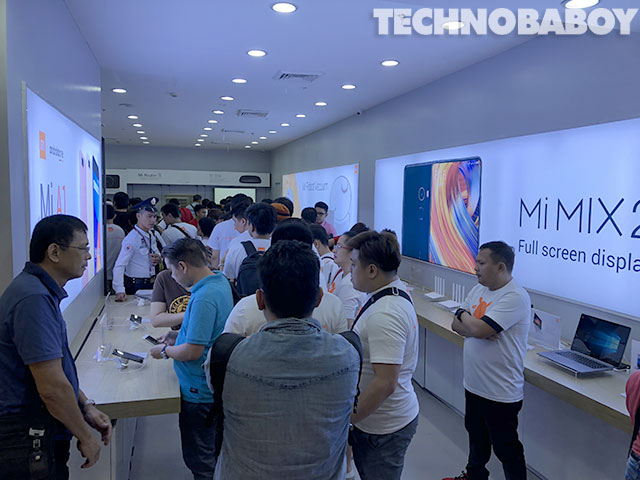
Xiaomi may not have let the cat out of the bag about the device it is announcing, but our guess is that it is the Mi MIX 2. The second generation Mi MIX has been in the news lately. We have seen leaks of the device as well as teases, and a few days ago we saw an image that showed the shooting of a commercial for the phone.
So why a global launch this time? The Mi MIX was an unexpected surprise last year when it was announced at the Mi Note 2 launch. It received many reviews across the globe even though it didn’t have a global variant like the Mi Note 2. Seeing the kind of reception it received, it will be stupid for Xiaomi not to launch the second variant globally.
The Mi MIX 2 will push the bezel-less boundaries further than its predecessor. And with dual cameras, it seems set for another round of positive reviews.
In the last week, Samsung debuted the Galaxy Note 8 flagship phablet with much fanfare through a launch event in New York, U.S. It is the new Galaxy Note phablet after the ill-fated Galaxy Note 7 that met with an early death because of its faulty battery. The Galaxy Note 8 promises to deliver a better battery life with a safer battery inside. During an Interview with The Investor, DJ Koh, the mobile chief of Samsung more information on the battery performance of the Galaxy Note 8.
The Galaxy Note 7 came with a 3,500mAh battery in a slim chassis of 7.9 mm. On the other hand, the Galaxy Note 8 sports a new full-screen design and the thickness of its chassis is increased to 8.6 mm. Moreover, it features a smaller battery of 3,300mAh capacity. Even the Note 8 is a larger phone, Samsung seems to be playing safe by including a smaller battery.
According to DJ Koh, there are some reasons on why Samsung decided on using a small-sized battery on Galaxy Note 8. First of all, the Note 8 is powered by 10nm Snapdragon 835 processor. The Note 7 featured the 14nm Snapdragon 821 chipset. The inclusion of an improved processor inside in the Galaxy Note 8 enhances its power efficiency by 30 percent.
He added that the Note 8 allows the users to improve the performance of the battery by adjusting its use according to the way they use the phablet. This again improves the efficiency of the Note 8’s battery. He went to say, “I can guarantee battery safety.” Even after two years of using the Note 8, it will be able to maintain 95 percent of the battery capacity. It appears that Koh is also trying to say that the smaller battery in Note 8 will not result in poor battery life.
Some critics have claimed that the Note 8 does not have “wow” factors. DJ Koh responded by saying the upgraded Note 8 has been released after conducting customer surveys. He further said that, “Customer demands are diverse. Some always want new features, while others want a phone that can be used for two to three years. We are not sticking to innovation itself. We will seek innovation that can be truly embraced by customers.”
Koh said that the Samsung sold 11 million units of the Note 5. He expects that the company will sell more than 11 million units. However, at present Samsung is more focused on selling more units of the Galaxy S8. The South Korean publication claims that the company aims to breach the target of 48 million units for the Galaxy S8 duo.
There is a new rumor in town that Huawei will be introducing the Honor 6C in the Chinese market to grab a slice of the market share in the budget category. The Honor 6C was first launched in Europe during the unveiling of the Honor 8 Pro in April, coming in at a price of €229.
Now, the device is said to be heading to China but the only twist is that the Honor 6C has exactly the same design and specs as the Huawei Enjoy 6S which was launched in December last year. That apart, the Honor 6C is also said to have a similar front design as the Redmi Note 5A except that it features a plastic body, unlike the metallic fuselage the Note 5A comes with.
Already, the Honor 6C has been certified by TENAA and specs wise, it features a 5.0-inch display with a resolution of 1280 x 720 pixels. The device is powered by a Snapdragon 435 processor (or Kirin 695) tagged along with 3GB of RAM. It will run EMUI 5.1 based on Android 7.0 Nougat which is different from the EMUI 4.1 based on Android Marshmallow which the Enjoy 6S featured. The new leaked detail reveals the Honor 6C will have a price tag of 799 Yuan (~$120) and at that price, it has the potential to compete with the cheap Redmi Note 5A.
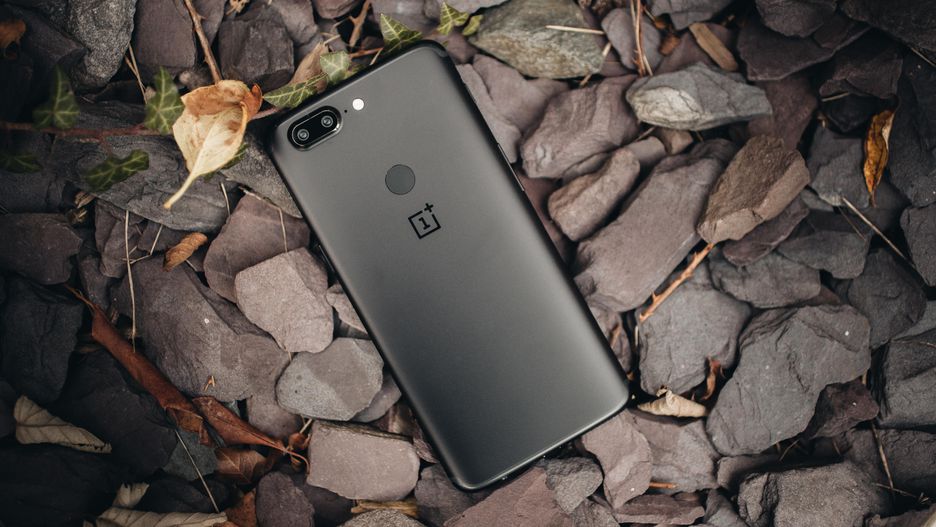
OnePlus 5 that was announced in June this year may have met with some criticism at launch, but it is one of the well-received smartphones of 2017. Unlike the new trend of using a full-screen display, the OnePlus 5 features a regular display with thick bezels above and below its screen. The rumor mill is speculating that OnePlus 6 that will probably arrive in 2018 will be coming with a full-screen design. A concept design of the OnePlus 6 has appeared to show what features may arrive on the next year’s flagship.
The very first thing that can be seen in the OnePlus 6 concept design video made by Upcoming Phones is that the smartphone features a vertically stacked dual rear cameras. The OnePlus 5 features a horizontally aligned dual rear cameras that appears very similar to the design dual camera setup on the backside of the iPhone 7 Plus. Citing information revealed by the rumor mill, the video reveals the concept model of the OnePlus 6 features a 25-megapxiel dual camera system. As it can be seen, the dual-LED flash separates the two camera sensors.
The most striking feature of the OnePlus 6 concept model is its display as it features a full-screen display. As the above image shows, the OnePlus 6 concept model lack bezels on the bottom, left, and right sides of the screen. And, it has a slim bezel at the top that houses a dual selfie snapper of 16-megapixel that is enabled with a LED flash. The top bezel also features a retina scanner. The rumored specs suggest that it features a 5.5-inch Quad HD AMOLED full-screen display.
Another interesting feature shown in the concept model of the OnePlus 6 is that it features an in-screen fingerprint reader. None of the OnePlus smartphones launch so far feature a water and dust resistant body. However, the concept model suggests that OnePlus 6 will be arriving with a IP68 certified chassis. Another improvement in the design is the presence of the glowing OnePlus logo at the rear side of the phablet. It will glow when there is a notification. Also, it is integrated with a health monitoring sensor.
The concept video does not reveal the processor that will be present under the hood of the OnePlus 6, but it reveals that it will deliver ultrafast gaming experience with 8 GB of RAM. Other features include Android 8.0 Oreo and 4,000mAh battery with wireless charging support. It may arrive in colors like Jet Black, Gold and Pearl White.
The Samsung Galaxy Note 8 was officially unveiled on Aug. 23 and one of its major rivals, the LG V30 will become official on Aug. 31. A leaked image of what appears to be a real LG V30 phablet has appeared to give a glimpse of its magnificent design.
In the new live image of the alleged LG V30, the handset can be seen sporting an elongated display. The design of the screen is quite similar to that of the LG G6. As the South Korean company has already confirmed, the LG V30 features a 6-inch FullVision OLED screen that will deliver an aspect ratio of 18:9 and a resolution of 2,880 x 1,440 pixels.
Also, one major change that can be observed in the leaked image is that unlike the predecessor phones like the LG V10 and V20, the V30 does not feature a secondary ticker screen. The South Korean company has also confirmed that instead of the secondary ticker screen, the LG V30 will have a floating bar that will display all the notifications and frequently used shortcuts. The live floating bar will remain accessible as a transparent arrow (present on the top-left in the image) that can be pulled out to check alerts whenever required.
The bottom side of the purported LG V30 features a USB-C port and an external speaker. Last year, the LG V20 arrive as the first non-Google phone to debut with Android Nougat preinstalled. However, it seems that the LG V30 will be coming with the same Nougat OS even the Android 8.0 Oreo has been officially unveiled. However, it would be one of the first devices from LG to get updated to Android Oreo.
Some of the features such as Quad DAC and dual rear cameras and so on shows that the LG V30 will be a multimedia powerhouse. It will be the first smartphone ever to feature a f/1.6 aperture camera sensor that will allow it snap stunning photos even in low light conditions.
It will be featuring a 3,200mAh battery. Some rumors claim that the LG V30 may feature a removable battery. Its fingerprint reader will be sitting on its rear side. It will be driven by Snapdragon 835 chipset and 4 GB or 6 GB of RAM. The South Korean company is speculated to announce the flagship in two flavors like LG V30 and LG V30+ on Aug. 31.
The 2017 edition of the World Robot Conference is proof that robots are not only useful in the sciences but also in the arts.
The conference which took place in Beijing between 23rd to 27th August covered the various developments going on in the robotics world as well as their applications. For those who attended, their minds must have been blown away by three robots whose demonstrations show that the arts are not left out of robot domination.
First is TeoTronico, a robot with 53 fingers dressed in a suit and tie, that performed a piece from Mozart to listeners. TeoTronico was built in Italy and can not only play the piano but can also talk, sing, and have conversations while making facial expressions.
According to Peter Chang, the Chinese representative of the company that built it, “the robot serves as a musical education assistant, giving some insight for music learners”. He also said that the version at the conference is the third generation, as the fourth one in Europe can even compose music.
Another robot that made an appearance is Saidaqian, built by the Shenzhen Academy of Robotics. You could say TeoTronico is to Beethoven as Saidaqian is to da Vinci. Do note that we are not directly comparing these robots to these great men but just linking the similarities in what they do.
Saidaqian’s job is to sketch portraits of visitors and it does that in about 5 minutes. Just like TeoTronico, it is dressed to reflect its profession which is a street artist. There is a peaked beret on its head as well as a pair of glasses. It also rocks a mustache.
Images to be drawn are sent to its system, once received, it begins to draw. Saidaqian can be used in galleries, museums, or malls to teach art or attract customers.
The academy said it has sold two robots, each costing ¥300,000 ($45,000) and also rents out its robots for ¥8000 per month ($1200). If you are planning an exhibition, you may want to invite Saidaqian has a guest artist. Its presence may just help boost publicity.
The last and equally interesting robot is Dobot Magician. Unlike the other two which are sort of humanoid, Dobot Magician is a robotic arm but one that writes traditional Chinese calligraphy. Yes, the Dobot Magician may help preserve this ancient work of art.
This is not the robot’s first public outing as it also appeared at the 2017 Spring Festival Gala online broadcast. Dobot Magician can not only write but “can also be used for 3D printing and laser engraving” says Xiang Haibing, regional manager of Shenzhen Yeujiang Technology, the company that made it.
Now that robots are in one of the most important fields known to man, does it mean humans in that field risk losing their jobs?According to some human artists, the answer is no.
Qiu Zhijie is the president of the School of Experimental Art at China Central Academy of Fine Arts and he said “Robots don’t have creativity. When an artist sees beautiful scenery, he may immediately make a sketch, paint an artwork 20 years later, or just write a poem about what he saw.”
“When we see his work, we can recall his experience and be moved by his feelings”. Mr Zhijie believes the same can’t be said for a robot’s work. That may be right for now or for things like a song or a musical composition, but for paintings it may be harder to tell if it is done by a human or a robot.
Vivo’s Y-series is targeted at the entry level and mid-range category. Back in March, it released the Y66. The Y66’s selling point is its 16MP front facing camera with Vivo’s signature Moonlight Selfie effect. However for its INR 12,549 ($196) price, it skipped on key important features such as a fingerprint scanner and Android Nougat. The newly announced Vivo Y69 can be best described as what the Y66 should have been.
If you compare the specs of the Vivo Y69 and Y66, it is easy to see why we think the former is an upgraded version of the latter. Both devices have 5.5-inch HD displays, 3GB of RAM and 32GB of built-in storage.
The Vivo Y66 and Y69 are also powered by the same Mediatek MT6750 octa-core processor clocked at 1.5GHz. The 16MP selfie camera is present on the Y69 as well as the same 13MP rear camera.
So what has changed in the Vivo Y69? The design to start with. The Y69 employs the U-antenna design giving it a more premium look. It also swaps out the capacitive front buttons for a single home key that doubles as a fingerprint scanner. There might still be capacitive keys flanking the home button but they are not visible.
A recent teaser from Huawei hints that it will be launching a new smartphone sporting dual rear camera on Oct. 16. The teaser did not contain the name of the smartphone but carried the social media hashtag of #beyondgalaxy. All the rumors hint that the Chinese firm would be unleashing the Mate 10 and Mate 10 Pro flagship phones on the said date. According to a recent tweet from popular leakster, Evan Blass, the Huawei Mate 10 is codenamed as Marcel.
The above tweet suggests that through the new teaser, Huawei could be teasing the Marcel smartphone. As we can see, the teaser image does not reveal the exact design of the alleged Mate 10, but it shows that its body will be featuring curved corners and the rear side will be having vertically aligned camera sensors. Unlike the Mate 9, the camera sensors appeared to be well-separated from each other. Like the predecessor, the Mate 10 and Mate 10 Pro are speculated to house Leica branded dual rear cameras.
Huawei seems to be very confident with the Mate 10 as it has been hinting that the flagship would be a better phone than the upcoming iPhone 8 and Samsung Galaxy Note 8. The product head of consumer division of Huawei, Richard Yu has said the Mate 10 would be direct rival for the iPhone 8. He added that the features like full-screen display, quicker charging speed, enhanced photography capabilities and so on would allow the Mate 10 to take on the iPhone 8.
Also, the #beyondgalaxy hashtag is a clear indication that the Mate 10 will also compete with the recent Galaxy flagships like the Note 8 and Galaxy S8 duo. The Huawei Mate 10 and Mate 10 Pro are rumored to be powered by the Kirin 970 chipset and the AI mobile chip that is expected to debut on Sept. 2. There is a possibility that the Kirin 970 integrated with AI features may get unveiled on the said date.
The Huawei Mate 10 Pro is expected to feature a 6.1-inch EntireView full-screen display with a resolution of 1,080 x 2,160 pixels. Its other rumored features include a 12-megapixel RGB + 12-megapixel monochrome dual rear camera sensors and a rear-mounted fingerprint reader. The Mate 10 is expected to arrive with the same set of dual rear cameras, a regular 5.7-inch display and a front-mounted fingerprint reader.
We use cookies on our website to give you the most relevant experience by remembering your preferences and repeat visits. By clicking “Accept”, you consent to the use of ALL the cookies.
This website uses cookies to improve your experience while you navigate through the website. Out of these, the cookies that are categorized as necessary are stored on your browser as they are essential for the working of basic functionalities of the website. We also use third-party cookies that help us analyze and understand how you use this website. These cookies will be stored in your browser only with your consent. You also have the option to opt-out of these cookies. But opting out of some of these cookies may affect your browsing experience.
Necessary cookies are absolutely essential for the website to function properly. This category only includes cookies that ensures basic functionalities and security features of the website. These cookies do not store any personal information.
Any cookies that may not be particularly necessary for the website to function and is used specifically to collect user personal data via analytics, ads, other embedded contents are termed as non-necessary cookies. It is mandatory to procure user consent prior to running these cookies on your website.