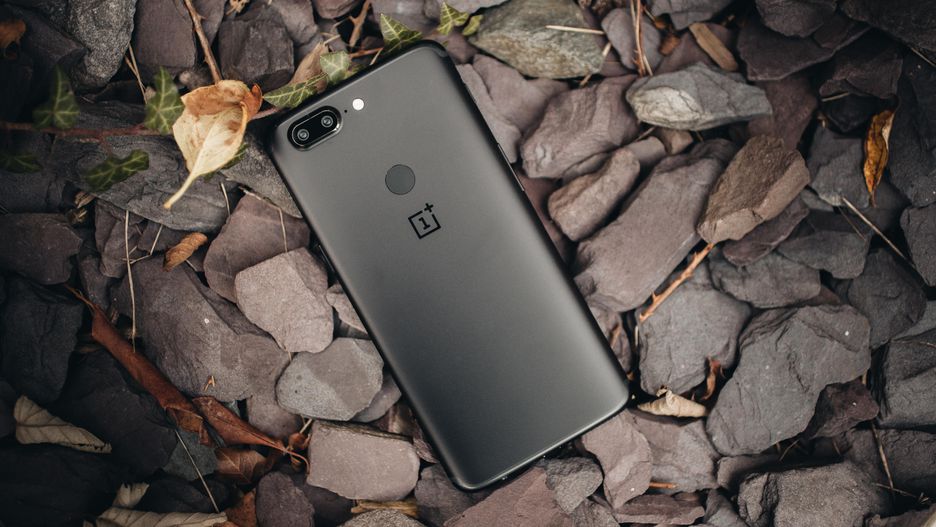
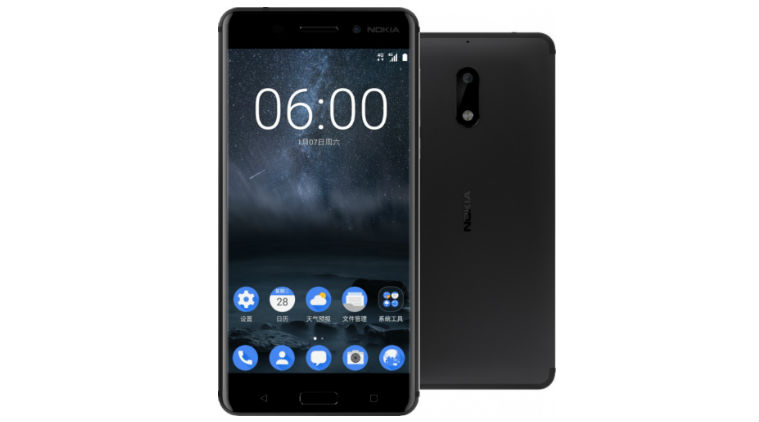
OnePlus started the tradition of releasing a special edition of its flagship phone in partnership with a known name in the fashion industry. Early this year, it released the OnePlus 3T Colette Edition. A few weeks ago, it announced the OnePlus 5 JCC+ limited edition in partnership with Jean-Charles de Castelbajac, a famous fashion designer.
The limited edition phone was available for purchase during the pop-up event in Paris. However, if you reside anywhere else in Europe, you can place an order for the phone on the official OnePlus site.
The OnePlus 5 JCC+ is quite different from what OnePlus did with the OnePlus 3T Colette Edition. Not only is the packaging different, the phone itself is.
First, the back plate has a writing on it that says the device is for creative minds. Then the buttons are also colored giving the phone a unique look. The power button is blue, the volume rocker is red, and the alert slider is yellow. Apart from those differences, every other feature is the same as the 8GB RAM version of the ordinary OnePlus 5.
The OnePlus 5 JCC+ is available for £499.00/€559. There are also some JCC+ merchandise available for purchase such as a tote bag and a t-shirt priced at €24.95/£21.95 and €29.95/£27.95 respectively.
Chinese second-largest e-commerce giant, Jingdong (JD.com) has officially announced that it has entered partnerships with two of China’s automakers SAIC Maxus and Dongfeng Motor Corporation to develop what would be the country’s first unmanned delivery vans. The JD-powered initiative saw both automakers producing two models of the automatic van which uses electricity as its source of power.
JD also hinted that the unmanned delivery vans are intended to be used for delivery of goods from its distribution centres across China to delivery points. The model developed by SAIC Maxus is touted as capable of sensing obstacles 150 meters away and can plan its route using its radar system, multiple sensors and GPS system. The van is said to have undergone several successful tests which cover aspects such as automatic route planning, overtaking, obstacle avoidance and self-parking functions. However, the project is still in the R&D stage and is still a long way from being rolled out as a full-time. Before its full rollout, the project must undergo multiple tests and be licensed before they hit the road full-time.
This isn’t the first time Jingdong is making efforts towards automating its delivery system. The e-retail giant had successfully utilised drones to deliver online purchases to rural shoppers in Jiangsu province. It also reportedly used robots and driverless cars for deliveries during the June 18 shopping festival this year, all part of the test running process for the technology. The new initiative will no doubt help reduce costs and enhance the efficiency of delivery.
An executive of HTC disclosed that the company was working on a smartphone with an 18:9 display. The phone is expected to launch as the HTC U11 Plus. On the China Compulsory Certification website, a new HTC phone with model number 2Q4D200 has been certified and it is believed to be the U11 Plus.
The HTC 2Q4D200 is said to be the Chinese variant of the HTC 2Q3FXXX seen on the Bluetooth SIG website. The last three digits are reserved for the different markets the phone will be available in.
The 3C certificate doesn’t reveal the specs but informs us that it supports fast charge (5V,2.5A; 9V/1.7A; and 12V/1.25A) and the SIG certification confirms it will have Bluetooth 5.0.
The HTC U11 Plus is really just a redesigned HTC U11 with thinner bezels and a rumored 5.99” 1440 x 2880p screen with a 2:1 aspect ratio. The processor of choice is still the Snapdragon 835 mobile platform. The main camera is expected to be the same 12MP sensor but it will be nice to see HTC give us dual cameras as a plus.
Samsung is one of the few companies that still makes flip phones. This year, it launched the SM-G9298 flip phone in China, but another one called the SM-W2018 is rumored to launch in November. The clam-shell phones are sort of a China exclusive and reports say the W2018 will be available on China Unicom.
The SM-W2018 will sport dual 4.2-inch FHD displays. Sammobile says it will have a Snapdragon 835 processor but there are reports of it coming with a Snapdragon 821 SoC too. RAM is 4GB and storage is 64GB.
For the cameras, the SM-W2018 will have a 12MP rear camera and a 5MP front facing camera. Battery capacity is put at 2300mAh. However, the W2018 is rumored to have a price tag as high as $2000 when it launches.
If you still want a flip phone but you are not willing to shell out so much, the VKWorld T2 Plus billed to launch this month is a better alternative. It will have dual 4.2-inch screens too but won’t have FHD resolutions. It’s frame is also said to be made of titanium.
Xiaomi has officially hinted that it shipped over 10 million units of it’s smartphones in the month of September 2017. CEO Lei Jun made this known in a Weibo post where he showered encomium on staffs of the various department who made the feat possible.
The CEO also disclosed in his post that this is the first time the tech giant was achieving such feat in its seven years of existence in a single month. That makes the feat all the more spectacular. What Lei Jun left out was that the record shipment means Xiaomi is very close to achieving its goal of 70 million shipments this year.
One major catalyst to this record shipment is the performance of the Redmi Note 4 in India where it recorded strong sales on both Amazon India and Flipkart which may have been spurred by Diwali, India’s annual festival which comes up on October 16 but is usually surrounded by a surge in e-commerce all over the country. Another factor could be the robust manner the tech giant had been marketing its phones this year, combining offline channels to its well established online platforms. With this pace Xiaomi may well exceed 90 million shipments this year.
ZeroLemon is best known for its battery cases which can be slapped on to phones to serve as an additional battery backup. If you feel the 3300mAh battery capacity of the Galaxy Note8 is not enough, ZeroLemon has a battery case that provides over 100% of extra battery life.
The battery case for the Galaxy Note8 actually provides an extra 5500mAh for users. For a phone with a Quad HD+ display, this does come in handy. The advantages of a battery case are more than just providing extra power. It’s a case too, so it protects the phone. It also saves you the stress of carrying a power bank and cable around.
The only disadvantages are the additional thickness and increase in weight. The battery case weighs 5.26 ounces (~149g), add that to the 195g of the Note8 and your phone weighs 344g.
The ZeroLemon Galaxy Note 8 case has a four-color LED embedded in the power button that indicates the amount of charge left. When it is white, battery capacity is between 75% and 100; green means its between 50% and 75%; blue indicates that you have 25% – 50% left; and red is for below 25%. It supports 5V/1.8A input and output maximum charge.
Last week there were two reports on the internet of the iPhone 8 Plus having swollen batteries. One report from Taiwan said the battery became swollen during charging with the official charger and cable. The second report from Japan said the phone arrived from Apple with the battery swollen and had even popped the screen out of its position.
Apple says it will investigate the cases of the swollen batteries, so as to determine what caused them. Carrying out an investigation is said to be Apple’s routine for cases like this even for older models.
Should potential buyers stay off buying the iPhone 8 Plus for now? We can’t say as these are just two units and sources say it is within the normal failure rate for lithium-ion batteries. Unless it becomes a big deal like the Samsung Galaxy Note 7 should customers begin to worry.
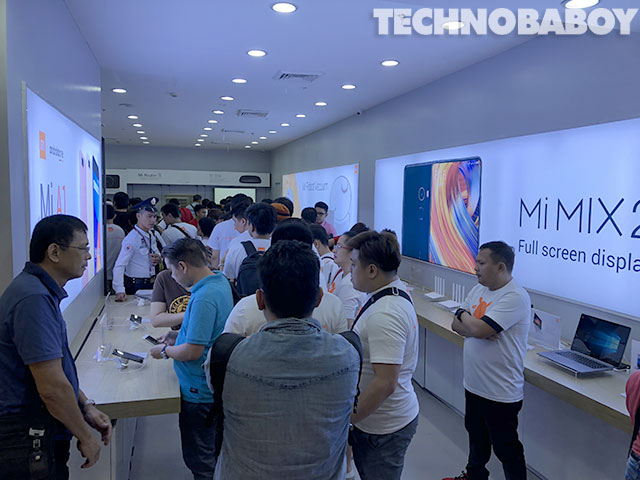
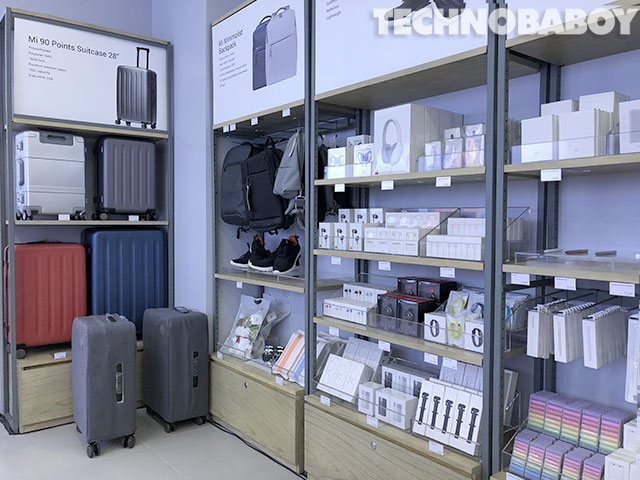
Xiaomi has added 20 new stores to its growing chain of Mi Home brick and mortar stores in China. With this new development, Xiaomi has hinted that the total number of Mi Stores in China has crossed the 200 stores mark. Xiaomi’s CEO, Lei Jun had hinted of the company’s plans to open over 200 Mi Home Stores in China this year several months back. That feat has now been achieved well before the end of the year, springing up the possibility of more stores joining before the year finally runs out.
The 20 new stores were opened on October 1 which is the National Day of the People’s Republic of China and a public holiday. Expectedly, the stores’ opening, recorded huge turnouts in all the cities where they were sited. Except for some cities where the Mi Store is making its debut for the first time, some cities have more than one like Zhengzhou which is getting its fourth Mi Store. The latest development brings the total number of Mi Stores in China to over 300.
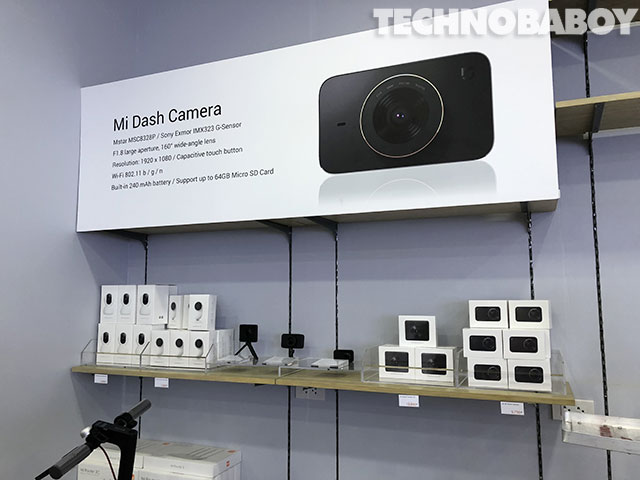
Xiaomi has achieved some progress so far in its bid to make its product accessible to its numerous customers who often experience difficulty getting their choice products due to an online-only model the company had been operating. The tech giant plans to open 1000 physical stores in different Chinese cities by the year 2020. The company also aims to open more Mi Stores outside of China. This strategy is meant to complement the online sales channels already in effect. Apart from smartphones, Xiaomi also stocks its wide range of Smart home products like its smart fitness bands, smart scooters, smart air purifiers, water purifier, internet-of-things and more, all in a bid to expand its ecosystem and shore up its revenue. Already, the results are looking promising, with the company climbing into the top 5 spots in global smartphone shipments in Q2 2017 and is set to hit its 70 million smartphone target for this year this October, two months before the year’s end.
Xiaomi‘s next budget smartphone offering is expected to be the Redmi 5A which has now appeared on TENAA showing its complete specification. A device fingered to be the Xiaomi Redmi 5A had earlier appeared on TENAA as MCT3B. But that model seems to be just a variant of the Redmi 5A. The Redmi 5A has again appeared on TENAA, this time with the model number MCE3B. The specifications are markedly similar to the first model but there is, even more, details on this new listing.
Xiaomi Redmi 5A Render
The new TENAA listing shows the Redmi 5A will be available in 2GB RAM and 3GB RAM versions, as well as 16GB and 32GB storage variants. The Redmi 5A features a 5-inch display with HD resolution (1280 x 720p) and has a body thickness of 8.35mm. The entire device weighs 137g and it is listed with an array of colour options such as Black, Rose Gold, Gold, White, Blue, Red, Pink, Gray, and Silver.
Xiaomi Redmi 5A as seen on TENAA
In addition, the Redmi 5A is equipped with a 1.4GHz Quad-core processor with entire network support and the processor is believed to be a Snapdragon 425 processor. The device is listed with a memory combination of 2GB RAM + 16GB storage and 3GB RAM + 32GB storage. On the camera angle, there is an 8MP rear camera as well as a 5MP front-facing shooter. The device will get its juice from a generous 3,000mAh battery while the interface will be based on Android 7.1.2 Operating system.
The TENAA listing is accompanied with photos of the Redmi 5A and the photos show the device will adorn a metal body manufactured using a three-stage design. There is also an absence of a fingerprint sensor just like the Redmi Note 5A. The Redmi 5A is expected to come with a cheap price tag which should hover around 599 Yuan for the 2GB+16GB variant and 699 Yuan for the 3GB+32GB variant.
Google’s upcoming Pixel 2 and Pixel 2 XL flagship phones are launching on Oct. 4. The rumor mill has revealed almost everything on the upcoming Pixel phones from their specifications to pricing. Here is a rumor roundup on the upcoming Pixel smartphones.
Design and Display
The leaked renders of the Google Pixel 2 and Pixel 2 XL smartphones have revealed that these phones will be arriving with a two-tone design on the back panel. One-third of the rear panel will be made up of glass and the remaining portion is pegged to be made up of metal. Last year’s Google Pixel phones had the fingerprint scanner placed inside the glass portion. However, upcoming Pixel 2 phones are rumored to feature the fingerprint reader in the metallic portion.
The IP67 certified chassis of Pixel 2 and Pixel 2 XL will protect them from damage from water and dust. The Pixel 2 duo are unlikely to feature the standard 3.5mm audio jack, but are pegged to arrive with dual stereo speakers on the front panel. The Pixel 2 is expected to come in colors like Kinda Blue, Just Black and Clearly White whereas the Pixel 2 XL may be available in Black & White and Just Black color variants.
The Pixel 2 is speculated to resemble the original Pixel phone whereas the Pixel 2 XL is rumored to have a full-screen design like the LG V30. The Pixel 2 and Pixel 2 XL are rumored to feature a pressure-sensitive frame like HTC U11. The feature is rumored to be called Active Edge. Squeezing the Pixel 2 or 2 XL may allow users to perform certain actions such as activating Google Assistant and dismissing alarm.
The Pixel 2 is speculated to arrive with a 4.97-inch OLED display that will support FHD resolution. The Pixel 2 XL is rumored to be fitted with a 5.99-inch OLED display that may deliver a resolution of 2,880 x 1,440 pixels along with an aspect ratio of 18:9. The Pixel 2 XL’s display is expected to support Wide Color Gamut and offer a screen-to-body ratio of around 80 to 85 percent.
Google Pixel 2 & Google Pixel 2XL Screen Protective cover
Chipset, Storage and Battery
The Snapdragon 835 SoC along with 4 GB RAM are rumored to be present under the hood of Pixel 2 and Pixel 2 XL. These phones are expected to arrive in storage sizes like 64 GB and 128 GB. Like the original Pixel phones, the Pixel 2 duo are unlikely to feature a microSD card slot. The Pixel 2 may come equipped with a 2,700 mAh battery whereas the Pixel 2 XL may house a 3,520 mAh battery.
Camera and Software
There is no information available on the exact camera configuration of the cameras that will be available on the Pixel 2 and Pixel 2 XL. However, both the phones are going to feature the same rear and front cameras. The rear cameras of both phones are speculated to carry support for Optical Image Stabilization.
The Google Pixel 2 and 2 XL are rumored to arrive with Android 8.1 Oreo preinstalled. It is expected to bring some new features like a redesigned Pixel launcher, portrait mode feature on Google camera app, and Always-On Display. Google Lens that will allow users to point the cameras of the Pixel 2 phones to any object to get relevant information is speculated as one of the killer features of Pixel 2 duo.
The presence of e-SIM inside the Pixel 2 and Pixel 2 XL will allow users to easily switch between networks of different carriers of the U.S. through Project Fi. The search engine will be providing free unlimited storage on Google Cloud until 2023 for Pixel 2 and 2 XL buyers.
Pricing, Launch Event and Livestreaming
The 64 GB and 128 GB Pixel 2 are rumored to be respectively priced at $649 and $749 and the same storage models of Pixel 2 XL are speculated to respectively cost $849 and $949.
The launch event of the Pixel 2 duo will be held at San Francisco begin on Oct. 4 at 9 AM PST in the U.S. The event will be livestreamed here. It can be viewed at 5 PM BST, 9:30 PM IST and 12 AM on Oct. 5 in China.
With the launch of Galaxy S8 and S8+, Samsung introduced the Samsung DeX feature that allows users to connect the smartphone to a large display by using a dock. Fresh information suggest that Huawei is likely to introduce a similar feature with launch of Mate 10 flagship.
MirAxess CEO Yanis Anteur has claimed that the Mate 10 would be arriving with a PC style functionality. Here is what Anteur has said on it:
“For now on we recommend to use the Mirabook with the Galaxy S8 for DeX and Windows Phones for Continuum. I also have a secret news for you (sic), the new Huawei smartphones announced on 16 October will have a DeX like feature and should be compatible with the Mirabook.”
The above statement suggests that the Mate 10 will provide users with a desktop UI for Android apps by connecting it to display through a dock. Hence, Huawei may debut a proprietary desktop dock that may feature a Displayport. Since Miracast is well-supported by various smart TVs, it won’t be difficult for Mate 10 users to find a compatible large screen. The rumored desktop dock from the Chinese company is also expected to carry support for wireless connectivity for hooking Mate 10 to a large screen through Miracast.
Huawei has recently released a teaser that to reveal the prowess of the Mate 10. The teaser claims that the Mate 10 that is driven by AI enabled Kirin 970 chipset is not a smartphone. This teaser could be hinting its secret desktop functionality. However, the teaser mainly focuses on the AI capabilities of the smartphone by calling it is an intelligent machine that can see, think and learn like a human.
Huawei has been consistently teasing that the Mate 10 is powerful enough to take on the recent flagships from Apple and Samsung. At present, Huawei is the world’s second largest smartphone manufacturer after Samsung. Unlike Samsung, Huawei is a highly popular brand in China and the arrival of the DeX-like feature on Mate 10 may receive wide penetrance. This can also prompt other smartphone makers to bring support for desktop interface in their flagship phones in the near future.
More details on the desktop dock for Mate 10 are expected to surface before the Oct. 16 launch event. What do you think about the rumored desktop interface feature that will be arriving with Huawei Mate 10? Share us your thoughts by adding your comments below.
Honor India has been teasing the arrival of the Honor 9 with #ExploreWithHonor hashtag since the last week. However, the “Honor Smartphone” Twitter account has officially confirmed that the Honor 9 would be unveiled in India on Oct. 5. Also, the official YouTube account of Honor India has also confirmed the same launch date for Honor 9.
When an Honor 9 fan enquired on the arrival of the phone in India, the “Honor Smartphone” Twitter account revealed Oct. 5 as its launch date. The Honor 9 launch event for India will be held at Taj Exotica in Goa starting at 11 AM.
The Honor 9 was unveiled in China in June and then it was also made available in European countries. The launch of Honor 9 in India has come as a surprise as Huawei was expected to debut Huawei P10 flagship in the country.
The Honor 9 has a glass rear panel and comes in multiple color choices like Glacier Grey, Sapphire Blue, Midnight Black, Gold, Blue Bird, and Robin Egg Blue. However, there is no confirmation on whether the company would be selling all the color variants of the phone in India. Moreover, the appearance of the Honor 9 is very similar to Xiaomi Mi 6 flagship phone.
The smartphone features a 5.15-inch display that produces FHD resolution of 1,920 x 1,080 pixels. It is driven by Kirin 960 chipset. It comes in 4 GB and 6 GB RAM variants and storage models like 64 GB and 128 GB. It includes a 3,200mAh battery.
The backside of the Honor 9 houses a dual camera setup that includes 12-megapixel and 20-megapixel sensor that are accompanied by a dual-LED flash. The frontside of the phone is fitted with an 8-megapixel selfie camera. It is loaded with EMUI Android 7.0 Nougat OS.
The Honor 8 Pro was launched with a price tag of Rs. 29,999 in India. Hence, the Honor 9 is speculated to launch with of Rs. 35,000 in the country. It will be rivaling against smartphones like Nokia 8 and OnePlus 5.
Honor has confirmed that it will be holding another launch event in this month. It will be holding a launch event for Honor 7X on Oct. 11 in China. The entire specifications of the smartphone have been already revealed.
A new Xiaomi phone with model number MDG6S has been approved by Federal Communications Commission (FCC) in the U.S. Around two months ago, a Xiaomi phone with model number MDT6 was certified by TENAA in China. The MDT6 phone was launched as Redmi Note 5A in August. Since the launch of Note 5A, Xiaomi has not released the budget phablet outside of China. Hence, speculations claim that it could be the Redmi Note 5A Prime/Plus smartphone or it could also be the Redmi Note 5.
The appearance of MDG6S at FCC, could mean that the smartphone may get a Western release. One of the images that show the measurement of the smartphone suggests that the length of the MDG6S is slightly above 15cm. This indicates that it could be a Redmi Note series phone. The other images show the charger and the USB cable that would be coming along with the phone.
The topside of the smartphone features a 3.5mm audio jack and an IR blaster. The rear side of the phone features a fingerprint reader and an LED enabled single camera is present at the top-left corner. The upper and lower antenna bands are also visible on the back panel.
The body of the phone seems to be made of metal. A microUSB port placed between a pair of external speakers can be seen at the bottom side of the phone.
The right side of the MDG6S phone seems to feature volume control buttons and Power key. Its left side appears to feature a hybrid SIM slot. The display of the phone has thick bezels on its top and bottom and the side bezels appear to be thin. Since the frontal appearance of the MDG6S resembles with the Note 5A, it seems to be a Prime or Plus version of the phone. However, there is no information available on its specifications.
Rumors have it that the Redmi Note 5 would be arriving with a 5.5-inch display that will support full HD resolution. It is speculated to feature MediaTek Helio P25 or Snapdragon 660 chipset. It is rumored to arrive in 3 GB or 4 GB RAM variants. It is also speculated to come in storage models like 32 GB and 64 GB.
The rumor mill has even speculated that the Redmi Note 5 would be coming with dual rear cameras. It is expected to be loaded with MIUI 9 flavored Android 7.1 Nougat. It may include a 4,000mAh battery.
Last year, OnePlus had released OnePlus 3 flagship smartphone in June and it had launched its improved version called OnePlus 3T was launched before the end of the year. Hence, the rumor mill has been claiming that the Chinese manufacturer may launch OnePlus 5T before the end of 2017 as it had unveiled OnePlus 5 in June. Fresh information suggests that there won’t be any OnePlus 5T this year. Moreover, the company is speculated to launch OnePlus 6 in early 2018.
There is no specific reason behind the rumor that claims the early arrival of OnePlus 6 in 2018. All the flagship phones from the company starting from OnePlus One have featured 5.5-inch displays. However, OnePlus 6 is expected to house a 6-inch display that will be supporting an aspect ratio of 18:9. The tall display of the smartphone may carry support for a QHD+ resolution of 2,880 x 1,440 pixels. This indicates that the OnePlus 6 may come with a bezel-less design.
Since the OnePlus 6 flagship is pegged to arrive with a larger and taller display, it may not have enough space to house the fingerprint scanner on its front. Hence, it may not only result in the removal of the physical Home button but also the fingerprint reader may be moved to the rear side of the phone.
The Snapdragon 845 chipset that is speculated to power the likes of Samsung Galaxy S8, LG G7 and Xiaomi Mi 7 is rumored to be the power that will drive the OnePlus 6. It is expected to come in RAM choices like 6 GB of RAM and 8 GB of RAM. As far as storage options are concerned, the OnePlus 6 may arrive in 64 GB and 128 GB storage models. Like the predecessor models, the OnePlus 6 is unlikely to house a microSD card slot.
Last year, most of the flagship smartphones that came in the first half of the year featured Qualcomm Snapdragon 820 chipset. However, in the latter half of the year, Qualcomm had launched an upgraded chipset with Snapdragon 821 moniker. Most of the flagship phones that have released so far in this year include the Snapdragon 835 SoC. Even though some speculations had claimed that the Snapdragon 836 may arrive in the latter half of this year, the rumor has been debunked as the SD 836 chipset does not exist. Hence, OnePlus is unlikely to launch OnePlus 5T as an enhanced version of OnePlus 5. The arrival of OnePlus in 2018 is likely to result in the discontinuation of OnePlus 5.
Amazon released the Echo Show in May of 2017. It is its first Alexa-powered device with a display. Last week, it announced the Echo Spot, another smart home assistant device with a display too. News has it that Google is working in its own smart home assistant with a display that will rival the Echo Show.
Google Home
The Google Assistant device is said to be codenamed “Manhattan” and will have a 7-inch display just like the Echo Show. Manhattan is reported to have support for YouTube, Google Photos, and video calling. There is also an unconfirmed report that it may support Netflix.
Its smart hub feature will also let you use it to control the smart devices in your home just like Google Home. It will reportedly run Android to make it easier for developers to create apps for it.
Manhattan was scheduled to arrive middle of next year but Google may decide to release it this year. However, chances are slim of it getting announced alongside the Google Home Mini and the 2nd gen Pixels on Wednesday, October 4.
Come October 16, Huawei will announce four new devices in the mate series – the Mate 10, Mate 10 Lite (Maimang 6/Nova 2i), the Mate 10 Pro, and the Mate 10 Porsche Edition.
We already know what the Mate 10 Lite will look like and we have seen leaks of the front panel of the Mate 10 Pro. We also saw alleged images of the rear a few days ago. This morning, Evan Blass (@evleaks) decided to share with us official renders of the Mate 10 Pro and we are awed by the design.
The Mate 10 Pro is a gorgeous smartphone and the design screams class. The front is occupied mainly by the EntireView display, with a front facing camera and earpiece on the top bezel, and the Huawei branding at the bottom. Huawei also teases the AI capabilities of its Kirin 970 chip by using a wallpaper that reads “AI”.
The back is where the action is. Huawei has settled for a two-tone design for the rear. The area occupied by the dual rear cameras has a lighter shade than the rest of the body.
The cameras are stacked vertically on top of each other but do not share a single housing like the Mate 9. Flanking the sensors on the right is a laser focus module, and on the left should be the LED flash though we can’t see it. Zoom in and you can make out the words LEICA on the left and even f/1.6 on the right.
Just a few days after the Gionee S11 was seen on GFXBench, the Gionee S11S has appeared on TENAA. We believe this is a more powerful variant of the S11. Now that it has been seen on the certification database, it hints at a launch date being close.
The S11s’ predecessor, the Gionee S10 was announced just 4 months ago. So it is surprising that a successor is coming so soon.
The Gionee S11S packs a 6.01” 2160 x 1080 AMOLED display just like that of the Gionee M7. The RAM and storage is also the same at 6GB and 64GB respectively. There is a slot for adding up to an additional 128GB. Unlike the version seen on GFXBench with a 2.3GHz octa-core processor, this one has a 2.5GHz SoC. We believe this is the Helio P25.
The Gionee S11S borrows a leaf from its predecessor and that is quad-cameras. There is a 16MP + 8MP combo on the rear and a 20MP + 8MP combo for selfies.
The S11S has a 3600mAh battery, runs Android 7.1.1 Nougat, and measures 155.82 x 72.58 x 6.95 mm. Its weight is recorded as 177.8g.
With respect to design, the Gionee S11S can be described as a mashup between the Gionee M7 and the Gionee S10. It has a metal body with the same dual camera design that is slightly raised. The FullView display means the fingerprint scanner has now been pushed to the back. Power button and volume rocker are on the right side and the SIM tray sits on the left.
LEAGOO has officially taken the wraps of the LEAGOO S8 and LEAGOO S8 Pro. Both phones have full-screen displays with an 18:9 aspect ratio but differ with respect to size and internals. If you are on the lookout for full-screen smartphones with affordable price tags, then you may want to include these phones under your radar.
LEAGOO S8 and S8 Pro Design
The S8 and S8 Pro are actually pretty good looking. The full-screen displays means that the bezels on both phones are pretty small. The phones feature a mixture of metal and glass and have an overall thickness of 69mm and 79mm respectively .
Look at the back of the S8 and S8 Pro and it has a familiar design. That is because it is the same as that of the Honor 9 which Huawei has dubbed lightcatcher.
LEAGOO S8 and S8 Pro Specs
The S8 is the smaller of the two. It packs a 5.72-inch HD+ display supplied by SHARP and with Corning Gorilla Glass 4 ptotection. It is powered by Mediatek’s MT6750T SoC clocked at 1.5GHz. RAM is 3GB and storage is 32GB.
The LEAGOO S8 has dual cameras on the rear and up in front. The front sensors which are supplied by OmniVision are in the 8MP + 2MP configuration along with a dedicated LED flash.
Sony is the supplier for the f/2.0 13MP and f/2.2 2MP sensors on the rear. The sensors are stacked vertically on top of one another with a dual LED flash above and a fingerprint scanner below.
The LEAGOO S8 has a built-in 3050mAh battery with support for 5V/2A quick charge via a micro USB port. There is a hybrid dual SIM tray (micro and nano) positioned at the top of the phone. There is Bluetooth, WiFi, and OTG support.
The S8 Pro on the other hand has a 5.99-inch 2160 x 1080p display. It has a Helio P25 chip paired with 6GB of LPPDR4X RAM and 64GB of internal storage.
The S8 Pro has dual rear cameras. One is a 13MP sensor from OmniVision and the other is a 5MP camera from Samsung. Up front is a single Samsung 13MP sensor for selfies.
Battery capacity of the LEAGOO S8 Pro remains 3050mAh just like the S8. Both phones come with LEAGOO OS 3.0 based on Android 7.0 Nougat.
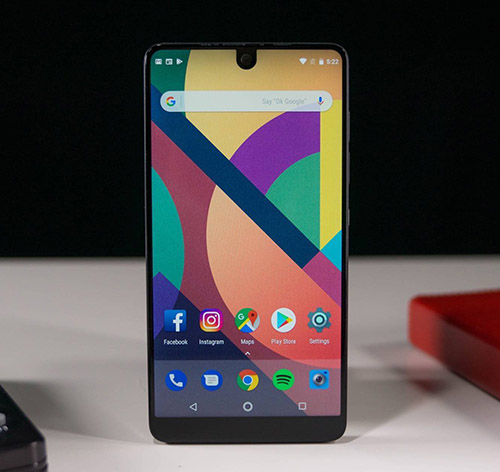
According to reports, Andy Rubin’s new smartphone has only sold 5000 units since it launched on Sprint.
This is a sad revelation for a phone that ticks all the boxes of a 2017 flagship, offers a bit more and is priced at about the same as other flagships. But when you examine the factors surrounding the release of the Essential phone, then it becomes clear as to why it has sold such a low amount.
Delay. The Essential Phone faced serious delay before being available for purchase. First teased in March, then released in May with a promise to ship in 30 days. It didn’t ship in June, neither did it ship in July. It started shipping in late August to those who pre-ordered and was available in Sprint retail stores in mid-September. The carrier-unlocked version became available for purchase shortly afterwards. That is close to 4 months after announcement. What’s more, only the black variant has been available since it went on sale, the white, gray and green variants are yet to go on sale.
This delay resulted in two things – first, it made people think something was wrong at Essential as some of the company’s top executives left. We covered a few here and here. Then the delay made it possible for other manufacturers to announce their flagships, thereby creating more options for buyers. OnePlus released the OnePlus 5, HTC unveiled the U11, LG launched the V30, Samsung announced the Galaxy Note8, and Nokia unveiled the Nokia 8.
Even though some of these phones are yet to be available in all markets, customers now had more devices to choose from. Let’s also not forget that the Essential phone is extremely difficult to repair.
The Essential Phone is a great device overall. Its one of the strongest phones released this year with its titanium frame. It runs a stock version of Android with promised software support for 2 years.
The Pixel 2 and Pixel XL 2 are expected to be a bit pricey. Those who want pure android and are not ready to fork out so much to Google can pick up the Essential Phone instead.
The Essential Phone is priced at $699 unlocked. It comes with an edge-to-edge 5.71-inch display, a Snapdragon 835 processor and 4GB of RAM. Available in only 128GB of storage with no choice of expansion. However, it will be nice to see a 64GB version of the phone with a much lesser price. There are dual rear cameras on the back and a 3040mAh non-removable battery.
HMD Global already confirmed that the Nokia 3, Nokia 5, Nokia 6 and Nokia 8 are all scheduled to get updated to Android 8.0 Oreo. But HMD Global isn’t done. To further show its commitment towards software supports for the devices, it has announced that they will also be updated to Android P.
HMD Global is setting a high standard for companies like Lenovo and OnePlus whose devices also run near to stock Android but whose duration of software support is less than desirable.
The announcement was made at a Nokia launch event in The Philippines. However, it is not known if the unannounced Nokia 2 which will be its cheapest smartphone will also get the Android P update.
What further makes the announcement interesting is that by this time next year, HMD’s portfolio may have nearly doubled and its 2018 phones which may launch with Android Oreo out of the box will also get updated to Android P. So that’s about 10 devices with software support, which makes you wonder why OnePlus can’t handle 4 devices (counting the OnePlus 6).
During the announcement, it was also disclosed that the update to Oreo will arrive on some devices earlier than others.
We use cookies on our website to give you the most relevant experience by remembering your preferences and repeat visits. By clicking “Accept”, you consent to the use of ALL the cookies.
This website uses cookies to improve your experience while you navigate through the website. Out of these, the cookies that are categorized as necessary are stored on your browser as they are essential for the working of basic functionalities of the website. We also use third-party cookies that help us analyze and understand how you use this website. These cookies will be stored in your browser only with your consent. You also have the option to opt-out of these cookies. But opting out of some of these cookies may affect your browsing experience.
Necessary cookies are absolutely essential for the website to function properly. This category only includes cookies that ensures basic functionalities and security features of the website. These cookies do not store any personal information.
Any cookies that may not be particularly necessary for the website to function and is used specifically to collect user personal data via analytics, ads, other embedded contents are termed as non-necessary cookies. It is mandatory to procure user consent prior to running these cookies on your website.