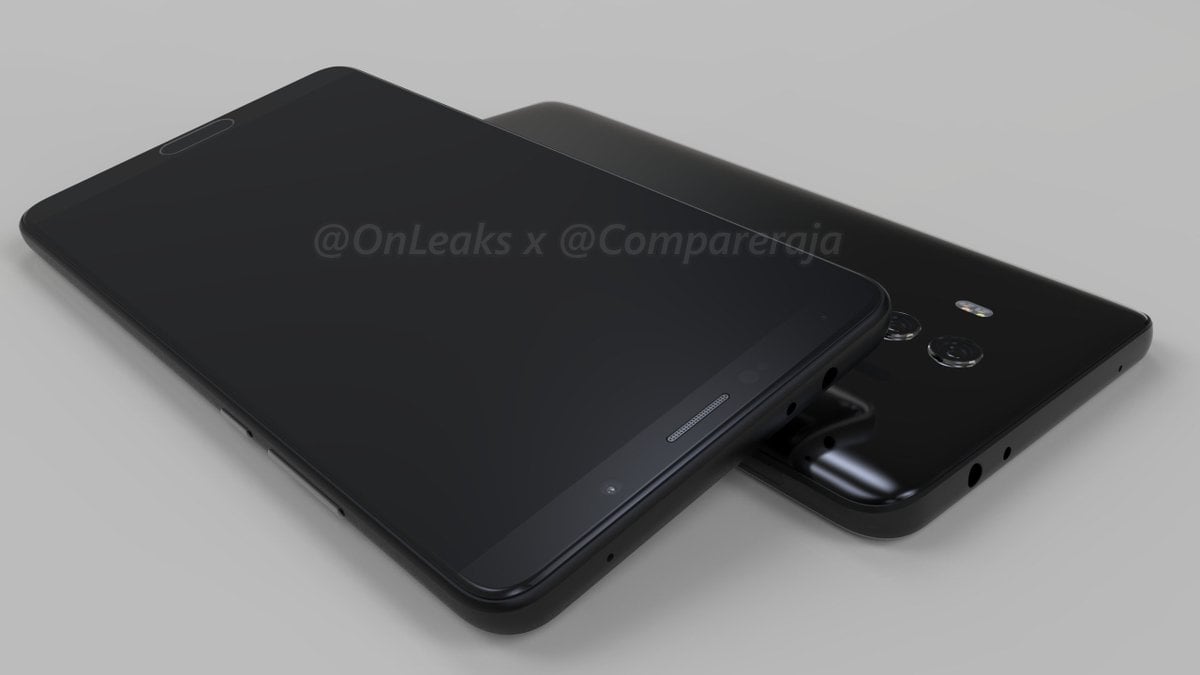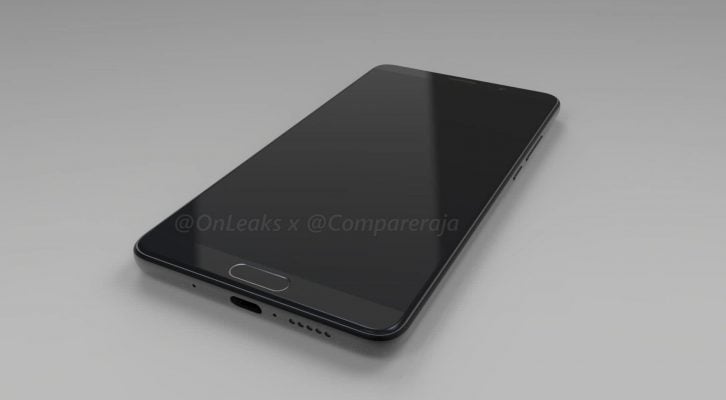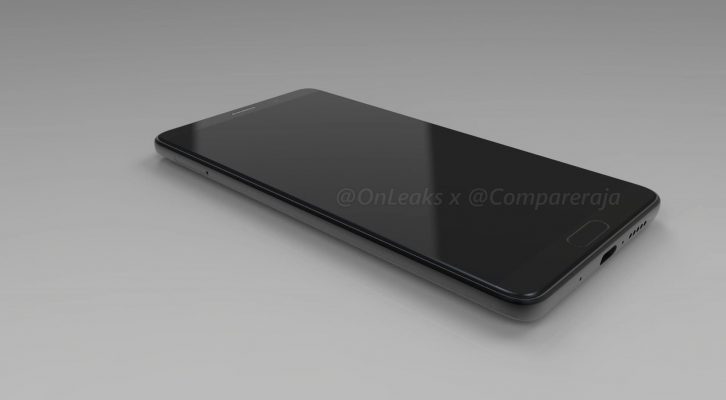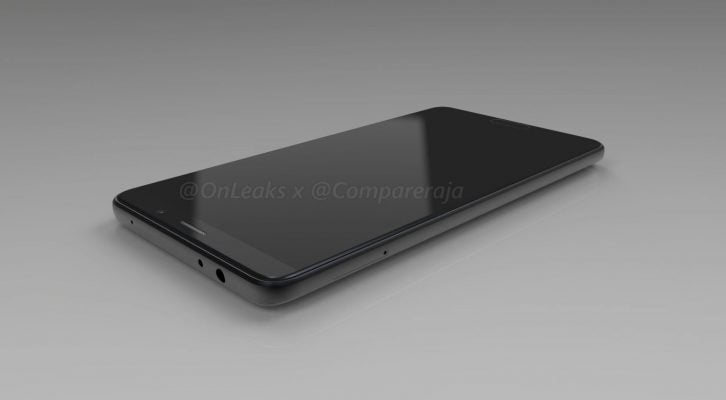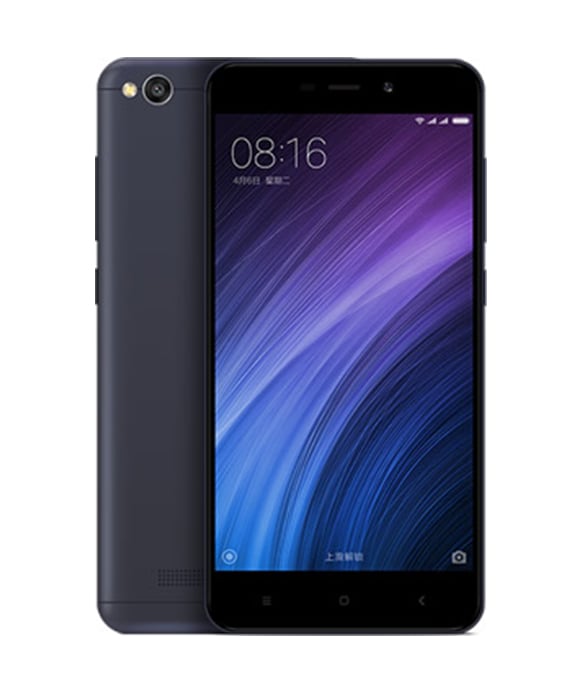
One authentic source of information about the Chinese smartphone market has for a while now been Kevin Wang, research director at IHS China. Recently, Mr. Wang took to his Weibo (China’s Twitter) page to unleash some details about the upcoming Xiaomi Mi 6 and its impending launch with the Snapdragon 835 SoC.
The rumor mills have been spinning consistently in several directions concerning the details of the Mi 6. It is rumored in some quarters that the device would launch with a lower version of the SD 835 since Samsung is reserving the higher version for its Galaxy S8 flagship, while some others say the Mi 6 would come in a number of versions in order to mitigate the shortage of the SD 835 chip that would arise from low yield of the 10nm process and Samsung using it on its own Galaxy S8.
The analyst has come out to reveal that the Mi 6 would not suffer from a shortage of Snapdragon 835 chip when it launches this March. The analyst seems to suggest that both the Galaxy S8 and Mi 6 would be released this March just as rumored. In continuation of his bare-it-all Weibo posts, the analyst also disclosed that the Mi 6 would use the Snapdragon 835 processor with full processor frequency and that there is no low version of the device as rumored.
The Xiaomi Mi 6 is said to feature a 5.2-inch TFT display with 1080p resolution.The device is expected with a flat display, a single camera at the rear and also will ditch the ultrasonic fingerprint sensor on the Mi 5S for the tradition fingerprint sensor. Sales are expected to commence in April this year.
Sharay Shams, the Middle East General Manager for Smartphones for Lenovo had confirmed recently that the company would be launching 12 Moto Mods in this year. Recently, a walkie-talkie Moto Mod by Linc was spotted on Indiegogo crowdfunding site. Now, a new Moto Mod with QWERTY keyboard slider has surfaced on the site.
The QWERTY keyboard has a landscape design with five rows of keys and its top line of keys is occupied by numerals. The alphabet keys along with other keys are present on the next three rows.
It has a big-sized Enter key that occupy on the second and third row at the right side. The fifth row features a large-sized Space bar. The reason why this Moto Mod comes with a landscape mode rather than a portrait design is that the former can feature larger keys for better typing experience.
The keyboard also features a 2,100 mAh battery. LivermoriumLtd, the developer of the project has expressed on Reddit that if sufficient funds are accumulated, Qi wireless charging feature will be added to the keyboard. There is a Motorola batwing logo present on the Moto Mod QWERTY slider keyboard.
Indiegogo has a dedicated page that says that this Moto Mod is arriving soon. Users who are interested can add their email address on that page to register for it to receive new updates on it. It is expected to be a quality product because it will not only be designed by a professional team but also it will undergo manufacturing at Foxconn. The physical keyboard Moto Mod is targeted to be available for shipping in June.
It seems that when the physical QWERTY slider is in use on Moto Z or Moto Z Play, users will not be able to access the rear camera. The current design of the sliding Moto Mod keyboard suggest that it will slide-out in such a manner that it will be blocking a small part of the rear camera. On Reddit, users can provide their suggestions or feedback on the proposed design.
As of this writing, its pricing has not been announced. LivermoriumLtd is also considering a gamepad Moto Mod, but currently the developer is mainly focusing on releasing a general QWERTY keyboard that can appeal all users. The physical QWERTY keyboard slider Moto Mod will work on Moto Z, Moto Z Force, Moto Z Play and their Droid versions.
The Mobile World Congress (MWC) 2017 is drawing near. Huawei has been heavily pegged to announce the P10 and P10 Plus flagships at the upcoming event. Previous rumors have hinted that the company may also unveil Huawei Watch 2 smartwatch. Evan Blass, the well-known leakster has now revealed the alleged press renders of Huawei Watch 2 which reveals that it will be coming with a sportier appeal.
According to the leakster, the Huawei Watch 2 is codenamed as “Leo.” The original Huawei Watch came with a classy appeal, but leaked press renders suggest that its successor appears to have a very sporty look. It has a rugged appeal and it features two physical buttons on its right edge. The strap of the Huawei Watch 2 seems to be made of rubber.
Another render of the smartwatch suggests that it features a SIM card slot for cellular connectivity. A report from the previous month did reveal that the Chinese manufacturer’s upcoming smartwatch would carry support for cellular connectivity.
There is no confirmation whether the smartwatch would be supporting only 3G or 4G LTE networks. With cellular connectivity onboard, Huawei Watch 2 users will be able to use it as a standalone device to make phone and receive phone calls without the need of pairing it with a smartwatch.
The Huawei Watch 2 press renders reveals that it would be coming in three color choices such as black, orange and grey (with white speckles). The device is expected to run on Android Wear 2.0 and rival with the recently announce LG Watch Sport.
Rumors from the January month have claimed that it would be a 42 mm smartwatch featuring a 1.4-inch display. Even though fresh press renders of Huawei Watch 2 hints that it would be available with a sporty appeal, last month’s leaks revealed that it will be also coming in leather and stainless steel versions.
As of this writing, there is no information available on the specifications, pricing and availability of the Huawei Watch 2. These details are expected to get officially announced at Huawei’s upcoming press event on Sunday at 5 AM PST.
Meizu earlier today announced through its Twitter page that it will be showing off a new technology its been working on for over a year at MWC 2017. The announcement was accompanied by a teaser image.
The image is of a lightning bolt and has the text “faster than ever” below it. Its evident from the image that what Meizu plans to announce is related to charging. But we got a little info from an industry source to confirm.
According to the source, Meizu is planning to announce mCharge 4.0. mCharge is Meizu’s trademark name for its fast charging technology and it will be unveiling the 4th generation of the technology. mCharge 4.0 is said to use 9V4A, offering up to 36W of power.
Comparing that to Qualcomm’s Quick Charge 4.0, Meizu’s mCharge supplies more power. Quick Charge 4.0 on the other hand still uses 9V2A (18W) but is 20% more efficient than QC 3.0 due to its use of Dual Charge technology. It is also better as the charging temperature is lower by 5°c and has support for USB Power Delivery.
Huawei launched the Honor V9 and announced a bunch of other items still under the Honor brand earlier this week. In spite of that, the Chinese manufacturer doesn’t seem to be done. Huawei has also announced that it plans to release a 360° camera add-on device called the Honor VR Camera.
The Honor VR Camera is the result of a partnership with Insta360, a company known for making add-on cameras for phones. Huawei bundles the Honor V9 phone with a pair of cardboard-like VR glasses. The Honor VR Camera is probably a nice addition in case you need to make your own VR content.
The CEO of Insta360, JK Liu said during the announcement that “Like us, Huawei is committed to reinventing photography, and they believe in our products as the best way to introduce users to the future of the camera.”
Chuwi is a well-known budget tablet and laptop maker from China. I just came across their LapBook 15.6” model that has a sleek design, decent specs and it costs just about $240. I’ve used this laptop for quite some time and here is my full review.
UNBOXING
The tablet ships in quite a simple box and inside of it, you can find just some paperwork, USB brick and a power cable.
HARDWARE and DISPLAY
The design is one of they key selling points of this laptop, in my opinion. The LapBook is made of quality matt plastic, which is nice to the touch and it does not attract fingerprints or smudges easily.
Also, I love how thin it is but it is quite heavy for an ultrabook since it weighs over 1.8kg. The weight is not an issue for me as I always prefer a larger battery pack. Chuwi implemented a 10.000mAh battery that performs just great but more on that later on.
We have a 15.6” 1080p display, which is good but not great. It is pretty sharp, the colours look pretty nice and it has a matt anti-glare coating, so you won’t get those annoying reflections. However, it could be slightly brighter and the vertical viewing angles are bad. That means that you will end up adjusting the display to avoid washed out colours. Also, the bezels on the left and right sides are not equal, which may look a little bit weird at the first glance.
Just above the display, we have a 2MP camera, which is just okay for video chats as it supports videos of only 480p.
I love the keyboard on this laptop. The buttons are tactile and responsive, and it takes just a few minutes to get used to it and start typing quickly. The one thing that is missing is the screen brightness buttons.
Just above the keyboard, you have two mics and indicator lights.
The trackpads on cheap laptops are usually bad but this one is pretty good. It supports all the Windows 10 gestures and it is responsive.
On the left, we have a DC power input, USB 3.0 port and the micro HDMI out port.
On the right, you can find another USB 3.0 port, a microSD card slot that supports cards up to 128GB and a 3.5mm headset jack. The quality of sound using a headset is decent.
I like that the rubber feet give a good grip with the table and the laptop does not slide at all. Also, we have the bottom-mounted speakers, which are just terrible.
The sound is tinny, flat and to put it simply, the speakers are annoyingly bad.
SPECS and PERFORMANCE
The Chuwi LapBook has a quad-core Atom Z8350 chip, 4GB RAM and 64GB of expandable storage. It’s worth mentioning that the RAM is clocked at 1066Mhz speed, which is kind of slow.
The day-to-day performance, however, is pretty good. The fully activated Windows 10 runs fine once do all the basic stuff like edit word documents, browse the web, watch Youtube videos and so on. However, I noticed that the browsing experience using the Google Chrome is a bit choppy, so I suggest using the Microsoft Edge browser.
TheAtom Z83X0 chip is not designed for gamers but you should be able to run some games like Asphalt 8 without any issues if you change graphics settings to medium. Playing the same game on the highest graphics is impossible. Finally, the LapBook tends to get quite warm but I didn’t notice any overheating issues like thermal throttling.
BATTERY LIFE
Obviously, the battery life is very subjective on laptops and it depends on your usage. I was able to get about 6-7 hours of screen on time while keeping the display brightness at 50-75% and doing just the basic stuff like browsing the web, editing a few documents, watching videos and so on. That is a pretty good result.
CONNECTIVITY
As far as connectivity goes, I have no complaints except for the fact that there is no 5GHz Wifi support. Other than that, Wifi range and speed is decent and the Bluetooth works just fine.
CONCLUSIONS
The Chuwi LapBook aims to be a great all-around budget laptop that runs on Windows 10 and it succeeds in a lot of ways.
First of all, it has a great design and build quality, the keyboard is comfortable to type on and the laptop has a large 15.6” display. While it is not perfect, as the vertical viewing angles could be better, it is a decent panel overall.
Also, I love that the laptop performs pretty well for the basic stuff that is designed for. I didn’t have any app compatibility issues and the Windows 10 has quite a lot of features to play with, just like any other laptop. Finally, the battery life is pretty solid considering the size of the display.
However, there are some shortcomings. In addition to the poor vertical viewing angles of the display, the external speakers are just terrible, the front facing camera supports just 480p video resolution, there is not 5GHz wifi support and finally, don’t expect a great gaming performance. In other words, the LapBook was designed for neither gamers nor video editors.
At the end of the day, every cheap laptop has to have some compromises to justify a low price tag, so does the Chuwi LapBook. I think this laptop offers quite a lot of value for the price, even with all the shortcomings. In fact, it may be one of the best options for under $250 at the moment.. but as always, it all comes to your personal preference and if these shortcomings are important to you or not.
Toshiba plans to sell a part of its stake in its flash memory business to investors. The list of interested bidders are pretty impressive. Big names like Apple, Microsoft, Foxconn, and TSMC are all interested.
The report comes from Japanese stock market index Nikkei, which says Toshiba is asking bidders to value its operations at about 2 trillion yen ($17.6 billion) and make at least a 50% investment.
Initially, Toshiba’s plan was to limit the stake to 20% or less, allowing it to retain control. But it must have changed its mind due to its financial woes. Last year the company recorded a profit of 110 billion yen ($973.5 million) during a physical year that ended in March.
Fast forward to February 14, and Toshiba announced that its net worth would drop to 150 billion yen ($1.3 billion) without swift action. The cause is said to be related to an accountancy scandal and losses from its nuclear operations.
Toshiba is the largest supplier of flash memory to Apple. If Apple invests in the company, it will be to its own advantage as memory shipment prices can be kept low.
Other bidders interested in investing in Toshiba include Western Digital, Micron Technology, and SK Hynix.
China is a country filled with talented individuals who are quite innovative in whatever they do. One aspect where the rich intellectual nature of the Chinese is very visible is in the aspect of producing the Chinese version of every product under the sun. If the West have got a Louis Vuitton handbag, chances are that there are thousands of Luis Vitton and other similar names with designs replicating the original product. That is just a minor aspect, though, but China has been able to replicate all products you’ll find in the west, ranging from car, airplanes, televisions, household items, smartphones and other smart gadgets and lots more. That doesn’t take away the fact that China’s has got its own array of amazing inventions.
Of late, Smart homes and smart home gadgets are taking over homes in the western world. Google and Amazon seem to be pioneering this aspect with their gadgets, the Google Home and Amazon Echo. And you know what, China has got its own Dingdong A1 smart home speaker which is said to square up to Amazon Echo and Google Home. The Dingding A1 is the brainchild of a Joint Venture (J.V) partnership between e-commerce guru Jingdong popularly called JD.com and iFlytek, a Chinese voice technology company. The partnership gave birth to Linglong Co which developed the Smart speaker.
The Dingdong A1 is a smart home speaker which comes with a conical shape and the ability to respond to questions , manage schedules, play music and connects with other household smart devices via WiFi. The Dingdong A1 does all that the Amazon Echo and Google Home are capable of but one edge it has over the duo is that it speaksChinese as well as English. Chinese users can even use the Smart speaker to learn how to speak English.
Dingdong A1 has a very cute voice command to wake it up. Just like the fictional Alibaba had the “open Sesame” phrase, the Dingdong A1 has “Dingdong, Dingdong” as its own command. The speaker comes with a ridiculously cheap price tag of 798 Yuan ($116) but even at that, it is not known yet if it would perform well in the market and if in the long run it is anywhere close to Google Home and Amazon’s Echo. A closer, hands-on comparison will need to be done to determine that.
It is still a few days before Xiaomi unveils its Pinecone processor. While some are excited, others are skeptical about its success. A Samsung employee belongs to the latter group and he has his reasons.
The Samsung employee decided to air his thoughts about the Pinecone processor through his Weibo account @Galant V. According to a loose translation of his post, he isn’t optimistic about Xiaomi’s decision to go into chip manufacturing. He believes the company is not yet at the right stage and also has strong opponents to compete against. In addition to those reasons, he adds that chip development is a really big deal and costs a lot of money.
His points are valid but we think Xiaomi must have considered all the possible ways it might go wrong and found solutions to them. Xiaomi makes tons of stuffs, a majority being smart home products. Having its own chip inside all these products is something they must be certainly looking at.
If you think the selfie stick is cool, wait until you see the latest accessory Xiaomi just added on the Xiaomi Mall without any formal launch. It is a selfie stick which also doubles as a tripod stand for snapping selfies. Selfie snapping couldn’t get any easy and comfortable with the device which is priced at just 89 Yuan ($13).
Specs wise, the Xiaomi selfie stick also comes with a tripod stand and can be set on the table to snap a selfie pose without holding on to anything. Most of all, it comes with a Bluetooth remote control which enables it to connect to smartphones running Android 4.3 KitKat as well as iOS 5 and higher. It also has a self-counting timer such that it gives users time to pose properly before triggering the shutter. The remote control is attached to the stem of the device but can be removed and moved about as long as it is within the Bluetooth’s range.
From the hardware point of view, the Mi selfie stick comes with a lever made from aluminum alloy but with a handle pad for firm grip, making it impossible to slip off your hands. There is also a durable bracket meant to hold the smartphone which can rotate 360 degrees. Like other selfie sticks, it is foldable and very portable. Can fit easily into a small bag or even a pocket.
The Xiaomi Selfie stick with tripod comes in gray and black colors and as stated earlier, it goes for just 89 Yuan ($13). The device is available for purchase on Xiaomi mall.
Samsung, today unveiled its first processor in the Exynos 9 Series. The new chip, called the Exynos 8895 is Samsung’s first 10nm processor. Samsung says the chip is already in mass production.
The Exynos 8895 brings a number of improvements such as a 27% increase in performance and a 40% decrease in power consumption. The SoC uses a combination of four second-gen custom CPU cores and four Cortex-A53 cores. For the GPU, it features a Mali-G71 MP20.
The Exynos 8895 has Cat. 16 LTE, offering up to 1Gbps in download speeds and 150Mbps (Cat. 13) in upload speeds. There is also a gigabit LTE modem that supports five carrier aggregation (5CA).
Samsung says its new chip comes with advanced Multi-Format Codec and supports 4K UHD recording and video playback at 120fps. For the cameras,the Exynos 8895 supports up to 28MP sensors for the rear and front cameras and a combination of a 28MP and 16MP sensor for a dual-camera combo.
There is also a Visual Processing Unit (VPU) designed for machine vision technology. This will be used to improve the recognition of an item or its movements by analyzing the visual information captured by the camera.
The internet was in a frenzy last week when news of the Nokia 3310 being revived was broken. You might have thought people would be less excited about a feature phone that was first released 17 years ago. I guess HMD Global must have been surprised about the way people took the announcement.
Today we have new details about the upcoming phone. According to the source which was one of the first to report the revival of the Nokia 3310, the phone will have the following features:
It will remain a feature phone: even before HMD thought to re-release the Nokia 3310, there have been multiple renders of a new Nokia 3310 phone running android. Sorry to burst your bubbles, but this legend will remain a feature phone.
Same Design Language: the design of the phone will not look much different from back when it was released in year 2000. The only changes will be in the weight and thickness. That should not come as a surprise as phone components have shrunk in size allowing for slimmer and lighter phones to be made.
Larger Color Display: the original Nokia 3310 was released with a 84 x 84 monochromatic display but that will be upgraded to a larger color one. This new display will likely not be a high resolution type, so battery life should still be pretty strong.
Colorful Variants: Grey/black, blue and ash were the default colors of the Nokia 3310. However you could swap them for a variety of colorful cases made by third party manufacturers. This time the phone will be launched in multiple color variants including red, green, and yellow.
Xiaomi first announced its unmanned aerial vehicle (UAV) dubbed Mi Drone in May last year and just as we reported, the Mi Drone comes in two versions, one with 1080p camera and another version with a 4K camera. The 1080p version of the Mi Drone immediately went up for sale that same month, clutching a 2,499 Yuan ($380) price tag. On the other hand, the 4K version of the Mi Done was only made available for testing via an open beta programme which began in June last year.
Nine months after its announcement, the Xiaomi 4K Drone has now gotten a release date. According to reports, the device is scheduled for launch on March 3. The price is still set at 2,999 Yuan ($460) while the battery costs 499 Yuan. Okay, in case you don’t know much about the Mi Drone, it packs a 5,100mAh battery that can last up to 26 minutes of flight time. So, you’ll definitely be needing more than one battery.
The Mi Drone 4K version only differs from the 1080p version in some aspects. The most important one is the 4K 360-degree camera that it packs which should provide better image quality. The device uses the same processor as the 1080p version, thus it is likely the run-time of the Xiaomi UAV would be less than 26 minutes, more reason why you’ll need to get a spare battery. It retains all the cool features the Mi Drone 1080p version launched with like the remote control pad which uses a smartphone as display and more.
One of the biggest tech events of the year, the Mobile World Congress (MWC 2017) will kick off in the next few days. The event starts on February 27 and goes on till 2nd March in Barcelona, Spain. Most of the top smartphone manufacturers will be present at the event, and we expect a lot of new products to be announced especially flagship smartphones. LG and Huawei have already confirmed that their flagship smartphones for 2017, the LG G6 and the Huawei P10 / P10 Plus respectively will be announced at the event. But we expect a lot more companies to participate in the release of new smartphones and down below, we take a look at what to expect from the top tech companies at the event.
Xiaomi:
For the first time, Xiaomi was present at MWC in 2016. We expected the company to do the same this year, but recently, Xiaomi revealed that they won’t be attending the event. Quite disappointing, as we would have loved to see the new Xiaomi Mi 6 being announced at the big event.
New Xiaomi Mi 5C
But there’s some consolation. Although the company is not attending the big event, it will release its first ever processor, code named Pinecone, on February 27 in China. That’s the same time as other companies are planning to announce their big products at MWC. Further, we would most likely see the first Pinecone processor powered smartphone, Xiaomi Mi 5C on the same day.
By now, it’s clear that Motorola will announce at least two new smartphones at the event, the Moto G5 and the Moto G5 Plus. Thanks to the numerous leaks that have been meeting us since the past few weeks, there is very little left for our imagination. The current, fourth-generation Moto G series is selling very well and we expect a very similar response for Moto G5 models. You can read more about the specs and design of the Moto G5 and G5 Plus from here.
Huawei has confirmed that it will take the wraps off two new flagship smartphones, the Huawei P10 and the Huawei P10 Plus. The new series will succeed the company’s first Lecia certified Huawei P9 models that were released with much fanfare last year. So, expect some powerful specs, especially in the camera department on the new Huawei P10 models.
Huawei P10 leaked
Along with the new smartphones, the Huawei Watch 2 will also be unveiled at MWC 2017. The first gen. Huawei Watch is often considered one of the best looking Android smartwatches in the market and the new generation model will have to make sure that it takes things to a level higher.
Asus isn’t expected to release a new smartphone at MWC 2017, at least not a flagship one. But we are most likely going to see the recently leaked Zenfone 3 Go entry level handset at the event. The specs aren’t exciting, and if you are an Asus fan waiting for the next generation Zenfone 4, you’ll most likely have to wait a couple of months more, until May.
Nokia is back, and we already saw its first smartphone, the Nokia 6, which has received a pretty good response in China so far. But the fact that the phone is limited to China doesn’t seem fair for Nokia fans all around the world, and for them, we will most likely see at least two new smartphones from the company at MWC 2017, the Nokia 3 and the Nokia 5. Note that the model names are lower than that of Nokia 6, which likely suggests that the two models are going to be entry level devices, so nothing too exciting. Also, according to Evan Blass, Nokia could also revive the legendary Nokia 3310 feature phone at the event.
So, MWC this year is definitely something to watch out for Nokia fans.
Nokia also released details for their event at MWC. You can read more about that here.
Initially, we thought Oppo was going to let MWC pass this year without any significant announcements. But the company recently revealed that it did have something in store for smartphone enthusiasts, a 5X zoom smartphone. Now, before you get too excited, it’s probably going to be a prototype model showcasing the company’s new zoom technology. We are not sure whether we’ll meet a new smartphone featuring this tech as early as MWC. Let’s wait and watch.
ZTE rose to fame with its Axon series smartphones in the past few years, but at MWC 2017, we won’t be seeing any new Axon models. Instead, the company has confirmed that it will release the first 5G Gigabit smartphone, called aptly as the ZTE Gigabit Phone. It will apparently make things like 360 VR, 4K videos and instant cloud storage on the go possible. Another interesting product that we may find at the event could be the ZTE Quartz watch,. It has already passed Bluetooth SIG certification and will run Android Wear 2.0 platform that was just recently announced.
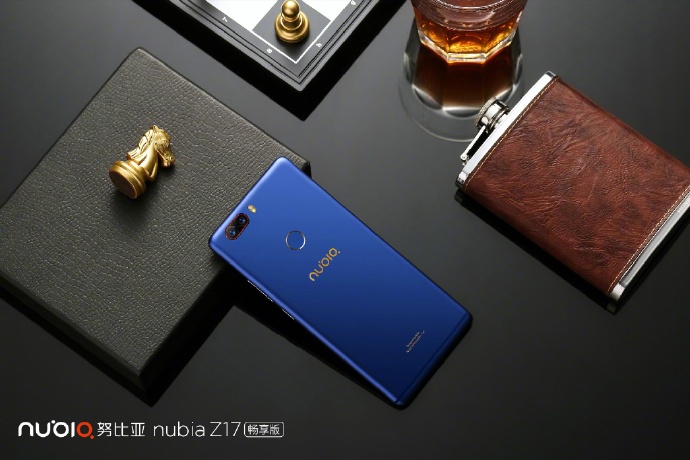
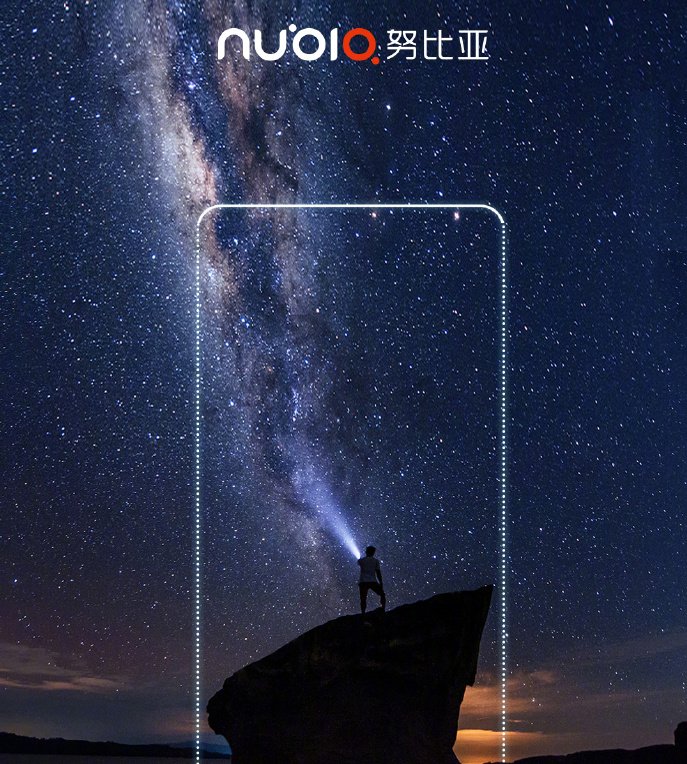
Nubia also seems to be eager to showcase its new smartphone at MWC 2017. The company has confirmed that it will announce a new device, but we are not sure, which model it will be or what features can we expect. The teaser just says, “To Meet New Possibilities”, which could be hinting at improvements in the camera department. Nubia phones are popular for its design and camera tech, so something new in these departments can be expected at the event. Note that the phone will be announced on February 26, a day before the MWC officially starts, but the company will most likely showcase its new device at its booth during the event.
Gionee seems to be readying two devices for showcasing at MWC 2017, namely the Gionee A1 and A1 Plus. Recently, we came across more details about the Gionee A1, and the leak reveals that it will be a mid-range device. The specs are decent and the highlight will be the 16MP selfie snapper up front.
Coming to the non-Chinese mainstream companies, Samsung has confirmed that it won’t release the Galaxy S8 at the event. But we’ll probably get to see a new teaser at the event. Also, we do expect to see the recently leaked Samsung Galaxy Tab S3 at MWC 2017. Some mid-range phones may also be released at the event, but we don’t have any details about the same.
So LG has confirmed that the LG G6 will be announced at MWC 2017 this year. It should be one of the big smartphone announcements at the event, along with the Huawei P10 and P10 Plus. The company has been teasing the features of the device for the past few weeks and we already know most of the specs of the device, thanks to the numerous leaks, including its design. Just head over to this page for latest updates on the LG G6.
Officially, we don’t have much details about what to expect from Sony at MWC 2017. However, thanks to the recent leaks and rumors, it’s likely that we’ll see the Sony Yoshino models at the event. There’s even a rumor about a 4K display VR-centric smartphone along with a mid-range Xperia XA successor.
HTC outrightly said that they won’t release a Snapdragon 835 smartphone at MWC 2017. But that doesn’t mean we won’t get any interesting devices at the event, as there could be upper mid-range models like the recently rumored HTC X10. Also, we could see some VR-centric products since HTC seems to be doing pretty well in this department.
Ah, Blackberry, the company that’s surprisingly still in the smartphone business. The company has confirmed that it will be present at MWC 2017 and we expect Blackberry Mercury with a physical keyboard to be officially unveiled at the event. We have been hearing the name Mercury (and even seeing in hands-on pictures) since the past few weeks and hopefully, we will get full details about the phone in the next few days.
IP security cameras may not be on your top buying list but they are one of the most convenient and affordable ways to secure your office or home. Xiaomi is known to produce this kind of gadgets and their latest security camera is currently on sale at lightinthebox.com. You can get it for just $24.59 with the coupon code: XIAOMI5461601B.
One of the key elements of this camera is that it sports a clean minimalistic design, so it looks nicely on your desk.
In addition, the Xiaomi IP camera has some really good specs for the price. Just to name a few, it can shoot videos at 1080p resolution, it has the IR sensor to track movement and you can combine a few cameras to get a super wide angle shot.
Furthermore, it has 8x zoom range, night vision mode and the camera can be controlled with your phone using the Mi Home app. Finally, the camera works within the Wi-Fi/802.11/b/g network.
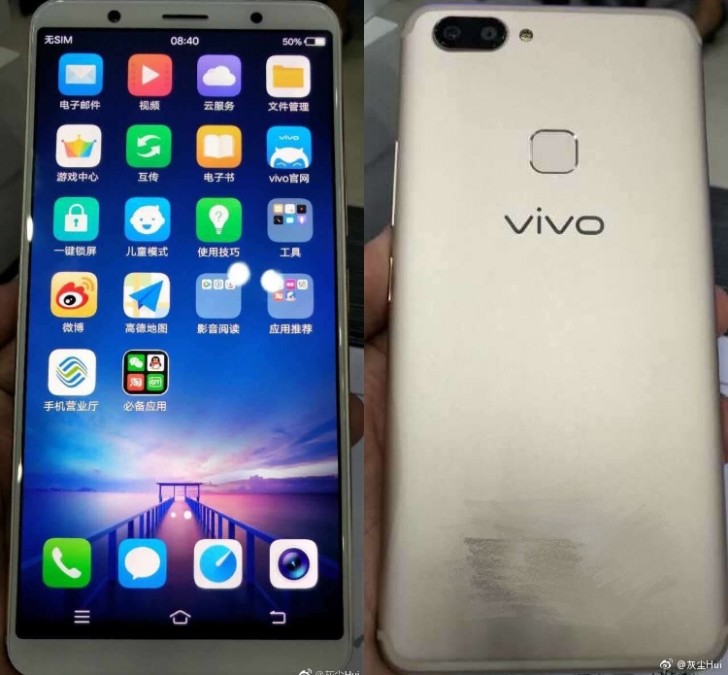
Unlike previous Xiaomi flagships, the expected Mi 6 has been lacking in leaked images and despite its launch rumored as coming in March, we still hardly know exactly what the Xiaomi flagship looks like. Even though Xiaomi had done a good job of keeping the Mi 6 images from the public glare, a couple of images have appeared online purportedly of the Mi 6.
A couple of such leaked images appeared recently on Weibo from a relatively unknown tipster. What stood the purported Mi 6 out is the amazing screen-to-body ratio it highlights on the device. If truly the leaked images are those of the Xiaomi Mi 6, then it marks a deviation from the design language of its predecessors, talking about the Mi 5, Mi 4, Mi 5S and so on. Instead, the screen ratio reminds one of the concept Mi Mix.
Another notable feature is the absence of a front physical home button on the device which seems to have a screen size between 5.2 inches and 5.5 inches. The device is noticed to be running on the MIUI skin but that doesn’t mean it is a Xiaomi smartphone for sure. The front Mi logo is conspicuously missing and the design doesn’t look very attractive except for the great screen-to-body ratio. So we’ll give this a credibility of 20%, so take it with a pinch of salt.
The Mi 6 is rumored to come with a 5.2-inch 1080p display with 4GB of AM and 32GB of storage. There are rumors of a second version with WQHD display of same size and 4GB RAM + 64GB ROM. The Mi 6 is expected to be powered by Qualcomm’s latest Snapdragon 835 chipset and pack an 8MP Sony IMX268 8MP autofocus sensor up front as well as a 12MP Sony IMX386 sensor at the rear.
Lenovo‘s ZUK brand released the ZUK Z2 Pro sometime last year and it came as the world’s first true flagship with 6GB of RAM. The device has since then been one of the hot-selling smartphones, especially in China. Recently, a rather weird price listing for the ZUK Z2 Pro was spotted by an eagle-eyed Netizen.
The listing was spotted on Jingdong and there, the ZUK Z2 Pro with 4GB of RAM and 64GB of storage was listed with a 2299 Yuan price tag, while the ZUK Z2 Pro version with 6GB RAM + 128GB storage carried a reduced price listing of 2,099 Yuan. Obviously, pegging a cheaper price tag on a version with higher memory isn’t normal because the higher version is supposed to have a higher price tag. But in this case, the 4GB + 64GB version is higher with up to 200 Yuan. Both listings appears to have come from the ZUK official flagship store on Jingdong and not from a third party retailer. Also, the price anomaly only seems to affect the white version.
The 6GB + 128GB ROM variant of the Lenovo ZUK Z2 Pro started out at 2699 Yuan ($416) and both variants come powered by the Snapdragon 820 chipset and also sport a 5.2-inch 1080p Super AMOLED display. Other specs include a 13MP rear camera, 8MP front shooter and a 3,100mAh battery. There is no better way to explain this than to presume it is an error that will soon be corrected.
Previous rumors have hinted that Sony is working an upgraded version of Sony Xperia XZ and Sony Xperia Z5 Premium. These smartphones are expected to introduce a new camera feature called Motion Eye that would function like Apple’s Live Photos.
A leaked slide suggest Motion Eye will be world’s first memory embedded camera that would enable the camera on select 2017 Sony Xperia smartphones to start buffering when it detects motion. The feature will be able to shoot 4 photos in a second before the user presses the camera shutter.
As stated before, this function is similar to Live Photos feature that has been available on Apple iPhones since the launch of iPhone 6s in 2015. Samsung too is providing a similar feature called Motion Photo that is available on Galaxy S7 series phones.
The successor models of Xperia XZ and Xperia Z5 Premium are expected to feature it. The Xperia XZ’s successor is said to launch as Xperia XZs. However, previous rumors have also hinted that the smartphone would be called Xperia XZ 2.
The original Xperia XZ has a 5.2-inch screen. However, its successor is expected to come with a larger display. Some of its other rumored features include quad HD resolution support, Snapdragon 835/653 SoC, 4 GB RAM and LED enabled selfie camera. Speculations have it that it may be codenamed as BlancBright.
The Japanese tech giant is also rumored to be working on a premium flagship that is said to be codenamed as Sony Yoshino. It is rumored to come with a 5.5-inch 4K HDR display that would be supporting a 4K resolution of 3,840 x 2,160 pixels.
It is expected to be driven by Snapdragon 835 chipset and 4 GB or 6 GB of LPPDDR4 RAM. It is speculated to be equipped with a stellar Sony IMX400 sensor. The Sony BlancBright is also rumored to include Sony IMX400 camera sensor.
The Japanese tech giant will be present at Mobile World Congress (MWC) on Feb. 27 starting at 8:30 AM CET to unveil new devices. Speculations indicate that it will be unveiling midrange smartphones at the event. As far as Sony Xperia XZs and Xperia XZ Premium release dates are concerned, both the phones are expected to get announced in June this year. Some rumors also hint that the Sony may reveal Xperia XZ Premium’s prototype privately to the media and investors at MWC 2017.
Xiaomi is all set to announce its first ever processor, the Xiaomi Pinecone chipset on February 28. We already have seen a couple of warm up teasers from the company, including a poll asking fans which Pinecone logo was the best. Now, the company has released its first ever teaser video for the Xiaomi Pinecone processor.
pinecone logo poll options
While the video does not reveal any specific feature or specification of the processor, from the theme, it looks like Xiaomi is trying to hint that the processor will be quite powerful. Recent reports have said that the Pinecone chipset should be placed somewhere above the Mediatek P10 and near to Snapdragon 625 in terms of performance. So, it will basically be a mid-range chipset.
Despite the video showing Chinese text, the theme of the video is quite clear. In the video, Wang Feng, two-time World Memory Championship Winner, is asked to memorize two sets of 100 numbers shown on two large displays. While this would be an impossible feat for a regular human being, Fang is different as he is a mnemonist, and can recall unusually long list of data. So, unsurprisingly, in the video, he managed to write down the entire set of data, in proper sequence without much trouble.
Note that memorizing this much data isn’t a big deal for Wang as he holds three world records — recalling 300 of 400 spoken numbers, memorizing 500 numbers in five minutes and 2660 numbers in an hour!
We can expect Xiaomi to release more such interesting video teasers for its Pinecone chipset in the coming days.
To recap, recent rumors state that the Xiaomi Pinecone processor will feature 8 x Cortex A53 architecture with integrated baseband (Cat. 6 support). We’ll get full details about the chipset at the big event on February 28.
The Samsung Galaxy S8 and Galaxy S8 Plus (expected to launch with Galaxy S8+ moniker) are expected to get unveiled officially at the end of next month. The exact launch date of Galaxy S8 is expected to get announced at Mobile World Congress (MWC) 2017 on Feb. 26. As the event is drawing near, more and more leaked information of the Galaxy S8 models are surfacing. Evan Blass has managed to reveal a leaked specs sheet of the Galaxy S8+ that contains all the information on the features it will carry.
The Galaxy S8+ is expected to come with a 6.2-inch Super AMOED display. Counting the rounded corners the display would be measuring 6.1 inches. It is expected to carry support for Quad HD+ resolution. It is likely that the “+” mentioned here indicates that the smartphone it would be supporting an aspect ratio of 18:9 like the upcoming LG G6.
Even though the specs sheet does not mention it, rumors have revealed that the Galaxy S8 and S8 Plus would be the first smartphones to be powered by Snapdragon 835 chipset. The Galaxy S8+ has 4 GB of RAM and 64 GB of internal storage. It will carry support for microSD card. It seems that the S8 models won’t be available in 6 GB RAM option.
The rear side of the S8+ would be flanked with 12-megpaixel dual-pixel camera. It is said to be an upgraded version of the rear snapper present on Galaxy S7. For shooting selfies, it would be equipped with 8-megapixel camera.
Some of the other features of the Galaxy S8+ include 4G LTE, IP68 certified chassis, iris scanner, Samsung Pay, Samsung Knox, wireless charging and Nougat OS. The S8+ is expected to be shipped with earphones tuned by AKG, a brand own by Harman that specializes in acoustics and headphones.
As far as Galaxy S8 specs are concerned, it is expected to come with similar specifications like the Galaxy S8+. However, the S8 would be a smaller device with a 5.8-inch quad HD screen. Even though the Seoul-based company is poised to announce the Galaxy S8 launch date on Feb. 26, the rumor mill has revealed that it will be unveiled on March 29.
We use cookies on our website to give you the most relevant experience by remembering your preferences and repeat visits. By clicking “Accept”, you consent to the use of ALL the cookies.
This website uses cookies to improve your experience while you navigate through the website. Out of these, the cookies that are categorized as necessary are stored on your browser as they are essential for the working of basic functionalities of the website. We also use third-party cookies that help us analyze and understand how you use this website. These cookies will be stored in your browser only with your consent. You also have the option to opt-out of these cookies. But opting out of some of these cookies may affect your browsing experience.
Necessary cookies are absolutely essential for the website to function properly. This category only includes cookies that ensures basic functionalities and security features of the website. These cookies do not store any personal information.
Any cookies that may not be particularly necessary for the website to function and is used specifically to collect user personal data via analytics, ads, other embedded contents are termed as non-necessary cookies. It is mandatory to procure user consent prior to running these cookies on your website.